

Moderna AI Adoption Strategy: Enterprise OpenAI Case Study
An analysis of Moderna's enterprise AI adoption strategy. Learn how the company achieved 100% generative AI usage through OpenAI tools and change management.

IntuitionLabs is now a member of the Claude Partner Network – AI training and upskilling with Claude for pharma and biotech. Book a call.
An analysis of Moderna's enterprise AI adoption strategy. Learn how the company achieved 100% generative AI usage through OpenAI tools and change management.
Analyze CRO data integration patterns in clinical trials. Learn how sponsors use clinical data lakehouses, APIs, and AI for real-time data independence.
Examine how LLMs like ChatGPT fail in pharma and biotech. Review documented cases of fabricated clinical trials, wrong MOA descriptions, and fake citations.
Analyze Dotmatics' evolving natural language query capabilities, AI integration via the Luma platform, and the technical mechanisms of scientific LLM search.
Examine the January 2025 FDA draft guidance on AI in drug development. This report details the 7-step credibility framework and excluded AI applications.
Analyze the shift from prompt engineering to context engineering in AI. Learn how curating knowledge, memory, and data improves enterprise LLM reliability.
Explore the technical architecture of the Egnyte MCP Server. This guide explains how Model Context Protocol securely connects enterprise data with AI tools.
Examine the enterprise AI knowledge stack. Learn how RAG architecture and tools like Egnyte Copilot turn file repositories into source-grounded AI systems.
Learn how pharma companies transition to AI operating models. Compare Moderna's workforce education, Sanofi's enterprise integration, and BMS's predictive R&D.
Explore shadow AI in biotech and life sciences. This report details unsanctioned generative AI usage, data privacy risks, and enterprise governance strategies.
Examine how generative AI is transitioning from experimental tools to core AI-native workflow software in legal, regulatory, and clinical research operations.
Examine why enterprise AI demands custom infrastructure, compute, and data pipelines over generic chat apps, featuring the Eli Lilly supercomputer case study.
Examine why AI literature review leads biotech R&D with 76% adoption. This report analyzes NLP tools, knowledge extraction, efficiency gains, and future trends.

Examine technical methods for connecting ChatGPT to scientific literature. Learn how RAG pipelines, APIs, and vector databases improve research accuracy.
Compare AI research assistants for drug discovery. Examine how Causaly, Elicit, Consensus, and Semantic Scholar synthesize biomedical literature for R&D.
Learn to design a data layer architecture for AI-powered scientific research. This guide explains FAIR data principles, pipelines, metadata, and storage.
Learn how to build a Retrieval-Augmented Generation (RAG) architecture for internal research repositories like ELNs, LIMS, and Egnyte to ground LLM responses.
Compare AI literature mapping tools like ResearchRabbit, Litmaps, and Connected Papers. Learn how visual citation networks aid scientific literature reviews.
Examine how AI competitive intelligence tools use NLP and machine learning to help biotech BD teams analyze life science data and monitor competitor pipelines.
Examine how 15 biotech startups utilize artificial intelligence to accelerate pharmaceutical R&D, drug discovery, and clinical trials. Read the full analysis.

Learn how to use Elicit AI for structured data extraction from clinical papers. This guide covers LLM workflows, accuracy, and systematic review methodology.
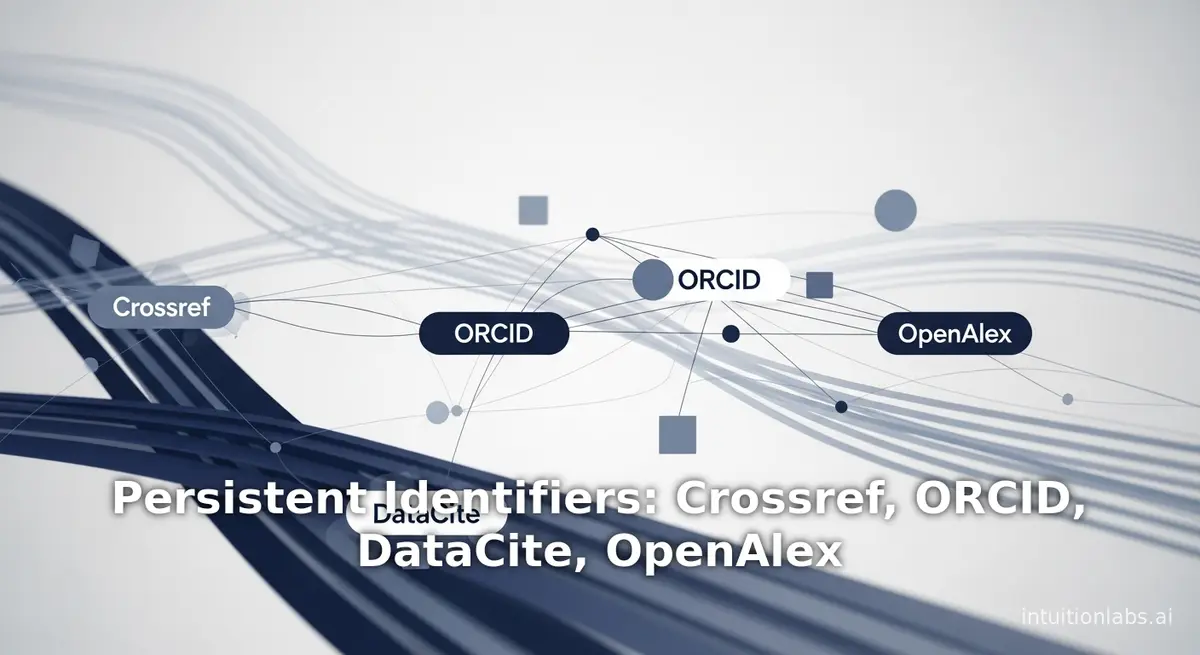
Understand how persistent identifiers connect the research ecosystem. We explain how Crossref, DataCite, ORCID, and OpenAlex link papers, authors, and data.
Examine how AI hallucinations affect drug discovery. Review real examples of LLM errors in pharma R&D and explore practical detection and mitigation methods.
Understand the security risks of employees pasting proprietary data into ChatGPT. This guide explores AI data leakage, governance policies, and private LLMs.
© 2026 IntuitionLabs. All rights reserved.