Videos
Browse videos by topic
All Videos
Showing 1-24 of 1435 videos

Surgeon’s Blood Transfusion Discovery Holds Key to Healthcare System Reform
AHealthcareZ - Healthcare Finance Explained
@ahealthcarez
Dec 14, 2025
This video provides a historical narrative focusing on the profound impact of individual ingenuity on global health, framed within the context of US healthcare system reform. Dr. Eric Bricker recounts the story of Dr. Jerry Moss, a surgeon who served in the Vietnam War in 1965 and later became the Dean of the University of Illinois College of Medicine. The core purpose of the lecture, as shared by Dr. Moss, was to illustrate how "will and creativity at the individual level" can overcome seemingly insurmountable logistical and medical challenges. Dr. Bricker uses this historical case study—the invention of modern blood banking—to inspire optimism regarding the future resolution of current healthcare crises related to access, quality, and cost. The narrative details the extreme conditions faced by Dr. Moss in Da Nang, Vietnam, where he was assigned to a hospital that had yet to be built, forcing him to spend nights in a foxhole under enemy fire. Once the makeshift hospital was operational, the critical problem became blood supply. In 1965, blood transfusions were relatively new, and there was no effective method for long-term storage; donated blood flown from the US had a shelf life of only two to four weeks before the red blood cell membranes degraded. This led to massive waste and critical shortages during casualty surges. Dr. Moss hypothesized that freezing the blood might work, but standard freezing destroyed the red blood cells by forming ice crystals. Driven by the urgent need to save soldiers' lives, Dr. Moss innovated by adding glycerol to the freezing process. This additive prevented the formation of destructive ice crystals, allowing the blood to be successfully frozen, stored, thawed, and transfused. Operating under wartime necessity, he bypassed standard scientific approval processes and immediately implemented the technique, successfully transfusing 36 soldiers multiple times. This discovery, detailed in a 1968 lead article in the New England Journal of Medicine, became the foundation for modern blood banking and storage worldwide, a process still used today that has saved hundreds of millions of lives. The video concludes with a second, equally dramatic anecdote involving Dr. Moss safely removing an unexploded grenade lodged in a soldier’s back, further emphasizing the theme that complex, life-threatening problems are solved through sheer will and creative, often unconventional, solutions devised by dedicated individuals. Key Takeaways: • **Individual Ingenuity as the Catalyst for Systemic Change:** The video posits that the most significant breakthroughs in healthcare—like the invention of modern blood banking—originate from the "will and creativity at the individual level," not necessarily from large bureaucratic systems. This principle is presented as the key to solving modern healthcare challenges related to cost, access, and quality. • **Necessity Drives Innovation:** Dr. Moss's breakthrough was directly spurred by a critical, life-or-death logistical failure during wartime (the inability to store blood for casualties). This highlights how extreme pressure and immediate need can force rapid, unconventional problem-solving that might not occur in less urgent environments. • **The Glycerol Discovery and Blood Banking:** The specific technical solution involved adding glycerol to donated blood before freezing. This compound prevented the formation of ice crystals that would otherwise shred the red blood cell membranes, thereby extending the viability and storage life of blood products indefinitely. • **Overcoming Logistical Supply Chain Challenges:** Before Dr. Moss's innovation, the blood supply chain was severely constrained, requiring blood to be flown from the US and used almost immediately, leading to massive waste and shortages. The ability to freeze blood solved a massive logistical and supply chain problem critical to military and civilian medical operations. • **The Importance of Action Over Bureaucracy in Crisis:** Dr. Moss's decision to immediately test and implement the glycerol freezing technique without lengthy scientific or regulatory approval underscores the need for rapid, decisive action when lives are at stake, contrasting with the slower pace often seen in peacetime research and development. • **The Power of Optimism in Healthcare Reform:** The speaker expresses strong optimism that current complex healthcare problems (cost, access) will be solved, drawing a parallel to the seemingly impossible challenges overcome by Dr. Moss. The message is that persistent effort, inspired by historical examples of ingenuity, guarantees future improvement. • **Unconventional Solutions to Extreme Medical Problems:** The anecdote involving the unexploded grenade illustrates the need for highly creative, almost theatrical solutions in surgery. Dr. Moss devised a method using a long steel rod with a scalpel affixed to the end, operating from behind a metal shield, demonstrating extreme risk management and creative tool adaptation under pressure. • **Standing on the Shoulders of Giants:** The speaker emphasizes that current healthcare professionals and innovators are building upon the foundational work of individuals like Dr. Moss, reinforcing the idea that progress is cumulative and requires acknowledging and following the example of past pioneers. Tools/Resources Mentioned: * New England Journal of Medicine (Dr. Moss’s 1968 lead article on blood freezing). * US Navy internal brief (Describing the success of the blood freezing technique in Vietnam). Examples/Case Studies: * **The Blood Storage Crisis (Vietnam, 1965):** The inability to store blood due to red blood cell degradation caused by ice crystals during freezing, leading to massive waste and critical shortages during casualty surges. * **The Glycerol Solution:** Dr. Moss's successful use of glycerol to prevent ice crystal formation, enabling long-term blood banking and storage, which is still the standard practice globally today. * **The Unexploded Grenade Surgery:** A soldier arrived with an unexploded grenade lodged in his back. Dr. Moss and his team devised a procedure to excise the grenade using a long-handled scalpel and a metal shield for protection against a potential explosion, successfully saving the soldier's life.

Season 1 Episode 4: Building a Connected Safety Platform for the Future
Veeva Systems Inc
/@VeevaSystems
Dec 10, 2025
This podcast episode, featuring Veeva's David Kološić and Marius Mortensen, principal architect, explores the strategic evolution and future vision of Veeva Safety, focusing on the advantages of building a modern pharmacovigilance (PV) platform on a validated cloud foundation. The discussion traces the origins of Veeva Safety (starting development around 2018) and contrasts the traditional, siloed PV ecosystem—characterized by five-year upgrade cycles, numerous point solutions, and complex integrations—with Veeva’s platform approach. The core argument is that leveraging the established Veeva Vault platform allows developers to bypass foundational concerns (like workflows and basic configuration) and focus immediately on complex safety specifics, such as end-to-end case processing, configurable gateways, and regulatory submissions (E2BR3, VAERS). A major theme is the paradigm shift from infrequent, massive upgrade projects to continuous improvement via three validated releases per year. This continuous delivery model is essential for keeping pace with rapidly changing global regulations (like the transition to E2BR3 standards) and evolving technology. The speakers emphasize that the platform strategy aims to eliminate the "behemoth of applications" stitched together by IT, which often leads to data inconsistencies and validation headaches. Instead, the unified data model allows for a holistic, worldwide system where regional requirements (like those for Japan) are managed within a single instance, rather than requiring separate, potentially out-of-sync databases. The conversation heavily details the power of "Veeva Connections," which enable seamless, process-driven integration across different domains (Safety, RIM, Clinical, Medical Affairs). Unlike traditional, "lossy" third-party integrations (which often require manual data reconciliation after an E2B exchange), Veeva Connections focus on specific business use cases—such as literature case intake or updating product labels based on signal detection—by leveraging an "apples to apples" data mapping across the shared platform. This connectivity facilitates cross-domain workflows, allowing PV teams to shift their focus from administrative minutiae to the science of safety, ultimately moving toward predictive analysis of benefit-risk profiles. Finally, the experts address the role of automation and AI in handling the increasing volume and complexity of adverse event reporting. They advocate for a layered approach: first, ensuring a trusted, high-quality data foundation (the platform); second, automating structured processes (like data exchange and rules execution); and third, applying AI to specific use cases. Mortensen notes that early AI attempts often just shifted the burden to QC by providing non-contextualized data entry. The current focus is on building trust through targeted applications like MedDRA auto-coding and ensuring that AI knows when to "raise its hand" and ask for human intervention, preventing the system from generating untrustworthy or inconsistent outputs. The ultimate vision for 2030 is a "safety golden age" where fragmentation is gone, and PV teams focus on predictive science. Key Takeaways: • **Platform-First PV Strategy:** Building PV systems on a robust, validated cloud platform (like Veeva Vault) accelerates development by solving foundational IT challenges (workflows, security, validation) and allowing teams to focus immediately on complex safety-specific requirements. • **Continuous Regulatory Compliance:** The shift to frequent, validated releases (e.g., three times per year) is crucial for maintaining compliance with rapidly evolving global standards (ICH, E2BR3, FDA) without requiring disruptive, multi-year upgrade projects typical of legacy systems. • **Eliminating Data Silos:** Traditional PV ecosystems rely on multiple siloed point solutions, leading to complex integrations, data inconsistency, and high IT maintenance stress; a unified platform eliminates these handoffs and provides end-to-end process management. • **Veeva Connections for Process Efficiency:** Integrations within the Veeva ecosystem are not just technical data exchanges; they are designed around specific business processes (e.g., intake from Medical Affairs, label updates via Regulatory) to enable cross-domain workflows and operational efficiency. • **Global System, Single Instance:** A modern PV platform must support worldwide operations and regional requirements (like those for Japan) within a single system, preventing data synchronization issues that arise when running separate databases for different geographies. • **AI Adoption Requires Trust and Context:** Early AI applications often failed by merely shifting the burden of quality control (QC) to human reviewers; successful AI implementation in PV requires contextualized data processing, targeted use cases (like MedDRA auto-coding), and a framework that ensures consistency and reliability. • **Automation Precedes AI:** The strategy for efficiency involves first automating structured data exchange and rules execution (e.g., auto-filling, sending questionnaires) before layering on advanced AI solutions for complex tasks like narrative generation or complex case intake. • **Future Focus on Predictive Safety:** By 2030, the goal is for PV teams to move away from the "minutiae of efficiency" and administrative tasks, leveraging automation and high-quality data to focus on the science of safety, risk-benefit analysis, and predictive pharmacovigilance. Tools/Resources Mentioned: * Veeva Vault Platform (Foundation for Safety, RIM, Clinical, Quality) * Veeva Safety * Veeva SafetyDocs * Veeva SiteVault * MedDRA (Medical Dictionary for Regulatory Activities) * E2BR3/R2 Standards (ICH standards for data exchange) * FDA VAERS (Vaccine Adverse Event Reporting System) Key Concepts: * **Veeva Connections:** Process-focused integrations between different Veeva applications (e.g., Safety, RIM, Medical) that leverage a unified data model to streamline cross-domain workflows and eliminate manual handoffs. * **Validated Cloud Platform:** A system that provides continuous validation and compliance (e.g., GxP, 21 CFR Part 11) through regular, controlled releases, contrasting with the high-risk, infrequent upgrades of on-premise legacy systems. * **Digital Safety Golden Age:** The future state (projected by 2030) where PV systems have achieved high-quality, consistent data and seamless connectivity, allowing safety teams to prioritize scientific analysis and predictive risk management. * **Universal Receiver (O Positive):** An analogy used to describe the ideal safety system's ability to seamlessly integrate and receive data from diverse internal and external sources (CROs, affiliates, other systems).

Community Show: Veeva Integration
Reltio
/@Reltio
Dec 10, 2025
The presentation focuses on Reltio's pre-built integration solution for Veeva Vault CRM, demonstrating how life sciences organizations can leverage Master Data Management (MDM) to unify fragmented customer data, optimize commercial operations, and ensure regulatory compliance. The speaker begins by addressing the critical challenge of siloed data—scattered across SAS applications, legacy databases, and cloud platforms—which acts as a primary barrier to digital and AI transformation. This fragmentation results in poor data quality, delayed information mobilization, and significant costs, including reduced sales effectiveness, poor engagement due to inaccurate HCP/HCO data, and risks of regulatory sanctions related to IDMP, privacy, and transparency. Reltio's solution is built around the concept of "HCP 360," part of their Life Sciences Velocity Pack, which unifies data from first-party sources (CRM, ERP, CTMS) and enriches it with third-party vendor data (e.g., IQVIA). This comprehensive, trusted data, including interactions and behavioral attributes, is then mobilized via real-time synchronization to downstream enterprise applications, including Veeva Vault CRM, which serves as the primary system for sales force automation (SFA) and marketing engagement. The core value proposition of the integration is guaranteeing a single trusted view of HCP and HCO data through bidirectional profile synchronization, enabling accurate and compliant customer engagement. The integration utilizes a layered architecture based on the Reltio Integration Hub (RIH). The foundation is a pre-built Veeva Vault CRM connector, which includes managed business transformations and mappings. On top of this are customizable RIH "recipes" that manage specific triggers, workflow processes, and error handling tailored to customer use cases. The integration supports syncing HCP data (mapped to Veeva's Account object types: Professional or Key Opinion Leader) and HCO data (mapped to Hospital, Clinic, Pharmacy, etc.). Crucially, it handles complex relationship synchronization, such as parent-child HCO affiliations and HCP-HCO affiliations (e.g., a medical director working at a hospital), and manages cross-object mapping for license data (DEA, NPI) which may reside in different fields or objects within the two systems. The solution also features a Data Change Request (DCR) capability, allowing new records created in Veeva to be reviewed and approved by data stewards in Reltio before being finalized, thereby maintaining strict data governance. Key Takeaways: * Fragmented data across legacy systems and cloud platforms is identified as the primary barrier to achieving digital and AI transformation in life sciences, leading to significant profitability hits and compliance risks (e.g., IDMP, privacy). * The Reltio Life Sciences Velocity Pack provides an "HCP 360" view by ingesting and unifying first-party data (CRM, ERP, CTMS) and enriching it with third-party sources (like IQVIA), including interaction and behavioral data, which is essential for effective commercial segmentation. * The integration provides bidirectional, near real-time synchronization between Reltio (MDM) and Veeva Vault CRM, ensuring that the single trusted view of HCP/HCO data is consistently available for sales force automation and marketing engagements. * The integration handles complex data structures, including the synchronization of organizational relationships (parent-child HCO affiliations) and professional affiliations (HCP working at an HCO), which are vital for accurate commercial targeting. * Regulatory readiness is supported by the system's ability to maintain auditable customer records, streamlining compliance tracking and reducing the risk of regulatory sanctions associated with inaccurate data. * The Reltio Integration Hub (RIH) uses "recipes" for specific use cases, offering a customizable layer on top of the pre-built Veeva connector to manage triggers, workflows, and detailed error handling, ensuring scalability and flexibility. * Data flowing from Reltio to Veeva is real-time (using queues like SQS/PubSub), but data flowing from Veeva to Reltio is near real-time (up to 30 minutes latency) due to Veeva's reliance on file-based data exports with a minimum 15-minute polling frequency. * The solution supports Data Change Requests (DCRs): records created in Veeva appear as DCRs in Reltio, allowing data stewards to compare values (e.g., specialty, NPI number) and approve or reject the change before it becomes a consolidated master record. * The integration manages data merges: when duplicate records are merged in Reltio, the system automatically triggers the necessary API calls to merge the corresponding records in Veeva Vault CRM, maintaining data integrity across both systems. * The system handles initial bulk data loads, allowing organizations that already have an established Veeva CRM to efficiently migrate their existing customer data into the Reltio MDM platform for unification. * Customized Veeva entities and attributes are supported; Reltio provides detailed guides on how customers can enhance RIH recipes to map custom fields from their Veeva objects into Reltio attributes. * License data (DEA, NPI) requires specific cross-object mapping, as these details are often mapped to address objects within the Veeva CRM structure, a complexity handled by the pre-built integration. * Future development plans include pre-built integrations with other Veeva systems, specifically mentioning Veeva CTMS (Clinical Trial Management System), indicating a roadmap to connect clinical and commercial data domains. ### Tools/Resources Mentioned: * **Reltio:** Master Data Management (MDM) platform. * **Veeva Vault CRM:** Primary target system for SFA and commercial engagement. * **Reltio Integration Hub (RIH):** Integration platform managing connectors and workflows. * **SQS, GCP PubSub, Azure Queues:** Messaging services used for real-time data flow from Reltio. * **IQVIA, Metro:** Examples of third-party data vendors used for data enrichment. ### Key Concepts: * **HCP 360:** A unified, comprehensive view of a healthcare professional, combining internal operational data with external enrichment and behavioral data. * **DCR (Data Change Request):** A workflow mechanism where proposed data changes from source systems are held for review and approval by data governance teams in the MDM platform. * **Crosswalks:** Unique identifiers stored in the MDM system that link a single master entity record to its corresponding records in all connected source systems (e.g., the Veeva Vault ID). * **RIH Recipes:** Pre-configured, customizable integration workflows that define the specific logic for data synchronization, transformation, and error handling between Reltio and external applications. * **Reverse Transcoding:** The process of translating standardized MDM values back into the specific lookup codes or formats required by the target system (Veeva) during the outbound sync.

The Employer’s Scoop | Featuring Kayla Brendle, University Recruiting Lead, Veeva
UTM CareerCentre
/@UTMCareerCentre
Dec 10, 2025
This video features an interview with Kayla Brendle, the University Recruiting Lead for the Engineering Development Program (EDP) at Veeva Systems in Toronto, offering valuable insights into career paths, hiring strategies, and the software industry as it intersects with life sciences. The discussion, set against the backdrop of a university career fair, provides a clear definition of Veeva as a cloud-based software company dedicated to serving the life sciences industry. Brendle outlines the essential technical roles available within Veeva’s entry-level program and addresses common misconceptions about working in this specialized sector. The interview details the various technical roles that contribute to the full software development lifecycle (SDLC) at Veeva. While the Associate Software Engineer position is the most sought-after, Brendle highlights the importance of often-overlooked roles, specifically the Associate Performance and DevOps Engineer and the Associate Software Engineer in Test (QA). The QA role is emphasized as critical for ensuring product quality and is noted as a strong entry point that can later segue into broader software engineering responsibilities. This focus underscores Veeva’s commitment to robust development, deployment, and quality assurance processes. A key clarification provided by the Veeva representative addresses the necessity of domain expertise. Brendle confirms that while Veeva builds software *for* the life sciences industry, candidates for technical roles in the EDP do not require a prior background or deep knowledge of pharmaceutical or biotech processes. Technical skills are the primary requirement, and industry knowledge is acquired through on-the-job learning. Furthermore, the discussion emphasizes that successful candidates must demonstrate strong behavioral characteristics—such as being a hard worker, a fast learner, and a team player—which are often evidenced through extracurricular activities, community involvement, and hackathons, rather than solely academic achievements. The video concludes with actionable advice for new graduates, stressing the importance of asking questions, voicing opinions, and strategically networking with senior employees to gain diverse perspectives and accelerate career growth. Key Takeaways: • **Veeva’s Core Business Model:** Veeva Systems is confirmed as a cloud-based software company specifically servicing the life sciences industry, highlighting the critical role of enterprise technology in pharmaceutical and biotech operations. • **Technical Roles Do Not Require Life Sciences Background:** A significant misconception is debunked: candidates for technical roles (like Associate Software Engineer) at Veeva do not need prior domain knowledge in life sciences. Technical aptitude and behavioral fit are the primary hiring criteria. • **Value of QA and DevOps Roles:** Students should not overlook Associate Performance and DevOps Engineer positions or the Associate Software Engineer in Test (QA) role. These positions are essential components of the full software development lifecycle and offer strong career progression paths. • **QA as a Career Gateway:** The Associate Software Engineer in Test/QA role is highlighted as a critical, often overlooked, entry point that provides deep insight into the SDLC and can serve as a valuable stepping stone into core software engineering roles. • **Networking Requires Preparation:** Effective networking at career events necessitates advance research to identify specific companies and opportunities of interest, allowing students to approach booths with genuine curiosity and a defined objective for follow-up (e.g., applying to a specific role or connecting on LinkedIn). • **Cultural Fit Criteria:** Veeva seeks well-rounded candidates who exemplify behavioral characteristics such as being a hard worker, a fast learner, and a team player. Applicants should use their resumes and interviews to showcase involvement in extracurriculars, hackathons, sports, or volunteer work to demonstrate these traits. • **Post-Graduation Advice: Proactive Engagement:** New graduates starting their first job are strongly advised not to be afraid to ask questions, speak up, and voice their opinions, as this demonstrates engagement and a commitment to learning. • **Strategic Networking with Senior Staff:** New hires should diversify their professional network beyond their cohort of fellow new graduates. Networking with intermediate and senior-level employees is crucial for gaining diverse operational perspectives and accelerating long-term career development within the company. • **Focus on the Full SDLC:** Veeva’s entry-level roles cover the entire Software Development Life Cycle, indicating a need for talent across development, system performance, deployment (DevOps), and rigorous quality assurance processes. Key Concepts: * **Engineering Development Program (EDP):** Veeva’s structured program for recruiting and developing associate-level technical talent across various engineering disciplines. * **Cloud-Based Software:** The delivery model used by Veeva to provide its enterprise solutions to the life sciences sector. * **Full Software Development Life Cycle (SDLC):** The comprehensive process encompassing all stages of software creation, from conception to deployment and maintenance, which Veeva’s entry-level roles are designed to support.

Interview with Pinar Bérénice Bénet, Veeva
Moe Alsumidaie
/@Annexclinical
Dec 9, 2025
This video provides an in-depth exploration of the challenges and solutions facing clinical trial sponsors under the new ICH E6(R3) guidelines, focusing on transforming clinical oversight from retrospective reviews to continuous, predictive, and data-driven accountability. Pinar Bénet, Senior Director of GTM Strategy and Clinical Lead at Veeva Systems, discusses how the industry must adapt to R3's definition of essential records, which now includes operational data, communications, and metadata, not just static documents. The central theme revolves around ensuring sponsors have timely, meaningful oversight evidence, particularly in highly outsourced environments where distinguishing between data noise and actionable insights is critical. A major focus of the discussion is addressing the data transfer and ownership challenges inherent in sponsor-CRO relationships. Veeva addresses this by equipping CROs with a "CTMS Transfer" bridge, which facilitates the daily delivery of operational oversight data directly to the sponsor’s CTMS environment. Bénet also notes a growing market trend where sponsors, while remaining heavily outsourced for execution, are choosing to "in-house" their data management systems (like EDC) to maintain control over data standards and quality. This shift is enabled by modern, modular, and user-friendly applications like Veeva’s, which significantly reduce the learning curve compared to legacy solutions, allowing sponsors who are new to owning their EDC to gain control quickly. The interview delves into the organizational and cultural biases that hinder the shift toward proactive quality by design (QbD). Bénet argues that the biggest obstacle is the industry’s legacy reliance on "waterfall" methodologies—linear, rigid processes often embedded in legacy software. This approach stifles agility, collaboration across departments, and the rapid implementation of study amendments. To truly embrace R3, sponsors must adopt agile ways of working, which necessitates agile systems that facilitate collaboration and allow for rapid changes without requiring costly and complex database migrations, a common issue given the average clinical trial involves ten to fifteen amendments. Finally, the discussion covers balancing regulatory defensibility with R3’s intent for proportional quality management. Bénet emphasizes that proportionality means evaluating each study individually to create a personalized, risk-based plan, rather than applying a standardized, over-engineered set of compliance steps to every trial. This forces sponsors off "autopilot" and requires active decision-making about where to invest resources. Furthermore, to enable cross-functional accountability—a core tenet of R3—digital platforms must be connected and unified, allowing relevant functions (with appropriate security) to access processes, data, and documents immediately to collaborate, thereby improving overall quality through shared visibility and teamwork. Key Takeaways: * **Shift to Continuous Oversight:** R3 mandates a transformation from retrospective quality assurance to continuous, predictive, data-driven accountability, requiring sponsors to treat operational data, comms, and metadata as essential records. * **Timely Data is Paramount:** Sponsors cannot act on risks without timely data. Veeva addresses this in outsourced models using the **CTMS Transfer** bridge, which ensures operational oversight data is delivered daily from the CRO’s CTMS to the sponsor’s environment. * **Insourcing Data Management:** A growing number of sponsors are bringing their data management systems (like EDC) in-house while still outsourcing execution to CROs, allowing them to control data standards and gain greater oversight control. * **Agile Systems for QbD:** The biggest organizational hurdle is the legacy mindset and systems built on "waterfall" logic. Proactive quality by design (QbD) requires agile systems that support collaboration, rapid amendments, and quick deployment of changes to sites. * **Proportionality in Compliance:** Sponsors must move away from over-engineering compliance. R3 requires them to evaluate each study individually to develop a personalized, risk-based plan, investing resources where risks are highest rather than repeating standardized actions across all studies. * **Data Lineage and Transparency:** In the complex ecosystem involving sponsors and CROs, sponsors need the ability to trace data lineage across all systems the data travels through, whether those systems are owned by the sponsor or the CRO. * **Risk of Disconnect in Outsourcing:** Fully outsourced sponsors face the greatest inspection risk under R3, often misunderstanding how to execute continuous oversight. A major missing element is a standardized, industry-wide approach for codifying and replicating oversight execution. * **Quality as a Function of Accountability:** Achieving a culture of quality (as emphasized by ICH R2/R3) is enabled by digital platforms that foster cross-functional accountability. Unified platforms allow teams to collaborate on the same processes, data, and documents, improving quality through shared visibility. Tools/Resources Mentioned: * **Veeva Systems:** The platform provider discussed throughout the interview. * **Veeva Clinical Platform:** The overarching suite of connected applications. * **Veeva CTMS Transfer:** A specific bridge enabling operational data transfer from CRO to sponsor CTMS. * **Veeva CTMS (Clinical Trial Management System)** * **Veeva eTMF (electronic Trial Master File)** * **Veeva EDC (Electronic Data Capture)** * **Veeva CDB (Clinical Data Base)** * **Veeva RTSM (Randomization and Trial Supply Management)** * **Veeva eCOA (electronic Clinical Outcome Assessment)** Key Concepts: * **R3 (ICH E6(R3)):** The latest revision of the International Council for Harmonisation of Technical Requirements for Pharmaceuticals for Human Use guideline, emphasizing quality by design, risk-based quality management, and continuous oversight. * **Continuous Oversight:** The practice of monitoring clinical trial performance and data quality in real-time or near real-time, moving away from periodic, retrospective reviews. * **Waterfall vs. Agile:** Waterfall refers to a linear, sequential development process (common in legacy pharma software), while Agile refers to flexible, collaborative, and iterative processes necessary for rapid adaptation and quality by design. * **Proportional Quality Management:** The principle under R3 that requires sponsors to tailor their quality management efforts and investments based on the specific risks entailed by an individual clinical research study.

Veeva Commercial Summit 25 - Unpacked
twentyeightb
/@twentyeightb
Dec 9, 2025
This video provides an in-depth exploration of the key announcements, roadmaps, and practical implications discussed at the Veeva Commercial Summit 2025. The panel, consisting of consultants and pharmaceutical leaders from companies like Otsuka and Sanofi, focused on what the event means for professionals shaping customer engagement across the life sciences industry, with a heavy emphasis on the future role of Artificial Intelligence within the Veeva ecosystem. The central theme of the summit was Veeva's aggressive push into AI, positioning it as a unified data platform built on deep applications like Vault. Two primary AI agents were highlighted: the Quick Check Agent (for content review/Promats) and the CRM Bot (for sales planning/field execution). Panelists generally agreed that AI adoption must prioritize efficiency gains first to build trust and acceptability among users. For instance, the Quick Check Agent, which automates consistency checks, spelling, and compliance issues (like the AE blackbox), was seen as an immediate win that reduces the burden on Medical, Legal, and Regulatory (MLR) reviewers, thereby reducing compliance costs and accelerating time-to-market for content. A major point of contention and concern regarding the more prescriptive CRM Bot—which generates pre-call plans and content suggestions—was the industry's current poor state of first-party data capture. Panelists noted that field teams often fail to consistently enter rich, free-text call notes into the CRM due to compliance fears (Adverse Events/Pharmacovigilance) or a lack of perceived value. This "garbage in, garbage out" scenario means the AI lacks the foundational data required to provide accurate, high-value suggestions. Consequently, many pharma companies are prioritizing the implementation of the Voice Bot and Free Text Agent first, viewing these tools as critical enablers for compliantly capturing rich, unstructured data (speech-to-text notes) that will eventually power advanced AI solutions. Beyond AI, the discussion covered Veeva's platform evolution aimed at creating a truly omni-channel experience. The introduction of Campaign Manager was met with excitement, signaling Veeva's commitment to bridging the gap between sales and marketing, increasing marketing accountability, and moving the CRM beyond its traditional perception as merely a call-logging tool. Other practical advancements included improved Account Planning modules in Vault CRM, which now allow for sharing plans with non-Veeva users via integrated Teams channels, and the Automatic Reference Linking feature in Promats, which promises significant time and cost savings by automating a previously outsourced, tedious compliance task. The overall consensus was that while the future is exciting, significant foundational work—especially in data quality and process optimization—is necessary for the industry to realize the promised value of these new technologies. Key Takeaways: • **AI Must Start with Efficiency to Build Trust:** The Quick Check Agent in Promats, which automates checks for consistency, spelling, and compliance (e.g., Adverse Event blackbox), is viewed as a high-value, low-risk starting point for AI adoption, reducing review time and compliance costs. • **Data Quality is the AI Bottleneck:** The CRM Bot, designed to generate prescriptive pre-call plans, faces major adoption hurdles because field teams often do not consistently capture rich, first-party data (free-text call notes) due to compliance fears (PV/GDPR) or lack of buy-in. • **Prioritize Data Capture Enablers:** To power future AI, companies must first implement tools like the **Voice Bot** and **Free Text Agent** to make it easy and compliant for field teams to capture unstructured data (speech-to-text call notes) in the CRM, establishing the necessary data foundation. • **Prescriptive AI Acceptance is Low:** Prescriptive AI that dictates "do this, say this, use this" may not resonate with experienced field teams, who value their professional skill. Suggestions should be based on explainability (e.g., "your peers are having success with this content") rather than mandate. • **Customer Experience Drives Sales:** Research shows that excellent customer experience can double prescriptions and accounts for approximately 50% of an HCP's decision to prescribe, emphasizing the need for technology that facilitates high-value, synchronized engagements. • **Veeva Targets Marketing Integration:** The introduction of **Campaign Manager** signals Veeva's strategic move to provide a complete platform that bridges sales and marketing, increasing marketing accountability and transforming the CRM into a true Customer Relationship Management tool. • **Automatic Reference Linking is a Quick Win:** This new feature in Promats is highly anticipated as it automates the tedious and costly process of linking references in content, a task often outsourced to agencies, offering immediate time and money savings. • **Account Planning Enhancements:** Vault CRM's new Account Planning modules offer a better UI and critical functionality, including the ability to share account plans with non-Veeva users (like commercial directors or market access teams) via integrated Teams channels. • **Efficiency is Mandatory for Launches:** A survey of top CEOs indicated that 18 out of 20 are not planning to increase headcount for upcoming product launches, underscoring the critical need for technology to drive operational efficiencies across commercial and medical departments. • **Leverage X Pages:** The **X Pages** (formerly My Insights) feature in Vault CRM is an underutilized, bundled tool that allows developers to create custom, in-workflow HTML dashboards that read/write CRM data, ideal for surfacing just-in-time AI prompts and enhancing rep workflow. • **Process Optimization Precedes AI:** Consultants warn that 95% of AI investments are reporting zero return; foundational work, including optimizing poor processes (cited as the number one waste in pharma), must be addressed before implementing complex AI solutions. Tools/Resources Mentioned: * Veeva CRM, Vault CRM, Veeva Promats, Bolt CRM * Campaign Manager, Content Studio * Quick Check Agent, CRM Bot, Voice Bot, Free Text Agent * X Pages (formerly My Insights) * Teams channels, SFMC (Salesforce Marketing Cloud) Key Concepts: * **Omni-channel CRM:** The strategy of integrating all customer touchpoints (field, digital, medical) within the CRM to ensure a unified, consistent, and high-value customer journey. * **First-Party Data:** Data collected directly by the pharmaceutical company about its customers' interactions and engagement, considered the most valuable asset for competitive advantage and powering AI. * **Quick Check Agent:** An AI tool in Promats designed to automate compliance and consistency checks on content before it enters the formal MLR review process, significantly reducing human review time. Examples/Case Studies: * **Moderna:** Cited as an early adopter and tester of the Quick Check Agent, with commercial rollout planned for December. * **Otsuka & Sanofi:** Representatives from these companies shared their strategic priorities, including the decision to focus on implementing the Voice Bot and Free Text Agent first to solve data capture issues before moving to prescriptive AI like the CRM Bot.

Employer Best Practices for Working with Health Insurance Brokers
AHealthcareZ - Healthcare Finance Explained
@ahealthcarez
Dec 7, 2025
This video provides an in-depth exploration of the "nested principal-agent problem" inherent in employer-sponsored health insurance plans, focusing on the misaligned incentives and informational asymmetry that drive up costs for organizations. Dr. Eric Bricker begins by analyzing the financial relationship between employers and health insurance brokers/benefit consultants. Using a specific example of an employer with 9,000 employees, he contrasts the direct fee paid by the employer ($175,000 annually) with the estimated commissions the broker receives from carriers, PBMs, and other vendors (approximated at $15 per employee per month, totaling $1.62 million annually). This stark 10x disparity immediately establishes the core conflict: the broker's primary loyalty lies with the carriers who provide the vast majority of their income, not the employer who hired them. The analysis then frames this conflict using the Principal-Agent Problem, where the Agent (e.g., HR, Broker, Carrier) acts on behalf of the Principal (e.g., CEO, HR, Broker), but fails to do so due to misaligned incentives and informational asymmetry. The video details a four-tiered "nested" structure: the Organization (Principal) to HR (Agent/Principal), to the Broker/Consultant (Agent/Principal), to the Insurance Carrier (Agent). Bricker explains that the organization cares most about cost control, while HR prioritizes ease of administration due to understaffing. Brokers seek to maximize revenue while minimizing client time, and carriers maximize revenue, often heavily reliant on pharmaceutical rebates/commissions paid to PBMs. Furthermore, informational asymmetry decreases dramatically down the chain, with CEOs knowing "nothing" about healthcare, HR having little experience, and brokers often misunderstanding basic carrier contracting details (like variations in in-network allowed amounts), while carriers possess nearly all the expertise. To combat these systemic issues, the video proposes real-world solutions categorized into incentive alignment and information enhancement. For incentive alignment, best practices include tying a significant portion (up to 20%) of HR’s bonus to the total health plan budget (fixed and variable costs). To manage brokers and carriers, the solution is mandatory competition: putting broker contracts and carrier contracts out to bid (RFP) every three years. This forces performance, as the broker is essentially bidding for the opportunity to earn the large commission stream. For informational solutions, organizations are advised to form benefits committees involving finance, HR, and employee leadership to mutually educate themselves on complex topics like PBM transparency and high-cost claimants. HR professionals must become "expert purchasers," learning contractual details and best practices from internal purchasing departments or specialized conferences. Finally, brokers are encouraged to gain expertise in provider payment mechanisms by engaging with organizations like the Hospital Financial Management Association (HFMA), ensuring they hear both the carrier and provider sides of the story to challenge carrier claims effectively. Key Takeaways: • **Broker Compensation Misalignment:** Health insurance brokers often earn nearly 10 times more in commissions from carriers and PBMs than they receive in direct fees from the employer, creating a fundamental conflict of interest where their loyalty is financially tied to the carrier. • **Nested Principal-Agent Problem:** The employer health plan structure involves four nested principal-agent relationships (Organization -> HR -> Broker -> Carrier), each layer suffering from misaligned incentives and decreasing levels of healthcare expertise moving away from the carrier. • **HR Incentive Alignment Best Practice:** High-performing organizations align HR incentives by basing up to 20% of HR compensation on the total health plan budget performance, covering both fixed costs (premiums, consulting fees) and variable claims costs. • **Mandatory Competition for Agents:** To hold brokers and carriers accountable, employers must commit to putting both broker contracts and carrier contracts out to bid (RFP) every three years; this competition is essential to prevent exploitation and secure better terms. • **Carrier Revenue Drivers:** Insurance carriers often derive substantial revenue not solely from premiums, but significantly from RX payments, specifically rebates or commissions paid by pharmaceutical companies to the PBMs they own or manage. • **Addressing Informational Asymmetry:** CEOs and HR departments typically lack deep healthcare finance expertise; solutions include forming a Benefits Committee (involving finance, HR, and employee leadership) to collectively and continuously educate stakeholders on plan details, PBMs, and high-cost claims. • **HR as Expert Purchasers:** HR professionals should adopt best practices from corporate purchasing departments, focusing on contractual details and attending purchasing conferences to improve their ability to negotiate and manage vendor relationships effectively. • **Broker Expertise in Provider Payment:** Brokers must gain deep knowledge of how carriers pay providers (e.g., understanding price transparency and allowed amounts) by engaging with provider-side financial organizations like the Hospital Financial Management Association (HFMA) to counter carrier narratives. • **Leveling Up Expertise:** To achieve top-tier performance, organizations should strive to develop expertise one level beyond their agent (e.g., the Organization becoming expert in purchasing, HR becoming expert in provider payment, and the Broker becoming expert in care provision). Tools/Resources Mentioned: * **HFMA (Hospital Financial Management Association):** A professional organization for CFOs and financial leaders of hospitals and physician practices, recommended for brokers seeking to understand provider payment mechanisms. * **Google/AI:** Suggested for finding public contracts between employers and benefit consultants to analyze fee structures. * **Purchaser Conferences:** Recommended for HR professionals to learn best practices in contractual negotiation and vendor management. Key Concepts: * **Principal-Agent Problem:** A conflict of interest arising when one party (the Agent) is expected to act in the best interest of another (the Principal), but has misaligned incentives and superior information, leading them to act in their own self-interest. * **Nested Principal-Agent Problem:** A chain of principal-agent relationships where the agent of one relationship becomes the principal of the next (e.g., Organization -> HR -> Broker -> Carrier). * **Informational Asymmetry:** A situation where one party in a transaction or relationship has more or better information than the other, which can be exploited (e.g., carriers knowing far more about healthcare finance than employers or brokers). * **"Whose bread I eat, his song I sing":** An ancient expression emphasizing that loyalty follows the source of income, explaining why brokers prioritize carriers over employers.
Why Did They Dismiss The J&J Lawsuit? | with Chris Hamilton
Self-Funded
@SelfFunded
Dec 5, 2025
The video provides an in-depth discussion of critical, current events shaping the pharmaceutical and healthcare insurance landscape, focusing heavily on drug cost transparency, fiduciary responsibility, and the accelerating role of technology, particularly AI. The conversation begins with an analysis of the dismissal of a major lawsuit against Johnson & Johnson regarding the mismanagement of employee prescription drug benefits. The speakers dissect the legal rationale—that plaintiffs failed to demonstrate "concrete harm"—and argue that systemic inefficiencies in PBM contracts, leading to higher premiums and out-of-pocket costs, constitute a breach of fiduciary duty. This segment highlights the profound conflict of interest inherent in traditional PBM models, where a $10,000 monthly medication cost through insurance could be purchased for $48 cash via alternative programs, illustrating the massive financial delta that employers and employees are forced to absorb. A key theme explored is the strategic interplay between pharmaceutical manufacturers and Pharmacy Benefit Managers (PBMs). This is exemplified by Eli Lilly's decision to switch its 23,000 employees from a "Big Three" PBM (CVS Caremark) to a transparent rival (Rightway). The move is strongly implied to be a response to the PBM's formulary decision to favor a rival GLP-1 drug (Novo Nordisk’s Wegovy) over Lilly’s Zepbound, underscoring how PBM relationships are intertwined with commercial access and market leverage for drug makers. Following this, the discussion shifts to regulatory changes, specifically the FDA’s move to speed up biosimilar approvals by relying more on analytical assessments rather than costly human efficacy studies. This regulatory shift is expected to significantly increase competition and drive substantial cost savings (often 10x to 12x) for high-cost specialty drugs like Humira and Stelara, offering employers new strategies for plan design, such as mandating biosimilar use or incentivizing adoption through zero-cost sharing for employees. Crucially, the speakers dedicate a significant portion of the analysis to the rapid adoption of Artificial Intelligence in healthcare, noting that the industry's deployment rate (22% in 2025) is seven times higher than the broader US economy. This surge is attributed to the industry's complexity and the massive opportunity to automate redundant administrative tasks, such as claims processing and dispute resolution (especially related to the No Surprises Act). While Big Pharma shows some hesitation, preferring to fine-tune proprietary AI models, the most impactful use cases discussed revolve around leveraging LLMs for data extraction and analysis. This includes ingesting complex contracts (MSAs, BAAs, PBM agreements) to rapidly identify fiduciary exposure, gag clauses, and conflicts of interest—a task that traditionally takes legal counsel weeks and tens of thousands of dollars. Furthermore, the speakers identify AI's potential to scrub hospital machine-readable files, marrying this pricing data with specific plan setups to create true shoppability for medical services, driving transparency and efficiency in healthcare consumerism. The conversation concludes by linking these cost drivers—PBM inefficiencies, rising hospital reimbursements, and catastrophic claims—to the current trend of extreme fully insured premium increases (up to 48% or more), reinforcing the need for employers to adopt innovative, data-driven strategies like self-funding and AI-powered contract scrutiny. Key Takeaways: • **PBM Fiduciary Risk and Contract Scrutiny:** The J&J lawsuit dismissal, despite the outcome, highlights the critical fiduciary liability employers face regarding PBM contract inefficiencies. AI/LLM solutions are essential for rapid, objective review of PBM contracts, MSAs, and BAAs to uncover hidden costs, gag clauses, and conflicts of interest that breach fiduciary responsibility. • **Pharma Commercial Strategy and PBM Conflict:** Eli Lilly's PBM switch illustrates the direct link between formulary decisions and commercial relationships. Pharma companies must strategically manage their employee benefit plans to align with their commercial interests and ensure favorable access for their own products, a decision that requires deep industry and PBM knowledge. • **Regulatory Impact on Biosimilar Market:** The FDA's push to accelerate biosimilar approval by focusing on analytical assessments over human efficacy studies will flood the market with lower-cost alternatives. Life sciences companies must anticipate this increased competition and adjust their market access and pricing strategies for biologics. • **AI Outpacing Economic Adoption:** Healthcare's high AI adoption rate (22% deployment) signals a massive opportunity for technology firms like IntuitionLabs.ai to address systemic inefficiencies, particularly in administrative burden reduction, claims processing, and dispute resolution (e.g., No Surprises Act claims). • **LLMs for Contract Intelligence:** Generative AI is highly effective for ingesting and analyzing complex legal and financial documents (e.g., stop-loss, pharmacy, and PBM contracts). This capability drastically reduces the time and cost associated with identifying financial exposure and non-compliant clauses compared to traditional legal review. • **Data-Driven Price Transparency:** A major positive use case for AI is scrubbing hospital machine-readable files and integrating this data with specific insurance plan designs. This enables true "shoppability" for medical services, allowing employers to direct members to high-quality, low-cost providers, potentially creating tier-one direct contract networks. • **Leveraging Real-Time Monitoring Data:** The rise of at-home monitoring devices (like CGMs) provides continuous, high-fidelity data that moves physician assessments beyond single point-in-time blood draws. Data engineering services are needed to integrate this real-time data into clinical workflows for better chronic disease management (e.g., diabetes). • **Addressing Fully Insured Premium Hikes:** Extreme premium increases (38% to 48%+) are driven by escalating hospital reimbursement rates and catastrophic claims. Employers are increasingly forced to consider self-funded models to gain visibility and control over claims data, allowing them to implement cost management strategies that are unavailable in fully insured arrangements. • **The Need for Informed Decision-Making:** Employers often lack the nuance to understand complex health insurance contracts. Consultants must guide employers to make "eyes wide open" business decisions, understanding the trade-offs of PBM partnerships and utilizing data to design plans that are financially efficient for the employer while simultaneously benefiting the employee (e.g., zero-cost biosimilars). Tools/Resources Mentioned: * **Veeva CRM:** (Implied context, as IntuitionLabs.ai specializes in Veeva consulting, though not explicitly mentioned in the transcript, the commercial operations focus is relevant.) * **Mark Cuban's Cost Plus Program:** Mentioned as a cash-pay alternative demonstrating massive drug cost savings. * **Express Scripts (Evernorth/Cigna):** Named as the PBM involved in the J&J lawsuit. * **CVS Caremark:** Implied as the "Big Three" PBM Eli Lilly switched from. * **Rightway:** Named as the transparent PBM rival Eli Lilly switched to. * **Smith Rx:** Mentioned as an example of a PBM that facilitates biosimilar switching. * **Home of Health:** A company mentioned that uses LLMs to ingest and analyze contracts for fiduciary exposure. Key Concepts: * **Fiduciary Liability (under ERISA):** The legal obligation of employers and named individuals running health plans to act solely in the interest of plan members, making the right decisions and evaluations to ensure efficient deployment of funds. * **Biosimilars:** Essentially generic alternatives to expensive specialty biologic drugs (e.g., Humira, Stelara), offering significant cost savings (often 90% or more) while maintaining comparable safety and efficacy. * **No Surprises Act (NSA):** Legislation intended to protect consumers from surprise out-of-network medical bills, which has led to a non-stop increase in disputes between carriers and providers, often requiring AI-driven solutions to manage the administrative load. * **Machine-Readable Files (MRFs):** Hospital-mandated files containing pricing data that, when scrubbed and analyzed by AI, can unlock true price transparency and shoppability for medical procedures. Examples/Case Studies: * **J&J Lawsuit:** A drug costing $10,000/month through the PBM could be purchased for $48 cash, illustrating the massive cost inefficiency and alleged fiduciary breach. * **Eli Lilly PBM Switch:** Lilly moved 23,000 employees from a major PBM after that PBM favored a rival drug (Novo Nordisk's GLP-1) on its formulary over Lilly's Zepbound. * **Biosimilar Cost Savings:** Humira biosimilars cost approximately $750-$850/month compared to $75,000-$85,000/year for the brand name, representing a 10x to 12x savings opportunity. * **Underwriting with AI:** An example was shared where initial AI outputs for underwriting were completely inaccurate, stressing the danger of relying on AI without a human expert (like an underwriter) who understands the financial context and can train the model effectively.

Interview With Andreas Gerloff, Daiichi Sankyo Europe - Veeva Commercial Summit
Moe Alsumidaie
/@Annexclinical
Dec 2, 2025
This video provides an in-depth exploration of the evolving strategic role of Medical Affairs (MA) within the pharmaceutical industry, featuring an interview with Andreas Gerloff, Director of Medical Excellence Operations at Daiichi Sankyo Europe, conducted at the Veeva Commercial Summit. The discussion centers on MA's shift from a support function to a strategic pillar alongside R&D and Commercial, the critical challenges in insight generation and impact measurement, and the disruptive potential of Artificial Intelligence (AI) and Generative AI (GenAI) in this domain. Gerloff emphasizes that while MA has achieved peer status in strategic planning across many organizations, a significant gap remains in aligning objectives and measuring success cross-functionally. The core challenge for MA is balancing the need for scientific depth with the pressure to deliver faster, actionable insights to R&D and Commercial teams. He notes that the MSL role has fundamentally changed from a data disseminator to a critical insight collector, focusing on understanding customer perception and alignment with company data. However, the industry struggles with a lack of robust processes and tools for internal processing, actioning insights, and effectively "closing the loop" back to the customer or strategy. This lack of agility makes it difficult to reshape strategy in real-time based on clinician feedback, particularly concerning evidence needs (80% of shared insights) and educational gaps (78% of shared insights). A major theme is the difficulty in measuring MA impact. Gerloff advocates for moving away from simple activity counting (e.g., number of ad boards or interactions) toward a comprehensive framework that tells a story. This framework should link objectives, activities, belief change, clinical behavior change, and ultimately, patient outcomes. The pressure to prove value and return on investment (ROI) for the significant investments made in MA over recent years necessitates this shift toward outcome-based metrics. Furthermore, the entire pharma operating model is being forced to reinvent itself due to more educated patients and changing HCP needs, particularly the preference for engaging with Medical Affairs over Commercial for scientific discussions, a trend accelerated by the COVID-19 pandemic. The interview concludes with a focused discussion on AI. Gerloff believes AI can impact nearly all process steps within MA, including insight collection, analysis, and personalization of communication. While pharma companies are currently in the early stages of internal experimentation and proof-of-concepts, a more profound concern is the external impact of GenAI on stakeholders. Citing an IQVIA report, he highlights that over 50% of HCPs (and 75% of those born after 1990) already use GenAI for scientific information and rank it closely in value to MSLs. This trend demands that pharma think critically about its role in medical education, ensuring accurate information is disseminated through these tools, especially since 14% of HCPs reportedly do not check GenAI sources before using the information for clinical decision-making. Gerloff suggests that the industry may need to overcome competitive barriers and collaborate to develop unified, authoritative GenAI solutions that serve as a single, trusted source of information for busy HCPs, preventing external sources from taking over the educational relationship. Key Takeaways: * **Strategic Alignment Gap:** While Medical Affairs (MA) has achieved strategic peer status with R&D and Commercial, a key challenge remains in achieving true alignment on shared objectives and developing unified metrics to measure joint success against overarching organizational goals. * **Insight Processing is the Bottleneck:** The primary struggle in leveraging insights (especially around evidence needs and educational gaps) is not collection, but the internal process—connecting data dots across channels (MSLs, advisory boards, medical info), translating data into action, and maintaining the agility to shape strategy in near real-time. * **Shift from Activity to Impact Measurement:** MA must transition from counting activities (e.g., number of interactions or ad boards) to using a range of metrics that demonstrate value along a chain of thought: objectives $\rightarrow$ activities $\rightarrow$ belief change $\rightarrow$ clinical behavior change $\rightarrow$ patient outcome. * **Proving ROI is Essential:** Significant recent investments in MA necessitate proving the return on investment (ROI) beyond simple sales numbers, requiring sophisticated measurement frameworks that capture the full scope of medical impact. * **Pharma Operating Model Reinvention:** The industry's operating model must reinvent itself due to evolving customer needs, including more educated patients and HCPs who increasingly prefer engaging with MA for scientific discussions, forcing MA to move beyond its traditional support role. * **AI's Internal and External Disruption:** AI is poised to impact all MA processes (KOL mapping, insight generation, personalization), but the greater concern is the external use of GenAI by HCPs (over 50% use it for scientific info), which threatens pharma's traditional role as the primary source of medical education. * **The Trust Deficit in GenAI:** A significant warning is that 14% of HCPs using GenAI for scientific information do not check the sources before using the information for clinical decision-making, highlighting a critical need for pharma to ensure the accuracy of information available via public tools. * **Need for Industry Collaboration on AI:** To maintain relevance and ensure accurate medical education, the industry should consider overcoming competitive barriers to collaborate on developing unified, authoritative GenAI solutions that serve as a single, trusted source for HCPs, rather than relying on individual company initiatives. * **MSL Role Transformation:** The MSL function has evolved from solely disseminating data to critically understanding customer perspectives and collecting high-value insights that inform cross-functional strategic planning. * **Cultural Shift for MA:** MA teams must continue to "step up," embrace difficult decision-making, and maintain a future-oriented perspective to ensure they remain strategic partners and do not miss mega-trends that could disrupt their relationship with customers. Tools/Resources Mentioned: * Veeva (Implied context of Veeva Commercial Summit and Veeva-developed frameworks/white papers) * IQVIA (Report cited regarding HCP use of GenAI) Key Concepts: * **Medical Excellence Operations:** The function responsible for optimizing the processes, tools, and strategic execution within a company’s Medical Affairs department. * **Insight Generation/Collection:** The process by which Medical Affairs gathers feedback from Key Opinion Leaders (KOLs) and clinicians regarding data gaps, evidence needs, and educational requirements related to a therapy or disease state. * **Medical Impact Measurement:** A framework designed to quantify the value and effectiveness of Medical Affairs activities, moving beyond simple metrics to show influence on clinical behavior and patient outcomes. * **GenAI in Medical Affairs:** The application of Generative AI and Large Language Models (LLMs) to automate tasks like KOL mapping, synthesize complex insights from disparate sources, and personalize scientific communication.

Why Private Equity is Pouring Billions Into Healthcare
Self-Funded
@SelfFunded
Dec 2, 2025
This video provides an in-depth exploration of the financial dynamics driving Private Equity (PE) investment into the US healthcare system, specifically focusing on the employer-sponsored healthcare market. Featuring Trey Marinello of Houlihan Lokey, the discussion establishes healthcare as a critical economic sector, representing 20% of US GDP, and highlights why PE firms are aggressively pursuing opportunities within it. Marinello emphasizes that the modern PE value proposition in this space is centered on operational excellence and strategic growth—or "turning the propeller faster"—by leveraging distribution channels and implementing infrastructure, rather than relying on high debt leverage. The analysis identifies several key subsectors currently attracting significant capital. Third-Party Administrators (TPAs) are positioned as the foundational investment, acting as the central platform for integrating various benefit solutions. However, the market for scaled, tech-forward TPAs is highly constrained. A major theme is the flow of capital into cost containment, particularly within the $700 billion pharmacy benefit management (PBM) market. Investment is favoring innovative, transparent models that directly address the industry's historical lack of clarity, with recent M&A activity (such as the sale of Surpass to Lucy) demonstrating a push toward aggregation to achieve the necessary bulk for systemic change. The progression of ideas moves from large-scale M&A trends to the democratization of sophisticated benefit strategies for small-to-midsize businesses (SMBs). The rise of alternative funding models, including level funding and Medical Expense Reimbursement Plans (MERPs), is enabling companies with as few as 50 lives to adopt self-insurance tactics once reserved for Fortune 50 firms. Conversely, the video addresses categories that have struggled, noting that "wellness" and "population health" investments often failed to prove ROI. Successful strategies now integrate these engagement tactics into high-demand, clinically necessary areas like mental health, where utilization, rather than hard-dollar ROI, is the immediate measure of success. Finally, the discussion touches on the future role of technology, including the potential for AI and virtual care to address critical provider shortages and improve access to mental health support. ### Detailed Key Takeaways * **PE Investment Strategy Prioritizes Distribution:** Successful PE firms, such as Stone Point Capital, leverage deep industry knowledge and expertise in distribution (brokers and consultants) to drive growth in portfolio companies. Understanding how to harness the intermediary market is key to generating alpha. * **TPAs are the Strategic Core:** TPAs are the "epicenter" of the employer-sponsored health ecosystem, serving as the essential platform for integrating point solutions. Investment targets are focused on finding scaled, growing, and technologically advanced TPAs, as these are increasingly rare. * **Hard-Dollar ROI Drives Valuation:** Investment multiples are highest for companies in cost containment that can provide measurable, hard-dollar ROI, as these solutions directly and demonstrably improve the client's bottom line. * **Pharmacy Transparency is the Focus of Reform:** The $700 billion PBM market is undergoing transformation, with capital flowing toward transparent, contrarian models (like cost-plus) that offer clients choice and clarity in response to legislative pressure for reform. * **Alternative Funding is Rapidly Expanding the Market:** Level funding is experiencing "vertical growth" in the lower end of the middle market (50-100 life cases), democratizing access to self-insurance strategies previously unavailable to SMBs. * **MERPs Serve as a Self-Insurance Glide Path:** Concepts like Medical Expense Reimbursement Plans (MERPs) provide an alternative funding mechanism that applies self-insurance principles to co-pays and deductibles, acting as a low-risk entry point toward full self-insurance for smaller groups. * **Wellness Must Be Clinically Integrated:** Traditional wellness programs struggled due to transient employee populations and vendor fatigue. Success now lies in coupling engagement strategies with clinical needs, such as mental health, where the goal is driving utilization to prevent chronic conditions and improve presenteeism. * **Mental Health Investment Addresses Clinical Gaps:** Mental health is a hot category because it was historically under-reimbursed and now offers significant clinical and operational benefits (reducing absenteeism). Innovative EAPs are succeeding by driving utilization through engagement, contrasting with older models that minimized access. * **AI Can Enhance Empathy and Access:** The use of AI agents and avatars in mental health support is a forward-looking trend. Studies suggest that AI can be perceived as more empathetic than distracted human providers, offering a potential solution to the severe provider shortages and long wait times for crisis intervention. * **ICHRA is Gaining Significant Momentum:** Individual Coverage Health Reimbursement Arrangements (ICHRA) have grown rapidly (from 100,000 to 1 million members) and are projected to continue expanding, potentially reaching 5 million members due to market contractions and Medicaid redetermination. * **Brokers are Business Consultants:** The role of the benefits consultant has evolved into a business consultant, tasked with introducing sophisticated, value-maximizing strategies that directly impact the client's P&L, making them indispensable in the due diligence process for PE-backed companies. * **Focus on Leadership Quality:** The biggest intangible factor driving outlier valuation multiples is the quality of the executive leadership team. PE firms bet on "healthy leadership" capable of guiding the company through successive plateaus of growth. ### Key Concepts * **Payer Services:** The segment of healthcare focused on managing and administering health benefits, including insurance companies, TPAs, and related services. * **Level Funding:** A self-insured plan where employers pay a fixed monthly amount, offering a bridge between fully insured and traditional self-insurance, experiencing "vertical growth" in the lower middle market. * **MERP (Medical Expense Reimbursement Plan):** An alternative funding model that applies self-insurance principles to co-pays and deductibles, often used as a "glide path" to full self-insurance. * **VOI (Value Over Investment):** A metric used in the wellness space when ROI (Return on Investment) is difficult to measure due to high employee turnover and lack of longitudinal data. * **ICHRA (Individual Coverage Health Reimbursement Arrangement):** A defined contribution health benefit that allows employers to reimburse employees for individual health insurance premiums and medical expenses. ### Examples/Case Studies * **Surpass/Lucy Transaction:** A recent M&A deal in the pharmacy cost containment space where Surpass was sold to Lucy. This exemplifies the trend of aggregating transparent PBM solutions to achieve the scale needed to influence the $700 billion market. * **Stone Point Capital:** Cited as a highly effective PE sponsor that understands distribution, having spun out of Marsh McLennan and owning multiple brokers. Their strategy focuses on leveraging distribution expertise to generate alpha. * **Curlink (EAP):** An example of a successful mental health solution that repurposed engagement strategies from the failed wellness category. It drives utilization proactively and prices itself competitively between low-cost, low-utility digital solutions and high-cost clinical services.

Veeva Systems Inc VEEV Q3 2026 Earnings Call
Fyfull
/@fyfull
Dec 1, 2025
The Veeva Systems fiscal 2026 third quarter earnings conference call provides a strategic overview of the company's performance, focusing heavily on the ongoing transition of its core CRM business, the transformative role of AI, and continued expansion across the R&D and Commercial Clouds. The company reported strong Q3 results, exceeding guidance, with total revenue of $811 million and non-GAAP operating income of $365 million. A central theme was the strategic shift toward Vault CRM and the competitive dynamics surrounding the top 20 pharmaceutical customers, which are crucial indicators for the broader life sciences technology market. A significant portion of the discussion centered on the migration of top 20 customers from the legacy Veeva CRM (built on Salesforce) to the new Vault CRM platform. Management confirmed that 14 of the top 20 customers are expected to migrate, while six are potentially opting for other solutions, primarily custom builds on the Salesforce platform. Management downplayed the long-term risk, noting that CRM now constitutes only about 20% of total revenue (down from 25% two years prior) and that any revenue impact would be modest in the short term, with no expected material impact on 2030 goals due to business diversity and the potential for "win-backs" over time, often triggered by executive turnover or project failures associated with custom builds. Furthermore, retaining customers provides significant upside through cross-selling new products like Service Center, Marketing Automation, and the burgeoning Veeva AI suite. Innovation, particularly through "Veeva AI," was highlighted as a major growth driver and competitive differentiator across all product areas. Customers are moving past the experimentation phase and seeking practical, industry-specific AI solutions that deliver rapid value, such as automating safety case processing for adverse events and enabling compliant insight generation in CRM for field teams. Veeva's strategy is to integrate AI deeply into its industry-specific applications, leveraging deep domain knowledge and combining it with business consulting to manage change adoption. This holistic approach, integrating software, data (Crossix, Compass), and consulting, is positioned as a unique advantage in building the "industry cloud for life sciences." The company anticipates AI will drive value broadly across the business, focusing on agility and insight generation in Commercial, and labor reduction in areas like Safety and Clinical Operations. Beyond CRM, the R&D and Quality Clouds continue to show strong momentum. In R&D, the company maintains a strong position in clinical, despite isolated competitive losses, and is excited about next-generation innovations aimed at bridging sponsors, clinical research sites, and patient recruiting. The Quality Cloud is expanding, driven by the unique offering of three core products (quality documentation, QMS, GxP training) on a single common platform, which is appealing to CDMOs and manufacturing sites. The company also announced an early adopter in the critical Laboratory Information Management System (LIMS) space, signaling a significant greenfield opportunity in manufacturing. Commercial strength was also noted in Crossix, the digital marketing measurement and audience targeting business, which is growing faster than the historical mid-teens rate due to increasing digital marketing investment and its growing standardization within the industry. Key Takeaways: • **CRM Revenue Shift and Risk Mitigation:** The CRM suite now accounts for only 20% of total revenue, down from 25%. While six of the top 20 customers are leaning away from Vault CRM, the company expects no material impact on its long-term 2030 goals, emphasizing the diversity of its product portfolio (R&D, Quality, Data). • **Vault CRM Upside through Cross-Sell:** Retained Vault CRM customers present significant cross-sell opportunities for new products like Service Center, Campaign Manager, Patient CRM, and especially the integrated Veeva AI solutions, which are expected to drive broader adoption of the Commercial Cloud suite. • **AI Focus on Practical, Regulated Applications:** Veeva AI is concentrating on high-value, industry-specific use cases, such as compliant free-text insight generation in CRM and dramatically increasing the efficiency of safety case processing (adverse event automation), moving clients beyond generic LLM experimentation. • **Holistic Industry Cloud Strategy:** Veeva is positioning itself as the "general contractor" for life sciences, integrating software, data (Crossix/Compass), and business consulting capabilities. This integrated approach is designed to ensure long-term system compatibility and simplify complex change management for customers. • **R&D Cloud Dominance in ETMF:** The company has achieved a significant milestone with 20 out of the top 20 customers selecting its Electronic Trial Master File (ETMF) solution, highlighting a strong position in clinical operations documentation and standardization. • **Early Days in R&D Expansion:** Despite strong momentum, the R&D Cloud is still in its early adoption phase for newer applications like RTSM (Randomization and Trial Supply Management), ECOA, and Safety, indicating substantial future growth runway within the top 20 biopharma companies. • **Quality Cloud Greenfield Opportunity:** The Quality Cloud is expanding into new areas like LIMS (Laboratory Information Management System) for manufacturing sites. This represents a significant greenfield opportunity as current solutions are often non-modern, on-premise systems, contrasting with Veeva's unified cloud platform. • **Digital Marketing Investment Driving Crossix Growth:** The Crossix business is experiencing accelerated growth due to increased investment in digital marketing (HCP and consumer) and the need for standardized measurement and optimization, positioning it as a significant long-term growth driver. • **Safety System Complexity and Adoption Pace:** Safety systems are highly critical and complex, leading customers to be highly hesitant about change. While AI presents a potential "game-changer" for safety processing efficiency, adoption is expected to be slow, moving from early adopters to the middle majority over several years. • **Veeva Basics for Small Biotech:** The Vault Basics offering, now adopted by about 100 customers, is crucial for supporting the small biotech ecosystem. It allows small companies to start with a professional, compliant solution and "graduate" directly to enterprise Veeva without changing systems if their molecule succeeds. • **Competitive Landscape in CRM:** The competition for CRM is primarily against custom-built solutions on the Salesforce platform. Management expresses confidence that the custom-build approach often leads to project failure or obsolescence, creating future win-back opportunities for Veeva's industry-standard, integrated platform. Tools/Resources Mentioned: * Vault CRM * Veeva AI * Crossix * Vault Safety * Vault Quality (QMS, Documentation, Training) * Vault Clinical (EDC, ETMF, RTSM, ECOA) * Nitro (Data Cloud) * Network (Master Data Management) * Salesforce (Competitor platform) * IQVIA (Strategic partner) * Microsoft, Antropic (AI partners) Key Concepts: * **Industry Cloud for Life Sciences:** The strategic vision of integrating software, data, and consulting services onto a common platform tailored specifically for the pharmaceutical and life sciences sector. * **AI Agents:** Specific, automated AI applications integrated into Veeva products (e.g., for document intake, safety case processing) designed to replace core human labor or enhance insight generation. * **Vault Basics:** A streamlined, professional solution for small biotech companies, allowing them to adopt Veeva's core clinical and quality tools early and scale up to the full enterprise suite without migration. * **GxP / 21 CFR Part 11:** Regulatory standards governing quality and electronic records in the life sciences industry, which Veeva's platforms are designed to ensure compliance with.

Office Politics in Health Insurance and Employee Healthcare... What CEOs Really Want.
AHealthcareZ - Healthcare Finance Explained
@ahealthcarez
Nov 30, 2025
This video, presented by Dr. Eric Bricker, explores the underlying office politics and strategic priorities that drive CEO decision-making regarding employee health insurance and benefits. The central thesis is that CEOs do not primarily frame health plan decisions around the traditional "Triple Aim" of healthcare (cost, quality, access), but rather as a critical tool for managing organizational dynamics, maximizing retention, and successfully pushing the workforce, particularly the executive and middle management tiers, to work longer hours. The analysis begins by establishing the CEO's perspective: they are organizational leaders constantly "fighting fires" and view health insurance as a necessary cost (9% to 14% of total employee compensation) used solely to attract and retain talent. The speaker emphasizes that this decision-making occurs within the context of the organization's dominance hierarchy: the CEO, the Executive Leadership Team (ELT), Middle Management, and Frontline Workers. The CEO's primary challenge is a complex balancing act—pushing the organization to work more while minimizing turnover. This push for time is evidenced by the CEO's own high weekly hours (62.5 hours/week) and the general corporate desire for employees to return to the office (79% of CEOs want a full return, versus only 10% of remote-capable employees who agree). A critical insight derived from turnover statistics reveals the true focus of the CEO's loyalty. While overall annual turnover averages 18%, turnover for the ELT is only 5.2%, and for middle management, it is 6.3%. This disparity suggests a high degree of loyalty and retention among the upper tiers, which the CEO relies on heavily. Consequently, the CEO's health insurance strategy is implicitly designed to cater to and retain these most loyal and essential employees (ELT and middle management). The decision-making process is heavily influenced by the "web of loyalty" and internal drama surrounding money, power, and ego within the C-suite, often overshadowing concerns about improving healthcare quality or access for the broader workforce. The video concludes by reframing the role of HR, benefit consultants, and vendors. Success in this environment requires understanding and navigating this internal "bureaucracy" and web of loyalty, rather than simply presenting the best technical solutions (e.g., narrow networks, direct contracting). The CEO's ultimate strategy is cost-effectively pushing their most loyal employees to work harder while maximizing their retention, making the health plan a political instrument rather than a purely clinical or financial optimization tool. Key Takeaways: • **Health Insurance as a Political Tool:** CEOs view employee health plans primarily as an instrument for attracting and retaining key talent, not as a mechanism for achieving the healthcare industry's "Triple Aim" (cost, quality, access). • **Cost Context of Benefits:** Health and welfare benefits (medical, dental, vision, STD, LTD) constitute a significant line item, accounting for approximately 9% to 14% of total employee compensation, making cost management a constant priority for the CEO. • **Organizational Hierarchy Dictates Loyalty:** Corporate decision-making is heavily influenced by the organizational pyramid (CEO, ELT, Middle Management, Frontline Workers) and the complex relationships within the C-suite involving money, power, and ego. • **Retention Focus on Upper Tiers:** The CEO’s loyalty is concentrated on the Executive Leadership Team (ELT) and middle management, as evidenced by their significantly lower annual turnover rates (5.2% for ELT, 6.3% for middle management) compared to the overall average (18%). • **The Push for Productivity:** A core CEO objective is pushing the organization to work more; this is modeled by the CEO's own high work hours (62.5 hours/week) and the strong corporate desire for a return to the office (79% of CEOs support this). • **Strategic Framing for Vendors:** Consulting firms and vendors must frame their solutions (e.g., AI, CRM optimization) not just in terms of cost savings or technical excellence, but in how they support the CEO’s strategic goals of maximizing productivity and retention among the ELT and middle management. • **Navigating the Web of Loyalty:** Success for HR, benefit consultants, and technology vendors relies on understanding and navigating the internal office politics and the "web of loyalty" within the C-suite, often referred to as bureaucracy, as this dynamic drives decision-making more than technical merit. • **Misalignment on Work-Life Balance:** There is a significant disconnect between CEO expectations and employee desires regarding work time; nearly 80% of CEOs want a full return to the office, while only 10% of remote-capable employees agree, highlighting a constant internal battle for employee time. • **The CEO's Core Strategy:** The ultimate, unstated strategy of the CEO regarding the health plan is to cost-effectively push their most loyal employees (ELT and middle management) to work harder while simultaneously maximizing their retention. Key Concepts: * **ELT (Executive Leadership Team):** The group of direct reports to the CEO, characterized by high loyalty and low turnover, making them the primary focus of retention strategies. * **Web of Loyalty:** The complex network of relationships, power dynamics, and loyalty structures within the corporate hierarchy that dictates resource allocation and strategic decision-making, particularly concerning employee benefits. * **Total Employee Compensation:** The full cost of an employee, where health and welfare benefits typically account for 9% to 14% of the total, making it a major financial consideration for the CEO.
IBM, Veeva, V4C & Hitachi Hiring NOW | Freshers 2025 | Apply Links + How to Apply (PAN-India)
India’s Jobee – IT & MNC Job Updates
/@indiasjobee
Nov 29, 2025
This video serves as a comprehensive job alert, detailing current entry-level and fresher hiring opportunities across major multinational corporations (MNCs) in India, specifically focusing on roles available in 2025. The primary purpose is to provide candidates with direct application links, eligibility criteria, and a step-by-step guide on the application process for positions at IBM, Veeva, V4C, and Hitachi. The presentation is structured around quickly introducing each company and its specific open role, followed by practical advice on resume tailoring and interview preparation, aiming to maximize the success rate for applicants. The core of the video breaks down four distinct hiring drives. First, it highlights Hitachi’s internship program, noting a stipend of ₹21,000 and job locations in Hyderabad, Pune, and Bengaluru. Second, the focus shifts to IBM, which is actively recruiting for the Associate System Engineer role (Job ID: 66789) across various locations in India. Third, a specific data role is covered: the Associate Data Engineer position at V4C, located in Pune, Maharashtra. Crucially for the life sciences technology sector, the fourth major opening discussed is the Associate Software Engineer (Test Automation) role at **Veeva Systems**, a full-time position based in Hyderabad, India. The speaker emphasizes that all necessary application links and detailed eligibility checks are provided in the video description, streamlining the job search process for fresh graduates. Beyond simply listing openings, the video adopts a practical, candidate-focused approach. It offers actionable guidance, including how to tailor resumes specifically for data, software, and systems engineering roles, and provides example subject lines for applications. Furthermore, the video includes a quick walkthrough of the application process to avoid common mistakes and offers a high-impact, seven-day interview preparation plan. This structure ensures that the content delivers immediate value by connecting candidates to opportunities and equipping them with the necessary tools and strategies to succeed in the competitive entry-level tech hiring landscape across India. Key Takeaways: • **Veeva Systems is actively expanding its technical footprint in India:** The specific hiring for an Associate Software Engineer (Test Automation) in Hyderabad signals Veeva’s continued investment in its product development and quality assurance capabilities outside the US, which is crucial for the ecosystem of firms supporting Veeva CRM. • **Focus on Test Automation indicates platform maturity and regulatory requirements:** The specific requirement for a Test Automation role at Veeva suggests a strong emphasis on quality, reliability, and automated validation, which is paramount in regulated environments like pharmaceuticals where Veeva operates. • **Talent acquisition trends show demand for specialized entry-level roles:** The listed roles—Associate Data Engineer (V4C), Associate Software Engineer (Veeva), and Associate System Engineer (IBM)—highlight the broad demand for specific technical skills (data pipelines, automation, systems integration) among fresh graduates in the Indian market. • **Geographic distribution of tech roles is shifting:** The video points out specific job locations like Pune (V4C), Hyderabad (Veeva, Hitachi), and Bengaluru (Hitachi), confirming that major tech hiring is distributed across multiple Tier 1 and Tier 2 cities, not solely concentrated in Bengaluru. • **Application strategy must be role-specific:** The presenter stresses the importance of tailoring resumes for distinct roles (Data vs. Software vs. Systems), advising applicants to adjust their bullet points and subject lines to pass initial screening tests and automated resume filters. • **Direct application links are provided for efficiency:** The video’s core value proposition is the consolidation of direct application links for all four companies (Veeva via Lever, V4C via Workable, IBM via IBM Global, Hitachi via Naukri/Hitachi Careers), significantly reducing the search friction for candidates. • **IBM's mass hiring is identified by a specific Job ID:** The mention of IBM's Associate System Engineer role with Job ID 66789 provides a precise identifier for tracking this large-scale, PAN-India hiring drive, which is a key indicator of the general health of the IT sector. • **Internships remain a critical entry point:** Hitachi's focus on internships with a competitive stipend (₹21,000) underscores the importance of early career experience for securing full-time roles in major MNCs. • **Interview preparation should be high-impact and time-bound:** The video recommends a focused, seven-day preparation plan, suggesting that candidates prioritize high-impact study areas rather than broad, unfocused preparation for initial screening rounds. Tools/Resources Mentioned: * **Veeva Jobs Portal (Lever):** Used for the Associate Software Engineer application. * **V4C Jobs Portal (Workable):** Used for the Associate Data Engineer application. * **IBM Global Careers:** Used for the Associate System Engineer application. * **Hitachi Careers / Naukri:** Used for campus and off-campus opportunities. * **Resume Template:** A downloadable resource offered by the presenter to assist freshers. Key Concepts: * **Test Automation:** The practice of using software tools to control the execution of tests and the comparison of actual outcomes with predicted outcomes, essential for maintaining high quality and compliance in regulated software like Veeva. * **Associate System Engineer (ASE):** A common entry-level role at large IT services firms (like IBM) focusing on system maintenance, integration, and basic software development tasks. * **Off-Campus Drive:** Recruitment efforts conducted by companies targeting students who are not part of the official campus placement process, typically involving online assessments and interviews.

Veeva Commercial Summit 25: On quality data foundations and industry AI adoption with Karl Goossens
pharmaphorum media limited
/@Pharmaphorum
Nov 26, 2025
This video provides an in-depth exploration of the critical role of robust data foundations in enabling the successful adoption and scaling of Artificial Intelligence (AI) in commercial biopharma. Featuring Karl Goossens, General Manager of OpenData Europe at Veeva Systems, the discussion is set against the backdrop of the Veeva Commercial Summit 2025 in Madrid. Goossens shares key findings from Veeva's "The State of Data, Analytics, and and AI in Commercial Biopharma" report, which highlights a significant industry paradox: while AI adoption is accelerating, a staggering 89% of companies struggle to scale more than half their AI initiatives due to inadequate data foundations. The report, based on a survey of 116 senior life sciences leaders overseeing commercial analytics and AI, underscores the urgent need for business leaders to prioritize building strong data infrastructure to truly unlock AI's potential. The conversation delves into three core data issues identified by the report as hindering AI's impact: trust, speed, and consistency. Goossens explains that 73% of respondents reported insufficient data quality for AI applications, citing the need for highly accurate physician data (e.g., place of work) to generate meaningful insights. Speed is hampered by data fragmentation, with 63% of respondents noting that data scattered across disparate systems leads to lengthy "time to insight," often taking months to collect, map, and analyze data, rendering it too slow for timely decision-making. Consistency is another major challenge, as data about individuals often varies across different datasets, making global analytics and precise targeting (e.g., identifying doctors treating specific conditions) incredibly difficult, as illustrated by one customer having 30,000 different specialty values for physicians. To address these foundational challenges, Goossens introduces Veeva's latest innovations, particularly OpenData 2.0, designed to unify and standardize HCP (Healthcare Professional) and HCO (Healthcare Organization) data. A key innovation is "agentic data stewardship," which leverages AI to enhance data quality for the 26 million individuals in OpenData. This involves using AI to monitor public information in real-time, detecting changes like a physician's place of work, thereby providing account teams with up-to-date, accurate data for better AI recommendations. OpenData 2.0 also features a simpler, globalized data model that seamlessly integrates with Veeva software like Vault CRM, enabling consistent global analytics. Furthermore, it promotes data democratization through a web application that allows any customer employee to easily explore data, akin to LinkedIn, and offers a direct data API for rapid data transfer to AI models and analytics platforms, facilitating real-time insights. The discussion concludes with a forward-looking perspective, emphasizing AI's transformative potential for patients through faster R&D and personalized treatments, as well as its role in reducing healthcare costs by connecting fragmented data systems. Key Takeaways: * **Critical Data Foundation for AI Scaling:** Despite accelerating AI adoption in biopharma, 89% of companies fail to scale more than half their AI initiatives due to poor data foundations. Building a robust data foundation is paramount for unlocking AI's full value. * **Three Core Data Issues:** The report identifies Trust, Speed, and Consistency as the primary data challenges. Data quality is often insufficient (73% of respondents), data fragmentation hinders "time to insight" (63% experience delays of months), and inconsistent data across systems makes global analytics and precise targeting difficult. * **Importance of Unified HCP/HCO Data:** Unlocking the full potential of AI, especially generative AI, requires connecting and standardizing HCP and HCO data from various sources (research, patient types, work locations) to provide comprehensive information for AI models. * **Agentic Data Stewardship:** Veeva's innovation uses AI to proactively enhance data quality for millions of individuals in OpenData. This involves real-time monitoring of public information to detect changes (e.g., physician's workplace), ensuring data accuracy for better AI recommendations and tactical adjustments. * **OpenData 2.0 Innovations:** This evolution focuses on three elements: a new, simpler, globalized data model for consistent analytics and seamless integration with Veeva software (e.g., Vault CRM); data democratization via an intuitive web application for easy data exploration by any customer employee; and a direct data API for rapid data transfer to AI models and analytics platforms, enabling real-time insights. * **Understanding Agentic AI:** Agentic AI leverages Large Language Models (LLMs) to process both structured and unstructured data. It employs multiple specialized "agents" to perform distinct tasks, such as browsing the internet for information, answering questions (like chatbots), combining answers, and facilitating human quality checks, leading to more comprehensive and accurate data curation. * **Industry's AI Momentum:** The biopharma industry is actively moving beyond discussions to real-world deployment of AI initiatives, recognizing that correct data is a critical prerequisite for scaling these efforts. * **More Data, Better Quality, Global Curation:** The industry's current focus is on utilizing more data, ensuring higher data quality, and curating these datasets on a unified global data model to maximize AI's effectiveness. * **Patient-Centric AI Benefits:** AI promises significant benefits for patients, including faster R&D for new treatments, the ability to find the right treatment for the right patients, and empowering doctors with better diagnostic tools. * **Healthcare Cost Reduction:** Beyond patient care, AI has the potential to significantly reduce healthcare costs by connecting fragmented data systems, thereby minimizing duplicative procedures and improving overall system efficiency. Tools/Resources Mentioned: * Veeva Commercial Summit 2025 * Veeva's "The State of Data, Analytics, and AI in Commercial Biopharma" report * Veeva OpenData * Veeva OpenData 2.0 * Veeva Vault CRM * ChatGPT, Gemini (as examples of chatbots/LLMs) * LinkedIn (as an example of a web application for data exploration) Key Concepts: * **Agentic AI:** An advanced form of AI that utilizes multiple specialized "agents" (often powered by LLMs) to perform distinct tasks, process diverse data types (structured and unstructured), and collaborate to achieve complex goals, such as comprehensive data stewardship. * **Agentic Data Stewardship:** A specific application of agentic AI where AI agents continuously monitor, collect, process, and verify data (e.g., HCP information from public sources) in real-time to ensure high quality, accuracy, and consistency, often with a final human review. * **Data Fragmentation:** The issue of data being stored in multiple, disparate systems or silos within an organization, making it difficult to access, integrate, and analyze comprehensively. * **Time to Insight:** The duration it takes from data collection to generating actionable insights, often hindered by data fragmentation and poor data quality. * **Data Democratization:** Making data easily accessible and understandable to a wider range of users within an organization, empowering more employees to leverage data for decision-making without specialized technical skills. * **HCP (Healthcare Professional) and HCO (Healthcare Organization) Data:** Critical data pertaining to individual medical professionals and healthcare institutions, essential for commercial operations, medical affairs, and clinical research in the life sciences.

Veeva Commercial Summit 2025: On Data harmonisation with Alexander Ulrich
pharmaphorum media limited
/@Pharmaphorum
Nov 25, 2025
This video provides an in-depth analysis of Boehringer Ingelheim’s strategic initiative to standardize customer data globally, leveraging Veeva OpenData and Veeva Network, and the critical role this foundation plays in enabling advanced AI use cases and supporting their migration to Vault CRM. The discussion, featuring Alexander Ulrich, Global Head of System Integration & Data Ownership at Boehringer Ingelheim, emphasizes that data harmonization is not merely an operational task but a foundational necessity that underpins all subsequent commercial and medical affairs priorities. Boehringer Ingelheim, now the latest top 20 biopharma company to adopt this standardized approach across over 100 countries, views accurate and comprehensive customer reference data as essential for equipping teams with the insights needed to engage healthcare professionals (HCPs) effectively. Ulrich stresses that data quality and harmonization are the primary limiting factors for scaling AI technology within the pharmaceutical sector. While AI is rapidly evolving and offering new opportunities every few months, its success is entirely dependent on the quality and accessibility of the underlying data. A common pitfall noted is the belief that "AI will solve all my issues," which is often untrue if the foundational data ecosystem is not properly harmonized and available for the AI technology to leverage. This foundational work is crucial for supporting the company’s ongoing Vault CRM migration and ensuring the new system can deliver maximum value. A key objective of this data strategy is achieving a comprehensive 360-degree view of the HCP. The speaker explains that customer-facing functions often lack access to all relevant customer information, leading to suboptimal engagements. For instance, a representative might enter a conversation unaware that the HCP recently published research or spoke at a conference on a linked topic. The Customer 360 view, enabled by harmonized data, is necessary to provide these critical details at the representative's fingertips, leading to more relevant and impactful interactions with key opinion leaders (KOLs) and HCPs. Looking toward the future of engagement, the conversation highlights the disruptive potential of "agentic AI frameworks." Insights from the Commercial Summit suggest that the traditional model of engagement is changing rapidly. HCPs are increasingly relying on open evidence and accessing information through these AI frameworks, diminishing their reliance on Field Sales Liaisons (FSLs) or Medical Science Liaisons (MSLs) presenting clinical studies. The profound implication is that pharmaceutical companies may need to shift their engagement strategy from educating the final customer (the HCP) directly to educating the AI framework itself, allowing the framework to then disseminate information to the end-user. This suggests a future where certain customer-facing roles may be replaced or drastically redefined, much like the automation seen in other industries, requiring the industry to rapidly determine how to best work with this new technology for the benefit of customers and patients. Key Takeaways: • **Data Harmonization is Foundational for AI:** Standardizing customer data (using tools like Veeva OpenData and Veeva Network) is not a secondary task but a prerequisite for scaling AI use cases; poor data quality is the most significant limiting factor for successful AI implementation in pharma. • **Prerequisite for CRM Migration Success:** Harmonizing customer data is essential to support major platform shifts, such as migration to Veeva Vault CRM, ensuring that the new system is built upon a reliable, standardized data foundation from the outset. • **The AI-Data Quality Pitfall:** Companies must avoid the misconception that AI is a silver bullet; if the underlying data is not harmonized, accessible, and high-quality, AI solutions will fail to deliver expected results. • **Enabling Customer 360:** The goal of data harmonization is to provide a complete 360-degree view of the HCP, integrating information such as recent publications, conference appearances, and engagement history to facilitate more informed and valuable customer interactions. • **Shifting Engagement Models:** The industry is moving away from traditional reliance on FSLs/MSLs as the sole source of clinical information; HCPs are increasingly utilizing "open evidence" accessed via generative/agentic AI frameworks. • **The Need to Engage AI Frameworks:** Pharmaceutical companies must strategically pivot to educating the AI frameworks themselves, rather than solely focusing on direct engagement with the HCP, as these agents become the primary conduit for information delivery. • **Future Role Redefinition:** The rise of agentic AI solutions is expected to potentially replace or significantly change the job functions of various customer-facing roles within pharma, similar to historical automation shifts in other industries. • **Platform Education is Crucial:** Companies migrating to new platforms (like the new Veeva platform) must prioritize educating their internal teams on the full capabilities of the software to ensure maximum leverage and ROI. • **Leadership Alignment on Data Strategy:** Data harmonization requires buy-in and a common plan agreed upon by leadership and various functional groups, as it impacts all subsequent business priorities across the organization. • **Data as a Competitive Insight Tool:** Accurate customer reference data equips commercial teams with the necessary intelligence to tailor engagement and provide relevant information, moving beyond generic sales pitches. Tools/Resources Mentioned: * Veeva Commercial Summit 2025 * Veeva OpenData * Veeva Network * Veeva Vault CRM * Salesforce (mentioned as the platform Boehringer Ingelheim is moving away from) Key Concepts: * **Data Harmonization:** The process of standardizing and integrating customer reference data across multiple regions and systems (e.g., 100+ countries) to ensure consistency and quality. * **Agentic AI Frameworks:** Advanced Generative AI solutions capable of acting as autonomous agents, accessing and synthesizing open evidence and information, and potentially interacting directly with users (HCPs) in place of human representatives. * **Customer 360 View:** A comprehensive, unified perspective of a customer (HCP or KOL) that aggregates all relevant data points, including interactions, publications, and professional activities, to inform engagement strategy. * **Open Evidence:** Clinical or scientific data and research findings that are publicly accessible, often leveraged by AI frameworks to inform HCPs. Examples/Case Studies: * **Boehringer Ingelheim Data Standardization:** The company standardized customer data across more than 100 countries using Veeva OpenData and Veeva Network to support its Vault CRM migration and lay the foundation for scaling AI. * **HCP Engagement Scenario:** The example of an MSL/FSL entering a conversation unaware of the HCP's recent publication or conference speaking engagement highlights the current gap in customer knowledge that the 360-view aims to solve.
The Secret to a Perfect Broker-Partner Relationship
Self-Funded
@SelfFunded
Nov 25, 2025
This video provides an in-depth exploration of building strong, trust-based broker-partner relationships in the self-funded healthcare benefits industry, while also delving into broader themes of personal and professional development, particularly for women in leadership. The hosts, Cara Kirsch and Libby Henry, share their journey of forging a highly effective partnership, emphasizing radical transparency, integrity, and the ability to navigate difficult conversations. They illustrate how these principles led to significant cost savings for a client, transforming a 74% fully insured renewal into a self-funded plan that saved millions. The discussion progresses from the personal anecdotes of their initial "virtual lunch" meeting during COVID-19 to the professional strategies that underpin their success. Key themes include the importance of clear expectations, mutual respect, and a commitment to solving problems together rather than assigning blame. They highlight that the best partnerships are not solely driven by the lowest numbers on a spreadsheet but by unwavering trust, especially when challenges arise. The conversation also touches on the unique pressures faced by working mothers in high-powered careers, offering insights into balancing professional ambition with family life and the importance of instilling independence in children. Furthermore, the video shifts to a critical analysis of the self-funded healthcare market, advocating for employers to take greater control over their healthcare spending. Cara Kirsch recounts a pivotal experience where she challenged a 74% renewal increase for a client, ultimately saving them $3 million by implementing a reference-based pricing, self-funded plan. This case study underscores the power of education, transparency, and innovative financing mechanisms in an industry often plagued by misaligned incentives. The speakers also forecast future trends, anticipating increased financial strain on hospitals, a growing demand for transparency in claims management, and a continued bifurcation of the risk pool as more employers explore self-funding. They stress the fiduciary responsibility of employers under ERISA and the need for consultants to act as stewards of the craft, empowering clients with knowledge and options. Key Takeaways: * **Radical Transparency and Integrity in Partnerships:** The foundation of a strong business relationship lies in radical transparency, honesty, and integrity. Partners should be able to have difficult conversations without fear of damaging the relationship, fostering an environment where mistakes are owned, and solutions are sought collaboratively. * **Beyond the Spreadsheet Numbers:** The most effective partnerships are not solely based on the lowest price or "best deal" but on the ability to trust and rely on each other, especially when things go wrong. This long-term trust often leads to better outcomes than short-term cost-cutting. * **Clear Expectations and Mutual Respect:** Establishing clear expectations early in a partnership, even if it means initially turning down business that doesn't fit the established process, builds respect and long-term commitment. This allows for more frank and productive discussions later. * **Continuous Learning and Adaptability:** Successful professionals in the healthcare industry must be "stewards of the craft," continuously learning and adapting to rapid changes. It's crucial to be open to different approaches and learn from others, even if they don't align with one's initial methods. * **Fiduciary Responsibility for Employers (ERISA):** Employers, as plan sponsors, have a fiduciary responsibility under ERISA to use their employees' healthcare dollars appropriately and transparently. This mandates a proactive approach to understanding and managing healthcare benefits, not just accepting the status quo. * **Challenging the Status Quo in Healthcare Benefits:** Employers should challenge their consultants and carriers, especially when faced with exorbitant renewal increases. Innovative solutions like self-funded plans and reference-based pricing can provide power and control, leading to significant cost savings. * **Data-Driven Claims Management:** Self-funded plans offer greater visibility into claims data, enabling employers to understand the "how and why" of healthcare spending. This actionable information is crucial for implementing cost management tools and addressing issues like specialty drug costs and inpatient care. * **Misaligned Industry Incentives:** The current healthcare benefits industry often has misaligned incentives, where brokers and consultants may earn more as fully insured costs rise. Employers need to be aware of this and seek consultants who prioritize their clients' best interests and education over traditional commission structures. * **Managing Healthcare Cost Drivers:** Employers should focus on understanding and managing key cost drivers such as inpatient care and specialty drugs. Solutions exist in these areas, and employers should ensure their administrative partners support the implementation of these solutions. * **Bifurcation of the Risk Pool:** The healthcare market is likely to see a bifurcation of the risk pool, with employers willing to embrace self-funding and active management achieving better outcomes, while those reluctant to change face worsening risk pools and higher increases. * **Empowering Women in the Industry:** The video emphasizes the importance of women claiming their seat at the table in male-dominated industries like healthcare. It encourages male colleagues to support and defend women, and for women to mentor and empower younger generations to enter and succeed in these fields. * **Prioritizing Personal Well-being:** Balancing high-powered careers with personal life, especially motherhood, requires intentional prioritization and acknowledging that "balance" is often a myth. It's important to set boundaries, delegate, and make time for personal well-being without guilt. * **Instilling Independence in Children:** For working parents, fostering independence, problem-solving skills, and personal responsibility in children is a valuable outcome. This prepares them for adulthood and allows parents to manage their demanding careers more effectively. * **"Follow the Money" and "A Closed Mouth Doesn't Get Fed":** Employers are advised to "follow the money" in healthcare spending and to "ask more questions" until they fully understand the answers, even if they don't like them. This proactive questioning is essential for informed decision-making. **Tools/Resources Mentioned:** * **Paro Health:** Described as the largest benefits captive in the United States, making self-insurance simple and accessible for small to midsize employers and arming them with cost management tools. * **Nomi Health:** Positioned as a company that has rebuilt self-funded benefits from the ground up, offering solutions like no co-pays, no deductibles, and zero out-of-pocket costs for members. * **Claim Doc:** A medical claim auditing and member advocacy company providing fiduciary services to employer-sponsored benefit plans. * **Veilance:** An integrated ecosystem solution driven by data that manages and simplifies medical claim costs for self-insured employers. * **Gallagher:** Mentioned as having robust data, specifically regarding the 40% increase in cancer costs since 2020. **Examples/Case Studies:** * **74% Fully Insured Renewal to $3 Million Savings:** Cara Kirsch recounts a pivotal experience in 2017 where a home healthcare company faced a 74% increase on their fully insured plan. By developing a reference-based pricing and self-funded plan, she saved them $3 million over three years, demonstrating the power of challenging the status quo and innovative financing. * **Walmart and Mayo Clinic:** The example of Walmart requiring employees to go to Mayo Clinic for certain treatments is cited as a large employer strategy to control healthcare costs, suggesting that middle-market employers can explore similar solutions. * **Iowa Employment Conference Client:** Cara mentions that a group from the Iowa Employment Conference in 2024 became her client after 14 meetings and a year and a half, highlighting the long sales cycle and the importance of educating clients about their consulting agreements, compensation, and compliance.
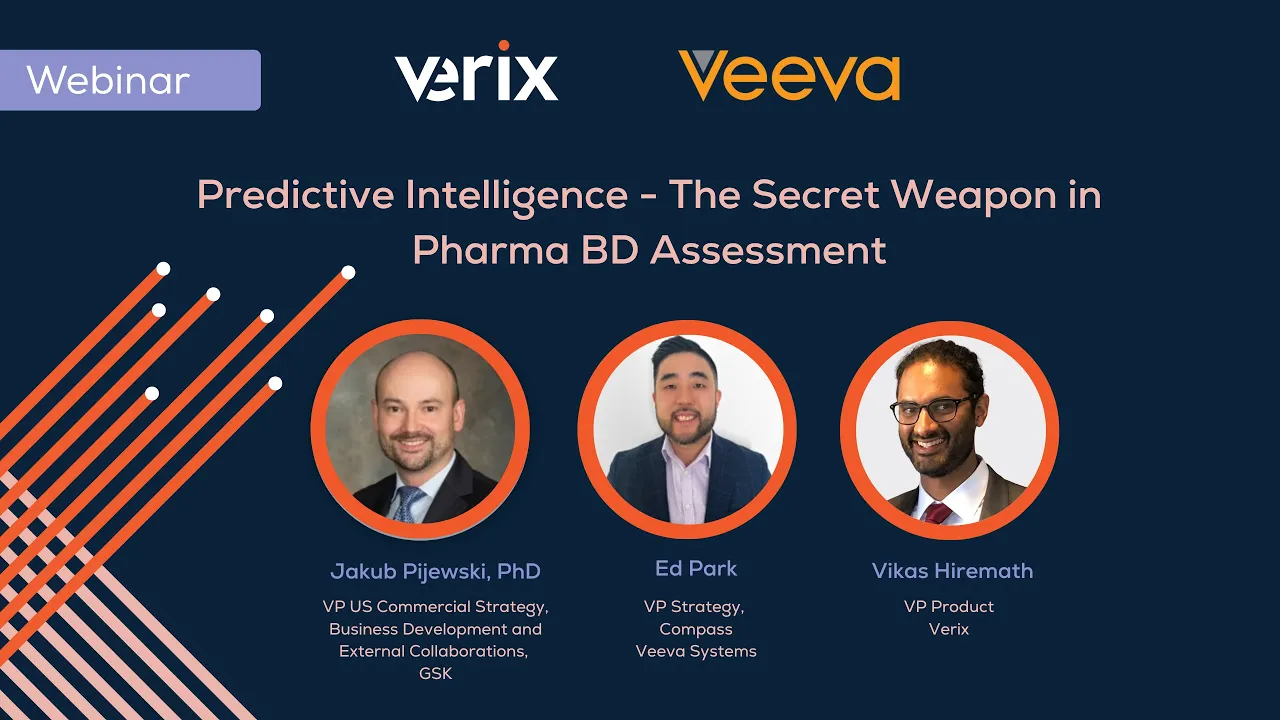
Webinar- Predictive Intelligence - The Secret Weapon in Pharma BD Assessment with GSK, Veeva, Verix
Verix
/@verixAI
Nov 24, 2025
This webinar provides an in-depth exploration of how predictive intelligence and intelligent automation serve as a "secret weapon" in pharmaceutical Business Development (BD) assessments. Featuring perspectives from a strategic investor (GSK), a data provider (Veeva), and an analytics platform vendor (Verix), the discussion centers on transforming the complex, high-stakes process of evaluating M&A and licensing opportunities. The core challenge identified by Jacob Pajooki (GSK) is the need to integrate vast, disparate data sets—scientific, commercial, and financial—under immense time pressure and often with incomplete information, making BD assessments a blend of "art and science." The speakers emphasize that while data is foundational, the true value is realized by efficiently converting that data into actionable insights. Traditional BD processes often get stuck due to data silos (clinical, market, epidemiology), lack of a systematic framework, and difficulties in achieving stakeholder alignment. The solution presented leverages best-in-class data assets, specifically Veeva Compass Patient data, combined with Verix’s automated analytics platform, Tavana. This integration aims to provide a more robust, real-world informed opinion of an asset's potential, moving beyond high-level epidemiology reports to quantify the truly eligible patient population and understand the commercial effort required for launch. The Verix Tavana platform is introduced as a modular, automated solution designed to streamline the forecasting process, which is traditionally manual and time-consuming. The platform incorporates building blocks for landscape assessment, patient prediction, patient-based forecasting, SGA estimation, and Monte Carlo simulation. By automating these analytical tasks, the platform frees up human expertise to focus on less structured problems and critical judgment calls, thereby accelerating the time to decision-grade insights. The quantitative benefits highlighted include a 50% reduction in cost and cutting the assessment timeline from approximately six weeks to under one week, enabling unlimited assessments at a fixed cost. This approach ensures consistency and a data-driven basis for comparing competing opportunities, which is crucial for achieving rapid alignment among the large stakeholder teams typical of strategic investors like GSK. The discussion also delves into the critical role of granular, real-world data (RWD) in refining valuations. Jacob from GSK provided examples where detailed longitudinal patient data reveals roadblocks, such as high market inertia or a widely distributed patient population, which can significantly shrink the realistic market potential compared to initial scientific belief. Veeva Compass Patient data, characterized by its completeness, unlimited access, and daily updates, addresses these data limitations by providing anonymous longitudinal data encompassing prescriptions, procedures, and diagnoses, including visibility into previously blocked segments like specialty pharmacy and hospital/HCO settings. This timeliness and depth are essential for understanding the current state of the market and ensuring the valuation reflects the true scope of commercial investment needed for a near-term launch. ### Detailed Key Takeaways * **BD Assessments are High-Stakes and Complex:** Pharmaceutical BD assessments are high-stakes exercises involving billions of dollars, requiring a difficult blend of scientific rationale, commercial strategy, and precise timing, often conducted under pressure with incomplete information. * **The Need for Data Integration and Structure:** A major pain point is breaking down data silos (clinical, market, competitive landscape, epidemiology) and integrating them quickly. Implementing a systematic framework and disciplined approach to data sources is essential for scaling BD evaluation efforts. * **Automation Accelerates Decision-Making:** Leveraging advanced analytics and automation (like the Verix Tavana platform) converts manual forecasting and data sifting into streamlined, consistent processes, freeing up human experts to focus their judgment on critical, less-structured issues (e.g., IP, manufacturing, instinct). * **RWD Refines Market Potential:** Relying solely on high-level epidemiology data can lead to inaccurate forecasts. Robust, deep, and broad real-world data (RWD) is necessary to quantify the truly eligible patient population, understand patient distribution, and assess the commercial effort (field force size, investment) required for market penetration. * **Longitudinal Patient Data is Critical for Commercialization:** Tracking patient history and treatment cycles reveals market inertia and patient flow roadblocks. For late-stage assets (launching in 2-3 years), understanding these dynamics is crucial for accurately scoping the required commercial investment and balancing the Net Present Value (NPV) equation. * **Platform-Based Approach Drives Efficiency:** Utilizing a modular, platform-based solution (like Tavana) allows companies to conduct rapid evaluations, reducing the time to decision-grade insights from six weeks to under one week, demonstrating a significant ROI (50% cost reduction) and enabling unlimited assessments at a fixed cost. * **Data Timeliness is Essential for Valuation:** Daily data updates (as provided by Veeva Compass Patient) are critical for BD efforts, providing the most timely view of the market, allowing teams to see how the market is reacting to recent clinical or competitor activities and ensuring the valuation reflects the current state. * **Addressing Data Blind Spots:** Comprehensive data networks must include visibility into previously blocked segments, such as specialty pharmacy and hospital/HCO settings, to provide a full 360-degree view of the market dynamics and competitive landscape. * **The Role of AI is Supportive, Not Autonomous:** The advanced analytics platform operates on a "human-in-the-loop" model, combining human intelligence with machine learning. The platform provides a comprehensive, robust view of the market faster, informing the "go/no-go" decision and confidence level, rather than making autonomous decisions. * **Data Granularity Impacts Investment Assumptions:** Detailed, data-driven assessments often lead to a more realistic view of investment costs. While traditional approaches might be overly ambitious on forecasts and overly conservative on costs, granular data can rationalize lower investment costs, helping maintain a strong NPV. * **Supporting the Full Commercial Cycle:** Beyond BD, foundational patient data (like Veeva Compass Patient) supports other commercial use cases, including building triggers and alerts based on daily activity, and improving segmentation and targeting accuracy by providing a complete view of HCP and patient interactions. ### Tools/Resources Mentioned * **Veeva Compass Patient:** Anonymous patient longitudinal data network that includes prescriptions, procedures, and diagnoses. Noted for completeness, unlimited access, and daily updates, providing visibility into specialty pharmacy and hospital settings. * **Verix Tavana Platform:** An automated, modular platform for advanced analytics and predictive intelligence. Used to build fit-for-purpose tools for BD assessment, forecasting, and commercial operations. * **Veeva CRM:** Mentioned in the context of integrating triggers and alerts built off Compass Patient data. ### Key Concepts * **Predictive Intelligence:** The use of advanced analytics, machine learning, and automation to forecast future market conditions, patient behavior, and commercial potential of an asset, particularly within the context of BD assessments. * **Business Development (BD) Assessment:** High-stakes evaluation process in life sciences (M&A, licensing) that integrates scientific, commercial, and financial data to determine the value and viability of an asset. * **Net Present Value (NPV):** A financial metric used in BD to evaluate the profitability of an investment opportunity, calculated by balancing the expected future revenue (forecast) against the required investment (commercialization costs). * **Human-in-the-Loop (HITL):** An AI/ML approach where human expertise and judgment are integrated into the automated process. The technology provides robust data and insights, but the final decision-making authority remains with the human experts.

My Veeva Financial Insight: Growth, Risks & PBC Status
Corporate Decoder
/@CorporateDecoder
Nov 24, 2025
This video provides an in-depth financial analysis of Veeva Systems Incorporated's quarterly report (10-Q) for the period ending October 31, 2025. The "Corporate Decoder" channel aims to demystify corporate jargon and make SEC filings accessible, offering a detailed breakdown of Veeva's financial health, growth trajectory, risks, and unique status as a Public Benefit Corporation (PBC). The analysis progresses systematically through the key financial statements: the condensed consolidated balance sheets, statements of comprehensive income, statements of stockholders' equity, and statements of cash flows, before delving into the notes to the financial statements, management's discussion and analysis (MD&A), and risk factors. The speaker adopts a clear, explanatory approach, translating complex financial figures into understandable insights. They highlight Veeva's strong financial position, marked by substantial cash and short-term investments, and consistent growth in subscription services revenue, which is the core of their business. The analysis also covers operational expenses, profitability metrics like gross profit and operating income, and net income, demonstrating Veeva's increasing financial strength. A significant part of the discussion focuses on Veeva's strategic investments in R&D and sales & marketing, indicating a commitment to future growth and market expansion within the life sciences sector. Beyond the raw numbers, the video explores critical qualitative aspects that influence Veeva's performance and future outlook. This includes their reliance on third-party cloud infrastructure like AWS and Salesforce, the ongoing migration of customers to newer Vault CRM solutions, and the competitive landscape. A particularly unique aspect discussed is Veeva's status as a Public Benefit Corporation (PBC), which requires balancing shareholder interests with those of other stakeholders, potentially influencing long-term strategic decisions. The video concludes by summarizing Veeva's robust financial health, effective risk management, and clear strategy for continued growth, while also acknowledging the complexities and evolving nature of its PBC status. Key Takeaways: * **Strong Financial Liquidity and Investment Strategy:** Veeva boasts a substantial cash and cash equivalents position of $1.66 billion and over $4.97 billion in short-term investments as of October 31, 2025. This indicates strong operational cash generation and a wise treasury management strategy focused on earning returns, providing significant financial flexibility. * **Consistent Revenue Growth in Core Business:** Subscription services revenue, the primary driver, grew from $580 million to $682 million quarterly and from $1.67 billion to $1.97 billion for the nine months ending October 2025. This demonstrates robust demand for their cloud solutions in the life sciences industry. * **Healthy Profitability and Margins:** Total gross margin percentage remains strong at 75% for the quarter and 76% for the nine months, indicating efficient management of direct costs relative to revenue. Operating income also saw significant increases, reflecting improved core business profitability. * **Strategic Investment in R&D and Market Expansion:** Research and development expenses increased to $191 million quarterly and $568 million for the nine months, while sales and marketing expenses rose to $110 million quarterly and $318 million for the nine months. These investments signal a commitment to innovation and expanding market reach. * **Effective Cash Flow Generation:** Net cash provided by operating activities for the nine months was $1.3 billion, a healthy increase from $1.02 billion in the prior period. This confirms that Veeva's core operations are generating substantial cash, vital for funding business activities. * **Resolution of Major Legal Disputes:** The settlement of all ongoing litigations with Ivia in August 2025 is a significant positive development, removing a major uncertainty and potential financial overhang for the company. * **Public Benefit Corporation (PBC) Status:** Veeva's unique status as a PBC means its board must balance shareholder interests with those of other stakeholders (customers, employees, communities). This can lead to long-term strategic decisions that may not always maximize short-term shareholder profit but are intended for the company's sustained health and mission. * **Reliance on Third-Party Infrastructure:** A key risk factor is Veeva's dependence on third-party providers like Amazon Web Services and Salesforce for its cloud infrastructure. Any disruption from these providers could significantly impact Veeva's services and operations. * **Customer Migration Challenges:** The ongoing migration of customers from legacy Veeva CRM to newer Vault CRM solutions is a complex process with inherent risks, requiring careful management to ensure customer satisfaction and retention. * **Revenue Concentration Risk:** While common for B2B software companies, a concentration of revenue within a few key customers is a notable risk. The loss of even one major client could have a substantial impact on Veeva's financial performance. * **Industry-Specific Risks:** Veeva's heavy reliance on the life sciences industry makes it susceptible to changes within that sector, including drug pricing regulations, healthcare policy shifts, and industry consolidation. * **AI and Data Privacy Regulatory Risks:** The company acknowledges challenges and potential liabilities associated with evolving AI and data privacy regulations, which are particularly pertinent for a firm operating with sensitive life sciences data. * **Diversified Investment Portfolio:** Veeva's $4.97 billion short-term investment portfolio is well-diversified, primarily in corporate notes and bonds ($2.89 billion) and US Treasury securities ($1.26 billion), indicating a relatively safe investment strategy. * **Geographic and Product Revenue Breakdown:** North America accounts for approximately 60% of revenues, with Europe at 28%. Subscription services revenue is split almost evenly between Commercial Solutions and R&D Solutions, with R&D solutions revenue expected to grow, indicating a strategic shift or increased focus in this area. **Key Concepts:** * **10-Q Report:** A comprehensive quarterly financial report submitted by public companies to the U.S. Securities and Exchange Commission (SEC), providing a snapshot of their financial performance and position. * **Public Benefit Corporation (PBC):** A type of for-profit corporate entity that includes positive impact on society and the environment in addition to profit as its legally defined goals. * **Deferred Revenue:** Money received by a company for goods or services that have not yet been delivered or rendered. It is recorded as a liability until the service is performed or the product is delivered. * **Goodwill:** An intangible asset that arises when one company acquires another for a price greater than the fair market value of its identifiable net assets. It often represents the value of brand name, customer base, good customer relations, employee relations, and patents. * **Non-GAAP Measures:** Financial metrics that are not prepared in accordance with Generally Accepted Accounting Principles (GAAP). Companies often use them to provide an alternative view of their performance, excluding items like stock-based compensation or one-off charges. * **Fair Value Measurements (Level 2):** A classification for valuing assets and liabilities using observable market data for similar assets or liabilities, rather than quoted prices for identical assets (Level 1) or unobservable inputs (Level 3). **Examples/Case Studies:** * **Veeva's Financial Performance (Q3 2025):** The video uses Veeva's actual 10-Q filing for the period ending October 31, 2025, as a live case study, detailing specific figures such as $1.66 billion in cash, $4.97 billion in short-term investments, $682 million in quarterly subscription revenue, and a net income of $236 million for the quarter. * **Ivia Litigation Settlement:** The settlement of all ongoing litigations with Ivia in August 2025 is presented as a concrete example of how legal proceedings can impact a company's financial and operational outlook, and how their resolution can remove significant uncertainties.
OpenStudyBuilder - Automating the Veeva EDC study setup
Katja Glass Consulting
/@katjaglassconsulting8982
Nov 24, 2025
This video provides an in-depth exploration of the initial steps in automating the Electronic Data Capture (EDC) study setup within Veeva systems, leveraging an open-source metadata repository called OpenStudyBuilder. The primary objective of this automation is to significantly reduce cycle times, align with the TransCelerate Digital Data Flow vision, and minimize manual tasks and potential human errors in clinical trial setup. The presentation details a proof-of-concept (PoC) implementation that serves as a foundation for a planned Veeva EDC integration release in 2026, emphasizing that while full automation is a future goal, the current PoC already delivers substantial benefits. The core of the automation process begins with the synchronization of the Case Report Form (CRF) library between OpenStudyBuilder and Veeva EDC. Currently, this synchronization is semi-automated, utilizing existing Veeva APIs. The process involves a translation script that extracts Veeva EDC library content, converts it into the ODM (Operational Data Model) format, and then populates the OpenStudyBuilder library by creating new forms. While SDTM (Study Data Tabulation Model) and other annotations are presently added manually, the video highlights ongoing efforts to finalize the CRF model and link activity instances to CRF items. A crucial second step involves maintaining alignment between the two libraries, for which a script is employed to identify and highlight differences, currently outputting a CSV file with plans for a future UI within OpenStudyBuilder. The video then moves to demonstrate the automation of the EDC study setup itself, again utilizing existing Veeva APIs. The automated tasks include the creation of study event groups and events based on OpenStudyBuilder's Schedule of Activities (SoA), the import of standard forms from the synchronized Veeva EDC library into the newly created trial, and the foundational setup of the study within Veeva EDC based on OpenStudyBuilder's operational data. It is noted that the study-level data collection module in OpenStudyBuilder is still under development, necessitating a workaround using Neo-Ash reports. This workaround facilitates the linking of activity instances, which represent CDISC (Clinical Data Interchange Standards Consortium) biomedical concepts, to specific CRF items. Following the selection of forms based on these activity instances, the automation sequence is initiated, culminating in the rapid population of content for the first draft of the study within Veeva. The presentation concludes by reiterating the vision for full automation once new Veeva API endpoints are released and OpenStudyBuilder's data collection module is finalized. Key Takeaways: * **Strategic Importance of Automation:** Automating the Veeva EDC study setup is critical for achieving significant gains in cycle time, reducing manual tasks, minimizing errors, and aligning with industry initiatives like the TransCelerate Digital Data Flow vision. * **Open-Source Metadata Repository:** OpenStudyBuilder serves as a central, open-source metadata repository and study metadata solution, providing the foundational data and structure necessary for automated EDC setup. * **Phased Automation Approach:** The current implementation is a proof-of-concept demonstrating semi-automated processes, with a clear roadmap towards full automation contingent on the release of new API endpoints and the finalization of specific modules within OpenStudyBuilder. * **CRF Library Synchronization:** A fundamental step in the automation is the robust synchronization of CRF libraries between OpenStudyBuilder and Veeva EDC, ensuring consistency and accuracy of data collection instruments across systems. * **Technical Workflow for Synchronization:** The synchronization process involves extracting Veeva EDC content via existing APIs, translating it into the ODM format, and then populating the OpenStudyBuilder library with new forms, highlighting the need for data transformation capabilities. * **Managing Library Alignment and Updates:** Ongoing management of CRF library alignment is crucial. A script is used to identify differences between the OpenStudyBuilder and Veeva EDC libraries, facilitating the implementation of necessary updates and maintaining data integrity. * **Specific Automated EDC Setup Tasks:** The PoC successfully automates key aspects of EDC study setup, including the creation of study event groups and events, importing standard forms from the synchronized library, and initiating the study structure within Veeva EDC. * **Leveraging Schedule of Activities (SoA):** The automation relies heavily on the Schedule of Activities defined within OpenStudyBuilder, which dictates the sequence and structure of events and forms within the clinical trial. * **Addressing Development Gaps with Workarounds:** The project demonstrates adaptability by implementing workarounds, such as using Neo-Ash reports, to bridge gaps where OpenStudyBuilder's study-level data collection module is still under development, ensuring progress despite ongoing development. * **Integration with Data Standards:** The process involves linking activity instances, which are implementations of CDISC biomedical concepts, to CRF items, underscoring the importance of adhering to industry data standards for interoperability and data quality. * **Future Vision for Full Automation:** The ultimate goal is complete automation of the EDC setup, which promises to further streamline clinical trial initiation and reduce the burden on clinical operations teams, once the necessary API enhancements and module developments are complete. Tools/Resources Mentioned: * **Veeva EDC:** The Electronic Data Capture system being automated. * **OpenStudyBuilder:** An open-source metadata repository and study metadata solution. * **Veeva APIs:** Application Programming Interfaces provided by Veeva, used for data extraction and system interaction. * **ODM Format:** Operational Data Model, an XML-based standard for exchanging clinical trial metadata and data. * **Neo-Ash Reports:** A specific reporting tool or system used as a workaround for an under-development module. Key Concepts: * **EDC (Electronic Data Capture):** A system used in clinical research to collect and manage patient data electronically, replacing traditional paper-based methods. * **CRF Library (Case Report Form Library):** A repository of standardized forms used for data collection in clinical trials, ensuring consistency across studies. * **Metadata Repository:** A centralized system for storing and managing metadata (data about data), crucial for defining and standardizing clinical trial elements. * **Schedule of Activities (SoA):** A detailed plan outlining all procedures, visits, and data collection points for each participant in a clinical trial. * **SDTM (Study Data Tabulation Model):** A standard developed by CDISC for organizing and formatting clinical trial data for submission to regulatory authorities. * **CDISC (Clinical Data Interchange Standards Consortium):** An organization that develops data standards to support the acquisition, exchange, submission, and archival of clinical research data and metadata. * **TransCelerate Digital Data Flow Vision:** An industry initiative aimed at improving the efficiency and effectiveness of clinical trials through digital transformation and seamless data exchange.

Healthcare Costs Shut Government Down - Longest Shutdown in History Over ACA Premium Subsidies
AHealthcareZ - Healthcare Finance Explained
@ahealthcarez
Nov 23, 2025
This video provides an in-depth exploration of the underlying causes of high healthcare costs in the United States, using the context of a government shutdown over Affordable Care Act (ACA) premium subsidies. Dr. Eric Bricker, the speaker, begins by highlighting that the longest government shutdown in US history was primarily due to disagreements between Democrats and Republicans regarding the continuation of ACA premium tax credits, which subsidize health insurance for 22 million Americans on individual exchange plans. He explains that these subsidies, expanded during the Biden administration, cost approximately $35 billion annually and aim to cap an individual's premium contribution at 8.5% of their income. The core of his argument is not to debate the policy itself, but to question why such massive subsidies are necessary due to exorbitant plan costs. To illustrate the problem, Dr. Bricker presents a direct comparison of ACA plan costs for a hypothetical family of five. In Dallas-Fort Worth, a Cigna bronze HMO plan with a $12,000 deductible costs $2,876 per month, totaling $34,512 annually. For a family earning $80,000, this necessitates a substantial government subsidy of $30,864 per year. He attributes these high costs in the traditional fee-for-service model to multiple layers of administration (insurance carrier and hospital), fee-for-service incentives that encourage more procedures, the burden of prior authorizations, and extensive billing and collections departments. He argues that this structure inflates costs far beyond the actual delivery of care. Conversely, Dr. Bricker compares this to a similar family in Los Angeles, where a Kaiser Permanente bronze HMO plan with an $11,600 deductible costs $1,723 per month, or $20,676 annually. This represents a staggering 40% reduction in cost compared to the Dallas-Fort Worth Cigna plan, despite Los Angeles having a higher cost of living. He attributes Kaiser's efficiency to its integrated model, where it functions as both the insurance company and the healthcare provider. This structure eliminates the need for separate administrations, removes fee-for-service incentives, bypasses prior authorizations, and significantly reduces billing complexities, as the provider directly bears the risk and manages care delivery. Dr. Bricker concludes by advocating for provider risk-bearing models, citing Steven Brill's book "America's Bitter Pill," which predicted the ACA's failure to control costs and recommended that providers take on risk, mirroring Kaiser's successful approach. He suggests that future ACA subsidies should exclusively go to risk-bearing providers, not traditional insurance companies, to achieve substantial cost savings. Key Takeaways: * **Healthcare Costs Drive Policy Disagreements:** Major government impasses, such as the longest US government shutdown, can stem directly from fundamental disagreements over healthcare costs and the funding of programs like ACA premium subsidies. * **ACA Subsidies are Substantial:** The Affordable Care Act's premium tax credits represent a significant annual expenditure (approximately $35 billion) to make health insurance affordable for millions, capping individual premiums at 8.5% of income. * **Traditional Healthcare Models are Inefficient:** The fee-for-service model, characterized by separate insurance carriers and providers, leads to inflated costs due to redundant administration, prior authorization processes, extensive billing departments, and incentives for providers to perform more services rather than focusing on cost-effective care. * **Integrated Systems Offer Significant Cost Savings:** Healthcare systems where the insurer and provider are combined into a single entity, such as Kaiser Permanente, demonstrate dramatically lower costs (e.g., 40% less in the example provided) compared to traditional models. * **Provider Risk-Bearing is Key to Efficiency:** When healthcare providers bear the financial risk for patient care (e.g., through capitated payments), it incentivizes them to streamline operations, reduce unnecessary procedures, and eliminate administrative overhead like prior authorizations and complex billing. * **Elimination of Fee-for-Service Incentives:** Integrated models remove the "do stuff, get paid" incentive inherent in fee-for-service, shifting the focus to efficient, value-based care delivery within a fixed budget. * **Reduced Administrative Burden:** Combining insurance and provider functions significantly reduces administrative duplication and the need for large departments dedicated to negotiating with and billing external entities. * **Proven Model for Decades:** The success of integrated systems like Kaiser Permanente, operating efficiently for decades with millions of satisfied members, demonstrates that lower-cost, high-quality healthcare is achievable within the US. * **Policy Recommendation for Cost Control:** A potential strategy for controlling healthcare costs and maximizing the impact of subsidies is to direct government support (like ACA subsidies) exclusively to healthcare providers who operate under a risk-bearing, capitated model, rather than to traditional insurance companies in a fee-for-service environment. * **Expert Endorsement:** The concept of providers bearing risk as a solution to healthcare cost control is supported by experts like Steven Brill, who extensively documented the creation of the ACA and concluded that its primary flaw was the absence of mechanisms to lower costs. Tools/Resources Mentioned: * **Health Sherpa.com:** A website mentioned as an easy way to shop for ACA health plans. * **"America's Bitter Pill" by Steven Brill:** A book that details the creation of the Affordable Care Act and advocates for provider risk-bearing models to control costs. * **AHealthcareZ.com:** The channel's website for more healthcare finance educational videos and Dr. Bricker's book. * **NBCNews.com & Reuters.com:** News sources cited for information on ACA subsidies and the government shutdown. Key Concepts: * **ACA (Affordable Care Act)/Obamacare:** US federal statute signed into law in 2010, aimed at reforming the healthcare system by expanding health insurance coverage. * **Premium Tax Credits/Subsidies:** Financial assistance provided by the government to help eligible individuals and families pay for health insurance premiums purchased through the ACA exchanges. * **Fee-for-Service:** A payment model where healthcare providers are paid for each service they provide, incentivizing more services. * **Integrated Health System:** A healthcare organization that combines health insurance functions with the delivery of healthcare services (e.g., hospitals, clinics, doctors) under a single entity. * **Provider Risk-Bearing:** A model where healthcare providers take on financial responsibility for the cost of care delivered to a patient population, often through capitation. * **Capitation:** A payment arrangement where a fixed payment is made to a healthcare provider for each enrolled person, regardless of the services provided, incentivizing cost-effective care. * **HMO (Health Maintenance Organization):** A type of health insurance plan that limits coverage to care from doctors who work for or contract with the HMO, typically requiring a primary care physician and referrals for specialists. * **Deductible:** The amount of money an individual must pay for healthcare services before their insurance plan starts to pay. * **Out-of-Pocket Max:** The maximum amount an individual will have to pay for covered healthcare services in a policy year, after which the insurance company pays 100% of the costs. Examples/Case Studies: * **Dallas-Fort Worth Cigna Bronze HMO Plan:** For a family of five with no subsidy, this plan costs $2,876/month ($34,512/year) with a $12,000 deductible and $21,200 out-of-pocket max. This example highlights the high cost of traditional fee-for-service models. * **Los Angeles Kaiser Permanente Bronze HMO Plan:** For the same family of five with no subsidy, this plan costs $1,723/month ($20,676/year) with an $11,600 deductible and $19,600 out-of-pocket max. This example demonstrates the significant cost savings (40% less) achieved through an integrated insurer-provider model.

Business boils down to 3 things | Chris Knerr
Made To See (formerly WebinarExperts)
/@madetoseemedia
Nov 22, 2025
This video features Chris Knerr, VP of Technology Strategy at Veeva Systems, who distills the complexities of business into three fundamental pillars that drive all company decisions and aspirations. Drawing from a diverse background spanning investment banking principles, Fortune 50 companies, and tech startups within the life sciences sector, Knerr argues that despite elaborate corporate rhetoric, every business objective ultimately aims at achieving growth, maintaining an efficient cost structure, or establishing quality differentiation in the market. He emphasizes that understanding these core drivers is paramount for anyone aspiring to senior leadership roles and for effectively securing investment or stakeholder buy-in. Knerr's perspective is rooted in a pragmatic, financially-focused approach, which he likens to the mindset required in investment banking. He posits that while various initiatives might be presented with different motivations, a critical analysis will always reveal an underlying connection to one of these three fundamental business imperatives. For instance, while employee satisfaction is desirable, it is not the primary driver for investment; rather, investors seek tangible financial returns. This direct, no-nonsense approach is encapsulated in his repeated emphasis on the phrase, "show me the money," highlighting the universal need to demonstrate clear financial value. The speaker's insights serve as a powerful decoder for corporate communication, encouraging listeners to look beyond jargon and identify the true financial implications of any proposed strategy or project. He suggests that this ability to articulate value in terms of growth, cost efficiency, or market differentiation is crucial for gaining traction with senior leadership and external investors. His extensive experience across Med Device, Pharma, and Consumer OTC industries further lends weight to these universal business truths, making them particularly relevant for professionals operating within the highly regulated and competitive life sciences ecosystem. Key Takeaways: * **Three Fundamental Business Pillars:** Chris Knerr identifies growth, an efficient cost structure, and quality (often manifesting as market differentiation) as the three core concerns that drive all business decisions and objectives. Any strategic initiative, regardless of its initial framing, ultimately seeks to impact one or more of these areas. * **Critical Financial Focus for Leadership:** Maintaining a keen financial focus is presented as a critical prerequisite for aspiring senior leaders. Knerr's background, which he likens to investment banking, underscores the importance of understanding the monetary implications of business actions. * **Decoding Corporate Jargon:** The video provides a framework for deconstructing complex corporate language. Knerr suggests that by decoding what companies "really care about," one can consistently trace back stated goals to one of the three fundamental pillars: growth, cost efficiency, or quality/differentiation. * **"Show Me The Money" Principle:** A central tenet is the necessity of demonstrating tangible financial returns or benefits to secure investment or buy-in. Knerr explicitly states that investors are primarily motivated by making money, and proposals must clearly articulate how they contribute to this goal, rather than focusing on secondary benefits like team happiness. * **Universality Across Business Contexts:** Knerr's experience spans Fortune 50 companies, management consulting, portfolio companies, and tech startups, indicating that these three core business drivers are universally applicable across diverse organizational structures and stages of development. * **Strategic Communication of Value:** For consultants and solution providers like IntuitionLabs.ai, this insight is crucial for effectively communicating the value proposition of their services. Framing AI solutions, Veeva CRM consulting, or data engineering in terms of how they drive client growth, reduce operational costs, or enhance regulatory compliance and differentiation will resonate more strongly with decision-makers. * **Understanding Client Motivations:** Companies in the pharmaceutical and life sciences sectors, IntuitionLabs.ai's target market, are inherently driven by these same financial imperatives. Solutions that can clearly demonstrate impact on commercial operations (growth), clinical data management (efficiency, quality), or regulatory adherence (quality, differentiation) will be highly valued. * **Quality as Differentiation:** Knerr's inclusion of "quality" as a core pillar, which he also equates with differentiation, is particularly relevant for regulated industries. For IntuitionLabs.ai, this means emphasizing how their AI-powered solutions streamline compliance tracking, automate audit trails, and manage GxP/21 CFR Part 11 requirements, thereby enhancing quality and providing a competitive edge. Key Concepts: * **Growth:** The expansion of a company's market share, revenue, customer base, or overall business operations. * **Efficient Cost Structure:** The optimization of operational expenses and resource allocation to maximize profitability and reduce waste. * **Quality/Differentiation:** The provision of superior products, services, or operational standards that set a company apart from its competitors, often including adherence to high regulatory and compliance standards in the life sciences. * **Financial Focus:** A strategic mindset that prioritizes and articulates business value primarily in monetary terms, demonstrating clear return on investment (ROI). * **Show Me The Money:** A direct and pragmatic demand for evidence of tangible financial returns or benefits as the basis for investment or approval.

SHOCKING Market Swings: 3 Stocks SOAR to Records, 2 PLUNGE! Watch NOW!
Rich Now
/@DealCatalyst
Nov 22, 2025
This financial market analysis video provides a snapshot of significant stock volatility, highlighting a stark divergence in performance among major S&P 500 companies based largely on investor sentiment toward AI integration and core business outlooks. The video frames the market movement within the context of Federal Reserve comments hinting at potential interest rate cuts, which generally boosted investor confidence. However, the core insight lies in the contrasting fortunes of specific technology and retail firms, offering crucial data points for companies operating in the enterprise software and AI consulting space. The analysis specifically calls out companies that experienced significant gains, such as Ross Stores, Gap, and Intuit, attributing Intuit’s success directly to better-than-expected earnings and strong demand for its AI tools. This reinforces the current market premium placed on companies demonstrating successful AI monetization and adoption. Conversely, the video details two major stock plunges: Oracle, which fell due to "persistent worries about AI valuation," suggesting investor skepticism regarding the tangible returns of large AI investments; and, most critically for the life sciences sector, Veeva Systems. Veeva Systems, the dominant provider of cloud software for the pharmaceutical and life sciences industries, saw its shares drop significantly. The transcript explicitly attributes this decline to a "cautious outlook on its CRM system." This caution signals potential headwinds or slower-than-anticipated growth within the core commercial operations platform used by IntuitionLabs.ai’s target market. For a firm specializing in Veeva CRM consulting and AI solutions for pharmaceutical commercial operations, this market signal is a critical indicator of potential shifts in client spending, platform strategy, or competitive pressure within the regulated life sciences technology ecosystem. The overall narrative underscores the volatile nature of the current market, where success is increasingly bifurcated: companies that successfully demonstrate immediate, profitable AI tool demand are rewarded (like Intuit), while even established industry leaders (like Veeva) face sharp penalties for perceived softness or cautious projections regarding their foundational enterprise platforms. This dynamic suggests that life sciences companies are under intense pressure to justify technology investments, prioritizing solutions that offer clear, immediate ROI—a strong argument for specialized, outcome-focused AI and CRM optimization services. Key Takeaways: * **Veeva CRM Market Sensitivity:** The significant stock drop experienced by Veeva Systems, driven by a cautious outlook on its core CRM system, indicates potential market saturation or slowing growth expectations within the commercial operations segment of the life sciences industry. This necessitates a strategic review for consulting firms reliant on Veeva implementation. * **Strategic Positioning Against Caution:** IntuitionLabs.ai must leverage this cautious outlook by positioning its Veeva CRM consulting services not merely as implementation, but as optimization and efficiency drivers, helping clients maximize existing CRM investment during periods of perceived platform slowdown. * **AI Monetization is Key to Valuation:** The success of Intuit, attributed to strong AI tool demand, confirms that the market rewards tangible, revenue-generating AI applications. This validates IntuitionLabs.ai’s focus on products like Generative AI Sales Ops Assistants and Medical Info Chatbots, which offer clear commercial value. * **AI Valuation Skepticism:** Oracle’s stock decline due to "persistent worries about AI valuation" serves as a warning that large, generalized AI investments without clear, immediate ROI are being scrutinized. IntuitionLabs.ai must ensure its AI solutions are highly specialized, outcome-driven, and tied directly to measurable pharmaceutical business objectives (e.g., compliance, commercial effectiveness). * **Focus on Efficiency and Compliance:** When the core platform provider (Veeva) signals caution, clients often shift focus from large-scale transformation to operational efficiency and regulatory risk mitigation. IntuitionLabs.ai should emphasize how its AI and data engineering services streamline compliance tracking and automate audit trails (21 CFR Part 11, GxP). * **Data Engineering as a Stabilizer:** Robust data engineering services become crucial when CRM outlooks are cautious, as pharma companies seek to extract maximum value and actionable insights from their existing Veeva data. Data pipelines and BI dashboards offered by IntuitionLabs.ai can provide this necessary uplift. * **Commercial Operations Headwinds:** The cautious outlook on the Veeva CRM system suggests that pharmaceutical commercial operations departments may be facing budget constraints or increased pressure to demonstrate ROI, making targeted AI automation for sales and medical affairs a necessity rather than a luxury. * **Competitive Intelligence Opportunity:** The market volatility surrounding Veeva presents an opportunity for IntuitionLabs.ai to differentiate itself by offering specialized expertise that addresses the specific pain points causing the cautious outlook, potentially focusing on integration challenges or maximizing user adoption and data quality within the Veeva ecosystem. Tools/Resources Mentioned: * Veeva Systems (specifically its CRM system) * Intuit (and its AI tools) * S&P 500 (Index) Key Concepts: * **AI Valuation:** The market's assessment of a company's stock based on the perceived current and future profitability derived from its artificial intelligence initiatives and products. * **CRM System Outlook:** The projected growth, adoption, and financial performance expectations for a Customer Relationship Management platform, particularly relevant in the regulated life sciences sector where Veeva dominates. * **Market Volatility:** Rapid and significant fluctuations in stock prices, often driven by macroeconomic factors (like Federal Reserve interest rate hints) and company-specific performance or guidance.

VEEV Veeva Systems: Q3 Beat But Stock Drops - 5 Price Targets & Friday Predicted Opening? 📉
StockInvest.us
/@StockInvestUS
Nov 20, 2025
This video provides an in-depth exploration of Veeva Systems Inc. (VEEV) stock performance, offering a detailed analysis of its recent trading activity, financial results, technical indicators, and future price predictions. The analysis, published on stockinvest.us, categorizes VEEV as a "hold or accumulate" based on its system's assessment as of November 20, 2025. The presentation progresses from an overview of the stock's current status to a granular examination of its historical fluctuations, Q3 earnings report, various technical signals, analyst ratings, and insider trading patterns, concluding with projected price movements and risk assessment. The video highlights a paradoxical situation where Veeva Systems reported strong fiscal third-quarter results, with total revenue increasing 16% year-over-year to $811.2 million and subscription services revenue rising 17% to $682.5 million. Despite this robust performance, the stock experienced a decline after market close, indicating investor disappointment likely stemming from guidance details, profitability concerns, or high expectations already built into the stock price. This sell-off is anticipated to lead to increased short-term volatility as traders evaluate recurring revenue growth against any weaknesses in margins or future outlook. Further into the analysis, the video delves into both technical and fundamental aspects. Technically, VEEV shows several negative signals, including sell signals from both short-term and long-term moving averages, a general sell signal from the relationship between these averages, and a sell signal from a pivot top identified 32 days prior. The 3-month Moving Average Convergence Divergence (MACD) also indicates a sell signal. However, a rare "golden star" signal was identified in the long-term chart on January 17, 2025, suggesting potential for significant and sustained gains. Fundamentally, while revenue growth is strong, analysts have assigned a general neutral rating, with "strong sell" ratings for the price-to-earnings (PE) and price-to-book (PB) ratios, but a "strong buy" for return on investment. Insider trading activity shows a net negative trend, with more shares sold than purchased in the last 100 trades. The analysis projects a potential change of approximately 4.11% over the next three months, with a possible return ranging from 4.11% to 20.23%. For the longer term, a 12-month analysis indicates a projected change of 38.73%, placing the future price between $365.55 and $440.63. The stock finds support at $270.06, which could present a buying opportunity, and faces resistance at $272.33 and $290.44. The risk associated with VEEV is considered medium due to its average daily movements and favorable trading volume. The video concludes by reiterating the "hold or accumulate" recommendation, emphasizing the importance of monitoring guidance and margin trends as key catalysts for future price movements. Key Takeaways: * **Current Stock Recommendation:** As of November 20, 2025, Veeva Systems (VEEV) is categorized as a "hold or accumulate" by stockinvest.us, with a score of 0.85, suggesting it might be wise to hold existing shares or consider accumulating more while monitoring developments. * **Q3 Performance vs. Stock Reaction:** Veeva reported strong fiscal Q3 results with total revenue up 16% year-over-year to $811.2 million and subscription services revenue up 17% to $682.5 million. Despite this beat, the stock declined, indicating investor disappointment likely due to guidance details, profitability concerns, or high expectations. * **Short-Term Price Prediction:** The 3-month trend suggests a potential change of approximately 4.11%, with a possible return ranging from 4.11% to 20.23%. * **Long-Term Price Prediction:** The 12-month analysis projects a change of 38.73%, with the stock's future price potentially ranging from $365.55 to $440.63. * **Technical Sell Signals:** The stock shows multiple sell signals from short-term and long-term moving averages, their relationship, a pivot top identified 32 days ago, and the 3-month MACD, indicating a generally negative technical outlook. * **Rare "Golden Star" Buy Signal:** A unique "golden star" signal was identified in the long-term chart on January 17, 2025. This rare occurrence, where short-term moving average, long-term moving average, and price line converge, is often followed by significant and sustained gains. * **Analyst Sentiment:** Analysts have assigned VEEV a general neutral rating. While they rate the price-to-earnings (PE) and price-to-book (PB) ratios as "strong sell," the return on investment (ROI) is rated as a "strong buy." * **Insider Trading Activity:** Recent insider trades show a net negative "insider power" ratio of -26.467, with insiders selling more shares (108,337) than purchasing (61,29) in the last 100 trades. * **Support and Resistance Levels:** The stock finds support at $270.06, which could be a buying opportunity. Resistance levels are identified at $272.33 and $290.44, with a breakout above these potentially triggering buy signals. * **Risk Assessment:** VEEV is considered to have a medium level of risk due to its average daily price fluctuations and favorable trading volume. A recommended stop loss is set at $255.78, reflecting a 5.44% decrease. * **Importance of Guidance and Margins:** For long-term investors, monitoring management's guidance and margin trends will be crucial in determining whether the recent pullback represents a buying opportunity or a shift towards a prolonged rerating. * **Anticipated Opening Price:** For the next trading day (Friday, November 21), VEEV is anticipated to open at a higher price, increasing by $1.97, with an expected trading price of $272.47. * **Disclaimer on Financial Advice:** The video explicitly states that its content is for informational purposes only and should not be considered financial advice, emphasizing the high risk involved in trading and the need to consult a financial advisor. Tools/Resources Mentioned: * **stockinvest.us:** The website providing the stock analysis and predictions. * **AI stock analysis tool powered by GPT4:** A newly launched tool by stockinvest.us for enhanced trading decisions, offering free price predictions and deep analysis for 45,000 companies. Key Concepts: * **Price-to-Earnings (PE) Ratio:** A valuation metric comparing a company's current share price to its earnings per share. A high PE ratio can suggest overvaluation or anticipated future growth. * **Pivot Top:** A technical analysis pattern indicating a potential reversal from an uptrend to a downtrend, signaling a sell opportunity. * **Golden Star Signal:** A rare technical signal occurring when the short-term moving average, long-term moving average, and the price line converge in a unique combination, often preceding significant and sustained stock gains. * **Moving Average Convergence Divergence (MACD):** A trend-following momentum indicator that shows the relationship between two moving averages of a security's price. A sell signal from MACD typically indicates bearish momentum. * **Moving Averages (Short-term and Long-term):** Technical indicators that smooth out price data to identify trends. Their crossovers and relationships often generate buy or sell signals. * **Support and Resistance Levels:** Price levels on a chart where the price tends to stop and reverse. Support is a price level where demand is strong enough to prevent the price from falling further, while resistance is a level where supply is strong enough to prevent the price from rising further. * **Insider Power:** A metric used to gauge the sentiment of company insiders (executives, directors) regarding their own stock, calculated from their buying and selling activities. A negative ratio indicates more selling than buying.

$VEEV Veeva Systems Q3 2026 Earnings Conference Call
EARNMOAR
/@EarnMoar
Nov 20, 2025
This video provides an in-depth exploration of Veeva Systems' fiscal 2026 third-quarter financial results and strategic initiatives, as discussed during their earnings conference call. The call, primarily a Q&A session with CEO Peter Gastner, EVP Strategy Paul Shawa, and CFO Brian Van Wagner, highlights Veeva's strong performance with total revenue of $811 million and non-GAAP operating income of $365 million, exceeding guidance. A central theme is the significant progress and potential of "Veeva AI," which is positioned as a major initiative for customers, the industry, and Veeva itself. The discussion also covers innovation across all product areas, including Vault CRM, Crossix, clinical, and safety solutions. The conversation delves deeply into the ongoing migration of top 20 pharmaceutical customers to Vault CRM, noting that 14 are expected to migrate, with six potentially opting for other solutions. While acknowledging potential revenue at risk, Veeva emphasizes the multi-year nature of these projects and the overall health of its CRM business, which now constitutes about 20% of total revenue, down from 25% two years prior due to growth in other product areas. The company expresses confidence in retaining customers and the potential for "win-backs," driven by the integrated value proposition of the broader CRM suite, including new add-ons like Service Center, Marketing Automation, and Patient CRM. Veeva's strategy for smaller customers, who prefer integrated solutions over custom builds, is also highlighted. Beyond CRM, the call explores Veeva's R&D (Development Cloud) and Quality Cloud segments. In R&D, discussions include the competitive landscape in the Electronic Data Capture (EDC) market, the importance of integrated solutions for clinical operations and data, and future innovations aimed at bridging sponsors with clinical research sites and improving patient recruitment. Safety systems are identified as a significant opportunity, particularly with AI, despite long sales cycles and the inherent complexity of global drug safety. The Quality Cloud is noted for its expanding market reach, including CDMOs and manufacturing plants, driven by its unique platform approach encompassing quality documentation, quality management systems (QMS), and GxP training, with new products like batch release, computer systems validation, and Laboratory Information Management Systems (LIMS) showing promise. The company also touches on the positive impact of its partnership with IQVIA, enhancing interoperability and customer confidence across commercial and clinical domains, and the strategic importance of its "Veeva Basics" offering for small biotechs. Key Takeaways: * **Strong Financial Performance:** Veeva reported excellent Q3 2026 results with $811 million in total revenue and $365 million in non-GAAP operating income, surpassing guidance, indicating robust execution across the business. * **Veeva AI as a Strategic Pillar:** AI is a major initiative, with significant progress expected to deliver practical, value-adding, industry-specific solutions for customers, particularly in automating tasks like insight generation in CRM, increasing efficiency in safety case processing, and streamlining clinical operations. * **Vault CRM Migration Dynamics:** 14 of the top 20 customers are expected to migrate to Vault CRM, with 6 potentially choosing other solutions. While this presents some revenue risk, it's considered a multi-year transition with no material impact expected in the short term, and Veeva anticipates win-backs and continued growth from its broader customer base. * **CRM Business Evolution:** CRM now accounts for approximately 20% of Veeva's total revenue, down from 25% two years ago, reflecting the diversification and growth of other product areas. The overall CRM business remains healthy, particularly with smaller customers who prefer integrated solutions. * **Integrated Commercial Cloud Strategy:** Veeva is building a comprehensive "industry cloud" for life sciences, connecting CRM, commercial content, Crossix, and data assets on a common platform. This integration aims to provide significant competitive advantage and synergy for customers. * **R&D Cloud Momentum:** Veeva continues to see strong momentum in its Development Cloud, with 20 out of the top 20 customers having selected their ETMF solution. Future innovations in clinical, safety, and quality are expected to drive efficiency and address complex industry needs. * **Safety Systems as a High-Potential Area:** Veeva Safety is a complex but high-potential area, with AI expected to drive faster adoption by reducing labor and improving efficiency in adverse event processing. The company's eight-year investment in this area creates a significant competitive moat. * **Crossix as a Growth Driver:** Crossix continues to be a strong growth driver, benefiting from increased digital marketing spend in the life sciences, the growing importance of measurement and optimization, and its expanding role as an industry standard. * **Healthy Pharma Macro Environment:** The pharmaceutical industry remains healthy, with steady demand driven by ongoing scientific evolution and the need to address uncured diseases, leading to no material changes in customer buying behaviors. * **Strategic Role of Business Consulting:** Veeva's integrated approach combines software, data, and consulting services, positioning the company as a "general contractor" for life sciences. Business consulting plays a critical role in change management and driving broader platform adoption. * **AI Monetization Across Segments:** AI's value is expected to be broadly even across commercial and R&D, with implementations focusing on insight generation and agility in commercial, and labor reduction in areas like safety and clinical operations. * **Veeva Basics for Small Biotechs:** The Veeva Basics offering, with over 100 customers, supports the smaller end of the life sciences industry, providing professional solutions that allow companies to scale to enterprise Veeva without changing systems, fostering overall industry growth. * **Long-Term Vision and Competitive Advantage:** Veeva's long-term commitment to life sciences, its integrated platform approach, and continuous innovation (especially with AI) are seen as key competitive advantages against competitors who may offer less comprehensive or industry-specific solutions. **Tools/Resources Mentioned:** * Veeva Vault CRM Suite * Veeva Medical * Veeva PromoMats * Veeva Crossix * Veeva OpenData * Veeva Link * Veeva Compass * Veeva CRM Pulse * Veeva Clinical Platform * Veeva Clinical Data Management * Veeva Safety * Veeva RIM (Regulatory Information Management) * Veeva Quality Cloud (Quality Documentation, QMS, GxP Training, Batch Release, Computer Systems Validation, LIMS) * Veeva Basics * Salesforce.com (as a platform/competitor for CRM) * AWS (Amazon Web Services) * Microsoft (as a partner for AI) * Anthropic (as a partner for AI) * IQVIA (strategic partner) * Doximity (digital avenue for HCPs) * Open Evidence (digital avenue for HCPs) **Key Concepts:** * **Veeva AI:** Veeva's overarching initiative to embed artificial intelligence, including Large Language Models (LLMs) and AI agents, across its product suite for intelligent automation and insight generation. * **Industry Cloud:** Veeva's strategy to provide a comprehensive, integrated suite of software, data, and consulting services tailored specifically for the life sciences industry. * **Vault CRM:** Veeva's next-generation CRM platform, designed to replace its legacy Salesforce-based CRM, offering deeper integration with other Veeva Vault applications. * **Development Cloud:** Veeva's suite of applications for R&D, including clinical operations, clinical data management, safety, and regulatory information management. * **Quality Cloud:** Veeva's solutions for quality management, including documentation, QMS, GxP training, and manufacturing quality control. * **ETMF (Electronic Trial Master File):** A system for managing and storing essential clinical trial documents. * **EDC (Electronic Data Capture):** Software used in clinical trials to collect and manage patient data. * **RTSM (Randomization and Trial Supply Management):** Systems for managing patient randomization and drug supply in clinical trials. * **Ecoa (Electronic Clinical Outcome Assessment):** Digital tools for collecting patient-reported outcomes in clinical trials. * **LIMS (Laboratory Information Management System):** Software for managing laboratory samples, experiments, and results, particularly in manufacturing quality control. * **GxP:** A set of good practice guidelines (e.g., Good Manufacturing Practice, Good Clinical Practice) for regulated industries. * **21 CFR Part 11:** FDA regulations on electronic records and electronic signatures. * **Probabilistic Computing:** An AI concept related to making predictions or decisions based on probabilities, often in the context of LLMs. **Examples/Case Studies:** * **Top 20 CRM Migrations:** Discussion centered on the migration status of the top 20 pharmaceutical companies to Veeva's Vault CRM, with 14 committed and 6 undecided or opting for alternatives, highlighting the strategic importance of these large clients. * **EDC Customer Win-Back:** A specific instance where a top 20 customer decided to revert to a previous EDC provider, which Veeva characterized as an "aberration" rather than a trend, emphasizing its strong pipeline and integrated solution approach. * **LIMS Early Adopter:** Mention of the first early adopter in the top 20 for Veeva's LIMS product for two manufacturing sites, signaling entry into a new, significant market segment within quality. * **IQVIA Partnership:** The strategic partnership with IQVIA was cited as a positive macro-level trend, improving interoperability and customer confidence for joint clients across commercial and clinical operations.