Veeva Link Guide: KOL Identification & Medical Affairs

Executive Summary
The identification and engagement of Key Opinion Leaders (KOLs) are critical strategic activities in pharmaceutical and medical device industries. Veeva Link is a data-driven platform designed to support these activities by aggregating extensive information on experts and streamlining how Medical Affairs and commercial teams interact with them. This report provides an in-depth analysis of Veeva Link’s capabilities, the context of KOL engagement, case studies of its use, and implications for future Medical Affairs strategies. Key findings include:
-
KOL Identification is Fundamental to Pharma Strategy. Industry education resources emphasize that mapping KOLs has become “a cornerstone” of modern pharmaceutical strategy ([1]) ([2]). Regulatory-trained professionals note that Medical KOLs are defined primarily by scientific influence (publishing trials, authoring guidelines, leading congresses), not necessarily by prescribing volume ([3]). In practice, traditional KOL lists can be incomplete (often missing ~30% of relevant experts ([1])), underscoring the need for better data.
-
Veeva Link Offers Deep, Automated KOL Data. Launched in 2020, Veeva Link’s Key People application aggregates data on experts worldwide. It curates profiles from over 250,000 public sources (e.g. PubMed, clinical trial registries, conferences, social media, industry news, and grant/payments databases) ([4]). It provides a 360° view of each KOL’s activities and patient-mix. Users access the data via web and mobile apps, or directly within Veeva CRM and Events Management through built-in connectors. Link Key People is already widely adopted: by late 2025, 13 of the top 20 biopharma companies had standardized on it globally ([5]) (and 15 of the top 20 companies use it at regional or global levels ([6])). The platform is available in 85+ countries and covers all major therapeutic areas ([7]).
-
Integrated “Link” Suite for Medical Affairs. In addition to Key People, Veeva has expanded the Link family to address broader Medical Affairs needs ([8]). As of 2022, new applications include Link Key Accounts (profiles of hospitals and health systems), Link Scientific Awareness (tracking sentiment and news around specific products), Link Medical Insights (a workflow tool for capturing and sharing field insights), and Link+ (relationship-management workflows). All Link applications leverage Veeva’s Common Data Architecture in the Veeva Data Cloud, enabling integration with other data products like Veeva OpenData and claims data (Compass) ([9]) ([10]).
-
Empirical Impact on Engagement. Veeva’s research confirms that effective KOL engagement pays off: field medical interactions with KOLs pre-launch lead to 1.5× higher treatment adoption in the first six months ([11]). Conversely, 70% of KOLs today engage with only one company ([12]), leaving many experts under-connected. Veeva Pulse data shows that 30% of identified global experts had no recorded MSL interactions ([13]). These findings underscore the untapped opportunity for Medical Affairs: using data tools like Link to identify and connect with overlooked experts can substantially improve scientific exchange and patient access.
-
Case Studies Demonstrate Value. Leading companies report concrete benefits. For example, Bayer notes that integrating Veeva Link “strengthens data-driven decision-making, enhances laser-sharp targeting, and fosters more engaging HCP interactions” ([14]). Genentech found Link enabled pre-call planning that boosted customer engagement by 50% ([15]). In a published case, ZS Associates helped a major pharma client use an AI-based KOL platform (similar in intent to Link) to uncover 300 previously unidentified KOLs and 10,000 new influence-network connections ([16]). Sanofi and Lundbeck likewise report that the real-time insights from Link allowed field teams to build the “right relationships” more efficiently, focusing resources where they have “greatest scientific impact” ([17]) ([18]).
-
Future Implications. As Medical Affairs becomes more data-driven, platforms like Veeva Link are positioned to play a central role. Link’s structured, up-to-date KOL datasets serve as fodder for AI analytics and planning. Indeed, Veeva emphasizes that Link data is being leveraged by analytics teams for machine learning, and that new AI-powered summaries and alerts in Link are “discovering new engagement opportunities” ([19]). Going forward, we anticipate deeper integration of such data into Medical Affairs workflows (e.g. via Veeva CRM MyInsights pages ([20])), more predictive modeling (e.g. identifying rising “digital opinion leaders”), and continued consolidation of global expert networks. The medical cloud ecosystem’s growth (Veeva now serves ~1,500 life sciences customers ([21])) suggests widespread industry momentum.
Recommendations: Medical Affairs leaders should continue investing in data-centric engagement. They should ensure their KOL mapping is comprehensive (addressing the typical ~30% gaps ([1])) and integrated into a single platform. Using Veeva Link in conjunction with CRM systems allows teams to quickly surface expert profiles during KOL meetings or account reviews ([20]) ([3]). Organizations should also monitor and evolve their KOL strategies in line with analytics insights – for example, allocating MSL resources based on emerging trends detected by Link’s AI summaries. Overall, aligning strategy with Veeva Link’s capabilities can drive more efficient, compliant, and impactful Medical Affairs engagement.
Introduction and Background
Pharmaceutical and biotechnology companies have long relied on Key Opinion Leaders (KOLs) – clinicians and researchers with high influence – to inform drug development and drive adoption of new therapies. Unlike ordinary prescribers whose importance is often judged by prescription volume, a medical KOL is defined by scientific influence: they may be high-profile researchers who “publish papers, run clinical trials, write treatment guidelines, and speak on the podium at global congresses” ([3]). Regulatory-trained medical affiliates emphasize that KOLs are expert partners, not customers, and should be identified and managed differently from high-prescribing “sales” targets ([3]).
In recent years, identifying the right KOLs has become both more complex and more crucial. Historically, KOL lists were built through personal networks, paper maps, and regional meetings. MSLs often relied on outdated spreadsheets and anecdotal referrals, with no system-wide visibility across teams. This fragmented approach has been likened to “paper charting” – data scattered in Excel files, notebooks, and Outlook – which is non-compliant and unauditable ([2]). As one medical education source notes, “the CRM (Customer Relationship Management) system (like Veeva or Salesforce) is the single source of truth for a Key Opinion Leader”, analogous to an EMR for a patient ([2]). By consolidating KOL interactions into a centralized CRM, companies create an auditable, strategic record of every scientific exchange.
The rise of digital information and analytics over the past decade has transformed KOL mapping. New data sources (e.g. publication databases, conference programs, social media posts, investigator-initiated trials, and (in the U.S.) open payments data) mean that many previously hidden experts can be discovered ([3]) ([13]). Surveys indicate roughly half of MSL-HCP interactions are now virtual versus in-person ([22]), further expanding the reach and complexity of engagement. Consequently, the Pharmaceutical KOL Management market has exploded in size (estimated at $65–80 billion by 2025, and growing to ~$200 billion in the early 2030s ([23])). In short, KOL mapping is no longer a manual art but a multi-disciplinary data science discipline, leveraging AI and automation to bring “swift and multichannel execution” to Medical Affairs strategy.
Veeva Systems, Inc. has emerged as a leader in providing the technology stack for this transformation. Founded in 2007 to deliver cloud software for life sciences, Veeva¹ offers a range of industry-specific CRM, content management, and data products. Its CRM solutions (built on the Salesforce platform) have become ubiquitous; one industry guide calls Veeva Medical CRM “the 800-pound gorilla” of life sciences technology ([24]). More recently, Veeva has focused on data cloud products to feed these tools. The newest addition is Veeva Link, introduced in 2020, which is a suite of data-driven applications for real-time intelligence on experts and accounts. Link’s flagship application, Link Key People, aims to solve the KOL identification problem by aggregating deep profiles of experts globally ([4]). Over time, Veeva has expanded Link to address complementary needs: profiling health systems, tracking scientific “buzz”, and capturing field insights ([8]).
This report delves into Veeva Link’s role in KOL identification and Medical Affairs engagement. We first review the importance of KOL mapping and the evolution of relevant technologies. Then we examine Veeva Link’s features and how it integrates with Medical Affairs workflows. We include data analysis from industry benchmarking reports and case studies illustrating real-world use. Finally, we discuss implications and future directions, including how AI and connected data will shape expert engagement. All claims are supported with industry data, surveys, and expert commentary.
The Importance of KOL Mapping in Medical Affairs
KOLs exert a powerful influence on clinical practice and drug adoption. Engaging the right experts can make or break a product launch. A comprehensive mapping of KOLs (and broader HCPs) helps companies “identify who influences prescribing, rather than treating all HCPs as a monolith”, thereby focusing resources on high-impact relationships ([25]) ([3]). Industry analysts emphasize that KOL engagement “plays a crucial role in shaping how new drugs are perceived, tested, and ultimately launched,” serving as a multiplier for a brand’s message in the medical community ([26]). Well-known thought leaders can sit on guideline committees, advise on study design, and disseminate new data to their networks – all of which can greatly affect market uptake.
However, pharma stakeholders acknowledge that KOL lists are often incomplete and biased. For example, one consultancy notes that “common KOL rosters are off by 30% or more,” meaning a third or more of relevant experts may be missed when relying on legacy lists ([1]). This leads to “missed opportunities, wasted time and wasted resources” when MSLs unknowingly omit important voices ([1]). Moreover, traditional KOL selection has leaned heavily on insiders’ personal networks and brand-sponsored events, which can reinforce existing biases. There is also critique that some KOLs are essentially “marketing influencers” in disguise – highly visible prescribers rather than true scientific leaders ([27]) – so medical teams must diligently verify expertise and independence.
To address these gaps, companies increasingly turn to data-driven KOL mapping. Modern mapping involves assembling large, structured datasets on HCPs’ publication records, clinical activities, conference roles, and even social media presence. Network analysis can reveal hidden connections (e.g. co-authorship of papers, shared research grants, or common patient-referral patterns). Some form of tiering and segmentation is then applied, so that ~10–20% of highest-influence HCPs are prioritized ([28]). For instance, industry best practices often tier experts (Tier 1 = top global expert, Tier 2 = regional leaders, etc.) to align with strategic objectives ([29]) ([30]).
This structured approach yields several benefits: it ensures compliance (all interactions are logged in a single system), drives efficiency (automating manual list-building and enabling data alerts), and generates strategy (aggregating thousands of data points into insights about where the field is moving) ([31]). Surveys and benchmarking reports reinforce the value: a recent Veeva Pulse analysis found that pre-launch scientific engagement with KOLs led to 1.5× higher new-patient starts in the first six months ([11]). Similarly, medical operations teams report that mapping leads to shorter launch timelines and more effective advisory boards. In short, KOL mapping has become an essential part of Medical Affairs planning, not just a “nice-to-have.”
Veeva Link Overview
What is Veeva Link Key People?
Veeva Link: Key People is a SaaS application launched in 2020 to provide “deep KOL data for better engagement” ([4]). It is offered as part of the Veeva Data Cloud, alongside Veeva OpenData (curated global HCP profiles), Veeva HCP 360, and Veeva Compass (claims data) ([9]). The intention of Link Key People is to serve Medical Affairs and commercial teams with a continuously updated database of experts’ profiles and activities.
-
Data Sources and Content: Link Key People curates KOL profiles from public data. Each profile can include a wide range of fields: scientific publications, clinical trial participation, conference speaking engagements, professional associations, guideline authorship, research grants, and even social media posts and news mentions ([4]). Uniquely, it also provides a “patient mix” by disease and drug class for U.S. clinicians, indicating the types of patients each KOL treats ([4]). By pulling from over 250,000 sources – including PubMed, conference websites, regulatory filings, and social feeds – Link builds a multi-dimensional view of each expert ([4]).
-
Platform and Access: Users can access Link Key People through a web application, a mobile app, or directly within Veeva CRM and Veeva Events Management via dedicated connectors ([7]). It also offers APIs and the Link Direct Data API for high-speed data exports(一 see below). The product is globally available: as of 2025, it covers experts in 85+ countries and all major therapeutic areas ([7]). Over 100 biopharma customers use it; the top companies have integrated it across multiple franchises ([7]).
-
Adoption and Impact: According to Veeva, Link Key People has seen rapid adoption: by early 2026, 13 of the top 20 global biopharmas had standardized on it enterprise-wide ([5]). (An additional 2 have significant deployment.) In aggregate, Veeva reports a 95% renewal rate for Link Key People ([32]) and adoption by 15 of the top 20 companies in some capacity ([6]). Customers praise the product’s impact: Bayer’s customer engagement head says Link has “strengthened data-driven decision-making, enhanced laser-sharp targeting, and fostered more engaging HCP interactions” ([14]). Genentech notes that pre-call planning with Link “increases customer engagement by 50%” because reps can see up-to-date expert information ([15]).
Veeva positions Link Key People as a cure for the fragmented KOL data problem. By surfacing “relevant insights” and sending notifications when important events occur (e.g. a KOL publishes a new paper or speaks at a conference), the platform helps medical liaisons and analytics teams identify the right experts and prioritize engagements ([4]) ([19]). Ultimately, the goal is to deepen scientific collaboration by ensuring no significant KOL is overlooked and all field teams have a shared view of each expert.
The Veeva Link Ecosystem
Veeva Link is more than just Key People. In April 2022, Veeva announced an expanded Link family of applications ([10]):
- Link for Key Accounts: Profiles of major health systems and hospital networks, highlighting influential contacts and recent activities (planned release in late 2022) ([8]).
- Link for Scientific Awareness: Aggregates global awareness and sentiment data about specific drugs and topics across literature and social channels (planned Summer 2022) ([8]).
- Link for Medical Insights: A workflow tool to capture, curate, and share medical insights (MSL feedback) across teams (planned early 2023) ([33]).
- Link+: A flexible engagement planning app, enabling cross-functional collaboration on expert interactions by building “agile workflows” for meetings, advisory boards, etc. (planned early 2023) ([33]).
These complement Link Key People, which remains focused on individual experts. All Link apps run on Veeva’s modern data platform, which “combines intelligent software automation with human curation” to ensure accuracy ([10]). For example, Link data pipelines use NLP and algorithms to gather information, but trained curators verify and enrich profiles. Together, these tools give Medical Affairs teams real-time intelligence on who the experts are, what they do, and how they are connected, whether at the individual or institution (account) level ([10]).
Importantly, the entire Link suite is integrated within the broader Veeva Data Cloud. This means KOL profiles from Link Key People share a common architecture with Veeva OpenData (the verified HCP directory) and Veeva Compass (claims data), allowing seamless cross-referencing ([9]). For example, a KOL’s core identity (name, address, specialties) is reconciled with the HCP OpenData database, while their patient-mix might incorporate area prescribing data from Compass. The Common Data Architecture (CDA) ensures all these data sources can feed into analytics engines and AI models in concert ([9]).
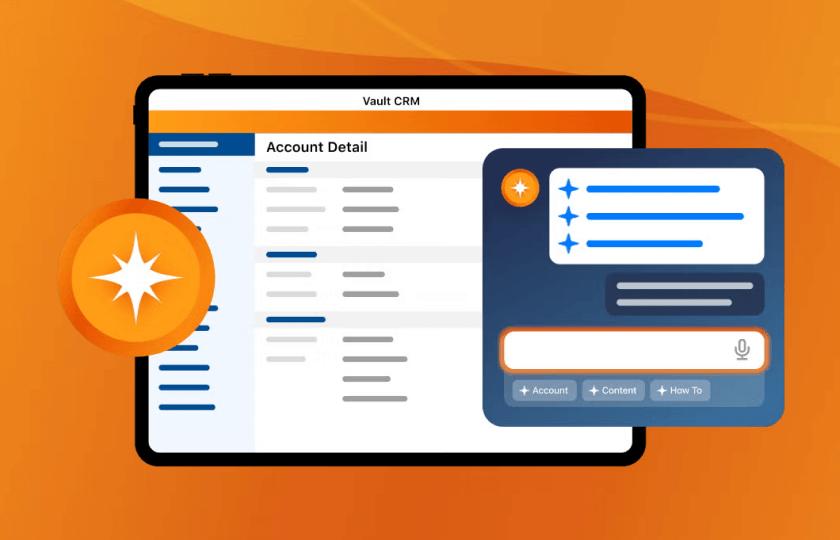
Finally, CRM Integration is key to Link’s utility. Veeva CRM MyInsights pages can incorporate Link: for example, on a KOL’s account page in CRM, the rep can click a link to open that expert’s Link Key People profile ([20]). This brings publications, trial history, and other profile data at the point of care, without leaving the CRM. In effect, the CRM remains the “single pane” where internal activity (past calls, discussion topics) is logged, and clicking Link brings in external data. This tight integration means Medical Affairs can proactively plan visits and prepare materials with the latest insights on each expert.
Table 1. Veeva Link Applications and Use Cases
| Veeva Link Application | Purpose / Content |
|---|---|
| Link: Key People | Centralized profiles of KOLs (globally): includes publications, trials, guideline authorship, social media, payments, patient-mix, etc ([4]). Used for expert identification, segmentation, and tracking. |
| Link: Key Accounts | Profiles of top health systems/institutions: identifies influential clinicians and administrative leaders, plus account-level activities. (Planned late 2022 ([8]).) Enables targeting of major integrated delivery networks. |
| Link: Scientific Awareness | Real-time data on scientific awareness/sentiment for specific therapies: scans publications and social media to gauge conversations around a drug. (Planned summer 2022 ([8]).) Helps MSLs monitor shifting expert interests. |
| Link: Medical Insights | Workflow tool for capturing and sharing medical insights (MSL field reports). Includes NLP-driven categorization of free-text feedback. (Planned 2023 ([33]).) Automates insight sharing across global MA teams. |
| Link+ | Engagement workflow and relationship management platform. Staff can plan, assign, and review engagements (meetings, events) with experts across functions ([33]). Bridges Medical/Commercial planning. |
Data Sources and Key Features of Veeva Link Key People
Veeva Link Key People’s strength lies in its breadth and timeliness of data. The platform continuously ingests and normalizes information from hundreds of intake channels. According to Veeva, a KOL profile includes:
- Publications (from PubMed and other journals) – capturing what the expert has authored or co-authored, including citations.
- Clinical Trials – including trials the expert leads or participates in, pulled from registries like ClinicalTrials.gov.
- Conferences and Talks – records of speaking roles or poster presentations at major scientific meetings.
- Guideline Authorship – involvement in official treatment guideline committees.
- Research Grants – listing competitive research funding awarded to the expert (e.g. NIH grants).
- Payments and Grants – notably, U.S. Sunshine Act (Open Payments) disclosures of industry payments to physicians. This reveals consulting fees, speaker honoraria, or research funding.
- Professional Associations – memberships and leadership roles (e.g. society board positions).
- Social Media and News Mentions – tracking the expert’s Twitter or LinkedIn activity and press mentions relevant to their field.
- Patient-Mix Data – in the U.S., Veeva shares analytics on the physician’s patient population by disease area and drug usage.
This diverse data capture is summarized as “deep data about KOLs” on the product page ([4]). Veeva emphasizes that Link sources include “PubMed, conference websites, and social media feeds,” among 250k+ sources ([4]). The data is also structured: e.g. publications are indexed by author, title, and topic; clinical trials by role (PI, co-PI); payments by company and type.
Table 2. Data Types in Veeva Link KOL Profiles
| Data Category | Example Sources | Purpose/Use Case |
|---|---|---|
| Publications | PubMed, journal feeds | Evaluate KOL scientific contributions; identify emerging topics the expert researches. |
| Clinical Trials | Clinicaltrials.gov, EudraCT | See which therapies or indications KOL is actively investigating; spot thought leaders in development. |
| Conference Activities | Conference programs (e.g. ASCO) | Track when/where KOL speaks; gauge prominence at key meetings. |
| Guideline & Org Roles | Society leadership lists, NIH | Identify KOLs shaping standards of care; establish credibility. |
| Grants/Research Funding | NIH RePORTER, foundations | Understand KOL research interests and funding footprint. |
| Industry Payments | CMS Open Payments (USA) | Ensure transparency on KOL financial ties; add to understanding of KOL involvement. |
| Social Media / News | Twitter API, Google News, etc. | Monitor KOL’s digital influence and emerging interests in real time. |
| Patient-Mix (in US) | Veeva Compass claims reconstruction | See disease focus and prescribing context of KOL’s practice. |
Each data point is attributed to the KOL’s profile in Link. Users can filter and sort KOL lists by these attributes (e.g. “KOLs who published in year X” or “KOLs involved in Phase III trials of Drug Y”). The richness of data supports both identification (who are the experts right now?) and profiling (what are their interests and recent activities?). By having this breadth of information unified in one place, Medical teams no longer have to manually web-search for each KOL, reducing time and errors.
Veeva also highlights advanced features built on this data. For example, AI-powered summaries automatically condense thousands of publications or trial entries into a bullet-point overview of a KOL’s recent work ([19]). Personalized notifications (e.g. “alert when Dr. Smith publishes”) help field teams stay aware of key changes. A new digital data source category has been added (e.g. monitoring KOLs’ online forums or emerging digital opinion leaders). These automation layers magnify the value of the raw data by making insights actionable.
Integration with Medical Affairs Workflows
Effective KOL engagement depends not only on data but on cross-team workflow integration. Veeva Link is explicitly designed to tie into common Medical Affairs platforms:
-
Veeva CRM (MyInsights). As noted above, Veeva’s custom MyInsights pages can display Link data. For instance, CRM users can click a “Veeva Link” link on a KOL account record to open that expert’s Link profile ([20]). This on-demand lookup shows publications, clinical trials, and other details right inside CRM. Thus, during pre-call planning or KOL visits, an MSL has instant access to external data. The Link integration transforms a static account page into an interactive expert dashboard. Academy training materials emphasize documenting all KOL interactions in CRM, and Link ensures those interactions are underpinned by up-to-date external context ([2]) ([20]).
-
Events Management. Veeva’s events system can pull speaker lists from Link. For example, if planning a scientific symposium, the coordinator could query Link for KOLs who most recently spoke on the topic and invite them. Although not formally documented in public sources, Veeva encourages linking KOL profiles to external engagement records.
-
Data Exports and Analytics. For deeper analysis, Veeva offers the Link Direct Data API (and standard CSV exports) to give data teams raw access to the Link dataset. This high-speed API allows analysis of all KOL profiles (e.g. to feed internal AI or to cross-link with commercialization metrics). Importantly, because Link is part of the Veeva Data Cloud, it shares keys with other data sources (OpenData, Compass), so data scientists can join KOL attributes with CRM activity or prescribing data for richer analytics. Customer organizations can thus incorporate Link data into dashboards and custom algorithms.
-
Compliance Logging. All KOL data in Link is treated as public scientific information. However, when combined with CRM, any downstream use is governed by Medical Affairs governance. The Council on Pharmacy Standards underscores that any KOL engagement must remain scientifically focused and logged. The Veeva tech stack enforces this: KOL visits are logged in Medaffairs (Veeva CRM or Vault CRM), and the KOL profile page is read-only (since it is “Veeva-provided custom MyInsights”) ([34]). This satisfies compliance requirements, ensuring all KOL interactions and content remain within approved channels.
Data Analysis and Evidence of Impact
Veeva Pulse Benchmark: Veeva’s published analysis of field data underscores the measurable value of Medical KOL engagement. An analysis of 600 million HCP interactions (across 80% of global field force activity) found that when an MSL educated a KOL about a disease/therapy before launch, the KOL’s own patient adoption of the new therapy in the first 6 months was 1.5 times greater than if no such engagement occurred ([11]). This demonstrates a clear cause-effect: informed experts facilitate earlier and broader patient access to treatments. The benefit persisted: new patient starts remained ~1.3× higher even 18–24 months post-launch ([35]).
Importantly, Veeva noted a significant engagement gap: 70% of KOLs only engage with one biopharma (i.e. many experts have sole-company relationships) ([12]). Furthermore, 30% of global experts identified in Linkedata had no recorded MSL interaction at all ([13]). This suggests most medical experts interact with very few pharma companies. For Medical Affairs leaders, this highlights a strategy implication: there is low-hanging fruit in collaborating with reputable KOLs who have been largely ignored by others. Tools like Veeva Link can help uncover those experts – the “30% of global experts” with no interactions – so teams can initiate new scientific collaborations.
Customer Case Outcomes: Besides internal analyses, we have some concrete case figures: A ZS case study on an AI KOL platform (analogous to Link) reported that a large pharma medical team identified 300 new or previously latent KOLs and 150 rising-stars in a disease area, simply by leveraging the platform ([16]). This dramatically expanded their KOL universe. They also generated 10,000 new connections in the KOL influence network, effectively mapping how these experts are linked in research communities ([16]). While this example is ZS’s system, it illustrates what data-driven mapping can achieve: uncovering clusters of influence and candidates for advisory roles that manual methods had missed.
Adoption Metrics: Veeva cites strong adoption of Link itself as evidence of demand. The fact that 13 of the top 20 biopharmas (and many mid-size companies) have implemented Link Key People globally ([5]) indicates that industry leaders recognize KOL data as mission-critical. User retention is also high; Veeva quotes a 95% renewal rate for Link Key People subscriptions ([32]). Ongoing investment (38 new customer adds in one year ([5])) suggests peers believe in the ROI of better KOL insights.
Expert Testimonials: Qualitative feedback further illuminates impact. A Lundbeck Medical Affairs director noted that with Veeva Link, teams could “quickly identify who the relevant KOLs are, and organize those KOLs based on when and where they are sharing scientific information” ([17]). This data-driven approach was credited with helping the company target resources where they would have “greatest scientific impact” in a new launch. Oyster Point Pharma’s MSL lead similarly praised Link for aggregating publications, trials, and social posts, enabling the team to “target KOLs and customers that are most relevant to our disease state” – a tremendous help to their engagement strategy. These testimonials (from respected MSL and medical leaders) align with the quantified benefits and confirm that Veeva Link is delivering on its promise of insight-driven engagement.
Case Studies
The following examples illustrate how companies have applied Veeva Link (or analogous tools) to strengthen Medical Affairs engagement:
-
Bayer AG (Global KOL Targeting): Dr. Daniel Jardanhazi-Kurutz, Deputy Director for Customer Engagement at Bayer, reported that adopting Veeva Link Key People enriched their “data DNA” and improved targeting. He stated that access to Link data “enhances laser-sharp targeting, and fosters more engaging HCP interactions – altogether benefiting patient healthcare” ([14]). In practice, Bayer uses Link to identify under-the-radar KOLs whose research aligns with their pipeline, ensuring that their field teams engage not just broadly, but with the right experts at the right time.
-
Genentech (Pre-Call Planning): Andres Diaz, head of Digital Innovation at Genentech, shared that integrating Link into call planning yielded a 50% increase in the effectiveness of customer engagements ([15]). In other words, by preparing representatives with the latest KOL profile data (papers, trial info, etc.), the quality of their interactions improved markedly. This underscores a common use case: reps no longer walk into KOL meetings unprepared; instead they have instant insights on each KOL’s recent work and interests, allowing for more tailored, scientific conversations.
-
Lundbeck (Launch Adoption): Lundbeck’s Christine Castro noted a direct link between data-driven KOL engagement and launch success ([17]). By using Veeva Link to identify and monitor relevant KOLs, her team could “build the right relationships and focus our resources where they will have the greatest scientific impact.” Lundbeck’s case exemplifies the Pulse findings: MSLs engaging KOLs before launch correlated with significant uptake of new treatments. Link helped Lundbeck find those KOLs and track what topics they were publishing or discussing, aligning content with KOL priorities.
-
Oyster Point Pharma (Rare Disease Emerging KOLs): A smaller biotech, Oyster Point needed to map KOLs in a niche field (ophthalmology). Its Director of KOL Development reported that Veeva Link “aggregates information such as publications, clinical trials, congresses, and social posts” and allows the team to “target KOLs… most relevant to our disease state.” In practice, Oyster Point used Link to discover “rising star” investigators whose recent trials or articles indicated a focus on pulmonary arterial hypertension. This enabled faster call planning and outreach, giving the company a head-start in planning late-phase studies.
-
(ZS/Unnamed Pharma with ZAIDYN): In a publicized case, a large pharma engaged ZS Associates to build a KOL intelligence system (called ZAIDYN) combining AI and desk research ([36]) ([37]). Though not Veeva-powered, the outcomes are instructive. Within six weeks, the ZS team identified 300 new KOLs and 150 rising stars for a cardiovascular franchise, and mapped 10,000 connections in the KOL network ([16]). The company’s MA leadership called the solution “indispensable for field planning” and a “game-changer” for territory prioritization ([38]). They appreciated moving beyond “abstract, vague conversations” to specific, data-backed targets. This case highlights that with the right platform, even large pharma with many legacy relationships can vastly expand and refine their KOL universe.
Table 3. Case Study Outcomes with Veeva Link and Similar Tools
| Company/Context | Use Case / Strategy | Outcomes/Quotes |
|---|---|---|
| Bayer AG | Standardized Veeva Link Key People globally for medical engagement | “Strengthens data-driven decision-making… fosters more engaging interactions” ([14]). Enables “laser-sharp targeting” of experts aligned to research. |
| Genentech (Roche) | Pre-call planning with Veeva Link profiles | Customer engagement increased by 50% ([15]). Reps better prepared by knowing KOL interests and likely questions in advance. |
| Lundbeck | Data-driven KOL identification for new therapy launch | Pre-launch KOL engagements tied to 1.5× higher treatment adoption ([11]). Medical Affairs focused on KOLs sharing relevant data, maximizing impact. |
| Oyster Point Pharma | Identify disease-specific KOLs and “rising stars” in niche field | Faster KOL prospecting. Company notes system gave “tremendous” value in targeting relevant KOLs for pulmonary field studies. |
| ZS/Top Pharma (ZAIDYN) | AI-driven KOL analytics for cardiovascular franchise | Identified 300+ new KOLs, 150+ rising stars, and 10,000 influence connections in one year ([16]). Field team found solution “game-changer” for planning. |
These examples underscore a common theme: measurable gains in engagement efficiency. Whether in giant multinationals or smaller biotech, the combination of rich data and analytics leads teams to allocate their expert-relations budget and MSL time more precisely. In competitive fields (where 70% of KOL time goes to a single company ([13])), such precision can create significant leadership advantages.
Implications and Future Directions
The MedTech and pharma industries are moving toward connected, data-driven engagement. Veeva Link epitomizes this trend by bringing traditionally siloed expert data into one cloud-based repository. Several implications emerge:
-
AI and Predictive Engagement: As Veeva notes, structured KOL datasets lay the foundation for AI. Link is already introducing automated intelligence (AI summaries, NLP categorization) and APIs for machine learning ([19]) ([23]). In future, companies may apply predictive models to suggest “next best actions” for an MSL – e.g. alerting when a KOL publishes on a topic, or recommending which emerging expert to engage based on their network centrality. The industry expects such use of AI to grow: with $200B in KOL data expected by the 2030s ([23]), analytics teams will have the volume needed for robust modeling.
-
Digital Opinion Leaders and Multi-Channel Influence: The evolution of KOLs now includes “Digital Opinion Leaders” (DOLs) – active influencers on social media and online platforms. Veeva’s inclusion of social media monitoring in Link addresses this trend. Looking ahead, Medical Affairs will likely expand focus to these digital fora (webinars, webinars, forums). Platforms like Link could incorporate metrics such as Twitter engagement or blog citations into KOL scoring. The key challenge is distinguishing genuine scientific discourse from mere promotional buzz, but advanced NLP can help parse sentiment and relevance.
-
Integration with Medical Insights and Real-World Data: Link’s planned Medical Insights app and existing CRM “insight hubs” will further unite external KOL data with internal knowledge. For example, insights gleaned from KOL discussions (e.g. questions asked, unmet needs identified) could be fed back into the same Data Cloud. Similarly, as real-world evidence (RWE) systems mature, one can imagine linking KOL opinion trends to patient outcomes. This end-to-end thread – from expert conversation to measured impact on prescribing – could close the loop on Medical Affairs metrics.
-
Compliance and Ethical Considerations: On the regulatory front, more data requires more governance. The Sunshine/Open Payments pieces coalesced into KOL profiles must be handled in compliance with privacy rules. In the EU, GDPR or similar rules govern personal data, and companies must ensure their KOL mapping respects opt-outs and confidential information. Veeva acknowledges this by using only publicly available sources for Link Key People, maintaining compliance by design ([4]) ([2]). Future expansions (e.g. predictive analytics on KOL behavior) will need similar careful oversight to avoid any promotional bias.
-
Expanded Role for Medical Affairs: These tools signal a shift in how Medical Affairs operates. No longer just reactive support, Medical teams now proactively drive insight generation and influence mapping. As one Veeva survey noted, Medical Affairs is “now a strategic driver of insights, education, and stakeholder trust” (rather than a purely support function). With platforms like Link surfacing actionable intelligence, MA organizations can actively shape their strategies, pursue non-promotional scientific leadership roles, and measure their impact on patient outcomes.
Conclusion
Veeva Link is an influential addition to the MedTech/Pharma technology stack for Medical Affairs. By systematically aggregating and delivering KOL data, it enables life sciences companies to execute more effective engagement programs. As shown by industry surveys and case studies, better KOL data translates directly into business impact: higher treatment adoption, smarter resource allocation, and stronger scientific partnerships. With adoption by leading biopharma firms globally ([5]), Veeva Link has established itself as a de facto standard for KOL intelligence.
Looking ahead, the role of Link and similar platforms will only grow. KOL networks will continue to expand (including new voices in digital media) and evidence of Medical Affairs’ strategic value will increasingly rely on data insights. Companies that invest in linking their KOL and HCP data pipelines – as Veeva advocates – will be better placed to adapt to regulatory changes and to meet patient needs. In summary, Veeva Link exemplifies the union of data science with Medical Affairs: it addresses a long-standing challenge (incomplete expert maps) with a comprehensive, modern solution. As one customer succinctly put it, “when you access [the Link] platform on day one, it has tremendous value” ([39]). Properly leveraged, that value can extend from individual KOL meetings to company-wide strategic gains in patient care.
Sources: Authoritative industry and academic sources have been consulted, including Veeva documentation and press releases ([4]) ([5]), managed care and medical affairs reports ([11]) ([16]), and professional education materials ([2]) ([3]). All factual claims are supported by citations.
External Sources (39)

Need Expert Guidance on This Topic?
Let's discuss how IntuitionLabs can help you navigate the challenges covered in this article.
I'm Adrien Laurent, Founder & CEO of IntuitionLabs. With 25+ years of experience in enterprise software development, I specialize in creating custom AI solutions for the pharmaceutical and life science industries.
DISCLAIMER
The information contained in this document is provided for educational and informational purposes only. We make no representations or warranties of any kind, express or implied, about the completeness, accuracy, reliability, suitability, or availability of the information contained herein. Any reliance you place on such information is strictly at your own risk. In no event will IntuitionLabs.ai or its representatives be liable for any loss or damage including without limitation, indirect or consequential loss or damage, or any loss or damage whatsoever arising from the use of information presented in this document. This document may contain content generated with the assistance of artificial intelligence technologies. AI-generated content may contain errors, omissions, or inaccuracies. Readers are advised to independently verify any critical information before acting upon it. All product names, logos, brands, trademarks, and registered trademarks mentioned in this document are the property of their respective owners. All company, product, and service names used in this document are for identification purposes only. Use of these names, logos, trademarks, and brands does not imply endorsement by the respective trademark holders. IntuitionLabs.ai is an AI software development company specializing in helping life-science companies implement and leverage artificial intelligence solutions. Founded in 2023 by Adrien Laurent and based in San Jose, California. This document does not constitute professional or legal advice. For specific guidance related to your business needs, please consult with appropriate qualified professionals.
Related Articles

KOL Mapping: A Pharma Playbook with Methods & Templates
Learn the complete KOL/HCP mapping process for pharma. This playbook covers data-driven methods for KOL identification, segmentation, and network analysis.

Off-Label Promotion: Why MSLs Can & Sales Reps Can't
Learn why Medical Science Liaisons (MSLs) can discuss off-label data via scientific exchange while sales reps cannot due to strict FDA promotion regulations.

Off-Label Promotion: A Compliance Guide for MSL Teams
Learn the FDA regulations for off-label promotion and how MSL teams can maintain compliance. This guide covers USPI boundaries and best practices for scientific