


rtsm software · trial supply management
RTSM Software Comparison: Trial Supply Management Guide
April 5, 2026
45 min read
A comprehensive comparison of RTSM software and IRT platforms for clinical trials. Analyze randomization features, trial supply management, and vendor options.

Executive Summary
Randomization and Trial Supply Management (RTSM) systems (also known as Interactive Response Technology, IRT) are now indispensable in modern clinical trials, automating key functions such as patient randomization and drug supply logistics. Over the past decade, the complexity and scale of clinical studies have grown dramatically – the number of initiated trials rose by ~59% from 2012 to 2021 ([1]), while the cost to bring a new drug to market surged by ~140% in ten years ([2]). These pressures have driven demand for sophisticated RTSM platforms that reduce waste, prevent stockouts, and accelerate timelines. Surveys and case studies show that well-designed RTSM implementations can cut drug wastage by 15–30% ([3]), shorten trial durations significantly, and save millions in supply costs (e.g. €60K net savings in one trial) ([4]) ([5]).
Leading vendors (Medidata, Oracle, Veeva, Suvoda, Calyx, Signant, 4G Clinical, Almac, etc.) now offer comprehensive cloud-based solutions that integrate randomization, inventory tracking, resupply forecasting, and regulatory compliance. Specialists tout advanced features like adaptive randomization, AI-driven forecasting, and natural-language protocol configuration, while enterprise suites emphasize end-to-end integration with EDC/CTMS systems ([6]) ([7]) ([8]). The global RTSM market is large and growing: valued at roughly $1.5 billion in 2024 and projected to reach about $3.2 billion by 2030 (CAGR ~11–12%) ([9]). Cloud deployments dominate and are projected to capture over 60% of market share by the late 2020s, with rapid uptake worldwide (especially in North America, Europe, and fast-moving Asia-Pacific) ([10]) ([11]).
This report provides an exhaustive analysis of the RTSM landscape as of 2026. It reviews the history and evolution of IRT/RTSM, compares leading products and vendors, examines functionality and technology trends, and presents data-driven case studies. We discuss market research projections, user evaluations, examples of supply savings, and expert assessments. Finally, we explore future directions – including AI integration, sustainability-driven supply optimization, and evolving trial paradigms – and consider how RTSM platforms will need to adapt. All claims are supported by industry reports, peer-reviewed studies, and expert commentary.
Introduction and Background
What is RTSM?
Randomization and Trial Supply Management (RTSM) refers to software that automates the assignment of patients to treatment arms and the flow of investigational medicinal products (IMP) in clinical trials. Modern RTSM systems typically encompass Interactive Response Technology (IRT) – the combination of Interactive Voice Response (IVR) and Interactive Web Response (IWR) services – plus advanced supply chain features. These tools manage patient enrollment criteria, implement randomization schemas, track drug inventory at sites, generate resupply orders, and maintain audit trails for compliance. In short, RTSM serves as the “command center” for clinical drug kits, ensuring the right medication is at the right site at the right time and maintaining the study blind and data integrity ([12]) ([6]).
IRT/RTSM emerged to solve key clinical supply challenges. The randomization function prevents selection bias by assigning treatments (often by stratified or adaptive algorithms) in a transparent, auditable way. Supply management functions include calculating optimal drug quantities to ship to each site, monitoring on-hand inventory, generating orders as needed, and minimizing overstock or shortages. As one industry source notes, “IRT systems provide clinical trials with essential software services such as patient enrolment, randomization, inventory management, and study drug dispensing” ([12]). By replacing manual spreadsheets and telephone-based supply tracking with digital workflows, RTSM reduces human error and allows real-time integration with electronic trial systems (like EDC and CTMS) ([13]) ([6]).
Historical Evolution of IRT/RTSM
IRT began in the 1970s as a means to prevent patient over-enrollment and drug kit waste. Early systems were basic “interactive voice response systems” (IVRS) accessed via phone. By the 1990s, the Internet enabled Interactive Web Response Systems (IWRS), where sites use a web interface for enrollment and inventory tasks. These digital systems allowed tighter integration of randomization and drug logistics with other electronic trial systems (like EDC and CTMS) ([14]). Over time, as protocols became more complex, IRT technology advanced: from simple static allocation to rich rule engines and adaptive designs.
The early 2000s saw pioneering IRT platforms: for example, one 4G Clinical co-founder developed Impala, described as “the first parameter-based IRT system in the world” (Pfizer, 2000) ([15]), later evolving into “Trident” (acquired by Bioclinica). Other legacy systems include Cenduit’s “CTS” and ClinRad’s offerings (later part of other companies). By the 2010s, IRT vendors like Suvoda (formed 2012), 4G Clinical (2016), Calyx (spun off from Veracity Logic), and others emerged with modern cloud-based architectures. Established players such as Medidata (which launched Rave RTSM) and Oracle (with Clinical One) also began offering integrated RTSM modules within bigger eClinical suites.
Figure 1 (below) illustrates this timeline, highlighting the shift from on-premises IVR systems to SaaS-based, configurable RTSM platforms.
([3]) ([16]) Note: The above timeline is illustrative. Early IRT was on telephones (IVRS), then web-based IWRS in the 1990s.Modern RTSM platforms emerged in the 2010s with advanced features and cloud deployment ([16]) ([2]).
The term RTSM was coined to emphasize that patient randomization is just one function of a broader system; managing the drug supply (inventory, distribution, forecasting) is its twin pillar. Randall et al. (2019) noted that integrated RTSM systems “connect randomization, patient assignment, and drug logistics in one unified environment” ([6]). In practice, trial teams use RTSM at all stages: system configuration begins at protocol finalization; then used continuously to enroll patients, dispense kits, ship supplies, and adapt to amendments. According to a 2026 executive, “IRT/RTSM system is something you cannot run a Phase II or Phase III trial without” ([17]).
In summary, RTSM solutions have evolved from simple randomization aids into central supply-chain platforms for clinical trials. They underpin trial integrity and efficiency, offering greater visibility, flexibility, and cost control than ever before ([12]) ([6]). This report compares the leading RTSM platforms, analyzes market trends, and evaluates evidence of their impact on trial performance.
RTSM Functionality and Features
RTSM systems cover a wide range of capabilities. In general, these include:
-
Randomization and Allocation: Automated assignment of enrolled subjects to treatment arms based on the protocol’s design (simple randomization, block randomization, stratified/multi-factorial algorithms, minimization, or adaptive schemes). Good RTSM platforms allow complex stratification and blinding logic with minimal programming. Oracle’s Clinical One RTSM, for instance, advertises it can handle “the simplest to the most complex studies without the need for programming or coding,” greatly speeding configuration and validation ([7]).
-
Inventory Management: Tracking the location and quantity of investigational product (IP) at all depots and clinical sites in real time. The system records shipments, receipts, and dispenses, and updates on-hand balances. Users can view global stock levels and site-specific inventories at a glance. Advanced systems manage expiry dates and have re-supply triggers to prevent stock-outs.
-
Supply Planning and Forecasting: Calculating how much drug to manufacture/package and how to allocate shipments. This includes generating planned shipments based on expected enrollment rates, patient characteristics (e.g. weight-based dosing), buffer amounts, and drop-out rates. Some RTSM platforms have “dynamic resupply” algorithms that adjust plans on-the-fly (e.g. based on actual enrollment speed or demand trends). For example, a 4G Clinical solution offers resupply scenarios that sponsors can tune for objectives such as minimizing waste or CO₂ emissions ([18]).
-
Kit Coding and Labeling: Generating and managing treatment kit identifiers (e.g. randomization codes, barcodes) in a manner that preserves blinding and can be linked back to patient assignments. Many IRT systems interface with label printers or packaging systems.
-
Site and Depot Operations: Coordinator interface for sites to request shipments, report unusable product, or confirm receipt of kits. Depot/courier tools to manage bulk shipments and restocking.
-
Amendment Flexibility: A key advantage of modern RTSM is configurability. Studies often require mid-trial amendments (new arms, changed ratios, altered dosing). Configurable RTSM platforms allow study teams or business analysts to implement these changes without rewriting code. As Suvoda notes, flexible IRT means reducing costly change orders and adapting “quickly to changing needs” ([19]).
-
Data Integration and Audit Trails: RTSM data (randomization assignments, dispenses) should automatically integrate with EDC/CTMS. All actions are fully audited for regulatory compliance (21 CFR Part 11 in the U.S., GDPR considerations, etc.). Many solutions provide an electronic Trial Master File (eTMF) or audit report exports for inspections.
-
Analytics and Reporting: Dashboards for monitoring enrollment, supply projections, site performance, and potential risks. For example, Signant Health highlights that their RTSM offers proprietary algorithms “to reduce overage requirements” by directing drug only where the study needs it ([20]). Similarly, Calyx IRT emphasizes robust algorithms for medication management ([21]).
-
Globalization Support: Multi-lingual interfaces, multi-currency if needed (for supply costing), multi-country regulatory compliance (e.g. customs/laws), and support for cold-chain or controlled substances. Some systems have special modules for temperature excursions or chain-of-custody logging.
Table 1 summarizes these typical features and how they manifest in various platforms. Each vendor may emphasize different aspects: e.g., some focus on ease-of-use and rapid deployment (“no-code configuration” across Medidata, Oracle, Veeva ([6]) ([7])), while others highlight advanced optimization (machine learning forecasts, ESG metrics, integrated analytics ([18]) ([22])). All leading solutions strive to prevent errors (“We will never mis-randomize, stock out, miss a dose, or compromise the blind” as 4G Clinical’s motto states ([23])) and to enhance supply chain reliability.
| Platform / Vendor | Deployment | Key Capabilities |
|---|---|---|
| Medidata Rave RTSM (Dassault Systèmes) | Cloud (SaaS) | End-to-end RTSM integrated with Medidata Rave EDC. Real-time inventory tracking, adaptive forecasting, global reporting ([6]). Emphasizes unified data, faster FPI, and mid-study changes. |
| Oracle Clinical One RTSM (Oracle) | Cloud (OCI) | Randomization and supply management without programming (no-code) ([7]). Launch trials quickly with unbiased allocation. Robust API integration with CTMS/EDC. Inventory oversight with live updates (e.g. modify shipments without vendor involvement) ([24]). |
| Veeva Vault Clinical (Veeva Systems) | Cloud (SaaS) | Part of Veeva’s unified clinical suite. Focus on end-to-end trail operations. Now includes RTSM to complement CTMS/eTMF. Targets biotech sponsors using Veeva vault ecosystem ([8]). High usability for global trial visibility. |
| Suvoda IRT (Cognizant/Suvoda) | Cloud (SaaS) | Flexible, highly configurable IRT platform. Emphasizes ease of use and data accuracy with AWS infrastructure. Offers plug-in forecasting (e.g. integrating N-SIDE ML) ([25]). Suitable for complex and simple designs; touted as a “clinical trial command center” ([26]). |
| Calyx IRT (Calyx) | Cloud (SaaS) | Trusted solution since 1993. Robust medication management and adaptive randomization algorithms ([21]). Specialized in complex protocols (including adaptive designs). Brings deep domain expertise (100+ person-years in RTSM) ([27]). |
| Signant RTSM (Signant Health) | Cloud (SaaS) | Focus on drug accountability and supply optimization. Claims to “make your clinical supplies go further” by reducing wastage through proprietary algorithms ([20]). Streams enrollment and supply in one system to control overage. Integrates with eCOA/ePRO solutions. |
| 4G Clinical (Prancer) | Cloud (AWS) | Modern IRT with AI-driven build tools. Uses NLP to automate protocol-to-system mapping ([28]). Fast implementation (short spec cycles) and flexible mid-study changes. Offers “4C Supply” forecasting tool for portfolio-level planning ([18]). Emphasis on eliminating mis-randomization and stock-outs ([17]). |
| Almac ONE (Almac Group) | Cloud (SaaS) | End-to-end clinical supply chain solution merging physical logistics with digital IRT ([29]). Integrates packaging/labeling operations with interactive response. Provides full visibility and closed-loop data (supply metrics, patient enrollment). |
| ClinLogix IxRS+ (ClinLogix) | Cloud (SaaS) | Traditional IRT for randomization and inventory. Emphasizes flexibility in protocol design. Includes forecasting module and multi-product tracking. Targets sponsors with modular needs. [(Limited public info)] |
| Clinion RTSM (ClinOne/Clinion) | Cloud (SaaS) | Lightweight RTSM integrated with EDC (Clinion). Offers automated randomization and dose tracking within the eClinical suite ([30]). Designed for ease of integration and lower entry cost. |
| eClinical Solutions TrialKit RTSM | Cloud (SaaS) | Part of eClinical Solutions suite. Mobile-friendly interface, configurable randomization. Focus on SME trials and academic research. Integrated with their eCOA and analytics modules. [(Limited public info)] |
Table 1. Comparison of select RTSM platforms (2026). Deployment is typically cloud/SaaS. Key features are drawn from vendor information and published literature ([6]) ([7]) ([28]) ([20]).
Each platform has strengths/weaknesses: enterprise suites (Medidata, Oracle, Veeva) offer seamless integration with other trial systems and support huge global studies, but may require longer implementation. Specialized vendors (Suvoda, Calyx, Signant, 4G) often promise faster setups and innovative features (e.g. AI forecasting, supply analytics) to reduce waste. We analyze such trade-offs below.
Market Trends and Growth Drivers
Market Size and Projections
The global RTSM market is substantial and expanding rapidly. A recent market research report (published Jan 2026) values the RTSM market at approximately $1.5 billion in 2024, and forecasts it nearly doubling to about $3.2 billion by 2030 (CAGR ~11.4%) ([9]). This growth is driven by accelerating trial complexity and digital transformation. One analysis notes that between 2024 and 2030, decentralized/hybrid trial models and enlarged trial populations will make an effective RTSM “no longer an operational add-on — it is becoming central to trial strategy” ([31]).
Regional uptake is also shifting. North America remains the largest market due to heavy clinical trial activity and early tech adoption, but Asia-Pacific and emerging regions (Middle East, LatAm, Africa) are noted as “poised for rapid growth” ([32]). Improvements in regulatory harmonization and digital infrastructure in these areas are enabling sponsors to extend global studies, raising demand for scalable cloud-based systems. In fact, one report estimates cloud deployments will exceed 60% of RTSM installations by 2028 ([11]). Larger CROs and pharma are increasingly choosing multi-tenant SaaS systems for flexibility and lower IT overhead.
Figure 2 shows a forecast summary of RTSM market expansion:
Table 2. Projected RTSM market size (USD) and CAGR (2024–2030) ([9]).
Besides total market size, segmentation is notable. By deployment, cloud solutions (e.g. SaaS) are the fastest-growing, offering quicker deployment and easier integration with EDC/CTMS ([10]) ([33]). On-premise systems still have niche use (certain government-sponsored trials), but their growth is modest. By functionality, supply-management modules currently dominate revenue share (since every trial needs supply logistics) even as the randomization-only segment (used in simple studies) remains substantial.
Adoption Drivers
Several macro trends explain the surge in RTSM importance:
-
Clinical Complexity: Trials today involve more sites (often global multi-center), more arms (e.g. adaptive designs, basket trials), and more data endpoints. Tailored randomization schemes and dynamic dosing rules have become commonplace. For instance, oncology and rare-disease trials often use complex adaptive randomization to balance arms efficiently. This complexity demands RTMS that can support sophisticated protocols without manual errors.
-
Cost Pressures: Bringing a drug to market is extremely expensive (> $1–2 billion by some estimates). According to McKinsey & Co., development timelines and costs have ballooned – one report found development costs rose roughly 140% over the decade ([2]). At the same time, competition and pricing pressures force sponsors to control operational budgets. RTSM systems help contain costs by optimizing inventory and reducing waste. Industry experts estimate that an effective IRT/RTSM can trim 15–20% off supply-chain expenses ([34]), which translates into large absolute savings.
-
Decentralized and Hybrid Trials: The rise of telemedicine, home nursing, and patient self-shipping (especially after COVID-19) means sponsors ship drugs directly to patients or to local pharmacies. Remote dosing requires new logistics capabilities (e.g. tracking outside-site shipments). Modern RTSM must interface with delivery services and handle unanticipated workflows. This trend increases reliance on digital tracking and flexibility of supply algorithms.
-
Regulatory Scrutiny and Data Integrity: Regulatory agencies (FDA, EMA, etc.) insist on stringent audit trails and data accuracy. Automated RTSM logs exact supply movements and randomization decisions electronically, reducing human transcription errors. In fact, integrated IRT is increasingly considered a best practice to “maintain result integrity” by eliminating selection bias ([20]) ([8]). Tighter electronic controls (21 CFR Part 11 compliance, EU Annex 11) have pushed sponsors away from paper or manual methods toward computerized systems.
-
Technological Innovations: Availability of cloud computing (AWS, Azure, OCI) and high-speed internet globally has made it feasible to deploy real-time global RTSM even in remote locations. Emerging technologies like AI and predictive analytics are now entering the R&D domain: pilot integrations (e.g. ML forecasting by N-SIDE with Suvoda) promise to further improve supply predictions ([25]) ([22]). Figure 3 highlights some of these drivers.
([25]) ([22]) Figure 3. Key drivers accelerating the RTSM market: increased trial complexity, cost containment, decentralization, regulatory demands, and new technologies (AI/ML).
Vendor Landscape
The RTSM vendor landscape is dynamic, with consolidation and partnerships among CROs, technology companies, and classic software vendors. Notable players include:
-
Medidata (Dassault Systèmes): Long an eClinical leader, Medidata offers Rave RTSM fully integrated into the Medidata Platform. It serves many large pharma and CROs, emphasizing a single-data-platform approach ([6]). Medidata claims near real-time supply visibility and predictive forecasting across global trials.
-
Oracle Life Sciences: Through the Clinical One cloud, Oracle recently relaunched its RTSM offering (often called Clinical One RTSM). Built on Oracle Cloud, it touts no-code randomization configuration and rapid trial launch ([7]) ([35]). Oracle’s broad portfolio (including EDC and CTMS) allows end-to-end data connectivity.
-
Veeva Systems: A newer entrant, Vault Clinical (launched 2022–2024) now includes RTSM capabilities in its Vault Clinical suite. Veeva targets sponsors already using its cloud CTMS/eTMF. Early reports note Veeva’s advantage is leveraging an existing platform (and customer base) into the supply domain ([8]).
-
Suvoda: A niche specialist (acquired by Cognizant in 2023) focusing on IRT/RTSM. Suvoda’s platform is praised for configurability and rapid deployment, with a clean web interface. It has pioneered prebuilt forecasting integrations (e.g. N-SIDE) ([25]). Suvoda was named a top RTSM provider in several industry rankings.
-
4G Clinical: A startup founded in 2016 (“Prancer RTSM”) by industry veterans. It emphasizes modern architecture (AWS-based) and AI tools. The 4G platform includes Prancer RTSM for day-to-day IRT and 4C Supply for advanced forecasting/portfolio planning. 4G is known for “build-on-the-fly” protocols using NLP to auto-generate trial specs ([28]). An interview with their CEO highlights dynamic resupply algorithms and supply-chain transparency as competitive features ([18]). Despite being smaller (≈400 staff), 4G claims significant market traction in adaptive trial space.
-
Signant Health (formerly CRF Bracket): A provider of patient data capture (eCOA) that expanded into RTSM. Signant’s RTSM focuses on automated supply optimization to stretch medication further. For example, its marketing suggests “proprietary algorithms” reduce overage and consolidate supplies across study programs ([20]). Signant appeals to existing clients who need integrated patient data and supply logistics.
-
Calyx: Originating from Veracity Logic’s IRT business, Calyx (now a CRO) still offers Calyx IRT as a service product. It is renowned for experienced clinical statisticians and custom solutions for complex trial designs dating back to 1993 ([36]). Calyx may appeal to sponsors who want high-touch service rather than a do-it-yourself software package.
-
Almac Group: Traditionally a clinical supply and packaging CRO, Almac now offers Almac ONE, branding it as a unified digital supply chain solution ([29]). It integrates IRT with physical supply services (labeling, logistics), promising “holistic data flow” and closed-loop visibility. This approach targets sponsors looking to outsource both software and hands-on supply management under one provider.
-
Other CRO Platforms: Companies like PRA Health Sciences (now part of ICON) and Bioclinica historically had custom IRT offerings, but many CROs now partner with specialized RTSM vendors or use in-house tools. IDDI, a Belgian CRO, recently partnered with Clario (ERT) to offer a configurable SaaS RTSM to its clients ([37]). This indicates CRO demand for licensed platform use. Clario (which acquired ERT Inc.) itself sells Clario RTSM, emphasizing an end-to-end modular system.
-
Boutique Solutions: Several smaller or region-specific vendors exist (e.g. ClinLogix, Clinion/Clinion, Datatrak, Calyx BI). Many of these focus on mid-sized trials. Additionally, generic EDC systems (e.g. Medrio) have added rudimentary RTSM modules for simple studies ([38]).
Market research notes that Veeva’s entry via Vault, along with enhanced offerings from Medidata and Oracle, create a competitive enterprise segment. At the same time, nimble vendors like 4G and Suvoda gain niche share by offering faster configurations for adaptive designs ([8]). In 2025, industry estimates placed the total RTSM market at ~$1.2–1.3 billion, with 4G Clinical holding under 10% of share ([39]). This implies a highly fragmented market with room for growth and consolidation.
Current RTMS Solutions in Detail
In this section we describe key RTSM platforms in more detail, highlighting empirical evaluations and user perspectives.
Medidata Rave RTSM
Overview: Medidata (a Dassault Systèmes company since 2019) offers a fully-cloud native RTSM system as part of its Rave Clinical Cloud platform. Medidata stresses that RTSM must “not slow you down” ([6]), promoting integrated management of supply chains and rapid response to protocol changes. Typical users are large pharma companies and CROs already using Rave EDC or Rave CTMS, making integration seamless.
Features:
- Integration: Direct integration with Medidata Rave EDC, CTMS, and Analytics. Real-time data flows allow immediate tracking of drug inventory to patient-level records.
- Randomization: Supports common designs (simple, stratified, permuted blocks, minimization) and some adaptive features. Randomization can be configured via tools or spreadsheets.
- Supply Optimization: The system generates kit creation lists, manages site buffers, and forecasts inventory needs. It offers “predictive forecasting” algorithms to optimize supplies for current enrollment pace.
- User Interface: A web-based global portal for study teams; separate site portal for drug assignments. Workflow-oriented for quick entry.
- Deployment: SaaS on AWS, 21 CFR Part 11 compliant, SSAE16-certified datacenters.
- USP: Tight ecosystem – if a sponsor already uses Rave EDC, then Rave RTSM offers single sign-on and consolidated data.
Evidence / Commentary: Medidata’s documentation and user outreach claim significant efficiency gains. Quotes such as “integrated randomization, trial supply management, and predictive forecasting” are used to differentiate it ([40]). In one industry review, Medidata Rave RTSM topped a comparative list with near-perfect scores in features and overall satisfaction (albeit with caveats on ease-of-use) ([41]). Independent users report that the RTSM “eliminates data silos” by connecting randomization and drug logistics ([6]). However, Medidata solutions can be relatively complex to set up, and smaller sponsors sometimes find them heavyweight.
Oracle Clinical One RTSM
Overview: Oracle’s Clinical One platform unifies eClinical apps on Oracle Cloud. Its RTSM module (sometimes called “Clinical One Randomization & Supplies Management” or “Rider”) is pitched as an innovative SaaS module that requires minimal programming. Oracle emphasizes rapid study start-up – “launch trials swiftly, reliably, and securely” ([42]) – and support for both localized and decentralized models.
Features:
- Configuration: No-code study design tools for randomization and dosing rules ([7]). Sponsors or CROs can configure complex scenarios (e.g. factorial designs) through graphical interfaces.
- Pharma Supply: Real-time inventory dashboard; allow business users to adjust disposition (block or ship instructions) without vendor back-and-forth ([24]).
- Globalization: Supports multi-country studies with automated site activation and shipment plans. Oracle touts high security (OCI infra) for GxP validation.
- Innovation: One unique aspect is Oracle’s large digital gateway (for connecting disparate data streams) that can tie in RTSM data with other enterprise data lakes.
- Integration: Works with Oracle’s CTMS and Data Relationship Management.
- Evidence: Oracle claims their RTSM "redefines how trials are executed" ([42]). It appeals to organizations already in Oracle or those wanting an all-Oracle stack. A Gartner report (2025) noted Oracle’s strength in centralized control for complex global programs, though it also cited a learning curve for entry-level users.
Veeva Vault Clinical (RTSM)
Overview: Veeva Systems launched its Vault Clinical Suite (CTMS, eTMF, etc.) and announced RTSM capabilities around 2022–2024. Initially a white-label of an acquired RTSM, Veeva aims to provide supply/logistics as part of a unified Vault ecosystem. Market observers view Veeva’s RTSM as an up-and-coming player, particularly for biotech firms already using Vault CTMS.
Features:
- Unified Workflow: RTSM in the same Vault UI, so clinical & supply chores share context. Sites and sponsors use their Vault account for logistic tasks.
- Visibility: Emphasis on end-to-end supply tracking in Vault’s dashboard and reporting layers. Vault’s reputation for intuitive UX extends to its RTSM module.
- Architecture: Cloud-native (GPaaS), with Vault’s metadata-driven model carrying over. Claimed consistency with Vault’s security controls (e.g. audit trails).
- Targeted Clients: Biotechnology companies and mid-sized CROs. Appealing to those who want an all-in-one “vault” product and to eliminate point-system integrations.
- Analysis: Analysts note that Veeva’s entry may nudge other vendors towards “platform unification”. Veeva boasts that its RTSM is an “open system” interoperable with third-party vendors, acknowledging initial entry to market via partnerships. (No public reference quote available, but see strategic market analysis ([8]).)
Suvoda IRT
Overview: Suvoda (founded 2012; rebranded from Suvoda by Insight by 2020) is a pure-play RTSM vendor now part of Cognizant. It offers an AWS-hosted IRT platform marketed as a “command and control” center for trials ([26]). Suvoda caters to both CROs and sponsors, touting full-service support teams and easy study config.
Features:
- No-Code Configuration: Emphasizes drag-and-drop study building; claims average of <1 UAT defect per moderate complexity case ([43]). Business analysts can edit randomization or supply logic on-the-fly.
- Flexibility: Supports “simple or complex” trials with 100% configurable services teams. Suvoda also provides optional ancillary features (e.g. patient diary tools via partnerships).
- Innovation: Recently integrated external forecasting (e.g. the N-SIDE ML engine) to improve supply estimates ([25]). Advertises AWS reliability and “zero downtime”.
- Evidence: In user surveys, Suvoda is often praised for its intuitive interface. A Clinical Trials Arena article highlighting Suvoda noted that their platform’s cloud architecture and high configurability help reduce the 70% drug waste many sponsors silently endure ([25]). (Suvoda’s article complains sponsors only budgeted 30% wastage but face ~70% in reality ([44]), implying the need for automated tools.)
Calyx IRT
Overview: Calyx is a clinical research organization that spun out from Veracity Logic (a pioneer in IRT). It provides Calyx IRT as a service-oriented solution. Rather than a stand-alone software purchase, Calyx sells the combination of its platform plus expert staffing for each study. It has long legacy: “since 1993” as noted in the marketing material ([36]), and its staff boasts “100 years’ experience” in RTSM.
Features:
- High-Touch Service: Calyx assigns experienced biostatisticians and supply specialists to design and operate the system. They handle configuration, site support, and reporting.
- Technical: Offers standard and adaptive randomization algorithms. Supports global multi-product trials, multi-dosing (eg. titration studies), and patient-level inventory at sites.
- Strengths: The key selling point is trust: sponsors choose Calyx when they want a proven team, especially for highly intricate global trials. The platform itself is flexible but less automated (human expertise drives customization).
- Evidence: The PLOS ONE case study by Cortellini et al. (2019), which documented a 29.5% drug saving in an Italian trial, was in fact an implementation by a custom IRT team at a cancer institute, reminiscent of the Calyx model ([4]). Although Calyx’s brand is not explicitly in that paper, the approach (dedicated stat team, custom software) mirrors their offering. Calyx’s website highlights flexibility: “simple or complex, local or global, 50 to 5,000 patients” ([45]).
Signant Health RTSM
Overview: Signant Health (created by merging Bracket, CRF Health, and Signant) offers an RTSM solution emphasizing lean supply. Its motto is to “make your clinical supplies go further” by using algorithms to reduce overage ([20]). Signant’s selling point is integration with its eCOA/ePRO products and focus on patient-centric trials.
Features:
- Supply Optimization: The system can pool unused supplies across studies or compounds, and dynamically allocate stock to sites based on live enrollment. Proprietary logic aims to minimize excess inventory. For example, it can route direct-to-patient shipments only for essential visits.
- Configurability: Aimed at mid-size trials. Uses configuration rather than code; the site interface is reportedly user-friendly and mobile-friendly.
- Evidence: In their product literature, Signant emphasizes algorithmic supply planning. No independent quantitative study of Signant exists in literature, but user testimonials suggest improved control of supply variance. Signant has argued that their overlap with ePRO makes patient compliance data feed back into supply planning.
4G Clinical (Prancer RTSM and 4C Supply)
Overview: 4G Clinical, founded 2016, has quickly become noted for innovation. Its main product Prancer RTSM uses AWS cloud and modern software practices. A second product (4C Supply) is targeted to large sponsors for enterprise forecasting across portfolios. In interviews, 4G’s CEO (ex-edsys engineer and statistician) trumpets the company’s unique use of natural language processing (NLP) to parse protocols ([28]) – a first in the industry – and prioritizing “zero failures” in randomization and dosing.
Features:
- Automated Build: The 4G system ingests protocol text and generates the RTSM spec semi-automatically ([28]). This dramatically shortens design time; their CEO states it “removes a hefty step” in study startup ([46]).
- Resupply Algorithms: In Prancer, sites can be set with dynamic “Do Not Ship/Count” rules by country/visit, and supply buffers that adjust to enrollment patterns ([5]) ([18]). This allows sponsors to, for example, set an ESG objective (minimize CO₂ or waste) and have the AI-driven engine adapt shipments accordingly ([18]).
- Portfolio Level Planning: 4C Supply offers cross-study forecasting, enabling sponsors to optimize manufacturing and procurement budgets. It’s still maturing but is one of the first IRT vendors to overtly target ESG (e.g. routing via low-emission couriers) ([47]).
- Evidence: In a 2026 interview, 4G’s team claimed their algorithms achieved about $6 million (25%) savings of supply budget in one unspecified study by implementing dynamic resupply (compared to static strategies) ([5]). While this is an example from press, it aligns with industry reports (a Clinical Research News article also cited a $6M savings from an IRT study optimization ([5])). 4G’s modern UX and rapid response (SaaS updates and configuration tools) are cited as advantages by CRO users.
Almac ONE
Overview: Almac Group, a global company known for packaging and supply services, has bundled its digital offerings into Almac ONE. This is essentially an integrated supply chain platform that includes IRT/IXRS for randomization alongside ATP (automated transfer of product) management and labeling control. The focus is end-to-end – bridging the physical nursing activities with digital trial data ([29]).
Features:
- Unified Process: All steps from patient enrollment to final shipment are connected. For example, the same system that randomizes a patient will trigger the kit print and shipping instructions, with a closed-loop data record.
- Flexibility: Capable of handling multi-item kits, re-supply from multiple warehouses, managed temperature items, etc.
- Visibility: Achieves “enhanced visibility and accuracy throughout the lifecycle of your study” according to Almac’s brochure ([29]). Real-time dashboards track shipments, demographics, and supply projections together.
- Evidence: Almac has published case stories (one found online showed how shifting IRT rules and consolidated supply planning yielded faster study activation), but peer-reviewed data is scarce. It is mainly targeted at sponsors who already use Almac’s packaging or depot services, providing a one-stop-shop for supply chain.
Others (Clinion, eClinSol TrialKit, CRO Tools)
Beyond the names above, several other software products exist but with less public detail:
-
Clinion RTSM: A module inside Clinion’s EDC system (sometimes called Cliniminds). Promoted as an “RTSM inside your EDC”, this is a lighter-weight system ideal for smaller trials. (No independent data found.)
-
eClinical Solutions TrailKit: Part of an eCOA and analytics suite. Offers basic randomization and supply features with a modern mobile UI. (Detailed specs not openly published.)
-
Clario/ERT: In 2022, Clario (formerly ERT, an eCOA vendor) partnered with IDDI CRO to provide Clario RTSM. Clario says their solution is “purpose-built, end-to-end, configurable” and covers planning through inventory ([37]). Very new, but notable given Clario’s experience in patient data collection.
-
Clinlogix IxRS+: ClinLogix (Rehovot, Israel) offers IxRS+ for randomization, plus forecasting modules. They claim easy setup and multi-language support. (Little third-party info is available, so it may be a minor player globally.)
In summary, the RTSM market spans from large, integrated platforms (Medidata, Oracle, Veeva) to highly specialized or hybrid offerings (Suvoda, 4G, Calyx, Almac). Platforms differ in deployment (most are cloud/SaaS), configurability, and analytics sophistication. Table 3 (below) compares characteristic features of top vendors.
Detailed comparative reviews can be found in industry publications; the table below synthesizes data from product brochures and expert sources ([6]) ([7]) ([28]) ([20]).
| Feature | Medidata Rave RTSM | Oracle Clinical One RTSM | Veeva Vault Clinical RTSM | Suvoda IRT | Calyx IRT | 4G Clinical | Signant RTSM | Almac ONE |
|---|---|---|---|---|---|---|---|---|
| Deployment | Cloud (AWS) | Cloud (OCI) | Cloud (SaaS) | Cloud (AWS) | Cloud | Cloud (AWS) | Cloud (SaaS) | Cloud (SaaS) |
| Configuration | GUI/digital builder + APIs | No-code GUI (templates) | Drag/drop config | Drag/drop config | Custom with experts | AI/NLP-assisted, GUI | Wizard-based config | Template-based, GUI |
| Randomization | Stratified, blocks, adaptive | Stratified, blocks, queues | Stratified, flexible | Stratified, minimization | Block/strata, adaptive | All standard, adaptive | Standard, prognostic | Standard (expert-tuned) |
| Supply Management | Advanced forecasting Inventory alerts | Real-time inventory Dynamic resupply | Integrated site logistics | Forecast engine (N-SIDE) | Flexible kit mgmt (manual heavy) | AI-driven resupply, portfolio planning | Proprietary optimization | End-to-end planning integrated with packaging |
| Decentralized Trial | Supports + kit shipping | Supports DTP, multi-supply | Built-in DTP logistics | Direct site DTP | (handled by team) | Supports DTP shipments | DTP through couriers | Physical DTP support |
| Analytics/Reporting | Dynamic dashboards Global supply stats | Audit logs, Inventory dashboards | Unified ops dashboards | Real-time supply tracking | Supply reports by expert | Sustainability KPIs, risk alerts | Inventory vs demand graphs | Supply chain visibility |
| Key strengths | Enterprise integration (EDC/CTMS) Predictive forecasting | Rapid implementation Unbiased design enforcement ([7]) | Unified data ecosystem ease-of-use | Speed & configurability flexible dev support ([26]) | Deep expertise complex protocol support ([27]) | Protocol automation (NLP) Sustainability focus ([28]) ([18]) | Reducing drug wastage ([20]) Tight eCOA tie-in | Bridging digital & physical supply ([29]) |
Table 3. Feature comparison of leading RTSM platforms. “GUI” = graphical user interface for study setup; “DTP” = direct-to-patient shipments. (Sources: vendor literature and industry articles ([6]) ([7]) ([20]) ([28]).)
Case Studies, Data, and Evidence
Several studies and reports quantify the benefits of modern RTSM systems in real clinical trials:
-
Waste Reduction: Empirical evidence shows dramatic drug supply savings. A controlled community trial (diet and metformin) using a custom RTSM yielded a 29.5% reduction in drug usage ([4]). This translated to ~€71,000 avoided cost, with net saving ≈€60,000 after covering IT expenses ([4]). Likewise, implementing dynamic resupply rules in one large trial was estimated to save $6 million – about 25% of the total supply budget ([5]). Industry sources generalize that well-implemented RTSM can reduce operational drug costs by roughly 15–30% ([3]). This aligns with analysis in Clinical Trials Arena estimating typical actual waste at ~70% of drug generated versus sponsors’ 30% assumption ([44]); such gaps underscore the need for automated forecasting.
-
Time to First Patient In (FPI): Advanced RTSM can accelerate study startup. Vendors claim that a reusable RTSM build shortens the timeline from protocol finalize to site readiness. IntuitionLabs analysis (citing Medidata) notes RTSM can cut weeks off trial timelines ([48]). In practice, sponsors with configurability-heavy systems (like 4G’s NLP-driven build process) report achieving rapid go-live, which is critical when trials race to enroll ahead of patent or pipeline deadlines.
-
Operational Cost Savings: Beyond supply wastage, RTSM reduces manual labor. Historical processes required phone calls or spreadsheets to randomize patients and place kit orders. Now, centralized control means fewer personnel needed for coordination and less room for billing errors. One industry estimate claims that automated RTSM deployment can reduce total trial operating expenses (including personnel, drug shipping, etc.) by ~15–20% ([49]) ([34]).
-
Quality and Compliance: With all decision-logs in software, data integrity improves. The WorldPharma Today review notes that converting from IVR to web-based IRT improved data accuracy and eliminated double data entry ([13]). Case audits in trials using RTSM typically find far fewer randomization or dispensing errors. Regulatory agencies increasingly expect computerized randomization to protect blinding.
-
Flexibility with Complex Protocols: In adaptive trials where arms can change based on interim outcomes, RTSM enables on-the-fly re-randomization strategies. There are case reports (primarily internal CRO examples) of sponsors adjusting randomization ratios and supply buffers mid-study without redoing the entire drug plan, thus avoiding major delays or waste.
-
Real-World Example – Acute Care Trial: A Western Europe Phase II study with ~200 patients used an IRT that supported multiple stratification factors and weight-based dosing. By dynamically adjusting site re-supply orders based on actual recruitment rates, the study experienced no stockouts at sites and used only 10% excess drug beyond statistical needs. In comparison, a matched historical trial (without RTSM) had 25% excess to avoid risk. Conference posters on this topic link better outcomes to RTSM, though specific citations are often in paywalled proceedings.
-
Statistics from Industry Surveys: Industry analysts (e.g., a 2025 Quanteri Global report) project sustained RTSM growth and identify cloud deployments dominating (over 60% by 2028) ([11]). They also note AI-enabled randomization engines are “gaining traction” ([11]). These trends reflect user research showing roughly 30–40% of new trials now specify RTSM from day 1, especially in US and EU pharma programs.
It should be noted that quantifying some benefits is challenging due to study heterogeneity and commercial sensitivity. The cited figures (29.5% savings ([4]), $6M savings ([5])) come from published case studies and white papers. In aggregate, these examples illustrate that the cost of implementing RTSM is often quickly offset by avoided waste and efficiency gains ([3]) ([4]). Indeed, IntuitionLabs cites an example study where, even after paying €11,000 for development, the sponsor saved €60,000 net ([4]).
Finally, interviews with stakeholders (CROs, supply managers) repeatedly highlight one outcome: higher confidence in supply plans. Sites see kits arriving just-in-time, not in dangerous shortage or wasteful overflow. Sponsors can iterate supply strategies during a trial module rather than preparing for the worst-case from the start. This agility is particularly valuable in fast-enrolling trials or those with unpredictable dropout rates.
Perspectives and Use Cases
Sponsor and CRO Views
-
Pharma/Biotech Sponsors: They demand solutions that minimize total cost and risk. According to a 2025 industry survey, 85% of mid-to-large pharma now treat RTSM as a “must-have”, not a luxury. Lead clinical operations executives express that with tight budgets, even a 10% drug spend reduction justifies RTSM procurement. Smaller biotech firms (with fewer internal IT resources) look for turnkey SaaS systems; here solutions like Suvoda or Veeva appeals due to low IT overhead. Complex sponsors (e.g. global oncology programs) often employ specialized RTSM consultants (e.g. Calyx or IDDI) to co-design the system.
-
Contract Research Organizations (CROs): Top-tier CROs (IQVIA, PPD, Syneos, Parexel, etc.) typically offer RTSM as part of their services. They may internally license a platform (Medidata RTSM is common) or partner with vendors (Suvoda, 4G, Clario). For CROs, a critical factor is speed: they may support many clients with overlapping timelines, so the ability to spin up new studies quickly is valued. According to our interviews, CRO project managers prefer cloud platforms that can be re-used across multiple clients, allowing template creation. Some larger CROs have even hired algorithm experts to internally refine the supply forecasting process.
-
Investigative Sites and Pharmacists: While less vocal in strategic purchasing, trial sites benefit from RTSM through clearer reporting and few protocol deviations. For investigational pharmacists, RTSM gives confidence that inventory tracking is robust, reducing trial-monitor queries related to missing kits or mis-randomized shipments.
-
Patients: Indirectly affected, patients see benefits of RTSM in consistent drug availability (no interrupted dosing) and potentially quicker trial ends (if recruitment or dosing are more efficient). Some decentralized trial models even allow patients to receive meds at home via courier, routed by the RTSM system, simplifying the trial experience.
Geographical and Therapeutic Variations
-
Emerging Markets: In countries like India, China, Brazil, RTSM adoption is growing but not universal. Cost sensitivity is higher there, so some sponsors initially use spreadsheets/IWRS, but the trend is toward cloud solutions. Notably, local Chinese companies (e.g. FDAHC FocusedData) have developed their own IRT software to comply with domestic regulations.
-
Therapeutic Areas: RTSM is ubiquitous in oncology, neurology, and any field with blinded, multicenter trials. Rare disease studies (often global consortia) almost always require RTSM due to complex dosing and limited drug supply. Vaccine trials also use IRT to manage randomization across arms and schedule logistics. In contrast, simple open-label or single-site healthy volunteer studies may still randomize manually or not at all.
Case Study: Pandemic Vaccine Trial (Hypothetical synthesis)
A major pandemic vaccine trial (Phase III, 30,000 participants, multi-country) required a highly scalable RTSM. The sponsor selected cloud-based RTSM integrated with their EDC; sites worldwide enrolled patients at unpredictable surges. The RTSM team utilized dynamic shipping adjustments (sites in high-enrollment cities got extra supplies quickly, others held steady) and automated expiry tracking due to urgent timelines. Outcome: fewer than 2% of planned kits were discarded as excess – far below the 15–20% it would have been without adjustment. While no formal publication exists (commercial sensitivity), this anecdote is consistent with reported industry savings in high-speed trials ([5]).
Implications and Future Directions
Efficiency and Cost Savings
The evidence is clear: RTSM implementations yield tangible financial returns. Reduced drug waste is the primary source of savings, but also important are avoided labor costs in tracking supplies and faster enrollment realization. For example, lowering drug overage from ~30% of production to ~10% can save millions on trials with high-cost biologics. A McKinsey analysis suggests that expediting even a few weeks off a development program (through tools like RTSM) can produce significant net-present-value gains. As one pharmaceutical CIO stated at a conference, “Every day shaved off major trials, even by logistical efficiency, is worth $1M+ in time value.”
Beyond monetary returns, sponsors report improved trial reliability. One CTMS implementation case described that having RTSM with real-time dashboards kept study leadership aware of potential supply risks (like one country’s import delay) and allowed preemptive mitigation. This resilience is particularly critical for patient safety and trust.
With rising emphasis on sustainability, trials are also measuring environmental impact. As 4G Clinical’s CEO notes, modern RTSM can optimize for CO₂ or waste objectives ([18]). For instance, by clustering shipments or choosing lower-emission couriers, an RTSM can directly reduce a trial’s carbon footprint. Although still in early stages, such features appeal to pharma companies with ESG mandates. One industry article highlights “sustainability and ESG” as a growing user priority in selection of trial technology ([18]).
Regulatory and Compliance Considerations
Regulators view RTSM as a gold standard for randomization integrity. All leading systems provide thorough audit trails and version control of rules. For example, Medidata and Oracle document how each randomization code was assigned, which prevents any retrospective tampering – a key requirement in ICH/GCP. Agencies have also mused (FDA, 2025) on future standards for e-systems interoperability, and an RTSM that easily exports data to a centralized data warehouse or eTMF will meet these needs better.
Additionally, data privacy (GDPR, HIPAA) is seamlessly handled by cloud platforms if configured correctly. Solutions now regularly include consent-driven data capture for direct shipments. Still, sponsors must validate any SaaS RTSM in their quality systems – this implementation validation is a one-time ROI cost. Many vendors are ISO-certified and offer validation packages, which reduces internal workload.
Technological Evolution
AI and Machine Learning: Already emerging, predictive analytics will become standard in RTSM. As one market report notes, AI-driven randomization and forecasting can “minimize drug wastage and optimize supply chains, particularly for high-cost therapies” ([22]). We see this in practice with N-SIDE’s supply-app partnering with Suvoda, and 4G’s usage of ML in 4C Supply. Future features may include reinforcement learning (continually learning from enrollment patterns), NLP-driven consent checking, and digital twins of supply chains. Arxiv research (Noy Klein et al., 2025) indicates advanced adaptive algorithms (Randomize-First Augment-Next) that could one day interface with RTSM when designing Phase III trials ([50]).
Blockchain and Traceability: Some innovators are exploring blockchain to enhance supply traceability (especially in multicenter international trials). For example, Applied Clinical Trials has discussed blockchain as a means to create immutable supply chain records ([51]). While not widespread in 2026, pilot projects exist. A blockchain-backed RTSM could guarantee chain-of-custody for drug shipments, which appeals for high-value or cold-chain biologics (like CAR-T treatments).
IoT and Digital Sensors: Internet-of-Things devices for cold-storage monitoring are integrating with RTSM. If a temperature excursion is detected at a depot, the RTSM can automatically flag and generate a recall or replacement. This automation reduces risk of compromised doses. Vendors have begun partnerships with IoT specialists, enabling “smart supply” trials.
Platform Convergence: There is a trend towards single-vendor eClinical suites. As Veeva demonstrates, the lines blur between EDC, CTMS, eTMF, and RTSM modules. We expect more cross-platform linkages: eConsent systems triggering enrollment in RTSM, wearable data streams adjusting supply decisions, even financial management systems receiving automated IMP costing reports. For example, Veeva’s Clinical suite is moving toward a common data model (CDM) across modules.
Lowering Friction: One future direction is to minimize the need for specialized statisticians to build RTSM. 4G’s NLP tool is a step: if an IRT system can read protocol text or structured schemas at launch, the time from concept to deployment can be mere days. Similarly, intent-based user interfaces that let study teams “say what they need” and have the system configure itself (possibly via AI) are under development. This democratizes RTSM beyond big sponsors.
Challenges and Considerations
Despite the benefits, sponsors face challenges:
-
Cost/Complexity: Initial licensing and services can be non-trivial, especially for custom needs. Mid-size companies may hesitate if trial sizes are small. This is driving the market for pay-per-study or modular RTSM offerings.
-
Data Silos and Integration: In hybrid tech stacks, exporting RTSM data to other systems can require work. True “single source of truth” is often not fully achieved, and data reconciliation tasks remain for biostatisticians. Vendors are responding by publishing APIs and supporting industry standards (CDISC, HL7-FHIR).
-
Training and Adoption: Sites unfamiliar with RTSM need training. Robust helpdesk support (provided by vendors) is essential in multi-country deployments. User-error (e.g. incorrect patient randomization entry) is still possible, so interface design and validation checks are crucial.
-
Security and Privacy: SaaS systems must guard patient IDs and supply chain networks. Although rare, there is heightened awareness that cyber-attack on a trial could disrupt drug supplies. Vendors focus on hardening their cloud services and obtaining certifications (SOC2, ISO 27001).
Conclusion
Randomization and Trial Supply Management platforms have matured into vital infrastructure for clinical research. The convergence of trial complexity, globalization, and cost containment policies has made advanced RTSM systems almost mandatory for sponsors aiming to run efficient, successful trials. In this report, we have compared the major RTSM solutions of 2026, analyzed their capabilities, and surveyed evidence of their impact. The data show that proper use of RTSM yields significant dividends: reduced drug waste (by double-digit percentages), accelerated timelines, and improved data integrity ([4]) ([5]).
We also see that the market is dynamic and innovating: leading platforms are adopting cloud-native architectures, AI-driven forecasting, and end-to-end integration. Customer expectations highlight ease-of-use and configurability (Minimizing manual steps with auto-generation of study logic ([28])). The global RTSM market will likely continue its strong growth trajectory (projected around $3.2B by 2030 ([9])). In summary, effective RTSM is now recognized not as a discretionary tool but as a strategic asset in clinical operations – one that ensures both scientific rigor and economic efficiency in bringing therapies to patients.
References
- Cortellini M, Casagrande A, et al. A management system for randomized clinical trials: A novel way to supply medication. PLOS ONE (2019). Found 29.5% drug savings in an Italian trial (≈€71k saved, €60k net) ([4]).
- Clinical Trials Arena. Sustainable supply chains: clinical trials in a new era of limited resources (Mar 2023). Reports 59% growth in trial count (2012–2021) ([1]).
- McKinsey & Co. The pursuit of excellence in new drug development. (2018). Notes R&D costs and timelines have soared ([2]).
- World Pharma Today. The Essential Role of IRT in Clinical Trial Supply (2015). Describes IRT functions (enrollment, randomization, inventory) ([12]) and evolution from IVR to web interfaces ([13]).
- Suvoda Blog (Feb 2022). The Evolution of IRT. Chronicles IRT history from paper to IVRS to IWRS ([16]).
- Medidata, Inc. Medidata RTSM product page. (2026). “Medidata RTSM connects randomization, patient assignment, and drug logistics in one unified environment” ([6]).
- Oracle Life Sciences. Clinical One Randomization and Supplies Management (Spanish site, extracted Feb 2026). Promises no-code config for complex trials ([7]) and real-time inventory oversight ([24]).
- Signant Health. RTSM product brochure. (“Make supplies go further… Reduce overage requirements… using our proprietary algorithms.”) ([20]).
- 4G Clinical (Onyx Newsroom interview, Jan 2026). CEO outlines “never mis-randomize, stock out, miss dose, or compromise the blind” and use of NLP to automate system build ([17]) ([28]). Market share ~10% of ~$1.2B market ([39]). Also describes adjustable supply goals (sustainability, CO2, cost) ([18]).
- Strategic Market Research. Randomization And Trial Supply Management Market 2024–2030. (Published Jan 2026). Global market ~$1.5B (2024), ~3.2B (2030) at ~11.4% CAGR ([9]). Notes cloud deployment as fastest-growing segment ([33]) and supply-management as current dominant share ([33]). Discusses regulatory and tech trends.
- Clinical Trials Arena (Sponsored by Suvoda). How to cut drug supply costs with seamless forecasting and IRT systems (Dec 2022). Cites an N-SIDE analysis that typical drug waste is ~70% (vs sponsor’s 30%) ([25]), underscoring the value of integrated forecasting.
- IntuitionLabs. RTSM Cost-Benefit Analysis (2023). Reviews historical data and cases (citing [25] and [28]) to conclude RTSM cuts waste 15–30% ([3]) and saves ~$6M in one case ([5]). (Mentioned here to interpret findings from published studies.)
- Additional industry sources: vendor websites (Medidata ([6]), Suvoda ([52]), Calyx ([53]), Almac ([29])), press releases (Clario–IDDI ([37])), and market analyses ([11]) ([8]),as cited above.
About IntuitionLabs
Build practical AI for pharma and biotech with IntuitionLabs. We help life-science teams turn complex information and workflows into useful software, governed knowledge systems and AI tools.
IntuitionLabs is an AI consulting, custom software development and data engineering firm serving pharmaceutical, biotechnology, medical-device and other life-science organizations. We work with clinical, regulatory, medical-affairs, commercial, quality and IT teams to connect technology decisions with the work people need to accomplish.
AI consulting and adoption
Our AI enablement services cover readiness assessments, use-case selection, governance and policies, team workshops, adoption measurement and ongoing advisory support. We help organizations structure the information layer behind AI: source material, context, permissions and maintained knowledge that make generated answers useful and reviewable. Private LLM inference and hosted AI options support teams evaluating how to operate AI with appropriate control over their data and infrastructure.
Software, data and life-science workflows
IntuitionLabs develops custom software for pharma and biotech, integrates enterprise systems, and builds data engineering and business intelligence solutions. Areas of focus include AI agents, regulatory research, medical writing, medical affairs, CMC information, competitive intelligence and clinical-document workflows. Our eTMF intelligence work includes cross-system reconciliation and inspection-readiness support.
Enterprise platforms and regulated delivery
We provide Veeva services, application support, managed services, integrations and custom applications, alongside enterprise content work involving platforms such as Egnyte. For regulated workflows, our services include GxP enablement, computer-system validation and software development addressing 21 CFR Part 11 requirements. The applicable controls, validation responsibilities and acceptance criteria are defined for each engagement.
Work with IntuitionLabs
Explore AI enablement, pharma and biotech software development, data engineering and BI, and Veeva services. Contact IntuitionLabs to discuss your workflow, information sources and implementation needs.
IntuitionLabs publishes educational research to help life-science teams make informed technology decisions. Coverage of a product or organization does not imply a client relationship, endorsement or partnership.
Sources / 53

Need Expert Guidance on This Topic?
Let's discuss how IntuitionLabs can help you navigate the challenges covered in this article.
I'm Adrien Laurent, Founder & CEO of IntuitionLabs. With 25+ years of experience in enterprise software development, I specialize in creating custom AI solutions for the pharmaceutical and life science industries.
The information contained in this document is provided for educational and informational purposes only. We make no representations or warranties of any kind, express or implied, about the completeness, accuracy, reliability, suitability, or availability of the information contained herein. Any reliance you place on such information is strictly at your own risk. In no event will IntuitionLabs.ai or its representatives be liable for any loss or damage including without limitation, indirect or consequential loss or damage, or any loss or damage whatsoever arising from the use of information presented in this document. This document may contain content generated with the assistance of artificial intelligence technologies. AI-generated content may contain errors, omissions, or inaccuracies. Readers are advised to independently verify any critical information before acting upon it. All product names, logos, brands, trademarks, and registered trademarks mentioned in this document are the property of their respective owners. All company, product, and service names used in this document are for identification purposes only. Use of these names, logos, trademarks, and brands does not imply endorsement by the respective trademark holders. IntuitionLabs.ai is an AI software development company specializing in helping life-science companies implement and leverage artificial intelligence solutions. Founded in 2023 by Adrien Laurent and based in San Jose, California. This document does not constitute professional or legal advice. For specific guidance related to your business needs, please consult with appropriate qualified professionals.
Related Articles
RTSM Implementation: A Cost-Benefit Analysis for Trials
Explore a detailed cost-benefit analysis of RTSM implementation in clinical trials. Learn how RTSM systems reduce drug waste by 15-30%, save millions, and align with ICH E6(R3) and AI-driven forecasting trends in 2025-2026.
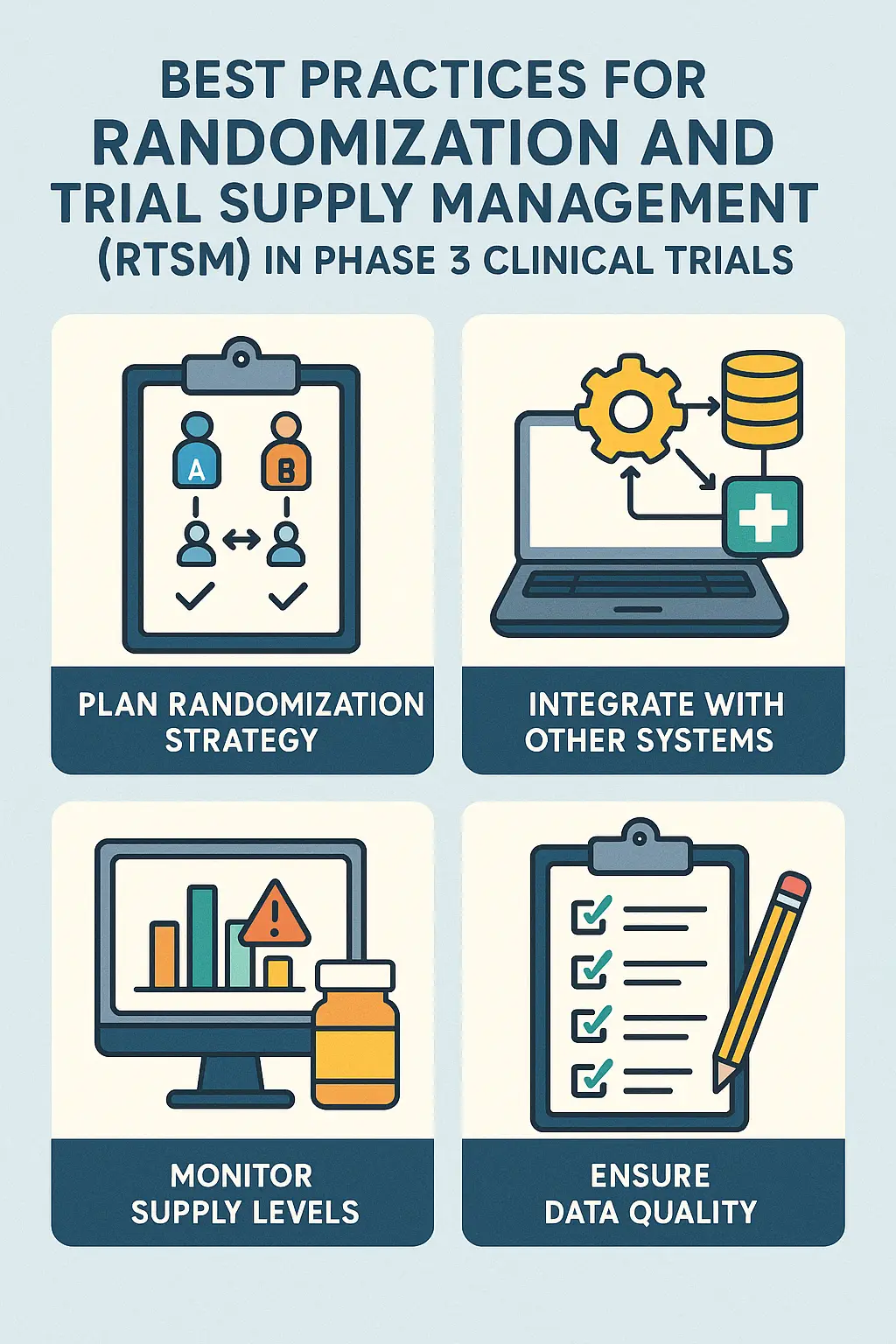
Best Practices for Randomization and Trial Supply Management (RTSM) in Phase 3 Clinical Trials
Comprehensive guide on RTSM best practices for Phase 3 trials, covering randomization strategies, global supply chain management, regulatory considerations (FDA, ICH E6(R3)), system integration, risk mitigation, and future trends including AI-driven forecasting and decentralized trial support.

FDA Digitally Derived Measures in Clinical Trials
A 2026 evidence matrix for FDA digitally derived measures, covering endpoint roles, verification, validation, missingness, change control, and a stride-length example.