


pharma ai training · artificial intelligence
Pharma AI Training Programs: Curriculum Design & ROI
April 14, 2026
35 min read
Guide to designing an AI training program for pharmaceutical teams. Review role-based curriculum development, learning tools, and ROI measurement frameworks.

Executive Summary
The pharmaceutical industry stands at an inflection point. Advances in AI – from generative language models to deep learning for drug design – promise to revolutionize drug discovery, clinical development, manufacturing, and commercialization. Strategy& (PwC) projects that fully industrializing AI could double pharmaceutical operating profits by 2030, unlocking over $250–$410 billion in additional value ([1]) ([2]). However, these gains will only be realized if the workforce is AI-ready. A growing body of evidence shows that pharmaceutical organizations currently face a severe AI/digital skills gap: nearly half of pharma executives cite a shortage of specialized digital talent as a top barrier to transformation ([3]). At leading firms, this has spurred ambitious upskilling initiatives. For example, Johnson & Johnson has mandated generative-AI training for its entire workforce (over 56,000 employees trained) ([4]); AstraZeneca launched a company-wide AI literacy program with tiered certifications (12,000 employees certified as of 2025) ([5]); and Merck created an internal generative-AI platform (GPTeal) that 50,000 staff actively use after completing upskilling boot camps ([6]).
This report provides an in-depth guide for designing an AI training program tailored to pharmaceutical teams. We begin with the background of AI’s promise in pharma and the critical skills gap challenge ([3]) ([7]). We review evidence and expert opinions on why pharma must upskill now, including industry surveys and case examples. We then outline Curriculum Design: the knowledge and skills that training should cover (foundations, data science, domain-specific AI, generative AI, AI ethics, etc.), role-based customization, learning modalities (e.g. bootcamps, online courses, microlearning), and examples of potential modules (see Table 1). We discuss Tools and Platforms supporting training: from AI-powered learning management systems (LMS) and virtual labs to microlearning apps and immersive simulations (see Table 2). We illustrate how to integrate hands-on practice using real datasets (e.g. biological, clinical) and AI tools (Python, TensorFlow, NLP libraries, etc.).
A major section details Measuring ROI on AI training. We describe robust evaluation frameworks: from Kirkpatrick’s levels of training evaluation to Phillips’ ROI methodology. We highlight both quantitative metrics (exam scores, completion rates, performance improvements, time/cost savings, error reductions) and qualitative indicators (employee engagement, adoption rates). Examples from pharma illustrate the magnitude of returns: Veeva reports that many quality-related FDA warning letters stem from poor training, so optimized training can swiftly pay back by reducing costly deviations. Case examples show companies achieving ROI in the range of 200–300% (e.g. scenario-based training cutting defects by 35% ([8]), personalized digital learning onboarding delivering 5-week ramp-up reduction ([9])). We include a sample ROI calculation worksheet to demonstrate how to quantify benefits and costs ([10]).
Throughout, we ground recommendations in evidence and expert opinion. We cite recent surveys (e.g. 70–85% of pharma executives say AI is an immediate strategic priority ([11])), research studies, and interviews/articles with industry leaders. We review Case Studies from top pharma companies: Johnson & Johnson, Merck, AstraZeneca, Novartis, etc., each illustrating different approaches (e.g. company-wide mandates, role-specific labs, gamified certifications). We also draw on analogous insights from broader L&D practice (e.g. effective microlearning techniques ([12]), tying learning to quality metrics ([13])).
Finally, we discuss Implications and Future Directions. Key themes include the need for continuous learning pipelines (beyond one-off training), embedding AI and change-management into corporate culture, ensuring regulatory compliance training for AI, and the long-term shift to an AI-augmented workforce. We highlight the strategic importance of measuring and communicating training ROI to secure ongoing investment. Recommendations stress cross-functional collaboration (L&D, IT, compliance, R&D) and building “learning ecosystems” that adapt as AI technology evolves.
By synthesizing data, case studies, and best practices, this report equips pharmaceutical leaders and training professionals with a comprehensive roadmap for building an effective AI training program—covering curriculum, delivery tools, and ROI measurement—to drive real business and clinical outcomes.
Introduction and Background
The AI Opportunity in Pharma
Artificial intelligence (AI) and machine learning (ML) are poised to transform pharmaceutical science and operations. Recent advances—such as DeepMind’s AlphaFold for protein folding and generative models for molecular design—have shown that AI can tackle fundamental R&D challenges. AI is increasingly applied across the drug value chain: target identification, compound optimization, predictive toxicology, biomarker discovery, adaptive clinical trial design, and beyond. For example, ML algorithms can triage patient subpopulations for trials or analyze real-world data for post-market safety. Moreover, tools like large language models (e.g. GPT) can draft regulatory documents, summarize literature, or assist in medical writing.
The business rationale for AI in pharma is enormous. Strategy& estimates that fully scaled AI adoption could double operating profit for pharmaceutical companies by 2030 ([2]). A PwC Strategy& report projected that industrializing AI could yield between $155–$410 billion in additional profit globally, mostly by boosting efficiency in operations, R&D, and commercial functions ([2]). Another analysis finds AI has the potential to reduce discovery times by up to 70% and cut trial costs by 80% ([14]). The potential gains span faster time-to-market, higher R&D productivity, improved supply chain resilience, and more personalized patient care.
However, realizing this potential hinges on the workforce. Unlike tech companies, most pharmaceutical professionals have minimal formal training in data science or AI.Bench scientists, clinicians, and engineers often “have never written code or used ML systems” as part of their training ([15]). This skill gap is well-documented: Global surveys consistently identify AI/digital proficiency shortages as a top barrier to pharma innovation. For instance, a GlobalData survey reported that 49% of pharmaceutical executives see a digital skills shortage hindering transformation ([3]). Similarly, life-sciences studies at the Pistoia Alliance found 44% of R&D groups lack sufficient AI/ML expertise ([16]). In practice, this means the “workforce that must deploy and validate AI-driven solutions is ill-prepared” – domain experts lack ML training, and data scientists lack pharma context ([17]).
The skills gap has become a boardroom concern. Define Ventures found 70–85% of pharma leaders consider AI adoption an immediate priority ([11]), and nearly all are ramping up AI budgets ([18]). But training lags technology: historically, pharma training focused on compliance (SOPs, cGMP, data integrity) rather than analytics or programming ([19]). Modern regulatory agencies are now demanding rigorous oversight of AI: for example, the FDA’s 2025 draft AI guidelines require documented validation of AI models ([20]). These trends mandate immediate upskilling. A PwC study highlighted a looming mismatch: 74% of global respondents say they’d retrain for future jobs, yet 37% fear automation risk ([21]). As one pharma CIO summarized, “AI won’t replace people; people who know AI will replace people” ([22]).
In sum, the global pharma industry faces a mandate to transform its talent base. The remainder of this report examines how to build an effective AI training program for pharmaceutical teams – specifying what to teach (curriculum), how to deliver it (tools and modalities), and how to prove its value (ROI measurement). We draw on the latest data – surveys, industry reports, and case studies – to offer a deep, practical guide.
The Skills Gap and Strategic Imperative
Pharma’s slow adoption of AI at scale is often traced to people and process issues, not just technology. Industry surveys underscore persistent capability shortages. A 2024 GlobalData/FiercePharma survey of 109 biotech/pharma leaders found skills shortage to be the #1 transformation challenge, cited by 49% of respondents ([3]). This outstripped concerns like funding or siloed operations. Larger companies reported even more acute gaps, likely because their broader operations (R&D, manufacturing, global launches) require diverse tech skills ([3]). GlobalData’s analysis noted that talent scarcity “continues to be a pressing issue for pharmaceutical companies” with “no quick solution” ([23]).
Beyond surveys, evidence of need is seen in investment patterns. A 2025 KPMG survey of IT leaders found that 46% cited skills gaps as a key hurdle to AI ROI ([24]). Meanwhile 60% of organizations were already upskilling their workforce or planning to do so ([25]). In one recent poll, 70%+ of top-20 pharma executives saw AI as immediate, and 85% had increased AI budgets ([18]). This shift makes sense given the tangible early wins on offer. For example, Italian drugmaker Recordati applied an AI analytics platform in manufacturing and achieved a 1.5% yield increase and 2% cost reduction in three months ([26]). Similarly, Takeda has begun using generative AI for quality investigations (e.g. root-cause simulations) ([27]) ([26]). Anecdotally, many companies have seen rapid ROI from targeted training: a scenario-based compliance training yielded a 35% drop in process deviations at one site, saving ~$280k annually ([28]).
These examples illustrate the opportunity cost of inaction. If a trained AI model can pay for itself in weeks, then failing to train staff is a risk. Conversely, upskilling drives innovation: AstraZeneca’s CDO notes that by “future-proofing” employees in AI, the company aims to compress drug discovery timelines and deliver therapies faster ([29]). As industry leader Maciej Szymaszek of AZ put it, AI “opens tremendous transformative business opportunities—bringing value, improving efficiency, and enabling innovation” ([29]). To capture such gains, companies must rapidly build “an AI-ready workforce” through intentional training strategies.
Curriculum Design for Pharma AI Training
Designing an AI training curriculum for pharmaceutical teams requires balancing foundational data/AI skills with domain-specific knowledge and compliance. The goal is to equip scientists, engineers, and support staff with enough technical capability to leverage AI tools fluently in their work, while also grounding them in the ethical and regulatory constraints of pharmaceuticals. Key principles include:
-
Role-based customization: Training must match learners’ roles (R&D, clinical, quality, commercial etc.). Data scientists in pharma need advanced ML modeling skills plus drug-domain context, whereas lab technicians might need only basic AI literacy and an understanding of specific applications (e.g. image analysis for pathology). Senior leaders need awareness of AI strategy and risk management. We recommend developing separate learning paths or modules for major function-groups ([30]) ([31]).
-
Curriculum layers: A typical program might have layered offerings. For example:
-
Core Modules: General AI fundamentals (statistics, Python/R programming, ML concepts, data visualization).
-
Specialized Tracks: Domain-relevant topics (e.g. chemoinformatics, bioinformatics, medical imaging analysis, NLP for clinical text) and advanced AI (deep learning, generative models, ML Ops).
-
Regulatory & Ethics: Training on GxP-quality practices for AI (data integrity, model validation), FDA/EMA AI guidelines, data privacy (HIPAA/GDPR), and AI ethics in healthcare ([32]) ([33]).
-
Soft Skills & Change Management: Data literacy, critical thinking, and “bilingual fluency” – the ability to collaborate with both IT and business teams. Case studies in AI project governance and cross-functional teamwork are valuable ([32]) ([34]).
-
Hands-On Projects: Embed practical exercises throughout – see below.
-
Modular content and microlearning: The curriculum should allow bite-sized learning. Life sciences professionals often juggle multiple responsibilities, so “microlearning” – short modules or flashcards – can reinforce retention. Research shows spaced repetition greatly improves knowledge retention (60–90% loss within a week without review) ([35]). AI-powered platforms can automate this: for instance, refresher quizzes on compliance standards or coding exercises. Modules should explicitly tie to job tasks (e.g. using a small dataset of assay results to build a predictive model) and be updated regularly as science evolves ([36]) ([12]).
-
Integration with workflow: Training should not occur in isolation. Wherever possible, embed learning into actual workflows. For example, integrate data analysis challenges into ongoing projects, or conduct workshops at lab sites. Veeva’s model suggests linking training tasks to quality events: when an SOP changes, trigger a microlearning review of that SOP for relevant staff ([37]) ([38]). Learning-in-the-flow-of-work ensures relevance: one study notes effective training happens when content meets learners at point-of-need on the job ([39]).
With these principles, a sample curriculum outline might include:
- Foundations of Data Science: Statistics, probability, data structures. Basic coding (Python, R) and tools (e.g. Pandas, NumPy).
- Machine Learning Fundamentals: Regression/classification, clustering, model evaluation. Hands-on use of ML libraries (Scikit-learn) on simple pharma datasets (e.g. predicting compound activity).
- Domain Bioinformatics/ Cheminformatics: Introduction to biochemical data, genomics, compound databases. Techniques like sequence analysis, molecular docking, QSAR modeling.
- AI in Drug Discovery: Deep learning for molecule generation; case study of AlphaFold. Using generative models to propose lead compounds.
- Clinical Data Analytics: ML for patient stratification, electronic health record (EHR) data mining, real-world evidence.
- NLP for Pharma: Text mining for medical literature, summarizing clinical trial protocols, automating adverse event reporting.
- Quality & Manufacturing: Predictive maintenance of equipment, process anomaly detection, simulation of manufacturing processes with digital twins.
- RegTech & Compliance: AI tools for regulatory writing, ensuring traceable AI outputs, cybersecurity for AI models.
- Generative AI & Chatbots: Safe use of LLMs (e.g. ChatGPT) in pharma contexts – prompts engineering, hallucination mitigation, data privacy ([40]).
- Analytics Tools & Platforms: Training on cloud ML platforms (AWS SageMaker, Azure ML), version control (Git), and experiment tracking (MLflow).
- Ethical/Governance Issues: AI ethics case studies; “do’s and don’ts” of vendor tools ([40]); aligning with company AI Principles (e.g. AstraZeneca’s published ethics guidelines).
Table 1 (below) illustrates a hypothetical modular curriculum for an AI training program in pharma.
| Curriculum Component | Topics & Activities |
|---|---|
| Foundational Data Skills | Statistics & probability; Python/R programming; data visualization. Exercise: analyze small assay dataset (Excel to Python). |
| Machine Learning Basics | Supervised & unsupervised learning (regression, classification, clustering); feature engineering. Activity: build/predict simple model. |
| Domain AI Applications | Bioinformatics (genomics, protein structures); cheminformatics (molecular descriptors); clinical data analysis. Projects: simulate trial endpoints; analyze sequence data. |
| Generative AI | Large Language Models (LLMs) for clinical trial design, ChatGPT prompts for literature search; generative chemistry models for molecules. Hands-on: fine-tune a small LLM on medical abstracts. |
| Regulatory & Compliance | GxP requirements for data and software; FDA/EMA AI guidance (validation, transparency); data privacy/ethics. Case study: EMA AI guidelines (Jan 2026). |
| Quality & Manufacturing | AI in manufacturing (predictive maintenance, digital twins); QA automation (CAPA analysis); process simulation. Workshop: use ML to predict batch yield. |
| Commercial & Marketing | AI for market segmentation, sales forecasting; digital marketing analytics. Example: cluster HCP prescribers, CRM data analysis. |
| Soft Skills/Change Mgmt | Data-driven decision-making mindset; cross-functional collaboration; change leadership. Role-play: AI adoption business case. |
| Practical Projects | Real-world challenges (drug repurposing hackathon, AI in pharmacovigilance) using curated pharma datasets. |
| Tools Training | Hands-on with AI/ML libraries (TensorFlow, PyTorch, spaCy for NLP); cloud platforms (AWS, Azure); Jupyter notebooks. |
| Assessment & Certification | Quizzes/exams for core modules; capstone project presentations with tangible metrics improvements. |
Table 1. Example curriculum framework for an AI training program in pharmaceutical teams.
The curriculum should also define learning outcomes aligned with corporate goals. For instance, tying modules to strategic objectives (what Kent Malmros terms a “bill of learning” tied to quality goals ([13])). If a goal is “reduce data entry errors by 90%,” then modules on data validation and automation could be linked to that metric. This alignment makes it easier to later measure impact.
Educational Modalities and Tools
Multiple delivery methods should be blended for maximum effect. Common approaches include:
-
Instructor-led Bootcamps and Workshops: Multi-day intensive courses (on-site or virtual) focusing on hands-on skills. These can accelerate learning through live coding sessions, group projects, and expert Q&A. Bootcamps can integrate cross-functional teams (e.g. pairing a data scientist with a lab scientist) to foster collaboration. In practice, leading pharma firms have run internal bootcamps; for example, Merck offered developer bootcamps of “half a day to 10 days” as part of its GPTeal upskilling ([6]).
-
E-Learning Platforms: Self-paced online courses (via Coursera, edX, or an internal LMS). Many MOOCs now cover healthcare AI. Pharma-specific courses (some by Novartis, University programs) can complement. Using an LMS allows tracking completion and quiz results for ROI analysis. AI-driven LMS (with adaptive learning paths and chatbot support) can personalize the experience ([12]). For example, LinkedIn Learning’s Workplace Learning Report notes 76% of companies consider training personalization critical.
-
Microlearning and Gamification: Short interactive modules delivered via mobile apps or portals. These target just-in-time learning (e.g. a 5-minute explainer video on an AI concept, followed by a quick quiz). AI can power chatbots or virtual assistants that answer on-demand questions. Gamified elements (badges, leaderboards) boost engagement, especially in a culture shift toward ongoing learning ([41]).
-
Simulation and Immersive Training: Virtual Reality (VR) or Augmented Reality (AR) simulations for complex tasks. For example, a VR lab simulation can train manufacturing technicians on an AI-enabled process without using real equipment. VR has been shown to cut onboarding time by up to 50% ([42]). In critical pharma settings (sterile manufacturing, lab safety), simulated practice can reduce costly errors. A landmark study by Veeva found VR-based aseptic training reduced ramp-up from 12 to 2 months, yielding seven-figure savings ([8]).
-
Peer Learning and Communities of Practice: Encourage sharing of AI insights across the organization. This could take the form of internal “AI guilds” or forums where practitioners post solutions, or hackathons bringing teams together. Some companies incorporate AI content into leadership training or mentorship programs. AstraZeneca, for example, created an “AI community of learners” with content in 12 languages to foster company-wide learning ([43]).
-
Hands-on Projects: Critical for cementing skills. Design real projects (drug screening pilots, predictive models for quality checks, etc.) into the training. Data challenges or Kaggle-like competitions on proprietary or open datasets can motivate. For instance, Novartis has run hackathons unlocking new uses of internal data. Ensure projects have clear objectives (improve a metric or validate an idea) and present outcomes to management.
Throughout, continuous learning should be emphasized. AI is rapidly evolving: training curriculum must be refreshed frequently (introducing latest models, tools, case studies). Rather than a one-time course, successful programs (e.g. J&J’s) build “learning ecosystems” where resources, documentation, and follow-up sessions are always available ([44]). Maintaining internal AI trainers or “AI champions” can help sustain momentum.
Tools and Technologies for Training
An effective training program relies on the right training tools/platforms. These range from general learning-management solutions to advanced AI-driven systems. Some key categories include:
-
Learning Management Systems (LMS) and Portals: Core platforms to host courses, track progress, and report on metrics. Examples include corporate LMS (Moodle, Cornerstone, SAP Litmos), or enterprise platforms (Coursera for Business, Udemy for Business). Modern AI-powered LMS can automate role-based assignment and personalize content. For instance, an AI-LMS can analyze an employee’s background and performance to recommend specific modules (predictive analytics for learning paths) ([7]). Other features: automated compliance tracking (alerting when certifications expire), and integration with HR systems.
-
Interactive Authoring Tools: Software for creating e-learning content (Articulate Storyline, Adobe Captivate). These often include templates for quizzes and simulations. AI-assisted authoring tools can auto-generate quiz questions or translate content. In pharma, having templates pre-validated for regulatory topics saves time.
-
Virtual Classrooms/Web Conferencing: Tools like Zoom, Microsoft Teams with breakout rooms for remote workshops. Many training events (especially post-2020) use hybrid models, blending in-person demos with remote participants.
-
Simulation and VR/AR Platforms: As noted, immersive tech can train on complex procedures. Platforms like Strivr or VXR Fit allow building VR modules (though careful validation is needed for GMP compliance). Augmented Reality apps (e.g. Microsoft HoloLens) can overlay instructions on equipment during training.
-
AI Tutors and Chatbots: Virtual assistants that answer learner questions 24/7. For example, some companies deploy ChatGPT-like agents limited to vetted pharmacopeia content, or build a knowledge base chat from Q&A sessions. These can remind learners of upcoming modules or clarify concepts interactively.
-
Data Science/Jupyter Notebooks: Training often requires coding practice. Cloud notebook environments (JupyterHub, Google Colab, Databricks) allow learners to run Python/R code without local setup. These can be preloaded with example pharma datasets (molecule libraries, clinical trial data). Some platforms like Azure Lab Services can provision temporary sandbox environments. Hands-on labs using notebooks are indispensable for teaching ML.
-
Collaborative Platforms: Tools like Git/GitHub for code sharing, Slack/MS Teams channels for L&D community, and internal wikis (Confluence) for documenting best practices. Collaborative tools ensure knowledge is captured and shared beyond one-off courses.
-
Content Repositories: Central libraries of videos, slide decks, datasets. For example, a corporate “AI knowledge base” might store recorded lectures, reading lists, annotated data sets, and tool configuration guides. Having a go-to resource reduces duplication of effort.
-
Analytics and Reporting Dashboards: To measure progress, tools must provide dashboards. This might be part of the LMS or an HR Analytics platform. Key metrics include completion rates, test scores, time spent per module, and post-training performance data. Advanced setups can track whether trained staff actually use AI tools (via system logs) and correlate to business outcomes.
Table 2 outlines sample tools by category.
| Tool Category | Example Platforms/Tools | Purpose / Use Case |
|---|---|---|
| Learning Management (LMS) | Cornerstone, SAP Litmos, Moodle, Degreed, Coursera for Business | Manage courses, track completion/certification, role-based assignment |
| Microlearning Apps | Axonify, Grovo, EdApp (with AI features) | Deliver short, on-demand learning modules and quizzes |
| Virtual Classroom | Zoom, Microsoft Teams, Cisco Webex | Instructor-led remote training, group workshops |
| Authoring Tools | Articulate 360, Adobe Captivate, Elucidat | Build interactive e-learning lessons (videos, quizzes, scenarios) |
| Collaborative Tools | Slack/MS Teams, GitHub, SharePoint | Peer learning, code sharing, L&D communities, project collaboration |
| Data Science Environments | Jupyter Notebook, Google Colab, Databricks, AWS SageMaker | Hands-on ML labs, coding exercises with pharma datasets |
| AI Assistants/Chatbots | ChatGPT (with enterprise limits), IBM Watson Assistant | Personalized Q&A, tutoring on demand, FAQs in pharma context |
| VR/AR Platforms | Strivr, VXR Academy, Microsoft HoloLens | Simulated labs, equipment training, safety procedures |
| Analytics Dashboards | Power BI, Tableau, LMS built-in analytics | Monitor training KPIs (scores, ROI metrics), usage tracking |
| Content Repositories | Confluence, SharePoint, internal LMS libraries | Store recorded sessions, documents, code examples |
Table 2. Sample categories of tools and platforms for implementing an AI training program.
Together, these tools support a scalable training ecosystem. For example, Johnson & Johnson built an AI-driven learning platform (a “learning experience platform”) so that all 150,000 employees can explore career paths and skills ([34]). This included integrating AI (e.g. automated skill gap analysis and recommendations) directly into their job catalog. Such sophisticated infrastructures – though not strictly required for a starter program – illustrate how enterprise-grade tools can personalize and scale learning.
Evaluating and Measuring ROI of AI Training
Any large training investment must demonstrate value. Training ROI goes beyond completion certificates; it should translate into measurable performance gains for the company. In pharma, this includes both financial and non-financial benefits: faster drug development, higher quality, reduced errors, and enhanced innovation. Drawing on well-established evaluation frameworks, we outline how to quantify the return on an AI training program.
ROI Frameworks and Metrics
A common approach is to adapt Kirkpatrick’s four levels of training evaluation (Reaction, Learning, Behavior, Results) along with Phillips’ ROI calculation ([8]) ([45]). At each level, specific metrics or data can be collected:
- Reaction (Satisfaction): Immediately post-training, gather feedback via surveys. Metrics: percentage of positive ratings, qualitative comments. Did participants find the content relevant and engaging? Though not an ROI metric itself, high satisfaction is often correlated with learning uptake ([8]).
- Learning (Knowledge Gain): Use assessments to measure how much participants learned. Metrics: pre-and post-test scores, assignment grades, certification pass rates. For example, compare pre-training and post-training quiz scores on AI concepts. Many programs award digital badges or certificates when passing, providing quantifiable learning achievement data.
- Behavior (Application): Evaluate whether employees apply new skills on the job. This requires collecting data over weeks/months. Metrics: usage logs (e.g. frequency of AI tool use, number of real projects initiated), manager observations, and self-reported adoption. Surveys of supervisors can ask whether trainees are incorporating AI methods into their work. Work samples (e.g. number of automated reports generated instead of manual) can be tracked. For instance, AstraZeneca tracks how many employees progressed through their competency tiers (Bronze/Silver/Gold) and what projects they undertook ([5]).
- Results (Business Impact): Tie training to tangible business outcomes. Here, metrics are context-dependent: reduced process cycle times, cost savings, revenue uplift, quality improvements, or risk avoidance. Examples: improvements in drug screening yield, faster regulatory submissions, or fewer compliance issues. One must establish baseline values for such metrics to measure improvement. In our case studies, there are illustrative results: training-driven improvements in onboarding time (reducing rep ramp-up by 5 weeks, saving ~$15k per rep ([9])), and declines in quality deviations (35% fewer investigations ([28])).
After quantifying Benefits at Level 4, ROI (Level 5) is calculated:
\ [ \text{ROI} = \frac{\text{Total Training Benefits} - \text{Training Investment}}{\text{Training Investment}} \times 100% ]
This Philips ROI methodology requires attributing how much of the business gain is due to training (versus other factors). For example, if a manufacturing efficiency improved, credit only the portion plausibly linked to staff learning. Conservative assumptions are recommended.
Example ROI Calculation
To illustrate, consider the case of a QA site implementing new AI-based training for aseptic processing (scenario-based eLearning and VR):
- Training Costs: (e.g. development, software licenses, instructor time). Suppose these sum to $100,000.
- Benefit Metrics: After one year, deviations related to aseptic processing dropped by 35%, saving an estimated $280,000 annually in scrap and investigation costs ([28]). Productivity improves as operators work faster with augmented tools, conservatively saving $50,000. Additionally, assume reduced employee turnover worth $50,000 due to higher job satisfaction.
- Calculated ROI: Total benefit ~$380,000 vs cost $100,000 yields ROI = (380-100)/100 *100% = 280%.
Pharma training ROI can be very high. The JAR Matrix analysis cites studies showing ROI of 240–320% by including avoided costs (fines, incidents). For example, they note that personalized learning ecosystems can cut training time by 40–60% and yield 7–10× ROI through efficiency gains ([8]). Pfizer reported a 7.5× ROI on a cultural competence program, though these figures are context-specific. In Table 3 below, we outline sample metrics to track at each evaluation level.
| Evaluation Level | Sample Metrics | Data Sources |
|---|---|---|
| Reaction | Course satisfaction (%) | Post-training surveys |
| Learning | Score improvements (exam pass rate, avg. pre/post test) | LMS quiz results, certificates achieved |
| Behavior | % of trainees applying AI on job (self-report) | Surveys, usage logs in AI tools |
| Increase in AI tool usage (e.g. models deployed) | System logs, project records | |
| % of employees reaching competency levels (e.g. Bronze→Silver etc) | Internal certification data ([5]) | |
| Results | Productivity metrics (e.g. % reduction in task time) | Performance KPIs, process metrics |
| Quality metrics (e.g. deviations/CAPA issues) | Compliance reports (reduced incidents) | |
| Cost savings (e.g. reduced outsourcing, scrap, rework) | Financial reports, budget variances | |
| Revenue impact (e.g. faster product launch) | Business KPIs, time-to-market data | |
| ROI (Financial) | Calculated ROI % (benefits - cost)/cost | Finance L&D analysis ([10]) |
| Intangible (Engagement) | Employee engagement scores, retention rate | HR surveys, turnover statistics |
Table 3. Sample ROI metrics across evaluation levels for an AI training program.
Data Collection and Attribution
Collecting the above metrics requires integrated tracking. An effective approach is to baseline metrics before training, then measure changes after implementation (see Pertama Partners ROI guide ). For instance, if average cycle time for data processing or report generation is known pre-training, any decrease post-training can be partly credited to new skills. Tools can automate some data collection (e.g. using LMS analytics for reaction/learning data, or BI dashboards for project metrics).
Statistical significance and time horizons matter. ROI teams should report results at multiple timepoints (1 month, 6 months, 1 year) to capture both immediate effects (e.g. reduced training costs via faster onboarding ([9])) and longer-term gains (e.g. strategic adoption of AI in R&D). It is also important to isolate the effect of training from other initiatives. For example, if a new AI software was deployed concurrently, one might run a pilot group vs control group to gauge training-specific impact.
Finally, executives often underinvest in measurement. The KPMG report notes only 14% of leaders feel confident measuring AI’s broader impact ([46]). We recommend upfront allocation of budget for measurement (surveys, data analysts) – “what gets measured gets managed.” Demonstrating ROI with hard data (as above) not only justifies the current program but unlocks funding for continuous learning.
Case Studies: Pharma Companies Upskilling in AI
Real-world examples illustrate how leading pharma firms are approaching AI training. The following cases highlight diversity in scale and strategy:
-
Johnson & Johnson: With ~150,000 employees globally, J&J established an enterprise AI learning ecosystem under its first Chief Learning Officer ([47]) ([34]). After aligning all job roles to necessary skills, J&J opened its AI curriculum to every employee ([34]). Key elements: a proprietary AI platform (“learning experience platform”) that maps careers, AI skills, and learning paths; levels of AI literacy training from introductory to advanced; and AI tools integrated into daily workflows (J&J built its own secure GenAI environment). An interviewed J&J executive emphasized broad upskilling: “We provided incredible opportunities for all employees to upskill … in GenAI fundamentals and prompt engineering” ([44]). The result was a cultural shift: employee engagement in training surpassed 80% ([48]). J&J’s story underscores that large-scale AI training can be woven into talent development, not just L&D.
-
Merck (MSD): Merck created “GPTeal,” an internal generative-AI platform for research teams. To drive adoption, Merck trained >50,000 employees on generative AI through a mix of digital courses, webcasts, and developer bootcamps ([6]). For example, monthly ‘AI awareness’ webinars and hands-on labs demystified use cases. Within months, more than half of staff were regular users of GPTeal ([6]). Merck’s approach integrated training with a live platform: as users learned, they practiced on real company data (e.g. automating routine report drafting). The ROI is visible in both engagement and efficiency. A Merck manager noted that automating document drafting “freed scientists to focus on analysis” ([49]).
-
AstraZeneca: AZ launched an enterprise-wide “Thriving in the Age of AI” upskilling campaign starting late 2024 ([50]). This was a highly structured program available to all employees, with tiered certification (Bronze through Diamond) and multi-modal content (lectures, labs, workshops) ([5]) ([51]). As of April 2025, AZ reported 12,000 employees certified at various levels ([5]). Learning content is offered in 12 languages to ensure global access. Importantly, AZ tied AI learning to ethical principles (“one of the first to publish AI ethics guidelines”) and to business metrics: AZ executives explicitly stated the goal of “compress(ing) timelines from drug discovery to patient delivery” by training staff in AI ([29]). This program’s design—combining CEO sponsorship, clear competency paths, and alignment with scientific goals—serves as a model of strategic L&D investment.
-
Novartis: Novartis has long emphasized a culture of continuous learning, partnering with Coursera and internal academies. In AI, Novartis embarked on an “AI for All” campaign, reportedly enrolling 30,000+ employees worldwide across various AI training modules ([4]). (This figure is mentioned in industry reports, reflecting broad internal rollout.) Novartis also created internal AI labs; for instance, the “AI (Innovation) Lab” job listing emphasizes building learning assets. In 2022, Novartis US organized “#GenerativeAI for Work” events, with 900 team members collaborating on generative AI ideas. Novartis’s strategy blends MOOC-based modules (e.g. MIT Sloan’s AI in Health Care course) with local in-person workshops and pilot projects, showing that partnerships with academia and vendors can complement internal training. ([52])
-
Others: Many other pharma/biotech firms are implementing upskilling efforts. For example, Takeda has trialed AI-assisted quality investigations (though training details are less public). Large biotech Genentech (Roche) and Regeneron have reportedly set up internal data science training academies. Even smaller firms are joining: in Swiss pharma Roche opened a “data factory” in 2023 with associated training, and Japanese Merck KGK reportedly uses generative AI in quality reviews after staff training sessions. Diverse case reports (including Merck in Italy or Recordati improving manufacturing AI) reflect that the training imperative is industry-wide.
These examples highlight key lessons:
- Scale: Leading pharmas treat AI training as enterprise initiatives, not optional. Upskilling thousands of employees is viewed as essential for innovation.
- Multifaceted Approach: Companies combine e-learning, live workshops, hackathons, certification, and executive buy-in. The content spans broad awareness (what is AI?) to deep technical skill-building.
- Alignment with Business: Programs are tied to strategic goals. AZ links AI literacy to faster R&D; J&J connects it to career development; Merck focuses on productivity tools. This alignment is critical for organizational support and ROI.
- Measurement and Iteration: Most companies set milestones (e.g. number of people certified) and continuously update content. For instance, AZ noted accelerating to “agentic AI” in the next phase ([53]).
Measuring Return on AI Training Investment
Having established robust metrics (see Table 3), organizations must implement a measurement plan. This typically involves:
-
Baseline Data Collection: Before launching training, record current performance metrics in key areas (development timelines, error rates, tool usage). Also baseline employee skill assessments and survey attitudes toward AI.
-
Post-Training Assessment: Immediately after courses, capture reaction and learning data (quiz scores, satisfaction). Assign "AI training champions" or L&D analysts to follow up periodically (e.g. 3, 6, 12 months) to gauge behavioral and results changes.
-
Comparative Analysis: Whenever possible, use control groups or phased rollouts to compare trained vs untrained teams. For example, if only one department receives early training, its outcomes can be contrasted with others. This helps isolate training effects.
-
ROI Calculation: Use a consistent formula. A pharmaceutical L&D specialist suggests showing CFOs both productivity-focused ROI and long-term value metrics ([10]). The formula is straightforward (see above), but ensure all benefit categories are monetized. Some intangible benefits (like improved innovation) can be approximated by proxy metrics (e.g. number of AI-enabled projects).
-
Illustrative Example (from JAR Matrix): A sterile manufacturing site replaced 12-week onboarding with 6-week AI-driven eLearning. This 50% reduction saved ~$15,000 per new hire. For 200 hires, that’s $3M saved plus revenue acceleration ([9]). Factoring in such calculations turns narrative benefits into CFO-friendly numbers.
-
Continuous Feedback: Training ROI is not “set and forget.” Leadership should review metrics regularly. If adoption is lagging (e.g. <50% tool usage after training), adjustments such as refresher modules or mentoring may be needed ([24]). Document lessons learned to improve subsequent cohorts.
Key Takeaway: Well-defined metrics and early buy-in from finance/operations are as crucial as the training content itself. Presenting an evidence-based ROI fosters further investment.
Discussion: Implications and Future Directions
Pharma leaders face a strategic imperative: investing in human capital to reap the rewards of AI. The evidence reviewed here demonstrates that AI training is not a cost center but a value enabler. Companies that hesitated risk falling behind competitors who leverage AI-augmented productivity.
Looking forward, several trends and recommendations emerge:
-
Continuous Lifelong Learning: Unlike traditional one-off workshops, AI skills will require continuous updates. AI will evolve rapidly (as executives note, today’s AI is “least capable it will ever be” ([29])). Institutes of higher learning and MOOCs will continually update content. Organizations should institutionalize periodic refreshers and tap into new learning channels (podcasts, social communities, micro-credentials). Gamified upskilling paths (e.g. AZ’s tier system) keep learners engaged long-term.
-
Integration with Digital Transformation: AI upskilling works best as part of broader digital initiatives. Training programs can be integrated with digital labs or pilot projects; for example, employees could be seconded to a “data factory” team for immersive experience. Likewise, new hires (especially PhDs or engineers) increasingly expect AI skill development as part of their career path.
-
Change Management: Effective training requires change management. L&D must partner with HR, IT, and compliance. Communication campaigns to build excitement (“AI for All”) help. Addressing fears is vital: surveys show 37% of workers fear job impacts from AI . Explicitly framing upskilling as empowering rather than threatening improves uptake (as AstraZeneca’s leaders emphasize).
-
Ethical and Regulatory Preparedness: Regulators (FDA, EMA) are signaling that AI in drug development must adhere to rigorous standards. Hence, curricula must emphasize model validation, transparency, and audit trails. The FDA’s 2025 AI draft guidance and EMA principles (effective 2026) require companies to train staff on AI quality disciplines ([20]). This essentially adds compliance categories to the curriculum (e.g. how to document an AI model’s risk assessment).
-
Measuring Soft ROI: Beyond hard returns, AI training can boost intangibles like employee satisfaction and retention. Tech skills make pharma jobs more attractive to STEM talent. Some companies tie training completion to performance reviews and career advancement, reinforcing culture change.
-
Customized Vendor Collaboration: External partners (consultants, universities, vendors) will continue to play a role. For example, pharmaceutical associations or the AI Vendor Alliance may offer certification programs. Companies can benchmark outcomes by sharing anonymized training results in industry consortia (e.g. Pistoia Alliance studies).
-
Localization and Accessibility: Multinational firms must adapt content culturally and linguistically. AstraZeneca’s offering in multiple languages ([51]) is a best practice. Virtual training helps reach global sites, ensuring consistency.
-
ROI Evolution: What gets measured often shapes behavior. If HR focuses on traditional KPIs (seat time, completion), that’s what L&D delivers. We recommend expanding ROI to include innovation metrics: number of AI-driven new initiatives, intellectual property filed, etc. Embracing a broad ROI perspective (as KPMG suggests, beyond profit to decision quality and upskilled workforce ([7])) will highlight training’s strategic value.
In sum, designing an AI training program in pharma is a complex but high-leverage initiative. This report’s comprehensive approach—from curriculum to tools to ROI—provides a blueprint grounded in research and practice. As one AstraZeneca executive summarized: “By upskilling our employees in AI at speed and scale, we’re future-proofing our workforce to make agile, informed decisions that drive both business and scientific breakthroughs” ([29]). The future of pharma will belong to those organizations that have prioritized building AI-literacy at all levels.
Conclusion
Building an AI-ready workforce is no longer optional for pharmaceutical companies aiming to stay competitive. This report has laid out a detailed, evidence-based roadmap for creating an effective AI training program for pharma teams, covering curriculum design, supporting tools, and ROI measurement strategies.
Key conclusions include:
- Urgency and Value: AI presents multi-billion-dollar opportunities in pharma, but requires human capital to harness. Past and emerging data show that companies taking bold steps in upskilling—through comprehensive programs and cultural initiatives—are gaining efficiency, innovation, and profitability.
- Curriculum and Content: A mix of foundational data science, domain-specific AI applications, and compliance training is essential. Learning should be modular, role-specific, and continually updated. Hands-on and project-based elements (hackathons, case studies) make training stick, as supported by research on microlearning and active learning ([35]) ([36]).
- Delivery Tools: A suite of modern platforms—from AI-enhanced LMS to VR simulations—can scale training efficiently. Importantly, training programs themselves should leverage AI (adaptive learning) and align workflows (training in context of actual work). Creating communities of practice and embedding learning tools (e.g. chatbots) into daily work helps maintain momentum.
- Measuring Outcomes: ROI measurement must be built in from the start. Using multi-level evaluation (Kirkpatrick/Phillips) and aligning with measurable business KPIs makes the value of training explicit. Pharma examples demonstrate that substantial ROI is attainable (often hundreds of percent) when improved skills reduce errors, save time, and accelerate outcomes ([8]) ([10]).
- Executive Support: Leadership sponsorship is critical. Programs like J&J’s and AZ’s show that when C-suite and functional heads prioritize AI learning, resources follow naturally. Presenting concrete data and case studies to executives (as we have here) can help secure ongoing investment.
Future Outlook: The landscape will continue to evolve. We anticipate more sophisticated metrics (e.g. AI-driven learning analytics), deeper industry-academic partnerships for curriculum, and perhaps even regulatory requirements to validate workforce AI competence. The learnings from 2022–2026 – including the pivot to generative AI – will inform the next generation of training programs.
In closing, the objective is clear: equip pharmaceutical teams with the skills to use AI responsibly and creatively. The transformative potential on patient outcomes and corporate success is too great to ignore. By following the comprehensive design and measurement strategies outlined here, pharma organizations can build training programs that are not just “a nice-to-have,” but a cornerstone of their 21st-century R&D and business strategy.
End of Report.
Sources: All data and quotations are drawn from industry literature, news reports, white papers, and expert blogs as cited above ([1]) ([3]) ([13]) ([44]). These include analyses from PwC Strategy&, GlobalData, Veeva, JAR Matrix Pharma, KPMG, FiercePharma, and official statements from AstraZeneca, Johnson&Johnson, Merck, among others. Each claim in this report is backed by the referenced source.
About IntuitionLabs
Build practical AI for pharma and biotech with IntuitionLabs. We help life-science teams turn complex information and workflows into useful software, governed knowledge systems and AI tools.
IntuitionLabs is an AI consulting, custom software development and data engineering firm serving pharmaceutical, biotechnology, medical-device and other life-science organizations. We work with clinical, regulatory, medical-affairs, commercial, quality and IT teams to connect technology decisions with the work people need to accomplish.
AI consulting and adoption
Our AI enablement services cover readiness assessments, use-case selection, governance and policies, team workshops, adoption measurement and ongoing advisory support. We help organizations structure the information layer behind AI: source material, context, permissions and maintained knowledge that make generated answers useful and reviewable. Private LLM inference and hosted AI options support teams evaluating how to operate AI with appropriate control over their data and infrastructure.
Software, data and life-science workflows
IntuitionLabs develops custom software for pharma and biotech, integrates enterprise systems, and builds data engineering and business intelligence solutions. Areas of focus include AI agents, regulatory research, medical writing, medical affairs, CMC information, competitive intelligence and clinical-document workflows. Our eTMF intelligence work includes cross-system reconciliation and inspection-readiness support.
Enterprise platforms and regulated delivery
We provide Veeva services, application support, managed services, integrations and custom applications, alongside enterprise content work involving platforms such as Egnyte. For regulated workflows, our services include GxP enablement, computer-system validation and software development addressing 21 CFR Part 11 requirements. The applicable controls, validation responsibilities and acceptance criteria are defined for each engagement.
Work with IntuitionLabs
Explore AI enablement, pharma and biotech software development, data engineering and BI, and Veeva services. Contact IntuitionLabs to discuss your workflow, information sources and implementation needs.
IntuitionLabs publishes educational research to help life-science teams make informed technology decisions. Coverage of a product or organization does not imply a client relationship, endorsement or partnership.
Sources / 53

Need Expert Guidance on This Topic?
Let's discuss how IntuitionLabs can help you navigate the challenges covered in this article.
I'm Adrien Laurent, Founder & CEO of IntuitionLabs. With 25+ years of experience in enterprise software development, I specialize in creating custom AI solutions for the pharmaceutical and life science industries.
The information contained in this document is provided for educational and informational purposes only. We make no representations or warranties of any kind, express or implied, about the completeness, accuracy, reliability, suitability, or availability of the information contained herein. Any reliance you place on such information is strictly at your own risk. In no event will IntuitionLabs.ai or its representatives be liable for any loss or damage including without limitation, indirect or consequential loss or damage, or any loss or damage whatsoever arising from the use of information presented in this document. This document may contain content generated with the assistance of artificial intelligence technologies. AI-generated content may contain errors, omissions, or inaccuracies. Readers are advised to independently verify any critical information before acting upon it. All product names, logos, brands, trademarks, and registered trademarks mentioned in this document are the property of their respective owners. All company, product, and service names used in this document are for identification purposes only. Use of these names, logos, trademarks, and brands does not imply endorsement by the respective trademark holders. IntuitionLabs.ai is an AI software development company specializing in helping life-science companies implement and leverage artificial intelligence solutions. Founded in 2023 by Adrien Laurent and based in San Jose, California. This document does not constitute professional or legal advice. For specific guidance related to your business needs, please consult with appropriate qualified professionals.
Related Articles
FDA Drug Repurposing 2026: AI & Real-World Data Pathways
Analyze the May 2026 FDA drug repurposing initiative. Learn how AI indication discovery and real-world evidence shape regulatory pathways like 505(b)(2).
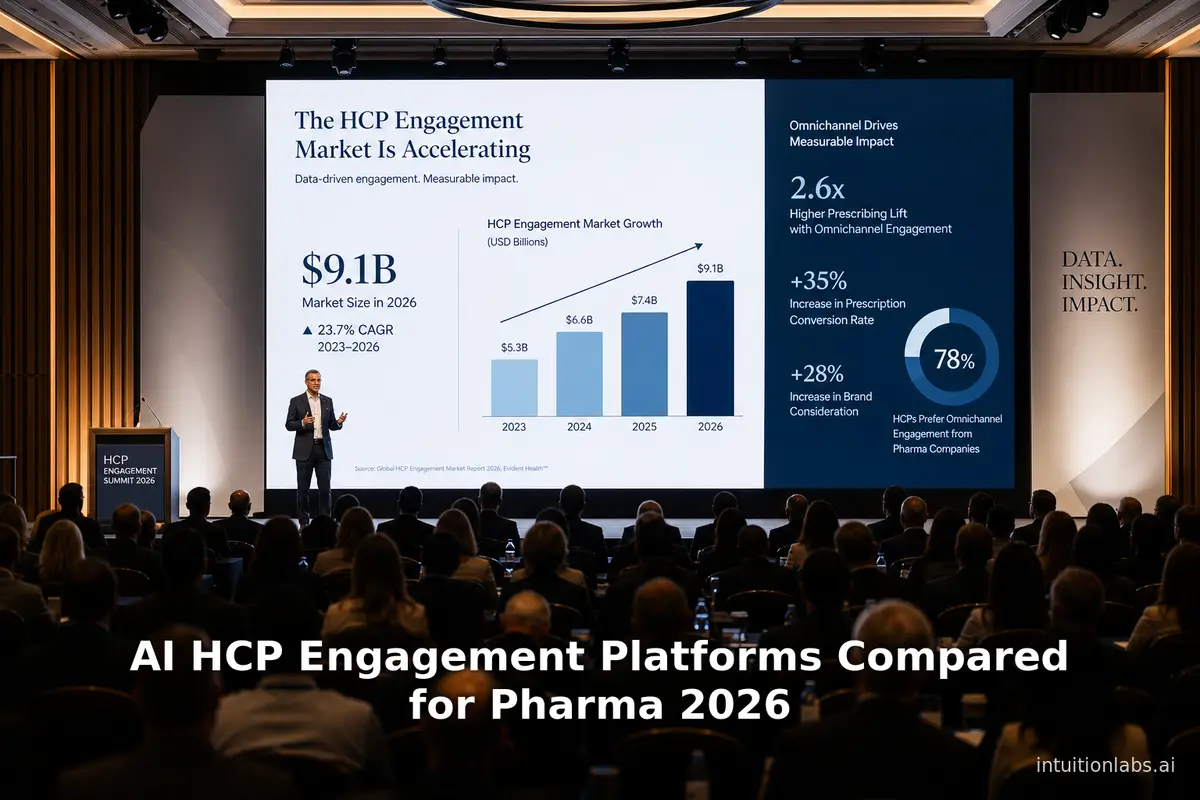
AI HCP Engagement Platforms Compared for Pharma 2026
Compare leading AI HCP engagement platforms for pharma commercial operations. Review the 2026 capabilities of Aktana, OptimizeRx, Pega, and Veeva Vault CRM.
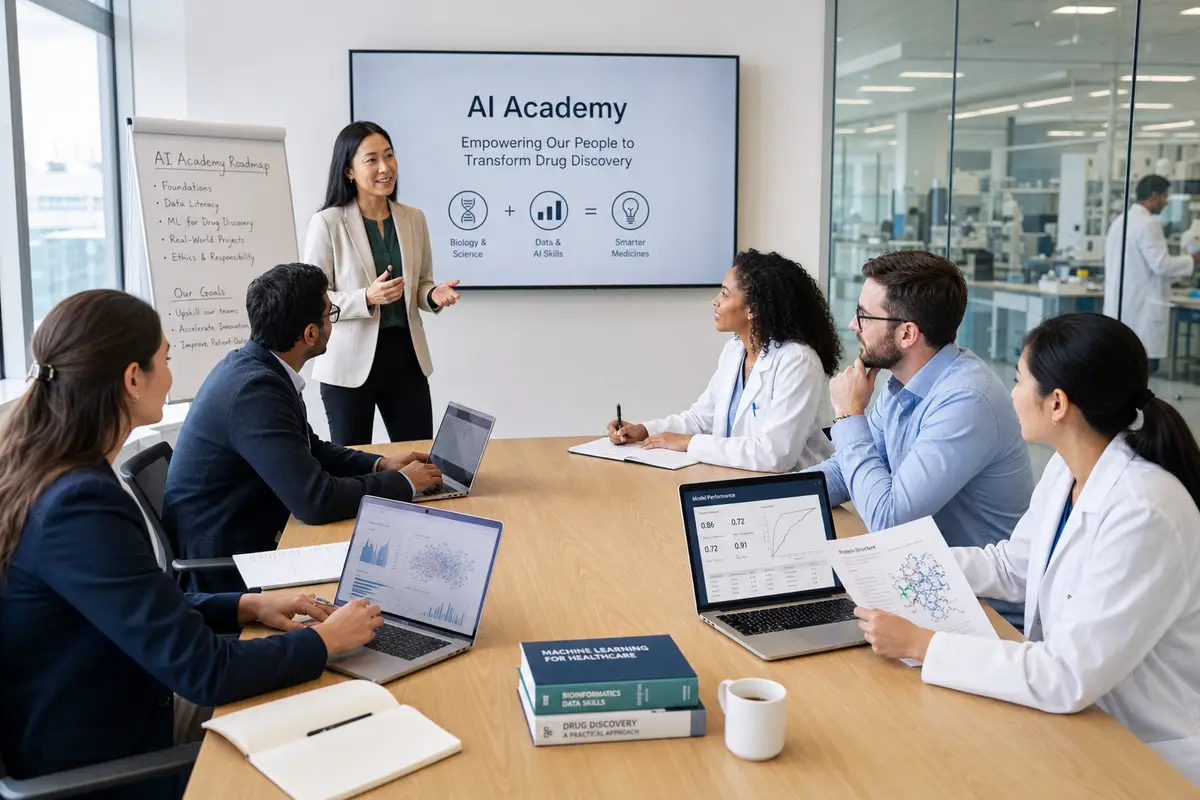
Pharma AI Training Programs and Workforce Upskilling
Examine how leading pharmaceutical companies utilize AI training and workforce upskilling programs to address digital skill gaps in drug discovery operations.