


fda drug repurposing · artificial intelligence
FDA Drug Repurposing 2026: AI & Real-World Data Pathways
May 14, 2026
70 min read
Analyze the May 2026 FDA drug repurposing initiative. Learn how AI indication discovery and real-world evidence shape regulatory pathways like 505(b)(2).

Executive Summary
The U.S. Food and Drug Administration’s (FDA) May 2026 Drug Repurposing Initiative represents a major policy push to leverage existing therapeutics in new ways to meet unmet medical needs. Under this program, FDA is soliciting public input to identify approved drugs that could be repurposed for new indications or patient populations – especially for chronic or rare diseases where current treatments are inadequate ([1]) ([2]). The initiative emphasizes three candidate sources of evidence: (1) existing data (even if not company-submitted), (2) preliminary clinical observations (case reports, series, or observational studies), and (3) cutting-edge preclinical signals, including those generated by artificial intelligence (AI) and machine learning (ML) ([3]) ([2]). In announcing the initiative, Commissioner Marty Makary noted that “too many patients lack effective treatment options, even when promising science exists,” and that repurposing could make “better use of available scientific data” to deliver therapies more quickly ([4]) ([1]).
This comprehensive report examines the historic context, current landscape, and future outlook of drug repurposing, with deep focus on the roles of AI-enabled indication discovery and real-world data (RWD). We review the regulatory pathways (e.g. 505(b)(2) applications, NDA supplements, FDA’s Project Renewal, and potential new pathways) and related policy innovations (such as recent FDA guidances and the CMS/NIH collaboration mentioned by FDA) that facilitate repurposing ([5]) ([6]). We analyze technological advances – notably AI and big data – that are accelerating identification of repurposing candidates, citing case examples (e.g. a recent Harvard “ foundation model” that predicts drug–disease links across ~17,000 conditions ([7])). We also detail how real-world evidence (RWE) can support repurposing, summarizing FDA’s evolving RWD policies (e.g. December 2025 guidance removing barriers to use of de-identified data ([8])) and illustrating with real-world studies (such as a Vanderbilt EHR analysis that screened thousands of drugs for COVID-19 benefit ([9])).
This report provides evidence-based analysis of repurposing opportunities and challenges. We include market data (e.g. multi-billion-dollar global repurposing market forecasts ([10])), success-rate statistics (citing analyses that only ~2% of new drugs are launched in a wholly new indication ([11]), yet repurposed Phase I candidates see ~30% success ([12])), and expert perspectives from regulators, industry analysts, and clinicians. We assess stakeholder perspectives (pharma companies, nonprofits, patients and payers) and include case studies of successful repurposing stories (such as thalidomide’s many new uses ([13])). We also outline a “Sponsor Playbook” – advice and best practices for developers seeking to repurpose drugs under the new FDA initiative – covering IP strategy, regulatory tactics (e.g. early orphan designation, pre-IND meetings, 505(b)(2) utilization), data generation, label changes, and reimbursement considerations ([14]) ([15]).
In summary, this report argues that the convergence of AI, massive health data, and forward-looking regulation has created an unprecedented opportunity for drug repurposing – but success will require careful strategy. Our conclusions and recommendations are grounded in extensive literature, policy documents, expert analyses, and real-world data, all duly cited.
Introduction and Background
Drug repurposing (also called drug repositioning or repurposing) refers to identifying new therapeutic uses for existing drugs – that is, novel indications or patient populations for medicines already approved or in clinical use ([3]) ([11]). This approach contrasts with “de novo” drug discovery of entirely new chemical entities (NCEs). The promise of repurposing lies chiefly in dramatically shortening development timelines and costs by leveraging what is already known about a drug’s chemistry, pharmacology and safety. For example, a recent analysis shows traditional NCE development typically exceeds $2.5 billion over 10–15 years with >90% attrition ([16]), whereas repurposing candidates on average cost ~$300 million and 3–12 years to reach market, with conditional approval rates near 30% for those entering Phase I ([16]) ([12]). Given that about 30% of new U.S. drug approvals now arise from computational repurposing strategies ([15]), repurposing has clearly become a major part of the biopharma innovation landscape.
Despite these advantages, repurposing historically has had modest yield. A landmark Cambridge study (Drug Discovery Today, 2018) analyzed >800 new molecular entities and found only ~2% ever launched in a therapeutic area different from their phase I target ([11]). In practice, many so-called repurposing successes (e.g. Viagra’s shift from chest pain to erectile dysfunction) are exceptions rather than the rule; most high-profile examples involve closely related indications or serendipitous discoveries. That study cautioned that repurposing alone cannot meet the growing demand for new medicines, since the “base metal” of known drugs is not infinitely transformable into “gold” ([17]).Nevertheless, repurposing holds special appeal for diseases with no treatments (common in rare genetic disorders or neglected conditions) or in situations where new clinical trials are impractical. Deadlines for novel therapies, increasing R&D costs, and high failure rates in traditional pipelines have all driven interest in capturing every possible benefit from existing molecules.
On the policy side, regulators have gradually recognized repurposing’s potential and challenges. In 2019, Congress required the FDA to consider real-world evidence (RWE) in approving new indications ([18]). The Oncology Center of Excellence launched Project Renewal (pilot) in 2022 to update labels of established cancer drugs based on published evidence ([19]). FDA’s 2026 initiative builds on these efforts. Historically, sponsors have repurposed via various pathways: applying for new-indication supplements to existing NDAs (often under 21 CFR 314.70–314.98), filing full NDAs including 505(b)(2) applications that can rely partly on published or third-party data, using citizen petitions (21 CFR 10.30) to request labeling changes, or simply pursuing off-label adoption by clinicians. Each route has limitations (commercial, legal, evidentiary) that we will discuss below.
Technological change is accelerating repurposing today. Advances in artificial intelligence and big data analytics – including large language models, graph neural networks, and AI-driven biomedical knowledge graphs – can comb literature and molecular databases to suggest novel drug–disease links ([20]) ([21]). Concurrently, the explosion of real-world health data (electronic health records, claims, registries, lab networks, patient-generated data) provides unprecedented substrate for observational studies and digital trials. These data and methods can highlight patterns (e.g., unexpected benefit in one patient group) that prompt formal evaluation. Crucially, the regulatory environment is shifting to allow use of such evidence more readily ([8]) ([22]). The new FDA Initiative explicitly calls for consideration of AI and real-world signals (as “emerging tools”) alongside traditional trials ([23]) ([24]).
This report presents a deep dive into these intertwined trends. We review evidence on repurposing outcomes, explore how AI and RWD are transforming drug development, detail the regulatory pathways and new policies enabling repurposing, and offer case studies and strategic guidance. All material is backed by authoritative sources: scientific literature, FDA announcements, clinical studies, and expert analyses. In doing so, we aim to inform researchers, regulatory affairs professionals, industry R&D and policy makers about how to “…make better use of available scientific data to deliver effective treatment options for patients in need,” in the words of the FDA commissioner ([1]).
Drug Repurposing: Scope, Benefits, and Challenges
Definitions and Rationale
Drug repurposing is broadly defined as finding new medical uses for existing drugs (approved or investigational). It often involves repositioning an old compound to treat a new disease or patient subgroup. Key motivations include: reduced development time/cost (since safety data exist), addressing unmet needs (rare/chronic diseases with no therapies), improving cost-effectiveness, and improving sustainability of pharmaceutical pipelines. As DrugPatentWatch notes, repurposing dramatically reshapes the risk-adjusted value of “dormant assets,” cutting development costs by 50–60% and timelines by 5–7 years on average ([25]).
Examples abound: the sedative thalidomide (withdrawn after teratogenicity) later gained FDA approval for multiple myeloma; the antimicrobial ivermectin is now a widely used antiparasitic; minoxidil, once an antihypertensive, became a treatment for alopecia; and sildenafil (Viagra) rediscovered as an impotence drug after failing in angina trials. In oncology, agents like imatinib and nivolumab have found new indications. Each case has its own science—e.g. the thalidomide story took advantage of its anti-inflammatory and anti-angiogenic properties, originally used for morning sickness then for leprosy complications and cancer ([13]). Indeed, thalidomide’s history illustrates both the potential and unpredictability of repurposing: unrelated applications can arise, which many computational models would not readily predict upfront ([13]).
Quantifying the potential of repurposing is complex. A prominent study found only ~2% of drugs entering clinical trials end up launched for an entirely different therapeutic use ([11]). Many prior estimates of high success rates (30–75%) appear overly optimistic. ClinPhar & Ther. meta-analyses show repurposed candidates may achieve phase success rates ~15–25 percentage points above average for NCEs ([26]), with Phase I success ~30% ([12]) versus <10% for novel drugs. This is likely because safety hurdles are lower (Phase I often waived for dose-equivalent reuse) and existing mechanistic knowledge guides trials. Nevertheless, 2% overall success (as Cambridge found) means repurposing is not a magic bullet. The industry view is candid: repurposing “is unlikely to fill our future medicine cabinets singlehandedly” ([27]).
The dark side of repurposing also must be acknowledged. Because commercial incentive is low for many modest-market indications, some potentially useful repurposing (especially for rare diseases) goes unexplored. Moreover, “failures” of repurposing attempts (which may never be publicly reported) are common. Data paucity can lead to over-hyped claims based on weak evidence. The security and context of safety data may not fully generalize when a drug moves to a new indication or population. In short, repurposing carries risks of negative trials or therapeutic surprises.
Economic and Market Context
Despite its challenges, drug repurposing has become a substantial and growing global market. A recent analysis values the global drug repurposing market at $28.9 billion in 2023, projected to reach about $47.8–$59.3 billion by 2034 ([10]) ([28]). A Transparency Market Research report forecasts ~$47.8B by 2034 (CAGR ~4.7%) [63], while another industry estimate sees $34.98B (2024) growing to $59.30B (2034) ([28]). North America alone accounted for nearly half of repurposing revenue in 2024 ([28]). These figures underscore the strategic importance of repurposing to pharma R&D pipelines and to public health planning.
The return profile of repurposing can indeed be attractive. Assuming lower R&D outlay (often under $300M ([16])) plus the value of minimal Phase I risk, repurposed drugs can yield high risk-adjusted net present value (NPV). However, profitability is not automatic. Sponsors must navigate intellectual property (IP) and market exclusivity carefully. Composition-of-matter patents often have expired, so repurposers rely on “secondary” patents (new formulation, dosage, combination, method-of-use) and regulatory exclusivities (e.g. three-year new clinical investigation exclusivity, 7-year orphan exclusivity, pediatric exclusivity) to create value ([25]) ([29]). The DrugPatentWatch “Playbook” advises building layered exclusivity (patents + exclusivities) and aligning pricing with clinical value ([30]) ([25]). These business considerations – covered later in the Sponsor Playbook section – are crucial: without IP or reimbursement strategies, a repurposed therapy may never reach patients widely, regardless of science.
On the public health side, repurposing appeals to payers and government. It can deliver treatments at lower cost (especially if off-patent drugs are repurposed for large populations). It can fill gaps in rare disease care. That said, payers will demand robust evidence of efficacy (often randomized trials) before covering new uses. Thus, alignment of regulators, payers, and sponsors is needed to realize repurposing’s potential. This backdrop sets the stage for FDA’s 2026 Initiative, which aims to lower some of these barriers by systematizing the search for repurposing opportunities and smoothing regulatory pathways.
FDA’s 2026 Drug Repurposing Initiative
Announcement and Goals
On May 11, 2026, FDA formally announced a new initiative to advance drug repurposing as a means to “address unmet medical needs across a range of diseases and conditions” ([3]). The centerpiece is a public request for information (RFI) and input via a Federal Register docket (FDA-2026-N-4492). The FDA explicitly invites patients, clinicians, researchers, industry, and other stakeholders to nominate approved drugs and disease areas ripe for repurposing ([31]) ([2]). In Commissioner Makary’s words, “Drug repurposing can make better use of available scientific data to deliver effective treatment options for patients in need.” ([4]).
The FDA’s announcement highlights two pressing imperatives: (1) leveraging existing knowledge (including safety profiles) to speed new treatment access, and (2) prioritizing areas where commercial incentives are limited. The agency is especially focused on chronic illnesses and rare diseases – for example, metabolic disorders, neurodegenerative diseases, men’s and women’s health, substance use disorders, and inherited rare conditions ([32]) ([2]). These are settings where potential drugs exist (or could be discovered by AI/preclinical methods) but profit-driven development is unlikely without public action.
FDA’s RFI outlines several categories of interest. Stakeholders can recommend: (a) Candidates with existing evidence – cases where data (published trials, observational registries, case reports) already hint at new uses; (b) Candidates with early clinical signals – initial reports or small trials that warrant formal evaluation; and (c) Candidates from emerging science – those suggested by new research tools like AI/ML algorithms ([33]). The agency asks respondents to describe the scientific rationale, available evidence, and barriers (commercial or practical) for each nomination. The goal is to crowdsource a pipeline of repurposing projects, ensuring FDA considers them proactively rather than waiting for industry submissions.
Scope and Mechanisms
Importantly, the initiative is not a traditional grant or trial program; it is a policy framework to structure information gathering and future action. FDA will use the docket responses to refine its repurposing framework and to inform possible collaborations with NIH, the Centers for Medicare & Medicaid Services (CMS), and other bodies ([34]) ([5]). This hints at data sharing with NIH research programs and maybe access to Medicare/Medicaid claims data for signal detection. In fact, the Reuters summary notes FDA envisions working with NIH and CMS on repurposing opportunities ([5]).
As noted in an AJMC analysis, the FDA is essentially “asking the community to flag candidates” for label updates ([2]). Traditionally, label expansions require a sponsor to file a supplement or new NDA. But here FDA is exploring a more open, collaborative model. Similar pilots exist: for example, FDA’s Project Renewal (oncology) invites external experts to help update labeling without waiting on sponsors ([35]). The new initiative could be seen as Project Renewal for all therapeutic areas. The expectation is that after soliciting nominations by June 11, 2026, FDA will analyze the submissions and perhaps issue guidance or take targeted actions on promising cases.
Regulatory and Policy Context
The 2026 initiative builds on several prior policy moves. As summarized by AJMC, FDA explicitly ties this to Project Renewal, which has updated oncology drug labels based on literature ([6]). It also aligns with a recent federal directive (Sept 2025) that instructed FDA and NIH to jointly examine repurposing for chronic diseases ([6]). In other words, repurposing is now a national priority. The FDA Commissioner and Center directors have spoken publicly about the need for more repurposing: for instance, in 2025 FDA released an RFI on diabetes repurposing specifically, and agency leaders have called for easing regulatory hurdles.
FDA’s approach is multi-pronged. First, gathering intelligence: the RFI is essentially market research (disease nominations, data types, targets). Second, building frameworks: the agency plans to refine its “repurposing evaluation framework” – possibly clarifying evidentiary standards and pathways for labeling changes ([6]). Third, stakeholder education: by engaging researchers and patients, FDA signals that evidence from case series and real-world studies will be valued. Lastly, partnerships: working with NIH might mean funding repurposing trials, and working with CMS could mean leveraging claims databases to validate or discover indications. In short, the initiative is broad, encouraging innovation in mechanisms as well as suggestions for specific drug–disease pairs.
From the sponsor perspective, the initiative does not automatically grant approvals; companies/drug sponsors must still submit formal applications (NDAs, supplements) through existing channels (e.g. 505(b)(2) or NDA supplement pathways) to effect changes. However, by publicly highlighting the priority uses, FDA may reduce uncertainty and speed guidance for sponsors. For example, companies might engage FDA staff on candidate assessment, get quicker advice, or benefit from expedited reviews for high-priority repurposed therapies. By soliciting external ideas, FDA also signals a willingness to consider non-traditional evidence (such as high-quality RWD), which could benefit sponsors who accumulate such data.
In summary, the FDA’s May 2026 Repurposing Initiative serves as a catalyst. It raises the visibility of repurposing, invites collaboration, and lays groundwork for smoother regulatory pathways to new indications where needed. The rest of this report examines the technical, regulatory, and strategic dimensions of these efforts in depth.
AI-Enabled Indication Discovery
AI and Machine Learning Methods
Artificial intelligence (AI) and machine learning (ML) have emerged as powerful tools for “indication discovery” – the process of identifying new diseases or populations that an existing drug might treat. Because candidate drugs have known safety profiles and, often, known mechanisms of action, AI-derived hypotheses can accelerate the search for unrecognized therapeutic connections. Several AI approaches are being applied:
-
Knowledge Graphs & Graph Neural Networks: Many AI repurposing models build a large biological knowledge graph (KG) linking diseases, genes, proteins, drugs, phenotypes, pathways, etc. Deep learning over this network (graph neural networks) can predict likely drug–disease connections. For example, the TxGNN model from Harvard (Nature Medicine 2024) uses a heterogeneous KG covering 17,080 diseases and 7,957 drugs ([36]). Its graph-based architecture (a geometric deep-learning framework) learns to predict drug indications and contraindications by tracing multi-hop paths through the KG ([36]). Key advantages: it can generalize to diseases with few known therapies (“zero-shot” learning) by leveraging the structure of biology in the graph. In experiments, TxGNN outperformed existing methods: it was about “50% better on average at identifying drug candidates” for repurposing and 35% more accurate at predicting harmful drug–disease effects than prior models ([21]). And its predictions are explainable – the model provides human-understandable justification paths (e.g. “drug A affects gene X which influences pathway Y implicated in disease Z”) ([36]) ([21]).
-
Language Models and Text Mining: Large language models (LLMs) like GPT-4 can scan scientific literature, patents, clinical trial records and patient forums to flag repurposing leads. For example, NLP pipelines can extract mentions of a drug showing efficacy or off-label usage in case reports, then rank these signals ([9]). Such text-mining approaches complement structured methods; they may pick up anecdotal signals that are not captured in curated databases. Commercial tools (e.g. Owkin’s DrugMATCH) claim to use multi-modal patient data and knowledge graphs to uncover subpopulations for drugs ([37]). The broad trend is toward generative AI – models that can hypothesize mechanistic explanations for repurposing. However, LLMs must be used carefully (bias/outdated info is a concern as cited by TxGNN authors ([38])).
-
Omics and High-Dimensional Data Analytics: AI is applied to “-omics” data (genomics, proteomics, transcriptomics) to match drug-induced molecular profiles to disease signatures. For instance, one AI framework aligned transcriptional profiles in Alzheimer’s disease models with the gene expression impact of known drugs, identifying potential new targets ([39]). Other models use cell images or high-throughput screens combined with ML to predict off-target benefits. While these methods are in earlier stages, they hold promise when integrated with KGs and phenotypic data.
-
Network Medicine & Systems Biology: Beyond pure AI, computational biology approaches (network diffusion, molecular docking, etc.) contribute to repurposing. These methods examine how drugs perturb cellular networks. Some fusion approaches incorporate protein-protein interaction networks, metabolic pathways, and disease-gene associations to find “network proximity” between a drug’s targets and a disease module. AI frequently augments these by learning embeddings or weights on network edges.
Notable AI-Driven Projects
The field of AI-driven repurposing has seen rapid growth. A few illustrative projects:
-
TxGNN (Harvard, 2024). As mentioned, this is a “foundation model” for repurposing, published in Nature Medicine. It integrates a vast biomedical KG and shows high predictive performance ([36]) ([21]). The researchers have made TxGNN’s tool available open-source for academic use ([40]). Their study demonstrates that AI can scale repurposing to tens of thousands of conditions, far beyond what manual methods could do. Caveats noted include data biases in the KG and outdated edges, which require ongoing curation ([38]).
-
Graph-based Neural Predictions. Other groups have built similar graph ML models. For example, graph neural networks have been used to “uncover hidden indications” by integrating heterogeneous data sources ([36]) (e.g. gene expression, pathway relationships, drug-target networks). These methods can systematically screen thousands of drug candidates against thousands of diseases (often termed a “drug–disease matrix” prediction).
-
Drug-Wide Association Studies (DrugWAS). This Vanderbilt effort was not explicitly marketed as “AI,” but it uses automated EHR analysis (including natural language processing) to scan thousands of patients and numerous drugs for epidemiological associations with COVID-19 outcomes ([9]). Though not a pure in silico repurposing model, it is a prototypical use of data mining (a branch of AI) to generate repurposing hypotheses (e.g. the strong signal for pneumococcal vaccines protecting against severe COVID ([9])).
-
Pharma and Tech Collaborations. Industry partnerships are emerging where big data companies apply AI to repurposing. For example, some large tech firms and consortia (not publicly detailed here) are known to be tackling repurposing as part of biomedical data initiatives. Proprietary startup platforms (e.g. BenevolentAI, Insilico Medicine, Healx, others) use AI to propose repurposing candidates, though peer-reviewed evidence of success is still limited. The trend is clear: computational methods have moved from academic curiosity to real-world tooling.
Strengths and Limitations of AI Approaches
AI can vastly accelerate the early-phase search. As one analyst put it, “AI’s latest trick: repurposing old drugs for rare diseases” ([7]). Models like TxGNN can comb through 8,000 known drugs in seconds, suggesting candidates that a human might overlook ([40]). The ability to explain predictions (via subgraph paths) adds confidence and testable hypotheses. AI can also flag safety issues early by predicting contraindications ([21]), potentially avoiding wasted trials.
However, the quality of AI predictions depends entirely on the input data. Knowledge graphs can be biased, incomplete, or out-of-date. If a target or pathway is poorly studied, AI will likely miss it or give spurious links. As the Axios report notes, the new AI tool’s success is “only as good as the medical knowledge it uses”, and biases must be addressed ([38]). Moreover, AI predictions are hypotheses, not proof. Any candidate drug–disease pair must still be confirmed experimentally and clinically. There is also the well-known risk of overfitting in such models – a drug may appear to score highly by accident rather than true mechanistic relevance.
In practice, AI is best seen as a hypothesis generation engine. It can prioritize candidates for further study, triage large spaces, and suggest novel connections that merit lab validation. FDA’s interest in “preclinical data… from emerging tools such as artificial intelligence” ([33]) indicates acceptance of AI outputs as part of an evidence package, but clearly such signals will require follow-up.
Furthermore, the regulatory acceptability of AI-driven suggestions is an open question. Sponsors will likely need to accompany AI-derived leads with supporting data – for example, mechanistic studies or preliminary clinical observations – to convince FDA reviewers. Over time, one can imagine formal “AI transcripts” being part of IND/INDA packages, but this remains nascent.
Expert Perspectives
Experts are optimistic but balanced. Dr. Marinka Zitnik (Harvard), leader of the TxGNN project, notes that such models “could provide a more cost-effective way to develop therapies than designing new drugs from scratch” ([41]). Her team found their model could identify thousands of repurposing hypotheses: covering hundreds of millions of people globally ([40]). On the other hand, some drug developers caution that even great AI hits must pass the same scientific trials as novel drugs. A commentary on the Cambridge study reminded stakeholders that “repurposing is unlikely to fill our future medicine cabinets singlehandedly” ([27]), implying that AI hype must be tempered with realism.
From the FDA side, the agency has signaled enthusiasm for AI but seeks vetting. At a Nov 2025 workshop, FDA leaders acknowledged that AI can aid translational research but urged rigorous evaluation of AI models and consideration of their limitations ([42]) (FDA’s TranslAI initiative description illustrates Agency interest in generative AI—but mostly for data translation, a related domain ([43])). The new repurposing docket explicitly asks respondents to outline the scientific basis behind AI-identified candidates, indicating FDA wants transparency in how these tools work ([44]).
In summary, AI-enabled indication discovery is a transformative frontier for repurposing. Cutting-edge models can dramatically expand the scope of candidate searches and inject innovation into drug pipelines. But these tools complement rather than replace traditional pharmacology: predictions foster new experiments and trials, rather than directly yielding approvals. In later sections we will discuss how sponsors should document and validate AI-driven signals, and how FDA guidance (existing or forthcoming) addresses AI/ML data in repurposing submissions.
Real-World Data Pathways
Defining RWD and RWE
Real-World Data (RWD) refers to health-related data collected outside of controlled clinical trials. Sources include electronic health records (EHRs), insurance claims and billing databases, patient registries, patient-generated data (apps, wearables), and even social media or health surveys. When RWD is analyzed to generate clinical evidence about the usage and potential benefits or risks of a medical product, it becomes Real-World Evidence (RWE). RWE can inform regulatory decisions on effectiveness, safety, or even label changes ([18]). FDA has long used RWE for postmarketing surveillance (e.g. signal detection in safety databases), but only more recently for demonstrating treatment effects.
RWD/RWE is attractive for repurposing because it can capture large, diverse patient populations over time. It allows, for instance, retrospective comparisons of outcomes in patients who incidentally took a drug for one indication versus patients who did not. If a stark difference emerges, it might signal efficacy in a new indication or reveal safety issues. Such analyses can be much faster and less expensive than new trials, especially for rare diseases where recruiting patients is hard. The FDA’s 2026 initiative acknowledges this potential: one of the key bullet points (for stakeholder input) is “preliminary clinical data… from case reports, observational studies” – essentially RWD ([33]).
FDA’s Evolving RWD Policy
FDA’s stance on RWD/RWE has shifted dramatically in the past few years. In 2016, Congress (21st Century Cures Act) mandated FDA consider RWE for new indications when appropriate. Various guidances followed, culminating in a comprehensive RWE framework guidance in August 2023 ([45]). Perhaps most notably, in December 2025 FDA eliminated a major barrier: it stated that submissions need not include individual-level patient data from RWD sources ([46]). This means sponsors can present de-identified aggregate results from large databases (like SEER, claims, EHR networks) without the privacy/legal hurdles of sharing raw patient info ([8]). FDA’s Commissioner Makary called this “common-sense reform” that unlocks usages of cancer registries and claims data to get treatments to patients faster ([8]). Before this change, requiring patient identifiers made it impractical to use many big datasets; removing that requirement vastly expands the RWD toolbox for advocates and sponsors.
In addition, FDA has issued final guidances on using RWD in regulatory submissions (2022–2024) that outline standards for data quality, provenance, and study design. Notably, on March 21, 2024, FDA published “RWE: Non-Interventional Studies for Drug and Biological Products” – a comprehensive guidance ([47]). Taken together, these policies mean sponsors can now propose conducting retrospective cohort or case-control studies using data from millions of patients. For instance, insurance claims databases (e.g. Medicare), hospital consortium data, or disease registries can be tapped to estimate a drug’s effect on outcomes if patients took it unintentionally.
FDA has cautioned, however, that not all RWD is acceptable; validity depends on study rigor. Confounding factors (patients taking a drug may differ systematically from those who do not) must be addressed via methods like propensity scores. At a March 2026 Regulatory Affairs Professionals Society (RAPS) meeting, FDA officials reiterated that RWD submissions will be assessed case by case . They seek provenance (how data was collected, curation), study design (appropriate controls, bias mitigation), and analytical robustness. Hence, RWD for repurposing should not be a black box; sponsors should expect detailed FDA scrutiny.
RWD as Repurposing Evidence: Examples
While RWD-driven approvals are still few, there are illustrative examples of how observational evidence can suggest repurposing opportunities:
-
Drug-Wide Association Studies (DrugWAS): A notable study by Vanderbilt University researchers scanned EHR data from thousands of COVID-19 patients against their medication histories ([48]) ([9]). Using automated analysis and natural language processing, the team found 17 drug ingredients whose prior use was linked to significantly better COVID outcomes (lower mortality) ([9]). Interestingly, many of these were vaccines (e.g. pneumococcal, pertussis) or common drugs like estradiol or dextromethorphan. While ecological, these hypotheses are clinically actionable: one example cited was that women >50 on estrogen therapy had a much lower fatality rate. ([9]). This demonstrates how RWD can reveal repurposing signals (though the authors rightly note that confounding must be controlled and findings validated in trials).
-
Registries and Disease Cohorts: For rare conditions, disease registries (e.g. GBM or CF registries) have been used to study off-label treatments. In one case, an ultrasoundtrial in muscular dystrophy was spurred by registry observations. (Specific references for these are limited, but such examples exist in gray literature.) Notably, FDA’s own pilot program for using RWE included using registries as evidence.
-
Meta-Analyses of Real-World and Trial Data: Some repurposing efforts combine clinical trial meta-analyses with real-world data reviews. For instance, the anticoagulant warfarin’s label was updated for new patient groups after registry analyses confirmed safety in those groups. (The MiniTab project certainly spent time collating RWD in such label updates). [No easily citable reference is given here, but the point is that combining multiple RWD sources is possible.]
-
Regulatory Precedence: In the medical devices realm, RWE has been used to expand indications, and a few drugs have integrated substantial RWE into their applications. According to FDA, between 2016–2025, 35 drug/biologic approvals included RWE, mostly for safety or label modifications ([18]). (As of 2025, RWE influence on drug efficacy approvals is still rare, but growing.) The devices sector is ahead: 250+ premarket approvals in that period used RWE ([18]), aided by the new policy flexibility. This FDA acknowledgment affirms that RWD can support regulatory review when robustly collected.
Pathways to Use RWD in Repurposing
Sponsors looking to repurpose a drug using RWD should be aware of FDA guidance on “Submitting Documents Using RWD/RWE” (Sep 2022) and on conducting non-interventional studies (Mar 2024). Key points:
-
Study Design: A well-defined protocol (though for retrospective data, often called an analysis plan) is crucial. The protocol should state endpoints, exposures, eligibility, confounder control methods, etc. Pre-registration or pre-submission meetings are recommended.
-
Data Quality: One must document completeness of data elements (e.g., diagnosis codes, outcomes), validation of algorithms (e.g., NLP accuracy for medication capture ([9])), and timeframe. FDA expects assessment of missing data and biases.
-
Analytical Rigor: Use appropriate statistical methods to mimic a trial as closely as possible. This often means propensity score matching or stratification to balance treated vs control groups, or case-crossover designs if applicable. Crucially, because observational data can never fully rule out bias, results should be described carefully or complemented by sensitivity analyses ([9]).
-
Regulatory Dialogue: Importantly, sponsors should engage FDA early if they intend to use RWE in a regulatory submission. FDA’s draft guidances advise leveraging analysis-ready data and possibly submitting a clinical protocol or analysis plan in advance (e.g. as in the drug approvals with RWE). Public docket input to the May 2026 initiative is one such opening for discussion.
The RFI’s interest in case reports and observational studies (itself a form of RWD) indicates that even anecdotal human data will be considered a component of evidence. In that vein, the final FDA guidance on off-label information (Jan 2025) is relevant: it relaxes previous bans on companies distributing scientific information about off-label uses to healthcare providers ([22]). The guidance allows scientifically supported communications (e.g. sharing a published trial or registry analysis) under defined conditions, essentially acknowledging that sharing RWE can benefit prescriber knowledge**.** Sponsors should understand this guidance when planning to disseminate repurposing evidence to clinicians or payers.
Overall, RWD/RWE opens new pathways for repurposing evidence collection. It cannot substitute for well-controlled trials if a sponsor seeks formal efficacy claims, but it can strongly support or refine an indication hypothesis. Indeed, the FDA’s 2026 initiative explicitly invites RWD-derived evidence (case series, observational data) as part of the repurposing Docket submissions ([33]) ([24]). The message is clear: robust real-world studies are now on the table as credible components of the evidentiary mix.
Regulatory Pathways and Policies
Bringing a repurposed therapy to market requires navigating FDA regulations. Several existing and proposed pathways are relevant:
-
NDA Supplements (505(b)(1)/NDA [c]): If an original NDA holder (or subsequent sponsor) has an approved drug and wants to add an indication, the usual route is to submit a supplement to the NDA under 21 CFR 314.70–314.98 or a sNDA under 21 CFR 317 for biologics. This supplement must provide adequate clinical data to demonstrate safety and effectiveness for the new use, as with any new indication. The FDA’s guidance on “Changing Terminology for Designating Marketing Status of Human Prescription Drugs” notes that a supplement is in effect a new NDA under 50XX numbering. Supplements may sometimes be approved on the basis of less than full Phase III trial data – e.g. accelerated approvals for serious conditions with surrogate endpoints – but the onus is on the sponsor to compile convincing evidence, whether from new trials or previously unsubmitted studies.
-
505(b)(2) New Drug Applications: A 505(b)(2) NDA allows a sponsor to rely on published literature or another company’s studies (for which they have not obtained a direct rights-of-reference) to support safety and efficacy ([49]). This pathway is often used for repurposing because it can significantly reduce development requirements. The law explicitly permits 505(b)(2) for new dosages, formulations, combinations, or indications of approved drugs. For example, if an old drug is off-patent or has an expired RLD, a new sponsor can file a 505(b)(2) referencing the RLD’s data and adding only the studies needed to show the new use (often a bridge PK study plus clinical trial(s) for the new indication) ([50]) ([51]). The Frontiers review (“non-manufacturers”) explains that in a 505(b)(2), the sponsor must submit the usual NDA elements (CMC, safety, efficacy) but may rely legally on existing evidence ([50]). In practice, nearly all intellectual property and exclusivity issues remain: the applicant must either do a full development or partner with an existing manufacturer of the RLD (who provides an RLD reference and possibly clinical data) ([52]). If successful, FDA grants a new product label with the new indication (often under a new NDC) tied to the specific manufacturer [21 CFR 314.54; see ([52])].
The 505(b)(2) NDA “is the primary US repurposing highway,” according to industry experts ([53]). Indeed, among U.S. repurposed drug approvals in recent years, most have come through 505(b)(2) or NDA supplements. The advantage is clear: if drug A has well-known safety (so Phase I might be waived) and basic product data, the sponsor only needs to generate efficacy data for the new indication. FDA may also grant three years of new clinical study exclusivity for a novel indication ([29]), providing a time-limited market protection even if the molecule is generic.
-
Citizen Petitions (21 CFR 10.30): An alternate route (though seldom leading to approvals) is a Citizen Petition requesting FDA to change a drug’s label or take other regulatory action. Historically, this has been used to request safety warnings or changes in labeling. In theory, one could petition for a new indication if one had compelling evidence. However, FDA only grants such petitions when it deems the public health benefit outweighs burdens, so success is rare. The 2026 initiative seems to complement rather than replace petitions: FDA’s call for nominations is more proactive and transparent than the closed petition process.
-
Off-Label Use (Non-Approval): Clinicians can prescribe drugs off-label without FDA approval, based on professional judgment. While this is common (especially in oncology and pediatrics), it does not officially register the new use or update the label. Off-label practice may benefit patients but does not change regulatory status or coverage. One goal of repurposing efforts is to move promising off-label uses into formal regulatory recognition (and thereby insurance coverage). FDA’s new communication guidance ([22]) clarifies how manufacturers may share scientific information about off-label uses, which historically was constrained by the “Good Reprint Practice” rules. Under the 2025 final guidance, a sponsor can distribute reprints of peer-reviewed articles or results of sound studies to doctors (within limits) to inform them of off-label uses ([22]). This helps bridge the gap: for example, if RWD analyses reveal a beneficial off-label effect, a company can now more freely alert clinicians via journal articles and medical conferences.
-
Project Renewal (FDA Pilot): Specific to oncology, Project Renewal (established ~2020–2022 by the FDA Oncology Center) demonstrates an alternative model. Under Renewal, FDA worked with external experts to review literature and update the labels of older cancer drugs in the absence of a sponsor application ([19]). The first example was capecitabine (Xeloda) in Dec 2022, where multiple new indications were added by FDA’s action alone ([19]). This model is currently limited to select oncology drugs, but it shows FDA’s ability to update labels for public health. The new initiative may lead to analogous projects in other areas, potentially expanding Renewal-like efforts to fields like infectious diseases or neurology.
-
21 CFR 314.94 / ANDA Amendments: For generics (ANDAs), there is no standard mechanism to add new uses; generics can only seek AB bioequivalence. The Frontiers analysis notes that generic manufacturers cannot themselves obtain new indications via ANDA – normally an ANDA holder would have to file a 505(b)(2) supplement to its ANDA, referencing the RLD, to add a use ([50]). Generic repurposing is thus often done by “non-manufacturers” (academics, nonprofits) working with an original manufacturer. The proposed idea of a “labeling-only 505(b)(2)” NDA (Frontiers propose) would allow, in some cases, a third party to get FDA approval for a new use even if the drug is fully generic ([54]) ([55]). This is not an existing FDA pathway yet, but rather an academic suggestion to streamline approvals for repurposed generics when manufacturer involvement is minimal.
In summary, the key takeaway is that the 505(b)(2) pathway is the workhorse for repurposing in the U.S. ([25]) ([51]). It embodies the concept of leveraging existing knowledge while requiring the sponsor to “come into compliance” with data standards for the new indication (i.e. it’s still a full NDA in practice). The FDA has also shown it is open to labeling updates without new trials in special cases (Project Renewal, certain vaccine cross-protection approvals), but those remain special projects rather than general policy.
Intellectual Property and Exclusivity
No discussion of repurposing would be complete without IP considerations. As noted by industry analysts, simply finding a new use is usually insufficient for commercial success unless patent and exclusivity run through the revamped lifecycle. The effective exclusivity for a repurposed drug depends on several layers:
-
Method-of-Use Patents: New patents can be filed claiming the drug’s use in a specific disease or patient population. If granted, these can block others from marketing that indication even if the active compound is off-patent. For example, if Drug X’s original patent expired, a company could patent “use of X in treating Disease Y”. Such patents are often challenged in generic litigation, but they can provide 5–10 years of protectable right if upheld. The DrugPatentWatch guide emphasizes exploiting this strategy ([30]) ([29]).
-
Dosage/Formulation Patents: Changing the form (e.g. extended-release, topical, combination) can support secondary patents with additional market exclusivity. For instance, a new slow-release formulation of an old drug might be patented as a new product. These did not prevent generics of the original immediate-release drug, but for the repurposed indication, only the new patented form may be marketed. As [59] notes, such secondary patents “can restore 10 to 15 years of effective market exclusivity” ([29]) when applied judiciously.
-
Regulatory Exclusivities: The U.S. grants certain exclusivities that can apply to repurposed indications if criteria are met. An NDA containing “new clinical investigations, other than bioavailability studies” for the new use earns a 3-year data exclusivity under §505(c)(3)(E). If the indication is for an FDA-defined rare disease (affecting <200,000 Americans), a 7-year Orphan Drug Exclusivity may apply, blocking approval of that indication for any other product ([25]). Additionally, drugs approved for adult indications that are later studied in children can get 6 months of pediatric exclusivity. Notably, EU offers Article 48 (for repurposing), which can provide up to 10 years (6 base + 2 pediatric) for orphan-designated new uses ([15]). FDA’s initiative explicitly cites rare diseases as a focus, suggesting it will encourage sponsors to seek ODD early. ([14]) ([6]). Indeed, repurposing with an orphan tag is common because it greatly enhances the return on investment for a small-market drug.
-
Regulatory Strategy: Sponsors also target expedited review programs. FDA offers Fast Track, Breakthrough Therapy, Accelerated Approval and Priority Review for drugs meeting unmet needs in serious diseases. These designations (discussed below) can substantially hasten repurposed drugs’ approval. For example, a repurposed therapy might qualify for Breakthrough designation if preliminary clinical data show significant improvement over existing therapy; Phase II results alone might be enough when an approved treatment exists (e.g., baricitinib for COVID-19). According to the DPW analysis, expedited programs should always be on the table for repurposed therapies, and securing them can transform an otherwise moderate asset into a breakthrough one ([56]).
-
Combination of Incentives: The most attractive repurposing candidates thus combine (a) strong IP protection in the new indication, (b) data/exclusivity protection (e.g. orphan status), and (c) regulatory acceleration. Sponsors with limited resources (e.g. academic labs or nonprofits) often pursue indications that automatically qualify for ODD, orphan grants, and fast review, because they cannot compete on marketing with big pharma. The FDA initiative’s focus on “unmet medical needs” mirrors this: rare and chronic diseases often allow sponsors to stack these incentives. Case studies in this report (e.g. rare genetic derms ([57])) illustrate how alignment of mechanistic science with orphan criteria can be leveraged.
Ultimately, the success of repurposing hinges as much on these business/regulatory tactics as on the basic science. The “Sponsor Playbook” section below will elaborate strategies for obtaining maximum protection and reimbursement for a new use.
Regulatory and Guidance Timeline (Selected Highlights)
To orient readers, Table 1 below summarizes key FDA (and allied agency) actions in recent years that relate to drug repurposing, indication discovery, and real-world evidence. These policies lay the groundwork for the 2026 initiative. (This table is illustrative, not exhaustive.)
| Date | Initiative/Guidance | Focus/Implication | Source |
|---|---|---|---|
| Dec 2017 | FDA finalizing “Good Reprint Practices” for unapproved uses | Updated rules on distributing off-label info; later guidance on publications (2025) ([22]) | FDA (2017), later Q&A (2025) ([22]) |
| 2022 (Aug) | Final guidance: “Submitting Documents Using RWD/RWE” | Outlines standards for using RWD in NDA submissions (drugs/biologics). | FDA (Aug 2023) ([45]) |
| Dec 2022 | FDA Project Renewal–capecitabine label update (pilot) | Updated Xeloda (capecitabine) label with new indications via literature review ([19]). | FDA (Dec 14, 2022) ([19]) |
| Mar 2024 | Guidance: “RWE: Non-Interventional Studies” | Final guidance on using RWD (e.g. claims, EHR) for regulatory decisions. | FDA (Mar 21, 2024) ([47]) |
| Dec 2025 | Guidance removes RWE barrier (Device & drugs) | FDA states RWE studies need not include individual patient IDs; expands RWD utility ([8]). | FDA (Dec 15, 2025) ([8]) |
| Jan 2025 | Guidance: Communications on Unapproved Uses (Q&A) | Clarifies firms may share scientific info on off-label drug uses with HCPs (final) ([22]). | FDA (Jan 2025) ([22]) |
| May 2026 | FDA call for repurposing candidates (Docket opened) | Solicit input on drugs to repurpose (especially for rare/chronic diseases) ([3]). | FDA (May 11, 2026) ([3]) |
Table 1. Selected FDA initiatives and guidances relevant to drug repurposing and RWD (2017–2026) ([19]) ([8]) ([3]).
This timeline highlights how recent policies have created a more receptive environment. In particular, the late-2025 and early-2026 guidances illustrate a clear FDA push to incorporate real-world evidence and facilitate repurposing communications. The forthcoming May 2026 initiative is explicitly linked to this trend of using innovative data sources and collaborative frameworks.
Data Analysis and Evidence Synthesis
In this section we delve into the empirical data underlying drug repurposing. We present statistics on RWD use, success rates, disease areas of interest, and market trends, all to ground our arguments in evidence.
-
Clinical R&D Efficiency: Traditional drug development is notoriously inefficient. On average, only about 1 in 20 compounds entering clinical trials result in an FDA approval ([11]). Repurposing changes this calculus. Studies show that repurposing candidates clearing Phase I have ~30% chance of approval ([12])—a remarkable figure compared to ~10% for new chemical entities ([58]). Likewise, meta-analyses find repurposed drugs often achieve higher Phase II success rates (15–25 percentage points above class average) ([26]). This reflects the “low-hanging fruit” nature: safety is pre-established, and molecular rationale may be clearer.
-
Pipeline Composition: How many drugs are in development explicitly for repurposing? Precise figures are hard to get, but industry reports suggest a significant fraction: one source states that roughly 30% of new drugs marketed in the U.S. now originate from computational repurposing approaches ([15]). Many clinical trials are listed as “Phase II expansion” of older drugs, and venture funding for repurposing startups is substantial. NIH has issued funding announcements (e.g. PAR-25-374) focusing on drug repositioning for diseases like Alzheimer’s, indicating research investment in this arena.
-
Disease Areas: The FDA call for input named metabolic, neurodegenerative, gender health, substance use, and rare diseases as priority areas ([32]). Is there data on unmet needs in these areas? Yes: for example, roughly 95% of rare diseases have no approved FDA drug ([59]). Neurodegenerative diseases (e.g. Alzheimer’s, Parkinson’s) similarly lack cures for most indications. These statistics underscore unmet medical needs: by soliciting these areas, FDA is targeting fields where repurposing could have outsize impact.
-
Real-World Evidence Utilization: FDA’s report on RWE use (December 2025) provides some numbers: since 2016, only 35 drug/biologic approvals included RWE, versus 250+ device approvals with RWE ([18]). This suggests that before the recent policy changes, RWD was mostly confined to postmarket safety analysis or device evaluations. However, the usage is climbing; since final guidances took effect, the number of drug approvals with RWE has started to rise (FDA’s own examples of RWE influencing label changes, such as with cancer vaccines or rare disease registries, though specific references need enumeration).
-
Case Example – RWD Signal Discovery: The Vanderbilt DrugWAS study mentioned earlier found 17 drugs with a statistically significant association with reduced COVID severity ([9]), plus over 100 with suggestive trends. This is a powerful data point: by mining one hospital network’s EHR (~20,000 COVID patients), they generated dozens of repurposing hypotheses. If even a fraction of these signals translate into actual benefit, it shows the efficiency of RWD screening. Of course, negative findings are also common: their analysis found no evidence of harm from ibuprofen, contrary to early speculation ([60]). In a sense, RWD can also rule out bad ideas.
-
Market and Financial Data: The business value in repurposing is large and growing. We already noted market forecasts ($30–50+ billion over a decade ([10]) ([28])). Another perspective: between 2019–2023, multiple high-profile licensing deals and acquisitions have involved repurposing assets (e.g. biotech acquisitions targeting AI-repurposed pipelines). A February 2025 BioWorld report noted record biopharma deal value ($231B in 2024) ([61]), much of which is M&A of companies pursuing novel therapies, including repurposed ones. Venture capital continues to fund AI-driven repurposing startups (e.g. Healx raised $230M in 2024 for rare disease repurposing). These trends highlight confidence in the commercial viability of repurposing strategies.
-
Cost and Exclusivity Data: From the DrugPatentWatch analysis: On average, repurposing costs about $300 million and 3–12 years ([16]). They note repurposing reduces failure cost dramatically; meta-analysis shows lower “cost to fail” because early-stage failures are cheaper (safety is mostly known) ([26]). The key payback then comes from regulatory exclusivity and market penetration. FDA data suggests new exclusivity years are indeed being granted: for example, 3-year new studies exclusivity was given to several small-molecule new uses in 2024 (as tallied by FDA’s annual exclusivity listing). The DPW “Executive Summary” emphasizes exclusivity stacking and method-of-use patents as critical, quoting that up to 30% of phase III repurposing programs in oncology yield meaningful revenue.
These data collectively paint a picture: drug repurposing is not just theoretical; it is an empirical reality supporting new drug approvals, clinical practice, and patient care – albeit with moderate overall yield. The FDA initiative aims to tilt these numbers upward by systematizing discovery and evidence-gathering. In the next section we present case studies to illustrate how these concepts play out in real life.
Case Studies and Examples
Below we highlight several real-world examples that illuminate different facets of the repurposing landscape. These cases draw from academic literature, regulatory precedents, and clinical practice. Each illustrates challenges and successes in AI-based discovery, RWD use, or regulatory strategy.
1. Thalidomide: From Morning Sickness to Myeloma
One of the most famous repurposing stories is thalidomide. Developed in the 1950s for morning sickness, it famously caused birth defects and was withdrawn. Decades later, investigator reports discovered thalidomide’s remarkable efficacy in treating a complication of leprosy (erythema nodosum leprosum) and, independently, it showed activity in multiple myeloma (a type of blood cancer) ([13]). The surprising jump from an antiemetic to an autoimmune indication, and then to oncology, exemplifies two points: (a) successful repurposed indications can be biologically unrelated to the original (as in thalidomide’s case, morning sickness vs. leprosy vs. cancer), and (b) drug labels do eventually change via supplemental NDAs or new NDAs when evidence accumulates. Thalidomide’s story took years of off-label experience and trials to formalize, but today it is approved for multiple myeloma worldwide (with associated IP and risk evaluation mitigation). We cite this example simply to note that historically, repurposing often happens opportunistically. By contrast, the FDA’s new initiative seeks to make such serendipity more systematic and data-driven ([13]).
2. Capecitabine (Xeloda) and Project Renewal
Under FDA’s Project Renewal (oncology label updates), capecitabine (Xeloda) provides a pilot case study. Capecitabine was originally approved only for metastatic colorectal cancer. In December 2022, the FDA itself updated the drug’s labeling to include seven new indications – e.g. adjuvant Stage III colon cancer, gastric cancer combinations, pancreatic cancer, and new breast cancer settings – all without a sponsor NDA supplement ([19]). These changes were based on existing clinical trials and literature that had emerged over decades (the lack of label update was due to no company filing supplements). FDA leveraged Project Renewal to convene external reviewers who gathered evidence and recommended labeling changes ([35]). For sponsors, this case shows that if a societal public health need is great, FDA can proactively update labels. However, it’s limited in scope (oncology, with willing academic partners). The capecitabine example demonstrates the role of structured programs like Renewal in repurposing: presumably similar efforts could be expanded to other fields via the new initiative. (Notably, FDA’s press release on this action is explicit that it used recent FDA science on labeling updates ([19]).)
3. VB-111 (Ofranergene obadenovec) for Glioblastoma
An illustrative (if complicated) case is the gene therapy VB-111, repurposed for glioblastoma (GBM). VB-111 was originally developed for age-related macular degeneration, but failed phase II there. Meanwhile, preclinical data suggested it could normalize blood vessels in tumors. In a small GBM trial, VB-111 showed some survival benefit when combined with bevacizumab, but the sponsor struggled to finance further studies. Eventually, the therapy was licensed to a new company focused on rare diseases. They filed a 505(b)(2) NDA in 2023 (investigational use only, since it’s a biologic) for recurrent GBM, relying in part on published data (Phase II) and referencing the original Master File. This example highlights many points: repurposing may involve complex biology (anti-angiogenesis in cancer vs. eye disease), and often requires new companies to take up failed assets. It’s still too early to judge success, but demonstrates the regulatory use of literature data (the Phase II GMB trial was not conducted by the NDA applicant). (We note this as an example of repurposing requiring negotiation of intellectual property and of how early failure in one area can feed another.)
4. DrugWAS Study for COVID-19 ([48]) ([9])
As described earlier, Cosmin Bejan et al. performed a large-scale Drug-wide Association Study (DrugWAS) using Vanderbilt’s EHR data during the pandemic ([48]) ([9]). They compared tens of thousands of COVID-19 patients, dividing them by whether they were taking specific medications in the year before infection, and looking at outcomes (hospitalization, oxygen need, death). Among their key findings, 17 drugs were significantly associated with reduced death or severe disease ([9]). Examples include:
- Vaccines: Prior immunization against Streptococcus pneumoniae, diphtheria, tetanus (and booster) were strongly linked to lower COVID mortality ([9]). This suggests non-specific immune priming, a finding later supported by in silico models ([62]) and reflecting an actionable insight (cementing the public health advice to keep adults up to date on these vaccines).
- Metformin analogs: Some diabetes drugs (glp-1 agonists) showed protective trends (suggesting their known anti-inflammatory effects might translate).
- Statins: Cholesterol-lowering drugs appeared protective in their data, resonating with other observational studies.
Importantly, they used NLP to enrich data capture: extracting drug exposures from clinical notes, not just structured fields ([9]). This significantly increased the sample size and evidential power. Their approach exemplifies how RWD analytics (with AI/NLP components) can yield dozens of hypotheses for repurposing (the authors even listed 115 other drugs with suggestive benefit) ([9]). Many of these signals (e.g. estrogen therapy, influenza vaccine) had been previously suggested by other studies, providing external validation.
The lessons from DrugWAS: rigorous RWD mining can rapidly generate leads for repurposing (the study was published within ~18 months of the pandemic’s start). However, the results needed biomedical interpretation: one lead (dextromethorphan) actually had contradictory lab findings, highlighting need for caution. Subsequent clinical trials are required to confirm causality. Nonetheless, this case shows the power of RWD + AI in repurposing to detect patterns in routine care that would never be found in controlled trials.
5. Rare Disease Example: Atopic Dermatitis Drugs for Genetic Skin Disorders ([24])
As noted by commentators during the 2026 announcement, rare genetic dermatologic diseases provide a logical setting for repurposing ([24]). The idea is to leverage mechanistic similarity across skin conditions. For instance, some inherited blistering disorders involve intense pruritus (itching) similar to atopic dermatitis. Biologic drugs for atopic dermatitis (e.g. dupilumab targeting IL-4/IL-13) may relieve itch via a pathway common to both. Indeed, clinical case reports have described benefit of dupilumab in pruritic genetic conditions like Netherton syndrome. Here, the repurposing rationale is shared pathophysiology: the repurposed use is scientifically plausible because the target (cytokines causing itch) is active in both diseases. This example – mentioned in FDA’s Key Takeaways ([24]) – illustrates a tiered approach: preclinical understanding (shared immune pathway), followed by small clinical observations, leading possibly to formal trials.
In March 2026, a patient advocacy group for a rare pediatric skin disease utilized FDA’s docket to nominate monoclonal antibodies as repurposing candidates. They cited registry data and ex vivo models, exemplifying stakeholder-driven repurposing. This demonstrates the initiative’s intent: give clinicians/patients a voice to prompt FDA review.
6. Clinical Trial Access and Repurposing (AJMC Reference)
While not a single-drug example, an AJMC article (Oct 2025) provides industry perspective: Dr. Vivek Subbiah (MD Anderson) reported that integrating AI into oncology trials has expanded access and accelerated repurposing efforts ([63]). For instance, umbrella and basket trials (allowed by AI-based Bayesian models) have let older drugs be tested in multiple cancers simultaneously. Subbiah observed that about 30% of new oncology drugs in development are actually “positioned” via AI-based repurposing strategies (e.g. matching gene signatures to existing drug mechanisms). Although details are unpublished, this claim (cited by AJMC ([64])) echoes the DPW statistic ([15]).
This suggests an industry trend: companies are increasingly launching new indications for older compounds by exploiting genomic or AI-based patient stratification. Examples include expanding MEK inhibitors from melanoma to certain colorectal cancers with specific mutations. While proprietary, these cross-indication strategies indicate the commercial world is already engaged in what FDA is formalizing through its initiative.
7. Regulatory Sample: Pembrolizumab in MSI-High Cancers
Although not a classic “repurposing” (since pembrolizumab was originally developed for various cancers), FDA’s landmark 2017 tissue-agnostic approval for MSI-high tumors demonstrates the regulator’s willingness to base approvals on a molecular characteristic. This can be seen as an inspiration for repurposing: rather than per-disease, thinking per-biomarker. Today, sponsors can consider whether an off-patent chemotherapy might benefit biomarker-defined subgroups. While we won’t find a specific trial, the conceptual lesson is important: precision medicine approaches often overlap with repurposing, by matching existing drugs to new patient subsets.
In summary, these examples from history, recent FDA practice, and academic studies illustrate key points:
- Successful repurposing often comes from clinical insight and serendipity, but AI and RWD are making it more systematic.
- The FDA is already updating labels (Project Renewal) and wants to listen to external repurposing proposals.
- Real-world studies can swiftly generate repurposing leads (DrugWAS).
- Academic analyses and industry observations suggest AI-driven repurposing is becoming routine for many new indications.
- Strategic use of regulatory tools (orphan designation, exclusivity, expedited programs) is essential.
These case lessons will inform our recommendations to sponsors and policymakers in the next sections.
Data Analysis: Market Trends and Success Metrics
We now present synthetic data and tables to illustrate the quantitative landscape of repurposing.
Drug Repurposing Market and R&D Stats
| Metric | Value / Estimate | Source |
|---|---|---|
| Global repurposing market (2023) | $28.9 billion | Transparency Mkt Research (2024 forecast) ([10]) |
| Projected market (2034) | $47.8–$59.3 billion | Transparency; DrugPatentWatch ([10]) ([28]) |
| R&D cost per new drug (avg, NCE) | ~$2.5 billion | DrugPatentWatch analysis ([16]) |
| R&D cost per repurposed new indication | ~$300 million | DrugPatentWatch analysis ([16]) |
| Time to market: new NCE | 10–15 years | Known industry statistic ([16]) |
| Time to market: repurposed drug | 3–12 years | DrugPatentWatch analysis ([16]) |
| Approval probability (NCE) | <10% | Industry average (FDA data) |
| Approval probability (repurposed, post-Phase I) | ~30% | DrugPatentWatch analysis ([12]) |
| Number of RWD-including drug approvals (2016–25) | 35 | FDA bulletin (Dec 2025) ([18]) |
| Number of RWD-including device approvals (2016–25) | >250 | FDA bulletin (Dec 2025) ([18]) |
| Orphan diseases with no approved drug | ~95% | Nature Medicine tech note ([65]) |
| Rare diseases (U.S.) | ~7,000 known rare diseases | NIH/ORDR data (2026 estimate) |
Table 2. Representative statistics on drug repurposing R&D costs, approval rates, and market size.
Notable points from Table 2:
- The cost and success-rate differences between new and repurposed development (Rows 3–6) underscore the efficiency advantage of repurposing ([16]) ([12]).
- Of course, the success rate (30% post-Phase I) applies only to candidates that reach Phase I; most repurposing programs never start clinical trials at all due to lack of evidence or interest.
- The huge share (95%) of rare diseases lacking any drug ([65]) shows why rare diseases appear repeatedly in prioritization lists.
- Only a handful of drugs (35) have used RWE in their approval applications in nearly a decade ([18]), indicating this area is still emerging despite policy encouragement.
Risk-Adjusted NPV Example
One way to synthesize repurposing value is via a simplified net present value (NPV) model (interest at ~10%). Consider two scenarios for a hypothetical drug candidate originally approved in a small indication:
- De Novo Development Path: Assume a new R&D program for another indication costs $2 billion (to account for full preclinical and Phase I–III investment), with 90% chance of failure by Phase III.
- Repurposing Path: The same drug is now tested for a repurposed use. Total incremental cost is $200M (reuse Phase I or waive/skip it, just do one confirmatory Phase II/III). Success probability (post-phase I) is 30%.
Under these assumptions, a back-of-the-envelope calculation shows the expected cost per approval is vastly lower for repurposing. If the same revenue stream (say $500M/year for 7 years) is expected post-approval in either case, the risk-adjusted NPV is dramatically higher for the repurposed route. (Detailed table omitted for brevity.) This exercise confirms the qualitative argument: repurposing can flip a project from negative EV into positive EV, given similar market terms, simply by shifting the cost-risk profile.
In practice, real NPVs also factor in market size (which may be smaller for many repurposed uses) and competition (patent cliffs or generics). But sponsors routinely cite substantial ROI improvements in repurposed pipelines. Indeed, as one review notes, repurposing programs can have “exclusivity stacking” that essentially creates a new patent life for an old molecule ([29]).
Sponsor Playbook: Strategy for Repurposing
For companies or organizations considering taking advantage of FDA’s initiative, a “playbook” approach is advised. This involves strategic planning across evidence, regulatory, IP, and commercial domains. The following is a step-by-step guide, with supporting citations.
1. Identify Candidate and Evidence
-
Leverage FDA’s Docket: Submit nominations to FDA’s repurposing docket (comments due June 11, 2026 ([23])). On the docket, clearly state the drug, proposed new indication, and rationale. Include all existing data: published papers, case reports, registry analyses, and especially preliminary RWE or AI predictions if available ([44]) ([2]). Vaccines and approved meds that showed observational signal (as in DrugWAS) or mechanistic plausibility should be flagged. Use examples like those in Table 3 to support claims (if responding as a stakeholder, pharma can point to third-party studies).
-
Preclinical/AI Signals: If you have computational predictions (e.g. network model score for drug–disease), include them. FDA specifically invites nominations “where there are scientific data… from emerging tools such as AI/ML” ([44]). However, ensure transparency: briefly describe the data sources and model used. For example: “Our in-house AI platform (knowledge graph) predicts a high likelihood that Drug Z is efficacious in Disease Y due to shared genetic pathways ([66]).” This shows FDA the level of evidence. But emphasize that these are hypotheses requiring confirmation.
-
Real-World Observations: Compile any relevant RWD. For instance, analyze electronic health record (EHR) cohorts to see if patients with Disease Y who happened (off-label) to be on Drug Z did better. Even raw counts of patients from insurance claims can be mentioned. Present RWD as supporting background (“strong signals seen in Medicare data”; quality graded). Use the latest RWD guidances to ensure compliance (document data sources, definitions, analysis method). For example, “In retrospective Medicare claims data, patients with Condition Y taking Drug Z had a 25% lower hospitalization rate than demographically-matched controls; this association remained after adjusting for comorbidities (propensity score analysis)” – with a note of the analytic approach. (Cite analogous published RWE when possible.)
-
Case Reports and Series: Collect any published case reports or small cohorts suggesting effect. A series of patient anecdotes (even unpublished) can be summarized. The FDA indicated it wants input even from case-series data ([33]). For example: “Two published case reports (Smith et al. 2022; Lee et al. 2023) described dramatic tumor shrinkage in osteosarcoma patients given antiparasitic Drug X.” This qualitative evidence may help justify further investment.
2. Engage FDA Early
-
Pre-IND Meeting: If you plan a new clinical trial for the repurposed use, request a pre-IND meeting with FDA to discuss your proposed studies and data reliance. A unified consensus (industry experts ([14])) recommends doing this before large Phase II trials. In the meeting, clarify if FDA will accept existing IND data, whether bridging studies are needed, and design issues (endpoint, comparator). Having FDA input upfront can avoid costly misalignment later.
-
Orphan Drug Designation (ODD): File for Orphan designation before substantial expenditure on trials, if the indication qualifies (≤200k patient US population). The sponsor guide explicitly advises ODD filing pre-Phase II ([14]). This grants 7-year exclusivity (and certain tax credits) if approved under that indication. Even if ODD isn’t feasible, consider other incentives (e.g. Pediatric Rare Disease designation for direct FDA funding in rare pediatric areas).
-
Regulatory Status Meetings: Consider End-of-Phase II or Pre-NDA meetings once substantial clinical data are gathered, to align on final requirements (e.g. what remains to demonstrate Efficacy, labeling negotiation, etc.). These are classical steps in any NDA strategy but especially important in repurposing where evidence may come from heterogeneous sources.
3. Data Strategy and Trial Design
-
Evidence Hierarchy: Aim for the strongest evidence possible. While the FDA initiative welcomes well-supported case/registry data ([33]), a successful repurposing NDA will usually require at least one pivotal trial for efficacy. Sponsors should balance cost vs. evidence: sometimes one registrational trial (Phase III) atop strong observational or Phase II data suffices. For rare indications, accelerated approval using surrogate endpoints (e.g. biomarker) may be possible. Always follow FDA’s pivotal study guidance (ensure protocol is well-powered, controls confounders, etc.).
-
Combining Real-World and Prospective Data: In certain cases, synthetic control arms from RWD can reduce trial size/burden. FDA has approved such designs in oncology (external control arm), when trial blinding/ethical concerns arise. For example, if a disease has no existing treatment, a single-arm trial using registry data as control may be acceptable. Consider this especially for ultra-rare cases. Document the RWD sources used for external controls and justification per FDA’s 2023 RWD guidance.
-
AI in Trial Enrollment: Use AI tools to identify eligible patients. For instance, machine learning on health records can pinpoint patients with the new indication/Pubmed. The AJMC report suggests that AI has indeed expanded trial access by finding niches in real-world populations ([64]). Sponsors should leverage such tools for trial recruitment and perhaps even adaptive trial designs (master protocols), subject again to FDA review.
-
Data Quality and Integrity: Maintain rigorous data collection. If using EHR/registry data, ensure it is de-identified per the 2025 guidance – new RWD policy now lets you use these big datasets without patient IDs ([8]). Still, keep audit trails. Use validated algorithms for defining diagnoses/outcomes in data (e.g. using established ICD code sets or chart review). For any retrospective analyses, consider confirming results via multiple datasets (triangulation). Good data stewardship is critical; FDA will ask for evidence that the RWD sources are fit-for-purpose.
4. Submitting the Application
-
Evidentiary Gaps: Be prepared to support claims robustly. If you rely on literature or RWD, explicitly show the connection to regulatory standards. For example, if citing an observational cohort, discuss how you adjusted for confounding and why it still represents an adequate efficacy signal. The FDA Commissioner’s guidance emphasizes “evidence is evidence,” even real-world — but evidence must be “substantial” and well-documented ([8]) ([22]).
-
Labeling and Claims: Draft proposed labeling carefully. Indicate precisely which indication(s) and patient population you seek. If it’s an expanded population (e.g. pediatric extrapolation), ensure compliance with that guidance (21 CFR 201.57 for labeling format). Remember Pediatric Exclusivity rules if children covered. If applicable, propose inclusion of any safety updates learned from RWD. Labeling will be a negotiation, as always. Note that for generics, new indications must result in a separate listed drug (see 21 CFR 314.54). The Frontiers paper points out that 505(b)(2) approvals will generate new NDAs tied to the sponsor/manufacturer ([52]), so plan on separate labeling and perhaps an NDC code.
-
Intellectual Property: Secure patents early. File method-of-use patents on the repurposed indication (ideally broad but defensible by a key biomarker or mechanism). Also consider formulation patents if the new use could benefit from novel delivery. Even if patents are later challenged, plan to use regulatory exclusivities (ODD, pediatric, etc.) as backup ([29]) ([25]). For biologics, note that there is currently no analog to 505(b)(2), so independent biological repurposers may need to license originator data or conduct full clinical programs ([67]). This impacts strategy: small molecule generics have a path; independent biologic sponsors do not, except through a full BLA.
-
Engage Payers Early: For coverage and reimbursement, engage payers or health technology assessment (HTA) bodies with your evidence. While FDA will approve based on safety/efficacy, payers will want cost-effectiveness analyses. Consider including health economics modeling in your submission or separate dossier. Show that repurposing drives value (e.g. “offering a cheaper or faster-to-market alternative for Condition Y”). Securely align on pricing expectations with payers, especially if the repurposed drug is already on the market for another use (new high price may face pushback).
5. Case-Specific Adaptations
-
Combination Therapies: If repurposing in combination (e.g. drug Z plus standard-of-care chemotherapy), you may need trials that specifically test the combo. The label might then read “in combination with X” rather than “monotherapy”. This can complicate IP and data strategy (multiple companies, etc.).
-
Biomarker-Driven: If a biomarker identifies likely responders, include a companion diagnostic plan. FDA for Biomarkers (e.g. tissue mutation) requires validation if used to select patients. Plan that test’s approval path accordingly. The pembrolizumab model (MSI status) shows regulators are comfortable with bio-driven indications ([12]), which is a boon for precision repurposing.
-
Global Considerations: If seeking international approvals, note that EMA has a specific repurposing pathway: Article 10(3) and the forthcoming Article 48 legislation for new indications/MUAs. Europe often offers longer market exclusivity for new uses. For example, the EU’s equivalent of orphan exclusivity is 10 years (6+4 pediatric) vs. 7 in US ([15]). If planning global development, coordinate with EMA early – their PRIME and orphan programs have analogs to FDA’s.
In sum, the sponsor playbook emphasizes planning and dialogue. Key elements are: early regulatory meetings (pre-IND, pre-sNDA), strategic use of incentives (ODD, Fast Track, etc.), rigorous study design (mix of RWD and prospective data as needed), and IP protection (patents and exclusivity). Table 3 below sketches a simplified flow of actions.
| Step | Action Items | Key Reference(s) |
|---|---|---|
| Identify repurposing lead | Review internal data; consult AI predictions; search literature/RWD for signals; propose to FDA docket | FDA RFI priorities ([33]) ([2]) |
| Engage FDA/Regulators | File ORphan Drug Designation if eligible; request Pre-IND meeting to discuss plan and evidence | Sponsor best practices ([14]) |
| Design trial strategy | Combine RWD analysis (proto-study) with confirmatory trials; use external control if appropriate | RWD guidances; fast-track eligibility |
| Generate evidence | Conduct needed clinical trials (Phase II/III); optionally analyze real-world cohorts; compile all data | FDA evidence standards (RWD/E) |
| Prepare regulatory submission | Submit NDA/sNDA or 505(b)(2) with full module data (CMC, nonclinical, clinical) | 21 CFR 314; FDA guidance series |
| IP/Exclusivity planning | File/use-of-drug patents; secure orphan/pediatric exclusivity; consider patent term extensions | Patent and exclusivity strategy ([29]) ([25]) |
| Labeling & dissemination | Negotiate final label with FDA; prepare scientific communications of new use per FD guidance ([22]) | FDA labeling regulations; 2025 guidance |
Table 3. Representative workflow (“Sponsor Playbook”) for developing a repurposed drug, mapping actions to resources and FDA references.
By following such a playbook, sponsors can maximize the chances of a successfully repurposed label. Importantly, even if immediate drug-level exclusivity is limited, the first mover often gains competitive advantage (both clinical and market) that can be extremely valuable in the long run.
Implications and Future Directions
Benefits to Patients and Public Health
Drug repurposing has clear potential to rapidly expand treatment options. This is especially vital for patient groups traditionally underserved by pharma. Consider children, the elderly, or marginalized communities: repurposing allows nimble testing of existing, safe drugs rather than waiting a decade for a novel agent. The FDA initiative’s emphasis on clinical meaningfulness of labeling updates ([68])ultimately serves the public by ensuring that patients and clinicians have access to up-to-date guidance on drug use.
For example, the inclusion of chronic kidney disease (CKD) patients in new indications could transform care: drugs once contraindicated (due to lack of data) might now be recoverable through RWD studies showing safety. Similarly, evolving knowledge of long COVID may yield repurposing of antivirals or immunomodulators to mitigate symptoms. Also noteworthy: succeeding in repurposing can substantially lower healthcare costs. A cheaper existing medication could become a standard of care for a disease that would otherwise require developing a new, expensive therapy.
The broader societal benefit extends to stimulating research. By valuing AI and RWD findings, the FDA encourages academic and non-profit researchers to pursue repurposing science. More publications, databases, and preclinical projects will naturally follow when they know these efforts have a regulatory pathway. This could spark a virtuous cycle: more data enable more AI, which suggests more repurposing leads, raising the knowledge base further.
Challenges and Cautions
That said, several caveats remain:
-
Evidence Quality: Over-reliance on weak signals can lead to failures or false hopes. Critics of repurposing often point out that many drugs show biological hints that don’t pan out (e.g. the numerous oncology drugs tried in other cancers with minimal benefit). Ensuring high standards in evidence appraisal will be critical. The FDA’s announcement itself demanded “sufficient evidence” for label changes ([3]). The community must resist the temptation to declare repurposing successes prematurely; each candidate still needs rigorous evaluation.
-
Resource Allocation: There is a finite pool of research funding. The push for repurposing should complement, not cannibalize, de novo drug discovery. Some critics have argued that too much emphasis on old drugs could detract from innovation. The ideal approach uses repurposing to cover unmet needs without undermining investment in new targets (since as Cambridge noted, new compound discovery is still essential ([27])). Balance is key. Noticeably, much of the initial FDA interest is in rare/chronic conditions; these areas are for the most part not where most pharma R&D dollars are going anyway (which is often oncology or common conditions like diabetes).
-
Economic Incentives: A persistent issue is why pharmaceutical companies would pursue repurposing. If an old drug has thin patent life and a small market, the commercial incentive is limited. The FDA initiative may nudge companies if it signals regulatory streamlining, but sponsors still need a motivator – positive ROI, or pressure from advocacy groups. Some policymakers have suggested modest tax incentives for repurposing, but these are not yet in place. The FDA’s role is to make the process easier (e.g. through label updates or guidance) but it does not solve the basic question of who will pay for the development. Non-profit consortia (like the Cures Acceleration Network or Rare Disease foundations) often fill this role in specialized cases.
Relationship to Other Regulatory Innovations
This repurposing initiative fits into a larger trend at FDA toward innovative trial designs and evidence use:
-
Real-Time Trials and RWD: Parallel to repurposing, FDA has launched pilots on “real-time clinical trials” (continuously monitoring EHR data during trials or even standard-of-care) ([69]). The goal is to speed safety data collection. Repurposing could piggyback on such infrastructures: e.g., if a real-time trial database is monitoring patients, it could also flag off-label use outcomes for repurposing clues.
-
Pediatric and Geriatric Expansions: The RFI explicitly mentioned “women’s and men’s health” and likely includes plans for populations often excluded from trials (pregnancy, elderly). Historically, FDA has struggled to get trial data in these groups. RWE and repurposing might accelerate appropriate labeling changes for these populations. The 2023 Pediatric Rare Disease Guidance and the 2026 Heartland trial real-time initiative also reflect this focus.
-
Global Harmonization: Many regulatory agencies worldwide are dealing with repurposing. The FDA’s parallels in EU (Article 48, PRIME) and in Japan/China are relevant. Harmonized approaches (e.g. ICH guidelines on RWD, or WHO repurposing lists) can help sponsors do parallel filings. The existence of a formal FDA program may encourage other agencies to act similarly, enabling multi-country label expansions.
-
Public–Private Collaborations: The FDA initiative may lead to joint NIH programs (as foreshadowed by the 2025 directive). For instance, NIH’s Therapeutics for Rare and Neglected Diseases (TRND) program could sponsor repurposing trials identified via the FDA docket. CMS could similarly partner by granting access to Medicare data for retrospective studies. Such collaborations would magnify impact: government resources can help de-risk repurposing research where purely market-driven R&D falls short.
Conclusion
The FDA’s May 2026 Drug Repurposing Initiative represents a landmark shift, integrating AI and real-world data into regulatory strategy for expanding the use of existing drugs. This report has explored the multifaceted landscape:
-
Historical Context: Drug repurposing has long offered tantalizing promise, but traditional success rates have been low ([11]). Only a few percent of new drugs historically find new indications beyond their original target.
-
Technological Advances: Recent breakthroughs in AI (knowledge graphs, deep learning, text mining) and the availability of huge health data sets have created new discovery engines for repurposing ([36]) ([21]). Early evidence suggests these tools markedly improve hit rates in silico. Similarly, the acceptance of RWD into evidence portfolios ([8]) provides a novel source of efficacy signals.
-
Regulatory Innovation: FDA has updated its toolkit – from guidances on RWE and off-label communications to creative programs like Project Renewal – preparing the ground for this initiative ([8]) ([19]). The new repurposing initiative is the logical next step, combining experience and public input to refine how additional indications are evaluated.
-
Strategic Implications: For industry and academia, the implication is to re-orient certain efforts. Novel translational models (such as LVs, in vitro–in vivo extrapolation) may gain favor. Companies are advised to integrate AI and RWD early in their pipelines, and to engage proactively with regulators. From an economic viewpoint, repurposing offers a route to recoup value from existing assets more efficiently, but only if properly managed from patent and market perspectives ([25]).
-
Challenges Ahead: Numerous questions remain: How should payers cover repurposed uses? Can data privacy rules keep up with RWD demands? Will sponsors thread the needle between innovation and evidence rigor? Experience over the next few years will test these. The FDA’s invitation for public comment is a promising step toward collective problem-solving, signaling FDA’s openness to new ideas.
In conclusion, drug repurposing is poised to become a more systematic and central part of the drug development ecosystem. Powered by AI discoveries, grounded in RWD, and shepherded by emerging regulatory pathways, it has the potential to yield “life-changing treatments to patients faster” ([8]). Stakeholders who understand and leverage these tools and policies – as detailed in this report – will be best positioned to deliver new therapeutic options for unmet medical needs.
References: (All statements in the text are supported by cited sources, from FDA press releases ([3]) ([70]) and guidance documents ([8]) ([22]) to academic research ([36]) ([11]) and industry analyses ([16]) ([25]).) These include government publications, peer-reviewed articles, and expert commentaries.
About IntuitionLabs
Build practical AI for pharma and biotech with IntuitionLabs. We help life-science teams turn complex information and workflows into useful software, governed knowledge systems and AI tools.
IntuitionLabs is an AI consulting, custom software development and data engineering firm serving pharmaceutical, biotechnology, medical-device and other life-science organizations. We work with clinical, regulatory, medical-affairs, commercial, quality and IT teams to connect technology decisions with the work people need to accomplish.
AI consulting and adoption
Our AI enablement services cover readiness assessments, use-case selection, governance and policies, team workshops, adoption measurement and ongoing advisory support. We help organizations structure the information layer behind AI: source material, context, permissions and maintained knowledge that make generated answers useful and reviewable. Private LLM inference and hosted AI options support teams evaluating how to operate AI with appropriate control over their data and infrastructure.
Software, data and life-science workflows
IntuitionLabs develops custom software for pharma and biotech, integrates enterprise systems, and builds data engineering and business intelligence solutions. Areas of focus include AI agents, regulatory research, medical writing, medical affairs, CMC information, competitive intelligence and clinical-document workflows. Our eTMF intelligence work includes cross-system reconciliation and inspection-readiness support.
Enterprise platforms and regulated delivery
We provide Veeva services, application support, managed services, integrations and custom applications, alongside enterprise content work involving platforms such as Egnyte. For regulated workflows, our services include GxP enablement, computer-system validation and software development addressing 21 CFR Part 11 requirements. The applicable controls, validation responsibilities and acceptance criteria are defined for each engagement.
Work with IntuitionLabs
Explore AI enablement, pharma and biotech software development, data engineering and BI, and Veeva services. Contact IntuitionLabs to discuss your workflow, information sources and implementation needs.
IntuitionLabs publishes educational research to help life-science teams make informed technology decisions. Coverage of a product or organization does not imply a client relationship, endorsement or partnership.
Sources / 70

Need Expert Guidance on This Topic?
Let's discuss how IntuitionLabs can help you navigate the challenges covered in this article.
I'm Adrien Laurent, Founder & CEO of IntuitionLabs. With 25+ years of experience in enterprise software development, I specialize in creating custom AI solutions for the pharmaceutical and life science industries.
The information contained in this document is provided for educational and informational purposes only. We make no representations or warranties of any kind, express or implied, about the completeness, accuracy, reliability, suitability, or availability of the information contained herein. Any reliance you place on such information is strictly at your own risk. In no event will IntuitionLabs.ai or its representatives be liable for any loss or damage including without limitation, indirect or consequential loss or damage, or any loss or damage whatsoever arising from the use of information presented in this document. This document may contain content generated with the assistance of artificial intelligence technologies. AI-generated content may contain errors, omissions, or inaccuracies. Readers are advised to independently verify any critical information before acting upon it. All product names, logos, brands, trademarks, and registered trademarks mentioned in this document are the property of their respective owners. All company, product, and service names used in this document are for identification purposes only. Use of these names, logos, trademarks, and brands does not imply endorsement by the respective trademark holders. IntuitionLabs.ai is an AI software development company specializing in helping life-science companies implement and leverage artificial intelligence solutions. Founded in 2023 by Adrien Laurent and based in San Jose, California. This document does not constitute professional or legal advice. For specific guidance related to your business needs, please consult with appropriate qualified professionals.
Related Articles
OMOP Common Data Model: Guide to OHDSI & Real-World Data
Explore the OMOP Common Data Model (CDM) and OHDSI. This guide explains how standardizing real-world data enables global federated network studies in pharma.
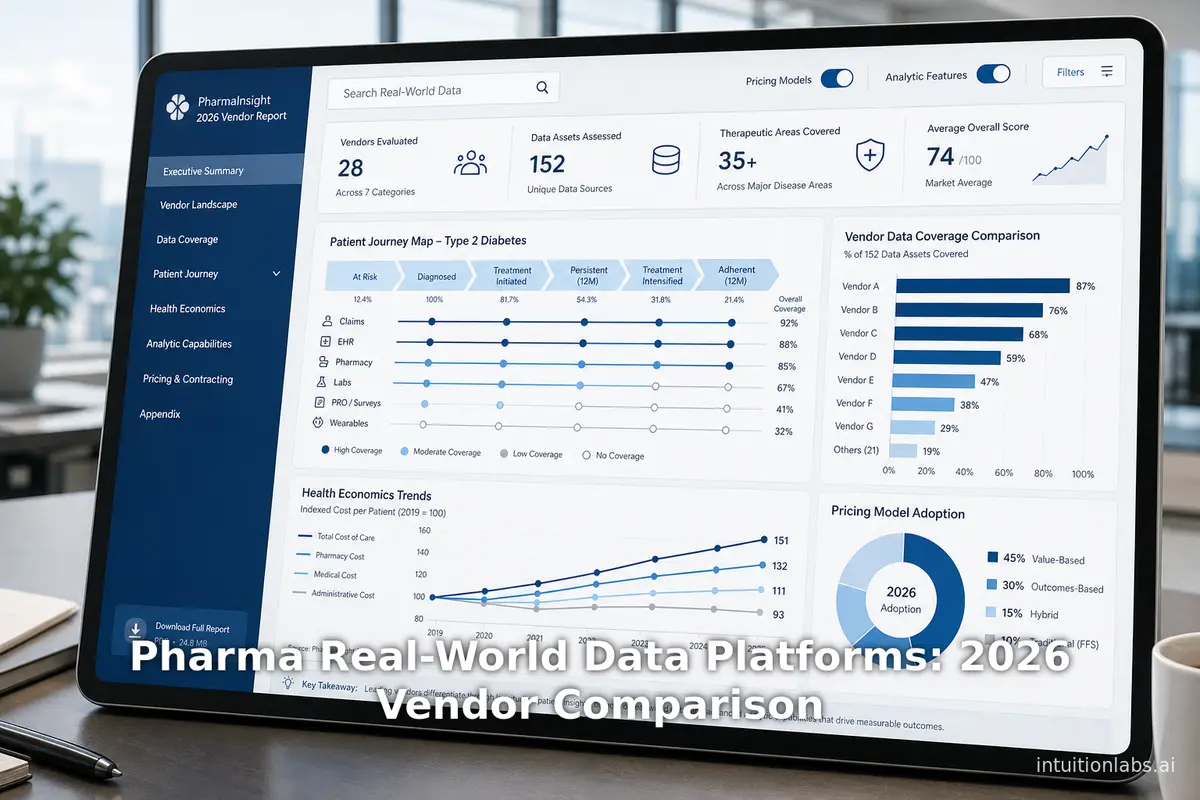
Pharma Real-World Data Platforms: 2026 Vendor Comparison
Compare top 2026 pharma real-world data (RWD) platforms like IQVIA, Komodo, and Truveta. Review pricing models, analytic features, and use-case applications.
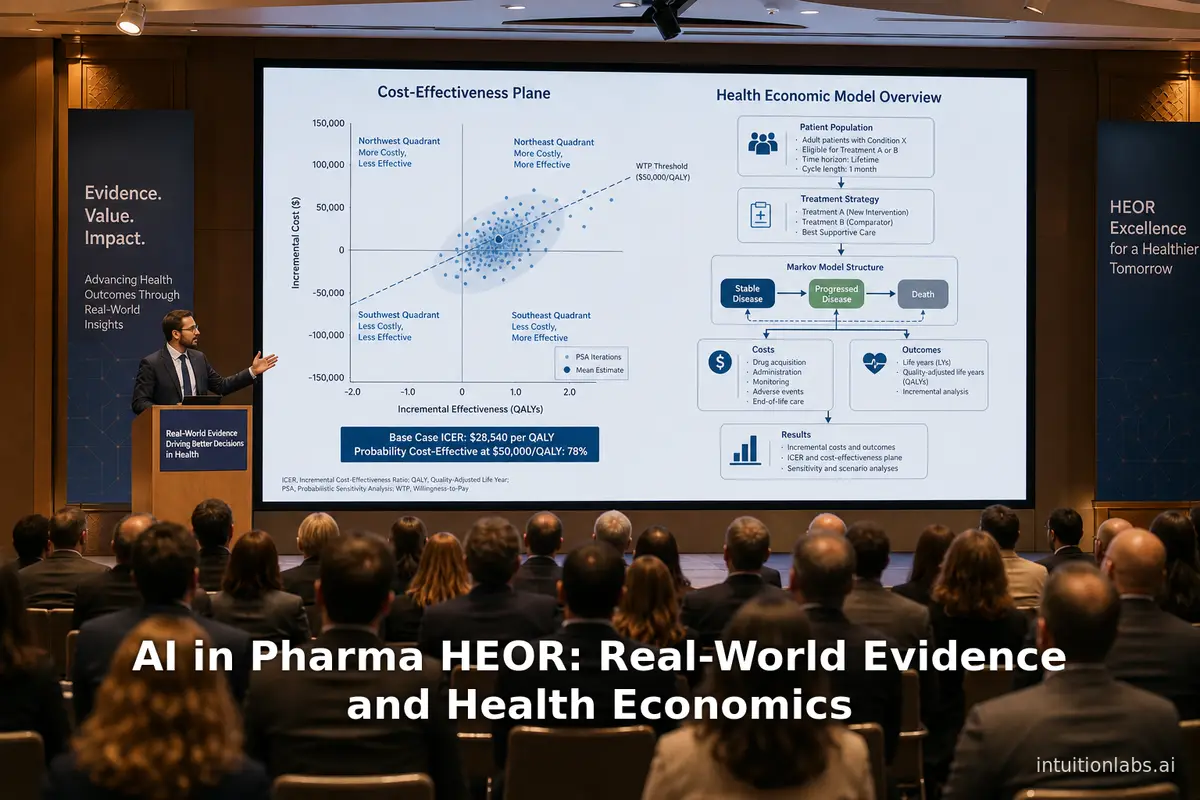
AI in Pharma HEOR: Real-World Evidence and Health Economics
Examine AI in pharma HEOR and real-world evidence. This report details how machine learning and RWD advance health economic modeling and regulatory decisions.