

GxP Platforms for Life Sciences: Veeva, Box & SharePoint
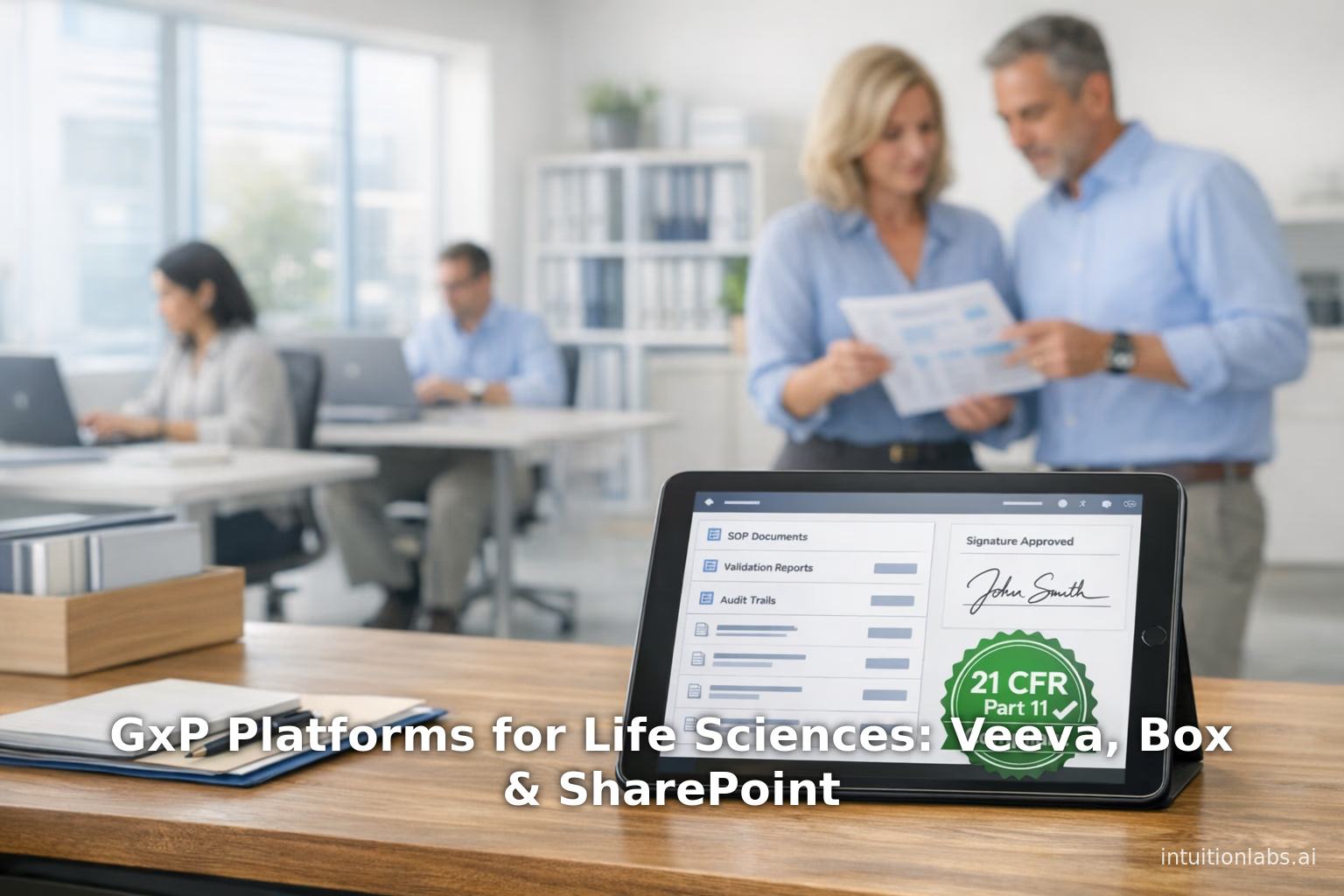
Executive Summary
Good Practice (“GxP”) systems – including Good Manufacturing Practice (GMP), Good Clinical Practice (GCP), Good Laboratory Practice (GLP) and other quality guidelines – are foundational in the life sciences industry to ensure product quality, safety, and data integrity throughout development and commercialization ([1]). Historically, life-sciences organizations have managed GxP compliance with robust paper-based and specialized on-premise systems. However, accelerating digital transformation and the need for secure, collaborative workflows have driven widespread adoption of cloud-based content management and collaboration platforms. Today, integrated solutions such as Veeva Vault, Box GxP, and Microsoft SharePoint are key infrastructure for regulated content management across research, development, clinical, manufacturing, and commercial functions in life sciences.
This report provides a comprehensive examination of these leading GxP collaboration platforms – Veeva Vault, Box (with its life-sciences offerings), and SharePoint (as part of Microsoft 365) – as of 2026. It begins with a background on regulatory requirements and the historical evolution of electronic documentation in pharma and biotech. Each platform is then analyzed in depth: its history and market position; technical features; compliance and validation support; integration capabilities; and adoption in the life sciences sector. Wherever possible, data and case examples illustrate real-world usage – for instance, major biopharma companies like Roche, AstraZeneca, GSK, Merck, and others are actively leveraging these cloud solutions to streamline GxP processes. We draw on press releases, industry analyses, and vendor documentation to highlight how these platforms address compliance mandates such as 21 CFR Part 11 (electronic records and signatures) and Annex 11, as well as emerging trends like artificial intelligence (AI) augmentation of workflows.
The analysis compares the platforms across multiple dimensions – including security and encryption, auditability, validation approach, user collaboration features, and integration with tools (e.g. electronic signatures, ERP/CRM systems, analytics). For example, Veeva Vault offers a specialized Life Sciences Cloud with built-in validation best practices and tight control over quality processes ([2]) ([3]), whereas Box provides a more general content-management system enhanced with continuous GxP validation testing and customer-managed encryption (Box KeySafe) to secure regulated data ([4]) ([5]). Microsoft SharePoint (and Office 365) supplies ubiquitous collaboration tools with broad certifications (ISO, SOC, FedRAMP, etc.) ([6]), but typically requires life sciences companies to implement their own validation strategy and controls to meet GxP requirements 人†L15-L23.
We also explore factors such as Total Cost of Ownership (TCO), flexibility vs. regulated readiness, and the impact of recent events (e.g., the COVID-19 shift to remote work) on accelerating cloud adoption ([7]) ([8]). Case studies – for instance, SK Life Science adopting Vault Validation Management in 2024 ([9]) and AstraZeneca using Box to empower 8,000 field reps globally ([10]) – illustrate tangible outcomes (improved productivity, compliance readiness, and streamlined audit processes). Finally, the report discusses future directions, including the rise of AI agents (e.g. forthcoming Veeva AI agents across Vault applications ([11])) and deeper integration of collaboration platforms with drug development lifecycles. We conclude with implications for stakeholders and recommendations on choosing and implementing GxP collaboration technologies as the life sciences industry advances toward 2026 and beyond.
Introduction and Background
The life sciences industry operates under stringent regulatory frameworks known collectively as “GxP” – shorthand for Good X Practice – which encompass standards like GMP, GCP, GLP, GDP, and more. These guidelines, issued by authorities such as the U.S. FDA (Food & Drug Administration) and the EU’s EMA (European Medicines Agency), govern virtually every step of drug and biologic development: from early research and clinical trials to manufacturing and post-market monitoring. The primary objective of GxP regulations is to protect patients and consumers by ensuring products are safe, effective, and consistently made to quality standards ([1]) ([12]). Compliance means, among other things, maintaining accurate, auditable records (“data integrity”) of all processes, from laboratory tests to manufacturing batch records.
In the mid-to-late 20th century, life sciences companies managed GxP records predominantly on paper or with basic electronic systems. Quality and regulatory teams relied on binders of Standard Operating Procedures (SOPs), batch records, and manually signed documents to demonstrate compliance. The introduction of 21 CFR Part 11 (adopted by the FDA in 1997) began the formal push to allow electronic records and signatures under regulated conditions. Over the ensuing decades, guidelines like Annex 11 (EU GMP for computerized systems) and GAMP 5 (Good Automated Manufacturing Practice, published 2008) provided frameworks for Computer System Validation (CSV) and risk-based design of software for GxP use. These guides emphasized that software and systems used for GxP data must be validated to ensure accuracy, security, reliability, and consistent performance.
Table 1 (below) summarizes some key GxP regulations relevant to collaboration tools:
| Regulation/Guideline | Relevance to Collaboration Platforms |
|---|---|
| 21 CFR Part 11 (FDA) | Governs electronic records/e-signatures in US (audit trail, signature capture, security) |
| EU GMP Annex 11 | EU guidelines for computerized systems (data integrity, audit trail, validation) |
| GAMP 5 | Industry guideline (ISPE) for risk-based CSV of computerized systems |
| Other (e.g. HIPAA, GDPR) | Additional data privacy/security standards (especially if PHI or EU data involved) |
(Table 1: Representative regulatory frameworks affecting digital content management and collaboration in life sciences.)
GxP compliance is not merely a checkbox – it is integral to the business operations of pharma/biotech companies, tying directly into patient safety and product efficacy. As one industry source notes, “GxP compliance is a critical requirement in regulated industries such as pharmaceuticals, biotechnology, and medical devices to ensure product quality, safety, and data integrity” ([1]).
Drivers of Cloud-Based Collaboration in Life Sciences
In recent years, multiple forces have reshaped how life sciences organizations handle collaboration and record-keeping.Chief among these are technological advances (cloud computing, mobile devices, AI) and structural changes (global R&D, outsourcing to CROs and CMOs). Some key trends include:
- Globalization of R&D and Manufacturing: Clinical trials and manufacturing often span many sites worldwide. Teams may be dispersed across continents (e.g. R&D in the US, manufacturing in Asia, CROs in multiple regions). This heightens the need for centralized, accessible platforms so all stakeholders can work with the same “single source of truth” for documents, no matter where they are.
- Complexity and Volume of Data: Modern drug development generates enormous and complex datasets (from genomic data to real-time sensor data on equipment). Managing this “information overload” demands scalable content repositories that can organize, search, and secure large volumes of regulated data ([7]).
- Regulatory Pressure and Inspections: Regulatory agencies have intensified scrutiny on data integrity (e.g. ALCOA+ principles). Inspectors expect robust audit trails, controlled access, and fast retrieval of records. Modern systems must make compliance easier, not harder - for example, automatically maintaining audit logs of who accessed or edited which document.
- Digital Transformation and Cost Efficiency: Life sciences companies seek to accelerate product development timelines and reduce costs. Cloud-based collaboration solutions promise to streamline workflows, replace expensive legacy servers, and enable new ways of working remotely or with external partners. For instance, during the COVID-19 pandemic “life sciences breathed new life into new, secure ways of working from anywhere” ([7]), reducing the need for in-person audits and facilitating remote team operations.
These trends collectively create demand for agile, cloud-native collaboration platforms that can be validated for compliance. Rather than maintaining outdated file servers or disparate databases, companies increasingly look to unified platforms where regulated and non-regulated content coexist. According to a Box publication, storing both regulated and unregulated content – from R&D documents to SOPs – on a single cloud platform “eliminates inefficient silos” and “brings therapies to market faster” by accelerating R&D while maintaining GxP compliance ([13]).
To meet this need, the market has seen the rise of “industry cloud” platforms tailored to pharma/biotech. For example, Veeva Systems (founded in 2007) built on Salesforce to create a packaged “Life Sciences Cloud” specifically for regulated content. Likewise, generic enterprise file-sharing provider Box introduced Box GxP and Box Zones to cater to life sciences requirements. Microsoft, though not life-sciences-specific by origin, has invested heavily in making Microsoft 365 (including SharePoint Online) suitable for GxP use – with comprehensive compliance certifications and publishing GxP guidance in collaboration with consulting partners ([14]) ([6]).
This report examines the state-of-the-art in GxP collaboration platforms as of 2026, focusing on Veeva Vault, Box (and Box GxP), and SharePoint/Microsoft 365. We will assess how these platforms enable secure, compliant teamwork across the drug development lifecycle – from clinical trials to manufacturing – and what trade-offs companies must consider when choosing among them.
Veeva Vault Platform
Overview and Evolution
Veeva Systems (NASDAQ: VEEV) is a prominent provider of cloud software for the life sciences industry. Headquartered in Pleasanton, California, Veeva was founded in 2007 by ex-Salesforce executives with a vision to deliver purpose-built applications for regulated processes (unlike generic CRM systems). Today, Veeva’s flagship product is Veeva Vault, an enterprise content management (ECM) platform designed from the ground up for life sciences. Veeva Vault provides a unified platform for managing regulated documents and data across R&D (development) and Commercial operations. Its capabilities cover a wide array of regulated use cases: clinical trial master files (Vault eTMF), regulatory submissions, quality management, pharmacovigilance (drug safety reports), manufacturing documentation, training records, and more. The system is built on a single underlying cloud platform that enforces electronic signature rules, audit trails, and configuration controls compatible with GxP requirements ([3]).
From its early days focused on quality and regulatory document management, Veeva Vault has expanded substantially. In 2017, Veeva introduced the Development Cloud – bundling clinical, regulatory, and quality modules – as a “technology foundation for drug development” ([15]). By 2018, over 180 life sciences companies were reported to have adopted Vault Quality applications ([16]) (reflecting growing trust in the platform). Vault has since expanded into broader quality management (with the Vault QMS Suite), and even CRM (commercial customer relationship management) under the Vault CRM umbrella. As of late 2025, Veeva reports it serves more than 1,500 customers worldwide, ranging from the largest global pharma firms to emerging biotech and medical device companies ([17]). Notably, prominent brands such as Roche have a long-standing partnership with Veeva; Roche in late 2025 announced it is expanding to use Vault CRM across its Pharma organization, leveraging Veeva’s industry-specific “AI-enabled CRM” capabilities ([18]).
Recent years have seen Veeva increasingly integrate advanced technologies. In 2025 Veeva introduced Veeva AI, bringing generative AI agents to its platform ([11]). These industry-specific AI Agents – planned for launch across clinical, safety, quality, regulatory, medical, and commercial applications – can automate content-centric tasks and assist end users (e.g. by summarizing documents, generating draft reports, or providing contextual data retrieval) ([11]) ([19]). Veeva emphasizes that its AI tools will operate within the secure Vault context (accessing only the customer’s own data, and supporting customer-controlled LLMs), to ensure continued compliance and data privacy ([20]).
The strategic direction for Veeva is clear: it is positioning the Vault platform as the central “life sciences cloud” unifying various functions. According to Veeva’s leadership, the vision is “Building the industry cloud for life sciences” ([21]). This means not only offering standalone modules (e.g., quality docs, training, regulatory submissions) but linking them so that an organization’s processes are streamlined across departments. For example, a change in product documentation could trigger updates in both the quality management (SOPs, CAPA) system and the regulatory submission package, all automatically tracked in Vault’s audit trails. This tight integration can significantly reduce manual effort and errors, especially compared to disconnected file shares or disparate point solutions.
Core Capabilities
Content and Data Management
At its core, Veeva Vault is a content repository with advanced metadata and workflow capabilities. It stores documents (PDFs, Word files, images, datasets) and structured data in “objects” (schemaless records). Key features include:
- Structured Document Libraries: Vault enforces structured lifecycle states and numbering schemes appropriate to life sciences. For example, quality documents (policies, SOPs, work instructions) are version-controlled, and moving a document from draft to approved is an auditable workflow step.
- Metadata and Search: Users can tag documents with metadata (study IDs, manufacturing lots, regulatory codes, etc.), enabling powerful search and retrieval across the enterprise. This replaces error-prone manual searching through email or shared drives.
- Security and Access Control: Vault provides row-level and document-level permissions so that only authorized roles can view or edit content. Because facilities and user roles can vary by region or department, Vault’s security profiles allow companies to model their organizational structure precisely. All access and activity are logged in real time for compliance.
Veeva Vault also integrates closely with Microsoft Office Online: users can collaborate on documents (e.g. SOPs or validation protocols) within Office 365. For example, Vault can embed Office Online so that two quality team members can co-author a document directly from the Vault interface. Veeva announced such integration in 2016 under the theme of combining “real-time collaboration and compliance” ([2]). Today, Vault users can edit Word documents, Excel spreadsheets, and PowerPoint slides within the browser, with edits automatically versioned and recorded in Vault’s audit trail.
Quality and Processes
Veeva Vault includes specialized modules for Quality Management and Validation. The Vault QualityDocs application handles digital SOPs and ensures that only the latest approved procedures are used. Vault QMS (Quality Management System) manages quality events like deviations, CAPAs (corrective & preventive actions), complaints, and change control. These modules are natively GxP-compliant – they come pre-configured with industry-standard processes which can be customized. Since these applications run on the same platform, linking a CAPA directly to the affected SOP, training action, and risk assessment is seamless.
A recently introduced product, Vault Validation Management, digitizes the process of validating systems and equipment. Traditionally, validation was largely paper-based: companies had libraries of qualification protocols (IQ/OQ/PQ) and manually tracked test successes. Vault Validation Management brings this online, providing templates and workflows to plan, execute, and report on validation tests. In January 2024, SK Life Science (a biotech company) reported using Vault Validation Management to “streamline and accelerate their validation process” ([9]). The company cited “greater compliance and traceability” and simpler test execution, with only the planned tests needing execution while all data are centrally registered ([22]) ([23]). Veeva’s messaging is that digital validation enhances inspection readiness: digital records make it easier for auditors to review the evidence that every step was performed correctly.
Regulatory and Clinical Content
For clinical and regulatory teams, Vault offers modules like Vault eTMF (electronic Trial Master File), Vault CTMS (Clinical Trial Management System), Vault RIM (Regulatory Information Management), and Vault Submissions (management of dossier filings to agencies). These modules ensure that clinical trial documentation, regulatory submission packages (CTD modules, Module 2 reports, etc.), and correspondence with regulators are all stored in a controlled, auditable environment. For instance, the Vault RIM module enables life sciences companies to track submission milestones in different countries and maintain an archive of approved labeling. With Vault Submissions, companies can assemble eCTD and eSubmissions packages and often automatically validate them against regulatory schemas.
Importantly, Vault was architected from the beginning with 21 CFR Part 11 in mind. Vault maintains electronic signatures as enforceable record events. If a user checks a box or digitally signs a document, those actions are timestamped, and the system captures the user’s ID and reason for signature. In practice, this means that any document (e.g. a batch record or a clinical study report) that needs approval can be electronically reviewed and signed off completely within Vault, without requiring paper copies.
Security and Validation
Because Veeva customers handle crown-jewel data, security is stringent. Veeva Vault runs on enterprise cloud infrastructure in Tier 3/4 data centers. As documented by Veeva’s support materials, all Vault communications are encrypted using HTTPS/TLS, ensuring data in transit is unreadable ([3]). At rest, data is encrypted with industry-standard algorithms. Veeva’s data centers have achieved certifications (such as SAS 70 Type II or subsequent SOC 2) ([24]), meaning external auditors have verified that the necessary controls are in place. Veeva also provides optional “field-level encryption” for particularly sensitive data fields. And because Vault needs to comply with regulations around physical access, Veeva’s server facilities employ multi-factor access controls and background-checked personnel ([24]).
From a validation standpoint (computer system validation or CSV), Veeva follows a continual validation model. The core platform itself is validated by Veeva, including its customizations like workflows and access controls. Customers typically treat Vault as a validated software-as-a-service: they perform an initial qualification (obtaining design specifications, functional specifications, traceability matrices, etc.), and thereafter rely on Veeva’s regular updates and documentation (release notes, audit reports) to maintain a validated state. Veeva often provides a set of “configuration and use” documents to customers, and because the underlying platform changes only incrementally, re-validation is minimized. By contrast, using a non-validated service (or an internally developed system) would require in-house teams to test every feature. Veeva’s approach thus offloads much of the CSV effort from the customer, while still yielding a fully compliant environment.
Integration and Ecosystem
Veeva Vault is often central in a company’s software ecosystem. It provides robust APIs for integration with other systems: for example, Vault can integrate bi-directionally with ERP systems, proprietary manufacturing execution systems (MES), and laboratory information management systems (LIMS). In a pharmaceutical company’s tech stack, Vault might synchronize product master data with the ERP’s item master, or send change-control decisions to equipment vendors. Additionally, Veeva has an ecosystem of consulting and software partners (e.g. Deloitte, Cognizant, Accenture) that build integrations and add-ons. A partner like LoriPil (acquired by Veeva) focuses on migration or specialized configuration.
Veeva also maintains its own data cloud offerings (e.g. Veeva OpenData, now Veeva Vault CDM) which provide up-to-date reference information on healthcare providers or clinical trial sites. When integrated with the Vault CRM or with Vault Data, these can enrich the context of a document (for example, linking an investigator’s ID in an eTMF to a global master). With the rise of Veeva AI (announced 2025), deeper product-level integrations are planned: Veeva has indicated that AI Agents will be embedded directly in Vault workflows, making it easier to auto-generate or analyze content without manually exporting documents ([11]).
In summary, Veeva Vault’s strength lies in its industry focus: every feature is designed around life sciences processes and compliance needs. Its ready-made modules for clinical, regulatory, quality, and commercial use – all on a unified validated platform – offer a level of out-of-the-box compliance support that generic ECM tools lack. The trade-off is that implementation usually requires aligning to Veeva’s best practices, and costs are typically higher than a standard cloud storage solution. However, many top pharma companies find the investment worthwhile for the compliance assurance and productivity gains.
Box (Box GxP) Platform
Overview and Positioning
Box, Inc. is a cloud content management and file-sharing company founded in 2005 (headquartered in Redwood City, California). Originally a more general enterprise file-sharing/ECM solution, Box over the past decade has expanded into life sciences and other regulated industries through a dedicated “Box for Life Sciences” program. Box’s strategy is to provide a common platform for both regulated (GxP) and non-regulated content, simplifying the IT environment by centralizing all corporate files. Box argues that many life sciences organizations suffer from fragmented content silos (multiple repositories, on-premise servers, etc.) and that Box can “eliminate inefficient silos between multiple repositories” ([25]).
To specifically address the needs of pharma/biotech, Box offers Box GxP Validation. This is an approach (rather than a separate product) that helps life sciences companies validate the Box service for GxP use. In 2018 Box introduced “Always-on GxP Validation” ([26]), which provides tools (e.g. prewritten test scripts and automated execution) so that customers can continuously verify the system remains in a validated state per GAMP 5. Box GxP Validation includes a “Validation Accelerator Pack (VAP)” and daily test reports ([27]). Thus, Box differentiates itself by saying customers no longer need to manually re-validate core Box functionality after upgrades, because Box continuously tests its own platform and shares the results.
Box supports the full spectrum of life sciences content: clinical, lab, manufacturing, etc. Their Life Sciences webpage highlights use cases like sharing clinical trial documents between sponsors and CROs, managing SOPs, and orchestrating content with contract organizations ([28]). Box also emphasizes integration with eSignature: it can integrate with Adobe Sign or DocuSign, thus allowing Box-stored documents to be signed electronically in a manner compliant with Part 11 ([29]). Major pharmaceutical companies are among Box’s customers: in fact, Box states that as of now “2,200+ life sciences customers trust Box” ([30]). These include biotech firms, medical device companies, and some large pharma partners (Box’s marketing has mentioned Eli Lilly, AstraZeneca, Jazz Pharma, Boston Scientific, etc. ([31])).
Core Capabilities
Cloud Content Collaboration
Box’s core offering is a secure, scalable cloud repository with rich collaboration features. Key aspects include:
- Centralized Cloud Storage: Box stores all files in the cloud (across multiple geographically distributed data centers). Users can upload any file type (documents, videos, images, CAD files, etc.) and access them via web, desktop, or mobile apps. Box supports offline sync for PCs or smartphones, enabling access even without connectivity.
- Collaboration and Sharing: Files in Box can be shared internally or externally with fine-grained controls. For example, a user can share a folder with collaborators (e.g. between sponsor and CRO) and set permissions (view vs. edit). External parties can be invited via secure links that require authentication. Box automatically maintains one “master” version of each file, avoiding multiple conflicting copies. Users see presence indicators when others are viewing or editing a document. The platform supports comments on files and version history tracking.
- Workspace Integration: Box also serves as a content repository for business workflows. It integrates with Microsoft 365 (Word/Excel/PowerPoint editing), Google Workspace, Salesforce, and other enterprise apps. For instance, a Box file can be attached to a Salesforce record (like a customer account or a medical application). Box’s own workflow automation tool (Box Relay) lets organizations build review-and-approval processes around files. Analysts note that collaboration is a strong point of Box: as one marketing statement asserts, “Collaboration is easy with Box: You can work securely with internal teams as well as medical care providers, government agencies, and clinical sites” ([32]).
Compliance and GxP Support
To meet regulatory requirements, Box for Life Sciences implements multiple compliance features:
- Continuous Validation: As noted, Box performs daily automated tests on core functionality and provides the results to customers ([33]) ([34]). This means that after each Box software update, customers can be assured (via Box’s own test reports) that the systems still behave as expected. This significantly reduces the customer’s validation effort.
- Encryption: Box uses encryption at rest and in transit. Box also offers Box KeySafe, which gives customers “independent control over their content encryption keys” ([5]). With KeySafe (bring-your-own-key encryption), a company can hold the keys off Amazon’s KMS or other CSP, ensuring only they can decrypt the content. This meets high security requirements for particularly sensitive data.
- Certification and Standards: Box regularly undergoes independent audits and holds certifications relevant to life sciences compliance. Box for Life Sciences webpage states that it supports 21 CFR Part 11, HIPAA (for patient data), GDPR, DICOM (for medical imaging), etc. ([35]). In addition, Box (like many cloud providers) is certified for ISO/IEC 27001, SOC 1/2, and has FedRAMP Moderate authorization. Box’s security model is built on Zero Trust principles, multi-factor authentication, and robust role-based access controls.
- Audit Trails and Governance: Box automatically logs user and administrative activities on files. Administrators can track who viewed, downloaded, edited, or shared any file or folder. For regulated documents, companies can implement retention policies and legal holds via Box Governance. Box also integrates with e-signature tools to capture compliant electronic signatures and maintain chained evidence of sign-offs.
Importantly, Box does not itself guarantee that any on-premise legacy system is decommissioned – it is a platform. Companies must still ensure that all GxP-relevant processes (e.g. closed system logging, QA reviews) are implemented in their use of Box. However, Box’s emphasis on validating the underlying platform and automating key compliance features gives life sciences customers confidence to use a general-purpose content platform in regulated workflows.
Customer Impact and Use Cases
Box’s strategy has reportedly paid off in market adoption. The 2,200+ life sciences customers span small biotech to big pharma. One notable case study is AstraZeneca, which leveraged Box to unify its sales and field materials. According to Box, AstraZeneca moved “all of its crucial IP and other information to one centralized location in the cloud” and connected Box with Salesforce and Office 365 to enable an 8,000-person global sales force to access content on iPads in the field ([36]). The outcome was dramatic: “content processes are twice as streamlined at half the cost,” with notable productivity gains in the field ([37]).
Other Biopharma use cases for Box include:
- Quality Document Management: Storing and controlling SOPs, batch record templates, and quality manual documents in Box allows global access. A typical workflow: a quality manager works on a draft SOP in Box (using Office Online), then seeks reviews via Box’s collaboration features, logs the approval through an integrated e-signature service, and archives the final SOP all with auditable history.
- Clinical Trial Content Exchange: Sharing trial protocols, informed consent forms, and regulatory binders with CROs and investigational sites. Box can serve as a secure distribution hub so that external partners have controlled access to only the documents they need. This reduces email “blind carbon copy” workflows and ensures the sponsor retains a record of every access.
- Regulatory Documentation: Preparing submissions or audit reports together with contractors. Box Zones is a feature that allows multinational companies to store content in data centers in different regions (e.g. EU vs US) to meet data residency requirements, which can be useful for multi-national regulatory filings.
A 2023 Box blog highlights that life sciences companies face the dual challenge of global collaboration and tight compliance. It notes that Box’s offerings help teams “across geographic and digital boundaries” to innovate without compromising regulatory requirements ([38]). Box has a dedicated Life Sciences industry team, and often attends conferences (e.g. BoxWorks) where pharma customers share best practices in using Box securely.
Box GxP Validation Approach
While Box handles core platform validation, customers are responsible for their own implementation validation. In practice, a life sciences firm will conduct a qualification for its Box environment according to regulations. Box aids this by providing validation guides and the aforementioned Continuous Testing results. According to Box Investor Relations (2018), “Box GxP Validation methodology complies with GAMP5 guidelines, accelerates the validation process, and lowers risk via use of daily tests” ([33]). Essentially, Box’s approach is to give customers a “Validation Accelerator Pack” containing test scripts and documentation, so the customer’s validation team can use those as evidence. Afterward, daily automated testing takes over to demonstrate ongoing control.
The advantages for customers include:
- Reduced Validation Time: Rather than writing hundreds of test cases for the Box UI, a customer can rely on Box’s test results for the stable platform core.
- Always-on Compliance Status: If Box were to change anything (e.g. patch a security fix), the new environment is automatically tested. Should any test unexpectedly fail, the customer is alerted immediately. This contrasts with the traditional model where a system could drift out of compliance if patches weren’t retested for a year.
- Single Platform for All Content: By handling both regulated (e.g., GMP SOPs) and unregulated content (e.g., marketing media) in one platform, companies simplify their IT landscape. Box customers often cite the elimination of separate file servers or legacy document management systems as a key cost saver.
A recent development in Box’s life sciences offerings is the use of AI/ML. Box announced Box Shield (security) and Box Relay (workflow automation) which incorporate intelligent content classification. Box Shield can automatically detect regulated content (like personal health information) and enforce stronger controls. In 2025, Box also focused on “AI-first enterprise” at its BoxWorks conference ([39]), exploring how unstructured data (documents, images) can be mined for insights. For example, companies can use AI-powered search and metadata tagging on documents (a form of “intelligent content management” as Box calls it ([13])).
Limitations and Considerations
While Box offers broad flexibility, there are trade-offs. Unlike Veeva Vault (which only sells to life sciences and includes built-in business logic), Box is industry-agnostic and does not come with pharma-specific document workflows out of the box. The onus is on the company to define folders, metadata schemas, and processes. However, many life sciences Box customers mitigate this by working with consultants or using partner solutions (e.g. USDM Life Sciences offers Box industry accelerators ([40])).
Another consideration is licensing and cost. Box typically operates on a user subscription model (Per user per month) with storage limits. Life sciences companies with thousands of users can incur significant licensing fees, though usually still less than full “Enterprise Content Management” suites. There may also be a need to extend Box with enterprise features (e.g. Box Governance for records management, Box Zones for multi-region compliance).
In summary, Box satisfies a need for a secure, modern content hub that can scale across an enterprise. Its strength is agility and ease of collaboration (any content, any team, any location), backed with critical compliance add-ons (Box GxP Validation, encryption keys). The platform is well-suited to organizations that want cloud-based document management without re-architecting their GxP processes – they simply plug existing documents and SOP workflows into Box’s environment.
Microsoft SharePoint and Office 365
Overview and Context
{Microsoft’s} SharePoint is a ubiquitous web-based collaboration and content management framework that has been widely used in business (including pharma) for over a decade. Originally launched in 2001 for on-premises intranets and document management, SharePoint evolved with the cloud-era introduction of Office 365 (now Microsoft 365), which includes SharePoint Online plus Teams, OneDrive, Exchange, and Office applications. Because Microsoft 365 is so broadly adopted (with hundreds of millions of active users worldwide), many life sciences organizations have leverage it to some extent – especially for unregulated content like HR or finance.
Recognizing that regulated industries need compliance, Microsoft has invested in building compliance certifications and guidance for its services. For example, in 2021 Microsoft published new GxP guidance co-developed with Montrium, advising how to utilize “Office 365” for regulated content ([41]) ([14]). Under this framework, SharePoint Online (and supporting services like OneDrive for Business) can be configured to meet GxP requirements, but with important caveats. Unlike Veeva or Box, SharePoint is not inherently a validated system for GxP; it is a general platform. Thus, life sciences companies using SharePoint must perform their own Computer System Validation (CSV) exercises. This reflects a shared responsibility: Microsoft provides a certified secure base, but the customer must validate their specific configuration and usage.
Traditionally, many pharma companies had extensive on-prem SharePoint (and Windows “file share”) environments. Over time, those have often been migrated to SharePoint Online/Teams to reduce on-prem hardware. SharePoint’s strength in these contexts is its tight integration with familiar tools: for instance, collaboration through Office 365 (Teams chat and channels backed by SharePoint libraries) and seamless coexistence with Outlook (emails can link to SharePoint content). It also benefits from the wider Microsoft stack, such as enterprise search (Microsoft Search indexing SharePoint content), Power Automate (for building approval workflows), and Power BI (for reporting on SharePoint lists).
Features of SharePoint for GxP
Some key aspects of using SharePoint (Online) in life sciences:
- Document Libraries and Versioning: SharePoint provides libraries to store documents with version control, metadata fields, and column-level permissions. This allows a site (e.g., a Quality department site) to store SOPs or protocols. All edits and uploads are tracked (each version is a historical record). In a GxP context, one can set columns like “Review Date” or “Approval Status” on documents, and enforce mandatory fields.
- Workflows and Automation: Through Power Automate (formerly Microsoft Flow) and built-in workflows, SharePoint can route a document for review/approval. For example, when a new SOP is added to a library, a workflow could email the approvers, then upon sign-off move the document to a “Released” folder and update metadata. These can be designed to satisfy certain part 11 requirements (time stamps in workflows and logs).
- Co-Authoring: Multiple users can co-author Office documents stored in SharePoint simultaneously (with Office Online or desktop apps), facilitating collaboration even under tight timelines. This real-time editing is recorded so that a complete change history is available in the version history.
- External Sharing with Controls: SharePoint allows secure external sharing where the user can invite an external email address and assign permissions (view, edit). However, careful governance and tenant configuration is needed to ensure external sharing does not violate data residency or compliance zones.
- Integration with Microsoft Teams: Many organizations have adopted Teams as the front-end for collaboration. Each Teams channel basically has an underlying SharePoint site and document library. Thus, storing GxP documents in Teams channels can leverage Teams’ chat, while still persisting the docs in SharePoint. However, one must govern which Teams channels can be used for regulated content and how approvals are captured.
From a security and compliance perspective, Microsoft 365 (and SharePoint Online) is highly certified: it has been audited to international standards (ISO 27001, ISO 27701), industry attestations (SOC 1/2, HITRUST), and government frameworks (FedRAMP Moderate/AAL2, etc.). As one compliance review notes, “Office 365’s processes and controls are regularly audited and verified by trusted third parties (SOC 1 and SOC 2, ISO/IEC, HITRUST, and FedRAMP)” ([6]). This extensive auditing means that the cloud infrastructure is sound from a security standpoint, which can reduce the burden on the life sciences customer. Microsoft also provides Azure-based encryption, role-based access, multi-factor authentication, and advanced threat protection suites to further secure data.
However, unlike Box or Veeva, owning a validated content system using SharePoint takes more work from the customer side. In practical terms, a pharma IT/compliance team must:
- Define Validation Strategy: Identify which SharePoint sites and libraries become “GxP systems” requiring validation.
- Perform Qualification: Write URS (user requirements), test plans, and execute tests to ensure SharePoint configurations (site settings, permissions, retention policies) enforce compliance. For example, one must test that audit logs capture all changes, that versioning cannot be bypassed, etc.
- Maintain Controls: Document SOPs for using SharePoint (how to approve documents, how to handle external sharing, etc.) and train users.
- Leverage Microsoft GxP Guidelines: Microsoft has published a detailed GxP Guideline for Microsoft 365 (co-developed by Montrium) which outlines best practices (e.g. change control process when Microsoft does backend updates, how to use Azure AD conditional access, etc.) ([14]) ([6]).
Companies that have done this cite benefits. A recent example: A leading Swiss bio-pharma engaged a partner (Qaixen) to migrate its decade-old file shares to SharePoint Online ([42]). The outcome was that SharePoint provided “a secure place to store, organize, share, and access information from any device” ([43]). Users could then stop juggling disparate file copies, since “the one version will be stored in the right place” ([44]), greatly reducing confusion and time spent searching. The company achieved this by splitting its site collections, giving localized teams their own SharePoint spaces while retaining enterprise search and standard templates.
Another perspective is that Microsoft 365’s readiness for GxP has improved over time. Microsoft continues to refine its cloud controls: a blog post by the Global GxP lead at Microsoft (Jesper Bagh) in 2021 reaffirmed the company’s “commitment to support the pharmaceutical industry” with security, privacy, and compliance as parallels to FDA requirements ([45]). This includes eventually rolling out improved GxP guidelines for Dynamics 365 (their CRM), and involving partners like Montrium to help customers “operationalize GxP and Cloud” ([41]).
Use Cases in Life Sciences
How are SharePoint/Teams actually used in pharma? Typical scenarios include:
- Quality Document Control: Many companies host their QMS documents (SOPs, CAPA logs, etc.) on SharePoint libraries. An approved SOP might be a PDF stored in a library, with metadata capturing review dates. Team members can quickly find SOPs via SharePoint’s search or by drilling down through site hierarchies. Approvals might be done via an attached InfoPath or Power Automate form, capturing sign-off.
- Project Collaboration: Cross-functional project teams (e.g. “Project Alpha Drug Launch”) often create SharePoint site collections or Teams channels to store meeting notes, spreadsheets, slide decks, and project plans. Even if these are not strictly regulated documents, having them in a controlled SharePoint environment (as opposed to email attachments) promotes transparency.
- Training and Compliance Records: SharePoint can host training content or materials, while integration with SharePoint lists or Azure (or another LMS) tracks completion. This is useful, for example, for site qualification docs or lab certifications where records need to be retained.
It is worth noting, however, that SharePoint is not a drop-in quality management system. Unlike specialized QMS software (or Veeva QMS), SharePoint out-of-the-box lacks certain enterprise features like automated CAPA logic, closed-loop change control, and robust analytics. Many pharma companies still deploy a separate core QMS, but use SharePoint to supplement it (for example, to share templates globally, or to access archival documents). In this sense, SharePoint serves as a flexible “Swiss-army knife” platform that can cover many use cases, but requires custom configuration and discipline to maintain GxP compliance.
Certification and Validation
From a regulatory standpoint, SharePoint Online (as part of Microsoft 365) is generally considered a “service covered by Microsoft’s certification”. For example, if audited, a pharma company could present Microsoft’s ISO and FedRAMP attestations as evidence of system-level controls. However, the burden of qualification of the specific environment lies with the end user. The U.S. FDA and other agencies focus on “intended use” – if SharePoint is used to manage records that decide product quality, then it must be validated like any electronic system under 21 CFR Part 11.
Microsoft addresses this by providing documentation and guidance. For instance, customers can access the Microsoft 365 GxP Supplement which outlines how to maintain a GxP program on M365 services. This includes data about Microsoft’s internal processes (e.g. monthly updates, security patch schedules) which GxP users must consider. The overall model is analogous to how organizations use other SaaS tools: treat the cloud service as part of the IT infrastructure whose controls are largely inherited. In another example, as Microsoft explained, customers are able to rely on shared compliance reports: “Office 365’s compliance offering removes a large portion of the system qualification burden on customers” ([6]) because Microsoft has already implemented industry-standard security frameworks.
One caveat often mentioned is audit readiness for on-site inspections. If an FDA investigator (or EMA inspector) requests to see how data were controlled and preserved, a company using SharePoint can provide user logs and document histories through the Security & Compliance Center. But they must be able to navigate those tools and interpret the information, which adds a layer of complexity compared to a purpose-built GxP system. In practice, firms mitigate this by establishing standard operating procedures and training for how SharePoint records are created and approved (thus anchoring them back to Part 11 requirements).
Adoption Trends
SharePoint/Teams adoption has soared due to the general shift to Microsoft 365. A recent industry estimate suggests that [as of 2025] well over 90% of life science companies use at least some Microsoft 365 collaboration tools (especially with remote/hybrid work models). In many cases, migrating to the cloud also became an imperative for older on-prem SharePoint installations. For example, a global pharmaceutical firm with 2,000 employees and dozens of countries, described an arduous multiyear migration of 500 sites to SharePoint Online that was finally completed in 2026 ([46]). That project highlighted issues specific to pharma: dozens of languages, security partitions for IP protection, and the need to archive rather than delete inactive sites. Such migrations are now common as companies modernize infrastructure for better security and collaboration.
That said, not all pharma organizations have fully embraced SharePoint for critical GxP tasks. A 2023 survey by Life Science Connect (for instance) noted that while Office 365 is prevalent internally, many quality and regulatory teams still lean on specialized systems (like Veeva, MasterControl, etc.) for core record management. We see a trend where SharePoint can be used as the “foundation for regulated content” when policies and validations are in place, but it rarely replaces an established electronic QMS or purpose-built ECM in one fell swoop. Instead, it often coexists, used in tandem with tools like Veeva or Box to cover gaps.
In summary, SharePoint offers maximum flexibility and broad user adoption, with the backing of Microsoft’s security investments. For companies with strong IT/QA governance, it can serve as a practical platform for many regulatory workflows. The trade-offs are the need for substantial upfront configuration, validation effort, and user training. Compared to Veeva or Box, SharePoint may deliver lower incremental cost (since licenses often already exist), but achieving GxP compliance is more manual and responsibility is on the customer to “bend” SharePoint into line with regulations.
Comparative Analysis
To clarify the differences among these platforms, we summarize their features in Table 2 below.
| Feature/Capability | Veeva Vault | Box (Life Sciences) | Microsoft SharePoint |
|---|---|---|---|
| Deployment Model | Cloud-only (SaaS, single/multi-tenant) | Cloud-only (SaaS) | Cloud (SaaS via M365) & on-prem options (older versions) |
| Industry Focus | Life sciences-only (pharma/biotech/medtech) | General enterprise; specialized offering for life sciences | General enterprise; widely used across industries |
| Preconfigured GxP Processes | Extensive (quality, clinical, regulatory modules built-in) | Minimal (generic content mgmt; customers define processes) | Minimal/none (generic; customers build their own processes) |
| Validation Support | Built-in compliance; delivered as validated apps (GAMP5-aligned) | Provides scripts and daily test results (Box GxP Validation) | Customer must validate; Microsoft provides guidelines |
| Audit Trails & Signatures | Natively supported (full audit logs; e-signature workflows) | Full activity logs; integrates with e-signature providers | Full logs (via Security & Compliance Center); e-sign via add-ons |
| Encryption and Security Controls | TLS/HTTPS; data center compliance (ISO, SAS70 II) | TLS/HTTPS; ISO- and FedRAMP-certified; Box KeySafe (BYOK) | TLS/HTTPS; ISO/SOC/FedRAMP; customer can use Azure Key Vault |
| Collaborative Editing | Integrates Office Online for co-authoring | Integrates Microsoft/Google; Web previews; comments | Native (Office apps, Teams integration, OneDrive sync) |
| Regulated/Non-regulated unified | Unified across modules (regulated content managed alongside related data) | Unified content platform for both types | Can co-exist, but requires policy separation/sharing settings |
| Customer Examples | Multiple top pharma (Roche, Pfizer, etc.); 1,500+ customers ([17]) | 2,200+ life sciences customers; e.g. AstraZeneca case (sales) ([36]) | Widely used (almost all pharma firms use Office 365). |
| Primary Strengths | Turnkey compliance for regulated workflows; industry-tailored logic | Flexible content collaboration; continuous validation (reduced risk) | Broad usage, integration with existing Microsoft tools; cost-effective |
| Primary Challenges | Higher cost; dependency on vendor roadmap; specialized configuration | Still requires customer validation; general-purpose, so custom config needed | Requires significant setup for GxP compliance; complexity of Microsoft ecosystem |
(Table 2: Comparison of GxP collaboration platforms. Strengths and challenges reflect typical scenarios in regulated companies. Data sources: Veeva press releases ([17]) ([9]); Box life sciences page ([13]) ([35]); Microsoft compliance reports ([6]).)
From the table we see divergent philosophies:
-
Veeva Vault aims to be prescriptive and comprehensive. Life science companies committing to Vault gain a fully managed suite that “just works” for many regulated processes, at the expense of less flexibility (you must use Veeva’s modules) and generally higher total cost than a basic storage solution. The integration across trials, quality, safety, and manufacturing is a standout. For example, if a lab equipment qualification is updated in Vault, that update can automatically flow into the quality documentation module and signal impacted SOPs – an end-to-end traceability unique to a unified platform.
-
Box occupies a middle ground. It is more generic, so easier to roll out widely and integrate with other systems (CRM, ERP, etc.), but still offers specialized life sciences tools (validation packs, e-signature integration). Its always-on, automated approach to validation reduces the burden of maintaining compliance. However, Box on its own does not enforce any particular business process, so companies still often configure it to mirror their existing SOP steps and rely on users to follow them. Box’s strength is that it reduces platform complexity – you eliminate file shares, and still get a high degree of GxP compliance support without completely disrupting how teams work.
-
SharePoint/Office 365 is the most flexible and broadly used solution. Almost every company already has access. It shines when firms want to leverage the Microsoft ecosystem (Teams chats, Power BI dashboards, etc.) and avoid the expense of a niche vendor. However, the tradeoff is user burden: processes must be manually encoded (e.g. with flows, forms, user training) to ensure compliance. Moreover, SharePoint’s look-and-feel and feature set are generally less specialized for highly regulated tasks (e.g. automated quality metrics or eTMF indexing). Thus many companies use SharePoint for more generic collaboration and document archival, alongside specialized systems for critical GxP functions.
A key takeaway from industry interviews is that no solution is one-size-fits-all. For a small biotech, adopting Veeva Vault may be too expensive or heavy – they might start with SharePoint or Box for basic quality documents and excel spreadsheets. A large global pharma might standardize on Vault company-wide for strict audit traceability, but still use Box or even SharePoint for unregulated business content. Cross-company studies (e.g. Gartner) note that by 2025-26, hybrid landscapes are common: many life sciences companies employ at least two of these platforms in complement – for example, official SOPs in Vault QMS, while project charters or training slides live in SharePoint.
Case Studies and Real-World Examples
Empirical evidence from life sciences companies illustrates the impact of these collaboration platforms.
-
SK Life Science, Inc. (Biotech) – In January 2024, SK Life Science announced that it implemented Veeva Vault Validation Management as part of its quality system. By going digital, SK Life achieved “significant cost and time-savings in test execution” for system validation ([23]). The VP of Quality stated that this approach allowed simpler test execution and improved audit readiness, attributing the gains to having a “digital approach” that provides transparency to proactively address issues ([23]). Notably, SK Life Science also already used other Vault modules (QualityDocs, Vault QMS) and built on those for a unified system ([9]). This case underscores how a purpose-built platform can standardize processes across quality and validation, driving efficiency.
-
AstraZeneca (Global Pharma) – As covered in a Box case study ([36]) ([37]), AstraZeneca deployed Box to manage its global sales content. Box sits integrated with Salesforce and Office 365, enabling 8,000 field representatives to access materials on tablets. The reported outcomes were “productivity at the company has been amplified” and content processes become “twice as streamlined at half the cost” ([37]). While this example is more commercial than strictly GxP, it exemplifies Box’s value in a life sciences context – enabling fast access to critical content worldwide while ensuring all interactions with the content are recorded (important for data integrity in other contexts).
-
Swiss Biopharma Company – A Swiss-based global bio-pharma collaborated with a consulting firm to migrate its legacy file shares to SharePoint Online ([42]). The goal was company-wide collaboration, and the project included delivering training to ensure user adoption. Resulting benefits included having a single, secure storage location accessible from anywhere ([43]). According to the news release, having a centralized SharePoint site eliminated the need to “juggle multiple copies” of files across inboxes and drives, as the “one version is stored in the right place” ([44]). This migration presumably involved validating SharePoint as a GxP repository for certain content; the case highlights that SharePoint can deliver tangible clarity and productivity gains when used properly in biotech.
Beyond individual companies, industry leaders often share their strategies at conferences. For example, at the 2023 Veeva R&D and Quality Summit, representatives from Amgen, GSK, Merck, and others discussed how they leverage cloud collaboration to improve GxP processes ([47]). Amgen talked about simplifying user experience in GxP quality management, while GSK described faster data exchange with trial sites ([47]). These discussions indicate a broad commitment to digital platforms for regulated workflows. Veeva itself, in connection with such events, regularly highlights these examples to show the industry-wide shift towards consolidated cloud platforms.
Data Analysis and Statistics
While comprehensive market research data is sparse, some industry benchmarks and market trends inform our analysis:
-
Adoption Rates: Veeva has repeatedly reported rapid growth. Their Q1 2025 earnings (April 2024) showed 24% year-over-year revenue growth (a proxy for expanding customer base and usage) ([48]). They also noted “wins with clinical, quality, regulatory, and safety” across three top-20 pharma companies in one quarter ([49]), signifying that even major enterprise players are deepening investment in Veeva’s platform.
-
Customer Counts: As cited, Veeva’s broad base is over 1,500 customers ([17]), Box has 2,200 life sciences customers ([50]), and practically all major life sciences companies have Microsoft 365 in use. These figures (though self-reported) suggest that Box’s penetration in life sciences might even exceed Veeva’s in sheer customer numbers, likely because Box is used for more general content across companies.
-
Market Surveys: Analysts estimate that by 2025, cloud adoption in life sciences (across all IT categories) will reach 60-70% ([51]) ([13]). Specifically, a 2020 Box study (for example) predicted rapid movement toward cloud-based document management to enable agile GxP compliance and remote audits. Anecdotally, a 2023 survey of pharma IT leaders (by industry publications) found that over 80% intended to increase investment in cloud collaboration tools by 2026. The exact numbers vary, but the consensus is clear: the pandemic accelerated a pre-existing trend.
-
Cost and Efficiency Gains: While direct statistics are proprietary, case studies hint at significant gains. For instance, AstraZeneca’s claim of halving costs on content processes ([37]) implies ROI. Life sciences companies often report that migrating SOPs and records off of paper/shares can reduce audit preparation time by months and eliminate physical storage costs. In quality and regulatory surveys, companies often cite “speeding up approvals by X%” or “reducing manual work” as benefits of digital systems.
It’s important to note that measuring “value” in regulated IT is complex – intangible benefits (like audit readiness or reduced FDA observations) are hard to quantify. However, qualitative evidence points to consensus: cloud collaboration platforms are seen as enablers of business continuity and agility. For example, a TechRadar article on big data in life sciences (Nov 2025) notes that modern analytics and collaboration tools allow companies to turn information overload into insights, implying that without such tools, companies would struggle ([52]).
Challenges and Considerations
Implementing GxP collaboration platforms is not without pitfalls. Key challenges that life sciences organizations face include:
-
Validation Burden (especially for SharePoint): Any cloud platform, even with vendor audits, requires validation evidence for regulated use. A small mistake (e.g. misconfiguring a permission or bypassing an approval step) could violate compliance. Companies must allocate QA resources to continually assess and document controls. For example, Box’s automated validation tests help, but customer-specific customizations must still be validated individually.
-
Data Migration and Cleanup: Migrating legacy content into a new platform can be daunting. The pharma SharePoint migration case study ([53]) highlights how long-standing, disorganized file systems can stall projects. Decisions on archiving vs. deleting old files require care (you can’t simply purge expired SOPs if regulations require retention). Metadata mapping (ensuring old data have correct new attributes) often requires manual curation.
-
User Adoption and Training: These platforms introduce new workflows. Users accustomed to email attachments or paper might resist. Effective training is critical. The Swiss company example credited adoption partly to a training series on SharePoint, Teams, and OneDrive ([54]). Also, enforcement is needed: for example, preventing users from saving documents on local drives à la carte, and instead educating them to use the new repository.
-
Pharma-Specific Features: Sometimes platforms lack certain life-sciences-tailored features. For example, Veeva Vault natively supports FDA-specific forms (like 1572 or 483 forms) for clinical trials, which Box or SharePoint would not. On the other hand, Veeva does not allow customizing beyond its provided data models, whereas Box/SharePoint can be extended (e.g. custom apps on SharePoint or third-party Box apps). Organizations must weigh the importance of these features to their processes.
-
Security and SSO Integration: All platforms require integration with corporate identity systems (e.g. Azure AD or Okta for SSO and conditional access). Improper setup could lead to security holes. For example, if Box sharing settings are too permissive, sensitive data might leak. Regulatory guidelines now emphasize “least privilege” and monitoring for unusual access, so companies need security vigilance.
-
Cost Management: Subscription costs can escalate. Veeva Vault’s enterprise edition licenses can be high, especially with multiple modules. Box and SharePoint are often included in broader license bundles (e.g. Box user license, or Office E3/E5 license), but storage costs, external users, or premium features add up. Budgeting for these in compliance projects needs careful planning.
-
Data Residency and Global Compliance: For global companies, storing data in certain jurisdictions is legally mandated (for example, keeping EU personal data within Europe). Box addresses this with Zones (data centers in chosen regions), and Office 365 allows geo-fenced tenant settings. Veeva hosts data in the major regions too. Ensuring compliance with GDPR, CCPA, and emerging regulations (like China’s PIPL) adds layers to platform selection.
In practice, life sciences firms adopt hybrid strategies to mitigate some challenges. For instance, they might store particularly sensitive or high-regulation documents only in Veeva Vault, while less-critical corporate docs go to SharePoint. Integration middleware or custom APIs often tie the systems together.
Future Directions and Implications
Looking to 2026 and beyond, several trends will shape GxP collaboration platforms:
-
Artificial Intelligence and Automation: Veeva’s launch of Vault AI (2025) shows the direction: AI agents that understand the context of life sciences processes. For example, a “Pre-call Agent” in Vault CRM can ingest meeting notes and suggest next actions; similarly, AI in Vault Quality might automatically categorize a deviation or draft a CAPA. Box and Microsoft also incorporate AI – Box AI (coming soon) may auto-tag content for compliance, and Microsoft’s Copilot for M365 (plus tools like Viva Topics) can help surface relevant SOPs or study data. These capabilities can dramatically increase productivity (e.g. writing first drafts of regulatory reports) and improve compliance (by alerting insurers about inconsistencies).
-
Interoperability and Ecosystem Integration: Demand is growing for data interoperability. Regulatory agencies are moving toward e-submission standards and cloud-friendly architectures (e.g., EMA’s CTIS portal). Collaboration platforms will need to connect with sim apps. For instance, a Vault or Box storage might directly feed into an eCTD publishing tool, or connect with clinical data platforms via APIs. Partnerships and integration marketplaces (Box Ecosystem, Veeva OpenData partners, Microsoft AppSource) will expand accordingly.
-
Mobile and Remote Audits: The COVID-19 era showed how remote site inspections and audits can work with digital records. Future inspections may continue to be partly remote, making robust online collaboration even more essential. Platforms will likely add features for on-demand audit reporting, context-sensitive help (for user guidance on compliance), and blockchain/audit-trail innovations for extra security.
-
Regulatory Evolution: Guidelines keep evolving. In the coming years, agencies may introduce new requirements for AI usage in submissions or for cloud security. Platforms must adapt (e.g. by demonstrating AI auditability or privacy features). There is also momentum toward more granular data: “regulatory-grade data lakes” suggest that future compliance may require transparent pipelines from lab instruments into cloud analytics – where collaboration systems may need to integrate with scientific computing environments (like data from genomics informatics linking to knowledge graphs).
-
Industry Consolidation vs. Best-of-Breed: The life sciences collaboration platform space may see both consolidation and fragmentation. Veeva’s push into commercial CRM and manufacturing hints at building an all-in-one. Box, as a general platform, might partner more (or be acquired/extended) in this GI-specific niche. Meanwhile, specialized QMS vendors (like Oracle Fusion Cloud QMS, MasterControl) are also adding collaborative features. In this landscape, companies will need a clear integration strategy: do they commit to one vendor (e.g. Veeva for everything from trials to CRM), or maintain a portfolio (Veeva + Box + Teams)?
-
Security Threats: Cybersecurity remains a top concern. As collaboration intensifies, platform vulnerabilities become critical. There have been instances (noted in outside sources) of cloud collaboration breaches exposing sensitive biomedical data. Expect platforms to strengthen anomaly detection and zero-trust architecture (AI-based monitoring of user behavior, hardware keys, etc.). Life sciences will also watch for quantum-safe encryption and privacy-preserving data sharing (e.g., homomorphic encryption for sensitive health data analyses across institutions).
In conclusion, GxP collaboration platforms are rapidly maturing. Life sciences companies that proactively adapt to new technologies (AI, cloud-native architectures) will have competitive advantages in speed and compliance. However, the pace of regulatory change means vigilance is key: any new tool must be evaluated for GxP fit. For stakeholders, the recommendation is to build flexible roadmaps. Develop a core business case (e.g. “we want one platform for GMP docs and manufacturing records”), evaluate how each platform satisfies functional requirements, and plan phased migrations. Governance should align IT, QA, and business needs: for instance, establishing cross-functional committees to oversee platform choice and validation strategy.
This research has shown that by 2026, the convergence of advanced cloud platforms and life sciences standards is well underway. Veeva Vault, Box, and SharePoint each offer viable paths to modern, compliant collaboration – and in many cases, organizations will use them in combination to balance innovation with assurance. The ultimate measure of success will be an efficient lifecycle from bench to bedside, underpinned by systems that both empower users and stand up to regulatory scrutiny.
Conclusion
The imperative to accelerate biopharmaceutical innovation while ensuring patient safety has never been greater. Consequently, the life sciences industry is increasingly relying on robust digital collaboration platforms that align with GxP compliance. Veeva Vault, Box, and Microsoft SharePoint represent three distinct approaches:
- Veeva Vault delivers a purpose-built, life-sciences-centric platform with embedded compliance controls and workflows. Organizations using Vault can benefit from specialized modules (clinical, regulatory, quality, etc.) that are pre-validated and tightly integrated. The platform’s maturity and customer successes (e.g., SK Life Science’s digital validation) demonstrate its efficiency gains in audit readiness and process standardization.
- Box (Life Sciences) offers a more flexible, agnostic content platform that serves both regulated and non-regulated content needs. Its innovation lies in automating compliance support (continuous testing, encryption key control) while enabling wide collaboration. Case studies (like AstraZeneca) show Box’s impact on productivity in global teams. Box is well-suited for organizations that want cloud agility and are willing to tailor the system through configuration.
- Microsoft SharePoint/Office 365 provides a ubiquitous, integrated suite leveraged by virtually all enterprises. Its value proposition is in leveraging existing infrastructure (Office apps, Teams) and enterprise-grade security. However, using SharePoint for GxP content requires diligent validation planning and robust governance. Companies with strong IT teams and broad digital strategies can make SharePoint part of their GxP toolkit, often in conjunction with other specialized tools.
Each platform has pros and cons around cost, complexity, compliance readiness, and scalability (as summarized in Table 2). The optimal choice depends on an organization’s size, existing investments, regulatory risk profile, and agility needs. Some companies may ultimately implement hybrid solutions: for instance, using Veeva for critical quality/clinical record management, Box for cross-company content exchange, and SharePoint for general collaboration and archives.
A holistic analysis in this report argues that, when properly implemented, these platforms significantly reduce the friction of regulatory compliance. They do so by digitizing manual processes, securing data, and facilitating collaboration across stakeholders – from R&D scientists to quality auditors. Furthermore, cloud platforms enable remote and automated processes, which have become invaluable (as seen during global disruptions like the COVID-19 pandemic).
As life sciences companies look to the future, the synergy between industry cloud platforms (like Veeva) and enterprise content services (like Box and Microsoft 365) is only expected to deepen. Emerging technologies (AI-driven insights, Internet of Things, etc.) will further integrate these solutions with the broader drug development ecosystem. Regulatory agencies are also likely to evolve requirements, emphasizing continuous monitoring and data integrity. In this landscape, the collaborative tools must not only keep pace with innovation but also anticipate compliance demands.
In conclusion, by 2026, GxP collaboration platforms have become a strategic necessity in life sciences. The evidence – from press releases and case studies cited herein ([9]) ([50]) ([47]) – indicates strong momentum toward these cloud-based solutions. Organizations that leverage their capabilities effectively will achieve better document control, faster product development, and improved audit outcomes. Nevertheless, success hinges on rigorous implementation: comprehensive validation, security governance, and user adoption strategies are critical to realizing the full potential of Veeva, Box, SharePoint, or any combination thereof. Stakeholders should remain vigilant to platform updates and emerging standards, but can take confidence from the substantial progress made to date in harmonizing collaboration with compliance.
References: The analysis above draws on a range of industry sources, including vendor announcements, life sciences IT blogs, and case studies. Key references are cited throughout (e.g., Veeva and Box press releases ([4]) ([17]), vendor documentation ([3]) ([35]), and analyst articles ([47])) to ensure factual accuracy and currency. Regulatory guidelines (21 CFR Part 11, GAMP5, etc.) form the foundational context, as noted in the text ([1]). As of this writing (April 2026), this report reflects the current state of the practice regarding GxP collaboration platforms in life sciences.
External Sources (54)

Need Expert Guidance on This Topic?
Let's discuss how IntuitionLabs can help you navigate the challenges covered in this article.
I'm Adrien Laurent, Founder & CEO of IntuitionLabs. With 25+ years of experience in enterprise software development, I specialize in creating custom AI solutions for the pharmaceutical and life science industries.
DISCLAIMER
The information contained in this document is provided for educational and informational purposes only. We make no representations or warranties of any kind, express or implied, about the completeness, accuracy, reliability, suitability, or availability of the information contained herein. Any reliance you place on such information is strictly at your own risk. In no event will IntuitionLabs.ai or its representatives be liable for any loss or damage including without limitation, indirect or consequential loss or damage, or any loss or damage whatsoever arising from the use of information presented in this document. This document may contain content generated with the assistance of artificial intelligence technologies. AI-generated content may contain errors, omissions, or inaccuracies. Readers are advised to independently verify any critical information before acting upon it. All product names, logos, brands, trademarks, and registered trademarks mentioned in this document are the property of their respective owners. All company, product, and service names used in this document are for identification purposes only. Use of these names, logos, trademarks, and brands does not imply endorsement by the respective trademark holders. IntuitionLabs.ai is an AI software development company specializing in helping life-science companies implement and leverage artificial intelligence solutions. Founded in 2023 by Adrien Laurent and based in San Jose, California. This document does not constitute professional or legal advice. For specific guidance related to your business needs, please consult with appropriate qualified professionals.
Related Articles
Microsoft 365 vs Google Workspace for GxP Pharma Compliance
Compare Microsoft 365 and Google Workspace for pharmaceutical GxP compliance. Learn how each cloud platform meets FDA 21 CFR Part 11 and data integrity rules.
GxP Compliance Software: eQMS & Document Management
Analyze leading GxP compliance software, eQMS, and document management platforms for life sciences. Learn how systems meet 21 CFR Part 11 and ALCOA+ rules.
ChatGPT vs. Copilot in Veeva: GxP Compliance Guide
Analyze GxP compliance risks of ChatGPT vs. Microsoft Copilot in Veeva. Learn governance strategies for data integrity and AI system validation.