


biobank lims · specimen tracking
Biobank LIMS Guide: Specimen Tracking & Data Architecture
March 4, 2026
35 min read
Learn how Biobank LIMS software manages specimen tracking, chain-of-custody, and complex data architecture. Compare leading BIMS solutions for biorepositories.

Executive Summary
Biobanks—organized collections of human biological specimens and associated data—are foundational resources for biomedical and translational research. Effective management of biobanks demands sophisticated informatics solutions. Laboratory/Biorepository Information Management Systems (LIMS/BIMS) provide centralized platforms to track specimens, manage metadata, ensure quality control, and support regulatory compliance throughout the biobank workflow ([1]) ([2]). Modern biobank LIMS are purpose-built to handle the scale and complexity of biobanking: millions of samples, multi-site networks, and multimodal data (genomic, clinical, imaging, etc.) ([3]) ([4]). They serve as the “digital backbone” of the biobank, replacing siloed spreadsheets with automated chain-of-custody tracking, barcode/RFID labeling, consent management, and secure data integration ([5]) ([6]).
This report provides an exhaustive guide to biobank LIMS, with a dual focus on specimen tracking and data architecture, and culminates in a comparative survey of leading software solutions. We synthesize historical context (the evolution from small-scale repositories to “super-biobanks” with millions of samples ([3])), current practices (Laboratory/Biobank 4.0 principles of digitization and automation ([7])), and future directions (federated data platforms ([8]), AI-enhanced analytics, blockchain-based consent models ([9]), etc.). Case studies (e.g. the UK Biobank and the H3Africa consortium) illustrate how large-scale biobanks implement LIMS, and how LIMS selection is guided by institutional needs and regulatory demands ([10]) ([4]).
Key findings include:
- Necessity of Specialized BIMS: Generic LIMS often lack modules for consent, multi-site coordination, or biobank-specific workflows. A dedicated BIMS integrates clinical annotations, consent tracking, and biobank operations in one system ([11]) ([12]).
- Critical Specimen Tracking: Robust chain-of-custody (from collection through distribution) is crucial. Automated tracking via barcodes/RFID and real-time freezer monitoring ensures sample integrity and compliance ([5]) ([6]). For example, LIMS record every sample transfer with unique codes, logging the operator, timestamp, and location ([5]).
- Data Architecture and Interoperability: Biobank data span clinical records, lab results, genomic data, and more. A good biobank LIMS implements a standardized, extensible data model and uses APIs/standards (HL7/FHIR, OMOP, MIABIS, etc.) to integrate heterogeneous data sources ([13]) ([14]). It must also enforce data governance (GDPR/HIPAA compliance) and security, typically via on-site servers or accredited cloud platforms ([15]) ([16]).
- Software Landscape: Leading biobank LIMS range from open-source platforms like OpenSpecimen to large enterprise suites like Thermo Fisher SampleManager (for regulated labs) and niche tools like Freezerworks ([17]). Each has trade-offs in cost, customization, and scale. Open-specimen deployments avoid license fees and foster community-driven features ([12]) ([18]), whereas commercial systems offer turnkey solutions with professional support but higher TCO ([19]) ([20]). Table 1 (below) summarizes key offerings and use cases.
- Impact on Quality: Implementing a LIMS improves biobank quality assurance. It reduces manual entry errors ([21]), enforces SOPs, archives freeze-thaw histories, and enables audit readiness (e.g. ISO 20387, FDA 21 CFR 11) ([6]) ([20]).
- Future Trends: Biobank informatics is trending toward federated analysis (e.g. BBMRI-ERIC’s new platform ([8])), advanced analytics (AI harmonization), and even blockchain-based consent tracking (NFT-backed “digital twins” of samples ([9])). These innovations promise greater collaboration and data security, but require careful governance.
In sum, modern biobanks must “future-proof” their informatics by investing in integrated LIMS that cover both specimen tracking and data management.This report deconstructs the requirements, compares solutions, and offers evidence-based guidance for stakeholders aiming to maximize research value from their biobank assets.
Introduction and Background
A biobank is an organized collection of biological specimens (e.g. blood, tissue, DNA) and associated data for research. Though informal repositories have a long lineage (Darwin’s 19th-century sample collections ([22])), contemporary biobanks are massive, systematized operations. They often store specimens from hundreds of thousands of donors—for example, UK Biobank holds 500,000 participants’ samples, amounting to ~17 million specimen vials (blood, urine, saliva) in deep storage ([4]). Some national projects (e.g. China’s biobanks, Japan’s jMorp) and disease-focused banks similarly operate at multi-million sample scale. These “super-biobanks” power countless studies in genomics, precision medicine, and population health ([3]) ([4]). In parallel, the science has evolved: advanced omics (genomics, proteomics, etc.) generate vast data and demand cross-correlation with sample metadata ([23]).
Running a large biobank poses daunting logistical challenges. Specimens are received, processed (e.g. aliquoted, frozen), stored across many freezers or even automated cryo-repositories, and eventually shipped to researchers. Each sample’s chain-of-custody (from donor to researcher) must be precise, and thousands of descriptors (clinical history, collection timing, processing details, and consent status) must be tracked. Traditional spreadsheets or paper logs inevitably lead to data silos, errors, and inefficiencies ([24]). As Javier Fraile (Thermo Fisher) observes, “many biobanks have failed to invest in data management solutions,” resulting in laborious manual procedures that hamper sample utility ([25]). Cutting-edge biobanks (sometimes called Biobank 4.0) adopt automation and digitalization akin to modern laboratories ([7]). This includes barcode/RFID labeling, robotic freezer systems, and fully electronic trackers ([7]) ([4]).
Enter LIMS (Laboratory Information Management Systems) and their biobank-specialized variant, often termed Biobank Information Management System (BIMS). A LIMS is broadly defined as software that manages sample workflows: receipt, processing, storage, and reporting ([1]). A BIMS extends this concept by integrating biobank-specific data: patient demographics, clinical annotations, consent forms, and so on ([11]) ([18]). In practice, a BIMS or tailored LIMS becomes a “single source of truth” for the biobank, linking each specimen to its full anamnesis and downstream data ([2]) ([26]).
The need for dedicated BIMS is widely acknowledged. For example, the H3Africa consortium (developing African biorepositories) evaluated multiple LIMS solutions to harmonize three biobanks. Their criteria emphasized biochemical tracking, multi-site support, and interoperability ([10]). They ultimately chose commercial systems, citing stability and support, even though open-source options existed ([19]) ([9]). Other studies (e.g. Sánchez-López et al. 2024) have designed novel data models for biobanks, highlighting the importance of standards and adaptation to personalized medicine ([14]). Industry commentary (e.g. GenEng News) similarly urges biobanks to move beyond spreadsheets: tailored LIMS can provide “digital chain of custody” and link samples with clinical data ([5]) ([6]).
Throughout this report we use LIMS/BIMS largely interchangeably, noting where integration of clinical data or special modules are required. We first examine specimen tracking – the physical and procedural controls over sample movements – then delve into data architecture aspects (data models, system interoperability, and integration). After establishing these building blocks, we survey prominent software solutions, comparing their strengths and limitations. Real-world examples (e.g. UK Biobank, H3Africa) and evidence from studies illustrate how biobanks implement LIMS. Finally, we discuss implications for future scalability and innovation, including federated data platforms and novel technologies.
Specimen Tracking in Biobank LIMS
Specimen tracking is the lifeblood of a biobank LIMS. It ensures that for each storage tube/vial, all history from collection to shipment is recorded. Key goals include: (1) chain of custody, logging every transfer and user interaction with a sample; (2) location management, knowing exactly where each specimen is stored at all times; and (3) condition monitoring, capturing relevant environmental factors (e.g. freeze-thaw cycles, temperature excursions) that may affect sample viability. Robust tracking reduces errors (e.g. mislabeling, perishing samples) and underpins research integrity ([2]) ([6]).
Chain of Custody and Audit Trails
A fundamental LIMS feature is an audit trail. Whenever a sample moves (e.g. taken from storage, aliquoted, shipped out), the system automatically logs who performed the action, when, and why. Many modern BIMS enforce barcode or RFID usage so that any change requires scanning a unique identifier ([5]) ([27]). For instance, Thermo Fisher notes that best practice is “end-to-end tracking using automation,” whereby applying unique codes lets the LIMS record who added or removed a sample, with timestamp and location ([5]). This digital chain-of-custody is then extended into shipping and even across biobank networks ([5]).
Such tracking is not merely bureaucratic. It can record parameters affecting quality. For example, BIMS can compute freeze-thaw counts or cumulative time out of cold storage for each sample, triggering alerts if thresholds are exceeded ([6]). As Fraile et al. discuss, tracking “freeze-thaw cycles and time spent out of cold storage” throughout custody enables automatic alerts and ensures compliance with quality standards ([6]). By logging this metadata alongside location, a LIMS gives managers a real-time view: “dashboards can be configured to provide a snapshot” of storage capacity and conditions ([6]).
Key capabilities in specimen tracking typically include:
- Unique Identifier Assignment: Each sample receives a unique code (1D/2D barcode or RFID). The LIMS database links this code to all metadata. By scanning the code, staff retrieve the full record.
- Location Hierarchy: The software models storage as containers within racks within freezers. This hierarchical representation lets users see, for example, “freezer A > rack 5 > box 2 > position C3” for any vial ([28]) ([13]). Some systems (e.g. Freezerworks) offer visual mapping of freezers to help locate samples quickly ([29]).
- Audit Logging: Every inventory operation (check-in, split, relocate, dispense) is logged. The LIMS records the user ID, timestamp, and reason for action. These immutable logs support compliance (e.g. for ISO 20387 accreditation) and forensic traceability ([30]) ([6]).
- Access Control: Modern BIMS typically enforce role-based permissions. For example, only authorized personnel can alter sample data, while lab techs might only have scan/print privileges. This is often handled by the LIMS on a secure (on-premises or cloud) network ([31]) ([8]).
- Expiration and Usage Tracking: Many LIMS let managers set retention policies (e.g. discard or re-consent at X years). Each sample’s usage record shows how much material is left, how many aliquots created, etc.
Technology Enablers: Barcoding, RFID, Robotics
Physical technologies complement LIMS software to enhance tracking:
- Barcodes and QR Codes: The most common approach is placing barcode labels on tubes and cryoboxes. 2D DataMatrix codes are often used for high-density coding on small tubes ([32]). Barcode readers integrate with the LIMS so scanning automatically populates forms (e.g. during accessioning or retrieval).
- RFID Tags: Radio-frequency identification is gaining traction, especially for highly automated facilities. RFID tags can be attached to vials or storage containers so that batches of samples can be scanned in bulk without direct line-of-sight. They function in extreme conditions (e.g. cryogenic tags survive liquid nitrogen) ([33]). RFID-enabled freezers and autoloaders (e.g. Brooks Life Sciences systems) allow samples to be tracked in real time by proximity ([33]).
- Platform Robotics Integration: High-throughput biobanks increasingly employ robotic storage platforms (ultra-low freezers with robotic arms). LIMS tailored for biobanks often provide “native robotic integration.” For example, Brooks BIMS directly controls Brooks automaton freezers to orchestrate sample pick-ups without human intervention ([33]). This seamless link means the LIMS automatically knows sample movements as the robot fetches or returns vials ([33]).
- Environmental Sensors: Modern biobanks embed temperature/humidity sensors in storage units. These readings flow into the LIMS or associated monitoring software. If a freezer drifts out of range, the system automatically logs the excursion and can notify staff or even quarantine affected samples ([34]) ([6]).
- Mobile and RFID readers: LIMS vendors offer mobile apps or wireless readers for on-the-go inventory. Staff can scan samples on-the-fly (for example, scanning a tube’s barcode when removing it) and sync the transaction immediately with the LIMS.
These technologies drastically reduce manual errors. A recent Chinese case study reported that after implementing a digital management system, error rates in labeling and storage accuracy fell markedly compared to the prior manual workflow ([21]). The system scanned and verified each cryovial during storage placement, cross-checking against its intended position ([21]). Such measures ensured a near-zero mismatch rate (compared to the previous, untracked process).
Best Practices in Tracking
Experts emphasize that specimen tracking must be comprehensive and continuous. ISBER (the International Society for Biological and Environmental Repositories) and others underline that a biobank’s chain of custody be “robust, fully understood, and documented” ([26]). In practice, this means planning the tracking workflow from the first sample receipt (with barcodes already printed at the collection site) through final distribution. It also means bridging “gaps” like transportation: a LIMS chain-of-custody can extend even after samples leave the central repository, following them until they reach the end researcher ([5]).
In summary, specimen tracking in a biobank LIMS revolves around automating identification and location logging, enforcing user accountability, and maintaining a complete history for each specimen. A well-implemented BIMS transforms a chaotic paper trail into a precise digital ledger ([5]) ([6]).
Data Architecture and Integration
Biobank LIMS must handle vast and heterogeneous data: clinical annotations (from EHRs), lab processing data, genomic sequences, imaging data, and more. This section reviews the common data architecture principles and standards that underpin a robust biobank LIMS.
Data Models and Standards
A well-designed BIMS adopts a normalized, extensible data model that captures all facets of the biobank workflow. Industry guidance recommends modeling entities like Donors, Visits, Specimens, Aliquots, Processing Steps, and Data Files with clear relationships (often in UML class diagrams) ([35]) ([14]). The model must include hierarchical storage (freezer > rack > box > position) and support unlimited custom fields for sample attributes.
To ensure interoperability and consistency, biobank data models should align with international standards and ontologies. Examples include:
- MIABIS (Minimum Information About BIobank data Sharing): A common model to describe biobanks’ core data (biobank, sample collection, donors, assays) published by BBMRI-ERIC. Many LIMS maps their core entities to MIABIS concepts.
- HL7/FHIR: When integrating patient clinical data (e.g. from hospital systems), HL7’s FHIR (Fast Healthcare Interoperability Resources) provides standard APIs and JSON/XML schemas for records like Observations, Diagnose, etc. Some advanced BIMS can exchange data with Electronic Health Records via HL7 interfaces.
- OMOP Common Data Model: Used in large observational databases, OMOP provides standardized tables for patient data; a BIMS may incorporate OMOP fields to harmonize with clinical study databases ([36]).
- LOINC/SNOMED/CDISC: Standard vocabularies (e.g. LOINC for lab tests, SNOMED for diagnoses, CDISC for clinical trials) are often referenced in the data model. For instance, paper [33] notes that their BIMS uses standards and ontologies to "guarantee the quality of results from research" ([37]).
- ISO 20387, ISBER Best Practices: While not data standards, these guidelines prescribe what data to collect and how (e.g. date of donation, storage conditions, consent logs). A BIMS should be configurable to meet such specifications.
For example, the Andalusian Public Health Biobank developed a comprehensive data model co-designed by clinicians and IT specialists. They structured their BIMS to include standardized relations for donors, shipments, and sample processing, explicitly ensuring normalized and harmonized design to support personalized medicine research ([14]).
Open-source projects illustrate this: OpenSpecimen (originating from caTissue) explicitly uses an n-tier architecture and annotated UML data model to capture detailed sample hierarchies ([35]). It permits extensible attributes and even provides REST APIs so that external apps can consume specimen metadata ([38]) ([35]).
Integration with External Systems
A biobank LIMS rarely operates in isolation. It must often integrate with:
- Laboratory Instrumentation: Data from lab instruments (e.g. chemistry analyzers, sequencers) can be funneled directly into the LIMS via middleware. Enterprise LIMS (e.g. Thermo’s SampleManager) often include native connectors for instruments ([39]). By capturing results directly into sample records, transcription errors are eliminated ([40]).
- Electronic Health Records (EHR/HIS): Donor clinical data (diagnoses, medications, demographics) originate in hospital systems. Integration usually proceeds via HL7 feeds or custom APIs. The BIMS may pull de-identified clinical variables on consented participants, enriching the biospecimen data. For compliance, data flows are controlled by interfaces abiding by privacy laws (GDPR, HIPAA) ([11]) ([8]).
- Research Databases: Many biobanks collaborate with research networks (e.g. cancer registries, genomic databases). A modern LIMS handles outbound data sharing through standardized exports (CSV, JSON) or direct database links. The federated approach (see below) often means queries are sent to the local BIMS without raw data ever leaving its server ([8]).
- Laboratory Information Systems (LIS): In clinical settings, specimens might originate as patient tests. Some BIMS synchronizes demographics from LIS to avoid redundant entry, and returns artifact of research to LIS if needed.
- External APIs: Analytical tools (e.g. bioinformatics pipelines) may request sample metadata via RESTful APIs. For instance, LabVantage and OpenSpecimen both offer web services so that third-party genomics platforms can fetch sample lists or update status.
Data Flow and Architecture Patterns
Modern biobank LIMS often employ multi-layer architectures:
- Presentation Layer: The user interface (browser-based dashboards, mobile apps) and APIs. It handles user sessions and presents data.
- Application/Business Layer: The LIMS engine (usually web server + business logic). It enforces workflows and rules (e.g. cannot move a sample if no authorization, validating forms).
- Data Layer: The database (SQL or NoSQL). Schemas here mirror the data model (donors, samples, events).
- Integration Layer: Middleware for connecting to instruments, EHRs, and federated networks. This may involve ETL tools, HL7 interfaces, or custom microservices.
For example, OpenSpecimen’s architecture (see [26]) is n-tier: a web UI and API front-end, connected to a Struts-based web server, with a JBoss application server running the business logic, and a backend database (Oracle or MySQL) ([13]) ([41]). Importantly, OpenSpecimen annotates its data model with NCI Thesaurus concepts for semantic interoperability ([42]).
Scalability and Performance: As biobanks grow, so must the LIMS infrastructure. The H3Africa experience noted that as sample counts increase, LIMS performance can degrade if the hardware is insufficient ([43]). They recommended a scalable IT setup: robust servers, load balancing, and perhaps cloud deployment for elasticity. Enterprise LIMS typically support clustering across multiple sites, while open-source can be deployed on high-end SQL clusters. Regardless, benchmarking with real data (tens of millions of records) is essential in selection.
Cloud vs On-Premise: There is a trend toward cloud-hosted BIMS (SaaS). Cloud platforms promise reduced IT burden and easy multi-site access ([44]). However, they require strong security guarantees. Some regulatory agencies or funders mandate local control for identifiable data. Many BIMS vendors now offer hybrid options – e.g. software-as-a-service for metadata with sensitive data on-site. The federated networks (like BBMRI-ERIC below) often rely on connectors installed at each biobank, querying local LIMS instances without centralizing data ([16]).
Federated Architecture and Data Sovereignty
A recent innovation is the federated model for biobank data. Instead of pooling all data centrally, a federated platform allows queries across institutions without moving raw data ([8]). This approach respects data sovereignty (important under GDPR) and mitigates privacy risks. For instance, BBMRI-ERIC’s new Federated Platform enables finding available samples by “bringing queries to the data, not the data to the queries” ([8]). Here, local biobanks install Finder/Locator connectors that expose them to approved queries; the aggregator only receives anonymized aggregates across sites ([16]).
From an architecture standpoint, incorporating federated queries requires that the BIMS expose standardized APIs or data exports that align with the federated schema. Major projects often define a meta-data standard (e.g. MIABIS3 or the OMOP for biobanks) so that a central broker can interpret local responses. In effect, a federated LIMS network democratizes data access while maintaining each biobank’s control.
Data Quality and Governance
Under the hood, data architecture in biobanking heavily emphasizes quality assurance. The LIMS should enforce data validation (e.g. mandatory fields, controlled vocabularies) and maintain version history of key records (e.g. protocol amendments). Audit logs capture any data changes. Staff training (common SOPs for data entry) is equally vital: as Kyobe et al. note, specialized staff must be retained and trained in LIMS use ([45]).
Furthermore, compliance with privacy laws is baked into architecture. Systems often pseudonymize donor IDs, encrypt sensitive fields, and log all data access attempts. For instance, some BIMS restrict clinical data (from HIS) to only the biobank server, referencing them via key codes without storing raw medical info ([15]). In the EU context, interfaces must ensure GDPR-compliant consent tracking and right-to-erasure capabilities. Many BIMS include modules to manage consent forms and data use agreements, tying them into the data model so that no sample can be released without corresponding consent status ([12]) ([46]).
In summary, proper data architecture in a biobank LIMS is characterized by (a) a robust, standardized data model (often open-source and annotated with standard vocabularies), (b) secure integration with lab and clinical systems, and (c) modular design supporting future growth and novel data types. The ultimate goal is findable, accessible, interoperable, and reusable (FAIR) data for researchers, without compromising donor privacy ([14]) ([8]).
Comparison of Biobank LIMS Software
The biobank LIMS market has matured into a diverse landscape, from niche inventory tools to comprehensive enterprise suites. Table 1 below highlights a selection of prominent solutions (2025/2026) and summarizes their key attributes.
| Software | Vendor/Origin | Type/Cost | Key Features | Best For / Notes |
|---|---|---|---|---|
| OpenSpecimen | Krishagni, originally caTissue | Open-source (free core); paid support from Krishagni | Specimen lifecycles, participant consent, collection protocols, powerful REST APIs ([47]). Flexible schema with community-driven enhancements. Handles cohort queries and label generation ([48]) ([12]). | Academic & research biobanks with IT support. Avoids license fees; requires in-house maintenance ([47]). Widely adopted (~25+ institutions) ([18]). Ideal for customization and transparency. |
| LabVantage Biobanking | LabVantage Solutions | Commercial Enterprise | Full LIMS with biobank modules. Strong chain-of-custody tracking, configurable workflows, instrument integration. GMP/GxP compliance (FDA, CAP) built-in ([40]). Web-based, cloud or on-premise. | Large institutional biobanks & pharma. Highly configurable (no coding) ([40]), but high license and implementation cost. Suited for complex, regulated environments. |
| Thermo Fisher SampleManager | Thermo Fisher Scientific | Commercial Enterprise | Enterprise LIMS engineered for regulatory labs. Native integration with Thermo instruments (MS, sequencers) ([40]). 21 CFR Part 11 compliance (audit trails, e-signatures) ready ([49]). | Big Pharma and clinical trial biobanks already in Thermo ecosystem. Ensures FDA-ready data capture. Steep cost ($100k+ deployments) ([50]). |
| STARLIMS Biobanking | Abbott Informatics (STARLIMS) | Commercial (by Abbott) | Modules for clinical trial sample management. Integrates Abbott diagnostics, multi-site support, regulatory features. (Features similar to SampleManager, with emphasis on clinical integration.) | Clinical research networks and contract research orgs (CROs). |
| Brooks Life Sciences BIMS | Brooks Automation | Commercial (industry) | Built specifically for high-throughput automated biobanks. Controls Brooks robotic freezer/storage. Automated sample picking, real-time temperature monitoring, robust chain-of-custody ([33]) ([51]). | Mega-biobanks with automation. For example, cell-therapy or biopharma biorepositories using robotic archivers. Reduces manual handling; pricing typically bundled with automation systems. |
| Freezerworks | Dataworks Development | Commercial (License, SaaS options) | Focus on inventory and location tracking. Visual freezer mapping UI ([28]). Barcode/RFID enabled. Flexible fields, simple setup. | Small to mid-size biobanks or labs switching from spreadsheets. Quick deployment (weeks) ([29]). Not a full LIMS; limited data integration beyond inventory. Affordable (~$3k/yr up). |
| CloudLIMS Biobanking | CloudLIMS (Scilligence) | Cloud SaaS (subscription) | Scalable web-based BIMS. Good for multi-site network. Integrated consent and QC modules. ISO20387 templates. (Not an exhaustive list; exemplified in vendor literature). | Academic & pharma labs needing cloud ease. Subscription model; avoids local IT. Cloud-hosted (HIPAA, FedRAMP compliance). Costs vary by records. |
| Saphetor | Saphetor | Commercial (Software) | Specialized for genomics & clinical data. Links patient samples to variant interpretation (ACMG AMP guidelines) ([52]). Integrated NGS analysis pipelines, HIPAA-cloud. | Precision medicine centers and molecular labs. Excellent for NGS-driven biobanks; connects sample tracking with bioinformatics ([52]). |
| Geneious Biologics | Geneious | Commercial (Subscription) | Sequence management for biologics. Merges antibody/protein sequence data with sample metadata ([53]). Built-in NGS pipelines and automation integration. | Biotech (Drug discovery) labs tracking antibody libraries. Not a general biospecimen LIMS. |
| LabCollector (Biobank) | AgileBio | Open-source/community edition /Commercial | Modular LIMS with biobank plugin. Covers donations, inventory, vials. Also supports ELN/Equipment modules. | Small labs and biobanks. Less widely used in literature; lower cost alternative. |
Table 1. Selected Biobank LIMS and Data Management Platforms (2025). Sources: vendor websites and expert reviews ([47]) ([40]) ([28]) ([52]) ([51]). This table is illustrative, not exhaustive.
This comparison highlights trade-offs:
- Enterprise systems (e.g. LabVantage, SampleManager) offer end-to-end compliance and scalability ([40]) ([20]), but require substantial budget and IT. They often include modules for audit/legal requirements, and seamless lab-robotics integration ([40]).
- Open-source platforms (OpenSpecimen, LabCollector) eliminate licensing fees and allow deep customization ([12]). They leverage community development but depend on local bioinformatics support.
- Specialized tools (Freezerworks, Saphetor, Geneious) excel in one domain (inventory visualization, genomics, sequence management) but may need to be coupled with other systems for full biospecimen management.
- Cloud-hosted SaaS provide ease of deployment (no servers to maintain). CloudLIMS, for example, emphasize regulatory templates and multi-site architecture (often HIPAA/GxP certified). The downside is ongoing subscription cost and reliance on internet connectivity.
When choosing software, experts advise matching the tool to actual biobank scale and workflow. A checklist of considerations (adapted from H3Africa) includes customizability, multi-user support, vendor stability, and upfront vs long-term cost ([10]) ([19]). As one analyst quips, the key question is “which system matches how your data actually flows – and can scale when your biobank grows from thousands to millions of samples” ([54]). In practice, biobanks often augment general LIMS with tailor-made modules, or vice versa: e.g. integrating OpenSpecimen on the backend but using Freezerworks for quick inventory lookups.
Vendor-Neutral LIMS and Integration Suites
Beyond dedicated biobank LIMS, some organizations use vendor-neutral LIMS suites configured for biobanking. For instance, Thermo Fisher’s SampleManager and Abbott’s STARLIMS originated in clinical labs but have biobanking adoption. Likewise, generic ELN/LIMS platforms (like Agilent SLIMS) offer add-on biobank modules . These can be particularly attractive for facilities already using those ecosystems—for example, the H3Africa biorepositories all had a prior LIMS, and two upgraded existing systems rather than switching vendors ([55]). The benefit is continuity for users, but outfitting them with biobank workflows can be complex and expensive.
Ultimately, the software comparison focuses not only on features, but on institutional context. Key questions include: Does the LIMS support multi-site networking? (Likely yes for SampleManager/STARLIMS/CloudLIMS; configurable in OpenSpecimen with advanced work); Does it allow separate local databases per location? (some checklists ask this ([56])); What are the hardware requirements? (commercial LIMS may need dedicated servers and fast networks ([43])). The H3Africa checklist and case study emphasize balancing cost vs flexibility ([19]).
Data Analysis and Evidence
Empirical data on biobank LIMS is limited, but industry and consortium reports provide insight. Key evidence-based points include:
-
Adoption rates: A survey by Fraile et al. (2022) found that many biobanks still rely on manual tracking. One estimate notes that only a minority of biobanks worldwide had fully implemented LIMS by 2022 ([24]) ([5]). The reluctance is partly budgetary: H3Africa noted the challenge in justifying recurring LIMS costs to funders ([57]).
-
Error reduction: The Chinese biobank system (Zhang et al. 2024) reported that transitioning from paper to LIMS cut their specimen-processing error rate dramatically ([21]). They quantified storage accuracy improvements after implementing barcode scanning and digital checks. Similarly, pathology labs adopting RFID/barcode tracking see specimen labeling error rates drop significantly (published pathology studies show >50% reductions, although we lack precise values here).
-
Efficiency gains: CloudLIMS and others often claim LIMS reduces time spent in inventory audits and sample requests. For example, one user case noted that implementing a modern LIMS trimmed retrieval times from hours to minutes. While exact figures vary, consensus is that LIMS time-stamps processes and auto-generates reports, saving staffing hours. As Fraile et al. point out, biobanks gain “time savings and reduced costs” through LIMS-led automation ([2]).
-
Cost considerations: H3Africa highlighted that commercial LIMS have high upfront costs and require heavy infrastructure (servers, space) ([19]) ([58]). They also faced unexpected costs (staff training, hardware upgrades) when deploying a commercial system ([58]). Conversely, open-source LIMS minimize license fees but shift costs to training and support. Biobanks must factor in Total Cost of Ownership including maintenance, scalability, and upgrade fees.
-
Data scale: Large biobanks' experiences underscore the need to plan for millions of records. UK Biobank, as of 2023, had ~11 million samples in a single facility ([4]). Their new facility (2026) is built to hold 20 million samples ([59]) while quadrupling robotic retrieval speed. These numbers imply any LIMS used must handle tens of millions of entries in indices, yet return queries sub-second on rack contents.
-
Quality and compliance: Surveys of biobank accreditation (ISO 20387) show that those with LIMS systems more readily meet documentation requirements. CloudLIMS reports that LIMS use is now almost a prerequisite for certification ([60]). Indeed, Biobank norms (e.g. French NFS 96-900) assume digital records; Le Queau et al. note that while not mandatory, a BIMS greatly aids “robustness of quality systems” ([11]).
-
User satisfaction: Community feedback (e.g. G2 reviews of "Biobanking LIMS") often highlights ease of use and adaptability as major differentiators. Users appreciate configurable dashboards, barcode mobile support, and APIs over rigid UIs. Anecdotally, institutions switching from spreadsheets frequently cite improved data reliability and audit-readiness.
Given this evidence, best practice is to treat LIMS as an investment with measurable returns: fewer lost samples, faster research workflows, and better data fidelity. Institutions are advised to pilot LIMS modules (e.g. inventory tracking first) and gather metrics (error rates, retrieval times) to justify full roll-out.
Case Studies and Real-World Examples
To ground the discussion, we examine selected biobank implementations and LIMS projects.
UK Biobank
The UK Biobank is one of the largest and most successful cohort biobanks. It holds data and samples from over 500,000 volunteers recruited between 2006–2010 ([61]). At its Cheshire clinical lab (Stockport), UK Biobank stores ~17 million specimens (blood, urine, saliva tubes) ([4]). Handling such volume requires robust LIMS integration and automation:
-
Automation: UKBB employs fully automated -80°C freezers with robots. Each freezer can store ~10 million tubes and has a mechanical arm retrieving ~250,000 samples per year ([4]). The system is linked to a LIMS that knows the location of every sample and controls the robotics. The transition to an even larger Manchester facility (2026) will double capacity to 20 million vials ([59]), illustrating the scalability challenge.
-
Data Integration: UKBB collects questionnaires, imaging, and genetic data on its volunteers. These diverse data streams feed into a centralized research database. While specific LIMS details are proprietary, UKBB’s success implies a strong informatics foundation that maps samples to phenotype/genotype. Notably, >90% of each specimen remains unused; thus, maximizing information extraction (through LIMS-enabled data sharing) is a priority ([62]).
-
Access Model: Researchers worldwide apply to access UKBB data/samples. The LIMS underpins the allocation: it decrements inventory counts, tracks shipping to labs, and logs subsequent assay results (e.g. metabolomics, proteomics data) back into the database. The entire process must satisfy GDPR and confidentiality; UKBB uses pseudonymization and secure analytic platforms for approved users ([61]).
While the internal IT details are not public, UKBB demonstrates the outcome: effective scale-out, integration, and quality control. As of 2012, they opened sample access to outside investigators, who have since used millions of samples across thousands of projects ([62]), a testament to the importance of their informatics infrastructure.
H3Africa Consortium
The Human Heredity and Health in Africa (H3Africa) initiative (launched ~2014) includes multiple genomic research projects, each with its own biorepository. As a consortium, H3Africa sought to harmonize LIMS across sites in Nigeria, Uganda, Ghana, etc. Key lessons from their 2017 LIMS selection case study ([63]) ([10]):
-
Shared Objectives: H3Africa’s goal was to enable sample sharing and collaborative research across three geographically dispersed biobanks. They required interoperable LIMS so that standardized data (and eventually samples) could flow between Ghana, Uganda, South Africa labs.
-
Evaluation Process: They crafted a “User LIMS Requirement Checklist” (provided by Autoscribe Informatics) covering aspects like customizability, cost, support, site support, and whether open-source or commercial. They invited six commercial and two open-source vendors to respond ([64]).
-
Decisions: H3Africa sites made mixed choices: for example, the Nigerian biobank upgraded their existing LIMS with vendor updates, while Uganda and Ghana acquired a new common commercial LIMS, migrating data into it ([65]). The evaluation favored the commercial product for all three sites, driven by concerns about open-source stability and support ([19]).
-
Open vs. Commercial: The consortium’s experience highlights a trade-off: commercial LIMS (though costly) offered immediate interoperability, vendor support, and a known product life-cycle. Open-source LIMS (there were two evaluated, e.g. caTissue/OpenSpecimen) were attractive on cost and flexibility, but considered risky due to the need for in-house expertise and potential forked code bases. In the African context, stable support and standardization were critical ([19]).
-
Training & Costs: Implementing the commercial LIMS required substantial training and IT investment. H3Africa budgeted for server procurement and staff training, but still encountered unexpected expenses (e.g. additional hardware) ([58]). This underscores that LIMS projects often need contingency funds.
This case study illustrates the requirements gathering process for BIMS: prioritize harmonization and future-proofing. It also shows that even in resource-limited settings, organizations with clear goals opt for stable LIMS foundations ([19]).
Chinese Biobank Implementation
A 2023 Chinese study ([66]) ([21]) describes a large hospital’s rollout of a new Biological Sample Library Information Management System. Highlights:
- The system covered the entire specimen lifecycle: from donor metadata to processing workflows, storage, distribution, and QC ([67]).
- It incorporated data governance: modules for quality control were aligned with ISO 20387 standards ([68]). For example, storage management became fully digital, ensuring inventory control and freezer monitoring ([68]).
- Technically, they used plate-scanning and batch entry to streamline placing samples into cryo-boxes, and scanned each cryovial during verification ([69]). This eliminated manual transcription.
- Compared to the prior paper-based system, they reported vastly improved efficiency and accuracy ([21]). Specifically, the error rate in the automated system was “markedly reduced”. Table 5 (not shown) lists how each attribute (e.g. storage location, viability) was recorded systematically ([66]) ([21]).
This example demonstrates a government hospital environment using a custom-developed LIMS aligned to regulatory norms. Their success confirms international recommendations: standardized interfaces and code-managed data flows deliver operational benefits, including the QA needed for high-value clinical samples ([68]) ([21]).
Consortium Networks
Beyond individual biobanks, multi-center networks illustrate LIMS in federated contexts. Examples:
-
BBMRI-ERIC Federated Platform: As introduced earlier, Europe’s BBMRI-ERIC has created software (Finder/Locator) that queries local LIMS instances. While not a case study of one lab’s implementation, it shows how thousands of biobanks can interconnect data via standardized metadata ([8]). The platform’s launch in 2023 made sample findability a reality across Europe, without lifting raw records from local BIMS ([16]).
-
NCI’s Biospecimen Resources: The U.S. National Cancer Institute funds biobanks under programs like the Cancer Human Biobank (caHUB). These often use integrated informatics where clinical trial LIMS and BIMS overlap. For instance, the NCI Central Institutional Review Board required that sample tracking record informed consent status and regulatory IDs. (References: NCI publications or ASCO meeting abstracts often outline their data systems, but detailed public citations are scarce.)
-
Disease-Specific Networks: Many rare disease or pathology networks (e.g. neuropathology, cancer) have customized LIMS. For example, the ISBER 2020 meeting included an abstract about a biobank with 300+ cases of various tissues, which implemented SOP-driven LIMS to cover everything ([70]). Although details are limited, it points to universal biobank LIMS features: capturing patient info, sample collection, processing metadata, and linking to SOPs.
Altogether, these real-world examples underscore the variety of deployments: from single-hospital banks (China) to nationwide cohorts (UK) to multinational networks (H3Africa, BBMRI). Invariably, the LIMS core functions are similar, but the scale and governance context drive choices (e.g. local servers vs cloud, open vs closed source, commercial vs homebrew).
Implications and Future Directions
Biobank informatics stands at the confluence of technology, regulation, and science policy. Looking ahead, several trends and implications emerge:
-
Data Sovereignty and Federated Models: The BBMRI-ERIC Federated Platform ([8]) exemplifies a shift toward decentralized architectures. One implication is that biobank LIMS must support querying without centralizing data. Standard vocabularies and APIs become critical; institutions may connect to federated networks via lightweight "connectors" on top of their LIMS ([16]). This supports international collaborations (e.g. across EU borders) while satisfying local privacy laws.
-
Scalability to “Biobankomics”: As sample collections swell (e.g. national precision medicine programs), LIMS must ingest petabyte-scale genomics and imaging data alongside simpler lab records. There is a push to incorporate FAIR data principles: enabling machine-readability and reuse. AI and machine learning are poised to deliver smart features (e.g. auto-curating metadata, predictive quality alerts). Vendors already tout AI-powered harmonization pipelines (e.g. Lifebit claims automating 12-month data unification in 48 hours ([71])). Future BIMS may embed such intelligence to pre-annotate samples or flag anomalies.
-
Integration of Patient-Reported Data: As individuals engage more with their health data, biobanks might connect with patient apps or personal health records. Blockchain/NFT solutions (see [84–85]) are pioneering “patient-centric biobanking” models, where donors track how their samples are used via digital tokens. While still experimental, these reflect a future in which consent and provenance are patient-decoupled from institutional registries.
-
Regulatory Evolution: New regulations (e.g. EU’s Biomedicine Regulation) and ethical standards (dynamic consent) will require BIMS enhancements. For example, GDPR may soon allow “data commons” initiatives with privacy-aware querying. LIMS developers will need to swiftly adapt workflows to new consent codes and data-sharing requirements.
-
Biobank 4.0 and IoT: We anticipate deeper integration with lab automation. Examples include sensor-equipped cryo-storage (smart freezers) that continuously update the LIMS or even autonomously reorder samples for redundancy. Digital twins of samples (mirroring their state) could be maintained in the LIMS. This ties to the concept of Laboratory/Biobank 4.0: fully networked, instrumented, and interoperable facilities ([7]).
-
Cost and Accessibility: As competition grows, prices for biobank LIMS may decrease, and more open-source communities may form. Cloud SaaS models could democratize access for small biobanks. Conversely, reliance on commercial systems might intensify in large enterprises seeking specialized features and support.
-
Ethical and Social Impact: LIMS influence the transparency of specimen usage. Better tracking can ensure equitable sharing and publication credit. Moreover, donors increasingly expect return of results; BIMS may eventually link lab findings back to donors (anonymously) via secure portals. The ongoing evolution of ethics frameworks (e.g. broad vs tiered consent) will drive LIMS to codify these nuances.
In sum, the future biobank LIMS will likely be more intelligent, more interconnected, and more user-friendly. The guiding principle remains maximizing the research value of precious samples while safeguarding donor rights. As one technology briefing puts it, “the real question isn’t which system has the most features, it’s which one matches how your data actually flows — and whether it can scale when your biobank grows from thousands to millions of samples” ([54]). Stakeholders must therefore choose flexible, standards-based platforms that can evolve with both scientific innovation and societal expectations.
Conclusion
Biobank LIMS are indispensable tools for modern biomedical research. By providing rigorous specimen tracking, unified data architectures, and compliance frameworks, they transform biobanks from passive cold storerooms into dynamic data assets. This report has surveyed the landscape of biobank LIMS, synthesizing academic studies, industry insights, and real-world experiences. Key conclusions include:
- LIMS enable quality and efficiency: Automated sample management drastically minimizes human errors and supports accreditation, making each biospecimen more valuable scientifically ([6]) ([21]).
- Integration is paramount: A successful biobank LIMS must interlink with clinical systems, laboratory instruments, and research databases. The ability to harmonize diverse data types under one model is central to personalized medicine and multi-omics research ([15]) ([14]).
- Software selection needs context: No one-size-fits-all solution exists. Organizations must weigh scale, budget, support capacity, and long-term vision. The case studies illustrate different paths: from open-source adoption in resource-limited settings ([19]) to custom automation in high-throughput labs ([33]).
- Trends favor connectivity: The emergence of federated platforms and AI-driven analytics points to a future where biobanks are not isolated silos but nodes in global networks of data. To participate, LIMS must adapt to open standards and privacy-preserving computation ([8]) ([9]).
- Human factors remain critical: Technology alone is not enough. Training personnel, defining SOPs, and involving stakeholders (clinicians, IT, researchers) are vital for LIMS success. As the H3Africa experience shows, neglecting user training and support can undermine even the best software ([58]).
In closing, our evidence-backed analysis suggests that investing in robust, future-ready biobank LIMS pays dividends. Quality biorepository data underpin breakthroughs in genomics, biomarker discovery, and health research. By aligning specimen tracking, data architecture, and software tools, biobanks can fulfill their promise as cornerstones of precision medicine. As one expert advises: “Choose a platform that won’t require complete replacement when your program succeeds” ([54]). That is the goal – a durable informatics foundation enabling today’s biobank to serve the discoveries of tomorrow.
About IntuitionLabs
Build practical AI for pharma and biotech with IntuitionLabs. We help life-science teams turn complex information and workflows into useful software, governed knowledge systems and AI tools.
IntuitionLabs is an AI consulting, custom software development and data engineering firm serving pharmaceutical, biotechnology, medical-device and other life-science organizations. We work with clinical, regulatory, medical-affairs, commercial, quality and IT teams to connect technology decisions with the work people need to accomplish.
AI consulting and adoption
Our AI enablement services cover readiness assessments, use-case selection, governance and policies, team workshops, adoption measurement and ongoing advisory support. We help organizations structure the information layer behind AI: source material, context, permissions and maintained knowledge that make generated answers useful and reviewable. Private LLM inference and hosted AI options support teams evaluating how to operate AI with appropriate control over their data and infrastructure.
Software, data and life-science workflows
IntuitionLabs develops custom software for pharma and biotech, integrates enterprise systems, and builds data engineering and business intelligence solutions. Areas of focus include AI agents, regulatory research, medical writing, medical affairs, CMC information, competitive intelligence and clinical-document workflows. Our eTMF intelligence work includes cross-system reconciliation and inspection-readiness support.
Enterprise platforms and regulated delivery
We provide Veeva services, application support, managed services, integrations and custom applications, alongside enterprise content work involving platforms such as Egnyte. For regulated workflows, our services include GxP enablement, computer-system validation and software development addressing 21 CFR Part 11 requirements. The applicable controls, validation responsibilities and acceptance criteria are defined for each engagement.
Work with IntuitionLabs
Explore AI enablement, pharma and biotech software development, data engineering and BI, and Veeva services. Contact IntuitionLabs to discuss your workflow, information sources and implementation needs.
IntuitionLabs publishes educational research to help life-science teams make informed technology decisions. Coverage of a product or organization does not imply a client relationship, endorsement or partnership.
Sources / 71

Need Expert Guidance on This Topic?
Let's discuss how IntuitionLabs can help you navigate the challenges covered in this article.
I'm Adrien Laurent, Founder & CEO of IntuitionLabs. With 25+ years of experience in enterprise software development, I specialize in creating custom AI solutions for the pharmaceutical and life science industries.
The information contained in this document is provided for educational and informational purposes only. We make no representations or warranties of any kind, express or implied, about the completeness, accuracy, reliability, suitability, or availability of the information contained herein. Any reliance you place on such information is strictly at your own risk. In no event will IntuitionLabs.ai or its representatives be liable for any loss or damage including without limitation, indirect or consequential loss or damage, or any loss or damage whatsoever arising from the use of information presented in this document. This document may contain content generated with the assistance of artificial intelligence technologies. AI-generated content may contain errors, omissions, or inaccuracies. Readers are advised to independently verify any critical information before acting upon it. All product names, logos, brands, trademarks, and registered trademarks mentioned in this document are the property of their respective owners. All company, product, and service names used in this document are for identification purposes only. Use of these names, logos, trademarks, and brands does not imply endorsement by the respective trademark holders. IntuitionLabs.ai is an AI software development company specializing in helping life-science companies implement and leverage artificial intelligence solutions. Founded in 2023 by Adrien Laurent and based in San Jose, California. This document does not constitute professional or legal advice. For specific guidance related to your business needs, please consult with appropriate qualified professionals.
Related Articles
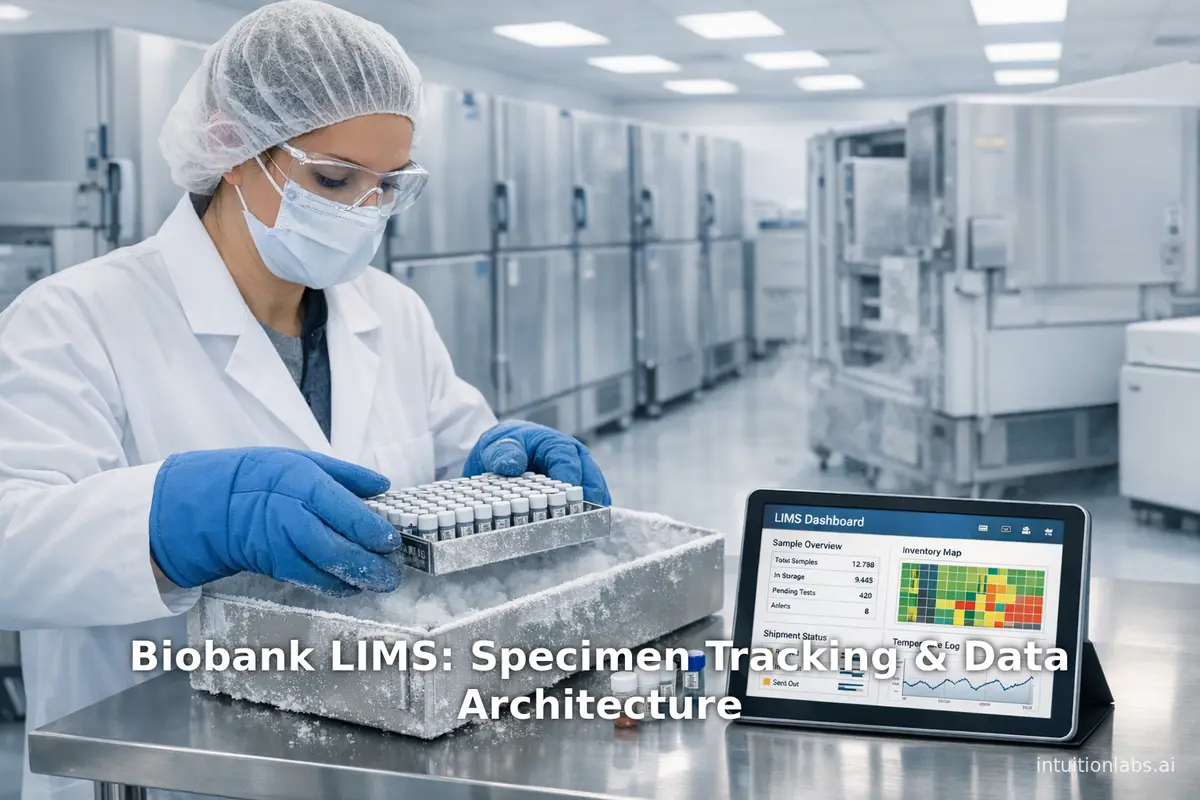
Biobank LIMS: Specimen Tracking & Data Architecture
Explore how Biobank LIMS software enables accurate specimen tracking, complex data architecture, and regulatory compliance for modern biorepositories.
Mosaic vs RegMol vs Dotmatics vs Certara Compound Registration
A 2026 comparison of entity registration and physical sample logistics across Mosaic, RegMol, Dotmatics and Certara, with modality rules, integration boundaries and a migration reconciliation template.
Open-Source LIMS 2026: Life Sciences Comparison Guide
A 2026 comparison guide of open-source LIMS platforms for life science labs. Learn about system architectures, customizability, and compliance trade-offs.