


rim systems · biotech compliance
A Guide to RIM Systems for Biotech Regulatory Affairs
January 12, 2026
Updated September 29, 2026
40 min read
Learn how Regulatory Information Management (RIM) systems help biotech firms manage compliance. This guide details core capabilities, submission planning, and t

- 01RIM systems centralize regulatory data and workflows across product registration, submissions, labeling, commitments, and health authority correspondence.
- 02Selection should test real regulatory workflows, integration needs, global standards support, user adoption, and total cost of ownership.
- 03The article presents differing market forecasts, but each projects substantial growth in global RIM spending.
- 04Implementation requires clean master data, redesigned processes, system integration, validation, and training across functions.
- 05The article describes a shift toward structured content, AI support, and tighter links between regulatory, quality, clinical, and commercial systems.
Executive Summary
The biotechnology sector is intensely regulated worldwide, making Regulatory Information Management (RIM) systems critical infrastructure for compliance, efficiency, and speed to market. RIM platforms centralize all regulatory data and processes across the product lifecycle, replacing error-prone spreadsheets and siloed systems. By enabling real-time submission planning, labeling management, registration tracking, and audit-ready documentation, RIM solutions help firms avoid costly delays and penalties. The global RIM market is growing rapidly – recent analyses estimate a market size of ~$2–3 billion in the mid-2020s, expanding at double-digit CAGR to exceed $4–7 billion by 2030–2032 ([1]) ([2]). This growth is driven by globalization (multiple regulatory regions and requirements), increasing product pipelines, and EMA's phased implementation of ISO IDMP standards.
Leading RIM platforms (e.g. Veeva Vault RIM, ArisGlobal LifeSphere, Ennov RIM, MasterControl Regulatory) have been adopted by virtually all top biopharma companies. For example, a September 2025 press release reports “more than 450 companies, including 19 of the top 20 biopharmas,” now use Veeva Vault RIM ([3]). For data on authorised and investigational medicines submitted to EMA's XEVMPD (Article 57) database, XEVPRM is the required schema ([4]). Independent surveys confirm that automation and data integration through RIM are yielding significant cost savings, faster drug approvals, and lower risk of compliance errors ([5]) ([6]).
Looking ahead, industry experts emphasize that digital transformation will continue to reshape RA. Structured authoring (AI-powered SCDM), full integration with global submission gateways, and machine learning for regulatory intelligence are emerging trends ([7]) ([8]). Biotech companies must plan strategically: adopting a robust RIM early in scale-up ensures data integrity across trials, CMC data, and labeling – a prerequisite for new eCTD formats and cross-organization collaboration. This report provides a comprehensive analysis of RIM in biotech: it surveys the history and context of RIM, details key capabilities of RIM platforms, compares major RIM solutions (with vendor features and adoption data), analyzes market trends and forecasts, presents case-study insights, and discusses future directions (AI, data standards, integration). All claims are supported by industry reports, academic sources, and expert statements, with extensive citations.
TechSci Research estimate of the global RIM market in 2024
TechSci Research forecast for the global RIM market by 2030
360iResearch forecast for the global RIM market by 2032
Organizations using Vault RIM as of September 2025, as reported in the article
Introduction and Background
The Regulatory Burden in Biotech
Biotechnology companies develop complex biologics, gene and cell therapies, and high-value drugs in a highly regulated environment. Each new drug application involves thousands of pages of data (analytical methods, clinical and preclinical results, manufacturing details) that must be compiled into dossiers and submitted to health authorities worldwide. Regulatory bodies such as the U.S. FDA, EMA (Europe), MHRA (UK), PMDA (Japan), and others each have detailed and evolving requirements for the format and content of submissions. Maintaining compliance – including post-approval changes (variations), renewals, labeling updates, and adverse event reporting – is non-negotiable. Even minor errors (wrong data in a submission) can trigger audits, delays, or product recalls. Regulatory lapses are extremely costly: analysts estimate that roughly 25% of a drug’s $800M–$1.2B development cost arises from managing regulatory content ([6]). In practical terms, biotech and pharma firms spend multiple billions annually on regulatory document creation, maintenance, and compliance checking ([6]).
Biotech firms traditionally relied on spreadsheets, email, and ad hoc databases to track this information, but the approach has serious drawbacks. Disconnected tracking leads to data inconsistencies (e.g. product labels that differ across countries) and hidden manual errors. The industry recognized the need for cohesive systems in the 2000s – leading to the concept of Regulatory Information Management (RIM). RIM emerged in response to fragmented regulatory data and rising compliance demands (intuitionlabs.ai). In its essence, RIM is defined as the centralized management of all regulatory-related data and processes ([9]) ([10]). It encompasses collecting, organizing, storing, and tracking everything from product registration records to submission correspondence, variation documents, and approvals. For example, as one industry analyst notes, RIM aims to “bring together all pieces of information and data that tell a product’s complete story,” thereby ensuring audit-readiness and decision support (intuitionlabs.ai).
Definition and Scope of RIM
Regulatory Information Management (RIM) systems are specialized enterprise software platforms built for life-sciences regulatory affairs. They cover a broad scope of such activities: for example, Wipro explicitly describes RIM as the repository for regulatory operations, handling “product registration tracking, product submission enablers, publishing, safety related data, document management and data used for planning and analysis” ([11]). In practical terms, a RIM system typically includes modules or features for:
- Product Registration & Global Portfolios: Tracking each product’s registration status in all markets. This includes country-specific registration numbers, renewal/expiration dates, and packaged contents.
- Submission Planning & Tracking: Planning future submissions (new drug applications, variations, renewals) against timelines, tracking each document’s progress, and linking them to global submission portfolios.
- Document Management / Publishing Support: Storing and versioning regulatory documents and interfacing with publishing tools to assemble an eCTD submission ([12]).
- Labelling and Artwork Management: Managing label content across languages and markets, ensuring label updates propagate correctly (label synchronization) to avoid discrepancies.
- Regulatory Intelligence: Sourcing and organizing global regulatory requirement changes, guidance updates, and mapping these to affected products and procedures.
- Regulatory Projects & Change Control: Linking regulatory submission data to project management and internal change control (e.g. ensuring any production change passes through the regulatory matrix).
- Global Health Authority Correspondence: Logging all communication (meeting minutes, queries, approvals) with regulators, enabling traceability for future reference.
- Audit Trail and Compliance Monitoring: FDA recommends assessing which electronic records fall under Part 11 based on applicable predicate rules ([13]).
In sum, RIM acts as the “cockpit” for the dossier lifecycle ([5]). Without such a system, regulatory teams literally “keep track” of critical events manually – a process that is “inefficient, error-prone, and risky” ([14]). It is broadly acknowledged that a robust RIM ensures data integrity and reduces risk as operations scale (Figure 1 highlights this initial RIM rationale).
“Imagine trying to keep track of submission timelines, regulatory status updates, health authority communications, and product lifecycle changes manually – inefficient, error-prone, and risky. A scalable RIM strategy not only supports growing operations but also ensures data integrity, improves collaboration, and reduces compliance risk.” ([14])

With ever-expanding product pipelines and globalization, the regulatory workload grows multiplicatively. A decentralized R&D organization in biotech may have dozens of active INDs/CTAs and dozens of marketed products across regions; without RIM, each local affiliate tends to develop its own tracking spreadsheets. Modern RIM implementations remedy this, providing a single source of truth for regulatory data. For example, Ennov highlights that implementing a global RIM yields “a single, harmonized authoritative source for all pertinent Regulatory data”, replacing disparate regional systems ([15]).
Why RIM is Critical for Biotech
Biotech firms have particular RIM needs. Many are mid-sized or smaller than big pharma, but face similarly complex regulations. They also often progress fast (e.g. dozens of indications in trial), meaning Agile and scalable IT. Key factors making RIM essential for biotech include:
- Rapid Portfolio Expansion: As biotechs advance candidates through lifecycle, they quickly accumulate submission requirements. A RIM ensures these scale-ups do not produce chaos.
- Global Launches: Early small biotechs often begin in one region and then expand exports (e.g. starting FDA, then EMA, then PMDA). Each region’s requirements differ (for example, the EU plans mandatory eCTD v4.0 use for new centrally authorised marketing authorisation applications from Q1 2028). RIM tracks what has been submitted where.
- Specialized Products: Advanced therapies (like gene therapies) can involve CMC data, manufacturing site changes, and patient registry commitments. RIM can interlock commitments (such as follow-up studies) with submissions.
- Compliance and Risk Management: Biotechs are particularly sensitive to any delays or penalties. Missing a renewal (say, EU variation) could force a product off-market. RIM provides alerts (automatic notifications) to key milestones.
- Resource Constraints: Smaller regulatory teams need efficiency. By centralizing data and automating tasks, RIM frees RA specialists to focus on strategy rather than chasing documents ([16]).
- Investor/Partner Confidence: Venture funding and partnerships often hinge on demonstrating robust systems. Having an enterprise RIM signals organizational maturity.
In short, biotech firms – like all life-science companies – can apply RIM to avoid the four malaises of manual RA: missing deadlines, data discrepancies, audit findings, and inability to scale regulatory activity ([11]) ([14]). The case for RIM is primarily a business case: cost savings through efficiency, risk reduction by avoiding compliance lapses, and improved time-to-market as highlighted by regulatory experts ([16]) ([6]). The remainder of this report delves into how RIM systems deliver these benefits, examines the leading products, and provides evidence and case examples to inform biotech industry decision-makers.
RIM System Capabilities and Architecture
Modern RIM platforms typically share core architectural characteristics. FDA advises assessing which electronic records fall under Part 11 based on applicable predicate rules ([13]). Many are delivered in the cloud (Software-as-a-Service), although on-premises or hybrid deployments exist for firms with strict IT policies or data residency concerns. A ubiquitous model is a centralized database structure that can track a “product/registration” centric data model – meaning all information is organized by product and then by market. This contrasts with traditional DMS (Document Management Systems) which are file-centric.
Key capabilities that distinguish a robust RIM system include:
- Data Centralization: All regulatory data (submissions, approvals, correspondence, commitments, labeling, etc.) live in one platform. This eliminates duplicated spreadsheets and siloed info ([5]) ([10]).
- Workflow Automation: Built-in lifecycle workflows for tasks such as “prepare and submit variation” or “renew registration”. Workflows route tasks for review and approval, and log status changes automatically.
- eCTD Lifecycle Support: First-class support for electronic Common Technical Document (eCTD). This includes tracking each submission’s type (e.g. NDA, variation), stage (planning, published, submitted), and facilitating output to eCTD publishing tools. Some RIMs (e.g. Veeva) integrate tightly with publishing modules to automate creation of final submission files.
- Label/Artwork Synchronization: Functionality to manage product labeling (package leaflets, IBs) so that multiple language revisions stay in sync across markets. RIMs often link labels to corresponding registrations.
- Regulatory Intelligence Integration: Many platforms now integrate with regulatory intelligence databases or allow tagging of regulations. For instance, a RIM can maintain links to external sources (FDA SPL guidance, EMA variances) to contextualize data, or even import requirement lists.
- Dashboards and Reporting: Out-of-the-box dashboards show metrics like “time since last submission” or “days past planned submission”, helping managers monitor backlog. Reports on compliance status (green/yellow/red tiles for pending tasks) and audit trails are usually standard.
- Regulatory Commitments Tracking: RIMs allow recording of post-approval commitments (e.g. Phase IV studies, safety updates) and track fulfillment status against those commitments.
- Integration with Other Systems: RIM often links with document management systems (DMS), quality systems (QMS), and clinical trial management systems (CTMS). For example, a RIM may pull batch release data from a Quality system to ensure current release state is part of a submission. Advanced RIMs also integrate with laboratory information (IDMP substance registries) to automate compliance data.
- IDMP and Data Standards Readiness: EMA is implementing ISO IDMP standards in a phased way ([17]).
- Audit-Ready Evidence: Crucially, RIM platforms capture proof that each workflow step was completed under control (e.g. electronic signatures, scanned approvals, validator check passes). This allows regulators or auditors to “follow the audit-proof story” ([5]) in minutes, much faster than sifting through emails or paper files.
Each RIM vendor may emphasize some of these capabilities differently. Table 1 (below) compares several leading RIM solutions on key dimensions (deployment mode, unique features, and known users) to illustrate the spectrum of options on the market.
| RIM Platform | Key Capabilities | Deployment | Notable Features | Known Adoption |
|---|---|---|---|---|
| Veeva Vault RIM | End-to-end regulatory lifecycle: global product registrations, submission tracking, publishing, labeling; integrated content management. | Cloud (SaaS) | Unified platform (shared Vault repository for docs+data); continuous publishing; frequent releases. Endorsed AI/ML roadmap. | 450+ customers as of 2025 (incl. 19/20 top pharmas) ([3]). |
| ArisGlobal LifeSphere Regulatory | Product management, submissions management, labeling and commitment tracking, integrated safety and lab systems. Powerful configurability. | Cloud or On-Prem | AI-driven features (e.g. LifeSphere NavaX for safety); strong automated IDMP tools; part of ArisGlobal’s LifeSphere suite. | Widely used in global pharma (hundreds of licenses historically). |
| Ennov RIM | Centralized product portfolio and registrations, submission planning, variation management, labeling. Deep analytics. | Cloud/On-Prem | User-friendly EU-focused interface; strong support for e-submissions planning. | Adopted by multiple large pharma: one Top-25 global pharma recently selected Ennov for global RIM ([15]). |
| MasterControl Regulatory Excellence | Registration/submissions planning, submission publishing links, product and dossier management. Integrated QMS-RA. | Cloud | Tight integration RA↔Quality (change controls, CAPA links). Out-of-box eSubmissions. | Used by large medtech and pharma (gains traction in compliance-heavy industries). |
| PhlexRIM (Phlexglobal) | Regulatory information management for global registration information ([18]). | — | Streamlines business processes to provide a single source of global registration information. | — |
| RegDesk RIMS | Workflow-driven regulatory tracking geared to medical devices and diagnostics. Global market compliance dashboard. | Cloud | AI-powered intelligence for compliance alerts; integration with global regulatory content feeds. | Used by major device manufacturers (Thermo Fisher among clients) ([19]). |
| Kalypso Accel for RIM | End-to-end RIM capabilities on modern platform (registrations, labeling, submissions). | Cloud | Pre-configured processes; built for faster implementation and lower TCO. | Adopted by select biotech (as economical entry solution). |
Table 1. Selected RIM solutions and their key aspects. Deployment denotes whether the platform is cloud-based or on-premise. Notable adoption facts are cited.
Each platform above is designed for regulated products but may target slightly different niches (biopharma vs devices, large licensee vs smaller companies). Veeva Vault RIM (by Veeva Systems) has emerged as a de facto leader in biopharma RIM: Veeva emphasizes that its unified cloud vault (where both documents and data reside) helps eliminate silos and accelerate submissions ([3]). ArisGlobal’s LifeSphere, historically strong in RIM, issued major releases in 2025 emphasizing AI and generative tools (NavaX) across functions. Ennov is a French RIM vendor; its 2019 announcement documented selection by an unnamed Top-25 pharmaceutical company. Meanwhile, vendors like MasterControl target customers wanting tight Quality integration, and niche players like Phlex or RIMsys serve specialized needs (e.g. global registration information or medical device RA).
RIM Implementation and Data Requirements
Beyond software selection, successful RIM deployment requires careful planning. RIM implementations typically involve:
- Data Migration and Harmonization: Legacy data (registration numbers, existing dossiers, master label content) must be cleaned and loaded into the new system. Inconsistent naming or numbering (e.g. variations in product codes) must be reconciled.
- Process Redesign: Existing RA processes are mapped and often improved. Many companies are surprised how many informal processes exist (e.g. tracking country-specific label changes in an affiliate’s own document), and standardization is required.
- Change Management: Regulatory teams must adopt the new workflows and stop using spreadsheets. Executive sponsorship is crucial so that global country teams trust the central RIM as the authority.
- System Integration: RIM often needs to tie into other enterprise systems. For example, some organizations integrate RIM with enterprise content management (ECM) or LIMS systems. Often RIM vendors provide APIs or connectors for popular systems.
- Validation and Compliance: FDA recommends basing the approach to computerized-system validation on a justified and documented risk assessment of potential effects on product quality, safety, and record integrity ([13]). Many vendors include audit-trail features (e.g. PDF-A publishing with secure signatures) to support compliance out-of-box ([20]).
- Training: Users across functions (RA, labeling, PV) must be trained. In large pharma, it’s common to train hundreds or thousands of users as part of rollout.
Underpinning all this is the necessity for master data governance. A sound RIM needs consistent identifiers for products (internal product IDs), substances (ISO IDMP substance IDs), and reference documents. As one expert notes, structured data governance is essential: “existing processes need to be changed to produce structured information” in compliance with incoming mandates . Modern RIM platforms support this by allowing companies to build in controlled vocabularies (e.g. WHO ATC classification, substance registries) and map them to submissions.
EMA says submission and maintenance of data on authorised human medicines is mandatory ([17]).
Clean and load legacy registration records, dossiers, and label content.
Map existing regulatory affairs processes and standardize informal local practices.
Move regulatory teams onto shared workflows with executive sponsorship.
Connect RIM with other enterprise systems, using available APIs or connectors.
Base validation on a documented assessment of risks to product quality, safety, and record integrity.
Train regulatory, labeling, and safety users as part of rollout.
“RIM buyers should compare documented product capabilities against their own regulatory workflows and data requirements.
Market Landscape and Growth
Industry Trends and Drivers
The RIM market is expanding due to several converging forces. First, regulatory complexity is rising: more countries means more authority-specific formats (e.g. NMPA in China, TGA in Australia). Second, new domains like biologics or digital therapeutics have their own oversight. Third, compliance standards are becoming more stringent (e.g. the FDA’s Drug Supply Chain Security Act, EU MDR for devices). Each of these multiplies the data volume and the need for traceability ([21]) ([22]). Additionally, internal factors like company M&A create legacy systems that must be rationalized, often through a unified RIM approach.
Digital transformation is another driver: as companies move R&D into the cloud and embrace enterprise platforms (clinical systems, quality systems, etc.), a modern RIM is seen as simply part of that digital stack ([7]). Thought leaders argue that legacy, document-centric submission processes are unsustainable. For example, a recent review states that life sciences “lagged in the digitalization of regulatory submissions, leading to inefficiencies, delays, and increased administrative burdens,” and that structured content and AI can reduce errors and accelerate approvals ([22]). In short, RIM is shifting from a step-function compliance tool into a driver of competitive advantage through data.
Market Size and Growth Projections
Multiple industry reports confirm rapid growth of the RIM software market. According to Grand View Research (via MarketPublishers), the global RIM market was expected to exceed $4.1 billion by 2030 at an 11.0% CAGR (2022–2030) ([2]). Another forecast by TechSci Research values the global RIM market at $2.12 billion in 2024, growing at ~10.4% to reach $3.81 billion by 2030 ([23]). A press release in Jan 2026 by 360iResearch places the 2025 market at $2.92 billion, jumping to $3.33 billion in 2026, and then upwards to $7.32 billion by 2032 (14% CAGR) ([1]). These disparities reflect differences in scope (some include services) but consistently indicate strong double-digit growth.
A regional breakdown shows North America dominating the RIM market (over two-thirds share in 2021) ([24]). This is unsurprising given the concentration of pharma and biotech headquarters there, plus early adoption of tech. Europe is a significant chunk too (prompted by EMA and EU-wide projects), while Asia-Pacific is a fast-emerging market with its own national regulators pushing for e-submissions. As the biotech industry globalizes (with Chinese and Indian markets growing, for example), RIM adoption in APAC is expected to rise.
| Year | Market Value ($B) | Source (Project) |
|---|---|---|
| 2024 | $2.12 | TechSci Research ([23]) |
| 2025 | $2.92 | 360iResearch ([1]) |
| 2026 | $3.33 | 360iResearch ([1]) |
| 2030 | $3.81 | TechSci Research ([23]) |
| 2030 | $4.12 | Grand View†Report ([2]) |
| 2032 | $7.32 | 360iResearch (CAGR14%) ([1]) |
These numbers underscore that RIM is a billion-dollar industry growing steadily. The reports attribute growth to increased R&D spending and regulatory compliance activities in life sciences, as well as to digital transformation initiatives (e.g. FDA’s Initiative for eCTD, EMA’s SPOR project) ([2]).
Key Market Players and Adoption
The RIM solutions market is somewhat consolidated around a handful of major vendors (Veeva, ArisGlobal, etc.), but also includes many niche players. Gartner Peer Insights and analysts typically profile Veeva and ArisGlobal at the top of the vendor landscape (intuitionlabs.ai). The facts bear this out: as of 2025, Veeva Vault RIM alone serves 19 of the top 20 global biopharma companies ([3]). That means nearly all Big Pharma have standardized on Veeva’s RIM for at least part of their business. Ennov, MasterControl, and others fill in gaps, often used by smaller or regional companies. Newer entrants like Kalypso’s Accel for RIM target mid-market, and device-focused platforms (RIMsys, HLS) capture portion of medtech.
Qualitative surveys of RA professionals likewise rank these vendors at or near the top. For instance, a 2025 peer-review platform shows Veeva often cited as industry-leading, with high satisfaction on ease of use and support, and ArisGlobal and Ennov also scoring well. Ease of deployment (SaaS being preferred), tight GxP compliance, and breadth of functionality are the top decision criteria customers report.
Beyond pure RIM software, the ecosystem includes integrated PLM/QMS suites (which may have RIM modules), and regulatory intelligence providers (some RIM systems embed intelligence feeds). In practice, large biotechs often bundle RIM with adjacent systems: e.g., a company using Veeva Vault for quality may add Vault RIM to reuse infrastructure. Such cross-product synergy is touted by vendors and may influence decisions.
Evaluation Factors for RIM Selection
Choosing the “best” RIM system for a biotech entails evaluating many factors. Key considerations include:
- Functional Coverage: Does the system cover all required regulatory functions? For biotech with global submissions, this means product registration, submissions planning, label mgmt, commitments, etc. As one expert blog notes, many RIMs claim similar feature lists, so differences lie in implementation details (data model flexibility, audit tools, dashboards, IDMP readiness) ([25]). Companies should verify critical workflows (e.g. replacing a drug in an existing eCTD lifecycle) and regulatory coverage (e.g. does it natively support FDA SPL) ([25]) (intuitionlabs.ai).
- Configurability vs. Complexity: More configurable RIM solutions (like ArisLifeSphere) can mold to complex processes, but require more implementation effort. Simpler out-of-box RIMs (like Veeva) can be faster to launch but may require business process changes. Biotech leaders often prefer simpler initial rollout for core processes, expanding later.
- Integrations and Ecosystem: Consider existing tools that need to connect. For example, biotechs often integrate RIM with: AI-driven content authoring tools (to support eCTD 4.0), external regulatory databases, quality/QMS systems, or other Veeva Vault apps. A system with open APIs and existing connectors (e.g. RIM⇄DMS, RIM⇄QMS) has an advantage.
- Global Standards Support: The vendor’s roadmap for supporting standards like ISO IDMP/SPOR, new eCTD specifications (v4.0 with XML substructure), and safety reporting formats must be checked. Some vendors publish compliance roadmaps or provide templates (e.g. vendor’s IDMP modules). Given that regulations constantly evolve, long-term viability of the RIM depends on the vendor’s commitment to these standards.
- User Experience & Adoption: RA teams in biotech prefer intuitive interfaces and self-service reporting. Systems with customizable dashboards and minimal training overhead score higher. For example, end-users have noted when RIMs act merely as “status boards” with required workflows, versus deep data-driven tools ([20]).
- Vendor and Community Support: Consider the vendor’s track record and user community. Veeva, for example, holds large users’ summits and has extensive documentation and training. Other vendors have smaller but dedicated user bases. Consulting firms or system integrators with RIM expertise may also influence selections.
- Total Cost of Ownership (TCO): Licensing and implementation costs can be significant, especially for smaller biotechs. While SaaS can lower upfront CapEx, subscription fees (and fees for additional modules like submissions publishing) add up. One analysis observes that fully cloud OpEx models can seem costly relative to legacy on-prem setups ([26]), though lifecycle TCO often favors SaaS when accounting for reduced infrastructure/validation overhead. ROI models should factor in efficiency gains (reduced consultant spends, faster submissions) over 5–7 years ([27]).
- Scalability and Future-Proofing: A “stretch goal” evaluation is whether the RIM can handle over the next 5–10 years as the company grows. For instance, if a biotech goes through M&A or spins out/regroup, can the RIM be restructured to multiple divisions? Tools that can support multiple independent processes (e.g. different CMC SOPs) are preferable.
- Biotech-Specific Needs: Biotechs often have unique niches (rare disease, biologics, combination products). If applicable, check if the RIM can manage special requirements (e.g. pediatric investigation plans, complex INDs, beauty packaging). Some vendors offer industry accelerators or preconfigured templates for biologics.
Ultimately, “best” depends on alignment with business priorities. The evaluation should go beyond feature checklists to outcomes – how does a RIM reduce cycle time or prevent risk? The Indian regulatory blog PharmaRegulatory.in emphasizes this point: decision-makers should ask “how fast will a variation move from CCB decision to synchronized filings? how quickly can you prove control to an inspector?” ([27]). In other words, RIM selection is about enabling efficient, auditable regulatory workflows, not just deploying another software silo.
Comparative Analysis of Leading RIM Platforms
Veeva Vault RIM
Overview: Veeva Systems’ Vault RIM is a cloud-native platform that unifies regulatory content and data. It sits on the same Vault Platform as Veeva’s clinical (Vault CTMS) and quality/LMS products, enabling seamless data sharing across functions. Vault RIM comprises apps such as Registrations (product registration management), Submissions, Submissions Publishing, and Submissions Archive. Regulatory teams use Vault RIM to plan global registrations, manage labeling, and coordinate variations all in one place.
Pros: Vault RIM is widely lauded for its user interface and unified repository. All documents (e.g. common Technical Document PDFs) and structured data (CSV/XML content) are linked in one system. For configured Vault deployments, Veeva says UAT or PQ is planned and conducted to confirm the system configuration ([28]). Vault RIM also offers continuous eCTD publishing capabilities in certain markets, reducing rework ([29]). Crucially, Veeva’s market traction is enormous – as of Sept 2025, over 450 organizations use Vault RIM ([3]). This high adoption ensures active user communities and robust support.
Cons: Some analysts caution that rapid cloud updates can impose heavy change management. Also, because Vault is a shared infrastructure, clients must execute within Vault’s embedded data model; heavily customized country processes may require process changes. The built-in intelligent digital workflows are powerful but may not perfectly mirror legacy processes without adjustment.
Biotech Perspective: Emerging biopharma find Veeva compelling. A Syneos Health analysis argues that many small/mid biotech should default to Vault RIM rather than exhaust resources evaluating alternatives. They cite Vault’s near-“plug-and-play” SaaS qualities and frequent updates as ideal for faster implementation. In a real-world case, a global biotech (late clinical-stage) opted out of doing a full RIM vendor study, deciding instead to deploy Vault RIM immediately, recognizing it as “the right thing to do for the client” ([30]). Benefits mentioned include not only modern tech but also community-driven development: because large pharmas contribute feedback, innovations propagate quickly to all customers ([31]).
ArisGlobal LifeSphere Regulatory
Overview: ArisGlobal’s LifeSphere Regulatory, whose parent was the subject of a July 2026 definitive acquisition agreement with Dassault Systèmes, is a comprehensive RIM offered either cloud-hosted or on-premises. It covers global registrations, submission planning, labeling, and also ties into LifeSphere Safety (PV) and Clinical systems. ArisGlobal emphasizes configurability: companies with complex legacy processes often customize it heavily.
Pros: LifeSphere RIM is praised for its powerful configurability and advanced features. It is one of the few solutions with built-in E2B safety integration, enabling RAs to directly see safety status linked to submitted products. ArisGlobal's NavaX generative-AI layer, originally launched for safety case intake, was extended across the LifeSphere suite in 2025–2026 (regulatory intelligence summarization, automated dossier QC, and label change-impact analysis). The platform is known for detailed compliance modules (xEVMPD, HL7-FHIR) and ships SPOR/IDMP mapping tools. Gartner and analysts continue to list ArisGlobal alongside Veeva as leaders.
Cons: Highly configurable means it can be complex and expensive to implement. Clients must plan extensive Q&A/UAT for custom workflows. There are also reports that LifeSphere’s Submissions module has historically been slower to support new publishing requirements (though UI has been modernized). Smaller biotechs may be deterred by the need for IT and regulatory resources to tailor the system.
Adoption: ArisGlobal cites “strong global growth” and dozens of large installations. Historically it claimed hundreds of licenses (including regulators!) in its customer base. Its share in biotech is significant but somewhat less visible in U.S.-centric conversations; nonetheless it is especially popular in Europe and Asia.
Case Note: ArisGlobal describes LifeSphere as its technology suite spanning Safety, Regulatory, Quality, and Medical Affairs ([32]).
Ennov RIM
Overview: Ennov (France) offers a modular Reg Affairs suite. Ennov RIM provides global dossier management for product details, regulatory processes, and lifecycle management. It can link directly to Ennov’s eCTD publishing or content management modules, or work with other DMS.
Pros: Ennov systems are known for their ease of use and organic maturation approach. The UI is often rated intuitive. Ennov is strong at variation handling and in European labels. It supports multilingual content and offers detailed dashboards. 25+ years of domain experience informs its design – Ennov advertises 150 life sciences customers.
Cons: It may not be as globally prevalent or integrated as Vault or LifeSphere. For example, features like global submission collaboration and heavy regulatory intelligence might be less mature. Larger companies sometimes regard it as lower on enterprise footprint, though that is changing. According to Ennov's 2016 announcement, Gartner identified seven RIM vendors with IDMP offers, including Ennov ([33]).
Biotech Use: Ennov is often chosen by biotech or pharma seeking a single-vendor ECM/RA platform, or by those based in/around Europe. A notable case: In 2019, Ennov announced that “one of Pharmaceutical Executive’s Top 25 companies” (i.e. a global pharma leader) selected Ennov RIM to replace regional systems ([15]). That press release emphasized the company’s goal of migrating to “a single, harmonized authoritative source” for registrations. This jump in profile indicates Ennov’s competitiveness for large-scale global RIM projects.
Other Notable Systems
-
MasterControl Regulatory Excellence: This solution is an extension of MasterControl’s established QMS platform. It links regulatory dossiers to quality change controls, making it attractive for compliance-focused companies. It provides submission planning and product registration tracking. For example, a biopharma might use it to ensure any manufacturing change is automatically flagged in regulatory commitments. However, it does not offer all of the collaboration/commenting features of more dedicated RIMs.
-
RIMsys (RIMsys.io): Geared primarily toward medical devices and diagnostics, RIMsys has a simpler, SaaS-based RIM that includes product registration and submission workflows. Its user base includes mid-sized medical device firms (one case claims 113 customers). Biotechs developing combination products may sometimes use RIMsys for the device aspects of regulation. RIMsys also offers a blog with tips on building a RIM business case ([34]) for such companies.
-
PhlexRIM (Phlexglobal): Phlexglobal describes PhlexRIM as a regulatory information management system for global registration information ([18]).
-
Kalypso Accel for RIM: A newer SaaS entrant aimed at the mid-market. It promises a modern, intuitive interface and faster deployment (no heavy consulting needed). It covers standard RIM needs but is priced below some legacy systems, making it appealing for smaller biotechs without the budget for Veeva/Aris.
-
Homegrown/Spreadsheet: It should be noted that many very small biotech firms still rely on homegrown tools. Spreadsheet management, however, is universally identified as a liability once the company grows beyond a certain size. One medical device industry blog bluntly states that many teams “still rely on spreadsheets” and that RIM adoption projects often start with making the business case versus spreadsheet culture ([34]). By contrast, those who moved beyond spreadsheets report savings of consultant fees and onboarding time ([16]).
In summary, Table 1 above captures these differences. Each RIM system has trade-offs. Veeva leads in scale and smooth cloud experience, ArisGlobal in configurability and AI innovation, Ennov in ease-of-use for global portfolios, etc. Many large biotech companies use more than one RIM (e.g., one for drug products, another for biologics or devices) depending on their structure. A thorough RIM acquisition process involves detailed scoring of requirements against these capabilities.
- Unifies regulatory content and data on one cloud platform.
- Supports continuous eCTD publishing in certain markets.
- Connects regulatory work with LifeSphere Safety and Clinical systems.
- Configurability can increase implementation cost and complexity.
“A sound RIM needs consistent identifiers for products (internal product IDs), substances (ISO IDMP substance IDs), and reference documents.
Case Studies and Real-World Examples
This section highlights how actual biotech and pharma organizations have implemented RIM solutions in practice, and what outcomes they report. The examples below illustrate mid- to large-company experiences, which can inform biotech decision-making.
Case Study: GSK’s 2019 RIM Session
Veeva’s 2019 summit agenda described GSK as standardizing on a common RIM platform to drive global alignment across business units ([35]).
Case Study: RIM Consolidation at Ennov Client (Unnamed Top-25 Pharma) ([15])
Scenario: A global top-25 pharmaceutical company (unnamed) had historically managed different product portfolios in siloed systems across regions. The multiplicity of tools meant redundant effort and difficulty getting a global overview of registrations.
Solution: The company selected Ennov RIM as its single global RIM solution. (Ennov’s 2019 press release highlights this as a key new client ([15]).)
Reported status: Ennov announced that an unnamed Top-25 pharmaceutical company selected Ennov RIM for global regulatory information management ([36]).
Vendor Case: Thermo Fisher Scientific and RegDesk ([19])
Thermo Fisher is primarily a life-science tools and diagnostics firm, but it also has substantial regulatory operations for its in-house medical devices and acquired companies. A public testimonial notes Thermo’s regulatory team using RegDesk RIMS.
- According to a software testimonial, Thermo’s representative (Elaine F.) praised the RIM tool as a “comprehensive, user-friendly tool that consolidates all regulatory affairs processes in one place.” She emphasized that real regulatory experts on the vendor side added value ([19]).
- While vendor marketing, this endorsement from a large global healthcare company lends credibility that even complex organizations derive benefit from a centralized RIM solution (in this case, heavy on workflows and automation for global market compliance).
Aggregate Adoption Observations
- Major Biopharmas: As noted, nearly all top-tier pharmaceutical companies now have an enterprise RIM solution. Veeva’s announcement (Sept 2025) of 450 customers included “19 of the top 20 biopharmas” ([3]). This is compelling evidence – at least for drug products, those companies rely on an integrated RIM for core regulatory functions. (Often this coincides with adopting other Veeva Vault apps as well.)
- Emerging Biotechs: Many smaller biotechs report implementing RIM only once they have a portfolio poised for global filing (e.g. approaching Phase III/NDAs). One industry consultant notes that the typical timing is when a lead compound is entering late stage and a launch in multiple regions is imminent ([37]). Some have “blank slate” advantage – with only spreadsheets and no legacy RIM, they may adopt out-of-box SaaS RIM quickly. Others, spun out of larger companies, may inherit systems or the choice to build cloud infrastructure with RIM. Across sources, Speed to Market is the key expected benefit.
- Medical Devices and Biotech Overlap: It is worth mentioning that at least one RIM vendor (RIMsys) reported that many medical device regulatory teams also seek RIM, often implementing in parallel with FDA Unique Device Identification (UDI) compliance. While not directly “biotech”, this underscores that the RIM need spans all healthcare product types. Some biotechs with device combinations (e.g. a drug + delivery device) may adopt both kinds of RIM features.
- Upper Bound on ROI: Firms that have implemented RIM typically cite return on investment in terms of reduced external consultant fees and error costs ([16]) ([6]). For instance, one RIMsys source argues that efficiencies gained justify the RIM even from first year. We reiterate that these case quotes are mostly qualitative, but align with market research projections of high ROI in compliance-heavy industries.
Implications and Future Directions
Emerging Technologies: AI and Structured Content
A clear trend is the integration of RIM with new digital technologies, particularly artificial intelligence (AI) and structured content management. Regulatory departments are beginning to use AI in two ways: AI-driven intelligence (monitoring global regulatory changes, suggesting actions) and AI-augmented processes (like automatic data tagging). RIM vendors and analysts highlight that combining AI with RIM can yield significant benefits.
For example, a 2025 medtech article observes: “AI is no longer just a buzzword. When combined with effective RIM, it can be a powerful enabler of efficiency, accuracy, and strategic decision-making.” ([38]). Specifically, machine learning can be trained to classify incoming regulations or even auto-fill product information.
One future-shaping concept is AI-powered Structured Content Authoring (AI-SCA). In this model, regulatory documents (CSRs, labelling, CMC narratives) are assembled from modular, tagged content blocks rather than static pages. A specialized regulatory industry analysis states:
“As regulators move toward structured data submissions (eCTD 4.0), AI-SCA allows pharmaceutical companies to modularize and align content with evolving templates and data exchange standards, streamlining the approval process.” ([8]).
In a practical sense, this means RIM systems will need to support highly structured data. For instance, rather than storing an entire PDF, the RIM might need to store a discrete piece of data (e.g. drug CMC specification) that is tagged to a standard identifier. The RIM becomes the authoritative registry of that data element, linked to all submissions that use it. This shift is being actively discussed. A review in AAPS Open notes that the industry “has lagged in the digitalization of regulatory submissions” and highlights SCDM (structured content) and AI as ways to automate content preparation and ensure compliance ([22]).
RIM platforms are beginning to incorporate these capabilities. For example, Docuvera (a firm specializing in digital regulatory content) describes RIMs as “the connective tissue within the regulatory tech stack” when combined with AI content tools ([39]). In practice, we can envision: a future VAULT or LifeSphere where uploading a data table (e.g. manufacturing process parameters) is automatically validated against the RIM’s product definitions and then formatted into an eCTD-ready XML.
The FDA says publication and testing of the PQ/CMC FHIR implementation guide do not establish FDA policy or guidance; formal acceptance of a data format requires a separate FDA process ([40]).
Regulatory Initiatives and Global Alignment
EMA states that authorised human-medicine reporting currently uses XEVPRM ([17]).
Broader Enterprise Integration
An important implication is that RIM will not live in isolation. Modern biotechs pursue holistic data strategies: linking RIM with Quality (e.g. deviations and CAPAs that have regulatory impact), with clinical trials (integrating safety reports), and even with commercial/product management. For example, linking RIM to the Marketing system could ensure product labels in marketing materials always match RA-approved labels. Similarly, companies are exploring linking RIM into their enterprise data warehouses to enable analytics. We expect to see RIM become one of many nodes in a unified life-cycle data ecosystem.
Barriers and Considerations
While technology moves forward, companies must also invest in organizational change. Experts caution that RIM is not a silver bullet unless regulatory teams broaden their remit to data governance. As one consultant notes, “existing processes need to be changed to produce structured information… RIM platforms output structured data” . RIM therefore brings cultural shifts – for example, chemistry/CMC teams will need to tag products in IDMP format, and labeling teams will author in component pools. Incomplete adoption of these practices can blunt RIM’s benefits. Thus, cross-functional coordination and training remain essential.
Another barrier is the learning curve. Regulatory teams are used to document-centric work. Transitioning to SaaS RIM, with workflow lock-downs and mandatory fields, can cause temporary friction. Success stories emphasize gradual rollout, strong project governance, and involvement of end-users early on. Biotechs should similarly plan change management, not just software installation.
Conclusion
Ennov announced the selection of Ennov RIM by an unnamed Top-25 pharmaceutical company for global regulatory information management ([36]).
RIM buyers should compare documented product capabilities against their own regulatory workflows and data requirements.
About IntuitionLabs
Build practical AI for pharma and biotech with IntuitionLabs. We help life-science teams turn complex information and workflows into useful software, governed knowledge systems and AI tools.
IntuitionLabs is an AI consulting, custom software development and data engineering firm serving pharmaceutical, biotechnology, medical-device and other life-science organizations. We work with clinical, regulatory, medical-affairs, commercial, quality and IT teams to connect technology decisions with the work people need to accomplish.
AI consulting and adoption
Our AI enablement services cover readiness assessments, use-case selection, governance and policies, team workshops, adoption measurement and ongoing advisory support. We help organizations structure the information layer behind AI: source material, context, permissions and maintained knowledge that make generated answers useful and reviewable. Private LLM inference and hosted AI options support teams evaluating how to operate AI with appropriate control over their data and infrastructure.
Software, data and life-science workflows
IntuitionLabs develops custom software for pharma and biotech, integrates enterprise systems, and builds data engineering and business intelligence solutions. Areas of focus include AI agents, regulatory research, medical writing, medical affairs, CMC information, competitive intelligence and clinical-document workflows. Our eTMF intelligence work includes cross-system reconciliation and inspection-readiness support.
Enterprise platforms and regulated delivery
We provide Veeva services, application support, managed services, integrations and custom applications, alongside enterprise content work involving platforms such as Egnyte. For regulated workflows, our services include GxP enablement, computer-system validation and software development addressing 21 CFR Part 11 requirements. The applicable controls, validation responsibilities and acceptance criteria are defined for each engagement.
Work with IntuitionLabs
Explore AI enablement, pharma and biotech software development, data engineering and BI, and Veeva services. Contact IntuitionLabs to discuss your workflow, information sources and implementation needs.
IntuitionLabs publishes educational research to help life-science teams make informed technology decisions. Coverage of a product or organization does not imply a client relationship, endorsement or partnership.
Sources / 40

Need Expert Guidance on This Topic?
Let's discuss how IntuitionLabs can help you navigate the challenges covered in this article.
I'm Adrien Laurent, Founder & CEO of IntuitionLabs. With 25+ years of experience in enterprise software development, I specialize in creating custom AI solutions for the pharmaceutical and life science industries.
The information contained in this document is provided for educational and informational purposes only. We make no representations or warranties of any kind, express or implied, about the completeness, accuracy, reliability, suitability, or availability of the information contained herein. Any reliance you place on such information is strictly at your own risk. In no event will IntuitionLabs.ai or its representatives be liable for any loss or damage including without limitation, indirect or consequential loss or damage, or any loss or damage whatsoever arising from the use of information presented in this document. This document may contain content generated with the assistance of artificial intelligence technologies. AI-generated content may contain errors, omissions, or inaccuracies. Readers are advised to independently verify any critical information before acting upon it. All product names, logos, brands, trademarks, and registered trademarks mentioned in this document are the property of their respective owners. All company, product, and service names used in this document are for identification purposes only. Use of these names, logos, trademarks, and brands does not imply endorsement by the respective trademark holders. IntuitionLabs.ai is an AI software development company specializing in helping life-science companies implement and leverage artificial intelligence solutions. Founded in 2023 by Adrien Laurent and based in San Jose, California. This document does not constitute professional or legal advice. For specific guidance related to your business needs, please consult with appropriate qualified professionals.
Related Articles

RIM & eCTD Budgeting: A Guide for Emerging Biotech
A guide for emerging biotech on budgeting for Regulatory Information Management (RIM) and eCTD submissions. Covers cost structures, vendor solutions, and compli
Regulatory Submission Tools: A Guide to RIM & eCTD Software
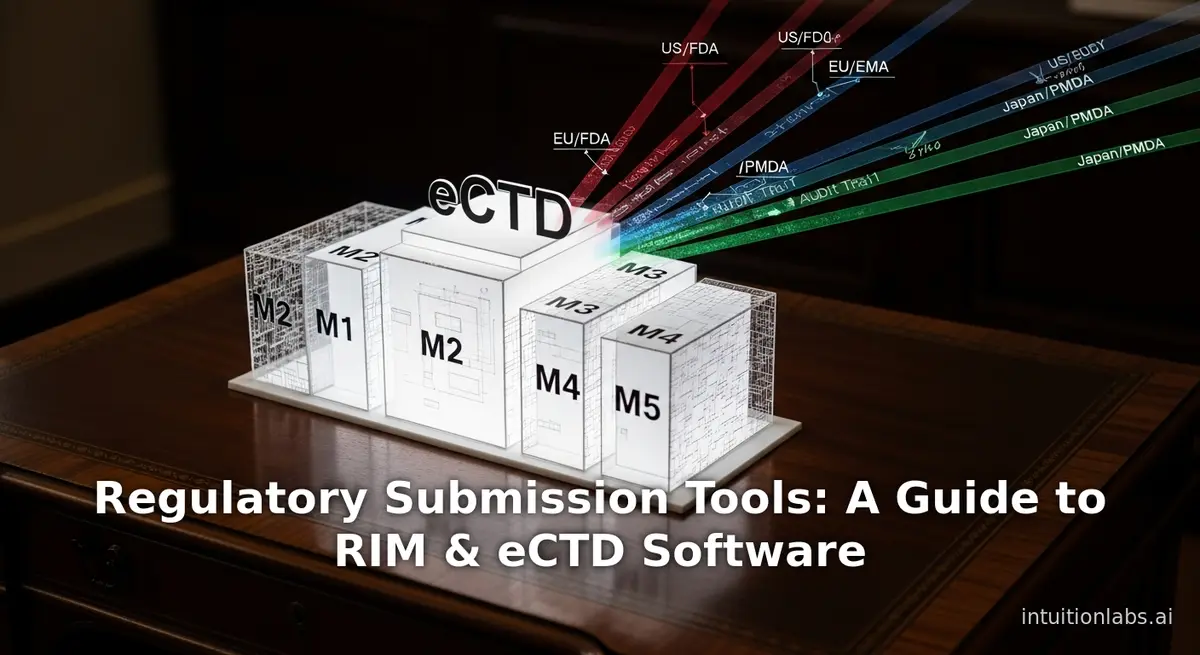
An overview of regulatory submission software for the life sciences. Learn how RIM systems & eCTD publishing tools streamline compliant filings to the FDA & EMA
Boston Biotech Companies: An In-Depth Ecosystem Guide
Explore the Boston-Cambridge biotech ecosystem in 2026. This guide covers top companies like Biogen, Vertex & Moderna, venture funding trends, federal policy impacts, and Massachusetts' drug development pipeline.