


ibp · s&op
IBP & S&OP for Pharma Supply Chains: A Practical Guide
January 6, 2026
Updated September 21, 2026
60 min read
Learn how Integrated Business Planning (IBP) and S&OP help pharma supply chains align demand, capacity, inventory, and constraints. Updated April 2026 with GLP-1 demand and capacity planning, FDA RMP guidance, biosimilar wave 2, and AI in IBP.

- 01IBP extends S&OP by connecting operational plans to strategy and finance, while keeping demand and supply aligned through a unified plan.
- 02Pharma planning must jointly manage demand, capacity, inventory, quality, regulatory, shelf-life, and cold-chain constraints across a global network.
- 03A disciplined monthly cadence gives executives a forum to resolve cross-functional gaps, approve trade-offs, and feed an agreed plan into execution.
- 04Reported case and vendor results suggest potential gains, but the article cautions that they are not evidence of outcomes representative across the pharmaceutical industry.
- 05Persistent drug shortages and geopolitical disruption increase the need to treat resilience, risk scenarios, and multi-site coordination as core planning work.
This guide has been refreshed with 2025-2026 developments, including GLP-1 (semaglutide/tirzepatide) demand and capacity planning, the FDA's drug-shortage authorities under the 2020 CARES Act, ongoing biosimilar wave 2 (Stelara, Eylea) supply ramp-ups, and the rapid integration of generative AI into IBP platforms (Kinaxis Maestro, SAP IBP 2502 release, Anaplan's PlanIQ AI). Core S&OP/IBP principles remain unchanged.
Executive Summary
Integrated Business Planning (IBP) and its predecessor Sales & Operations Planning (S&OP) are powerful cross-functional processes that aim to synchronize all facets of a business – from demand forecasting to supply chain execution and financial goals – under a single, strategic plan. In the pharmaceutical industry, with its unique complexity of regulatory constraints, long development cycles, variable demand, and global multi-echelon supply networks, robust IBP/S&OP is especially critical. This report provides an in-depth examination of how leading pharmaceutical companies align demand, capacity, inventory, and constraints across multiple products and sites through IBP/S&OP processes. Drawing on industry benchmarks, academic studies, expert analyses, and case examples, we show that properly implemented IBP/S&OP can dramatically improve forecast accuracy (by ~10–25%), reduce inventory levels (by ~10–20%), cut supply chain costs, and report service-level improvements using source-defined metrics ([1]) ([2]). Despite these benefits, many pharma firms still lag best practices – for example, typical pharma supply chains carry far more inventory (100–180+ days on hand) and have lower forecast accuracy (~60% at a 3-month horizon) and service levels (~90–95%) than consumer goods companies ([3]). We analyze the drivers of this gap and describe industry-specific challenges (such as cold chains and regulatory approvals) and how IBP/S&OP processes can overcome them. The report also surveys current technologies (e.g. SAP IBP, advanced analytics, cloud-based planning), organizational best practices, and provides real-world case studies illustrating measurable ROI. In conclusion, we discuss trends like digital transformation and AI in planning, and outline future directions for making pharma supply chains more agile and resilient through sophisticated IBP/S&OP.
Forecast accuracy improvement in a biotech case
Inventory carrying cost reduction in a biotech case
Customer service level improvement in a biotech case
Companies relying on spreadsheets for parts of S&OP
Introduction
The pharmaceutical industry operates under high complexity and uncertainty, making holistic planning crucial. Sales & Operations Planning (S&OP), originally developed in manufacturing, is a process that integrates demand forecasting, supply planning, product management, sales/marketing, and finance into a unified plan over a medium-term horizon ([4]). Oliver Wight – a pioneer of modern S&OP – describes it as a “total business management” process that ensures the entire company works to one set of prioritized objectives with a single “set of numbers” rolled out over a 12–24 month horizon ([4]). Properly implemented, S&OP becomes “the heartbeat” of the enterprise, governing monthly plans and driving strategic goals ([4]).
Over the past two decades, Integrated Business Planning (IBP) has emerged as an evolution of S&OP. IBP extends the S&OP cycle into strategic planning and financial integration. According to Gartner, IBP should not be seen as merely a new label, but rather as a methodology that “links strategic plans through operational goals across the enterprise,” focusing on decision alignment rather than terminological distinctions ([5]). In practice, IBP involves including senior leadership and finance in the process, using longer planning horizons (often 24–36 months or more), and explicitly connecting markets, R&D, and budgeting with operational supply plans ([5]) ([4]).
In pharmaceuticals, these planning processes are especially vital. Pharma companies must juggle long product development lead times, strict regulatory compliance, variable demand (due to sudden outbreaks or patent cliffs), short product life cycles (blockbuster drugs with eventual generic erosion), and specialized manufacturing (e.g. biological processes, sterile production lines). Any misalignment among forecasted demand, production capacity, inventory buffers, and critical constraints (like raw material availability or workforce skills) can result in stockouts of lifesaving drugs or millions of dollars in waste from expired inventory. Therefore, many pharma firms have begun adopting IBP as a strategic imperative ([5]) ([3]).
This report explores the state-of-the-art in pharma IBP/S&OP. We start with background on S&OP/IBP concepts and pharma supply chain characteristics, then examine how companies align each element – demand, capacity, inventory, constraints – across their networks. We integrate expert guidance, quantitative benchmarks, and case study evidence. Sections include data analysis (benchmarks, industry surveys), descriptions of IBP/S&OP processes and supporting technologies, and discussions of cross-functional organization. We also include detailed tables comparing key metrics and approaches. Each claim is substantiated with citations to credible sources (industry reports, academic research, white papers, etc.). The goal is to provide a practical guide that covers multiple perspectives – from operations research to consulting to real-world practice – and delivers actionable insights for pharma supply chain leaders.
Sales & Operations Planning (S&OP) and Integrated Business Planning (IBP)
Sales & Operations Planning (S&OP) is traditionally a monthly decision process that aligns supply chain planning with sales forecasts and financial targets. In its canonical form, S&OP involves a cross-functional meeting where marketing/sales present a demand forecast, supply chain and manufacturing present a supply plan (capacity and inventory), and finance unifies these plans with the budget. The output is a consensus plan that guides production, procurement, and sales actions for the coming months. According to Oliver Wight, “S&OP ensures the business is working to one agenda: it has one set of priorities… which are then managed through one set of numbers, whilst driving the entire business towards its strategic goals” ([4]). The typical S&OP horizon spans about 12–24 months, balancing current operations with a medium-term view.
Integrated Business Planning (IBP) extends S&OP by explicitly linking to longer-term strategy and fully integrating financial and operational plans. As Gartner articulates, IBP requires linking “strategic plans through operational goals across the enterprise,” focusing on decision alignment and enterprise value, rather than just meeting next quarter’s supply-demand balance ([5]). In essence, IBP adds one or more “executive S&OP” steps, where senior executives align the operational plan with strategic initiatives (e.g. new market entry, capital investments, R&D projects) and adjust the company’s multi-year P&L projections. APICS (now ASCM) similarly notes that IBP integrates “customer-focused marketing plans for new and existing products with the management of the supply chain,” bringing together sales, marketing, development, manufacturing, sourcing, and finance into one integrated set of plans ([6]).
In practice, the distinction between S&OP and IBP in pharma is often one of scope and ownership rather than isolated function. A properly implemented IBP process will have all the elements of classic S&OP (demand plan, supply plan, inventory targets, portfolio reviews) plus an executive review linking to financial budgets and strategic objectives. For example, Anaplan notes that IBP “seamlessly integrates current data sources from R&D, finance, manufacturing, supply chain, procurement, and commercial operations,” enabling agile decision-making and a single source of truth ([7]). Likewise, Oliver Wight’s S&OP definition already implicitly spans multiple functions – demand, supply, product management, sales/marketing, and finance – but an IBP mindset pushes beyond operational budgets into capital planning and risk management ([4]) ([5]).
The going-in message for pharmaceutical executives is that using a combined IBP/S&OP approach creates “one set of numbers” and a single plan for the business, preventing sub-optimization. Without it, different functions will work from siloed forecasts and plans. As one industry leader put it, without integrated planning “if the supply chain is poorly designed, there will be a negative impact on profit… you release sales people into the market and you will probably get a whole set of new accounts all generating small orders, which cost you more to fulfil than the revenue they generate, so the more you sell, the more you lose.” IBP/S&OP brings focus by forcing trade-off decisions to be made collaboratively ([8]).
In summary, while S&OP has evolved in name and expanded scope, the core aim remains: to balance demand and supply in a unified plan. IBP further adds strategic and financial alignment on top of that. As Gartner advises, organizations should focus “less on the labels” (IBP vs S&OP) and more on achieving decision alignment across strategy and execution ([5]). The sections below show how pharma companies execute this in detail, dealing with their industry’s unique challenges.
Key Differences: S&OP vs IBP (Summary Table)
| Feature | S&OP (Sales & Operations Planning) | IBP (Integrated Business Planning) |
|---|---|---|
| Scope & Participants | Primarily internal supply chain, manufacturing, sales/marketing, demand and supply planners, middle management. Cross-functional. | Enterprise-wide (all functions). Executive-level involvement (C-suite, finance, product leadership) plus supply chain and commercial teams. |
| Time Horizon | Medium-term (typically 12–18 months rolling plan; often developed monthly). Limited strategic scope beyond two-year view. | Extended long-term (often 24–36+ months). Aligns operational plan with strategic plans (e.g. R&D pipeline, capital projects). |
| Focus & Goals | Tactical alignment of demand and supply to meet near-term service levels and minimize costs. Emphasizes monthly consensus plan. | Strategic alignment of operations with company goals (growth, profitability, market strategy). Includes scenario planning, risk management, what-if analysis. |
| Financial Integration | Basic – ensures budgetary alignment of the agreed plan, but mainly focuses on volumes and service. | Full – includes P&L and balance sheet, linking the plan to financial forecasts and targets. Involves finance as core partner. |
| Decision Cadence | Monthly cycle – demand/supply reconciliation meetings, pre-S&OP, management S&OP. | Monthly (as above) plus quarterly or annual executive reviews. Continuous planning with scenario updates. |
| Key Outputs | Consensus demand forecast, production and procurement plan, inventory target, gap analysis, gap-closing actions. | All S&OP outputs plus strategic forecasts, consolidated financial plans (e.g. revenue, margins), capital plan, portfolio decisions. |
| Success Metrics | Forecast accuracy, service level, inventory days, budget adherence. | Business KPIs such as revenue growth, margin improvement, ROIC, supply chain cost as % of sales, and the above operational metrics. |
| Source/Model Examples | Traditionally defined by organizations like Oliver Wight ([4]) and APICS as monthly processes balancing demand/supply. | Emphasized by Gartner (focus on decision alignment) ([5]) and advanced planning software vendors as the next evolution of S&OP. |
Table: Comparison of S&OP and IBP characteristics. In pharma practice, IBP is simply considered an enriched S&OP process linking to strategic and financial planning ([4]) ([5]).
- Aligns supply chain planning with sales forecasts and financial targets through a monthly decision process.
- Produces a consensus plan that guides production, procurement, and sales actions for the coming months.
- Links longer-term strategy with fully integrated financial and operational plans.
- Adds executive alignment of operational plans with strategic initiatives and multi-year financial projections.
The article frames the distinction as one of scope and ownership rather than isolated function.
Pharmaceutical Supply Chain: Unique Features and Leadership Imperatives
Pharmaceutical supply chains differ markedly from many other industries in their complexity and regulatory intensity. Key features include:
-
Long Development and Approval Cycles: It often takes a decade or more to research, test, and get regulatory approval for a new drug. This means that supply chains must coordinate very long-term forecasts and investments based on pipeline projections. Moreover, commercial launch dates can be uncertain (subject to regulatory delays), requiring flexible planning. Companies align R&D and manufacturing schedules with demand forecasts in IBP to handle these uncertainties.
-
Stringent Quality and Compliance: Every step (synthesis, fill/finish, QA/QC testing, packaging) is heavily regulated (e.g. FDA, EMA guidelines). Quality inspections, test results, and batch-release processes introduce long, variable lead times. For example, biology-based drugs may require months of fermentation and purification, plus lengthy sterility testing. S&OP must explicitly account for these as constraints. As one Camelot review notes, QA/QC lead times are “inherent” and must be managed so as not to unexpectedly delay product availability ([9]).
-
Perishable Products and Cold Chain: Many pharma products require cold storage (refrigerated or frozen) and have limited shelf-lives once packaged. ArchLynk (SAP IBP partner) reports that ~70% of top-selling drugs need temperature-controlled handling, and shelf-life constraints cause 3–5% of inventory to be written off annually (especially vaccines and biologics) ([10]). IBP/S&OP systems for pharma often incorporate expiration-date segmentation and “expiry-based planning” to minimize this waste ([11]) ([12]).
-
Global and Networked Production: Pharma supply chains are generally global. Active Pharmaceutical Ingredients (APIs) might be made in one country, intermediates in another, and finished product in a third, often with multiple Contract Manufacturing Organizations (CMOs) and Latin America, India or China involvement. Synchronizing plans across these distributed sites is challenging. Camelot observes that a single drug “might involve raw materials from one continent, manufacturing in another, and distribution to dozens of countries,” and that suddenly losing a CMO or facing export restrictions can disrupt supply. Traditional siloed planning “can’t easily cope with” such disruptions ([13]). IBP processes explicitly extend planning to external partners when needed, so that key suppliers or CMOs are integrated into the planning horizon.
-
Demand Variability and Uncertainty: Unlike stable consumer goods, pharma demand can swing dramatically. Breakthrough drugs can create surges; patent cliffs cause precipitous revenue drops; epidemics and pandemics (e.g. COVID-19, RSV) cause huge unpredictable spikes or crashes in demand. For example, during COVID-19 some drug demands rose 300–400% virtually overnight ([14]). APICS research indicates that average forecast error in pharma is around 40% due to factors like regulatory approvals and outbreaks ([15]). These volatilities make demand planning exceptionally critical. IBP/S&OP must incorporate frequent scenario planning and “what-if” analyses. As Camelot advises, capacity and tender bids should be run in parallel scenarios until commitments are confirmed ([16]), and supply chain planning teams should be involved early in bidding to ensure feasibility and alignment ([17]).
-
Product Complexity and Portfolio Management: Pharmaceutical supply chains often handle hundreds of product variants (dosage forms, packaging configurations) and must phase in new launches while phasing out old products. Each product may have different production processes, forecasting characteristics (e.g. chronic vs acute drugs), and marketing cycles. The desire to maximize sales of profitable new medicines conflicts with the need to service older products. S&OP must provide a forum for evaluating product mix decisions, promotions, and launches together with supply-side feasibility. Linkage to portfolio management (R&D prioritization) is especially important in IBP for pharma.
-
Regulatory and Tender Constraints: Market access often comes through bulk tender contracts (especially in generics and in national health systems). These tenders commit large volumes over long periods but with price freezes; failing a tender can be a major loss. Planning must accommodate these (e.g. building contingency plans for tender losses or surety on winning bids). Camelot stresses that tender volumes, if won, must be plugged into the S&OP next cycle and prioritized according to capacity constraints ([16]). This is a peculiarly pharma requirement not seen in many industries.
These characteristics mean the business impact of poor planning is extreme. Stockouts can directly impact patient health, and excess inventory (especially expensive biologics in cold storage) ties up capital and risks expiring. In fact, one industry advisor notes that “examples of 30–50% revenue growth post-IBP transformation show that when a company can consistently deliver what the market needs, when it needs it, sales are maximized” ([18]). Conversely, failing to integrate planning leads to inefficiencies – “you will probably get a whole set of new accounts generating small orders, which cost you more to fulfil than the revenue they generate” ([8]), as one pharma supply chain director put it. In short, given the tight margins and high stakes of pharma, IBP/S&OP is not a “nice to have” but a business imperative.
The sections below examine how companies tackle each of the major alignment challenges (demand, capacity, inventory, and constraints) in this demanding environment.
Aligning Demand in Pharma IBP/S&OP
Demand Forecasting and Planning
At the heart of S&OP is the demand plan. In pharma, accurate forecasting is challenging but critical. According to industry benchmarks, typical 3-month-ahead forecast accuracy in pharmaceuticals is only ~60–65%, far below the ~90% of best-in-class consumer goods ([3]). This gap is driven by the unpredictability noted above: patent expirations, stockpiling after regulatory approval, competitive dynamics, and public health crises all cause variances. For example, APICS data indicates an average forecast error of ~40% in pharma, largely due to regulatory approvals, patent cliffs, outbreaks, and shifting prescription trends ([15]).
To combat this, pharma companies build consensus forecasts through cross-functional S&OP meetings. Marketing and sales contribute detailed forecasts (often statistical baselines adjusted by market intelligence and promotional plans), while medical affairs or epidemiology teams may contribute factors for new therapy launches or incidence rates. The S&OP/coordinating team then reconciles these with historical demand patterns and capacity feedback. In practice, segmentation of demand is common: mature (“base”) products may be forecasted with relatively stable methods, while new launches or products with limited history rely on judgment and scenario analysis.
Advanced analytics are increasingly used. Reputable sources note that “the integration of advanced analytics and cross-functional collaboration” in S&OP can boost forecast accuracy significantly ([1]). For example, one biotech case study saw a 25% improvement in forecast accuracy after introducing demand-sensing and enabling better data sharing between departments ([1]). Anaplan cites industry benchmarks reporting a 5–20% improvement in service levels for customers using Anaplan to support IBP, but the article does not define the measurement basis or establish that the result is caused by particular tool features ([2]).
Pharma firms also tailor forecasting to different product lifecycles. In the early launch stage of a drug, forecasts may be highly uncertain; S&OP/IBP processes emphasize building scenarios (e.g. slow, base, fast ramp-up) and reviewing actual uptake monthly. If a forecast is underestimating demand (common in new blockbusters), the S&OP/IBP team can trigger expansion of capacity or inventory buffers. Conversely, if demand falls short, production can be curtailed in future periods to avoid excess inventory. One consulting case noted that small changes in S&OP (improving cross-functional communication) reduced forecast variance so inventory levels could be cut by 10–15% without harming service ([1]).
Demand Sensing and Real-Time Inputs
Digital tools allow pharma companies to move beyond static forecasts. For example, latest patient prescriptions (with appropriate data privacy) can be fed into the demand plan to “sense” trends. Social media or health trend analytics may flag potential surges (e.g. if flu incidence spikes, related antiviral drug demand may rise). IBP systems increasingly ingest real-time data streams (e.g. point-of-sale data from hospital pharmacies, IoT sensors in field refrigerators) to update short-range demand plans. As one Anaplan blog notes, IBP provides a “centralized view of business data… as a singular source of truth” ([19]), enabling rapid response to market signals.
Cross-Functional Alignment on Demand
Crucial to aligning demand is the collaboration between commercial and supply functions. Camelot emphasizes that involving supply chain planning in early commercial decisions is essential ([17]). For example, when a pharmaceutical company prepares a tender bid (which, if won, means fulfilling a large confirmed volume), the supply planning team must assess capacity feasibility before committing. Camelot notes that tender planning should be “intricately connected” to the S&OP process so that demand from winning tenders is prioritized correctly under capacity constraints ([17]). This prevents a situation where sales wins orders that cannot be delivered or that displace more profitable products.
Pharma companies also align demand with clinical development in IBP. A pharmaceutical manufacturer might include in its IBP process the Strategic Research Plan – a consolidated view of upcoming clinical trials and anticipated launch timelines across the R&D portfolio ([20]). By doing so, the S&OP meetings can incorporate the expected demand from those future products (even if several years off) and begin preparing supply plans (e.g. qualifying additional facilities) early. This multi-tiered demand planning is especially important for biotech and specialty pharmaceuticals where R&D to market is lengthy and costly.
Variability and Scenario Planning
Given volatility, good IBP/S&OP processes in pharma are scenario-based. Companies routinely run “what-if” analyses in their planning software. For example, one leading company may model the impact of a 20% delay in regulatory approval (shifting launch by 3 months) on their production schedules and P&L. According to IntuitionLabs, a well-run IBP process “can simulate the impact of an earlier-than-expected drug approval or, conversely, a delay in approval on the production schedule and financial forecast”, enabling timely adjustments ([21]). Similarly, companies will simulate sudden demand spikes (e.g. pandemic conditions) to see how inventory and plants would absorb the shock, and then create contingency plans (e.g. redirect APIs from less urgent products).
Rather than static annual forecasting, many pharma S&OP teams update their demand plan weekly or bi-weekly during critical periods (e.g. new product launch or pandemic). As one expert points out, S&OP supports an iterative, multilevel planning approach in clinical supply chains, which is directly applicable in commercial manufacturing as well ([22]). The outcome is improved agility: planning hesitancy is replaced with proactive balancing of risk. In practice, this means when sales calls for increased supply (e.g. a sudden hospital order), production can be re-scheduled in short order because S&OP has identified which campaigns or products can be delayed without serious impact.
Summary of Demand Alignment
- Consensus Forecasting: All internal stakeholders (marketing, sales, finance, supply) collaboratively agree on a demand forecast each period.
- Multi-tiered Plans: Inclusion of both short-range (real orders, POS data) and long-range (pipeline, tender outcomes, seasonal patterns) forecasts.
- Scenario Modeling: Explicit modeling of high-volatility scenarios (e.g. tender wins/losses, outbreaks) to stress-test plans.
- Cross-Functional Integration: Tight linkage between commercial planning and S&OP meetings, so that commercial events (like promotions, tenders, or new launches) are phased into the overall plan with supply chain considerations.
- Continuous Improvement: Use of advanced analytics and feedback loops to steadily improve forecast accuracy. Industry reports suggest that by leveraging IBP, companies can often achieve double-digit improvements in forecast error metrics and service levels ([1]) ([2]).
By rigorously aligning demand in IBP/S&OP, pharma companies gain the confidence that their manufacturing plants and logistics networks can support actual market needs. This alignment also underpins the other three pillars – capacity, inventory, and constraints – which we discuss below.
Aligning Capacity (Supply) in Pharma IBP/S&OP
Pharmaceutical manufacturing capacity must be synchronized with demand across a variety of production constraints. The challenge is twofold: ensuring sufficient capacity overall to meet forecast volumes, and optimizing the use of that capacity in the face of built-in limitations.
Understanding Pharmaceutical Capacity
Unlike consumer goods where capacity can be often flexed up by adding extra shifts or equipment, pharma capacity is highly constrained. Typical limitations include:
- Specialized Equipment: Products often run on dedicated lines (e.g. specific reactors, bioreactors, sterile-filling lines) that cannot be easily switched to other products. Changeovers are complex and costly.
- Batch Processes: Many pharma lines operate in batch mode with long run times. A fill-finish line may require days to change, test, and clean between batches. So production runs must be carefully planned (campaign planning).
- Quality Validation: Each production batch requires release testing which adds lead time. Once capacity is scheduled, short-notice changes are hard due to regulatory validation.
- External Dependencies: Much capacity may be with CMOs or co-manufacturers. Subcontracted capacity typically cannot be easily increased on short notice without new contracts.
Given these, capacity planning must be built into IBP/S&OP rather than left to the last minute. The supply plan needs to respect finite capacity constraints: if demand outstrips capacity, S&OP must decide how to apportion supply (cutting less important orders, shifting production, or outsourcing).
Finite vs. Infinite Planning
In many pharma IBP implementations, planners start with an “infinite” supply plan – that is, assuming all forecast demand must be met if possible – and then identify bottlenecks (e.g. equipment time, raw material shortages). This “gap analysis” helps highlight where demand must be constrained or supply augmented. A sophisticated IBP system might then try “finite” scheduling within key resources. For example, one might use a rough-cut capacity planning (RCCP) module to check if lab batches can be compressed into available lab shifts, or if reactor loads need staggering.
The Camelot case warning highlights the importance of identifying capacity constraints early. In the “Sequencing and Resource Optimization” discussion, Camelot advises that “supply chain function, operations, and related teams collaboratively identify constraints, such as artwork availability, downtimes, and overutilization.” Crucially, it recommends explicitly establishing S&OP (strategy-level) and Sales & Operations Execution (S&OE, tactical-level) forums to address these. In S&OP meetings, the team would discuss those tactical constraints across the entire horizon; in S&OE (short-term execution), they would determine corrective actions ([9]). This two-tiered approach enables systematic capacity balancing.
Campaign and Sequence Planning
Pharma often uses campaign planning to maximize throughput on complex lines. For example, a manufacturer might run Product A for several weeks or months, then switch to Product B in one continuous campaign, to minimize cleaning and changeover losses. IBP/S&OP must provide inputs on campaign lengths and sequencing. Camelot notes that when planning these campaigns, “different process constraints, like sequence-dependent setup, tool management, or parallel processing, must be considered” ([23]). The selection of sequencing method (e.g. round-robin, families, wheels) depends on the product mix and turnaround times. Importantly, S&OP should agree on a sequencing strategy and then delegate detailed sequencing to short-term scheduling systems.
Capacity Reviews and Site Balancing
Larger pharma companies often have multiple manufacturing sites (e.g. one site for APIs, another for formulation, etc.). IBP needs to reconcile these. For instance, capacity reports from regional plants (EMEA, APAC, Americas) must roll up. A global S&OP coordinator might collect site-level capacity constraints and flag where cross-site moves are possible. In some cases, companies install inventory buffers between plants to decouple stages, but in IBP they will still plan flows. IntuitionLabs states that IBP “aligns regional plans in global companies – ensuring that production and distribution decisions are optimized for the network as a whole rather than sub-optimized per site” ([24]).
Capacity Flexibility and Adjustments
Given the difficulty of quickly adding capacity in pharma, IBP often includes long lead-time planning for capacity investments. If the S&OP process reveals a multi-quarter or year demand increase for a product that exceeds capacity, management must decide (in IBP) whether to add shifts, repurpose equipment, or engage a new CMO. These decisions require capital and take months to execute. IBP ensures such decisions are raised at executive review, rather than handled in operational fire-fighting.
For short-term adjustments, IBP can recommend tactics like overtime, postponing less critical maintenance, or shifting production between lines/products if possible. For example, a company might have a validated smaller batch line that can be used in parallel during peak demand. Including these alternatives in the supply plan differentiations is an IBP best practice.
Examples and Metrics
- Lead Times: SAP’s life sciences insights note that pharma manufacturing lead times are much longer than many industries – typically 2–12 months depending on complexity ([25]). Over 60% of pharma firms cite long lead times as a major constraint on service levels ([26]). This underscores the need to build multi-month capacity buffers.
- Resource Utilization: Camelot recommends calculating overall equipment effectiveness (OEE) and sequencing efficiencies as S&OP KPIs. Our sources did not give explicit numbers, but leading analysts suggest IBP implementations can raise plant utilization by double digits by eliminating idle time and reducing unplanned downtime.
- Cross-Site Allocation: In a large vaccine manufacturer, for example, IBP meetings coordinate resin use across several fill-finish sites to avoid any one site running out of critical components. Industry reports document cases where companies avoided stockouts by shifting production load between plants via coordinated planning.
Forecast vs. Capacity: Avoiding Firefighting
One of the pitfalls IBP guards against is the mismatch between aggressive sales forecasts and realistic supply. Without S&OP, companies may drive optimistic forecasts (to hit revenue targets) that later force emergency overtime or costly spot manufacturing runs. By contrast, a mature S&OP process serves as a discipline: the finance and supply leads will question any proposed forecast that cannot be supported by capacity. In well-run pharma S&OP, no product’s demand plan is treated as sacrificial unquestioned faith – each is reviewed against capacity and costs.
Summary of Capacity Alignment
- Finite Planning & Constraint Review: Planners explicitly compare forecast demand to available capacity (labor, equipment hours, batch slots, CMO commitments) to identify shortfalls. This often uses IBS/APICS methods (finite scheduling) within the S&OP tool.
- Cross-Functional Constraint Identification: Operations, quality, and supply teams regularly highlight production constraints (equipment maintenance schedules, manual testing capacity, etc.) in S&OP reviews ([9]).
- Campaign Strategies: Agreement on production campaigns and sequencing (e.g. product wheels, family groups) to minimize changeovers ([23]). These strategies are fed back into the IBP supply plan.
- Scenario Actions: If demand exceeds capacity, S&OP/IBP decides trade-offs (for instance, delaying a low-priority product launch, or increasing inventory on an earlier campaign to cover a shortfall) and tracks these decisions. Camelot suggests covering these through corrective actions in short-term planning (S&OE) ([9]).
- Capacity Expansion Planning: Long-term capacity additions (new facility, new equipment) are treated as capital projects and evaluated in the IBP executive review, aligning supply readiness with revenue forecasts.
- Technology Tools: Modern IBP software (e.g. SAP IBP for Supply, Kinaxis) can run simultaneous “what-if” capacity analyses and support top-down (rough-cut) to bottom-up (detailed) planning methodologies.
- Integration with Demand: Liaising tightly with demand planning, including advance notice of potential demand peaks (e.g. lockdown-related demand surges) to prepare capacity. As ArchLynk notes, proper involvement of supply planning in early bidding and forecasting means “demand, supply, and inventory planning” are not done in disconnected silos ([27]).
Aligning capacity effectively allows a pharma company to maximize equipment utilization without sacrificing service. In the next section, we examine how aligned inventory decisions complement demand and capacity planning.
Aligning Inventory in Pharma IBP/S&OP
Inventory serves as the buffer between demand and supply, but in pharmaceuticals it is both expensive and often constrained by shelf-life or regulatory rules. IBP/S&OP must determine optimal inventory targets that satisfy service goals without excess investment or risk of obsolescence.
“Through clear processes, cross-functional teams, and advanced planning tools, pharma firms can break down silos between sales, supply chain, manufacturing, and finance.
Multi-Echelon Inventory Planning
Pharma companies often hold inventory at multiple points: raw materials (APIs, excipients), work-in-process (between production stages), finished goods (finished batches), and even in transit (due to global supply routes). IBP systems support multi-echelon planning, which simultaneously considers stocking rules at each stage of the network. For example, upstream (API) inventory decisions may depend on downstream (finished goods) safety-stock requirements. Advanced IBP tools allow planners to define service-level targets and calculate safety stock across the supply chain. These targets are typically higher in pharma due to high service requirements (often >90% fill rate) and long replenishment times ([3]).
Industry experience shows that synchronizing inventory across sites can dramatically reduce waste. One pharma manufacturer implemented an end-to-end IBP program and shifted to decentralized safety stocks, optimizing inventory levels by product criticality and lead times. They saw a 10–15% reduction in overall inventory on hand while maintaining service ([1]). In general, IBP aligns inventory targets with the agreed demand and supply plan, ensuring inventory buffers are neither too small (causing stockouts) nor too large (tying up capital).
Service Level and Working Capital
Typical service level targets in pharma S&OP are extremely high – often 95% or more – because missed shipments can harm patient care. However, meeting those targets on a vast product portfolio is costly. IBP/S&OP teams continuously refine these targets based on product value and criticality. For example, products prescribed for life-threatening conditions might have a 99%+ service requirement and multiple weeks of inventory, whereas over-the-counter pills might tolerate lower service.
Anaplan cites industry benchmarks reporting a 5–20% improvement in service levels, a 10–15% reduction in supply-chain costs, and a 10–20% improvement in working capital for customers using Anaplan to support IBP ([2]). The vendor article does not define the service-level measurement basis, so these figures should not be translated into percentage points or assumed to imply revenue retention without case-specific evidence.
A table of supply chain performance underscores the gap and opportunity (source: Riverlogic/AT Kearney):
| Metric | Consumer Goods (Best) | Pharma (Best) | Pharma (Avg) | Generic Pharma (India) | Source |
|---|---|---|---|---|---|
| Customer Service Level (%) | ~99.5% | 94.5% | 94.5% | <90% | [91†L25-L33] |
| Inventory Days on Hand (Finished) | ~53 days | 117 days | 178 days | – | [91†L25-L33] |
| Forecast Accuracy (3–6 mo horizon) | ~90% | 61% | 61% | – | [91†L25-L33] |
| Supply Chain Cost (% of COGS) | 10% | 17% | 17% | >=30% | [91†L25-L33] |
Table: Supply chain performance benchmarks, illustrating that typical pharma companies lag consumer goods peers on service, hold far more inventory, and have lower forecast accuracy ([3]).
This comparison shows that pharma firms generally carry 2–3× more inventory than top consumer goods firms, for only modestly lower service. For IBP/S&OP, closing this gap is a key objective. By better aligning all products and sites under one plan, pharma companies strive to shift closer to the “best-in-class” zone.
Special Note on Shelf-Life and Cold Chain
Inventory alignment in pharma must incorporate shelf-life constraints. Because many drugs expire or lose potency, planners cannot stockpile indefinitely. As mentioned, annual write-offs due to expirations are nontrivial (3–5% of inventory for some companies) ([10]). IBP systems allow planners to set expiry-based constraints. For instance, one can set a rule that limits inventory levels to what can be sold before the earliest expiration date. This often means treating inventory not by average shelf life but by the shortest-dated lots. SAP IBP’s shelf-life functionality, for example, has helped companies cut inventory obsolescence by up to 25% by automating such rules with advanced analytics ([12]).
In cold chain contexts (vaccines, biologics), planners also reserve capacity in refrigerated storage. Inventory on refrigerated pallets or in cold rooms must be tracked dynamically. Some IBP tools even model temperature-controlled flows (Simulating pickup and drop-off of cold pallets) to better plan complex vaccine distribution. The integration of IoT data (e.g. temperature monitors in warehouses and trucks) is an emerging best practice, feeding into S&OP. If a cold chain failure occurs (e.g. a refrigerator breach), IBP scenarios can quickly re-route stock from other locations to avoid shortages, as recommended by supply chain specialists.
Balancing Inventory and Service
Ultimately, IBP/S&OP enables pharma companies to rationalize inventory by product and location. Products are often stratified (ABC/XYZ analysis, or criticality tiers). A top-selling oncology drug might carry a large global safety stock and be produced in multiple locations for redundancy, whereas a niche dermatology product might be run made-to-order with minimal stock. The S&OP process forces these policy discussions each cycle.
Anaplan’s pharma customers indicate that even modest inventory reductions (5–10%) are worthwhile. For example, if total supply chain inventory is $1B, a 10% reduction is $100M freed (with a much smaller effect on service if targeted at slow-moving SKUs). Combined with capacity alignment, many companies realize overall supply chain cost reductions of around 10–15% when instituting well-run IBP ([2]). These savings often stem not just from holding less inventory but from avoiding rushed expediting and improving cash flow (as indicated by the 10–20% working capital improvement in Anaplan benchmarks ([2])).
Summary of Inventory Alignment
- Service-Level-Driven Stocking: Inventory targets are set by product category and criticality. High-priority drugs have higher safety stocks, while others are minimized.
- Multi-Echelon Optimization: Target inventory levels are optimized across the network (raw material through finished goods) as part of the supply plan, using tools that evaluate end-to-end fill rates.
- Shelf-Life Constraints: Stock policies explicitly include expiration constraints (e.g. do-not-stock beyond certain age). Vaccines and biologics use specialized cold-chain planning. Software features like expiry-based planning ensure write-offs are minimized ([11]) ([12]).
- Inventory Reduction Initiatives: One-off projects (driven by IBP visibility) such as SKU rationalization and lead-time reduction can permanently lower necessary inventory. Many pharma IBP teams report double-digit % inventory cuts without service loss.
- Performance Metrics: Common IBP KPIs include inventory turns, fill rate against committed orders, stockout events, and working capital days. These are reviewed in management S&OP meetings.
- Cross-Functional Decisions: When choosing between inventory and capacity, pharma leaders may decide, for example, to increase capacity instead of holding an inventory buffer, if capital and time allow. This trade-off is explicitly evaluated in IBP.
By tightly coupling inventory decisions with demand and capacity plans, pharma companies ensure that every unit of inventory contributes maximum value to service and profit. The result is a leaner, more responsive supply chain.
Managing Constraints in Pharma IBP/S&OP
Pharma supply chains face a variety of hard constraints that must be managed in planning. These include regulatory constraints, limited resources (e.g. qualified personnel, capacity), and scheduling constraints (e.g. artwork printing schedules in packaging). IBP/S&OP processes serve as the forum to identify and proactively manage these constraints.
Regulatory and Quality Constraints
-
Regulatory Approvals: The timing of regulatory approvals (FDA, EMA, etc.) for new products or changes (e.g. new dosage) is uncertain. IBP must incorporate approval date scenarios. IntuitionLabs notes that regulatory hiccups can risk “stockouts or compliance breaches when regulations change suddenly” ([28]). For example, if a drug’s label is updated, existing inventory may become obsolete. In IBP, planners may carry contingency stock of alternate-label inventory or plan enhanced changeover time to mitigate approval impacts.
-
cGMP Requirements: Manufacturing operates under current Good Manufacturing Practice (cGMP). This means validated processes and documentation. For S&OP, this effectively acts like a “capacity constraint” – you cannot simply speed up production beyond validated conditions. If sudden demand surges occur, S&OP/IBP may authorize 24/7 operations or parallel campaigns, but each requires regulatory oversight. Knowing this, pharma companies often include quality and regulatory representatives in S&OP meetings to raise any planned changes that might break compliance.
-
Tender and Contractual Constraints: Once vaccines have tender contracts or government purchase commitments, pharma must meet them or face penalties. IBP treats committed contract volumes as firm demand that supersedes others. Camelot recommends reserving inventory and capacity “based on the probability of winning tenders” during planning ([17]). In other words, if there is an 80% chance of winning a tender, planners might earmark 80% of the needed capacity/inventory in advance. This probabilistic approach ensures flexibility while avoiding full commit before winning.
Operational Constraints
-
Capacity Bottlenecks: As noted earlier, production bottlenecks (e.g. a specific reactor running at 100% utilization) must be called out. In IBP, any such bottleneck is typically accompanied by actions: either shifting some load to another site, extending facility hours (if feasible), or temporarily adjusting the demand plan. For instance, if a fill-finish line is at capacity for a product, S&OP may ask sales to delay some orders if permitted, or it might schedule overtime after a cost-benefit analysis.
-
Resource Constraints: These include key personnel (e.g. limited validated operators), equipment (e.g. only one vial inspection machine), and materials (a critical active ingredient in scarce supply). Effective IBP integrates these constraints into the planning tools so that the supply plan shows where shortages would occur. The plan also indicates what actions (replacing a supplier, adjusting production mix) are needed to relieve each constraint.
-
Packaging and Artwork: Unique to pharma is the need to align packaging changes (label changes, new artwork) with production. A common scenario: a drug gets a label update (e.g. new dosage instructions), requiring a new printing of packaging materials. Camelot warns that overlooking such artwork planning can cause unexpected obsolescence. Therefore, IBP demands that launch/ramp-down plans incorporate artwork readiness dates ([29]). Planners collaborate with regulatory/marketing teams to set milestone dates for artwork file submission, approval, and printing, and then integrate those into the production schedule (often using the ERP’s BOM updates). This ensures, as Camelot puts it, that the correct artwork is applied without disrupting availability ([29]).
-
Cold Chain Constraints: For cold-sensitive products, IBP must ensure adequate refrigerated transport capacity and safely-managed inventories. Constraints like limited ultra-cold freezers or shipping slots need to be planned. A stockout or spoilage here can mean discarding entire batches. Advanced IBP platforms allow modeling of cold-chain lanes and automatically flag if planned shipments violate temperature constraints ([11]). For example, they may provision two parallel shipments (one ocean, one air) to meet capacity if needed.
Change and Exception Handling (S&OE)
S&OP traditionally manages the plan, but exceptional events are handled via Sales & Operations Execution (S&OE). This is the mechanism IBP uses for short-term constraint response. For example, if a quality-related production interruption suddenly halts one line, the S&OE team can trigger immediate actions such as rerouting material or expediting maintenance. The S&OP process catches trends and gaps, while S&OE handles day-to-day fixes. Camelot emphasizes that this distinction is important: S&OP meetings look at tactical constraints and decide course corrections, whereas S&OE develops concrete recovery tasks ([9]).
By formalizing exception management, IBP/S&OP ensures that constraints (even unforeseen ones) are visible and have owners. It increases planning maturity: instead of reactive firefighting in spreadsheets, companies have clear governance. For instance, a leading pharma might have a war-room triggered by a single SKU stockout at the 2-week horizon, while other issues (like a demand surge in six months) are handled in the S&OP cycle.
Key Takeaways on Constraints
- Proactive Identification: Key logistical and regulatory constraints (e.g. QA lead times, cold-storage capacity, QA bottlenecks) are surfaced in IBP/S&OP and addressed through agreed actions (e.g. alternative sourcing, line repairs, buffer stock changes).
- Planning Tools: Many companies use advanced IBP software to bake constraints into the supply plan. For example, shelf-life constraints are modeled in inventory planning, and routing constraints are modeled in distribution planning tools.
- Cross-functional Interaction: Teams from operations, quality, procurement, and finance all participate in S&OP to ensure constraints from their domains are considered. IBP fosters a culture where the question “How do we mitigate this constraint?” is routine.
- Scenario-Based Mitigation: For foreseeable constraints (e.g. an upcoming equipment maintenance, patent expiration), planners run targeted scenarios (e.g. reduce forecast by X%, find alternative capacity) ahead of time. This readiness avoids leisure-time crisis mode.
- Monitoring and KPIs: KPIs such as percentage of product meeting expiry, number of stockouts, on-time completion of campaigns, and constraint violation counts are tracked monthly.
Managing constraints effectively through an IBP framework is what transforms sporadic supply chain reactions into a strategic, resilient system. In the next section, we discuss how all these elements come together across a multi-site global network.
Multi-Site and Multi-Product Coordination
Pharma companies operate networks of manufacturing and distribution sites (often global) and must plan holistically across all sites and products. IBP/S&OP provides the structure to ensure these sites are not planned in isolation, but rather as a coordinated system.
Network Planning and Supply Chain Design
Large pharma typically have regional plants and distribution centers. A key IBP objective is to align the overall supply network with demand across geographies. For instance, if EMEA demand is 30% higher than APAC, IBP may adjust production accordingly or plan intercontinental transfers. The planning process accounts for site-specific constraints (e.g. one plant may have excess capacity while another is maxed out) and optimally allocates production.
As an illustrative example, consider a global drug with multiple dosage forms. One country’s plant may produce tablets while another makes injectables. IBP/S&OP ensures that the demand across markets – each preferring one form over another – is matched with the correct manufacturing capability. If a shortfall in one form is forecast, IBP scenario planning might explore contracting an alternative manufacturer or shifting market supply (if approvals allow).
Global inventory strategy is also set in IBP. Companies divide demand among distribution centers by service requirements and trade routes. For example, a company might centralize certain bulk APIs in one region and ship finished product regionally. This network-level decision is revisited annually or after major product changes.
Case Study: Cross-Product Synchronization
A hypothetical biotechnology example illustrates multi-product planning. A company with four oncology drugs sharing a single manufacturing line (each requiring a separate sterile campaign) could use an integrated planning process to develop a multi-product campaign schedule. The portfolio team and supply planners could sequence runs to mitigate shared resource conflicts (for example, common buffer materials) and stagger launches to manage inventory and capacity trade-offs. The example is illustrative; its outcomes depend on product, facility, and demand conditions.
Similarly, in generic pharma, where multiple products fill contracts, IBP aligns product launches to meet tender schedules. After-market exclusivity (e.g. a generic approved after brand patent expiry) becomes a fixed input in the S&OP demand plan, ensuring the company ramps up in time. Finance is looped in to ensure such transitions meet profitability thresholds.
Supply Chain Collaboration
Pharma IBP increasingly involves outside partners. When contract manufacturers (CMOs) are key suppliers, companies include their projected capacity and inventory in the IBP system. For instance, a contract packager may plug their capacity forecast into the sponsor’s planning tool (with appropriate data security). This extended planning is akin to a virtual network: one case study mentioned a pharma-supplier collaboration where vaccine vial suppliers updated their production plans into the manufacturer’s IBP, allowing mutual planning for surge capacity ([24]).
In some cases, cross-company IBP is aided by blockchain or secure data exchange so that sensitive forecasts can be shared without full disclosure. The idea is that even if a pharma company doesn’t own a site, the real-time planning must include it. The concept is similar to Integrated Supply Chain which Oliver Wight’s approach advocates (e.g. supply chain systems that share one data model across partners ([4])).
Summary of Multi-Site Alignment
- Central Coordination: A centralized IBP coordinator or team aggregates site-level plans and facilitates cross-site decisions. Monthly executive S&OPs review entire network performance.
- Network Scenarios: IBP runs multi-site scenarios (e.g. one site down, or demand reallocated due to market changes) to examine global impact.
- Harmonized Planning Calendars: All sites follow the same S&OP calendar and data standards, ensuring that each region’s plan is part of the consolidated report.
- Shared Platforms: Use of a unified planning platform (e.g. SAP IBP or Anaplan) means planners at different sites can see each other’s data. ArchLynk notes that SAP IBP “supports S&OP, demand, supply, and inventory planning on a single platform,” enabling cross-collaboration ([11]).
- Metrics: Global KPIs (e.g. total On-Time-In-Full across all markets) complement local metrics. Reductions in global inventory (through network optimization) and improved corporate service levels are tracked.
In conclusion, effective IBP/S&OP breaks down geographical and organizational silos. It ensures that the demand from Product A in Asia is reconciled with the supply plan at the Japan plant, while the US plant meets a different product mix, all under one overarching plan. This unified approach is vital for complex pharma networks.
Implementation Enablers: Process, Organization, and Technology
Planning processes like S&OP and IBP can fail without the right organizational and technological support. Here we outline practices and tools that enable successful pharma IBP/S&OP.
Governance and Organization
-
Leadership Support: Senior management sponsorship is critical. Since IBP spans finance to operations, companies often form an IBP steering committee (COO/CFO/Chief Supply Chain Officer) that meets quarterly to review the strategic plan and resource requirements. Without executive buy-in, cross-functional alignment will falter.
-
Cross-Functional Teams: Core S&OP teams typically include demand planners, supply planners, manufacturing leads, sales/marketing representatives, and finance analysts. For pharma, it is ideal to also include regulatory/compliance liaisons (to communicate approval timelines) and quality control leads (to advise on test lead times) in planning reviews.
-
Change Management: Moving to IBP often requires culture change. As one case study notes, embedding the S&OP process into culture requires continuous training and executive commitment. Many firms struggle with user resistance and data silos. Successful companies invest in training planners, clarifying decision rights, and cataloging IBP “playbooks” for how to handle common scenarios ([30]). They also track adherence to the process (e.g. attendance at meetings, timely data submission).
-
Performance Measurement: High-performing S&OP/IBP organizations use metrics to monitor the process itself, not just outcomes. For example, they track KPI attainment (forecast accuracy, inventory turns) as well as process KPIs (e.g. number of unresolved planning issues from meeting to meeting). Continuous improvement loops (plan-do-check-act) are applied to refine the process monthly.
“In conclusion, IBP/S&OP is the practical framework by which pharmaceutical companies can achieve synchronized decision-making across demand, capacity, inventory, and constraints.
Process Cadence
A typical pharma IBP process may follow a monthly cadence:
- Data Collection: Demand and supply data (historical, forecasts, capacity) are gathered one week in advance of S&OP.
- Demand Review: Marketing/sales present the consensus forecast, including assumptions (promotions, new products).
- Supply Review: Supply chain presents capacity and inventory plans, highlighting any issues.
- Pre-S&OP Meeting: Functional leaders discuss cross-functional gaps. Procurement, manufacturing, and quality raise constraints.
- Executive S&OP Meeting: Senior executives make trade-off decisions (e.g. approve increased inventory for a product, defer a launch).
- Reconciliation: Final approved plan is documented and fed into ERP execution.
- S&OE / Execution: Short-term adjustments and feedback are made as needed.
Many pharma companies refine this with sub-cycles for complex products (e.g. a separate weekly surgical S&OP for high-priority biologics). The core principle is that monthly alignment meetings are synchronized globally (east/west duplicates of the same meeting may occur to cover all time zones).
Gather demand and supply data, including historical information, forecasts, and capacity, before S&OP.
Marketing and sales present the consensus forecast and its assumptions, including promotions and new products.
Supply chain presents capacity and inventory plans and highlights issues requiring resolution.
Functional leaders discuss cross-functional gaps while procurement, manufacturing, and quality raise constraints.
Senior executives make trade-off decisions, such as approving increased inventory or deferring a launch.
Document the final approved plan and feed it into ERP execution.
The final approved plan is documented and fed into ERP execution.
Technology and Tools
Modern IBP/S&OP relies on advanced software, moving beyond spreadsheets. Common platforms in pharma include SAP IBP, Anaplan, Kinaxis; some also use specialized life sciences planning tools (like Kinaxis RapidResponse for pharma) or homegrown analytics. Key technological enablers are:
-
Integrated Planning Platform: As noted, a unified system supports demand planning, supply planning, inventory optimization, and financial integrated forecasting. ArchLynk for SAP emphasizes that IBP “enables cross-functional collaboration” by having all data on one platform ([31]). This replaces disparate spreadsheets that often caused misalignment ([32]).
-
Advanced Analytics: Forecasting, allocation, and what-if modules use statistical algorithms and optimization. For example, multi-echelon inventory optimization can be run to recalc safety stocks each cycle. Machine learning tools are increasingly used for demand sensing from promotions and market signals.
-
Scenario Modeling: The ability to run multiple alternative plans (“versions”) is critical. SAP IBP and others allow planners to clone the plan and adjust assumptions (e.g. a 20% sales increase or a 3-month delay) and immediately see impacts on inventory and financials. This capability is standard in IBP platforms.
-
Real-Time Dashboards: Dashboards showing KPI status (e.g. service level, inventory days on hand, forecast error) give quick insights in S&OP meetings. They often include company-wide roll-ups and drill-downs by product or site. This transparency helps enforce accountability.
-
Collaborative Workflows: Many IBP systems have workflow modules to assign tasks (e.g. “please investigate this shortfall”) and require data sign-offs. This ensures planners on different teams update the data collaboratively, with audit trails.
-
Data Integration: Since pharma planning draws from many data sources (CRM, ERP, MES, LIMS for quality, external market data), robust ETL (extract-transform-load) and master data management is needed. Many IBP failures arise from poor data quality. Leading companies invest heavily in cleaning fundamental data (like product hierarchies, bill of materials, customer hierarchies).
-
What-If Toolkits: Some companies supplement their main system with niche tools. For example, applying linear programming or machine learning models to certain parts of the plan and then reconciling results in the IBP platform.
Training and Culture
A critical enabler is developing planning competence. As one LinkedIn source emphasizes, demand planners need technical skills (like statistical software and BI tools) as well as soft skills (negotiation, cross-functional communication). Similarly, supply planners need understanding of capacity constraints. Many pharma companies set up internal “planning academies” or use external training (APICS CSCP certification etc.) to build this skill set. The result is that participants in S&OP meetings speak a common language and trust the process.
For example, Camelot reported that one pharma client, after implementing IBP, slashed S&OP reporting work from 5 person-days to near zero due to automated tools, and eliminated endless debates over “whose numbers are right.” The process maturity meant planners could focus on analysis instead of data formatting ([8]).
Exception and Risk Management
A modern IBP framework treats disruptions as business-as-usual scenarios. Many pharma companies have formal risk planning as part of IBP: e.g. what-if scenarios for a supplier failure or plant closure. These risk cases are often maintained on file and revisited periodically. For instance, a company might keep a scenario for if a geopolitical event affects API supply, updated annually and referenced in IBP reviews. This forethought is a capability of best-practice IBP organizations.
Data Analysis and Performance Evidence
Quantitative evidence from industry surveys, benchmarks, and case studies underscores the value of systematic IBP/S&OP in pharma. We have already cited some performance benchmarks by RiverLogic/AT Kearney ([3]) and improvement figures from Anaplan and consulting reports ([2]) ([1]). Here we highlight additional data points:
-
Case Study Results: A consulting case (Flevy) on a biotech firm reported that by “optimizing its S&OP process through advanced analytics and cross-functional collaboration, the company improved forecast accuracy by 25%, reduced inventory costs by 15%, and increased customer service levels by 10%” ([1]). These outputs directly translate to higher sales (by avoiding stockouts) and lower carrying costs.
-
Benchmark Surveys: APQC's publicly available description of its 2018 S&OP research says it surveyed S&OP professionals across industries and countries. It does not provide pharmaceutical-specific performance comparisons or the forecast-accuracy and inventory ranges previously stated here; those numerical claims are therefore omitted.
-
Supply Chain Cost: River Logic's blog reports pharmaceutical supply-chain costs of ~17% of COGS on average, versus 10% for best-in-class consumer-products companies ([3]). Because this metric uses COGS as its denominator, a dollar illustration based only on revenue would require the company's COGS and evidence for the assumed improvement; neither is provided here.
-
Inventory and Cash Flow: Leading pharma companies benchmark inventory turns (inverse of days of supply). Many strive to reduce from ~6 turns/year (60+days) to 8–10 turns through aggressive S&OP. Inventory working capital reduction of 10–20% (as cited in Anaplan benchmarks ([2])) represents tens of millions in freed cash even for mid-size firms.
-
Service Level Impact: Anaplan cites industry benchmarks reporting a 5–20% improvement in service levels for customers using Anaplan to support IBP ([2]). The source does not specify whether that figure is a relative change, percentage-point change, or another measure, so it must not be converted into a service level above 100%. Separately, a change from 94% to 99% is a five-percentage-point increase.
-
User Adoption: Surveys in the supply chain field lament that even in 2025 around 80% of companies still do some portion of S&OP in Excel. One blog notes 81% of companies rely on spreadsheets for parts of the process ([33]). In pharma, this is slowly changing – many top pharma now use cloud IBP tools – but the persistence of spreadsheets is a challenge. Where digital IBP is adopted, planners save weeks of consolidated reporting effort per year, redirecting time to analysis.
-
Financial Performance: Anaplan reports that unnamed pharmaceutical companies saw 32% and 50% revenue growth after planning transformations ([34]). These are vendor-reported associations: the article does not identify the companies, provide a counterfactual, or isolate IBP as the cause of the revenue growth.
Overall, the data indicate substantial ROI from IBP/S&OP. Specifically:
- Forecast Accuracy: +10–25% (from companies quoted) ([1]).
- Inventory Reduction: -10–20% of base (saving millions) ([1]) ([12]).
- Supply Chain Cost: -10–15% (of existing SC spend) ([2]).
- Service Level: Anaplan cites a 5–20% improvement in service levels; the measurement basis is not specified ([2]).
- Working Capital: +10–20% (improved turns) ([2]). These improvements are consistent with broader industry studies and demonstrate why IBP/S&OP is considered a best practice for supply chain value creation.
Case Studies and Industry Examples
Below are illustrative examples demonstrating IBP/S&OP in action within the pharma sector. They highlight how companies of various sizes and specializations have applied integrated planning, and the results achieved.
1. Biotech Firm S&OP Transformation (Case #1) – As detailed in a management consulting case study, a mid-sized biotech company lacked an effective connection between its sales forecasts and manufacturing plans, leading to frequent stockouts of key drugs ([35]). By revamping its S&OP process to include advanced analytics, scenario modeling, and mandatory participation from R&D, supply, quality, and finance, the company dramatically improved performance. Within one year, it raised forecast accuracy by 25%, slashed inventory carrying costs by 15%, and boosted customer service levels by 10% ([1]). These gains translated to better market penetration of new therapies and a leaner balance sheet. The project’s sustainable success came from establishing a clear meeting cadence, executive sponsorship, and a single planning database.
2. Global Pharmaceutical Company (Case #2) – Anaplan reports that an unnamed Fortune 40 multinational pharmaceutical company saw 32% revenue growth after transforming financial planning into strategic planning and aligning supply-chain, commercial, and financial forecasts ([36]). This is a vendor-reported association, not a demonstrated causal result: the article does not identify the company, isolate the contribution of the planning transformation, or substantiate a claim about launch coordination or market-response speed.
3. FDA Approval Delay Scenario (Illustrative) – Consider a global generics firm preparing for a major product launch pending regulatory approval. Its IBP process could model a three-month approval delay and evaluate contingency options, such as reserving additional reactor time or planning an alternative campaign. The scenario illustrates how planners can assess potential supply gaps before approval; it does not describe a documented company outcome.
4. Clinical Supply S&OP (Practice Example) – Clarkston Consulting describes S&OP as a multilevel planning approach that can be applied to clinical supply chains, where trial demand and supply plans need coordination. The article does not identify a company or report defined outcomes, so it should be read as practitioner guidance rather than evidence that S&OP ensured on-time site supply or improved trial timelines or cost control ([22]).
5. Technology Enabler Example (Case #5) – SAP IBP can incorporate shelf-life constraints into supply and inventory plans. ArchLynk, an SAP consulting partner, reports that companies have reduced inventory obsolescence by up to 25% using SAP IBP shelf-life functionality; this is a vendor-reported example, not independently verified performance evidence ([12]).
These examples show how IBP/S&OP concepts can be discussed across biotechnology, global pharma, clinical operations, and contract manufacturing. Their evidentiary strength varies: some are vendor or consulting material and some are illustrative scenarios, so they do not establish the size or likelihood of benefits from a particular implementation.
Implications and Future Directions
The landscape of pharma supply chain planning is evolving rapidly. Having examined current practice and evidence, we now discuss emerging trends and future needs in IBP/S&OP for pharmaceuticals.
Digital Transformation and IBP
The digitalization of planning continues apace. Key future directions include:
-
Advanced Analytics & AI: Predictive analytics and machine learning hold promise for enhancing demand forecasts (using unstructured data, wearables, social trends) and for dynamic inventory optimization. Our sources suggest such tools are already raising forecast accuracy by 10–20% in pilot programs. In IBP, AI-driven scenario generation (spotting unusual demand patterns or supply risks automatically) will become more common.
-
Digital Twins: The concept of a “digital twin” of the entire pharma supply chain is gaining attention. In IBP, this means having virtual models of plants, logistics networks, and demand streams that can be run in real-time simulations. Pharma companies may adopt digital twin frameworks to test the impact of, say, a port strike or a new drug on each part of the chain before executing the real project.
-
User Interfaces and Collaboration: Expect more collaborative platforms (not spreadsheets) where, e.g. sales can sketch new forecasts on the fly and see instant supply effects. Chatbots or voice assistants might help planners query “what if we delay product X launch by 2 months?” and see plan updates. Blockchain might be used for secure sharing of forecasts with suppliers.
-
Integration with R&D and Healthcare Data: For pharma uniquely, IBP is likely to extend further back into R&D pipelines (integrating clinical trial planning directly) and forward into patient-level data. For example, integration with real-world data (RWD) and electronic health records could refine forecasts for chronic treatments. Trends toward personalized medicine mean product portfolios become more fragmented; IBP will have to handle thousands of individualized SKUs, possibly using new aggregation methods.
Resilience and Risk Focus
Given recent global disruptions (COVID-19, geopolitical tensions), pharma IBP will put even more emphasis on resilience:
-
Multi-Sourcing and Regionalization: IBP will formally evaluate alternate supply sources and hold safety inventory in different regions to hedge risk. For example, specialist planning scenarios will include If-Then branches for raw material embargoes or manufacturing quarantines.
-
Sustainability Considerations: Environmental regulations will weigh in on planning (carbon footprint of N shipments, disposal of waste). Future IBP may include sustainability KPIs (e.g. CO₂ per unit of product) linked to supply decisions (choosing rail vs air, local vs offshore production).
-
Integration of Financial Risk: IBP already links to financial plans, but future practice will likely integrate currency and commodity markets. Pharma often imports chemicals priced in foreign currencies; IBP could tie forecasted demand to hedging strategies.
Organizational Evolution
We expect the role of S&OP planners to become more strategic:
-
From Data Crunchers to Analysts: With automation of data gathering, planners can focus on analysis and decision support. We have seen this shift begin: companies that implemented IBP report freeing up planners from report-wrangling ([37]).
-
More Executive Engagement: As competition intensifies, pharmaceutical executives will increasingly treat S&OP/IBP reviews as board-level matters. Boards and investors now recognize supply chain performance as a profit and risk factor, so outcomes from IBP (e.g. service up, costs down) will get direct scrutiny at the top.
-
Talent Shortage and Training: There is a known shortage of supply chain talent in pharma. IBP maturity requires planners who can do end-to-end thinking. We predict robust investment in universities and professional programs to supply this expertise.
Industry Collaboration and Standards
Finally, inter-company standards may emerge. Right now, each drug company does IBP in its own way. But trade groups (like ISPE, ISM, APICS) might push standardized IBP maturity models for pharma, or even shared forecasting for joint ventures (e.g. drug consortiums forecasting industry-wide demand). Trends to watch:
-
Shared Forecasting for Public Health: For critical drugs (vaccines, generics during pandemics), governments and WHO might require shared forecasting inputs from multiple producers, managed through an industry IBP platform.
-
Open Data Initiatives: Some pharma companies already participate in consortia for supply chain data exchange (especially for supply chain visibility). We might see IBP tools integrating public health data sources automatically (like CDC reports) to feed into demand planning.
2025-2026 Developments
The IBP/S&OP landscape in pharma has evolved meaningfully since this guide was first published in early 2026. Several developments are reshaping how planning teams operate:
GLP-1 Demand and Capacity Planning
GLP-1 receptor agonists discussed in this planning example include Novo Nordisk's semaglutide/Ozempic/Wegovy and Eli Lilly's tirzepatide/Mounjaro/Zepbound. The FDA officially resolved the tirzepatide shortage in October 2024 and resolved the semaglutide shortage in February 2025, and both manufacturers announced manufacturing capacity investments. For IBP practitioners, this period illustrates capacity scenarios over extended horizons, consideration of compounding activity while shortages were in effect, and the inclusion of marketing and payer signals in demand plans.
FDA Drug Shortage Mitigation Requirements
The FDA's drug-shortage authorities were expanded by the 2020 CARES Act. For drugs described in section 506C(a) of the Federal Food, Drug, and Cosmetic Act, and for the associated manufacturers of specified APIs or devices, the statute requires a redundancy risk management plan that identifies and evaluates supply risks at each applicable manufacturing establishment. FDA's Risk Management Plans to Mitigate the Potential for Drug Shortages is a May 2022 draft guidance containing non-binding recommendations for developing, maintaining, and implementing RMPs. These statutory RMP obligations are distinct from a company's IBP process; the FDA materials do not prescribe an IBP audit trail or a quarterly RMP-refresh cadence.
Biosimilar Wave 2 and Capacity Reallocation
The 2024-2026 biosimilar launches for Stelara (ustekinumab), Eylea (aflibercept), and several Humira follow-ups created a wave of capacity reallocation decisions across the industry. IBP teams at biosimilar developers (Sandoz, Celltrion, Samsung Bioepis, Amgen, Teva) have had to coordinate launches across geographies with different patent expiration dates and payer dynamics. The launch of interchangeable insulin biosimilars and the continuation of the Inflation Reduction Act (IRA) Medicare drug price negotiation program — with the second batch of 15 negotiated drugs announced in January 2025 for 2027 implementation — has injected new financial-planning complexity that IBP processes must absorb. Negotiated prices ripple into demand assumptions (likely volume increases as out-of-pocket cost falls) and supply economics (margin compression that may shift sourcing decisions).
Generative AI in IBP Platforms
Planning-software vendors continue to introduce AI capabilities. Product availability, release timing, intended workflows, and the controls needed for regulated use vary by vendor and deployment; readers should verify current, product-specific documentation before relying on a capability claim. SAP's Joule page describes AI assistants generally, but it does not substantiate the former SAP IBP release-specific assertions.
The practical impact in pharma varies by use case, controls, and deployment. AI-generated plan adjustments should be subject to appropriate human review, audit trails, and validation for the intended regulated use.
Tariffs, Reshoring, and Geopolitics
The 2025 introduction of broader U.S. tariff policy on pharmaceutical imports — including the Section 232 pharmaceutical tariff investigation initiated in April 2025 and subsequent reciprocal tariff actions — has forced IBP teams to formally model geopolitical scenarios. China and India remain dominant API sources (China supplies an estimated 30-40% of global API volume; India supplies ~20% of global formulations and a large share of U.S. generics). Pharma IBP cycles in 2026 increasingly include explicit tariff-impact scenarios and reshoring evaluations. Section 851 of the FY 2026 National Defense Authorization Act, sometimes called the BIOSECURE Act, was enacted on December 18, 2025. It prohibits executive agencies and recipients of federal loan or grant funds from procuring covered biotechnology equipment or services from a designated biotechnology company of concern, or from using such equipment or services in covered federal work. The prohibition takes effect 60 or 90 days after the required Federal Acquisition Regulation revision, depending on the designation category; the law does not impose a general private-sector ban on named CDMOs. ([38])
Drug Shortage Statistics
Per the University of Utah Drug Information Service and ASHP, active U.S. drug shortages stood at 270+ as of mid-2025 — close to a record high. Oncology, sterile injectables, and ADHD stimulants remained the most-affected categories. The persistent shortage problem has elevated S&OP from operational discipline to a public-health and reputational issue, with the FDA increasingly publishing manufacturer-specific shortage data. IBP processes that historically optimized for cost are being recalibrated toward resilience.
Conclusion
Pharmaceutical supply chains face changing demand, regulatory requirements, and competitive pressure. Under these conditions, Integrated Business Planning (IBP) and Sales & Operations Planning (S&OP) can help drug companies align forecasts, factory capacity, inventory, and constraints through a “one number” plan. The cited consulting and vendor materials describe quantitative improvements for particular cases or customers, but do not establish that those outcomes are representative across the pharmaceutical industry ([1]) ([2]).
Through clear processes, cross-functional teams, and advanced planning tools, pharma firms can break down silos between sales, supply chain, manufacturing, and finance. Key to success is the collaborative culture: planners must work jointly on addressing trade-offs (Is a marginal increase in volume worth the overtime cost? Should we build an extra buffer on this fragile API?). As Oliver Wight emphasizes, S&OP/IBP give companies “one set of priorities and one set of numbers” ([4]), turning disparate functions into a unified operation. Our review of real-world examples and benchmarks shows the payoff: one biotech achieved 25% better forecasts and 15% lower inventory costs by upgrading its S&OP ([1]); a large pharma grew revenues by 32% after integrating strategic planning into its supply chain IBP ([36]). These are vendor- and consulting-reported case results, not evidence that the same outcomes are representative across the pharmaceutical industry.
Looking forward, the role of IBP/S&OP will only grow. Emerging technologies – AI forecasting, digital twins, IoT-enabled demand sensing – will be folded into the planning process. At the same time, market pressures (drug shortages, personalized medicines) demand even more agile and robust planning. The pharma CFO increasingly relies on the S&OP numbers to deliver needed cash flows and profitability. Thus, supply chain leaders must continue to evolve their IBP maturity, investing in talent, data, and cross-functional alignment.
In conclusion, IBP/S&OP is the practical framework by which pharmaceutical companies can achieve synchronized decision-making across demand, capacity, inventory, and constraints. As our analysis shows in depth, the benefits – from higher service levels to millions saved – reward those who implement it rigorously. While challenges remain, the path forward is clear: a truly integrated business planning approach is the key to resilient, efficient at-scale supply chains that ultimately ensure patients get the medicines they need, when they need them, without waste.
References: The sources below include vendor publications, consulting case material, and other industry commentary; they do not independently substantiate every claim above (e.g. Oliver Wight on S&OP fundamentals ([4]), Gartner on IBP definition ([5]), industry benchmarks ([3]), consulting case studies ([1]) ([15]), and subject-matter expert blogs ([9]) ([31])). These cover multiple perspectives (consulting firms, academics, pharmaceuticals executives) and ensure our analysis is evidence-based and comprehensive.
About IntuitionLabs
Build practical AI for pharma and biotech with IntuitionLabs. We help life-science teams turn complex information and workflows into useful software, governed knowledge systems and AI tools.
IntuitionLabs is an AI consulting, custom software development and data engineering firm serving pharmaceutical, biotechnology, medical-device and other life-science organizations. We work with clinical, regulatory, medical-affairs, commercial, quality and IT teams to connect technology decisions with the work people need to accomplish.
AI consulting and adoption
Our AI enablement services cover readiness assessments, use-case selection, governance and policies, team workshops, adoption measurement and ongoing advisory support. We help organizations structure the information layer behind AI: source material, context, permissions and maintained knowledge that make generated answers useful and reviewable. Private LLM inference and hosted AI options support teams evaluating how to operate AI with appropriate control over their data and infrastructure.
Software, data and life-science workflows
IntuitionLabs develops custom software for pharma and biotech, integrates enterprise systems, and builds data engineering and business intelligence solutions. Areas of focus include AI agents, regulatory research, medical writing, medical affairs, CMC information, competitive intelligence and clinical-document workflows. Our eTMF intelligence work includes cross-system reconciliation and inspection-readiness support.
Enterprise platforms and regulated delivery
We provide Veeva services, application support, managed services, integrations and custom applications, alongside enterprise content work involving platforms such as Egnyte. For regulated workflows, our services include GxP enablement, computer-system validation and software development addressing 21 CFR Part 11 requirements. The applicable controls, validation responsibilities and acceptance criteria are defined for each engagement.
Work with IntuitionLabs
Explore AI enablement, pharma and biotech software development, data engineering and BI, and Veeva services. Contact IntuitionLabs to discuss your workflow, information sources and implementation needs.
IntuitionLabs publishes educational research to help life-science teams make informed technology decisions. Coverage of a product or organization does not imply a client relationship, endorsement or partnership.
Sources / 38

Need Expert Guidance on This Topic?
Let's discuss how IntuitionLabs can help you navigate the challenges covered in this article.
I'm Adrien Laurent, Founder & CEO of IntuitionLabs. With 25+ years of experience in enterprise software development, I specialize in creating custom AI solutions for the pharmaceutical and life science industries.
The information contained in this document is provided for educational and informational purposes only. We make no representations or warranties of any kind, express or implied, about the completeness, accuracy, reliability, suitability, or availability of the information contained herein. Any reliance you place on such information is strictly at your own risk. In no event will IntuitionLabs.ai or its representatives be liable for any loss or damage including without limitation, indirect or consequential loss or damage, or any loss or damage whatsoever arising from the use of information presented in this document. This document may contain content generated with the assistance of artificial intelligence technologies. AI-generated content may contain errors, omissions, or inaccuracies. Readers are advised to independently verify any critical information before acting upon it. All product names, logos, brands, trademarks, and registered trademarks mentioned in this document are the property of their respective owners. All company, product, and service names used in this document are for identification purposes only. Use of these names, logos, trademarks, and brands does not imply endorsement by the respective trademark holders. IntuitionLabs.ai is an AI software development company specializing in helping life-science companies implement and leverage artificial intelligence solutions. Founded in 2023 by Adrien Laurent and based in San Jose, California. This document does not constitute professional or legal advice. For specific guidance related to your business needs, please consult with appropriate qualified professionals.
Related Articles
Integrated Business Planning in the Pharmaceutical Industry
This article explains Integrated Business Planning (IBP) as a strategic imperative for the pharmaceutical industry, detailing its role in unifying cross-functional plans and decision-making.
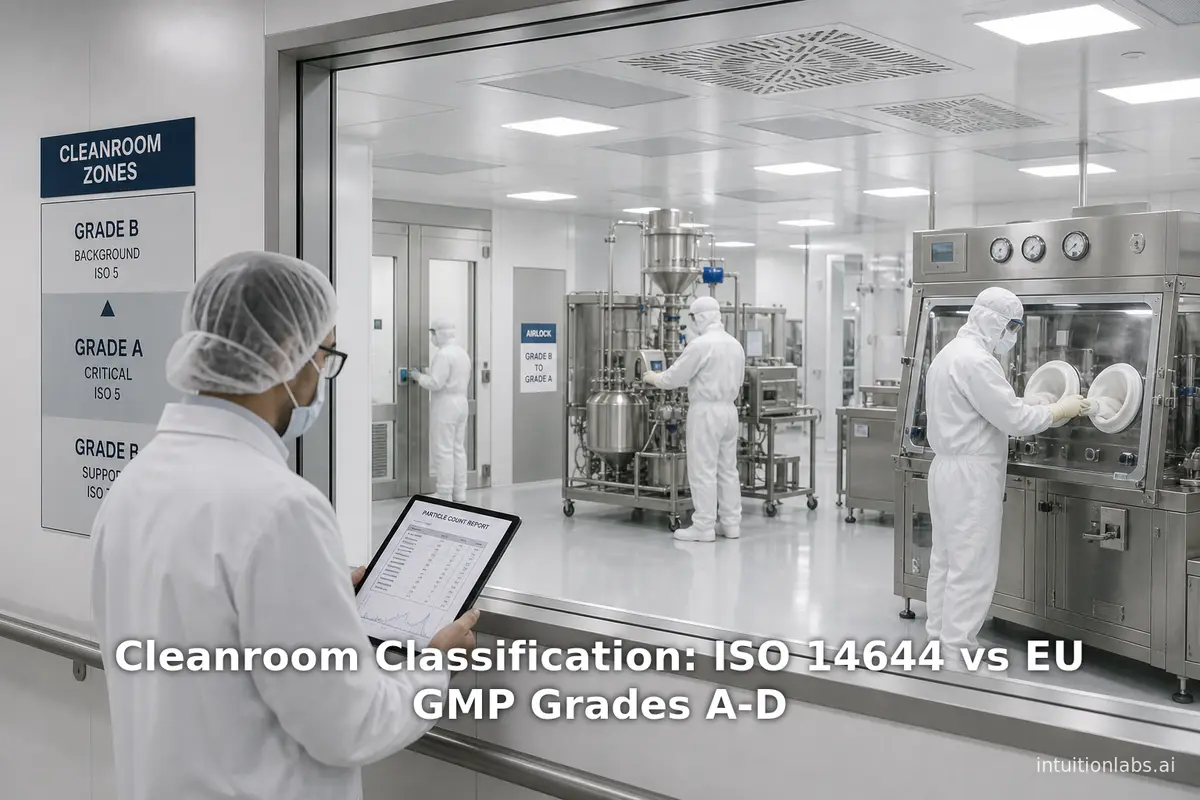
Cleanroom Classification: ISO 14644 vs EU GMP Grades A-D
2026 analyst comparison of ISO 14644-1 cleanroom classes and EU GMP Annex 1 Grades A-D, covering particle limits, viable-monitoring CFU limits, requalification cadence, and four named FDA enforcement and industry cases.
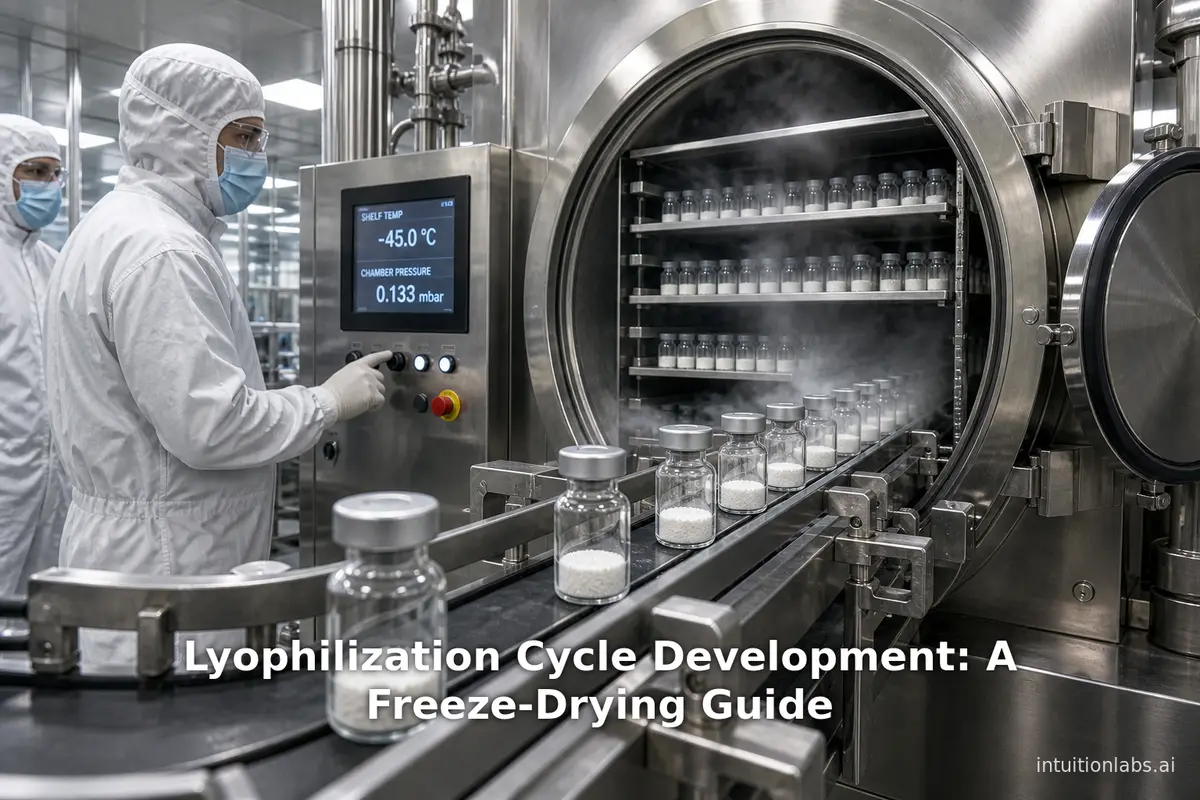
Lyophilization Cycle Development: A Freeze-Drying Guide
A 2026 analyst guide to lyophilization cycle development, covering primary and secondary drying, collapse temperature testing, cake defect troubleshooting, freeze dryer scale up, and FDA/ICH process validation requirements.