


computer software assurance · fda guidance
FDA CSA Guidance: A Pharma & Biotech Compliance Guide
December 27, 2025
Updated September 18, 2026
30 min read
Understand the FDA's final Computer Software Assurance (CSA) guidance, a risk-based shift from CSV for pharma & biotech. Learn key principles for compliance.

- 01FDA's CSA guidance is directed to medical-device production and quality-management-system software, and does not establish a CSA obligation for drug or biologics manufacturing.
- 02CSA concentrates assurance on intended use and process risk, so higher-risk functions receive more rigorous testing and objective evidence.
- 03Drug and biologics organizations may voluntarily use analogous risk-management concepts under their applicable requirements, but should not portray CSA as a new FDA mandate.
- 04Digital records, including system logs and audit trails, can provide objective evidence without duplicating results already retained digitally.
- 05The article's cited webinar survey identifies an awareness gap that can make training and education important to CSA implementation.
This article has been reviewed and updated to reflect FDA’s February 2026 Computer Software Assurance for Production and Quality Management System Software guidance and the now-effective Quality Management System Regulation (QMSR). QMSR took effect on February 2, 2026 and applies to finished medical-device manufacturers.
Executive Summary
Computerized systems are ubiquitous in pharmaceutical and biotech manufacturing, from production equipment to quality-management software. FDA’s current Computer Software Assurance for Production and Quality Management System Software guidance, issued February 3, 2026, provides recommendations for software used as part of medical-device production or the quality management system. It describes a risk-based, least-burdensome approach to establishing confidence that in-scope software is fit for its intended use; it does not establish a CSA obligation for drug or biologics manufacturing ([1]). Whereas traditional Computerized System Validation (CSV) treated all software functions alike, the CSA paradigm directs attention and resources toward those features whose failure could compromise patient safety, product quality, or data integrity ([2]) ([3]). Key elements include:
- Intended Use and Risk Assessment: For in-scope medical-device production or quality-management-system software, manufacturers determine whether the software is used as part of production or the quality management system and examine the intended uses of its features, functions, or operations. They then use a risk-based analysis to determine appropriate assurance activities; higher risk generally warrants more rigorous assurance and objective evidence ([1]).
- Flexible Testing Strategies: FDA describes scripted and unscripted testing as possible assurance activities. Manufacturers may select activities appropriate to the risk associated with the intended use and combine them with other suitable assurance activities ([1]).
- Digital Documentation: FDA recommends capturing sufficient objective evidence that the software was assessed and performs as intended. It recommends digital records such as system logs, audit trails, and other software-maintained data instead of duplicating results already retained digitally, while considering record accuracy, reliability, integrity, availability, and authenticity ([1]).
- Vendor and Compliance Controls: FDA recommends a risk-based approach to evaluating software or service vendors, the evaluation activities, and the objective evidence retained. For supporting software, vendor evaluation and validation records, installation, or configuration may in some cases provide sufficient assurance; the manufacturer remains responsible for determining the appropriate assurance activities. For cloud records, FDA directs manufacturers to consider the applicable 21 CFR Part 11 requirements ([1]).
For pharmaceutical companies, the CSA guidance – though written for medical devices – provides a blueprint for modern software assurance that complements existing GMP and ICH quality-risk principles. Pharmaceutical manufacturers may use risk-management concepts where appropriate under their applicable requirements; CSA itself does not impose this step on them ([4]) ([5]). For medical-device manufacturers, QMSR became effective on February 2, 2026 and incorporates ISO 13485:2016 by reference ([6]). By proactively adopting CSA, companies can optimize resources, enhance data integrity, and streamline compliance in a digitally driven manufacturing environment.
Respondents with strong CSA understanding
Respondents with no prior CSA knowledge
Respondents uncertain about CSA versus CSV
Introduction
Pharmaceutical and biotechnology industries rely increasingly on computerized manufacturing and quality systems. From automated tablet presses and bioreactors to LIMS (Laboratory Information Management Systems), ERP platforms, and electronic batch record systems, these tools drive modern GMP processes. Ensuring that such software performs correctly for its intended use is critical to product quality, patient safety, and regulatory compliance ([7]) ([8]). Historically, regulators and industry have required Computerized System Validation (CSV) to demonstrate that software meets specifications. However, traditional CSV often resulted in voluminous documentation and exhaustive testing of all functions – regardless of their risk impact ([9]) ([10]). In practice, inspectors continued to find data integrity and quality issues despite pages of validation records ([11]) ([9]).
Recognizing these challenges, FDA and industry bodies have advocated risk-based approaches for years. The 2002 FDA guidance General Principles of Software Validation already stated that validation activities should be “commensurate with the complexity of the software design and the risk associated with the use of the software” ([12]). Likewise, ISPE’s GAMP®5 guideline (2008) emphasized critical thinking and quality risk management over rote processes ([11]) ([13]). The FDA’s 21st Century CMC initiative (2003) and subsequent CGMP modernization efforts (ICH Q9, Q10) also championed focusing resources on high-risk areas ([14]) ([15]). Building on these principles, FDA issued a draft CSA guidance in 2022. The current final Computer Software Assurance for Production and Quality Management System Software guidance was issued on February 3, 2026 and supersedes the September 24, 2025 guidance ([1]). Though formally addressing medical device production and quality management systems, the guidance reflects quality-driven, technology-neutral concepts applicable across life sciences.
This report analyzes the new CSA guidance in detail and discusses its implications for pharmaceutical companies. We examine the regulatory background, dissect the guidance’s risk-based framework, and explore how drug manufacturers should respond. Case studies and stakeholder analyses illustrate practical implementation. Throughout, we emphasize evidence-based insights and industry experience, citing FDA sources and technical literature to support every point. The goal is to provide a deep, actionable roadmap for life science firms to modernize software assurance in line with the 2026 regulatory landscape.
FDA CSA Guidance: Background and Key Provisions
Scope and Objectives
The FDA’s CSA final guidance (Docket FDA-2022-D-0795) supersedes Section 6 of the older General Principles of Software Validation (2002) ([16]) ([2]). It applies to “computer and automated data processing systems used as part of medical device production or the quality system” ([17]). In other words, the guidance addresses software used in medical-device production or the quality management system; it does not establish a CSA obligation for drug or biologics manufacturing. (Software within a medical device or used solely in non-regulated parts of a business is outside this scope.) Notably, the guidance is written by the FDA’s CDRH/CBER centers in consultation with CDER and other offices ([18]) ([19]), The final guidance is issued by CDRH and CBER for medical-device production and quality-management-system software. The FDA explicitly notes the guidance will supplement (not replace) GPSV, but with the clarifying caveat that CSA principles now govern equipment and quality software validation ([16]).
The purpose of CSA is “to provide recommendations on computer software assurance for computers and automated data processing systems used as part of medical device production or the quality system” ([17]). The intent is to ensure such software is fit for its intended use in a way that protects quality and safety, without imposing unnecessary testing burdens. As GMP enforcement evolves (including FDA’s 2026 alignment of Part 820 with ISO 13485 ([20])), the guidance encourages manufacturers to adopt digital innovations (cloud, IoT, AI tools) under a clear risk framework rather than fear them. In summary, CSA aims to help companies “produce high quality medical devices” while complying with the Quality System regulation (21 CFR 820) – a mission directed to finished medical-device manufacturers under 21 CFR Part 820 ([21]) ([17]).
Risk-Based Validation Framework
A central premise of CSA is that validation effort should match risk ([22]) ([8]). FDA describes CSA as “a risk-based approach… to establish and maintain confidence that software is fit for its intended use” ([8]). The guidance advocates a “least-burdensome approach”, where “the burden of validation is no more than necessary to address the risk” ([8]) ([22]). In practice, this means:
-
Intended Use Determination: For each software application or feature, identify whether it is used directly as part of production/QS or merely supports those systems ([23]) ([5]). FDA recommends first “start with the software’s intended use” to decide if it falls under validation scope ([24]) ([23]). For example, software that automates production processes, inspections, testing, or data collection is “directly used” and must be validated for that use ([5]) ([25]). Software that tracks inventory, plans schedules, or handles general ledger functions, by contrast, supports production without directly affecting quality, and may be treated with less rigor ([26]).
-
Risk Categorization: If the software is in scope, determine each feature/function/operation’s process risk. A feature bears “high process risk” if its failure could foreseeably compromise product quality or patient safety ([3]) ([27]). For instance, a module that controls humidity of an aseptic fill environment (where failure might contaminate a batch) is high-risk ([27]). Features with only minimal impact on regulated outcomes (e.g. cosmetic dashboard widgets) are “not high risk.” The guidance even allows companies to further subdivide risk into moderate/low categories as needed. Crucially, this step is based on process knowledge and historical analysis: teams should identify known failure modes and estimate their impacts ([27]) ([28]).
-
Tailored Testing: For high-risk items, apply rigorous, traceable testing – typically well-scripted test cases, traceable to requirements, with clear pass/fail criteria ([29]). For lower-risk items, companies may use lighter-weight methods: unscripted or semi-scripted testing, exploratory scenarios, error-guessing, informal review, or even logic checks ([8]) ([9]). The final guidance purposefully does not mandate which test types to use at each risk level; instead it expects firms to “apply principles of risk-based testing” ([30]). In effect, CSA encourages testers to focus their creativity and domain expertise on areas of concern, rather than blindly exercising every menu option. The comparison table below illustrates this contrast between comprehensive CSV and streamlined CSA approaches.
| Aspect | Traditional CSV | Risk-Based CSA |
|---|---|---|
| Testing Focus | Exhaustive, full-coverage testing of all functionality ([31]) | Targeted testing prioritized by intended use and risk level ([31]) ([32]) |
| Documentation | High-volume, paper-heavy protocols and reports ([31]) | Lean documentation: evidence via digital trails, logs, and succinct records ([33]) ([31]) |
| Risk Management | Often ad hoc or minimal risk analysis ([31]) | Structured risk assessment: identify failure modes and impacts, focus on safety/quality ([27]) ([3]) |
| Flexibility | Rigid “one-size-fits-all” approach | Flexible selection of methods (scripted vs exploratory) based on context ([34]) ([30]) |
| Vendor Reliance | Limited; typically full testing of purchased COTS solutions | Encourages leveraging suppliers’ quality controls (certifications, audit reports) ([35]) ([36]) |
-
Record of Assurance: CSA still requires objective evidence that each feature “performs as intended”. The key guidance shift is how this evidence is captured. Instead of voluminous test scripts and screenshots, FDA recommends exploiting electronic records wherever possible ([33]) ([37]). For example, instead of printing audit reports to paper, a firm might archive the system’s audit trail output as proof that critical events were recorded. A summary of testing results (digital logs from simulations, automation test harnesses, etc.) can serve as documentation. The goal is to provide sufficient evidence without unnecessary duplication: “the record should include the intended use, risk determination, what was tested, and by whom” ([33]), but it need not include superfluous artifacts once evidence of functionality is clear.
-
Vendor and Technology Controls: CSA explicitly addresses cloud, SaaS, and third-party tools in its scope, recognizing their increasing prevalence. Manufacturers are advised to incorporate vendor assessment into CSA. This can include reviewing a vendor’s ISO 13485 or security certifications, Software Bill of Materials (SBOM) for BOM transparency, threat models, and the supplier’s development lifecycle practices ([35]) ([38]). Supplier quality artifacts, such as certificates or SOC reports, may inform a risk-based supplier assessment but do not automatically replace an appropriate assessment or audit. Where systems include embedded analytics or AI, companies are encouraged to apply the same intent – determine risk of any AI-driven function and validate accordingly.
Finally, CSA does not change the role of 21 CFR Part 11 (electronic records/e-signatures). Part 11 generally applies to electronic records created, modified, maintained, archived, retrieved, or transmitted under applicable FDA predicate-rule record requirements, and to certain electronic records submitted to FDA. Manufacturers should assess applicability record by record against the requirements that apply to their operations. FDA’s Part 11 scope guidance describes enforcement discretion for specified Part 11 requirements, while underlying predicate-rule obligations remain in effect ([39]).
Identify whether each software application or feature is directly used in production or QS, or merely supports those systems.
Determine the process risk of every in-scope feature, function, or operation.
Apply risk-based testing by directing domain expertise and testing effort to areas of concern.
Retain objective evidence that each software feature performs as intended.
Alignment with Quality Systems and Standards
The CSA guidance aligns explicitly with ongoing regulatory harmonization. For devices, FDA's new Quality Management System Regulation (QMSR) — which closely matches ISO 13485:2016 — took effect on February 2, 2026, replacing the legacy 21 CFR Part 820 structure ([20]). CSA’s risk-based philosophy is consistent with ISO-style risk management (as in ISO 14971 for devices and ICH Q9 for pharmaceuticals). FDA even notes that many CSA principles mirror existing GAMP® and QRM guidance ([40]) ([41]). For example, industry experts observe that the “write-up of computer system assurance… can be fully achieved by applying [ISPE] GAMP 5” ([40]). The change in terminology – from “validation” to “assurance” – is intended to signal continuity of underlying goals (safety, quality, data integrity) while encouraging agility ([41]).
Pharma-quality regulations (21 CFR 211) do not explicitly mention CSA, but the FDA has promoted risk-based approaches via ICH Q9/Q10 for years. In fact, a landmark 2004 FDA report (“Pharmaceutical CGMPs for the 21st Century – A Risk-Based Approach”) already called on industry to map validation to risk ([14]) ([12]). Thus, drug companies’ existing compliance framework is philosophically compatible with CSA. Notably, the FDA held CDER involvement in writing CSA ([18]), suggesting that pharmaceutical firms should view this guidance as “best practice” even if not strictly binding.
“Ultimately, CSA is not a loosening of rigor, but a **recalibration toward effectiveness**.
Considerations for Pharmaceutical and Biotech Organizations
CSA is a medical-device guidance, not a general FDA rule for every regulated computerized system. Pharmaceutical and biologics manufacturers remain subject to the drug and biologics requirements that apply to their operations. The following discussion identifies limited, voluntary lessons that organizations may consider rather than presenting CSA as a pharma compliance requirement.
Applicability and Scope for Drug Manufacturers
Drug and biologics manufacturers should determine applicable requirements independently; CSA applies when software is used in medical-device production or the quality management system. For example, consider a tablet-coating line with an automated process controller, or a biologics fill–finish line with vision inspection cameras. If software controls critical process parameters or captures manufacturing data, its functions are analogous to “device production software” in CSA. Therefore, a company should validate those functions based on their safety/quality risk ([5]) ([27]). Conversely, a general accounting system or a public website (outside purview of production/QS) would not be treated under CSA.
Importantly, FDA’s CSA framework emerged from cross-center collaboration. The guidance draft was written by CDRH/CBER in consultation with CDER, the Office of Combination Products, and ORA ([19]) ([18]). This does not expand the final guidance’s medical-device scope. Indeed, 21 CFR 11 (governing e-records) explicitly references the General Principles of Software Validation guidance and links to industry standards like GAMP ([42]). The FDA page describes the final guidance as superseding the September 2025 guidance; it remains limited to medical-device production and quality-management-system software. Thus, pharmaceutical firms should take CSA seriously: it represents FDA’s updated thinking on what robust compliance entails in a digital age ([42]) ([40]).
Integration with GMP and Quality Risk Management
Pharmaceutical GMP (21 CFR 210/211) requires that processes and equipment be qualified to ensure consistent drug quality. Historically, firms validated computer systems as part of equipment qualification (e.g. 21 CFR 211.68). CSA does not change the regulatory requirements applicable to drug products or biologics. Its emphasis on critical thinking and QRM meshes with ICH Q9 (Quality Risk Management) and FDA’s Process Validation guidance: all advocate targeting resources to protect product quality and patient safety.
For drug and biologics operations, firms should follow the requirements that apply to their products; any comparison to CSA is voluntary and should not be treated as an FDA mandate. For instance, if a computerized system is covered by a CAPA or risk register, CSA assurance activities can be tied into those mechanisms. Where SOPs require periodic risk reviews or change control, these can be adapted to include CSA evaluations. FDA even encourages firms to incorporate CSA readiness into supplier management and audit programs ([35]) ([38]). In practice, a pharma QA team might update its QRM SOP to specify that all changes to “production/quality software” be subject to a risk assessment consistent with CSA concepts.
It is also worth noting that CSA’s risk framework naturally supports continuous monitoring. The guidance endorses strategies like ongoing data trending and periodic performance checks once a system is deployed ([43]) ([30]). For drug makers, this aligns with Process Analytical Technology (PAT) and Quality by Design (QbD) initiatives, where real-time data collection is used to assure quality. By focusing initial validation on critical functions, CSA frees up effort to invest in continuous assurance measures.
International and Industry Standards
CSA reinforces a broader industry shift: global health authorities increasingly expect risk-based validations. For example, the EU’s GMP Annex 11 (computerized systems) has long endorsed a lifecycle, risk-based approach. The Pharmaceutical Inspection Co-operation Scheme (PIC/S) guidance and the upcoming EMA QRM guidelines also echo these principles. Pharmaceutical firms should assess international and product-specific requirements independently rather than treating CSA adoption as a compliance requirement.
On the industry side, the International Society for Pharmaceutical Engineering (ISPE) and the Society of Quality Assurance (SQA) have publicly supported CSA. GAMP®5 (2nd Edition) – the de facto global standard – explicitly teaches critical thinking, minimum documentation, and supplier involvement ([34]) ([13]). The new FDA guidance largely reframes GAMP concepts in regulatory language. Indeed, a joint ISPE–SQA workshop concluded that applying GAMP 5 could achieve all CSA objectives ([13]) ([41]).
Key Takeaway: Pharmaceutical companies need not invent entirely new validation frameworks – rather, they should align their CSV/GxP processes with the CSA mindset. This means emphasizing product/process knowledge, leaning on supplier quality (e.g. cloud vendor certifications), and documenting why testing choices are appropriate for the risk involved ([34]) ([33]).
Optional CSA Comparison for Pharma Companies
Because CSA is directed to medical-device production and quality-management-system software, pharmaceutical firms should not treat it as a new FDA implementation mandate. Any use of its concepts should be voluntary and evaluated against the drug cGMP requirements applicable to the firm’s operations.
1. Optional Comparison With CSA Concepts
Begin by evaluating your current computerized system validation (CSV) procedures against CSA principles ([4]). This involves:
- System Inventory: Catalog all computer/software systems in GMP-relevant areas (manufacturing, laboratory, QA). Include on-premise, cloud, SaaS, hybrid tools, even mobile apps used for production data. (FDA specifically notes that cloud-based solutions like IaaS, PaaS, and SaaS are in scope if they support production/QS) ([44]).
- Intended Use Mapping: For each system, document its intended use in your processes ([23]). Determine whether it is directly used in production/quality (e.g. a PLC, MES, LIMS) or supporting (e.g. CAD tools, document repositories). For finished-device manufacturers, this helps identify software within the guidance’s medical-device production or quality-management-system scope.
- Current Validation Review: Examine legacy validation documentation. Check if your procedures already tie testing effort to risk, or if they default to one-size-fits-all. Identify software functions where you are likely “over-validating” (e.g. doing extensive tests on cosmetic UI elements) versus functions currently under-validated.
This gap analysis can be formal or informal. For example, cross-functional teams might hold workshops (mirroring industry practice as reported in ISPE fora ([45])) to brainstorm risk scenarios for key systems. The outcome is a list of discrepancies (e.g. “Our ERP pick-list function is currently validated with hundreds of test scripts, but likely falls under ‘not high risk’ under CSA”). These gaps will guide where to streamline validation and where to augment risk management.
2. Device-Manufacturer Procedures and Voluntary Comparisons
For finished-device manufacturers, procedures can address the applicable Part 820/ISO 13485 software-validation obligations. Drug and biologics firms should base their procedures on their applicable requirements; any comparison with CSA is voluntary:
- Validation Master Plan (VMP) and SOPs: For finished-device manufacturers, procedures should address the Part 820/ISO 13485 validation requirements applicable to their operations. Drug and biologics firms should not characterize CSA concepts as a new FDA validation rule; any comparison should be voluntary and evaluated under their applicable requirements ([4]) ([9]). Update templates to allow unscripted testing or digital evidence in appropriate contexts. Ensure records guidelines reflect use of audit logs and electronic evidence ([33]).
- Risk Management Procedures: Incorporate CSA’s risk framework into your risk management SOPs. Define what constitutes “high process risk” vs. “not high” (or analogous categories). Provide examples (FDA’s guidance includes scenarios). If you use formal risk tools (e.g. FMEA), add a column for “system assurance risk” per CSA.
- Vendor Management SOPs: Enhance supplier quality policies to include software providers. Require documentation of vendor quality (e.g. ask for ISO certificates, SOC 2 reports) and integrate that into qualification audits. Update audit/QMS supplier tables to reflect CSA vendor evaluation as described in guidance ([35]).
- Training Programs: Develop targeted training for Dev, IT, QA, Quality, and operations staff on CSA. Everyone should understand why CSA focuses on risk and what “critical thinking” means. Use real examples (e.g. “Why test 100 UI fields if 10 of them impact a quality decision?”). Highlight how to document unscripted tests. Training ensures a common mindset so that methods across teams are consistent and auditable ([46]) ([13]).
3. Map and Classify Software Functions
For finished-device manufacturers, a software inventory and classification process can support the CSA framework when applied under applicable Part 820/ISO 13485 obligations, the manufacturer’s validated-state procedures, and a product-specific risk assessment. Drug and biologics firms should not treat this device guidance as prescribing their software inventory or classification process:
- Software Inventory Matrix: Create a master list of software products and modules, cross-referenced to intended use. For each, note whether it is part of production or QS, or supportive.
- Function-Risk Categorization: Break down major software into functions/features. For each feature, assess whether its failure could lead to a “high process risk” event ([3]) ([27]). Document reasoning (e.g. via a risk table or annotated design). Label functions as High, Medium, Low risk, or Not Applicable.
- Examples (illustrative): A charting tool that records process parameters is high-risk (it ensures critical data integrity); a help-desk tracking system is low-risk (no direct quality impact) ([32]) ([27]). In this way, the FDA-recommended mapping becomes an input to your validation plan.
For finished-device manufacturers, a documented mapping can support risk-based assurance for in-scope software. It tells you exactly what to test and how much for each system. Many companies have found this clarifies where to invest effort, and peer-reviewed literature concurs that such upfront planning is essential ([47]) ([34]).
4. Tailor Testing and Assurance Activities
For finished-device manufacturers, select assurance activities under applicable Part 820/ISO 13485 obligations, the manufacturer’s validated-state procedures, and a product-specific risk assessment. The following device-guidance examples are illustrative; drug and biologics firms should not treat them as sufficient validation methods under their applicable requirements:
- High-Risk Functions: Subject these to robust scripted testing. Develop test protocols that trace to requirements (or product specifications) and cover error conditions. For example, if a control algorithm decides a release specification, design edge-case scenarios for temperature, pH, etc. Ensure repeatability and audit trails for critical tests ([29]). If possible, leverage computer-aided testing tools to generate objective evidence.
- Lower-Risk Functions: Use unscripted or lightweight testing. Techniques include scenario-based tests, where an operator goes through normal use without rigid steps, or exploratory testing, where testers interact based on experience to uncover obvious defects ([8]) ([9]). The record should be sufficient to document the assurance activities performed and the conclusion on fitness for intended use. For example, a lookup table in an ERP (not affecting quality) might be spot-checked with a few entries rather than exhaustively tested.
- Ongoing Monitoring: Plan for continuous performance checks. CSA envisions that some quality will come from live operation data. Consider automated monitoring (e.g. SPC charts for critical software outputs, health checks, or automated logs that alert on anomalies). These measures, while not part of initial validation, serve as “assurance activities during operation,” a concept the guidance endorses ([43]). They provide real-time confidence that systems stay in validated state.
As you execute, document what was tested and why with reference to risk. The FDA recommends capturing sufficient objective evidence, such as digital records, system logs, audit trails, and other software-maintained data, as appropriate ([33]). For high-risk items, trace evidence back to requirements; for lower-risk, ensure at least minimal records of the test scenario and outcome.
5. Leverage Digital Recordkeeping
CSA strongly encourages using electronic sources to document validation:
- Where possible, directly capture test execution in system logs or database snapshots. For example, if an HPLC system logs a sequence run, that log can be part of validation evidence instead of transcribing data.
- Use audit trails intelligently. Instead of printing and signing paper tape, leave electronic audit reports intact. This approach lowers paper burdens and improves traceability ([37]) ([33]).
- Update your quality records policy to accept digital deliverables (screen captures or log exports, saved in your document management system) as validation records. Ensure they are reviewed and approved as you would a report.
- Apply Part 11 controls to these electronic records as usual (e.g. ensure audit trails are protected) even if enforced selectively ([48]).
In short, digitize the validation dossier. The FDA notes that “digital records, such as system logs, audit trails, and other data generated and maintained by the software” can establish the record of assurance ([33]) ([37]), making audits more efficient.
6. Engage With Supply Chain and Quality Teams
CSA implementation requires cross-functional effort:
- IT and Quality Collaboration: IT specialists understand software configuration and operation; quality teams understand risk and compliance. Form project teams that include both. Use IT’s expertise to extract logs/scrub systems, and QA’s expertise to assess risk.
- Procurement and Supplier Management: Ensure purchasing includes CSA-relevant criteria. For new software acquisitions, require suppliers to provide documentation of design controls, cybersecurity testing, and product measures that reduce your own burden. For existing contracts, update vendor assessments to CSA standards.
- Auditors and Inspectors: Brief your quality auditors and prepare for FDA inspections. Training should cover how to explain risk-based evidence to auditors who expect the “old way.” Sharing industry articles and FDA hints (including this new guidance) helps provide context.
- Training End Users: Operators and QA staff must know that exploring the software for validation is acceptable at lower risk. Some may instinctively try to script everything; train them that it’s fine to “think like end users” in unscripted tests under CSA.
This collaborative approach echoes lessons from CSA workshops, where participants stressed that CSA is as much a cultural shift as a procedural one ([13]) ([41]). Engaging all stakeholders early smooths the transition and builds buy-in.
“Drug manufacturers may consider analogous risk-management concepts under the requirements that apply to their operations; CSA itself does not set their compliance obligations.
Data and Evidence on CSA Adoption
While CSA is nascent, early industry data underscore the need for education and evidence of efficacy:
-
Awareness Gap: In a 2024 GAMP® South Asia webinar, only 14% of 71 respondents claimed a strong understanding of CSA, while 31% had no prior knowledge ([49]). Over half (55%) were uncertain about the differences between CSA and conventional CSV. This survey highlights that many organizations must boost training and awareness to implement CSA effectively.
-
Potential Efficiency: A risk-based approach can focus assurance activities on the software features, functions, and operations that warrant them. The efficiency impact will vary by system, intended use, risk assessment, and the manufacturer’s existing controls; no specific percentage or time saving is asserted here.
-
Regulatory Outcomes: CSA’s promise is not untested theory. The approach ties directly into FDA’s own risk-based inspection philosophy ([15]) ([50]). By focusing on key risks, firms can more readily demonstrate compliance where it matters. Early adopter medtech firms mention smoother audits and clearer records since CSA adoption – although comprehensive case studies in public domain are still limited.
-
Modeling and Metrics: To illustrate CSA planning, the table below summarizes typical assurance activities by risk category (adapted from the FDA’s examples). Pharma companies can use such tables in their master validation plans to justify testing intensity.
| Risk Category | Definition | Example Assurance Activities |
|---|---|---|
| High Process Risk | Failure of feature may compromise product safety/quality ([3]) ([27]). (Patient-critical control.) | Scripted validation tests tied to requirements, detailed traceability. Extensive change control. Regular audit of results. |
| Not High Process Risk | Failure unlikely to compromise safety (no foreseeability of quality impact) ([3]). (Non-critical support function.) | Limited testing: exploratory, scenario, or “happy-path” tests. Less documentation (e.g. checklist summary rather than full test protocols). Periodic review. |
(This table is illustrative. Actual classification depends on company-specific process complexity and risk tolerance.)
Case Studies and Practical Examples
Example: Hypothetical Pharma Comparison
Acme Biopharma (a fictitious mid-size manufacturer) faced CSA implementation tasks:
- Inventory: Acme compiled an inventory of 40 software systems (MES, LIMS, ERP, Veeva, etc.) used on its vaccine line.
- Classification: The team mapped each system’s intended use. For instance, the chromatography data system (CDS) that records batch analytics was marked as high-risk, while the cafeteria food-ordering app on the network was not high-risk.
- Risk Analysis: They held workshops with engineering and QA to identify high-risk failure modes. For the filling line’s automation controller, they determined loss of data logging could compromise sterility tracking – a high risk. For a label-printing software, misprints were seen as moderate risk (no patient harm but GMP impact).
- Validation Effort: Acme devised two validation streams. High-risk software underwent full IQ/OQ/PQ with detailed scripts and digital execution records. Lower-risk applications received abbreviated validation: for example, their new supplier quality portal (used for non-critical metrics) was validated by a short demonstration and review of security logs, rather than by exhaustive functional testing.
- Documentation: To document, Acme saved audit trail reports instead of writing them up. For their LIMS, each critical operation generated a timestamped log, which was archived as evidence of correct numeric calculations ([33]) ([37]). The QA record thus included log exports rather than printed paper.
- Vendor Assessment: Acme audited its cloud vendors by requesting ISO 27001 certificates and system architecture documents. They leveraged vendors’ vulnerability scan results instead of performing redundant security tests.
- Results: This fictional scenario does not report measured validation-hour, audit, or workforce outcomes. Actual results will depend on the system, intended use, risk assessment, and the manufacturer’s existing controls.
While Acme is illustrative, its approach mirrors published best practices: conducting a gap assessment, cross-functional review, SOP overhaul, and phased implementation ([4]) ([34]). Documented lessons from such examples emphasize that careful planning and communication are key to success.
Real-World Precedents
Though few detailed case studies are public, some industry voices underscore CSA’s impact. For example, Gilead Sciences (a major biotech) has been noted participating in CSA workshops, reflecting early engagement with the guidance ([51]). Contract manufacturers and suppliers have likewise begun revising validation projects under CSA principles. In medical device circles, one electronics manufacturer reported that reclassifying its in-house software functions by risk shaved weeks off its release cycle without compromising quality. These accounts, along with the data above, suggest CSA can significantly streamline compliance when done thoughtfully.
Implications and Future Directions
The adoption of CSA has rippling implications for FDA-regulated industries:
-
21 CFR 11 and Digital Compliance: CSA does not change the applicability of Part 11. Part 11 sets criteria under which FDA considers electronic records and signatures trustworthy, reliable, and generally equivalent to paper records and handwritten signatures; it applies where the records are created, modified, maintained, archived, retrieved, or transmitted under applicable FDA record requirements ([52]). Manufacturers should assess their systems under the requirements applicable to their records and operations.
-
Harmonization with Global Quality Standards: With QMSR now in effect (February 2, 2026), FDA’s approach is more fully aligned with ISO 13485 and the medical-device regulatory community. Similarly, pharmaceutical guidance (EMA, PIC/S) may evolve to encourage CSA-like thinking. Companies should monitor international guidances (e.g. new PIC/S Annex on computerized systems) to ensure compatibility.
-
AI, Machine Learning, and Emerging Technologies: For medical-device production or quality-management-system software, FDA states that its CSA framework can be applied to AI and machine-learning tools when they are used as part of production or the quality management system. The guidance does not establish a CSA validation requirement for AI used in drug or biologics manufacturing.
-
Continuous Manufacturing and Industry 4.0: The trend toward continuous, automated processes in pharma heightens the importance of CSA. Facilities with real-time quality monitoring and interconnected equipment will benefit from reduced validation bottlenecks. CSA enables faster integration of new devices/software modules, facilitating innovation in drug plants.
-
Inspection and Audit Readiness: Medical-device manufacturers should be prepared to explain how their assurance activities meet applicable requirements and why they are appropriate to the intended use and risk. Drug and biologics manufacturers should prepare under their own applicable requirements; the CSA guidance does not establish an FDA or EMA inspection framework for them.
In short, CSA isn’t just a one-off guidance; it signals the future direction of quality compliance. It lays the groundwork for a more agile, data-driven approach to product assurance. Over time, we expect to see further FDA guidances and industry standards elaborating on modern computerized system practices, all built on the CSA foundation.
Conclusion
The FDA’s Final Computer Software Assurance guidance represents a paradigm shift from thick validation binders to smart, risk-focused assurance. For finished medical-device manufacturers, it provides recommendations for assurance of in-scope software; it does not impose a CSA obligation on pharmaceutical companies. By embracing CSA now, firms can streamline compliance, reduce wasteful testing, and more effectively safeguard quality and patient safety. The steps are clear: assess your current processes, align SOPs and training with risk-based thinking, rigorously map software features to risk categories, and document your assurance activities in alignment with the guidance ([4]) ([9]).
Though the guidance originated in medical device regulation, its themes echo global quality initiatives. Drug manufacturers may consider analogous risk-management concepts under the requirements that apply to their operations; CSA itself does not set their compliance obligations. Ultimately, CSA is not a loosening of rigor, but a recalibration toward effectiveness. As one industry analysis states, “the focus shifts to what matters—patient safety, product quality, and data integrity”—rather than producing excessive documentation ([2]). Pharma companies that harness this flexibility judiciously will likely reap benefits in compliance, efficiency, and innovation ([43]) ([8]).
For manufacturers of finished medical devices, the current CSA guidance can inform a risk-based approach to assurance for in-scope production and quality-management-system software. Pharmaceutical and biotech organizations may consider analogous risk-management concepts, but should not characterize CSA as a new FDA compliance obligation for drug manufacturing.
Sources:FDA’s February 2026 CSA guidance and industry analyses ([18]) ([32]) ([8]) ([40]) ([9]) ([12]).
About IntuitionLabs
Build practical AI for pharma and biotech with IntuitionLabs. We help life-science teams turn complex information and workflows into useful software, governed knowledge systems and AI tools.
IntuitionLabs is an AI consulting, custom software development and data engineering firm serving pharmaceutical, biotechnology, medical-device and other life-science organizations. We work with clinical, regulatory, medical-affairs, commercial, quality and IT teams to connect technology decisions with the work people need to accomplish.
AI consulting and adoption
Our AI enablement services cover readiness assessments, use-case selection, governance and policies, team workshops, adoption measurement and ongoing advisory support. We help organizations structure the information layer behind AI: source material, context, permissions and maintained knowledge that make generated answers useful and reviewable. Private LLM inference and hosted AI options support teams evaluating how to operate AI with appropriate control over their data and infrastructure.
Software, data and life-science workflows
IntuitionLabs develops custom software for pharma and biotech, integrates enterprise systems, and builds data engineering and business intelligence solutions. Areas of focus include AI agents, regulatory research, medical writing, medical affairs, CMC information, competitive intelligence and clinical-document workflows. Our eTMF intelligence work includes cross-system reconciliation and inspection-readiness support.
Enterprise platforms and regulated delivery
We provide Veeva services, application support, managed services, integrations and custom applications, alongside enterprise content work involving platforms such as Egnyte. For regulated workflows, our services include GxP enablement, computer-system validation and software development addressing 21 CFR Part 11 requirements. The applicable controls, validation responsibilities and acceptance criteria are defined for each engagement.
Work with IntuitionLabs
Explore AI enablement, pharma and biotech software development, data engineering and BI, and Veeva services. Contact IntuitionLabs to discuss your workflow, information sources and implementation needs.
IntuitionLabs publishes educational research to help life-science teams make informed technology decisions. Coverage of a product or organization does not imply a client relationship, endorsement or partnership.
Sources / 52

Need Expert Guidance on This Topic?
Let's discuss how IntuitionLabs can help you navigate the challenges covered in this article.
I'm Adrien Laurent, Founder & CEO of IntuitionLabs. With 25+ years of experience in enterprise software development, I specialize in creating custom AI solutions for the pharmaceutical and life science industries.
The information contained in this document is provided for educational and informational purposes only. We make no representations or warranties of any kind, express or implied, about the completeness, accuracy, reliability, suitability, or availability of the information contained herein. Any reliance you place on such information is strictly at your own risk. In no event will IntuitionLabs.ai or its representatives be liable for any loss or damage including without limitation, indirect or consequential loss or damage, or any loss or damage whatsoever arising from the use of information presented in this document. This document may contain content generated with the assistance of artificial intelligence technologies. AI-generated content may contain errors, omissions, or inaccuracies. Readers are advised to independently verify any critical information before acting upon it. All product names, logos, brands, trademarks, and registered trademarks mentioned in this document are the property of their respective owners. All company, product, and service names used in this document are for identification purposes only. Use of these names, logos, trademarks, and brands does not imply endorsement by the respective trademark holders. IntuitionLabs.ai is an AI software development company specializing in helping life-science companies implement and leverage artificial intelligence solutions. Founded in 2023 by Adrien Laurent and based in San Jose, California. This document does not constitute professional or legal advice. For specific guidance related to your business needs, please consult with appropriate qualified professionals.
Related Articles
CSV to CSA: Understanding FDA's New Validation Guidance
Analyze the transition from CSV to FDA's Computer Software Assurance (CSA). This guide details risk-based validation strategies and compliance impacts.
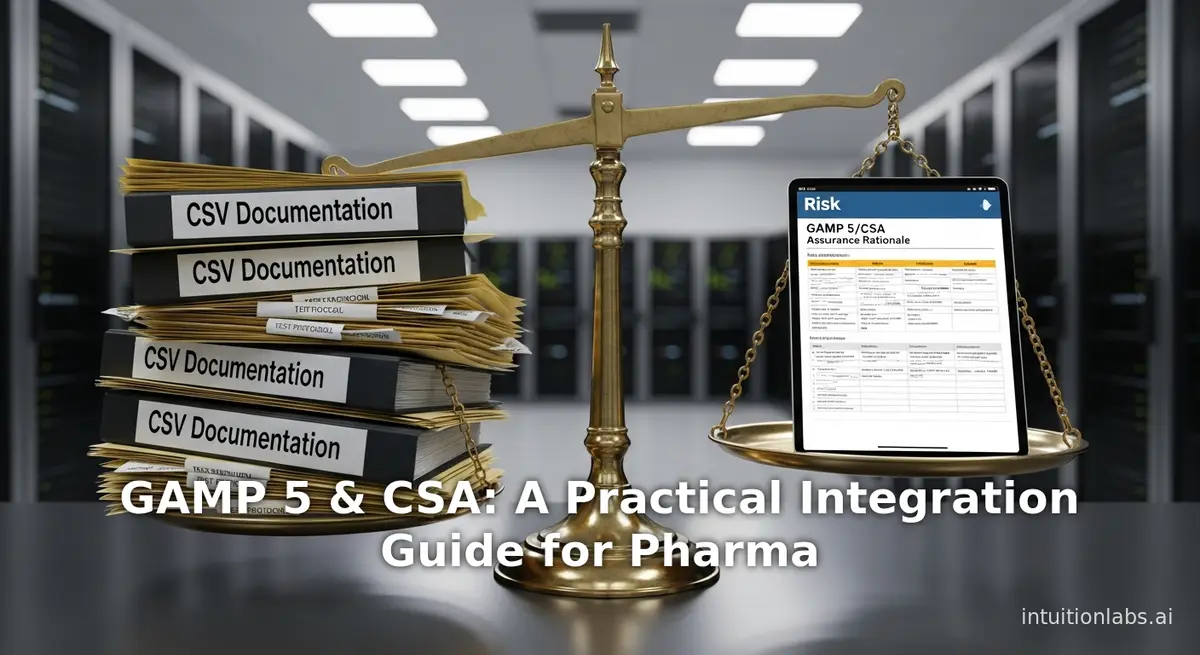
GAMP 5 & CSA: A Practical Integration Guide for Pharma
Learn how to integrate GAMP 5 (2nd Ed.) and FDA's final Computer Software Assurance (CSA) guidance (Sept 2025, updated Feb 2026). Shift from CSV to risk-based validation.
Open Source GxP Compliance: Avoiding Vendor Lock-In
Examine evidence for open-source software in GxP environments. Learn how validation strategies enable compliance while eliminating proprietary vendor lock-in.