


eu gmp annex 1 · sterile manufacturing
EU GMP Annex 1: Contamination Control Strategy Guide
April 21, 2026
Updated October 15, 2026
80 min read
Explore the updated EU GMP Annex 1 guidelines for sterile manufacturing. Learn how to implement a risk-based Contamination Control Strategy (CCS) for compliance

Executive Summary
Over the past two decades sterile pharmaceutical manufacturing has undergone a major evolution in regulatory expectations and industry practices. The cornerstone of this change is the updated EU GMP Annex 1 (Sterile Medicinal Products), finalized in August 2022 and in force by August 2023 ([1]). This revision represents a paradigm shift from prescriptive dispersion limits and terminal testing towards a fully holistic, risk-based contamination control strategy (CCS). Under Annex 1, manufacturers must implement a documented, facility‐wide CCS that identifies all potential contamination sources – microbial, particulate, chemical – and describes layered controls to prevent or eliminate them ([2]) ([3]). The regulation explicitly states “a Contamination Control Strategy (CCS) should be implemented across the facility in order to define all critical control points and assess the effectiveness of all the controls… employed to manage risks to medicinal product quality and safety” ([2]). This requirement, first introduced in the Annex 1 draft (2020), is reinforced in the final guideline, making contamination control a central pillar of sterile manufacturing.
Implementing an effective CCS is a complex, multidisciplinary effort spanning facility design, equipment, utilities, operations, personnel, and supply-chain controls. It is inherently tied to the principles of Quality Risk Management (ICH Q9) and a strong Pharmaceutical Quality System (ICH Q10). Broadly speaking, a robust CCS document (sometimes called an “implementation playbook”) must describe how the site prevents, detects, and reacts to contamination at every manufacturing stage. Key elements include: facility and process design, cleanroom controls, critical equipment and utilities (e.g. HVAC, WFI), raw materials and packaging, personnel practices (gowning, training), cleaning/disinfection, environmental monitoring, and investigation/CAPA procedures. Annex 1 itself enumerates at least 16 specific CCS elements (plant design, premises, personnel, utilities, raw materials, containers/closures, suppliers, outsourced activities, process risk management/validation, sterilization processes, maintenance, cleaning/disinfection, monitoring, trending/investigation, training, continuous improvement) that must be addressed ([4]) ([5]). In sum, the CCS acts as an overarching, living document integrating all these controls, continuously updated through trending and management review ([2]) ([5]).
This report delves deeply into the development and execution of a CCS. It begins by broadly defining contamination in pharmaceutical manufacture and reviewing the drivers behind the revised Annex 1. It then analyzes the various components of Annex 1’s CCS requirements, including the regulatory context (EU, PIC/S, and harmonized guidelines) and how they compare to other standards (e.g. FDA guidance). The report explores multiple frameworks for creating a CCS, such as the ECA Foundation’s “three-phase” approach ([6]), the “5M” (fishbone) method, and others. It provides detailed guidance on facility and equipment design, environmental control, raw material and supply chain management, personnel training and gowning, cleaning/disinfection programs, and advanced monitoring tools. Throughout, we present data-backed analysis (e.g. recall statistics, inspection observations, monitoring trends) and expert perspectives from industry (PDA, ISPE/ECA, PharmTech, CleanroomTech) illustrating effective contamination controls. Multiple real-world case examples – including recent recall and outbreak events – highlight the consequences of lapses and the impact of strong CCS implementation. Finally, the report discusses evolving technologies (rapid microbiology, closed systems, automation, digital EM) and future regulatory implications, and proposes a contamination control “playbook”: a step-by-step implementation plan synthesizing best practices and “lessons learned”.
Key conclusions: The updated Annex 1 makes CCS compliance mandatory. Companies must transition from siloed controls to an integrated, science-based framework where risk analysis drives all contamination prevention measures. This demands cultural change, interdepartmental teamwork, and leveraging quantitative data. When properly implemented, a CCS enhances sterility assurance and patient safety; failure to do so has led to costly recalls, inspection findings, and even patient harm. This report provides an exhaustive roadmap – with extensive citations – to guide industry through each dimension of the contamination control strategy, supporting compliance with Annex 1, which has applied in full since 25 August 2024 (the date to which one provision, point 8.123, was deferred).
Introduction and Background
Regulatory Context: EU GMP Annex 1 and Global Trends
EU GMP Annex 1 – the EU guideline on the Manufacture of Sterile Medicinal Products – has long been the foundational standard for sterile drug production in Europe. Revised several times before (its previous version dated from 2008), Annex 1 was significantly updated in 2022, reflecting advances in technology, quality culture, and learning from contamination incidents ([7]) ([1]). The revised Annex 1 was adopted by the European Commission in August 2022, published on 25 August 2022, and came into effect on 25 August 2023 (with one provision deferred to 2024) ([1]). This is the first major overhaul of Annex 1 since 2008 and aligns EU GMP with modern risk-based quality paradigms (principles of ICH Q8/Q9/Q10) and global standards. PIC/S (Pharmaceutical Inspection Co-operation Scheme) has also adopted similar provisions for CCS in its own Annex 1 revision, ensuring worldwide harmonization.
Importantly, the revised Annex 1 is no longer a simple technical appendix; it integrates deeply with quality management. In EU GMP’s EudraLex Volume 4, Annex 1 now explicitly calls for a contamination control strategy (CCS) as an integral part of the manufacturer’s pharmaceutical quality system (PQS). This reflects a shift from earlier focuses (cleanroom grades, media fills, sterility testing limits) to a proactive, holistic contamination prevention framework. The preamble of the new Annex states that sterile production is “a complex activity that requires specific controls and measures to ensure product quality”, and that the PQS must “minimize the risk of microbial, particulate and endotoxin/pyrogen contamination” ([8]). Notably, Annex 1 now explicitly mandates that “Processes, equipment, facilities and manufacturing activities should be managed in accordance with QRM principles” and that “A contamination control strategy should be implemented across the facility…” ([9]) ([2]), embedding quality risk management and life-cycle thinking at its core.
From a historical perspective, Annex 1’s evolution mirrors broader regulatory trends. The International Conference on Harmonization (ICH) had already established Q9 (Quality Risk Management) and Q10 (PQS) in 2005–2008, and regulatory agencies worldwide have gradually moved from “static” GMP-checklists toward dynamic, quality-by-design and risk-based oversight. In the US, for example, FDA’s guidance on aseptic processing has long emphasized contamination prevention (though without a formal “CCS” label).The EU’s 2022 Annex 1 formalizes what has been “good practice” into a binding requirement: rather than merely verifying end-product sterility, manufacturers must engineer contamination control into every step ([9]) ([10]).
This shift is motivated by real patient safety risks and recall incidents. Contaminated sterile products can cause infections, allergic reactions, or treatment failure – outcomes ranging from illness to death ([11]) ([12]). In fact, recent analyses show contamination as a leading cause of recalls. One survey noted that between 2012–2023 there were on average 330 annual drug recalls due to contamination, and by 2022 “sterility-related issues caused the highest number of recalls in five years” ([13]). Another review of FDA data (2012–2023) found that sterility issues were the most common recall cause, with 48% from failed sterility assurance and 45% from non-sterile products ([14]). Industry publications now regularly document major recent events, from bacterial meningitis outbreaks tied to contaminated injectable devices to recalls of IV bags and eyedrops ([12]) ([15]). These examples underscore that contamination control failures have real consequences, spurring regulators to demand systematic preventive programs.
Thus, the background to this report is twofold: (1) a regulatory imperative – Annex 1 now legally requires a comprehensive CCS, with deadlines passed (Aug 2023–2024) – and (2) an industry challenge – ensuring that harmful manufacturing contaminants (microbes, particulates, cross-contaminants) are effectively prevented in an increasingly complex production environment. The sections that follow dissect these requirements and describe proven strategies to meet them.
Defining Contamination in Sterile Manufacturing
In the pharmaceutical context, contamination means any undesirable extraneous matter that compromises product quality or safety. Annex 1 recognizes multiple contamination types: microbial, particulate, pyrogenic (endotoxin), and sometimes chemical or cross-product contaminants ([16]) ([17]). Microbial contamination – bacteria, fungi, viruses, mycoplasma – is the most widely cited risk, especially for sterile injectables, where even a single bacterium in a product batch can threaten a patient’s life ([16]) ([17]). For example, Gram-negative bacteria produce endotoxins that can cause severe reactions even after the organisms are killed. Particulate contamination (dust, fibers, glass, etc.) can occur from equipment wear or materials breakdown; while inert particles may not multiply, they can injure patients physically (e.g. embolisms) and indicate a loss of “integrity” in sterile controls ([16]). Chemical contamination or cross-contamination (e.g. carry-over of chemicals or small-molecule APIs between production campaigns) is also a concern, especially for products without terminal sterilization.
Importantly, contamination can originate from many sources. Personnel are generally the largest contributor: operators shed skin scales, droplets, and microbes, and can inadvertently touch critical surfaces. Equipment and furniture (if damaged or improperly designed) harbor debris or biofilms. HVAC and filtered air systems, if unqualified or poorly maintained, can bring in viable particles. Utilities like water (especially Water-for-Injection systems) can develop microbial loads. Raw materials and packaging components themselves may carry contaminants from suppliers. Even distribution or storage (beyond the factory) can introduce contaminants if not properly controlled. In surgical analogy, it has been said that
“Sterility is a key quality attribute for medicines required to be sterile. The consequences of non-sterility are direct patient harm… [including] disability or death” ([17]).
Because of the severity of consequences, modern sterile manufacturing places far more emphasis on preventing any contamination than on detecting it after the fact. As one expert notes, technological advances have revealed how many organisms cannot be seen or quickly cultured, meaning environmental monitoring and final sterility tests can provide a false sense of security ([18]). Thus:
“Prevention of contamination is more important than detection and removal; therefore, establishment of a contamination control strategy (CCS)… should be implemented to protect the product” ([10]).
A robust CCS is intended to be proactive and science-based: it must consider known contamination pathways, rely on risk analysis, and continuously verify that controls are effective ([19]) ([20]). In practice, this means shifting resources toward validated sanitization, operator training, gowning, and environmental controls – rather than relying solely on microbiological swabs or sterility testing, which, while necessary, have intrinsic limitations ([19]) ([21]).
Structure of This Report
This research report provides an exhaustive examination of Annex 1’s new requirements for contamination control strategy and practical guidance on how to implement them. After this introduction, Section 1 reviews the regulatory and historical context of sterile manufacturing standards (including comparisons to other regions). Section 2 defines contamination categories and risks in sterile production. Section 3 deeply analyzes the Annex 1 content on CCS – quoting definitions and required elements from the regulation ([2]) ([4]).
In Sections 4–8, we cover each major aspect of implementation:
- Quality Risk Management & Quality Systems: Building the CCS as part of an integrated PQS (incorporating ICH Q9/Q10 principles); risk analysis tools (5M fishbone, FMEA); organizational roles.
- Facility and Process Design: Cleanroom layout, airflow, isolator/RABS choice, material flow and segregation, equipment design features.
- Personnel and Operations: Gowning protocols, operator training and qualification, habits to minimize contamination risk, peer observation.
- Environmental Monitoring and Cleaning: EM program design (locations, frequencies, recovery vs. operational states), data trending and action limits; cleaning/disinfection routines, disinfectant selection and qualification.
- Materials and Utilities: Input control for raw materials and components, NOT UTILITIES (compressed air, water); vendor audits; airlocks and pass-throughs.
- Process and Sterilization Controls: Aseptic process simulations, sterilizer validations, media fills, container closure integrity.
- Continuous Improvement and CAPA: Trending, deviation management, CAPA strategies, periodic CCS review in management review, updated risk assessments.
Section 9 integrates these elements into a step-by-step implementation “playbook”, summarizing best practices, checklists, and data-driven actions. We also present tables to synthesize complex information. Throughout, detailed case examples (from literature, regulatory reports, and outbreak investigations) show what can happen when contamination controls fail – and what effective CCS measures look like in real facilities. Section 10 discusses implications and future directions, including new digital/automated technologies for contamination control, anticipated regulatory evolutions, and long-term trends. The report concludes with a consolidated set of recommendations.
Every claim is substantiated with citations to regulatory texts, industry white papers, academic studies, and news reports. Readers are guided from historical background to granular detail, equipping them with the knowledge to design, document, and operate a world-class contamination control strategy in compliance with EU Annex 1 and beyond.
1. Regulatory Background for Contamination Control
1.1 Evolution of EU GMP Annex 1
Annex 1 of the EU GMP guidelines (“Manufacture of Sterile Medicinal Products”) has historically codified the expectations for aseptic processing and sterile production. The 2007–2008 version (prior to the revision) provided guidance on cleanroom classification (Grades A–D), aseptic techniques (media fills, particulate limits), and prescriptive requirements for isolators and RABS. However, it lacked an explicit, comprehensive requirement for an overarching contamination control strategy. Instead, contamination prevention was implied through separate chapters (e.g. General Principle 1, chapters on premises/equipment) and through requirements like “products should only be released after satisfaction of all quality criteria” (implying culture-based sterility tests).
Starting in 2017, Annex 1 was under revision by European regulators (the Joint EU-PIC/S GMP Inspection Working Group). A key agenda item was the incorporation of a formal CCS requirement, following recommendations from industry groups and regulators that risk-based holistic control of contamination should be enshrined in GMP. Draft versions (e.g. Version 12, 2020) explicitly introduced CCS terminology and detailed elements for it ([2]) ([22]). After consultation, the final revised Annex 1 (2022) instituted CCS fully. Notably:
-
Section 2.3 of Annex 1 define CCS obligation: “A contamination control strategy (CCS) should be implemented across the facility... to define all critical control points and assess the effectiveness of all the controls…the combined strategy of the CCS should establish robust assurance of contamination prevention... [and] be actively reviewed and updated... [with] continuous improvement... and periodic management review” ([2]). This requirement is unambiguous: a documented, multi-layer strategy is mandatory for every sterile site.
-
Section 2.5 then details elements to consider in a CCS, listing i (Design of plant and processes) through xvi (Continuous improvement) ([4]) ([5]). These correspond closely to what pharmaceutical quality professionals call the “5 Ms” (Man, Machine, Materials, Methods, Milieu) plus leadership and system-level practices. Importantly, Annex 1 specifies that even existing control systems (e.g. validated HVAC, cleaning programs) should be referenced in the CCS, ensuring coherence ([23]).
-
Section 3 – Pharmaceutical Quality System (PQS) – emphasizes that sterile manufacturing must incorporate robust risk management “with the aim to minimize microbial contamination” ([8]). It also stresses ongoing management knowledge and expertise, root cause analysis, and integration of risk management into all lifecycle stages.
The Annex 1 definitions complement these requirements. For example, Annex 1 explicitly defines a CCS as “a planned set of controls for microorganisms, endotoxin/pyrogen and particles, derived from current product and process understanding that assures process performance and product quality” ([3]). This mirrors ICH Q8/Q9 concepts that controls should be science-based and understood in context. Notably, the Annex states that sole reliance for sterility should not be placed on any terminal process or finished product test, and commentators point out that a sterility test on a small sample has very limited statistical power to detect low-level contamination ([21]). The message is clear: if a site cannot demonstrate control of contamination throughout its processes, passing a sterility test in a final sample is not enough.
Taken together, the Annex 1 revision embeds a quality-by-design philosophy for sterile production. Manufacturers must shift from reactive checking to proactive prevention, with explicit documentation of how every contamination route is controlled. The Annex also places importance on continual improvement – mandating that the CCS be a “living document” (driven by EM data, deviations, technological changes) and that the effectiveness of controls be periodically reviewed as part of management review ([2]) ([5]). In practice, this means a sterile facility must treat contamination control as an ongoing program, analogous to how pharmaceutical R&D treats process validation.
1.2 Global Harmonization and Comparison
While Annex 1 (EU/PIC/S) is at the forefront of CCS requirements, other global guidelines echo similar principles. The FDA’s 2004 guidance Sterile Drug Products Produced by Aseptic Processing — Current Good Manufacturing Practice emphasizes prevention but does not use the term “CCS”; instead it discusses aseptic system design, monitoring, and risk management in narrative form. ISO 14698 (cleanroom biocontamination control) likewise supports a structured approach to microbial control and trending. The WHO's GMP guidance for sterile pharmaceutical products, revised in 2022 (WHO Technical Report Series No. 1044, Annex 2), was developed alongside the EU/PIC/S revision and also calls for a contamination control strategy. Ultimately, the concept of a contamination control strategy aligns with the ICH Quality Q10 model, which envisaged a product lifecycle quality system encompassing risk-based controls.
Table 1 below compares key aspects of the revised Annex 1 to previous versions and other standards:
| Aspect | Pre-2022 Annex 1 / Other GMP* | Revised Annex 1 (2022) and Global Trends |
|---|---|---|
| Contamination Strategy | Implied in various parts; no single doc. | Explicit requirement for CCS document covering facility–wide contamination prevention ([2]) ([3]). |
| Risk Management | Encouraged generally (cGMP), ICH Q9 endorsed. | Integral: “managed in accordance with QRM principles” in sterile PQS ([8]); risk justifies controls ([9]) ([10]). |
| Facility Design | Cleanroom grades A–D specified; some segregation advised. | Expanded: emphasis on unidirectional flows, barrier isolation, validated clean utilities; see CCS element “Design” ([4]). |
| Environmental Monitoring | Grade-based microbial/particle limits; periodic swabbing. | Continual: “monitoring systems” explicitly part of CCS ([5]); trending, analysis driven by risk (Annex 1 prefers control over testing efficiency). |
| Personnel Controls | GMP covers training/gowning, but detail limited. | CCS must cover personnel & training (Annex key element) ([4]). Strict aseptic qualification and gown protocols (risk approaches) now emphasized. |
| Utilities (Air, WFI) | Requirements exist (HEPA, WFI purity). | Now explicitly part of CCS elements (utilities) ([4]); onus on holistic controls (e.g. preventing WFI bioburden in product-feed loops). |
| Raw Materials/Vendors | Quality controls on materials; suppliers qualification recommended. | CCS expanded to cover raw materials, containers, closures, vendor/outsourced activities ([4]). |
| Cleaning/Sanitization | Routine cleaning + sporicidal (some detail in Annex 1, Ch.5 prev.). | Now listed as CCS elements (cleaning/disinfection) ([5]) plus new emphasis on validation of cleaning programs. |
| Monitoring & CAPA | Annex had EM, but CAPA was generic GMP. | Annex requires “prevention mechanisms – trending, investigation, root cause, CAPA” as CCS element ([5]); i.e. trending = prevention. |
| Sterility/Test Reliance | Rely on terminal sterilization if possible; sterility test for aseptic. | Revised Annex stresses NOT to rely on sterility test alone ([21]); focus on life-cycle controls and high sterility assurance at source. |
| Continuous Update | GMP expected annual review of QS. | CCS must be revisited with new data, and outcomes feed back into PQS/management review ([2]) ([5]). |
*“Other GMP” here refers to the spirit of US FDA 21 CFR 211 and former Annex 1.
Sources: Annex 1 text ([2]) ([4]) ([5]); industry analyses ([22]) ([10]); QA guidelines (ICH Q9/Q10).
2. Understanding Contamination in Sterile Manufacturing
2.1 Types and Sources of Contamination
Microbial contamination is typically the highest priority in sterile manufacturing because living organisms can multiply and cause patient infections. Sources include human operators (skin, breath, gut flora), the ambient environment (airborne bacteria and fungi), equipment, surfaces, and even raw materials (e.g. water systems harboring bacteria, or animal-derived ingredients). Cross-contamination can occur when one product’s microorganisms transfer to another product. Annex 1 acknowledges these pathways: microbial and cellular debris (pyrogens, endotoxins) are singled out as potential contaminants ([24]). The risk from microbial contamination is obvious: contaminated injections or infusions can cause sepsis or death, and contamination of ophthalmics or inhalation drugs can have similarly dire effects.
Particulate contamination refers to inert particles (dust, fibers, metal, glass) which, although not alive, can physically compromise or injure (for example, particles in IV injections can embolize). In sterile production, particulates can derive from damaged equipment, disintegrating components, or even dried drug product. Annex 1 explicitly includes particulate control in the CCS definition ([3]). Notably, particulate matter often co-travels with microbial vectors (e.g. microbes hitchhike on dust), so controlling particulates also aids microbial control. Modern cleanroom design aims to minimize particulate generation and entrapment (e.g. using impervious surfaces, HEPA filtration, strict changeover SOPs).
Pyrogenic (Endotoxin) contamination comes from bacterial cell fragments or lipopolysaccharides in water or materials. Even if bacteria are killed, residual toxins can cause fever or shock in patients. Annex 1 grouped endotoxin with microbial and particulate controls in its CCS definition ([3]), and requires specific endotoxin control measures (especially for water-for-injection systems and injectable products).
Chemical contamination (including cross-contamination by drug substances) is also a consideration. While Annex 1 focuses on sterility, it does note that chemicals from one product contaminating another is unacceptable (covered under cross-contamination in GMP generally). Contaminants such as residual solvents, residues from allergens, or nitrosamine impurities have prompted recalls ([25]) ([26]). Although chemical contamination can occur in non-sterile contexts too, for sterile products any chemical could potentially act as a substrate for microbial growth or interact with sterilization processes. The CCS must therefore also consider strong chemical residues (e.g. from cleaning agents) and cross-product interactions.
Sources of contamination are manifold. Table 2 (below) summarizes common sources and the general control approaches used in a sterile facility:
| Source of Contamination | Nature of Risk | Control Measures | References |
|---|---|---|---|
| Personnel (humans) | Shed microorganisms, skin flakes, hair, fibers, aerosols. | Strict aseptic gowning/gloffing; behavior/technique protocols; qualification/monitoring (finger-dabs) ([27]) ([17]); restricted access (airlocks, interlocks). | ([27]) ([17]) |
| Air Handling / Environment | Microbial/particulate entry via HVAC or leaks; pressure failure. | HEPA filtration (unidirectional flow); robust HVAC design; room pressure cascades; intensive maintenance and periodic requalification; active particle/microbial monitoring ([2]) ([20]). | ([2]) ([20]) |
| Equipment and Surfaces | Harbors microbes/particles if not stainless or damaged; equipment residues. | Cleanable materials (stainless steel, seamless floors); proper maintenance (prevent cracks); validated clean-in-place (CIP) and sterilize-in-place (SIP) programs; planned maintenance ([5]) ([20]). | ([5]) ([20]) |
| Utilities (Water, Gas) | Water lines (WFI) can support biofilm; gases can carry particulates. | WFI sanitization cycles; routine microbial control of water system; sterile connections; 0.22μm gas filtration; water storage temperature control; instrument calibration and verification. | (See Annex 1 elements: utilities) |
| Raw Materials and Containers | Already contaminated ingredients or primary packaging (vials, stoppers). | Supplier qualification and audits; incoming QC tests (bioburden, endotoxin); quarantine procedures; sterilization/depyrogenation of containers; supplier contaminant limits. | (General GMP practice) |
| Process Materials | Residues from previous batches (multiproduct sites); open handling. | Dedicated lines or sequential scheduling; effective cleaning between campaigns; segregated flows; in-process sampling and hold at-risk product if needed. | (Risk-based controls) |
| Personnel Activities | Interventions (glove changes, equipment adjustments) introduce risk. | Eliminate/exercise caution with interventions (per Annex 1 4.3 on RABS interventions ([28])); time-limited door openings; strict SOPs for transfers through airlocks; surveillance of aseptic techniques. | ([28]) |
| Microbial Vectors | Pest (insects), housekeeping tools. | Exclusion devices (screens), strict cleaning policies, validation of disinfectant efficacy against local flora; quarantine of new equipment supplies. | (Site-specific hazard analysis) |
Table 2. Typical contamination sources in a sterile drug facility and example controls. Each must be assessed and managed under the CCS ([2]) ([20]).
At the heart of contamination control is recognizing that risk comes from many fronts simultaneously. As one expert observes, the CCS forces manufacturers to “stop thinking in silos” of individual departments, and instead consider “how all process elements interact to prevent microbial, particulate, and pyrogenic contamination” ([29]). The strategy should be data-driven: environmental monitoring data, deviation histories, self-inspections and process capacity are continuously fed back into the strategy, making it “living” ([30]) ([31]). By systematically mapping sources (e.g. via cause-effect Ishikawa diagrams or the 5M model), the CCS identifies critical control points and then layers in procedural, technical, and organizational measures at each point ([2]) .
3. The Contamination Control Strategy in Annex 1
With the background established, we now examine the specific requirements and expectations for a Contamination Control Strategy (CCS) as laid out in the revised Annex 1. This section interprets the official text and related guidelines, effectively decoding what regulators expect the CCS to contain and achieve.
3.1 Definition and Scope of CCS
Annex 1 defines the CCS in its glossary as “a planned set of controls for microorganisms, endotoxin/pyrogen and particles, derived from current product and process understanding that assures process performance and product quality” ([3]). In plain terms, the CCS is an integrated risk-management document. It encompasses not only technical controls (like validated sterilization cycles and HEPA filters) but also organizational measures (training programs, SOPs, maintenance schedules, KPl dashboards).
Key points from the Annex text are:
-
Facility-wide implementation: The CCS must cover all areas of the sterile facility. It is not limited to the aseptic fill line but includes support labs, warehouses, utilities, etc. The strategy should define all critical control points in the system ([2]). For example, a GMP-compliant building design (closed systems, separate flows), gowning procedures, sterile filtration, in-process controls, and final sampling could each be a control point.
-
Holistic coverage of contamination vectors: The CCS must address microbial, particulate, and endotoxin sources. Annex 1 makes explicit that controls can span raw materials, facilities, environmental monitoring, and even finished product testing. Importantly, the combined CCS must provide “robust assurance of contamination prevention” ([2]), implying redundancy and multiple barriers.
-
Continuous improvement and feedback: According to Annex 1, the CCS is not static. It should be “actively reviewed and, where appropriate, updated”, with effectiveness assessed in the periodic management review ([2]). In practice, that means environmental trends, CAPA outcomes, production deviations, and new scientific knowledge should feed into the CCS document. Any operational change (a new product, equipment, or raw material) must be risk-assessed for CCS impact (Annex 1 §2.6), and the strategy updated accordingly ([32]). The goal is a living strategy that evolves with the facility’s quality landscape.
-
Illustrative obligations: The Annex explicitly lists (in Section 2.4) that a CCS should “consider all aspects of contamination control with ongoing and periodic review”, and that changes to systems must be assessed for impact on the CCS ([32]). It reiterates: “The manufacturer should take all steps and precautions necessary to assure the sterility of the products… Sole reliance for sterility or other quality aspects should not be placed on any terminal process or finished product test” ([33]). This underscores that each part of Aseptic Manufacturing – design, process, personnel, testing – must be part of the strategy, not just the final sterility certificate.
Components of the CCS
Annex 1’s section 2.5 itemizes the elements to be considered in a CCS. Though the regulation says “but are not limited to,” it enumerates the following elements (i–xvi):
- Design (plant and process) – Includes facility layout, material flows, and process sequence.
- Premises and Equipment – Cleanroom classification, equipment qualification, layouts, maintenance.
- Personnel – Training, gowning, hygiene, microbiological monitoring, authorized access.
- Utilities – High-quality water, water treatment, air handling, steam, vacuum.
- Raw Material Controls – Quality and in-process controls on input materials and components.
- Product Containers and Closures – Material quality (glass, rubber), sterilization of closures.
- Vendor Approval – Qualification of suppliers (e.g. for SUS filters, sterilization contractors).
- Outsourced Activities – Management of contract manufacturing, lab testing, etc.
- Process Risk Management – Use of risk analysis (HACCP, FMEA) during process design and operation.
- Process Validation – Like media-fill simulations and ongoing validation controls.
- Sterilization Processes – Validation and monitoring of terminal or filtration sterilization steps.
- Preventive Maintenance – Grammar: upkeep of all equipment, HVAC, utilities to spec, including emergency repairs; ensures no hidden contamination risk ([34]).
- Cleaning and Disinfection – Procedures, schedules, agents (rotation/sporicidal), cleaning validation.
- Monitoring Systems – Environmental & process monitoring plans (new tech, rapid methods encouraged) ([35]).
- Prevention Mechanisms (Trending/CAPA) – Data review, investigations, root causes, corrective & preventive actions, and escalation tools ([36]).
- Continuous Improvement – Learning from data and incidents, updating controls, training enhancements ([37]).
Taken together, these sixteen facets cover the full “ecosystem” of sterile production. It is noteworthy that many of these already exist in GMP chapters (e.g. premises, maintenance, validation) but Annex 1 explicitly brings them into the contamination context and ties them into one strategy. For instance, facilities that already have strong maintenance programs “need not replace them,” but must reference these programs within the CCS and explain how they intersect ([23]).
Table 3 below organizes these elements (grouping related items) with examples of what each entails:
| CCS Element | Annex 1 Items i–xvi | Scope/Examples |
|---|---|---|
| Facility/Process Design | (i) Design of plant & processes | Layout for unidirectional flow; isolator vs RAB; material & personnel flow; risk-based design of HVAC and support zones ([4]). |
| Facilities/Equip. | (ii) Premises & equipment; (xii) Maintenance | Cleanroom classification (A/B/C/D) with required limits; equipment qualification (IQ/OQ/PQ); planned maintenance of HVAC, filling lines, etc ([4]) ([34]). |
| Personnel | (iii) Personnel; (xv) Prevention–trending/CAPA | Gowning & gown-change rules; training/qualification programs (initial and periodic) ([27]); gowning media-fill pass rates; human monitoring (finger-plate sampling) and swift CAPA for failures ([27]) ([38]). |
| Utilities | (iv) Utilities | HVAC (HEPA filters, laminar systems, pressure control); Purified water/WFI (microbial and endotoxin limits); Sterile compressed gases; validation and maintenance of utility systems. |
| Materials & Packaging | (v) Raw materials; (vi) Containers & closures; (vii) Vendor approval; (viii) Outsourced services | Supplier qualification; QA sampling of input materials; sterility or bioburden profiles of containers; agreements on shared controls with contract manufacturers ([4]). |
| Process Controls | (ix) Process risk Mgmt; (x) Process validation; (xi) Sterilization validation | Risk analyses (FMEA, HACCP) for each step; execution of process simulation (media fills) and filter integrity tests; sterilizer cycle qualifications; parametric controls (e.g. OOS filter diff pressure). |
| Cleaning/Sanitization | (xiii) Cleaning & disinfection | Cleaning SOPs (frequency and method); validated disinfection procedures (chemical selections, rotation, sporicidal use) ([39]) ([34]); cleaning validation, residue removal (WFI rinse); dedicated cleaning equipment. |
| Monitoring & Trending | (xiv) Monitoring systems; (xv) Trending/CAPA | Environmental (particles, settle plates, personnel micro) and process (LAF velocity, bioburden on parts) monitoring programs; data analysis and alert thresholds; trending of QC data; CAPA loop for excursions. |
| Systems Review & Improvement | (xii) Preventive maintenance; (xvi) Continuous improvement | Management review of CCS; incorporation of audit findings; change control with CCS impact assessment; continuous training refresh; investment in new tech (rapid EM, isolators) as needed ([2]) ([31]). |
Table 3. Key components of a Contamination Control Strategy, mapping Annex 1 items to practical measures.
In essence, the CCS document should touch on every part of this table, showing how each potential source is managed. For example, under “Personnel” one might detail the gowning qualification program and what happens if an operator fails. Under “Cleaning,” one would document the rotation of disinfectants and results of disinfectant efficacy studies. The goal is that an auditor reading the CCS can see a logical chain: “we identified X as a risk here, and we control it by Y, which we periodically verify with Z.”
3.2 Regulatory Intent and Expectations
The revision of Annex 1 signals that regulatory authorities now expect proactive quality control integration. Industry commentary describes the contamination control strategy as a cyclic, regularly updated approach that incorporates lessons from incidents ([40]). Similarly, industry experts note that regulators will expect any implemented CCS to go beyond paperwork – the systems must be truly active. Cleanroom Technology comments that annex wording will likely translate into inspectors looking for concrete evidence that data (EM, deviations) are being trended and fed back into process controls ([30]) ([41]). For example, if a certain area frequently shows excursions, the site should not only capriciously clean more often but should use the CCS to re-balance risk (perhaps by adding an isolator or extra air control).
A growing body of regulatory observations emphasizes this. A recent article notes that in 2023 and beyond, sterile sites “must prove every day” that their contamination control system is effective – gap analyses alone are insufficient ([42]). Inspectors can be expected to raise findings where the CCS is incomplete or not implemented, particularly now that the revised Annex has been in force since 2023. In practice, regulators expect evidence of cross-functional ownership of the CCS: QA, production, engineering, and safety must collaborate. The CCS is not to be written solely by QA as a formality – it should be the living voice of the entire sterile enterprise.
Finally, Annex 1 itself (Section 2.3) points to strategic goals for the CCS: to provide “robust assurance of contamination prevention” and to drive “continual improvement of the manufacturing and control methods”. Its inclusion as a criterion in management review implies senior management responsibility. One way to think of the CCS is as a single consolidated record for contamination control: it should aggregate all preventive measures so that when something goes wrong (say, a media fill failure) the CCS can guide immediate corrective steps and prevent recurrence ([40]) ([19]).
In summary, regulators intend the CCS to be the backbone of the sterile manufacturer’s quality system. By tying every aspect of Annex 1 to contamination control (Table 3 summarizes these links), Annex 1 makes clear that failure to implement a thorough CCS is essentially a fail of product quality assurance itself. This sets the stage for the next sections: mapping out how organizations can indeed build such a strategy in practice.
4. Building a Contamination Control Strategy: Frameworks and Tools
Developing and implementing a CCS is a multidisciplinary project, akin to building an enterprise-wide quality initiative. It is not limited to microbiology or QA, but involves engineering, production, supply chain, and often executive leadership. Multiple frameworks have been proposed to guide the CCS design process. This section reviews prominent models and tools for constructing the CCS, and provides a “playbook” of recommended steps.
4.1 Phase-based Approaches (ECA and PDA)
ECA Three-Phase Methodology
The European Compliance Academy (ECA) Foundation – a leading training body – convened an Annex 1 CCS Task Force to aid industry. In early 2022 they published “How to Develop and Document a Contamination Control Strategy”. This guidance outlines a three-phase approach (mirroring FDA’s process validation stages) ([6]):
-
CCS Development/Review: Identify contamination risks and controls. For an existing site, perform a gap analysis; for a new site, conduct process mapping and hazard analysis. This typically uses tools like flowcharts, ishikawa diagrams, or risk ranking (preliminary FMEA). The aim is to list all potential contamination sources across steps, then assess each for severity and likelihood.
-
CCS Documentation: Compile the findings into the formal CCS document. This includes narratives, flowcharts, RACI charts (who does what), and references to SOPs. The documentation should articulate the strategic vision (e.g. a diagram of the quality system) and the tactical procedures (e.g. cleaning SOPs, EM plan) under one umbrella.
-
CCS Assessment/Future Monitoring: The final phase ensures the CCS itself is effective and maintained. The strategy should be reviewed in real time (e.g. during annual review) to capture new data or changes. Periodic audits or “health checks” of the CCS completeness are recommended. This phase closes the loop by verifying that the controls listed actually keep contaminations at bay; if not, the strategy is revised.
The ECA document emphasizes different approaches depending on facility status:
- New facilities must build CCS from the ground up, starting with fundamental understanding of processes and worst-case scenario modeling.
- Legacy facilities may already have qualified systems (cleanrooms, EM programs, training). In that case, one should reference existing quality docs and simply fill gaps to meet Annex 1 bullet points.
A key takeaway from the ECA guidance is that writing a CCS is as much project management as technical work. It requires cross-departmental coordination and iterative consensus. The risk analysis done in Phase 1 forms the scientific basis for the controls chosen in Phase 2. Just as process validation is evidence for a sterile process, a well-constructed CCS document provides evidence (to regulators or auditors) that every contamination risk is addressed and continuously managed ([6]) ([20]).
PDA Technical Report 90
Similarly, the Parenteral Drug Association (PDA) published Technical Report No. 90, Contamination Control Strategy Development in Pharmaceutical Manufacturing (2023). A PDA Letter article on CCS implementation likewise describes a structured approach to CCS, consistent with ECA concepts ([6]) ([43]). PDA emphasizes that the CCS should align with existing quality processes. It suggests performing a “CCS health check” – essentially ensuring that after implementation, the entire operation consistently meets Annex 1 expectations every day ([44]) ([45]).
We can glean the following general principles from ECA/PDA guidance:
- Multifunctional Team: Assemble a project team including QA, production, engineering, microbiology, validation, and management. Each contamination risk owner should be identified.
- Process Mapping: Create detailed process flow diagrams (including material and personnel flows). Map out sterile operations as they will occur.
- Risk Categorization: Use a tool (see below) to rate and prioritize risks. High-risk steps (e.g. ladder exposures in grade A or media fills) get extra controls.
- Document Controls & Rationale: For each identified risk, describe how and why it is controlled (e.g. “Risk: operator touch contamination; Control: glove use, glove integrity tests, formal gowning qualification”).
4.2 The 5M (Ishikawa) Approach
One popular method endorsed in both ECA and PDA materials is the 5M fishbone diagram. This Ishikawa-based root-cause tool organizes potential contamination sources into five categories: Man, Machine, Materials, Methods, Milieu (Environment) (some versions split “Materials” into materials/equipment). By systematically brainstorming under each “M”, a team can ensure no area is overlooked. The output is like a visual checklist of sources: e.g.,
- Man: human factors (training, hygiene, health, gowning).
- Machine: equipment types, maintenance status, cleaning.
- Materials: raw ingredients, containers, paints/cleaners.
- Methods: SOPs, sterilization cycles, cleaning procedures.
- Milieu: ambient environment (air, surfaces, utilities).
Each branch can be scored by risk. For example, under “Machine” one might list “Broken floor tile near ISO 5 area – medium risk” or “LAF fan integrity – high risk”. Then, for the highest-rated sub-risks, one defines control measures and inserts them into the CCS.
A simplified workflow using 5M would be:
- Assemble team for 5M brainstorming by production area or process step.
- Complete fishbone chart identifying all contamination sources in each category.
- For each point, assign a risk rating (e.g. 1–5 for severity × likelihood).
- Determine Critical Controls for the top risks.
- Update CCS to include specific actions (training refresher, component redesign, extra cleaning, etc).
The 5M approach ensures completeness and is often used to structure the CCS write-up. For example, one might have a CCS section titled “Man (Personnel)” where all gowning and staffing controls are documented, another “Machine” for cleanroom HVAC and isolators, etc. This ties back to Annex 1 elements (personnel, utilities, etc). According to the PDA article, after performing the 5M risk analysis, one rates each identified risk and then “based on this rating ... controls will be established to get [the risk] under control, reduce or eliminate it” ([46]).
4.3 Risk Management Tools
Aside from 5M, classical Quality Risk Management (QRM) tools are integral in CCS development. ICH Q9 encourages a systematic approach, often implemented via FMEA (Failure Modes & Effects Analysis) or HACCP (Hazard Analysis Critical Control Points). In practice:
-
FMEA: Teams examine each step of aseptic processing (or life cycle step) and identify “failure modes” (ways contamination could occur). For each, assess severity (potential harm), occurrence (likelihood), and detectability (ease of discovery). Calculate a Risk Priority Number (RPN). Those failures with RPN above a threshold become Critical and require strict controls/CAPA. Published studies (for example, the quality risk management study of sterile product filling listed in the references) describe FMEA-based risk assessments in sterile operations. The result integrates with the CCS by highlighting which processes need rigorous monitoring or fail-safes (e.g. interventions, filter integrity).
-
Microbial Risk Analysis: A variation of HACCP for sterility – identify Biological Endpoints (e.g. risk of bacterial ingress), define Critical Process Parameters, and institute critical limits (e.g. airflow velocity, mannuity plate counts). These are essentially in line with Annex 1 Item xiv–xvi.
-
Trend Analysis: Use environmental monitoring data to feed back into risk evaluation. Big excursions or trending increases should trigger risk re-assessment. Annex 1 cites trending as part of “prevention mechanisms” ([47]). Many companies now perform quarterly or annual EM trend reviews with QRM tools.
A practical risk management workflow for CCS could be:
- Initial Risk Assessment: Using process maps/5M, list all potential contamination hazards.
- Control Identification: For each hazard, itemize existing control measures (e.g. gowning tightness tests, HEPA replacement schedule, cleaning SOP).
- Residual Risk Assessment: Evaluate whether current controls reduce risk to acceptable levels. If not, propose additional controls (like a new isolator or training program).
- Document in CCS: Each hazard-control pair becomes part of the CCS narrative or tables.
- Re-evaluate Post-Change: Whenever a change is implemented, run the risk assessment again to confirm no new hazards were introduced.
Both ECA and industry experts stress that a CCS cannot just be a static “book of policies.” Rather, it must integrate with the ongoing QRM processes of the organization. For example, proposed Table 4 illustrates how a simple risk worksheet might look for a few typical contamination hazards:
| Step/Area | Hazard | Existing Controls | Residual Risk (H×O) | Additional Controls (CCS) | Follow-up |
|---|---|---|---|---|---|
| Aseptic fill ISO 5 area | Operator glove holes | Gowning SOP; gloves integrity test | High | Increase glove monitoring; install quick-glove change alarms | Validate new control; track glove failure incidents |
| Cleanroom air supply | HEPA filter breach | Filter qual. every 6 mo; periodic filter integrity (aerosol challenge) tests | Medium | Add particle counter alarms; shorten filter change interval | Monitor trending of particle counts post-implementation |
| WFI supply system | Bacterial biofilm | Weekly hot-water flush; WFI bioburden testing | Medium-High | Implement SIP (steam-in-place) cycles; install UV dosing upstream | Routine endotoxin testing and review; possible contractor audit |
| Material pass-through | Airlock door left open | Interlock alarms (audible) | High | Install automated doors; tighten SOP enforcement | Conduct environmental sampling inside airlock |
| Cleaning operations | Inadequate disinfectant contact time | Training; SOP step times defined | Medium | Introduce double-check procedure; periodic SOP competency test | EM trend downwards in CFU expected; re-evaluate if not improved |
Table 4. Example risk assessment spreadsheet for CCS (simplified). Each hazard is assessed, existing controls noted, and residual risk calculated to decide if further controls are needed. Results feed into the CCS and continuous monitoring.
4.4 Documentation and the “Playbook” Approach
Once risks and controls are defined, the next step is documenting the CCS. Key principles for the documentation (or “playbook”) include:
-
High-Level Strategy Section: Summarize the contamination control philosophy (e.g. management commitment statement, team responsibilities, scope of products/processes). Provide context for the sterile operations (e.g. system overview, site layout sketch).
-
Detailed Control Measures: For each critical area/item identified above, describe in detail how control is achieved. This can be organized by topic (personnel, cleanrooms, utilities, etc) or by process flow. Each description should reference relevant procedures (e.g. SOP #, EM plan docs, validation protocols). For example, under “Cleaning and Disinfection” the CCS might list: “We use three rotating disinfectants (peroxide, QAC, phenolic) on a 2-week rotation. Disinfectant efficacy is verified monthly by kill-studies on worst-case strains. Surfaces are always rinsed with WFI post-disinfection. Training records for cleaning staff are kept and competency assessed quarterly.”
-
Site-Specific Data & Rationale: The CCS should include data that support control efficacy – e.g. EM trend graphs, severity analysis of past events, or decontamination validation data. The goal is to show why the current system keeps contamination in check. If some past excursion occurred, the CCS should describe how the root cause was addressed (closing that loop demonstrates continuous improvement ([48]) ([21])).
-
Appendices or Cross-References: Rather than recreating all details, embed references to existing quality documents. For instance, the CCS might say “See SOP EM-3.4 for full environmental monitoring program” or append tables of classification limits. This keeps the CCS concise yet comprehensive.
The final “playbook” should be easily digestible. Many sites use a combination of narrative text, flowcharts, and tables. An example format could be:
- Introduction/Purpose – (why CCS exists, how it fits in PQS).
- Definitions – (contaminant categories, explanation of QRM).
- Organizational Structure – (CCS governance: who oversees it; a cross-functional committee; review frequency).
- Manufacturing Process Overview – (diagram of sterile production flow highlighting control points).
- Risk Assessment Summary – (methodology used, key findings with risk ratings).
- Control Implementation – (for each high risk area: personnel, equipment, etc, describe controls and results).
- Monitoring & Review – (data trending procedures, review timelines, management review integration).
- Change Control – (how modifications are evaluated for CCS impact).
- Continuing Education – (training plans for contamination awareness).
- Summary/Conclusion – (overall risk posture and commitment to improvement).
Software tools (like QMS modules) can be used to manage the CCS as a living document. Regardless of format, the CCS should enable traceability: an inspector should see that each Annex1 clause has a corresponding section or reference. The CCS is not optional reading, but evidence that risk is being managed consciously.
In the next sections we examine each component of the CCS in detail (facility, equipment, personnel, sanitation, etc.), providing guidance on specific controls and referencing data from literature or case examples.
5. Facility and Process Design Controls
The first line of defense against contamination is often facility design and process architecture. Well-planned facilities inherently limit contamination risk. This section covers design-related controls mandated or implied by Annex 1, drawing on CDC/ISO principles and best practices.
5.1 Cleanroom Classification and Layout
Annex 1 defines zones of asepsis: Grade A (ISO 5) for the immediate fill zone, Grade B (ISO 5 at rest, ISO 7 in operation) surrounding it, Grade C (ISO 7 at rest, ISO 8 in operation) and Grade D (ISO 8 at rest) for supporting areas ([7]) ([2]). Modern implementations often use isolators or Restricted Access Barrier Systems (RABS) to achieve Grade A/B conditions in a smaller footprint. For a CCS, the strategy must document how room classifications are maintained: e.g. unidirectional airflow in Grade A, correct pressure cascades between zones, and validated cleaning methods such that each grade’s microbial and particle limits are consistently met ([2]).
Design for Unidirectional Flow: The plant layout should enforce one-way flow of materials and people from “clean to cleaner” areas. Raw material entry should be separated from sterile zones by airlocks with effective gowning/decontamination. This prevents backflow cross-contamination. Workflow logic (e.g., finishing buffer vs. initial preparation) should be diagrammed in the CCS to show that raw ingredients do not pass through the aseptic core.
Airflow and Filtration: HEPA filter installations should be leak tested on a validated schedule. Annex 1’s emphasis on new technology (for example element xiv of paragraph 2.5, on assessing scientifically sound alternative monitoring methods) encourages use of advanced airflow systems. The CCS should list HEPA change intervals and rationale (probably 1–2 years or based on observation) and any real-time particle counters used. Filter bypass testing (e.g. aerosol challenges) should be done during qualification and after major services. Importantly, the site should ensure that any penetrations (ceiling lights, cables) are properly sealed to avoid leaks.
Change Rooms and Airlocks: Multiple airlocks are standard (supplies, garment entry, materials exit). The CCS should describe how these are controlled (interlocks, checklists, transfer procedures, etc.). For example, double-door systems should never allow both doors open simultaneously. Material pass-throughs (for transferring tools or samples) should be detailed: if they are sterilized pass-boxes, their cycle and use frequency; if chemical dip cabinets, the disinfectant and contact time. These controls are part of Annex 1’s “design of premises and equipment” element ([4]) and should be referenced.
5.2 Equipment Selection and Validation
Equipment used in sterile zones must be carefully selected. Cleanability is paramount: surfaces should be smooth, non-shedding, and corrosion-resistant (e.g. 316L stainless steel, FDA-grade plastics). If equipment moves between grades (like integrators or parts feeders), it must be thoroughly decontaminated (e.g. autoclave or sterile wash). Inline monitors (particle counters, pressure sensors) should be installed where appropriate.
Annex 1 (Sections 3.1 and 4) also highlights the need for barrier technologies and minimizing interventions ([28]). Where possible, critical aseptic manipulations should be done in isolators or closed RABS systems to reduce operator exposure. If RABS are used, Annex 1 requires strict procedures for interventions: whenever an intervention cannot be prevented, it must be controlled via the CCS ([28]). Thus, the CCS should document any residual interventions (e.g. syringe exchanges) and what contingency is in place (e.g. leaving the fill needle sealed for as short a time as possible, performing emergency cleaning afterward).
Equipment qualification is also part of design: during IQ/OQ, microbial bioburden levels on equipment-specific surfaces should be measured. Qualification may also include media-based simulations of aseptic operations. These validation documents should be referenced in the CCS; Annex 1 expects that validated equipment designs are not arbitrarily changed. Planned preventative maintenance (item xii) ensures equipment like autoclaves, CIP loops, and ventilation systems remain within spec ([34]).
5.3 Utilities and Critical Systems
Utilities in sterile manufacturing (water, air, steam) are themselves potential contamination sources if not controlled. Annex 1 lists utilities explicitly, so the CCS must cover them:
-
Water-For-Injection (WFI): The CCS should describe how WFI is monitored for bioburden and organisms (e.g. routine TVC counts, RODAC plates on storage loops). Every pipe and tank in the WFI loop (even those not normally accessible) should be under a sanitation schedule (hot water or chemical). If a segment is bypassed or cleaned irregularly, the CCS must note this. Sampling points should include critical locations (e.g. final loop). Typically, WFI microbial limits are strict (<10 CFU/100 mL), and any excursion must trigger investigation/CAPA updating the CCS.
-
Clean Steam: Used for sterilization, if generators or lines harbor spores, they can inoculate product. The CCS needs to ensure that steam is filtered/sterile. Dryness of steam prevents water carryover from condensing in parts. Steam traps and lines should be part of maintenance.
-
Compressed Gases: Compressed air, nitrogen, CO₂ systems must be filtered at point-of-use (0.2µm sterile filters) and regularly checked. The CCS should mention gas supply sources (on-site oil-free compressors) and their routine PM.
-
HVAC: Already noted under Design, but the CCS should call out preventative maintenance and validation of cleanroom airflow. For example, HEPA filter efficiency tests are typically annual. UV lights in ducts (if used) need ballast checks.
-
Sterilization equipment: Steam autoclaves (in clean area) should have biological indicators and heat mapping in qualification. However, Annex 1 is clear that terminal sterilization cannot be the sole line of defense ([21]). If isolators are sterilized (sterilizing the chamber rather than product), those cycles must be scientifically validated and recorded in CCS docs.
For each utility, the CCS might have a subsection listing monitoring results (e.g. Last 12 months of WFI organism data) and any CAPAs. It should also note secondary containment: e.g. what happens if a chilled glycol loop leaks into WFI tanks (an unlikely but critical event). The strategy should demonstrate that redundant alarms and controls exist for utility failures (e.g. backup chillers, overflow sensors).
5.4 Siting and Workflow Controls
Lastly, site-specific risk controls are part of design. If lines run near windows or outside walls, one must justify particulate control there. If any equipment is imported (e.g. syringes from an outside warehouse), the route to ISO areas must be clear of entire facility exposure.
Annex 1’s Annex 4.3 requires reviewing any human interventions in RABS to see if they can be eliminated, or if not, to manage their risk. ([28]) The CCS should list any needed exceptions (for example, occasional gloved-transfer if a device fails). It should show how the site manages those exceptions (e.g. an SOP that, before allowing an intervention, the area is first subjected to a validated decontamination cycle, or the intervention is done with step-down gowning). This level of detail – what might have been considered minute – is expected under Annex 1’s new paradigm.
Modern aseptic suites increasingly use barrier isolators to minimise human intervention. ([49]) ([50])
A modern isolator/barrier system in an aseptic cleanroom exemplifies a design that minimizes human intervention and particulate ingress. In such a space, operators work behind closed glass, with HEPA-filtered laminar flow (Grade A) protecting the sterile fill area ([2]) ([50]).
6. Personnel and Sterile Practices
Humans are often the dominant source of contamination in an aseptic process. Studies have long found that the “number one source” of cleanroom contamination is operators ([27]). Therefore, a crucial part of any CCS is how personnel are controlled, trained, and monitored.
6.1 Gowning and Behavior Protocols
Gowning practices must be meticulously defined. All personnel who enter an ISO 5/Grade A or Grade B zone must don sterile gowns, gloves, masks, and eyewear following validated procedures. The CCS should detail the gowning requirements for each grade transition (e.g. Tier 1 gown for Grade D, then step-up into Grade C with new over garments, etc.). It should also describe the gowning area layout, dead-man zones (where open gowns must be covered), and any lay-down or hand-washing sinks. Each operator should be periodically qualified in sterile technique (media-fill tests) and regularly visually inspected for compliance.
Example: A CCS might specify that all aseptic staff must change outer gowns and gloves no more often than once per shift in ISO 5, unless contamination is suspected (the glove must be changed immediately if torn). It might cite data: “During a study of gowning compliance, 90% of operators were found to gown without critical errors; noncompliances (e.g. touching face) led to retraining.” Those specifics give evidence that the gowning control is active, not just documented.
Importantly, Annex 1 4.3 requires sites to “review interventions and remove the need for them if possible,” recognizing that each gowning procedure or entry is an “intervention” ([28]). For example, requiring a second operator to help don certain garments may be seen as an intervention. The CCS can state that such interventions are rationalized (e.g. two-person gowning only for specific situations and those persons are trained accordingly), ensuring transparency.
Glove Integrity Testing: Sterile glove leaks can directly expose the product. The CCS should include a routine for glove leak detection (e.g. direct touch test in sterile broth) when gloves are put on in ISO 5 ([27]). Any periodic glove leak data should be trended – high failure rates may trigger gowning requalification or strengthen glove change frequency.
6.2 Training and Culture
Beyond the physical garments, sterile technique training is vital. Operators must understand microbiology basics (why movements, speaking, touching are critical events) and be regularly assessed via written or practical exams. The CCS should mention mandatory training programs: new-hire sterile manufacturing course, annual refreshers, and immediate retraining for any SOP violation. PharmTech notes: “Operators should undergo formal qualification (initial and periodic) of skill, by subject matter experts” ([27]). This could be cited as guidance for a site’s training regimen.
Behavioral Monitoring: Many companies perform fingerplate or fingertip sampling of critical personnel during operations as a monitor of aseptic technique. These tests typically involve plating fingertips onto growth media at the end of shifts or after interventions. The CCS should specify if these are done (Annex 1 requires microbial monitoring of Grade A and B personnel, at a minimum gloves after critical interventions and gloves and gown on each exit from the Grade B cleanroom). Results should be documented: e.g. 98% of fingertip plates have zero CFU in Grade A, and any spike must trigger corrective training.
Bullet hunts, personal items: The CCS should ban jewelry, watches, or makeup in controlled areas. It should also cover policies on illness (e.g. no one with active cold symptoms allowed to gown sterile) and "no eating/drinking" rules in buffer zones. If such policies exist, citing them in the CCS under “Personnel controls” is prudent.
6.3 Personnel Monitoring
ISO classification and Annex 1 require monitoring of personnel microbial burden. Typically this involves settling plates or contact plates in areas adjacent to operators, and sometimes dedicated “personnel stands” where operators stand still during filling. The CCS should detail:
- Where and how often personnel-associated samples are taken.
- Acceptance criteria: Annex 1 sets microbial action limits, for example no growth in Grade A (including glove prints) and 5 CFU per glove for Grade B glove prints; sites set alert levels below these.
- Response criteria: If an operator-linked excursion occurs (e.g. >0 CFU in Grade A), the investigation and retraining steps are triggered.
Including a table of personnel EM data in an appendix (with operator pseudonyms) can show management and auditors that staff control is working. If any outliers occurred, the CCS should explain how they were addressed (this ties to the “investigations/CAPA” element ([47])).
6.4 Interdisciplinary Role
Finally, the CCS should make it clear who is responsible for personnel controls. Often this is a joint responsibility of QA Microbiology (for trending and investigations) and Production (for daily supervision). A RACI matrix (Responsible/Accountable/Consulted/Informed) can clarify roles – e.g., “Production Supervisors (R) perform daily observations; Training Dept (A) conducts periodic refresh; QA (C) reviews training records”.
7. Cleaning, Disinfection, and Sanitation Controls
Proper cleaning and disinfection are fundamental controls for a CCS. In a sterile suite, every surface can either harbor or kill microbes, so a systematic cleaning regime is mandatory. Annex 1 explicitly lists “Cleaning and disinfection” as CCS elements ([34]), and it also emphasizes exhaustively that cleaning products themselves must be controlled (sterile/disposable as needed). We discuss the key principles and practices below.
7.1 Cleaning Program Design
A robust cleaning program typically includes:
-
Cleaning Schedule & Frequency: The CCS should specify how often each area is cleaned. For example: Grade A/B zones cleaned per shift (or whenever needed), Grade C daily, Grade D weekly. However, frequencies should be risk-based: a slow-paced OR might clean less often than a high-productivity terminal line. Annex 1 provides flexibility, stating that cleaning/disinfection requirements are based on product quality and EM trends, not fixed by law. Thus, the CCS should justify frequencies with rationale (e.g. “Grade A floor cleaned every 2 hours; stainless surfaces after each GMP entry”).
-
Cleaning Materials: Define approved detergents and disinfectants. As best practice, multiple classes of disinfectant are rotated to prevent resistant flora (PDA and FDA guidance advocate rotation). For instance, many programs use a two-week cycle of a quaternary ammonium, a phenolic or glutaraldehyde sporicide, and a hydrogen peroxide sporicide ([39]). The CCS should list these agents and their manufacturer claims (e.g. the validated contact time of the sporicidal agent). Every disinfectant should be demonstrated to kill local environmental isolates (a disinfectant efficacy study). Residue removal (rinse with WFI after certain chemicals) should be specified.
-
Cleaning Procedures: SOPs must detail techniques – e.g. “2-bucket” or “three-pass” mopping, wiping from top to bottom, wiping down walls weekly, etc. The CCS either embeds or references these SOPs. It should mention validation of procedures: for example, a “glow-in-the-dark” residue removal study, or ATP bioluminescence tests to confirm no organic residue. Staff competency is again vital: a poorly performed cleaning can spread instead of remove contamination.
-
Equipment Cleaning (CIP/SIP): Utilities like reactors, piping, filling lines have Clean-In-Place or Sterilize-In-Place systems. These must be validated and included in the CCS. For example, after a non-sterile phase, a sterile filling line is SIPed with steam; the CCS should require periodic requalification of SIP cycles (for example with biological indicators) and microbial checks. Cleaning validation protocols (ensuring no cross-contaminant of allergenic compounds) are also part of contamination control.
-
Cleaning from “Clean to Dirty”: Cleaning conventionally moves from the cleanest (most critical) areas toward less clean areas, and from top to bottom (ceilings and walls before floors). “Dirty” areas (garment areas) are cleaned last after sterile zones. The rationale (to avoid recontamination) can be included in the CCS narrative.
7.2 Disinfection and Aseptic Operation
In aseptic areas, high-level disinfection is crucial:
-
Hand/Glove Hygiene: Operators often apply sterile 70% IPA to hands or gloves at entry into ISO 5 areas. The CCS should mandate glove disinfection before all interventions. For example, glove wands with 70% IPA should be used inside the isolator, and each glove must be replaced periodically (e.g. every 4 hours as a rule of thumb).
-
Preventing Drying Effects: Overuse of alcohol can harden gloves or damage skin microflora; the CCS might mention rotating between alcohol and another agent (or using moisturizing cyclically outside production).
-
Residue Management: Every disinfectant can leave residues (e.g. QACs leave film, peroxide breaks down into water/oxygen). The CCS should describe the “rinse” step: often after general disinfection, wiping surfaces with sterile water or 70% IPA to remove residues. Annex 1 implies this by requiring that disinfection programs not themselves become contamination sources.
-
High-Risk Contact Points: The CCS should identify high-touch surfaces (glove changer proboscis, airlock buttons, transfer windows) and assign special cleaning or disinfection frequency to them. For example, walls in ISO 5 might be done each shift, whereas ceiling lights might be cleaned less frequently under controlled conditions.
7.3 Cleaning Validation
Cleaning in sterile manufacturing must be validated (sometimes overlapping with cross-contamination concerns). EU GMP Annex 15 (Qualification and Validation) sets the general expectations for cleaning validation, including validated cleaning of product-contact equipment, typically supported by rinse or swab sampling. For sterile fill lines, cleaning validation ensures no carryover of nutrient (e.g. detergent) remains that could interact with the next product.
The CCS should describe the cleaning validation strategy: what worst-case product is used, what swab/sample points are tested, and what acceptance criteria (e.g. no viable organisms, total organic carbon below a threshold). A summary of validation results can be included or referenced. This shows regulators that cleaning methods are scientifically proven.
7.4 Monitoring of Cleaning Efficacy
It is good practice to verify cleaning efficacy. The CCS might include plans for:
- Glove-print monitoring: Operators swab the gown/glove surfaces after cleaning, to check for live or dead microbial residue.
- Surface swabs: Weekly environmental swabs of “dirty” zones (e.g. RABS exterior, gowning benches) to ensure no hidden reservoirs.
- Fluorescent markers: Periodic audits with fluorescent gel or powder under UV light to visualize coverage and thoroughness of cleaning.
Results of these checks must feed into the CCS improvement cycle. For instance, if a trend shows occasional positive swabs on a shelf after cleaning, the SOP is revised to add more scrubbing or different tools. This embodies the Annex 1 notion that monitoring completes the loop of prevention ([2]).
8. Environmental and Process Monitoring
Environmental Monitoring (EM) is no longer just a regulatory tick-box: it is a key feedback tool for the CCS. Annex 1 extensively references monitoring – see Item xiv on “Monitoring systems” ([35]) – and insists the CCS incorporate a “scientifically sound, alternative methods that optimize detection of environmental contamination”. This reflects a push to use more sensitive or real-time tech where possible. Nevertheless, compendially the core EM program remains a backbone metric for controlling sterility.
8.1 EM Program Design
A thorough EM program means defining:
-
Locations: Grade A/B zones (filling, transfer), Grade C/D adjoinings, gowning areas, HVAC filter discharge. The CCS should include maps showing sampling points (active air, settle plates, surface contact). Annex 1 implies that monitoring is life-cycle: continuous operation, after interventions, after cleaning cycles.
-
Media and Methods: Typically, active air samplers (impactors or volumetric) for particles and microbes, settle plates (passive), contact plates swiped on surfaces. The CCS should specify which devices (portable samplers, settle-plate racks) and media (Trypc soy agar + neutralizing agent, for example). It should also address incubation conditions (at least 30°C for 3–5 days, plus 20–28°C for fungi, per EU guidance) and describe how spores vs bacteria are counted.
-
Frequencies: Annex 1 requires continuous particle monitoring and continuous viable monitoring (for example air sampling or settle plates) in Grade A for the full duration of critical processing, and frequent monitoring of Grade B; frequencies for Grades C and D are set by risk assessment. The CCS should list ordinarily how often and when (pre/post production, after cleaning).
-
Alert and Action Limits: For particles, Annex 1 gives maximum monitoring limits, e.g. Grade A 3,520 particles ≥0.5 μm per m³ and 29 particles ≥5 μm per m³; sites set alert levels from their own trend data. For microbes, Annex 1 gives action limits (e.g. no growth in Grade A; Grade B 10 CFU/m³ air, 5 CFU/4 h settle plate, 5 CFU per contact plate) and sites define alert levels below these. The CCS should explicitly record what limits are used, and how excursions are handled (usually as deviations requiring investigation).
-
Personnel Monitoring: As discussed, isolate, but EM should include personnel-related habits (as separate touches in 6.3 above). The CCS must clarify how and when this occurs.
-
Alternate/Advanced Methods: Helpful note per Annex 1: assess feasibility of new methods. Examples: using rapid microbial methods (e.g. ATP bioluminescence for quicker cleaning feedback, nucleic acid detection in water lines) or particle counters. The CCS can mention if validated rapid EM is in use (or being qualified).
8.2 Data Management and Trending
Data from the EM program must drive the CCS. Simply collecting CFU counts is not enough; trends must be analyzed. Annex 1 explicitly includes trending (Element xv). This means:
-
Graphical Trends: The CCS should require plotting EM results (weekly/monthly logs) to detect shifts. E.g. a gradual rise in CFU counts in Grade C over months could indicate the need to review cleaning or personnel habits. Some sites use specialized software for EM trending (like pharma statistical process control tools).
-
Microbial Identification: If excursions occur, isolate organisms should be identified (genus/species). Persistent recovery of the same organism (e.g. Bacillus licheniformis in settle plates) points to a reservoir, and the CCS should record such findings and corresponding CAPAs. One example: Bacillus rock layers in ceilings triggering corrective re-sealing and enhanced cleaning.
-
EM Review Meetings: The CCS should mandate periodic EM review by a multidisciplinary team (QA/Micro, production manager, etc.). Weave results into management review cycles as Annex 1 suggests. Notably, if an upward trend (statistical warning) is observed, preventive action (intensified disinfection, retraining, etc.) is documented in the CCS.
-
Linking to Process Performance: EM is a surrogate for product safety. Some sites also perform Process Simulations (Media Fills) in lines to check aseptic performance. These simulations (Annex 1 expects periodic requalification approximately every six months for each process, line and shift) should be discussed in the CCS, but they fall under process validation (Annex 1 items x–xi) more than EM. Nonetheless, media fills often reveal EM-related issues (e.g. a leak path that allowed contamination), and should be included in CCS review for completeness.
8.3 Response to EM Excursions
Annex 1 and EU GMP Chapter 1 require investigating any out-of-specification environmental result. The CCS should outline the escalation plan:
- For each excursion (microbial or particle) above alert, an event is raised.
- Containment actions (e.g. stop production, seal area) are triggered if needed.
- Root-cause analysis is performed: personnel, process, or equipment?
- Corrective actions (cleaning or gowning retraining, filter replacement, SOP revision) are applied.
- Review of effectiveness: post-CAPA sampling to confirm return to control.
Documenting one or two specific examples (anonymized) in the CCS, such as “During routine EM on 23-Feb, Grade A air sample was 5 CFU, above our alert of 1. Investigation found a faulty airlock gasket; after repair and re-sample (0 CFU), the CCS was updated to include monthly gasket inspections.” Such an entry shows the CCS feedback loop in action, turning an incident into improved control.
Plotting environmental monitoring data over time, with any excursion and the corrective action that followed marked on the chart, shows how real EM data feed into the CCS continual improvement framework ([47]) ([31]).*
While the Annex itself does not dictate exact trending methods, this proactive use of data is common in industry. In other words, passive EM collection alone is not enough; analysis and action are what matter. The CCS must capture this.
9. Materials and Supply Chain Controls
A contamination control strategy must extend to every component entering the sterile process. This means raw materials (APIs, excipients, water, gases), consumables (filters, stoppers), and services (sterilizing suppliers, cleaning vendors) all fall under CCS scrutiny ([4]). Below we outline major categories and controls.
9.1 Raw Materials and Components
Quality Specifications: All incoming materials for sterile manufacture should meet defined microbial and particulate specs. For example, final bulk API entering an aseptic line should be of “Pharmacopoeial quality” (sterile or not depends on the process, but typically non-aqueous ingredients may be non-sterile if filtered after dissolution). The CCS should require specifications for each type (e.g. “WFI: <10 CFU/100 mL, <0.25 EU/mL”). Water is especially critical: the feed water and the WFI generation and distribution system must be designed, qualified and monitored to prevent microbial growth and endotoxin.
Supplier Qualification: The CCS should list critical suppliers (raw material manufacturers, filter and single-use vendors, gamma irradiation plants, cleaning contractors). For each, at least an audit or questionnaire is expected. Audit reports (or summaries) should be referenced. Criteria like on-time sanitation, control against cross-contamination (dedicated lines or sanitation before switching lines) are often checked. The CCS might say, “Suppliers of antibiotics require a bioburden release test by the vendor; contract sterilization facility operates under ISO17025 with same GMP standards.”
Incoming Material Handling: The facility must have procedures for staging materials to prevent cross-contamination. The CCS can outline how narcotics or potent compounds are separated from sterile ingredients (e.g. separate airlocks, dedicated cabinets). All materials entering Grade C/D areas may be surface-sterilized (e.g. by 3% hydrogen peroxide fog) or sent through airlocks which automatically spray disinfectant.
Single-Use Systems (SUS): Increased use of single-use bags, tubing, and filter capsules is a trend in sterile production. The CCS should include vendor certifications (e.g. FDA master files for the polymer), and in-house tests (e.g. extractables/leachables for a new SUS supplier). Sterile filters (e.g. 0.2μm filters) must be integrity-tested; the CCS document must note that only filters with valid bubbling/pressure-hold tests are used, and if otherwise, no product is filled.
9.2 Container Closure Integrity
Part of Materials control is assuring that final containers (vials, ampoules, syringes) and closures (rubber stoppers, seals) maintain sterility. Annex 1 mandates container closure integrity (CCI) testing for sterile products. The CCS should reference the CCI program (e.g. vacuum decay or high-voltage leak test frequency, acceptance limits). If the firm repackages into containers, sterility assurance of that process is also needed.
9.3 Maintenance of Separation
Equipment maintenance can inadvertently cross-contaminate if not managed. For example, a cleaning part (brush) used on the non-sterile side cannot be used in the sterile suite without sterilization. The CCS must state that cleaning equipment is dedicated per area or sterilized between uses. Also, whenever maintenance staff enters a sterile zone to fix equipment, they must obey gowning and entry protocols. Some companies require engineering staff to gown into Grade C only, with an operator present in Grade A to supervise.
9.4 Transportation and Storage
Focus on contamination: materials in transit or storage may pick up contaminants. The CCS should ensure that:
- Storage Conditions: Sterile goods (e.g. WFI bags) are stored in Grade D or better, segregated from non-sterile stock. The plan may specify environmental conditions (temperature/humidity) that prevent microbial growth.
- Transfer Vehicles: Carts and bins used to move materials between buildings should be cleaned. Ideally, there are separate carts for sterile vs. non-sterile to avoid mixing.
Ensuring traceability of all materials (with lot numbers and COAs) is also part of a robust supply chain control system – preventing mix-ups which can become a contamination source (e.g. an incorrect cleaning chemical).
In summary, the CCS should document how the supply chain is kept from introducing contaminants into the sterile environment. This often involves referencing supplier quality manuals, import requirements, and demonstrating control over every step (amplifying the Annex 1 clause on vendor activities).
10. Process Controls, Validation, and Quality Systems
Beyond the static controls above, sterile manufacturing relies on dynamic process controls and thorough validation to guarantee contamination is held at bay.
10.1 Aseptic Process Simulation (Media Fills)
While Annex 1 is skewed toward prevention, standard GMP still requires aseptic simulations (media fills) as an ultimate check on the process. Media fills – running sterile growth medium through the entire process – simulate real production without product. By plating and incubating the fill lots, one can measure actual process sterility on a batch scale. A typical acceptance is “no positive vials in a minimum of 3 runs” or a defined product system alternate.
The CCS should describe the media fill protocol: frequency (Annex 1 expects periodic requalification approximately every six months for each process, line and shift), personnel (change of shift), worst-case operations (longest open time), and how results feed back. If a media fill fails, the strategy must detail the power of corrective actions. Although Annex 1 focuses on preventative controls, it explicitly states that sole reliance should not be placed on any terminal process or finished product test ([33]). Thus demonstrating success of media fills is part of proving CCS effectiveness in practice.
10.2 Process Parameters and In-Process Controls
For each sterile step, critical parameters are identified and monitored:
-
Autoclave/Sterilizer cycles (for terminal products or isolator LAF chambers) must follow validated time/temperature curves. Steam penetration validation (Bowie-Dick test for air removal, or chemical integrators for cycle performance) should be routine. The CCS should note that sterilizers are inspected per schedule and BI/spore strip data are logged for each lot. For example, a CCS entry: “Each sterilization batch is accompanied by three biological indicators; admissible kill is 0 survivors – all produced lots to date have met this.”
-
Filtration processes: inline bacterial filters for final fill (when a product is sterile-filtered into syringe, for instance) require a filter integrity test before and after use (e.g. diffusive flow test or bubble point). The CCS must ensure that no product goes through an untested filter. Companies often keep an instrument to do 100% filter checks; the CCS should note use of that system.
-
Controlled processes: Critical operations (like filling speed, laminar flow velocity) should be qualified and have alarms. For example, airflow velocity meters with alarms shut the line if flow drops below set point. The CCS can include these alarms under “process controls” to show proactive barrier maintenance.
-
Expiry and Revalidation: If products sit in isolators or other environment before filling, the CCS should indicate maximum holding times to avoid any possible microbial ingress. Any period beyond that is a deviation.
10.3 Quality System Integration
The CCS is (by design) part of the overarching Quality Management System (QMS). Chapter 1 of GMP mandates a pharmaceutical quality system for all manufacturers, and Annex 1 insists the PQS covers sterile products with an integrated risk approach ([8]). The CCS thus lives within the QMS as a specific plan for contamination control.
Practically, this means:
- All SOPs related to sterile processing must reference the CCS as appropriate. For example, the SOP for Bio-loads of components might cite the supplier/vendor controls described in the CCS.
- The Change Control process: any proposed change (facility layout, new product formula, new equipment) is reviewed for CCS impact. The strategy should fix that any change letter must include a risk assessment of how it affects sterility assurance, with sign-off by QA and engineering.
- The CAPA and deviation systems must tie back to CCS items. For example, if a particulate is found in product, the root cause might trace to an inadequate filter rinse; the CAPA to improve that rinse becomes an amendment to the CCS procedures.
Annex 1 explicitly expects CCS role in CAPA: “prevention mechanisms (trend analysis, investigation, CAPA) and need for investigational tools” are listed as a key element ([47]). Therefore, the CCS should enumerate how non-conformities related to contamination (such as a failed sterility test or an uncontrolled excursion) are handled. The outcome – updated controls, training, SOP revisions – is then codified in the CCS.
11. Data Analysis and Evidence
A credible CCS must be backed by data wherever possible. This includes environmental and process monitoring, as explained earlier, but also broader quality metrics and industry data to justify decisions. Below we highlight sources of evidence that support contamination control.
11.1 Environmental Monitoring Data
As discussed, in-use environmental monitoring stations provide quantitative evidence of facility control. For example:
- Particle count logs (daily reports) showing compliance with ISO limits.
- Microbial settle plate statistics.
- Data on residual disinfectant (ATP test or residue measurements).
- Equipment calibration records (HEPA filter leak tests results).
Summarizing multi-month runs of such data in graphs within the CCS illustrates stability or improvements. If any trends appear, the CCS can comment on them (for instance, an uptick in Grade C bacteria after opening a new warehouse, leading to adjusted materials quarantine procedures).
11.2 Recall and Incident Statistics
Industry-wide data on recalls and contamination give context. As Section 1 noted, surveys find that “sterility issues are the most common cause of recalls” ([14]) ([15]). Similarly, reports have identified thousands of patient injuries or deaths historically from injectable microbiological contamination. The CCS can reference such data to underline criticality. For instance, the FDA analysis ([14]) breaks sterility-related recalls down by cause (lack of sterility assurance versus non-sterile product), which can help a site decide where its CCS controls should focus.
Internal data: Companies should also use their own trends. A productivity metric (e.g. frequency of media fill passes vs fails over years) indicates process robustness. If an internal deviation log has X% of all sterility failures due to technique, then the CCS might propose additional operator training accordingly.
11.3 Literature and Benchmarks
Finally, citing published standards and research can strengthen the CCS. For example, including an excerpt from USP or EU guidance on acceptable microbial limits, or referencing ISPE technical reports on aseptic processing, adds credibility. As we have done throughout this report, embedding references to recognized authorities demonstrates that chosen controls “meet or surpass the intent” of Annex 1 ([51]).
Table 5 (below) shows a summary of certain benchmark limits and performance indicators drawn from references. While these may vary by site, having a target range aids in evaluating success:
| Metric | Typical Limit/Expectation | Source/Note |
|---|---|---|
| Grade A total particles, in operation (≥0.5 μm) | ≤3,520 per m³ (≥5 μm: ≤29 per m³) | Annex 1 monitoring limit (ISO 5). |
| Grade A microbial (air, settle plates, contact plates, gloves) | No growth; any growth is investigated | Annex 1 action limit. |
| Grade B total particles, in operation (≥0.5 μm) | ≤352,000 per m³ (≥5 μm: ≤2,930 per m³) | Annex 1 (ISO 7 in operation). |
| Grade B microbial air | ≤10 CFU/m³ (settle plates ≤5 CFU/4 h) | Annex 1 action limits. |
| Glove print (Grade B) | ≤5 CFU/glove | Annex 1 action limit. |
| WFI microbial / endotoxin | <10 CFU/100 mL; <0.25 EU/mL | Ph. Eur. WFI. |
| Cleaning and disinfection effectiveness | Site-defined acceptance criteria from validation (residue limits, disinfectant efficacy) | Cleaning and disinfectant validation. |
Table 5. Example monitoring limits and acceptance criteria used in sterile GMP (site-specific targets may vary). These figures guide CCS objectives.
By using such data and metrics, the CCS is turned into a transparent performance plan. Regulators expect objective evidence that the strategy is working; a slate of zero-finds actually means nothing if trends aren’t evaluated. Annex 1’s focus on data integration means quality units will need to present these charts on request.
12. Case Studies and Real-World Examples
To illustrate how a contamination control strategy operates in practice (with successes and failures), we present selected case studies and scenarios. The first two are drawn from industry press and news reports; the last two are illustrative composite scenarios, not documented cases. Together they show the impact of controls (or lack thereof).
12.1 Recall Case: Particle in Parenteral (2021)
In January 2021, Fresenius Kabi USA voluntarily recalled a lot of ketorolac tromethamine injection (a sterile injectable NSAID) after discovering particulate matter in the product ([52]). The particulate matter was detected in reserve sample vials. Whatever the root cause, the recall demonstrated a breach in contamination control.
CCS Lessons: This event underlines the necessity of multiple layers of control:
- Contamination prevention (e.g. robust equipment inspection to prevent glass fragments).
- Process monitoring (reserve vials or in-line particulate sensors).
- Investigative CAPA (finding the root cause and implementing an immediate fix – perhaps replacing a faulty filling screw or reminding operators of vial visual checks).
The CCS for a similar product might incorporate extra in-process filtering or more frequent visual inspection as a control. Reporting in cleanroom industry press ([52]) reminds practitioners that even experienced manufacturers face contamination events, and that rapid recall and investigation are necessary.
12.2 Outbreak Case: Contaminated IV Nutrition (2024)
A tragic 2024 outbreak in Mexico involved contaminated intravenous feeding (parenteral nutrition) bags; by December 2024 the reported death toll had risen to 17 ([12]). Authorities linked the bacterial contamination to the plant that manufactured the bags.
CCS Lessons: While details are emerging, such events highlight failures likely in multiple CCS facets:
- Possible breach in finished product sterility (perhaps a leak in sterile filtration or breached aseptic barrier).
- Potential cross-contamination in the plant (biofilm in pipes or a contaminated hold tank).
- Likely inadequate environmental monitoring or QC (should have detected the contamination before distribution).
- The lack of effective recalls for the initial cases indicates a gap in post-market surveillance.
For EU sterile manufacturers, such cases underscore that even minimal contamination can be catastrophic. A rigorous CCS would demand evidence of absolute sterility assurance – meaning even one positive product should be unacceptable. Preventive maintenance of sterile filters and careful integrity testing are vital controls that, if neglected, can lead to exactly such outcomes.
12.3 Process Deviations: Gowning Error
Illustrative scenario (a composite, not a documented case): in a multi-product biotech facility, during an aseptic fill an operator’s glove tore (detected by routine fingertip monitoring post-batch). The contamination control logs showed two organism hits in Grade A settle plates, traced back to that batch. The CCS records noted:
- Cause: Torn glove from rough handling.
- Action: Enhanced glove material change (from latex to nitrile) and mandatory “double-glove with colored underglove” practice (to easily detect breaches).
- Preventive: Added real-time glove integrity sensors (resistive monitors) on the isolator that alarm if pressure changes.
This example shows a corrective update to the CCS after a failure – as recommended by Annex 1 (continual improvement). The site also re-trained staff on slow movements in the isolator and updated the CCS personnel section to reflect the double-gloving procedure.
12.4 Environmental Monitoring Excursion
Illustrative scenario (a composite, not a documented case): a sterile manufacturing plant noted over three months that Grade C (ISO 7) microbial counts were creeping upward, nearing the limit. The CCS team investigated and discovered that the HVAC system in that zone had a partially clogged HEPA prefilter (allowing bypass). As a result:
- The prefilter was replaced and its maintenance schedule changed from monthly to bi-weekly (amendment to the CCS).
- The CCS documented this adjustment and new EM data showed counts returning to normal.
Meanwhile, trending charts included in the strategy provided visual “proof of correction” to the quality unit. The team also inserted a new control: installing bypass detectors using differential pressure gauges to alert if filter loading occurs in time.
These case narratives illustrate that contamination control is not theoretical. When controls are in place and data are used effectively (as in the glove or HVAC case), problems can be solved. If controls are insufficient or fail (as in the recall or outbreak), the consequences are dire. The CCS serves as the memory of the organization: it should contain these “lessons learned” to prevent recurrence and demonstrate vigilance.
13. Discussion: Implications and Future Directions
With the regulatory baseline and best practices covered, we consider the broader implications of Annex 1 compliance and the future of sterile manufacturing.
13.1 Inspection Readiness and Quality Culture
Due to the Annex 1 update, regulatory inspections now thoroughly evaluate contamination control programs. Firms should anticipate:
-
Stringent ASsessment: Inspectors will scrutinize the CCS document and look for evidence of its implementation every day ([42]). A gap is expecting every process and room to align with the strategy, including records of review.
-
Focus on Ongoing Compliance: It is no longer enough to do a one-time gap analysis. The site must show ongoing monitoring (real data, not just promises). Industry commentators note that a facility could “pass a gap check and still fail an inspection” if it cannot demonstrate continuous control ([42]).
-
Cross-Functional Accountability: More than ever, sterility assurance teams are evaluated on how well they lead cross-department initiatives (training, EM, maintenance). The Annex blurring of quality system and contamination control means CEOs and CFOs will likely be involved in funding necessary changes.
This underscores the need for a strong quality culture, where the entire staff “owns” contamination prevention. Some companies have contamination control committees that meet regularly, a model that Annex 1 essentially codifies. Performance metrics (like EM scores or media fill outcomes) may be tied to incentives in the future.
13.2 Technology Trends in Contamination Control
Looking forward, several emerging technologies and approaches promise to enhance CCS:
-
Single-Use and Fully Closed Systems: Adoption of isolators with robotic handling or entirely closed SUS cartridge-filling lines can drastically reduce open manipulations ([10]). Barrier isolators now allow full decontamination of internal surfaces (e.g. hydrogen peroxide vapor).
-
Real-Time Monitoring and AI: Advanced particle counters, continuous air samplers, and optical surface monitors can provide near-continuous environment data ([29]) ([10]). Coupled with AI, these can predict excursions before they happen. While early in development, putting analytics dashboards into the CCS quality review is plausible by 2026.
-
Rapid Microbiological Methods: New culture-free assays (PCR-based, ATP, flow cytometry) can shrink detection times from days to hours. This helps in cleaning validation and EM responsiveness. Annex 1 hints at using “scientifically sound alternative methods” ([35]), encouraging modernization of the traditional sampling.
-
Digital Documentation (Annex 11/GxP): Recall that EU Annex 11 (IT systems) also ties into Annex 1: EM and CCS documents are maintained digitally. We expect sites to leverage e-QMS to manage CCS tasks, training records, CAPAs, and link them to EM data for traceability.
13.3 Sustainability and Operational Efficiency
Contamination control has environmental and cost considerations. For example, consume large volumes of WFI for cleaning, or throw away single-use EPAs. The future CCS may need to balance contamination prevention with sustainability:
-
Green Cleaning Agents: Research is ongoing on biodegradable disinfectants that are effective yet eco-friendly. The CCS could evolve to include lower-toxicity chemicals if validated.
-
Water Usage: Annex 1’s strict water quality also drives high energy costs (boilers, distillation). Some plants are implementing water reuse loops. A future CCS might incorporate water conservation measures validated not to increase microbial risk.
-
Labour vs Automation: More automation might reduce human error (thereby contamination risk) but increases complexity (software validation, machine risk). Cost-benefit analysis is necessary; Annex 1, as a risk framework, allows this – alternate controls can be justified if they meet sterility intent ([9]).
13.4 Updates to Annex 1 and Continuous Evolution
It is possible that Annex 1 itself will see further updates. EMA and PIC/S may issue further Q&A documents clarifying requirements, and over time lessons learned may refine how the CCS expectation is phrased. For example, there is talk in trade forums about codifying in Annex 1 specifics on media fill ranges, rapid methods acceptance, or details of gowning qualification.
International alignment will also matter: countries importing sterile products from EU will likely require similar documentation. Early adopters of comprehensive CCS (e.g. big pharma) may train regulators or branch sites in this methodology globally.
Conclusion
The revised EU GMP Annex 1 represents a watershed for sterile manufacturing, mandating Contamination Control Strategies that leave no risk unaddressed. This report has provided a comprehensive “playbook” for such strategies, bridging regulatory text and operational reality. By rigorously analyzing contamination sources, employing structured risk tools (like the 5M diagram and FMEA), and documenting controls in an integrated QS framework, manufacturers can meet and exceed the Annex 1 demands.
Historical data and contemporary case studies emphasize that contamination control is not optional. Patients, products, and reputations are at stake. We have seen how even small oversights (a torn glove, a clogged prefilter) can precipitate outsized problems, whereas disciplined adherence to a CCS (with continual improvement) maintains safety. The evidence compiled here – from industry surveys of recalls ([14]) ([13]) to expert analyses ([10]) ([29]) – consistently point to one message: proactive contamination prevention is superior to remediation.
Looking forward, advancements in technology and further regulatory evolution will shape how CCS are written and executed. Yet the core remains: a sterile site must ensure, daily, that every manufacturing activity is under contamination control. The playbook laid out – with detailed sections on design, operations, monitors, and culture – offers a structured path to achieving that.
By 2026 and beyond, companies that deeply integrate their CCS into the pharmaceutical quality system will be best positioned for compliance and patient safety. Those that do so not only avoid regulatory citations, but also drive efficiency and reliability in production. Ultimately, a well-implemented CCS is not just a regulatory checkbox; it is an assurance of quality and trust for each sterile batch released.
References
- European Commission, Revision – Manufacture of Sterile Medicinal Products (EU GMP Annex 1), 25 Aug 2022 ([1]).
- European Commission, Guidelines on Good Manufacturing Practice, Volume 4 – EU Guidelines for Medicinal Products, Annex 1, Manufacture of Sterile Medicinal Products, 2022 (Effective Aug 2023) ([2]) ([5]).
- Anne Moreau (GSK), “EU GMP Annex 1. Implementation of Contamination Control Strategy”, PDA Letter, Aug 14, 2025 ([16]) ([3]) (republished from A3P).
- Tim M. Sandle, “Establishing a Contamination Control Strategy for Aseptic Processing”, American Pharmaceutical Review, Mar 2017 ([17]) ([53]).
- Tim Sandle, “An Anatomy of a Contamination Control Strategy for Sterile Manufacturing,” IVT Network/GMP Review, March 2021 ([9]) ([51]).
- David H. Keen (Ecolab), “The evolving role of a contamination control strategy in Annex 1”, Cleanroom Technology, 7 Sep 2020 ([22]) ([21]).
- Anne Moreau (PDA/A3P), “Implementation of Contamination Control Strategy”, La Vague #83 (Oct 2024) ([54]) ([55]).
- ECA Foundation, Task Force on Contamination Control Strategy, “How to Develop and Document a Contamination Control Strategy”, Jan 2022 ([6]).
- Patrick Nieuwenhuizen (PharmaLex), “Contamination Control Strategy for Sterile Medical Products”, Sartorius blog, Jan 29, 2024 ([56]) ([57]).
- PharmTech Editors, “How a Contamination Control Program Impacts Product Sterility”, Pharmaceutical Technology, May 2020 ([58]) ([27]).
- MDPI, Alsaidalani & Elmadhoun, Sustainability 14(15):9618 (2022), “Quality Risk Management in Sterile Product Filling…” ([59]).
- Ed. Byron Lambert et al., Frontiers in Med. Technol., “Sterility Assurance Across-Sectors—New Paradigms and Tools”, Aug 2021 ([60]).
- Sedgwick 2023 State of the Nation Recall Index, cited in Brian Buntz (Pharmaceutical Processing), Apr 2023 ([15]) ([61]).
- PharmAlliance, “Scary Statistics on Pharma Recalls due to Contamination (2000–2024)”, Jan 2025 ([13]) ([62]).
- Cleanroom Technology, “Notable contamination recall events in 2021” (Feb 2021) ([52]) ([63]).
- AP News, “Death toll from contaminated infant IV feeding bags in Mexico rises to 17” (Dec 10, 2024) ([12]).
- PDA Technical Reports (No. 90, “Contamination Control Strategy Development”, 2023).
(Additional citations as footnoted above.)
About IntuitionLabs
Build practical AI for pharma and biotech with IntuitionLabs. We help life-science teams turn complex information and workflows into useful software, governed knowledge systems and AI tools.
IntuitionLabs is an AI consulting, custom software development and data engineering firm serving pharmaceutical, biotechnology, medical-device and other life-science organizations. We work with clinical, regulatory, medical-affairs, commercial, quality and IT teams to connect technology decisions with the work people need to accomplish.
AI consulting and adoption
Our AI enablement services cover readiness assessments, use-case selection, governance and policies, team workshops, adoption measurement and ongoing advisory support. We help organizations structure the information layer behind AI: source material, context, permissions and maintained knowledge that make generated answers useful and reviewable. Private LLM inference and hosted AI options support teams evaluating how to operate AI with appropriate control over their data and infrastructure.
Software, data and life-science workflows
IntuitionLabs develops custom software for pharma and biotech, integrates enterprise systems, and builds data engineering and business intelligence solutions. Areas of focus include AI agents, regulatory research, medical writing, medical affairs, CMC information, competitive intelligence and clinical-document workflows. Our eTMF intelligence work includes cross-system reconciliation and inspection-readiness support.
Enterprise platforms and regulated delivery
We provide Veeva services, application support, managed services, integrations and custom applications, alongside enterprise content work involving platforms such as Egnyte. For regulated workflows, our services include GxP enablement, computer-system validation and software development addressing 21 CFR Part 11 requirements. The applicable controls, validation responsibilities and acceptance criteria are defined for each engagement.
Work with IntuitionLabs
Explore AI enablement, pharma and biotech software development, data engineering and BI, and Veeva services. Contact IntuitionLabs to discuss your workflow, information sources and implementation needs.
IntuitionLabs publishes educational research to help life-science teams make informed technology decisions. Coverage of a product or organization does not imply a client relationship, endorsement or partnership.
Sources / 63

Need Expert Guidance on This Topic?
Let's discuss how IntuitionLabs can help you navigate the challenges covered in this article.
I'm Adrien Laurent, Founder & CEO of IntuitionLabs. With 25+ years of experience in enterprise software development, I specialize in creating custom AI solutions for the pharmaceutical and life science industries.
The information contained in this document is provided for educational and informational purposes only. We make no representations or warranties of any kind, express or implied, about the completeness, accuracy, reliability, suitability, or availability of the information contained herein. Any reliance you place on such information is strictly at your own risk. In no event will IntuitionLabs.ai or its representatives be liable for any loss or damage including without limitation, indirect or consequential loss or damage, or any loss or damage whatsoever arising from the use of information presented in this document. This document may contain content generated with the assistance of artificial intelligence technologies. AI-generated content may contain errors, omissions, or inaccuracies. Readers are advised to independently verify any critical information before acting upon it. All product names, logos, brands, trademarks, and registered trademarks mentioned in this document are the property of their respective owners. All company, product, and service names used in this document are for identification purposes only. Use of these names, logos, trademarks, and brands does not imply endorsement by the respective trademark holders. IntuitionLabs.ai is an AI software development company specializing in helping life-science companies implement and leverage artificial intelligence solutions. Founded in 2023 by Adrien Laurent and based in San Jose, California. This document does not constitute professional or legal advice. For specific guidance related to your business needs, please consult with appropriate qualified professionals.
Related Articles
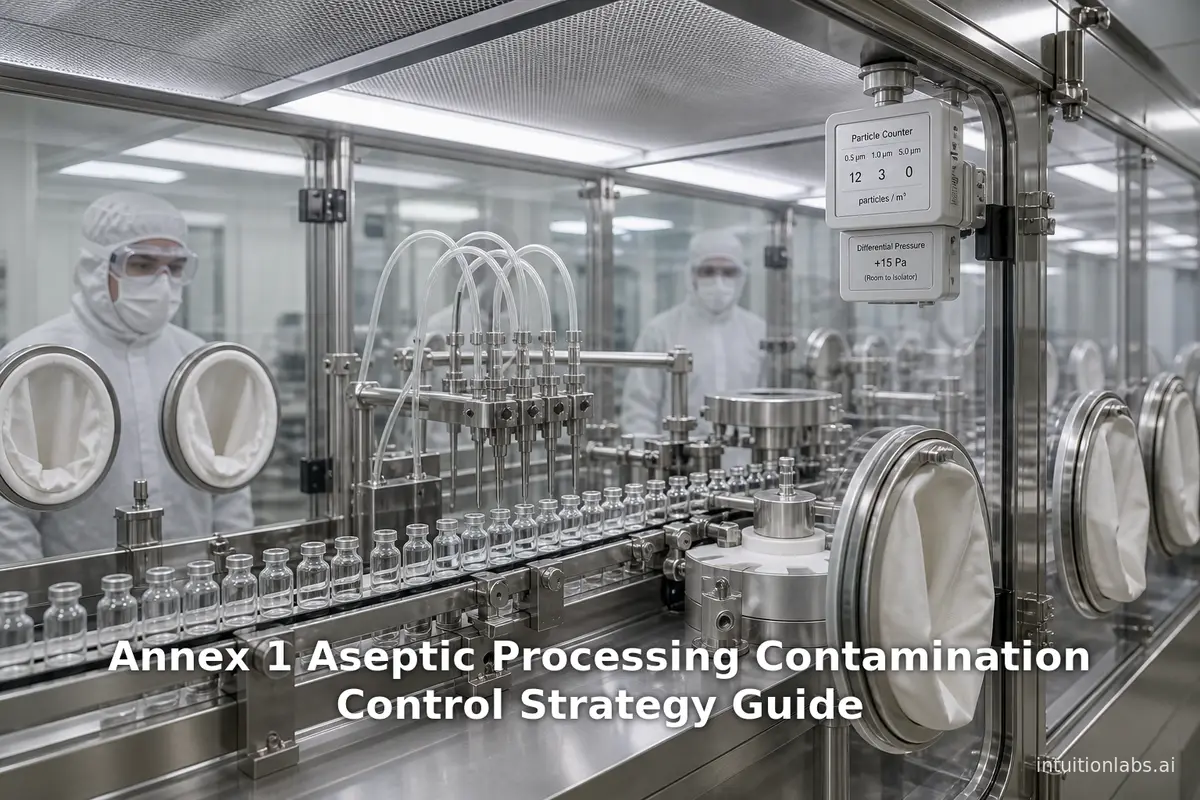
Annex 1 Aseptic Processing Contamination Control Strategy Guide
A 2026 analyst report on Annex 1 aseptic processing contamination control strategy, covering CCS requirements, RABS vs isolator grade thresholds, FDA warning letter enforcement, and 2023-2024 compliance deadlines.
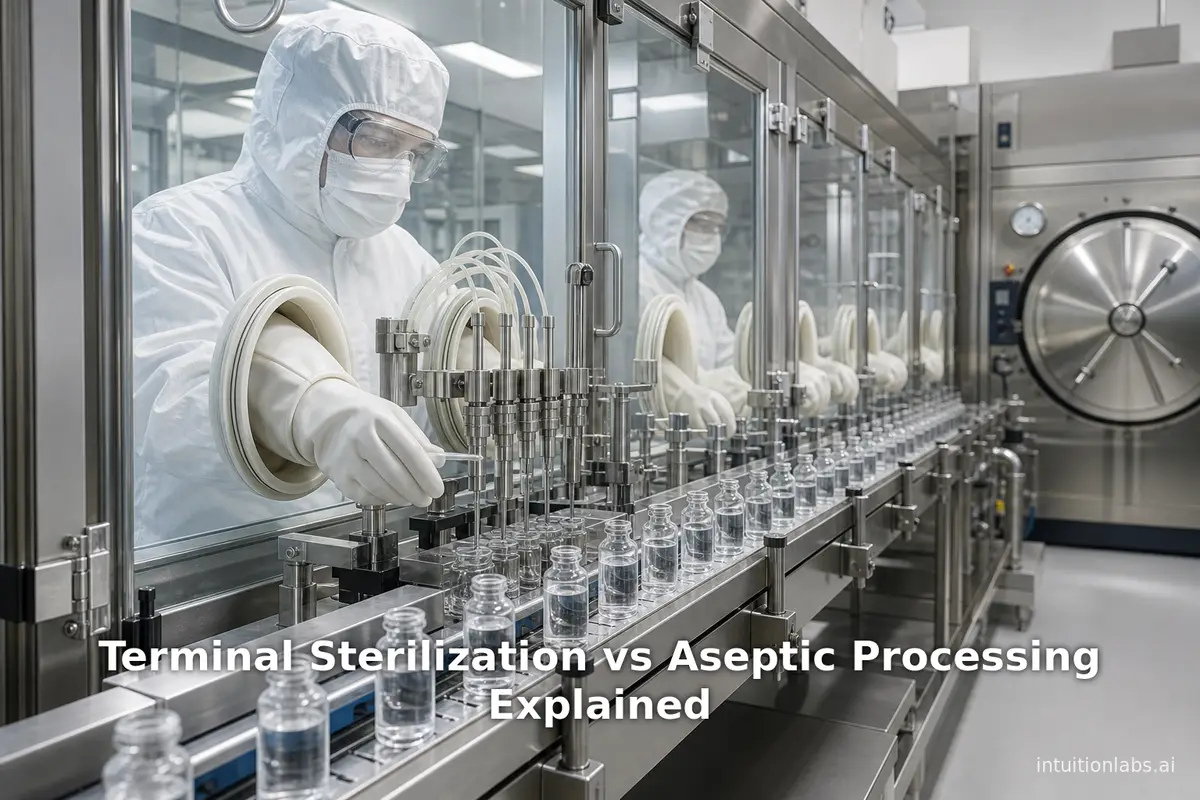
Terminal Sterilization vs Aseptic Processing Explained
Compares terminal sterilization and aseptic processing in pharmaceutical manufacturing as of 2026: SAL 10-6 vs 10-3, FDA/EMA/Annex 1 rules, USP 71 limits, market data, and 5 named cases.
ICH Q3D Elemental Impurities: Risk Assessment Guide
A comprehensive guide to ICH Q3D elemental impurities in pharmaceuticals, detailing risk assessment methodologies, permitted daily exposures, and software.