


ectd v4.0 · regulatory submissions
eCTD v4.0 Explained: Implementation & Global Timelines
February 25, 2026
40 min read
Guide to eCTD v4.0 regulatory submissions. Learn about HL7 FHIR standards, document reusability, and global implementation deadlines for FDA and EMA.

eCTD v4.0 Transition: What Pharma Companies Need to Know Now
Executive Summary
The electronic Common Technical Document (eCTD) is the internationally harmonized format for pharmaceutical regulatory submissions. After nearly two decades of widespread use of eCTD version 3.2.x (finalized in 2008), the International Council for Harmonisation (ICH) approved eCTD v4.0 as a major update in 2015 ([1]) ([2]). This new version replaces the older XML-based backbone with an HL7 FHIR/RPS message structure, introduces rich metadata and controlled vocabularies, and enables advanced features such as two-way communication between sponsors and regulators ([3]) ([4]). The shift to eCTD v4.0 is the most significant change in the submission paradigm to date.
Regulatory agencies have begun phased rollouts of eCTD v4.0. In the United States, the FDA’s Center for Drug Evaluation and Research (CDER) and Center for Biologics Evaluation and Research (CBER) have accepted new marketing applications in v4.0 format as of September 16, 2024 ([5]) and also offer an optional “sample” submission process for sponsors to test readiness ([5]) ([6]). In the European Union, the EMA announced that from 22 December 2025 applicants may optionally submit new centralized Marketing Authorisation Applications (MAAs) for centrally-authorised products (CAPs) using eCTD v4.0 ([7]). Japan’s PMDA plans to mandate eCTD v4.0 for all submissions by April 1, 2026 ([8]). Other regions (Canada, Switzerland, Australia, etc.) have voluntary or pilot programs and have set mandatory enforcement dates between 2027 and 2030 ([9]) ([10]).
This Research Report explains the origins of eCTD v4.0, the key technical and regulatory changes it brings, the current implementation status worldwide, and what pharmaceutical companies must do to prepare. We analyze the benefits and challenges of eCTD v4.0, provide data from regulatory announcements and industry studies, and highlight lessons from pilot programs. The report includes detailed guidance on organizational readiness (systems, processes, data management, training) and offers evidence-based recommendations. Case studies from recent pilot participants illustrate practical issues. Finally, we discuss future implications, including improved submission lifecycle management and alignment with concurrent initiatives (e.g. IDMP data standards), to help companies plan strategically. All assertions are backed by regulatory sources, industry expert analyses, and technical guidelines ([3]) ([6]) ([4]).
Introduction and Background
The Common Technical Document (CTD) was conceived in 1989 by the International Council for Harmonisation (ICH) – comprising regulatory authorities in the US, EU, and Japan – as a standardized format for pharmaceutical submissions ([11]). Over time, the CTD (structured into modules for quality, nonclinical, clinical data, etc.) was adopted by many countries. In parallel, pharmaceutical regulators and industry sought an electronic format (eCTD) to improve efficiency and document lifecycle management ([12]) ([13]).
The first electronic CTD specifications (including HTML tables of contents and later XML backbones) emerged in the late 1990s. The official ICH eCTD v3 specifications (version 2.0) were announced in 2003 ([14]) and later refined (v3.2.2 being the current standard). By 2008, eCTD v3 (including modules 2–5 with a regional Module 1) was finalized and quickly mandated for most new drug applications in major markets ([13]) ([15]). For example, the FDA and EMA now require eCTD format for all marketing submissions, and by 2022 roughly 94% of US drug submissions were in eCTD format ([15]).
Despite these successes, eCTD v3.x had limitations. It relied on a static XML folder hierarchy and detailed Table of Contents (TOC) that was hard to change. Adding new document types required cumbersome updates to both the CTD structure and each country’s regional schema ([3]) ([16]). The lack of flexible metadata made it difficult to reuse approved documents across different applications, forcing sponsors to often resubmit identical files for supplements or variations. Moreover, communication between agencies and sponsors was largely one-way (sponsors submit, agencies review, and then respond via separate correspondence only).
In 2005, the US FDA initiated a Health Level Seven (HL7) standard project called Regulated Product Submissions (RPS) to address these issues ([3]). Over the next decade, the WHO’s ICH M8 Expert Working Group developed these concepts into the eCTD v4.0 standard ([3]). eCTD v4.0 preserves the five MODULE structure (Modules 2–5 common globally, plus Module 1 for region-specific data), but fundamentally replaces the earlier approach with a machine-readable, message-based format (using HL7 RPS and FHIR technologies) ([3]) ([4]).
Today (2025), the eCTD v4.0 standard is finalized and published. It offers a data-driven, metadata-rich approach: documents are assigned unique identifiers (UUIDs), and structured “submission units” can reference or reuse content across applications without duplicating files ([17]) ([18]). Controlled vocabularies (standard keyword lists) allow consistent tagging of document types and facilitate automated processing. In principle, eCTD v4.0 enables capabilities long anticipated but not realized under v3 – for example, an agency could accept references to a document already approved (rather than requiring a new copy) ([19]) ([4]), and even permit limited “two-way communication” messages between sponsors and regulators. These improvements promise to make submissions more flexible, reduce redundancy, and speed review timelines ([20]) ([21]).
However, regulatory adoption has lagged. While the standard has been available since ICH Step-4 in 2015, only Japan and the US had begun optional use by early 2025 ([1]). Many regulatory agencies deferred then had to juggle other modernization projects (CTIS portal, IDMP, COVID response, etc.) ([22]) ([23]). With eCTD v3 content so prevalent, agencies are moving cautiously. In late 2024 and 2025, momentum has picked up: the FDA, EMA, PMDA, and others have announced pilot programs and transition deadlines. Pharmaceutical companies now face an urgent need to adapt or risk submission delays. This report details the eCTD v4.0 standard, the global implementation status, and what companies must do to prepare.
The Evolution to eCTD v4.0
Historical Development
The concept of a single Common Technical Document (CTD) for drug submissions dates back to 1989 under ICH ([11]). The CTD outlined the modular dossier structure (with modules 2–5 harmonized internationally and Module 1 varying by region), which over the 1990s became the standard for NDA and MAA filings. In parallel, early attempts at electronic submission began in the late 1980s/90s (e.g. the DAMOS system, SEDAMM in Europe) as agencies accepted PDF “review copies” of dossiers ([24]). The advent of Adobe PDF in 1993 quickly led to hybrid paper/electronic filing, and by 1997 the idea of a fully electronic CTD (eCTD) took shape ([25]).
Building on HL7 and e-business standards, ICH approved the first eCTD specification (v1) in 2003 ([26]). This added an XML “backbone” for the PDF files, enabling cross-referencing and lifecycle tracking without re-sending entire dossiers each time. The eCTD v3 series (v3.2 and updates) became stable, with national variants for regional Module 1 (e.g. FDA, EMA, PMDA each having their own XSD for Module 1). By around 2008, agencies like the FDA and EMA were requiring eCTD for NDAs/MAAs; by 2022 the FDA reported 94% of all submissions were eCTD format, totaling millions of transactions ([15]).
Despite these gains, sponsors and regulators recognized limits. As PharmaLex notes, the static TOC structure meant any new content types required lengthy regulator approval to update the schema ([27]) ([4]). Important workflow features (like letting a reviewer instantly retrieve the current state of the complete dossier, or easily sharing documents across applications) were still manual and inefficient. The architecture also varied by region, so submitting globally involved juggling multiple “regional modules” and conventions (FDA’s Study Tagging Files vs EMA’s node extensions, for example ([28])).
Recognizing these issues, ICH M2 and M8 experts agreed to overhaul eCTD. In 2012, the agencies formally announced a “feasibility test” incorporating HL7 RPS technology ([3]). Over the next three years the International Council on Harmonisation drafted the new eCTD v4.0 modules 2–5 (and related controlled vocabularies) and an updated Module 1 specification. By December 2015, the ICH Steering Committee had approved (Step 4) the complete eCTD v4.0 Implementation Package ([2]). The new format is built on HL7 V3 RPS Release 2 (a messaging standard) from 2014 ([2]), and uses an XML message (effectively HL7 FHIR R4) to convey the dossier structure and contents instead of directory hierarchies.
Why eCTD 4.0 Matters
eCTD v4.0 represents a paradigm shift in regulatory submissions. ArisGlobal experts note that eCTD 3.2 was primarily designed for PDF bundles in a rigid tree, whereas v4.0 is meant for more dynamic, data-driven operations ([29]) ([20]). Key intended benefits include:
-
Modularity and Reusability: In v4.0, each document gets a unique identifier and can be linked or reused across multiple applications. Sponsors will not need to repackage the same clinical report or quality table for every related submission; an approved file can simply be referenced in new contexts ([19]) ([30]). For example, a study report used in one country’s dossier can be re-used by adding its ID in another submission, dramatically reducing duplication.
-
Flexible Table of Contents: Unlike the fixed hierarchy of v3.2, the v4.0 “backbone” (an RPS XML) builds the manifest dynamically from metadata and keywords. As PharmaLex observes, eCTD 4.0 allows the TOC to be modified (by changing metadata) without rewriting the standard schema ([4]). This makes it faster to include new document types globally (e.g. novel digital data) without waiting years for an ICH update. In effect, v4.0 behaves like the index of a book: each file carries info on where it fits in the dossier ([31]) ([18]).
-
Data-Driven, Content-Tagged Format: v4.0 mandates extensive metadata on each document (context of use, keywords, country applicability, etc.). Controlled vocabularies (CVs) allow agencies to validate submissions automatically and ensure consistency. For example, PDF files will include tags for content type, document date, patient type, etc., which the regulatory review system can use to cross-check completeness and versioning ([32]) ([17]).
-
Two-Way Communication: One of the most anticipated features (not yet live at adoption) is that agencies may eventually send “responses” back through the eCTD channel. Pharma manufacturers will be able to receive review queries and respond within the same electronic dossier framework, rather than by separate e-mail or paper letters. In principle, this closes the loop on submission exchange and could further speed up review cycles ([33]) ([34]).
-
Global Harmonization (Beyond Drugs): eCTD 4.0 aims to be agnostic to product type. The new model accommodates a wider range of product categories (drugs, biologics, medical devices, cosmetics, tobacco, veterinary) in one framework ([29]). It also promotes a “single global format” across regions, whereas eCTD v3.2 had subtle file naming and structure differences per region. In the future, if more regulators adopt eCTD 4.0 and use common CVs, sponsoring companies could achieve true global submissions with one harmonized dossier package.
These enhancements promise substantial efficiencies. Industry analysts and regulators alike note that eCTD 4.0 could finally unlock the full benefits of electronic submissions that eCTD 3 only hinted at. By automating assembly of current dossier view (the “lifecycle” of all sequences) and enabling content reuse, v4.0 should reduce manual labor and errors during review ([19]) ([30]). The next sections examine the specifics of the standard and the transition pathway in detail.
Key Features and Technical Changes in eCTD v4.0
eCTD v4.0 incorporates numerous technical changes. Below we summarize the most significant innovations, citing expert analyses and guidances:
-
Submission Units and RPS Messaging: In v4.0, the fundamental unit of a submission is the Submission Unit, conveyed by a single XML “message” rather than a set of folder hierarchies. The ICH Implementation Guide defines a Submission Unit XML (submissionunit.xml) that contains header information, document listings, lifecycle operations, etc. ([18]). A Submission Unit in v4.0 roughly corresponds to what used to be a “sequence” or a complete electronic dossier, but now embeds all publications relating to that filing. (In theory, one could also “group” multiple prior submissions into a single unit for an approval process, but standard use will treat each MAA or supplement as one unit ([35]).)
-
Folder Structure vs. Flat Architecture: Whereas eCTD v3.2.2 used a nested folder structure with an XML “index” at the top, v4.0 uses a flat or message-based architecture. Every file in the package can reside at the root level (no deep folder paths are needed), and the submissionunit.xml dictates where each document appears in the Table of Contents. This flat design simplifies file management and means that moving or renaming a file does not break linkages (the linkage is managed via XML references). Alliant Consulting summarizes this shift as moving “away from multiple XML files to a flat structure” ([36]).
-
Context of Use (CoU): In eCTD 4.0, each document is tagged with a Context of Use, which essentially replaces the eCTD v3 section headings. As Extedo explained, “context of use is one of the major new terms” and functions much like the old module/section structure (e.g. M2/Module2 section, M3/Module3 section, etc.), with minor changes in names ([18]). So sponsors will identify that a report falls under, say, “M2/Clinical Overview” or similar contexts, using standardized codes. This enables the review system to build a coherent dossier out of multiple submission units.
-
Unique Document Identifiers (UUIDs): Every file in v4.0 is identified by a 36-character UUID (a random hex string). This ensures global uniqueness. Instead of naming files by purpose or relying on file paths, the submissionunit.xml refers to each document by its UUID. Consequently, documents can be referenced across submissions by UUID ([18]) ([32]). (For example, a well-known risk assessment might be given in one application with a UUID; in a follow-on submission, that same UUID can be cited, avoiding duplicate upload.) The use of UUIDs is already familiar to EU users and is now extended in full eCTD 4.0.
-
Document Lifecycle and Operations: eCTD v3.2.2 had a simple lifecycle (New, Replace, Delete) trackable by sequence numbers. In v4.0, the lifecycle operations are encoded within the message. Each document entry can be flagged as new, replaced, appended, etc., and is further qualified by attributes like “sequence number” and “submissionUnitRef” to indicate which earlier submission it relates to. The new model supports more granular operations and reuse. For instance, one v4.0 submission can say “use document X from Submission Unit #5” without republishing it.
-
Priority Number: v4.0 introduces a Priority Number concept to control display order of documents within a section ([18]). In eCTD v3, the viewer or tool arbitrarily ordered PDFs, which sometimes led to confusion. Now, each document in a context can be given an integer priority, ensuring consistent order across viewing platforms.
-
Keywords and Controlled Vocabularies: eCTD 4.0 employs extensive controlled vocabularies (CVs) for many metadata fields: document type, submission type, product types, etc. These are standardized lists (often EU and global CVs) that restrict entries to allowed terms. For example, a document that is a clinical study report must use the standardized code for “Clinical Study Report” in the metadata. CV usage streamlines validation: agencies can auto-check that each file’s metadata matches expected values ([37]) ([32]). EMA, for instance, already provides updated CV lists for v4.0 use (with feedback from pilot testing) ([38]).
-
Two-Way Communication (Planned): While not available at “day one”, eCTD v4.0 envisions messages flowing both directions. In the standard’s design, a Submission Unit could represent an agency’s response to an application. This means queries, deficiency letters, and even review commentary might ultimately be encoded in RPS messages by regulators. (This capability exists in the underlying RPS standard ([3]); however, the FDA has explicitly noted it will not support full two-way in the initial 2024 launch ([34]).) In future phases, sponsors should prepare for questions to come back through the electronic portal, which may allow more automated tracking of an application’s status.
-
Regulatory Activity vs. Submission Unit: eCTD 4.0 also distinguishes Regulatory Activity (a higher-level grouping, e.g. “NDA 12345”) from individual Submission Units. A Regulatory Activity may consist of multiple submission units (initial application, amendments, supplements, etc.), whereas a Submission Unit is specific to one submission. In some contexts, “Submission Unit” is used synonymously with what we think of as a single event. The ICH IG term “component-of-1” in the XML denotes that grouping. (PharmaLex comments that the standard’s choice of wording can be confusing: what they call "submission unit" was often termed just “submission” ([16]) ([35]).) Companies should ensure their internal publishing processes align concepts appropriately.
These and other changes mean that eCTD v4.0 requires different technical handling. The backbone XML is replaced by an HL7 message (now in FHIR XML or JSON). Consequently, legacy eCTD v3 tooling must be updated or replaced. Sponsors cannot simply rearrange v3 files into v4 packages easily: new software, validation engines, and SOPs are needed ([39]) ([40]).
Comparison: eCTD v3.2 vs. v4.0
Below is a summary table of key contrasts between the familiar eCTD v3.x format and the new v4.0 standard, distilled from expert references ([41]) ([20]):
| Feature | eCTD v3.2.x | eCTD v4.0 |
|---|---|---|
| Submission structure | Hierarchical folder structure with XML index files. | Flat or message-based (RPS/FHIR) with no mandated folder hierarchy ([35]) ([41]). |
| Document lifecycle | Basic flags per file (New, Replace, Delete) tracked by sequence numbers. | Granular, message-embedded lifecycle; documents can be shared or reused across submissions ([35]) ([41]). |
| Metadata usage | Minimal metadata; relying on folder location for meaning. | Extensive metadata tags (context, keywords, dates, IDs); Table of Contents built from metadata rather than physical file paths ([41]) ([4]). |
| Review process | Moderate efficiency; reviewer must manually collate documents. | High efficiency via contextual linking; reviewers can query the system for all info on a topic or reuse previous docs ([33]) ([41]). |
| Interoperability | Region-specific conventions (various Module 1 schemas, study tagging, etc.) ([42]). | Globally aligned framework; one unified RPS standard with region-specific Module 1 extensions ([4]) ([18]). |
Table: Comparison of eCTD v3.x versus v4.0. Source: Expert analyses ([41]) ([4]) ([35]).
This table underscores the revolutionary nature of eCTD v4.0. The new format emphasizes data interoperability, not just file packaging. For example, in v3 a company's NDA might consist of hundreds of PDFs arranged by folder, whereas in v4 each document stands alone with labels. Although sponsors will acclimate to new terms (e.g. “Context of Use” instead of “Module 3, section 3.2.R.2”), the long-term payoff is a more flexible submission environment.
Regulatory Implementation Status and Timeline
Regulatory agencies worldwide are in various stages of eCTD v4.0 rollouts. As of early 2026, no market has fully mandated eCTD 4.0 across all submission types; instead, most have planned pilot and optional use periods to smooth the transition ([1]) ([7]). Table 1 below summarizes key regions:
| Region / Agency | Technical Pilots / Voluntary | Mandatory eCTD v4.0 Enforced |
|---|---|---|
| Japan (PMDA/MHLW) | Pilot program run in 2021; 2022: voluntary acceptance available | Mandatory by April 1, 2026 ([8]) ([43]) |
| EU (EMA) | 2024–2025: eCTD v4.0 pilot Phase 1-2 (CAPs) ([44]) ([45]); Voluntary use for CAPs from Dec 2025 ([7]); (MRP/DCP timeline TBD) | CAP MAAs mandatory by 2027; (other procedures TBD) ([46]) ([47]) |
| United States (FDA) | Voluntary pilot/sample submissions since Sept 2024 ([5]); FDA offered sample submission process ([5]) ([6]) | Mandatory by 2029 (per FDA announcements ([48]) ([49])) |
| Canada (Health Canada) | Pilot planned for 2025; voluntary use from 2026 ([9]) ([50]) | Mandatory 2028 ([9]) |
| Switzerland (Swissmedic) | Planned pilot in 2026; voluntary use from 2027 ([9]) ([51]) | Mandatory 2030 ([51]) |
| Brazil (ANVISA) | Pilot (production) Q4 2025; voluntary use soon after ([52]) | Mandatory TBD (likely 2030s) |
| Korea (MFDS) | Planning pilot; voluntary use ~2027 (per Alliant) ([9]) | Mandatory TBD |
| Australia (TGA) | Pilot planned Q4 2025; voluntary use 2026 ([49]) | Mandatory TBD (likely post-2026) |
Table 1. Global eCTD v4.0 implementation timeline (as of early 2026). Source: Regulatory announcements and industry reports ([9]) ([51]).
From this timeline, several points stand out:
-
EMA/Europe: The European Commission and EMA have organized multi-phase pilots focusing first on new centralized applications (CAP MAAs). In July 2025 EMA launched “Step 2” of its technical pilot for CAPs ([44]), working through mock submissions to fine-tune validation. The agency explicitly stated that, from Dec 22, 2025, companies may opt in to submit new CAP applications electronically in eCTD v4.0 ([7]). Companies wishing to do so must notify EMA’s eCTD 4.0 team in advance. The offer is optional at first – sponsors can still submit via v3.2.2 during the “transition period” ([7]). EMA expects to finalize mandatory use dates by 2026. Presently, EMA has indicated 2027 as the compliance deadline for CAP applications ([46]) ([9]), and is still assessing the timeline for national procedures (MRPs/DCPs, etc.). In practice, any EU-wide MAA (e.g. via the centralized procedure) could be done in v4.0 from late 2025, while national filings may follow a year or two later.
-
Japan (PMDA): Japan’s regulators have been proactive. They held pilot tests for eCTD v4 as early as May–July 2021 ([53]), to ensure readiness for an anticipated shift. In June 2025, Freyr Solutions noted that the PMDA has mandated eCTD v4.0 by April 1, 2026 ([8]). This means any submissions to PMDA after that date must use the new standard. Japanese companies have been upgrading their submission systems accordingly, and some have already done voluntary pilot filings. Companies submitting globally need to be aware that Japan’s deadline is among the earliest, so prepare accordingly.
-
United States (FDA): The FDA announced in 2024 that it would begin accepting eCTD v4.0 voluntarily for new drug and biologic applications in CDER/CBER from September 16, 2024 ([5]). In practice, this means sponsors can submit new NDAs/BLAs/INDs in v4.0 if they wish. To promote readiness, the FDA also established a Sample Submission program ([6]): companies with an upcoming actual submission may request a “sample application number” and send a test package to get validation feedback ([6]). Importantly, as of late 2024/early 2025 the FDA has made it clear that only new submissions can be in v4.0 – “forward compatibility” (updating older v3.2 dossiers) is not yet supported ([5]) ([6]). The FDA’s guidance suggests full mandatory enforcement around 2029 ([48]) ([49]), giving industry several years to transition.
-
Other Regions: Many other regulators are planning similar paths. Health Canada expects mandatory use by 2028 ([9]); Swissmedic by 2030 ([51]). Australia’s TGA has indicated a voluntary period starting in 2026, with mandatory dates to be set (likely around 2028 or later) ([49]). Brazil’s ANVISA has a pilot slated for late 2025 ([52]). Notably, growing economies (e.g. South Africa, Singapore) tend to follow the EMA/FDA lead and will require their own updates after the large ICH markets are done.
Regulatory resources stress due diligence: companies should keep monitoring the official communications (agency websites, emails) for updates. For example, EMA maintains a dedicated eSubmission portal with new releases and controlled vocab lists ([37]), and FDA’s website lists v4.0 specifications and pilot procedures ([54]). Engaging early with pilot programs or vendor forums is highly recommended. As one consulting firm advises, sponsors should treat 2025–2026 as a “ [voluntary] window to begin using the format without the pressure of obligatory use” ([55]).
Preparing the Organization and Submission Process
Transitioning to eCTD v4.0 is a multi-year project that affects many aspects of a pharmaceutical company’s regulatory operations. Based on industry guidance and best practices ([56]) ([57]), the following strategic steps and considerations are key:
- Knowledge Building and Gap Analysis:
- Understand the Standard: Key team members should get familiar with eCTD v4.0 concepts (RPS architecture, new XML schemas, metadata requirements). In practice, attending vendor webinars, ICH training sessions, and reading implementation guides is necessary.
- Assess Current State: Audit existing submission processes, IT systems, and document management practices. Identify what currently relies on eCTD v3.2 conventions (e.g. folder naming, hard-coded sections). Analyze content workflows from authoring to submission to see where metadata could be integrated.
- Gap Analysis: Compare current capabilities against v4.0 requirements. For example, if your document management system does not record document-level metadata (e.g. keywords, affected regulatory authority), that’s a gap. Deleted or retired submission units (historical sequences) may need consolidation into a coherent lifecycle. Alliant Consulting suggests a comprehensive gap analysis of “current systems and processes” as Step 1 ([58]).
- Systems and Infrastructure Readiness:
- Publishing Tools: Verify that your eCTD publishing software vendor has v4.0 support. Major vendors (Extedo, Lorenz, Parexel, Ennov, etc.) have been working on this. For example, Ennov claims its system has already handled multiple FDA v4.0 test submissions ([59]). Seek demonstrations of the v4.0 builder, or engage in vendor beta programs.
- Document Management Systems (DMS): Ensure your QMS/DMS can handle v4.0 metadata. You may need to configure or upgrade DMS to tag documents with the new controlled vocabularies (product codes, study types, etc.). Investigate integration between DMS and eCTD publishing so that metadata flows automatically. If your DMS does not support this, a manual workaround will be burdensome.
- IT Infrastructure: eCTD v4.0 submissions may be larger or differently structured; confirm that generating, zipping, and validating large message-based packages is technically feasible. Also, consider whether your workflow router (if any) needs updates to handle FHIR messages.
- Content and Metadata Strategy:
- Controlled Vocabularies & Keywords: Compile a library of commonly used terms (from Module 1 data to document types). Map your internal document types to the CVs that EMA, FDA, and others use for v4.0. For instance, each region may have its own list (FDA will have Clinical Data Interchange Standards Consortium [CDISC] codes, EMA has its own CV list ([38])). Plan how to maintain these lists and assign the correct code to each submission file.
- Data Standardization: Since v4.0 is data-centric, ensure data quality in source documents. For example, clinical study reports might need anonymized subject IDs to align with CDISC/ADaM standards. Non-numerical data (e.g. product names, manufacturer information) will populate metadata fields and must be consistent.
- Document Reuse Planning: Identify what content can be reused. For example, any safety documents, CMC reports, or summaries that apply across multiple regions can be flagged for reuse in v4.0. Create a strategy for storing and indexing “master copies” of such documents with persistent UUIDs.
- Process and Procedure Updates:
- SOP Revision: Almost every eCTD-related SOP (Document Preparation, Validation, Submission Tracking, etc.) needs review. New procedures may be required for assigning UUIDs, metadata entry, and building the submission unit XML. Regulatory teams should update SOPs to cover parallel v3/v4 processes during the transition period.
- Collaboration with Agencies and Vendors: As many authorities encourage, engage early. For example, EMA’s guidance explicitly asks applicants to contact their eCTD v4.0 team before actual submissions ([7]). Similarly, consult with your software vendor about submission of sample data or participation in pilot programs. Cencora’s Loebel underscores that “regulators want to test their validation tools… Applicants will want to test their publishing tools” through pilots ([60]).
- Training: Organize workshops for authors, reviewers, and submission specialists. They must learn the meaning of new metadata fields and how to populate them, and how to interpret v4.0 validation reports. Emphasize cross-functional training because IT, regulatory affairs, and quality assurance will all need to collaborate on the technical and content aspects of v4.0.
- Testing and Pilot Participation:
- Internal Dry Runs: Build mock eCTD v4.0 packages internally using legacy submissions as templates. Validate them through your eCTD tools (EXTEDO has a “Publisher” that can do v4.0, for example). Address any validation errors early.
- Regulatory Sample Submission: In the US, use the FDA’s sample submission process ([6]) to get official feedback on at least one filing. This allows fixing issues before a real NDA/BLA. Similarly, if applicable, join EMA’s technical pilot by submitting test dossiers to their stage-1/2 environment, as many vendors are doing in 2025 ([44]) ([61]). The ENNOV blog suggests this as a “pros to participating in a pilot” ([62]) (it provides hands-on experience with no real penalty). Use these pilots to surface tool issues (e.g. keyword bugs) and workflow gaps (e.g. internal hand-offs for building v4 packages).
- Governance and Risk Management:
- Project Management: Treat the transition as a major IT/regulatory project. Set a timeline with milestones (e.g. “pilot submission by mid-2025”, “first US import or submission by Q4 2024”). Just because the US is optional until 2029 doesn’t mean waiting is prudent; early adoption reduces risk.
- Contingency Plans: During the voluntary period, be prepared to submit in v3.2.2 if needed (since many agencies will accept both). Dual-stock your know-how so your team can handle either format. Alliant Consulting recommends a phased implementation that “maintains operational continuity while systematically upgrading” ([58]).
- Consultation: Consider engaging external experts. The Alliant roadmap explicitly suggests that the complexity of v4.0 means “many organizations [should] involve consultants to provide technical guidance and change management” ([63]). A regulatory systems consultant or CRO with eCTD experience can help avoid pitfalls (e.g. missed validation rules, misunderstood metadata fields).
In summary, readiness requires both strategic planning and hands-on preparation. Companies must evolve from treating submissions as static documents to mastering a data-centric approach. While this overhaul has a learning curve, the regulatory guidance is clear: start early, use the voluntary window (2024–2026) to trial, and ensure full compliance when agencies require it ([64]) ([65]). Success will demand attention to detail (e.g. CV entries), robust IT, and effective training. The reward, however, will be a more streamlined submission process in the long run.
Impact on Content Lifecycle and Submission Workflow
Implementing eCTD v4.0 affects not just IT systems but the entire content management lifecycle. Pharma companies will need to reorient how they author, manage, and deliver regulatory information.
-
Content Architecture and Management: Under v3, documental artifacts were primarily organized by physical location. In v4.0, documents become components with metadata. Companies should structure their content libraries to reflect v4 concepts: each document (e.g. a study report, a batch record) should carry attributes (e.g. context of use, keywords, country scope). For example, in the table above we noted “Document Lifecycle: Basic vs Granular, reusable.” In practice, this means every controlled document (SOP, protocol, report) should be tagged in the authoring system with relevant eCTD v4 attributes.
-
Document Reuse and Reference: With unique IDs, companies can build “global registries” of approved documents. For instance, if multiple divisions of a multinational sponsor have identical reports, one copy can serve all. When preparing an MAA in Europe and Asia concurrently, identical CTD modules can reference the same underlying files. European regulators highlight that this improves mutual recognition procedures: “the capability of identifying the countries for which individual documents are appropriate could simplify the handling of [divergent assessments]” ([30]). The exception is Module 1 content (administrative/product information), which still varies by region.
-
Regulatory Tasks and Communication: Currently, the regulatory team’s task after submission is usually sending emails or attachments for responses. In the v4 world, more communication can occur within the submission environment. Teams need to be prepared for queries delivered electronically (in the future) and for the possibility of incremental submissions that update metadata (e.g. adding missing tests). EMA has hinted at an “auto-approval and self-notification” future ([66]), which would require sponsors to watch electronic communications closely.
-
Reviewer Interaction: From the reviewer’s perspective, eCTD v4.0 enables more powerful review tools. For example, a reviewer could pull up “all pediatric studies across modules” using metadata. Companies should anticipate that agencies will rely on these tools; this means stricter adherence to the specified metadata. Indeed, the MHRA already notes that non-compliance (missing historical sequences) now triggers errors in their new system ([67]). Sponsors should not expect to “get by” with sloppy tagging – the validation engines (especially in Europe) will enforce the rules.
-
Quality Assurance and Auditing: Quality units will need to audit not just individual files, but their metadata. For example, if a document is labeled as relating to multiple products or indications, QA must verify that the tagging is correct. Historical lifecycle management also gets more complex. All sequences (previous interactions) may need mapping to the concept of “submission units.” A truncated example: If a dossier had 10 sequences over time, in v4 it might all correspond to one Regulatory Activity with 10 linked submission units. Maintaining this coherence is critical to preserve the meaning of replacements and deletions. Errors in life-cycle labeling have previously caused regulators to ask companies to resubmit sequences ([68]).
-
Training viewpoint: The new paradigm means regulatory professionals must become comfortable thinking in data terms. For example, a regulatory writer might have to name a document type by a code (e.g. “Clinical Study Report – Phase III RA” coded as “C001”). Many experts mention that these new terms (priority, CoU, UUID) need explanation to line staff ([35]) ([60]). We recommend internal workshops that reframe submission planning around v4.0 concepts, not legacy file locations.
In summary, eCTD 4.0 demands a shift from a document-centric to a data-centric mindset. Companies will manage “dossier content” not just as PDFs but as an interconnected set of data entities. This will enable much better traceability and reusability, but only if the discipline of metadata management is adopted. Drawing an analogy from software engineering: companies need to maintain a repository of documents with version control and descriptive metadata, rather than shipping static binders. Stakeholders from document creators to submission reviewers must align on this new workflow. Well-prepared companies will work closely with tool vendors to configure systems that mirror these business processes.
Case Studies and Real-World Pilot Experiences
While broad adoption of eCTD 4.0 is just beginning, early participants and advisors have shared experiences that illuminate what to expect. The examples below draw on pilot programs and industry accounts.
FDA Sample Submission Program. The FDA’s voluntary sample program (see Box 1) provides a concrete example of preparation. In late 2024, Company A (a large pharma) participated by requesting a sample application number and submitting a mock NDA in v4.0 format. They packaged a standard format IND/ANDA number and included all required trough sequence 0000. The FDA, using their new gateway for v4, ran the submission through its v4 validation tool. Company A then reviewed the FDA’s error report and adjusted its packaging processes. This early engagement identified issues such as incorrect file OIDs and missing metadata. The company used FDA feedback to update its eCTD publishing SOPs well before its actual submission date. Such proactive testing is strongly recommended by FDA guidance ([6]).
EMA CAP Pilot – Step 2. In July 2025, the EMA launched “Step 2” of its eCTD v4 technical pilot focusing on Centrally Authorised Products (CAPs) ([44]). A handful of Marketing Authorisation Holders (MAHs) were invited to submit test dossiers in a non-production portal. The EMA defined specific scenarios: for example, one manufacturer resubmitted Sequence 1 of an existing CAP (originally in v3.2) as an eCTD 4.0 package ([69]). Another prepared sequences for duplicate products and post-approval activities. Participants discovered that building an eCTD 4.0 dossier was “not drastically different from eCTD 3.2” in practice ([70]). However, they did face new challenges: assigning the correct context-of-use and priority numbers to each file, and splitting or merging files according to v4.0 rules. One participant noted that the main learning curve was “identification and assignment of proper keywords, handling of context groups, and priority numbers” ([70]). Tools from multiple vendors were tested side-by-side, and EMA developers observed how different products handled the new format. The pilot is being extended into Q3/Q4 2025 to refine processes ([71]) ([45]).
Ennov Pharmaceutical Case. Regulatory software firm Ennov reported that one of the largest global pharmaceutical companies actively participated in FDA’s pilot. Using Ennov’s RIM platform, the sponsor submitted “multiple FDA eCTD 4.0 sequences during the pilot scheme” ([59]). According to Ennov, this process was invaluable: it gave the company confidence in their publishing tools and an opportunity to train staff on v4.0 before any real regulatory deadline. Ennov’s blog highlights that organizations sincerely gain by “being the first to experience new requirements and submit using the new standards” ([62]). Such front-runner companies also benefit by influencing software development through feedback. Ennov cautions that pilots are not without risk – standards can change, and companies must dedicate SMEs to handle the learning curve ([72]) – but overall the consensus is that pilot participation is a best practice.
Cencora / PharmaLex Insights. Industry experts at Cencora’s PharmaLex (Loebel et al.) have been embedded in both FDA and EMA v4.0 efforts. They note that the slow global adoption (only US and Japan so far) has frustrated vendors who invested in tools ([73]). Their “Look at 2025 and Beyond” commentary explains that many sponsors felt eCTD 4.0 benefits were hypothetical until actual use. However, they enumerate advantages observed in European pilots: improved flexibility of the dossier TOC and document reuse are repeatedly cited. Their key takeaways confirm trial findings: on the Kaggle of v4.0, “there are few differences in compiling eCTD 4.0 compared to eCTD 3.2” regarding basic mechanics, but “challenges are mainly around… keywords, context groups, and priority numbers” ([70]). They also stress readiness planning: organizations “that have successfully navigated major regulatory format changes offer valuable lessons” for v4.0, such as starting with low-risk pilot submissions and ensuring thorough validation ([74]) ([70]).
Summary of Pilot Learnings: Across these early experiences, common themes emerge:
-
Do the Metadata Right: Almost every participant remarks that accurate keywording (controlled terms) and context assignments are crucial. Invalid or missing keywords often triggered errors in the pilot reviews. Building a robust keyword inventory and testing it before submission is important.
-
Embrace the Data Mindset: Companies found they had to change how they think about the dossier. Rather than “boxes on a table of contents”, files are more like database entries. Teams that approached the pilot with curiosity (vs. “this is just a different zip file”) fared better.
-
Vendor Tools are Mature but New Bugs Remain: The major publishing platforms handled basic sequences correctly, but some edge cases (e.g. complex lifecycle operations or country-specific Module 1 content) revealed implementation gaps. Participants advise close coordination with vendors to patch issues.
-
Coordinated Cross-Functional Effort: Success in the pilots came from cross-pollination – regulatory teams working with IT, publishing vendors, and lead reviewers. Questions to regulators about interpretation (e.g. “which country code to use for this scenario?”) needed swift answers.
In sum, these real-world cases show that while the eCTD 4.0 transition is challenging, companies can manage it smoothly by proactive piloting, leveraging vendor support, and rigorously following the new technical rules. The example success of companies in pilot programs demonstrates that compliance is achievable with preparation.
Benefits and Future Directions
Looking ahead, full implementation of eCTD v4.0 is expected to reshape regulatory submission processes. Among the long-term implications:
-
Faster Submission Updates: With reusable documents and metadata-driven organization, sponsors can assemble complex global submissions in less time. Minor changes (e.g. correcting a typo or adding a single MSDS) do not require repackaging entire sections; instead one simply updates the metadata or files entry. This should compress the cycle for amendments and supplements.
-
Improved Harmonization: The use of one global format facilitates harmonized review. A drug approved under eCTD 4.0 in Europe would have a dossier structure identical to one submitted to Japan or Canada (aside from Module 1 content). This harmonization may reduce country-specific custom work and could lower costs of global filings.
-
Digital Regulatory Ecosystems: eCTD 4.0 is a stepping stone towards more integrated regulatory IT. By standardizing on HL7 FHIR, eCTD v4.0 aligns with healthcare data standards. In the future, sponsorship of Research Data, Real-World Evidence, and safety reporting could more easily link with regulatory submissions. Although speculative, some foresee a day when applications connect to centralized regulatory clouds, enabling real-time data feeds. The industry press suggests that once fully adopted, eCTD 4.0 may finally make possible a common EU regional repository (long discussed for MRP/DCP sharing) ([30]).
-
Synergy with Other Initiatives: The pharmaceutical sector is also facing other regulatory IT changes, notably the IDMP product identification standards (ISO 11238/9/10/etc.) and the EU’s Clinical Trials Information System (CTIS). Forbes notes that eCTD 4.0, while related to these (all part of digitalization), has no direct technical overlap with IDMP ([75]). Nevertheless, companies should build a unified data strategy. For instance, consistent product coding in IDMP feeds naturally into Module 1 administrative data for v4.0.
-
Ongoing Tool Evolution: We can expect eCTD software to rapidly mature. Already, some vendors are prototyping user interfaces to visualize v4.0 dossiers and map v3 to v4. Veeva, for instance, announced in late 2024 that their Vault RIM would support eCTD 4.0. Pharma companies should prioritize tools that remain upgradable. As one consultant advises, “tools must be readied to support forward compatibility” ([76]), meaning software should handle v3/x and v4 packets interchangeably during the transition.
-
Potential Risks: The Global Forum author Loebel cautions that agencies could use the flexibility of v4.0 to deviate more per country outside Module 1 ([77]). In theory, a regulator could edit the CVs or add new contexts that others do not use, reintroducing divergence. Companies must track regulatory guidance for any changes to the harmonized CV lists or to Module 1 requirements in each region ([78]). Also, while v4.0 is more flexible, companies should avoid over-customizing dossiers: inconsistent use of new features (like priority numbers) could lead to review delays.
-
Industry Readiness: Surveys and thought leaders emphasize that the industry is still early in this process. As of 2025, many companies remain at the idea stage. However, expert consensus is that the cost of delay will soon outweigh the cost of early action. For example, ArisGlobal warns that companies “risk not being able to get new drugs authorised” if not ready by enforcement deadlines ([79]). Likewise, the PharmaLex blog notes that eCTD 4.0 readiness will demand significant investment in people and systems ([80]).
In conclusion, while the future landscape is still unfolding, the direction is clear: regulatory submissions will become more like data exchange and less like shipping physical packets. The pharma industry’s shift to eCTD v4.0 is part of a broader “digital transformation” of regulatory affairs. Companies that successfully adapt – treating this as an opportunity to improve processes and data management – stand to gain both compliance and competitive advantage in the longer term.
Conclusion
The transition to eCTD v4.0 is a critical undertaking for pharmaceutical companies worldwide. The new standard, finalized in 2015, modernizes regulatory submissions through an HL7 FHIR/RPS-based structure with extensive metadata, enabling improved flexibility and automation ([3]) ([29]). Regulatory agencies have set staggered timelines, with voluntary use already available in the US (since Sept 2024) and Japan (pilot completed), and EU and others moving towards mandates by 2026–2028 ([5]) ([7]) ([8]).
Preparation is key. Pharma companies must start now to audit their submission processes, upgrade or procure compliant tools, train staff, and participate in pilot programs ([57]) ([59]). Many companies have already done so: the FDA sample submissions and EMS pilot participants have shared valuable lessons on new workflows and metadata management ([6]) ([70]). By taking advantage of the voluntary period, organizations can smooth the learning curve and avoid last-minute scrambles.
In-depth planning is required. This includes performing gap analyses of current systems, developing metadata strategies, revising SOPs, and engaging stakeholders across IT, regulatory affairs, and QA ([58]) ([81]). A structured approach, as outlined by consultancy roadmaps, will help align technical readiness with submission planning ([65]) ([64]). Stakeholders should track official updates (e.g. EMA’s eSubmission site, FDA’s eCTD pages) and confirm any region-specific requirements (controlled vocabulary versions, Module 1 specifics). As one source advises, a company’s readiness depends on “existing infrastructure, planning, authoring, and data governance” ([57]), so sponsorship from senior management and dedicated project resources are essential.
The rewards of a successful transition are significant. Sponsors will benefit from leaner submission preparation, faster review cycles, and closer alignment with ICH harmonization goals ([19]) ([30]). Regulatory agencies also stand to gain faster review throughput. While the up-front effort is non-trivial, eCTD v4.0 lays the foundation for more automated regulatory interactions and better use of electronic data (in line with global digital health trends).
In closing, eCTD v4.0 is not merely a technical update – it is a new paradigm for global regulatory compliance. Pharma companies that invest early in mastering eCTD v4.0 will be well positioned for the future. By leveraging the insights, guidelines, and case studies in this report, sponsors can navigate the transition successfully and turn compliance into a competitive advantage ([16]) ([34]).
References:
- Cencora/PharmaLex, “eCTD v4.0: A Look at 2025 and Beyond” ([1]) ([4]).
- EMA eSubmission news releasing eCTD v4.0 pilot timelines ([7]) ([37]).
- FDA, “Electronic Common Technical Document (eCTD) v4.0” page ([5]) (implementation status) and “Submit an eCTD v4.0 or Standardized Data Sample to the FDA” ([6]) (guidance).
- Loebel, K-H., “How Did We Get Here? A History of eCTD and Prospects for eCTD 4.0” ([15]) ([2]).
- Sadia Ahmed, “eCTD 4.0 is changing the regulatory landscape – what you need to know”, Pharma Market Europe (Jul/Aug 2023) ([29]) ([46]).
- Freyr Solutions, “eCTD v4.0 in Japan – Navigating the 2026 Transformation” ([8]) ([41]).
- Alliant Consulting, “eCTD 4.0 Readiness: A Strategic Roadmap” (Feb 2025) ([48]) ([9]).
- ArisGlobal / Pharmaceutical Manufacturer, “Beyond IDMP – Act Now for eCTD 4.0 Compliance” (Sep 2023) ([19]) ([34]).
- Ennov Software blog, “Preparing for eCTD 4.0 Pilots” (Sept 2024) ([59]) ([62]).
- Cencora (globforum), “Key takeaways from the eCTD 4.0 EU technical pilot” ([70]) ([82]).
- EMA eSubmission portal updates (Dec 2025 CAP optional use; Vocabulary releases) ([7]) ([37]).
- MHRA eCTD update (Canada’s submission gateway modernization) ([67]) ([83]).470
- Extedo Regulatory Affairs, “Key Concepts Behind eCTD 4.0” ([35]) ([18]).
- Additional regulatory sources, industry analyses, and ICH guidelines as cited inline above.
About IntuitionLabs
Build practical AI for pharma and biotech with IntuitionLabs. We help life-science teams turn complex information and workflows into useful software, governed knowledge systems and AI tools.
IntuitionLabs is an AI consulting, custom software development and data engineering firm serving pharmaceutical, biotechnology, medical-device and other life-science organizations. We work with clinical, regulatory, medical-affairs, commercial, quality and IT teams to connect technology decisions with the work people need to accomplish.
AI consulting and adoption
Our AI enablement services cover readiness assessments, use-case selection, governance and policies, team workshops, adoption measurement and ongoing advisory support. We help organizations structure the information layer behind AI: source material, context, permissions and maintained knowledge that make generated answers useful and reviewable. Private LLM inference and hosted AI options support teams evaluating how to operate AI with appropriate control over their data and infrastructure.
Software, data and life-science workflows
IntuitionLabs develops custom software for pharma and biotech, integrates enterprise systems, and builds data engineering and business intelligence solutions. Areas of focus include AI agents, regulatory research, medical writing, medical affairs, CMC information, competitive intelligence and clinical-document workflows. Our eTMF intelligence work includes cross-system reconciliation and inspection-readiness support.
Enterprise platforms and regulated delivery
We provide Veeva services, application support, managed services, integrations and custom applications, alongside enterprise content work involving platforms such as Egnyte. For regulated workflows, our services include GxP enablement, computer-system validation and software development addressing 21 CFR Part 11 requirements. The applicable controls, validation responsibilities and acceptance criteria are defined for each engagement.
Work with IntuitionLabs
Explore AI enablement, pharma and biotech software development, data engineering and BI, and Veeva services. Contact IntuitionLabs to discuss your workflow, information sources and implementation needs.
IntuitionLabs publishes educational research to help life-science teams make informed technology decisions. Coverage of a product or organization does not imply a client relationship, endorsement or partnership.
Sources / 83

Need Expert Guidance on This Topic?
Let's discuss how IntuitionLabs can help you navigate the challenges covered in this article.
I'm Adrien Laurent, Founder & CEO of IntuitionLabs. With 25+ years of experience in enterprise software development, I specialize in creating custom AI solutions for the pharmaceutical and life science industries.
The information contained in this document is provided for educational and informational purposes only. We make no representations or warranties of any kind, express or implied, about the completeness, accuracy, reliability, suitability, or availability of the information contained herein. Any reliance you place on such information is strictly at your own risk. In no event will IntuitionLabs.ai or its representatives be liable for any loss or damage including without limitation, indirect or consequential loss or damage, or any loss or damage whatsoever arising from the use of information presented in this document. This document may contain content generated with the assistance of artificial intelligence technologies. AI-generated content may contain errors, omissions, or inaccuracies. Readers are advised to independently verify any critical information before acting upon it. All product names, logos, brands, trademarks, and registered trademarks mentioned in this document are the property of their respective owners. All company, product, and service names used in this document are for identification purposes only. Use of these names, logos, trademarks, and brands does not imply endorsement by the respective trademark holders. IntuitionLabs.ai is an AI software development company specializing in helping life-science companies implement and leverage artificial intelligence solutions. Founded in 2023 by Adrien Laurent and based in San Jose, California. This document does not constitute professional or legal advice. For specific guidance related to your business needs, please consult with appropriate qualified professionals.
Related Articles
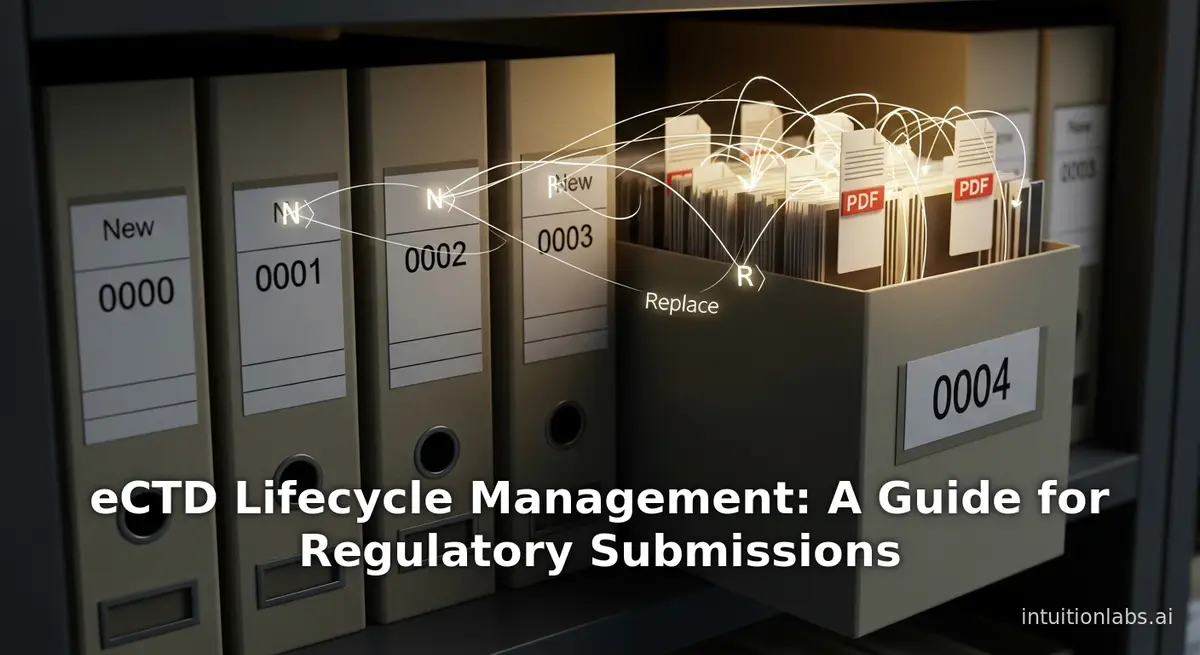
eCTD Lifecycle Management: A Guide for Regulatory Submissions
Explore eCTD lifecycle management, the core process for updating regulatory dossiers. Learn about ICH standards, submission sequences, and the shift to eCTD v4.
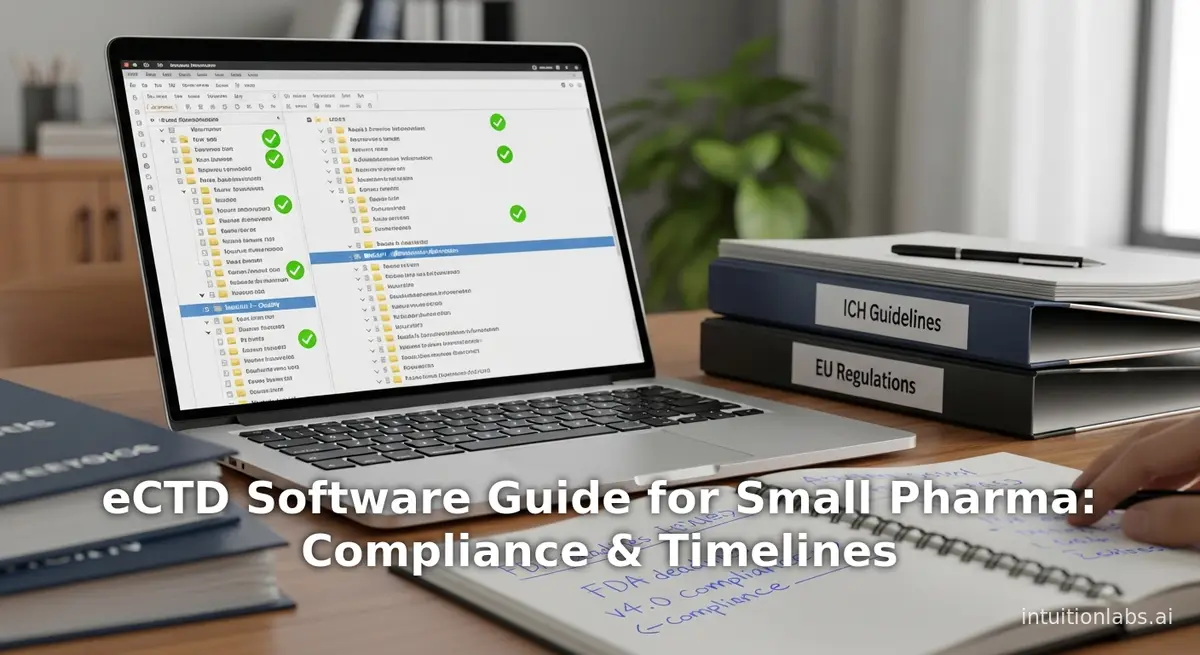
eCTD Software Guide for Small Pharma: Compliance & Timelines
Learn how to choose eCTD software for small pharma. This guide covers regulatory compliance, global submission timelines for FDA & EMA, and eCTD v4.0 updates.
eCTD Publishing Software: An In-Depth Guide for v4.0
A technical guide to eCTD publishing software for regulatory submissions. Compare top tools like LORENZ, EXTEDO, and Veeva for eCTD v4.0 compliance and validati