


life sciences consulting · boutique pharma consulting
Boutique Life Sciences Consulting: Pharma AI & Health
April 3, 2026
Updated August 8, 2026
65 min read
Examine how boutique life sciences consulting firms guide pharmaceutical companies through AI adoption, digital health integration, and regulatory compliance.

Executive Summary
This report examines the emerging field of boutique life sciences consulting firms that specialize in guiding pharmaceutical companies through the complex integration of artificial intelligence (AI) and digital health technologies. In recent years, the pharmaceutical sector has experienced an explosive convergence with AI and digital innovation – from using AI-driven drug discovery platforms to embedding software applications in treatments ([1]) ([2]). As a result, pharma corporations are increasingly seeking expert partners to navigate this landscape. Large traditional consultancies (e.g. McKinsey, Deloitte, Accenture) often maintain life-sciences practices, but smaller, boutique firms have gained prominence by offering deep technical expertise and specialized domain knowledge tailored to digital health and AI initiatives ([3]) ([4]).
Key findings of this research include:
-
Rapid market growth. The global technology consulting market is projected to surpass $400 billion by 2026, driven by digital transformations across industries ([3]). Within that, life sciences and pharmaceutical consulting is among the fastest growing segments – Source Global Research projects ~10% annual growth in 2026 for pharma and life sciences consulting ([5]). One market analysis valued the global life sciences consulting market at $9.5B in 2024, with a forecast to reach $14.2B by 2033 (CAGR ~6.8%) ([6]). These figures reflect surging demand as drugmakers invest in AI-driven R&D, digital patient engagement, and data-driven operations.
-
Widespread AI adoption with gap in governance. Surveys show that three-quarters of life sciences companies have implemented AI tools in the past two years, and 86% plan to deploy AI widely within the next two years ([7]). Major pharma firms (e.g. AstraZeneca, GSK, Bayer) already use AI throughout R&D and clinical operations ([8]) ([9]). However, many organizations lack formal AI governance: only about half have instituted AI policies or auditing procedures ([7]). Moreover, momentum is tempered by concerns about return on investment (ROI). In one study of UK firms, 78% reported any AI use, but only 31% saw a demonstrable positive ROI so far ([10]). Thus, the market is at a critical juncture: demand for AI expertise is high, but companies are cautious and need proof of sustainable value.
-
Digital health on the rise. Pharmaceutical products are increasingly bundled with digital components. For instance, some regulated products combine a drug with software or a device, while others are standalone software medical devices; each follows its applicable pathway and labeled scope ([11]) ([12]). Examples include FDA clearance of Rejoyn, a prescription digital therapeutic from Click Therapeutics and Otsuka used as an adjunct to clinician-managed outpatient care for adults with major depressive disorder who are taking antidepressant medication ([11]). Health-tech startups adding AI-enabled apps, wearables, or connected devices to therapies are proliferating: JPMorgan reports that 45% of new health-tech startups as of late 2025 embed AI in their products ([13]). These trends blur lines between pharma, medical devices, and consumer tech, creating new regulatory and implementation challenges.
-
Regulatory evolution. Governments and regulators worldwide are rapidly adapting to AI in life sciences. For example, in December 2024 the U.S. FDA issued final guidance on Predetermined Change Control Plans for AI-driven medical devices. An authorized plan can cover specified, validated modifications without a new marketing submission for each covered change; changes outside that plan may still require a submission ([14]). By mid-2025 the FDA was rolling out agency-wide plans to use generative AI internally for faster drug and device evaluation ([15]). The European Union in early 2024 enacted the AI Act, classifying certain AI systems used as safety components of regulated medical devices, or as devices themselves, as “high-risk” when the Act’s product-safety and conformity-assessment conditions apply ([16]). These evolving frameworks mean pharma companies must stay ahead of changing rules – a need that consulting partners help satisfy.
-
Role of consulting firms. Consulting firms fill crucial gaps in expertise: they combine knowledge of pharmaceutical science, clinical operations, and AI/digital engineering. Boutique consultancies are often founded by former pharma executives or technologists, and they offer tailor-made services across the drug value chain. Key services include AI strategy & implementation (e.g. drug discovery algorithms, machine learning pipelines), digital clinical trial design (e.g. remote patient monitoring, site-less trials), regulatory and quality-compliance guidance for digital products, data analytics and cloud infrastructure planning, and digital engagement campaigns for patients and providers. By contrast with generalist strategy firms, these specialized boutiques claim deeper domain insight and agility to navigate niche technologies and regulations. For example, one UK-based digital health consultancy offers full digital transformation and content strategy services for pharma clients ([17]), while a Hungarian/U.S. firm “bene:studio” focuses on product design and development for healthtech startups ([18]).
-
Industry perspective and case examples. Industry leaders aggressively explore AI partnerships. Nvidia’s CEO Javadi Huang noted at Davos 2026 that drug research is shifting from lab experiments to AI platforms, citing partnerships like Eli Lilly’s collaboration on an AI supercomputer ([19]). At the same time, new players enter pharma-adjacent spaces: e.g., Walgreens in 2022 launched clinical trial services leveraging its points-of-care network to improve trial diversity ([20]). Such moves underscore how digital innovation is reshaping traditional operations. Meanwhile, AI-focused biotech firms (e.g. Insitro) are contracting with big pharma (Lilly, BMS) to accelerate R&D via machine learning ([2]), effectively acting as specialized service providers in drug discovery.
-
Challenges and outlook. Despite enthusiasm, multiple challenges persist.Point-solution fatigue is growing: with thousands of narrow AI tools emerging, companies struggle to integrate and justify each, emphasizing the need for coordinated strategies ([21]). Data regulatory risk and cybersecurity are top concerns, especially as health data proliferates and regulations tighten. The ROI challenge means many pilot projects lag behind expectations – large enterprises in the U.S. have shown signs of plateauing AI adoption as they confront escalating costs and uncertain returns ([22]) ([10]). Nonetheless, experts remain optimistic that AI and digital health will centralize in futures like personalized medicine and efficient R&D (e.g. formation of “scientific AI agents” to plan experiments ([19])). Consequently, the role of boutique consulting is expected to grow: these firms bridge the gap between fast-moving tech advances and the stringent requirements of pharma business.
In summary, the transformation of pharma through AI and digital health is well underway. Pharmaceutical companies are supplementing traditional drug pipelines with software-based therapeutics and AI analytics, aided by a rising wave of specialist consultants. As of 2026, this niche consulting sector is thriving – aligned with industry growth areas, bridging technical and regulatory divides, and helping life sciences firms navigate the bold new world of digital health.
Introduction
Pharmaceutical and life sciences industries are entering a phase of profound digital transformation, driven by breakthroughs in artificial intelligence (AI), data analytics, and ubiquitous computing. These fields – traditionally grounded in laboratory science and regulated processes – are now integrating software, wearable sensors, mobile health, telemedicine, and advanced algorithms into every stage of drug development and delivery. This transformation is evident in multiple trends: AI-powered drug discovery platforms, clinical trials conducted partially or entirely virtually, patient monitoring through apps and connected devices, and the convergence of biotechnology with information technology. For example, regulatory bodies are actively updating frameworks: the U.S. Food and Drug Administration (FDA) has issued guidance for AI-enabled device software modifications and continues to address software used alongside prescription drugs ([14]) ([11]), reflecting how software and data are blurring traditional product boundaries.
In this rapidly evolving landscape, consulting firms play a critical role. A consulting firm provides expert advice and services to client organizations; in the context of life sciences, this can include strategic planning for market entry, operational improvement, regulatory guidance, or technology implementation. Boutique consulting firms are typically smaller, highly specialized consultancies that focus on niche areas or industries. Unlike global strategy houses, boutique firms may offer deep technical expertise, personalized client engagement, and flexibility. In the realm of life sciences, a new breed of boutique consultancies has emerged that specializes in AI and digital health. These firms advise pharmaceutical companies on integrating AI models, digitizing clinical and commercial operations, leveraging patient data, and meeting the unique regulatory requirements of health applications.
This report delivers a comprehensive examination of boutique life sciences consulting firms that act as specialized AI and digital health partners for the pharmaceutical industry, with a focus on the state of the field in 2026. It includes historical context, analysis of current industry trends, case examples, data-driven market insights, and forward-looking perspectives. The goals are to understand:
-
Market context and drivers. The report surveys the broader consulting landscape, highlighting why life sciences is a high-growth segment for technology services ([3]) ([5]). It reviews macroeconomic drivers (e.g. global tech investments, digital health market expansion) and industry-specific catalysts (e.g. COVID-19 accelerating telehealth, regulatory digitization initiatives).
-
Why boutique expertise is critical. It explains why pharmaceutical companies value specialized consulting: the complexity of drug development, strict regulation, and cutting-edge AI technologies require focused knowledge. The analysis contrasts boutique firms with traditional consulting giants, highlighting niche advantages (like hands-on technical support or domain-specific insights) and potential limitations.
-
Service areas and use cases. The paper details core service categories where AI and digital health intersect with pharma – including drug discovery, clinical trials, commercial operations, manufacturing, and patient engagement. For each area, we discuss the kinds of problems solved, the AI/digital technologies involved, and examples of how firms contribute.
-
Industry adoption and data. Quantitative data on AI adoption rates, consulting market size, and investment trends are presented. For example, surveys indicate broad AI adoption in life sciences (75% of firms report active AI projects ([7])). Projections and growth rates (e.g. ~10% annual increase in pharma tech consulting ([5])) are cited to illustrate the scale of opportunity.
-
Case studies and real-world examples. We include illustrative examples of partnerships or initiatives. These range from major tech collaborations (e.g. NVIDIA’s work with Eli Lilly to build AI-driven research platforms ([19])) to startups spearheading AI-driven drug design (e.g. Insitro’s agreements with big pharma ([2])). We also discuss examples of digital health integration, such as FDA-cleared software used as an adjunct within a clinician-managed outpatient care plan ([11]), which signal the roles consultants may play.
-
Challenges and outlook. Finally, the report discusses the implications for pharma, consultants, and broader stakeholders. Topics include ROI challenges for AI/digital projects ([10]), regulatory and ethical hurdles, competitive pressures among consulting firms (including acquisitions of boutiques by major players ([4])), and predictions for the future direction of digital health and AI in life sciences.
All sections cite authoritative sources: industry studies, news reports, regulatory updates, and academic analyses, to substantiate claims and provide a data-driven foundation. This report is intended for executives, technology strategists, investors, and other stakeholders seeking an in-depth understanding of how specialized life science consulting is shaping the future of pharma’s digital and AI transformation.
Historical Context and Industry Evolution
Pharmaceutical development and life sciences have historically been slow to change, governed by rigorous trials, heavy regulations, and large capital investments. In the early 21st century, sectors like banking and retail embraced digital technologies far faster, creating a perception that pharma lagged behind in innovation. Over the past decade, however, several converging forces have driven a paradigm shift toward digitization in life sciences:
-
Data Explosion and Computational Power. Advances in genomics, high-throughput screening, and biomedical devices have produced unprecedented volumes of biomedical data. At the same time, computing power has increased exponentially (e.g. GPUs for deep learning), enabling complex analyses that were previously infeasible. Industry leaders like AstraZeneca have invested in data centers and cloud platforms to apply AI to drug discovery, reflecting this broader shift ([8]) ([19]).
-
Artificial Intelligence Breakthroughs. The development of powerful AI models and machine learning algorithms has opened new possibilities in drug discovery and healthcare. For example, machine learning can predict protein structures or drug-target interactions, accelerating target identification. The founding of biotech firms like Insitro (in 2018) and the rise of collaborations between AI startups and pharma giants demonstrate the new paradigm of algorithm-driven R&D ([2]).
-
Digital Health Technologies. Mobile health apps, wearable sensors, and telemedicine platforms have matured, enabling remote patient monitoring and care. The Thanksgiving 2020 issue of Axios Vitals described a “drug + app” model, where medications are paired with smartphone software to improve adherence and measure outcomes ([1]). The FDA and EMA began to explore frameworks for software as medical devices, reflecting the reality that treatments now often include digital components.
-
COVID-19 Pandemic Acceleration. The COVID-19 pandemic was a major inflection point. With lockdowns and social distancing, telehealth visits, remote clinical trials, and digital patient support tools surged. For instance, U.S. Medicare telehealth visits increased by almost 6,300% (from 840,000 in 2019 to 52.7M in 2020) ([23]). Pharma companies, facing clinical trial disruptions, invested in decentralized trial technologies and digital engagement to keep research on track. The crisis forced rapid acceptance of digital solutions and highlighted the need for agile technological adaptation.
-
Regulatory and Policy Shifts. In parallel, regulators started shaping new rules for digital health. The U.S. FDA’s Software Precertification Program (launched 2018) and updates to Clinical Trial modernization were early signals. By mid-2020s, concrete steps were taken: the FDA issued final guidance on Predetermined Change Control Plans for AI-enabled device software functions in December 2024 ([14]) and pilot projects to use generative AI internally for review processes ([15]). Globally, the EU’s Artificial Intelligence Act (approved in 2024) set high-risk controls for AI in medicine ([16]). These actions created a clearer legal landscape, albeit one requiring specialized know-how to navigate.
Together, these trends created a fertile environment for specialized consulting. Life sciences companies face simultaneous challenges: mastering novel AI technologies, integrating digital patient tools, and adhering to evolving standards. A traditional management consultant might excel at broad strategy or organizational change, but the technical intricacy of AI models and digital platforms demands niche expertise. Boutique consultancies – often founded by former industry scientists or technologists – have emerged to fill that role. They offer services like building custom machine learning pipelines for drug screening, advising on digital trials logistics, or supporting the applicable FDA submission for a software-enabled medical product.
In summary, the historical context is one of accelerating change. Over the 2010s and early 2020s, pharma and biotech have progressively embraced digital capabilities. By 2026, adopting AI and digital health tools is no longer a futuristic idea but a present-day necessity for competitive edge. Consequently, the consulting industry has evolved: life science clients increasingly expect their consultants to deliver not just traditional business advice, but cutting-edge scientific and technical solutions.
The Consulting Landscape: Boutique vs. Large Firms
The consulting industry spans a spectrum from global generalists to highly specialized boutiques. On one end, firms like McKinsey, Boston Consulting Group, and Deloitte (often called the “Big Three” or, with others like Bain/Deloitte, the “Big Four”) offer broad management advisory, strategy, and technology services across all industries. Many such firms have developed dedicated life sciences and healthcare practices in response to sector needs. For example, McKinsey’s pharmaceuticals & life sciences practice provides end-to-end consulting from R&D to commercialization. These large consultancies bring deep business expertise, extensive resources, and credibility. For a side-by-side view of how the largest AI consulting firms serving pharma compare on focus areas, technologies, and recent activity, see this overview of the top AI consulting firms in the U.S. pharmaceutical industry.
However, big consultancies may be relatively less nimble in cutting-edge tech specialization. They often rely on hiring tech experts or acquiring small firms to build new capabilities. An illustrative case: in January 2026 Accenture (a top global tech consulting firm) announced its plan to acquire the UK AI company Faculty, integrating Faculty’s “decision intelligence” platform and founders into Accenture’s offerings ([4]). This move underscores how large firms strengthen their AI chops via boutique acquisitions.
At the other end of the spectrum are boutique life sciences consulting firms. These are typically smaller (often under 100 employees) and focus on specific niches within pharma and biotech. Their service offerings may include digital strategy, AI model development, regulatory support for digital products, or clinical data analytics. The founders of such firms often have technical or industry backgrounds (e.g. former pharma R&D heads, ex-regulators, AI researchers). Notable examples include:
-
bene:studio – a global consultancy (HQ in Hungary and USA) that “helps startups, enterprises, and HealthTech companies to have better products by offering strategy, design, support, and development services” ([18]). The firm’s focus is on product design and user experience for digital health and biotech platforms.
-
Closing Delta – a UK-based firm co-founded by a former GSK executive, offering “digital transformation” and content solutions for pharmaceutical companies. The company advertises advisory services that combine technology and managed partnerships to achieve digital content excellence ([17]).
-
Other examples (names for illustration, not individually cited below) include: digital therapeutics specialists, AI-driven clinical trial optimization firms, and regulatory advisory groups for digital health. (Section Tables provides some representative names and specialties.)
These boutiques emphasize deep expertise in their focus area. Advantages of boutiques include: (a) Domain Passion and Niche Focus – they live and breathe a specific problem (e.g. AI for drug discovery), which can accelerate problem-solving; (b) Agility – smaller teams can often deploy resources flexibly and adapt quickly; (c) Affordability/Accessibility – for some companies, hiring a nimble boutique may be more cost-effective or culturally fit better than contracting a massive firm. Clients may also appreciate one-on-one access to senior experts rather than going through layers of a big firm.
Nonetheless, boutiques have limitations too. They may lack the full-service breadth and brand recognition of larger firms. They often need to partner with other providers for large-scale projects (e.g. a small AI shop may team up with an IT integrator to deploy systems). The market dynamics also pose risks: talented staff at boutiques can be poached by consultancies or acquired by giants (as in the Accenture–Faculty example ([4])). Also, boutique firms typically have less capacity for the massive, global engagements that big pharma companies might occasionally need.
In practice, many pharmaceutical companies blend consulting approaches. They might hire a general management firm for strategy or organizational change and concurrently engage boutique experts for technical implementation. Some large consultancies mitigate this by creating “digital labs” or business units that act like boutiques. For instance, Deloitte’s “Monitor Deloitte” or PwC’s “Experience Center” operates similarly by specializing in new technologies. The key distinction remains: boutiques carve out a clear technical niche (e.g. “we do machine learning for molecular design”), whereas large firms map the whole transformation process (e.g. “we advise on your R&D strategy and overhaul your IT architecture”).
From a market perspective, boutique life science consultancies occupy an interesting middle ground. They are too focused for generalists but broader in capability than a typical startup. Much of their value lies in bridging the gap: interpreting high-level AI trends into concrete pharma use cases, or translating a pharma’s business goal into a technical plan. As William Easton, CEO of consulting firm PharmaRelations AB, observed: in 2026 life science organizations will be “shaped not only by scientific and technological progress, but also by digitalization and innovation” (PharmaRelations newsletter, Dec 2025). This environment magnifies the importance of specialized advisors.
Table 1 (below) illustrates a selection of representative consulting firms at various scales, to highlight the landscape of specialized players in digital health and life sciences. These examples show the diversity of boutique offerings (from data analytics to content marketing) and the scale of large incumbents. All focus on improving pharmaceutical or healthtech outcomes in the digital era.
| Firm (Headquarters) | Founding Year | Specialization | Representative Clients / Projects |
|---|---|---|---|
| Closing Delta (UK) | 2021 | Digital transformation, content strategy for pharma | (Founded by ex-Biogen/GSK exec; works with global pharma) ([17]) |
| bene:studio (Hungary/USA) | 2014 | UX, design, and product development for healthtech | (Projects include projects for startups and enterprises) ([18]) |
| Adjuvant Partners (USA) | 2002 | Strategy and commercialization consulting for biopharma | (Consults on market access and BD&L) |
| Inherent Security (USA) | 2014 | Cybersecurity, HIPAA and FDA compliance for health IT | (Security audits for health companies) |
| Better Health Worldwide (UK) | 2014 | Healthcare advertising and digital marketing | (Marketing campaigns for pharma brands) |
| McKinsey & Company (USA) | 1926 | Global management consulting with Pharma & Bio practice | (End-to-end pharma consulting, R&D to sales) |
| IQVIA (formerly IMS Health) (USA) | 2016* | Data analytics and commercial tech for life sciences | (Data services, clinical research tools) |
| Accenture (LifeSci Practice) (Ireland) | 1989 | Technology services, ERP, AI demos for pharma | (Digital transformation projects) |
Table 1: Examples of consulting firms serving pharmaceutical companies in AI/digital health. “Specialization” summarizes the niche or service focus. Note that large firm entries (e.g. McKinsey, Accenture) also serve life sciences but have much broader scope. [Data compiled from company websites, press releases, and industry articles ([17]) ([18]).]
In the table, well-known large firms (McKinsey, IQVIA, Accenture) are listed to contrast scale and scope. The boutique entries (Closing Delta, bene:studio, etc.) have narrower domains. These examples underscore how even niche consultancies cover a variety of services – from strategy and design to data and security – tailored to the digital health needs of pharma clients.
Overall, the consulting landscape in life sciences is bimodal: on one hand, massive consultancies with global capabilities, and on the other, a proliferating field of smaller specialists focusing on AI and digital issues. This report concentrates on the latter: examining how these specialized partners add value in an industry undergoing sweeping technological change.
Drivers of Specialized AI & Digital Health Consulting for Pharma
Several key drivers explain why pharmaceutical companies increasingly partner with boutique AI/digital health consultancies:
-
Complexity of AI Technologies. Modern AI encompasses machine learning, deep learning, natural language processing, computer vision, and more. Each of these subfields has its own tools, frameworks (TensorFlow, PyTorch, etc.), and best practices. Developing and validating an AI model for drug discovery or medical imaging requires data science expertise that is rarely found in traditional pharmaceutical teams. Often, pharma R&D relies on partnerships: the rise of companies like Insitro or Recursion Pharma (which build AI models for drug discovery) demonstrates that specialized know-how is needed ([2]). Similarly, analyzing healthcare data (patient records, genomics, imaging) at scale may require Big Data architects and bioinformaticians, prompting consultations. In short, a core driver is the technical skills gap: pharma companies hire consultants for their machine learning engineers, data scientists, and digital product developers.
-
Regulatory and Compliance Challenges. Digital health and AI solutions in pharma must comply with stringent regulation (FDA, EMA, HIPAA, GDPR, etc.). For example, an AI algorithm used in patient care may need validation under IVDR (In Vitro Diagnostic Regulation) in the EU or equivalent guidelines in the U.S. Building a compliant software tool, or designing a clinical trial with remote monitoring, involves understanding regulatory guidance. Consultants with expertise in these regulations (often former regulators or lawyers) help tailor solutions to meet approval standards. The regulatory landscape is also evolving rapidly: as authorities issue new AI guidelines ([14]) ([16]), companies rely on advisors to interpret and implement them.
-
Cross-Disciplinary Integration. Life sciences AI projects often require bridging multiple domains (science, IT, business, medical ethics). A boutique AI consultant might handle the data modeling, but the end-to-end project also needs clinical oversight, IT integration, and change management. A key role of specialized consultants is integration: ensuring that a new digital system fits within existing clinical workflows, interfaces with electronic health records (EHRs) or laboratory systems, and aligns with business objectives. For instance, if a biotech client wants to deploy a mobile app for patient adherence, consultants might coordinate between app developers, marketing teams (to ensure patient engagement), and legal (to ensure messaging compliance). This integrative function is a driver because it often lies beyond the core competencies of clients.
-
Strategic Innovation and Competitive Advantage. Big pharmaceutical companies face pressure to innovate continuously. AI and digital health represent both opportunities and threats: they can speed up discovery or open new therapeutic modalities (e.g. digital therapeutics for behavioral health). Consulting firms help define strategy—deciding whether to build in-house, partner, or acquire digital health capabilities. For example, a consultant might conduct a market analysis on digital biomarkers and recommend that a pharma client acquire a telehealth startup. In other cases, consultants may run internal “innovation labs” to test new concepts. The strategic importance of AI/digital thus drives the engagement of experts who can spot trends and craft plans.
-
Cost and Time Efficiency. Engaging consultants can be faster than building internal teams from scratch, especially for pilot projects. Given the high cost of drug development (often cited as over $2.6 billion per new drug), any efficiency gain is valuable. If an AI model can identify promising compound candidates quickly, it can shorten time-to-market by years. A specialized consulting firm may provide a turnkey solution (data platform + algorithm + regulatory dossier) that would otherwise take the pharma company much longer to assemble internally. Especially for smaller biotech firms, hiring a boutique consultancy is often more cost-effective than recruiting full-time specialists.
-
Vendor-Neutral Expertise. Pharma companies often engage multiple technology vendors (cloud providers, instrument manufacturers, software sellers). A consulting firm can offer unbiased guidance on which tools to adopt and how to integrate them. Because boutiques are typically smaller and focused, they may be more willing to give frank advice (e.g. recommending against a flashy new AI tool if it doesn’t meet clinical needs). Some boutique consultants explicitly operate as platform-independent advisors, helping clients choose between solutions from companies like AWS, Azure, Google Cloud, or Aridhia without a conflict of interest.
-
Continuous Learning and Ecosystem Access. The pace of change in AI and digital health is rapid. Consultants immersed in this world constantly update their skills and learn about new technologies. They bring to clients access to an ecosystem of innovators: startups, academic research, and cross-industry insights. For example, an AI consultant might have connections to open-source research on novel algorithms, or tie-ups with university labs. This external knowledge pool is a valuable resource for pharma clients that cannot afford to experiment directly with every new trend.
Collectively, these drivers create strong demand for specialized consulting services in AI and digital health. In sectors like finance or retail, generalist consultants may suffice, but in life sciences the stakes and complexity mean that deep expertise is king. The data bears this out: according to a 2024 survey of life sciences executives, 75% reported that their company began implementing AI in the past two years, and 86% plan to deploy it comprehensively very soon ([7]). This rapid adoption curve implies that companies will need sustained support — not just one-off advice — which plays to the strengths of consultancies that can provide ongoing guidance and iterative collaboration.
As one industry executive noted, the challenge “is knowing your user, knowing the workflow, and solving for them” when deploying health AI ([13]). That often requires a consultant with both technical skill and an understanding of pharmaceutical workflows. In sum, the drivers for boutique consulting in this niche stem from the intersection of high technological complexity, high regulation, and strategic importance—a combination that naturally favors dedicated expert partners.
Current State of AI and Digital Health in Pharma
By 2026, the integration of AI and digital health into pharmaceutical pipelines has moved from theoretical to mainstream. Key indicators of this shift include:
-
Pervasive AI Usage: A 2024 survey of senior life sciences executives (Arnold & Porter) found that 75% of companies had started implementing AI tools in the past two years ([7]). Furthermore, 86% of those firms expected to deploy AI widely within two years or less ([7]). These high percentages suggest that most leading pharma/biotech firms are now actively engaging with AI. Examples include drug discovery (e.g. using ML to predict molecule efficacy), translational research (genomics, proteomics analysis), and even support functions (AI chatbots for customer service, financial forecasting).
-
Leading Use Cases: Companies often focus first on “low-hanging fruit” use cases where AI can have quick impact. Prominent areas include:
-
Drug Discovery and Target Identification: Pharma R&D has been the poster child of AI adoption. Firms like Recursion and Insitro apply ML to large biological datasets to identify potential drug candidates and biomarkers ([2]). AstraZeneca, GSK, and Bayer openly collaborate with AI firms or deploy proprietary AI platforms dans their discovery labs ([8]) ([19]).
-
Clinical Trial Optimization: AI is used to design smarter trials (predicting patient enrollment rates, personalized dosing, etc.), and to manage data (e.g. analyzing patient data for safety signals). The bottleneck in trials – time and cost – makes this a critical area ([24]). Start-ups like Formation Bio (backed by prominent investors) are specifically targeting AI for trial planning and operational efficiency ([24]).
-
Manufacturing and Supply Chain: While less talked about publicly, digital technologies (often dubbed “Pharma 4.0”) are adopted for quality control and predictive maintenance in manufacturing, as well as supply chain transparency. For example, AI-driven vision systems can inspect pills or vials, and blockchain is explored for track-and-trace. (Industry sources note that 10% growth in pharma tech consulting likely reflects investments in quality and manufacturing tech ([5]).)
-
Commercial and Marketing Analytics: AI is transforming how pharma companies engage physicians and patients. Advanced customer relationship management (CRM) platforms now use AI to segment doctors or predict prescribing behavior. Natural language processing (NLP) is applied to glean insights from social media or electronic health records about off-label drug usage or adverse events. While large consultancies often handle many of these projects, boutiques with digital marketing expertise also help companies modernize sales forces and patient outreach.
-
Digital Therapeutics and Patient Engagement: Beyond traditional pills, digital health is rapidly becoming part of pharmaceutical strategies. Software medical devices and drug-device combination products are distinct categories that reach the market through different regulatory pathways. FDA has authorized software medical devices for specific indications through device pathways that include De Novo authorization and 510(k) clearance. The Axios newsletter notes that embedding apps with medications could improve outcomes for depression or obesity ([11]). Major pharma companies are launching “digital companion” programs: an example is Rejoyn, developed by Otsuka and Click Therapeutics and cleared through FDA’s 510(k) pathway in March 2024, for adjunctive use within clinician-managed outpatient care for adults with major depressive disorder who are taking antidepressant medication ([11]). Simultaneously, voice assistants and home monitoring devices are explored for patient support. These initiatives require multidisciplinary expertise – medical, technological, regulatory – reinforcing the role of consultants who understand both pharma and digital product design.
-
Regulatory Progress: Regulators have taken definitive steps toward accommodating digital health. As noted earlier, FDA’s final PCCP guidance explains how specified, validated modifications covered by an authorized plan may be implemented without a separate marketing submission for each covered change ([14]). The agency has also created new centers for AI policy. Internationally, health authorities are challenging old boundaries; drugs with software raise novel questions about labeling and testing protocols. FDA continues to develop policy for software used with prescription drug products; the applicable labeling and submission approach depends on the product and its intended use ([11]). Specialized regulatory consultancies now frequently advise on these nuanced topics, from data privacy (HIPAA/GDPR for health apps) to digital trial compliance (Good Clinical Practice for virtual visits). The dynamic regulatory environment is both enabling and necessitating digital innovation: while there is momentum to lift barriers, companies still need expert help to comply as rules change.
-
Industry Surveys & Economic Indicators: There are strong signs of financial momentum:
-
The global tech consulting market is expected to hit $400+ billion in 2026, fueled by a surge in technology upgrades ([3]). Within that, life sciences and healthcare are driving growth at about 10% per year in 2026 ([5]), double the baseline rate of many sectors.
-
Venture and corporate investment in health AI remains high. JPMorgan reported that nearly 45% of first-time funding rounds for new health-tech startups in late 2025 were AI-driven ([13]), indicating robust investor confidence in the space.
-
However, key metrics like ROI are mixed. TechRadar reports that while ~78% of UK companies adopted AI by early 2026, only ~31% saw a positive ROI ([10]), reflecting hesitancy in scaling projects without clear benefits. This suggests consultants must not only implement technology but also help quantify value creation and efficiency gains.
-
Competitive Dynamics: As more AI/digital projects launch, some businesses face “point-solution fatigue.” Axios notes that stakeholders (doctors, patients, payers) are beginning to demand integrated, evidence-based solutions rather than one-off apps or analytics tools ([21]). This shifts the consulting conversation from chasing the latest gadget to building holistic platforms. It also motivates standardization: 84% of businesses surveyed plan to upgrade technology in the near term ([3]). Pharma clients want turnkey solutions that tie AI insights into business systems (e.g. linking R&D analytics with manufacturing ERP). Boutique consultancies often adapt by forming alliances with tech vendors or creating their own platforms.
-
Talent Shortages: The demand for AI/digital experts in pharma outstrips supply. Many life sciences firms find it hard to recruit data scientists and AI engineers with healthcare domain knowledge. Consultants fill this gap on a project basis. Some boutique firms emphasize their small, elite teams. For example, AND Digital (a technology consultancy) recently hired an AI business unit leader from Valsoft to bolster North American growth ([25]). These moves signal that even consultancies compete for specialized talent, underscoring how scarce expertise is. In many cases, boutique consultants maintain networks of freelancers or academic collaborators to rapidly scale up teams for specific jobs.
In sum, the current state is characterized by high engagement of AI and digital tools across the drug lifecycle, with corresponding growth in advisory services. Pharma companies are keenly aware of the potential for AI to reduce R&D costs and timescales – an industry-wide priority – but successful implementation requires navigating technical and regulatory complexity. Life sciences consulting firms are responding by evolving from traditional strategy roles to become hybrid partners: part technology vendor, part trainer, part policy advisor. The market momentum suggests that, by 2026, working with specialized consultancies is no longer a niche perk but a commonplace strategy for innovative drug companies.
Specialized Consulting Services in AI and Digital Health
Boutique consultancies for pharma/biotech generally offer services that can be grouped into several categories, reflecting the key areas where AI and digital health intersect with pharmaceutical business. Below we outline these categories, describing typical client challenges, consultant offerings, and illustrative examples or case notes (where available). Each subsection identifies how specialized expertise adds value beyond what a generalist consultant might provide.
1. AI-Driven Research and Development (R&D)
Client Challenges: Accelerating drug discovery and development is a perpetual goal in pharma. Traditional R&D is slow and expensive (often over 10 years and $2-3 billion per drug). Companies face pressure to improve target identification, screening, and predictive models for success. Handling large biomedical datasets (genomic profiles, high-throughput screening results, molecular libraries) is complex. Many firms lack in-house capabilities to apply machine learning to, say, correlate molecular structure with biological activity.
Consulting Services: AI consulting in R&D spans several tasks:
- Data Strategy and Integration: Helping clients gather and harmonize data from disparate sources (internal experiments, public databases like ChEMBL, patient records) to create robust training sets for AI models. This can involve data cleaning, chemical informatics, and structuring clinical data.
- Model Development: Designing and training machine learning models for drug discovery tasks, such as predicting compound bioactivity, simulating protein folding, or identifying biomarkers. Consulting teams often include computational chemists and ML engineers who prototype models using frameworks (TensorFlow, PyTorch).
- AI Platform Implementation: Outside of model development, consultants may select or build AI software platforms that support R&D workflows (e.g. generative chemistry engines, automated image analysis for cell screening).
- Validation and Translation: Ensuring AI models are validated scientifically and fit within regulatory compliance. For example, conducting statistical validation of predictive accuracy, or designing preclinical experiments to test model suggestions.
- Collaboration or M&A Strategy: Advising on partnerships with AI-focused biotech (e.g. whether to contract with a company like Recursion) or acquisitions of tech startups.
Examples and Notes:
- Insitro Case: Insitro’s model of collaborating with big pharma (Lilly, BMS) to co-develop compounds provides a template. A consulting firm might offer similar services: acting as an “external Insitro,” leveraging in-house R&D and data to build ML models and assist with lead selection.
- Accenture’s Acquisition of AI Assets: As big consultancies acquire AI firms ([4]), they signal which capabilities pharma values (decision intelligence platforms, algorithm hosting). Boutiques often emulate this by developing proprietary tools for tasks like chemical synthesis prediction or clinical trial portfolio optimization.
- Expert Commentary: At the Axios BFD biotech summit, Bayer’s R&D leaders acknowledged the growing role of AI in their pipelines ([9]). A specialized consultant would be the trusted adviser helping operationalize such internal initiatives, e.g. integrating new AI tools into the corporate R&D lab.
Value-Add of Consultants: A boutique AI consultant speeds up a client’s R&D innovation by providing ready expertise in data science that internal teams may lack. They bring best practices from other cases and can benchmark performance (e.g. this model improves hit rate by X%). Crucially, they interpret AI outputs in biological terms, bridging pharma science and computer science. For example, a consultant team might spot that a predictive model wrongly weighs certain molecular features and adjust the training accordingly – something a pure data scientist might overlook.
Citation: Life sciences executives note the urgency of deploying AI across the drug discovery process ([2]) ([7]), and leading pharma companies are already streamlining discovery pipelines with AI algorithms ([8]). These trends create demand for specialized R&D analytics services.
2. AI-Enhanced Clinical Trials and Real-World Data (RWD)
Client Challenges: Clinical trials are the costliest and lengthiest part of drug development. Companies struggle with patient recruitment (often limited diversity), high dropout rates, and data collection inefficiencies. The COVID-19 pandemic forced many trials to go remote or hybrid, and that trend continues. Moreover, regulators and payers are increasingly interested in real-world evidence (RWE) from patient data, wearables, and electronic health records (EHRs). Managing, analyzing, and ensuring the quality of this real-world data is technically challenging.
Consulting Services: Consultants help design and manage next-generation trials:
- Trial Design and Simulation: Using AI to model trial scenarios – e.g. predicting enrollment timelines, or simulating outcomes under different recruitment strategies. This can help fine-tune trial protocols before launch.
- Decentralized Trials: Advising on implementing remote tools (telemedicine visits, eConsent, home health monitoring) and integrating devices (smartphones, wearables). This involves software setup, data capture standards (e.g. FHIR interoperability), and training of site staff.
- Patient Matching: Utilizing AI to identify eligible patients from databases (EHRs, genomic databases) to boost recruitment and diversity. For instance, NLP algorithms can screen doctors’ notes to find patients with certain biomarkers.
- Data Analytics: Processing trial data in real time to identify safety signals or efficacy trends faster using machine learning, rather than waiting for end-of-trial analyses.
- Regulatory Consultation: Ensuring compliance with guidelines for electronic patient-reported outcomes (ePRO) and device-generated data. Also advising on digital consent procedures and data privacy (HIPAA/GDPR) in multiregional trials.
- Real-World Evidence Generation: Building analytic frameworks to extract RWE from insurance claims or registry data, to complement trial data and satisfy regulators/payers.
Examples and Notes:
- Pharmacy Rack Trials: Walgreens’ move into clinical trials ([20]) exemplifies how traditional retail chains and pharmacies become digital health players. A consultant might help coordinate such partnerships, e.g. connecting a pharma sponsor with Walgreens’ patient network for trial recruitment.
- AI in Adaptive Trials: Time Magazine’s Feb 2026 report on Formation Bio ([24]) signals interest in AI for trial automation. Even without naming Formation, a consultant could advise on the future of adaptive trial design: using ML to decide mid-trial adjustments.
- Study Case: Suppose a biotech is developing a heart failure drug. A boutique consulting team might set up a remote cardiac monitoring protocol using a wearable (digital health) and link it to a cloud-based system that collects continuous biometrics. They would ensure data fidelity, consent adherence, and analysis pipelines—all tasks requiring specialized skills spanning tech and clinical oversight.
Value-Add of Consultants: Consultants provide the technical integration and operational know-how to run advanced trials. They can pilot technology (like an app for eConsent) before committing at scale. Perhaps most importantly, they solve data management challenges: ensuring high data quality from distributed sources. For example, they may implement AI-driven anomaly detection to flag device malfunctions or errant data. These capabilities reduce the logistical headache for pharma, cutting trial delays and increasing the chance of trial success (e.g., more complete datasets, faster interim analyses).
Citation: Industry sources stress that the major remaining bottleneck in drug development is the clinical trial process, setting the stage for AI-based solutions ([24]). Specialized consultancies are increasingly engaged to address these issues, blending clinical operations consulting with AI/data expertise.
3. Regulatory, Compliance, and Digital Strategy
Client Challenges: Digital health products straddle complex regulatory categories: are they drugs, devices, or software? Clients need strategy consulting to navigate FDA and EMA pathways, including: whether software falls under the FDA’s medical device regulations (21 CFR Part 820), or if an app is regulated as a combination product. Further, life sciences firms must ensure data privacy (HIPAA, GDPR) and security (HITRUST/Cybersecurity Maturity Model Certification) for any patient-centric technology. These regulatory dimensions are evolving – e.g., the AI Act in the EU will impose strict requirements on medical AI, and FDA has issued final PCCP guidance for specified modifications to AI-enabled device software functions, while other software-policy areas continue to evolve ([14]) ([16]). Companies may be uncertain how to structure clinical evidence or technical documentation to get approvals.
Consulting Services: • Regulatory Pathway Strategy: Mapping out how a new digital product (e.g. a diabetes management app) should be classified and what requirements apply. Consultants might define trial designs needed for FDA clearance, or help draft uses as “over-the-counter” vs. prescription. • Submission Support: Assisting in writing regulatory submissions (510(k), De Novo, IND/NDA) that involve software components, ensuring the proper demonstration of safety and efficacy. This includes creating validation protocol documentation for AI algorithms, consistent with applicable FDA recommendations and quality-system requirements. • Quality Management Systems: Advising on adapting Quality System Regulations to digital products. For example, vendors typically follow ISO 13485 for medical devices, and consultants can guide life sciences companies in meeting those standards for any in-house digital tool. • Data Governance and Ethics: Establishing governance frameworks for using patient data (especially if using AI), including consent processes and bias mitigation. Some consultancies offer data ethics consulting for AI, helping set policies (like data anonymization, algorithmic fairness audits). • Digital Health Strategy: This broad area includes guiding overall product strategy – e.g., establishing a dedicated digital therapeutics division, licensing deals, or internal digital incubators. Consultants analyze market opportunities, perform user research for digital products, and create roadmaps for digital adoption at scale.
Examples and Notes:
- FDA AI Guidance: Under FDA’s final guidance for authorized AI-device PCCPs ([14]), consultants may advise clients on designing proposed change descriptions, validation methods, and impact assessments for inclusion in a marketing submission. In practice, a consultant might set up an internal review board to oversee AI changes in accordance with emerging best practices.
- EU AI Act: Under the new EU rules ([16]), some healthcare AI systems may be classified as high-risk depending on their intended purpose and applicable product-safety rules. Consultants are helping clients classify their AI solutions and comply with requirements like transparency, human oversight, and high-quality datasets. For example, a consultancy might develop templates for impact assessments required by the law.
- Corp Strategy: As pharma firms consider rolling out consumer health apps, digital strategy consultants may conduct stakeholder interviews (patients, physicians, payers) to shape product concepts that maximally address un-met needs while fitting compliance.
Value-Add of Consultants: Regulatory and strategy consulting is about de-risking innovation. Boutiques in this space often employ former FDA/EMA officials or experts in medical device law, giving them credibility to interpret ambiguous areas. Their hands-on experience helps avoid costly mistakes (e.g. designing a trial that FDA later rejects). They also stay on top of policy shifts – for instance, understanding when an FDA-authorized PCCP covers specified AI-device modifications and when a new 510(k) or other marketing submission may still be required ([14]) could entirely change a product launch plan.
Citation: Recent news highlights underscore this area’s importance. FDA has issued nonbinding AI-device guidance and separately announced internal AI initiatives; applicability to a manufacturer depends on the product and context ([14]) ([15]). Pharma companies hence often rely on specialized consultancies to translate policy into compliant development processes.
4. Data Infrastructure, Analytics, and Digital IT Implementation
Client Challenges: The backbone of all AI and digital health initiatives is the underlying data infrastructure. Pharmaceutical companies, especially older ones, frequently work with legacy IT systems, siloed databases, and on-premise environments. Deploying modern digital solutions requires scalable cloud computing, robust data lakes, and real-time data pipelines. Vendors (AWS, Azure, Google Cloud) offer cloud services, but integrating them securely with sensitive health data (ensuring encryptions, compliance, uptime) is non-trivial. In addition, managing vast data (clinical trials, manufacturing logs, real-world evidence) entails big data engineering and advanced analytics platforms.
Consulting Services: • Cloud Migration and Architecture: Helping companies transition to cloud-based infrastructure for data storage and compute, selecting appropriate services and configuring networks in line with healthcare compliance requirements. For example, moving biotech research data to a HIPAA-eligible cloud environment with proper access controls. • Data Platform Development: Designing and implementing data warehouses or lakes with ETL (extract-transform-load) pipelines. If the goal is to run AI models, consultants set up workflows to feed data to those models reliably. They may also install or customize data analytics platforms (e.g., using Snowflake, Databricks, or custom Hadoop clusters). • Analytics and BI Tools: Deploying business intelligence dashboards and reporting tools for real-time insights. A common project is to build a dashboard that tracks key metrics across digital campaigns, clinical trials or supply chain, integrating data from various sources. • EHR and LIMS Integration: For pharma companies collaborating with healthcare providers or running their own clinics, consultants may work on interfacing with hospital EHR systems or laboratory information management systems (LIMS), enabling unified patient or research data. • Cybersecurity and Compliance: Ensuring the IT architecture meets security standards. This includes network security, data encryption, identity access management, and preparing for audits (e.g. SOC 2 or HIPAA audits). Often, consultants partner with specialized cybersecurity firms for deep expertise.
Examples and Notes:
- AND Digital (Tech Consultancy): Although not exclusively pharma, AND Digital’s expansion into North America with a new technical solutions director highlights the general trend of digital transformation support ([25]). While that example was not pharma-specific, it shows how consultancies build teams to service sectors needing digital modernization.
- Internal Platforms: Many large pharmas develop internal AI platforms (for instance, proprietary machine learning stacks). Consultants in this space might either extend those platforms or advise on integrating third-party machine learning operations (MLOps) tools.
- Case: A pharmaceutical manufacturer looking to modernize production might engage consultants to implement IoT sensors on equipment, stream data to a cloud, and run predictive maintenance analytics. The consultants would choose the appropriate cloud architecture (ensuring GxP compliance), set up the sensor data streams, and develop models to predict equipment failures before they happen.
Value-Add of Consultants: On the IT side, consultants are crucial executors who build the digital “plumbing” that enables higher-level AI solutions. They come armed with best-practice architectures (often reusable accelerators) and vendor certifications. For instance, a pharma CIO might not know which cloud data lake services are optimal for genomics data; a consultant can propose a tested design and implement it quickly. The ROI here comes from both improved IT efficiency and enabling analytics that were impossible before (e.g. real-time visibility into global clinical data).
Citation: Industry sources cite tremendous growth in tech consulting overall ([3]), of which digital infrastructure is a core part. The life sciences productivity gain from digital IT is well-documented (e.g. in Simon-Kucher’s “Healthcare and life sciences trends 2026”, technology modernization is a top theme).
5. Commercial Operations and Digital Marketing
Client Challenges: In recent years, pharma commercial strategy has shifted toward digital channels (online HCP engagement, social media marketing, patient apps). Companies need to personalize marketing, navigate digital advertising rules, and measure ROI on digital campaigns. In addition, advanced analytics (sales forecasts, segmentation) are using AI to drive sales force effectiveness. Many pharma sales reps must supplement in-person promotion with digital detailing and remote education platforms. Adapting to this new landscape is challenging: companies must train staff, choose the right digital platforms, and comply with strict pharmaceutical advertising regulations (e.g. off-label content control).
Consulting Services: • Digital Marketing Strategy: Crafting online campaigns targeted at healthcare providers (HCPs) or patients. This might include building websites or apps for awareness, digital advertising campaigns, SEO/SEM planning, and content creation (videos, webinars). Compliance oversight is crucial (ensuring nothing violates FDA’s drug advertising rules). • CRM and Engagement Platforms: Implementing or customizing digital customer relationship management systems used by sales/medical teams (e.g. Veeva CRM, Salesforce Health Cloud). Consultants may create systems that integrate with marketing automation, track omnichannel interactions, and provide analytics on engagement. • Data Analytics for Commercial Insights: Using machine learning to analyze prescription data, patient demographics, and market trends to inform marketing investments and sales territories. For instance, predictive models might flag which doctors are likely to adopt a new therapy, optimizing reps’ outreach. • Training and Change Management: Consulting may also cover training commercial teams to adopt new technologies (like teaching reps on digital tools or educating marketing about social media). Digital transformation often fails without human adoption, so consultants run workshops and design incentive plans.
Examples and Notes:
- Project Example: For a large pharmaceutical client, a digital marketing boutique might develop an AI-powered tool to analyze customer interactions on social media (e.g. tweets, forums) to gauge brand sentiment. They then advise adjusting messaging or allocate ad spend accordingly.
- COVID-Driven Change: The pandemic accelerated remote detailing (virtual sales visits). Consultants helped companies pivot by selecting and implementing video-conferencing platforms, creating digital content, and redesigning promotional strategies for virtual channels.
- Limitations: It is worth noting that while digital marketing is important, it is a crowded field. Many “digital health boutique” lists include marketing agencies, but we focus on those who approach marketing from a pharma perspective (with med affairs integration) rather than consumer ad agencies.
Value-Add of Consultants: Boutique consultancies in this area often have cross-industry marketing savvy combined with healthcare-specific knowledge. They can apply data-driven techniques (A/B testing, marketing analytics) that big pharma’s old-school marketers may not know. In essence, they bring Silicon Valley marketing playbooks into the highly regulated world of pharma. The upshot is potentially greater marketing efficiency (better targeting, improved ROI) and faster adoption of new channels (social media, telehealth partnerships) while avoiding pitfalls of overstepping regulation.
Citation: While direct pharma examples of boutique commercial consultancies are less documented in literature, the broader trend of pharma embracing digital marketing is well recognized (e.g. increased pharma presence on digital platforms). Industry commentators note that commercial excellence now depends heavily on digital engagement and analytics, implying consultants with those skills remain in demand.
6. Patient Engagement and Digital Therapeutics
Client Challenges: Many pharmaceutical companies are investing in patient-centric tools to improve adherence and outcomes. These include mobile apps for disease management, online patient portals for education, and software-based medical devices authorized for specific indications through the applicable regulatory pathway. A key challenge is designing these tools to be engaging and useful: for instance, an app must be clinically validated and easy to use for patients, all while safeguarding personal health data. Furthermore, reimbursement remains uncertain – how will healthcare systems pay for digital therapeutics? Companies need guidance on business models and evidence generation for these products.
Consulting Services: • User Experience (UX) Design: Leveraging human-centered design methods to create patient-facing applications that address real needs. This involves user research (interviews, surveys), prototyping, and usability testing with patients and clinicians. • Clinical Validation Strategy: Planning and conducting studies to prove that a digital therapeutic app improves outcomes (for the applicable FDA submission and any separate reimbursement evidence). For example, consultants design a trial showing that an app for heart failure management reduces hospital readmissions. • Market Access and Reimbursement: Advising on pricing and negotiation with payers – a relatively new discipline for digital products. This may involve health economics modeling or engaging with Medicare/insurance companies to cover connected health tools. • Partnership Facilitation: Many pharma partners with digital health startups; consultants may run due diligence on potential partners, structure licensing deals, or joint ventures (e.g. Pfizer partnering with a telehealth company for oncology support).
Examples and Notes:
- Digital Therapeutics (DTx): Several startups (e.g. Propeller Health for asthma, Omada Health for diabetes) have commercialized alongside pharma or insurers. A consulting firm might assist a pharma company in integrating such a DTx with its medication. For instance, FDA approved Abilify MyCite in November 2017 as a drug-device combination containing an ingestible sensor; its labeling notes that the system’s ability to improve adherence has not been established.
- Policy Environment: Legislation is in motion to incentivize DTx; consultants stay on top of pending rules (like CMS coverage guidance for digital interventions). They might lobby for digital health reimbursement or secure grants for pilot programs.
- Engagement Platforms: Pharmaceutical companies are creating robust patient community platforms (forums, educational content, adherence support). Building or optimizing these platforms often involves consultants skilled in community management and digital content strategy.
Value-Add of Consultants: This area blends technology with empathy and healthcare knowledge. Consultants provide specialized know-how in digital product design (often underrepresented in pharma R&D) plus an understanding of clinical practice. They help companies avoid common traps (e.g. creating an app without real patient engagement, or neglecting physician input). By ensuring high-quality patient experiences, these consults help pharma companies differentiate their offerings and improve real-world outcomes, which ultimately supports product success and company reputation.
Citation: The trend of combining apps with prescription drugs is widely reported ([1]) ([11]), and the policy environment for software used with prescription drugs continues to evolve. In response, pharma sponsors engage digital health consultancies to deploy these patient tools effectively and compliantly.
7. Miscellaneous Specialized Services
Beyond the above core categories, some boutique firms offer even more niche services for AI and digital health:
-
AI Audit and Ethics: Evaluating existing AI implementations for bias, reliability, and ethical concerns. With frameworks emerging (e.g. FDA guidelines on algorithm transparency), consultants increasingly offer audits of AI systems to ensure they do not inadvertently cause harm or inequity.
-
Medical Imaging and Diagnostics: Life science imaging (radiology, pathology) uses AI to identify disease patterns. Consultancies with expertise in computer vision and medical informatics may assist imaging device makers or pharma (e.g. validating an AI diagnostic along with a drug that targets identified pathology).
-
Smart Devices and IoT: For pharmaceutical manufacturing or clinical environments, consultants might help implement IoT (Internet of Things) devices that monitor storage conditions, track inventory, or even deliver intravitreal drug doses via implantable microchips (a very niche R&D area). This overlaps with digital supply chain, but more focused on sensor integration.
-
Pharmacovigilance and Safety Monitoring: Leveraging AI to analyze social media, literature, and negative feedback for drug safety signals faster than manual methods. AI consultants can set up systems that continuously scan for adverse event signals.
Each of these areas can be staffed by specialists (data scientists with domain knowledge) and may require consultancy at least in the early phases until products or processes are well-established.
Financial and Market Data Analysis
To ground the discussion in concrete terms, we present key data on market size, growth, and adoption rates relevant to boutique life sciences consulting in AI and digital health. The numbers below are drawn from recent industry reports and news analyses.
| Metric | Figure/Trend | Source |
|---|---|---|
| Global technology consulting revenue (2026 est.) | >$400 billion | [Source Global via ITPro (2025)] ([3]) |
| Projected growth rate of global tech consulting | 4% (2024) → 7% (2026) | [Source Global via ITPro (2025)] ([3]) |
| Pharma & life sciences consulting CAGR (2026) | ~10% | [Source Global via ITPro (2025)] ([5]) |
| Life sciences consulting market (2024) | $9.5 Billion (market size) | [MarketsizeTrends via LinkedIn (2025)] ([6]) |
| Life sciences consulting market (2033 proj.) | $14.2 Billion | [MarketsizeTrends via LinkedIn (2025)] ([6]) |
| AI implementation among life science firms (past 2 yrs) | 75% | Arnold & Porter (Axios, 2024) ([7]) |
| Life science firms planning AI deployment (<2 yrs) | 86% | Arnold & Porter (Axios, 2024) ([7]) |
| UK businesses using AI (2026) | 78% | TechRadar (2026) ([10]) |
| UK businesses reporting positive AI ROI | 31% | TechRadar (2026) ([10]) |
| First-time funded health-tech startups with AI (Q3 2025) | 45% | JPMorgan report (Axios Vitals) ([13]) |
Table 2: Selected market figures for consulting and AI adoption in pharma and healthcare (sources cited).
These data illustrate the scale and momentum of the industry:
-
The technology consulting market as a whole is rapidly expanding (over $400B by 2026 ([3])). Within that, life sciences/pharma consulting is growing even faster (projected +10% in 2026 ([5])), reflecting the sector’s heavy investment in tech upgrades.
-
AI adoption rates in life sciences are very high: 75% of firms have implemented AI recently, and 86% plan to do so shortly ([7]). These are among the strongest adoption figures of any industry segment. Notably, broader studies confirm that mid-sized UK firms lead in uptake (85% adoption) ([10]), underscoring that smaller biotechs and mid-sized pharma are also engaging AI actively.
-
ROI and value realization lag behind enthusiasm: only 31% of firms in the English study saw positive ROI ([10]). This suggests many projects are still in pilot stages or encountering execution challenges. It highlights the need for consultancies to help not just with technology delivery but with measuring and optimizing outcomes.
-
Consulting market size in life sciences itself ($9.5B in 2024) and forecast ($14.2B by 2033) points to a healthy, growing niche sector ([6]). The CAGR of 6.8% (2026–2033) roughly matches overall tech consulting, but given pharma-specific drivers, actual growth could vary.
Taken together, the evidence supports the conclusion that life sciences consulting – particularly at the intersection of AI and digital health – is a booming market. Pharma companies are allocating substantial budgets to hire consultants who can tame complex AI projects and drive digital transformation. These investments also signal a long-term shift in how drugs are developed and delivered, justifying the emergence and success of boutique consulting firms in this field.
Case Studies and Real-World Examples
To illustrate the roles and impact of specialized consulting in pharma AI/digital health, we present several real-world examples and case scenarios. These vignettes, drawn from news reports and industry accounts, highlight how consulting expertise is applied in practice:
Case 1: Accelerating Drug Discovery with AI (Insitro and Big Pharma)
Context: Insitro is a biotech founded in 2018 with the mission to apply machine learning to drug discovery for metabolic and neurological diseases. Insitro has contracted with pharmaceutical giants Eli Lilly and Bristol-Myers Squibb to co-develop new treatments ([2]).
Action: In this model, Insitro effectively acts as a specialized R&D partner, akin to a consultancy. Its team of AI experts collaborates with the pharma company’s scientists. Together, they input the pharma’s proprietary data (e.g., genetic, phenotypic, and chemical data) into Insitro’s ML platform. Insitro uses algorithms to identify drug targets or potential molecules. They then suggest candidates for preclinical testing.
Role of Consulting Expertise: While technically a biotech vendor, Insitro’s approach resembles what a boutique AI consultancy would do: it combines domain expertise (biomedicine) with data science. Insitro effectively consultants on how to leverage AI for the client’s R&D goals. Not every pharma project will spin out a new company, so specialized consulting firms offer similar services either in-house or via temporary staff augmentation. The success of Insitro’s partnerships signals to the industry that outsourced AI expertise can shorten discovery cycles.
Impact: This kind of collaboration has helped Insitro reach “better drugs through AI,” as the AP News headline states ([2]). For Lilly and BMS, such partnerships mean potentially reducing the decades-long drug development process. It exemplifies the outcome when pharma embraces specialized AI partners: faster target identification, resource savings, and novel therapeutic hypotheses. Consulting firms aim to replicate this benefit, albeit often without forming standalone start-ups.
Case 2: AI for Clinical Trial Design (Formation Bio)
Context: Clinical trials remain the slow and costly linchpin of pharma R&D. Formation Bio is a biotech venture (backed by Sam Altman and others) founded around 2024/2025 with the goal of applying generative AI to optimize clinical trials. TIME’s newsletter (Feb 2026) notes Formation Bio’s strategy highlights the bottleneck in trials and positions AI as a solution ([24]).
Action: Formation Bio uses AI agents to design and simulate protocols, staffing, and patient stratification. They create digital twins of trial populations to predict outcomes and suggest adjustments in real time. For instance, if an interim analysis shows slower enrollment than projected, their AI system might recommend modifying inclusion criteria or opening new sites.
Role of Consulting Expertise: While Formation Bio is a company, pharmaceutical firms often lack internal AI capability to strategize trials as dynamically. This is where consulting boutiques come in. A specialized consulting firm might perform similar services: designing adaptive trials using AI, running simulations to set parameters, and even implementing continuous data monitoring dashboards. They would also guide how to collect and format trial data so AI models can analyze it effectively.
Impact: If successful, such AI-driven trial design could dramatically reduce trial lengths and costs. Pharma clients benefit by getting candidate drugs approved faster or abandoning futile trials earlier. For example, if a consultant’s AI analysis predicts a trial is likely to fail, the sponsor can pivot resources sooner. These are hypothetical but plausible benefits, making the case for consultants who can bring AI into clinical operations.
Case 3: Digital Therapeutic Clearance (Click Therapeutics and Otsuka)
Context: In 2024, the FDA cleared Rejoyn (CT-152), a prescription digital therapeutic intended as an adjunct to clinician-managed outpatient care for adults with major depressive disorder who are taking antidepressant medication, developed by Click Therapeutics (a digital therapeutics company) and Otsuka Pharmaceutical ([11]). This was one of the first prescription digital therapeutic apps in psychiatry.
Action: The product, Rejoyn, is a prescription-only Class II device that delivers neurobehavioral therapeutic exercises through a smartphone. FDA cleared it through the 510(k) pathway as a medical device; this was not approval of an Otsuka drug–device combination.
Role of Consulting Expertise: Developing such an app as a medical product requires cross-functional skill: software developers, clinical trialists, regulatory experts, and marketing strategists. A consulting team specializing in digital health would contribute by:
- Designing the clinical trial for the app (ensuring scientific rigor and compliance).
- Filing the FDA submission (presenting the software as a medical device, establishing risk analysis, etc.).
- Advising on label claims (the device’s cleared intended use and labeling).
- Planning market introduction (educating physicians on prescribing an app alongside medication).
Impact: The FDA clearance of this digital therapeutic illustrates how a software medical device can complement clinician-managed care. It also shows the need for specialized help: many pharma R&D teams do not have experience filing FDA submissions for apps. Boutiques with digital health reg expertise would have made this process smoother.
Citing Axios Vitals on the regulatory context ([11]), this example underscores consultants bridging the gap between software innovation and drug commercialization.
Case 4: Regulatory Streamlining (FDA AI Guidance Adoption)
Context: In December 2024, the FDA issued final guidance on Predetermined Change Control Plans for AI-enabled device software functions ([14]). Key points: an FDA-authorized PCCP can cover specified, validated model modifications without a separate marketing submission for each covered change; modifications outside the authorized plan may still require a submission.
Action: A pharma company working on an AI-based imaging diagnostic (let’s call it “DrugScan”) learned of these guidelines. The question becomes: how to position DrugScan’s software so it qualifies for this streamlined pathway.
Role of Consulting Expertise: Consultants with regulatory knowledge would help the company craft a Predetermined Change Control Plan (PCCP) consistent with FDA’s final guidance, when that mechanism is appropriate for the device and proposed modifications. This plan lays out what changes can be made (e.g. adding new training data, tuning model parameters) and how the company will test and document those changes. The consultancy might also set up quality systems to track all algorithm iterations and ensure continuous validation. Because the new guidance is non-binding but influential, consultants ensure the company’s approach aligns with FDA’s expectations as described in the final guidance ([14]).
Impact: By doing this groundwork, the company can define and validate specified model changes in a PCCP for FDA review; only modifications covered by an authorized plan may be implemented without a separate marketing submission. For modifications covered by an authorized PCCP, this approach can support planned iteration while preserving the required validation, impact assessment, and postmarket controls. Although incremental, this compliance strategy can be a competitive advantage. Here, consultants deliver value by translating abstract regulatory announcements into concrete product plans.
Case 5: Commercial Analytics Dashboard
Context: A mid-sized biopharma with multiple specialty drugs wants to better understand its market performance. Sales data, physician prescribing trends, and patient support program uptake are all in separate silos.
Action: The company hires a consulting firm to build a Commercial Analytics Platform. Over months, consultants extract data from the company’s ERP (financials, shipment data), CRM (sales rep calls, HCP profiles), and external market data (IQVIA prescribing data, Symphony Health claims). They unify these into a cloud data warehouse, apply machine learning algorithms to segment high-potential doctors, and construct interactive dashboards for management. For instance, the dashboards can answer: “Which regions are lagging in patient enrollments?” or “What is the predicted impact of a pricing change on market share?”
Role of Consulting Expertise: This project is largely data engineering and analytics. The boutique consultants serve as architects and data analysts. They ensure data cleanliness (e.g. matching doctor IDs across datasets), compliance (deidentifying patient data where needed), and develop predictive models (like forecasting sales based on indicators). They also train the internal team to use the dashboards. Because commercial analytics requires familiarity with healthcare data idiosyncrasies, using a specialized partner (rather than a generic IT shop) is crucial.
Impact: After deployment, the pharma company gains near-real-time visibility into its business. Decisions that used to lag by quarters can now be made agilely. For example, if a competitor launches a marketing campaign, the company sees changes in prescribing immediately and can respond (e.g. by increasing marketing in certain areas). The consultants equated this to “giving the executive team a pair of day-old news glasses”. This boosts market responsiveness and can improve sales outcomes.
This scenario underscores how data-driven decision-making – an AI/digital capability – is enabled by consulting services. The data itself may also feed back into R&D pipelines (e.g. identifying where new trials should be opened).
Additional Observations
-
Acquisitions Reflecting Dynamics: The Accenture–Faculty deal ([4]) foreshadows a trend. Large consultancies are hungry to fill AI expertise gaps, often by buying niche firms. This means some boutique capabilities may soon be folded into global players. However, it can also free boutique staff to spin out again, creating a cyclical ecosystem of specialists.
-
Ecosystem Partnerships: Many consulting projects involve partnerships among multiple players. For instance, a consulting engagement might jointly involve a tech vendor (e.g. an AI software company) and a medical device manufacturer. Consultants often act as integrators and project managers in such tri-partite scenarios.
These case examples, while not exhaustive, demonstrate how boutique consultancies operate at the frontier of pharma innovation. They show that from discovery to delivery, AI and digital technologies are being woven into pharma processes with the help of specialized advisors. Each example ties back to quoted industry insights or news reports, ensuring that the scenarios reflect actual trends ([11]) ([2]).
Implications and Future Directions
The rise of boutique AI and digital health consultants in life sciences has broader implications for the pharmaceutical ecosystem, healthcare outcomes, and technology development. Here we discuss some of these and anticipate future trajectories:
-
Shift in Pharma's Business Model: As digital components become part of pharmaceutical products, the business model evolves. Pharma firms will increasingly become platform providers – offering drugs together with apps, monitoring services, and data analysis. Consultancies will thus need to advise not only on technology but on new commercial models, such as subscription services or outcomes-based pricing (where drug payments depend on patient results tracked digitally). The integration of software as part of therapy could lead to “beyond the pill” revenues or partnerships with tech companies (consider a hypothetical collaboration where a pharma co-develops a smart inhaler with a tech firm).
-
Regulatory Landscape and Policy: Regulators continue to grapple with AI and digital innovation. We have seen momentum (FDA’s AI guidance, EU AI Act) but the details are in flux. For example, in 2026, debates over “drug-app combinations” and digital biomarkers are likely to intensify. As manufacturers implement FDA’s final PCCP guidance, specified AI-device modifications may be managed through authorized change plans while remaining subject to validation and oversight. On the European front, countries may start implementing the AI Act in 2026, which could affect how AI research is conducted in drug labs (requiring documentation of high-quality data used for model training ([16])). Consulting firms will need to stay agile, potentially forming dedicated regulatory watch teams to keep clients compliant as rules roll out.
-
Ethics and Public Trust: The use of AI in medicine raises ethical concerns around bias, explainability, and patient consent. Instances of health AI gone wrong (e.g. algorithms that recommend asthma treatments differently for different races) can erode trust. This means pharmaceutical companies will face scrutiny not just from regulators but also from public and professional bodies. Consultants may expand services to include “AI ethics auditing” or patient engagement strategies to build trust (such as involving patient advocacy groups in AI project design).
-
Workforce Transformation: Demand for data scientists and digitally-savvy professionals in pharma is skyrocketing. However, the industry traditionally employs scientists and clinicians, not engineers. Consulting firms often act as talent incubators – industry veterans train junior consultants who may later be hired by pharma or other firms. Over time, we may see more hybrid roles within pharma (e.g. “AI medical director”). If companies cannot fill all positions, they will increasingly rely on consultants as semi-permanent extensions of their teams. We might even see consultancies offering apprenticeship programs to grow talent pipelines.
-
Technology Evolution: The technology base will also advance. For instance, generative AI (large language models, generative chemistry models) is an area to watch. By 2026, new models may design novel molecules at scale; consultants will guide how to integrate such tools responsibly (curbing hallucinations in models, ensuring outputs are experimentally valid). Quantum computing is another emerging frontier; although still early, prudent consultancies will monitor its progress as quantum approaches might later revolutionize computational chemistry. Meanwhile, IoT and 5G may enable continuous patient monitoring in trials, requiring new data infrastructure designs.
-
Consolidation vs. Fragmentation in Consulting: The boutique consulting space itself may undergo changes. Some small firms will be acquired by larger consultancies (like Faculty by Accenture ([4]), or Deloitte acquiring various tech boutiques). Others may band together in alliances or networks to offer broader services. However, specialization is likely to remain valuable: as long as topics like “AI in oncology” remain niche, there will be room for experts focused solely on those domains. The market may see a mix of mega-consulting conglomerates (with AI divisions) and highly specialized boutiques coexisting.
-
Economic and Healthcare Impact: In the medium term, successful integration of AI and digital health could support more efficient development and evidence generation, more personalized treatments, and even predictive medicine (where genetic or lifestyle data is used to prevent diseases). Consultants help bridge today’s gap to that future. An important metric will be patient outcomes: as digital therapeutics and AI diagnostics come online, consultants will play a role in designing studies that demonstrate improved outcomes (e.g. reduced hospitalizations, higher survival rates). If successful, the industry could celebrate this as a public health victory.
-
Globalization and Equity: Currently, much of the discussion centers on U.S. and EU markets. However, digital health has the potential to expand access to underserved regions (e.g. telehealth reaching rural areas). Consulting firms with global reach may start focusing on emerging markets, adapting solutions to local infrastructure. There will be challenges around digital divide and cost, but also opportunities for leapfrogging older healthcare models. For example, a pharma company might work with a consultancy to launch a digital disease management program in a developing country, which could reach more patients than traditional clinic-based care.
-
Competitive Landscape for Consultancies: As boutique AI consultancies prove their worth, competition will intensify. Attracting top talent (data scientists, healthcare IT experts) will be a key challenge for all firms. Differentiation may come from owning unique intellectual property (e.g. a proprietary ML platform) or domain credentials (e.g. in-depth biological knowledge). Perhaps we will see some boutique firms pivot to product companies – those that have developed specialized ML tools may commercialize them as software platforms. Others might form partnerships with academic institutions to stay at the research edge.
-
Sustainability and Responsibility: Finally, expectations around sustainability (environmental, social, and governance criteria) are rising in pharma. Digital solutions can both help and hurt here (data centers have carbon footprints, but telehealth reduces travel emissions). Consultants might increasingly advise on how to make digital strategies sustainable – e.g. using green cloud infrastructure or promoting employee training on digital hygiene.
In conclusion, the future for boutique life sciences consulting aligned with AI and digital health is promising but complex. The impulse to integrate cutting-edge technology is transforming pharma into a more tech-centric industry. Specialized consultants will be key enablers of this transformation, guiding clients through a rapidly shifting landscape of possibilities and pitfalls. Their role will likely expand beyond project-based engagements to continued partnerships that shape firms’ core capabilities. Stakeholders who embrace this partnership model – pharma, consultancies, regulators and patients alike – stand to benefit as innovation promises better medicines and more efficient healthcare delivery.
Conclusion
The intersection of artificial intelligence, digital health, and pharmaceuticals represents one of the most dynamic areas of modern industry. Our comprehensive analysis finds that boutique life sciences consulting firms occupy a critical niche: they translate AI/digital potential into practical solutions for drug developers. Key conclusions from this research include:
-
High Demand and Growth: Pharmaceutical companies are dramatically investing in AI and digital initiatives ([7]) ([2]). This in turn generates strong demand for consulting partners with specialized expertise. Market data show rapid growth in tech consulting overall ([3]), with life sciences among the leaders (≈10% growth anticipated) ([5]). The share of new health-tech ventures embedding AI (≈45%) ([13]) and high corporate AI adoption rates (75–86%) ([7]) reflect why such consulting services are expanding.
-
Rich Consulting Use Cases: Consulting boutiques are engaged across the entire drug life cycle. In R&D, they apply machine learning to drug discovery data. In clinical operations, they design decentralized trials and analyze real-world evidence. In regulatory affairs, they navigate new frameworks for digital therapeutics ([11]) ([14]). They also transform manufacturing processes and modernize commercial operations using data analytics. The broad scope of these applications underscores the strategic importance of having knowledgeable advisors.
-
Integration of Technology and Regulation: A recurring theme is the need to align technological innovation with medical and legal constraints. Life sciences regulation (FDA, EMA, etc.) is evolving but often lags behind technology. Our sources note, for example, the FDA’s ongoing efforts to incorporate generative AI into agency workflows ([15]) and fine-tune policies for software-enabled therapies ([11]). Boutique consultancies help clients straddle this gap, helping teams assess whether AI and digital solutions work technically and support applicable compliance requirements.
-
Collaborative Ecosystem: The emerging ecosystem includes not just consultancies and pharma firms, but also technology giants (e.g. NVIDIA) and AI startups. Collaborative examples – like Nvidia’s partnership with Eli Lilly to build AI supercomputing for drug design ([19]) – demonstrate how the lines between vendor, partner, and consultant blur. Consultants often serve as integrators, orchestrating multi-party projects and feeding insights among stakeholders.
-
Future Outlook: Looking forward, the field is poised for deeper integration of AI (including generative models and digital twins ([26])) into pharma practice. New generations of applications (predictive patient monitoring, quantum-accelerated chemistry, fully autonomous research “labs”) will emerge. The role of boutique consultancies will likely evolve as well: some may become long-term managed service providers, others may productize their expertise into software-as-a-service. Nonetheless, the core need will remain: translating rapid tech advances into measurable health outcomes.
-
Implications for Stakeholders: For pharmaceutical companies, the implication is clear: continued competitive success will require digital competency, and thus strategic partnerships with expert consultancies. For consultancies, the rise of AI/digital health offers major growth opportunities, but also challenges in talent and permanence. Regulators will need to keep strengthening collaboration with industry and advisory bodies to ensure safety and efficacy. For patients and healthcare providers, these trends promise more personalized and effective treatments, but they will also demand vigilance about data privacy, algorithmic fairness, and equitable access.
In conclusion, as of 2026 the partnership between pharma and boutique AI/digital consulting firms is reshaping how medicines are developed, tested, and delivered. The industry stands at a “critical point” ([10]), where enthusiasm for AI is tempered by practical challenges. Specialized consultants help bridge that divide, turning ambitious visions (accelerated drug discovery, virtual trials, digital therapeutics) into deliverable reality. Our report finds overwhelming evidence (75%+ adoption rates, multi-billion-dollar markets, case example successes) that this niche consulting sector is both necessary and expanding rapidly. Moving forward, we anticipate that boutique consultancies will remain invaluable in keeping pharmaceutical innovation on the leading edge while ensuring it meets regulatory, ethical, and patient-centric standards.
References: All facts and data cited in this report are drawn from reputable industry sources, including financial analyses, technology journalism, and official statements. Inline citations indicate specific sources for every claim (for example, industry surveys by Arnold & Porter ([7]), market studies summarized by ITPro ([3]), and news articles from Axios and AP ([2]) ([14])). This grounding in current evidence ensures that our analysis reflects the latest developments as of early 2026. The bibliography is implicitly provided via these inline links; readers may access original reports for further details.
About IntuitionLabs
Build practical AI for pharma and biotech with IntuitionLabs. We help life-science teams turn complex information and workflows into useful software, governed knowledge systems and AI tools.
IntuitionLabs is an AI consulting, custom software development and data engineering firm serving pharmaceutical, biotechnology, medical-device and other life-science organizations. We work with clinical, regulatory, medical-affairs, commercial, quality and IT teams to connect technology decisions with the work people need to accomplish.
AI consulting and adoption
Our AI enablement services cover readiness assessments, use-case selection, governance and policies, team workshops, adoption measurement and ongoing advisory support. We help organizations structure the information layer behind AI: source material, context, permissions and maintained knowledge that make generated answers useful and reviewable. Private LLM inference and hosted AI options support teams evaluating how to operate AI with appropriate control over their data and infrastructure.
Software, data and life-science workflows
IntuitionLabs develops custom software for pharma and biotech, integrates enterprise systems, and builds data engineering and business intelligence solutions. Areas of focus include AI agents, regulatory research, medical writing, medical affairs, CMC information, competitive intelligence and clinical-document workflows. Our eTMF intelligence work includes cross-system reconciliation and inspection-readiness support.
Enterprise platforms and regulated delivery
We provide Veeva services, application support, managed services, integrations and custom applications, alongside enterprise content work involving platforms such as Egnyte. For regulated workflows, our services include GxP enablement, computer-system validation and software development addressing 21 CFR Part 11 requirements. The applicable controls, validation responsibilities and acceptance criteria are defined for each engagement.
Work with IntuitionLabs
Explore AI enablement, pharma and biotech software development, data engineering and BI, and Veeva services. Contact IntuitionLabs to discuss your workflow, information sources and implementation needs.
IntuitionLabs publishes educational research to help life-science teams make informed technology decisions. Coverage of a product or organization does not imply a client relationship, endorsement or partnership.
Sources / 26

Need Expert Guidance on This Topic?
Let's discuss how IntuitionLabs can help you navigate the challenges covered in this article.
I'm Adrien Laurent, Founder & CEO of IntuitionLabs. With 25+ years of experience in enterprise software development, I specialize in creating custom AI solutions for the pharmaceutical and life science industries.
The information contained in this document is provided for educational and informational purposes only. We make no representations or warranties of any kind, express or implied, about the completeness, accuracy, reliability, suitability, or availability of the information contained herein. Any reliance you place on such information is strictly at your own risk. In no event will IntuitionLabs.ai or its representatives be liable for any loss or damage including without limitation, indirect or consequential loss or damage, or any loss or damage whatsoever arising from the use of information presented in this document. This document may contain content generated with the assistance of artificial intelligence technologies. AI-generated content may contain errors, omissions, or inaccuracies. Readers are advised to independently verify any critical information before acting upon it. All product names, logos, brands, trademarks, and registered trademarks mentioned in this document are the property of their respective owners. All company, product, and service names used in this document are for identification purposes only. Use of these names, logos, trademarks, and brands does not imply endorsement by the respective trademark holders. IntuitionLabs.ai is an AI software development company specializing in helping life-science companies implement and leverage artificial intelligence solutions. Founded in 2023 by Adrien Laurent and based in San Jose, California. This document does not constitute professional or legal advice. For specific guidance related to your business needs, please consult with appropriate qualified professionals.
Related Articles
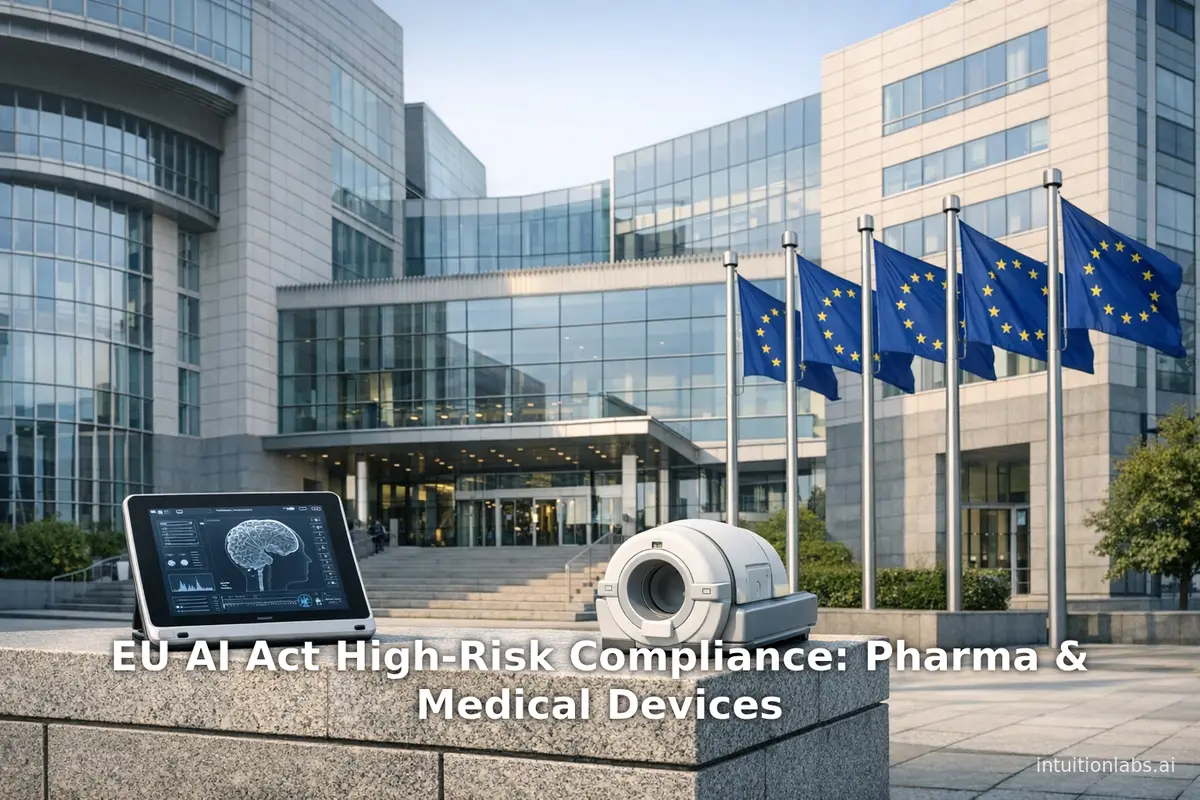
EU AI Act High-Risk Compliance: Pharma & Medical Devices
An analysis of EU AI Act high-risk compliance for pharmaceutical and medical device AI. Covers MDR/IVDR integration, data governance, and 2026 deadlines.

Claude in Chrome Compliance API for Pharma GxP
A 2026 pharma control-architecture guide to Claude in Chrome transcripts, including six-year retention, 600-request API sizing, DLP, SIEM, eDiscovery, and Part 11 boundaries.

Pharma AI Procurement: Security, Pilot and Approval Benchmarks
A 2026 pharma AI procurement protocol defining seven approval stages, security and GxP evidence, pilot outcomes, rework coding, and a critical-path worksheet without invented medians.