Claude

IntuitionLabs is now a member of the Claude Partner Network – AI training and upskilling with Claude for pharma and biotech. Book a call.

IntuitionLabs
AI integration and MCP automation for Veeva Vault CTMS clinical trial management

Veeva Vault CTMS AI Integration & Automation

Connect governed AI agents to Veeva Vault CTMS through the REST API and Model Context Protocol — for monitoring visit reports, site issue triage, enrollment intelligence, and risk-based oversight, all with GCP and 21 CFR Part 11 guardrails.

AI-Powered Workflows We Build on Vault CTMS

We connect frontier AI models to your validated Vault CTMS environment through governed, audited interfaces — accelerating the manual coordination work that slows clinical operations teams, while keeping qualified humans accountable for every GCP decision.

Retrieval
Natural-Language Trial Search
Ask plain-English questions across your portfolio — "show every oncology site with an overdue monitoring visit" — with answers grounded in Vault CTMS records and full source citations.
See it in action
Monitoring
AI-Assisted Visit Reports
Generate first drafts of monitoring visit reports from structured findings and prior history, with provenance metadata so the CRA knows what was AI-assisted before they review and sign.
Discuss monitoring
Oversight
Site Risk Triage
AI ranks sites by operational risk using CTMS and EDC signals and explains the drivers, helping central monitors focus effort where it matters most.
Improve oversight
Issues
Site Issue Summaries
Summarize long issue and action-item histories so study leads grasp the state of a site in minutes, not hours, ahead of a visit or governance call.
Learn more
TMF
Inspection-Readiness Checks
Cross-check CTMS activity against eTMF document expectations to flag missing or late filings before they become inspection findings.
Explore TMF checks
Migration
AI-Assisted Data Cleanup
During migration, AI normalizes legacy site and investigator records and infers relationships across historical portfolios, with human review of every inferred attribute.
See migration services

API & MCP — Two Ways to Connect AI

For batch and pipeline use cases we integrate directly with the Vault REST and Bulk APIs. For interactive and agentic experiences we build a Model Context Protocol server that publishes defined, audited tools an AI assistant can call — "list overdue monitoring visits," "summarize site issues," "report enrollment by country" — rather than exposing raw credentials. Each approach inherits Vault's study roles, security model, and audit trail.
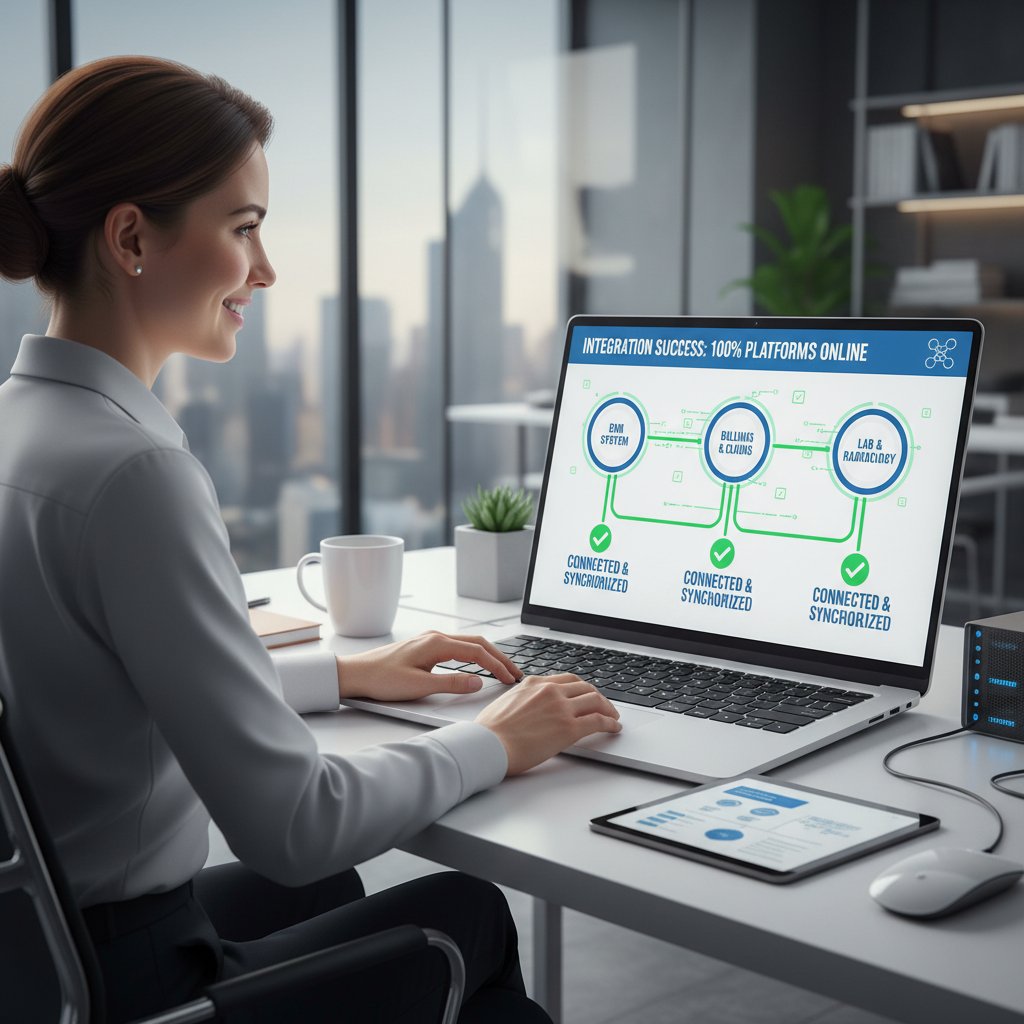
Architecture connecting AI agents to Veeva Vault CTMS via REST API and Model Context Protocol

Governed by Design, Not Bolted On

Every agent authenticates as a scoped service identity, can only touch the objects and lifecycle states it is permitted to, and writes every action to the Vault audit trail. Any record-changing operation routes back to a qualified human for a Part 11-compliant electronic signature. AI proposes; people decide and sign. This keeps accountability exactly where good clinical practice and regulators expect it.
Compliance guardrails governing AI agent access to regulated Veeva Vault CTMS data

Your Data Stays Private

Regulated clinical operations content is processed through enterprise endpoints with zero-retention, no-training terms, or through models in your own cloud tenant. A private gateway logs usage, redacts where needed, and enforces data residency. No monitoring data, site information, or subject metadata is ever exposed to public model training.
Private AI gateway protecting regulated clinical data during Vault CTMS AI processing

Our AI Integration Building Blocks

We assemble production AI on Vault CTMS from a small set of well-governed, reusable components — each validated and monitored like any other GxP system element.

Governed API Layer

A service wrapper over the Vault REST and Bulk APIs that enforces authentication, field-level scope, rate limits, and full request logging for every AI call.

Vault API docs

MCP Tool Server

A Model Context Protocol server publishing defined, audited tools so assistants invoke safe operations instead of receiving open database access.

MCP spec

Retrieval & Grounding

Embeddings-based retrieval over studies, sites, and monitoring records so model outputs are grounded in actual CTMS data with citations, reducing hallucination.

Frontier models

Human-in-the-Loop Controls

Approval gates and electronic-signature handoffs ensure no GCP-impacting action is taken without a qualified, named human in control.

21 CFR Part 11

Provenance & Audit Logging

Prompts, tool calls, retrieved sources, outputs, and human decisions are all logged for auditability and periodic review under a validated state.

Data integrity

Monitoring & Change Control

Drift and hallucination monitoring with acceptance criteria, and change control gating for any model or prompt change — treated as a GxP system component.

GAMP 5

AI-Enhanced vs. Traditional CTMS Workflows

WorkflowTraditional ApproachAI-Enhanced Approach
Writing a monitoring visit reportCRA re-keys findings into a template after the visit, hours of administrative work per report.AI drafts the report from structured findings and history; the CRA reviews, corrects, and signs.
Finding at-risk sitesManual review of dashboards across many studies, easy to miss weak signals.AI ranks sites by risk using CTMS and EDC signals and explains the drivers for a monitor to confirm.
Answering an enrollment questionRun a report or ask an analyst, then wait for the export and interpretation.Natural-language query returns a grounded answer with citations to Vault records in seconds.
Preparing for a site visitRead long issue and action-item histories to reconstruct the state of the site.AI summarizes open issues and overdue items with links to the source records.
Checking TMF completenessPeriodic manual reconciliation of CTMS activity against eTMF filings before an audit.AI continuously flags activity with missing or late documents for human follow-up.

In every row the human stays accountable. AI removes coordination effort; it never makes the GCP decision. This reflects the human-oversight emphasis in ICH E6(R3) and the FDA\'s risk-based monitoring guidance.

Why IntuitionLabs for Vault CTMS AI

We pair deep Veeva Vault platform knowledge with hands-on frontier-AI engineering and clinical operations regulatory expertise — a combination most system integrators and most AI shops cannot offer alone.

Veeva + AI in One Team

Vault platform engineers and AI builders working together, not handing off between silos.

Validation-First

Every AI capability ships with a GAMP 5 validation plan and Part 11 control mapping.

Incremental Delivery

Prove value on one workflow, validate, then scale — keeping risk and cost controlled.

Guardrails Built Into Every AI Deployment

🔐

Scoped Service Identities

Agents authenticate as governed identities limited to specific studies, objects, and lifecycle states — never broad, standing access to all of Vault.

🧾

Full Audit Trail

Every prompt, tool call, retrieved source, and output is logged alongside the human decision, supporting 21 CFR Part 11 auditability.

✍️

Human Signature Gates

Any record-changing action routes to a qualified human for a compliant electronic signature; the model only proposes.

🚫

No Public Training

Enterprise endpoints with zero-retention, no-training terms — or in-tenant models — keep regulated clinical data out of public model training.

📉

Drift Monitoring

Acceptance criteria and monitoring detect hallucination and performance drift, feeding periodic review under a validated state.

🔁

Change Control

Model and prompt changes are gated through change control and re-validated, aligned to GAMP 5 risk-based principles.

Vault CTMS AI Integration FAQ

We connect AI to Vault CTMS through two complementary paths. For batch and pipeline workloads we integrate directly with the documented Vault REST and Bulk APIs, authenticating as a scoped service identity. For interactive, agentic experiences we build a Model Context Protocol (MCP) server that publishes a defined set of audited tools — "list overdue monitoring visits," "summarize open site issues," "report enrollment by country" — that an assistant can invoke without ever receiving raw credentials. Both approaches inherit Vault's study roles, security model, and audit trail, so AI access is governed exactly like human access.
The highest-value workflows remove coordination effort without touching clinical judgment: drafting monitoring visit reports from structured findings, summarizing the open issues at a site before a visit, answering natural-language questions about enrollment and milestone status, and flagging trials or sites trending off track. These align with the risk-based, quality-by-design oversight emphasized in ICH E6(R3) and the FDA's risk-based monitoring guidance. In every case AI proposes and a qualified human decides — the model accelerates the busywork, not the GCP decision.
Yes, when the access is governed. We process regulated content through enterprise model endpoints with zero-retention and no-training terms, or through models hosted in your own cloud tenant, so no clinical operations data is exposed to public model training. A private gateway logs every request, redacts where required, and enforces data residency. This is consistent with the data integrity expectations in the MHRA GxP data integrity guidance and the records controls in 21 CFR Part 11.
The Model Context Protocol is an open standard for exposing tools and data to AI assistants in a structured, auditable way. Instead of handing a model broad database access, an MCP server publishes a discrete set of permitted operations — each one scoped, logged, and reversible. For a regulated CTMS this is exactly the right boundary: the assistant can call "summarize site 0420's open action items" but cannot run arbitrary queries or change records without passing through a human signature gate. You can read the open specification at modelcontextprotocol.io, and we design the tool catalog to match your study roles.
Yes — visit report drafting is one of the clearest wins. After a monitoring visit, an agent can assemble a first draft from the structured findings, action items, and prior visit history already in CTMS, with provenance metadata marking what was AI-assisted. The clinical research associate then reviews, corrects, and signs — keeping accountability with the named human as ICH E6(R3) expects. This typically cuts hours of post-visit administrative time per report while improving consistency, because the draft always follows the same structure and references the same source records.
AI is well suited to surfacing weak signals across many sites that a human reviewing dashboards might miss. Combining CTMS operational data with the near real-time enrollment and query metrics from the Vault EDC–CTMS connection, we build models that rank sites by risk and explain why, helping central monitors focus effort where it matters. This operationalizes the principles in the FDA's risk-based monitoring guidance and the industry frameworks published by TransCelerate. A human always confirms the action — AI prioritizes, it does not adjudicate.
No — we treat every AI capability as a GxP system component subject to the same controls as any other validated function. Each ships with a GAMP 5 validation plan, acceptance criteria, and a control mapping to 21 CFR Part 11, and any model or prompt change is gated through change control and re-validated. Drift and hallucination monitoring feed periodic review. Because the AI sits behind a governed API or MCP layer rather than inside the core CTMS configuration, we can prove value on a single workflow and validate it incrementally without destabilizing the rest of the system. See our Vault CTMS validation services.
We are model-agnostic and select based on the task, accuracy requirements, and data-residency constraints — frontier models such as Anthropic's Claude for complex reasoning and summarization, smaller models for high-volume classification. For organizations that require it, we deploy models within your own cloud tenant or through enterprise endpoints with contractual no-training guarantees, so regulated clinical data never leaves your control boundary. The governed gateway in front of the model enforces logging, redaction, and residency regardless of which model is selected, keeping the architecture consistent as the model landscape evolves.
A focused proof of value on a single workflow — natural-language enrollment queries, monitoring visit report drafting, or site issue summarization — typically runs 4–8 weeks: scoping and access setup, building the governed API or MCP tools, grounding on your CTMS data, and validating against acceptance criteria with your clinical operations users. We deliberately start narrow so you can measure real impact and confirm the guardrails before scaling. From there we expand to additional workflows under change control. Book a meeting to scope a first use case.
Yes — and this is where the unified Vault platform pays off. Because CTMS, eTMF, and Study Startup share one object model and the EDC connection bridges to clinical data, a single governed agent can answer cross-application questions like "which sites have completed monitoring visits but are missing the corresponding visit report in the eTMF?" We design the MCP tool catalog to span the applications you authorize, each call scoped and audited. This connected view is what turns inspection readiness from a periodic scramble into a continuous, queryable state, structured against the TMF Reference Model.
Bring Governed AI to Your Veeva Vault CTMS
Bring Governed AI to Your Veeva Vault CTMS image

Bring Governed AI to Your Veeva Vault CTMS

Talk to IntuitionLabs about a focused AI proof of value on Vault CTMS — natural-language trial search, monitoring visit report drafting, or site risk triage.

Book a Meeting

© 2026 IntuitionLabs. All rights reserved.