Claude

IntuitionLabs is now a member of the Claude Partner Network – AI training and upskilling with Claude for pharma and biotech. Book a call.

IntuitionLabs
Clinical operations team managing global trials in Veeva Vault CTMS

Veeva Vault CTMS Consulting, Implementation & Integration

Empowering pharmaceutical and life science organizations with cutting-edge AI solutions.

Our Veeva Vault CTMS Services

Implementation & Configuration

Integration & Data Engineering
AI Enablement

Implementation & Configuration

We begin with discovery — mapping your study, country, and site hierarchies, monitoring strategy, milestone definitions, and payment processes — then configure the Vault CTMS object model, lifecycles, study roles, and security to match your operating model. Whether you start with a single program as a low-risk entry point or deploy the full Clinical Operations suite, we keep configuration aligned to Veeva platform best practices and your validation strategy.
IntuitionLabs consultants configuring Veeva Vault CTMS study hierarchies and lifecycles

Integration with EDC, eTMF & Safety

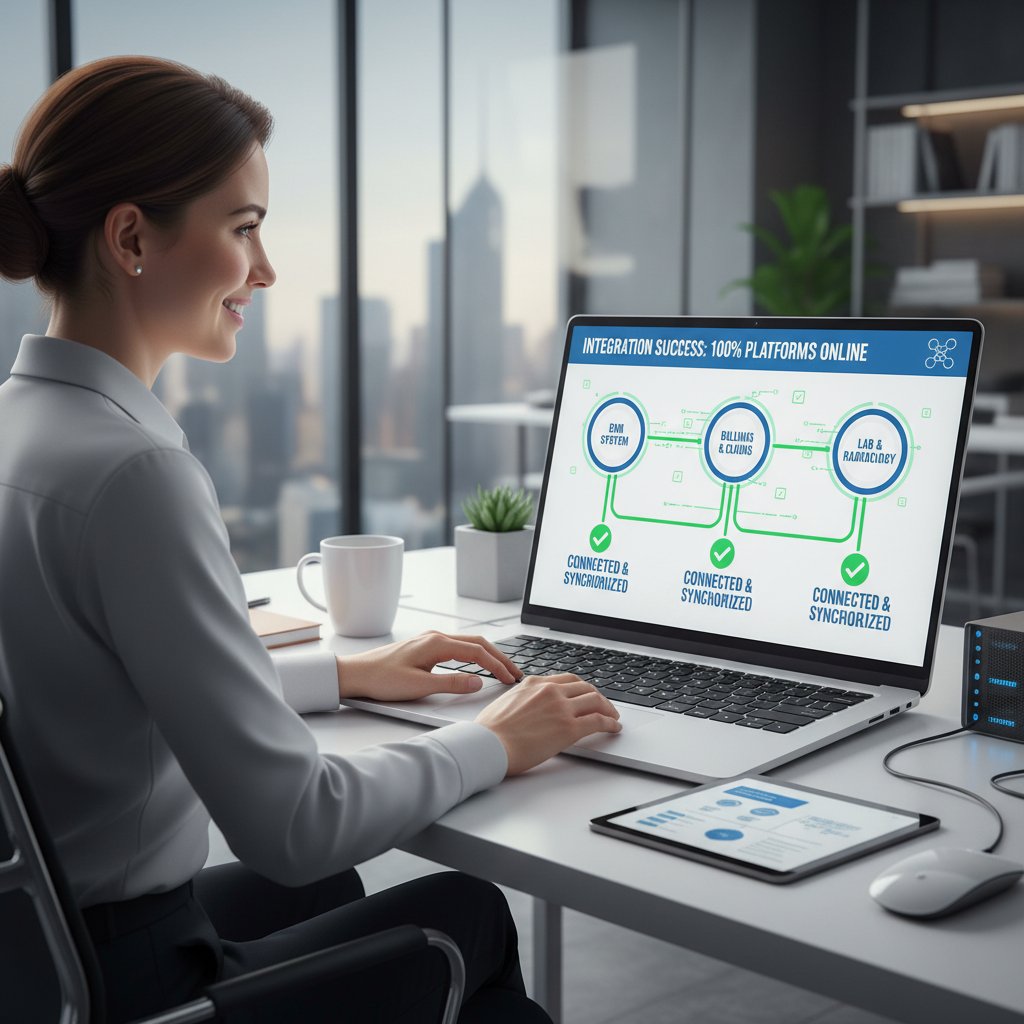
Operational truth lives across systems. We implement the Vault EDC–CTMS connection for near real-time enrollment and visit data, link CTMS to the eTMF so monitoring activity drives document expectations, and integrate safety and ERP so distribution and site payments stay aligned. Where a non-Veeva EDC or safety system is in play, we build validated API integrations with full reconciliation.
Integration architecture connecting Veeva Vault CTMS to EDC, eTMF, and safety systems

Migration & Validation

Legacy CTMS data is messy — inconsistent site identifiers, partial visit histories, orphaned payments. We profile source data, map it to the Vault CTMS object model, deduplicate and remediate, then load through Vault Loader and Bulk APIs with full reconciliation. We deliver risk-based GAMP 5 validation that leaves you with an inspection-ready system and a defensible traceability matrix.
Validation documentation and traceability matrix for a Veeva Vault CTMS deployment

Where an AI + Pharma Firm Adds Unique Value

Big consultancies can staff a generic Vault rollout. We focus on the layers where specialized AI and data-engineering expertise compounds value: clean migration, validated integration, and governed AI workflows on top of a validated CTMS.

AI-Assisted Migration

LLM normalization of legacy site, investigator, and visit records, with human review and a full audit trail.

Governed AI Agents

Scoped, audited agents that draft visit reports and triage site issues within your security model.

Integration Engineering

Validated connectors between CTMS, EDC, eTMF, safety, and ERP for site payments.

The Vault Clinical Operations Suite We Implement

Vault CTMS

End-to-end study, country, and site management with milestones, monitoring visits, issues, and payments on one platform.

Veeva Clinical Operations

Vault eTMF

The leading trial master file application, structured to the TMF Reference Model for completeness and inspection readiness.

Veeva eTMF

Study Startup

Feasibility, qualification, and activation of sites — accelerating the slowest phase of most trials.

Study Startup Brief

Site Connect

Structured document, safety, and information exchange between sponsors and investigator sites.

Site Collaboration

EDC Connection

Near real-time, two-way data flow between Vault EDC and Vault CTMS for enrollment and visit metrics.

EDC–CTMS Connection

Vault Platform

The shared cloud foundation — one object model, security model, audit trail, and REST API across every application.

Vault Developer Portal

Vault CTMS Use Cases Across the Trial Lifecycle

Study Planning & Start-Up

Teams plan the study structure, define milestones, and run feasibility, qualification, and site activation through Veeva Study Startup, with site and country records flowing directly into CTMS. We help teams design the start-up-to-CTMS handoff so activation status, document expectations, and budgets are connected from day one — shortening the timeline to first-patient-in, the metric that drives the critical path of most programs.

Monitoring & Site Oversight

CTMS schedules and records monitoring visits, captures findings and action items, and tracks issue resolution across sites. Combined with the EDC connection, it enables the risk-based oversight described in the FDA\'s risk-based monitoring guidance. We build dashboards and AI-assisted triage that flag at-risk sites earlier and focus monitoring effort where it matters.

Trial Master File & Inspection Readiness

Operational activity in CTMS should produce the right documents in the eTMF, structured against the TMF Reference Model so the file stays complete and inspection-ready. We design the cross-application rules so a completed monitoring visit, a site activation, or a safety distribution automatically drives the corresponding TMF expectation — turning inspection readiness into a continuous state rather than a pre-audit scramble.

Payments & Portfolio Reporting

CTMS ties site activity to budgets and payments and provides the portfolio-level visibility leadership needs across studies and regions. We integrate CTMS with ERP and finance systems so milestone-driven site payments flow without spreadsheets, and we build reporting that reconciles operational status against public registries such as ClinicalTrials.gov and the EU CTIS.

Standards & Regulations We Work To

🧪

ICH E6(R3) GCP

Quality-by-design and risk-based oversight per the FDA-adopted ICH E6(R3) good clinical practice guideline.

📋

21 CFR Part 11

Electronic records and signatures controls mapped to your validated CTMS configuration. See the eCFR Part 11.

🇪🇺

EU Annex 11

Computerised systems expectations under EudraLex Volume 4 Annex 11 for EU operations.

ISPE GAMP 5

Risk-based, Category 4 validation aligned to the GAMP 5 Second Edition guide.

🗂️

TMF Reference Model

Document completeness aligned to the CDISC TMF Reference Model for inspection-ready trial master files.

🔒

ALCOA+ Data Integrity

Data integrity aligned to MHRA GxP data integrity guidance across migration and integration.

Veeva Vault CTMS Frequently Asked Questions

Veeva Vault CTMS (Clinical Trial Management System) is a cloud application for end-to-end study planning, execution, monitoring, and oversight, built on the same Veeva Vault platform as Vault eTMF and Veeva Study Startup. It is part of the Vault Clinical Operations suite, which Veeva positions as a unified solution that eliminates the silos between CTMS, the trial master file, and study start-up. Sponsors of all sizes and contract research organizations use it to manage milestones, monitoring visits, site and country tracking, payments, and issue management across global portfolios — when Veeva first announced the application it described it as the industry's first unified cloud CTMS, and adoption grew quickly with more than 75 companies adopting Vault CTMS in its early years, including large sponsors such as Bristol Myers Squibb. IntuitionLabs helps life sciences organizations implement, migrate to, integrate, and AI-enhance Vault CTMS so clinical operations teams spend less time on coordination and more on running trials.
A CTMS program usually runs in phases: discovery and process mapping (study, country, and site hierarchies; monitoring models; milestone and payment processes), Vault configuration (object model, lifecycles, study roles, and the data structures linking studies to sites, visits, and issues), legacy data migration, validation aligned to ISPE GAMP 5, and role-based training plus hypercare. A focused single-program rollout can go live in roughly 10–16 weeks, while an enterprise deployment spanning multiple therapeutic areas, the full Clinical Operations suite, and CRO collaboration typically runs 6–12 months. IntuitionLabs accelerates delivery using reusable configuration patterns, pre-built validation templates, and AI-assisted data mapping, while following Veeva's own platform best practices and the risk-based, quality-by-design principles in ICH E6(R3).
Because CTMS, eTMF, and Study Startup are all native applications on the Vault platform, they share one object model, security model, and audit trail, so a site or study record created in start-up flows into CTMS and links to documents in the eTMF without point-to-point integration. For electronic data capture, Veeva provides a purpose-built Vault EDC and Vault CTMS connection that exchanges subject, enrollment, and visit data in near real time, configured via the Clinical Operations-EDC Connection. When the EDC is a different vendor — such as Medidata Rave — we build validated API integrations instead. IntuitionLabs designs these data flows so enrollment metrics, monitoring findings, and document status stay synchronized across the clinical stack.
IntuitionLabs is a Veeva X-Pages Partner in the Veeva Partner Program. We are an independent AI consulting and software development firm with deep expertise across the Veeva Vault platform, and we position our services as complementary to Veeva — helping customers get more value from their Vault CTMS investment through integration, validation, migration, and AI enablement. We work alongside your internal clinical operations team and any system integrator already engaged, focusing on the data engineering, API integration, and AI workflow layers where a specialized pharma-and-AI firm adds the most value. You can read more about the program structure on the official Veeva Partners page.
A CTMS is the operational system of record for running a trial — it tracks studies, countries, sites, milestones, enrollment, monitoring visits, issues, and payments, answering "where are we and what needs attention." An eTMF (electronic trial master file) is the regulated document repository that proves the trial was conducted according to good clinical practice, structured against the TMF Reference Model. The two are tightly related — a monitoring visit logged in CTMS should produce a visit report filed in the eTMF — which is exactly why running both on one Vault platform is valuable. IntuitionLabs helps teams design the cross-application processes so operational activity in CTMS automatically drives the right document expectations in the eTMF.
Yes. Migration is one of the highest-risk parts of any CTMS program — legacy systems such as Oracle Siebel CTMS, BioClinica/Clario, or spreadsheet-based trackers often contain inconsistent site identifiers, partial visit histories, and orphaned payment records. We run a structured migration: source profiling, mapping to the Vault CTMS object model, deduplication and remediation, controlled loads via Vault REST and Bulk APIs and Vault Loader, and reconciliation reporting. For large historical portfolios we use AI-assisted classification to normalize site and investigator records and infer relationships, dramatically reducing manual remediation while keeping a full audit trail consistent with MHRA GxP data integrity expectations.
Vault CTMS captures the operational signals — enrollment pace, query and deviation rates, monitoring findings, and milestone slippage — that feed a risk-based monitoring program. This aligns with the FDA guidance on a risk-based approach to monitoring and the quality-by-design and risk-proportionate oversight emphasized in ICH E6(R3). IntuitionLabs builds dashboards and AI-assisted triage that surface at-risk sites earlier, prioritize monitoring effort, and connect operational metrics in CTMS to the central monitoring and statistical signals coming from EDC and analytics platforms such as those discussed in TransCelerate's risk-based monitoring work.
Yes — when access is governed correctly. We connect LLM-powered agents to Vault CTMS through the documented REST API (and the Model Context Protocol where appropriate), scoping every agent to the same study roles, lifecycle states, and audit trail that govern human users. Agents can draft monitoring visit reports, summarize site issues, answer natural-language questions about enrollment status, and flag milestones at risk — always with a human-in-the-loop for any GCP-impacting action. See our Vault CTMS AI integration services for how we design these guardrails, and review the open MCP specification for the underlying standard.
Veeva supplies validation evidence with every release and continuously regression-tests the platform, which customers leverage to streamline their own validation. However, configuration, data migration, integrations, and intended-use testing remain the customer's responsibility under a shared-responsibility model. We deliver risk-based validation aligned to GAMP 5 (Vault CTMS is typically a Category 4 configured product), mapping technical controls to 21 CFR Part 11 and EU Annex 11. See our full Vault CTMS validation services for the complete artifact set.
The EU Clinical Trials Regulation (Regulation 536/2014) requires sponsors to submit and manage trials through the Clinical Trials Information System (CTIS), which changed how country and site activities are tracked across the EU. While CTMS is not itself the regulatory submission portal, it is the operational backbone that keeps country approvals, site readiness, and substantial-modification timelines aligned with CTIS milestones. IntuitionLabs configures CTMS country and site models to reflect EU CTR realities and builds reporting that reconciles operational status against the obligations registered in CTIS and public registries such as ClinicalTrials.gov.
Veeva Site Connect is the part of the Clinical Operations suite that streamlines exchange of documents, safety distribution, and study information between sponsors and investigator sites, reducing the manual portals and email that slow site collaboration. It complements CTMS by ensuring that the operational activities tracked centrally — document collection, safety letter distribution, and site communications — happen through a structured channel rather than ad hoc. Veeva describes the broader unified approach in its unified clinical operations messaging. IntuitionLabs helps teams design where Site Connect, CTMS, and the eTMF hand off to one another so sites experience one coherent process.
Many sponsors outsource execution to CROs, which historically meant reconciling two separate CTMS instances and exchanging spreadsheets. Running both parties on the Vault platform — or integrating a CRO's system to the sponsor's Vault — lets monitoring data, milestones, and issues stay synchronized with appropriate access controls. Veeva highlights this in customer stories such as Ora unifying its clinical environment. IntuitionLabs designs the data-sharing model, configures study roles and security so each organization sees only what it should, and builds the integrations that keep sponsor oversight current without manual status calls.
Operational data in CTMS connects to a broader standards landscape: the CDISC family for clinical data, the TMF Reference Model for documents, and emerging interoperability standards for site and investigator identifiers. Clean, standardized site, investigator, and study metadata is what makes cross-system reporting and AI-assisted analytics reliable. IntuitionLabs brings data-engineering discipline to the CTMS object model, harmonizing reference data so that a query for "all sites in oncology trials with overdue monitoring visits" returns a trustworthy answer. Organizations such as the Society for Clinical Data Management and the Drug Information Association publish useful guidance on the surrounding data practices.
Total cost has two parts: Veeva's subscription licensing (priced by Veeva based on applications, studies, and users) and the implementation services to configure, migrate, validate, and integrate the system. Implementation cost scales with portfolio size, the number of legacy systems being retired, integration complexity (EDC, eTMF, safety, ERP for payments), and validation rigor. IntuitionLabs scopes engagements transparently and reduces cost through reusable accelerators, AI-assisted migration, and pre-built validation templates rather than starting every artifact from scratch. We are happy to provide a tailored estimate — book a meeting to discuss your portfolio, and review the Veeva Clinical Operations overview for product context.
Large consultancies can staff a generic Vault rollout, but the durable value of a modern CTMS comes from the layers where specialized expertise compounds: clean data migration, robust validated integrations, and governed AI workflows on top of a validated system. IntuitionLabs combines pharma regulatory knowledge — 21 CFR Part 11, GAMP 5, ICH GCP — with hands-on AI and data-engineering capability, so we deliver not just a configured CTMS but an intelligent, well-integrated clinical operations backbone. We also stay vendor-honest: we help you get more from Veeva rather than selling you adjacent products you do not need. Explore our broader Veeva services and custom software development capabilities.
Ready to Get More From Your Veeva Vault CTMS Investment?
Ready to Get More From Your Veeva Vault CTMS Investment? image

Ready to Get More From Your Veeva Vault CTMS Investment?

Talk to IntuitionLabs about implementation, migration, integration, validation, and AI enablement for Veeva Vault CTMS and the Vault Clinical Operations suite.

Book a Meeting

© 2026 IntuitionLabs. All rights reserved.