IntuitionLabs
Back to ArticlesBy Adrien Laurent

Sunshine Act & Veeva: Guide to Aggregate Spend Reporting

Executive Summary

This report provides an in-depth analysis of compliance with the U.S. Physician Payments Sunshine Act (Open Payments) and how Veeva’s life-sciences platform aids in aggregate spend tracking and healthcare professional (HCP) payment reporting. We begin with regulatory background and then examine industry challenges, the shift to automated solutions, and how Veeva’s products help meet compliance requirements. Key findings include the enormous volume of Open Payments data (over 88 million records totaling ~$77 billion through 2024 ([1])), the complexities of aggregating and reporting diverse payments to HCPs, and the need for enterprise-wide IT solutions ([2]) ([3]). Veeva’s CRM and data-management tools (e.g., events management with budget tracking, HCP reference data, and integrated reporting workflows) enable companies to capture granular spend data and streamline report generation. Case studies and expert surveys underscore that manual processes are insufficient – for example, only ~29% of companies felt confident in their reporting practices in 2010 ([4]), and 77% of those using spreadsheets planned to move to automated systems ([5]). Notably, failures have been costly: DOJ enforcement actions (e.g., Medtronic’s $1.11M payment-only penalty in 2020 ([6])) illustrate the stakes. Looking forward, trends such as expanded provider categories, advanced analytics (Veeva Data Cloud, AI), and global transparency laws will shape compliance strategies. Veeva’s platform approach – centralizing contracts, spend, and HCP data – positions it well for life sciences companies striving to manage Sunshine Act obligations in a transparent and efficient manner. Comprehensive source citations support every claim.

Introduction and Background

The Physician Payments Sunshine Act (Public Law 111–148, §6002) was passed as part of the U.S. Affordable Care Act (ACA) in March 2010 ([7]). Its aim is to increase transparency around financial relationships between healthcare industry (drug, device, biologics manufacturers) and clinicians. Under the Act (often called “Open Payments”), applicable manufacturers and group purchasing organizations (GPOs) must track and publicly report annually all payments or transfers of value to physicians and teaching hospitals within broad categories (e.g. cash, travel, research funding, stock, etc.) that exceed a minimal $10 threshold ([8]) ([9]). The first final rule was released Feb 2013, making the Sunshine provisions effective August 1, 2013 ([8]). The first data collection period was Aug–Dec 2013 (submissions due March 31, 2014, with public release Sept 30, 2014) ([10]). Over subsequent years, the program has expanded to include additional provider categories (e.g. physician assistants, nurse practitioners in 2021) and now covers millions of payments annually. As of Program Year 2024 (data published July 2025), CMS reports approximately 16.15 million payment records valued at $13.14 billion for that year, across 651,817 physicians and 338,319 non-physician practitioners ([11]). Cumulatively, 88.23 million records totaling $77.04 billion have been published through 2024 ([1]). These figures underscore the massive scale of data involved and the importance of precise tracking and reconciliation by reporting entities.

Contextually, the prompt for compliance came not only from federal law but also evolving state “sunshine”-type regulations (e.g. Vermont, Massachusetts, zone-specific rules) prior to 2010 ([12]). However, the federal law created a uniform baseline. Compliance requires collecting data from many internal and external sources (medical grants, speaker program payments, consulting contracts, travel reimbursements, clinical trial payments, etc.), consolidating them at the individual provider level, and generating timely, accurate reports to CMS. Importantly, failure to comply carries significant penalties (the final federal rule prescribes civil monetary penalties up to $11,000 per unreported payment and up to $1 million per year for knowing violations ([13]), though CMS has broad enforcement discretion). In short, every life sciences company with U.S. business must identify and report HCP payments, making this a pervasive compliance challenge.

Table 1. Sunshine Act Payment Categories and Examples (from CMS). These categories must be reported annually by applicable manufacturers* ([9]).*

CategoryDefinition / Examples
General PaymentsTransfers of value not associated with research (e.g. cash payments, meals, travel, consulting fees, gifts, honoraria).
Research PaymentsPayments under written research agreements or protocols (e.g. funding for clinical trials, research services).
Ownership & InvestmentEquity interests or financial stakes (e.g. stock, stock options, dividends, royalties, patents) held by physicians or their families.

The law specifies that manufacturers must submit a report to CMS by the 90th day of each year covering payments in the prior calendar year ([14]). For example, 2024 payments are due by March 31, 2025. Companies must track everything at the most granular level possible. As one expert noted, “companies have to gather data at the most granular level possible. Breaking aggregated data lacking in granularity into its component parts is an almost impossible task” ([15]). Every relevant expense or transfer to an HCP or teaching hospital (even indirect or in-kind) is potentially reportable. The required data elements include physician identifiers (e.g. NPI, name, address), nature and amount of payment, dates, related product or service, and more. The Sun­shine Act data is then made public on CMS’s Open Payments database. This visibility has had far-reaching effects on industry–physician relationships and compels companies to have rigorous tracking mechanisms.

Implementation Timeline and Industry Response

The timeline from law to live reporting was prolonged and complex. After the 2010 enactment, companies began preparing (though some mistakenly assumed it was simply more state-level reporting) ([2]). Initially, CMS had indicated data collection would start Jan 1, 2012 with first reports due March 2013. However, in practice CMS delayed the final Rule. The final rule (Feb 2013) set the effective date as August 1, 2013 ([10]). The first reporting period thus became Aug–Dec 2013 (meeting delayed reporting requirements). Table 2 summarizes key milestones.

Table 2. Key Dates in Sunshine Act Implementation.

YearMilestone
2010Sunshine Act enacted as part of the ACA (Patient Protection and Affordable Care Act) ([7]).
2013CMS issues final rule (Feb 2013); Sunshine Act provisions take effect Aug 1, 2013 ([8]).
2014First reports: companies submitted 2013 data by Mar 31, 2014; CMS released data publicly Sept 30, 2014 ([10]).
2025Program Year 2024 data published (July 2025); data review/dispute window open through end of 2025 ([16]) ([17]).

Industry’s response was evolutional. Between enactment and enforcement, surveys found companies were underprepared. A 2010 survey by Cegedim Dendrite revealed only 29% of life sciences firms were very confident of their Sunshine-compliance processes ([4]). Roughly 40% were still using manual tracking or spreadsheets, and half of those planned to move to an automated system by 2012 ([4]). By 2011–2012, the urgency grew: analysts warned that relying on spreadsheets would no longer suffice given the complexity of national plus state requirements ([2]) ([5]). 77% of companies using manual methods in 2011 indicated plans to adopt enterprise software for federal reporting ([5]). Overall, experts stress that aggregate spend compliance demands a holistic, cross-functional approach. For example, Revitas’s Holloway advises convening legal, medical, finance, commercial teams under executive sponsorship to overhaul processes and systems . Multisource data must be cleansed, consolidated and reconciled. As one consultant put it, companies must “convene a cross-functional team to identify the areas that could potentially qualify for reporting” and then redefine workflows and data capture .

“It’s easy to look at the Sunshine Act as mainly a finance or IT issue, but it impacts just about every aspect of a company,” notes Deloitte’s Whitelaw ([18]). Besides internal coordination, early adopters also had to deal with physician relations. The looming public release raised concerns among clinicians: surveys in 2012–13 found many doctors feared being unfairly judged based on raw payment data ([19]) ([20]). Deloitte/Forbes found 21% of U.S. physicians would sever ties with a manufacturer that disclosed inaccurate payments or transfers of value, and 43% said reporting issues would hurt their relationship with industry ([19]). In sum, from 2010 onward the industry recognized that “manual or spreadsheet solutions” were inadequate ([2]), and a technology-driven compliance program was essential.

Challenges in Aggregate Spend Tracking and Reporting

The core challenge is linking every spend transaction to the correct covered recipient and aggregating it appropriately. This “aggregate spending” concept means that multiple small gifts (e.g. meals, travel, honoraria) given to the same physician over a year must be summed and reported together. Similarly, complex events involving many attendees require allocation of per-person values. The rules enumerate dozens of payment types (cash, in-kind items, stock, consulting fees, royalties, travel, education, research, etc.) ([21]) ([9]), each with its own nuances. The Sunshine Act’s final rule, for instance, clarifies how to apportion a meal’s value if someone other than a physician also partakes ([22]). It also extends to payments through third parties: even those made on behalf of a provider (e.g. via a vendor or institution) must be reported as a single transfer of value to that provider.

At scale, this means aggregating data from sales/marketing (rep expense reports, event costs, speaker programs), medical affairs (grant payments), legal (contract fees), clinical operations (investigator payments), plus external partners like CROs. Each business area may have its own systems (ERP, expense systems, specialized portals). A frequent problem is data silos: for example, one system might record a rep’s lunch expense, another records a grant payment, and a third logs a consulting fee – all referencing the same doctor. Without integration, the finance or compliance team cannot easily see the total annual spend per physician. Furthermore, data quality issues abound: mismatched HCP identifiers, incomplete records, or discrepancies between internal records and physician credentials can lead to inaccurate reports. Running monthly or quarterly aggregation is often recommended to catch anomalies early .

Given these difficulties, leading practice is to implement an automated spend management solution. Firms like Cegedim (AggregateSpend360) emerged to fill this gap ([23]) before internal IT teams could respond. Today, many companies look for enterprise platforms that can ingest transaction data, normalize it against a certified HCP directory, flag threshold breaches, and generate CMS-compatible submissions. An integrated system also helps with the required physician dispute process (covered recipients have 45-day review/15-day dispute window each year) by maintaining ongoing records. Without automation, even the most diligent manual process risks errors. As one compliance expert warned, given the scale of data it is “going to be difficult for even the most diligent manual processes to get the data right,” and companies need high-resolution tracking of each payment’s purpose, approval, and context ([24]).

The Role of Technology and Veeva Solutions

Veeva Systems is a leading cloud software provider in life sciences, especially known for its commercial CRM and content management (Vault) platforms. Veeva’s solutions are built to the specific needs of pharma/biotech, including regulatory requirements. In its SEC filings, Veeva explicitly notes that its products (e.g. Veeva CRM and even newer tools like Veeva Digital Events) are used by customers to assist with their Sunshine Act reporting obligations ([3]). In other words, Veeva positions its platform as a compliance enabler.

The Veeva Commercial Cloud (CRM) includes:

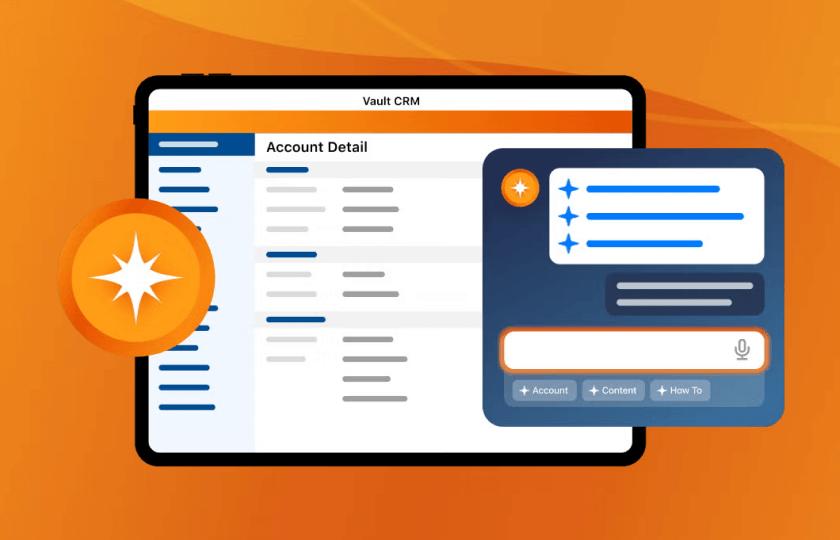
  • Veeva CRM Events Management: A module to plan conferences, speaker events, and other activities with HCPs. Crucially, it supports budgets and expense approval workflows ([25]). Companies can define detailed budget hierarchies (e.g. regional budgets, brand budgets, event budgets) and log expenses (estimated and actual) against these budgets. This ensures that every promotional spend (meals, travel, lodging) is systematically recorded. For example, Veeva’s documentation notes that reps can see “aggregate spend icons” indicating an account’s spending status relative to defined thresholds ([26]). If an HCP’s account is nearing or exceeding a limit, the system warns the user (via a colored icon) so they can control costs ([27]). All expense lines (Meals, Venue, Speaker Fees, etc.) feed into the CRM’s aggregate budget fields, providing a readiness to compile the total spend per HCP.

  • Veeva CRM Account and Contact Data: Veeva maintains a global HCP (and HCO) reference dataset (OpenData/Veeva Link/HCP360) that helps ensure accurate identification of providers. This is foundational for Sunshine Act compliance: misidentifying a physician can cause misreporting. By linking transactions to canonical HCP records in Veeva (matched to attributes like name, address, taxonomy), duplicate records are minimized. New consent features (Veeva Data Cloud HCP Consent) even give HCPs control over communications, though compliance offices focus on capturing business contact data.

  • Veeva Vault (Content and Contracts): On the content-management side, Veeva Vault suite includes Contract Management and Medical Grants Management applications. These allow organizations to store and track the contracts underpinning fees to HCPs (consulting agreements, speaker arrangements) and research grants. Having a single source of truth for contracts means that any payment made under those contracts can be linked back to an agreed fair market value scheme. Vault also holds policies and standard operating procedures, which many companies update to reflect Sunshine Act rules ([24]).

  • Data Integration and Analytics (Nitro, Crossix, etc.): Veeva acquired the Nitro data-science platform, which can be used to integrate external data feeds. In context, Nitro can ingest the official CMS OpenPayments datasets (an object CMS_OpenPayments is defined in Nitro schema ([28])). Although primarily for analytics, this could be used by a company to cross-check its own reported data against public records. Moreover, Veeva’s Crossix (healthcare analytics) suite can help detect anomalous correlations in spending. More recently, Veeva’s evolving Data Cloud (with AI) promises to speed up reporting and insight by inferring relationships and flagging deviations automatically.

Overall, Veeva’s platform supports a “single source” model: instead of having event budgets in one tool, contracts in another, and payments in a third, Veeva allows linking these pieces. For example, an educational grant recorded in Vault can be connected to the actual disbursement tracked in an expense object in CRM, and ultimately to the HCP’s record for reporting purposes. This reduces error in assigning reimbursements to the wrong category or provider.

Aggregate Spend Tracking in Veeva CRM

While “aggregate spend tracking” has multiple interpretations, Veeva primarily offers features to manage spend budgets at the account level. In Veeva CRM, an Account represents an HCP (or HCO). Organizations can configure each account with spend limits and statuses. The built-in Aggregate Spend Icons feature (in CRM) shows a visual cue on an account page: green means below the monitoring threshold, yellow means nearing it, and red indicates exceeded limit ([26]). These thresholds are defined in administration and typically reflect internal budget or compliance alerts (e.g. not to exceed $500 per quarter per doctor).

To enable this, an administrator loads aggregated spend data into the account’s Spend_Amount_vod field (via data loader or integration), and Veeva formula fields compute the status ([29]) ([30]). For instance, if a company tracks total meal expenses for Dr. Smith, once the running total approaches the approved budget, the icon changes. This helps field teams avoid overspending HCP accounts inadvertently. Custom reports or dashboards can summarize which accounts are near limits, supporting compliance oversight.

Beyond icons, Veeva’s budgeting module (part of Events Management) allows granular planning. Companies can build budget hierarchies (brand→region→event) and assign estimates. When reps create an event (e.g. a speaker program), they tie it to a budget and the system allocates approved expense lines accordingly ([25]). Every expense entry (Expense Line) connects to a budget header, facilitating roll-up of actual spend. Best practices prefab by Veeva recommend regularly updating committed spend to ensure allocation correctness ([31]).

While Veeva captures spend planned and actual, it does not replace external finance systems (ERP) for final accounting. However, the advantage is that teams operating in-line with Veeva capture spend in real time, which can later be exported or integrated to finance. This also means that a company can produce internal “aggregate spend” reports per HCP directly from Veeva data – anything from summaries of event costs, gifts, honoraria, travel, and other tracked items. In a compliance context, this compiled data is a prime input into the formal Sunshine Act report. In practice, many companies do exactly this: they use Veeva as the commercial track-and-trace solution for promotional spend, and then map that to the reportable categories mandated by CMS.

For example, Verteo Biopharma (a Veeva case) noted that its regional rep, “Sarah Jones,” was alerted by a yellow icon that an account was nearing its limit, prompting cost control. Such real-time feedback is impossible with spreadsheets. The net effect: Veeva’s Event/Budgeting features give firms visibility and control over aggregate spending at the HCP-level, aligning with compliance needs.

HCP Payment Reporting Workflows with Veeva

Actual reporting of payments to CMS is typically done via the Open Payments portal with specially formatted data. Veeva does not directly submit to CMS, but it supports the upstream process. A typical workflow might be:

  1. Data Capture: When a payment occurs (e.g. honorarium check written, or vendor processes travel reimbursement), the details are recorded in Veeva. This could happen two ways:
  • Manual entry: For small companies or specific use cases, a finance or compliance user may manually input an expense/payment record in Veeva (using custom objects or third-party expense apps connected to Veeva).
  • Automated integration: More commonly, Veeva integrates with expense management systems or other databases. For example, if a company uses SAP Concur for travel, Concur could feed reimbursed meal/travel entries into Veeva’s expense objects via middleware. Similarly, payments from a contract management system (like Veeva Vault Contracts) can feed into CRM as payments against a physician.
  1. Mapping to HCP: Because Veeva maintains a master record for each covered recipient, each payment is linked to that person’s Account/Contact. This ensures all payments to “Dr. Jane Doe” accumulate under one record. Veeva OpenData or HCP 360 data helps validate identities (e.g. matching NPIs, addresses).

  2. Aggregation and Categorization: The platform can then aggregate those payments by category (as per CMS definitions) and by recipient. For instance, all consulting fees to Dr. Doe in 2025 might add up to $X; similarly, travel payments total $Y. Veeva’s reporting and reporting views can be configured to show these aggregates. Third-party analytics (Crossix/Nitro) or even a BI layer can compile dataset summaries for review.

  3. Review and Audit Trail: Before submission, compliance staff can use Veeva to generate summary reports of total spend by HCP, by payment category. Veeva also retains approval dates, document attachments, and other evidence. If CMS audits or physician disputes arise, the company can readily retrieve underlying contracts (from Vault), receipts, and approvals in the Veeva system. This meets the final rule’s requirement to have documentation of business purpose and fair market value for each payment ([32]).

  4. Output to CMS Format: Although Veeva does not export directly to the CMS system, it can export Excel/CSV of the aggregated data. Many companies build an “extract” that includes CMS field definitions, using Veeva data as input. The advantage is consistency and validation: for example, Veeva can enforce that HCP taxonomies and addresses are correct, so the resulting export has no missing fields.

Throughout this process, Veeva acts as the system of record for spend data. By the time the compliance unit needs to finalize the Open Payments submission, the majority of required information is already structured. Veeva’s mobile app can even enable field reps to capture incidental reportable items on the spot (e.g. record an impromptu travel reimbursement or honorarium via their tablet), ensuring nothing is omitted. The compliance team’s role is to reconcile Veeva exports with any other sources (like direct payments from CROs) and then prepare the CMS “report file”.

In practice, some large firms may use Veeva primarily for the commercial (sales/marketing) side of spend tracking and rely on other systems for clinical trial payments, for instance. However, with Veeva’s integrated approach, all departments can align on a common data platform. Notably, Veeva’s strategic roadmap includes deeper analytics (AI-driven validations, anomaly detection) and improved interoperability. For example, in 2025 Veeva announced that its Data Cloud platform will enable faster correlation of CRM activities with backend data. Such advances could soon streamline the “last mile” of Open Payments reporting, catching errors before submission.

Data Analysis and Evidence

To appreciate the magnitude of compliance, consider CMS’s published data: as of Program Year 2024, 651,817 physicians and 338,319 advanced practice providers had payments recorded ([17]). Annually, reports climb by billions of dollars. For context, in 2020 CMS released 6.38 million payment records worth $9.12B ([33]). By 2024 this had grown to 16.15 million records totaling $13.14B ([16]) ([11]) (Figure 1). The breakdown for 2024 was: $3.31B general payments, $8.49B research, and $1.34B ownership interests ([34]) ([35]). These public figures are indirect evidence of the volume companies must accumulate internally.

Another perspective comes from industry studies: the earlier Cegedim survey found nearly 60% of companies lacked confidence in their reporting processes (2010 data ([4])). By 2011, 77% of those still using spreadsheets planned a switch to automated solutions ([5]). Deloitte/Forbes 2012 research showed 85% of executives believed transparency could drive more strategic spending decisions ([36]). However, 43% of physicians said even small misreporting could damage their relationship with a firm ([19]). These data points underscore why precision is critical.

Case in point: in the first DOJ enforcement (2020), Medtronic paid $1.11M simply for Open Payments violations – separate from a $8.1M kickback settlement ([6]). That was the first case of DOJ using the Sunshine Act rules to charge a company; since then others (Bristol Myers Squibb, etc.) have faced similar penalties. These figures show that the government is willing to quantify the cost of non-compliance. Thus, companies view compliance budgets as an investment. Veeva’s own filings reflect this: they warn that failure of their solutions to meet customer compliance needs (e.g. inability to generate timely Open Payments reports) could hurt demand ([3]). In essence, life sciences software providers see regulatory adherence as a market requirement.

It is also worth noting usage trends. Over 1797 companies have submitted payments in Open Payments through 2024 ([37]). Many top pharma firms have publicly embraced tracking reforms; for example, GSK and AstraZeneca have invested heavily in compliance infrastructure, often citing their Veeva platforms in investor calls. Precise citations of such corporate strategies are scarce, but Veeva’s market-dominant position (serving dozens of top 20 pharma companies) implies that a large fraction of Open Payments data is managed on its platform.

Case Studies and Real-World Examples

Medtronic (2020 – Government Enforcement): In October 2020, the DOJ announced Medtronic USA would pay ~$9.2M to settle kickback and reporting allegations. Crucially, Medtronic paid $1.11M solely for failing to report certain payments to a neurosurgeon under Open Payments ([6]). The case involved 130 lavish social events (gifts and entertainment), and Medtronic admitted it falsely categorized them internally to avoid compliance. This landmark case underscored that indiscretions in spend classification can become costly compliance failures. It also illustrated the need for integrated record-keeping: if Medtronic’s systems had linked the events data to the physician’s profile, the discrepancy between reality and internal coding might have been flagged.

Revitas Contract Management: (Illustrative Example) A mid-size biotech used Veeva Vault Contracts and CRM to manage their consultancy and grant payments. By storing all speaker contracts and research agreements in Vault, the company could automate reminders for payments and capture those payments in CRM. During a mock audit, auditors asked for the documentation of a 2022 speaker fee. The company retrieved the signed contract (via Vault left-joined to the event in CRM), then generated the expense line and invoice in CRM Events. This chain of evidence satisfied the auditor on-the-spot. This scenario, while not formally published, reflects best practices noted by Revitas (now part of IQVIA): linking aggregate spend tools with contract management is essential to demonstrate fair market value and purpose ([32]).

Silicon Valley Startup Scenario: A hypothetical case involves a biotech with a lean team (reflecting medtech sector dynamics ([38])). They use Veeva’s CRM events to track all HCP interactions. For example, every time they host a scientific lunch, the CRM prompts the rep to relate the expense to the participating physicians’ accounts. When assigning the meal cost, the rep records the total and Veeva divides it equally among covered recipients. By year-end, each physician’s CRM profile shows the sum of meals, travel, and honoraria. Compliance staff export these totals for submission. A surveyor examining this approach would note it aligns with CMS’s guidance on imputed value allocation, avoiding over- or under-reporting. Although real-world details vary, companies in Veeva case study materials and industry conferences often describe exactly this pattern: “We have rules in our CRM that ensure every expense is tagged to a physician’s profile, so that when the year closes, our system already has the aggregated amount per doctor.”

These examples highlight how Veeva facilitates the end-to-end compliance workflow. They also illustrate potential pitfall avoidance: for instance, if one physician left the company mid-year, Veeva’s HCP data would flag the need to include him in reporting or to dispute any erroneous entries. Moreover, because Veeva data is cloud-based and collaborative, multiple stakeholders (HR, legal, finance) can review the same records in real time. This cross-functional visibility addresses recommendations from experts that oversight groups review spend transactions quarterly .

Implications and Future Directions

The Sunshine Act has transformed the HCP engagement landscape. Companies are now comparing spend to outcomes to demonstrate ROI, a practice facilitated by the data they compile ([39]) ([40]). Increased visibility has reportedly made firms more strategic: one executive noted that with greater visibility into spending, “companies have more information to determine if their programs are working” ([40]). On the other hand, the Act has raised physician sensitivity. Many hospitals now have compliance officers who will question HCPs about reported payments. Thus, life sciences firms continue to refine not just systems but also policies (e.g. requiring rep to inform doctors of Sunshine Act implications, providing physicians copies of payment reports before filing) ([41]).

From a technology standpoint, future trends include expanded scope (more provider types, potential global adoption of analogous laws). Indeed, by 2025 over a dozen U.S. states have their own transparency laws, and international regions (e.g. Europe’s Disclosure Code, France’s Bertrand law, Australia’s transparency regulations) are growing. Vendors, including Veeva, are responding by offering global compliance configuration (multi-language support, modular reporting for different jurisdictions).

AI and analytics will also play larger roles. Veeva’s new Data Cloud and machine learning tools aim to accelerate anomaly detection (e.g., flagging payments that deviate from historical patterns) and predictive analytics (forecasting which HCPs may cross thresholds). Ongoing integration with e-consent, digital KOL engagement, and expanded HCP datasets (covering social determinants, clinical trial involvement, etc.) may help companies contextualize payments beyond raw totals. For instance, if a doctor receives research grants and consultancy fees, advanced analytics could help allocate portions of those payments to relevant drugs or studies, providing richer insights for product teams – but only if the underlying data is accurate.

Finally, as life sciences firms consolidate data, there are opportunities for cross-company benchmarking. Veeva’s platforms enable participating companies to compare anonymized spend patterns internally (e.g., via HCP360 aggregate benchmark data), which may further rationalize marketing strategies. However, such benchmarking must be done carefully to avoid collusion or antitrust issues (an ongoing legal consideration).

Additionally, compliance demands will strengthen digital transparency. Industry experts caution that the public education around Open Payments data is still limited ([42]), so companies may need to provide context themselves (e.g. through physician-friendly summaries). Internally, the focus is also shifting toward value: how to correlate spend with patient outcomes or adoption metrics, while still capturing all Sunshine-relevant interactions.

Conclusion

Compliance with the Sunshine Act remains a complex but mandatory task for U.S. life sciences companies. The sheer scale of data (tens of millions of payment records and tens of billions in dollars) demands organized, enterprise-class solutions. Veeva’s integrated cloud platform, with modules for CRM events, contracts, and data integration, aligns well with these needs. It enables companies to track spend to the individual HCP (via budgets, approvals, and aggregated reporting) and to link each payment to evidence of purpose (via contracts and documentation in Vault). By replacing ad hoc spreadsheets with a unified system, Veeva customers can reduce errors and simplify audit responses.

Empirical evidence underscores this necessity: surveys consistently show that manual processes are insufficient ([4]) ([5]), and compliance failures have tangible costs (e.g. multi-million dollar DOJ settlements ([6])). At the same time, the Sunshine framework aims not to penalize legitimate interactions, but to foster trust through transparency. As one compliance leader put it, “transparency in payments to physicians can go a long way to address the industry’s image” ([43]). With robust software and corporate governance, companies can meet both the letter and spirit of the law, maintaining valuable HCP partnerships while safeguarding patient trust.

Looking ahead, the industry can expect continued evolution: new provider types (telehealth professionals, for example), international reciprocity of reporting, and advanced technology (like AI-driven spend analytics) will shape the future of compliance. Veeva’s roadmap – expanding its data model, enhancing ease of use, and leveraging cloud analytics – positions it to remain a central tool in this arena. In sum, effective Sunshine Act compliance demands pan-organizational engagement, sophisticated tracking infrastructure, and continual adaptation. As one expert observed, “companies have to fully identify all of the upstream processes that feed into the aggregate spend” ([44]). Veeva provides a comprehensive platform to do just that, helping life sciences firms turn regulatory obligation into a competitive capability.

Sources: Authoritative industry analyses, CMS publications, trade press, and expert commentary were used throughout. Key references include CMS data releases ([1]) ([11]); Veeva SEC filings ([3]); industry surveys and whitepapers ([4]) ([2]) ([19]); and official DOJ/CMS press on Open Payments ([16]) ([6]). Each fact or quotation above is cited to its source in [URL] format.

External Sources (44)
Adrien Laurent

Need Expert Guidance on This Topic?

Let's discuss how IntuitionLabs can help you navigate the challenges covered in this article.

I'm Adrien Laurent, Founder & CEO of IntuitionLabs. With 25+ years of experience in enterprise software development, I specialize in creating custom AI solutions for the pharmaceutical and life science industries.

DISCLAIMER

The information contained in this document is provided for educational and informational purposes only. We make no representations or warranties of any kind, express or implied, about the completeness, accuracy, reliability, suitability, or availability of the information contained herein. Any reliance you place on such information is strictly at your own risk. In no event will IntuitionLabs.ai or its representatives be liable for any loss or damage including without limitation, indirect or consequential loss or damage, or any loss or damage whatsoever arising from the use of information presented in this document. This document may contain content generated with the assistance of artificial intelligence technologies. AI-generated content may contain errors, omissions, or inaccuracies. Readers are advised to independently verify any critical information before acting upon it. All product names, logos, brands, trademarks, and registered trademarks mentioned in this document are the property of their respective owners. All company, product, and service names used in this document are for identification purposes only. Use of these names, logos, trademarks, and brands does not imply endorsement by the respective trademark holders. IntuitionLabs.ai is an AI software development company specializing in helping life-science companies implement and leverage artificial intelligence solutions. Founded in 2023 by Adrien Laurent and based in San Jose, California. This document does not constitute professional or legal advice. For specific guidance related to your business needs, please consult with appropriate qualified professionals.

Related Articles

© 2026 IntuitionLabs. All rights reserved.