


single-use bioprocessing · stainless steel bioreactor
Single-Use vs Stainless Steel Bioprocessing: Cost and Tech Guide
August 6, 2026
Updated August 8, 2026
34 min read
A 2026 analyst comparison of single-use vs stainless steel bioprocessing covering capex/opex crossover points, extractables and leachables validation, market sizing from six research firms, and five named hybrid facility case studies.

- 01Single-use systems are used in over 90% of biomanufacturing facilities, yet stainless steel still holds 47.00% of the global bioreactor market by revenue in 2025.
- 02Single-use platforms cut capital expenditure by 40% to 50% and can accelerate commissioning by nearly 18 months versus stainless steel, but stainless steel's advantage returns at high sustained volumes of 1 to 3 tons per year, where costs converge to within about plus-or-minus 10%.
- 03The scale crossover where stainless steel becomes the cheaper per-batch option sits at roughly 2,000 to 5,000 liters of working volume and 100 to 200 batches per year.
- 04Hybrid facilities, such as Samsung Biologics' Plant 4 and WuXi Biologics' Dundalk site, are increasingly used to combine stainless steel's durability with single-use's flexibility.
- 05Sartorius will phase out its standalone stainless steel bioreactor line, with legacy sales continuing until late 2025, signaling the market's shift toward single-use and hybrid platforms.
Executive Summary
Biopharmaceutical manufacturers choosing between single-use bioprocessing systems and stainless steel bioprocessing systems are weighing two fundamentally different capital models rather than two versions of the same equipment. As of August 2026, single-use systems (SUS), meaning bioreactors, bags, tubing, filters, and connectors that are used once and discarded, are present in over 90% of biomanufacturing facilities surveyed by BioPlan Associates in its 22nd Annual Report ([1]), up from 87% in the 21st Annual Report a year earlier ([2]). Yet stainless steel systems still held 47.00% of the global bioreactor market by revenue in 2025, according to Mordor Intelligence ([3]), because the two technologies serve different points on the cost curve rather than competing head to head at every scale.
The economics diverge sharply by production volume. Astute Analytica estimates that single-use platforms cut upfront capital expenditure by 40% to 50% versus stainless steel and can accelerate facility commissioning by nearly 18 months ([4]). A Thermo Fisher-sponsored technical analysis published through BioProcess International found that large stainless steel facilities can take three to five years or longer to plan, build, validate, and license ([5]), versus 18 to 24 months for a comparable single-use facility according to industry cost-modeling estimates ([6]). But at high, steady throughput the arithmetic reverses: a peer-reviewed techno-economic model published in Biotechnology and Bioengineering found that single-use continuous processing delivers roughly 35% cost-of-goods savings over stainless steel batch facilities at annual demands of 100 to 500 kilograms, a gap that narrows to about plus-or-minus 10% at 1 to 3 tons per year ([7]). Industry cost models place the scale crossover, the point at which stainless steel becomes the cheaper per-batch option, at roughly 2,000 to 5,000 liters of working volume and 100 to 200 batches per year ([8]).
This crossover dynamic, combined with a widening body of evidence that neither technology is unambiguously "greener" or cheaper, has pushed much of the industry toward hybrid manufacturing strategies that combine both. Samsung Biologics built its Plant 4 in Songdo, South Korea explicitly as "a hybrid plant that has both the stainless steel and single-use disposable bioreactors" ([9]), reaching partial GMP (Good Manufacturing Practice) operations just 23 months after its November 2020 groundbreaking ([10]). WuXi Biologics' Dundalk, Ireland facility, which received its first European Medicines Agency (EMA) approval as a commercial manufacturing site in August 2025, runs a hybrid mix that includes a 16,000-liter process built from four 4,000-liter single-use bioreactors alongside 48,000-liter fed-batch, stainless-scale capacity ([11]). Even Sartorius, one of the largest suppliers of both formats, announced it will phase out its standalone stainless steel bioreactor product line, with legacy sales continuing "until late 2025" as the company consolidates around hybrid and single-use platforms ([12]).
Extractables and leachables (E&L), meaning chemicals that can migrate from plastic single-use components into drug product, remain a key validation concern specific to single-use systems. USP General Chapter <665>, which became official in May 2026, is informational and not compendially applicable; USP <1665> provides supporting informational guidance. Manufacturers should apply risk-based E&L assessments and meet any requirements specified by applicable regulators or enforcement bodies, drawing where useful on BioPhorum Operations Group protocols ([13]). Notably, BioPhorum's 2026 industry review states plainly that "there are no published cases demonstrating patient safety impacts from leachables originating from single-use components" ([14]). Stainless steel systems carry the inverse validation burden: FDA (U.S. Food and Drug Administration) guidance requires firms to justify their own cleaning-validation residue limits, since "FDA does not intend to set acceptance specifications or methods for determining whether a cleaning process is validated" ([15]). The global single-use bioprocessing market itself is valued between $18.01 billion and $37.81 billion for 2025 depending on the research firm and market definition used, with the widest forecast, from Precedence Research, projecting growth to $167.39 billion by 2035 at a 16.04% compound annual growth rate (CAGR) ([16]). For manufacturers navigating this decision, the practical answer is rarely "single-use" or "stainless steel" in isolation, but rather a scale-, product-, and portfolio-dependent hybrid architecture, a strategic technology assessment question that increasingly benefits from the kind of structured, data-driven evaluation that life-sciences advisory practices such as IntuitionLabs provide alongside core manufacturing engineering expertise ([17]).
Introduction and Background
Biopharmaceutical manufacturing rests on a foundational engineering choice that predates most of the molecules it produces: what material and format holds the cells, media, and drug substance as they move through the process train. For most of the industry's history, that answer was stainless steel, meaning fixed, reusable vessels cleaned and sterilized in place between batches using clean-in-place (CIP) and steam-in-place (SIP) systems. Sartorius, a major equipment vendor, describes stainless steel bioreactors as having "been the preferred solution for cell and microbial cultivations" for decades ([18]). Beginning in the 2000s, single-use systems, meaning bioreactor bags, tubing, connectors, and filters designed to be used for one batch and discarded, moved from niche laboratory tools into mainstream commercial manufacturing.
That shift is now essentially complete at the facility level, though not at the volume level. BioPlan Associates' 22nd Annual Report on Biomanufacturing Capacity and Production, published in April 2025, found that over 90% of surveyed manufacturing facilities were already using single-use systems (SUS) in at least some capacity ([1]), continuing a trajectory that stood at 87% one year earlier in the 21st Annual Report ([2]). As recently as 2015, BioPlan's 12th Annual Report found that stainless steel still accounted for "essentially 80% of commercial-scale bioprocessing operations," even as single-use technology already represented almost 40% of clinical-stage production ([19]). The decade between those two survey years captures the industry's central tension: single-use technology has won the flexibility argument almost everywhere, but stainless steel retains a durable advantage at large, dedicated commercial scale, and the global installed base of stainless-steel bioreactor units still exceeds 15,000, with replacement cycles spanning roughly two decades, according to Mordor Intelligence ([20]).
This report examines the two technologies across capabilities, adoption, and strengths and limitations; builds a feature comparison matrix and reviews the published performance and cost benchmarks; presents the quantitative market and adoption data; and profiles five named, real-world facility decisions, from Amgen's early "next-generation" single-use plants to Samsung Biologics' explicitly hybrid Plant 4, that illustrate how manufacturers are actually resolving this choice in 2026. The report also addresses the two validation domains that most directly separate the technologies: extractables and leachables (E&L) testing for single-use plastics, and cleaning validation for reusable stainless steel equipment, both of which carry distinct regulatory expectations from FDA and EMA. IntuitionLabs, a life-sciences and AI consultancy and official Veeva Vault CRM X-Pages partner, does not manufacture or sell bioprocessing equipment; its perspective here is offered as an adjacent advisory viewpoint on how manufacturers structure the underlying technology-assessment decision, not as a vendor comparison ([17]).
Share of surveyed biomanufacturing facilities already using single-use systems
Stainless steel's share of the global bioreactor market by revenue in 2025
CAPEX reduction from single-use platforms versus stainless steel
Cost-of-goods savings for single-use continuous processing at 100 to 500 kg annual demand
Single-Use Bioprocessing Systems
Capabilities
Single-use bioreactors are pre-sterilized, gamma-irradiated plastic bags mounted inside a reusable steel or plastic support structure, paired with single-use tubing, sensors, filters, and connectors that are discarded after one batch. Commercial vendors have standardized around a similar scale envelope. Thermo Fisher Scientific's HyPerforma single-use stirred-tank bioreactor line ranges "in sizes from 50 L to 2,000 L" ([21]), and the company's newer DynaDrive platform extends this "available from 5 L to 5,000 L" while using the same physical footprint as its predecessor to boost per-facility output ([22]). Sartorius's competing Biostat STR platform, paired with matched Flexsafe STR single-use bags, spans a working volume range "from 12.5 L to 2,000 L" with conserved vessel geometry from bench to production scale ([23]). Cytiva has pushed further at the mixing-and-formulation end of the process train, introducing its Xcellerex magnetic mixer "in 2,000 L and 3,000 L capacities" to support larger single-use buffer and media preparation ([24]).
Thermo Fisher explicitly frames the closed, single-use "ballroom" facility design (an open production floor with modular single-use process pods rather than segregated hardpiped suites) as a means by which "cross-contamination risk can be reduced, helping preserve batch integrity while lowering cleaning and validation requirements" ([25]). That flexibility, more than raw scale, is the technology's core capability: a single production suite can run different products in sequence without a full cleaning-validation cycle between campaigns, because the product-contact surfaces themselves are replaced rather than cleaned.
Adoption
Single-use adoption is now close to saturation across biomanufacturing facilities generally, but the intensity of use still varies by unit operation. BioPlan's 21st Annual Report found that 85.2% of biomanufacturing facilities "use single-use bioreactors in all stages" of production ([26]), and the most common consumable categories, single-use bags, connectors and clamps, and tubing, each exceeded 85% usage across surveyed facilities in 2024, at 87.6%, 87.6%, and 86.6% respectively ([27]). Adoption is heaviest among contract development and manufacturing organizations (CDMOs), whose business model depends on flexible, multi-product manufacturing. A BioProcess International technical analysis notes this dynamic directly, observing that CDMOs need "flexible production capacity, fast campaign changeovers, and rapid production at different scales," which "has made CDMOs early adopters of single-use technologies" ([28]). Despite near-universal facility-level adoption, growth in the size and number of installed single-use bioreactors has slowed: BioPlan-sourced data shows the technology's growth rate falling to between 1.6% and 3.5% CAGR in 2024 as the installed base matures ([29]), and the average largest bioreactor in use across facilities has actually declined, from 4,718 liters in 2017 to 3,664 liters today, as very large single vessels give way to trains of smaller, parallel single-use units ([30]).
Strengths and Limitations
As discussed above, the primary strength of single-use technology is capital and schedule efficiency: 40% to 50% lower capital expenditure and facility commissioning accelerated by nearly 18 months relative to stainless steel builds, per Astute Analytica. The same reporting cites a real-world example at WuXi Biologics of single-use workflows "cutting water and energy consumption by 46%" relative to comparable stainless steel operations ([31]). BioPlan's analysis reinforces the facility-level economics: "Facilities using SUS can be smaller and economical to build and maintain" ([32]), since they need less hardpiped utility infrastructure and less cleaning-validation floor space.
That efficiency comes with recurring costs and risks that grow, rather than shrink, with scale. Per-batch consumables spending remains the technology's most persistent weakness in customer sentiment. BioPlan's 22nd Annual Report found that "the biggest gap between importance and vendor satisfaction was around cost of SUS, at 37.5%" ([33]), a gap that, while still the largest, "has decreased significantly from 58.4% in 2015" ([34]); a year earlier, the 21st Annual Report had put that same cost-satisfaction gap even higher, at 46.4% ([35]). Sartorius's own 2025 financial results illustrate why: consumables such as filters and single-use bags account for "a large majority" of the revenue in the company's Bioprocess Solutions Division ([36]), underscoring that the ongoing, per-batch consumable spend, not the initial equipment purchase, is where single-use technology generates most vendor revenue and most customer cost exposure over a facility's life. BioPlan also flags supply-chain concentration as a structural risk, noting that "reliance on a few key suppliers for SUS components can pose risks" that were exposed sharply during the COVID-19 pandemic, when biocontainer lead times reportedly extended well beyond normal procurement cycles ([37]).
Extractables and leachables (E&L) testing is the other defining limitation, and the one most specific to plastic-contact single-use components. Extractables are "chemical compounds that migrate from any product contact material when exposed to an appropriate solvent under exaggerated conditions of time and temperature," while leachables are the narrower subset that actually migrates into the drug formulation under ordinary manufacturing and storage conditions ([38]). Vendor technical literature identifies the practical chemical classes of concern: "styrene monomers, stabilizers, lubricants, slip agents, pigments, and antioxidants like BHT" ([39]). Industry commentary is explicit that E&L testing is essentially a trade of one validation burden for another: single-use adoption can "eliminate the need for cleaning and validation procedures, reduce startup times, and minimize the risk of cross-contamination" ([40]), but the "challenge of obtaining E&L data and managing associated risks is a primary reason why some researchers are hesitant to adopt single-use systems" in the first place ([41]). Reassuringly for adopters, BioPhorum's April 2026 industry roadmap states directly that "there are no published cases demonstrating patient safety impacts from leachables originating from single-use components" to date ([14]), a materially different track record than final-container packaging leachables, where a documented case involved a formulation change from human serum albumin to polysorbate 80 in a prefilled syringe that was associated with a serious immunogenic reaction ([42]), a distinct product-contact context from bioprocessing-stage single-use equipment.
Stainless Steel Bioprocessing Systems
Capabilities
Stainless steel bioprocessing systems are fixed, hardpiped vessels built for repeated use, cleaned between batches with CIP (clean-in-place) systems and sterilized with SIP (steam-in-place) cycles. Specialist vendor ABEC, founded in 1974 and describing itself as "a leader in bioprocess engineering and equipment design since our inception" ([43]), offers bioreactors spanning "from pilot scale to 30,000L+" ([44]), and the company built the industry's first large-scale 20,000-liter cell culture stainless steel bioreactors around the year 2000 ([45]). French vendor Pierre Guerin manufactures stainless steel formulation and buffer vessels "from 100 L up to 15,000 L" working volume, finished to a high-polish, electropolished standard "down to 0.2 µm Ra, controlled Ferrite content" to meet sterile bioprocessing surface requirements ([46]) ([47]). Independent industry cost-modeling puts stainless steel's practical scale ceiling well above single-use, consistent with ABEC's own vessels reaching 30,000 liters or more in commercial service, a scale regime single-use bags have not commercially matched as a single vessel. ABEC markets the category's core capability directly, positioning stainless steel as "the benchmark for durability, consistency, and control" and designing its systems "to meet or exceed the lifetime of your production plant" ([48]) ([49]).
Adoption
Stainless steel remains concentrated at large, dedicated commercial scale rather than early-phase or multi-product manufacturing. Mordor Intelligence's most recent bioreactor market analysis found that "stainless-steel systems led the bioreactor market, accounting for 47.00% of the market share in 2025," with North America contributing 43.00% of global bioreactor revenue that same year ([3]) ([50]). This share is a meaningful decline from historical dominance: BioPlan's 12th Annual Report, published in April 2015, found stainless steel equipment still used in "essentially 80% of commercial-scale bioprocessing operations" ([19]) even as single-use already accounted for almost 40% of clinical-stage production, led by upstream processing at a 39% share ([51]). Adoption today is heaviest among manufacturers of established, high-volume, single-product biologics, particularly blockbuster monoclonal antibodies, where dedicated, long-lived stainless steel infrastructure amortizes favorably over years of continuous production.
Strengths and Limitations
Stainless steel's core strength is durability and per-batch cost at sustained high volume. ABEC's positioning captures the category's value proposition succinctly: equipment "designed to meet or exceed the lifetime of your production plant" ([49]), reinforced by Mordor Intelligence's observation that the installed base's replacement cycles "span two decades" ([20]). As detailed in the Performance and Benchmarks section below, a Thermo Fisher-sponsored financial analysis found that a 15,000-liter stainless steel facility running at full utilization can achieve favorable per-gram production costs relative to comparably sized single-use trains.
The corresponding limitations are capital intensity, construction time, and cleaning-validation burden. Sartorius's own comparison materials, published on the company's website ahead of its stainless steel product line's discontinuation, concede that stainless steel systems require "significant setup time and infrastructure" and carry "high installation costs" ([52]), and demand "regular maintenance and cleaning" because of "complex SIP design" ([53]). Independent industry cost modeling estimates a typical stainless steel facility requires "36 to 60 months" to design, build, and validate ([54]), consistent with the three-to-five-year (or longer) planning, build, validation, and licensing timeline that the Thermo Fisher-sponsored BioProcess International analysis attributes to large stainless steel plants ([5]). Ongoing maintenance is also a fixed, recurring cost independent of production volume: the same cost-modeling source estimates gaskets, valve servicing, re-passivation, and requalification "add $50K-200K per vessel per year in fixed costs" ([55]).
Cleaning validation itself is a distinct regulatory discipline for stainless steel operators. FDA's Biotechnology Inspection Guide emphasizes that validated equipment cleaning "is especially critical for a multi-product facility" ([56]), and FDA's companion cleaning-validation guidance explains the underlying rationale: "the main rationale for requiring clean equipment is to prevent contamination or adulteration" of subsequent batches ([57]). FDA's nonbinding inspection guide does not prescribe a universal residue standard, stating that it "does not intend to set acceptance specifications or methods for determining whether a cleaning process is validated" ([15]). The guide cites historical industry benchmarks, not universal FDA specifications, such as "analytical detection levels such as 10 PPM, biological activity levels such as 1/1000 of the normal therapeutic dose, and organoleptic levels such as no visible residue" ([58]). The agency is also explicit that rinse-sample testing must target actual contaminants, not general water quality: "it is not acceptable to simply test rinse water for water quality...rather than test it for potential contaminates" ([59]). The same nonbinding inspection guide distinguishes batch-to-batch cleaning of the same product, where it states that "the firm need only meet a criteria of 'visibly clean' for the equipment" and that "such between batch cleaning processes do not require validation" ([60]), from cleaning between different products. Manufacturers should establish their controls and validation approach under applicable CGMP requirements and their product-specific risk assessment. Regulators' concern with cross-contamination is not abstract: FDA's cleaning-validation guide traces some of its current expectations to a documented 1988 incident, "the 1988 recall of a finished drug product, Cholestyramine Resin USP," tied to inadequately controlled equipment reuse ([61]). Perhaps the single strongest market signal of stainless steel's declining share of new investment is Sartorius's own decision to exit the category: as discussed above, the company will gradually phase out its standalone Stainless Steel Bioreactor business, continuing legacy sales of its Biostat Cplus and Biostat D-DCU lines "until late 2025" only ([62]).
Hybrid Manufacturing Strategies
Capabilities and Adoption
A hybrid facility deliberately combines stainless steel and single-use unit operations within one manufacturing suite, rather than choosing one format for the whole process train. BioProcess International's facility-design analysis describes the underlying industry logic directly: because an entirely single-use process flow is often technically impossible or economically undesirable at scale, "many biopharmaceutical companies are establishing 'hybrid' manufacturing facilities" that leverage both formats ([63]). Rising input costs are accelerating that shift: the same analysis notes that "the doubling in cost for stainless-steel stock between 2020 and 2023 will have significant implications for companies needing to select an equipment format" ([64]), pushing capital toward more targeted, hybrid deployment rather than wholesale stainless steel builds. Reporting on this trend in Genetic Engineering & Biotechnology News (GEN) describes a specific hybrid design pattern gaining traction: "retaining stainless steel for simple, high-volume, resource-heavy operations, like buffer and media preparation, while keeping single-use for the complex, flexible core process like bioreactors" ([65]).
Industry cost modeling places the practical crossover zone where a hybrid or fully stainless approach starts to beat single-use economically at roughly "2,000-5,000 L working volume" and 100 to 200 batches per year of sustained demand ([8]), which is precisely the volume band where several of the named case studies below deploy hybrid architectures rather than a single technology.
Strengths and Limitations
Hybrid design captures single-use's flexibility for complex, high-value, multi-product operations while retaining stainless steel's durability and lower marginal cost for simple, high-volume, single-product steps, but it requires facilities to manage distinct product-contact-material risk assessments for the single-use train and cleaning-validation activities for reusable equipment, as applicable, while designing utility and automation systems that can service both formats within one footprint. The sustainability case for hybrid design has also strengthened as electricity grids have decarbonized. A peer-reviewed study led by a Roche researcher, reported by GEN, found that "comparing a full-SUT facility to a hybrid facility reduced the material-related carbon footprint by 62%, dropping emissions from 6.5 tons of CO2e to just 2.8 tons of CO2e per batch" ([66]). That finding runs counter to a decade of received wisdom, and GEN's coverage states the assumption plainly before challenging it: "for a long time, SUT was considered more sustainable because it avoids the energy needed to clean and steam-sterilize stainless steel" ([67]). A peer-reviewed 2026 life-cycle comparison in the Journal of Cleaner Production, based on a GSK facility case study, similarly found that a "single-use system shows lower CO2 emissions under baseline conditions" than the equivalent stainless steel process ([68]), while noting that "concerns about environmental sustainability have arisen due to the substantial amount of solid plastic waste" single-use systems generate ([69]). Taken together, the honest reading of this contested literature is that sustainability comparisons are highly sensitive to grid mix, facility scale, and system boundaries, and hybrid architectures let manufacturers route each unit operation to whichever format performs better on the metrics that matter most to that specific process step.
“there are no published cases demonstrating patient safety impacts from leachables originating from single-use components
Feature Comparison
- 40% to 50% lower capital expenditure than stainless steel builds
- Facility build and validation in 18 to 24 months
- Rapid product changeover in one to three days
- Extractables and leachables (E&L) testing is the defining validation burden
- Bioreactors scale from pilot scale to 30,000L+ in routine commercial service
- Facility build and validation typically requires 36 to 60 months
- Vessel maintenance adds $50K to $200K per vessel per year in fixed costs
- Cleaning validation exists to prevent cross-contamination between batches
Industry cost models place the scale crossover at roughly 2,000 to 5,000 liters of working volume and 100 to 200 batches per year.
Table 1 below summarizes the core dimensions on which single-use, stainless steel, and hybrid bioprocessing strategies diverge, drawing on the vendor, survey, and cost-modeling data presented above.
| Dimension | Single-Use Systems | Stainless Steel Systems | Hybrid Approach |
|---|---|---|---|
| Typical scale range | 5 L to 5,000 L per vessel (Thermo Fisher DynaDrive up to 5,000 L; most commercial platforms cap near 2,000 L) ([22]) | Pilot scale to 30,000 L+ in routine commercial service ([44]) | Combines single-use and reusable unit operations; the equipment mix and scale are process-specific |
| Capital expenditure | 40% to 50% lower than stainless steel builds per Astute Analytica, discussed above | High installation costs and significant setup infrastructure, per vendor comparisons discussed above | Blended capex, targeted stainless steel spend concentrated on high-volume steps only |
| Facility build/validation timeline | 18 to 24 months per industry cost modeling, discussed above | 36 to 60 months, or three to five years or longer for large plants, discussed above | Samsung Biologics Plant 4 reached partial GMP operations 23 months after groundbreaking ([10]) |
| Primary validation burden | Extractables and leachables (E&L) testing under USP <665>/<1665> and BioPhorum protocols ([13]) | Cleaning validation (CIP/SIP residue limits) per FDA guidance, self-justified by each firm ([15]) | Both regimes managed in parallel across different unit operations |
| Batch changeover time | 1 to 3 days, per the Performance and Benchmarks section below | Extended by cleaning validation and disassembly requirements between products, per the Performance and Benchmarks section below | Faster changeover on single-use trains; stainless trains retain longer campaign cycles |
| Recurring annual cost driver | Per-batch consumables, the largest cost-satisfaction gap in BioPlan's survey (37.5% in 2025) ([33]) | Vessel maintenance estimated at $50,000 to $200,000 per vessel per year, discussed above | Consumables spend on single-use portion, maintenance spend on stainless steel portion |
| Facility flexibility | High: supports rapid multi-product changeover, favored by CDMOs ([28]) | Low: optimized for dedicated, single-product campaigns at fixed scale | Moderate to high: flexible core process, dedicated high-volume steps |
| Market share (2025, bioreactor market) | 53% (implied) of the global bioreactor market by revenue | 47.00% of the global bioreactor market by revenue ([3]) | Growing share, no single reported percentage; illustrated by named case studies below |
The table's central takeaway is that single-use and stainless steel occupy genuinely different positions on the cost-versus-scale curve rather than one strictly dominating the other; the "right" choice depends on where a given product sits on volume, product-mix flexibility needs, and campaign length, which is exactly the reasoning that has driven the growth of hybrid facility design documented in the case studies below.
Performance and Benchmarks
Independent, peer-reviewed techno-economic modeling provides the clearest quantitative benchmarks for comparing the two technologies' cost of goods (COG) at different production scales. A study published in Biotechnology and Bioengineering by researchers including Mahal and colleagues in 2021 modeled continuous, single-use monoclonal antibody manufacturing against conventional stainless steel batch processing and found "significant commercial COG savings over stainless steel batch facilities at annual demands of 100-500 kg" ([7]), a savings range that other reporting on the same study places near 35%; that advantage narrows sharply as demand scales toward 1 to 3 tons per year, where the two technologies' costs converge to within roughly plus-or-minus 10%. An earlier peer-reviewed process-economics study from EMD Millipore researcher Xenopoulos, published in the Journal of Biotechnology in 2015, found that single-use continuous purification templates produced cost-of-goods "savings of more than 20% and 60%...for commercial and clinical operation, respectively," relative to conventional stainless steel-based processing ([70]), underscoring that single-use's cost advantage is largest precisely where production volumes are smallest and least certain, which is also where most clinical-stage biologics manufacturing occurs.
Operational benchmarks reinforce the same pattern. The Thermo Fisher-sponsored BioProcess International technical analysis found that single-use facilities "enable rapid product changeover in one to three days" ([71]), while noting that in stainless steel facilities, "product-changeover times can reduce the number of batches manufactured per year" because of the cleaning-validation and disassembly work required between campaigns ([72]). At full utilization, however, the same modeling found a 15,000-liter stainless steel facility "at full capacity results in a cost per gram of $90/g annually" ([73]), a benchmark that is favorable precisely because it assumes sustained, high-utilization operation, the condition under which stainless steel's fixed costs amortize best. Available evidence therefore does not support a single, scale-independent answer to "which technology is cheaper"; instead, the benchmarks consistently show single-use winning on speed, flexibility, and cost of goods at low-to-moderate volumes, with the advantage compressing or reversing as annual production volume and campaign length increase.
Data Analysis and Evidence
Market-size estimates for single-use bioprocessing vary considerably by research firm, reflecting differences in market definition (equipment only versus equipment-plus-consumables) and methodology, and manufacturers should treat any single figure as directional rather than precise. MarketsandMarkets projects the global single-use bioprocessing market will grow "from an estimated USD 18.01 billion in 2025 to USD 33.67 billion by 2030" at a CAGR of 13.3% ([74]) ([75]). Precedence Research, using a broader market definition, values the same market considerably higher, at "USD 37.81 billion in 2025," expanding "at a CAGR of 16.04%" through 2035 to reach $167.39 billion ([76]) ([16]); the same firm attributes 35% of 2025 global revenue to North America, and pegs the standalone U.S. market at $9.26 billion in 2025, forecast to reach $42.56 billion by 2035 at a 16.48% CAGR ([77]) ([78]). A third estimate, from market research firm Astute Analytica, published via GlobeNewswire in January 2026, put the 2025 market at $30.12 billion, "achieving a robust CAGR of 15.1% from 2026 to 2035" ([79]) ([80]). All three research firms agree directionally on double-digit CAGR growth through the mid-2030s even as the base-year valuations differ by more than double.
The broader bioprocessing equipment category, which includes both single-use and stainless steel hardware, is larger still. Global Market Insights (GMI) valued the total "bioprocessing equipment market" at "USD 48.1 billion in 2025," forecasting a 12.3% CAGR to $152.2 billion by 2035 ([81]), building on historical growth from "USD 34 billion in 2022 to USD 42.8 billion in 2024" ([82]), equivalent to approximately 25.9% cumulative growth over two years (about 12.2% CAGR). GMI attributes 38% of 2025 global bioprocessing equipment revenue to North America ([83]), and projects the monoclonal antibody application segment specifically to expand at an 11.9% CAGR to $55.7 billion by 2035 ([84]), a segment that disproportionately drives demand for both formats given monoclonal antibodies' 70.02% share of the broader antibody production market in 2025, per Mordor Intelligence ([85]). Mordor separately values the global antibody production market at "USD 19.17 billion" in 2025, growing to $37.73 billion by 2031 at an 11.93% CAGR ([86]), and identifies instrument-bioreactors as the category's fastest-growing product segment, explicitly because "single-use designs displace stainless-steel systems and enable multi-product agility" ([87]). Within the narrower bioreactor-only category, Mordor puts 2026 global market size at $6.09 billion, growing to $8.58 billion by 2031 at a 7.10% CAGR ([88]).
Table 2 below consolidates the market-size estimates gathered from named research firms during this analysis, each cited to its originating source rather than a secondary summary.
| Research Firm | Market Segment | 2025/2026 Base Value | Forecast Value | CAGR |
|---|---|---|---|---|
| MarketsandMarkets | Single-use bioprocessing | $18.01B (2025) | $33.67B by 2030 | 13.3% ([75]) |
| Precedence Research | Single-use bioprocessing | $37.81B (2025) | $167.39B by 2035 | 16.04% ([16]) |
| Astute Analytica | Single-use bioprocessing | $30.12B (2025) | $122.92B by 2035 | 15.1% (per Astute Analytica, discussed above) |
| Global Market Insights | Bioprocessing equipment (all formats) | $48.1B (2025) | $152.2B by 2035 | 12.3% ([81]) |
| Mordor Intelligence | Bioreactor market (single-use + stainless steel) | $6.09B (2026) | $8.58B by 2031 | 7.10% ([88]) |
| Mordor Intelligence | Antibody production (all formats) | $19.17B (2025) | $37.73B by 2031 | 11.93% ([86]) |
The spread across these figures, from $18 billion to nearly $38 billion for what several firms label the same "single-use bioprocessing market" in the same base year, illustrates a methodological reality manufacturers should keep in mind when benchmarking their own capital plans against published market data: no two research firms define the addressable market identically, and CAGR direction (uniformly positive, double digit) is a more reliable signal than any single absolute figure. Vendor-level financial data offers a useful cross-check. Sartorius's Bioprocess Solutions Division, the company's single-use-centric unit, grew sales revenue "by 9.5 percent in constant currencies (reported: 6.5 percent) to 2,865 million euros" in fiscal year 2025 ([89]), while the Sartorius Group overall reported that "in 2025, according to preliminary figures, the company generated sales revenue of around 3.5 billion euros" ([90]), confirming that the single-use-heavy division is growing faster than the broader company and now represents the large majority of Sartorius's bioprocessing business. On the capacity-planning side, an earlier BioProcess International-published forecast projected global mammalian biomanufacturing capacity would reach "close to 7,500 kL by 2025" ([91]), with CDMOs and hybrid firms controlling "almost half" of that capacity by 2025, up from a 32% share in 2020 ([92]), a shift that tracks closely with CDMOs' documented preference for flexible, single-use-heavy or hybrid manufacturing capacity discussed earlier in this report.
“Plant 4 will be a hybrid plant that has both the stainless steel and single-use disposable bioreactors for multifaceted services
Case Studies and Real-World Examples
Amgen: Next-Generation Single-Use Facilities in Singapore and Rhode Island
Amgen was among the earliest large biopharmaceutical manufacturers to commit to single-use technology at commercial scale. The company's Tuas, Singapore facility, opened in November 2014, was built as a "Next-Generation Biomanufacturing" plant that "uses single-use bioreactors, disposable plastic containers, continuous purification processing and real-time quality analysis" ([93]). The construction-timeline advantage was explicit in the company's own announcement: "built in less than two years, the Next-Generation Biomanufacturing facility was completed in half the time required for conventional biomanufacturing plants" ([94]). Amgen replicated the model in the United States, breaking ground on a next-generation plant at its West Greenwich, Rhode Island campus on July 31, 2018, budgeted at "up to $200 million" for the roughly 120,000-square-foot facility ([95]). Amgen's own description of the equipment strategy ties directly to the flexibility argument made throughout this report: "the equipment is portable, smaller and some components are disposable, which provides greater flexibility and speed when manufacturing different medicines simultaneously" ([96]).
Samsung Biologics: An Explicitly Hybrid Plant 4
Samsung Biologics designed its Plant 4 in Songdo, South Korea, as a deliberately hybrid facility rather than a single-technology build. Ahead of construction, the company described it directly: "Plant 4 will be a hybrid plant that has both the stainless steel and single-use disposable bioreactors for multifaceted services" ([9]). Execution matched the single-use-driven speed advantage documented elsewhere in this report: Samsung Biologics states that "in just 23 months since its groundbreaking in November 2020, Samsung Biologics delivered on its commitment to begin partial operations at Plant 4" ([10]), reaching GMP operations in October 2022. At full completion, Plant 4 was expected to add 240,000 liters of capacity, bringing Samsung's total Bio Campus I capacity past 600,000 liters: "Plant 4 is expected to have a production capacity of 240,000 liters upon full completion...giving Samsung Biologics a total of 604,000 liters' capacity" ([97]).
BioNTech: Container-Based Single-Use mRNA Manufacturing
BioNTech applied single-use technology to a different problem: rapidly deployable, geographically distributed vaccine manufacturing capacity. In February 2022, the company introduced "BioNTainer," a modular manufacturing concept built around shipping-container-scale single-use bioprocessing equipment, describing its approach as "developing and delivering turnkey mRNA manufacturing facilities based on a container solution" ([98]). The scale efficiency of the single-use, modular approach is striking: two BioNTainer modules "together...require 800 sqm of space and offer an estimated initial capacity of for example up to 50 million doses of the Pfizer-BioNTech COVID-19 vaccine each year" ([99]), a footprint and speed to deployment that would be impossible with fixed stainless steel infrastructure.
Fujifilm Diosynth Biotechnologies: Large-Scale Investment in Holly Springs, North Carolina
Not every major capacity investment favors single-use exclusively. Fujifilm's Holly Springs, North Carolina campus illustrates continued large-scale investment in high-volume mammalian cell culture capacity. In April 2024, Fujifilm announced an additional "$1.2 billion" investment "in its Large-Scale Cell Culture CDMO...business," bringing total committed investment in the site "to over $3.2 billion" ([100]). The expansion added a further "8 x 20,000 liters (L) mammalian cell culture bioreactors by 2028, to the already planned 8 x 20,000 L for bulk drug substance" ([101]), a scale (20,000 liters per vessel, sixteen vessels total) squarely in the range where stainless steel and large-format single-use both compete, illustrating that dedicated, high-volume CDMO capacity investment has continued at scale even as smaller facilities shift decisively toward single-use.
WuXi Biologics: A Named Hybrid Facility with a Reported Commercial-Manufacturing Approval
WuXi Biologics' Dundalk, Ireland facility offers the most explicit, regulator-validated hybrid case study in this report. The site received its first European Medicines Agency (EMA) approval as a commercial manufacturing site in August 2025, for "a global client's innovative biologic" ([102]). The approved process itself is explicitly hybrid in scale: the facility ran a Process Performance Qualification "including a 16,000-liter scale by combining four 4,000-liter single-use bioreactors, one of the largest cell culture processes using single-use technology worldwide" ([11]), while the same site "features advanced 6,000L perfusion and 48,000L fed-batch capacity" ([103]), meaning stainless-scale fed-batch capacity operating alongside the single-use bioreactor train. WuXi Biologics CEO Chris Chen tied the approval to the company's broader manufacturing philosophy, noting it demonstrates "the value of our Global Dual Sourcing Strategy in offering robust and flexible manufacturing solutions across multiple geographies" ([104]). Independent trade-press coverage of the same approval, published by BioProcess International, corroborated the facility's scale, noting that "the Dundalk facility boasts a 48,000-liter batch-fed capacity, one of the largest cell culture processes worldwide" ([105]).
- 2014Amgen Tuas, Singapore
Opened as a Next-Generation Biomanufacturing plant, completed in half the time of conventional biomanufacturing plants.
- 2018Amgen Rhode Island$200 million
Broke ground on a next-generation plant budgeted at up to $200 million for a 120,000-square-foot facility.
- 2020Samsung Biologics Plant 423 months
Groundbreaking on an explicitly hybrid plant; reached partial GMP operations 23 months later.
- 2022BioNTech BioNTainer
Introduced a modular, container-based single-use mRNA manufacturing concept.
- 2024Fujifilm Holly Springs$3.2 billion
Announced an additional $1.2 billion investment, bringing total committed investment in the site to over $3.2 billion.
- 2025WuXi Biologics Dundalk
Ireland facility received its first EMA approval as a commercial manufacturing site.
Implications and Future Directions
Several converging forces suggest the single-use-versus-stainless-steel decision will keep tilting toward explicitly hybrid, rather than single-technology, facility design over the next several years. First, input-cost volatility is reshaping the capital calculus: with stainless-steel stock prices roughly doubling between 2020 and 2023, the historical assumption that stainless steel is simply the "safe, cheap default" for large-scale capacity no longer holds uniformly, and BioProcess International's analysis states plainly that this cost shift carries "significant implications for companies needing to select an equipment format" ([64]). Second, equipment-vendor product roadmaps continue to evolve: Sartorius's announcement, discussed above, states that it will phase out its standalone stainless steel bioreactor business. Third, the regulatory environment for single-use's core validation concern is maturing rather than tightening unpredictably: USP <665> becomes official in May 2026 as a defined, risk-based baseline standard ([13]), and FDA's parallel ICH Q3E draft guidance builds a "holistic framework and process for the assessment and control of extractables and leachables" that spans the entire pharmaceutical industry, not single-use technology alone ([106]), reducing regulatory uncertainty as a barrier to further single-use adoption.
Sustainability comparisons, meanwhile, are likely to remain genuinely contested rather than settle in either technology's favor, precisely because the answer depends on local grid decarbonization, facility utilization, and process design choices rather than a fixed property of the equipment itself; the GEN-reported finding that hybrid design cut material-related carbon footprint by 62% relative to a fully single-use facility ([66]) sits alongside a peer-reviewed 2026 life-cycle study finding the opposite baseline result for a different facility and system boundary ([68]), and manufacturers should expect to need their own facility-specific life-cycle analysis rather than relying on either headline figure. For manufacturers actually facing this decision, the practical question is rarely which single technology to standardize on, but how to structure a portfolio-level technology assessment that accounts for each product's expected volume, campaign length, multi-product exposure, process mode, productivity, utilization, geography, and regulatory timeline. The economics must be modeled for the specific facility rather than inferred from a universal crossover point. This is precisely the kind of structured, data-driven technology assessment that life-sciences advisory practices are increasingly asked to support: IntuitionLabs, for instance, describes its advisory offering as delivering "evaluation of current technology stack and recommendations for optimization" for pharmaceutical and life-sciences operations, grounded in "comprehensive data analysis and industry benchmarks" rather than a single vendor's product line ([17]) ([107]), a framing consistent with the manufacturing-strategy literature reviewed throughout this report rather than a competing manufacturing technology in its own right.
Frequently Asked Questions (FAQs)
What is the main difference between single-use and stainless steel bioprocessing? Single-use systems use pre-sterilized plastic bags, tubing, and connectors that are discarded after one batch, while stainless steel systems are fixed, reusable vessels cleaned and sterilized between batches with CIP (clean-in-place) and SIP (steam-in-place) cycles. The core tradeoff is capital and schedule flexibility (favoring single-use) versus long-run per-batch cost at sustained high volume (favoring stainless steel), as detailed in the Feature Comparison table above.
When should a manufacturer use single-use bioprocessing technology instead of stainless steel? Single-use technology is often attractive for clinical-stage or early commercial production and multi-product facilities such as contract development and manufacturing organizations (CDMOs), where flexibility and rapid changeover are valuable. There is no universal volume or annual-batch threshold: the choice should be based on a facility-specific comparison of modality, productivity, process mode, expected utilization, campaign schedule, geography, and capital assumptions.
What does a single-use bioprocessing cost model need to account for? A complete cost model should compare capital, schedule, facility utilities, consumables, labor, waste management, cleaning and validation activities, product demand, process yields, capacity utilization, campaign scheduling, and supply-chain risk. Single-use can reduce fixed infrastructure needs, but the magnitude of any capital or schedule advantage is facility-specific; recurring consumables spend remains an important consideration ([33]).
What is stainless steel bioreactor total cost of ownership (TCO) driven by? Stainless steel TCO is dominated by upfront capital expenditure, a 36-to-60-month or longer build and validation timeline, and recurring vessel maintenance costs, both discussed in the Strengths and Limitations section above, offset by a longer asset life, with replacement cycles spanning roughly two decades ([20]).
Are extractables and leachables (E&L) a real safety concern for single-use bioprocessing? E&L testing is a mandatory validation step, governed by USP <665>/<1665> and BioPhorum protocols ([13]), but as of this report's publication, "there are no published cases demonstrating patient safety impacts from leachables originating from single-use components" ([14]), meaning the testing burden is a validated regulatory requirement rather than a response to a documented safety failure.
What is a hybrid single-use/stainless steel manufacturing strategy, and who uses it? A hybrid strategy assigns single-use and reusable equipment to different unit operations in the same process or facility. One common configuration uses single-use equipment for flexible operations and stainless steel for high-volume buffer or media preparation, but the appropriate split is process-specific ([65]). Samsung Biologics' Plant 4 is a named hybrid example ([9]). WuXi's Dundalk announcement reports a 16,000-liter single-use PPQ process and additional perfusion and fed-batch capacity, but does not establish the contact-material format of every stream ([108]).
Conclusion
Single-use and stainless steel bioprocessing are not competing answers to the same question; their relative value depends on volume, flexibility needs, validation and contamination-control requirements, process design, and facility economics. Single-use systems now appear in over 90% of surveyed biomanufacturing facilities and can reduce fixed infrastructure needs, but they carry recurring consumables costs. Stainless steel remains important for large, sustained production, although its economic advantage must be established using the assumptions of the specific facility. Samsung Biologics' Plant 4 is a documented hybrid example. WuXi Biologics' Dundalk announcement documents a large-scale single-use PPQ process and other reported capacity streams, but does not establish a hybrid configuration. For manufacturers evaluating this decision today, the evidence supports a rigorous product- and facility-specific technology assessment rather than a categorical choice or universal cost crossover.
About IntuitionLabs
Build practical AI for pharma and biotech with IntuitionLabs. We help life-science teams turn complex information and workflows into useful software, governed knowledge systems and AI tools.
IntuitionLabs is an AI consulting, custom software development and data engineering firm serving pharmaceutical, biotechnology, medical-device and other life-science organizations. We work with clinical, regulatory, medical-affairs, commercial, quality and IT teams to connect technology decisions with the work people need to accomplish.
AI consulting and adoption
Our AI enablement services cover readiness assessments, use-case selection, governance and policies, team workshops, adoption measurement and ongoing advisory support. We help organizations structure the information layer behind AI: source material, context, permissions and maintained knowledge that make generated answers useful and reviewable. Private LLM inference and hosted AI options support teams evaluating how to operate AI with appropriate control over their data and infrastructure.
Software, data and life-science workflows
IntuitionLabs develops custom software for pharma and biotech, integrates enterprise systems, and builds data engineering and business intelligence solutions. Areas of focus include AI agents, regulatory research, medical writing, medical affairs, CMC information, competitive intelligence and clinical-document workflows. Our eTMF intelligence work includes cross-system reconciliation and inspection-readiness support.
Enterprise platforms and regulated delivery
We provide Veeva services, application support, managed services, integrations and custom applications, alongside enterprise content work involving platforms such as Egnyte. For regulated workflows, our services include GxP enablement, computer-system validation and software development addressing 21 CFR Part 11 requirements. The applicable controls, validation responsibilities and acceptance criteria are defined for each engagement.
Work with IntuitionLabs
Explore AI enablement, pharma and biotech software development, data engineering and BI, and Veeva services. Contact IntuitionLabs to discuss your workflow, information sources and implementation needs.
IntuitionLabs publishes educational research to help life-science teams make informed technology decisions. Coverage of a product or organization does not imply a client relationship, endorsement or partnership.
Sources / 108

Need Expert Guidance on This Topic?
Let's discuss how IntuitionLabs can help you navigate the challenges covered in this article.
I'm Adrien Laurent, Founder & CEO of IntuitionLabs. With 25+ years of experience in enterprise software development, I specialize in creating custom AI solutions for the pharmaceutical and life science industries.
The information contained in this document is provided for educational and informational purposes only. We make no representations or warranties of any kind, express or implied, about the completeness, accuracy, reliability, suitability, or availability of the information contained herein. Any reliance you place on such information is strictly at your own risk. In no event will IntuitionLabs.ai or its representatives be liable for any loss or damage including without limitation, indirect or consequential loss or damage, or any loss or damage whatsoever arising from the use of information presented in this document. This document may contain content generated with the assistance of artificial intelligence technologies. AI-generated content may contain errors, omissions, or inaccuracies. Readers are advised to independently verify any critical information before acting upon it. All product names, logos, brands, trademarks, and registered trademarks mentioned in this document are the property of their respective owners. All company, product, and service names used in this document are for identification purposes only. Use of these names, logos, trademarks, and brands does not imply endorsement by the respective trademark holders. IntuitionLabs.ai is an AI software development company specializing in helping life-science companies implement and leverage artificial intelligence solutions. Founded in 2023 by Adrien Laurent and based in San Jose, California. This document does not constitute professional or legal advice. For specific guidance related to your business needs, please consult with appropriate qualified professionals.
Related Articles
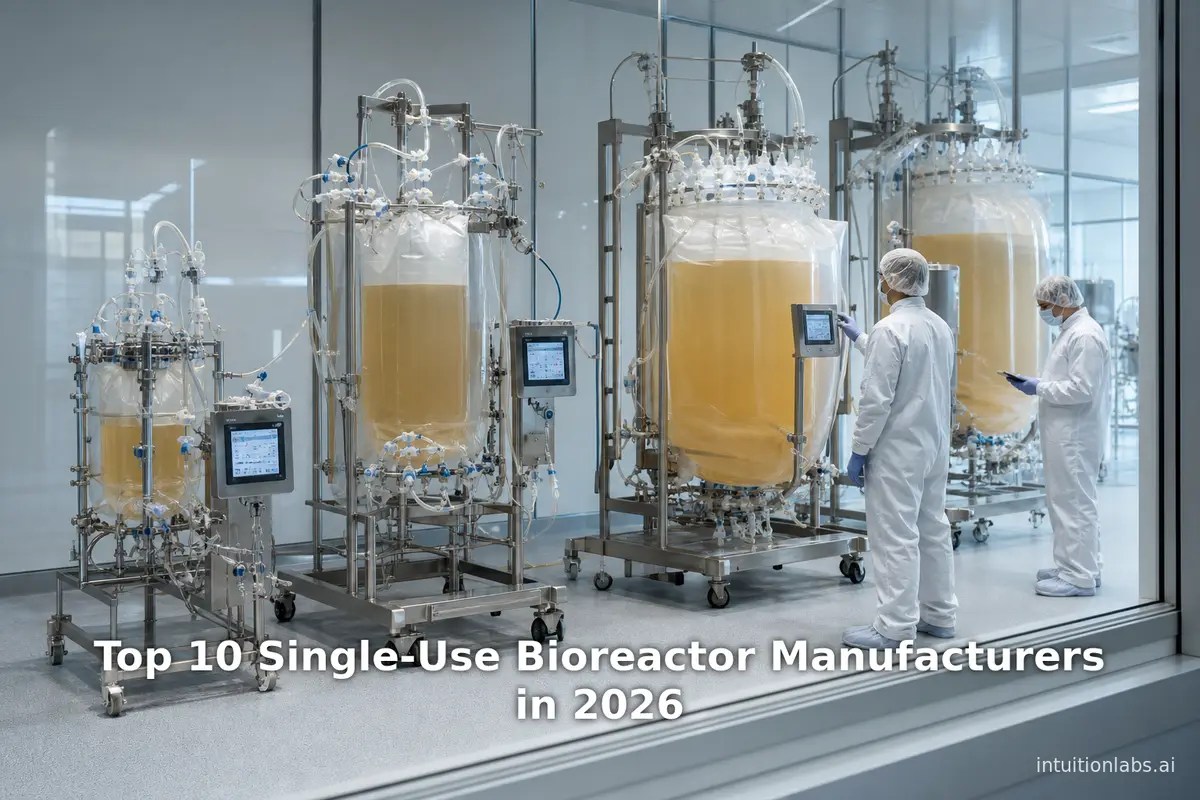
Top 10 Single-Use Bioreactor Manufacturers in 2026
A 2026 analyst comparison of the top 10 single-use bioreactor manufacturers, covering Sartorius, Thermo Fisher, Cytiva, Merck KGaA, and Eppendorf, with scale ranges, market share data, and single-use vs stainless-steel cost analysis.
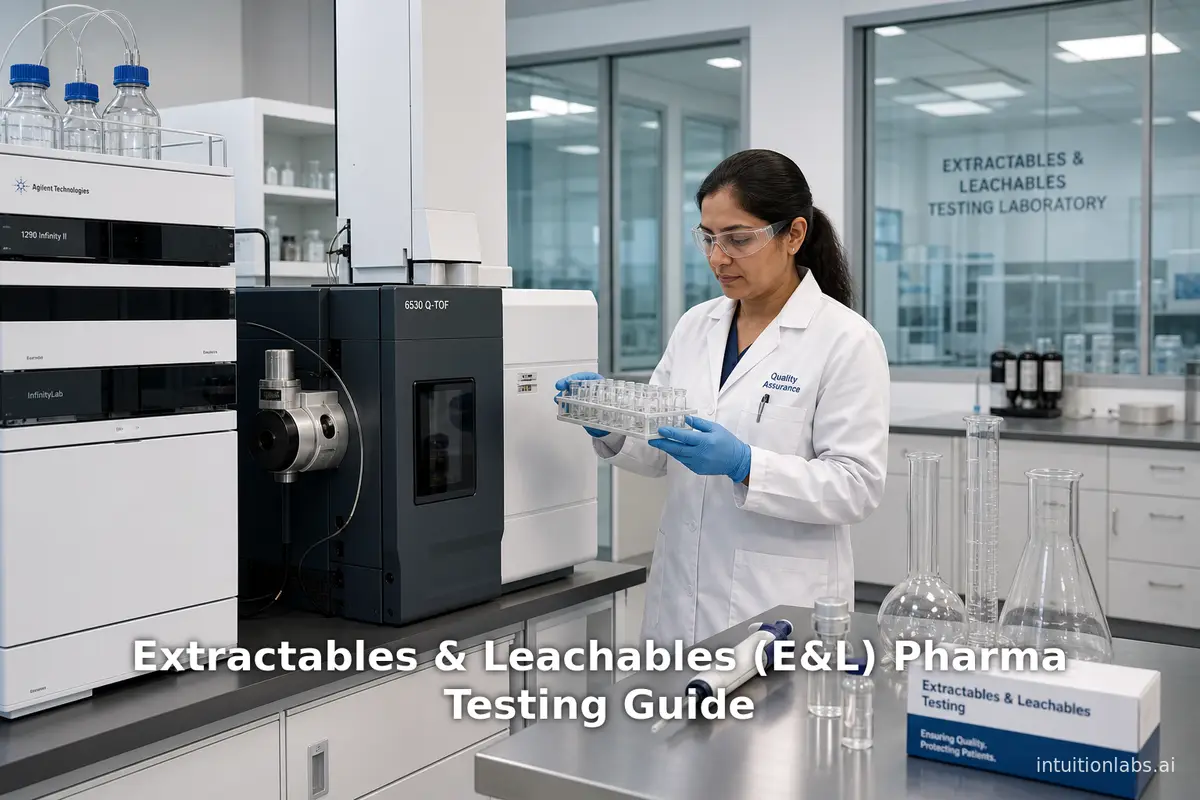
Extractables & Leachables (E&L) Pharma Testing Guide
Examine extractables and leachables (E&L) testing in pharmaceuticals. This guide reviews analytical methodologies, risk assessment, and ICH Q3E guidelines.