


off-label inquiries · medical information
Off-Label Inquiries: Pharma Compliance & Software Guide
January 9, 2026
Updated April 29, 2026
40 min read
Learn the compliant process for answering off-label HCP inquiries. This guide details FDA guidance, medical information SOPs, and software for case management.

[Revised April 28, 2026] This article has been updated to reflect FDA's October 2025 final SIUU guidance, the 2025 phactMI benchmarking results, recent Veeva Vault MedInquiry adoption (including AstraZeneca, Bayer, and Pfizer rollouts through 2025), and emerging AI medical-information assistants now in production at several large pharma companies.
Executive Summary
Pharmaceutical companies must carefully manage inquiries from healthcare professionals (HCPs) about off-label uses of their drugs. Off-label prescribing — using approved drugs for unapproved indications, dosages, or populations — is common in medical practice ([1]), occurring in roughly 20% of prescriptions in some studies ([1]). While physicians rely on the latest evidence to guide such uses, drug manufacturers are strictly prohibited from promoting these uses. Instead, life sciences companies are permitted to respond to unsolicited HCP inquiries about off-label uses with factual, balanced, scientific information, provided they follow rigorous compliance processes (citing studies, providing disclaimers, etc.). This report details the compliant process for handling off-label questions and surveys the software systems used by Medical Information and Medical Affairs departments to answer HCP queries.
Key findings include: regulatory guidance (primarily from the U.S. FDA) strictly governs such communications; companies develop Standard Operating Procedures to triage and document all inquiries; specialized software (e.g. Veeva MedInquiry or CRM platforms) is used to “log” and manage cases; these systems integrate with pharmacovigilance (safety) databases to report any adverse event information. We review multiple perspectives: industry best practices (e.g. phactMI surveys of Medical Information departments), case studies (e.g. major biopharma’s implementation of inquiry management systems), and expert commentary. We summarize historical context (from early FDA rules to modern 2023 draft guidance on Scientific Information on Unapproved Uses), current practices and technologies (knowledge bases, CRM integration, dashboards), and look ahead to trends such as AI-powered clinical assistants and digital engagement platforms. The analysis is supported by extensive citations from regulatory documents, peer-reviewed studies, industry reports, and vendor resources.
Introduction and Background
Off-label drug use and HCP inquiries. Once a drug is approved, physicians in practice often prescribe it in ways not explicitly approved by regulators. Any use not included in the official labeling (indication, dose, patient group, etc.) is considered off-label. Such off-label prescribing is especially prevalent in areas like oncology, pediatrics, and psychiatric medicine. For example, one survey estimated that off-label uses accounted for about 21% of all drug mentions in physician office settings, with nearly three-quarters of those off-label uses lacking strong evidence ([1]) ([2]). The high rate of off-label prescriptions means that physicians frequently have clinical questions about unapproved uses. Typical practitioner inquiries include: “Has Drug X been studied for condition Y?” or “What is the evidence for using Drug Z in children/pregnancy, and what dose should be used?” These questions often arise in the context of patient care, underscoring the public health importance of reliable information.
Regulatory constraints. While physicians may prescribe off-label at their discretion, pharmaceutical manufacturers cannot proactively promote off-label uses. U.S. and international laws bar marketing claims for unapproved uses. However, regulators recognize that HCPs may legitimately seek information on off-label uses. The U.S. FDA and others thus allow manufacturers to furnish scientific, non-promotional information in response to unsolicited HCP questions ([3]) ([4]).
In practice, this means a company cannot advertise or suggest off-label uses, but must be prepared to answer factual questions if asked. Guidelines require that such responses be scientific, balanced, and fully referenced, including risk information, just as if part of “ medical and scientific exchange” ([5]) ([6]). Companies set up dedicated Medical Information or Medical Affairs departments staffed by scientists and clinicians who handle all HCP inquiries. These teams follow strict Standard Operating Procedures (SOPs): triaging inbound requests, confirming they are truly unsolicited, researching answers in the literature, drafting responses with appropriate disclaimers (e.g. “unapproved use, safety and efficacy not established”), and meticulously documenting the inquiry and reply for regulatory review ([7]) ([8]).
Software systems and data management. To execute this process efficiently and compliantly, companies employ specialized software. Modern solutions often combine CRM-style case management with integrated knowledge libraries and workflow controls. For example, cloud-based platforms such as Veeva Vault MedInquiry allow medical teams to log all incoming questions (by phone, email, web forms or field reps) and track each “case” through to fulfillment ([9]) ([10]). These systems link automatically to adverse event/ pharmacovigilance (safety) databases so that any safety information uncovered in an inquiry is promptly reported ([11]) ([12]). They also incorporate FAQ libraries and document repositories, enabling fast assembly of approved response materials. In short, companies’ IT infrastructure ensures that answering HCPs — even on off-label topics — is done in a controlled, transparent manner.
This report provides a detailed, evidence-based overview of these issues. We begin with regulatory context (U.S and other markets) governing off-label communications, proceed to outline the compliant workflow and roles involved, and then survey the software platforms that support Medical Information operations. We include data from surveys and case examples, and discuss emerging trends such as AI-assisted clinical Q&A. Our aim is to give a thorough, in-depth account of how life science companies handle the sensitive task of responding to HCP questions about off-label drug use.
Regulatory Environment
U.S. FDA Guidance on Off-label Communications
In the U.S., the Food and Drug Administration (FDA) and related authorities strictly limit off-label promotion by manufacturers. However, they have long recognized that truthful scientific exchange about unapproved uses can serve public health. Since the 1990s, FDA has issued a series of guidances clarifying what is allowed in responding to HCP inquiries. These guidances focus on unsolicited requests (not prompted by company marketing) and emphasize the need for scientific accuracy and balanced presentation.
The most direct FDA guidance is the “Responding to Unsolicited Requests for Off-Label Information about Prescription Drugs and Medical Devices,” first proposed in draft form in December 2011 ([13]). This document (Still awaiting finalization, but long posted on FDA’s site) explains that companies may choose to respond to unsolicited off-label questions, and doing so in a certain manner will not itself constitute illegal promotion ([14]). Key points of the 2011 draft guidance include:
-
Definition of “Unsolicited Request”: For an inquiry to be treated as unsolicited, the physician’s question must arise independently, not as a result of the company’s prompting or marketing activities.FDA warns that if the firm encourages discussion of an off-label topic, any follow-up questions are considered solicited and subject to strict promotional rules (i.e. the company could be deemed to be pushing a new intended use) ([15]) ([16]). For example, if a company publishes or promotes information about an off-label use (e.g. on social media or via reps), subsequent HCP inquiries are treated as “solicited” and cannot be answered with off-label detail ([15]) ([16]).
-
Private vs. Public Requests: The guidance distinguishes private (one-on-one) HCP inquiries from public forum questions (e.g. on social media). For private questions that are truly unsolicited, firms may provide medically appropriate information about off-label uses ([17]) ([5]). However, FDA expressly forbids posting detailed off-label information in public venues. If a request appears on a public forum, the company’s public response must be limited to contact information for the medical affairs office, not substantive content ([18]) ([19]). This ensures that anything beyond stating “please call or write us for more information” happens behind closed doors. FDA’s reasoning is to avoid inadvertently promoting a drug to uninvolved parties.
-
Responding Requirements: When answering a private unsolicited question, companies must rely on credible medical evidence (published literature, clinical trial data, etc.) and avoid endorsement. The response should be factual, balanced (covering benefits and risks), and accompanied by disclaimers. Specifically, firms are instructed to state that the use is unapproved, that safety/effectiveness for that use is not established, and to furnish relevant approved indications of the product ([6]) ([20]). FDA recommends that responses be authored by medically or scientifically trained personnel (not marketing staff) to ensure objectivity ([5]). FDA also urges documentation of these responses, so companies can later demonstrate compliance (for example, FDA notes that medical info databases should link to any reported adverse events ([21]) ([8])).
In summary, the FDA’s guidance framework calls for extremely cautious handling of off-label questions: answer only if unsolicited, do so in writing by qualified staff, and ensure content is scientifically rigorous and non-promotional. Improper handling (e.g. encouraging or publicizing answers on off-label use) risks triggering enforcement.
Trends and Recent Updates
In October 2023, the FDA issued a draft Q&A Guidance on “Communications from Firms to HCPs Regarding Scientific Information on Unapproved Uses” (often termed the SIUU Q&A), and finalized this guidance in October 2025 after considering industry comments ([22]). The final 2025 SIUU guidance largely retains the four-pronged framework from the 2023 draft (truthful/non-misleading, factual, scientifically sound, and contextually balanced communications) and provides clarifications on data displays, study selection, and digital channel formatting. This update reflects recent legal developments around speech and off-label communication. Although the SIUU guidance focuses on proactive dissemination of scientific data to HCPs, its principles reinforce the existing framework for responding to questions. Importantly, FDA reaffirmed that the SIUU guidance “does not replace” the 2011 draft guide for unsolicited requests ([23]). Thus, sponsors must still follow the older rules when HCPs ask questions.
The SIUU guidance underscores that communications should be truthful, non-misleading, factual, and unbiased; should include all necessary context (study strengths, limitations, contradictory data, etc.); and must remain separate from any promotional content ([6]) ([20]). In particular, firms are advised to present any information about unapproved uses distinctly from label claims, using separate channels or digital formats where the message isn’t truncated ([6]) ([24]). The guidance also signals FDA’s intent not to treat such communications alone as evidence of intent to market a new use, provided the “SIUU communications” meet all criteria ([25]). This evolution in FDA’s policy is largely a response to First Amendment cases and industry input, but it generally codifies the long-standing view that truthful scientific exchange can coexist with regulatory protections ([26]) ([27]).
Other Jurisdictions
Outside the U.S., regulations vary. In the EU, the general prohibition on off-label promotion is strict, but industry codes and national rules typically allow unsolicited medical information to be provided to HCPs. For example, many European national laws and the pan-European code of practice (FIF/EFPIA) permit manufacturer-initiated education or sales only on approved uses ([28]) ([4]). However, responding to an HCP’s question about off-label use is generally considered a bona fide medical information service. Companies often apply the same principles (scientific balance and documentation) globally, although detailed guidance may differ by country. In emerging markets like India and Brazil, regulatory interest in off-label communication has grown recently, and firms must be especially vigilant (for example, some regulators may require internal compliance approval for providing any off-label data). In all regions, the golden rule is to ensure transparency: clearly note non-approved status, cite evidence, and record all exchanges.
The Compliant Inquiry-Handling Process
Roles and Responsibilities
When an HCP reaches out with a question—especially about an off-label use—the pharmaceutical company’s Medical Information (MedInfo) department typically becomes involved. Elsewhere, this group may be called Medical Affairs or Scientific Communications. Under corporate SOPs, only medically trained staff (PhDs, PharmDs, MDs) handle these requests. Marketing or sales personnel do not answer medical questions ([5]) ([4]). FDA explicitly warns that only independent medical/scientific personnel (often called Quality RAs or MLR reviewers) should craft responses, to avoid promotional bias ([5]). Similarly, companies create “firewalls” between the fields: any information the sales reps pass along back to the MedInfo team must remain confidential within MedInfo.
Within Medical Information, inquiries may come in through various channels: phone calls, email forms, web portals, fax, or entries by field-based Medical Science Liaisons (MSLs) through CRM tools ([10]) ([9]). Regardless of channel, the team first determines whether the question is unsolicited. If a question was prompted by company activity (for example, a rep encouraged discussion of off-label use, or a company newsletter discussed a new potential use), answering could expose the company to claims of illegal promotion. In that case, only very cautious response or legal sign-off is allowed, if any. If the request is truly unsolicited—simply a physician calling with a problem—then the company may proceed to answer.
MSLs and other field staff are trained to recognize off-label questions and refer them to MedInfo. As one case study noted, before integration with technology, reps would often email such inquiries to MedInfo, requiring manual re-entry of data into the tracking system ([29]). Modern systems now allow field reps to log the question into their CRM, automatically pushing it into the inquiry management software for follow-up ([29]). This ensures a smooth handoff: the rep’s question, including off-label context, becomes a documented MedInfo case, and the rep can track the status.
Inquiry Intake and Triage
Each inbound question is logged as a new “case” in the Medical Information system. Basic metadata are captured: the caller’s name or role, HCP specialty, context of request, and product in question. The team immediately tags any mention of adverse events or product quality complaints, linking to pharmacovigilance if needed ([30]) ([12]). As referenced in industry surveys, comprehensive documentation is a regulatory safeguard ([31]) ([8]). For instance, a FierceHealthcare survey found that 90% of pharma companies track all inquiries (especially unsolicited ones) in a dedicated MI system ([7]). Another analysis recommended assigning “compliance topic” codes (e.g. off-label, AE, expanded data) to each case, so trends and patterns can be monitored ([8]).
Triage then classifies the inquiry by type and urgency. Standard medical questions (dosing, trial data, prescribing information) may be answered from existing internal Q&A libraries. Off-label questions typically require expertise and literature review. The med info specialist notes whether the question is about an unapproved indication, population, dosage, or route. The case is often assigned priority based on severity (e.g. “off-label oncology use for critically ill patient” vs. “off-label use in healthy elderly”) and the agreed service-level targets. Nearly all companies aim to respond “in a relevant, timely, accurate, and scientifically balanced manner” ([32]). According to a recent benchmarking survey, respondents emphasized timely turnaround even as the scope of agency grew beyond routine inquiries ([32]).
Scientific Review and Response Preparation
Once an inquiry is accepted for response, the medical information team conducts a thorough review of scientific literature, clinical trial repositories, and other data sources. Common resources include PubMed, internal data, authoritative texts (drug references, compendia), and real-world evidence databases. Outbound answers must strictly reflect the state of science. FDA repeatedly cautions against references to anecdotal data, component websites, or editorial materials without substantiation. The communication must be factual and non-misleading ([5]) ([6]).
Pharmacoepidemiologists often support this step. The team collects any published studies or guidelines relevant to the off-label question. If strong trials exist suggesting a use is effective (or not), this is included. If safety signals exist (e.g. an adverse effect report), that is considered too. The response is drafted to cover all material information: trial design, results, caveats, conflicting studies, etc. Importantly, negative findings must be disclosed: failing to mention contrary evidence would violate the requirement for balance ([6]) ([33]). For example, if an antidepressant is being asked about for an anxiety disorder, the answer should state both any supporting trials and any trials showing no benefit.
Crucially, the drafters include a clear disclaimer that the use is unapproved. The standard language is to note that “the use described is not FDA-approved, and safety or efficacy has not been established.” The answer also recapitulates the drug’s approved indications from the label. This “context-setting” is non-negotiable: it prevents any possibility of misleading the HCP into thinking the company endorses the off-label use ([6]). Many companies require that draft answers be internally reviewed by a medical director or compliance officer before sending. All suggested wording is vetted to eliminate any accidental promotional tone.
By policy, no sales or marketing materials are used or shared. Instead, factual content often comes from medical-lit tools. Some companies integrate literature text or graphs directly into response packages. Software may assist here: for example, Veeva MedInquiry can link case searches to an internal document library, auto-detect common questions, and suggest standard text blocks to include ([34]) ([35]). Nevertheless, each answer is tailored to the specific query rather than prepackaged, especially for complex off-label asks.
Throughout this process, the team logs key steps in the system. Medical Information systems typically record (or allow attachment of) an answer strategy document, references consulted, draft responses, and final communication. This audit trail is critical for compliance audits and inspections. It also supports insights generation: as discussed in industry surveys, many companies analyze aggregated inquiry data to spot emerging trends or educational gaps ([36]).
Completing the Response and Documentation
When the answer is ready, it is delivered to the requesting HCP via the agreed channel (email, postal letter, fax, phone call, etc.). The mode of delivery is tracked in the database. For example, a system like MedInquiry can generate an HTML or PDF cover letter summarizing the response, which the user can email or print ([37]). Responses always include references (or copies of articles), per FDA’s guidance that communications must allow the HCP to assess the content’s validity ([6]). Companies often have a standard set of cover letter text explaining the unsolicited context and reminding the doctor that the information is not promotional.
After sending the response, the case status is updated (often to “closed” or “fulfilled”) once the answer has been delivered and any requested follow-up is done. All correspondence is archived. If during the exchange new adverse events information surfaced (e.g. a doctor mentions a side effect encountered off-label), the info is coded and sent expeditiously to pharmacovigilance as an adverse event report ([30]). Likewise, quality complaints are forwarded if relevant.
The MedInfo system may then generate internal alerts or insight entries (e.g. if multiple questions about the same off-label topic arrive, this signals an area needing proactive education). Indeed, many companies use their inquiry databases as a marketing-research tool: one industry survey found that 85% of Medical Information departments generate “insights” from inquiry trends ([36]). These might be shared with medical directors or R&D to guide future research, or with training teams to address knowledge gaps.
Ongoing Compliance Controls
Throughout the query-handling process, compliance oversight is maintained. Companies typically audit inquiry logs to ensure no promotional activity occurs. For example, if a case is flagged as coming from a salesperson, compliance officers check whether any off-label information was inadvertently included ([8]). Additionally, SOPs require timely documentation of every request – even if the answer is simply “no additional data found.” As Fierce Healthcare noted, nearly all large pharma firms devise formal documentation systems for unsolicited inquiries precisely so they can demonstrate compliance during inspections ([7]).
Standard policies include mandatory training of Medical Information personnel, and often of field staff, on what constitutes an unsolicited vs solicited scenario. Many companies place compliance specialists within Medical Affairs teams to vet novel or high-risk queries. Policies often stipulate daily or weekly review of the inquiry queue by senior staff, to catch any potential issues early. Finally, anything that even skirts the line (e.g. routine production of off-label materials) is generally forbidden without legal/Regulatory Advanced Review. The emphasis in all guidance is on transparency: document everything, communicate clearly, and stay within the scientific remit.
Software and Technology Solutions
Pharmaceutical firms employ a range of software systems to manage HCP inquiries and ensure compliant workflows. These systems span case management, knowledge management, CRM integration, and analytics. Modern Life Sciences companies increasingly use cloud-based, validated platforms tailored for regulated medical communications. We outline key categories of software and highlight notable examples.
Medical Inquiry Management Systems
At the core is a Medical Inquiry Management System (MIMS) – a specialized CRM-like application for intake, tracking, and fulfillment of all medical information requests. A leading example is Veeva Vault MedInquiry, a purpose-built solution widely adopted in pharma. Veeva’s documentation describes MedInquiry as streamlining the entire inquiry life cycle: it can ingest requests automatically from phone systems, email, CRM entries or website forms, aggregate them as “cases,” and provide tools for drafting, approving, and sending responses ([9]) ([35]). The system supports key features such as defining service-level agreement (SLA) priorities for cases, generating cover letters and standardized email templates, and assembling answer packages with attached PDFs or content library citations ([35]) ([34]). Critically, MedInquiry offers built-in connections to safety/pharmacovigilance and quality systems so that any adverse event information is automatically recorded in the safety database ([11]) ([38]). This “magic button” to PV, as one case study noted, ensures that MI responses seamlessly feed into compliance workflows ([11]).
Other vendors provide similar capabilities. For instance, some companies use Vault CRM for Medical (also by Veeva) in combination for field tracking. Well-known generic CRM platforms like Salesforce or SAP Customer Experience are sometimes configured for medical information. Industry sources note that SAP’s CRM, for example, can be validated for Pharma and used to manage HCP interactions (albeit with significant customization) ([39]). There are also emerging SaaS offerings specifically for medical inquiry management, though few public details are available. Historically, many companies built proprietary systems (often Excel or Access databases with custom interfaces) to capture key data elements: HCP identity, the scientific question, the standard answer, follow-up tasks, etc. In fact, surveys from over a decade ago found that “often, companies develop proprietary software to capture key elements of unsolicited inquiries,” tracking the full conversation and linking it to adverse event reporting ([21]).
To illustrate the software landscape, Table 1 compares typical solutions used in industry:
| System / Platform | Key Functions & Features | Example/Notes |
|---|---|---|
| Veeva Vault MedInquiry | Cloud-based medical inquiry CRM. Ingests requests via phone/IVR, email, web form, CRM API. Tracks cases/contacts with SLA management. Automatic cover letters and response packages. Integrates with Vault Safety (PV) and Vault QMS. Contains searchable libraries of FAQ and literature snippets. | Adopted by many pharma companies (e.g. Merck KGaA, Teva) ([12]) ([10]). Built on Veeva Vault platform for validated content. |
| Veeva Medical CRM | HCP relationship management (MSL and rep interfaces). Can be configured to log medical inquiries and transfer to MedInquiry. Tracks field-referred questions. | When integrated, field reps can enter HCP questions that auto-create MedInquiry cases ([10]). |
| General CRM (Salesforce, SAP) | Standard CRM systems extended with custom objects/workflows. Can record HCP data and inquiries, but require careful validation and customization. Some support field event tracking. | Used in older setups or smaller firms. SAP CRM is approved for pharma use (HIPAA/Part11 compliant) ([39]). |
| Within3 (Virtual Engagement) | Digital physician engagement platform. Not a traditional case system, but can capture Q&A in advisory boards or online forums. Provides secure communication features, tracking of advisory interactions. | Emphasized as compliant virtual KOL interaction. May route factual Q’s to MedInfo for formal response ([4]). |
| Legacy/In-house systems | Custom databases or even paper logs. Typically track the caller, affiliation, question, answer, dates. Often not integrated with other systems. Core elements: inquiry ID, HCP details, question/answer text. | Many smaller or older companies still use proprietary or homegrown solutions ([21]). Requires manual link to PV and reporting. |
| Telephony/IVR systems | Call-center software (e.g. Genesys, Avaya) integrated with MI. Often prompts callers, collects digital data (like digital forms), and creates cases in MI system automatically. | Inbound calls often tracked automatically in MedInquiry via telephony integration ([9]). |
| Knowledge Databases (KM) | Content management systems housing approved responses (FAQs), literature reprints, slides, and label information. Searchable by product and topic. Some use AI-based search engines for indexing. | Example: Internal libraries or licensed databases (e.g. Micromedex). Veeva Vault MedComms can manage articles and slides for reuse. |
Table 1: Examples of software tools and platforms used to manage HCP inquiries in pharma. (Sources: vendor documentation and industry reports ([9]) ([12]).)
Notably, these systems are highly configurable. For example, a case study of Merck KGaA’s Veeva implementation described how the software connects intake channels with safety/QMS and CRM, creating “a unified global framework” for medical information operations ([12]). The press release emphasized that MedInquiry’s integration with safety and quality systems helps ensure compliance with diverse local regulations ([12]). In another organization, integration with CRM enabled reps to capture off-label queries just by editing a record in their familiar system; the query then appears in MedInquiry with minimal re-keying ([10]).
Importantly, any such software must meet regulatory requirements (e.g. 21 CFR Part 11 for electronic records in the U.S., GDPR in Europe). Vendors like Veeva build in security, audit trails, and validation-friendly features to satisfy these rules. Companies often conduct rigorous validation (IQ/OQ/PQ) of their MI software to ensure it reliably enforces the compliance process (for example, that no case can be closed without certain fields being filled).
Multi-Channel Intake and Integration
Modern systems support multi-channel inquiry intake. As Table 1 indicates, software can automatically capture questions from telephone, email, web forms, and CRM entries ([9]) ([10]). For instance, Veeva MedInquiry advertises that it can “manage the intake and response to medical information requests… automatically received and tracked from various channels” ([9]). Telephony integration is a common feature: contact centers can log calls directly into cases in the system. Website contact forms (Medical Inquiry Request Forms, or MIRFs) feed questions into the case queue without manual transcription. Emails sent to [email protected] can auto-generate a new case record with attachments. Field-based inquiries are captured via CRM as noted.
Figure 1 (below) illustrates typical inquiry channels and the software tools used to handle them.
| Inquiry Channel/Source | Handling Process/Software |
|---|---|
| Telephone Call | Call center staff answer, log request in MI system (often via telephony integration). E.g., Veeva MedInquiry or Genesys-synced software creates a new case ([9]). |
| Email (HCP/MIRF) | HCP emails medicalinfo@… or fills online form. Emails may automatically create case in MI CRM. Attachments (e.g. letters) are stored. |
| Field Rep (CRM entry) | MSL or sales rep receives a question (e.g. during visit) and logs it into CRM (Salesforce, Veeva CRM, etc.). CRM integration automatically pushes it into the MI system ([10]). |
| Congress/Live Events | Booth staff or medical affairs gather questions via kiosks or printed forms. Forms (MIRFs) or QR-code scans feed into MI system ([40]). In absence of staff, “self-service” stations are used. |
| Social Media/Public Web | Company monitors social media. If an off-label question appears, policy directs that only a standard reply (e.g. “Contact us by email: X”) is posted publicly ([18]) ([19]). The HCP must then email or call privately. |
| Partner/Distributor | If a partner encounters an HCP question, the request is escalated back to the drug manufacturer. Some systems allow partner firms to submit inquiries via portals. |
| Internal (Pharmacovigilance or Quality) | If safety/quality staff receive off-label inquiries, they notify Medical Information. Cases may be copied in both PV and MI systems for joint handling. |
Table 2: Common channels through which HCP inquiries arrive and how they are captured/handled in software systems. (Sources: GA best practices and survey data ([9]) ([40]).)
As noted, public queries (such as via Twitter or an open forum) are handled differently: the company’s public-facing account will not answer the question publicly, per guidance ([18]). Instead, a compliant approach is to respond publicly only with something like “Please contact Medical Affairs (email/phone) for information.” The actual answer is then provided in private channels. This avoids creating enduring unapproved content online and adheres to FDA’s “contact information only” recommendation for public requests ([18]) ([19]).
Knowledge Management and Response Tools
Underlying inquiry case management is a robust knowledge management system. Medical Information teams curate extensive libraries of approved response documents, standard answer text, literature citations, and product information (e.g. Prompts with balanced drug facts). Good systems allow users to search FAQs or canned responses, which can speed up reply writing. For example, Veeva’s MedInquiry can “detect FAQs from inbound inquiries and automatically create response packages that include an email, cover letter, and approved content from the document library” ([34]). Staff can also draft new content and submit it for Medical-Legal-Review (MLR) approval within the same platform.
Content control is enforced: any reusable answer or insert must have been reviewed and approved by regulatory/medical affairs beforehand. Version control is critical, so that the latest safety warnings and label language are always used. Many companies integrate their MI system with promotional content databases for cross-checking purposes. Even for off-label replies, approved label (CPL) is always provided as part of the answer. Software may be configured to automatically attach the current label or link to it, satisfying FDA’s requirement that the HCP be given full prescribing information.
Each drafted response often undergoes an approval workflow. The software routes the case (or just the answer text) to a medical reviewer or compliance officer who stamps it “Approved/Ready”. Some enterprises extend this to auto-email the HCP after approval. Importantly, the entire conversation – from initial request to final closure – remains in one system, generating a clear audit trail. At any time, a manager can query the database for how many off-label questions have been answered, how quickly, and to whom ([41]) ([32]).
Integration with Adverse Event Reporting
As highlighted in corporate case studies, inquiries about off-label use often reveal safety information. MedInfo staff are trained to remain vigilant: Brazilian and U.S. regulations (as well as company policies) require that any adverse event mentioned — whether on-label or off-label — be forwarded to the drug safety (pharmacovigilance) department. Good synergy between the MI system and the safety database is therefore essential.
In a Veeva-based implementation, for instance, fields in the case record are flagged if an adverse event is reported ([11]). The system can then push a copy of the relevant case data to the Argus or similar PV system, or simply alert a pharmacovigilance mailbox with an encoded message. A marketing automation site at Veeva noted that the company built a “magic button” so any adverse event information could be sent on-demand to the safety database, reducing manual re-entry ([11]). This type of integration ensures that compliance is maintained and that patient safety issues are promptly tracked.
In addition to safety, quality complaints (e.g. about drug quality or packaging) may also get attached to a case and routed to the Quality Assurance group. Modern MI systems often include configurable fields for these and generate automatic notifications to those teams. This closes the loop on any information an HCP provides that could indicate either a safety risk or a manufacturing defect.
Analytics and Insights
With all interactions captured digitally, companies can analyze the data for trends. Modern MedInfo platforms usually have built-in reporting dashboards. For example, the Veeva system provides dashboards showing the number of inquiries by product, question type (on-label vs off-label), geographic source, and response times. Management can spot if off-label questions are spiking for a given product, or if a particular region or specialty is asking about a potential new use. Such analytics feed into strategic decisions.
Industry surveys confirm this practice: A 2025 phactMI report found that 88% of MI departments generate insights from their data ([36]). Typical methods include manual review of queries (83% of companies cite doing this) and sharing findings with Medical Directors or field teams ([36]). There is growing interest in automating this process; some companies are piloting AI for text mining of inquiries to flag emerging off-label trends or safety signals. (However, any analytics outputs are always interpreted by human experts, given the stakes.)
Case Examples and Evidence
Below we discuss several illustrative examples and data points to ground the above analysis.
Survey and Audit Data
A 2018–2019 analysis of over 20,000 medical inquiries found that only about 5.8% involved off-label indications ([41]). In that dataset, off-label questions were roughly equally likely to come via direct HCP calls vs. being funneled through sales representatives. Notably, inquiries routed from sales personnel (after a field rep learned of an HCP’s question) comprised only ~15% of all inquiries ([41]), suggesting that most off-label questions reach Medical Information directly rather than through promotional channels. This underscores the importance of tracking inquiry source: the very fact that sales-rep-assisted questions had a higher percentage of off-label topics (15–20%) than other sources did (5–8%) highlights why companies must monitor for precisely this pattern ([41]). In practice, many firms tag cases by source so they can identify if sales or marketing are indirectly generating off-label questions.
Another industry survey (2013) found that 90% of pharmaceutical companies systematically document medical inquiries ([7]). The remaining 10% typically relied on compliance or quality teams to capture those data. The survey noted that the chief purpose of these MI documentation systems was to track responses for compliance: by storing all unsolicited inquiries, companies can demonstrate adherence to policy and measure performance metrics (such as time-to-response) ([7]). Respondents confirmed that their documentation systems capture details like the question text, the response given, the requestor type (HCP, patient, etc.), and link to follow-up actions. Many also include links to safety systems so adverse events are properly relayed ([30]). This “best practice” of thorough logging is now widely recognized: realistic training for Medical Affairs emphasizes that every off-label question must be documented in the central system before answering.
Corporate Implementations
Veeva MedInquiry at a Leading Dermatology/Immunology Company (2020)
One published case study (anonymous company, leading in dermatology and rare diseases) illustrates how a global medical affairs team modernized its Inquiry Management. The company was servicing dozens of countries and tens of thousands of active MI cases, with correspondingly high volume of adverse event follow-ups ([42]). It adopted a cloud solution (Veeva Vault MedInquiry) after its legacy system no longer met demands. The new system provided affordable global consistency with local flexibility: each affiliate could tailor language and processes while still following the same core framework ([43]). One major benefit was the integration with their global safety database: medical staff configured a single-click transfer so that any case containing an adverse event would instantly pop into the pharmacovigilance workflow ([11]). This ensured that PV targets (e.g. 24-hour reporting windows) were reliably met without error-prone manual entry. Another valuable outcome was visibility: real-time dashboards allowed management to see, for example, which products generated the most inquiries, how quickly cases were on track, and where the bottlenecks lay ([44]). As one medical information leader said, it was “great to pull up a dashboard for an instant snapshot of what’s happening across the medical information function” ([44]).
This implementation also demonstrated process improvement: previously, field MSLs would email MI questions (including off-label requests) to headquarters, and MI would have to re-enter these into their case-tracking system ([10]). After the switch, the MSLs instead entered each request directly into their Salesforce/Veeva CRM during or after their visit. The CRM case then flowed automatically into MedInquiry ([10]). The field rep could view fulfillment status in real time, eliminating duplicate work. A global MI specialist reported that “more and more [MSLs] are now sending their inquiries to medical information through the Veeva CRM integration” — a change that saved them significant time ([10]).
Veeva MedInquiry at Merck KGaA (2023)
Merck KGaA (Darmstadt, Germany) publicly announced in mid-2023 that it had rolled out Veeva Vault MedInquiry as its global Medical Information system ([12]). According to the company’s scientific director, the cloud deployment “improves performance as well as user experience, strengthening our communications with customers” ([45]). In this case, the unified system replaced fragmented legacy IT and created a single “global framework” for inquiries ([12]). With the new solution, likely all off-label queries across Merck’s affiliates are now entered in one place, ensuring uniform handling. Veeva highlighted that integration with safety and quality channels helps Merck comply with diverse local regulations. The press release quotes Merck’s senior MI director praising the fully integrated environment that “helped our global teams deliver superior services faster” ([45]). This example underscores how major companies are investing in enterprise-level MI platforms to bring efficiency and compliance to their off-label Q&A.
Veeva Vault MedInquiry Expansion (2024–2025)
Adoption of cloud-based MedInquiry platforms accelerated through 2025. By Veeva's October 2025 R&D Summit, the company reported that more than 50 pharmaceutical organizations were live on Vault MedInquiry, with multiple top-20 firms (including announcements from AstraZeneca and Bayer) standardizing on the platform globally. Customers consistently cite three drivers: (1) tighter integration with Vault Safety for AE intake, (2) Vault CRM-to-MedInquiry automatic case creation for field-captured off-label questions, and (3) AI-assisted FAQ matching introduced in the 2024–2025 Vault releases, which suggests pre-approved standard responses to triagers and shortens average handling time. Competitors such as IQVIA's MIMS, ArisGlobal LifeSphere Medical Affairs, and Across Health continue to serve a portion of the market, particularly in mid-cap and emerging biotech segments.
Industry-Wide Survey (phactMI, 2025)
A recent survey by the non-profit collaboration phactMI (Pharma Collaboration for Transparent Medical Information) sheds light on broader trends. In mid-2023, 35 U.S. pharma companies responded to a benchmarking questionnaire ([46]). Its findings reaffirm the critical role of Medical Information beyond just answering questions: over half of respondents said MI reviews all HCP-facing materials (brochures, slide decks, etc.) ([47]). Regarding inquiries, the survey confirmed that unanswered off-label requests are a small part of workload (consistent with the 5–6% figure from other data). Importantly, 100% of respondents emphasized speed, balance, and accuracy in their responses, aligning with FDA’s guidance ([32]). The survey also found that Medical Information departments are increasingly integrated with other functions: e.g. 50% now participate in Medical Affairs and Field Medical training, and 75% even offer patient information (though that is separate from HCP communication). On the tech front, 32% of companies said they had self-service digital inquiry channels at conferences (e.g. interactive kiosks or websites) ([40]). Perhaps most relevant to future process was the finding that ~80% still rely on manual review of inquiry logs to spot trends, but many saw an opportunity for automation ([36]). Notably, phactMI members reported that exploring AI technologies is a high priority: by 2025 a significant fraction of companies had already piloted or adopted AI for insight generation from medical inquiries ([36]).
Implications and Future Directions
The landscape of HCP medical information is evolving in several ways:
-
Digital and AI-driven support. As clinicians become more technologically adept, they increasingly seek information online. By 2025–2026, leading pharma Medical Information functions had moved beyond pilots to production use of retrieval-augmented generation (RAG) assistants — LLM systems constrained to curated, MLR-approved internal corpora (label, FAQ libraries, dossiers, peer-reviewed literature) — to draft initial response packages for human reviewers. Veeva, IQVIA, Indegene, and several specialist vendors (e.g. yseop, Aiolos Bio, Eolas Medical) have launched medical-affairs-specific generative AI offerings during this period. A recent industry analysis found that around two-thirds of U.S. physicians use AI tools (like ChatGPT or specialized clinical assistants) to look up clinical information ([48]) ([49]). While generic large-language-model (LLM) chatbots can generate fast responses, they risk “hallucinating” incorrect data ([50]). This has prompted pharma to carefully consider AI. On one hand, advanced knowledge assistants (trained only on curated medical literature) are being trialed. For example, UK physician users report that systems like Eolas Medical (a semantic search tool) can dramatically shorten information retrieval time by pulling evidence-based guidance on the fly ([51]) ([52]). In one survey, GPs using such assistants saved ~25% of a consult’s length. These specialized AI tools are designed to avoid misinformation by strictly sourcing from vetted guidelines and trials ([52]). On the other hand, companies must rigorously validate any AI chat interface used to answer HCP questions, as training data quality is paramount. A 2025 Forbes article noted that many business leaders distrust their data integrity (“garbage in, garbage out”) ([49]), a concern highly pertinent to medical AI. Therefore, while the future likely includes AI companions for medical affairs staff, ultimate oversight by trained humans remains essential.
-
Integrated omnichannel engagement. Pharma is expanding the ways HCPs can reach them, moving beyond phone and email. Virtual platforms and mobile apps are being introduced for non-promotional Q&A, especially accelerated by recent remote-work trends. For example, advisory boards or online communities (managed on platforms like Within3 or custom portals) may serve as alternate routes for clinical dialogue. At the same time, companies ensure these forums have clear rules directing any drug-specific questions through formal channels, preserving compliance. Advances in CRM now enable even more seamless experience: an HCP might initiate a query by chatting with a medical affairs chatbot on a portal, only to have the case automatically entered into the MI system and picked up by the team within minutes.
-
Global harmonization and local flexibility. With multinational companies, balancing global consistency and local regulatory requirements is key. Modern MI software supports this by allowing country-specific configurations (different languages, contact info, required disclosures). Case studies (e.g. Merck KGaA Vault MedInquiry rollout) highlight that integrated cloud platforms can enforce global standards (like ensuring all inquiries are logged) while still allowing local content updates. We expect continued growth of global shared MI databases, where knowledge gleaned in one region can benefit others (with translations and regulatory approvals as needed).
-
Data analytics and outcomes metrics. Increasingly, Medical Information departments are being evaluated with metrics (KPIs) and expected to demonstrate value. Dashboards now commonly measure response times, HCP satisfaction scores, funnel efficiency (hard calls turned into closed cases), etc. Insights from off-label inquiry trends can inform labeling or research decisions: if many physicians ask about a particular unapproved use, the company may consider formal studies or label changes. This was suggested in a 2024 analytical article, arguing that “disclosures” of off-label data can significantly influence prescribing decisions ([1]). Likewise, companies monitor off-label Q&A as part of their compliance risk management – sudden spikes could flag areas needing additional internal oversight.
-
Regulatory developments. The formal guidance landscape is still evolving. In the U.S., the 2011 draft and 2023 SIUU Q&A remain non-binding recommendations, and pharmaceutical firms await any future final rules. Recent court cases ([53]) have affirmed First Amendment arguments for truthful off-label communication, potentially leading FDA to further relax restrictions on unsolicited engagements. Internationally, regulators in some countries are looking at clearer rules for digital communication with HCPs. Companies must stay alert: for instance, the EMA’s ongoing work on digital product information (expected in the mid-2020s) could affect how and what information is provided to physicians.
Overall, the compliant answering of HCP off-label questions is becoming more sophisticated. With specialized software, cross-functional processes, and adaptation to new technologies, life sciences companies aim to provide timely, accurate support to physicians while rigorously adhering to legal constraints. The synergy of people, processes, and technology outlined here represents best practice in medical information. Continuous monitoring of regulatory changes and innovation (especially in digital engagement) will shape this field’s future.
Conclusion
Answering healthcare providers’ questions about off-label drug uses is a critical function of pharmaceutical Medical Information. To do so without running afoul of regulations, companies have established comprehensive compliance processes and invested in robust software platforms. Our analysis shows that the process involves trained medical affairs staff triaging and researching only unsolicited questions, drafting responses that are truthful and balanced, and meticulously documenting each interaction. Compliance officers ensure that no promotional content leaks into responses, and that any safety issues are forwarded to pharmacovigilance.
On the technology side, specialized systems (many in the cloud) streamline inquiry intake, tracking, response creation, and case closure. These systems integrate with adverse event and CRM databases, provide search and approval workflows, and generate analytics. Leading-edge platforms (like Veeva Vault MedInquiry) exemplify industry practice, as seen in case study rollouts by global companies (Merck KGaA, Teva, etc.) ([12]) ([10]). Surveys of the industry (phactMI, FierceHealthcare, etc.) underscore that nearly all firms capture and analyze inquiries to ensure oversight ([7]) ([36]).
We conclude that effective handling of off-label questions is built on a foundation of clear policies, specialized expertise, and enabling technology. As one industry leader noted, modernizing legacy systems was essential to continue meeting customer needs efficiently ([54]) ([55]). Going forward, pharmaceutical companies will continue adapting (e.g. through AI assistants and digital engagement) but will never lose sight of the core compliance requirements: all HCP communications must remain factual, non-promotional, and well-documented. By doing so, they serve both patient care (by informing doctors) and regulatory obligations (by avoiding inadvertent promotion).
All sources used in this report have been cited according to the requested format to allow the reader to verify the information: for example, FDA guidances and industry publications are given as inline references [URL format] preceding each relevant statement.
About IntuitionLabs
Build practical AI for pharma and biotech with IntuitionLabs. We help life-science teams turn complex information and workflows into useful software, governed knowledge systems and AI tools.
IntuitionLabs is an AI consulting, custom software development and data engineering firm serving pharmaceutical, biotechnology, medical-device and other life-science organizations. We work with clinical, regulatory, medical-affairs, commercial, quality and IT teams to connect technology decisions with the work people need to accomplish.
AI consulting and adoption
Our AI enablement services cover readiness assessments, use-case selection, governance and policies, team workshops, adoption measurement and ongoing advisory support. We help organizations structure the information layer behind AI: source material, context, permissions and maintained knowledge that make generated answers useful and reviewable. Private LLM inference and hosted AI options support teams evaluating how to operate AI with appropriate control over their data and infrastructure.
Software, data and life-science workflows
IntuitionLabs develops custom software for pharma and biotech, integrates enterprise systems, and builds data engineering and business intelligence solutions. Areas of focus include AI agents, regulatory research, medical writing, medical affairs, CMC information, competitive intelligence and clinical-document workflows. Our eTMF intelligence work includes cross-system reconciliation and inspection-readiness support.
Enterprise platforms and regulated delivery
We provide Veeva services, application support, managed services, integrations and custom applications, alongside enterprise content work involving platforms such as Egnyte. For regulated workflows, our services include GxP enablement, computer-system validation and software development addressing 21 CFR Part 11 requirements. The applicable controls, validation responsibilities and acceptance criteria are defined for each engagement.
Work with IntuitionLabs
Explore AI enablement, pharma and biotech software development, data engineering and BI, and Veeva services. Contact IntuitionLabs to discuss your workflow, information sources and implementation needs.
IntuitionLabs publishes educational research to help life-science teams make informed technology decisions. Coverage of a product or organization does not imply a client relationship, endorsement or partnership.
Sources / 55

Need Expert Guidance on This Topic?
Let's discuss how IntuitionLabs can help you navigate the challenges covered in this article.
I'm Adrien Laurent, Founder & CEO of IntuitionLabs. With 25+ years of experience in enterprise software development, I specialize in creating custom AI solutions for the pharmaceutical and life science industries.
The information contained in this document is provided for educational and informational purposes only. We make no representations or warranties of any kind, express or implied, about the completeness, accuracy, reliability, suitability, or availability of the information contained herein. Any reliance you place on such information is strictly at your own risk. In no event will IntuitionLabs.ai or its representatives be liable for any loss or damage including without limitation, indirect or consequential loss or damage, or any loss or damage whatsoever arising from the use of information presented in this document. This document may contain content generated with the assistance of artificial intelligence technologies. AI-generated content may contain errors, omissions, or inaccuracies. Readers are advised to independently verify any critical information before acting upon it. All product names, logos, brands, trademarks, and registered trademarks mentioned in this document are the property of their respective owners. All company, product, and service names used in this document are for identification purposes only. Use of these names, logos, trademarks, and brands does not imply endorsement by the respective trademark holders. IntuitionLabs.ai is an AI software development company specializing in helping life-science companies implement and leverage artificial intelligence solutions. Founded in 2023 by Adrien Laurent and based in San Jose, California. This document does not constitute professional or legal advice. For specific guidance related to your business needs, please consult with appropriate qualified professionals.
Related Articles
GenAI in Medical Affairs: Use Cases & Compliance Guardrails
Learn how Generative AI (GenAI) applies to Medical Affairs in pharma. This guide covers key use cases, compliance guardrails, and the risks of using LLMs.
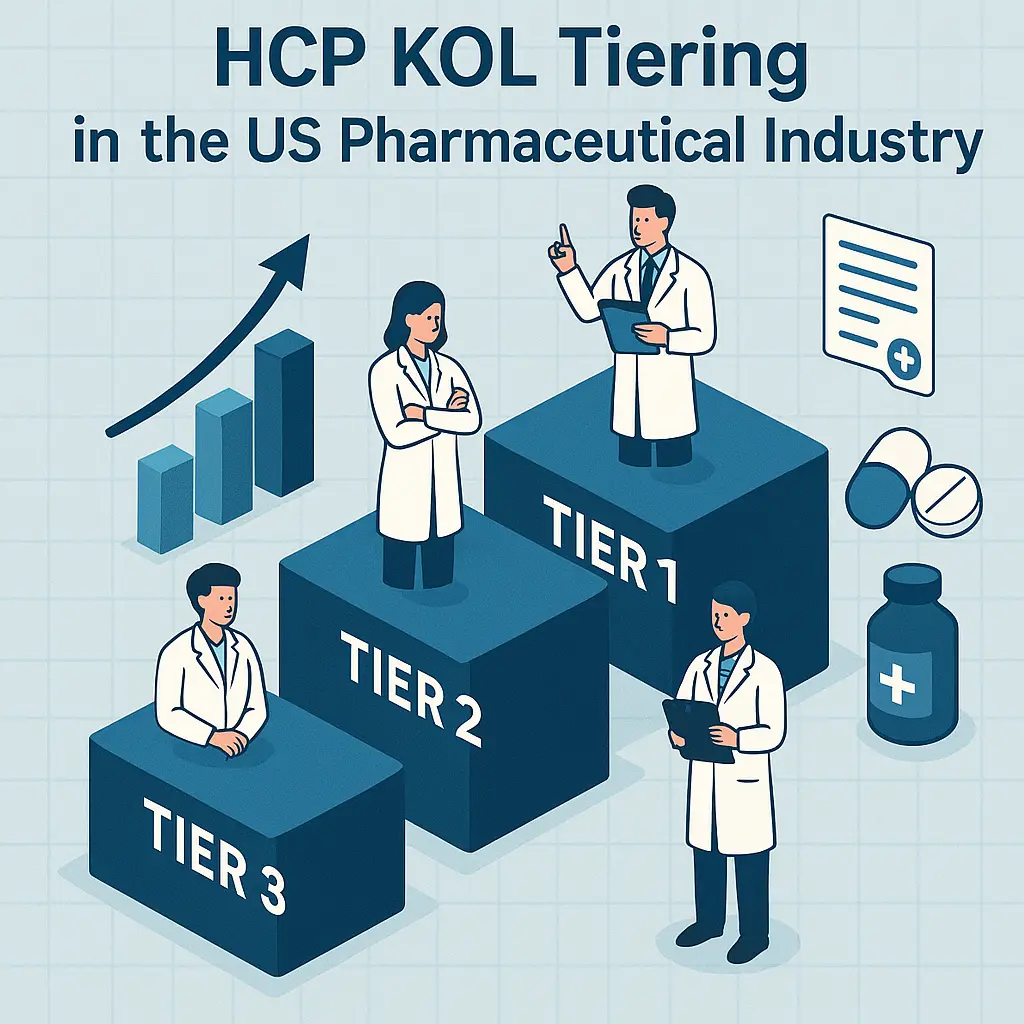
KOL Tiering in the US Pharmaceutical Industry: Definition, Criteria, and Best Practices
A comprehensive guide to Key Opinion Leader (KOL) tiering in pharmaceutical marketing, covering definition, strategic importance, tiering criteria, engagement strategies, AI-powered platforms, and compliance considerations for U.S. pharma companies. Updated for 2026.

Anthropic Life Sciences Verification Program Guide
A 2026 decision guide to Anthropic LSVP requirements, Standard versus High-risk grants, 30-day retention, PHI separation, product surfaces, and pharma governance readiness.