


fda clinical trials · real-time monitoring
FDA AI Clinical Trial Pilot: Real-Time Oncology Monitoring
April 30, 2026
30 min read
Examine the 2026 FDA real-time clinical trial pilot. This report analyzes how AI and cloud platforms enable continuous oncology data monitoring for new drugs.

Executive Summary
In April 2026 the U.S. Food and Drug Administration (FDA) launched an unprecedented, first-of-its-kind pilot program in real-time clinical trial monitoring and AI-enabled trial optimization, in partnership with two major pharmaceutical companies. The initiative comprises two proof-of-concept clinical trials – one led by AstraZeneca and one by Amgen – in which trial data (safety and efficacy signals) are transmitted to FDA reviewers continuously and in real time, rather than the traditional model of manual data collection followed by post-hoc submission. The FDA also announced a Request for Information (RFI) seeking input on a broader summer 2026 “AI-enabled optimization” pilot for early-phase trials ([1]) ([2]). In these real-time trials, cloud-based analytics platforms (provided by startup Paradigm Health) will automatically capture and analyze data (from electronic health records and other sources) and stream only key endpoints to the FDA as the trials progress ([3]) ([4]). FDA Commissioner Marty Makary described the shift as “a bold new approach” that could fundamentally transform the clinical trial landscape by drastically reducing lag times and accelerating the availability of new therapies ([5]) ([6]). Industry analysts estimate that real-time monitoring and AI triage could shave off 20–40% of trial duration ([7]) ([8]), potentially cutting years from the typical 10–12 year drug development cycle ([8]) ([9]). Proponents argue this will keep the U.S. competitive globally (especially vis-à-vis China) ([6]), improve patient safety through faster detection of adverse signals, and expedite promising therapies. Critics caution that speeding trials must not compromise rigor, patient privacy, or the “gold-standard” evidence needed for approval ([10]) ([4]). This report provides an in-depth examination of the FDA’s real-time trials initiative: its historical context, technical underpinnings, trial descriptions, stakeholder perspectives, potential benefits and risks, and future implications for drug development. All statements are supported by authoritative sources throughout.
Introduction and Background
New drug development has long been lengthy and inefficient, often taking a decade or more from first-in-human studies to FDA approval ([11]) ([9]). FDA data indicate that nearly half of that time is spent on administrative “paperwork” and data transmission rather than active trial conduct ([11]) ([8]). This sequential process—site data collection, sponsor analysis, and eventual submission to regulators—creates prolonged lags: key safety signals may only reach FDA reviewers years after patients enroll. Commissioner Makary noted that in traditional development almost “50% of the time is dead time… investigators and staff are doing paperwork” instead of advancing trials ([8]). The need to modernize has been highlighted repeatedly by industry, patient-advocacy groups, and policymakers alike, especially in oncology where unmet needs are high and timelines historically long.
Regulatory agencies in recent years have attempted accelerated pathways (e.g. breakthrough designation, accelerated approval) and adaptive trial designs, but fundamental workflow remains largely unchanged since the mid-20th century. Under the legacy system, by law the FDA must review data from “adequate and well-controlled” trials, a requirement historically interpreted (since the 1960s) as necessitating two independent trials per indication ([12]). Only in 2026 did the FDA’s leadership officially drop that two-trial standard for new drugs, acknowledging modern science and complementary evidence ([13]). Similarly, the agency has championed electronic submissions (eCTD) and data standards, but actual real-time oversight of trial progress has not been tried.
Several factors now converge to compel change. First, technological advances—ubiquitous electronic health records (EHRs), cloud computing, and AI/machine learning—make it feasible to aggregate and analyze patient-level data across multiple centers rapidly. Second, the COVID-19 pandemic accelerated adoption of decentralized and remote trial methods (e.g. telemedicine visits, wearable sensors) which proved that data can be collected outside traditional site structures. Third, global competition has intensified: as one Axios analysis noted, early-phase trials are becoming “faster and cheaper” in countries like China than in the U.S. ([14]), threatening U.S. leadership. Indeed, in late 2025 China accounted for over 17% of global biopharma deals (up from 6% in 2020) ([15]). In this parlance, FDA leadership has emphasized that “the only real option for staying competitive” is to “speed up our own” processes ([16]).
Against this backdrop, the FDA under Commissioner Makary has launched multiple initiatives to streamline drug development. In early 2026 the agency unilaterally moved to permit one definitive trial (plus other evidence) for many new drugs ([17]).It also proposed a “National Priority Review Voucher” program to give extremely fast reviews (<60 days) to drugs deemed in national interest ([18]) ([19]). These reforms signal a strategic priority on speed and innovation. The April 2026 real-time trials and AI pilot program represent the latest and most ambitious step: effectively re-engineering the clinical trial workflow itself to harness real-time data and AI insights, with the ultimate goal of turning discrete trials into continuous learning systems ([20]) ([21]).
FDA’s Real-Time Clinical Trial Initiative
On April 28, 2026, the FDA officially announced the launch of its Real-Time Clinical Trial (RTCT) pilot initiative ([1]). The announcement described two major steps:
-
Step 1: FDA revealed the “successful initiation” of two proof-of-concept clinical trials that will report endpoints and safety/efficacy signals to the FDA “in real time” ([1]) ([6]). These trials – led by AstraZeneca and Amgen – involve cancer therapies and employ a cloud-based data platform so that, as patient events occur (e.g. symptom onset, imaging results), the relevant data streams automatically to the FDA.
-
Step 2: The agency issued a Request for Information (RFI) soliciting input on a broader pilot program for AI-enabled optimization of early-phase trials ([1]) ([2]). This RFI (published April 29) outlines a prospective summer 2026 pilot to explore how AI tools can improve efficiency and decision-making in Phase 1 and 2 trials.
Together, these steps are designed to demonstrate feasibility and gather stakeholder feedback before expanding the approach. The FDA explicitly frames both as proof-of-concept efforts, not as regulatory mandates. The goals are to establish technical and procedural frameworks, test “continuous” monitoring, and evaluate impacts on timelines ([20]) ([8]). Commissioner Makary underscored that this is not a utopian leap but a graduated modernization “we have to consider [from] the standpoint of a patient awaiting a potentially powerful treatment” ([21]).
In announcing the initiative, FDA leaders emphasized the potential benefits. Makary said the program could “fundamentally transform the clinical trial landscape,” allowing reviewers to see data “in the cloud in real time as they are occurring” ([5]). He estimated that moving to this model could considerably compress development: White House budget documents and FDA statements suggest up to “20–30–40%” of trial time could be shaved off ([7]). These improvements come while preserving “the foundational requirements of safety, monitoring, governance, and data integrity” as noted by external analysts ([22]). In short, the FDA is betting that technology can remove years of delays without sacrificing rigor.
Proof-of-Concept Trials with AstraZeneca and Amgen
The centerpiece proof-of-concept trials involve oncology drugs (consistent with Makary’s emphasis on high-need areas). According to the FDA press release, they are:
-
AstraZeneca – Phase 2 “TRAVERSE” trial in mantle cell lymphoma (MCL): Acalabrutinib (a BTK inhibitor) in combination with venetoclax (a BCL-2 inhibitor) and rituximab (anti-CD20 antibody), given in treatment-naïve MCL patients ([23]) ([24]). This multi-site trial (locations including MD Anderson Cancer Center and the University of Pennsylvania) aims to assess depth of response and other endpoints. Importantly, the trial has been integrated with an AI-driven platform provided by Paradigm Health, which already “has received and validated” safety/efficacy signal data from the trial in real time ([25]).
-
Amgen – Phase 1b “STREAM-SCLC” trial in limited-stage small cell lung cancer (SCLC): A Phase 1b/1 study of Imdelltra (tarlatamab), a DLL3-targeted bispecific T-cell engager, in patients with limited-stage SCLC ([26]). This study is in site-selection stage, but will similarly use the Paradigm platform to share predefined endpoints with the FDA as the trial progresses.
A summary of these trials is given below:
| Company | Trial (Phase) | Indication | Intervention(s) | Real-Time Data Role |
|---|---|---|---|---|
| AstraZeneca | TRAVERSE (Phase II) | Treatment-naïve Mantle Cell Lymphoma | Acalabrutinib + Venetoclax + Rituximab (chemo-free) | Continuous safety/efficacy signals sent to FDA via Paradigm Health’s cloud platform ([23]) ([27]) |
| Amgen | STREAM-SCLC (Phase Ib) | Limited-stage Small Cell Lung Cancer | Tarlatamab (DLL3-directed T-cell engager) | Continuous safety/efficacy signals sent to FDA via Paradigm Health’s cloud platform ([23]) ([27]) |
Table: Key attributes of the first real-time oncology trials. All data streams (e.g. tumor response, lab values, adverse events) are trended on an encrypted cloud platform; only high-level “signals” (prespecified safety/efficacy endpoints) are transmitted live to the FDA ([27]) ([4]).
The AstraZeneca trial (“TRAVERSE”) is a multi-center, open-label Phase 2 study comparing this triplet “AVR” regimen in frontline MCL patients ([24]). Its primary endpoint is MRD-negative complete remission at the end of induction therapy ([28]). The Amgen trial is an early-phase safety/efficacy study (phase 1b) in SCLC, whose goal is to evaluate tarlatamab with standard chemo. Both sponsors worked with the FDA in advance to define exactly which data points would be flagged and reported in real time (e.g. grade ≥3 toxicities, tumor measurements).
Critically, in the AstraZeneca case the FDA has already received and validated live trial data from the Paradigm platform ([25]). In a conference call the FDA’s Chief AI Officer Jeremy Walsh confirmed that the system is able to filter raw data down to the agreed “signal” outputs which the agency can then view in real time. Paradigm’s “Study Conduct” software connects to each trial site’s electronic systems, extracts relevant data (from EHRs, lab systems, imaging reports, etc.), and applies algorithms to identify prespecified events ([29]). The FDA’s press materials emphasize that signals are sent securely to both the sponsor and FDA without exposing raw patient records. For example, Walsh emphasized that “we’re not interested in seeing…patient-level data right now” but only whether adverse or efficacy signals are met ([4]). In short, the technical integration has been proven feasible and secure for AstraZeneca’s trial ([25]) ([30]). The Amgen trial will proceed similarly once sites are opened.
Publicly, both companies have expressed support. Amy McKee (Senior VP, Oncology Development at AstraZeneca) said in the FDA press conference that this initiative is “an important first step towards strengthening clinical trial data collection” and “moving data as quickly as possible…to accelerate bringing new therapies to patients” ([31]). Amgen’s Chief Medical Officer Paul Burton echoed that the pilot “really exemplifies” innovative trial research alongside standard methods ([32]). Both pharma leaders view this as complementary to (not a replacement of) traditional regulatory review, assuring that the FDA can make regulatory decisions “without having to wait for the trial to conclude” in some cases ([33]) ([4]).
FDA RFI: AI-Enabled Optimization of Early Trials
In parallel to the real-time trials, the FDA solicited public comments for an AI-driven pilot targeting early-phase trials ([34]) ([2]). The Federal Register notice (Apr 29, 2026) outlines a proposed “AI-Enabled Optimization of Early-Phase Clinical Trials” pilot ([35]). Its objectives are to explore how machine learning and data science can accelerate decision-making in Phase 1/2 studies—particularly dose selection, patient recruitment, and go/no-go decisions—while upholding FDA standards and AI transparency ([35]) ([36]). The pilot is explicitly grounded in trustworthy AI principles (aligned with NIST’s AI Risk Management Framework) ([37]).
The RFI highlights key “challenges” of early-phase trials: high uncertainty in dosing/safety, small patient cohorts, and slow adaptive decisions ([38]). It suggests AI innovations to address these: improving recruitment (e.g. via predictive models), optimizing dose-escalation (model-based algorithms), enhancing real-time safety surveillance, enabling adaptive designs, and facilitating early larger-scale trials when warranted ([39]). For example, AI could analyze aggregate site data to recommend whether to escalate dose or stop a study, potentially allowing a Phase 1 to seamlessly advance into Phase 2 without a full restart. Importantly, input from sponsors and tech firms is invited on metrics of success and oversight of such AI models ([40]).
This AI pilot is separate but complementary to the real-time data pilots. FDA officials describe the aim as “not a major step-change… but an extension of logic” ([2]), leveraging similar tech and data infrastructure. The RFI sets a May 29, 2026 comment deadline and indicates final pilot selections by August 2026 ([41]). Among the community, analysts have viewed the move positively. Evercore ISI wrote that the FDA is “doing what they should do by responding to a fast-moving technology and beginning to define a workable pathway” ([42]). In short, the AI pilot signals FDA’s intent to embed machine learning tools in the trial process itself (e.g. automated EHR extraction, predictive analytics), treating them as research tools under regulatory guidance.
Technological Framework
The backbone of the real-time trial pilot is cloud-based data infrastructure. The FDA’s vendors (here, Paradigm Health) have built interoperable “Study Conduct” platforms that link trial sites, sponsors, and the FDA’s systems. Figure-1 (below) illustrates the high-level architecture:
- Data Capture: Patient data (e.g. clinical notes, lab results, imaging) is gathered at the site. Instead of manual data entry via eCRFs, Paradigm’s system taps into site EHRs and devices to extract data in near-real time ([29]).
- AI/Analytics: Within the cloud platform, algorithms filter and flag outcomes. For instance, natural-language processing can translate radiology reports or grade adverse events, and trial-specific rules identify events (e.g. “grade-3 fever on Day 2”). Only predefined “signals” are selected, minimizing data flow to what regulators need ([29]) ([4]).
- Regulator Interface: The FDA receives a continuous feed of these signals. Reviewers can login to dashboards (“view [safety] signals in the cloud in real time” as Makary said ([5])) to see ongoing trial status and endpoints as they occur.
- Security & Compliance: All data transfer is encrypted and auditable. The FDA stressed that no raw patient identifiers are streamed to regulators ([4]). Access is limited to the chosen endpoints and aggregated results. This approach aligns with 21 CFR Part 11 compliance and privacy rules, since patient data handling still occurs under the trial sponsors’ existing IRB-approved protocols; only high-level endpoints are shared. The FDA’s statement confirms signals are “traceable, auditable, and protect patient privacy, while minimizing the transfer of patient data” ([43]).
| Data Source | Cloud Platform (AI-Driven) | Endpoints/Signals to FDA |
|---|---|---|
| EHR systems | Paradigm Health Study Conduct: – Ingests clinical data (labs, vitals, radiology, etc.) – AI/ML filters for prespecified endpoints – Generates alerts on safety/efficacy signals in-flight ([29]) | FDA reviewers see: – Key safety events (e.g. serious AEs, lab thresholds) – Efficacy measures (e.g. tumour shrinkage, remission status) – Trial progression metrics (enrollment numbers, dropouts) in real time ([27]) ([10]) |
| Wearables/devices (future) | Potential integration for continuous monitoring (e.g. real-time vital signs) | (Not used in current pilot; illustrative of potential expansion) |
Figure 1: Schematic of real-time clinical trial data flow. Trial site data (left) feeds into a secure cloud platform with AI capabilities (center). The platform outputs only the pre-agreed endpoints and safety signals to the FDA (right) as the trial proceeds, allowing regulators to monitor study status in real time ([29]) ([10]).
This real-time pipeline is a major innovation in trial operations. It moves beyond traditional electronic data capture (EDC) systems by essentially automating data cleaning and signal detection. By relying on machine learning, the system can continuously mine even unstructured data (like physician notes) for nuggets of interest ([29]). The pilot’s success shows that complex clinical data can be integrated in the cloud securely; indeed, the FDA press release explicitly noted that the AstraZeneca proof-of-concept has “established the feasibility of the technical framework required for real-time signal sharing.” ([25]). Moving forward, regulators plan to “scale this across the agency,” making the paradigm a potential standard for all trials ([44]).
Impact on Timelines and Efficiency
A key promise of real-time and AI-supported trials is compressed timelines. FDA Chief AI Officer Jeremy Walsh estimated that, in principle, such innovations could shave off significant portions of the overall development cycle ([7]). Laboratory analysis of trial savings is limited so far, but we can make illustrative comparisons:
-
Traditional Timeline: A typical oncology compound might require 10–12+ years from first-in-human to market. Phase 1 (1–2 years), Phase 2 (1–3 years), Phase 3 (3–5 years), plus regulatory review (~1-2 years). Much of this has gaps: after rolling Phase-2 data is submitted, there is a hiatus while Phase-3 is designed, then again until submission for approval. Historical analyses (DiMasi et al.) suggest nearly half of total time is spent not accumulating new data but processing it. For example, Makary noted that between Phase 1 start and approval, ~45% of time is consumed by paperwork and data handling ([11]).
-
Real-Time Continuous Model: With continuous data flow, many of those delays would shrink. Early signals (efficacy or toxicity) emerge immediately and can inform decisions on the fly. For instance, if an early patient shows a dramatic response (e.g. tumor shrinkage), the FDA can see it instantly ([10]) and advise on whether to expand cohorts. Conversely, if toxicities emerge, sponsors need not wait for periodic review meetings to hit ‘pause.’ This could allow back-to-back transition from Phase 1 to Phase 2 without a regulatory gap, effectively “continuous” development as envisioned in the FDA release ([20]) ([21]).
Financially, cutting years off development also yields cost savings and earlier revenues. Jefferies analysts noted that faster trials would let companies “maximize peak sales potential” by delaying generic competition and capturing more market share ([45]). One could imagine reducing a trial length by 30% means reaching market 2–3 years earlier, which in oncology could mean hundreds of millions extra revenues for a blockbuster drug (mathematically, an earlier launch at even a modest clinic drug of $500M/year can yield >$1B more before patent expiry). Conversely, investors and payers benefit from knowing sooner if a drug is ineffective. The pilot’s “proof-of-concept” status means exact metrics are still being assessed, but the Evercore report anticipates that “if successful, this could significantly shorten the trial review process” ([42]).
At this stage, the FDA is using efficiency as a metric. The RFI specifically asks respondents to suggest evaluation criteria: e.g. how much time was saved, how reliably signals were detected, and what resources were required ([21]) ([2]). The stated aim is to “reassess at the end of the pilot” and determine improvements ([46]). If validated, the agency wants to “scale this across the agency,” implying that value could be realized in every developmental pathway ([44]). In the best case, this move toward real-time data could remove an entire phase break. Industry experts have compared it to other modernizations in drug development (e.g. telemedicine trials, adaptive design), seeing it as one more step in a multi-year evolution ([5]) ([22]).
Stakeholder Perspectives
Regulators (FDA Leadership): For the FDA, the real-time pilot is a high-profile initiative reflecting Commissioner Makary’s agenda. Makary and his team have repeatedly stated that they want to “challenge assumptions” and speed reviews ([47]) ([18]). In this meeting with reporters, Makary cast the new approach as a patient-centric modernization: “we have to consider our processes from the standpoint of a patient awaiting a potentially powerful treatment” ([21]). He acknowledges real-time review won’t replace existing safeguards (“it will be up to the reviewers to decide what type of engagement… they need” ([48])) but hopes it gives the FDA “an edge of information” to act more responsively. Chief AI Officer Walsh similarly frames the move as building “continuous trials” where data flows freely ([5]) ([21]). Senior officials stress that this is an optional pilot in parallel to conventional review, not a mandatory overhaul today; the weekly review meeting with industry will continue as usual, merely supplemented by the new data feed ([48]).
Pharmaceutical Sponsors (AstraZeneca & Amgen): The two companies involved view the pilot positively. AstraZeneca’s oncology leadership highlighted that speeding data transmission aids their goal of bringing therapies to patients faster ([31]). Amgen likewise emphasized that the pilot “exemplifies” cutting-edge research methods alongside standard trials ([33]). Both see it as especially fitting for oncology (where unmet need is high), and as potentially accelerating access to market. On the other hand, companies engaged in the pilot must commit R&D resources to conform to the new process. As of April 2026, AstraZeneca and Amgen have prioritized their oncology trials for this partnership. Some other sponsors may watch closely: participation requires technical integration and willingness to share data continuously. Smaller biotech firms may be less able to join initially. However, if the pilot yields clear value, industry-wide adoption may follow (perhaps via CROs).
Patients and Public: The FDA has indicated that patient privacy is preserved, and early surveys suggest trial volunteers generally support data sharing for safety ([3]) ([4]). In Fierce Biotech interviews, bioethicist Stephanie Morain (Johns Hopkins) welcomed reduced administrative burden for trial teams, noting that “participants in trials want safe and effective therapies—and they want them sooner if possible” ([49]). She and others stress that any new tech must maintain transparency and patient understanding ([21]). Real-time sharing could arguably benefit patients by faster detection of adverse events on a population level, but some worry about data misuse. The FDA’s public communications specifically mention that patients will not be identifiable from the signals the agency sees ([4]). As of now, no major patient advocacy group has publicly opposed the pilots.
Industry Analysts and Investors: Wall Street analysts generally view the initiative as promising for biopharma R&D productivity. Jefferies noted it could “compress drug development timelines” while preserving data integrity ([22]). Evercore’s research describes the move as “logical” and likely to have agency-wide impact ([42]). These pilots are also receiving attention from investment research: for example, Seeking Alpha’s Intellectia newsletter highlighted the moves as indicative of FDA’s commitment to innovation ([50]) ([51]). Investors in AZN and AMGN have reacted positively, seeing it as a bullish sign that these companies may gain regulatory advantages. Some commentators also caution there is hype: as one Kiplinger analysis noted, there is an emerging “AI bubble” in pharma where companies tout AI projects under investor pressure ([52]). At this stage, hard data for ROI is speculative. But sentiment is that success could mean less money wasted on doomed programs, a forecast of accelerated “peak sales,” and a stronger competitive stance for the U.S. biotech sector.
Ethicists and Academics: Independent experts have raised key questions. Morain emphasized that speeding trials must not sacrifice thorough vetting ([53]). Indeed, Fierce Biotech asked what could go wrong and cited concerns: real-time access could potentially create confirmation bias (if regulators see only positive signals), or make FDA reliant on incomplete data streams ([54]) ([4]). Former FDA reviewer Stephanie Morain also noted that participants care about drug safety as much as speed. Fred Ledley (Bentley Univ.) argued it’s wise this is a pilot and not yet policy; real-world testing is needed to ensure quality isn’t impaired ([55]). Some observers link this move to broader FDA controversies: Makary’s past programs (like AI-based tools for review, or vouchers for psychedelics) have seen criticism for “hallucinations” or alleged conflicts ([56]). The agency will need to carefully delineate how much trust to place in algorithmic analyses. Overall, academic sentiment is cautiously optimistic: many agree that AI can streamline repetitive tasks, but ultimate decisions should remain human-led with transparent criteria.
Potential Benefits and Risks
Potential Benefits: If implemented carefully, the real-time AI approach could offer multiple gains:
- Faster Access to Therapies: Patients with serious illnesses (especially cancer) could gain access to new treatments months or years sooner. Housekeeping delays are cut, meaning if a breakthrough signal appears, the FDA can act on it earlier. Makary noted this could even change when regulators make decisions (e.g., approving a Phase 2 advance based on early signals, rather than waiting for full Phase 2 analysis) ([57]) ([4]).
- Improved Safety Monitoring: Continuous monitoring means adverse trends across multiple sites would be visible immediately. For example, if several patients at different centers experience similar unexpected toxicity, the FDA would know at once—not after slow monthly reports. In theory, this could enhance patient protection by enabling real-time safety interventions.
- Efficiency and Cost Reduction: Shorter trial duration directly reduces cost (fewer patient-years, fewer site visits, etc.). Freed-up resources can be reallocated to new studies. As one analyst put it, this could maximize efficiency “from protocol design through database lock” ([58]), benefiting not just regulators but sponsors and CROs.
- Competitive Edge: U.S. biopharma competitiveness might improve. If global logistics become more efficient, domestic R&D can remain attractive. As an Axios analysis bluntly stated, with Chinese trials being “faster and cheaper,” the U.S. must speed up ([14]) ([16]). This program is touted as a key step in maintaining leadership.
- Innovation in Trial Design: The initiative may catalyze a new generation of trial designs. Continuous data permits novel adaptive designs—a trial could change enrollment criteria or dosage in response to real-time efficacy signals. It also opens doors to integrating other tech (e.g. wearables for continuous endpoints, digital biomarkers).
Potential Risks: Notwithstanding the benefits, there are genuine concerns and pitfalls:
- Data Privacy and Security: Streaming trial data raises questions. Although FDA stresses it does not see raw patient information ([4]), any breach of the platform could expose sensitive health data. Rigorous cybersecurity is imperative. The pilot’s architecture (traceable, auditable) is designed to protect privacy ([43]), but cyberattacks or misconfigurations could undermine this.
- Regulatory Overreach or Misuse: There is a risk that regulators could over-interpret early signals (false positives) or under-react to realities. For instance, minor tumor shrinkages might occur by chance early on; if the FDA sees them, there could be pressure to prematurely expand a trial. Conversely, seeing an adverse event in near-real-time without context might trigger hasty alarms. The FDA has said reviewers will use traditional meetings and judgement as well ([48]), but striking the right balance will be challenging.
- Impact on Innovation Ecosystem: As bioethicists note, if lower-evidence treatments are brought forward more easily, it could distort the competitive landscape ([59]). A “middling” therapy that gets early FDA attention might discourage others from exploring that pathway, knowing the bar was lowered. Similarly, skepticism could grow if a rapidly-approved drug later fails confirmatory trials (the experience of accelerated approvals in oncology raises this concern). Transparency about the pilot’s outcomes will be vital to maintain trust.
- Equity of Participation: Smaller companies or novel therapies might find it hard to join the pilot (they may lack integration bandwidth), potentially giving larger firms a temporary advantage. Ensuring broad stakeholder input (via the RFI) and offering the final framework to all sponsors will help mitigate favoritism.
- Technical and Operational Hurdles: The pilot also has “gotchas” in execution. Data integration across multiple hospital IT systems is notoriously tricky. Past digital health pilots have encountered issues with interoperability. Likewise, an AI model must be validated; a flawed algorithm (analogous to the FDA’s earlier “Elsa” generative AI error) could mislabel data signals. To avoid this, the FDA will need robust testing and likely “human-in-the-loop” supervision for the algorithms.
Real-World Examples: While this FDA program is novel, elements of it echo previous efforts. For instance, during the COVID-19 vaccine programs, the FDA accepted rolling submissions of data as it accumulated (though still segregation by batch). Remote monitoring via sensors has been piloted in some trials (as described by healthtech firms like Radicle Science) ([60]). Also, other industries (e.g. aviation) have implemented real-time data streaming for safety (e.g. live engine telemetry). Learning from those domains, the FDA plan is to retain the human review component (“review committees decide what engagement they need” ([48])) and use real-time data as an adjunct, not a panacea.
Case Studies and Comparative Context
This FDA initiative can be viewed as part of a broader trend toward data-driven regulation. While formal “real-time clinical trials” are new, there are comparable moves internationally. For example, the European Medicines Agency (EMA) has been exploring digital endpoints and decentralized trial standards. The EMA’s Strategic Plan for 2025–2030 (issued December 2023) emphasizes harnessing big data and AI for regulatory decision-making. The EMA’s Clinical Trials Information System (CTIS) initiative also envisions more integrated data flows (though primarily for trial submissions, not real-time conduct). Likewise, China’s regulators recently introduced pilot programs for cloud-based trial oversight (although details remain limited in the public domain).
An instructive comparison is pharmacovigilance: for drugs on the market, regulators already have systems (like FDA’s Sentinel) to monitor real-world adverse event reports in (near) real time. Expanding a similar ethos backward into active trials is a logical extension. Another analogy is electronic batch release in manufacturing, which replaced paper-based release of drug lots; here the “lot” is the living trial population, and release of data packets can be instant.
A partial precedent came in the late 2010s when the FDA allowed single-patient IND uses via continuous reporting to the FDA, rather than awaiting aggregated reports; those cases showed regulators could handle piecemeal data submissions. The new pilot is more complex, but the regulatory mindset is evolving to accept asynchronous data flow where appropriate.
Within the industry, case studies of AI in trials abound at the design and recruitment stages. Companies use AI for identifying trial-eligible patients in EHR databases, or for optimizing trial site selection. Bristol-Myers Squibb, for example, reported that an AI tool improved the efficiency and diversity of patient enrollment in a recent oncology trial. However, the idea of regulators also analyzing the data in real-time is unprecedented, making this program a novel “case study” for future pilot-to-policy conversion.
Implications and Future Directions
If these pilots prove successful, the implications for drug development are far-reaching:
-
Extension Across Phases: The FDA’s release envisions ultimately “running real-time, continuous trials across all phases of drug development” ([5]). That suggests a future where Phase 2/3 and even late-stage safety studies adopt similar streaming. There might be one day a pathway where Phase 1 feeds seamlessly into a continuous Phase 2/3 without regulatory waiting periods, guided by AI analysis.
-
Regulatory Evolution: The knowledge gained will inform potential regulatory changes. Success could lead to new guidance or even requirements for certain large or high-priority trials to use real-time data submission. Conversely, if issues arise (e.g. privacy concerns, data anomalies), it may lead to stricter guardrails in guidance. In any case, this pilot converts the concept of “fast track” from a bureaucratic priority to a data-driven process.
-
Broader AI Integration: The early-phase AI pilot currently soliciting comments indicates that the FDA wants sponsors to integrate AI into trial execution, not just monitoring. In future, this could mean FDA guidance on using AI to predict optimal dosing regimens, automate image analysis for trial endpoints, or multi-armed trial adaptations. If guided correctly, sponsors might deploy AI models to propose protocol amendments or patient stratification strategies mid-trial, subject to FDA oversight. While the current pilot is limited in scope, it lays the groundwork for agile protocols and learning algorithms within trials.
-
Collaborations and Standards: Achieving real-time trials at scale will require new industry standards for data. Standardizing definitions of “signal” and common data models (e.g. HL7 FHIR, CDISC) will be essential. The pilot encourages such harmonization: during the FDA-sponsor meetings, agreement must be reached on exactly which data elements to stream. Going forward, industry consortia may develop templates or APIs to facilitate seamless integration of trial platforms with regulators.
-
Global Harmonization: If the FDA succeeds, other regulators (EMA, PMDA in Japan, etc.) will likely follow or coordinate. We may see international initiatives to create secure channels for real-time trial data exchange among multiple agencies. Given the global nature of many oncology trials, multinational cooperation is a natural next step.
-
Patient Impact: Ultimately, the goal is to deliver safe and effective treatments faster. If real-time monitoring identifies successful therapies earlier, they can reach patients on accelerated timelines. Conversely, detecting failures quickly could prevent patients from receiving futile or harmful treatments long-term. Over time, patients may consent specifically to “real-time trials,” understanding that their data (in aggregate form) is constantly informing regulatory decisions.
On the cautionary side, the future will also involve hard lessons about reliability and trust. Longitudinal evaluation will be needed: for example, after this pilot, the FDA will review whether accelerated timelines did indeed translate into faster approvals or simply front-loaded risks. The agency indicated it will “reassess at the end of the pilot to see what we can do better” ([61]). Policymakers and stakeholders will watch how the balance of speed versus evidence unfolds.
Conclusion
The FDA’s April 2026 initiative to pilot real-time, AI-enhanced clinical trials represents a bold leap toward the future of drug development. It seeks to transform trials from slow, batch-oriented processes into rapid, interconnected networks. By partnering with AstraZeneca and Amgen on first-of-their-kind oncology studies, the agency has demonstrated the technical feasibility of streaming trial data securely to regulators. At the same time, by opening an AI pilot for early-phase optimization, the FDA signals that it wants to codify the role of machine intelligence in guiding trials themselves. These efforts address acknowledged bottlenecks (inefficient paperwork delays, global competition in R&D) and promise substantial time and resource savings ([7]) ([8]).
Yet this real-time/AI paradigm also raises profound questions about the conduct of science. Regulators, sponsors, and society must remain vigilant that the quest for speed does not undermine rigor or safety. Rigorous metrics and transparent evaluation of the pilot will be essential. As one expert put it, “patients want earlier access, but they have interest in those therapies being safe and effective” ([59]). Ensuring that any expedited development indeed yields better patient outcomes will determine the ultimate success of this experiment.
For now, the first months of these trials will be closely observed. Success would validate the FDA’s new Path for Real-Time Trials as a model for “continuously” learning clinical research. Failure or setbacks would likely prompt adjustments. Either way, the pilot marks a watershed in regulatory science. It reflects a recognition that in the digital age, the FDA cannot afford to remain five or ten years behind the capabilities of technology. As stated by Agency officials, the only way to sustain U.S. leadership in biomedicine may be to embrace such innovation on a broad scale ([6]) ([16]).
References
- U.S. Food and Drug Administration, “FDA Announces Major Steps to Implement Real-Time Clinical Trials” (Press Release, April 28, 2026) ([1]).
- FDA, Request for Information: AI-Enabled Optimization of Early-Phase Clinical Trials Pilot Program (Federal Register, Apr. 29, 2026) ([35]) ([40]).
- Fierce Biotech, Darren Incorvaia, “FDA unveils plan for real-time review of clinical trial data, with AstraZeneca and Amgen already on board” (Apr. 28, 2026) ([5]) ([11]) ([57]) ([48]) ([54]) ([56]).
- STAT News, Lizzy Lawrence, “FDA launches effort to speed up clinical trials, using AI” (Apr. 28, 2026) ([62]) ([63]).
- Axios, Peter Sullivan, “FDA to use AI to track clinical trials in real time” (Apr. 29, 2026) ([6]) ([9]).
- Clinical Research News, Staff, “FDA Piloting Real-Time Review of Clinical Trial Data From AstraZeneca, Amgen” (Apr. 29, 2026) ([64]) ([27]) ([30]) ([29]) ([65]).
- BioSpace, Tristan Manalac, “Amgen, AstraZeneca join FDA effort harnessing cloud for real-time clinical trials” (Apr. 29, 2026) ([22]) ([66]) ([45]).
- AP News, Matthew Perrone, “FDA will drop two-study requirement for new drug approvals” (Feb. 18, 2026) ([13]) ([67]) ([12]).
- AP News, Sheila Kaplan, “FDA to offer faster drug reviews to companies promoting ‘national priorities’” (June 17, 2025) ([18]) ([19]).
- Axios, Katic Cain, “China’s drug era is already here” (Jan. 30, 2026) ([15]) ([16]).
- Paradigm Health (Press Release), “Paradigm Health Raises $78 Million Series B…” (Dec. 4, 2025) ([68]).
- Intellectia (Seeking Alpha), Emily Thompson, “FDA Uses AI to Accelerate Drug Clinical Trials” (Apr. 28, 2026) ([69]).
- Fierce Biotech, Stephen Ubl, “FDA sets rule back for clinical trials” (Apr. 7, 2023) ([70]).
- FDA Press Briefing, Marty Makary quoted (Apr. 28, 2026) ([5]) ([10]) ([8]).
About IntuitionLabs
Build practical AI for pharma and biotech with IntuitionLabs. We help life-science teams turn complex information and workflows into useful software, governed knowledge systems and AI tools.
IntuitionLabs is an AI consulting, custom software development and data engineering firm serving pharmaceutical, biotechnology, medical-device and other life-science organizations. We work with clinical, regulatory, medical-affairs, commercial, quality and IT teams to connect technology decisions with the work people need to accomplish.
AI consulting and adoption
Our AI enablement services cover readiness assessments, use-case selection, governance and policies, team workshops, adoption measurement and ongoing advisory support. We help organizations structure the information layer behind AI: source material, context, permissions and maintained knowledge that make generated answers useful and reviewable. Private LLM inference and hosted AI options support teams evaluating how to operate AI with appropriate control over their data and infrastructure.
Software, data and life-science workflows
IntuitionLabs develops custom software for pharma and biotech, integrates enterprise systems, and builds data engineering and business intelligence solutions. Areas of focus include AI agents, regulatory research, medical writing, medical affairs, CMC information, competitive intelligence and clinical-document workflows. Our eTMF intelligence work includes cross-system reconciliation and inspection-readiness support.
Enterprise platforms and regulated delivery
We provide Veeva services, application support, managed services, integrations and custom applications, alongside enterprise content work involving platforms such as Egnyte. For regulated workflows, our services include GxP enablement, computer-system validation and software development addressing 21 CFR Part 11 requirements. The applicable controls, validation responsibilities and acceptance criteria are defined for each engagement.
Work with IntuitionLabs
Explore AI enablement, pharma and biotech software development, data engineering and BI, and Veeva services. Contact IntuitionLabs to discuss your workflow, information sources and implementation needs.
IntuitionLabs publishes educational research to help life-science teams make informed technology decisions. Coverage of a product or organization does not imply a client relationship, endorsement or partnership.
Sources / 70

Need Expert Guidance on This Topic?
Let's discuss how IntuitionLabs can help you navigate the challenges covered in this article.
I'm Adrien Laurent, Founder & CEO of IntuitionLabs. With 25+ years of experience in enterprise software development, I specialize in creating custom AI solutions for the pharmaceutical and life science industries.
The information contained in this document is provided for educational and informational purposes only. We make no representations or warranties of any kind, express or implied, about the completeness, accuracy, reliability, suitability, or availability of the information contained herein. Any reliance you place on such information is strictly at your own risk. In no event will IntuitionLabs.ai or its representatives be liable for any loss or damage including without limitation, indirect or consequential loss or damage, or any loss or damage whatsoever arising from the use of information presented in this document. This document may contain content generated with the assistance of artificial intelligence technologies. AI-generated content may contain errors, omissions, or inaccuracies. Readers are advised to independently verify any critical information before acting upon it. All product names, logos, brands, trademarks, and registered trademarks mentioned in this document are the property of their respective owners. All company, product, and service names used in this document are for identification purposes only. Use of these names, logos, trademarks, and brands does not imply endorsement by the respective trademark holders. IntuitionLabs.ai is an AI software development company specializing in helping life-science companies implement and leverage artificial intelligence solutions. Founded in 2023 by Adrien Laurent and based in San Jose, California. This document does not constitute professional or legal advice. For specific guidance related to your business needs, please consult with appropriate qualified professionals.
Related Articles
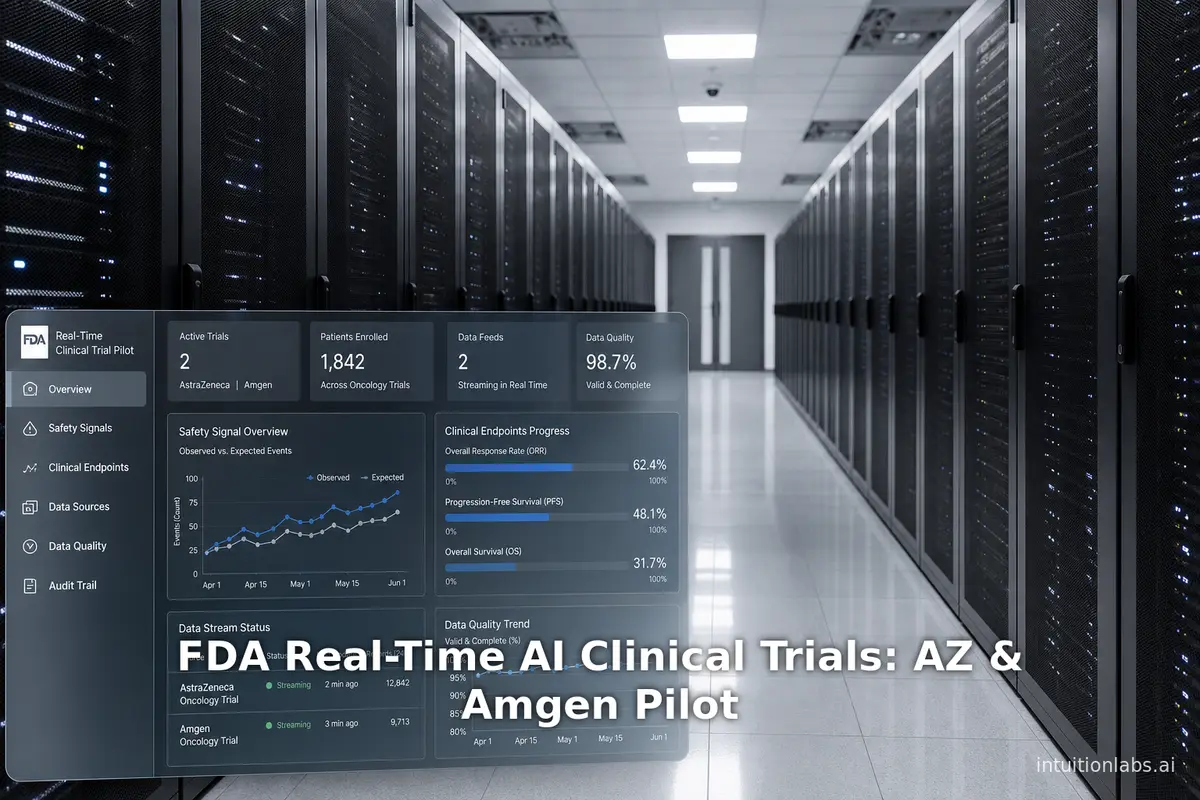
FDA Real-Time AI Clinical Trials: AZ & Amgen Pilot
Analyze the FDA real-time AI clinical trial pilot with AstraZeneca and Amgen. Learn how cloud-based continuous monitoring impacts trial duration and workflows.
How Many FDA Submissions Use AI? CDER's Review Findings
Analysis of CDER's disclosed AI submission counts from 2016 to 2026, the January 2025 AI credibility guidance, the Elsa review tool, and named case studies as of August 2026.
FDA ISTAND Program: AI Drug Development Tool Qualification
An educational guide to the FDA ISTAND program, explaining the DDT qualification process and the regulatory integration of AI-based drug development tools.