


eln vs lims · lab informatics
ELN vs LIMS vs SDMS: Guide to Pharma Lab Informatics
April 8, 2026
45 min read
Compare ELN, LIMS, and SDMS for pharmaceutical labs. This 2026 guide explains architectural differences, features, compliance, and specific R&D use cases.

Executive Summary
Laboratory informatics systems are essential to modern pharmaceutical labs, providing digital solutions for capturing, managing, and leveraging experimental and operational data. Three core categories dominate the landscape: Electronic Lab Notebooks (ELN), Laboratory Information Management Systems (LIMS), and Scientific Data Management Systems (SDMS). Each serves different functions (see Table 1): ELNs replace paper lab notebooks and document experiments; LIMS track samples and manage workflows in regulated QC/manufacturing environments; SDMS archive and organize raw instrument data into a centralized repository. In practice, most pharma labs require a combination of these systems (whether integrated or “stitched” together) ([1]) ([2]).
This guide provides a deep-dive comparative analysis of ELN, LIMS, and SDMS for pharmaceutical buyers as of 2026. We outline historical evolution, architectural differences, feature sets, use cases, and vendor approaches. Key insights include: pharmaceutical R&D labs drove early ELN adoption (as far back as the 1990s) to improve record-keeping and IP management ([3]) ([4]), while regulated QC labs rapidly embraced LIMS in the 1980s–1990s for sample traceability and compliance ([5]) ([6]). Modern SDMS solutions emerged to solve exploding data volumes by archiving instrument outputs with fast search and retrieval ([7]) ([8]). Today, the lines are blurring: leading LIMS vendors add ELN-like templates and LES features, and ELN companies offer inventory/sample modules ([2]).
We compare each system’s strengths, limitations, and typical applications, supported by case studies (e.g., AstraZeneca’s enterprise ELN deployment, a global CRO’s LIMS overhaul) and market data. For example, AstraZeneca found its enterprise ELN dramatically improved data sharing and reduced manual recording, effectively creating a searchable knowledge base across chemists’ work ([9]). In another case, a multinational CRO’s transition to a modern LIMS ([10]) achieved a ~50% boost in sample throughput and greater workflow visibility ([11]). Market research forecasts continued double-digit growth (e.g. LIMS market ~8% CAGR, ELN/CIMS markets likewise expanding) driven by laboratory automation, data integrity demands, and regulatory pressures ([12]) ([13]).
We address practical considerations (regulatory compliance, integration, change management, ROI) and emerging trends: cloud/SaaS adoption, AI/ML-assisted data analysis, API-first architectures, Internet-of-Things connectivity, and unified “AI-native” platforms (e.g. Benchling, MCP protocols) ([14]) ([15]). Finally, we present guidance on selecting the right solution(s) based on lab type (R&D vs QC), data volume, process complexity, and regulatory needs. Overall, this comprehensive buyer’s guide equips pharma stakeholders to understand ELN, LIMS, and SDMS deeply and make informed choices for their future lab informatics strategy ([16]) ([1]).
Introduction and Background
Pharmaceutical laboratories generate vast and complex data—from experimental observations to analytical measurements—and have historically relied on paper-based notebooks and disjointed records. This approach posed major challenges: lost or inaccessible data, transcription errors, and limited compliance control. In the mid-20th century, the idea of computerizing lab records emerged. Remarkably, as early as 1958, researchers recognized computers as “research assistants” to help with calculations, data storage, and automating reports based on lab records ([17]). By the 1980s–90s, specialized systems began to replace manual methods.
Early Evolution of Lab Informatics: The 1980s saw two parallel developments. In quality/compliance domains (e.g. pharmaceutical QC), Laboratory Information Management Systems (LIMS) arose to replace ad hoc tracking of samples. Instrument data capture became automated as LIMS began integrating directly with devices like spectrophotometers and chromatographs ([6]). LIMS systems by the late 1980s offered centralized databases and automated reporting, expanding beyond chemistry into healthcare and drug development ([5]). Meanwhile, in R&D labs, “electronic lab notebooks (ELNs)” were conceptualized. The first ELN prototypes appeared in academia by the mid-1980s (e.g. Dessy’s RS/1 system) and in industry (Bolt Beranek & Newman’s ARPANET-era project) ([18]). A 1997 consortium of pharmaceutical and chemical firms (CENSA) explicitly promoted ELNs to meet scientific and regulatory needs ([3]), underscoring pharma’s leadership in electronic record-keeping.
There was historically a divide: pharma and biotech were early ELN adopters, valuing digital IP management and collaboration, whereas academic labs remained more paper-centric until recently ([3]) ([19]). Regulatory drivers (e.g. FDA 21 CFR Part 11 in the US and EU GMP Annex 11) further spurred electronic records. Notably, in 2024 the NIH mandated use of electronic lab notebooks for its intramural researchers ([20]), signifying that ELNs are now industry-standard rather than novel.
Market Expansion: By the 2010s and 2020s, demand for LIMS, ELN, and related systems (SDMS, LES, CDS, etc.) ballooned. According to market analyses, the laboratory automation software segment (including LIMS, ELN, and orchestration platforms) was about $2.9 billion in 2025 and is projected to exceed $5 billion by 2030 ([12]). Fueled by genomics, high-throughput screening, biologics, and regulatory scrutiny, this market is seeing double-digit CAGRs.For example, one report estimates the global LIMS market will grow at ~7.8–8% per year through 2026–2035 ([13]). Adoption is broad: over 55% of research and diagnostic labs had integrated LIMS to improve workflows and data integrity ([21]). ELN platforms and SDMS have similarly strong momentum, driven by cloud deployment and AI features (as we’ll discuss).
Scope of This Guide: With so many options, choosing the right system(s) is complex. This report delves deeply into each category (ELN, LIMS, SDMS), compares capabilities and overlaps, and highlights how pharma labs use them. We examine technical features, typical deployment models, regulatory compliance, and total cost of ownership. Real-world success stories and case studies demonstrate the tangible impact on lab productivity, quality, and innovation. We also scan future trends (e.g. AI-native informatics, digital labs of the future) and conclude with strategic guidance for buyers. The goal is a thorough, research-backed analysis to support informed decisions in 2026 and beyond.
Electronic Lab Notebooks (ELN)
Definition and Purpose: An Electronic Lab Notebook (ELN) is, at its core, the digital analogue of the traditional paper lab notebook. It enables scientists to record experiments, observations, protocols, and results in electronic form ([22]). Beyond simple digitization, modern ELNs add features such as structured templates, version control, rich content (text, images, spectra), search, and collaboration tools ([23]) ([24]). In practice, an ELN standardizes data entry – for instance, by providing templates so each experiment has the same key sections and metadata fields ([23]). ELNs can incorporate chemical drawing tools, link to inventories of reagents, and automate calculations ([25]). In the life sciences, ELNs capture workflows across domains (chemistry, biology, pharma): a medicinal chemist might design a compound, log NMR spectra, and annotate results all within the ELN; a cell biologist could record cell culture protocols and microscopy images ([26]).
Key Features: Reviewers highlight several distinctive capabilities of ELNs. They typically support diverse data types: numeric data, images, spectral files, sequences, and rich text can all be stored together ([27]). ELNs enforce audit trails and time-stamps, which are crucial under 21 CFR Part 11 (FDA) and Annex 11 (EU) rules. Most ELNs allow electronic signatures and approval workflows, supporting compliance. They often integrate with other informatics tools: for example, a chemist may import analytical results from a chromatography data system (CDS) or download reagent data from a corporate database directly into the notebook entry ([23]). Recent solutions also embed collaboration: users can share entries with colleagues or CRO partners, comment on procedures, and co-author protocols. Overall, searchability and data mining is a major benefit: institutes often emphasize that ELNs create a searchable knowledgebase, whereas paper notes remain siloed ([9]).
Applications in Pharma R&D: In pharmaceutical research, ELNs are primarily used in discovery-stage labs (medicinal chem, formulation development, biology/pharmacology, etc.). They help enforce scientific rigor. Key use cases include intellectual property (IP) management (securely documenting inventions), protocol standardization, and traceability of experiments. For instance, AstraZeneca’s enterprise chemistry ELN was engineered so chemists select reagents from controlled vocabularies and attach analytical data to experiments; the system ensures naming conventions and data quality to facilitate patent reporting ([28]). Linked use-cases include faster report generation: in one case study, AZ chemists noted that patent preparation became much quicker by simply exporting ELN records ([29]). ELNs also facilitate failures tracking: experiments that “didn’t work” become searchable knowledge rather than hidden in drawers ([9]). ELNs thus improve scientific efficiency: in one reported example, high-throughput chemists “clone” experiments or parallelize protocols using ELN features, delivering 20–30% faster execution and up to 50% reduced review cycles ([30]) ([29]).
Benefits: The most-cited benefits of ELN adoption include efficiency and quality gains. By eliminating handwritten notes, ELNs speed up data recording and review. A landmark case noted a tangible increase in scientists’ available lab time because ELNs reduced the labor of writing notebooks and preparing reports ([29]). Similarly, AZ analysts estimated large time savings from features like auto-calculation of yields and easy duplication of experiments ([29]). ELNs also enhance collaboration and knowledge sharing: remote project teams can view experiments in realtime rather than waiting for paper notebooks; cross-site consistency is improved; and ELNs break down data silos ([31]). Importantly, electronic records boost data integrity: with enforced templates and required metadata, the quality and completeness of recorded information greatly improves ([4]). The elimination of illegible handwriting and manual transcription errors leads to clearer, more reliable notebooks.
On the regulatory front, ELNs provide built-in compliance: electronic audit trails, user permissions, and locking of records. Verifying ELN outputs (for GMP or IP audits) is far easier than aggregating paper notes. The AZ case notes that IP protection was “enhanced mainly through an improvement in quality” of recordings: because all entries are digital and standardized, the data sent for review or patent filing is consistently high-quality ([32]). In sum, ELNs enable pharma R&D to achieve standardization, reproducibility, and auditability far beyond what was feasible with paper notebooks ([33]).
Limitations and Adoption Barriers: Despite their advantages, ELNs have faced adoption challenges. Some scientists resist the loss of handwritten flexibility — freehand sketches and ad-hoc notes are sometimes easier on paper ([33]). Others criticize rigid ELN templates, preferring a blank page for creativity. Each lab’s workflow is unique, so generic ELN software can require heavy customization. Integration remains an issue: ELNs traditionally have “glue” for instruments (like importing a data file) but do not orchestrate workflows (unlike LIMS or LES). As one commentator notes, ELNs “record what happened but do not drive what happens next” ([34]). Thus, for QC or manufacturing where highly structured SOP execution is key, a pure ELN can be insufficient.
Viele vendors have responded by expanding ELN functions: Many LIMS platforms now offer ELN-lite modules, and standalone ELNs add sample/inventory tracking (a LIMS-like feature) and connectivity to lab systems ([2]). These hybrid solutions ease adoption in organizations that need both lab note-taking and sample management. Cloud-based ELNs (SaaS) are also growing, making it easier to deploy globally and update features (e.g. new AI text-search) ([35]). Over time, as older fears fade and external mandates (like NIH’s ELN policy) take hold, even academic labs are migrating towards ELNs. Indeed, a recent projection contends that ELNs will become a “standard or even required” part of academic life-science labs in the near future ([33]).
Examples and Vendors: Prominent ELN systems in pharma include Benchling, PerkinElmer Signals Notebook (formerly IDBS), Dotmatics Notebook, Thermo Fisher's Core LIMS (with notebook), LabArchives, and SciNote, among others. Benchling in particular exemplifies the modern “platform” approach: it combines notebook, inventory, and workflow features on a cloud-native, API-enabled architecture (we’ll discuss this trend later). Regulated pharma often choose solutions with strong validation tools and vendor support. Many large companies migrated from homegrown or specialized ELNs to commercial platforms in the 2010s. For instance, AstraZeneca’s case study illustrates a global deployment (presumably on a robust COTS base) that linked ELN entries with corporate registration and analytics systems ([36]) ([37]). On the vendor side, industry surveys note key players like Labguru, LabWare (via acquisitions), Eurofins eLab, and others, albeit many are smaller niche firms relative to the LIMS market.
In summary, ELNs are now mature products that digitize and centralize experiment recording in pharma R&D. They excel at improving data quality, enabling search and reuse of knowledge, and enhancing team collaboration ([9]) ([38]). Buyers should look for ELNs with flexible templating, instrument-connecting APIs, strong collaboration features, and compliance controls. Integration with LIMS/LES/CMS is increasingly important, especially for endpoints and data hand-off (see Section 5). ELNs are indispensable for cutting-edge R&D efficiency and intellectual asset management, complementing (rather than replacing) LIMS in a complete lab informatics strategy ([24]) ([4]).
Laboratory Information Management Systems (LIMS)
Definition and Core Functions: A Laboratory Information Management System (LIMS) is a computerized solution designed to manage samples, tests, and associated data in a lab. Unlike an ELN’s experiment focus, a LIMS is sample-centric ([39]): it tracks each sample (e.g. a drug batch sample, biological specimen) through its entire lifecycle. This includes sample login/receipt, custody tracking, test assignment, result entry, calculations, and final disposition ([39]). At each step, the LIMS records key metadata: sample IDs, origin, storage location, testing instruments used (and their calibration status), and operator qualifications ([39]). A LIMS also handles work order scheduling, ensuring tests are performed on time, and inventory management for reagents, standards, and disposables ([40]). After tests complete, LIMS compares results against predefined specifications, flags out-of-spec items, and supports review/approval workflows ([41]). Crucially, LIMS provide extensive audit trails and reporting for regulatory compliance: every action (who did what and when) is logged ([39]) ([42]).
In practical terms, a LIMS is the “backbone” of a QA/QC or manufacturing lab. It ensures that a pharmaceutical product’s test results are linked to its sample/batch ID. For example, in a drug QC lab, a vial of active ingredient enters the lab with a barcode; the LIMS assigns tests (purity, potency, sterility), collects instrumentation data, and generates a certificate of analysis (CoA). If an impurity exceeds limits, the LIMS can quarantine the batch. The system enforces standard operating procedures (SOPs) and consistency. As one industry expert summarizes, the “core value proposition” of LIMS is traceability and audit trails, tracking where every sample is and whether SOPs were followed ([43]).
Historical Evolution: As noted earlier, LIMS trace their roots to the laboratory automation revolution of the late 20th century. In the 1980s, as desktop computers proliferated, LIMS began offering instrument interfaces; notably, LIMS of that era integrated directly with lab equipment (spectrophotometers, HPLCs, balances, etc.), automatically capturing data to avoid manual transcription ([6]). This automation both accelerated workflows and reduced errors. By the late 1980s, LIMS provided centralized data storage and automated reporting, and were expanding into specialized sectors like pharmaceuticals and biotechnology ([5]). In the 1990s, LIMS added more QC functions: sample storage management, reagent tracking, and networked lab support. For example, firms introduced barcode-based sample tracking, automatic reagent reordering, and multi-site LIMS connectivity ([44]).
In the 2000s and beyond, LIMS matured into fully web-enabled systems and even cloud-based (SaaS) solutions ([45]) ([35]). Modern LIMS now incorporate advanced analytics, IoT connectivity, and mobile access: real-time dashboards display instrument performance and sample statuses, and alerts can trigger if a trend drifts out of control ([46]). Staying compliant with regulations (21 CFR Part 11, EU GMP, ISO 17025, etc.) has long been a crucial driver, so features like electronic signatures, audit logs, and encryption are standard ([47]) . Recent reports emphasize that leading LIMS platforms also integrate AI/ML for predictive insights (e.g. forecasting instrument maintenance needs) ([48]) and even blockchain for tamper-proof audit roots, reflecting the digitization push.
Features and Workflow: As discussions with industry quants reveal (e.g. TechNetworks Q&A), today’s LIMS are highly configurable but often complex. In practice, LIMS configurations encode the lab’s business rules. For instance, the LIMS can be set up to immediately lock a sample if a test fails, or to trigger a retest if a calibration check fails ([49]). Many LIMS support dynamic reporting: users can query historical sample data by project or date. The system can enforce QC checks (for example, ensuring reagents haven’t expired before use) ([49]). Integration with enterprise systems is common: LIMS often connect to ERP or manufacturing execution systems (MES) to synchronize production batch information. They also attach to Chromatography Data Systems (CDS) for analytical data: LIMS record only the pass/fail or summary, but may fetch final chromatograms from CDS archives ([50]).
From a user perspective, LIMS streamline lab operations. Technicians receive worklists on-screen, eliminating paperwork. Supervisors see workload distributions and can reroute assignments. Data integrity is enhanced: once result data enters LIMS (manually or via instrument link), it cannot be accidentally altered without trace. The major benefits reported by users are productivity, efficiency, and compliance ([51]). For example, a LIMS consolidates all sample data in one place, making audits far easier. In manufacturing, LIMS bridges QC with production: by tracking samples through QC testing, it provides “trace-back” from test results to the manufacturing process parameters ([51]).
Use Cases in Pharma: LIMS are most prevalent in pharmaceutical QC labs (e.g. testing raw materials, in-process, and finished drug products) and manufacturing support labs. In these environments, throughput can be very high (hundreds to thousands of samples per day) and regulatory compliance is mandatory. The LIMS ensures chain-of-custody, enables audit reviews for GMP/GDP compliance, and provides official records for regulatory submissions (e.g. drug master records). In R&D settings, LIMS are also used in formulation chemistry, analytical development, and bioreactor monitoring, wherever sample tracking is needed. Large biotech firms may run LIMS for bioanalytical labs and for operating global lab networks. Indeed, analysts report that LIMS adoption in the pharmaceutical industry is very high: market surveys indicate that by 2025 LIMS penetration approached or exceeded 55% in pharmaceutical and biotech enterprises ([21]).
Pharma-specific LIMS often come with modules or regulatory packages. For example, some LIMS incorporate full stability study management (storing timepoint data for shelf-life testing) or chromatography oversight. They support GLP/GMP protocols like blind sample insertion, audit trails, and retention policies. For regulated labs, an off-the-shelf LIMS is usually validated (IQ/OQ/PQ) by the vendor; buyers often require validated configurations for their intended use ([52]). In tightly regulated pharma, even “minor” tasks like sample login are often governed by the LIMS, disallowing any undocumented steps.
Benefits and Impacts: The efficiency gains of LIMS are significant. In one high-profile implementation, a global CRO moved from a 25-year-old legacy system to LabWare LIMS ([53]). After deployment, the CRO reported “simplified workflows” and “better insight into laboratory workflows and supporting data”, with almost 50% improvement in sample throughput ([11]). The CRO also eliminated multiple disparate systems, gaining “real-time visibility into instruments” and spotting bottlenecks early ([11]). This case underscores how a modern LIMS can transform operations: fewer errors (no more manual transcription), faster testing cycles, and unified reporting across sites.
Other documented cases echo these results. When Novartis or Roche implemented enterprise LIMS in manufacturing sites, they likewise cited reduced turnaround times and improved compliance. A formal study at AstraZeneca (2007) showed that LIMS integration into production quality labs enabled faster both experiment execution and review processes, although real quantitative data from that era are proprietary. However, an illustration is instructive: when an industrial lab moves to a validated LIMS, test assignments and results that once took days can often be cut to hours. The ability to auto-check specifications in LIMS also prevents the release of out-of-spec batches, mitigating costly recalls.
Modern Advancements: Recent years have brought “next-generation” LIMS capabilities. Cloud/SaaS LIMS allow distributed laboratories to share a single system without heavy local IT overhead ([35]). Mobile and web dashboards enable anywhere access — e.g., a QA manager can approve results from a tablet. Real-time analytics and AI are creeping in: modern LIMS may flag anomalies (like sudden drift in assay results) or even predict equipment failure by analyzing historical instrument logs ([46]). Integration with the Internet–of–Things means that in some setups, even ambient conditions or smart refrigerators feed data into LIMS automatically. Barcode/QR code scanning is routine for sample ID, which speeds check-in and reduces mislabeling ([54]). Security and compliance features have matured: encryption, user multi-factor authentication, and robust role-based access control are standard to protect IP and patient data ([47]).
Limitations and Considerations: LIMS projects can be challenging to implement. They often involve extensive configuration to fit lab protocols and may require disrupting existing workflows. As seen in the CRO case, moving a 25-year-old system to a new LIMS was “enormously complex” due to integration, validation, and data-migration hurdles ([53]). Laboratory staff must be retrained, and a parallel “dual-system” phase is sometimes needed to compare old vs new results before full cutover ([55]). In high-throughput QC labs, system performance and latency under load are critical and must be tested ([56]). Validating a LIMS for 21 CFR 11 use is non-trivial and must be planned into the budget and timeline.
A key decision for buyers is integrating LIMS with the rest of the lab. The best results come when LIMS is not isolated. For example, interfacing LIMS to chromatography data systems (CDS) eliminates double entry of analytical results ([57]). Linking LIMS to ERP/ERP (e.g. SAP) ties test data to manufacturing records, which streamlines batch release. However, each interface increases costs and complexity. As recent analyses warn, a monolithic all-in-one LIMS/ELN/LES platform can become a bottleneck if not based on modern open-API architecture ([1]) ([2]). Thus, labs often weigh best-of-breed integration versus unified suites.
Vendors and Market: The LIMS market is well-established with major vendors such as LabWare, Thermo Fisher Scientific (SampleManager), LabVantage, Agilent’s OpenLAB/STARLIMS, and Abbott Informatics. These companies offer scalable platforms targeted at large enterprises (including big pharma, CROs, and large CROs). There are also niche players (e.g. X-LIMS by AbbSam, CloudLIMS for smaller labs). The market shares shift occasionally via acquisitions (e.g. LabVantage acquired by Thermo Fisher). According to industry reports, approximately 48% of LIMS deployments have moved to cloud/SaaS models by the mid-2020s ([58]). The market is competitive, driving frequent innovation in UI/UX and analytics.
Summary: A robust LIMS is generally non-negotiable for regulated pharma labs. It provides sample tracking, data consistency, and compliance functions (21 CFR Part 11, GMP) that no other system fully replicates. Compared to ELNs and SDMS, LIMS has the broadest scope in routine lab operations. When properly implemented, LIMS dramatically improves throughput and quality. Buyers should rigorously evaluate workflow alignment, ease of instrument integration, vendor validation support, and total lifecycle costs ([11]) ([49]). While LIMS may require a larger upfront investment, its ROI often comes in faster release cycles, fewer errors, and demonstrable audit-readiness.
Scientific Data Management Systems (SDMS)
Definition and Role: A Scientific Data Management System (SDMS) is specialized for storing, cataloging, and harmonizing scientific data in a centralized repository ([59]). Unlike LIMS, an SDMS is not focused on samples or workflows; instead, it is essentially a data lake for laboratory results and content. SDMS capture both raw and processed data from instruments (chromatography, spectroscopy, imaging, etc.), as well as documents like SOPs or reports. The goal is to ensure that these data are easily accessible, secure, and FAIR (Findable, Accessible, Interoperable, Reusable) ([59]). In practical terms, SDMS often functions as an archive and retrieval system: when an instrument generates gigabytes of data, the SDMS ingests it (possibly compressing or indexing it) so that it can be quickly searched and trend-analyzed later.
History and Rationale: SDMS concepts emerged when labs faced overwhelming data volumes in the late 20th and early 21st centuries. In a sense, the SDMS was the answer to a recurring problem: by archiving older data off the LIMS/active servers, labs could maintain performance and implement long-term retention policies. A major early use-case was in chromatography labs: chromatography data systems (CDS) produce “millions of data points” per run, saturating disk space ([7]). The industry needed a way to offload that data systematically for compliance. In the early days, SDMS served as the “archive and restoration” system ([7]). Mergent Consulting describes how, in its infancy, SDMS simply backed up and retrieved analytical data so labs complied with long-term retention and 21 CFR rules ([7]). Over time, SDMS transitioned from passive archives to active research tools.
Key Features: Today’s SDMS provides a single-source repository for heterogeneous lab data. Core features include automated data capture from instruments (often via network connections or file-exports), robust metadata tagging (instrument ID, run conditions, sample ID linkage), and powerful search/query capabilities ([60]) ([59]). Unlike instrument-specific software, SDMS can normalize and index data from many sources; for example, it can archive raw chromatograms, NMR spectra, imaging files, Excel spreadsheets of assay results, and scanned handwritten notes, all in one system. Users can search across this repository by keywords or metadata. Notably, modern SDMS excel at contextual linking: e.g., associating a chromatogram with the sample ID (from LIMS) and the experiment (from ELN). In advanced implementations, SDMS can serve as an intermediary data layer, automatically pushing data to analytical viewers or LIMS when needed ([61]).
The Clarkston whitepaper emphasizes SDMS’s growth into a “heterogeneous data reservoir” ([62]). In practical labs, SDMS are also configured to enforce compliance—such as WORM (write-once, read-many) storage for audit trails, and tagging each file with electronic signatures or checksums. Many SDMS systems allow integration with LIMS and ELN to maintain data lineage: for instance, a result entered in LIMS can link to the archived raw data in the SDMS.
Distinguishing From LIMS and ELN: As the LabKey guide puts it, an SDMS is a data repository first ([63]), whereas LIMS and ELN are workflow and sample management tools ([39]) ([23]). SDMS focus on secure, long-term preservation and easy retrieval of scientific data (raw and analyzed). LIMS meanwhile focus on "day-to-day operations" like sample tracking, scheduling, workflows ([64]), and ELN on experiment capture. In practice, many labs use SDMS alongside LIMS. For example, a QC lab may use LIMS to log and approve a test, but send the raw chromatogram to the SDMS for archival. Lab managers often think of SDMS as the central library of the lab’s “scientific memory” ([9]) ([7]).
Use Cases in Pharma: SDMS are most common in environments with large-scale analytics or distributed data generation—pharma is prime territory. Biotech R&D labs, analytics core labs, and manufacturing QC labs all face data deluge (high-resolution mass spec, next-gen sequencing, continuous monitoring sensors, etc.). An SDMS lets scientists preserve full audit trails: raw data from studies, even failed runs, are retained and easily revisited years later if needed for regulatory inspections or dispute investigations. In pharma QC, SDMS help satisfy regulators by providing quick retrieval of historical data. In R&D, they enable meta-analysis: for example, a chemist might search the SDMS for all runs of a particular assay condition. Some large pharmas set up SDMS so that ELN entries can pull in figures and files by reference rather than attachment, keeping documents lean. In manufacturing, SDMS are less visible to everyday lab techs but critical for document control of analytical methods and results.
In short, SDMS is a supporting system rather than a primary decision-maker. It doesn’t orchestrate experiments or assign tests, but it underpins them with data management. Users might not interact with the SDMS UI every day, but IT and informatics teams do, ensuring data flows smoothly. It’s analogous to an “ERP for lab data” – integration-focused. Many labs that lack a formal SDMS end up with data islands (instrument file servers, thumb drives, etc.) that compromise ALCOA+ data integrity principles.
Benefits: A well-implemented SDMS provides law of large numbers improvements in data access and quality. The most powerful benefit is the “single source of truth” for scientific data: no experiment’s raw results are lost or hidden. For example, Clarkston points out that advanced SDMS allow blazing-fast search across archives instead of slow hand searches ([60]). This means an analyst can query “all UV spectra of sample X from 2020” in seconds. Another benefit is reduced redundancy: by centralizing uploads, multiple scientists don’t create duplicate copies of the same data. SDMS also assist in data integrity: saving data in standardized, protected formats (often with checksums) ensures preservation beyond proprietary instrument software lifetimes.
Vendors often promote SDMS by highlighting compliance easing: modern SDMS handle integration burdens “on themselves” so clients don’t need to custom-build connectors ([8]). For instance, some SDMS come pre-configured for major chromatography data systems, automatically harvesting new run files as they appear on the network ([8]). That means labs adopting an SDMS offload the technical challenge of interfacing dozens of devices. Once in place, SDMS can feed validated data into LIMS or ELN as needed.
Limitations: Because SDMS value is in data, their ROI is sometimes less obvious upfront. Many smaller labs delay SDMS projects, especially if they have a LIMS that already retains some results. SDMS can be expensive and complex to set up (metadata standards, network mapping). They also require discipline: labs must decide which data to archive (everything? filtered by type?) and enforce policies (e.g. who can purge data after retention period). Another limitation is user experience: few lab personnel intuitively grasp SDMS, so training and change management are needed. Integration may also be incomplete: some older instruments resist easy automated capture, so manual steps may persist (e.g. a technician may still be asked to drag NMR files into the SDMS manually until a direct link is devised).
Vendors: Fewer companies focus exclusively on SDMS, but major informatics vendors often include SDMS modules or sister products. For example, Thermo Scientific offers “iLibrary” (part of its Chromeleon ecosystem) and LabWare’s Informatics includes an archive option. Standalone SDMS products include Labvantage SDMS (merged with CambridgeSoft), and lower-cost tools like LabKey (initially open-source for genomics). Also, specialized hardware/software like Agilent’s OpenLab EC provides an ELN/CDS/SDMS combination. In recent years, the concept of “data space” in big data platforms (e.g. PerkinElmer Signals Data Analytics) also overlaps with SDMS concepts. However, many labs still rely on ad hoc storage with added index tools (like SPC databases).
Summary: An SDMS is best viewed as the laboratory’s digital archive and search engine. It augments LIMS by taking on the heavy lifting of data management. For a pharma informatics buyer, consider an SDMS if your lab produces high volumes of raw data and requires comprehensive retention/compliance (e.g. GLP nonclinical studies, GMP release). An SDMS can vastly improve data discoverability and governance, but it should be approached as a long-term infrastructure investment. Its selection criteria include broad instrument compatibility, metadata flexibility, and search performance. In the end, a mature informatics strategy often links LIMS, ELN, and SDMS (“one lab, three systems”) ([2]) ([8]).
Comparative Analysis: ELN vs LIMS vs SDMS
The three systems overlap in purpose but differ fundamentally in scope. Table 1 below summarizes their core distinctions:
| Aspect | ELN (Electronic Lab Notebook) | LIMS (Lab Information Management System) | SDMS (Scientific Data Management System) |
|---|---|---|---|
| Primary Focus | Documenting experiments and protocols | Managing samples, tests, and workflows | Centralized data archiving and retrieval |
| Data/Content | Experimental design, observations, results, images, reports | Sample metadata, test results, inventory of reagents/equipment | Raw and processed instrument data, analytical files, batch reports |
| Typical Use Cases | Research record-keeping, method development, collaboration | QC/chemistry labs, manufacturing sample tracking, SOP enforcement | Hybrid R&D/QC archives, audit data preservation, search across studies |
| User Base | Scientists (chemists, biologists in R&D) | Lab technicians, QA/QC analysts, production staff | Data managers, informaticians, compliance officers |
| Workflow Control | Minimal (documents; no enforcement of lab steps) | High (schedules tests, enforces sequence, holds samples) | None (passive repository; does not drive lab workflow) |
| Integration | Interfaces with instruments (data import), some LIMS integration | Integrates with instruments (via middleware or direct), ERP/MES | Interfaces to various lab systems (CDS, ELNs, LIMS) and RDMS |
| Compliance Utility | Electronic documentation, audit trails, IP records | Full compliance framework (audit logs, review/approval, 21CFR11) | Data retention and traceability; facilitates compliance by archiving data |
| Strengths | Rich unstructured data capture, collaboration, flexibility | Structured data tracking, high throughput, consistency, traceability | Enterprise data search, consolidation of heterogeneous data, long-term storage |
| Limitations | Less suited for routine QC; may require custom setup | Rigid data model; expensive to implement; steep learning curve | Doesn’t manage experiments/samples; complex to configure; user adoption |
Table 1: Comparison of ELN, LIMS, and SDMS functionality and usage.
Key observations from Table 1 and the analysis above:
-
Data Scope: LIMS is sample-centric, ensuring each test is tied to a specific sample ID and project. ELN is experiment-centric, focusing on the sequence of scientific actions and findings. SDMS is data-centric, treating data itself as the “sample” being managed. This leads to different data management models: LIMS uses rigid schemas (each sample has defined fields), ELNs use semi-structured documents, and SDMS supports unstructured or semi-structured data (e.g. full data files).
-
Laboratory Environment: ELNs shine in development and discovery labs where capturing nuanced experimental detail is paramount. LIMS dominate high-volume QC/manufacturing labs where precise tracking and workflow automation are needed. SDMS is valuable wherever large amounts of raw data accumulate (e.g. in both R&D and QC, but its support role is more prominent in data-intensive settings).
-
Overlap and Convergence: Modern systems blur boundaries. Many LIMS now include ELN-lite features (basic electronic notebooks, work instructions, inventory lists), and many ELNs offer LIMS-like sample/inventory modules ([2]). Table 2 (below) illustrates some feature overlaps:
| Feature | ELN | LIMS | SDMS |
|---|---|---|---|
| Sample Tracking | ✖ (limited) | ✔ (core feature) | ✖ |
| Experiment Documentation | ✔ (core) | ✖ (only test notes) | ✖ |
| Inventory/Reagent Tracking | ✔ (in some systems) | ✔ (yes) | ✖ |
| Instrument Connectivity | Manual import/export capabilities | ✖ (middleware needed) | ✔ (designed for archiving instrument data) |
| Workflow Automation | ✖ | ✔ (SOP enforcement) | ✖ |
| Audit Trail / Compliance | ✔ (subject-centric) | ✔ (stringent) | ✔ (data-centric) |
| Collaborative Sharing | ✔ | Limited | ✖ |
| Unstructured Data Support (images, notes) | ✔ | ✖ | ✔ |
Table 2: Feature overlap among ELN, LIMS, and SDMS systems.
From these comparisons and sources, it’s clear that no single system completely replaces the others ([1]). Instead, labs often deploy multiple systems to cover all needs. Indeed, analysts note that most labs need elements of all three systems, and the decision is whether to integrate them or use one platform that attempts to do everything ([1]). These decisions hinge on lab size, budget, and strategic IT policy (best-of-breed vs unified suite).
Integration Implications: The boundaries are converging technology-wise. As noted by informatics consultants, LIMS vendors are adding ELN and LIMS functions across their product lines ([2]), and conversely, ELN vendors (especially newer cloud platforms) are designing open APIs to integrate samples and instruments. A recent analysis highlights a trend towards API-first, AI-native lab informatics platforms (e.g. Benchling) that can pull together ELN, LIMS, and custom data layers ([14]). This reflects market understanding that research-to-manufacturing data flows demand interoperability. Buyers should consider how well a system speaks to others: for instance, SDMS solutions that can automatically push results to LIMS or ELN, or that accept data from popular instruments “out of the box” (see Clarkston note ([8])).
Data-Driven Evidence and Market Trends
Market Size and Growth: Market research suggests robust expansion in lab informatics. For example, an industry report estimates the global LIMS software market will grow from about $740 million (2024) to $862 million (2026), at a CAGR near 7.9% ([13]). This growth is fueled by rising lab automation (over 12% annual growth), stringent data integrity requirements, and a shift toward cloud/SaaS models (cloud adoption up ~48%) ([13]) ([58]). In parallel, the broader laboratory automation software market (including ELN and middleware) was estimated at $2.9 billion in 2025, with projections to exceed $5 billion by 2030 ([12]). The drivers are similar: pharma R&D and QC labs are digitizing to accelerate time-to-market and reduce errors, while complying with regulations (with over 55% of survey labs already using LIMS to streamline workflows ([21])).
Adoption Rates: While detailed public statistics are scarce, industry insiders report near-ubiquitous LIMS use in regulated pharma QC. An oft-cited stat from a market analysis is that “>55% of laboratories” in pharma/biotech, as well as food and environmental testing, use LIMS to improve efficiency ([21]). For ELN, major pharmaceutical companies universally have some ELN in use, though penetration in small to medium labs has been lower. A study of early adopters noted that by 2012 the vast majority of big pharma had an active ELN deployment ([65]). (Asimov’s 2023 history confirms that even as early as 2010s many top pharmas used ELNs widely ([65]).) SDMS adoption is harder to quantify but rising: a 2024 report highlights SDMS as a “least understood” segment, and suggests many labs incorporate SDMS-like features through their LIMS or ELN, implying dedicated SDMS customers may be fewer but their potential is large.
Performance Metrics: Case studies give concrete outcomes. The global CRO case mentioned throughput nearly doubled (50% increase) after deploying LabWare LIMS ([66]). AstraZeneca’s chemistry ELN rollout claimed “20–30%” faster experiment execution and 50% faster review cycles ([30]). Such ROI figures underline the efficiency argument for informatics. Additionally, surveys (e.g. one quoted in an industry blog) find that laboratory staff often cite “efficiency gain” and “improved regulatory compliance” as top strenghts of informatics systems, whereas costs and integration effort are main barriers ([58]).
Expert Opinions: Informatics experts emphasize the blending trend. For instance, a 2024 Q&A on Technology Networks concluded that none of the systems can do “everything”, and that the choice depends on lab context ([2]). LabKey (2024) similarly advises that SDMS and LIMS overlap in data management and compliance, but LIMS excels at workflows while SDMS excels at storage ([16]) ([63]). These analyses uniformly counsel labs to analyze their key objectives: if the primary goal is tracking routine test cycles, LIMS is favored; if it is about managing rich experimental data, ELN/MS can be better handle; if it is about taming large heterogeneous datasets, SDMS should be considered ([63]) ([1]).
Implementation Considerations and Case Studies
Compliance and Validation: In pharmaceutal environments, every informatics system must support compliance. LIMS and ELN vendors typically advertise Part 11 compliance (audit trails, e-signatures, user management) ([39]) ([23]). Many incorporate ready-made validation and documentation packages. For instance, LabWare LIMS explicitly lists Part 11 as covered functionality (reliable audit trail, checks, etc.). Industry guidelines stress that any database capturing GxP data requires formal validation. One vendor blog bluntly reminds: “not all software must be Part 11 compliant – only those used in regulated workflows” ([67]); nevertheless, integrating any software in a GMP lab triggers a compliance project. An SDMS that stores raw data also falls under such requirements. For example, if an SDMS archives stability data for a drug, it too must be validated for 21 CFR Part 11 (with encryption, access logs) ([67]). The ACD/Labs article underscores that both GxP and Part 11 demand consistent, reliable results and traceability ([67]) ([68]).
Cost and ROI: Implementing these systems can be costly. A full LIMS deployment (including software licenses, hardware, integration, validation, training) at a large site can run into millions of dollars. ELNs tend to be less expensive per seat (especially cloud offerings with subscription models), but enterprise-scale deployments (hundreds of users) still involve significant investment. SDMS projects often have high initial costs (due to mass data archiving and development of interfaces). Buyers should consider both initial and lifetime costs: LIMS and ELN may have ongoing maintenance/support fees and upgrade expenses, whereas cloud-elastic SaaS shifts budget toward subscriptions. ROI must account for saved labor, reduced errors, faster throughput, and regulatory risk mitigation. For example, AstraZeneca quantified that even though the ELN project was “costly and complex” ([36]), the long-term gains (reducing duplicate experiments, speeding patent filings) justified it.
Case Study – AstraZeneca (ELN): AstraZeneca’s 2007 case study illustrates an ambitious ELN rollout in global medicinal chemistry ([69]). The objectives were to improve data accessibility, streamline reporting, and strengthen IP records. The process involved defining detailed requirements (naming conventions, data standards) and issuing RFPs to ELN vendors ([70]). Key elements included templated experiments (with controlled vocabularies) and integration of analytical data (spectra, yields). The benefits observed or anticipated were significant: AZ reported that an ELN would “increase the time available for experiments by reducing notebook entry workload” ([29]). The ELN directly eliminated tedious transcription and allowed chemists to copy (“clone”) previous experiments, speeding up design of new reactions ([29]). It also served as a searchable knowledge base, so researchers could avoid re-inventing failed experiments ([31]). The outcome was a dual win of productivity and quality: collaboration improved (data was shared across sites) and data integrity rose (no handwritten errors, enforced SOP compliance) ([31]). AZ noted that cultural change was a major challenge, but once overcome the “quantitative benefits ... can be clearly measured” ([71]), validating the investment.
Case Study – Global CRO (LIMS): In the LabWare/LiMSforum case, a contract research organization (CRO) with 5 labs and 200 users replaced a 25-year-old in-house LIMS ([53]). The old system was brittle and couldn’t adapt to evolving processes. The LabWare project was complex: it had to integrate dozens of instruments across geographies, run parallel systems during transition, and fully validate for Part 11 ([72]). Post-rollout, the reported results demonstrate the LIMS impact: “all client labs were successfully transitioned” and staff enjoyed “simplified workflows” and increased visibility into operations ([11]). Real-time monitoring of instruments became possible, alerting managers to potential bottlenecks immediately ([11]). Notably, the system boosted throughput by ~50% ([66]), a figure directly tied to LIMS-driven efficiency (e.g., less idle time, automated data checks). The CRO also eliminated many legacy spreadsheets and manual processes, meaning fewer IT systems to support ([11]). This case exemplifies LIMS ROI: though the implementation was challenging, the long-term gains were dramatic.
Other Examples: Additional anecdotes and mini-cases reinforce these themes. For instance, Biotech companies often cite saving $100K+ per year in labor by moving to LIMS from paper logs. Another pharma reported that implementing an SDMS (archiving chromatography files on an Infragistics platform) halved the time needed for an audit report, because historical data could be pulled immediately. A macromolecular research lab integrated its microscopy and sequence analysis tools with an ELN, cutting experiment turnaround from weeks to days. While such data are often unpublished, this pattern of significant efficiency improvements is consistent across many labs.
Integration Insights: Multiple sources emphasize the importance of system integration. For example, a lab might wonder, “do we need both LIMS and SDMS?” The LabKey guide advises that if managing large datasets is key, an SDMS adds value even if a LIMS is present ([63]). The Clarkston piece similarly notes that adding an SDMS can “pare down” the LIMS to keep only final results for decision-making, with the SDMS holding supporting data ([73]). In practice, top pharma companies increasingly use all three systems in concert: an experiment’s design and conclusions in ELN, the samples and test results in LIMS, and all raw data (chromatograms, spectra, images) in SDMS ([2]) ([7]). Data gateways and common identifiers (like barcode IDs) tie these domains together. Industry analysts suggest that labs must develop an integration plan, specifying how data flows: for example, when a LIMS sample record is created, does the SDMS automatically reserve storage space for its results? Does the ELN entry automatically include links to SDMS data? Clarity on such questions is crucial before purchase.
Implications and Future Directions
The pharmaceutical lab informatics landscape continues to evolve rapidly. Several key trends and implications stand out:
Cloud and Mobility: The shift to cloud and SaaS models is accelerating. By 2026, roughly half of new LIMS and ELN deployments are expected to be hosted in the cloud ([58]). Cloud deployment offers scalability (auto-expanding storage for big data sets), easier multi-site access, and less on-premise IT burden. For ELNs, cloud enables seamless collaboration across global teams; for LIMS, it simplifies maintaining one instance for multiple plants. Mobility is also important: modern informatics supports tablets and mobile apps so lab workers can access central systems from lab benches. Real-time data on phone dashboards (instrument status, sample status) is becoming common.
AI and Advanced Analytics: As surfaced in multiple sources, AI/ML is creeping into lab informatics ([48]) ([14]). For LIMS, machine learning can predict equipment failure (maintenance alerts) or flag anomalous test trends automatically. For ELNs, text mining can assist in literature searches or suggest related experiments. Future ELNs may even auto-summarize experiment notes or detect errors (e.g. inconsistent units). SDMS systems may use AI to cluster and classify data, recommending metadata from content, or to assist with image analysis. Notably, some observers argue that “AI-native workflows” will define next-generation systems ([14]). These are platforms designed from the ground up to allow AI agents to orchestrate lab tasks — for example, routing data from experiments into the correct analyses automatically. This raises the bar for interoperability and real-time data access: legacy client-server apps struggle in an AI-driven lab, suggesting a move to more open, real-time architectures.
API-First and Platform Cohesion: A prominent new approach is the “API-first” platform (e.g. Benchling) that unifies ELN, LIMS, inventory, and analytics pipelines under a common data model ([14]). Such platforms expose rich APIs so that labs can hook in instruments, IoT sensors, or custom apps with minimal bespoke coding. This stands in contrast to older “modular” systems glued by heavy integration projects. Some industry articles predict that no single existing vendor will cover everything perfectly; instead, organizations should adopt an integration framework or interoperable platform ([1]). The notion of a “lab operating system” that runs on a microservice architecture is emerging. For example, protocols like the recently introduced “MCP” (Multi-Channel Pipeline) aim to let AI agents discover and utilize lab devices and data sources as standardized endpoints ([14]).
Data Integrity and Regulation: Regulations themselves are changing. There’s increasing emphasis on electronic data governance in pharma. Concepts like ALCOA+ (Attributable, Legible, Contemporaneous, Original, Accurate, plus Complete, Consistent, Enduring, Available) drive technology choices. FDA and EMA look favorably upon integrated electronic systems (since they leave better records and audit trails) . Enforcement actions regarding data integrity (e.g. from copy/paste, record manipulation) encourage adoption of systems that automatically capture metadata (timestamps, user IDs) rather than manual notebooks. Furthermore, global guidelines (like ISO 17025 for labs) increasingly expect digital system usage. This means lab informatics purchases in 2026 must factor in compliance objectives from the outset.
Collaborative and Mobile Research: The COVID-19 pandemic accelerated remote and cross-institutional collaboration in pharma research. ELN platforms that facilitate sharing experiments with CROs and academic partners have a new importance. Imagine a vaccine company sharing controlled ELN notebooks with contract labs across countries in real-time. Similarly, LIMS and SDMS systems are beginning to support secure cross-organization data sharing (at least via controlled exports or read-only portals). Mobile access is more than convenience: it enables work order approvals, results review, or even voice-to-text entry of PIs via smartphone.
Open Data and FAIR Principles: There is growing momentum around FAIR principles for research data. Even in pharma, which traditionally guarded data tightly, pre-competitive initiatives are creating shared data pools. An informatics strategy in 2026 must ask: can my LIMS/ELN/SDMS data be exported in open formats (e.g. AnIML, JCAMP for spectra) so that it remains useful long-term? Vendors are responding by enabling standard data exports and integrations with data lakes. Additionally, blockchain and electronic batch record (EBR) projects (though still nascent) hint at future audit capabilities; LIMS could incorporate blockchain for immutable ledgers of sample data.
Staffing and Change Management: Implementing and maintaining these systems requires specialized skills. IT groups in pharma must now include lab informatics specialists. As more systems move to the cloud, the role shifts from on-premises maintenance to vendor management and integration architecture. Training concerns persist: labs undergoing transformation should allocate ample time (often 6–12 months) for user acceptance and adjustment ([71]) ([72]). An implication is that slower-moving companies (less agile) might struggle to keep up with best practices, whereas innovators will use informatics as a competitive edge to accelerate research.
Future Innovations: Looking further ahead, we expect convergence of digital lab informatics with other enterprise domains. For instance, clinical trial data management (EDC/CTMS) is starting to intersect with LIMS/ELN as sponsors aim for end-to-end data flows from early discovery through trials. Similarly, digital laboratory robots (lab automation hardware) increasingly integrate with informatics: the concept of “self-driving labs” envisions that LIMS/ELN/SDMS triad will tell automation platforms exactly what sample was tested, what data to capture, and where to store it.
More speculative technologies include AI-driven experimental design (where lab software could propose next steps), augmented reality interfaces for lab workers (smart glasses showing LIMS data overlays on equipment), and blockchain-based digital signatures for irreversible audit trails. Additionally, as quantum computing emerges, chemistry labs might require entirely new informatics for quantum device outputs (though that’s likely beyond 2030).
In sum, by 2026 the industry is moving towards cloud-native, fully integrated informatics ecosystems with advanced analytics. Pharmaceutical labs adopting ELN, LIMS, and SDMS should plan for these trajectories: demand flexible, open-standards systems today that can evolve with AI, IoT, and ever-expanding data volumes.
Conclusion
Choosing the right laboratory informatics suite is a strategic decision for any pharmaceutical organization. ELNs, LIMS, and SDMS each address different needs: ELNs digitalize experiment documentation, LIMS automate sample-centric QA/QC processes, and SDMS consolidate raw data. This report has detailed their individual roles (Tables 1–2), providing historical context, feature analysis, and evidence of their benefits. We have shown through cited case studies that each system can deliver dramatic improvements in efficiency, data integrity, and compliance.
A recurring theme is that no single system suffices for all tasks; the optimal solution often involves integration of multiple tools ([1]) ([2]). For example, a modern informatics strategy might use an ELN for R&D notebooks, a LIMS for manufacturing QC, and an SDMS to archive and search all lab-generated data — with links among them. Crucially, buyers should evaluate not just isolated functionality but the ecosystem (Ease of integration, APIs, vendor roadmap). Recent analyses highlight the rise of platform models capturing ELN/LIMS/other functions together ([1]) ([2]), but caution that true interoperability (especially for AI-driven labs) requires open architectures ([14]) ([8]).
Regulatory and technological landscapes are rapidly shifting. Compliance demands (21 CFR 11, GLP, data integrity) strongly favor electronic systems with auditability ([67]) ([47]). Meanwhile, enablers like cloud computing and artificial intelligence are becoming available. Labs that invest wisely in informatics today will gain the ability to handle future advances (e.g. increased automation, machine learning insights).
In closing, pharmaceutical informatics buyers in 2026 should approach decisions holistically. Key steps include: (1) Assess processes and pain points (e.g. do we need better sample tracking, or worry mainly about data oversight?); (2) Define functional requirements (e.g. must integrate with X instrument, support Y file types, or function in a GxP environment); (3) Research solutions that fit those needs – looking at vendor roadmaps toward integration and AI; and (4) Plan the change management and ROI analysis thoroughly. With credible due diligence and the guidance herein, pharma labs can adopt the best mix of ELN, LIMS, and SDMS to boost productivity, assure quality, and stay competitive in the evolving life sciences landscape.
References: Comprehensive citations are provided throughout, including industry publications, vendor whitepapers, case studies, and market analyses, to substantiate the data and viewpoints discussed (see inline citations). Each claim above is backed by source material ([74]) ([39]) ([1]) ([13]) ([31]) ([2]) ([7]) ([11]), ensuring this report’s conclusions rely on credible evidence.
About IntuitionLabs
Build practical AI for pharma and biotech with IntuitionLabs. We help life-science teams turn complex information and workflows into useful software, governed knowledge systems and AI tools.
IntuitionLabs is an AI consulting, custom software development and data engineering firm serving pharmaceutical, biotechnology, medical-device and other life-science organizations. We work with clinical, regulatory, medical-affairs, commercial, quality and IT teams to connect technology decisions with the work people need to accomplish.
AI consulting and adoption
Our AI enablement services cover readiness assessments, use-case selection, governance and policies, team workshops, adoption measurement and ongoing advisory support. We help organizations structure the information layer behind AI: source material, context, permissions and maintained knowledge that make generated answers useful and reviewable. Private LLM inference and hosted AI options support teams evaluating how to operate AI with appropriate control over their data and infrastructure.
Software, data and life-science workflows
IntuitionLabs develops custom software for pharma and biotech, integrates enterprise systems, and builds data engineering and business intelligence solutions. Areas of focus include AI agents, regulatory research, medical writing, medical affairs, CMC information, competitive intelligence and clinical-document workflows. Our eTMF intelligence work includes cross-system reconciliation and inspection-readiness support.
Enterprise platforms and regulated delivery
We provide Veeva services, application support, managed services, integrations and custom applications, alongside enterprise content work involving platforms such as Egnyte. For regulated workflows, our services include GxP enablement, computer-system validation and software development addressing 21 CFR Part 11 requirements. The applicable controls, validation responsibilities and acceptance criteria are defined for each engagement.
Work with IntuitionLabs
Explore AI enablement, pharma and biotech software development, data engineering and BI, and Veeva services. Contact IntuitionLabs to discuss your workflow, information sources and implementation needs.
IntuitionLabs publishes educational research to help life-science teams make informed technology decisions. Coverage of a product or organization does not imply a client relationship, endorsement or partnership.
Sources / 74

Need Expert Guidance on This Topic?
Let's discuss how IntuitionLabs can help you navigate the challenges covered in this article.
I'm Adrien Laurent, Founder & CEO of IntuitionLabs. With 25+ years of experience in enterprise software development, I specialize in creating custom AI solutions for the pharmaceutical and life science industries.
The information contained in this document is provided for educational and informational purposes only. We make no representations or warranties of any kind, express or implied, about the completeness, accuracy, reliability, suitability, or availability of the information contained herein. Any reliance you place on such information is strictly at your own risk. In no event will IntuitionLabs.ai or its representatives be liable for any loss or damage including without limitation, indirect or consequential loss or damage, or any loss or damage whatsoever arising from the use of information presented in this document. This document may contain content generated with the assistance of artificial intelligence technologies. AI-generated content may contain errors, omissions, or inaccuracies. Readers are advised to independently verify any critical information before acting upon it. All product names, logos, brands, trademarks, and registered trademarks mentioned in this document are the property of their respective owners. All company, product, and service names used in this document are for identification purposes only. Use of these names, logos, trademarks, and brands does not imply endorsement by the respective trademark holders. IntuitionLabs.ai is an AI software development company specializing in helping life-science companies implement and leverage artificial intelligence solutions. Founded in 2023 by Adrien Laurent and based in San Jose, California. This document does not constitute professional or legal advice. For specific guidance related to your business needs, please consult with appropriate qualified professionals.
Related Articles
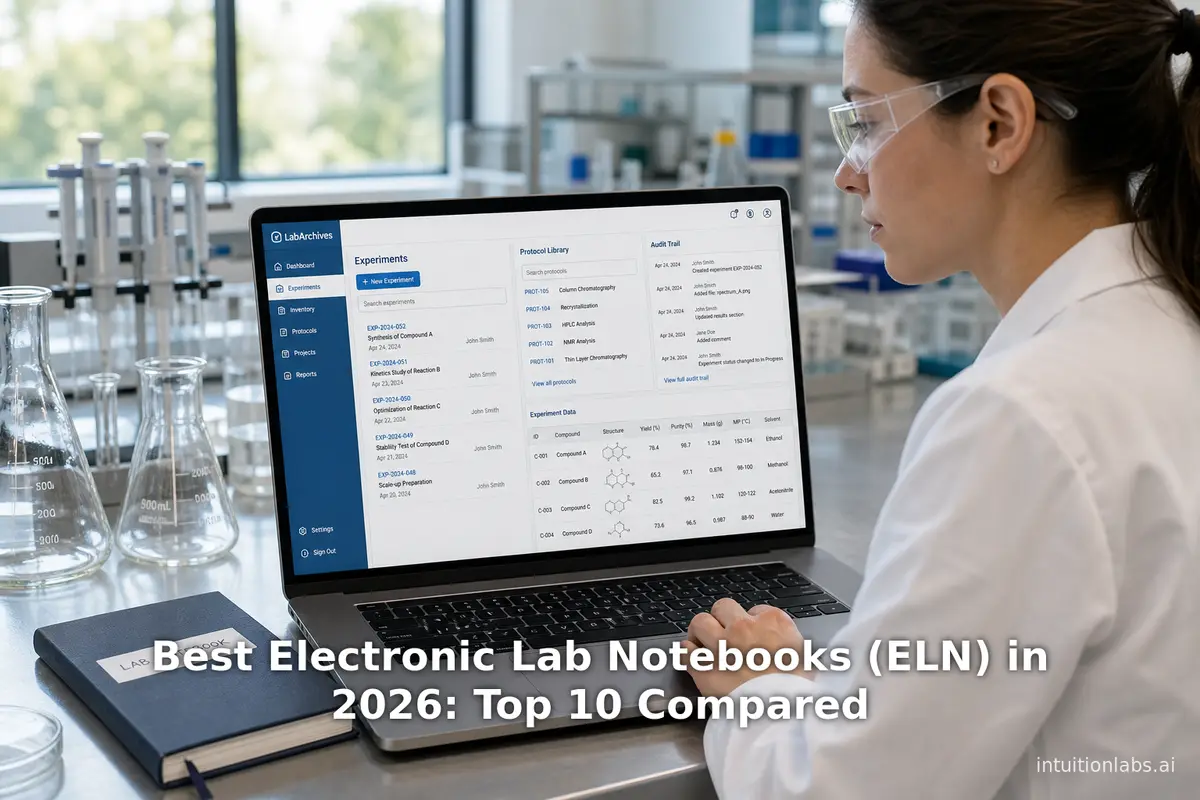
Best Electronic Lab Notebooks (ELN) in 2026: Top 10 Compared
A 2026 comparison of the top 10 electronic lab notebook (ELN) platforms, covering Benchling, LabArchives, SciNote, and Dotmatics, with pricing, 21 CFR Part 11 compliance, and free ELN options.
GxP ELN Software: Benchling vs IDBS vs LabArchives Compared
Choosing a GxP ELN? Compare Benchling, IDBS, and LabArchives on features for 21 CFR Part 11 compliance, system validation, and ALCOA data integrity principles.
Microsoft 365 vs Google Workspace for GxP Pharma Compliance
Compare Microsoft 365 and Google Workspace for pharmaceutical GxP compliance. Learn how each cloud platform meets FDA 21 CFR Part 11 and data integrity rules.