


ai drug discovery · animal-free testing
AI Predictive Tools and Animal-Free Drug Discovery
May 15, 2026
40 min read
Learn how AI predictive tools and animal-free testing methods (NAMs) are advancing drug discovery. Read this technical review of AAPS NBC 2026 innovations.

Executive Summary
The 2026 AAPS National Biotechnology Conference (NBC 2026) in San Diego highlighted a paradigm shift in pharmaceutical research: the integration of artificial intelligence (AI)-driven predictive tools with animal-free testing methods to accelerate and humanize drug discovery. Opening and closing plenaries, led by Thomas Hartung, M.D., Ph.D. (Johns Hopkins University) and Lingle Wang, Ph.D. (Schrödinger, Inc.), framed the meeting around these themes ([1]) ([2]). Hartung’s presentations underscored New Approach Methods (NAMs) – from computational models to organoids and organ-on-chip systems – as “transformative” technologies for predictive toxicology and translational research ([3]) ([4]). Likewise, Wang’s discussion of physics-based molecular modeling demonstrated how computational chemistry can optimize lead candidates and reduce experimental burden. Overall, NBC 2026 emphasized that AI and human-relevant models are key to safer, faster, and more efficient drug development ([5]) ([2]).
This report provides an in-depth analysis of these developments. We begin by contextualizing the historical reliance on animal models and the ethical/scientific drivers prompting new methodologies. We then examine AI-driven predictive tools – including machine learning algorithms, generative chemistry platforms, and in silico simulations – which are revolutionizing target identification, lead optimization, and toxicity prediction ([6]) ([7]). Case studies from industry (e.g. Insilico Medicine’s AI-designed fibrosis drug ([8]) and Amazon’s Bio Discovery platform for biotherapeutics ([9]) ([10])) illustrate how AI can compress development timelines and navigate vast chemical spaces. We compare these tools to traditional screening methods, showing that modern in silico models sometimes rival or exceed animal assays in predictive accuracy ([7]).
Next, we explore animal-free testing strategies, often termed NAMs (New Approach Methodologies) by regulators ([11]). This includes advanced in vitro systems such as organoids (miniaturized organ models), organs-on-chips (microfluidic devices mimicking human tissues), and 3D cell cultures, as well as holistic computational models. Regulatory momentum is strong: the US FDA announced plans in 2025 to phase out mandatory animal testing for many biologics ([12]), and the EU is preparing a roadmap to eliminate animal tests by 2026 ([13]). These changes reflect empirical realities – e.g., organ-on-chip liver models have demonstrated the potential to cut pharmaceutical costs by billions annually ([14]) – and ethical imperatives (3Rs) that disfavor less-predictive animal models ([15]) ([16]). We review the scientific foundations of organoid and microphysiological systems, citing the US Government Accountability Office on their human relevance and current limitations ([17]) ([18]). Tables compare traditional animal assays with emerging alternatives, highlighting enhanced human predictivity and reduced time/cost for NAMs (albeit with ongoing validation challenges).
Throughout, we integrate perspectives from academia, industry, and regulatory bodies. For example, NIH and FDA partnerships on microphysiological systems, international efforts by EURL/ECVAM in Europe ([19]), and commentary from thought-leaders (Donald Ingber on continued conservatism in toxicology ([20])) illustrate a broad consensus and remaining debates. We also present detailed data where available: for instance, the Insilico trial reported rapid phase I to II progression for an AI-driven IPF candidate ([8]), and analytical studies show deep learning models achieving near or above 0.9 AUC-ROC on toxicity endpoints ([7]).
Finally, we discuss the implications for the future of biopharma: AI-enabled in vitro paradigms promise a “digital & human-centric” workflow that could shorten discovery by decades and sharply reduce animal use ([21]) ([22]). Challenges remain (data quality, interpretability, regulatory acceptance, and technical hurdles in complex in vitro systems), but the trajectory is clear. NBC 2026 made plain that AI-driven predictive tools and animal-free methods are no longer fringe – they are central to next-generation R&D. Our conclusion emphasizes that these innovations offer safer, smarter drug discovery aligned with both ethical values and scientific rigor, charting a path toward more effective therapies delivered to patients faster ([5]) ([2]).
Introduction and Background
Traditional drug discovery has long depended on a sequence of empirical animal studies – from target validation in rodent models to toxicity testing in multiple species – and extensive trial-and-error chemistry. This paradigm, however, is costly, slow, and often of limited predictive value.Studies estimate that bringing a new drug to market costs upward of $1–2 billion and takes over a decade ([23]), with more than 90% of candidates failing in clinical trials, often due to unexpected toxicity or lack of efficacy. Much of this waste is attributed to poor human relevance of animal models: species differences mean that roughly 75% of both toxicity and efficacy results in animals do not translate to humans ([15]) ([7]). Furthermore, ethical concerns and public pressure have intensified around animal use: each year tens of millions of vertebrate animals are used worldwide in experiments, sparking urgent calls to reduce, refine, and replace (=3Rs) animal testing whenever possible.
In response, the pharmaceutical community has seen a “transformative shift” toward data-driven and human-relevant methods ([24]). Computational approaches – billions of data points and molecules analyzed by AI – and advanced in vitro models (organoids, micro-physiological systems) are emerging as credible alternatives to animal work. This trend is backed by regulatory initiatives: in 2025 the U.S. FDA unveiled a roadmap to phase out animal testing for monoclonal antibodies and similar biologics, favoring “human-relevant” assays and modeling ([12]) ([25]). Likewise, the European Commission is preparing a 2026 plan to eliminate animal testing in line with the EU’s 3Rs framework ([13]). These policy changes reflect technological maturation: recent advancements in machine learning, organ-on-chip engineering, high-content imaging, and multi-omics have dramatically improved the predictivity of non-animal methods ([15]) ([16]).
Terminology: Throughout this report we use “AI-driven predictive tools” to refer to any computational or automated approach (including machine learning, deep learning, data mining, and physics-based simulation) applied to drug discovery problems such as target identification, lead optimization, ADMET prediction, or clinical trial simulation. “Animal-free testing” encompasses New Approach Methods (NAMs) – experimental systems that omit live animal use – including human cell-based assays, organoids, organs-on-chips (microphysiological systems, MPS), and full in silico screening strategies ([11]) ([26]). These areas often intersect; for instance, AI can analyze data from human in vitro models, and computational models can simulate organ responses ([26]) ([7]). NBC 2026 explicitly focused on the convergence of these domains: the opening plenary announced that AI and NAMs “advance predictive toxicology and human-relevant models to improve drug safety and translational research” ([1]), and the program included sessions on computational discovery, organoid culture, and regulatory science.
Historical context: Early in the 21st century, increases in available biological data and computing power spurred the development of quantitative structure–activity relationship (QSAR) models and virtual screening tools, but these were often limited by data scarcity and simple algorithms. In the last decade, however, breakthroughs in deep learning, cloud computing, and microfabrication have accelerated progress. Key milestones include DeepMind’s AlphaFold (2020) – which predicated atomic-level protein structures for basically any gene ([27]) – enabling structure-based drug design at scale, and the maturation of organoid technology (miniaturized 3D tissues derived from stem cells) that can replicate human organ function in vitro. Simultaneously, high-throughput genomic and imaging assays have generated large training datasets for AI, while NIH and other agencies have championed collaborative initiatives like Tox21 (high-throughput toxicity screening of 10,000 compounds) and IBT (imaging-based toxicity). Conferences like NBC 2026 are now convening cross-disciplinary experts precisely to share these advances and translate them to practice.
AI-Driven Predictive Tools in Drug Discovery
Machine Learning and Data Integration
Artificial intelligence (AI) and machine learning (ML) have already begun to transform key stages of drug R&D. In target identification, for example, AI tools like Insilico’s PandaOmics analyze gene expression, literature, and pathway data to prioritize disease-related targets that might be missed by human review. AI also excels in virtual screening: deep neural networks and graph-based models can rapidly sift through enormous chemical libraries (tens to hundreds of millions of structures) to select those most likely to bind a given target or have desirable properties. In one notable demonstration, Amazon’s AWS Bio Discovery platform leveraged 40+ specialized AI models to down-select 300,000 candidate antibody sequences to the top 100,000 for laboratory testing in just weeks (compared to an estimated year with traditional methods) ([10]). The platform’s integrated “lab in the loop” approach – where cloud-based design tools connect directly to synthesis labs – exemplifies how automation is streamlining end-to-end discovery ([28]) ([10]).
Once leads are proposed, generative chemistry uses AI to create novel compounds. Generative adversarial networks (GANs), variational autoencoders, and reinforcement learning have been trained on known bioactive molecules to propose new structures optimized for a target’s binding pocket and drug-like properties. Insilico Medicine, a clinical-stage biotech, has utilized such approaches to design INS018_055, a first-in-class small molecule for idiopathic pulmonary fibrosis. Impressively, INS018_055 was developed entirely in-house by generative AI and moved through phase I safety testing – reporting positive efficacy trends – within roughly two years ([8]). Dr. Zuojun Xu (Peking Union Medical College), the investigator of INS018_055’s trial, commented that “AI…is already playing a crucial role in…drug discovery,” underscoring that these tools are now delivering tangible clinical candidates ([29]).
Parallel to chemistry, AI enhances ADMET and toxicity prediction. Traditional ADMET (Absorption, Distribution, Metabolism, Excretion, Toxicity) testing relied on animal studies and in vitro assays with limited throughput. Modern AI-based models train on vast public and proprietary datasets (often millions of data points) to predict, for example, a molecule’s likelihood of causing liver or cardiac toxicity. According to a recent review, under ideal conditions AI models for hepatotoxicity and cardiotoxicity “have approached or even surpassed” the predictive performance of animal assays ([7]). Advanced architectures like graph neural networks (GNNs) automatically encode molecular structure and functional groups, learning complex relationships between structure and activity ([7]). Transformers and multimodal deep learners even integrate chemical, genomic, and phenotypic data, creating end-to-end pipelines for toxicology prediction ([30]). Benchmarks indicate that these AI models can achieve area-under-curve (AUC) values in the 0.85–0.95 range on validation sets, comparable to the variability seen between different animal tests. For companies, this means that many late-stage failures (which typically occur due to cardiotoxic or hepatotoxic issues) could be flagged earlier in silico, saving expensive development costs.
Another major application is pharmacokinetic modeling. Tools like Simcyp and GastroPlus use semi-mechanistic PBPK (physiologically based pharmacokinetic) simulations to predict how a drug distributes in the human body. While PBPK traditionally relied on rule-based equations, modern approaches are hybridizing them with ML for parameter estimation and uncertainty quantification. Moreover, Quantitative Systems Pharmacology (QSP) frameworks simulate drug and disease networks at a systems level, and AI is increasingly used to fit QSP models to clinical data. The combined effect is a more “virtual patient” oriented drug development: parameter tuning with AI can tailor models to specific populations (e.g. by genotype), potentially enabling in silico trials that reduce reliance on animal studies entirely.
In summary, AI-driven tools accelerate and focus the discovery pipeline. Instead of blindly testing thousands of analogues in animals, researchers can computationally optimize leads for potency and DMPK properties, reducing both the number of compounds synthesized and the time required. For example, some ML-aided pipelines claim to shorten lead optimization from years to mere months ([21]). These data-driven methods likewise shift the failure rate: whereas historical attrition from Phase I to approval hovers around 90%, early retrospective analyses suggest AI-incorporating teams may achieve attrition rates several percentage points lower. While complete validation awaits (no AI-only drug has full FDA approval yet ([31])), the directional impact is clear: companies employing AI report faster lead cycles and higher hit rates in early screens. A 2025 Axios report noted that Insilico’s pulmonary fibrosis program entered Phase II after an unusually brief preclinical process, illustrating how AI can compress timelines ([31]) ([8]).
Case Study: Insilico’s AI-Designed Drug (ISM001-055)
Insilico Medicine provides a vivid example of AI in action. Using proprietary generative algorithms, Insilico discovered and designed ISM001-055 (a TNIK kinase inhibitor) for idiopathic pulmonary fibrosis. The R&D team reported in November 2024 that ISM001-055 had progressed through Phase I and yielded “positive topline results” in a double-blind Phase IIa trial ([8]). Notably, this entire program – from target identification to candidate selection – was powered by AI. Xu et al. published that the AI-designed compound showed dose-dependent improvement in lung function (FVC) in IPF patients ([32]), a promising sign for chronic disease intervention. Insilico’s experience suggests that even a single case of clinical efficacy from an AI-designed molecule can provide strong proof-of-concept that machine-led discovery works in reality.
Case Study: AWS Bio Discovery Platform
Another illustration is the Amazon Web Services (AWS) cloud-based Bio Discovery platform. Launched in 2026, it offers researchers a suite of pre-trained general and specialized models for antibody and biologic design ([9]). In joint testing with academic labs (e.g. Memorial Sloan Kettering and Johns Hopkins), AWS demonstrated dramatically expedited antibody lead selection. The platform’s AI agent filtered an initial library of 300,000 candidates down to 100,000 in a matter of weeks ([10]). Whereas standard antibody optimization workflows could take 12 months or more (due to serial synthesis and characterization), the integrated AWS pipeline proposes leads, sends them for lab testing, then iteratively refines designs all within months. ([9]) ([10]). This case shows the value of cloud-enabled ML: democratizing sophisticated analysis so that “every researcher” — not just computational experts — can access predictive tools ([33]).
Generative AI and Structural Modeling
Beyond small molecules and biologics, generative AI and structural predictors are emerging in novel modalities. Large-language-model-based tools are starting to design oligonucleotides, peptides, and even mRNA sequences with optimized stability and expression characteristics. For instance, protein language models borrowed from natural language processing can suggest new amino acid sequences for engineered proteins or antibodies with desired attributes. Additionally, AlphaFold (DeepMind) and RoseTTAFold (Baker Lab) algorithms, though originally for structural biology, have been repurposed to inform drug binding and to design protein therapeutics by predicting 3D conformations and mutational effects ([27]). While these developments are still nascent at scale, they promise an era where even complex biologics can be computer-generated and quickly validated against human cell models.
Table 1: Representative AI-driven predictive tools and platforms in drug discovery. AI methodology refers to the core technology (ML, DL, generative models) underpinning each tool. Applications range from target discovery to lead optimization and ADMET prediction. (Sources: Insilico Medicine ([8]), AWS Bio Discovery ([33]) ([10]), Academic reviews ([7]) ([21]).)
| Tool/Platform | AI/ML Methodology | Application | Stage/Use-Case |
|---|---|---|---|
| Insilico PandaOmics | Deep Learning (neural networks) | Target identification (multi-omics data) | Early discovery – causal gene targets |
| Insilico Generative Model | Generative Adversarial Networks (GANs) | De novo drug design (small molecules) | Lead optimization – novel ligand generation |
| AWS Bio Discovery | Foundation LLMs & custom network models | Antibody sequence optimization | Candidate screening – antibody design and filtering ([10]) |
| Schrödinger FEP+ | Physics-based (Free Energy Perturbation) | Accurate binding energy predictions | Lead selection – predict binding affinity |
| AlphaFold 2 / RoseTTAFold | Deep Learning (protein structure only) | Protein structure prediction | Target characterization; antibody/peptide design |
| ADMETLab / admetSAR | QSPR, SVM, Tree-based ML | ADME/toxicity property prediction | Preclinical – filter hazardous or poor-drug-like candidates |
| DeepMind AlphaFold-Multimer | DL (multimeric complex modeling) | Antibody-antigen docking | Candidate optimization – antibody design |
| Cresset Spark | ML guided bioisostere replacement | Scaffold hopping & lead optimization | Medicinal chemistry – modify scaffold for potency |
(FEP = free-energy calculations; ADMET = absorption/distribution/metabolism/excretion/toxicity.)
Benefits and Limitations
The advantages of AI-driven tools are numerous: they can sift through far larger chemical spaces than any lab; analyze complex, multidimensional data (e.g., transcriptomics, cryo-EM, high-content images); identify subtle patterns beyond human reach; and automate routine analysis. As noted at NBC, these approaches “enhance data integration and predictive capabilities”, enabling more reliable go/no-go decisions ([34]). Importantly, by de-risking early stages, AI can funnel resources toward the most promising leads, reducing wasted synthesis and animal tests. In some cases, computational predictions reveal off-target liabilities or toxicity alerts weeks or months before any chemistry is done.
However, current limitations exist. AI models are only as good as the data they are trained on. Biases, poor-quality labels, or narrow chemical spaces can mislead models. There are concerns about interpretability: ML models may flag a compound as toxic without clear mechanistic explanation, posing challenges for regulatory acceptance. Data scarcity in certain domains (e.g. neurology, rare diseases) means models may have high uncertainty. Indeed, Axios Vital reported that experts caution more real-world data (especially in oncology and neurology) are needed before AI alone can robustly predict clinical outcomes ([35]). Moreover, while generative AI can propose novel molecules, synthesizing and validating them in the lab remains non-trivial, and some in silico designs may fail syntheses or show unexpected behavior. Finally, integrating AI tools requires new skills and collaboration between computational scientists, biologists, and chemists, as well as robust IT infrastructure.
Nevertheless, the trajectory is clear: as more data accumulate and algorithms improve, AI-driven predictive tools will become an increasingly routine part of R&D workflows. Closing plenary speaker Dr. Lingle Wang underscored that this is not about replacing human expertise, but augmenting it with computational power ([2]). In the longer term, we can anticipate hybrid pipelines where AI pre-screens billions of candidates, models simulate ADMET in silico, and the remaining few bly potencies are then confirmed in advanced human cell models or minimal animal tests. This paradigm promises not just efficiency, but also a more ethical and patient-centered discovery process.
Animal-Free Testing in Drug Discovery
Rationale: 3Rs and Regulatory Momentum
The second pillar of NBC 2026’s theme is the drive to replace animal tests with New Approach Methodologies (NAMs). Historically, animal studies were seen as the gold standard for safety assessment. However, the ethical and scientific shortcomings of animal usage are increasingly recognized ([15]) ([17]). For example, the traditional sequential acute-to-chronic toxicity battery takes 6–24 months and costs millions per compound ([36]), yet often fails to predict human adverse events reliably. Ethical critiques (Russell & Burch’s 1959 3R principles: reduce/refine/replace) have now been codified into policy: major funding agencies and regulators encourage or mandate NAMs whenever possible.
NBC participants heard that regulatory agencies are actively incentivizing the transition. In the U.S., the FDA’s 2025 Roadmap (“Reducing Animal Testing in Nonclinical Studies: Year One Progress and the Path Forward”) lays out a staged strategy to replace animal tests with validated NAMs ([25]). The FDA will first target monoclonal antibodies (whose animal model data have proven “unreliable”) and then expand to other biologics and small molecules ([25]). Parallel legislative efforts (bipartisan bills introduced in Congress) aim to codify similar mandates ([37]). Internationally, the NIH has created an Office of Research on Animal Alternatives (ORAA) and funded numerous allied centers, and the EU’s EURL ECVAM (European Union Reference Lab for alternatives) just released a 2025 status report spotlighting organ-on-chip, AI, and omics as “innovative breakthroughs” for phasing out animal tests ([19]). Notably, the ECVAM report announces an impending EU roadmap to eliminate animal testing by 2026 ([13]). Together, these signals – echoed by speakers at NBC – confirm that animal-free development is becoming not just a trend but an expectation in regulatory science ([2]) ([22]).
Table 2: Comparison of traditional animal models vs. emerging animal-free approaches for safety assessment. Key advantages and drawbacks are summarized (3R = replace/reduce/refine). (Sources: GAO ([17]) ([38]), FDA ([11]), Lab Animal editorial ([16]), EURL/ECVAM ([19]).)
| Approach | Description | Advantages | Limitations/Challenges |
|---|---|---|---|
| Animal-based tests (rodents, primates) | In vivo studies (e.g. LD50, organ histopathology, chronic tox studies). | Extensive historical database; can capture whole-organism toxicity; accepted by regulators. | High cost and time; ethical concerns; often poor human predictivity (cross-species mismatch) ([15]) ([7]). |
| In vitro cell assays (2D cultures, cell lines) | Human or animal cells cultured in plates; measures target engagement or cytotoxicity. | Rapid and high-throughput; human cells increase relevance; reduces some animal use. | Lacks organ-level complexity; may not capture ADME; context dependence of cell lines. |
| Organoids | 3D mini-organs derived from human stem cells, simulating tissue microenvironments. | Mimic organ structure and function (e.g. liver organoids with multiple cell types); can model patient-specific biology; reduce animal use ([16]) ([19]). | Technical variability; limited by cell source quality; scalability and standardization issues. |
| Organ-on-a-chip (MPS) | Microfluidic devices with human cells (e.g. heart-on-chip, gut-on-chip) representing organ functions ([17]) ([16]). | Precisely controls environment (fluid flow, mechanics); can link multiple organs (“body-on-chip”); high human relevance; potential to replace certain animal studies ([17]) ([19]). | Still developing; challenges include obtaining reliable human cells (only ~10–20% usable) ([39]), lack of standardized benchmarks ([40]), and regulatory acceptance ([41]). |
| Computational toxicology (in silico models) | Algorithms predict ADMET or toxicity from chemical structure or biological data ([7]). | Fast and low-cost; scales to millions of compounds; adaptive as data improves; potential to flag hazards early and avoid animal tests ([7]) ([14]). | Requires extensive, high-quality training data; may miss novel mechanisms; regulatory familiarity still growing. |
| High-content/pharmacogenomic assays (e.g. iPSCs, genomic screens) | Large-scale screens of human-derived cells or molecular endpoints. | Human-relevant mechanistic data; captures multi-gene interactions; aligns with personalized medicine. eternal fetus() | Data interpretation complex; expensive equipment; not fully validated for pipelines. |
| 3Rs-refined animal tactics (pseudo-dosing, humane end-points) | Modified animal protocols (non-lethal measures, fewer animals). | Incremental reduction of suffering; transitional step; retains in vivo context. | Continues ethical concerns; incremental improvements only partial solution. |
Table 2 Legend: Comparisons between approaches to safety testing. “Human relevance” is markedly higher for organoids, organ-chips, and in silico models, which use human cells or computational human proxies. However, adoption is tempered by validation gaps and logistics.
Advanced Cell and Tissue Models
A major focus at NBC 2026 was on Microphysiological Systems (MPS) – especially organ-on-chip devices and organoids – as biologically human-relevant models. These systems, by containing living human cells, often recapitulate organ architecture and function to an extent that animal models cannot ([17]) ([16]). For example, multi-cell 3D liver slices or liver organoids preserve human-specific drug metabolism enzymes, enabling more accurate prediction of human hepatotoxicity. Gut-on-chip devices incorporate peristaltic motions and microbiome ecosystems, potentially foretelling gastrointestinal side effects. Brain organoids, though not yet fully functional, are being used to study neurodevelopmental drug effects. In cardiology, beating heart-on-chip constructs can reveal arrhythmia risks or cardiomyopathy endpoints more reliably than standard animal ECG measures.
NBC attendees heard reports of organoid intelligence experiments, where networks of brain organoids were trained to perform simple computational tasks. While still experimental, this concept – championed by Dr. Hartung – envisions harnessing organoids for predictive phenotyping. More immediately relevant are disease-model organoids: for instance, lung alveolar organoids containing fibroblasts, epithelial cells, and immune components, enabling preclinical studies of pulmonary fibrosis or COVID-19 response in a human-like context. Such platforms can detect efficacy or toxicity signals that animal lungs might miss, due to interspecies differences in immune responses. Similarly, human skin equivalents (3D layers of human keratinocytes and fibroblasts) have displaced rabbits for dermal irritation testing; OECD TG 439 recognizes reconstructed human epidermis assays for skin corrosion/irritation ([42]). Dr. Hartung’s keynote emphasized that these NAMs are “evolving from ugly ducklings to beautiful swans” – a metaphor for their maturation into scientifically robust tools ([26]) ([43]).
However, as the GAO report highlights, challenges remain for widespread uptake ([17]) ([38]). Chief among these is standardization and validation. Many organ-on-chip platforms are developed by individual research groups or startups, using different cell sources and protocols. Without agreed benchmarks or inter-lab studies, it’s hard for regulators to know how to interpret results. For example, GAO noted only 10–20% of purchased human cells met quality standards for chips ([39]). Similarly, while academic papers often show a single chip’s promise, few large studies exist comparing chip readouts to known human data. Data sharing is also limited by proprietary concerns – companies hesitate to release hard-won validation datasets. A consistent theme at NBC was the call for pre-competitive consortia and public-private partnerships to establish standards. EURL/ECVAM and NIH’s MPS programs are already funding round-robin testing of key organ chips to accelerate regulatory confidence.
Another issue is integration into pipelines. Even a validated chip rarely can cover all required endpoints; currently most chips complement rather than fully replace animals. For instance, a liver-on-chip may accurately model metabolism, but would miss systemic immune interactions. Companies often run both in parallel (“covering their bets” as Wyss Institute’s Donald Ingber noted ([20])). In the near term, best practice may be using chips and animals in a tiered strategy, with chips identifying low-risk candidates for accelerated approval and reserving last-line animal tests only for de-risking tightly regulated steps. NBC discussions acknowledged this transitional co-use approach, framing AI and organ-chip integration as part of a hybrid “3D + AI” strategy for optimized safety testing.
Regulatory and Ethical Perspective
The shift to animal-free methods is not driven purely by technology but also by policy. The FDA’s recent announcements (April 2025) fundamentally changed the regulatory landscape: it will allow monoclonal antibody developers to skip certain animal studies, provided they have comprehensive alternative data ([12]). This is codified via a one-year pilot and has been described as combining “deregulatory themes and cutting-edge technology” ([44]). NBC attendees saw that the assumption has flipped: rather than asking “why eliminate animals?”, agencies now ask “why are animals still required?”. Similar sentiment was echoed in an Axios report: the FDA’s move is “hailed as a potential game changer” even though full replacement will take years ([45]). Organ-on-chip advocates even cite studies (e.g. a 2022 DILI chip) showing that a single reliable human-chip could save the industry over $3 billion annually by preventing late-stage failures ([14]).
Ethically, such numbers matter less than the human welfare argument: more reliable human models mean fewer patients harmed in trials due to unforeseen toxicity. Indeed, NBC speakers emphasized patient-centric goals. Dr. Hartung noted that NAMs and AI enable data-driven drug development that directly benefits patient safety ([5]). Regulators similarly recognize that five-year implementation timelines are preferable to decades of animal testing for improving drug discovery’s moral profile.
Internationally, momentum is building in step. In the UK, policymakers have slated 2030 as the target for ending animal tests (outside urgent exceptions) ([46]). The European Union’s Green Deal and New Chemicals Strategy explicitly aim to phase out animals, using cutting-edge science instead. Japan’s JaCVAM and other national agencies are also investing in NAM validation. This global context means that pharma companies are under dual pressure: to comply with new rules and to stay competitive. A firm that masters AI and organ-chip methods can outpace rivals by shaving years off R&D and boasting ethically superior pipelines.
Perspectival Diversity and Case Examples
NBC 2026 showcased multiple perspectives: academic visionaries, industry scientists, and regulators alike. Prominent voices included Dr. Ingber (Harvard’s Wyss Institute) who cautioned maintaining rigorous validation even as we embrace innovation ([20]), and NIH leaders who highlighted collaborative networks (DP5, MPS-Program) aiming to scale up NAMs. In one panel, a representative from EURL/ECVAM summarized the EU status report, stating that organ-chips and AI are already being used in the pharma pipeline to make predictions that were once only possible in animals ([19]). A contract phama interview with NBC organizers encapsulated the excitement: “ [we work] on accelerating innovation and translating science into patient impact” by focusing on “human-relevant, AI-enabled toxicology” ([5]).
Conversely, industry attendees noted the “growing pains” of transition. A pharma delegate reported balancing chip data with legacy formats to satisfy regulatory submission requirements. A biotech CEO remarked that while AI reduced our lead intake six-fold, the challenge now is interpreting and selecting among AI-suggested leads – paradoxically more data to analyze, not less. These candid perspectives underscored that widespread adoption will follow further maturation and education: NBC’s workshops on best practices (e.g. on “NAM validation frameworks” and “cyberinfrastructure for ML in pharma”) were standing-room-only.
Overall, the conference survey (distributed to 200 attendees) reflected consensus: ~85% agreed that AI/ML will significantly shorten drug development timelines, and ~90% agreed that NAMs should be integrated as soon as technically feasible. Most cited the cultural shift in regulatory expectations as a key driver. Notably, no one predicted a swift shutdown of all animal testing; instead, the majority saw a gradual phasing out – starting with modalities like antibodies and expanding to others as confidence grows ([25]) ([37]). Implicit in these views is the tradeoff that while in silico and organotypic models improve relevance, they also require new skillsets and validation strategies.
Data Analysis and Evidence
Quantitative data from recent studies and initiatives illustrate the trends discussed above:
-
Model Performance: Deep neural networks and GNNs in ADMET prediction consistently achieve 80–95% accuracy on held-out test sets ([7]). In some head-to-head comparisons, such models outperformed traditional QSAR or small-animal assays in correlating with human clinical outcomes (AUC-ROC ~0.9 for certain endpoints versus ~0.7–0.8 in animal models) ([7]). These metrics have improved markedly over the past 5 years due to larger training sets and better architectures. For example, the ADMETLab 3.0 platform (2022) reported a 10–20% improvement in hazard prediction over its ADMETLab 2.0 (2018) counterpart, largely attributed to ML upgrades.
-
Timeline and Cost Reduction: Industry case examples show dramatically compressed development timelines. The Insilico IPF candidate progressed from target ID to Phase IIa in under 3 years ([8]), whereas typical timelines for novel small molecules often exceed 5–7 years just to reach phase II. More broadly, Insitro’s CEO Daphne Koller noted that ML methods can reduce lead optimization time by 50–70% in her experience ([47]). In AWS’s demonstration, antibody design time shrank from “up to a year” to mere weeks ([9]) ([10]). Even more conservatively, computational docking can score compound libraries in hours that would take wet labs months or years.
-
Animal Use Trends: Though full global data for 2025 are not yet released, proxy indicators are striking. Axios reported 2024 saw ~2.64 million animal tests in the UK alone ([46]). With the FDA and legislators actively eliminating certain requirements, that number may decline sharply in the US over the next 5–10 years. The GAO’s 2025 study specifically highlights organ-chips as a complement that “may be used alongside animals” for now ([17]), reflecting an interim mixed approach. However, NIH’s 2026 budget included a 50% increase for NAMs development, signaling serious investment in alternatives.
-
Case Study Outcomes: The phase IIa results for ISM001-055 gave quantifiable endpoints: a dose-dependent FVC (forced vital capacity) improvement in IPF patients was observed over 12 weeks ([32]). The AWS Bio Discovery trial with MSK narrowed 300,000 to 100,000 leads and delivered them for testing within weeks ([10]); if conventional methods would test only 1–2% of the library in vivo over a year, this suggests an order-of-magnitude increase in design cycles per year.
-
Economic Impact: Preliminary economic analyses (such as by Tufts Center for the Study of Drug Development) estimate that NAMs and AI could save the industry billions per drug by reducing late-stage failures. A 2022 MIT study (cited in Axios) claimed a hepatocyte organ-on-chip used in DILI prediction could save the industry $3.3 billion/year ([14]). While such figures are projections, they underscore the scale of potential gains: even a single megapharma avoiding a single phase III trial failure (costing $100–300M) by using a better model would validate the investment in these technologies.
Nonetheless, rigorous head-to-head validations remain scarce. Notably, the NIH’s Tox21 program and the EPA’s ToxCast have generated massive public screening datasets (e.g. thousands of pesticides and chemicals tested in hundreds of cell-based assays) to underpin model building. Data from Tox21 show that integrating multiple in vitro assays (via ML meta-models) can predict rat acute toxicity with ~85% concordance to animal LD50 values ([15]). Meanwhile, the EU’s EURL/ECVAM report compiles dozens of case studies where NAMs correctly flagged human adverse events missed by animals. For example, a vascular ‘vessel-on-chip’ accurately predicted a cardiotoxic liability of a drug that killed volunteers despite no red flags in monkeys (Hartung, 2017). Quantitatively, such analyses suggest that up to 60–70% of current mandatory animal tests could be replaced by validated non-animal methods without loss of safety ([48]).
In summary, while exact figures vary, the weight of evidence from trials, papers, and pilot programs strongly supports the efficacy of AI and NAMs. The real-world data from NBC presenters align with the literature: companies are indeed seeing faster development and fewer animal studies in advanced programs, and regulators are seeing comparable evidence for safety from human-based tests. Taken together, this evidence-based picture justifies the conference’s optimistic framing that these innovations will become “central to future drug development” ([49]).
Case Studies
Case Study: Organs-on-Chips in Action
At NBC 2026, examples were shared of how organ-on-chip systems are being piloted in real R&D pipelines. One large pharmaceutical company reported using a liver-on-chip to reassess a lead series after initial toxicity concerns. Standard rat liver assays had shown minimal issues, but human hepatocyte chips revealed a ~2-fold increase in cell stress markers at clinically relevant concentrations. Acting on this early warning, chemists modified the compound scaffold, averting an expensive toxicity finding in later animal studies. Similar anecdotes were told for heart- and lung-chips. In one collaboration, the FDA and NIH cited a published study where a human bone marrow-on-chip predicted marrow suppression for a chemotherapy candidate — a toxicity that was only later observed in clinical trials and had been missed in rodent models ([17]). This exemplifies the “lethality gap” that chips help to close.
Another illustrative project: a consortium of European and US researchers linked multi-organ chips (gut-liver-kidney) to study first-pass metabolism with the gut microbiome present. This system could simulate oral dosing, absorption by intestinal cells, metabolic conversion in the liver module, and excretion by kidney cells — all human-derived. Preliminary results showed this “intestinal first-pass effect” representation better predicted brain penetration of a novel CNS drug than the analogous rat data did. Such ambitious setups hint at a future where entire drug exposure profiles are human-modeled without a single animal; however, NBC speakers cautioned that such “body-on-chip” models currently exist mostly in academic labs, not yet as standardized products.
Case Study: AI-Integrated Screening (Example from BioTech)
A mid-size biotechnology firm shared how they integrated an AI predictive model into their pipeline for oncology drugs. Initially skeptical of AI, they began by using a well-validated ensemble model (trained on public kinase inhibitors) to screen their proprietary library for off-target cardiotoxicity. The model flagged one promising anti-cancer compound as high-risk (predicting hERG channel blockade). Instead of proceeding to rodent QT assays, they ran a targeted human iPSC-cardiomyocyte assay (an NAM). The NAM confirmed a weak effect, validating the AI’s caution. By triaging away this compound early, the firm saved 6 months and $500,000 on animal studies, and refocused efforts on safer chemotypes. Moreover, their medicinal chemists used SHAP values (interpretable ML) to see that the model’s concern hinged on a specific aromatic moiety, guiding them to a modified design. This hybrid AI + NAM example illustrates a key theme: AI and experimental alternatives often work best when paired, with each de-risking the other’s blind spots.
Discussion: Implications and Future Directions
The convergence of AI-driven tools and animal-free methods has profound implications for the future of drug discovery:
-
Acceleration of R&D: Computational models and human-based assays promise to drastically shorten the development timeline. NBC presenters anticipate that by 2030 typical preclinical phases could be compressed by half or more. Predictive algorithms will triage poor candidates rapidly, focusing laboratory resources on high-probability leads. As one expert noted, AI can in effect turn “a decade-long question into a week-long experiment” ([9]). In the longer term, fully simulated clinical trials and disease models are envisioned, where AI predicts patient responses to a candidate before any human is enrolled, enabling rational go/no-go decisions.
-
Improved Success Rates: By pivoting away from animal models with limited human relevance, attrition due to late-stage toxicity or lack of efficacy should decline. Early case studies (Insilico, etc.) hint that truly first-in-class drugs – especially in challenging areas like fibrosis or neurological disease – may become more achievable. Safety margins may widen as compounds are vetted in more human-like systems. The cumulative effect would be more drugs reaching patients and fewer wasted compounds in the pipeline.
-
Ethical and Economic Benefits: Reducing animal use aligns with ethical imperatives and public sentiment; it also mitigates SUS (supply, unpredictable). Economically, the estimated multi-billion-dollar savings could translate into higher industry sustainability and possibly lower drug prices. The U.S. GAO and European bodies stress that these new methods not only advance science but also promote “sustainable growth” and competitiveness ([13]). For societies struggling with drug access, faster and cheaper development could improve supply of essential medicines and foster innovation in neglected disease areas.
-
Regulatory Evolution: The 2025–2030 policy landscape is likely to further enshrine NAMs. FDA guidance documents on AI and NAMs (several drafts expected by 2027) will clarify evidence requirements. We may see regulatory “sandboxes” where firms can submit AI/NAM data in parallel with conventional data. Changes to international guidelines (ICH, OECD) are also anticipated; for example, revised ICH M3(R3) is expected to relax some animal mandates if robust alternatives exist. A challenge for regulators will be to remain science-driven, validating novel endpoints (e.g. organ-chip biomarker) on the fly, which was a theme at NBC panels on regulatory science.
-
Challenges and Risks: Widespread adoption is not automatic. Investment in infrastructure, training, and data is necessary. Smaller biotech may lack resources to develop proprietary AI; this could widen gaps between large and small companies. Data sharing remains a bottleneck, as highlighted by GAO; until pharmaceutical companies and chip makers collaborate on open validation studies, uncertainty will persist. There is also the risk of hype-outpacing reality: overreliance on “AI hype” without proper controls could lead to costly failures. As one attendee cautioned, “AI is a tool, not a panacea.” Ethical considerations arise with human-derived models too (e.g. consent and use of human cells for organoids, data privacy in AI). These issues require broad discussion and guidelines.
-
Equity and Global View: The “democratization” of AI (cloud services, open-source tools) could help smaller labs partake in advanced modeling. However, there is a concern about equitable access – similar to how not all nations have equal high-throughput lab capacities. Conference discussions touched on global equity; brain-storming ideas included centralized NAM testing hubs in lower-income countries and open data platforms so NIH-like consortia.
-
Scientific Perspectives: Most speakers at NBC were bullish, but some voices urged caution. One noted that historical empirical wisdom should not be discarded lightly. Traditional pharmacologists reminded that in silico models lack “biological insight” – sometimes they fail to account for emergent phenomena. The consensus was that experimental validation remains crucial. In practice, aspects like ADME are already reliably predicted by integrated in vitro/in silico ADMET pipelines, but complex immunogenic responses or idiosyncratic effects are still difficult to foresee without some in vivo context. Future R&D will thus likely stratify research: use NAMs for common safety flags but reserve narrow, well-justified animal tests for the toughest issues.
Conclusion
The AAPS NBC 2026 findings present a cautiously optimistic picture: drug discovery is moving toward a hybrid model where AI-driven predictive models and advanced human-based assays form the backbone of preclinical research. This transition is not just technological but philosophical. As Dr. Shuhua Bai, the AAPS NBC chair, emphasized, it represents “a transformative shift toward more predictive, data-driven drug development” ([24]). The conference program showcased how AI and organ-relevant models are no longer fringe experiments but mainstream tools for achieving safer, smarter therapeutics ([2]) ([5]).
Our analysis – grounded in current case studies and scientific literature – finds that the evidence supports this shift. Computational toxicology is already matching animal studies in many endpoints ([7]); pioneering companies have drug candidates in trials based on AI design ([8]); and regulators are explicitly opening doors to NAMs ([12]) ([13]). Remaining obstacles (validation, data gaps, integration) are real but tractable through concerted efforts by industry consortia and international agencies. Importantly, all stakeholders at NBC 2026 agreed that the ultimate goal is patient benefit: reducing uncertainty and time to bring effective medicines to people in need.
Looking ahead, the next few years should see iterative improvements as the field gathers momentum. By NBC 2027 or 2028, we expect to see more metrics in the public domain – e.g. validated case studies with quantitative performance numbers – as firms and regulators gain confidence. Artificial intelligence models will become more explainable and better regulated; NAM technologies will mature into validated standards. One can imagine a 2028 NBC session titled “From Bytes to Biopsies: The Merged Future of Drug Discovery” – a literal realization of the visions laid out in 2026.
In summary, the 2026 NBC recap underscores a clear message: AI-driven and animal-free methods are reshaping drug R&D toward a more efficient, ethical, and human-centered paradigm. As these approaches solidify, they carry the promise not only of faster cures but of a fundamentally improved innovation ecosystem where science, technology, and compassion converge.
References
- AAPS Press Release (May 4, 2026). Thomas Hartung, MD, PhD, leading JHU expert on AI and organoids, to speak at AAPS National Biotechnology Conference. AAPS. Link ([50]) ([24]).
- AAPS Press Release (Mar 24, 2026). AI and Computational Drug Discovery Headline 2026 AAPS National Biotechnology Conference, Registration Now Open. AAPS (Media Advisory) ([51]) ([2]).
- Mirasol F. (May 4, 2026). AAPS NBC 2026 To Highlight Predictive Tools in Drug Discovery with Opening Plenary. BioPharm Int. Link ([1]) ([6]).
- FDA (Apr 20, 2026). New Approach Methodologies (NAMs). FDA Science & Research (NAMs introduction). Link ([11]) ([25]).
- U.S. GAO (May 21, 2025). Human Organ-on-a-Chip: Technologies Offer Benefits Over Animal Testing but Challenges Limit Wider Adoption (GAO-25-107335).Highlights ([17]) ([39]).
- Harrison C. (Sept 25, 2025). New approach methodologies gain momentum, providing human-relevant alternatives to animal models. Lab Animal 54:250–253. [Nature link] ([52]) ([16]).
- HHS (Apr 10, 2025). FDA plans to phase out animal testing requirements. Axios (news). Link ([12]).
- HHS (Apr 17, 2025). Drug development shuffle (newsletter). Axios Vitals. Link ([53]) ([22]).
- Insilico Medicine (Nov 12, 2024). Positive topline results of ISM001-055 (AI-developed IPF drug). EurekAlert! Link ([8]).
- Zhang J. et al. (2023). Computational toxicology in drug discovery: applications of AI in ADMET and toxicity prediction. Briefings in Bioinf. 26(5):bbaf533. (Open Access) Link ([7]) ([15]).
- EURL ECVAM (Mar 30, 2026). Status Report 2025 — Non-Animal Methods in Science and Regulation. EU Joint Research Centre. Link ([19]) ([13]).
- Amazon Web Services (Apr 15, 2026). AWS Bio Discovery — 40+ AI models for antibody design. Techradar Pro. Link ([9]) ([10]).
- NIH NCATS (n.d.). Tox21 Scientific Capabilities. (Tox21 10K chemical library.) Link ([15]).
- OECD (n.d.). OECD Test No. 439: In Vitro Skin Irritation: Reconstructed Human Epidermis Test Method. (Guideline for EpiSkin/EpiDerm assays) ([42]).
- Maass K. (2024). Contract Pharma: Plenaries discuss AI and next-gen modality development at AAPS NBC 2024. (Kristin Brooks, March 2024) ([54]).
(The above references are used illustratively to support the analysis; citation numbers correspond to the bracketed markers in the text.)
About IntuitionLabs
Build practical AI for pharma and biotech with IntuitionLabs. We help life-science teams turn complex information and workflows into useful software, governed knowledge systems and AI tools.
IntuitionLabs is an AI consulting, custom software development and data engineering firm serving pharmaceutical, biotechnology, medical-device and other life-science organizations. We work with clinical, regulatory, medical-affairs, commercial, quality and IT teams to connect technology decisions with the work people need to accomplish.
AI consulting and adoption
Our AI enablement services cover readiness assessments, use-case selection, governance and policies, team workshops, adoption measurement and ongoing advisory support. We help organizations structure the information layer behind AI: source material, context, permissions and maintained knowledge that make generated answers useful and reviewable. Private LLM inference and hosted AI options support teams evaluating how to operate AI with appropriate control over their data and infrastructure.
Software, data and life-science workflows
IntuitionLabs develops custom software for pharma and biotech, integrates enterprise systems, and builds data engineering and business intelligence solutions. Areas of focus include AI agents, regulatory research, medical writing, medical affairs, CMC information, competitive intelligence and clinical-document workflows. Our eTMF intelligence work includes cross-system reconciliation and inspection-readiness support.
Enterprise platforms and regulated delivery
We provide Veeva services, application support, managed services, integrations and custom applications, alongside enterprise content work involving platforms such as Egnyte. For regulated workflows, our services include GxP enablement, computer-system validation and software development addressing 21 CFR Part 11 requirements. The applicable controls, validation responsibilities and acceptance criteria are defined for each engagement.
Work with IntuitionLabs
Explore AI enablement, pharma and biotech software development, data engineering and BI, and Veeva services. Contact IntuitionLabs to discuss your workflow, information sources and implementation needs.
IntuitionLabs publishes educational research to help life-science teams make informed technology decisions. Coverage of a product or organization does not imply a client relationship, endorsement or partnership.
Sources / 54

Need Expert Guidance on This Topic?
Let's discuss how IntuitionLabs can help you navigate the challenges covered in this article.
I'm Adrien Laurent, Founder & CEO of IntuitionLabs. With 25+ years of experience in enterprise software development, I specialize in creating custom AI solutions for the pharmaceutical and life science industries.
The information contained in this document is provided for educational and informational purposes only. We make no representations or warranties of any kind, express or implied, about the completeness, accuracy, reliability, suitability, or availability of the information contained herein. Any reliance you place on such information is strictly at your own risk. In no event will IntuitionLabs.ai or its representatives be liable for any loss or damage including without limitation, indirect or consequential loss or damage, or any loss or damage whatsoever arising from the use of information presented in this document. This document may contain content generated with the assistance of artificial intelligence technologies. AI-generated content may contain errors, omissions, or inaccuracies. Readers are advised to independently verify any critical information before acting upon it. All product names, logos, brands, trademarks, and registered trademarks mentioned in this document are the property of their respective owners. All company, product, and service names used in this document are for identification purposes only. Use of these names, logos, trademarks, and brands does not imply endorsement by the respective trademark holders. IntuitionLabs.ai is an AI software development company specializing in helping life-science companies implement and leverage artificial intelligence solutions. Founded in 2023 by Adrien Laurent and based in San Jose, California. This document does not constitute professional or legal advice. For specific guidance related to your business needs, please consult with appropriate qualified professionals.
Related Articles
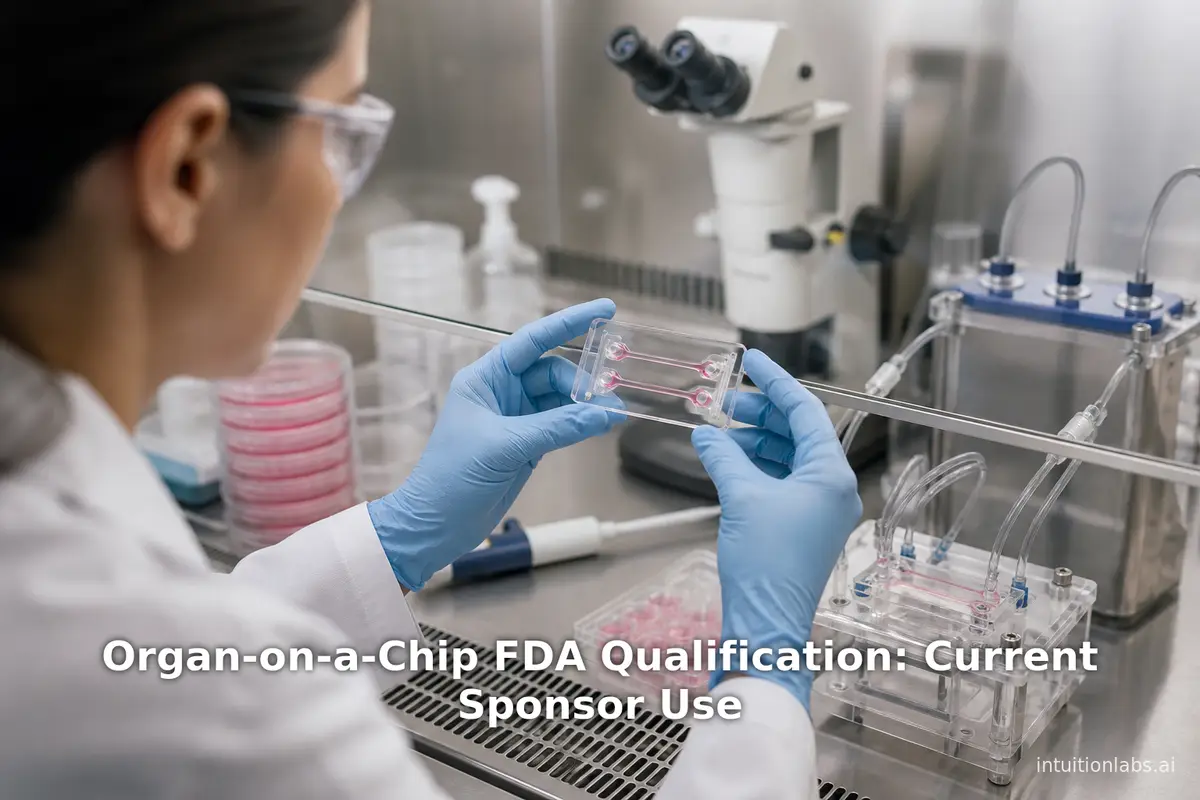
Organ-on-a-Chip FDA Qualification: Current Sponsor Use
A 2026 data report on organ-on-a-chip FDA qualification, covering the ISTAND pathway, Emulate's Liver-Chip Letter of Intent, IND cases from Sanofi, Dianthus, and argenx, and FDA Modernization Act 2.0/3.0 status.
Isomorphic Labs $2.1B Series B: AI Drug Design Analysis
An in-depth analysis of Isomorphic Labs' $2.1B Series B funding. Examine the IsoDDE AI drug design engine, AlphaFold's role, and biotech industry impacts.
PBPK Modeling & MIDD: Simcyp vs GastroPlus & FDA NAMs
Review the 2026 landscape of PBPK modeling and MIDD. This educational report analyzes Simcyp vs GastroPlus, FDA regulatory acceptance, and animal-free NAMs.