Videos
Browse videos by topic
All Videos
Showing 1177-1200 of 1435 videos
MasterControl Manufacturing Excellence: Configuring Production Records With Ease
MasterControl
/@MasterControlVideo
Aug 11, 2020
This video provides an in-depth analysis of the challenges associated with traditional, customized batch and production record systems in regulated manufacturing environments, and introduces a solution centered on user configurability and scalability. The speaker highlights that manufacturers often hesitate to implement digital production record systems due to the massive initial expense, which includes paying for the solution itself and then paying consultants to deeply customize and code the process into the software. This customization leads to significant long-term issues, particularly concerning change control, which becomes prohibitively expensive and complex. The core of the analysis focuses on the limitations imposed by these rigid, customized solutions. When a system is hard-coded, any process change—a necessity in regulated industries—requires extensive, costly, and time-consuming change control procedures involving external coders. Furthermore, the high cost of implementation means that most companies that adopt this path only deploy the digital solution on their "bread and butter" or highest-producing manufacturing line. They cannot afford to replicate the implementation and customization effort across all their other lines, limiting the overall operational benefit and creating inconsistent digital maturity across the organization. The solution presented is a configurable "builder tool" that ships with the product, enabling companies to take control of their own destiny. This tool allows internal users to easily and quickly create new production records and make necessary alterations as business processes evolve. This shift empowers companies to run their business as they see fit, rather than being constrained by the limitations of a rigid, vendor-coded system. Crucially, the system facilitates appropriate change control internally, drastically reducing the cost and complexity associated with process updates. This configurability also ensures immense scalability. The speaker emphasizes that the solution benefits the entire spectrum of the target market, from very large manufacturing plants with 1,500 to 2,000 employees down to small operations with only five or six employees, ensuring that digital excellence is accessible regardless of organizational size or production volume. Key Takeaways: • **High Cost of Customization is the Primary Barrier:** The initial expense of implementing digital batch record systems is often inflated by the necessity of hiring external consultants to code specific manufacturing processes into the software, making the total cost of ownership prohibitive for widespread adoption. • **Change Control Complexity Drives Operational Rigidity:** Customized, hard-coded production record systems turn necessary process updates into costly nightmares, as every change requires extensive recoding and revalidation, hindering agility and continuous improvement in regulated environments. • **Limited Scalability Due to Implementation Costs:** Traditional customized solutions are often deployed only on the highest-producing manufacturing lines because companies cannot afford the repeated implementation and customization costs required to roll them out across all operational sites or secondary lines. • **The Value of Internal Configurability:** The ideal digital production record system must include an intuitive "builder tool" that allows internal company users to easily create, modify, and manage production records without relying on vendor coding, giving the company control over its operational destiny. • **Empowering Internal Process Ownership:** By enabling internal teams to manage and alter production records, companies can ensure that the digital system aligns precisely with current business needs and regulatory requirements, rather than forcing the business to conform to a rigid software structure. • **Democratization of Digital Manufacturing Excellence:** A highly configurable solution ensures that digital benefits are accessible to the entire market, providing equal operational advantages to both large-scale manufacturing plants (1,500+ employees) and small, specialized facilities (5-6 employees). • **Streamlining Regulatory Compliance:** The ability to easily manage and document changes via an internal configuration tool simplifies the process of maintaining "appropriate change control," which is critical for adherence to GxP and other regulatory standards governing manufacturing records (e.g., 21 CFR Part 11). • **Shift from Vendor Dependency to Internal Control:** Manufacturers should seek solutions that minimize long-term reliance on vendors for core process configuration and updates, thereby reducing operational friction and lowering the total cost of system maintenance over time. Tools/Resources Mentioned: * MasterControl Manufacturing Excellence™ (A digital production record system) * Builder Tool (A feature within the software enabling user configuration of production records) Key Concepts: * **Batch Record System (Production Record System):** The comprehensive documentation required in regulated manufacturing (especially pharmaceutical and biotech) detailing every step, material, and deviation involved in the production of a specific batch of product, crucial for quality assurance and regulatory audits. * **Change Control:** The formal process used to manage and document changes to processes, systems, or documentation within a regulated environment. In digital systems, poor change control mechanisms can significantly increase the cost and time required to update manufacturing procedures. * **Customized Event/Solution:** Refers to software implementations where the vendor or consultant codes the client's specific business process directly into the solution, leading to rigidity and high maintenance costs.
![How to Choose and Implement the Right eQMS for Your Company [The Qualitalks Podcast]](https://i.ytimg.com/vi_webp/dfpk616joE8/maxresdefault.webp)
How to Choose and Implement the Right eQMS for Your Company [The Qualitalks Podcast]
Qualistery - GMP Content
/@Qualistery
Aug 9, 2020
This video provides an in-depth exploration of Electronic Quality Management Systems (eQMS) and their pivotal role in the digital transformation of the pharmaceutical and life sciences industries. The host, Yan Kugel, interviews Doron Sitbon, CEO of Dot Compliance, a SaaS provider of eQMS solutions. The discussion centers on the imperative for companies to embrace digitalization, the challenges and benefits associated with this shift, the different types of eQMS available, and best practices for successful implementation. Sitbon emphasizes that digital transformation is not merely a technological upgrade but a fundamental change in how quality and compliance are managed, impacting efficiency, cost, and ultimately, patient safety. The conversation highlights the significant increase in the cost of bringing new pharmaceutical products to market—from $0.8 billion 15 years ago to $2.5-$2.6 billion today—primarily due to the escalating demand for data and regulatory evidence. An eQMS helps address this by ensuring all data, even from early R&D stages, is captured and tracked in a compliant manner, providing the confidence regulators require. While acknowledging the inherent fear of change and the heavy burden of validation and documentation in a regulated environment, Sitbon argues that modern eQMS solutions, like Dot Compliance, are designed to alleviate this "heavy lifting" by offering ready-to-use, validated systems that provide a contemporary user experience without compromising data integrity or regulatory adherence. The benefits are substantial, including 20-30% savings in operating costs related to data management, accelerated processes, and a unified "single source of truth" for all stakeholders. The discussion further delves into the evolution of quality management, moving from isolated, paper-based systems or disconnected digital "islands" to harmonized, platform-based solutions. This shift redefines the role of Quality Assurance (QA) professionals, transforming them from "paper pushers" to "gatekeepers" and, in the future, to "cyber analysts" who interpret vast amounts of structured and unstructured data to make risk-based decisions. The video also stresses the growing importance of seamless collaboration within the supply chain, particularly with Contract Manufacturing Organizations (CMOs), where a significant portion of a pharmaceutical company's assets and risks reside. Modern eQMS, Sitbon explains, must facilitate this partnership by enabling secure and efficient information sharing. When choosing an eQMS, companies should evaluate traditional ERP systems, legacy QMS software, and modern cloud-based platforms that leverage existing robust technologies, focusing on industry-specific expertise, ease of deployment, and ongoing support for regulatory updates and audits. Finally, Sitbon outlines a strategic approach to eQMS implementation. This involves assembling a dedicated team, including QA subject matter experts, an executive sponsor (e.g., Head of QA, Operations, or CEO), and strong IT support, especially for mid-sized organizations. The team must define a clear scope, build a realistic transition plan, and actively manage organizational change, understanding the internal culture and winning over employees. A practical deployment strategy, dubbed the "rule of three," suggests focusing on three major processes for initial deployment within three months. The overall goal for a mid-sized manufacturing organization, with the right prerequisites, is to digitalize 90% of its processes within a year. The success hinges on persistence, clear communication about the benefits, and a bit of luck to navigate unexpected external events. Key Takeaways: * **Digital Transformation is Essential:** The pharmaceutical industry must embrace digital transformation, particularly in quality management, to enhance efficiency, convenience, and compliance, driven by increasing data volumes and modern user expectations. * **Cost of Compliance is Rising:** The cost of bringing a new pharmaceutical product to market has significantly increased (from $0.8B to $2.5-$2.6B in 15 years) due to the heightened demand for data, evidence, and regulatory assurance, making digital solutions critical for cost control. * **Substantial Operational Savings:** Implementing an eQMS can lead to significant operational cost reductions, estimated at 20-30% in data management, by streamlining processes, reducing manual effort, and improving data accuracy. * **Overcoming Implementation Challenges:** Companies must address the fear of change, the complexity of validation rules, and the need for robust data integrity and change of custody protocols when transitioning from paper-based or legacy systems. * **Evolution of QA's Role:** The role of quality assurance professionals is shifting from managing paper-based processes to becoming "gatekeepers" in structured electronic systems, and eventually to "cyber analysts" who interpret vast amounts of data to drive insights and make risk-based decisions. * **Platform-Based Harmonization:** Next-generation QMS solutions should be platform-based, offering a harmonized view that integrates core quality processes like document control, training, change control, deviation, investigation, and risk management, rather than operating as disconnected silos. * **Importance of Supplier Collaboration:** With the rise of virtual manufacturing and outsourced activities, eQMS must facilitate seamless and secure collaboration with suppliers and Contract Manufacturing Organizations (CMOs) to manage shared risks and ensure end-to-end quality. * **Choosing the Right eQMS Partner:** Companies should evaluate three types of vendors: traditional ERP systems (often generic, heavy customization), traditional QMS solutions (industry-focused but potentially outdated), and modern cloud solutions that leverage existing platforms (agile, ready-to-use, industry-specific). * **"Ready-to-Use" Solutions for Rapid Deployment:** Modern eQMS vendors are offering "ready-to-use" applications that can be deployed in days, meeting common industry requirements with pre-configured processes and validation documentation, reducing the burden on internal IT and regulatory teams. * **Strategic Implementation Team:** A successful eQMS deployment requires a dedicated team comprising a quality subject matter expert, an executive sponsor (e.g., Head of QA, Operations, or CEO), and strong IT representation to manage technical, process, and cultural aspects. * **Realistic Transition Plan & Change Management:** Companies need a realistic transition plan, understanding their organizational culture, and a robust change management strategy to win the "hearts and minds" of employees, as quality is a culture, not just a system. * **"Rule of Three" Deployment Strategy:** A practical approach for initial deployment suggests focusing on "three major processes in three months" to achieve quick wins and build momentum, with a goal of digitalizing 90% of processes for a mid-sized manufacturing organization within a year. * **Seamless Integration Capabilities:** Modern eQMS must offer robust integration capabilities (e.g., web services, IoT infrastructure) to connect with other enterprise systems like ERP, CRM, and manufacturing sensors, creating a comprehensive data ecosystem. * **Simplicity and User Experience:** Despite regulatory complexities, eQMS should prioritize simplicity and a modern user experience, making it as intuitive as consumer applications to encourage adoption and productivity. **Tools/Resources Mentioned:** * **Dot Compliance:** A SaaS application that provides an eQMS solution for life sciences companies (pharmaceutical, medical device, biotech), focusing on quality, compliance, and regulatory aspects. **Key Concepts:** * **eQMS (Electronic Quality Management System):** A software system designed to manage and automate quality processes and documentation within an organization, particularly critical for regulated industries like pharmaceuticals. * **Digital Transformation:** The process of adopting digital technology to improve an organization's processes, culture, and customer experiences to meet changing business and market requirements. * **Data Integrity:** The assurance that data is accurate, consistent, and reliable throughout its lifecycle, a critical regulatory requirement in life sciences. * **Validation:** The process of establishing documented evidence that a system or process consistently produces a product meeting its predetermined specifications and quality attributes. * **GxP (Good x Practice):** A collection of quality guidelines and regulations (e.g., Good Manufacturing Practice, Good Clinical Practice) that ensure products are safe, effective, and of high quality. * **21 CFR Part 11:** Regulations issued by the FDA that set forth the criteria under which electronic records and electronic signatures are considered trustworthy, reliable, and equivalent to paper records and handwritten signatures. * **Platform-based QMS:** A quality management system built on a robust, extensible technology platform that allows for the integration and harmonization of various quality processes. * **Ready-to-use QMS:** An eQMS solution that comes pre-configured with common functionalities and validation documentation, allowing for rapid deployment with minimal customization. * **Risk-Based Approach:** A strategy for quality management that prioritizes resources and efforts based on the level of risk associated with different processes or activities.

QMS DHF Medical Device Pharma Integration Quality Challenges
Shurig Solutions Inc
/@shurigsolutionsinc6472
Aug 7, 2020
This video provides an in-depth exploration of critical quality challenges within the pharmaceutical and medical device industries, focusing specifically on the integration of Quality Management Systems (QMS) and the maintenance of the Design History File (DHF). The discussion centers on a real-world case study involving a remediation effort necessitated by an FDA 483 citation, highlighting the severe risks associated with regulatory non-compliance and outdated documentation. The speaker details the process of identifying gaps, managing the remediation project, and implementing systemic changes to ensure long-term adherence to evolving regulatory standards. The core challenge addressed was the remediation of a DHF for a product that had been designed and developed over a decade prior. Due to a lack of continuous maintenance, the existing DHF failed to meet current regulatory standards, resulting in the FDA citation. The immediate focus of the remediation team was to conduct a rapid gap analysis, comparing the outdated DHF documentation against current industry standards and regulations. This exercise underscored the necessity of treating compliance maintenance not as an administrative task, but as a continuous, high-priority project requiring dedicated resources and executive oversight. The successful remediation effort relied on a structured project management approach. This included assembling a specialized team with the right mix of skills—deep expertise in quality systems, specific product knowledge, and strong project management capabilities. A key success factor emphasized by the speaker was securing complete buy-in from senior leadership, coupled with providing continuous support and recognition for the individuals executing the remediation work. This organizational commitment was vital for driving the intense, short-period effort required to close the regulatory gaps effectively and successfully address the FDA findings. To prevent recurrence and ensure ongoing compliance, the remediation effort resulted in the implementation of a new, formalized process: the establishment of a Standards Review Committee or board. This committee was designed to meet regularly to proactively assess changing regulations and standards—including those related to human factors, post-market surveillance, and general regulatory updates. The committee’s function is to feed these changes directly back into the DHF documentation and the overall quality system, thereby institutionalizing the process of regulatory maintenance and ensuring that inputs, outputs, and risk management documentation remain current and compliant. Key Takeaways: • **Regulatory Drift is a Major Risk:** The case study highlights the significant danger posed by regulatory drift, where a DHF developed 10 years ago was found non-compliant with current standards, leading directly to an FDA 483 citation. Continuous monitoring of evolving regulations is essential. • **Compliance Requires Project Management Rigor:** Remediation activities, especially those triggered by regulatory findings, must be managed as formal projects with defined scope, timelines, and dedicated resources, rather than being absorbed into routine operations. • **Mandatory Senior Leadership Buy-in:** Success in complex regulatory remediation hinges on complete commitment and financial/resource buy-in from senior leadership, ensuring the project receives the necessary priority and support to overcome organizational hurdles. • **Systemic Prevention (Standards Review Committee):** A highly effective mechanism for preventing future non-compliance is the implementation of a permanent Standards Review Committee or board, tasked with regularly assessing regulatory changes and standards (e.g., human factors, post-market compliance). • **Integration of Quality and Product Expertise:** Remediation teams must be cross-functional, combining deep knowledge of quality systems and regulatory requirements with specific technical expertise regarding the product itself to ensure documentation accurately reflects current design and manufacturing processes. • **Continuous Risk Management:** The DHF process requires ongoing integration of inputs, outputs, and risk management documentation; neglecting regular updates to these interconnected components significantly increases regulatory exposure. • **The Importance of Employee Support and Recognition:** Providing robust support and formally recognizing the efforts of individuals working on intensive remediation projects is crucial for maintaining morale, driving engagement, and achieving successful outcomes under pressure. • **Proactive Quality System Updates:** Regulatory changes must be systematically fed back into the organization's quality system and DHF documentation to ensure the entire framework remains aligned with current FDA and international standards. • **Post-Market Compliance Relevance:** Regulatory updates often stem from post-market surveillance data or new human factors requirements; the quality system must be agile enough to incorporate these changes quickly to maintain compliance. Key Concepts: * **Design History File (DHF):** A compilation of records that describes the design history of a finished medical device. It must demonstrate that the design was developed in accordance with the approved design plan and regulatory requirements (21 CFR Part 820.30). * **FDA 483:** A form issued by the FDA at the conclusion of an inspection when an investigator observes conditions or practices that may constitute violations of the Food, Drug, and Cosmetic Act and related Acts. It signifies non-compliance requiring corrective action. * **Standards Review Committee:** A formalized internal board or process established to continuously monitor, assess, and integrate changes in external regulatory standards and guidance documents back into the company’s internal quality system and product documentation (like the DHF).

TFS: Veeva Vault Safety Implementation
Veeva Systems Inc
/@VeevaSystems
Aug 6, 2020
This video details the implementation experience of Veeva Vault Safety by TFS, a life sciences organization, providing a deep dive into the structured methodology, challenges encountered as an early adopter, and the realized benefits for both internal teams and external clients. The implementation was systematically executed across four key phases: Project Planning and Discovery, Solution Design and Configuration, Testing and Validation, and Training and Deployment. Strong project management was emphasized from the outset to define the core implementation team, establish oversight mechanisms, and ensure the project remained on track and within budget while keeping relevant project sponsors informed. The Solution Design and Configuration phase was highly collaborative and iterative. After developing user requirements, TFS worked closely with Veeva through a series of remote and face-to-face workshops to configure the system. A key advantage noted was the frequency of Vault Safety updates, which allowed TFS to engage with Veeva regarding requested functionality that might not have been in the initial offering but was scheduled for an imminent planned release. The Testing and Validation stage leveraged Veeva’s established validation of the core architecture, while TFS focused on validating their specific configuration of Vault Safety. This phase concluded with the critical migration of all existing client data into the new Vault Safety platform. Despite the inherent complexity of setting up and migrating a new system with extensive client data, the implementation was described as highly rewarding, attributed largely to the high degree of responsiveness and support from the Veeva team. A crucial aspect of the deployment involved proactive client communication; TFS met with each client to explain the rationale for the move, demonstrating how the transition aligned with a broader technology strategy. Initial feedback from clients was overwhelmingly positive, particularly concerning the promise of direct access to their data within the new system. Overall, the move to Vault Safety was positioned not just as a system upgrade but as a strategic alignment tool enabling improved efficiency, modern user experience, and enhanced collaboration capabilities. Key Takeaways: • **Structured Implementation Approach:** The successful transition utilized a four-phase methodology—Planning/Discovery, Design/Configuration, Testing/Validation, and Training/Deployment—underscoring the necessity of a defined, sequential process for large-scale regulated software rollouts. • **Iterative Configuration and Vendor Engagement:** The design process relied heavily on iterative configuration cycles involving frequent remote and in-person workshops, allowing the client to provide continuous feedback and engage with the vendor (Veeva) to influence or track functionality planned for future releases. • **Validation Strategy in Regulated Environments:** While the core architecture of Vault Safety is validated by Veeva, the implementing organization must focus its validation efforts specifically on its custom configuration of the system to ensure regulatory compliance (e.g., GxP, 21 CFR Part 11). • **Proactive Client Communication is Critical:** Successful adoption required meeting with clients individually to explain the strategic rationale for the system change, demonstrating how the move aligned with broader organizational goals and performing system demonstrations to alleviate anxiety associated with change. • **High Vendor Responsiveness Mitigates Early Adopter Risk:** As an early adopter of Vault Safety, the implementation was challenging, but the high degree of responsiveness and support from the Veeva team was crucial in making the process smoother and more successful. • **Direct Data Access is a Key Client Benefit:** One of the most positively received aspects by clients was the ability to gain direct access to their data within the new system, mitigating previous challenges associated with data accessibility and transparency. • **Focus on Process Improvement and Workflow:** Vault Safety enables the organization to improve internal processes and workflows, leveraging the system’s modern user interface (commented on positively by both staff and customers) and intuitive design. • **Enhanced Oversight through Visualization:** The system’s visualization capabilities provide improved oversight of the data within the system, offering actionable business intelligence and supporting better decision-making in safety operations. • **Efficiency Gains via Gateway Reporting:** The implementation is expected to deliver improved efficiency for customers through features such as gateway reporting, which streamlines data submission and retrieval processes. • **Future Collaboration Model:** The system facilitates new ways of collaborating with partners, aiming for reduced reliance on email exchange and supporting more rapid information and data sharing, leading to deeper integration between the organization and its clients. • **Deployment Strategy:** The deployment utilized a "train the trainer" approach for system basics, followed immediately by a period of "hypercare" to ensure immediate support and address post-go-live issues effectively. Tools/Resources Mentioned: * Veeva Vault Safety * Existing System (migrated from) Key Concepts: * **Hypercare:** A defined period immediately following the go-live of a new system, during which intensive support is provided to users to quickly resolve issues and ensure smooth adoption. * **Train the Trainer:** A training methodology where a small group of internal experts are trained on the new system, who then become responsible for training the wider user base. * **Gateway Reporting:** A feature within pharmacovigilance systems designed to streamline the reporting and submission of safety data, enhancing efficiency and compliance.

Who's Hiring: Veeva Systems
CBS LA
/@kcalnews
Aug 6, 2020
This video segment provides a snapshot of the robust hiring efforts and corporate strategy of Veeva Systems, a leading enterprise cloud software company dedicated to the life sciences industry. The primary focus of the report is to highlight Veeva as a major source of employment, actively seeking to fill approximately 850 positions across various functions. This recruitment drive underscores Veeva’s continued rapid growth and its foundational role in helping pharmaceutical and biotech clients accelerate product commercialization and enhance operational efficiency. A central theme emphasized by Veeva representatives in the segment is the company’s progressive approach to work environment, encapsulated by its "Work From Anywhere" culture. This philosophy is not merely a perk but is described as core to how the company operates, fostering diversity in both people and ideas. Crucially, 60% of the 850 available job openings are remote, signaling a strategic commitment to attracting a geographically dispersed talent pool rather than relying on traditional office hubs. This model has significant implications for talent acquisition and management across the life sciences technology ecosystem. The open positions span critical operational areas necessary for supporting a global enterprise software platform. Specifically mentioned roles include those in Sales, Software Engineering, Consulting, and Services. This distribution indicates that Veeva is investing heavily not only in developing new products (Software Engineering) but also in scaling its capacity for client engagement, implementation, and ongoing support (Consulting and Services). For firms specializing in the Veeva ecosystem, this hiring focus confirms the sustained demand for expertise in implementing and optimizing these platforms, particularly within the commercial and clinical operations of life sciences organizations. The overall message is one of aggressive expansion and confidence in the life sciences technology market. Veeva’s need for hundreds of new employees—particularly in client-facing and technical roles—validates the continued reliance of pharmaceutical and biotech companies on specialized, compliant cloud solutions to manage complex processes, from R&D through commercial launch. This growth trajectory reinforces the strategic importance of specializing in Veeva solutions for any consulting or software development firm targeting the regulated life sciences sector. Key Takeaways: • **Massive Scale of Expansion:** Veeva Systems is actively recruiting for approximately 850 job openings, demonstrating significant, sustained growth and confirming its dominant position as the enterprise cloud software provider for the pharmaceutical and life sciences industries. • **Strategic Focus on Remote Work:** A substantial 60% of the open positions are remote, highlighting Veeva’s "Work From Anywhere" culture as a core operational strategy designed to maximize talent diversity and geographic reach. • **High Demand for Implementation Expertise:** The explicit mention of hiring in Consulting and Services roles indicates that Veeva is scaling its capacity to implement, customize, and support its platforms, suggesting a robust pipeline of new client engagements and system expansions. • **Talent Competition Intensification:** The aggressive hiring across Software Engineering, Consulting, and Services means that competition for specialized Veeva technical and functional talent will increase, requiring consulting firms like IntuitionLabs.ai to offer highly competitive compensation and flexible work models. • **Market Validation for Veeva Specialization:** Veeva’s continued investment in scaling its workforce validates the strategic decision to specialize in Veeva CRM consulting and related AI integration, ensuring a strong and growing market for complementary services. • **Operational Efficiency as Core Mission:** Veeva’s stated goal of helping clients bring products to market "faster and more efficiently" aligns directly with the value proposition of AI and automation solutions, confirming the market need for tools that augment Veeva’s core functionality. • **Opportunity for Partnership and Integration:** The expansion suggests potential future product launches or acquisitions by Veeva, which consulting firms should monitor closely for new integration points or opportunities to develop specialized AI agents that enhance these new features. • **Impact on Consulting Talent Pool:** The shift toward remote work by a major industry player like Veeva means that the pool of specialized Veeva consultants is now highly distributed, necessitating flexible hiring and resource deployment strategies for competing firms. • **Investment Justification:** The segment reinforces that the life sciences sector is heavily investing in cloud technology for commercial operations, justifying IntuitionLabs.ai's focus on building compliant, AI-powered solutions that integrate seamlessly with the Veeva ecosystem. Tools/Resources Mentioned: * Veeva Systems (Enterprise Cloud Software) Key Concepts: * **Work From Anywhere Culture:** A corporate policy emphasizing remote and virtual work as a fundamental operational model to promote diversity and attract talent regardless of location. * **Life Sciences Commercialization:** The process by which pharmaceutical and biotech companies bring new products (drugs, devices) from clinical trials to market, often managed through specialized platforms like Veeva CRM.

TFS : Enabling Greater CRO and Client Alignment Video
Veeva Systems Inc
/@VeevaSystems
Aug 6, 2020
This video provides an in-depth exploration of the critical need for alignment between Contract Research Organizations (CROs) and their pharmaceutical and biotech clients, specifically within the context of outsourced Pharmacovigilance (PV) activities. The speaker, representing TFS (a CRO), establishes that the continuous increase in PV outsourcing elevates the criticality of the CRO’s role in managing patient safety. Since all safety decisions are inherently data-driven, a primary challenge arises when the safety database management is outsourced: sponsors often face limitations in direct, timely access to their own safety data, which compromises effective oversight and decision-making. From the CRO perspective, the value proposition for outsourcing is access to specialized expertise, including therapeutic area knowledge and broad experience gained from working with diverse clients. To truly capitalize on this expertise and foster genuine partnerships, the CRO must seamlessly integrate into the client’s organization through advanced technology. This integration requires optimized and standardized workflows and processes that facilitate rapid data exchange. Crucially, this data sharing must extend beyond core safety case data to include metrics concerning the performance of the CRO itself and the overall PV system's efficiency. The ultimate business impact of successful alignment is a highly successful partnership that delivers a PV system that is both high quality and cost-efficient, ensuring patient safety through timely data access for the right decision-makers. The speaker details TFS’s specific journey in implementing Veeva Vault Safety to achieve this closer alignment, recognizing that customer needs vary significantly based on their development stage and outsourcing model. They categorize customer scenarios to illustrate the complexity of data access requirements. For instance, in pre-marketing stages involving a single study, the sponsor might only need access for medical review and quality control (QC). However, in a full partnership model spanning multiple studies, different sponsor personnel—potentially varying on a per-study basis—require access. Post-marketing scenarios introduce further complexity, particularly when the sponsor outsources case processing but retains critical regulatory functions in-house, such as the Qualified Person for Pharmacovigilance (QPPV). In such hybrid models, the chosen safety system must guarantee the QPPV immediate and comprehensive access to the safety data for compliance and oversight. TFS's system selection criteria were therefore focused on finding a solution flexible enough to address this entire spectrum of unique customer needs and granular access requirements. Key Takeaways: * **Data Access is Paramount in Outsourcing:** The increasing trend of outsourcing Pharmacovigilance (PV) work makes the lack of direct, seamless access to the safety database by the sponsor the single greatest technological limitation, hindering effective data-driven decision-making and regulatory oversight. * **Partnership Requires Technological Integration:** True CRO-client partnerships are enabled by technology that allows for seamless integration into the client’s organization, requiring optimized, standardized workflows and processes that go beyond simple data transfer. * **Demand for Comprehensive Metrics:** Effective oversight necessitates rapid sharing of not only core safety data but also performance metrics related to the CRO’s efficiency and the overall performance of the PV system, allowing sponsors to monitor quality and cost-efficiency. * **System Flexibility for Diverse Models:** Any modern safety system must be flexible enough to support the wide range of outsourcing models prevalent in the life sciences, from single-study contracts in pre-marketing to complex, multi-study post-marketing partnerships. * **QPPV Access is a Compliance Mandate:** In hybrid outsourcing models where case processing is handled by the CRO but the QPPV (Qualified Person for Pharmacovigilance) remains in-house, the safety system must provide the QPPV with immediate, guaranteed access to all relevant safety data to maintain regulatory compliance and oversight. * **Leveraging CRO Expertise:** The primary reason clients outsource is access to expertise (therapeutic area knowledge, safety experience); technology must facilitate the transfer and application of the CRO’s best practices gained from working with multiple clients into each new partnership. * **Granular Access Control is Essential:** The chosen safety database must support granular access controls to manage different levels of access for various sponsor personnel—including medical reviewers, QC staff, and QPPVs—potentially across different studies or therapeutic areas. * **Impact of Successful Alignment:** When alignment is achieved through integrated technology and processes, the resultant PV system is high-quality and cost-efficient, directly supporting patient safety by ensuring the right individuals have the data they need precisely when they need it for critical decision-making. Tools/Resources Mentioned: * **Veeva Vault Safety:** The specific platform implemented by TFS to improve CRO and client alignment in Pharmacovigilance. Key Concepts: * **Pharmacovigilance (PV):** The process of monitoring and assessing the safety of drugs, especially after they have been marketed. The video focuses on the operational and data management aspects of PV outsourcing. * **QPPV (Qualified Person for Pharmacovigilance):** A mandatory regulatory role, particularly in the EU, responsible for the oversight of a company’s pharmacovigilance system. Their need for immediate access to safety data is a critical factor in system design. * **Safety Database:** The centralized, regulated system used to collect, manage, and report adverse event data for pharmaceutical products. Outsourcing the management of this database is a key focus of the discussion.

Spotlight On... Getting Your Quality Management System Right
ACRP - Assoc. of Clinical Research Professionals
/@ACRPDC
Aug 3, 2020
This video provides an in-depth exploration of the critical importance of getting Quality Management Systems (QMS) right, particularly within the dynamic landscape of clinical research. Featuring Glenda Guest, VP of Norwich Clinical Research Associates and an ACRP Fellow, the discussion highlights how QMS and risk management have become paramount, especially in the era of COVID-19, which necessitated significant alterations to standard clinical trial processes. Guest, drawing from her 18 years of experience as a medical device professional, emphasizes that while QMS originated in manufacturing, its applicability to clinical research has been underscored by recent revisions to the International Council for Harmonisation (ICH) E6 guideline. The conversation delves into how the pandemic introduced unprecedented flexibility into previously rigid rules, making robust QMS essential for maintaining quality, protecting subjects, and ensuring the integrity of data in an altered environment. Guest explains that the shift towards risk-based monitoring has placed greater responsibility on clinical sites for quality control, a challenge for many, ranging from small sites to large organizations with dedicated departments. She stresses that effective QMS links all stakeholders—sites, Institutional Review Boards (IRBs), and sponsors—and requires active engagement from regulators who now provide crucial guidance alongside traditional regulations. A significant portion of the discussion focuses on the severe downsides of neglecting proper QMS. As an auditor, Guest frequently observes the consequences of inadequate quality, which manifest as more errors, inappropriate data collection, incorrect subject enrollment, audit observations, corrective actions, and rework, ultimately leading to potential loss of critical data. She differentiates between Quality Control (proactive measures like setting standards and training) and Quality Assurance (retrospective assessment of system effectiveness and quality attainment). The video concludes by reiterating the urgent need for sites to enhance their internal quality control mechanisms, especially as reliance on frequent on-site monitor visits has decreased, making QMS a non-negotiable necessity for safeguarding important studies, including those related to COVID-19. Key Takeaways: * **QMS is Crucial in Dynamic Environments:** The COVID-19 pandemic highlighted the indispensable role of Quality Management Systems and risk management in clinical research, as operational flexibility and altered processes necessitated robust frameworks to maintain quality and data integrity. * **ICH E6 Guideline Reinforces QMS Importance:** Recent revisions to the International Council for Harmonisation (ICH) E6 guideline have brought QMS to the forefront, making it a more recognized and understood concept within the clinical research community. * **Shift to Risk-Based Monitoring Increases Site Responsibility:** The move towards risk-based and remote monitoring models has significantly increased the burden on clinical sites to implement and manage their own quality control measures, a responsibility previously often shared with on-site monitors. * **QMS Encompasses Quality Control and Quality Assurance:** Quality Control involves proactive steps like setting standards, training personnel, and guiding proper job performance, while Quality Assurance is the retrospective evaluation of whether the system worked and if intended quality levels were achieved, prompting necessary changes. * **Downsides of Poor QMS are Significant:** Neglecting QMS can lead to a cascade of negative outcomes, including increased errors, inappropriate data collection, incorrect subject enrollment, adverse audit observations, extensive rework, and ultimately, the potential loss of critical study data. * **QMS Links All Stakeholders:** Effective quality management systems are vital for connecting and coordinating efforts across all levels of clinical research, including sites, Institutional Review Boards (IRBs), sponsors, and regulators, ensuring a unified approach to quality. * **Regulators Provide Guidance in Evolving Landscapes:** In times of rapid change and increased operational flexibility, regulators play an even more critical role by providing necessary guidance in addition to enforcing regulations, helping the industry navigate new challenges while maintaining standards. * **Sites Must Enhance Internal Quality Control:** With less frequent on-site monitoring, clinical sites must proactively develop and implement strong internal quality control processes to prevent major losses, particularly in high-stakes studies like those for COVID-19. * **QMS Originates from Manufacturing but is Highly Applicable to Clinical Research:** The concept of quality management, while originating in manufacturing, is directly transferable and highly applicable to clinical research, emphasizing process control and systematic quality assurance. * **Challenges in QMS Implementation Vary by Site Size:** Both small and large clinical sites face unique challenges in implementing QMS; small sites may struggle with resources, while large sites might have established departments but still need to adapt to new monitoring paradigms. Key Concepts: * **Quality Management System (QMS):** A formalized system that documents processes, procedures, and responsibilities for achieving quality policies and objectives. It helps coordinate and direct an organization's activities to meet customer and regulatory requirements and improve its effectiveness and efficiency on a continuous basis. * **Risk Management:** The systematic process of identifying, assessing, and controlling risks that could impact the quality, safety, or integrity of clinical trials. * **ICH E6 Guideline:** The International Council for Harmonisation of Technical Requirements for Pharmaceuticals for Human Use (ICH) E6 (R2) Good Clinical Practice (GCP) guideline provides a unified standard for the design, conduct, performance, monitoring, auditing, recording, analyses, and reporting of clinical trials. Revisions have increasingly emphasized quality management and risk-based approaches. * **Risk-Based Monitoring:** A strategy for monitoring clinical trials that focuses monitoring activities on the most important risks to human subjects and data quality, rather than on comprehensive, 100% source data verification. * **Quality Control (QC):** Operational techniques and activities used to fulfill requirements for quality. This includes setting standards, training staff, and guiding them in the proper performance of their jobs. * **Quality Assurance (QA):** A system of activities designed to ensure that quality requirements are met. It involves assessing whether the overall system worked as intended and if the desired level of quality was attained, leading to necessary changes and improvements. * **IRB (Institutional Review Board):** A committee established to review and approve research involving human subjects. Its primary purpose is to ensure the ethical and scientific soundness of research and to protect the rights and welfare of human participants. * **Sponsor:** An individual, company, institution, or organization that takes responsibility for the initiation, management, and/or financing of a clinical trial.
Start Your Career With Veeva | WayUp Virtual Info Session
WayUp
/@WayUp
Jul 29, 2020
This video provides an in-depth exploration of Veeva, a prominent software and consulting firm in the life sciences industry, as presented by its Founder and CEO, Peter Gassner, and Anka, a program director for Veeva's consultant development program. The session, hosted by WayUp, primarily serves as an informational event for early-career professionals, offering insights into Veeva's mission, culture, and career opportunities, particularly through its "Generation Veeva" new graduate programs. Gassner establishes the foundational understanding of Veeva's critical role in the life sciences sector, emphasizing its commitment to developing specialized software, consulting services, and data solutions that support the entire lifecycle of medicine and medical product creation and delivery globally. Gassner elaborates on Veeva's core business, which involves serving a diverse range of life sciences entities, from small biotechs focused on specific diseases to large pharmaceutical giants like Pfizer, Novartis, and Amgen. He powerfully conveys the industry's significance by referencing the historical impact of medical advancements, such as the eradication of polio, and its current efforts in developing COVID-19 vaccines and therapies. Veeva's technology is instrumental in helping these companies design, gain approval for, and legally bring medicines to market worldwide. The company, founded in 2007, has grown to 4,000 employees and generates $1.5 billion in revenue, underscoring its substantial influence and footprint within the industry. The discussion consistently highlights Veeva's overarching contribution to improving and extending human life by enabling the vital work of the life sciences sector. The session further delves into specific examples of Veeva's product innovation and its crucial adaptability during the COVID-19 health crisis. Gassner proudly details how Veeva's cloud-based systems for manufacturing process control ensure stringent regulatory compliance and patient safety, particularly for complex processes like biologic production, where errors could have fatal consequences. He also recounts a rapid deployment project in the UK, where Veeva swiftly established collaboration systems for a consortium of companies (including Dyson and Formula 1 teams) to quickly and safely produce thousands of ventilators. Another key innovation discussed is software designed to make patient participation in clinical trials easier, more enjoyable, and faster. The pandemic necessitated rapid adjustments to Veeva's product roadmap, especially to enable remote clinical trial inspections and virtual collaboration, demonstrating the company's agility and responsiveness to evolving industry needs and regulatory landscapes. The mention of Veeva Vault and the company's offering of machine learning services for data science purposes further illustrates its technological breadth. Beyond its products, the video emphasizes Veeva's team-oriented culture and its four core values, listed in order of importance: "Do the Right Thing," "Customer Success," "Employee Success," and "Speed." Gassner stresses that "Do the Right Thing" encompasses ethics, honesty, integrity, and treating others with respect, serving as the paramount guiding principle. He shares personal anecdotes about his own career trajectory and the inspiration behind the "Generation Veeva" program, which aims to integrate young talent into the company and the broader life sciences industry. Anka, as a program director, offers insights into the consultant development program, highlighting the importance of building a strong professional reputation, continuous learning, and contributing actively to the team. The session concludes with valuable career advice centered on focusing on contribution, excelling in one's work, and cultivating strong professional relationships, rather than solely pursuing a predefined "dream job." Key Takeaways: * Veeva's primary mission is to empower the life sciences industry through specialized software, consulting, and data solutions that facilitate the design, approval, and compliant market entry of medicines and medical products globally. * The company serves a broad spectrum of life sciences clients, from small biotech startups to major pharmaceutical corporations like Pfizer, Novartis, and Amgen, reflecting its comprehensive industry reach. * Veeva emphasizes the profound societal impact of the life sciences industry, citing historical successes like polio eradication and current efforts in developing COVID-19 treatments and vaccines as examples of its contribution to human well-being. * Veeva's product portfolio includes critical applications for manufacturing process control, which are essential for ensuring regulatory compliance (e.g., GxP standards) and patient safety in the production of complex medicines like biologics. * The company demonstrated significant agility during the COVID-19 pandemic by rapidly adjusting its product roadmap to support remote operations, such as virtual clinical trial inspections, ensuring business continuity and compliance in a changing environment. * Veeva quickly developed and deployed collaboration systems for emergency initiatives, such as a consortium producing ventilators, highlighting the importance of robust and adaptable technology platforms in crisis management. * Innovations include software designed to streamline and enhance patient participation in clinical trials, making the process more efficient and user-friendly, which is a key area for operational optimization in clinical development. * Veeva operates on four core values: "Do the Right Thing" (ethics, honesty, integrity), "Customer Success," "Employee Success," and "Speed," with "Do the Right Thing" being the most fundamental guiding principle for all decisions. * The company actively invests in nurturing early-career talent through programs like "Generation Veeva," which offers structured pathways in consulting, engineering, and product management roles within the life sciences technology sector. * Career advice from the CEO stresses the importance of focusing on contribution to the team, excelling in one's work, and building strong professional relationships, rather than solely pursuing a fixed "dream job," promoting adaptability and a growth mindset. * Veeva's product strategy involves "running to the complexity" of specific industry areas, developing highly specialized products tailored to unique pharmaceutical workflows and stringent regulatory requirements, rather than generic software. * The company's offerings include Veeva Vault, a prominent platform in the life sciences, and it also provides machine learning services to customers for data science applications, aligning with advanced analytics and AI trends. * A key to Veeva's sustained success is its unwavering commitment to staying close to customers, actively listening to their needs, and consistently delivering measurable value, which is a crucial best practice for any technology firm in a regulated industry. **Tools/Resources Mentioned:** * **Veeva Vault:** A key platform within Veeva's product ecosystem. * **WayUp:** The platform hosting the virtual info session, focused on early-career job and internship opportunities. **Key Concepts:** * **Generation Veeva:** Veeva's new graduate development program designed for early-career professionals in consulting, engineering, and product management. * **Do the Right Thing:** Veeva's paramount core value, emphasizing ethics, honesty, integrity, and respectful treatment of others. * **Customer Success, Employee Success, Speed:** The other three core values of Veeva, listed in order of importance after "Do the Right Thing." * **Clinical Research Associates (CRAs):** Professionals who traditionally inspect clinical trial documentation at research sites, whose work was impacted by COVID-19. * **HIPAA Compliance:** Implied requirement for virtual clinical trial processes to protect patient data. **Examples/Case Studies:** * **Manufacturing Process Control:** Veeva's software helps pharmaceutical companies, particularly those producing biologics, adhere to strict policies and procedures to ensure legal and safe manufacturing, preventing dangerous outcomes. * **COVID-19 Ventilator Consortium:** Veeva rapidly deployed collaboration systems for a consortium of UK companies (including Dyson and Formula 1 teams) to quickly and safely manufacture thousands of ventilators during the pandemic. * **Clinical Trial Patient Participation:** Veeva develops software to make it easier, more enjoyable, and faster for patients to participate in clinical trials. * **Pharmaceutical Sales Reps in Japan:** Veeva's software caters to the very specific business processes, regulations, and workflows involved in introducing new drugs in Japanese hospitals.
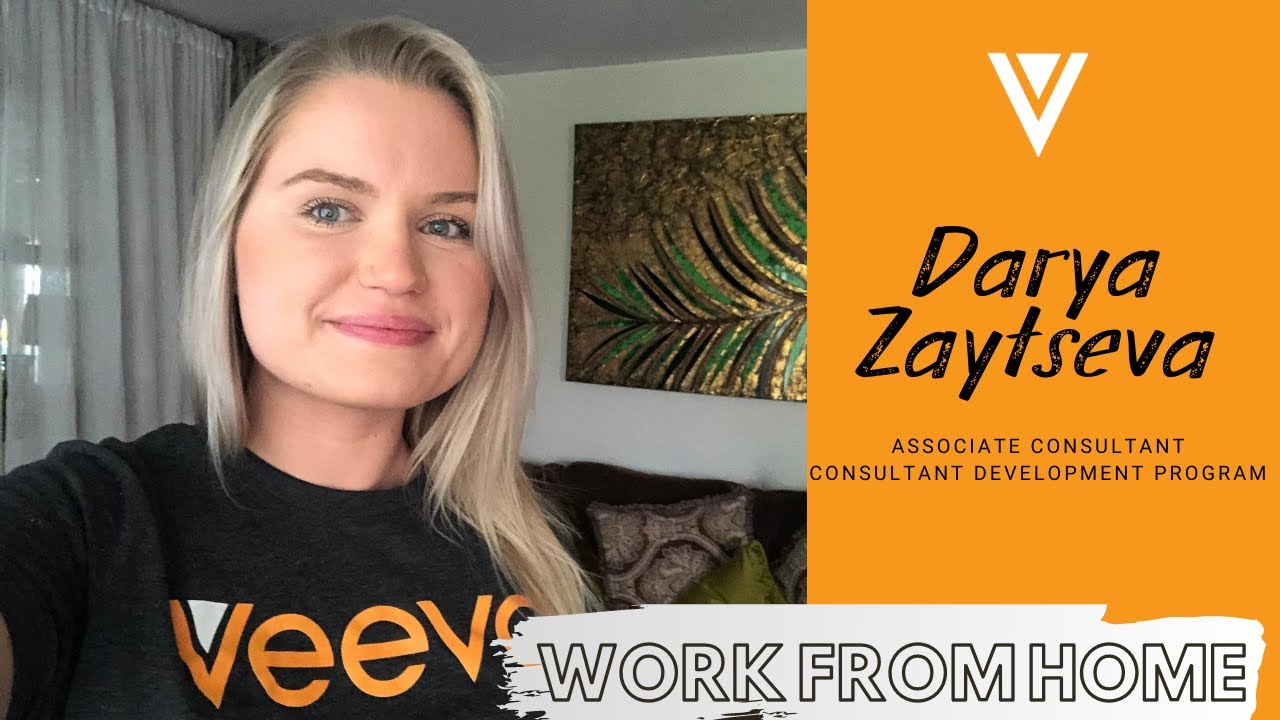
Generation Veeva | Meet Darya: At Home with Veeva
Veeva Systems Inc
/@VeevaSystems
Jul 29, 2020
This video offers a glimpse into the daily life and responsibilities of an Associate Consultant within Veeva Systems, focusing on the remote work model and the nature of client engagement within the pharmaceutical technology space. The primary purpose of the content, framed as a "day in the life," is to showcase the flexibility and dynamic environment of a consulting role at Veeva, particularly targeting potential recruits for their Consultant Development Program. The speaker, Darya Zaitsev, emphasizes the autonomy provided by the remote position, allowing for flexible scheduling and work-life balance, which is a key operational factor for modern enterprise software consulting firms. The core professional activities highlighted revolve around direct client interaction and solution delivery. The consultant's day involves checking calendars, attending workshops, and managing client correspondence. A critical component of the role is leading client meetings, specifically mentioning a "security meeting." This detail underscores the regulatory and compliance focus inherent in pharmaceutical enterprise software implementation. The consultant's objective in these meetings is to collect "actual real-time feedback" from the client to inform the configuration of the solution. This iterative, feedback-driven approach is central to successful deployment of regulated software platforms like Veeva CRM. A key theme articulated by the consultant is the highly customized nature of Veeva projects. She notes that interacting with customers daily is the favorite part of her job, emphasizing the opportunity to meet people globally and configure unique solutions for every client. This confirms that while Veeva provides a standardized platform, the implementation process requires significant customization and tailoring to meet the specific operational and regulatory needs of individual pharmaceutical and life sciences companies. The assertion that "no two clients are ever the same and no two projects are ever the same either" highlights the complexity and diversity of the implementation challenges faced by Veeva consultants, requiring deep domain knowledge alongside technical configuration skills. The video concludes by emphasizing the efficiency of the remote model, where the workday wraps up after addressing client work and preparing for the next day, reinforcing the high-touch, client-focused nature of the consulting role. Key Takeaways: • **Emphasis on Configured Solutions:** The consultant explicitly mentions configuring unique solutions based on client feedback, reinforcing that Veeva implementations rely heavily on platform configuration rather than extensive custom code development, which influences the skill sets required for successful consulting engagements. • **Critical Role of Real-Time Client Feedback:** The consultant's primary objective in client meetings is to gather "actual real-time feedback" to guide the solution configuration, highlighting the necessity of continuous, iterative client engagement throughout the implementation lifecycle to ensure alignment with business requirements. • **Security and Compliance Focus in Implementation:** The specific mention of leading a "security meeting" indicates that regulatory compliance, data security, and access control are foundational elements addressed early and continuously during the Veeva implementation process, reflecting the stringent requirements of the life sciences industry. • **Global and Diverse Project Scope:** The consultant notes interacting with clients "from all across the world," confirming that Veeva's platform and consulting needs are inherently global, requiring consultants to manage diverse regulatory environments and international operational requirements. • **High Customization within a Standard Platform:** The assertion that "no two clients are ever the same" underscores the fact that even standardized platforms like Veeva require significant tailoring and strategic customization to address the unique commercial operations, therapeutic areas, and compliance needs of each pharmaceutical client. • **Veeva's Consultant Development Pipeline:** The video serves as a direct insight into Veeva's recruitment and training strategy ("Generation Veeva" and the "Consultant Development Program"), providing context on the talent pipeline and skill development focus of a major competitor and partner in the consulting space. • **Operational Model of Major Platform Providers:** The video confirms that major enterprise software providers like Veeva utilize a flexible, remote consulting model, which is a key competitive factor when attracting talent and managing operational overhead compared to traditional, travel-heavy consulting firms. • **Importance of Client-Facing Communication Skills:** The consultant's role is heavily focused on leading meetings, answering client emails, and interacting daily with customers, emphasizing that effective communication and stakeholder management are paramount skills for successful Veeva consultants. Tools/Resources Mentioned: * Veeva Systems (The consulting platform and employer) * Veeva Consultant Development Program (Recruitment initiative) Key Concepts: * **Configured Solution:** Refers to tailoring a commercial-off-the-shelf (COTS) software platform, such as Veeva CRM, using the platform's built-in tools and settings rather than writing bespoke code. This is the primary method for adapting Veeva to specific client needs. * **Security Meeting:** A specific type of client meeting focused on defining and validating security protocols, user roles, access permissions, and data protection measures, crucial for maintaining regulatory compliance (e.g., 21 CFR Part 11) within the life sciences sector.

Episode 2: Elevate Your Quality Management System
MasterControl
/@MasterControlVideo
Jul 23, 2020
This video explores the critical importance and true cost-benefit of implementing and expanding a robust Quality Management System (QMS) throughout life sciences organizations, particularly into manufacturing. Speakers Brian Curran and Terrance Holbrook emphasize that a QMS is a strategic investment that yields significant returns by mitigating hidden costs associated with paper-based processes, such as human errors, expedited shipping, overtime, and recalls. They advocate for moving beyond traditional QA department-centric QMS to a holistic "culture of quality" that permeates the entire organization, driven by digitization and connected systems. The discussion highlights how digitizing work instructions, training, and data capture eliminates costly human errors, improves efficiency, and enables adaptability, aligning with Industry 4.0 principles. The speakers also touch upon the challenges of siloed information, the "us vs. them" dynamic between quality and manufacturing, and the need for integrated digital tools to streamline processes like CAPA management and ensure audit readiness. Ultimately, a digitized QMS is presented as essential for scalability, speed to market, increased revenue, and achieving a substantial ROI. Key Takeaways: * **QMS as a Strategic Investment:** A comprehensive QMS is not merely a compliance cost but a strategic investment that delivers substantial ROI (often 6-18 months) by reducing hidden costs, improving operational efficiency, and enhancing speed to market and revenue within life sciences. * **Enterprise-Wide Quality Culture:** Effective quality management extends beyond the QA department to encompass the entire organization, especially manufacturing. Digitizing processes across the shop floor is crucial to eliminate paper-based errors, foster a unified "culture of quality," and prevent "us vs. them" dynamics between departments. * **Digitization for Operational Excellence & Compliance:** Transitioning from paper-based systems to digital platforms for work instructions, training, data capture, and CAPA management is essential to reduce human errors, streamline compliance (e.g., GMP requirements), and enable real-time insights necessary for adaptability and Industry 4.0 initiatives. * **Connected Data for AI/ML Readiness:** The ability to leverage advanced technologies like machine learning and artificial intelligence for data mining and intelligent adaptation in manufacturing is contingent upon having connected, non-siloed digital data, which is a core benefit of a digitized QMS. * **Enhanced Scalability and Adaptability:** A digitized QMS is fundamental for organizational scalability and adaptability, allowing companies to respond effectively to market demands, supply chain disruptions, and regulatory changes, which is impossible with rigid, paper-based systems.

SCRS Talks: Connecting Patients, Sites, and Sponsors to Improve Clinical Trials
Veeva Systems Inc
/@VeevaSystems
Jul 23, 2020
This. ai provides. This video explores the pressing challenges faced by patients, research sites, and sponsors in clinical trials, particularly exacerbated by the COVID-19 pandemic. Bree Burks from Veeva Systems highlights the industry's struggle with disparate systems and processes that limit data sharing and collaboration, leading to increased patient burden, financial instability for sites, and inefficiencies in drug development for sponsors. The discussion emphasizes the critical need for a more connected and patient-centric approach, advocating for technology that empowers rather than replaces research sites. Veeva's strategy to build a unified platform for the entire clinical trial ecosystem, including dedicated solutions for sites and patients, is presented as a key opportunity for improvement. Key Takeaways: * **Fragmented Clinical Trial Ecosystem:** The industry suffers from a lack of technological connectivity and data sharing between patients, research sites, and sponsors, leading to significant operational inefficiencies and increased burden across all stakeholders. * **Shift to Patient-Centricity and Site Empowerment:** There's an urgent need to design clinical trials with patient experience in mind and to empower research sites with integrated technology solutions, moving away from the concept of "site-less trials" towards "technology-empowered sites." * **Platform Approach to Technology:** Research sites should strategically evaluate technology partners that offer a unified, integrated platform rather than managing numerous disparate point solutions, which often leads to costly and complex integration challenges. * **Veeva's Expanding Clinical Trial Ecosystem:** Veeva is actively expanding its offerings beyond sponsors and CROs to include purpose-built, seamlessly integrated technology for research sites and patients, aiming to create a comprehensive, connected platform for the entire clinical trial lifecycle. * **Regulatory Compliance as a Core Feature:** Technology solutions for clinical trials must inherently address stringent regulatory requirements, with providers like Veeva explicitly offering 21 CFR Part 11 compliant tools to streamline operations while ensuring adherence. * **Strategic Technology Partnership for Sites:** Sites are advised to seek long-term technology partners that understand their complex needs, align with their vision, and can provide evolving, integrated solutions, rather than focusing solely on current features.

Generation Veeva | Meet Eliza: Why I Love Veeva
Veeva Systems Inc
/@VeevaSystems
Jul 23, 2020
This video provides an internal perspective on the culture and professional development opportunities within Veeva Systems, specifically through the lens of the Consultant Development Program (CDP). Associate Consultant Eliza shares her personal experiences, highlighting key aspects of her role since joining the CDP in August 2019. The presentation is structured as a day-in-the-life narrative, emphasizing the benefits of working within the Veeva ecosystem, which is highly relevant to life sciences technology consulting and integration partners. A central theme explored is the high degree of autonomy and work-life balance afforded to Veeva consultants. Eliza emphasizes the ability to schedule her own time, allowing for personal activities like yoga during the workday, which enables her to return to work refreshed and productive. This flexibility suggests a results-oriented culture where performance is prioritized over strict adherence to traditional office hours, a model often adopted by high-performance consulting firms. Furthermore, the video details the importance of internal collaboration and support structures, exemplified by regular Zoom meetings with a "buddy" for motivation, troubleshooting technical issues, and general catch-ups. This peer-to-peer support system is crucial for consultants navigating complex enterprise software implementations. The most critical insight for a technical consulting firm lies in the discussion of professional growth and technical skill acquisition. Eliza explicitly mentions that a significant part of her development involves opportunities to learn and grow, specifically through taking online classes to master **programming languages**. Crucially, she also highlights the benefit of working directly with senior Veeva programmers who have extensive experience with the systems. This confirms that Veeva’s consulting roles—even at the associate level—require deep technical expertise and coding ability, rather than just high-level configuration knowledge. This focus on proprietary system knowledge combined with external programming skills underscores the complexity of customizing and integrating Veeva solutions for pharmaceutical clients. Ultimately, the video serves as a testimonial that reinforces Veeva’s commitment to developing highly skilled, technically proficient consultants who are well-versed in both the system architecture and the necessary programming languages required for advanced customization. For partners specializing in Veeva CRM consulting and custom software development, this content provides valuable insight into the technical baseline and cultural expectations set by the platform vendor itself. Key Takeaways: • **Technical Depth in Consulting:** Veeva’s Consultant Development Program (CDP) emphasizes the necessity of learning specific programming languages, indicating that successful implementation and customization require deep coding skills beyond standard system configuration. • **Mentorship and Knowledge Transfer:** The video highlights a strong internal mentorship structure, where junior consultants work directly with seasoned Veeva programmers, ensuring that proprietary system knowledge and best practices are efficiently transferred. • **High Autonomy and Flexibility:** Veeva promotes a flexible work environment where consultants are empowered to manage their own schedules, suggesting a focus on output and results rather than strict time tracking, which is common in high-value consulting roles. • **Structured Peer Support:** The use of regular "buddy" meetings for motivation and troubleshooting technical issues demonstrates a formal mechanism for internal support, which is vital for maintaining consultant efficiency and reducing project roadblocks. • **System Troubleshooting Focus:** The explicit mention of using peer meetings to "fix issues" underscores the complexity of Veeva systems and the constant need for collaborative problem-solving during implementation phases. • **Talent Acquisition Benchmark:** This content sets a benchmark for the type of technically inclined, growth-oriented talent that Veeva seeks to attract and develop, providing a competitive profile for consulting firms seeking to hire similar expertise. • **Implication for Partner Integration:** The requirement for internal Veeva consultants to master programming languages suggests that external partners (like IntuitionLabs.ai) must also possess high-level software development and data engineering capabilities to effectively integrate and extend Veeva functionality. • **Focus on Continuous Learning:** The consultant’s participation in online classes for programming languages confirms that continuous technical education is a core expectation within the Veeva professional ecosystem. Tools/Resources Mentioned: * Veeva Consultant Development Program (CDP) * Zoom (used for regular team meetings and collaboration) * Programming Languages (mentioned as a focus for online learning) Key Concepts: * **Consultant Development Program (CDP):** A structured training and mentorship program designed by Veeva to onboard and rapidly upskill new consultants, focusing heavily on technical system expertise and implementation methodology. * **Veeva Systems:** The proprietary enterprise software platform specializing in cloud-based solutions for the pharmaceutical and life sciences industries (e.g., Veeva CRM, Veeva Vault).
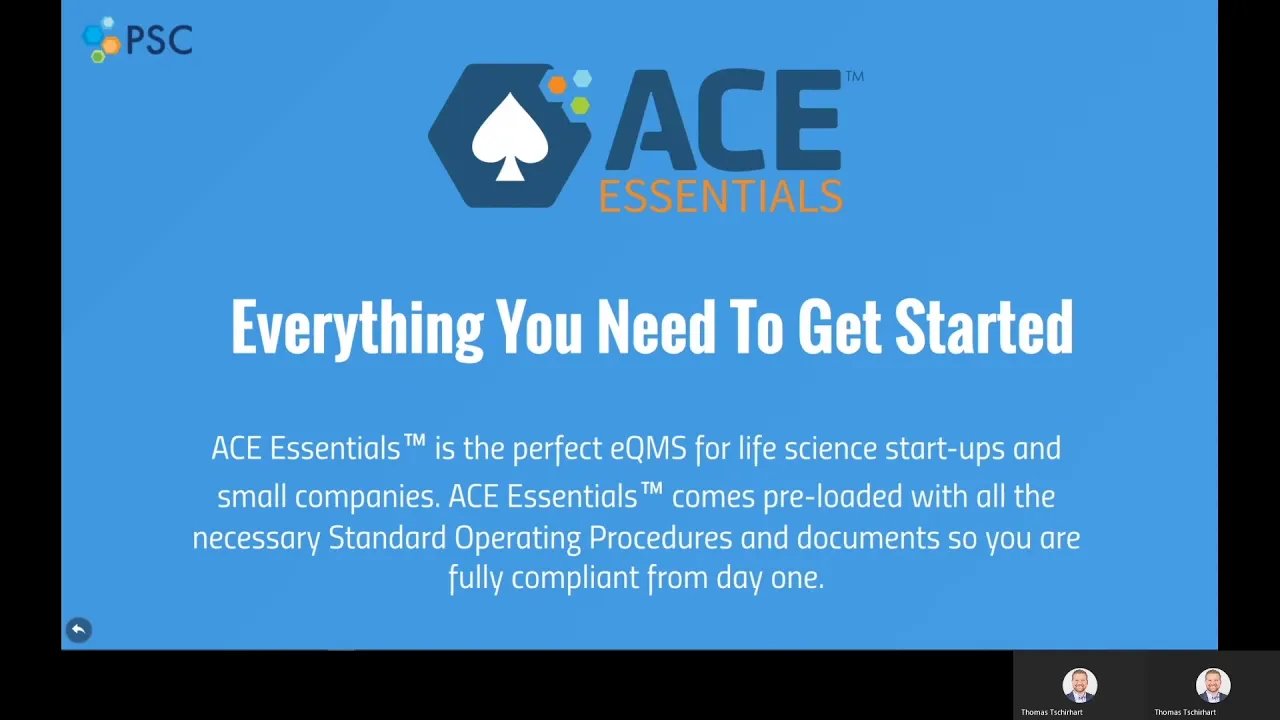
PSC Biotech Corporation Presentation for Bio Cost Savings
Biotechnology Innovation Organization
/@BioOrgBiotech
Jul 21, 2020
This video provides an in-depth exploration of PSC Biotech Corporation's software and service solutions tailored for life science companies, presented in the context of their partnership with the Biotechnology Innovation Organization (BIO). The presentation, led by Thomas, details the company's background, its specific software offerings, and its computer systems validation services, culminating in a discussion of the exclusive benefits available to BIO members. The core purpose is to showcase how PSC Biotech helps companies transition from paper-based or legacy quality management systems to modern, cloud-based, and compliant electronic solutions that provide actionable insights. The presentation begins with a brief history of PSC Biotech, founded in 1996, highlighting its growth to over 1,000 clients worldwide and the addition of specialized divisions, with a particular focus on PSC Software, established in 2009. The impetus for PSC Software was the observed dissatisfaction among companies with existing quality management processes, driving the need for user-friendly, cloud-based software capable of delivering actionable information. This led to the development of three primary software solutions: ACE, ACE Essentials, and AuditUtopia, each designed to address specific needs within the life sciences quality and compliance landscape. The video then delves into each software solution. ACE (Adaptive Compliance Engine) is presented as a single-platform enterprise quality management system, designed to minimize administrative burdens and maximize ROI through productivity gains, all within a 21 CFR Part 11 compliant framework. It offers adaptability to various business processes, enabling real-time tracking and reporting for compliance, quality, and operational activities such as managing CAPAs, deviations, controlled documents, training, and supplier audits. Key differentiators include its unified platform approach, transparent pricing (no separate modules), high configurability, integrated analytics, and intuitive user interface, supported by numerous pre-configured workflows. ACE Essentials is introduced as a streamlined EQMS for startups and small life science companies, offering essential quality processes, pre-loaded SOPs, policies, and a quality manual for immediate compliance, with a simple upgrade path to the full ACE system as companies grow. Lastly, AuditUtopia is detailed as a standalone, real-time inspection management software, crucial for hosting regulatory inspections and client audits by enabling efficient tracking of scribe notes, requests, and related activities, ensuring teams stay organized and responsive. Beyond software, PSC Biotech emphasizes its Computer Systems Validation (CSV) services, leveraging over two decades of consulting experience to provide FDA and EMA compliant, customized solutions. These services cover validation for a wide range of third-party enterprise systems, including ERP, DMS, VMS, and BMS, alongside specialized services for 21 CFR Part 11 compliance, data integrity assessments, remediation, and training. The presentation concludes by outlining the significant discounts and free trial offers extended to BIO and state affiliate members across PSC's software and CSV services, reinforcing their commitment to supporting the life sciences community with compliant and efficient solutions. Key Takeaways: * **Addressing Legacy System Challenges:** PSC Biotech was founded on the premise of solving common industry pain points related to inefficient paper-based or outdated legacy quality management systems, offering modern cloud-based alternatives. * **Comprehensive Enterprise Quality Management (ACE):** The Adaptive Compliance Engine (ACE) serves as a unified, single-platform EQMS that manages a broad spectrum of quality and compliance activities, including CAPAs, deviations, controlled documents, training, and supplier audits, all within a 21 CFR Part 11 compliant environment. * **21 CFR Part 11 Compliance Focus:** A central theme across all PSC Biotech's software and services is adherence to 21 CFR Part 11, ensuring electronic records and signatures are trustworthy and equivalent to paper records, which is critical for regulated life science companies. * **Integrated Analytics for Actionable Insights:** ACE incorporates an integrated analytics and visualization platform, enabling users to extract actionable information from their quality data, supporting data-driven decision-making and continuous improvement. * **Tailored Solutions for Small Businesses (ACE Essentials):** ACE Essentials provides a pre-configured and pre-validated EQMS specifically designed for life science startups and small companies, offering a rapid, compliant solution with pre-written SOPs, policies, and a quality manual to expedite compliance from day one. * **Seamless Scalability:** For small companies starting with ACE Essentials, there is a clear and simple upgrade path to the full ACE system, ensuring the solution can grow with the company's evolving needs without disruption. * **Specialized Inspection Management (AuditUtopia):** AuditUtopia offers a dedicated, real-time inspection management software that streamlines the process of hosting regulatory inspections and client audits, enhancing organizational readiness and responsiveness through real-time updates and configurable dashboards. * **Extensive Computer Systems Validation (CSV) Services:** PSC Biotech provides expert CSV services, ensuring FDA and EMA compliance for various third-party enterprise systems (ERP, DMS, VMS, BMS), which is crucial for maintaining data integrity and regulatory adherence across a company's technology stack. * **Data Integrity and Remediation Expertise:** Beyond validation, their CSV services include data integrity assessments, remediation, and training, highlighting a holistic approach to ensuring the reliability and accuracy of electronic data in regulated environments. * **Flexible and Configurable Software:** ACE is designed to be highly adaptive and user-configurable, allowing the software to conform to a company's specific business processes rather than forcing the company to adapt to the software. * **Transparent Pricing Model:** PSC Software employs a transparent pricing model for ACE, where all pre-configured workflows are included, and there are no separate modules to purchase, simplifying budgeting and maximizing perceived value. * **Strategic Industry Partnerships:** The partnership with BIO, offering significant discounts on software and services, demonstrates PSC Biotech's commitment to supporting the broader biotechnology ecosystem and making compliant solutions more accessible to its members. **Tools/Resources Mentioned:** * **ACE (Adaptive Compliance Engine):** Enterprise electronic quality management system. * **ACE Essentials:** Electronic quality management system for small life science companies and startups. * **AuditUtopia:** Stand-alone real-time inspection management software. * **BIO (Biotechnology Innovation Organization):** Industry organization partnered with PSC Biotech. **Key Concepts:** * **Electronic Quality Management System (EQMS):** Software solutions designed to manage and automate quality processes and documentation in a regulated environment. * **Computer Systems Validation (CSV):** The process of ensuring that computer systems used in regulated industries perform as intended and meet regulatory requirements (e.g., FDA, EMA). * **21 CFR Part 11:** Regulations issued by the FDA governing electronic records and electronic signatures, ensuring their trustworthiness, reliability, and equivalence to paper records. * **CAPA (Corrective and Preventive Actions):** A system for identifying, documenting, and addressing non-conformances and preventing their recurrence. * **Deviations:** Departures from approved instructions or established standards. * **Change Control:** A formal process used to manage modifications to documents, procedures, or systems in a regulated environment. * **Controlled Documents:** Documents (e.g., SOPs, policies, specifications) that are managed under a formal control system to ensure accuracy, approval, and distribution. * **Learning Management System (LMS):** A software application for the administration, documentation, tracking, reporting, automation, and delivery of educational courses or training programs. * **Data Integrity:** The assurance that data is accurate, consistent, and reliable throughout its lifecycle, critical for regulatory compliance.

Veeva for Clinical Research Sites and Institutions
Veeva Systems Inc
/@VeevaSystems
Jul 20, 2020
The video presents a focused introduction to Veeva for Research Sites, a specialized suite of applications designed to address the operational complexities faced by clinical research sites and institutions in managing trials. The core premise is that traditional trial management relies heavily on multiple, disconnected systems, leading to complex integrations, workarounds, and a significant diversion of site resources toward technology management rather than core research activities. Veeva positions its solution as a unified, connected platform that facilitates seamless information exchange between the site, trial sponsors, and patients, thereby reducing administrative burden and accelerating research timelines. The solution is structured around three critical pillars: connectivity, compliance, and automation. By integrating these elements, the platform enables crucial operational improvements. Specifically, the system supports remote monitoring capabilities for essential trial documentation, including regulatory and source files. This feature is vital for streamlining oversight and reducing the need for costly, time-consuming on-site visits by monitors. Furthermore, the platform provides detailed reports and dashboards, offering immediate visibility into study progress, highlighting completed tasks, and, critically, identifying missing information that could impede compliance or progress. A significant component of the Veeva offering is the incorporation of intelligent workflows and automation. These features are specifically engineered to enforce quality standards and support continuous regulatory compliance, helping sites adhere to stringent industry requirements (like GxP and 21 CFR Part 11) without manual intervention. Beyond operational efficiency, the suite also focuses on patient experience, offering tools for direct engagement. This patient-centric approach aims to reduce participant burden and improve overall satisfaction, which directly supports higher retention rates and more efficient trial execution. The video emphasizes that by allowing information to flow seamlessly, Veeva empowers sites to focus less on technological hurdles and more on their primary mission of advancing scientific research, offering both free and enterprise plans to suit different institutional needs. Key Takeaways: * **Addressing System Fragmentation:** The primary challenge for clinical research sites is the inefficiency caused by managing trials across multiple, disconnected systems, necessitating complex manual integrations and workarounds to achieve a unified view of study data. * **Unified Information Flow:** Veeva for Research Sites establishes a single, connected environment that ensures seamless information exchange between the research site, the trial sponsor (or CRO), and the participating patients, significantly simplifying data management. * **Enabling Remote Monitoring of Critical Documents:** The platform explicitly supports remote access and monitoring of essential regulatory and source files, which is a critical capability for modernizing clinical trial oversight and reducing the logistical burden of on-site audits. * **Data-Driven Operational Visibility:** The system provides detailed reports and dashboards that offer real-time insights into study status, allowing site staff to quickly identify completed tasks and pinpoint critical missing information or bottlenecks. * **Automation for Quality and Compliance:** Intelligent workflows and automation are integrated to actively support quality assurance and regulatory compliance, reducing human error and ensuring adherence to complex standards like those required by the FDA. * **Strategic Patient Engagement:** The suite includes tools for direct patient engagement, which is essential for reducing participant administrative burden, improving satisfaction, and ultimately boosting recruitment and retention rates in clinical studies. * **Opportunity for AI Integration:** The presence of intelligent workflows and structured data within a Veeva environment creates a prime opportunity for IntuitionLabs.ai to layer custom AI/LLM solutions, such as automating compliance checks, summarizing patient feedback, or optimizing workflow routing. * **Targeting the Clinical Operations Segment:** This focus on Veeva’s clinical suite confirms that clinical operations and research sites are key areas of technological investment and transformation within the life sciences sector, aligning directly with IntuitionLabs.ai’s target market expansion beyond commercial operations. * **Scalability and Accessibility:** The availability of both free and enterprise plans indicates Veeva’s strategy to penetrate the market across institutions of all sizes, ensuring a broad base of potential clients who will eventually require integration, customization, and advanced data services. Tools/Resources Mentioned: * Veeva for Research Sites (A suite of applications for clinical trial management) * sites.veeva.com (Resource URL for more information) Key Concepts: * **Disconnected Systems:** The common issue in clinical research where data resides in disparate, non-integrated software platforms, leading to data silos and operational friction. * **Source Files and Regulatory Files:** The official, auditable documentation required for clinical trials (e.g., patient records, consent forms, protocol documents) that must be securely managed and monitored. * **Intelligent Workflows:** Automated, rule-based processes that guide users through required steps, often incorporating compliance checks and data validation, which is a core area for AI-driven optimization. * **Patient Burden:** The time, effort, and inconvenience required of a participant in a clinical trial, which technology aims to minimize to improve trial adherence and satisfaction.
Easy Product Configuration Demo | ComplianceQuest Quality & Safety Management System
ComplianceQuest
/@ComplianceQuest
Jul 15, 2020
This video provides an in-depth demonstration of the easy configuration and customization capabilities within the ComplianceQuest Quality & Safety Management System, specifically showcasing features from its acquired entity, LifeGuard Solutions. The main purpose of the demo, led by Gavin Bevel, Director of Solution Engineering and Product Development, is to illustrate how system administrators can quickly and easily modify dashboards and forms without requiring complex coding or extensive technical expertise. The underlying platform is built natively on Salesforce, which allows for a unified Quality, Health, Safety, and Environment (QHSE) solution. The demonstration progresses through two primary use cases. First, it addresses the common request of adding a new chart or report to an existing dashboard. Bevel walks through the process of editing a dashboard, adding a new component, selecting a pre-existing report (e.g., "offense by month"), and then customizing its visualization, such as changing it to a line graph. The system features a drag-and-drop environment, enabling administrators to intuitively reposition the new report anywhere on the dashboard screen. The second use case focuses on adding a new field to an existing form or application, using an "audit application" as an example. Bevel shows how to create a new field, selecting a "textarea" type, naming it "notes," and quickly assigning permissions before saving it. He then demonstrates how to integrate this new field into the form's layout, again using a drag-and-drop interface to place it in the desired location, such as above "frequency" or within "contact information." Throughout the video, the speaker emphasizes the speed and simplicity of these configuration tasks, highlighting that both processes—adding a report to a dashboard and adding a field to a form—can be completed in less than two minutes. This rapid customization capability is presented as a significant advantage for organizations needing agile adjustments to their quality and safety management systems. The approach underscores a user-centric design where system administrators can maintain and evolve the solution to meet changing business needs and regulatory requirements without significant IT overhead, thereby streamlining operations and enhancing compliance. Key Takeaways: * **Agile System Configuration:** The ComplianceQuest platform, incorporating LifeGuard Solutions, offers robust, user-friendly configuration tools that allow system administrators to quickly customize dashboards and forms without coding, fostering agility in responding to operational and regulatory changes. * **Salesforce Native Platform:** The system is built natively on the Salesforce platform, indicating a foundation of scalability, security, and integration capabilities that are common in enterprise-level solutions and potentially beneficial for organizations already leveraging Salesforce ecosystems. * **Dashboard Customization for Insights:** Administrators can easily add new reports and charts to dashboards, enabling quick visualization of key performance indicators (KPIs) and operational data, such as "events by month," which is crucial for data-driven decision-making in quality and safety management. * **Intuitive Drag-and-Drop Interface:** Both dashboard and form customizations are facilitated by a drag-and-drop interface, significantly reducing the learning curve and time required for modifications, making the system accessible to non-developer administrators. * **Rapid Form Field Addition:** The process for adding new fields to application forms, such as a "notes" textarea field to an "audit application," is streamlined, allowing for quick adaptation of data capture requirements. This includes selecting field types, naming, and assigning permissions. * **Permission-Based Field Visibility:** When adding new fields, administrators can assign specific permissions, controlling who can see and interact with the field, ensuring data security and role-based access within the system. * **Operational Efficiency and Compliance:** The ease of configuration directly contributes to operational efficiency by allowing organizations to quickly adapt their QMS/EHS to evolving needs, which is vital for maintaining regulatory compliance in dynamic environments. * **Unified QHSE Solution:** ComplianceQuest offers a unified Quality, Health, Safety, and Environment solution, suggesting a comprehensive approach to managing various aspects of operational compliance and risk management within a single platform. * **AI Augmentation for Risk Mitigation:** While not explicitly demonstrated in the video, the platform's description mentions being "augmented by AI to mitigate risks," indicating a strategic integration of artificial intelligence to enhance compliance operations and decision-making. * **Empowering System Administrators:** The demo highlights how system administrators are empowered to make significant configuration changes independently, reducing reliance on development teams and accelerating the deployment of system enhancements. Tools/Resources Mentioned: * ComplianceQuest Quality & Safety Management System * LifeGuard Solutions (acquired by ComplianceQuest) * Salesforce Platform (underlying technology) Key Concepts: * **EQMS (Enterprise Quality Management System):** A system designed to manage and automate quality processes across an enterprise, ensuring compliance with industry standards and regulations. * **EHS (Environmental, Health, and Safety) Solution:** A system focused on managing an organization's environmental impact, employee health, and workplace safety. * **Product Configuration:** The process of customizing a software product to meet specific user or organizational requirements, often without altering the core code. * **Dashboard Customization:** The ability to modify the layout, content, and visualization of data dashboards to provide relevant insights to different user roles. * **Form Field Customization:** The process of adding, removing, or modifying data entry fields on digital forms to capture necessary information for specific applications or processes. * **Drag-and-Drop Interface:** A graphical user interface feature that allows users to select and move objects (like reports or fields) on a screen using a mouse or touch input, simplifying interaction and configuration. * **System Administrator Role:** An individual responsible for the configuration, maintenance, and user management of a software system. Examples/Case Studies: * **Dashboard Report Addition:** The demonstration included adding an "events by month" report, visualized as a line graph, to an existing dashboard to provide quick insights into operational trends. * **Form Field Creation:** A "notes" textarea field was added to an "audit application" form, illustrating how new data capture requirements can be rapidly implemented within the system.

Veeva Systems (VEEV) TOO EXPENSIVE? Painless Stock Analysis - Investfluent
Investfluent
/@investfluent4143
Jul 13, 2020
This video, although framed as a stock analysis, provides a detailed overview of Veeva Systems' cloud-based solutions for the life sciences industry. It systematically breaks down Veeva's core offerings: the Commercial Cloud, Data Cloud, and Vault. The speaker explains how these platforms address critical industry needs, from enhancing commercial engagement with healthcare professionals and managing marketing campaigns to streamlining research and development processes, all while maintaining stringent regulatory compliance. The video emphasizes Veeva's role in modernizing the life sciences sector by creating a collaborative clinical ecosystem. Key Takeaways: * **Comprehensive Veeva Ecosystem:** Veeva Systems offers a holistic suite of cloud solutions—Commercial Cloud, Data Cloud, and Vault—designed to support various facets of the life sciences industry, from commercial operations to R&D and regulatory compliance. * **Veeva Commercial Cloud Capabilities:** This platform enables multichannel Customer Relationship Management (CRM), handling complex tasks such as prescription drug sample management, medical inquiries from physicians, and electronic signature capture across diverse platforms (e.g., iPads, Email, WhatsApp), with a strong emphasis on regulatory adherence. * **Veeva Data Cloud for Insights & Compliance:** The Data Cloud focuses on providing accurate customer reference data to enhance marketing efforts and ensures compliance with global privacy laws, acting as an extension of existing data solutions. * **Veeva Vault's End-to-End Management:** Veeva Vault is presented as a crucial, all-in-one cloud-based suite for managing the entire product lifecycle, encompassing clinical data, clinical operations (including Trial Master File), quality, safety, medical, and commercial aspects, ensuring continuous performance and regulatory compliance. * **Industry Adoption and Modernization:** Veeva CRM has a significant market presence, with 81% of new drugs approved having been launched using it, underscoring Veeva's role in bringing the life sciences industry into a future characterized by collaborative, cloud-based solutions.
Top 10 SaaS Providers to Consider Today
Enterprise Management 360
/@enterprisemanagement360
Jul 7, 2020
This video provides an overview of the top ten Software-as-a-Service (SaaS) providers currently making significant impacts in a rapidly growing and competitive market. The presenter, Max Curtin, systematically counts down from number ten to number one, detailing the core offerings and unique value propositions of each selected company. The video aims to guide businesses through the crowded SaaS landscape by highlighting solutions that stand out for their innovation, market penetration, and comprehensive capabilities across various enterprise functions. The discussion covers a broad spectrum of SaaS applications, ranging from data management and communication platforms to enterprise resource planning (ERP) and customer relationship management (CRM) systems. Each featured provider is presented with a brief description of its primary service, key features, and notable achievements or customer base. The progression of the list illustrates the diverse ways SaaS is transforming business operations, from foundational data services and internal collaboration to external customer engagement and financial processing. Specific examples include Splunk for data-as-a-service, Veeva Systems for life sciences-specific cloud solutions, Twilio for cloud communications, Atlassian for team collaboration, and Square for financial payment processing. The list continues with Workday for integrated finance and HR, ServiceNow for digital workflow transformation, Zoom for video communications, Slack for business collaboration, and finally, Salesforce as a leading integrated CRM platform. The video emphasizes how these platforms enable businesses to achieve greater efficiency, agility, and deeper insights into their operations and customer interactions, often by replacing manual processes with modern digital workflows. The speaker's approach is informative and direct, focusing on the functional benefits and market position of each SaaS offering. While not delving into deep technical specifics, the video effectively communicates the strategic importance of each platform in today's digital enterprise. It underscores the trend towards specialized, cloud-based solutions that can be customized and integrated to meet the evolving demands of various industries, including those with stringent regulatory requirements. Key Takeaways: * **Veeva Systems' Dominance in Life Sciences:** Veeva Systems is highlighted as a prominent cloud solutions provider specifically tailored for the life sciences space, offering essential data, software, and services to support critical business functions like CRM and Master Data Management (MDM). This underscores its specialized role in an industry with unique regulatory and operational requirements. * **Strategic Importance of Data as a Service:** Splunk is recognized as a state-of-the-art solution for data-as-a-service, enabling businesses to extract value from big data through features like multi-site clustering and load balancing. Its open development platform allows for customization, emphasizing the need for flexible and powerful data analytics capabilities. * **CRM as a Centralized Business Hub:** Salesforce is positioned as the number one integrated CRM platform, providing all business departments with a single, shared view of every customer. This highlights the critical role of CRM in tracking customer activity, fostering collaboration, and enhancing customer engagement across the enterprise. * **Digital Transformation through Workflow Automation:** ServiceNow's mission is to lead businesses towards smarter workflows by transforming manual processes into modern digital ones. This emphasizes the growing relevance of end-to-end digital transformation solutions in improving operational efficiency and agility. * **Integrated Enterprise Resource Planning (ERP):** Workday is noted for its cloud ERP system that seamlessly combines finance, HR, and planning functionalities. This integrated approach allows companies to gain deep insights into business performance and adapt quickly to change, crucial for large organizations like Siemens and Adobe. * **Cloud Communications for Customer Engagement:** Twilio, a leading cloud communications platform, offers powerful APIs for developers to engage customers across multiple channels including SMS, voice, video, WhatsApp, and email. This showcases the importance of multi-channel communication strategies for customer interaction and support. * **Collaboration Tools for Team Potential:** Atlassian, with products like JIRA and Trello, and Slack, known for changing the landscape of business collaboration, are presented as essential tools for unleashing team potential. They simplify communication, file sharing, and project management, serving as popular alternatives to traditional email. * **SaaS Market Growth and Competition:** The video frames SaaS as one of the fastest-growing and most competitive industries, indicating a constant need for businesses to evaluate and adopt solutions that offer distinct advantages and stand out from a multitude of offerings. * **Customization and Open Platforms:** Several providers, such as Splunk, are noted for their open development platforms, allowing businesses to customize solutions to their specific needs. This flexibility is a key advantage of modern SaaS offerings, enabling tailored implementations. * **Diverse SaaS Applications:** The range of providers, from payment processing (Square) to video conferencing (Zoom), illustrates the pervasive nature of SaaS across virtually all business functions, demonstrating how cloud-based services underpin various operational aspects. Tools/Resources Mentioned: * Splunk (Data as a Service) * Veeva Systems (Cloud solutions for life sciences, CRM, MDM) * Twilio (Cloud communications platform) * JIRA (Project management/collaboration) * Trello (Project management/collaboration) * Square (Credit card processing/payment solutions) * Workday (Cloud ERP for finance, HR, planning) * ServiceNow (Digital workflow transformation) * Zoom (Video communications) * Slack (Business collaboration) * Salesforce (Integrated CRM platform) Key Concepts: * **Software-as-a-Service (SaaS):** A software distribution model in which a third-party provider hosts applications and makes them available to customers over the Internet. * **Data as a Service (DaaS):** A cloud strategy used to facilitate the provision of data on demand to users from a centralized cloud resource. * **Cloud Communications Platform as a Service (CPaaS):** A cloud-based platform that allows developers to add real-time communication features (voice, video, messaging) to their own applications without building backend infrastructure. * **Customer Relationship Management (CRM):** A technology for managing all your company's relationships and interactions with customers and potential customers. * **Master Data Management (MDM):** A method used to define and manage the critical non-transactional data of an organization to provide a single point of reference. * **Enterprise Resource Planning (ERP):** A system that integrates all facets of an operation, including product planning, development, manufacturing, sales, and marketing. * **Digital Transformation:** The adoption of digital technology to improve an organization's processes, culture, and customer experiences to meet changing business and market requirements. Examples/Case Studies: * **Twilio:** Serves industry disruptors such as Airbnb and Netflix for customer engagement across numerous communication channels. * **Workday:** Trusted by well-known businesses including Siemens and Adobe for its integrated cloud ERP system.

Generation Veeva | Meet Marissa: Why I Love Veeva
Veeva Systems Inc
@VeevaSystems
Jul 6, 2020
This video provides an internal perspective on the culture, structure, and talent development programs at Veeva Systems, featuring the experience of an Associate Consultant on the Commercial Vault team. The primary purpose of the content is recruitment and internal branding, offering potential candidates and external partners insight into the daily life and support systems available within the organization. The speaker, Marissa Beney, focuses on three key areas: the highly collaborative communication environment, the benefits of work-from-home flexibility, and the structured professional development offered through the Consultant Development Program (CDP). A central theme explored is the supportive and highly responsive internal culture. The speaker emphasizes the ease of access to colleagues and senior staff, noting that she can "send a ping" to virtually anyone in the organization and expect a response within an hour, or receive multiple team-wide responses within minutes. This suggests a flat organizational structure and a strong commitment to immediate collaboration, which is crucial for maintaining the fast pace often required in software consulting and implementation projects. Furthermore, the video highlights the intellectual caliber and shared interests among employees, fostering strong professional and personal relationships that contribute to high morale and retention. The video also details the structure of the Consultant Development Program (CDP), a significant two-year initiative designed primarily for post-graduates entering the software consulting industry. This program is positioned as the primary pipeline for developing Veeva’s implementation expertise. The CDP is characterized by a dual mentorship model: participants are paired with a dedicated project manager who guides them through project execution and delivery, and a separate manager who monitors their overall development as a consultant. This structured approach ensures that junior consultants gain both practical, project-specific skills and broader professional competencies necessary for long-term success in the regulated life sciences technology space. Finally, the speaker’s role on the "commercial vault team" confirms the video’s focus on the commercial operations side of the pharmaceutical industry, which includes platforms like Veeva CRM and various Commercial Vault products (e.g., PromoMats, MedComms). This specific focus underscores the strategic importance of these commercial solutions to Veeva’s overall business model. The emphasis on work-from-home flexibility and accommodating schedules is presented as a major benefit, allowing consultants to integrate work with personal life, which is a key factor in attracting and retaining talent in the competitive technology consulting sector. Key Takeaways: • **Structured Talent Pipeline (CDP):** Veeva relies heavily on its two-year Consultant Development Program (CDP) to build its consulting workforce, indicating a formalized, repeatable process for training implementation specialists from the ground up, ensuring consistent quality in client-facing roles. • **Dual Mentorship Model:** The CDP utilizes a two-pronged mentorship approach—pairing consultants with a Project Manager (focused on delivery and execution) and a Development Manager (focused on career growth)—which guarantees comprehensive skill development and oversight for junior staff. • **High Internal Responsiveness:** The company culture promotes extremely rapid internal communication, with the expectation that pings or emails will receive responses within minutes or an hour, suggesting a highly efficient and collaborative environment that likely translates to quick problem-solving on client projects. • **Commercial Vault Focus:** The speaker’s specific placement on the "commercial vault team" highlights the organizational segmentation within Veeva, confirming the strategic importance of their commercial operations platforms (e.g., PromoMats, CRM integration) as a distinct area requiring specialized consulting expertise. • **Work-Life Flexibility as a Core Benefit:** Work-from-home (WFM) flexibility is a key cultural selling point, allowing consultants to manage personal time (gym, family) alongside work commitments, which is a critical factor for external firms to consider when coordinating timelines and resource availability with Veeva personnel. • **Recruitment Strategy:** The video functions as a strong recruitment tool, emphasizing the intellectual caliber ("everybody is so smart") and supportive nature of the workforce, reinforcing Veeva’s brand as a desirable employer in the life sciences technology sector. • **Post-Graduate Focus:** The CDP targets post-graduates, indicating that Veeva prefers to train new consultants specifically on the Veeva ecosystem rather than relying solely on external hires with diverse platform experience, ensuring deep product knowledge from the start. • **Strong Internal Cohesion:** The emphasis on developing "friends for life" and a supportive environment suggests high employee satisfaction and potentially lower turnover rates among their consulting staff, leading to more stable and experienced project teams over time. Tools/Resources Mentioned: * Veeva Commercial Vault (Specific product area/team) * Consultant Development Program (CDP) Key Concepts: * **Commercial Vault Team:** An internal team within Veeva Systems dedicated to implementing and supporting the suite of Commercial Vault products, which manage content, data, and processes related to sales, marketing, and medical affairs in the pharmaceutical industry. * **Consultant Development Program (CDP):** A structured, multi-year training program designed to onboard and rapidly develop entry-level professionals into skilled software consultants, focusing on both technical implementation skills and professional development.
Preparing for Your Oracle, Medidata, and Veeva CTMS Migration Project
Perficient
/@perficient
Jun 25, 2020
This webinar provides an in-depth exploration of preparing for a Clinical Trial Management System (CTMS) migration project, focusing on strategies, considerations, and technical approaches for moving data between systems like Oracle Siebel CTMS, Medidata Rave CTMS, and Veeva Vault CTMS. Presented by Bunim Singh, Director of Clinical Operations Solution Practice at Perficient Life Sciences, the session aims to equip organizations with a framework for analyzing their own CTMS migration needs, whether driven by mergers and acquisitions (CTMS consolidation) or a desire to switch vendors. The discussion covers critical questions such as whether to migrate, what data to migrate, how to execute the migration, and the optimal timing for such projects, emphasizing both business and technical perspectives. The presentation systematically breaks down the decision-making process for CTMS migration, starting with a cost-benefit analysis. It highlights the advantages of migration, including enabling comprehensive reporting across all studies, providing a complete live picture of studies in one system, streamlining operations by having a single set of business processes, and reducing IT support and maintenance costs by decommissioning legacy systems. Conversely, the speaker addresses potential risks such as loss of functionality or data in the new system, lag time between migration and user access, and data disconnects if users operate in both old and new systems concurrently. The video then delves into scoping, advising a two-tiered approach: first, identifying which studies (e.g., long-duration active studies) are good candidates for migration, and second, determining which specific data types or records within those studies are essential to transfer, considering business needs and target system capabilities. A significant portion of the webinar is dedicated to the "how" of migration, exploring various tools and technical approaches. It discusses manual data entry as a potentially cost-effective method for low-volume data, contrasting it with automated options utilizing embedded system tools (like Oracle Siebel's Enterprise Integration Manager or CSV/XML imports for Veeva Vault and Medidata), existing ETL tools (e.g., Informatica, SSIS), or custom-built migration routines. The speaker illustrates three common technical architectures: migrating from an in-house CTMS to another in-house solution (typically database-to-database), migrating from an in-house CTMS to a standard cloud CTMS (requiring data formatting to vendor-prescribed import standards), and migrating to a customized cloud CTMS solution, which can involve building reusable migration solutions for ongoing data transfers like CRO feeds. Finally, timing considerations are discussed, weighing "big bang" deployments against phased, study-by-study rollouts, and emphasizing alignment with training and legacy system decommissioning strategies. Key Takeaways: * **Purpose-Driven Migration:** The primary driver for any CTMS migration should be clearly defined business benefits, such as enabling comprehensive reporting, consolidating operations into a single system, or reducing IT support costs by decommissioning legacy applications. * **Weighing Benefits Against Risks:** Organizations must carefully assess the value of migration benefits against potential risks, including loss of functionality or data, operational lag time post-migration, and data inconsistencies if users access both legacy and new systems. * **Strategic Study Scoping:** When deciding which studies to migrate, prioritize long-duration active studies that will run significantly past the new system's go-live date. Short-term studies or those ending soon may be better left in the legacy system, while new studies can start directly in the new CTMS. * **Data Type Scoping:** Define the scope of data types by identifying what information has a clear target in the new system and what is critical for business needs (e.g., reporting, current operations). Consider if certain data can remain in a legacy system or be archived elsewhere if not essential for the new CTMS. * **Inevitable Data Cleansing and Standardization:** Data migration almost always requires a significant data cleansing effort to transform or translate legacy data into the new system's defined standards (e.g., address formats, list of values). This effort must be factored into project timelines and costs. * **Managing Multiple Data Sources:** The number and variety of legacy data sources (e.g., multiple CTMS, spreadsheets, custom trackers) can dramatically increase migration complexity and effort. Consider a data consolidation effort to combine data into a single format before building migration routines. * **Manual vs. Automated Migration:** For low volumes of data, manual data entry can sometimes be a more cost-effective option than developing and validating complex automated migration routines, especially if the migration is a one-time event. * **Leveraging Existing Tools:** Utilize embedded system tools (e.g., Oracle Siebel EIM, Veeva Vault CSV imports, Medidata XML imports) or existing ETL tools (e.g., Informatica, SSIS) for automated migrations, which can significantly reduce custom development. * **Adherence to Cloud Vendor Formats:** When migrating to standard cloud CTMS solutions (like Veeva Vault or Medidata), data must be formatted precisely to the vendor's prescribed import specifications, as these are typically standardized and not easily customizable. * **Reusable Migration Solutions:** For organizations with ongoing data transfer needs (e.g., CRO feeds, M&A integrations), building a customized cloud CTMS solution with a reusable migration framework can provide significant long-term cost and effort savings. * **Validation is Key:** Validation efforts constitute a substantial portion of the cost and effort for automated data migration projects, ensuring data integrity and regulatory compliance. * **Strategic Timing and Rollout:** The timing of data migration (e.g., "big bang" vs. phased approach) must align with user training schedules and the legacy system decommissioning strategy to minimize operational disruption and maximize user adoption. * **Regulatory Compliance:** All CTMS implementations and data migrations must adhere to industry and regulatory standards and guidelines, such as those from the FDA and EMA, ensuring data integrity and auditability. **Tools/Resources Mentioned:** * **CTMS Platforms:** Oracle Siebel CTMS, Medidata Rave CTMS, Veeva Vault CTMS * **ETL Tools:** Informatica, SSIS * **Embedded Migration Tools:** Oracle Siebel Enterprise Integration Manager (EIM), CSV import formats (for Veeva Vault CTMS), XML import formats (for Medidata Rave CTMS) * **Technology & Platform Vendors:** AWS, Microsoft, Adobe (Perficient's strategic partners) **Key Concepts:** * **CTMS (Clinical Trial Management System):** A software system used to manage and track various aspects of clinical trials, including study planning, site management, patient enrollment, and regulatory compliance. * **Data Migration:** The process of transferring data from one system (legacy) to another (new) due to system upgrades, consolidation, or vendor changes. * **ETL (Extract, Transform, Load):** A three-phase data integration process used to extract data from a source system, transform it into a format suitable for the target system, and load it into the target system. * **Data Cleansing:** The process of detecting and correcting (or removing) corrupt or inaccurate records from a record set, table, or database. * **Data Consolidation:** The process of combining data from multiple sources into a single, unified data store. * **Big Bang Migration:** A migration strategy where all selected data is moved from the legacy system to the new system simultaneously. * **Phased Migration:** A migration strategy where data is moved in stages, often study-by-study or by user group, allowing for incremental rollout and issue resolution. * **Validation:** The process of ensuring that a system or data migration process meets specified requirements and is fit for its intended use, particularly critical in regulated environments like life sciences. **Examples/Case Studies:** * **Growing CRO:** A scenario where a growing Contract Research Organization with limited resources might choose to launch a new CTMS for planned studies rather than migrating existing data, especially if current studies are short-term. * **Oncology Company:** An example of an oncology company managing long-term trials with significant legacy data, where the decision to migrate is complex, especially if a data warehouse already provides consolidated reporting. * **Manual Data Entry Cost Savings:** A historical case where an organization hired temporary data entry personnel to manually key in thousands of contacts, saving money compared to building complex automated migration routines for a one-time transfer. * **Reusable Custom Cloud Solution:** A large global pharma company deployed a customized cloud CTMS solution with a reusable migration framework, which was used for an initial one-time CTMS migration and subsequently for ongoing daily CRO data feeds, demonstrating significant cost and effort savings.

Webinar | How a pharmaceutical company managed their content migration to Veeva Vault successfully
migration-center
/@migration-center
Jun 23, 2020
This video directly addresses content migration to Veeva Vault, a leading regulated enterprise content management (ECM) platform within the life sciences industry.ai specializes in the pharmaceutical and life sciences industries, offers Veeva CRM consulting (part of the broader Veeva ecosystem), and focuses on optimizing operations while maintaining regulatory compliance. This webinar details how Vertex Pharmaceuticals, a biopharmaceutical company, successfully managed a complex content migration project to Veeva Vault RIM. The discussion highlights the transition from traditional, isolated EDMS and registration systems to an integrated, end-to-end regulatory information management platform. Speakers from Veeva and FME (the migration partner) outline the project's approach, timeline, scope, and the significant challenges encountered, such as complicated data mapping, managing two distinct source systems, handling corrupted data, and ensuring rigorous validation in a highly regulated environment. The webinar concludes with practical solutions implemented and crucial lessons learned for future regulated content migration initiatives. Key Takeaways: * **Strategic Shift to Integrated RIM:** The project exemplifies a common industry trend where pharmaceutical companies move from disparate legacy systems to unified, cloud-based platforms like Veeva Vault for comprehensive Regulatory Information Management (RIM), integrating content and registration data for end-to-end visibility and compliance. * **Complexity of Regulated Content Migration:** Migrating content in the highly regulated life sciences sector is inherently complex, requiring specialized tools and expertise to address challenges such as intricate data mapping (often due to years of legacy system evolution), diverse source data types, and stringent validation requirements to ensure compliance. * **Importance of Specialized Migration Tools and Expertise:** The success of such projects relies heavily on purpose-built migration tools and experienced consultants capable of handling sophisticated data extraction, complex transformation rules (e.g., keyword-based reclassification), and robust validation reporting for regulated platforms. * **Phased Approach for Multi-Source Migrations:** A key strategy for integrating data from multiple source systems (e.g., EDMS and a separate registration system) is to load foundational objects (like registration data) first, establishing necessary metadata in the target system before migrating associated documents. * **Critical Project Management & Partnership:** Effective execution within tight timelines (e.g., 8 months for design, implementation, and migration) necessitates a strong collaborative partnership between the client, the platform vendor (Veeva), and the migration specialist, emphasizing clear communication and proactive issue resolution. * **Lessons Learned for Optimization:** Future migration projects can be optimized by ensuring configuration lock *before* mapping begins, performing document and object field mapping concurrently, planning thoroughly for renditions, deferring post-validation configuration changes, and allocating sufficient buffer time between production load and business go-live for comprehensive verification and unexpected issues. * **Data Transformation as an Opportunity:** Beyond simple migration, the project involved reclassifying content under a more granular and updated document model, demonstrating that migration can be an opportunity for business process improvement and data governance enhancement.
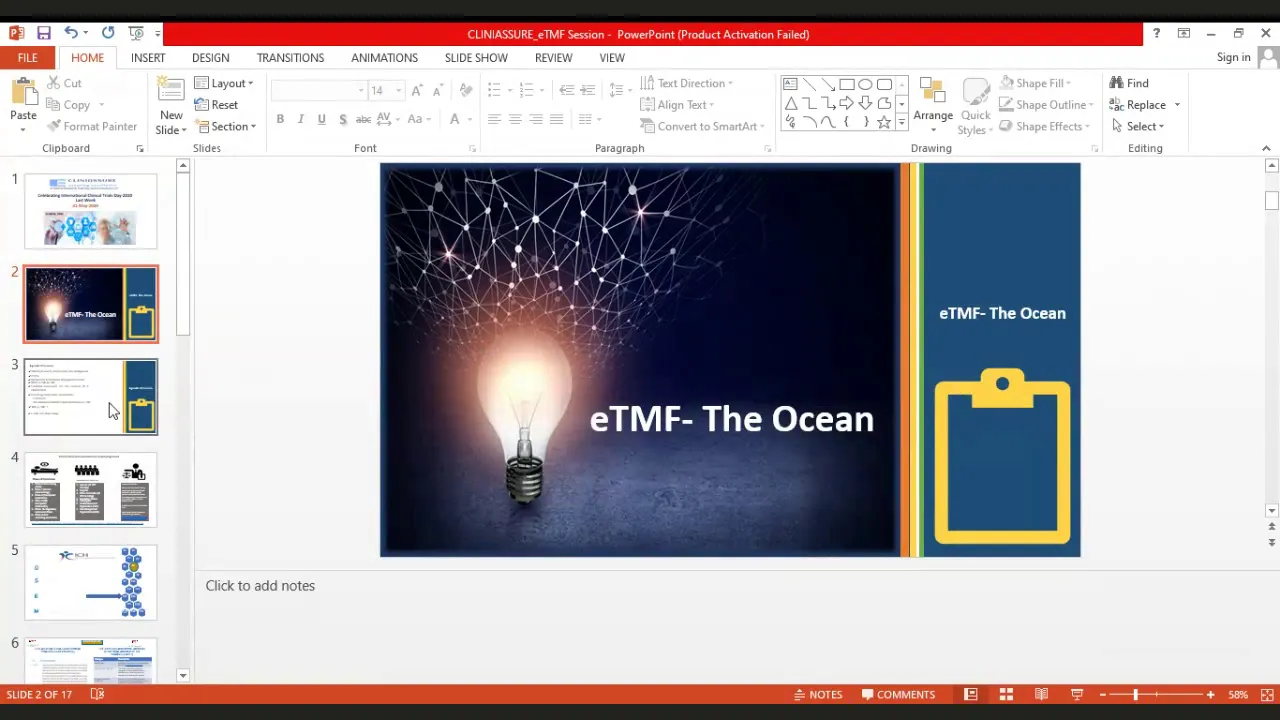
eTMF Session- Part 01 Conducted by CLINIASSURE- A Clinical Research Training and Consulting LLP
CLINIASSURE LLP
/@cliniassurellp671
Jun 19, 2020
This video provides an in-depth exploration of the Electronic Trial Master File (eTMF), focusing on its foundational concepts, regulatory importance, and practical implementation within clinical research. The session, led by Tranjeet from CLINIASSURE LLP, begins by establishing the critical role of clinical research in drug development, emphasizing patient safety and efficacy. It then systematically breaks down the components of eTMF, starting with the basics of clinical trials, delving into regulatory guidelines like ICH GCP E6, and differentiating between clinical data management and clinical document management. The speaker's approach is highly interactive, frequently pausing to engage participants and clarify complex terminology, ensuring a solid understanding of the subject matter for aspiring clinical research professionals. The presentation progresses to detail the "ocean" of eTMF, highlighting its vastness and continuous learning curve. A significant portion is dedicated to "Record Information Management" (RIM), explaining its organizational function in managing information throughout its lifecycle, from creation to disposition. The core definition of TMF as a collection of essential documents that facilitate trial conduct and ensure data integrity and GCP compliance is thoroughly discussed. The session meticulously covers the classification and importance of essential documents, referencing ICH GCP E6 R2, and categorizing them into pre-trial, during-trial, and post-trial phases. The speaker also introduces the Drug Information Association (DIA) and its crucial role in fostering innovation and standardizing processes, specifically highlighting the DIA Reference Model for eTMF implementation. The latter part of the video focuses on the practical benefits and tools associated with eTMF. It articulates why eTMF is indispensable in modern clinical trials, citing advantages such as real-time tracking, enhanced search capabilities, reduced trial timelines, improved collaboration, and increased compliance. The speaker demonstrates how the DIA Reference Model provides a structured framework for classifying and tracking documents digitally, using examples like audit certificates and bioanalytical reports with unique artifact IDs. Finally, the session concludes by listing various industry-leading eTMF software and database tools, such as Veeva Vault, Wingspan, Montrium, and MasterControl, and the pharmaceutical companies that utilize them, underscoring the widespread adoption and necessity of electronic systems in managing clinical trial documentation. Key Takeaways: * **Clinical Research Fundamentals:** Clinical trials are paramount for drug development, focusing on safety and efficacy. They involve distinct phases (micro-dosing, Phase 1-3, post-marketing surveillance) and a network of stakeholders including sponsors, subjects, ethics committees, regulatory bodies, and investigators. * **Regulatory Compliance is Core:** All clinical trials must adhere to stringent laws and guidelines from regulatory authorities like the US FDA, MHRA, CDSCO, and TGA. These bodies ensure patient safety and well-being, approving trials based on submitted data and protocols. * **ICH GCP E6 as the Standard:** The International Council for Harmonisation of Technical Requirements for Pharmaceuticals for Human Use (ICH) Good Clinical Practice (GCP) E6 guideline is fundamental. The speaker emphasizes the full form and highlights the E6 Revision 2 (R2) amendments, which address updates in essential document responsibilities and source document maintenance. * **Distinction Between Data and Document Management:** Clinical Data Management (CDM) involves playing with raw patient data collected from sites and analyzing it in databases. Clinical Document Management (CDM), also known as Record Information Management (RIM) or eTMF, focuses on managing the physical or electronic documents created from this data, such as CRFs and source data. * **Source Data is Foundational:** Source data, defined by GCP as any information in original records and certified copies of clinical findings, observations, and activities, is critical. It forms the basis for CRFs and eCRFs, and its verification (Source Data Verification - SDV) is essential for data integrity. * **eTMF Definition and Purpose:** The Trial Master File (TMF) is a comprehensive collection of essential documents that facilitates the conduct and management of clinical trials. eTMF digitizes this process, allowing for efficient evaluation of trial conduct, data quality, and compliance with GCP. * **Essential Documents are Non-Negotiable:** Essential documents are the minimum required documents (e.g., protocol, investigator brochure, informed consent form) that individually and collectively permit the evaluation of a trial's conduct and the quality of its data. Without them, a clinical trial cannot effectively run or be audited. * **DIA Reference Model for Standardization:** The Drug Information Association (DIA) provides a crucial reference model for eTMF implementation. This model offers a standardized, hierarchical structure for classifying, identifying, storing, and tracking clinical trial documents, ensuring consistency and ease of retrieval across organizations. * **Structured Document Management:** The DIA Reference Model uses a matrix tool with unique artifact IDs (e.g., 2.3.2 for a bioanalytical report) to categorize documents by zone, section, and artifact. This systematic approach is vital for efficient tracking, retrieval, and audit readiness in eTMF systems. * **Benefits of eTMF Adoption:** Implementing eTMF offers significant advantages over paper-based systems, including real-time document tracking and viewing, easier search and retrieval, shortened clinical trial timelines, improved collaboration among stakeholders, increased SOP compliance, better visibility into key trial metrics, cost savings, and enhanced audit and inspection readiness. * **Industry-Leading eTMF Tools:** Various software and database tools are available for eTMF management, such as Veeva Vault, Wingspan, Montrium, MasterControl, and Flex. These are utilized by major pharmaceutical and life sciences companies like Novartis, AstraZeneca, Bayer, and IQVIA to digitize and streamline their clinical documentation processes. * **Continuous Learning in eTMF:** The speaker emphasizes that eTMF is a vast and continuously evolving field, akin to an "ocean." Professionals must commit to ongoing learning to stay updated with new regulations, technologies, and best practices in clinical document management. **Tools/Resources Mentioned:** * **Veeva Vault:** An eTMF software/database tool. * **Wingspan:** An eTMF software/database tool. * **Montrium:** An eTMF software/database tool. * **MasterControl:** An eTMF software/database tool. * **Flex:** An eTMF software/database tool. * **DIA Reference Model:** A standardized matrix tool for TMF document classification and management. * **ICH GCP E6 (R2):** International guideline for Good Clinical Practice. **Key Concepts:** * **eTMF (Electronic Trial Master File):** A digital system for managing all essential documents related to a clinical trial, ensuring compliance, data integrity, and efficient operations. * **RIM (Record Information Management):** An organizational function dedicated to managing information throughout its lifecycle, including identifying, classifying, storing, securing, retrieving, tracking, and disposing of records. * **ICH GCP (International Council for Harmonisation Good Clinical Practice):** An international ethical and scientific quality standard for designing, conducting, recording, and reporting trials that involve the participation of human subjects. * **Essential Documents:** Documents that individually and collectively permit the evaluation of the conduct of a trial and the quality of the data produced, crucial for demonstrating GCP compliance. * **Source Data:** Any information in original records and certified copies of original records of clinical findings, observations, or other activities in a clinical trial. * **DIA (Drug Information Association):** A global organization that fosters innovation and provides a neutral environment for exchanging vital information and discussions related to healthcare products, technologies, and services. * **DIA Reference Model:** A standardized, hierarchical framework developed by DIA to provide a common structure for organizing and managing TMF documents, facilitating consistency and interoperability. **Examples/Case Studies:** * **Source Data Verification (SDV):** The speaker explains how source data is used to verify information entered into paper CRFs and subsequently into electronic CRFs (eCRFs), highlighting its importance in ensuring data accuracy and integrity. * **Document Classification Example:** The DIA Reference Model is illustrated with examples like "Audit Certificates" and "Bioanalytical Reports," showing how each document is identified (e.g., "Trial Management Zone"), classified (e.g., "Trial Oversight" or "Reports"), and assigned a unique artifact ID (e.g., 2.3.2) for systematic storage and retrieval. * **Global Trial Document Sharing:** The speaker uses an example of a trial running in India, USA, and Germany to demonstrate how eTMF significantly reduces the time and cost associated with sharing documents compared to physical courier or fax.

WAYS Webinar: Ad Promo Submissions: Preparing for the eCTD Mandate
WAYS Pharmaceutical Services
/@wayspharmaceuticalservices8074
Jun 17, 2020
This webinar provides an in-depth exploration of the FDA's eCTD mandate for advertising and promotional (Ad Promo) material submissions, focusing on the transition period leading up to the June 24, 2021, effective date. Presented by Allison Steffen from WAYS Pharmaceutical Services, the session aims to equip life sciences teams with a practical understanding of the final guidance released by the FDA in June 2019. It addresses common challenges and ambiguities, offering a crash course on how to translate the extensive guidance into the required electronic Common Technical Document (eCTD) submission format. The presentation begins by outlining the historical context of the industry's shift from paper to electronic submissions, driven by the FDA Safety and Innovation Act (FDASIA) of 2012. It then delves into the critical distinction between mandatory and non-mandatory eCTD submission types. Mandatory submissions primarily include final samples of promotional materials submitted via Form FDA 2253 upon first distribution, and pre-submissions for products granted accelerated approval (Subpart H or E). Non-mandatory submissions encompass general correspondence and voluntary draft material reviews, though the webinar strongly encourages adopting eCTD for these for efficiency. A significant portion of the webinar is dedicated to the practical aspects of eCTD compilation, offering detailed tips and highlighting common pitfalls. Steffen meticulously walks through the structure of Module 1.15, where most Ad Promo materials reside, explaining the required metadata and the specific placement of various documents like the 2253 form, product labeling, clean promotional materials, and annotated versions with supporting references. The session also differentiates between requirements for CDER and CBER products, particularly concerning the 2253 form and draft material submissions. Special attention is given to the rigorous requirements for accelerated approval products, which necessitate pre-review and highly detailed annotated materials and references to guide FDA reviewers. The webinar concludes with actionable advice for the transition period, urging companies to strategize early, train staff, and convert existing applications to the latest eCTD Module 1 version. Key Takeaways: * **eCTD Mandate for Ad Promo:** The FDA's final guidance on electronic Ad Promo submissions, released in June 2019, established a 24-month transition period, making eCTD format mandatory for certain submission types by June 24, 2021. * **Mandatory Submission Types:** Final samples of promotional materials submitted under Form FDA 2253 (upon first distribution) and pre-submissions for products under accelerated approval (Subpart H or E) are mandatory in eCTD format. * **Non-Mandatory but Recommended:** General correspondence and voluntary draft material submissions are not mandatory in eCTD but adopting the format is highly encouraged for streamlining processes and proactive engagement with the agency. * **Module 1.15 is Key:** Approximately 90% of Ad Promo submission content, including cover letters/correspondence and promotional materials, will reside in Module 1.15, with specific subsections for various interaction types and material categories. * **US Module 1 Backbone Version 3.3:** All eCTD Ad Promo submissions must utilize version 3.3 of the US Module 1 backbone, which has been in use since 2015 and includes important updates, particularly around Module 1.15. * **No Bundling:** Ad Promo submissions cannot be bundled with other NDA or BLA activities (e.g., CMC amendments). Materials for consumers and healthcare professionals must be submitted separately, as should different types of Ad Promo submissions (e.g., correspondence with 2253). * **Specific Form Requirements:** For 2253 submissions, the form itself is crucial, requiring details like audience type (professional or consumer), material type, dissemination date, and a unique material ID. CDER only requires the 2253 for final samples, while CBER requires it for both final and draft materials. * **Product Labeling:** The current approved product labeling must be submitted with every 2253 sequence, placed in Module 1.14.6, and always marked with the "new" operator, even if cross-referenced. * **Accelerated Approval Products (Subpart H/E):** These products require mandatory pre-review of promotional materials before release. Pre-submissions include draft materials for the first 120 days of marketing (before PDUFA date) and subsequent materials (30 days before intended use). * **Required Annotations for Drafts:** For accelerated approval pre-submissions and voluntary draft reviews, *required* annotated versions of promotional materials are needed. Each claim must link directly to an annotated source (label or other references), with specific lines highlighted. * **DTC TV Ads:** While not currently mandatory for early submission, it is highly recommended to submit Direct-to-Consumer (DTC) TV ads early for agency review due to their wide reach, even though the 2012 guidance on mandatory 45-day pre-dissemination review has been removed from the final Ad Promo guidance. * **Common FDA Issues:** Avoid submitting Form 356h or a cover letter in Module 1.2 or 1.15.1 for 2253s. Ensure the product label is consistently included in 1.14.6. For accelerated products, provide a separate annotated label for *each* material. External hyperlinks to webpages are not allowed; websites must be included as acceptable file formats in the annotated references section. * **Transition Period Strategy:** Companies should define resources, evaluate outsourcing vs. in-house capabilities, get trained on eCTD and Module 1 version 3.3, convert existing NDAs/BLAs to Mod 1 v3.3, and follow submission format history (e.g., amend paper submissions in paper, new submissions in eCTD). **Key Concepts:** * **eCTD (electronic Common Technical Document):** An electronic format for submitting applications, amendments, supplements, and reports to regulatory authorities, standardized across regions. * **Ad Promo Submissions:** Regulatory submissions related to advertising and promotional materials for pharmaceutical products. * **Form FDA 2253:** A form used to submit final samples of promotional materials to the FDA at the time of first dissemination. * **Accelerated Approval (Subpart H or E):** A regulatory pathway for drugs treating serious conditions with unmet medical needs, allowing approval based on surrogate endpoints, often requiring mandatory pre-review of promotional materials. * **Module 1.15:** A specific section within the eCTD Module 1 backbone (US version 3.3) designated for Ad Promo materials and related correspondence. * **Annotated Materials:** Promotional materials or references with specific claims or information highlighted and linked to their supporting sources (e.g., product label, journal articles). * **CDER (Center for Drug Evaluation and Research) & CBER (Center for Biologics Evaluation and Research):** Two centers within the FDA responsible for regulating drugs and biologics, respectively, with slight differences in Ad Promo submission requirements. **Examples/Case Studies:** * **Website vs. Print Ad for Dual Audience:** If a material serves both healthcare professionals and consumers, it should be submitted to the audience that will receive the bulk of the information. For a website with separate sections, separate sequences are ideal. For a print ad, if not exclusively for HCPs, it should be submitted as a consumer material. * **Multiple Indications/Review Divisions:** If a product has multiple indications falling under different CDER review divisions, it is recommended to keep the Ad Promo submissions for those indications separate.

Veeva CDB: A Clinical Data Platform for Complete and Concurrent Data
Veeva Systems Inc
/@VeevaSystems
Jun 12, 2020
This video provides an in-depth exploration of Veeva CDB, a clinical data platform designed to aggregate, harmonize, and prepare clinical trial data for analysis and regulatory submission. The presenter, a Data Manager, demonstrates the platform's capabilities through the Veeva CDMS workbench, showcasing how it helps manage the complexities of clinical data, from initial collection to final export. The core objective is to deliver clean, well-organized, and ready-to-use data faster, thereby optimizing clinical operations and ensuring compliance. The demonstration begins with an overview of the workbench interface, which provides data managers with a consolidated view of multiple studies. Key panels display progress in data collection, alongside critical study health indicators such as adverse events, unresolved queries, and overdue visits, enabling managers to prioritize their attention. The video then drills down into specific study data, illustrating how to navigate and interact with detailed data listings. These listings are designed to resemble spreadsheets, offering familiar concepts while incorporating "decorations" that highlight open queries, intentionally left blank fields, or data changes, facilitating efficient review and discrepancy identification. A significant portion of the presentation focuses on data reconciliation and discrepancy management. The presenter shows how to customize listings by adding columns from various data sources, such as central lab data and demographics, to perform side-by-side comparisons. This capability is crucial for identifying inconsistencies, like mismatched dates of birth from different sources. For more advanced data manipulation and complex queries, the platform integrates CQL (Clinical Query Language), allowing users with appropriate permissions to write custom queries directly, which then dynamically update the UI. The video also highlights real-time data synchronization with EDC (Electronic Data Capture) systems, ensuring that data managers are working with the most current information and can quickly route queries back to the source for resolution, reducing communication delays. Finally, the video details the process of creating export definitions, a critical step for preparing data for downstream systems and regulatory submissions. The platform offers a wizard-driven approach to build these definitions, with specialized augmentations for standards like SDTM (Study Data Tabulation Model). This includes automated mapping of study design terms to variable names, ensuring correct data types and date formats. Users can schedule exports in various formats (e.g., CSV, SAS) and inspect the technical properties of data columns, including variable names, data types, and code list transformations. This comprehensive approach to data management, reconciliation, and export underscores Veeva CDB's role in streamlining clinical data workflows, enhancing data quality, and supporting regulatory compliance. Key Takeaways: * Veeva CDB serves as a centralized clinical data platform that aggregates and harmonizes diverse data sources, ensuring data is clean, well-organized, and readily available for use. * The CDMS workbench provides data managers with a holistic view of clinical trials, offering insights into data collection progress and study health metrics like adverse events, unresolved queries, and overdue visits. * Interactive data listings are designed for intuitive review, resembling spreadsheets but enhanced with visual "decorations" that indicate open queries, intentionally left blank fields, or recent data changes. * The platform facilitates efficient discrepancy management by allowing users to filter, sort, and customize data listings, integrating data from multiple sources (e.g., central lab, demographics) for direct comparison and reconciliation. * Advanced data manipulation is supported through CQL (Clinical Query Language), enabling users to write complex queries for identifying discrepancies and performing transformations, with immediate reflection in the user interface. * Real-time data synchronization with EDC systems is a core feature, ensuring that data managers always work with the most up-to-date information and can quickly route queries back to the source, minimizing communication gaps. * Users can drill down from any data cell directly into the EDC system to review the context of the data within its original form, enhancing the efficiency of query resolution. * Automated query routing ensures that any new queries raised within Veeva CDB are automatically sent back to the relevant source system or site for prompt action. * Export definitions provide a structured and wizard-driven approach to prepare data for external systems and regulatory submissions, streamlining the process of data delivery. * The platform includes specialized augmentations for regulatory standards like SDTM, automatically applying correct variable names, data types, and date formats based on study design, significantly reducing manual effort and ensuring compliance. * Export jobs can be scheduled to run regularly and support various output formats, including CSV and SAS, catering to different downstream system requirements. * An "inspect mode" allows for a technical review of data properties within export definitions, enabling users to modify variable names, data types, and code list labels directly for precise transformations. * The entire process, from data review to export, follows a controlled workflow, moving from draft mode through inspection and readiness to final publication and job execution, ensuring data quality and governance. * Veeva CDB aims to reduce the time and effort traditionally associated with clinical data management, enhancing data quality, accelerating data readiness, and ensuring regulatory compliance. Tools/Resources Mentioned: * Veeva CDB (Clinical Data Platform) * Veeva CDMS (Clinical Data Management System) * Workbench application (within CDMS) * EDC (Electronic Data Capture) * CQL (Clinical Query Language) * SDTM (Study Data Tabulation Model) * CSV (Comma Separated Values) * SAS (Statistical Analysis System) Key Concepts: * **Clinical Data Management (CDM):** The process of collecting, managing, and analyzing data from clinical trials. * **Data Aggregation & Harmonization:** Combining data from disparate sources and standardizing its format and content for consistent analysis. * **Discrepancy Management:** The process of identifying, tracking, and resolving inconsistencies or errors within clinical data. * **Data Listings:** Tabular presentations of clinical data, often used for review, analysis, and reporting. * **Data Reconciliation:** Comparing data from different sources to identify and resolve discrepancies, ensuring data accuracy. * **Export Definitions:** Configurable templates or settings that define how clinical data should be prepared and exported for specific purposes, such as regulatory submissions or further analysis. * **SDTM Transformation:** The process of mapping and converting clinical trial data into the Study Data Tabulation Model (SDTM) format, a standard required by regulatory bodies like the FDA. * **Real-time Data Updates:** The capability of a system to receive and reflect changes in data as they occur, minimizing delays in information availability. * **Query Management:** The system and process for generating, tracking, and resolving queries related to clinical data discrepancies or missing information.

Generation Veeva | Meet Emily: Why I Love Veeva
Veeva Systems Inc
@VeevaSystems
Jun 4, 2020
This video provides an internal perspective on the culture and structured talent development programs at Veeva Systems, specifically through the eyes of Emily Moy, an Associate Consultant participating in the Consultant Development Program (CDP). The primary purpose is to showcase the positive employee experience, emphasizing the support, professional growth opportunities, and collaborative environment fostered by the company. While the content is non-technical, it offers crucial organizational intelligence regarding how Veeva invests in and cultivates its consulting workforce, a key component of its overall service delivery model within the life sciences sector. Emily’s journey begins immediately after graduating college in August 2019, starting with a week-long orientation in Pennsylvania. This structured onboarding process quickly transitions into participation in major internal events designed to integrate new consultants into the corporate culture. A significant highlight is the Generation Veeva Connect (GB Connect), a recurring weekend event bringing together participants from both the Consultant Development Program and the Engineering Development Program for team bonding and professional development workshops. Emily notes that attending GB Connect clearly demonstrated how much the entire company values the CDP, viewing its participants as "the future of Veeva," even early in their tenure. The narrative continues with Emily’s experience at her first annual Veeva Field Kickoff (VeevaCK) in Orlando, Florida. This event serves as a critical annual gathering where all Veeva employees align on goals and roadmaps for the upcoming year while celebrating past accomplishments. This insight reveals the mechanisms Veeva uses for internal alignment and motivation across its global workforce. Furthermore, Emily underscores the personal support provided by Veeva, detailing her move across the country from Boston to Seattle. She credits the company with providing both the freedom and the support necessary to facilitate this major life change, highlighting a culture that encourages employees to step outside their comfort zones. The video concludes by emphasizing the highly collaborative nature of the CDP, where consultants are constantly challenged to learn from peers, facilitated by both professional troubleshooting sessions and informal social activities like virtual workouts and cooking lessons, ensuring a strong sense of connection among co-workers. Key Takeaways: • **Veeva’s Investment in Consulting Talent:** The existence and high visibility of the Consultant Development Program (CDP) indicate that Veeva views its consulting arm not merely as a service extension but as a core strategic function and a primary source of future leadership, dedicating significant resources to structured development. • **Structured Onboarding and Integration:** New consultants undergo a formal, multi-stage onboarding process starting with orientation, ensuring they are quickly integrated into the company’s mission and culture before being deployed to client work. • **High Value Placed on CDP Participants:** The company explicitly communicates that CDP participants are considered "the future of Veeva," suggesting that these individuals receive focused mentorship and opportunities for rapid advancement within the organization. • **Generation Veeva Connect (GB Connect):** This recurring weekend event serves as a critical mechanism for internal networking, bonding, and professional skill enhancement for both consulting and engineering development cohorts, fostering cross-functional collaboration early in their careers. • **Annual Corporate Alignment (VeevaCK):** The annual Veeva Field Kickoff (VeevaCK) is essential for setting corporate goals, communicating roadmaps, and ensuring company-wide alignment, providing a valuable opportunity for consultants to understand the strategic direction of the platform they support. • **Support for Employee Mobility and Growth:** Veeva actively supports employee personal growth and geographical mobility, as evidenced by Emily’s successful move from Boston to Seattle, suggesting a flexible and supportive corporate environment that aids in talent retention. • **Culture of Collaboration:** The CDP promotes a highly collaborative environment where learning is continuous, extending beyond formal training to include peer-to-peer troubleshooting and informal team-building activities (e.g., virtual workouts, cooking lessons). • **Relevance to Partner Strategy:** For a specialized consulting firm like IntuitionLabs, understanding the structure and quality of Veeva’s internal consulting pipeline (CDP) is crucial for competitive analysis, potential partnership opportunities, and identifying the skill sets of the Veeva personnel they will be collaborating with. • **Understanding Veeva’s Internal Messaging:** The video serves as a direct insight into Veeva’s internal branding and recruitment messaging, which emphasizes community, support, and professional challenge—factors that influence the morale and commitment of the platform’s core personnel. Tools/Resources Mentioned: * **Veeva Systems:** The core platform provider and employer discussed. Key Concepts: * **Consultant Development Program (CDP):** A structured training and career development track within Veeva Systems designed to cultivate new consulting talent from recent college graduates. * **Generation Veeva Connect (GB Connect):** A recurring internal event for participants in the CDP and Engineering Development Program, focusing on team bonding, networking, and professional workshops. * **Veeva Field Kickoff (VeevaCK):** The annual, company-wide event where Veeva employees gather to discuss organizational goals, strategic roadmaps, and celebrate achievements from the past year.