Videos
Browse videos by topic
All Videos
Showing 1153-1176 of 1435 videos

How To Modernize GxP Training by Unifying Quality Systems
Veeva Systems Inc
/@VeevaSystems
Nov 20, 2020
This video provides an in-depth exploration of how life sciences organizations can modernize their GxP training programs by strategically unifying their learning technology with core quality systems. Presented by Kent Malmros, Senior Director of Vault Training at Veeva Systems, the discussion establishes that traditional approaches relying on industry-agnostic learning platforms are inherently inefficient and create significant compliance friction, necessitating a shift toward integrated, purpose-built solutions. Historically, life sciences companies have struggled with finding efficiency in their training operations due due to reliance on manual processes and the substantial overhead required to integrate learning platforms. These platforms are often HR-focused and lack the native functionality required for managing stringent quality document training, control document training, and other specialized GxP requirements. This structural disconnect results in slow cycles, where documents that have reached an "effective state" must undergo manual steps before being issued for training, delaying employee qualification and increasing compliance risk. The proposed solution centers on the principle of truly unifying the Training Management System (TMS) directly with other critical quality systems, specifically the Document Management System (DMS) and the overarching Quality Management System (QMS). By achieving this seamless integration, organizations can eliminate the manual handoffs and integration struggles. This modernization effort creates immediate efficiency gains, significantly lowers the time required from completing a document lifecycle to issuing the training, and ensures that employees are qualified rapidly. Ultimately, this unified approach not only streamlines GxP compliance tracking but also provides a much better, less burdensome experience for the training and quality groups responsible for maintaining regulatory readiness. Key Takeaways: * **The Inadequacy of Industry-Agnostic LMS:** Traditional Learning Management Systems (LMS) are typically designed for broad HR functions and are not optimized for the stringent requirements of GxP environments, leading to manual workarounds for quality document control and training validation. * **Mandate for Unified Quality Systems:** Modernization of GxP training is achieved by integrating the training management function directly into the quality ecosystem, specifically unifying the TMS with the DMS and QMS, rather than treating training as a separate, siloed HR function. * **Elimination of Integration Overhead:** Unifying systems drastically reduces the manual processes and integration overhead traditionally required to ensure that employees are trained on the most current, effective versions of controlled documents. * **Accelerated Document-to-Training Cycle:** A unified system ensures a rapid transition from the point a controlled document reaches its "effective state" to the moment the corresponding training is automatically issued to relevant employees, significantly shortening the compliance window. * **Focus on Control Document Training:** The primary benefit of this integration is streamlining the management of training related to control documents, which are central to GxP compliance and require precise version control and audit trails. * **Rapid Employee Qualification:** By automating the linkage between document status and training assignment, organizations can achieve rapid uptake of new procedures and faster qualification of personnel, minimizing operational risk and compliance gaps. * **Improved User Experience for Quality Teams:** The modernization effort moves beyond mere compliance, creating efficiency and a much better operational experience for the training and quality groups by automating workflows that were previously tedious and error-prone. * **Strategic Platform Choice:** The discussion highlights the strategic advantage of using specialized, vertical solutions (like Veeva Vault Training) designed specifically for life sciences regulatory needs, contrasting them with horizontal enterprise software that requires extensive customization to meet GxP standards. | Section | Details | | :--- | :--- | | **Tools/Resources Mentioned** | Veeva Vault Training (implied), Document Management System (DMS), Quality Management System (QMS), Training Management System (TMS). | | **Key Concepts** | **GxP Training:** Training required under Good Practices regulations (e.g., GMP, GCP, GLP). **Control Document Training:** Training specifically tied to standard operating procedures (SOPs) and policies that govern GxP operations. **Unified Quality Systems:** Integrating the training platform directly with document and quality management systems to create a single source of truth and automated workflows. **Document Lifecycle/Effective State:** The process by which a controlled document is authored, reviewed, approved, and officially released for use and training. | | **Examples/Case Studies** | No specific company case studies were mentioned, but the discussion focused on the common industry struggle of integrating HR-focused learning platforms that are not "friendly for quality document training." |

Generation Veeva | Meet Erica: CDP: What I've Learned
Veeva Systems Inc
/@VeevaSystems
Nov 18, 2020
This video features Erica Tang, an alumna of the Generation Veeva program, reflecting on her four-year tenure at Veeva Systems and the profound impact the Consultant Development Program (CDP) had on her career trajectory. The primary purpose of the testimonial is to highlight the non-technical, developmental aspects of the program, positioning it as a transformative experience that goes beyond standard professional training. Erica describes the CDP as a mechanism that "jump-started" her career, emphasizing that it taught her not only about the consulting field but also about her personal aspirations and future goals. A central theme explored is the necessity of personal growth and self-trust in a demanding professional environment. Erica notes that prior to joining Generation Veeva, there were many things she "didn't know about myself and didn't trust myself to be capable of." The program’s structure and challenges actively pushed her to try new things, take on increased responsibilities, and ultimately build confidence in her abilities within the workplace. This suggests that Veeva's internal development strategy focuses heavily on cultivating resilient, self-assured consultants who are prepared to handle the complex demands of the life sciences technology sector. The speaker distills her four years of learning into two core pieces of professional advice: the importance of seizing opportunities and the necessity of fostering a supportive community. She stresses that staying "open to new opportunities" and actively "chasing them" is a career game-changer. Often, the difference between success and stagnation is simply the willingness to ask for what one wants. Furthermore, Erica highlights the ethical responsibility of successful professionals to "give back" and create growth opportunities for others, asserting that the best work is achieved when teams support each other and remember to "bring other people with us as we move forward." This underscores a culture of mentorship and collective advancement within Veeva's consulting arm. Key Takeaways: • **Veeva’s Consultant Development Program (CDP) is a critical talent pipeline:** The program, marketed as "Generation Veeva," is positioned as a comprehensive, career-accelerating initiative designed to build long-term consulting talent for the life sciences industry, which is a key competitive factor for firms like IntuitionLabs.ai. • **Focus on Holistic Professional Development:** The CDP is described as being "so much more than just a consultant development program," indicating that Veeva invests heavily in soft skills, personal confidence, and experiential learning (e.g., mentioning white water rafting) alongside technical platform expertise. • **Cultivating Self-Trust is a Core Outcome:** The program’s structure deliberately pushes participants outside their comfort zones to build confidence, enabling consultants to take on greater responsibility and trust their judgment in complex client situations. • **Proactive Opportunity Seeking is Encouraged:** Consultants are advised to not only look for new opportunities but to actively "chase them" and "ask for what you want," suggesting a high-initiative, entrepreneurial mindset is valued within Veeva’s consulting culture. • **The Value of Openness to Change:** Staying "open to new opportunities" is cited as one of the most important lessons learned, highlighting the dynamic and evolving nature of Veeva consulting roles, particularly in the rapidly changing pharmaceutical technology landscape. • **Emphasis on Community and Mentorship:** A strong cultural directive exists to "find ways to give back" and ensure that successful individuals create growth opportunities for others, suggesting a robust internal mentorship framework that aids in knowledge transfer and retention. • **Teamwork as a Performance Driver:** The video explicitly states that professionals "do our best work if we support each other [and] work together," reinforcing the importance of collaborative effort and shared success in large-scale Veeva implementations. • **Strategic Talent Retention Insight:** By focusing on personal growth and career acceleration, Veeva uses the CDP as a powerful tool for talent retention, ensuring that their consultants feel challenged and valued over a multi-year period (Erica mentions four years). Key Concepts: * **Generation Veeva:** The branding for Veeva Systems' career development and recruitment initiatives, specifically aimed at attracting and training new talent. * **Consultant Development Program (CDP):** A structured training and mentorship program designed to rapidly onboard and elevate the skills of new consultants, focusing on both Veeva platform expertise and essential consulting competencies (e.g., client management, problem-solving, professional confidence).

Generation Veeva | Meet Agustina: CDP: What I’ve Learned
Veeva Systems Inc
/@VeevaSystems
Nov 18, 2020
The video offers a candid look into the initial experience of a new consultant within the Veeva Consulting Development Program (CDP), specifically featuring Agustina, who joined the Barcelona team in April 2020. Her reflection, spanning her first five months, centers on the rapid pace of learning, the foundational support system, and the unique cultural expectations placed upon new hires within the organization. The presentation serves as an internal testimonial, emphasizing the value of Veeva’s culture in accelerating both professional and personal development for early-career consultants. The core message revolves around the concept of accelerated growth fostered by the Veeva environment. Agustina emphasizes that the significant amount of knowledge gained in a short timeframe is directly attributable to the highly supportive team structure and a corporate culture that prioritizes continuous development—addressing growth "not only the professional way but also in your personal way." A critical lesson highlighted for new consultants is the acceptance that it is "okay not to know everything" and "not to have the answer all the time." This shifts the focus from having immediate domain expertise to possessing the willingness and ability to learn quickly and effectively. A concrete example shared illustrates the practical application of this supportive culture: the preparation for her first presentation to a client. Despite feeling "super nervous," Agustina details how the structure of the team provided a safety net, including the opportunity to practice the presentation extensively with her manager beforehand. This preparation instilled sufficient confidence for the meeting. Furthermore, the trust demonstrated by the team—assigning significant responsibility early in her tenure—served as a powerful motivator and confidence builder, reinforcing the expectation of high performance coupled with strong support. The narrative ultimately underscores Veeva's commitment to a "culture of constant development" and the imperative to "never settle." This environment encourages consultants to actively push themselves outside of their comfort zones, embracing the state of "being comfortable with being uncomfortable." This philosophy suggests a high-pressure, high-growth environment where mutual support is essential for managing the steep learning curve inherent in specialized life sciences technology consulting, providing valuable insight into the training and mindset of Veeva's consulting workforce. Key Takeaways: * **Accelerated Learning Model:** Veeva’s Consulting Development Program (CDP) is designed for rapid immersion, enabling new consultants to acquire substantial knowledge and skills within a very short timeframe (e.g., five months), suggesting a highly structured and intensive initial training phase. * **Prioritization of Learning Aptitude:** The consulting culture explicitly de-emphasizes the need for new hires to possess comprehensive knowledge immediately, instead placing a higher value on the capacity and willingness to learn quickly and adapt to new challenges. * **Embracing Discomfort as Growth:** A core cultural tenet is the necessity of "being comfortable with being uncomfortable," which serves as a mechanism to push consultants outside their current skill boundaries and accelerate competence development. * **Dual-Track Development:** The firm focuses equally on professional skill acquisition (e.g., client presentation skills, technical platform knowledge) and personal growth (e.g., confidence, resilience, and managing uncertainty). * **Structured Managerial Support for High Stakes:** For critical activities like first client presentations, effective managerial support—specifically through dedicated practice sessions—is utilized as a core risk mitigation strategy and a crucial tool for building consultant confidence. * **Early Responsibility as a Confidence Driver:** Assigning significant client-facing responsibility early in a consultant's tenure signals high trust from the team, which the speaker identifies as a powerful factor in motivating performance and building self-assurance. * **Culture of Constant Development:** The internal philosophy of "never settle" defines the long-term expectation for Veeva consultants, indicating a commitment to continuous upskilling necessary to maintain expertise in the rapidly evolving pharmaceutical and life sciences technology landscape. * **Team-Centric Safety Net:** Veeva leverages strong team support as the primary mechanism for managing the stress associated with a steep learning curve and high client expectations, emphasizing collaboration and mutual backing over purely individual performance metrics. * **Proactivity in Education:** Success within the consulting arm requires consultants to be proactive and self-driven in their education, aligning with the cultural expectation to "push yourself into learning" rather than waiting for knowledge to be delivered passively. Tools/Resources Mentioned: * Veeva Consulting Development Program (CDP) Key Concepts: * **Consulting Development Program (CDP):** A structured training and mentorship program designed to rapidly onboard and develop early-career professionals into specialized consultants within the Veeva ecosystem. * **Culture of Constant Development:** A corporate philosophy emphasizing continuous learning, skill acquisition, and the pursuit of improvement in both professional and personal capacities, discouraging complacency.

Generation Veeva | Meet Abby: CDP: What I've Learned
Veeva Systems Inc
/@VeevaSystems
Nov 18, 2020
This video provides an internal perspective on the experience of being a consultant within Veeva Systems, specifically highlighting the structure and benefits of the Consultant Development Program (CDP) during the transition to a fully virtual work environment necessitated by the COVID-19 pandemic. The speaker, Abby, an associate in the Research & Development (R&D) practice CDP, emphasizes the program’s role in fostering strong communication and connectivity among peers, skills that proved essential not only for professional projects but also for maintaining personal relationships during an "unusual time." The narrative centers on the importance of community and structured professional development in supporting new consultants navigating complex, high-stakes client work in a regulated industry, even when working remotely. A significant portion of the video details the internal structure of the CDP workshops. These sessions are designed to bring together R&D practice CDP peers to discuss a range of topics, ensuring holistic skill development. The curriculum is balanced, covering both highly technical subjects relevant to Veeva’s R&D suite (which includes clinical, regulatory, and quality applications crucial for life sciences compliance) and essential soft skills. This dual focus underscores Veeva’s commitment to producing well-rounded consultants capable of handling both the deep technical requirements of pharmaceutical software implementation and the necessary client-facing communication and project management skills. The speaker shares a personal lesson learned during her time in the program: the critical need for work-life balance, illustrating this by taking a dedicated break for a walk. The speaker highlights the unique value proposition of the Veeva CDP, differentiating it from other corporate development programs. The program is characterized by its flexibility and emphasis on self-determination, teaching associates to "find your own path and in some instances create your own path for your career." This suggests an internal culture that empowers consultants to identify gaps or emerging needs within the Veeva ecosystem and proactively develop new service offerings or career specializations. If a current career path or opportunity does not exist, the CDP structure actively supports the creation of one. This focus on entrepreneurial development within the consulting ranks is a key insight into how Veeva cultivates its talent pipeline. Furthermore, the video stresses the enduring nature of the professional relationships forged within the initial cohort. Abby emphasizes the importance of catching up with the "ladies I started with back in August 2019," noting that these connections made in a first job are often lifelong. This focus on cohort bonding and peer support is crucial for a consulting firm like Veeva, which relies heavily on team collaboration and knowledge sharing to manage complex, multi-year implementations across the regulated life sciences landscape. The success of the CDP in maintaining this community, even when associates transitioned from traveling to client sites to working completely virtually, speaks to the robustness of Veeva's internal communication infrastructure and cultural emphasis on support. Key Takeaways: • **Veeva’s R&D Consulting Focus:** The video confirms the existence and importance of a dedicated R&D practice within Veeva’s consulting arm, indicating a strong focus on solutions related to clinical data management, regulatory affairs, and quality systems, which aligns directly with the compliance needs of IntuitionLabs.ai's target pharmaceutical clients. • **Holistic Consultant Training Methodology:** The Consultant Development Program (CDP) utilizes a balanced curriculum, integrating both highly technical training (likely related to Vault R&D products) and essential soft skills development, confirming that Veeva invests heavily in creating consultants who are technically proficient and adept at client management. • **Emphasis on Internal Connectivity:** Veeva successfully leveraged its internal communication strategies to maintain strong peer connections among new consultants during the shift to remote work, suggesting robust internal platforms and a culture that prioritizes community and mental well-being (work-life balance). • **Empowerment in Career Pathing:** The CDP model is designed to be flexible and empowering, encouraging consultants to "create their own path" within the organization, which implies that Veeva values proactive, entrepreneurial thinking and specialization among its consulting staff. • **Talent Pipeline Insight:** Understanding the CDP structure provides insight into how Veeva trains its next generation of consultants. This knowledge is valuable for a consulting partner like IntuitionLabs.ai, as these CDP graduates will eventually become the client-facing Veeva experts they collaborate with on projects. • **Importance of Cohort Bonding:** The emphasis on lifelong connections made within the initial cohort suggests that Veeva fosters deep, long-term relationships among its employees, potentially leading to strong internal networks that external partners can leverage when seeking specialized expertise or internal champions. • **Virtual Transition Success:** The successful transition of consultants from traveling to client sites to completely virtual work, facilitated by the CDP’s communication training, demonstrates Veeva’s operational resilience and capability in managing large-scale remote consulting projects, a critical factor for global life sciences implementations. • **R&D Practice Workshops:** The regular CDP workshops serve as a mechanism for continuous learning and knowledge sharing on both technical topics and soft skills, ensuring that Veeva consultants remain current on product updates and best practices in a rapidly evolving regulatory and technological landscape. Key Concepts: * **Veeva Consultant Development Program (CDP):** An internal training and mentorship program designed to onboard and develop new consultants, focusing on both technical expertise related to Veeva products and essential professional soft skills. * **R&D Practice:** Refers to the specialized consulting division within Veeva that focuses on implementing and optimizing solutions for Research & Development functions in life sciences, including Clinical Operations, Regulatory, and Quality Management (e.g., Veeva Vault R&D Suite).

Medical device compliance made easy with Compliance Navigator
BSI Group
/@BritishStandardsInstitution
Nov 17, 2020
This video promotes Compliance Navigator, a digital platform designed to streamline and modernize the management of regulatory documents essential for the medical device and In Vitro Diagnostic (IVD) industries. The core premise is that traditional, manual methods of tracking and managing the vast and frequently changing body of compliance documentation are inefficient, costly, and prone to error. Compliance Navigator positions itself as the "digital revolution" needed to overcome these challenges, offering a centralized, comprehensive, and proactive solution for regulatory teams. The platform’s primary value proposition centers on providing immediate, team-wide access to an extensive collection of over 4,500 documents critical for medical device and IVD compliance. This centralization addresses a major pain point in the life sciences sector: fragmented and outdated regulatory intelligence. Beyond simple document access, the platform integrates critical digital tools intended to enhance operational efficiency and regulatory certainty. These tools include expert commentaries that help interpret complex standards and regulations, and a crucial advance notification system that alerts users to impending changes in standards. This proactive intelligence allows companies to adjust their quality management systems (QMS) and product development processes before new rules take effect, significantly mitigating compliance risk. Operational efficiency is further enhanced through features such as multi-user access, which standardizes information across departments (e.g., R&D, Quality, Regulatory Affairs), and personalized profiles where users can save all their relevant documents in one place. By transforming regulatory document management from a manual, reactive burden into an automated, proactive digital workflow, Compliance Navigator promises to save significant time and reduce the overall cost of maintaining regulatory adherence. For companies like IntuitionLabs.ai, platforms that structure and centralize regulatory data are essential, as they provide the clean, organized foundation necessary for deploying advanced AI solutions, such as LLMs for regulatory Q&A or AI agents for automated audit trail generation. Key Takeaways: • **Centralized Regulatory Repository:** Compliance Navigator offers a single source of truth, housing over 4,500 essential regulatory documents and standards for the medical device and IVD sectors. This centralization is foundational for improving data governance and ensuring all teams operate from the latest approved standards. • **Proactive Compliance Intelligence:** The platform includes advance notification features that alert users to upcoming changes in standards and regulations. This capability is vital for maintaining continuous compliance and enables proactive integration of new requirements into internal processes, minimizing reactive crises. • **Mitigation of Interpretation Risk:** The inclusion of expert commentaries alongside regulatory documents provides necessary context and interpretation, helping compliance teams correctly apply complex rules and reducing the likelihood of costly errors or non-conformance findings during audits. • **Operational Efficiency and Cost Reduction:** By providing multi-user access and digital tools that automate document tracking and retrieval, the platform promises to significantly reduce the time spent on manual regulatory research, directly translating into lower operational costs for compliance departments. • **Enhanced Cross-Functional Collaboration:** Multi-user access ensures that regulatory affairs, quality assurance, and product development teams are all aligned with the same current regulatory requirements, fostering better internal communication and reducing compliance gaps between departments. • **Streamlined Audit Preparation:** The ability for users to create customized profiles and save all relevant documents in a single location drastically streamlines the preparation process for regulatory audits (e.g., FDA inspections or Notified Body reviews), ensuring rapid access to required evidence. • **Digital Foundation for AI Solutions:** A structured, digitized platform like Compliance Navigator creates a high-quality data set of regulatory documents, which is an ideal training corpus for specialized LLMs designed by firms like IntuitionLabs.ai to automate compliance checks, summarize regulatory impacts, and generate compliant documentation. • **Targeted Industry Focus:** The platform's specific focus on the medical device and IVD markets underscores the intense regulatory complexity in these sectors, confirming the need for specialized technology solutions to manage GxP and 21 CFR Part 11 requirements. Tools/Resources Mentioned: * **Compliance Navigator:** A digital platform for managing medical device and IVD regulatory documents and standards, offered by BSI Group. Key Concepts: * **Medical Device Compliance:** Adherence to all applicable regulations (e.g., FDA, EMA, ISO standards) governing the entire lifecycle of medical devices, from design and manufacturing to post-market surveillance. * **IVD Compliance (In Vitro Diagnostics):** Specific regulatory adherence for diagnostic products, often governed by distinct regulations such as the EU IVDR. * **Regulatory Document Management:** The systematic process of controlling, organizing, and maintaining official standards, guidelines, and regulatory documents required to demonstrate compliance, which is a core component of a company’s Quality Management System (QMS).

Digital transformation with Veeva Systems
The Innovation Coffee
/@theinnovationcoffee2510
Oct 27, 2020
This video explores the digital transformation within the life sciences industry, featuring David Logue, Senior Vice President of Veeva Commercial Strategy Europe. The discussion highlights Veeva Systems' pivotal role, its evolution from a software-centric company to one focused on software, data, and services, and the unique challenges and opportunities within the pharmaceutical sector. Logue emphasizes the importance of digital solutions in commercial, medical, and clinical operations, particularly in the context of accelerating change post-COVID-19, while also addressing key blockers to innovation such as change management and market timing. Key Takeaways: * **Veeva's Strategic Evolution:** Veeva has expanded its offering beyond pure software to a comprehensive "software, data, and services" model, reflecting the industry's need for integrated solutions that not only provide technology but also facilitate data interpretation and actionable insights. * **Pharma's Digital Maturity & Opportunities:** While the pharmaceutical industry excels in data utilization, it lags in customer experience compared to other sectors. This presents significant "runway" for digital innovation, especially in enhancing commercial and medical interactions, and developing patient-centric digital clinical trials. * **Underserved Medical Affairs:** Medical affairs is identified as a "massively underserved" area within the industry, with the pandemic underscoring the critical need for high-quality medical information and interactions. This points to a strong demand for AI and LLM solutions like medical info chatbots. * **Innovation Blockers: People and Timing:** The primary impediments to faster innovation are identified as "people change" (effective change management) and "timing." Innovations must be commercially viable and align with customer readiness, not just technological advancement, to succeed in the real world. * **COVID-19 as a Digital Catalyst:** The pandemic has significantly accelerated digital adoption and transformation within life sciences, forcing companies to pivot quickly and embrace new ways of engaging customers and patients, thereby creating a more receptive environment for innovative digital solutions. * **Data Value Through Services:** The mere existence of large data sets ("data lakes") is insufficient; true value is derived from the services that help analyze, interpret, and translate that data into meaningful business intelligence and actionable decisions. * **Deep Industry Specialization:** Veeva's success stems from its decision to "go deep" into the life sciences industry, recognizing its unique complexities and specific needs, which validates a specialized approach for technology and consulting firms in this sector.

How technology can simplify medical device regulatory compliance | Veeva Systems
Informa Connect Life Sciences
/@Ibclifesciences
Oct 27, 2020
This video provides an in-depth exploration of how technology can significantly simplify and enhance regulatory compliance within the medical device and diagnostics industry, particularly in light of evolving regulations like the EU MDR. Annemien Pullen, Director of Strategy for Vault Medical Devices & Diagnostics at Veeva Systems, outlines a strategic approach for companies to transition from reactive compliance management to a proactive, sustainable model enabled by robust technological solutions. The discussion begins by highlighting common regulatory challenges faced by medical device companies, such as fragmented data across organizations, inconsistencies in information, and a reliance on short-term workarounds. Dr. Pullen emphasizes that addressing these foundational issues through structural changes in regulatory operations, rather than temporary fixes, is crucial for long-term organizational sustainability. She underscores that despite external pressures like the COVID-19 pandemic and budget constraints, global regulatory changes, such as the EU MDR, are inevitable and require a strategic investment in a resilient regulatory operating model. Dr. Pullen elaborates on how technology acts as a powerful enabler, not an end goal, for optimizing the entire regulatory process. A single, global tool can harmonize business processes across different geographies and business units, providing leadership with real-time insights for informed decision-making. This approach significantly boosts efficiency by eliminating time wasted searching for data or the latest document versions. Critically, an effective Regulatory Information Management (RIM) system can track and trend health authority correspondence, allowing companies to anticipate questions, improve the quality of submission documents, and ultimately reduce time to market. This proactive stance also frees highly skilled regulatory professionals to focus on strategic intelligence and value-adding tasks rather than administrative burdens. The conversation concludes with essential considerations for selecting and implementing appropriate technology. Key factors include the system's security, its ability to facilitate secure internal and external collaboration (e.g., with economic operators and notified bodies for remote audits with granular access controls), and its overall usability. An intuitive user interface is paramount for high user adoption, ensuring the technology delivers its intended value. Furthermore, the chosen system must support the entire end-to-end regulatory process, functioning as more than just a data repository by enabling joint drafting, submission planning, product registration linking, and comprehensive correspondence tracking. Key Takeaways: * **Prioritize Structural Regulatory Change:** Medical device companies should focus on solving fundamental regulatory challenges like data sprawl and inconsistency through structural changes to their regulatory operating model, rather than relying on short-term workarounds. * **Invest in Organizational Sustainability:** View structural changes in regulatory operations as a critical investment in long-term organizational sustainability, especially given the continuous evolution of global regulations like the EU MDR. * **Leverage Technology as an Enabler:** Technology is not an end in itself but a powerful enabler for optimizing the end-to-end regulatory process, allowing for harmonization across business units and geographies. * **Shift to Proactive Compliance:** Implement technology to move from a reactive approach (responding to audits and non-conformities) to a proactive one, continuously monitoring the regulatory environment and maintaining compliance 24/7. * **Gain Real-time Insights and Efficiency:** A global regulatory tool provides leadership with real-time insights for better decision-making and increases efficiency by reducing time spent searching for data or managing disparate systems. * **Improve Submission Quality and Time to Market:** Utilize a robust RIM system to track and trend health authority correspondence. This intelligence allows companies to anticipate potential questions, improve the quality of initial submissions, and thereby reduce time to market. * **Empower Regulatory Professionals:** By automating administrative tasks and streamlining processes, technology enables highly skilled regulatory teams to focus on strategic activities, regulatory intelligence, and other value-adding tasks. * **Reduce Non-Compliance Issues:** An appropriate technology solution can significantly decrease non-compliance issues caused by human error or a lack of insight, contributing to a more robust compliance posture. * **Ensure High System Security:** When selecting a regulatory system, prioritize a high level of security, as it will serve as the single source of truth for sensitive regulatory documentation and process data. * **Facilitate Secure External Collaboration:** The system must support secure collaboration with external stakeholders, such as economic operators and notified bodies, by providing appropriate access rights and permissions for specific documents during remote audits. * **Emphasize Usability and Intuitive Design:** A user-friendly and intuitive interface is crucial for high user adoption. A modern system that is difficult to navigate will not deliver its full value, regardless of its features. * **Support End-to-End Regulatory Processes:** The chosen technology should be more than just a document repository; it must support the entire regulatory lifecycle, including joint drafting of submission documents, planning submissions, relating product registrations, and tracking health authority correspondence. **Key Concepts:** * **EU MDR (European Medical Device Regulation) & IVDR (In Vitro Diagnostic Regulation):** Key European regulations governing medical devices and in vitro diagnostic medical devices, driving significant changes in compliance requirements. * **Regulatory Operating Model:** The framework and processes an organization uses to manage its regulatory activities and ensure compliance. * **RIM System (Regulatory Information Management System):** A comprehensive software solution designed to manage all aspects of regulatory information, submissions, and compliance throughout the product lifecycle. * **Economic Operator Obligations:** Requirements placed on various entities in the supply chain (manufacturers, authorized representatives, importers, distributors) under regulations like the EU MDR. * **Notified Body:** An independent third-party organization designated by an EU member state to assess the conformity of certain products before they are placed on the market. * **Remote Audits:** Audits conducted remotely, often leveraging technology to provide auditors with access to necessary documentation and data without requiring physical presence. **Tools/Resources Mentioned:** * **Veeva Systems:** The speaker is from Veeva Systems, and the discussion implicitly refers to their suite of solutions, particularly Veeva Vault RIM, which addresses regulatory information management for the life sciences industry.

Demo: MarketBeam’s Social Media Integration with Veeva Vault PromoMats
Pushpa Ithal
/@pushpaithal8264
Oct 8, 2020
This video provides an in-depth exploration of how the highly regulated life sciences industry can effectively leverage social media for communication and engagement while maintaining strict compliance. Pushpa Ithal, the founder and CEO of MarketBeam, presents a solution that integrates MarketBeam's social media publishing, amplification, and analytics platform with Veeva Vault PromoMats. The presentation begins by highlighting the significant increase in social media usage for health and medical information, underscoring the urgent need for pharmaceutical, biotech, and medical device companies to engage with their audiences on these platforms. However, Ithal emphasizes the unique challenges faced by this industry, primarily the stringent regulatory requirements and the often inefficient, manual processes involved in content approval. The core of the discussion revolves around the inefficiencies of traditional social media content approval workflows in the life sciences sector. Ithal details how content creation, internal marketing review, preview generation, MLR/PRC committee review, and manual publishing often involve multiple teams, external agencies, and a cumbersome exchange of spreadsheets, emails, and images. This "old way" is not only resource-intensive but also lacks traceability and auditability, posing significant risks for non-compliant content publication and potential FDA audits. The speaker contrasts this with less regulated industries that can be far more agile and responsive on social media, highlighting the competitive disadvantage faced by pharma companies. MarketBeam's integration with Veeva Vault PromoMats is presented as a transformative solution to these challenges. The system automates several critical steps, from content creation and automatic preview generation (as a PDF) to direct submission into Veeva Vault PromoMats for approval. Once approved within Veeva, the content is automatically published to corporate social media channels (LinkedIn, Twitter, Facebook) at a scheduled time, eliminating manual intervention and reducing human error. Furthermore, the platform facilitates employee amplification of approved content, allowing colleagues to share compliant messages on their personal social media profiles, significantly expanding reach and engagement. The video concludes with a demonstration of the MarketBeam platform, showcasing its user interface for content creation, the seamless approval process within Veeva, automated publishing, and comprehensive analytics for tracking performance and engagement. Key Takeaways: * **Growing Importance of Social Media in Life Sciences:** Social media is increasingly used by consumers for health and medical information, with usage for health decisions rising from 25% in 2009 to over 52% in 2019. This necessitates that life sciences companies engage proactively on these platforms to reach their audiences. * **Regulatory Hurdles for Social Media Agility:** Unlike less regulated industries, pharmaceutical and life sciences companies face extensive compliance requirements (e.g., MLR/PRC review, FDA 2253 submissions) for all content, including social media posts, which significantly slows down publishing and limits agility. * **Inefficiencies of Manual Approval Processes:** Traditional workflows for social media content approval are highly inefficient, relying on manual steps, spreadsheets, emails, and multiple team hand-offs (marketing, branding, MLR/PRC, external agencies), leading to resource-intensive operations and delays. * **High Risk of Non-Compliance:** The manual nature of current processes increases the risk of publishing unapproved or non-compliant content, which can have severe consequences for brands and even individual employees who share content. * **Lack of Traceability and Auditability:** Manual processes often lack a clear audit trail, making it extremely difficult to trace who created, reviewed, and approved content, and when, which is critical for regulatory audits (e.g., FDA). * **MarketBeam-Veeva Vault PromoMats Integration:** MarketBeam offers a specialized integration with Veeva Vault PromoMats, leveraging Veeva's established digital asset management and robust approval processes to streamline social media content workflows. * **Automated Content Workflow:** The integration automates several steps: content creation in MarketBeam, automatic generation of PDF previews, direct submission to Veeva Vault PromoMats for MLR/PRC review, and automated publishing to social media channels upon approval. * **Reduced Human Error and Increased Efficiency:** By automating the approval and publishing process, the solution significantly reduces the potential for human error, accelerates content delivery, and frees up resources. * **Employee Amplification of Compliant Content:** The platform enables employees to connect their personal social media accounts and share pre-approved, compliant content, vastly extending the reach and impact of corporate messaging while mitigating compliance risks. * **Comprehensive Analytics and Insights:** MarketBeam provides integrated analytics dashboards that track hourly engagement, identify top-performing content and channels, and offer insights into audience behavior, helping companies optimize their social media strategy. * **Global Applicability:** The workflow and integration are designed to be globally applicable, accommodating various regional compliance requirements, though specific regulations will still need to be managed within the Veeva system. * **Support for Multiple Social Networks:** MarketBeam currently supports LinkedIn, Twitter, and Facebook, with plans to expand to Instagram and Xing, catering to a broad range of social media strategies. Tools/Resources Mentioned: * **MarketBeam:** A social media publishing, amplification, and analytics platform. * **Veeva Vault PromoMats:** A digital asset management and content approval platform widely used in the pharmaceutical industry. * **LinkedIn, Twitter, Facebook:** Social media platforms supported for publishing and amplification. * **Instagram, Xing:** Social media platforms planned for future support. Key Concepts: * **MLR/PRC Committee:** Medical, Legal, and Regulatory / Promotional Review Committee, responsible for reviewing and approving all content in the life sciences industry to ensure compliance. * **FDA 2253:** A specific FDA requirement in the US for submitting promotional materials to the agency before or at the time of initial dissemination. * **Auditability and Traceability:** The ability to track and verify the entire lifecycle of a piece of content, including its creation, review, approval, and publication, which is crucial for regulatory compliance. * **Employee Amplification:** A strategy where employees share approved corporate content on their personal social media channels to extend reach and credibility.

Regulatory guidelines in biomedical research
Chemelot InSciTe
/@chemelotinscite9506
Oct 1, 2020
This video provides an in-depth exploration of the regulatory and operational complexities involved in developing and preparing a novel medical device for clinical trials, using the "Posture Project" for scoliosis treatment as a detailed case study. The speaker, Karlien Boon-Ceelen, shares her experience transitioning into a regulatory and product safety role while managing the development of a sophisticated spinal correction system. The primary goal of the project is to design an optimal treatment method that provides effective spinal correction while allowing for natural growth in young children, thus minimizing the need for multiple, psychologically and physically taxing surgeries common with traditional metal rod and screw systems. The core innovation of the Posture Project is the use of a Dyneema material cable system, developed by DSM Biomedical, designed to slide along existing rods. This mechanism allows the spine to grow while maintaining correction, offering a significant improvement over fixed metal constructs or those requiring repeated operations. The project also addresses degenerative scoliosis in the elderly, where the cable system helps prevent screw breakout in osteoporotic vertebrae. The progression of the project highlighted the critical need for defining regulatory roles, as it was the first time for DSM Biomedical to act as the legal manufacturer of a medical device in the Netherlands, and the first time for MUMC+ to serve as the sponsor of a medical device clinical trial. A major challenge detailed in the transcript was managing the system integration and regulatory documentation across multiple legal entities. The final treatment system comprised three components: the main cable (manufactured by DSM Biomedical BV), a leader accessory (manufactured by DSM Biomedical Inc.), and a tensioner accessory (manufactured in-house by MUMC+). All three devices, developed by different legal entities, had to be documented and approved as a single, cohesive system working in conjunction with existing rods and screws before entering the clinical trial phase. This complexity necessitated intense, cross-functional collaboration facilitated by InSciTe, involving clinicians, engineers, regulatory specialists, quality personnel, and the clinical trial center. Beyond the immediate clinical trial preparation, the project also included parallel workstreams focused on future concept improvements, such as working with Syllog on a crosslink device and collaborating with Indova University of Technology to develop a software system. This software is intended to assist surgeons in determining the most optimal construct—specifically, where to place the cables and screws—underscoring the integration of advanced technology (like software as a medical device) within the regulatory framework of complex implant systems. The speaker’s personal journey, culminating in a part-time assignment as a regulatory and product safety specialist, emphasizes the paramount importance of regulatory expertise in translating scientific innovation into safe, compliant, and patient-focused medical solutions. Key Takeaways: • **Regulatory Roles Define Deliverables:** The project underscored the critical distinction and responsibilities associated with the "legal manufacturer" role (DSM Biomedical) and the "sponsor of a clinical trial" role (MUMC+). Defining these roles early is essential for determining the specific documentation and deliverables required for regulatory approval to conduct the clinical trial. • **Compliance is a Collaborative System:** Successful medical device development, especially for regulated products, requires intricate cooperation across diverse functions, including clinicians, engineers, quality assurance, and regulatory specialists. Organizations must invest in platforms or facilitators (like InSciTe in this case) to manage these complex interactions. • **Multi-Entity Manufacturing Requires Unified Documentation:** When a medical device system is composed of components manufactured by different legal entities (e.g., DSM BV, DSM Inc., and MUMC+), all components must be documented and regulated as a single, integrated system to ensure safety and efficacy during the clinical trial phase. • **Innovation Must Address Regulatory Constraints:** The Dyneema cable system was designed not only for clinical efficacy (allowing growth, preventing screw breakout) but also to simplify the patient journey by aiming for a single operation instead of multiple procedures, demonstrating how regulatory-compliant innovation can directly improve patient quality of life. • **The Importance of Regulatory Specialization:** The speaker’s shift from a senior scientist to a regulatory and product safety specialist highlights the growing need for technical experts who also possess deep knowledge of compliance frameworks to bridge the gap between R&D and market readiness. • **Software as a Medical Device (SaMD) Integration:** The parallel development of a software system (with Indova University) to assist surgeons in optimizing the placement of cables and screws demonstrates the trend of integrating sophisticated AI/software tools directly into surgical planning and execution, which introduces additional regulatory and validation requirements. • **Clinical Trial Readiness Requires Complete Traceability:** A core lesson learned was precisely "what did we actually have to document and deliver in the end" to satisfy the clinical trial requirements, emphasizing the need for robust data engineering and audit trails from the earliest stages of design and development. • **Addressing Unmet Needs in Vulnerable Populations:** The project specifically targeted young children (allowing growth) and the elderly (preventing screw breakout in osteoporotic bone), illustrating the need for device innovation that caters to specific physiological and pathological challenges within the life sciences sector. • **Proactive Concept Improvement:** Conducting parallel workstreams focused on future improvements (e.g., crosslink device with Syllog) while preparing for the initial clinical trial is a best practice for maintaining a competitive edge and ensuring continuous product lifecycle management under regulatory oversight.

Generation Veeva | Meet Celine: CDP: What I've Learned
Veeva Systems Inc
/@VeevaSystems
Sep 30, 2020
This video features Celine, a former associate in the Veeva Consulting Development Program (CDP), who shares her personal journey, key lessons, and insights gained from the experience. The CDP is positioned as a structured training initiative specifically designed for young professionals seeking to launch their careers in a fast-paced, dynamic, and rapidly growing environment like Veeva Systems. Celine’s narrative provides a window into the internal talent development pipeline of Veeva’s professional services organization, highlighting the cultural emphasis on rapid growth and immediate responsibility. A core tenet of the CDP, as described by Celine, is the immediate integration of associates into the consulting workflow. She notes that the program is tailored to help participants learn about their strengths and weaknesses within a supportive environment, fostered by managers and colleagues. Crucially, the program is designed to make associates feel like true consultants, not merely trainees. This is achieved by placing them on client projects right from the start, providing rapid exposure to the mechanics of project execution and leadership. Celine, who relocated to Barcelona to join Veeva, emphasized the value of the peer community, noting that starting alongside five other individuals in the same situation provided instant support and integrated her quickly into the Veeva culture. The progression within the CDP is characterized by accelerated responsibility. Celine detailed her surprise at the level of ownership she was given early on, stating that she was able to lead her own global projects even before completing the standard two-year duration of the program. This rapid advancement highlights Veeva's strategy of empowering junior talent quickly, relying on a strong internal support system to mitigate the challenges of complex, global engagements. The ability to easily approach colleagues and ask questions was cited as essential for navigating these demanding projects and ensuring success despite her relative inexperience. Ultimately, the video serves as a testimonial to the effectiveness of the CDP in rounding out young professionals. Celine expressed deep gratitude for the program, crediting it with shaping her professional identity and providing her with the necessary skills and confidence to lead complex projects. The emphasis on community, immediate project involvement, and accelerated leadership development defines the Veeva approach to building its consulting workforce, offering valuable competitive intelligence regarding the experience level and training depth of Veeva’s internal professional services teams. Key Takeaways: * **Accelerated Consultant Development:** Veeva’s CDP is structured for high-velocity professional growth, enabling associates to transition from trainees to project leaders much faster than typical industry standards, with some leading global projects before the two-year mark. * **Immediate Project Ownership:** New consultants are placed directly onto client projects from the start, ensuring hands-on experience and rapid development of practical skills necessary for managing Veeva implementations and integrations. * **High Responsibility Culture:** The program instills a culture where young professionals are expected to take significant responsibility quickly, moving beyond the traditional "associate" role to feel and function as full consultants almost immediately. * **Strategic Community Building:** The CDP intentionally fosters a strong peer community, which is crucial for knowledge transfer, emotional support, and reducing the learning curve, especially for those relocating or new to the consulting field. * **Supportive Learning Environment:** The program emphasizes personal development by creating a comfortable environment where associates can openly discuss weaknesses and strengths with managers and teams, facilitating continuous self-improvement. * **Global Project Exposure:** Associates are given early exposure to complex, global projects, which is vital for developing the coordination and communication skills required for large-scale pharmaceutical enterprise software deployments. * **Competitive Intelligence on Veeva Talent:** For external consulting firms specializing in Veeva, this video confirms that Veeva's internal consultants are trained for rapid deployment and project leadership, necessitating that competing firms ensure their own junior staff training is equally rigorous and hands-on. * **Value of Structured Onboarding:** The CDP serves as a highly effective, structured onboarding mechanism that quickly integrates new hires into the company culture and technical demands of Veeva consulting, minimizing ramp-up time. Key Concepts: * **Consulting Development Program (CDP):** A structured, internal training and mentorship program at Veeva Systems designed to rapidly develop young professionals into well-rounded consultants, emphasizing immediate project involvement and accelerated leadership opportunities.

Introduction to Veeva SiteVault
Veeva SiteVault
/@VeevaSiteVault
Sep 28, 2020
This video provides an introductory overview of Veeva SiteVault, a dedicated electronic regulatory system designed for research sites to manage their essential study documents. The presentation establishes SiteVault as a modern solution to replace traditional paper-based regulatory binders, also known as Investigator Site Files (ISF), and shared digital drives. It emphasizes SiteVault's role in centralizing and streamlining the management of regulatory documents, clinical resource documents, and staff profile documents (such as CVs, medical licenses, and training credentials), making them accessible from anywhere with an internet connection without requiring local installations or downloads. A crucial distinction highlighted is that SiteVault is not a sponsor portal; instead, it's a site-owned system, granting sites full control and ownership over their documents and data. The video delves into the inherent challenges of traditional document management systems, such as paper binders or generic shared drives. These methods often lead to difficulties in defining consistent folder structures, relying on memory to locate documents, ensuring security, controlling access, and preventing misplacement. The speaker illustrates these problems with common questions like "Where was this document saved?" or "Is this the most current version?" Veeva SiteVault addresses these issues by adopting a document-centric approach. Instead of organizing by folders, documents are stored based on their content and metadata, allowing for easy retrieval through a robust search function. This eliminates the need for users to remember specific storage locations, ensuring that the correct and most current version of a document is always accessible. Furthermore, the presentation explains key concepts underpinning SiteVault's functionality, including document versioning and document states. It supports both major and minor version numbers, crucial for maintaining an accurate audit trail and compliance. Documents progress through different states (e.g., draft, final), and access can be controlled based on these states, ensuring that external parties like monitors only view appropriate versions. SiteVault facilitates paperless operations by enabling electronic signatures, reducing the need for printing, scanning, and faxing. It also centralizes staff credentials, automatically updating CVs, licenses, and training records across all studies a team member is involved in, significantly reducing administrative burden and ensuring consistency. The system also allows for secure access provision to external monitors, eliminating the need for sites to upload documents into various sponsor portals. Finally, it offers reporting and dashboard capabilities to track upcoming expiration dates, open tasks, and overall document status, enhancing oversight and compliance. Key Takeaways: * **Electronic Investigator Site File (eISF):** Veeva SiteVault serves as an electronic regulatory system specifically designed for research sites to manage their Investigator Site Files (ISF) and other essential regulatory and source documents, replacing traditional paper binders. * **Site Ownership and Control:** Unlike sponsor portals, SiteVault is a site-owned system, giving research organizations complete control and ownership over their documents and data, ensuring independence and data integrity. * **Document-Centric Approach:** The system moves away from folder-based organization, storing documents based on their content and metadata. This allows for powerful search capabilities, making it easy to find any document without remembering its specific storage location. * **Enhanced Security and Accessibility:** Documents are securely stored and accessible from anywhere with an internet connection, eliminating the security risks and access limitations associated with physical binders or generic shared drives. * **Robust Version Control:** SiteVault automatically manages major and minor document versions, ensuring that the most current and accurate document is always available while maintaining a complete audit trail of changes, critical for regulatory compliance. * **Controlled Document States:** Documents progress through defined states (e.g., draft, final), and access permissions can be configured based on these states, allowing for granular control over who can view or interact with a document at different stages. * **Streamlined Paperless Workflows:** The platform supports electronic signatures and digital workflows, significantly reducing the need for printing, scanning, and faxing, thereby improving efficiency and reducing operational costs. * **Centralized Credential Management:** Staff CVs, medical licenses, and training credentials can be centralized within SiteVault. When updated, these credentials automatically propagate across all studies the staff member is associated with, ensuring consistency and reducing administrative overhead. * **Secure External Monitor Access:** Sites can provide secure, controlled access to external monitors directly within SiteVault, eliminating the redundant and often cumbersome process of uploading documents to multiple sponsor-specific portals. * **Comprehensive Reporting and Dashboards:** The system offers built-in reporting and dashboard functionalities to track critical information such as upcoming expiration dates for documents or staff credentials, open tasks, and overall document status, aiding in proactive management and compliance. * **Scalability for Multiple Studies:** SiteVault is designed to manage an unlimited number of studies, documents, and users, making it a scalable solution for growing research organizations. Key Concepts: * **Regulatory Binder / Investigator Site File (ISF):** A collection of essential documents maintained by the investigator at the study site, demonstrating compliance with regulatory requirements and the integrity of the data produced. * **eISF (Electronic Investigator Site File):** The digital equivalent of the traditional paper ISF, managed electronically within a system like Veeva SiteVault. * **Source Documents:** Original documents, data, and records (e.g., patient charts, lab results) that are used in a clinical trial. * **Document Versioning:** The process of tracking and managing changes to documents over time, including major and minor revisions, to ensure an accurate history and access to the correct version. * **Document States:** The different stages a document goes through in its lifecycle (e.g., Draft, In Review, Final, Archived), often dictating access permissions and workflow actions. * **Metadata:** Data that provides information about other data, such as the document type, author, creation date, and associated study, used by SiteVault for intelligent organization and search. * **Sponsor Portal:** A system provided by a study sponsor for sites to upload documents related to a specific clinical trial. Veeva SiteVault is distinct as it is site-owned and not limited to a single sponsor's study. Tools/Resources Mentioned: * **Veeva SiteVault:** The primary platform discussed, designed for electronic regulatory document management for research sites.
AMPscript preference centres and segmentation in SFMC using DESelect
Andrei Barany
/@andreibarany
Sep 24, 2020
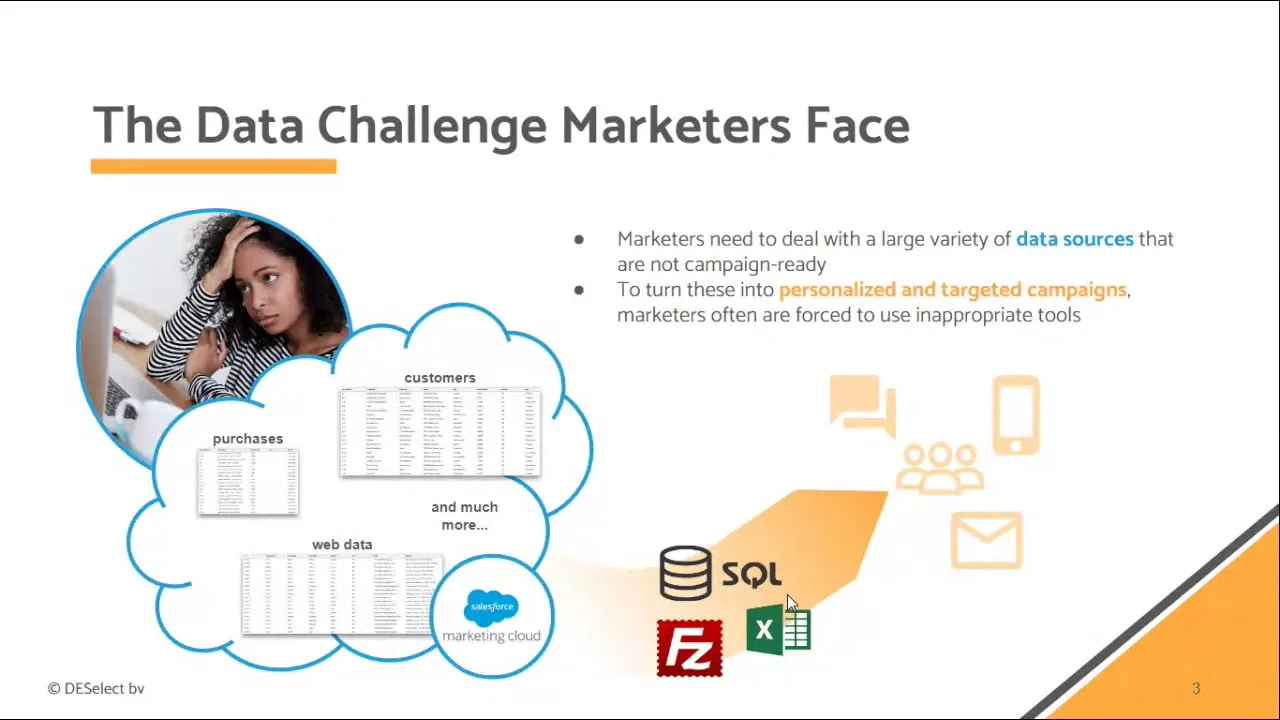
This video provides an in-depth exploration of two critical aspects of Salesforce Marketing Cloud (SFMC): simplifying data segmentation for marketers and building highly customized preference centers. The content is presented through two distinct segments from a Salesforce Marketer Group meetup. The first segment, led by Gregory from DESelect, introduces a drag-and-drop solution for audience segmentation, aiming to reduce reliance on complex SQL queries. The second segment, presented by Kayode Adeniji, a Solution Architect, delves into the creation of custom preference centers using AMPscript, highlighting the benefits of enhanced branding, personalization, and compliance over SFMC's standard offerings. The first presentation focuses on DESelect, an AppExchange solution designed to empower marketers to perform complex data segmentation within SFMC without needing technical SQL expertise. Gregory explains that data challenges in marketing cloud, such as disparate data sources, varying data types, and duplicates, often lead marketers to use cumbersome methods like Excel or require specialized SQL knowledge. DESelect aims to resolve this by providing an intuitive, integrated platform where data remains within SFMC, ensuring security and compliance. The demo showcases a three-step process: defining selection criteria (source data extensions, relationships, filters), creating a target data extension (defining fields, send relationships), and previewing results before execution. This approach significantly reduces the time spent on data management, freeing marketers to focus on campaign strategy and content. The second presentation by Kayode Adeniji addresses the limitations of SFMC's out-of-the-box preference center and demonstrates how to build a fully branded and personalized custom preference center using AMPscript and Cloud Pages. Kayode emphasizes that while the standard preference center fulfills basic compliance needs, it lacks the flexibility for advanced branding, custom fields, and dynamic content. His use case involves a preference center that dynamically displays content in English or French based on subscriber language preference, alongside profile updates. The demo illustrates the interplay between an email link, a preference data extension, a language label data extension, and multiple Cloud Pages (main preference, profile update confirmation, full unsubscribe confirmation). AMPscript is shown to be central to pre-populating fields, updating subscriber data in data extensions, and managing the "All Subscribers" list status (active/unsubscribed), ensuring both personalization and regulatory compliance. Key Takeaways: * **Simplifying SFMC Segmentation:** Traditional segmentation in Salesforce Marketing Cloud often requires technical skills like SQL, which can be a significant barrier for marketers. Solutions like DESelect offer a drag-and-drop interface, making complex segmentation accessible to non-technical users. * **Benefits of No-Code Segmentation:** DESelect's approach saves up to 50% of time spent on data management, allowing marketers to launch more campaigns and improve marketing ROI. It also minimizes errors associated with manual data handling or complex SQL queries. * **Data Security and Integration:** DESelect processes data directly within Salesforce Marketing Cloud, ensuring that sensitive information does not leave the platform, which is crucial for organizations with strict data security and regulatory compliance requirements. * **Limitations of Standard Preference Centers:** Salesforce Marketing Cloud's default preference center lacks branding flexibility, customization options for layout and font, and advanced personalization capabilities, leading to a less engaging subscriber experience. * **Advantages of Custom Preference Centers:** Building a custom preference center allows for a full branded experience, creation of custom profile fields, advanced personalization (e.g., dynamic language display), and direct synchronization of preference changes with other CRM instances like Sales Cloud. * **Core Components for Custom Preference Centers:** Essential elements include a preference center link in emails, a dedicated data extension to store subscriber preferences and profile attributes, a separate data extension for multi-language labels, and multiple Cloud Pages for the main preference form and various confirmation messages. * **AMPscript for Dynamic Functionality:** AMPscript is the proprietary scripting language used in SFMC to power custom preference centers. It handles pre-population of fields, dynamic content rendering (e.g., language-specific labels), capturing user input, updating data extensions, and managing subscriber status in the "All Subscribers" list. * **Dynamic Language Labels:** Utilizing a data extension to store labels for different languages (e.g., English, French) allows the preference center to dynamically display content in the subscriber's preferred language without hardcoding, making the code cleaner and easier to update for additional languages. * **Managing Subscriber Status and Compliance:** Custom preference centers must effectively manage subscriber opt-in/opt-out status. AMPscript can update specific preference fields in data extensions and crucially, update the "All Subscribers" list status (active/unsubscribed) to ensure compliance with regulations like CAN-SPAM. * **Automation for Segmentation:** While custom preference centers collect detailed preferences, marketers often need to create automation studio queries or segments based on these updated preferences to ensure targeted email delivery, rather than relying solely on publication lists. Tools/Resources Mentioned: * **DESelect:** A drag-and-drop segmentation solution for Salesforce Marketing Cloud. * **Salesforce Marketing Cloud (SFMC):** The primary platform discussed for email marketing, segmentation, and preference management. * **AMPscript:** Salesforce Marketing Cloud's proprietary scripting language used for dynamic content and data manipulation. * **Cloud Pages:** A module within SFMC for building micro-sites and landing pages, used to host the custom preference center. * **Content Builder:** SFMC tool for creating and managing email content, including preference center links. * **Email Studio:** SFMC module for managing email campaigns. * **Automation Studio:** SFMC tool for automating marketing tasks, including segmentation based on preferences. * **Sublime:** A text editor mentioned for reviewing AMPscript code. * **AppExchange:** Salesforce's marketplace for applications, where DESelect is available. Key Concepts: * **Data Extensions:** Tables within Salesforce Marketing Cloud used to store subscriber data, preferences, and other relevant information. * **All Subscribers List:** The master list in SFMC that contains all marketable contacts for the email channel and their subscription status (active, unsubscribed). * **Publication Lists:** Optional lists in SFMC used to manage subscriber preferences for different types of communications. * **SQL Queries:** Structured Query Language used for managing and querying data in relational databases, often used for advanced segmentation in SFMC. * **Inner Join/Outer Join/Exclusions:** SQL concepts used to combine or filter data from multiple data extensions based on specified relationships. * **Deduplication Logic:** Rules defined to handle duplicate records in data extensions, ensuring data accuracy. * **Sendable/Testable Data Extensions:** Data extensions configured to be used for sending emails or testing campaigns. * **RequestParameter Function (AMPscript):** An AMPscript function used to retrieve values passed via URL parameters or form submissions. * **Lookup Function (AMPscript):** An AMPscript function used to retrieve data from a data extension based on specified criteria. * **UpdateData Function (AMPscript):** An AMPscript function used to update records in a data extension. * **UpdateSubscriber API (AMPscript):** An AMPscript function used to update a subscriber's status and attributes in the "All Subscribers" list. Examples/Case Studies: * **Cambridge University Press:** A DESelect success story where the organization reduced the time taken for data segmentation from several days to less than five minutes, significantly improving efficiency. * **Practicing Institute:** Another DESelect client that chose to invest in DESelect rather than in costly and time-consuming SQL training for their marketing team, enabling marketers to segment data without technical knowledge. * **Custom Preference Center Demo:** A detailed walkthrough of a custom preference center built with AMPscript, demonstrating dynamic language switching (English/French), profile information updates (first name, last name, email), and preference management for different communication types (news, promotions, SFMC tips). The demo also illustrated the update of subscriber status in the "All Subscribers" list for both profile updates and full unsubscribes.

Health Authority Correspondence with CARA
Generis
/@generis4122
Sep 24, 2020
This video demonstrates a specialized workflow for efficiently managing, translating, and retrieving information related to Health Authority (HA) correspondence using the CARA Life Sciences Platform. The primary objective is to streamline the process of handling questions received from regulatory bodies across different countries and languages, ensuring that companies can quickly generate consistent, multilingual responses and establish a robust, searchable knowledge base. The demonstration begins by showcasing the import of a document containing multiple HA questions, emphasizing that the system can handle various templates and leverage character recognition technology to process the input. Upon import, the CARA platform automatically dissects the source document, extracting each individual question into a separate, structured "question object" record. This structured approach is crucial for triggering automated workflows, setting up notifications for relevant personnel, and ensuring proper tracking. The system allows for the automatic population of metadata fields essential for regulatory tracking, such as the ECTD (Electronic Common Technical Document) section, receipt date, and email subject, minimizing manual data entry. The core functionality highlighted is the multilingual capability: once a question is captured, the system automatically translates it into specified target languages (demonstrated examples include Japanese, English, Korean, and Chinese). The true value proposition lies in the answer generation and knowledge management features. When a user inputs the definitive answer into the designated field, the system instantly translates that answer into all associated target languages, ensuring consistency across global regulatory submissions and communications. Furthermore, the platform maintains a direct link to the original source document for reference and can automatically generate the final answered document. Most importantly, this structured data—the question, the answer, and associated supporting documents—is made fully searchable across all translated languages. This capability allows global teams to quickly find previously approved answers to similar HA inquiries, regardless of the language or country of origin, significantly reducing response times and mitigating regulatory risk associated with inconsistent information. Key Takeaways: • **Structured Management of Regulatory Inquiries:** The platform emphasizes the necessity of converting unstructured correspondence (like emails or documents) into structured data objects, treating each Health Authority question as a distinct record to facilitate tracking, workflow automation, and auditability. • **Automated Multilingual Translation:** A critical feature is the automatic translation of both the incoming HA questions and the definitive company answers into multiple target languages (e.g., Japanese, Korean, Chinese), ensuring global consistency in regulatory responses without requiring manual translation efforts for every communication. • **Enhanced Knowledge Retrieval:** By structuring and translating the Q&A pairs, the system creates a powerful, searchable knowledge base. This allows regulatory and medical affairs teams to search for existing answers using keywords in any supported language, drastically speeding up response times for recurring or similar regulatory questions. • **Workflow Triggering and Notification:** The import of a new HA question object can automatically trigger predefined workflows and notifications, ensuring that the appropriate subject matter experts (SMEs) are immediately alerted and assigned tasks to formulate the official response. • **Regulatory Metadata Capture:** The system supports the automatic population of key regulatory metadata, such as the relevant ECTD section and receipt dates, which is essential for maintaining compliance and preparing for future regulatory submissions and audits. • **Mitigating Inconsistency Risk:** The centralized input and automatic translation of the official answer prevent the risk of different regional affiliates providing slightly varied or inconsistent responses to the same regulatory question, a common compliance pitfall in global operations. • **Leveraging Character Recognition:** The platform can utilize character recognition technology (OCR) to extract text and structure from various document templates, improving the efficiency of importing correspondence that may not arrive in a standardized digital format. • **Direct Document Reference:** The system maintains a direct link between the structured question object and the original source document received from the Health Authority, providing immediate context and reference for users formulating the response. • **Automated Answer Document Generation:** The platform is capable of automatically generating the final, formatted answered document based on the structured data input, streamlining the final submission process. Tools/Resources Mentioned: * CARA Life Sciences Platform (by Generis) Key Concepts: * **Health Authority Correspondence:** Formal communications, typically questions or requests for clarification, received from regulatory bodies (like the FDA or EMA) regarding submitted applications, clinical trials, or marketed products. * **ECTD (Electronic Common Technical Document) Section:** A standardized structure for organizing regulatory submission documents globally, ensuring that all relevant information is categorized correctly for review by health authorities. * **Question Object:** A structured data record within the CARA platform that represents a single question received from a Health Authority, used for tracking, workflow management, and knowledge indexing.

TOPRA Symposium 2020 Online Virtual Platform Guide
TOPRA
/@topra
Sep 23, 2020
This video provides a detailed guide to the virtual platform utilized for the TOPRA Symposium 2020, an annual event hosted by The Organisation for Professionals in Regulatory Affairs. The walkthrough focuses on the user experience, navigation, and the various interactive features designed to replicate the networking and content consumption aspects of a physical conference in a digital environment. The platform is structured around a central home page with distinct icons leading to different functional areas, supported by a persistent, collapsible left-hand menu for navigation. This guide was intended to prepare delegates for the pre-event activities on September 29th and the main symposium held from October 5th to 8th. A core focus of the platform is facilitating delegate engagement and communication. The "Activity Feed" functions similarly to a social media stream, allowing delegates to create posts, engage with others' content, and initiate open conversations, fostering a sense of community throughout the event. Operational support is emphasized, with dedicated resources available for both technical and non-technical assistance. Crucially, the platform incorporates specific features essential for the life sciences industry audience, including a dedicated "Exhibitors" tab where delegates can visit virtual booths, initiate calls, download documents (such as brochures), and access external links to company websites and social media profiles. Content delivery and professional networking are managed through specialized pages. The "Program Page" is central for accessing the symposium's educational content, allowing users to view sessions by day and time, schedule specific events like the Annual Lecture, and participate in live chat discussions accompanying the video streams. For direct professional outreach, the platform includes "Delegates Page" and "Speakers and Panelists Page." These features enable attendees to network with peers and experts by arranging direct video meetings or chat sessions, highlighting the importance of targeted, one-on-one interaction within the regulatory community. Furthermore, the platform hosts research content through "Poster Presentations," where delegates can access descriptions and view the full documents in PDF format, ensuring continued access to scientific and regulatory developments presented at the symposium. Key Takeaways: • **Regulatory Audience Digital Engagement:** The platform's reliance on a social media-like "Activity Feed" for open conversation demonstrates that regulatory affairs professionals are receptive to digital communication tools for professional networking and discussion, suggesting opportunities for AI agents or chatbots to facilitate dialogue. • **High Value on Structured Networking:** The explicit functionality allowing delegates to arrange video meetings or chats directly with speakers, panelists, and other delegates underscores the audience's preference for structured, high-value, one-on-one interactions over passive content consumption. • **Importance of Digital Exhibitor Assets:** The virtual exhibitor booths require companies to have robust digital assets prepared, including downloadable brochures, active social media links, and responsive contact methods, which is critical for IntuitionLabs.ai's commercial operations planning for virtual events. • **Content Delivery Requirements:** The integration of scheduling, live chat, and video playback on the "Program Page" emphasizes the need for interactive and reliable digital delivery mechanisms for complex regulatory and technical content, a key consideration for deploying custom software solutions. • **Focus on Foundational Regulatory Research:** The dedicated section for "Poster Presentations," accessible as viewable PDF documents, confirms the audience's strong interest in detailed scientific and methodological research, which should inform the technical depth of any AI or consulting services offered. • **Operational Compliance and Support Expectations:** The provision of dedicated technical and non-technical support throughout the event signals the high operational standards and expectations for reliability within the regulatory compliance sector, reinforcing the need for GxP-compliant software solutions. • **Pre-Event Engagement Strategy:** The platform's availability during a pre-event day suggests that early engagement is encouraged for maximizing networking and content scheduling, indicating that proactive outreach to registered delegates before the main conference dates is a best practice. • **Understanding Regulatory Governance:** The inclusion of the Annual Review Meeting confirms the event's role in addressing organizational governance and member priorities within the regulatory community, providing valuable context for understanding the strategic challenges faced by potential clients. Tools/Resources Mentioned: * TOPRA Symposium 2020 Virtual Platform (Proprietary/Custom Event Software) Key Concepts: * **TOPRA Symposium:** An annual event hosted by The Organisation for Professionals in Regulatory Affairs, targeting professionals involved in regulatory compliance within the life sciences sector. * **Activity Feed:** A social media-style feature within the platform designed to facilitate open conversation, group discussions, and general networking among delegates. * **Poster Presentations:** A section dedicated to showcasing scientific or methodological research, typically viewed as PDF documents, allowing attendees to review detailed regulatory and technical findings.

3 Reasons Why I'm an Engineer at Veeva
Veeva Systems Inc
/@VeevaSystems
Sep 18, 2020
This video features Andrew Smith, an Engineering Manager at Veeva Systems, who outlines the three primary reasons why engineers should consider pursuing a career at the company. The presentation serves as a recruitment and brand positioning tool, emphasizing Veeva’s unique and critical role within the life sciences ecosystem, the inherent technical challenges of their software platform, and the supportive, results-oriented culture designed to propel employee careers. Smith establishes that while Veeva does not develop consumer applications, its rapid growth makes it one of the fastest-growing public companies globally, driven by deep industry adoption. The first major theme explored is the opportunity for significant impact. Smith stresses that Veeva’s software is fundamental to mission-critical processes across the life sciences industry. These applications span running clinical trials, managing quality and manufacturing processes, and handling regulatory information management. By optimizing these areas, Veeva directly contributes to increasing the speed and effectiveness of developing new treatments and getting them to patients. He cites specific, high-stakes examples, noting that Veeva’s platform was instrumental in supporting companies working on COVID-19 vaccination trials. This high level of industry penetration fueled substantial organizational growth, with Veeva planning to expand from 4,000 employees to over 10,000 by 2025, creating vast internal opportunities for professional influence. The second reason centers on the technical sophistication of the software platform itself. Smith acknowledges the liberal use of the term "software platform" in the industry but asserts that Veeva genuinely possesses an industry-leading system—referred to as the "default content management platform"—which was developed from the ground up. He highlights that the company employs seasoned experts in software platforms and suggests that working on such a robust, high-impact system should be a professional goal for any serious software engineer. This platform presents unique and interesting challenges related to speed, scalability, and creating high-impact, compliant applications for customers in highly regulated environments. Finally, the video details Veeva’s results-oriented culture, which is designed to foster long-term career growth and employee retention. The company is committed to finding and developing great people, supporting their professional journeys through tangible benefits. These include providing an annual professional development fund and actively supporting internal transfers, which allows employees the flexibility to carve out specialized and meaningful careers within the organization. This focus on internal mobility and continuous learning ensures that Veeva can sustain its rapid expansion while maintaining the technical excellence required by its regulated client base. Key Takeaways: • **Veeva’s Foundational Industry Role:** Veeva Systems is positioned as the essential, industry-leading software provider for the life sciences sector, driving its status as one of the fastest-growing public companies through deep enterprise adoption rather than consumer visibility. • **Direct Link to Patient Outcomes:** The software is used for mission-critical functions such as clinical trial management, quality control, and regulatory compliance, offering employees and partners a clear connection to accelerating the development and delivery of vital medical treatments, including specific mention of COVID-19 vaccine trials. • **Massive Scale and Expansion:** The company projected significant organizational growth, planning to more than double its workforce from 4,000 to over 10,000 employees by 2025, indicating a high and sustained demand for Veeva platform expertise and related consulting services. • **Proprietary Platform Complexity:** Veeva possesses a proprietary, ground-up developed system—the "default content management platform" (Veeva Vault)—which is framed as a technically challenging environment requiring specialized engineering expertise to maintain speed and compliance. • **Regulatory and Quality Integration:** The core applications of Veeva’s platform in quality manufacturing processes and regulatory information management confirm its deep integration into the highly regulated aspects of the pharmaceutical value chain, aligning perfectly with the compliance focus of IntuitionLabs.ai. • **Technical Expertise as a Career Goal:** Working on the Veeva platform is presented as a professional "bucket list" item for software engineers, suggesting that the architecture and integration demands are substantial and require advanced, specialist skills in enterprise software development. • **Commitment to Professional Development:** Veeva supports continuous learning and skill enhancement through an annual professional development fund, ensuring that its workforce remains highly skilled and capable of delivering complex, compliant solutions in a rapidly evolving industry. • **Internal Career Mobility:** The company actively supports internal transfers, allowing employees to tailor their career paths within the organization, which implies a robust internal structure supporting diverse roles beyond core engineering, such as consulting, product management, and sales operations. • **Focus on Enterprise Solutions:** The video reinforces that Veeva’s value proposition is centered entirely on high-impact, non-consumer enterprise applications, underscoring the necessity for deep industry knowledge alongside technical skill when implementing or integrating with their systems. Tools/Resources Mentioned: * Veeva Systems Software Platform * Veeva's Default Content Management Platform (Implied: Veeva Vault) Key Concepts: * **Life Sciences Industry Adoption:** The widespread and critical use of Veeva software by pharmaceutical and biotech companies for core operational tasks (clinical, quality, regulatory). * **Results-Oriented Culture:** A corporate environment focused on achieving measurable business outcomes while actively supporting employee growth and retention to sustain high performance. * **High-Impact Applications:** Enterprise software used in critical, regulated roles that directly influence the speed and effectiveness of drug development and delivery, requiring high reliability and compliance.

Bree Burks of Veeva Systems Discusses What Clinical Trials Will Look Like Post COVID-19
To Be Frank
/@therealtobefrank
Sep 9, 2020
This.ai offers its services. The conversation extensively covers the role of technology, data management, and operational efficiency in clinical researchai specializes in consulting for. This video explores the significant transformation of clinical trials post-COVID-19, highlighting the accelerated shift towards remote, decentralized, and virtual models. Bree Burks from Veeva Systems discusses the historical challenges faced by research sites, particularly their reliance on manual, paper-based processes and the lack of dedicated technology budgets. She emphasizes Veeva's approach to empowering sites and patients through purpose-built, affordable technology like SiteVault Free for eRegulatory management and MyVeeva for patient engagement. A major theme is the inefficiency of the study startup process, which accounts for a disproportionate amount of trial time due to manual workflows and disconnected systems, underscoring the critical need for standardization and unified technology platforms across the industry. Key Takeaways: * **Accelerated Decentralization:** The COVID-19 pandemic significantly accelerated the adoption of remote, decentralized, and virtual clinical trials, making patient and site-centricity paramount in trial design and technology implementation. * **Site Empowerment Through Technology:** Research sites historically lacked adequate technology and operated with limited financial reserves. Solutions like Veeva's SiteVault Free provide essential, affordable tools for sites to standardize, go paperless, and manage remote monitoring, enabling them to operate more efficiently and sustainably. * **Critical Study Startup Inefficiencies:** Study startup accounts for a staggering 61% of total trial time, primarily due to manual processes (75% prevalence), heavy reliance on error-prone spreadsheets (81%), and a lack of transparency and connected systems between sponsors, CROs, and sites. * **The Imperative for Standardization and Unified Platforms:** To overcome operational drag and reduce "one-off" approaches to studies, there is a strong need for standardization of processes and the adoption of seamlessly unified technology platforms that facilitate automated data and document exchange across all stakeholders. * **Patient-Centric Technology for Accessibility:** New technologies like MyVeeva aim to bring clinical trials directly to patients, particularly those in rural areas or with rare diseases, by enabling virtual visits and streamlined communication, thereby enhancing diversity and accessibility in trials. * **Technology Must Simplify, Not Complicate:** The ultimate goal of technology in clinical trials must be to simplify site operations and reduce administrative burden, allowing sites to remain focused on patient care and accelerate therapy development, rather than creating additional bureaucratic layers or compliance concerns.

Veeva Vault CDMS at SCDM Annual Conference
Veeva Systems Inc
/@VeevaSystems
Sep 8, 2020
The video provides a focused look at the operational efficiencies and architectural advantages of Veeva Vault Clinical Data Management Suite (CDMS), specifically highlighting its Electronic Data Capture (EDC) capabilities for clinical operations teams. The core message centers on how this platform modernizes data management workflows, enabling faster study builds and significantly improving the daily productivity of Clinical Research Associates (CRAs). The presentation contrasts the new, agile approach offered by Veeva Vault with the slower, traditional methods prevalent in legacy clinical data systems. A major theme explored is the direct impact on CRA productivity. The platform offers "quick view access" that allows CRAs to navigate immediately to the specific subject case book requiring Source Data Verification (SDV). This functionality eliminates the reliance on generating and reviewing external spreadsheets and reports to determine daily review priorities. According to user testimonials, this streamlined, intuitive user interface allows clinical professionals to "cut the time more than half" required to complete their essential job functions, freeing up valuable time for more critical tasks in clinical oversight. The video emphasizes that Veeva Vault CDMS is a "new generation EDC platform," defined by its modern, cloud-native architecture. It is characterized as being purely cloud-based, single-instance, and multi-tenant. This architectural choice is critical because it facilitates a shift away from the traditional, rigid waterfall development model typically associated with older clinical systems. By adopting this structure, the platform supports new agile development methodologies, which are essential for the rapid iteration and deployment required in modern clinical trials. Furthermore, the system’s powerful rules engine minimizes the need for custom functions, which in turn lowers validation burdens and makes necessary study changes much easier and faster to implement. A compelling case study illustrates this accelerated development capability. A partner, shortly after completing initial Veeva Vault CDMS training, was able to successfully develop a comprehensive Case Report Form (CRF) library. This library included over 30 CRFs and incorporated more than 100 edits. Impressively, this entire development and configuration process was completed in less than five business days. This speed demonstrates the platform's ability to drastically reduce the setup time for clinical trials, offering a significant competitive advantage to pharmaceutical and biotech companies focused on accelerating their clinical pipelines. Key Takeaways: * **Enhanced CRA Efficiency:** Veeva Vault EDC provides CRAs with "quick view access" directly to the subject case book requiring Source Data Verification (SDV), eliminating the need for manual tracking via spreadsheets and reports. This optimization is reported to cut the time required for daily review tasks by more than half. * **Modern Cloud Architecture:** Vault CDMS is built on a purely cloud-based, single-instance, multi-tenant architecture, positioning it as a next-generation solution that offers scalability, reliability, and ease of maintenance compared to older, on-premise systems. * **Shift to Agile Development:** The platform’s architecture facilitates a transition from the rigid, time-consuming waterfall model to agile development methodologies for clinical study builds, allowing for faster iteration and deployment of trial protocols. * **Accelerated Study Builds:** The system’s powerful rules engine minimizes the reliance on custom functions, which significantly reduces the validation burden associated with study setup and makes mid-study changes easier to manage. * **Rapid CRF Library Development:** A specific case demonstrated that a partner could build a comprehensive CRF library—including over 30 CRFs and more than 100 edits—in less than five business days following initial training, showcasing exceptional speed-to-deployment capabilities. * **Integration Opportunity for Data Engineering:** The single-instance, multi-tenant cloud environment provides a standardized and robust foundation for data integration, making it an ideal target for connecting external systems, building robust data pipelines, and implementing advanced Business Intelligence dashboards. * **Compliance Streamlining:** By reducing custom functions and standardizing workflows, the platform inherently helps streamline compliance tracking and audit trail management, crucial for meeting stringent FDA and GxP requirements in clinical operations. * **Target for AI Automation:** The structured, centralized data within Veeva Vault CDMS is highly suitable for the implementation of AI and LLM solutions, such as intelligent automation agents designed to assist clinical data managers or automate aspects of SDV prioritization. Tools/Resources Mentioned: * Veeva Vault CDMS (Clinical Data Management Suite) * Veeva Vault EDC (Electronic Data Capture) Key Concepts: * **Source Data Verification (SDV):** The process of ensuring that data recorded in the Case Report Form (CRF) matches the original source documents (e.g., patient charts, lab results). * **CRF Library:** A collection of standardized Case Report Forms used to collect data in clinical trials, optimized for reuse across multiple studies. * **Single-Instance, Multi-Tenant:** An architectural design where all customers share a single software instance and database schema, but their data remains logically separated, enabling faster updates and lower maintenance costs. * **Agile Development Methodologies:** An iterative and incremental approach to software development and project management, contrasting with the sequential, phase-based Waterfall model. Examples/Case Studies: * **Study Build Speed:** A partner successfully completed the creation of a CRF library, encompassing 30+ CRFs and 100+ edits, in less than five business days, demonstrating the platform's efficiency in accelerating the clinical trial setup phase. * **CRA Time Savings:** Clinical Research Associates reported that the new user interface and direct access features allowed them to cut the time required for their daily review and verification duties by more than half.

Generation Veeva | Meet Annalisa: At Home with Veeva
Veeva Systems Inc
@VeevaSystems
Sep 4, 2020
This video, part of the "Generation Veeva" series, offers an internal perspective on the culture and operational resilience of Veeva Systems, specifically focusing on the experience of Annalisa, an Associate Consultant in the European Consultant Development Program (CDP). The primary purpose of the video is to showcase how Veeva successfully transitioned its office-based European CDP team to a fully remote working model during the COVID-19 pandemic while maintaining strong team cohesion and professional development. Annalisa, typically based in the Barcelona office, shares her personal journey of moving back to her home country, Italy, and adapting to the new work environment. The narrative begins by establishing the initial challenge of the transition. The CDP program in Europe is traditionally office-based, fostering a dynamic, open, and welcoming environment where consultants frequently exchange ideas, opinions, experiences, and product knowledge. A key component of this culture was the weekly in-person team lunch every Tuesday. The shift to remote work initially meant giving up this physical dynamic, which Annalisa notes was a significant adjustment. However, the core theme quickly shifts to Veeva's successful adaptation strategy, emphasizing that working remotely proved to be "as great as working from the office surrounded by colleagues." Veeva's strategy for maintaining team morale and productivity centered on replicating the in-office social and collaborative structures in a virtual setting. The company ensured that professional collaboration never ceased, simply switching physical meetings to Zoom. Crucially, they also prioritized social connection, organizing virtual versions of previous in-person activities, including shared lunches, coffee breaks, cooking classes, and remote welcome drinks for new joiners. Annalisa highlights that she never felt disconnected from her team, emphasizing the ease of organizing quick calls to receive necessary support. This demonstrated the robustness of the team's existing relationships and the company's commitment to fostering a supportive environment, making the hardest part of the transition the absence of daily face-to-face interactions rather than a lack of professional support. Ultimately, Annalisa frames the remote work mandate as a "huge opportunity" provided by Veeva. This opportunity allowed consultants to adapt to new routines, better manage their work-life balance, and take on even more responsibilities. Despite the physical distance, she felt "even more part of this big orange family," particularly the CDP cohort. This insight suggests that Veeva's strong organizational culture and commitment to employee well-being were foundational elements that allowed their consulting operations—a critical component of their business model—to thrive even under unforeseen operational constraints. ### Detailed Key Takeaways * **Veeva’s Commitment to Consultant Development:** The video highlights the importance of the Consultant Development Program (CDP) as a foundational element of Veeva’s talent pipeline, indicating a structured approach to training and integrating new professionals into the Veeva ecosystem, which is crucial for partners like IntuitionLabs.ai to understand. * **Operational Resilience through Virtualization:** Veeva successfully transitioned its traditionally office-based European consulting operations (CDP) to a fully remote model, demonstrating strong operational resilience and the ability to maintain high productivity and collaboration using virtual tools like Zoom. * **Prioritizing Cultural Replication in Remote Work:** Maintaining team cohesion was achieved by intentionally replicating in-office social activities virtually. This included organizing remote lunches, coffee breaks, cooking classes, and welcome drinks, underscoring the necessity of social infrastructure for remote consulting teams. * **The Value of Pre-existing Strong Relationships:** The speaker noted that adapting to the new reality was easier because it was "so easy and natural to develop strong relationships" at Veeva, suggesting that a strong pre-existing culture of trust and support is a critical success factor for rapid remote transitions. * **Ease of Access to Support and Collaboration:** Despite working from home, consultants found it easy to organize quick calls with colleagues to get the necessary support, indicating that the internal communication channels and team structures were robust and accessible, mitigating the risk of isolation or stalled projects. * **Remote Work as an Opportunity for Growth:** The shift to remote work was viewed not just as a necessity but as an opportunity that allowed consultants to adapt to new routines, better manage work-life balance, and take on increased responsibilities, suggesting a focus on empowerment and individual accountability. * **Understanding the Veeva Ecosystem Culture:** For partners, understanding that Veeva fosters an "open and welcoming environment" where consultants constantly "exchange ideas, opinions, experiences and also product knowledge" is vital for effective collaboration and integration projects. * **The Importance of Dynamic Environments for Knowledge Transfer:** The initial challenge of losing the dynamic office environment underscores the importance of physical co-location for rapid, informal knowledge transfer, especially in technical consulting roles like those supporting Veeva CRM implementations. * **High Employee Engagement and Sense of Belonging:** The speaker’s feeling of being "even more part of this big orange family" despite working remotely speaks volumes about Veeva’s successful employee engagement strategies, which are crucial for retaining the talent that supports their core platforms. ### Tools/Resources Mentioned * **Zoom:** Used as the primary platform for virtual meetings and replicating in-person collaboration. ### Key Concepts * **Consultant Development Program (CDP):** A structured training and entry-level program designed by Veeva to onboard and develop future consultants, ensuring a steady supply of expertise for implementing and supporting Veeva products like Veeva CRM. * **Work-Life Balance:** The ability of employees to manage their professional responsibilities alongside their personal lives, which was reportedly improved by the flexibility offered through the remote work mandate. * **Orange Family:** An internal cultural term used by the speaker to describe the strong sense of community and belonging within Veeva Systems.

Continuous Improvement by Paul R Palmer Limited
Pharmaceutical consultant QP | Paul R Palmer
/@paulrpalmer
Aug 27, 2020
This video explores the critical concept of continuous improvement (CI) within the pharmaceutical industry, emphasizing its strategic value beyond daily operational tasks. The speaker, Paul Palmer, argues that focusing on CI—by making processes better, improving deliveries, and reducing complaints—can lead to significant benefits such as increased output and enhanced customer retention. He provides practical, pharmaceutical-specific examples, discussing challenges like balancing packaging regulations with patient needs (e.g., legible text for older patients) and improving product accessibility for specific patient populations (e.g., arthritis sufferers opening blister packs). The video also delves into optimizing customer service response times for treatment-critical issues and improving manufacturing efficiency by identifying bottlenecks and waste through methods like video analysis and downtime logging. Key Takeaways: * **Strategic Imperative of Continuous Improvement:** Continuous improvement is presented as a vital strategy for pharmaceutical companies to achieve substantial gains in output and customer loyalty, rather than just focusing on day-to-day product delivery. * **Pharma-Specific Operational Challenges & Solutions:** The video offers concrete examples of CI application in the pharmaceutical sector, addressing issues such as regulatory compliance conflicting with patient usability (e.g., small print on packaging) and product design for specific patient needs (e.g., ease of opening blister packs for arthritis patients). * **Optimizing Pharmaceutical Customer Service:** A strong emphasis is placed on the need for rapid and prioritized responses to customer inquiries, particularly when treatment is time-sensitive, suggesting solutions like standardized responses, frequently asked questions (FAQs), and leveraging patient information leaflets. * **Data-Driven Process Enhancement:** Practical methods for identifying areas for improvement are highlighted, including monitoring performance metrics (deviations, complaints), utilizing video analysis to pinpoint waste and stop points in manufacturing, and implementing simple log sheets for downtime. * **Balancing Compliance and Innovation:** The discussion implicitly touches on the delicate balance between adhering to strict pharmaceutical regulations (e.g., packaging size, product integrity) and innovating to improve patient experience and operational efficiency.

TMF Risk Base Quality Control
Phlexglobal - a Cencora PharmaLex company
/@Phlexglobal
Aug 24, 2020
This video provides an in-depth exploration of Trial Master File (TMF) risk-based quality control (QC), addressing the persistent challenges faced by clinical trial sponsors and Contract Research Organizations (CROs in achieving TMF health and inspection readiness. The presenter begins by highlighting the omnipresence of TMF QC discussions at conferences, underscoring the industry's struggle to efficiently implement quality control and review activities. Drawing upon ICH E6 R2 guidelines, the video defines quality control as operational techniques and activities within a quality assurance system designed to verify that trial-related activities meet quality requirements. This foundational definition emphasizes the need for QC to be embedded under a predefined, documented regime and executed according to specific quality level requirements, including a crucial verification step often misunderstood. The core of the discussion revolves around how to effectively meet these QC requirements, particularly in the context of a TMF. ICH E6 R2 advocates for QC activities to focus on aspects essential for human subject protection and trial result reliability, acknowledging that not all TMF management aspects directly impact subject safety or data integrity. This principle of proportionality is further reinforced by EMA guidelines, which explicitly recommend implementing risk-based quality checks or review processes. The video then introduces a structured, four-step risk-based approach: identification of critical processes and data, identification and assessment of risks, implementation of risk controls through tailored quality review, and robust risk communication, review, and reporting. The first step, identification of critical processes and data, involves assessing TMF content to pinpoint documents or artifacts with the potential to adversely impact subject protection and data reliability. The video notes the absence of an industry standard classification, necessitating each sponsor to make its own determination, suggesting categorization into criticality groups (e.g., high, medium, low) or assigning impact scores. The second step focuses on identifying and assessing risks, outlining three primary TMF management risks: poor document quality (not meeting GCP/internal requirements), incorrect filing (poor indexing), and missing documents. Risk assessment can involve evaluating the effort required to demonstrate compliance in case of quality issues, or, more effectively, leveraging empirical data from eTMF systems. A purpose-built eTMF can provide metadata on document availability, due dates, and study milestones, allowing organizations to identify artifacts frequently filed late or incorrectly and assign them to appropriate risk groups. The final two steps detail risk controls and communication. Step three, risk controls, advocates for implementing tailored quality review processes rather than a one-size-fits-all approach. Based on risk categorization, some artifacts may require no review, others 100% review, and many can be managed through sampling. A critical warning is issued against using spreadsheets for managing QC activities, citing their resource intensiveness, error proneness, and potential to contribute to inspection findings. Instead, the video stresses that eTMF systems should be capable of identifying artifacts due for QC, tracking issues, and ensuring resolution. Step four, risk communication, review, and reporting, highlights the eTMF's role in efficiently communicating TMF status, outcomes, and trends. It emphasizes that a TMF quality regime should be cyclical, with QC failure data feeding back into future review activities, enabling continuous improvement and allowing high-risk artifacts to potentially become low-risk over time through timely escalation and user education. Key Takeaways: * **Definition of Quality Control (QC):** According to ICH E6 R2, QC involves operational techniques and activities within a quality assurance system to verify that trial-related activities fulfill quality requirements, necessitating a predefined, documented regime and specific quality level understanding. * **Requirements for Effective QC:** Effective TMF quality control requires embedding activities within a quality assurance system under a predefined and documented regime, and executing them according to specific quality level requirements, including a verification step (quality review). * **Principle of Risk-Based QC:** QC activities should be proportionate to the risks inherent in the trial and the importance of the information collected, focusing on aspects essential for human subject protection and reliability of trial results, as mandated by ICH E6 R2 and EMA guidelines. * **Four-Step Risk-Based Approach:** A comprehensive risk-based TMF QC strategy involves (1) identification of critical processes and data, (2) identification and assessment of risks, (3) implementation of risk controls (quality review), and (4) risk communication, review, and reporting. * **Criticality Assessment:** Identifying critical TMF artifacts requires assessing their potential to adversely impact subject protection and data reliability. There is no industry standard classification, so sponsors must determine their own, often categorizing documents into high, medium, or low criticality groups or assigning impact scores. * **Primary TMF Management Risks:** The three main risks in TMF management are documents not meeting GCP/internal requirements (poor quality), incorrect filing (poor indexing), and documents missing from the TMF. * **Empirical Data for Risk Assessment:** Leveraging eTMF system metadata is crucial for identifying risks. Data on document availability compared to due dates or study milestones can reveal artifacts frequently filed late or not at all, allowing for data-driven risk grouping. * **eTMF for Quality Issue Tracking:** Purpose-built eTMF solutions with embedded quality review workflows can capture QC rejections and reasons (e.g., missing signatures, page numbers), providing empirical data to identify artifacts most frequently indexed incorrectly or containing content errors. * **Impact of Document Lifecycle and Active Use:** Documents undergoing content review and inline approval workflows in the eTMF are likely to have fewer quality issues. Similarly, documents actively referenced by study team members tend to have quality issues highlighted sooner, making unreferenced documents higher risk. * **Defining a Comprehensive QC Strategy:** An effective QC strategy considers four factors: artifact impact on patient safety/rights/data integrity, effort to demonstrate compliance where quality issues exist, likelihood of quality issues based on empirical data, and robustness of document review processes. * **Tailored Quality Review:** Risk controls involve configuring different review activities based on risk categorization. Some low-risk, non-critical artifacts may not need review, while high-risk ones might require 100% review, and others can use sampling. * **Warning Against Spreadsheets for QC:** Managing quality review activities with spreadsheets is highly discouraged due to being resource-intensive, error-prone, and confusing. A sponsor's root cause analysis revealed Excel use for tracking periodic reviews as a major contributor to critical inspection findings. * **Importance of Purpose-Built eTMF:** A dedicated eTMF built on TMF best practices is essential for efficient risk communication, review, and reporting, enabling easy surfacing, reporting, and escalation of TMF status, outcomes, and trends, which general document management systems or spreadsheets cannot do well. * **Cyclical Quality Improvement:** A TMF quality regime should be cyclical, with data on QC failures feeding back into future quality review activities. This continuous feedback loop, combined with timely escalation and user education, can lead to ongoing productivity and quality improvements. **Tools/Resources Mentioned:** * **eTMF Systems:** Purpose-built electronic Trial Master File solutions are highlighted as critical for managing metadata, workflows, tracking QC issues, and generating empirical data for risk assessment and reporting. * **Anonymized Data Warehouse of eTMF Metadata:** A select few eTMF providers can offer access to anonymized data warehouses, enabling organizations without sufficient historical data to identify quality trends across numerous sponsors. **Key Concepts:** * **Trial Master File (TMF):** A collection of essential documents that individually and collectively permit evaluation of the conduct of a clinical trial and the quality of the data produced. * **Quality Control (QC):** Operational techniques and activities undertaken within the quality assurance system to verify that the requirements for quality of the trial-related activities have been fulfilled. * **Quality Assurance (QA):** The overall system that ensures the quality of the trial. * **ICH E6 R2:** International Council for Harmonisation of Technical Requirements for Pharmaceuticals for Human Use, Guideline for Good Clinical Practice (GCP), an internationally accepted standard for clinical trials. * **EMA Guidelines:** European Medicines Agency guidelines, specifically on the content, management, and archiving of the clinical trial master file. * **Good Clinical Practice (GCP):** An international ethical and scientific quality standard for designing, conducting, recording, and reporting trials that involve the participation of human subjects. * **Risk-Based Quality Control:** An approach to QC that focuses resources and efforts on the aspects of a trial that are most critical to human subject protection and data reliability, proportionate to the risks involved. * **Critical Process/Data:** Elements within the TMF whose potential failure or inaccuracy could significantly impact subject protection, data reliability, or regulatory compliance. * **Risk Control:** The implementation of tailored quality review processes and other measures to mitigate identified risks. * **Risk Communication, Review, and Reporting:** The systematic process of sharing information about TMF risks, monitoring their status, and reporting on their management and outcomes. **Examples/Case Studies:** * **Excel for QC Tracking Pitfall:** A sponsor at a TMF Summit in Orlando (January 2019) performed a root cause analysis for critical inspection findings and discovered that a major contributing factor was the use of Excel spreadsheets for tracking their periodic reviews, highlighting the dangers of inadequate system support for QC.

Veeva: 제품 소개 영상1
Exhibition KIC VIRTUAL
/@exhibitionkicvirtual207
Aug 20, 2020
The video introduces the Veeva Vault Clinical Suite, positioning it as the industry’s first and only unified solution designed to address the increasing complexity of managing global clinical trials. The presentation begins by outlining the core challenge faced by pharmaceutical and life sciences companies: the necessity of relying on disparate, multi-system environments. Historically, companies have used separate systems for creating study documents (like protocols), collecting site content (such as CVs and financial documents), tracking study milestones, and documenting compliance with local regulatory requirements. This fragmentation, compounded by constant changes and regional variations, results in information silos, requiring endless hours of manual effort—sifting through spreadsheets, emails, and various systems—to gain a complete view of even a single study, let alone an entire program. The core innovation presented is the integration of CTMS (Clinical Trial Management System), eTMF (electronic Trial Master File), and Study Startup applications into a single process, system, and view. This unification is possible due to the Veeva Vault platform's unique technological capability to manage both structured data (like trial activities and milestones) and unstructured content (like regulatory documents and site files) simultaneously. By eliminating the traditional technology limitation where platforms could only handle one or the other, the Vault Clinical Suite establishes a unified system for all clinical operations information and documentation, thereby streamlining clinical processes and eliminating pervasive information silos. This single-system approach transforms how sponsors, investigators, and Contract Research Organizations (CROs) collaborate. They now work within one system, ensuring a single source of truth for all trial content and data, which provides a complete, global view of study operations. The benefits highlighted include real-time visibility for investigators regarding study updates, the ability to enter trial information once and leverage it across multiple sites and countries, and automated assurance that all required content is collected and current. Ultimately, the system is designed to accelerate trial execution by enabling organizations to quickly assess trial status, identify site issues, and take necessary corrective actions to meet critical study milestones, thereby facilitating faster, informed decision-making and speeding up product time-to-market. Key Takeaways: * **Addressing Clinical Trial Complexity:** The primary driver for the Veeva Vault Clinical Suite is the exponential complexity of managing global clinical trials, which traditionally requires reliance on numerous siloed systems for documentation, data collection, milestone tracking, and compliance reporting. * **Unification of Core Clinical Functions:** The solution integrates three critical applications—CTMS (Clinical Trial Management System), eTMF (electronic Trial Master File), and Study Startup—into one cohesive platform, streamlining processes that were previously managed separately across multiple systems. * **Single Source of Truth:** By consolidating data and content management, the suite establishes a unified system that serves as the single source of truth for all trial information, eliminating the need to reconcile information across disparate spreadsheets, emails, and legacy systems. * **Data and Content Management Synergy:** The Veeva Vault platform’s unique technical capability to manage both structured data (e.g., trial activities, metrics) and unstructured content (e.g., protocols, regulatory submissions, CVs) simultaneously is the foundation for eliminating information silos in clinical operations. * **Enhanced Collaboration for Stakeholders:** Sponsors, investigators, and CROs are all brought into the same system, improving communication, ensuring consistent data entry, and providing a shared, real-time view of the trial status globally. * **Accelerated Trial Execution:** The ability to quickly assess trial status and identify site issues in real-time allows organizations to take immediate corrective action, which is crucial for meeting study milestones and accelerating the overall timeline for product market entry. * **Improved Investigator Efficiency:** Investigators benefit from real-time updates on study changes and the ability to enter trial information only once, leveraging that data across different sites and countries, thereby reducing administrative burden and ensuring content compliance. * **Regulatory Compliance Streamlining:** The integration of the eTMF component ensures that all required content is collected and maintained as current, simplifying the documentation required to prove compliance with local and global regulatory requirements (a critical factor for FDA/EMA adherence). * **Informed Decision Making:** The unified view across clinical operations provides leadership with comprehensive, real-time visibility, enabling faster and more informed strategic decisions regarding trial progress and resource allocation. ### Tools/Resources Mentioned * **Veeva Vault Clinical Suite:** The integrated platform solution. * **CTMS (Clinical Trial Management System):** Component for managing trial activities and milestones. * **eTMF (electronic Trial Master File):** Component for managing essential clinical trial documentation and ensuring regulatory compliance. * **Study Startup Applications:** Component for managing the initial phase of trial execution, including site activation and document collection. ### Key Concepts * **Information Silos:** The traditional separation of clinical trial data (activities, milestones) and content (documents, compliance files) into different, non-communicating systems, leading to inefficiency and complexity. * **Unified System:** A single technology platform capable of managing all aspects of clinical operations (data, content, and workflow) simultaneously, providing a holistic view. * **Single Source of Truth (SSOT):** A concept where all stakeholders rely on one definitive, consistent, and accurate data set or document repository, crucial for regulated environments like clinical trials.

Trial Master File Explainer with Demo
Phlexglobal - a Cencora PharmaLex company
/@Phlexglobal
Aug 19, 2020
This video provides an in-depth demonstration and explainer of PhlexTMF, an electronic Trial Master File (eTMF) solution designed to manage the complexity of global clinical studies by ensuring document quality, completeness, and inspection readiness. The presentation establishes the challenge posed by traditional TMF management—a scattered collection of paper documents, hard drives, emails, and spreadsheets across sponsors, sites, and Contract Research Organizations (CROs)—and positions PhlexTMF as the centralized, technology-driven solution to these organizational hurdles. The core value proposition centers on embedding TMF best practices throughout the document lifecycle, from study startup to archiving, to maintain high quality and timeliness. The demonstration walks through the key features of the system, starting with the user experience. Upon secure login, users are directed to a dashboard featuring a range of pre-configured visual reports, providing immediate oversight of the study status. Navigation is streamlined, with all modules accessible across the top of the screen. The focus then shifts to the document management core, where the TMF is organized via a hierarchical tree view structure, allowing users to drill down into the study through defined zones, sections, artifacts, and sub-artifacts. This structured approach is crucial for regulatory compliance and efficient retrieval. A significant portion of the demonstration highlights features that enhance efficiency and compliance. The system supports robust document search capabilities, including full-text search enabled by Optical Character Recognition (OCR) applied to all suitable documents. Document viewing is presented side-by-side with its associated metadata, ensuring context and compliance are always visible. Furthermore, the system incorporates a detailed "History" tab for every document, which functions as a complete audit trail. This history tracks the document’s timeline, recording creation, specific changes, the user who made them, and status transitions—a feature essential for meeting GxP and 21 CFR Part 11 requirements. For data engineering and business intelligence needs, the system allows users to filter the TMF using specific criteria (e.g., all ICFs for a study) and perform a bulk export of both data columns and content, which can be saved for future reuse. Finally, document ingestion is simplified through a drag-and-drop interface, which, when documents are dropped onto a designated placeholder, utilizes an intelligent autocomplete feature to populate relevant metadata, minimizing manual data entry and ensuring data quality from the outset. Key Takeaways: • **Centralized TMF Management:** PhlexTMF addresses the fragmentation of clinical trial documentation (paper, emails, spreadsheets across sponsors, sites, and CROs) by providing a single, centralized platform for global study management, ensuring consistency and control. • **Inspection Readiness through Structure:** The system enforces TMF best practices by organizing documents into a standardized hierarchical structure (zones, sections, artifacts, sub-artifacts), which is vital for maintaining completeness and achieving continuous inspection readiness. • **AI-Assisted Metadata Capture:** The platform utilizes intelligent features, such as autocomplete when documents are dropped onto placeholders, to automatically populate relevant metadata, drastically reducing manual effort and minimizing errors during the document ingestion process. • **Robust Audit Trail for Compliance:** A dedicated "History" tab provides a comprehensive, document-specific audit trail, tracking every change, status transition, and user interaction from creation onward, which is essential for demonstrating adherence to regulatory requirements like GxP and 21 CFR Part 11. • **Enhanced Search and Retrieval:** The system supports full-text search across all suitable documents via robust OCR formatting, allowing users to quickly locate specific information within the TMF, complemented by filtering capabilities on every column. • **Actionable Study Oversight:** The dashboard model provides users with immediate access to pre-configured visual reports, offering high-level oversight of the study's progress, quality, and completeness status with just a few clicks. • **Efficient Data Export Capabilities:** Users can create ad-hoc data exports by applying filters (e.g., exporting all ICFs), selecting specific data columns and content, and saving these export configurations for future use, supporting downstream business intelligence and data analysis. • **Focus on Timeliness and Quality:** The system is designed to encourage timely document collection and processing while maintaining a high level of quality throughout the TMF lifecycle, from initial study startup through to closeout and archiving. Tools/Resources Mentioned: * **PhlexTMF:** The electronic Trial Master File (eTMF) platform demonstrated. * **OCR (Optical Character Recognition):** Used to enable full-text search functionality across all suitable documents uploaded to the system. Key Concepts: * **Trial Master File (TMF):** The collection of essential documents that individually and collectively permit the reconstruction and evaluation of the conduct of a clinical trial and the quality of the data produced. * **eTMF (Electronic Trial Master File):** A digital system used to manage the TMF, offering features like audit trails, version control, and remote access, crucial for modern clinical operations and regulatory compliance. * **Inspection Readiness:** The continuous state of having the TMF complete, accurate, and organized according to regulatory standards (FDA, EMA) so that it can be presented to inspectors immediately upon request. * **Artifacts/Sub-Artifacts:** Specific document types or groupings within the TMF structure, typically organized under broader zones and sections (e.g., Regulatory, Study Management, Investigator Site Files).

Generation Veeva | Meet Dianne: At Home with Veeva
Veeva Systems Inc
/@VeevaSystems
Aug 17, 2020
This video provides a practical, day-in-the-life perspective of an Associate Consultant at Veeva, offering significant insight into the operational realities of implementing regulated enterprise software within the life sciences industry. The narrative focuses heavily on the specific projects, validation activities, and compliance requirements that dominate the daily workload of a consultant specializing in the Veeva Vault ecosystem. The routine emphasizes the structured, focused nature of consulting work, balancing individual deep work on compliance documentation with collaborative team meetings and high-stakes client presentations. The core activities showcased revolve around critical GxP-related projects, demonstrating the consultant’s role in ensuring quality and regulatory readiness. The consultant details spending time on intensive process exercises for a **Vault Quality Management System (QMS) project**, explicitly stating the work is geared toward preparing the client for external audits. This task underscores the necessity of meticulous process mapping and documentation required to achieve and maintain regulatory compliance, a constant and complex challenge for pharmaceutical and biotech companies. The consultant also highlights the importance of internal alignment, noting regular meetings with the internal "quality team" to ensure project standards are consistently met. A major focus of the day is dedicated to system validation and client training. The consultant assumes the role of a **validation lead** for concurrent projects involving **Vault QualiDocs** and **Vault Training**. This leadership role culminates in preparing and delivering a detailed presentation via Zoom on **User Acceptance Testing (UAT)**. The presentation covers the practical execution of validation scripts, methods for troubleshooting "snags" encountered during testing, and the formal, compliant procedure for logging deviations. This emphasis on UAT and deviation management is crucial, as these steps are mandatory for ensuring that regulated software systems adhere to predefined specifications and comply with standards such as 21 CFR Part 11. The consultant’s function is thus not merely technical implementation but guiding the client through the rigorous, auditable compliance lifecycle. Key Takeaways: * **Regulatory Focus in Consulting:** Veeva consulting roles are intrinsically tied to GxP and regulatory compliance, with a primary focus on implementing and validating Quality Management Systems (QMS) and related documentation platforms. * **Audit Readiness as a Driver:** A core objective of QMS implementation projects is achieving readiness for rigorous external audits, necessitating extensive work on process exercises and documentation mapping to ensure compliance integrity. * **Validation Leadership is Critical:** Consultants often serve as validation leads, responsible for directing clients through the complex validation lifecycle, including the critical User Acceptance Testing (UAT) phase. * **UAT Protocol Training:** Training clients on UAT execution is a key deliverable, requiring structured demonstrations on how to walk through validation scripts and what steps to take when expected results are not achieved. * **Formal Deviation Management:** A crucial element of regulated software validation is the formal process for logging deviations. Consultants must train clients on how to accurately document and log any snags or unexpected results encountered during UAT to maintain a compliant audit trail. * **Veeva Vault Module Integration:** The consultant was simultaneously leading validation efforts across multiple integrated Veeva modules (QualiDocs and Training), highlighting the need for expertise in system integration within the Vault platform. * **Internal Quality Alignment:** Regular, mandatory meetings with the internal "quality team" are essential for ensuring that project methodologies and deliverables meet the high quality and compliance standards required for life sciences clients. * **Balancing Deep Work and Client Interaction:** The consultant's day is characterized by alternating between intensive, focused individual work (e.g., completing eight pages of process exercises) and high-stakes client-facing activities (e.g., leading validation presentations). * **Remote Presentation Best Practices:** Utilizing tools like a propped-up iPad for notes and reference during Zoom presentations is a practical strategy for remote consultants leading complex technical and regulatory discussions. * **Value of Peer Support:** The Consultant Development Program (CDP) fosters a network of peers who share similar career goals and interests, providing a vital support structure for navigating the challenges of complex, regulated consulting work. Tools/Resources Mentioned: * **Veeva Vault QMS:** The Quality Management System module used for managing quality processes, deviations, CAPA, and audit preparation. * **Veeva Vault QualiDocs:** The module used for managing regulated documentation and quality content. * **Veeva Vault Training:** The module used for managing compliance training and ensuring personnel are qualified for regulated tasks. * **Zoom:** The primary platform used for conducting client meetings and delivering presentations remotely. Key Concepts: * **Vault QMS Project:** A consulting engagement focused on implementing, configuring, and validating Veeva’s Quality Management System to centralize and automate quality processes in a compliant manner. * **Validation Lead:** The project role responsible for overseeing the entire validation process, ensuring the system meets regulatory requirements (e.g., GxP, 21 CFR Part 11) and user specifications. * **User Acceptance Testing (UAT):** The formal stage of validation where end-users test the system against predefined scripts to confirm it functions correctly and meets their business needs before final release. * **Deviation Logging:** The mandatory formal procedure for documenting any unexpected results, errors, or failures encountered during regulated activities like UAT, ensuring a traceable and auditable record of system performance issues. Examples/Case Studies: * **Audit Preparation Exercise:** The consultant dedicated time to completing approximately eight pages of detailed process exercises specifically designed to solidify the QMS implementation and prepare the client for potential external regulatory audits. * **UAT Protocol Demonstration:** The consultant led a detailed demonstration for clients on the practical steps required to execute a UAT script, including real-world advice on identifying and managing "snags" and the formal procedure for logging deviations within the system.

Generation Veeva | Meet Abigail: At Home with Veeva
Veeva Systems Inc
/@VeevaSystems
Aug 14, 2020
This video provides an operational deep dive into the daily activities of an Associate Consultant within Veeva Systems, offering valuable insights into the implementation lifecycle and remote work methodologies employed by the company’s consulting arm. The speaker, Abby Armstrong, details a productive day balancing internal development, collaborative peer work, and critical client configuration tasks, demonstrating the rapid integration model used within the Veeva Consultant Development Program (CDP). This perspective is crucial for understanding the operational cadence and technical focus areas of a primary enterprise software vendor in the life sciences space. A significant portion of the consultant’s day is dedicated to hands-on technical execution, specifically "configuration for some clients." The transcript highlights the use of collaborative remote work strategies, such as "working sessions" conducted via Zoom. In these sessions, consultants work silently alongside each other, allowing for immediate peer support and quick resolution of technical roadblocks without the distraction of constant verbal communication. This methodology suggests a highly efficient and structured approach to remote consulting, emphasizing parallel work streams and immediate technical feedback to maintain momentum during complex system builds. The consultant’s focus culminates in supporting a client who is on the cusp of a major system deployment. The project involves finalizing configuration steps for Veeva Engaged Meetings, a key component of the Veeva Commercial Cloud used for facilitating remote interactions with healthcare professionals (HCPs). The consultant spends the end of the workday ensuring all final details are in place, confirming that even associate-level consultants are entrusted with critical, late-stage implementation and quality assurance responsibilities. The final step mentioned—preparing the go-live email based on client feedback—emphasizes the importance of structured deployment protocols and clear client communication in ensuring a successful transition to operational use of the Veeva platform. This detailed look at the implementation process for Veeva Engaged Meetings underscores the ongoing market demand for digital commercial engagement solutions in the pharmaceutical industry. The consultant’s workflow—moving from internal workshops and action planning to detailed configuration and final go-live preparation—provides a clear template for the structured, client-centric approach Veeva takes to system deployment, which is essential intelligence for any firm providing complementary or competitive Veeva consulting services. Key Takeaways: * **Veeva Implementation Focus Area:** The video confirms high implementation activity around Veeva Engaged Meetings, indicating a strong market demand in the life sciences sector for tools that facilitate compliant, remote digital interaction between pharmaceutical sales/medical teams and healthcare professionals. * **Consultant Development Program (CDP) Structure:** The CDP integrates internal development (workshops) directly with active client configuration work, suggesting a model designed for rapid skill acquisition and immediate contribution to billable client projects. * **Remote Collaboration Best Practice:** Veeva consultants utilize "silent working sessions" via Zoom. This technique is highly effective for technical tasks like configuration, promoting focused individual work while retaining the ability for immediate, low-friction peer consultation and problem-solving. * **Structured Project Management:** The consultant prioritizes reviewing a detailed "action plan" early in the morning, highlighting the necessity of rigorous time management and task prioritization to successfully manage simultaneous internal development activities and multiple client configuration streams. * **Late-Stage Configuration Responsibility:** Associate Consultants are directly involved in the final configuration steps leading up to a system go-live. This suggests that configuration is often iterative and requires hands-on technical involvement right up until the point of deployment, necessitating deep platform expertise at all consultant levels. * **Go-Live Protocol and Feedback Loop:** The final step of the implementation process involves preparing the go-live communication contingent upon receiving and incorporating client feedback. This emphasizes a structured deployment protocol that prioritizes client sign-off and clear communication for successful system adoption. * **Importance of Data Configuration:** The heavy focus on configuration work throughout the day confirms that the technical setup and customization of Veeva environments remain a core, time-intensive activity in the implementation lifecycle, requiring meticulous attention to detail. * **Operational Intelligence on Veeva Workflow:** Understanding the daily tasks—from internal training to client configuration and go-live preparation—provides critical operational intelligence on the typical workload, structure, and project phases managed by Veeva’s internal consulting teams. Tools/Resources Mentioned: * Veeva Engaged Meetings (A component of Veeva Commercial Cloud) * Zoom (Used for daily workouts and collaborative working sessions) Key Concepts: * **Configuration:** The process of setting up, customizing, and tailoring the Veeva software platform (e.g., fields, workflows, security settings) to meet specific client business requirements, distinct from custom code development. * **Go-Live:** The critical project milestone when a new system or system update (like Engaged Meetings) is officially deployed and made available for end-users (e.g., pharmaceutical sales representatives) in a production environment. * **Consultant Development Program (CDP):** An internal training and mentorship program designed by Veeva Systems to rapidly onboard and develop new consultants into specialized platform experts.