veeva systems
24 videos

Partnerships in Clinical Trials | Episode 8
SCDM - Society for Clinical Data Management
/@SCDMchannel
Oct 29, 2025
This video, an episode of the SCDM Podcast series "Partnership in Clinical Trials," features MaryAnne Rizk, Managing Director, Head of Healthcare & Lifescience Clinical Strategy at Amazon Web Services. The discussion centers on how collaboration and innovation, particularly through AI and big data, are fundamentally reshaping the future of clinical research. Rizk emphasizes that the current era, marked by rapid technological advancements, evolving policies, and a unified commitment from global pharma, biotechs, technology companies, and regulatory bodies, presents an unprecedented opportunity for clinical data managers to embrace change and drive smarter, faster, and more connected clinical trials. The conversation delves into the historical transformations in clinical trials, from Electronic Data Capture (EDC) to Risk-Based Quality Management (RBQM) and Decentralized Clinical Trials (DCTs), highlighting AI as the latest and most profound shift. Rizk predicts that 2025 will be the "year of agentic AI," where AI moves beyond conversational interfaces to become an integral part of business logic, driving go/no-go decisions in areas like protocol design, site startup, patient recruitment, and data management to accelerate regulatory submissions. This agentic layer, by automating activities and ensuring precision, accuracy, and speed, is seen as truly transformational for the industry. A significant portion of the discussion focuses on the critical role of data. The speakers underscore the immense potential of maximizing data through standardization and unification, moving towards a "fully digitalized ecosystem" where standards link seamlessly to data and protocols. AWS's vision for this transformation includes a strong emphasis on responsible AI, ensuring ethical considerations and unbiased data, alongside the foundational step of cloud migration. Rizk outlines a layered approach to AI implementation, comprising an infrastructure layer for unified data and standards, an orchestration layer for consistent operational models and workflow determination, and a control layer for automating agents based on established workflows and insights. This framework is crucial for organizing and simplifying the explosion of data from decentralized trials, wearables, and biomarkers, enabling effective automation and human-in-the-loop decision-making. The podcast also highlights the importance of partnerships across the entire ecosystem—patients, sites, sponsors, and regulatory authorities—to move from raw data to actionable decisions with precision, accuracy, and speed. Rizk envisions AI not as a replacement for humans but as a tool to create "superhumans," capable of making smarter decisions, shortening clinical trial cycles, and improving the body of evidence to recruit the right patient for the right trial at the right time. She advocates for a "three E's" approach to navigating change: Educate, Engage, and Evangelize, stressing the need for continuous learning, active participation in pilot programs, and sharing best practices to collectively advance the industry. Key Takeaways: * **AI as a Catalyst for Clinical Trial Transformation:** The current era is defined by technological advancements, policy changes, and cross-industry commitment, making it the most exciting time for AI to revolutionize clinical research and drug development. * **The Rise of Agentic AI:** 2025 is anticipated as the "year of agentic AI," where AI agents will integrate into business logic to automate and optimize critical workflows such as protocol design, site startup, patient recruitment, and data management, accelerating regulatory submissions. * **Evolving Role of Data Professionals:** The traditional role of a data manager is transforming into that of a data scientist or data orchestrator, requiring new skills to leverage advanced analytics and AI. * **Importance of Data Standardization and Unification:** Unifying data in a common, standardized way (e.g., through initiatives like 360i and CDISC) is crucial for creating a fully digitalized ecosystem that can be effectively maximized by AI solutions. * **Responsible AI and Cloud Foundation:** AWS emphasizes responsible AI practices, including ethical considerations and ensuring unbiased data, as well as the foundational step of migrating data and operations to the cloud for modernization and operational excellence. * **Layered Approach to AI Implementation:** A structured approach involves an infrastructure layer for unified data and standards, an orchestration layer for consistent operational models and workflow determination, and a control layer for automating agents based on insights. * **Addressing Data Volume and Variety:** The explosion of data from decentralized trials, wearables, digital biomarkers, and other sources necessitates robust strategies for organizing, simplifying, and standardizing data to enable automation and human-in-the-loop processes. * **Patient and Site-Centricity:** Technology should unify all personas, creating intuitive, integrated, and intelligent user interfaces that empower sites and ensure trials are patient-centered, moving efficiently from data collection to impactful decisions. * **AI Augmentation for "Superhumans":** AI is not expected to replace people but rather to create "superhumans" by augmenting human capabilities, leading to smarter decisions, shorter clinical trial cycles, and improved patient recruitment. * **Strategy for Navigating Change ("Three E's"):** Individuals and organizations should "Educate" themselves on new policies and technologies, "Engage" in practical applications and proofs of concept, and "Evangelize" learned best practices and findings to foster broader adoption. * **Effective Change Management:** Successful transformation requires a combination of "rules and tools," meaning new technologies must be accompanied by clear playbooks and an ecosystem of early adopters to test, demonstrate ROI, and mitigate risks. * **Value of Cross-Stakeholder Partnerships:** Collaboration among technology providers, sponsors, regulatory authorities, sites, and patients is essential for harmonizing systems and thinking, ensuring that modernization efforts align with quality by design principles and regulatory expectations. Tools/Resources Mentioned: * **AWS (Amazon Web Services):** Mentioned as a platform providing AI solutions and cloud infrastructure for life sciences. * **CDISC (Clinical Data Interchange Standards Consortium):** Implied through the discussion of data standards and unification. * **360i (Chris Decker's work):** Referenced for its focus on radically transforming how standards are conducted and unifying data models. Key Concepts: * **Agentic AI:** AI systems that can understand, reason, plan, and execute tasks autonomously, often by breaking down complex goals into smaller steps and interacting with tools and environments. Predicted to be a major force in 2025. * **Generative AI (GenAI):** AI models capable of generating new content, such as text, images, or code, often in a conversational manner, making AI more accessible. * **EDC (Electronic Data Capture):** A system used in clinical trials to collect data from sites electronically, replacing paper-based methods. * **RBQM (Risk-Based Quality Management):** A proactive approach to clinical trial oversight that focuses on identifying, assessing, monitoring, and mitigating risks to data quality and patient safety. * **DCT (Decentralized Clinical Trials):** Clinical trials conducted with remote elements, often leveraging technology like wearables, telemedicine, and digital health tools to reduce the need for in-person site visits. * **Data Orchestrator:** An evolved role for data managers, focusing on managing and coordinating data flows, standards, and integration across complex systems to ensure data readiness for advanced analytics and AI. * **Human-in-the-loop:** An AI approach where human intelligence is integrated into the machine learning process, allowing for human oversight, intervention, and decision-making at critical junctures. * **Quality by Design (QbD):** A systematic approach to development that begins with predefined objectives and emphasizes understanding of product and process, and process control, based on sound science and quality risk management. * **Superhumans:** A concept suggesting that AI will augment human capabilities, making individuals more efficient and effective rather than replacing them.
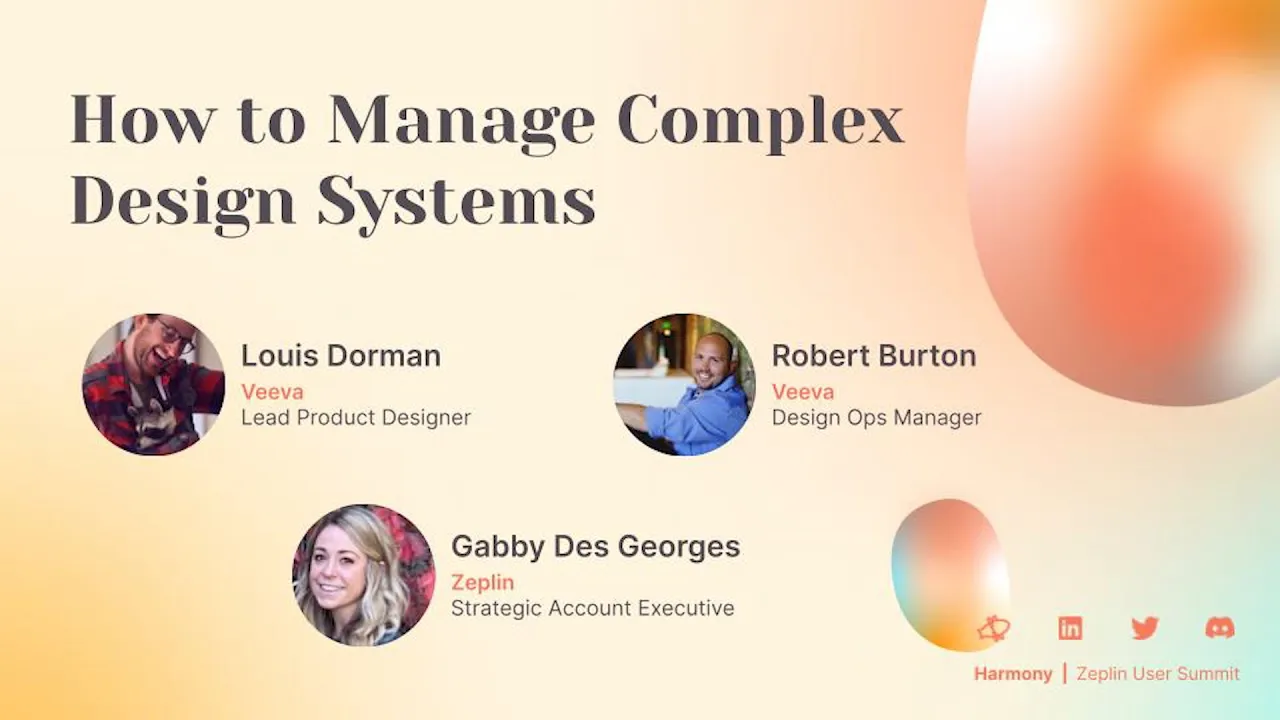
How to Manage Complex Design Systems
Zeplin
/@ZeplinIo
Mar 7, 2023
This video provides an in-depth exploration of how Veeva, a major player in the life sciences technology space, successfully overhauled and scaled its complex design system. Louis Dorman, Lead Product Designer, and Robert Burton, Design Operations Manager at Veeva, share practical tips and lessons learned from their journey to achieve widespread adoption and efficiency in a collaborative design environment. The discussion highlights the evolution from a UX-department-owned system with scattered efforts to a formalized, transparent, and highly integrated design system that supports 1200 customers across 165 countries, including 47 out of the top 50 pharmaceutical companies. The presentation details the critical steps Veeva took to transform its design system. Initially, the company faced challenges such as duplication of effort, lack of transparency, and inconsistent adoption across product squads. The turning point involved embracing atomic design principles, which helped standardize the language used across design, build, and QA phases. This standardization was further supported by tools like Zeplin for documenting component definitions and fostering cross-team collaboration. A key innovation was the introduction of "design system previews," which opened communication channels between UX and engineering, streamlining the build process by providing early visibility into design decisions. Further enhancements included formalizing the handoff process by clearly defining roles and responsibilities and documenting communications within Zeplin to ensure accountability and facilitate revisiting decisions. Veeva also tackled the complex issue of regressions and explicit changes by involving QA resources early in "dev discoveries" to identify all impacted areas of a component before changes were implemented. This proactive approach significantly reduced downstream work and prevented breaking existing functionalities. The speakers also emphasized standardizing the design workflow, choosing the right tools (e.g., migrating from Sketch to Figma), and establishing comprehensive guidelines and templates, including a detailed checklist for designers to ensure consistency and completeness. The success of these efforts culminated in 100% adoption of the design system for Android development and the integration of over 450 iOS components across hundreds of thousands of locations, alongside large-scale audits to replace legacy assets like PNG icons with vector SVGs and inconsistent hex colors with a defined palette of semantic colors. Key Takeaways: * **Dedicated Design Operations (DesignOps) Role is Crucial:** Hiring a dedicated DesignOps manager significantly improves design system management, prioritization, and execution by acting as a bridge between UX, engineering, QA, product squads, and leadership. This role brings structure and accountability that a purely UX-owned system often lacks. * **Embrace Atomic Design Principles Across the Entire Workflow:** Adopting atomic design not just for UX but for the entire design-to-build-to-QA process helps standardize language, define component scope (atoms, molecules), and improve collaboration and communication across all teams. * **Implement Design System Previews for Enhanced Transparency:** Regular previews of design system updates or new components for engineering and QA teams foster early engagement, provide a "bigger picture" understanding, and streamline the build process by aligning expectations upstream. * **Formalize the Handoff Process with Clear Roles and Documentation:** Establishing clear roles, responsibilities, and a documented handoff process (e.g., using Zeplin to record communications and component definitions) minimizes miscommunication, allows for revisiting decisions, and ensures consistent implementation. * **Involve QA Early in "Dev Discoveries" for Regression Management:** Proactively engaging QA and dev teams in "dev discoveries" for legacy or complex components helps identify all potential impacted areas before design changes are made, preventing regressions and significant rework later in the development cycle. * **Standardize Design Workflow and Tooling:** Defining a clear design workflow and choosing intuitive tools (e.g., migrating from Sketch to Figma with organized files) is essential for efficiency, consistency, and future scalability. Proper naming conventions and folder structures are vital for smooth transitions between tools. * **Establish Comprehensive Guidelines and Templates:** Creating and continuously updating guidelines, templates, and checklists for designers (e.g., for interactive layers, light/dark mode properties) ensures consistency, serves as a reminder for best practices, and empowers designers to contribute effectively. * **Achieve High Adoption Rates for Significant Impact:** Veeva's success in achieving 100% design system adoption for Android and integrating hundreds of iOS components demonstrates the profound impact of a well-managed system on consistency, efficiency, and scalability across multiple applications and organizations. * **Conduct Large-Scale Audits for Technical Debt Reduction:** Proactive audits, such as replacing hundreds of PNG icons with vector SVGs and standardizing hex colors into a semantic palette, significantly reduce technical debt, improve performance, and provide engineers with clear, consistent resources. * **Build Trust Through Transparency in the Design Workflow:** Communicating the status of design work (e.g., "waiting on peer review") to product managers and other stakeholders builds trust in the design process and provides clarity on project progression. * **Document Everything:** Maintaining a Design System Manager (DSM) or CMS for components, along with documenting decisions and properties within design tools like Zeplin, ensures that all definitions, guidelines, and historical context are easily accessible to all teams. * **Prioritize Peer Review:** Implementing a peer review process for design system components ensures quality, consistency, and adherence to established guidelines before components are finalized and adopted. Tools/Resources Mentioned: * **Zeplin:** Used for documenting component definitions, fostering collaboration, and recording handoff communications. * **Sketch:** Previous primary design tool for Veeva's design system. * **Figma:** Current primary design tool, Veeva migrated from Sketch to Figma. * **DSM (Design System Manager):** Described as a CMS (Content Management System) for defining and documenting components. Key Concepts: * **Design System:** A comprehensive set of standards, components, and guidelines used to manage design at scale, ensuring consistency and efficiency across products. * **DesignOps (Design Operations):** The practice of optimizing and streamlining design processes, workflows, and tools to enable design teams to work more effectively and deliver higher quality outcomes. * **Atomic Design:** A methodology for creating design systems by breaking interfaces down into their fundamental building blocks (atoms) and progressively combining them into molecules, organisms, templates, and pages. * **Regressions (Explicit Changes):** Unintended negative impacts or broken functionalities that occur in existing software when new changes or updates are introduced, particularly within a design system. * **Dev Discovery:** A collaborative process involving design, development, and QA teams to thoroughly investigate existing components or features, outline their states, labels, and definitions, to inform new design system component builds and prevent issues. * **Handoff Process:** The formal transfer of design specifications, assets, and documentation from the design team to the development team for implementation. * **Semantic Colors:** A system of naming colors based on their purpose or meaning within the UI (e.g., "primary-button-background," "error-text") rather than their literal hue (e.g., "blue-500"), improving consistency and maintainability. * **Vector SVG Icons:** Scalable Vector Graphics (SVG) are XML-based vector image formats for two-dimensional graphics, offering scalability without loss of quality, preferred over raster images like PNGs for icons in design systems. Examples/Case Studies: * **Veeva's Design System Overhaul:** The core case study of the video, detailing the company's journey from a fragmented design approach to a highly integrated and adopted design system. * **100% Android Adoption:** Veeva achieved complete adoption of its design system for all new Android development, demonstrating the effectiveness of their processes. * **450+ iOS Components Integration:** Over 450 iOS components were integrated across hundreds of thousands of different locations within Veeva's applications. * **PNG to SVG Icon Audit:** A large-scale audit replaced hundreds of legacy PNG icons with modern, scalable vector SVG icons. * **Hex to Semantic Color Audit:** Hundreds of inconsistent hex colors were replaced with a defined palette of about 60 primary, secondary, and alert semantic colors, improving consistency and maintainability.

The $30 Billion SaaS Company You’ve Never Heard of
Bret Larsen
/@brtlrsn
Sep 17, 2025
This video explores the strategic journey of Veeva, a $30 billion SaaS company that achieved immense success by adopting a highly specialized approach within the pharmaceutical industry. The speaker details how Veeva's founder, Peter Gasner, identified a critical unmet need in pharma for industry-specific software, particularly for CRM, compliance, and regulated workflows, at a time when major companies were still relying on spreadsheets. Veeva's "monk strategy" involved ignoring venture capital trends, focusing exclusively on one vertical, and building a product that deeply understood the nuances and high stakes of the life sciences sector. Initially built on Salesforce's platform, Veeva strategically evolved to develop its own comprehensive "Vault" platform, expanding beyond CRM to encompass document management, clinical trials, regulatory approvals, and manufacturing quality, thereby becoming an indispensable infrastructure for modern medicine. The video emphasizes Veeva's disciplined, profitable business model and its ability to build an unassailable moat by embedding itself across the entire pharmaceutical lifecycle. Key Takeaways: * **Power of Vertical Specialization:** Veeva's success demonstrates the profound impact of extreme focus on a single, complex, and highly regulated industry (pharmaceuticals), addressing its unique challenges rather than pursuing broad market appeal. * **Industry-Specific Solutions:** The initial product, a custom-built CRM for life sciences sales reps, included critical features like sample tracking, compliance checks, and regulated workflows that generic CRMs could not provide, directly meeting the industry's specific needs. * **Strategic Platform Evolution:** Veeva leveraged Salesforce's platform for initial speed and credibility but strategically developed its own "Vault" platform to gain greater control, flexibility, and margin, ultimately achieving independence and owning its technology stack. * **Holistic Industry Infrastructure:** Beyond CRM, Veeva expanded its offerings into document management, clinical trial systems, regulatory approvals, and manufacturing quality, embedding itself as a mission-critical operating system across the entire pharmaceutical product lifecycle. * **Disciplined Business Model:** Veeva achieved significant growth and profitability with minimal venture capital, prioritizing lean operations and a disciplined approach over rapid, cash-burning expansion, proving that sustainable growth can be achieved without aggressive fundraising. * **Addressing Regulatory Complexity:** A core element of Veeva's value proposition was its ability to build software that inherently understood and streamlined the stringent compliance, regulatory, and GxP requirements of the pharmaceutical industry.

The Big 3: ANET, HSY, VEEV
Schwab Network
/@SchwabNetwork
Jul 24, 2025
This video from Schwab Network provides a market overview and detailed stock analysis for Arista Networks (ANET), Hershey's (HSY), and Veeva Systems (VEEV), including technical chart breakdowns and options trading strategies. The discussion on Veeva Systems highlights its recent strong performance and evolving market perception, particularly concerning its position within the AI landscape. Key Takeaways: * **Veeva's Emerging AI Perception:** The market is shifting its view of Veeva Systems, moving from previously considering it an "AI laggard" to now being "pulled up with the rest of these companies" in the AI space. This suggests growing recognition of Veeva's potential or role in artificial intelligence, which is highly pertinent for IntuitionLabs.ai's AI solutions and Veeva CRM consulting. * **Robust Market Performance:** Veeva Systems is identified as an "Outperformer year to date," demonstrating significant upside momentum driven by a "big gap up on a fundamental change" (earnings) and achieving new intraday highs. This positive market sentiment can influence client investment and confidence in Veeva-related technologies and services. * **Reinforcement of Cloud-Based Identity:** The analysis reiterates Veeva's core identity as a "cloud based software solutions company," which aligns with IntuitionLabs.ai's expertise in enterprise software and digital transformation within the pharmaceutical and life sciences industries. * **Technical Market Pulse on Veeva:** The detailed technical analysis, including specific breakout points (e.g., 241), current high resistance (around 291), and support levels (e.g., 281), offers insights into investor sentiment and market dynamics surrounding Veeva. While primarily for traders, this information provides a financial pulse on a key platform within IntuitionLabs.ai's ecosystem.

Sponsors: Sites are Shared Resources - Play Nice.
Note to File: A Clinical Research Podcast
/@notetofilepodcast
Apr 28, 2025
This video addresses a critical operational challenge within clinical research, highlighting the unsustainable burden placed on research sites due to the proliferation of disparate systems. Bree Burks, Vice President of Site Solutions Strategy at Veeva, articulates a foundational problem: clinical trial sites are overwhelmed by managing numerous, often inconsistent, digital platforms required by different sponsors for various studies. This fragmentation leads to significant inefficiencies, operational complexities, and a fragmented user experience for site staff. The core argument presented is that sponsors must shift their perspective to view research sites as a "shared resource" across the industry, rather than proprietary assets for individual trials. The central theme revolves around the urgent need for industry-wide collaboration among sponsors. Instead of each sponsor developing and implementing their own unique systems and processes, the speaker advocates for a collective effort to provide sites with a more consistent and streamlined experience across all studies. The current approach, where each sponsor attempts to solve operational challenges in isolation for their own benefit, is identified as a major contributor to the existing disconnect and inefficiency. This siloed mentality ultimately hinders the overall progress and effectiveness of clinical research. The proposed solution emphasizes a paradigm shift: sponsors must recognize their interdependence on a healthy and efficient site ecosystem. By working together, they can standardize processes, integrate technologies, and reduce the administrative overhead for sites. This collaborative approach is presented as the only viable path to resolve the systemic issues currently plaguing clinical trial operations. The implication is that a unified strategy would not only alleviate the burden on sites but also accelerate trial timelines, improve data quality, and enhance the overall efficiency of drug development, ultimately benefiting the entire life sciences ecosystem. Key Takeaways: * **Critical Site System Overload:** Clinical research sites are currently struggling under the weight of managing an excessive number of disparate digital systems, leading to operational inefficiencies and staff burnout. This includes various Electronic Data Capture (EDC), Clinical Trial Management Systems (CTMS), eTMF, and other study-specific platforms. * **Sites as Shared Resources:** A fundamental shift in perspective is required, where clinical trial sponsors recognize that research sites are not exclusive assets for individual studies but rather a shared, vital resource for the entire industry. This concept underscores the need for collective stewardship. * **Imperative for Sponsor Collaboration:** The current fragmented approach, where each sponsor optimizes for their own benefit, is unsustainable. Industry-wide collaboration among sponsors is essential to create a more harmonious and efficient operational environment for sites. * **Need for Consistent Operational Experience:** Sites urgently require a more standardized and consistent operational experience across different clinical trials and sponsors. This consistency would reduce training burdens, minimize errors, and improve overall site productivity. * **Addressing Industry Disconnects:** The lack of consistency and collaboration is identified as the root cause of significant disconnects within the clinical research ecosystem, impacting everything from study startup to data submission. * **Critique of Siloed Solutions:** The speaker implicitly critiques the prevailing tendency for individual sponsors to develop proprietary solutions that, while beneficial to them, contribute to the overall fragmentation and burden on sites. * **Impact on Clinical Trial Efficiency:** The operational challenges at sites directly translate into delays, increased costs, and reduced efficiency in clinical trial execution, ultimately slowing down the pace of medical innovation. * **Role of Integrated Technology:** The discussion highlights an implicit need for integrated technology solutions and platforms that can bridge the gaps between various sponsor systems and provide a unified interface for sites, thereby streamlining workflows. * **Strategic Importance of Veeva's Perspective:** Coming from a Vice President of Site Solutions Strategy at Veeva, a leading provider of cloud-based software for the life sciences industry, this perspective underscores the critical role technology platforms play in enabling or hindering site efficiency. * **Opportunity for Industry-Wide Optimization:** The identified challenge presents a significant opportunity for the life sciences industry to collectively invest in solutions that foster interoperability, standardization, and a more site-centric approach to clinical trial management. Key Concepts: * **Sites as Shared Resources:** This concept emphasizes that clinical research sites are a finite and critical asset that serves multiple sponsors and studies. Their health and efficiency are vital for the entire industry, necessitating a collaborative approach to their management and support. * **Operational Consistency:** Refers to the standardization of processes, systems, and data flows across different clinical trials and sponsors, aiming to reduce complexity and improve efficiency for research sites. * **Sponsor Collaboration:** The act of pharmaceutical and biotech companies working together to address common industry challenges, particularly those impacting shared resources like clinical trial sites, rather than pursuing individual, often conflicting, solutions. Tools/Resources Mentioned: * **Veeva:** While not explicitly mentioned as a tool in the short transcript, the speaker's role as Vice President of Site Solutions Strategy at Veeva strongly implies that Veeva's suite of products (e.g., Veeva SiteVault, Veeva Clinical Operations Suite) are central to addressing these challenges by providing integrated solutions for clinical trial management.

What Is IRT Interactive Response Technology In Clinical Research
Dan Sfera
/@dansfera
Jan 30, 2023
This video provides an in-depth exploration of Interactive Response Technology (IRT) in clinical research. The speaker, Dan Sfera, begins by defining IRT as a crucial tool that helps clinical trial sponsors and sites manage patient and drug supply logistics throughout a clinical trial, emphasizing its ability to offer control, flexibility, and increased efficiency. He traces the evolution of IRT from its predecessors, the Interactive Voice Response System (IVRS) and Interactive Web Response System (IWRS), highlighting that while terminology may vary, the core function remains consistent: officially tracking subjects' progress and managing investigational product. The presentation delves into the multifaceted functionalities of modern IRT systems. Initially, IRT primarily served to officially record patient screening, randomization, early termination, and study visit assignments. However, the technology has significantly advanced, now integrating drug supply management, including automated resupply based on site needs and even adjusting investigational product dosages according to patient-specific parameters like weight. A notable recent development is the integration of IRT with Electronic Patient Reported Outcomes (ePROs) or e-diaries, allowing for seamless management of patient data collection directly through the IRT system. The speaker also highlights the beneficial integration with Electronic Data Capture (EDC) systems, where basic subject data entered into IRT can automatically populate EDC, significantly reducing manual data entry and mundane tasks for study coordinators. The speaker's perspective strongly advocates for IRT evolving into a central hub for all clinical trial operations. While acknowledging current limitations, such as separate portals for lab supplies, ECG, imaging, and Institutional Review Board (IRB) submissions, he expresses a desire for a future where IRT consolidates these disparate systems into a single sign-on portal. This vision underscores the potential for IRT to further streamline workflows, minimize administrative burden on site staff, and enhance overall operational efficiency in clinical trials. The video effectively breaks down complex technical concepts into practical, relatable explanations, making it accessible for those involved in clinical research. Key Takeaways: * **IRT as a Core Clinical Trial Management Tool:** Interactive Response Technology (IRT) is fundamental for managing patient and drug supply logistics in clinical trials, providing essential control, flexibility, and efficiency for both sponsors and sites. * **Evolution of Response Systems:** IRT has evolved from earlier systems like Interactive Voice Response Systems (IVRS) and Interactive Web Response Systems (IWRS), with modern IRT systems encompassing broader functionalities while maintaining the core purpose of official subject and drug tracking. * **Comprehensive Patient Lifecycle Management:** IRT systems are critical for officially documenting key patient milestones, including screening, randomization, early termination, screen failures, and assignment to regular study visits, ensuring accurate and auditable records. * **Advanced Drug Supply Logistics:** Modern IRT goes beyond basic tracking to include sophisticated drug supply management, such as automated resupply to sites based on real-time need and even the ability to adjust investigational product dosages based on patient-specific data like weight. * **Integration with ePROs/e-Diaries:** IRT systems now commonly integrate with electronic patient reported outcomes (ePROs) or e-diaries, allowing for streamlined management of digital patient diaries and data collection, often via text or email links to mobile browsers. * **Synergy with Electronic Data Capture (EDC):** A significant advancement is the integration of IRT with EDC systems, enabling automatic transfer of basic subject data (e.g., subject number, demographics) from IRT to EDC, thereby reducing duplicate data entry and administrative burden on study coordinators. * **Vision for a Unified Clinical Operations Hub:** The speaker envisions IRT as becoming a single, comprehensive portal for all clinical trial-related tasks, consolidating various vendor-specific portals (e.g., labs, ECG, imaging, IRB) to further streamline workflows and improve efficiency. * **Efficiency Gains for Site Staff:** A primary benefit of advanced IRT functionalities and integrations is the reduction of "mundane tasks" for study coordinators, allowing them to focus on more critical aspects of patient care and study management. * **Challenges of Fragmented Systems:** Despite IRT's advancements, the clinical research landscape still suffers from fragmented portals for various vendors (e.g., lab supplies, medical assessments like ECG or imaging, IRB submissions), presenting an ongoing challenge for seamless integration. * **Importance of Data Accuracy and Regulatory Compliance:** While not explicitly stated as a regulatory focus, the core functions of IRT—accurate tracking of patient status, randomization, and drug supply—are inherently critical for maintaining regulatory compliance in clinical trials. Tools/Resources Mentioned: * IRT (Interactive Response Technology) * EDC (Electronic Data Capture) * IVRS (Interactive Voice Response System) * IWRS (Interactive Web Response System) * ePRO (Electronic Patient Reported Outcomes) / e-diaries * Veeva Site Vault (mentioned in video description, not transcript) Key Concepts: * **Interactive Response Technology (IRT):** A specialized software system used in clinical research to manage patient randomization, drug supply logistics, and other critical operational aspects of a clinical trial. * **Randomization and Trial Supply Management (RTSM):** An alternative term often used to describe the core functions of IRT, emphasizing its role in assigning subjects to study arms and managing the investigational product. * **Electronic Data Capture (EDC):** A system used to collect and manage clinical trial data electronically, often integrated with IRT for streamlined data flow. * **Electronic Patient Reported Outcomes (ePROs):** Digital tools or applications used by patients to report their health status, symptoms, or experiences directly, often integrated with IRT for management and data collection.

3 Top Stocks for Growth Investors to Buy Now
Morningstar, Inc.
/@morningstar
Nov 12, 2024
This video provides an in-depth exploration of identifying undervalued growth stocks in a generally overvalued market, specifically focusing on mid-sized companies with strong economic moats. The presenter, Susan Dziubinski from Morningstar, begins by establishing the challenging market context for growth investors, noting that growth stocks, particularly large-cap ones, are significantly overvalued according to Morningstar's metrics. This sets the stage for a strategic shift towards mid-sized growth companies, where more attractive, undervalued opportunities are believed to exist. The core methodology presented involves selecting stocks that not only fall into the mid-growth portion of the Morningstar style box but also possess economic moats. An economic moat, as defined by Morningstar, signifies a company's ability to maintain a competitive advantage for a decade or more. The video then delves into three specific stock recommendations that meet these criteria: Veeva Systems (VEEV), Rentokil Initial (RTO), and Dexcom (DXCM), providing a brief analysis of each company's business, its assigned economic moat rating, recent financial performance, and Morningstar's fair value estimate. The discussion highlights the importance of combining quality (economic moat) with valuation (undervalued status) for attractive investment opportunities. For each recommended stock, the video explains the basis of its economic moat, such as high customer retention and switching costs for Veeva, cost advantages for Rentokil, and intangible assets like intellectual property and a strong reputation for Dexcom. It also addresses recent operational or market challenges faced by these companies, which have contributed to their current undervaluation, alongside management's efforts to address these issues and Morningstar's outlook for future stability and growth. This segment serves as a practical guide for growth investors seeking to navigate a challenging market by focusing on fundamentally strong, competitively advantaged companies that are currently trading below their intrinsic value. The insights are grounded in Morningstar's proprietary research and valuation frameworks, offering a clear, data-backed approach to stock selection. Key Takeaways: * **Challenging Market for Growth Investors:** Growth stocks, especially large-cap ones, are generally overvalued, trading 14-16% above Morningstar's fair value estimates, making it difficult to find attractive opportunities. * **Focus on Mid-Sized Growth Companies:** To uncover undervalued growth stocks, investors should consider mid-sized companies, as this segment offers more opportunities compared to the overvalued large-cap space. * **Importance of Economic Moats:** A crucial selection criterion is a company's economic moat, which indicates its ability to sustain competitive advantages for at least a decade, ensuring long-term profitability and stability. * **Veeva Systems (VEEV) as a Top Pick:** Veeva is identified as the leading provider of cloud-based software solutions in the life sciences industry, a sector highly relevant to IntuitionLabs.ai's focus. It boasts a "wide economic moat" due to high customer retention and significant switching costs. * **Veeva's Recent Performance and Valuation:** Despite management cutting guidance in late 2023, Veeva reported better-than-expected quarterly results in August, leading to an upward revision of guidance. Morningstar considers the stock undervalued, with a fair value estimate of $273 per share. * **Rentokil Initial (RTO) for Cost Advantages:** Rentokil, the world's largest commercial pest-control business, holds a "wide economic moat" primarily due to its cost advantages. The stock's recent struggles are attributed to issues in its North American business, which management is actively addressing. * **Rentokil's Undervaluation:** Morningstar believes Rentokil stock is appealing, trading well below its fair value estimate of $40.30, as management works to resolve weaknesses like under-resourcing in sales/marketing and employee retention challenges. * **Dexcom (DXCM) in Medical Devices:** Dexcom, a manufacturer of continuous glucose monitoring systems for diabetic patients, is another recommended stock. Its economic moat was recently upgraded to "narrow," underpinned by scale, profitability, intellectual property, innovation, and a strong reputation. * **Dexcom's Operational Challenges and Outlook:** The stock has faced a significant decline (down 40% this year) due to operational issues impacting revenue growth and margins. However, Morningstar anticipates stability to return in 2025, valuing the stock at $94 per share. * **Combining Quality and Valuation:** The overarching strategy involves identifying companies with strong fundamental quality (economic moats) that are currently trading at undervalued prices, offering a compelling entry point for growth investors. * **Morningstar's Research-Backed Approach:** The recommendations are based on Morningstar's proprietary metrics, including their style box for categorizing growth companies, economic moat ratings, and fair value estimates derived from in-depth analyst research. Key Concepts: * **Economic Moat:** A sustainable competitive advantage that allows a company to earn excess returns on capital for an extended period (e.g., a decade or more). Morningstar categorizes moats as "wide" (very strong, long-lasting advantage) or "narrow" (present, but less certain or shorter-lived). * **Fair Value Estimate:** Morningstar's assessment of a stock's intrinsic value, based on fundamental analysis, which investors can compare to the current market price to determine if a stock is undervalued or overvalued. * **Morningstar Style Box:** A proprietary tool used to categorize stocks based on their size (large, mid, small) and investment style (value, blend, growth). The video specifically focuses on the "mid-growth" portion. * **Growth Stocks:** Companies expected to grow earnings and revenue at a faster rate than the overall market, often reinvesting profits back into the business rather than distributing them as dividends. * **Undervalued Stocks:** Stocks trading below their intrinsic or fair value, presenting a potential buying opportunity for investors who believe the market has mispriced them. * **Customer Retention & Switching Costs:** Factors contributing to an economic moat, where high customer retention means customers stay with a product/service, and high switching costs make it expensive or difficult for customers to move to a competitor. * **Intangible Assets:** Non-physical assets such as intellectual property (patents, trademarks), brand reputation, and innovative capabilities that can provide a significant competitive advantage. Examples/Case Studies: * **Veeva Systems (VEEV):** Highlighted as a prime example of a company with a wide economic moat in the life sciences software sector, driven by its high customer retention and the significant costs associated with switching to a competitor's system. * **Rentokil Initial (RTO):** Presented as a global leader in commercial pest control, whose wide economic moat stems from its cost advantages, allowing it to operate more efficiently than rivals. * **Dexcom (DXCM):** Used as an illustration of a medical device company whose competitive advantage (narrow moat) is built on intangible assets like its intellectual property, a strong track record of innovation in continuous glucose monitoring, and a sterling reputation in the healthcare industry.

The Story of Silicon Valley's Most Extreme Investor ($8B In Returns).
Yesterday With Sonith
/@yesterdaypodcast
Sep 9, 2025
This video provides an in-depth exploration of the life and investment philosophy of Gordon Ritter, co-founder of Emergence Capital, a prominent Silicon Valley venture capital firm. The discussion traces Ritter's journey from his unconventional childhood and early career in banking to his pivotal role in the rise of enterprise software, particularly SaaS. The core of the conversation revolves around his philosophy of "doing hard things," the importance of non-consensus conviction in investing, and the unique culture he helped build at Emergence Capital. Ritter recounts his early experiences, including bootstrapping hardware and internet appliance companies (Tribe and Whistle), which led to a fateful partnership with Marc Benioff in the nascent days of Salesforce. This collaboration, born from IBM's interest in a launch partnership for Salesforce, highlighted the immense, non-consensus potential of cloud-based software (then called ASP). He emphasizes Benioff's foresight regarding multi-tenancy and its inherent "mini network effect," a concept that many VCs at the time dismissed as a "stupid" business model due to its inverted revenue curve compared to traditional licensed software. This early conviction against the prevailing market sentiment became a cornerstone of Emergence Capital's investment strategy. The narrative further details the founding of Emergence Capital in 2003, a venture that took 15 months and 175 meetings to secure its first close, primarily due to the market's skepticism about SaaS. Ritter highlights the firm's unique culture, built on deep personal trust among partners who were developed internally from junior roles, rather than recruited externally. He underscores Emergence's focus on "non-consensus" investments, citing successes like Salesforce, Zoom, Doximity, and notably, Veeva Systems, where Ritter served as chairman for 15 years. He describes Veeva as perhaps the most capital-efficient public company, consuming only $3 million in capital to reach a $50 billion valuation. Looking forward, Ritter expresses excitement about the intersection of machine learning and granular data, envisioning "coaching networks" and emphasizing the critical role of humans as the "only mutation engine in the age of AI," advocating for IP-protected models to safeguard proprietary data. Key Takeaways: * **Embrace "Doing Hard Things":** Gordon Ritter's life philosophy centers on constantly seeking challenges, both personal and professional, that push beyond comfort zones. This drive to defy convention and tackle difficult, uncertain endeavors is presented as a key to staying vibrant and achieving significant outcomes. * **The Power of Non-Consensus Conviction:** Truly transformative investments and innovations arise from conviction in ideas that are not widely accepted or are even dismissed by the majority. Emergence Capital's success with Salesforce, Veeva Systems, and Zoom stemmed from believing in these "non-consensus" opportunities when others saw only risk or limited potential. * **Multi-Tenancy as a Foundational SaaS Advantage:** Mark Benioff's early understanding of multi-tenancy, where a single server instance serves multiple customers, was crucial. This architecture not only streamlines bug fixes and updates for all users simultaneously but also creates a "mini network effect" where improvements benefit the entire customer base, enhancing value over time. * **Veeva Systems: A Model of Capital Efficiency:** Veeva Systems, a key investment for Emergence Capital where Ritter was chairman, is highlighted as an exceptionally capital-efficient company, achieving a nearly $50 billion valuation with only $3 million in consumed capital. This demonstrates the immense potential of focused, well-executed SaaS models in niche markets like life sciences. * **Cultivating Internal Talent and Trust:** Emergence Capital prioritizes developing its investment partners from within, starting as principles and growing through the firm. This long-term commitment to internal growth fosters a strong, cohesive culture built on trust, which Ritter believes mitigates the risks associated with external hiring in venture capital. * **Thematic Investing and Future Vision:** The firm encourages its team to identify future thematic areas by aligning current technology with emerging trends. This proactive approach to envisioning the future helps them spot opportunities that may not yet be obvious to the broader market. * **Humans as the "Mutation Engine" in AI:** In the age of AI, Ritter posits that humans remain the "only mutation engine," driving new ideas and dynamic frontiers. He emphasizes the importance of designing software that captures unique human characteristics and integrates them into AI models, rather than solely relying on existing data. * **Importance of IP-Protected AI Models:** To safeguard proprietary data and intellectual property, especially in specialized industries, companies should focus on building and utilizing IP-protected AI models. This prevents sensitive information from being inadvertently shared with large, public AI labs. * **Strategic Advice for Founders:** Ritter offers five core lessons: 1) Avoid the herd, 2) Seek out diverse collaborators, 3) Follow good leaders who are fundamentally good people, 4) Know thyself and constantly self-reflect, and 5) Break ruts by trying new things and embracing discomfort. * **Long-Term Perspective in Venture:** The venture business is inherently long-term, requiring patience and resilience. Founders and investors must be prepared for a slow build-up of revenue and value, as opposed to the quick gains often associated with traditional licensed software. * **The Value of Diverse Teams:** Ritter's experience founding his first company with partners from vastly different backgrounds underscored the strength of diverse teams. He advocates for surrounding oneself with people who are different, while also building a strong fabric of trust to navigate potential disagreements. **Key Concepts:** * **Non-Consensus Conviction:** Believing strongly in an idea or investment that is not widely accepted or is even contrary to popular opinion. * **Multi-Tenancy:** A software architecture where a single instance of a software application serves multiple customers (tenants). * **Mini Network Effect:** The phenomenon in multi-tenancy where improvements or bug fixes benefit all users simultaneously, increasing the collective value of the platform. * **Coaching Networks:** A concept for future software that leverages machine learning to identify and disseminate best practices and habits from top performers (e.g., sales reps, customer service) across an organization. * **Humans as the Only Mutation Engine in the Age of AI:** The idea that human creativity, intuition, and novel actions are the primary source of new data and innovation that can push AI models beyond their current capabilities. * **IP-Protected Models:** AI models designed to protect proprietary data and intellectual property, preventing its leakage to larger, public AI systems. * **Survivor Bias:** The logical error of concentrating on the people or things that "survived" some process and inadvertently overlooking those that did not, leading to false conclusions about success. **Examples/Case Studies:** * **Tribe:** Gordon Ritter's first bootstrapped hardware company, a packet switching hub for Apple networks, eventually sold to Zoom. * **Whistle:** Ritter's second startup, an internet appliance company providing business-class internet services, acquired by IBM. * **Salesforce.com:** A pioneering SaaS company, where Ritter collaborated with Marc Benioff in its early days, helping to define its platform architecture. * **Veeva Systems:** A highly successful SaaS company specializing in the life sciences industry, which Emergence Capital invested in at Series A, and Ritter chaired for 15 years. * **Zoom:** A video conferencing platform, an Emergence Capital investment, recognized for its non-consensus potential before the pandemic. * **Doximity:** A professional network for physicians, another non-consensus investment by Emergence Capital.

Business boils down to 3 things | Chris Knerr
Made To See (formerly WebinarExperts)
/@madetoseemedia
Nov 22, 2025
This video features Chris Knerr, VP of Technology Strategy at Veeva Systems, who distills the complexities of business into three fundamental pillars that drive all company decisions and aspirations. Drawing from a diverse background spanning investment banking principles, Fortune 50 companies, and tech startups within the life sciences sector, Knerr argues that despite elaborate corporate rhetoric, every business objective ultimately aims at achieving growth, maintaining an efficient cost structure, or establishing quality differentiation in the market. He emphasizes that understanding these core drivers is paramount for anyone aspiring to senior leadership roles and for effectively securing investment or stakeholder buy-in. Knerr's perspective is rooted in a pragmatic, financially-focused approach, which he likens to the mindset required in investment banking. He posits that while various initiatives might be presented with different motivations, a critical analysis will always reveal an underlying connection to one of these three fundamental business imperatives. For instance, while employee satisfaction is desirable, it is not the primary driver for investment; rather, investors seek tangible financial returns. This direct, no-nonsense approach is encapsulated in his repeated emphasis on the phrase, "show me the money," highlighting the universal need to demonstrate clear financial value. The speaker's insights serve as a powerful decoder for corporate communication, encouraging listeners to look beyond jargon and identify the true financial implications of any proposed strategy or project. He suggests that this ability to articulate value in terms of growth, cost efficiency, or market differentiation is crucial for gaining traction with senior leadership and external investors. His extensive experience across Med Device, Pharma, and Consumer OTC industries further lends weight to these universal business truths, making them particularly relevant for professionals operating within the highly regulated and competitive life sciences ecosystem. Key Takeaways: * **Three Fundamental Business Pillars:** Chris Knerr identifies growth, an efficient cost structure, and quality (often manifesting as market differentiation) as the three core concerns that drive all business decisions and objectives. Any strategic initiative, regardless of its initial framing, ultimately seeks to impact one or more of these areas. * **Critical Financial Focus for Leadership:** Maintaining a keen financial focus is presented as a critical prerequisite for aspiring senior leaders. Knerr's background, which he likens to investment banking, underscores the importance of understanding the monetary implications of business actions. * **Decoding Corporate Jargon:** The video provides a framework for deconstructing complex corporate language. Knerr suggests that by decoding what companies "really care about," one can consistently trace back stated goals to one of the three fundamental pillars: growth, cost efficiency, or quality/differentiation. * **"Show Me The Money" Principle:** A central tenet is the necessity of demonstrating tangible financial returns or benefits to secure investment or buy-in. Knerr explicitly states that investors are primarily motivated by making money, and proposals must clearly articulate how they contribute to this goal, rather than focusing on secondary benefits like team happiness. * **Universality Across Business Contexts:** Knerr's experience spans Fortune 50 companies, management consulting, portfolio companies, and tech startups, indicating that these three core business drivers are universally applicable across diverse organizational structures and stages of development. * **Strategic Communication of Value:** For consultants and solution providers like IntuitionLabs.ai, this insight is crucial for effectively communicating the value proposition of their services. Framing AI solutions, Veeva CRM consulting, or data engineering in terms of how they drive client growth, reduce operational costs, or enhance regulatory compliance and differentiation will resonate more strongly with decision-makers. * **Understanding Client Motivations:** Companies in the pharmaceutical and life sciences sectors, IntuitionLabs.ai's target market, are inherently driven by these same financial imperatives. Solutions that can clearly demonstrate impact on commercial operations (growth), clinical data management (efficiency, quality), or regulatory adherence (quality, differentiation) will be highly valued. * **Quality as Differentiation:** Knerr's inclusion of "quality" as a core pillar, which he also equates with differentiation, is particularly relevant for regulated industries. For IntuitionLabs.ai, this means emphasizing how their AI-powered solutions streamline compliance tracking, automate audit trails, and manage GxP/21 CFR Part 11 requirements, thereby enhancing quality and providing a competitive edge. Key Concepts: * **Growth:** The expansion of a company's market share, revenue, customer base, or overall business operations. * **Efficient Cost Structure:** The optimization of operational expenses and resource allocation to maximize profitability and reduce waste. * **Quality/Differentiation:** The provision of superior products, services, or operational standards that set a company apart from its competitors, often including adherence to high regulatory and compliance standards in the life sciences. * **Financial Focus:** A strategic mindset that prioritizes and articulates business value primarily in monetary terms, demonstrating clear return on investment (ROI). * **Show Me The Money:** A direct and pragmatic demand for evidence of tangible financial returns or benefits as the basis for investment or approval.

Maximising value by uniting the digital backbone: On a new Novo Nordisk and Veeva partnership
pharmaphorum media limited
/@Pharmaphorum
Jul 1, 2025
This podcast episode details a new strategic partnership between Novo Nordisk and Veeva, focusing on clinical development and broader R&D and quality operations. The discussion, featuring Stephanie Bova, Chief Digital Officer at Novo Nordisk, and Rik van Mol, SVP R&D and Quality at Veeva, explores how this collaboration aims to maximize value by uniting Novo Nordisk's digital backbone on the Veeva Development Cloud. The primary goal is to accelerate clinical trials and drug launches through enhanced collaboration, automation, and data consistency, ultimately benefiting patients by bringing safe and effective treatments to market faster. The conversation highlights Novo Nordisk's journey towards becoming a "Veeva first company" in clinical development, driven by a need to maximize value from its existing multiple Veeva Vault investments. This led to a shift from a traditional vendor-buyer relationship to a more collaborative, strategic partnership where Novo Nordisk acts as an early adopter, helping to shape Veeva's product roadmaps and providing crucial industry feedback. Veeva, in turn, aims to build the "industry cloud for life sciences," simplifying technology and standardizing processes across the pharmaceutical sector. The partnership specifically addresses challenges in clinical, regulatory, and safety operations, aiming to overcome issues like fragmented systems, manual handoffs, inconsistent data standards, and compliance risks. A key initiative mentioned is "Project Vibe," a 12-week effort undertaken by Novo Nordisk to identify opportunities across the clinical, regulatory, and safety value chain to better leverage their Veeva investments. This project underscores a foundational shift in operational strategy, moving beyond mere system upgrades to a fundamental re-evaluation of how the company operates and collaborates. The speakers also touch upon the broader industry challenge of "spaghetti diagrams" – overcomplicated processes and a lack of standardization due to disparate point solutions. Veeva's role is to provide a common platform, standard applications, and best practices to alleviate these burdens, enabling greater efficiency not just for individual companies but for the entire life sciences ecosystem, including CROs and other partners. The integration of AI and Generative AI into Veeva's platform is also discussed as a critical component for further enhancing efficiency and automation, with Novo Nordisk collaborating on identifying high-impact use cases. Key Takeaways: * **Strategic Partnerships Overcome Traditional Vendor-Buyer Dynamics:** The collaboration between Novo Nordisk and Veeva exemplifies a shift from transactional vendor-buyer relationships to strategic partnerships, where clients like Novo Nordisk become early adopters and co-creators, influencing product roadmaps and providing feedback for industry-wide improvements. * **Unifying the Digital Backbone for Efficiency:** Novo Nordisk's strategy involves "uniting the digital backbone" across clinical, regulatory, and safety operations using the Veeva Development Cloud. This aims to standardize processes, improve data consistency, and enhance collaboration, moving away from fragmented systems and manual handoffs. * **Addressing Industry Fragmentation and Complexity:** The pharmaceutical industry often suffers from "spaghetti diagrams" of point solutions, leading to overcomplicated processes and a lack of standardization. Veeva's "industry cloud" approach seeks to simplify this by providing a common platform, standard applications, and best practices. * **AI and Generative AI as Enablers of Automation:** Veeva is actively integrating AI and Generative AI (including Large Language Models) into its platform and applications to drive greater efficiency and automation. Collaborations with partners like Novo Nordisk are crucial for identifying the most impactful use cases for these advanced technologies. * **"Project Vibe" as a Model for Value Identification:** Novo Nordisk's "Project Vibe" was a focused 12-week effort to identify opportunities across the clinical, regulatory, and safety value chain to maximize value from Veeva investments. This structured approach can serve as a model for other companies seeking to optimize their platform utilization. * **Standardization is Key for Compliance and Operational Excellence:** Standardizing regulatory information management taxonomy and other data standards is critical for improving document handling, reducing compliance risks, and streamlining day-to-day operations, moving beyond mere system upgrades to foundational operational shifts. * **Patient-Centric Outcomes Drive Digital Transformation:** The ultimate goal of these operational efficiencies and digital transformations is to accelerate access to safe and effective treatments for patients. By making processes "better, faster, and cheaper," more resources can be allocated to R&D, and therapies can reach patients more quickly. * **Broader Industry Impact of Learnings:** The insights and best practices gained from the Novo Nordisk-Veeva partnership are intended to feed back into Veeva's offerings for the broader life sciences industry, creating a ripple effect of improved efficiency and effectiveness across the ecosystem. Tools/Resources Mentioned: * Veeva Development Cloud * Veeva Vault Promomats * Veeva Safety * AI / Generative AI (Large Language Models) Key Concepts: * **Digital Backbone:** Refers to the integrated and standardized technological infrastructure that supports an organization's core operations, enabling seamless data flow and collaboration. * **Simplification and Standardization:** Core principles of the partnership, aiming to reduce complexity in processes and data formats across regulated operations to improve efficiency and compliance. * **Co-creation / Strategic Partnership:** A collaborative model where a client (Novo Nordisk) works closely with a vendor (Veeva) to develop and refine solutions, influencing product roadmaps and sharing learnings. * **Industry Cloud:** A specialized cloud platform tailored to the specific needs and regulatory requirements of a particular industry, such as life sciences, offering common applications and standards. * **Project Vibe:** A specific initiative by Novo Nordisk to identify and capitalize on opportunities to enhance value from their Veeva investments across various operational areas. Examples/Case Studies: * **Novo Nordisk's "Veeva First" Strategy:** Novo Nordisk's decision to prioritize Veeva as its primary platform in clinical development, leading to a strategic partnership to maximize value from existing and future Veeva investments. * **Veeva Vault Promomats Adoption (2018):** Novo Nordisk's earlier adoption of Veeva Vault Promomats to manage expanding content demands for commercialization, demonstrating a long-standing relationship with Veeva. * **Standardizing Regulatory Information Management Taxonomy:** A concrete example of the partnership's efforts to improve document handling and data consistency across functions by standardizing how regulatory information is classified and managed.
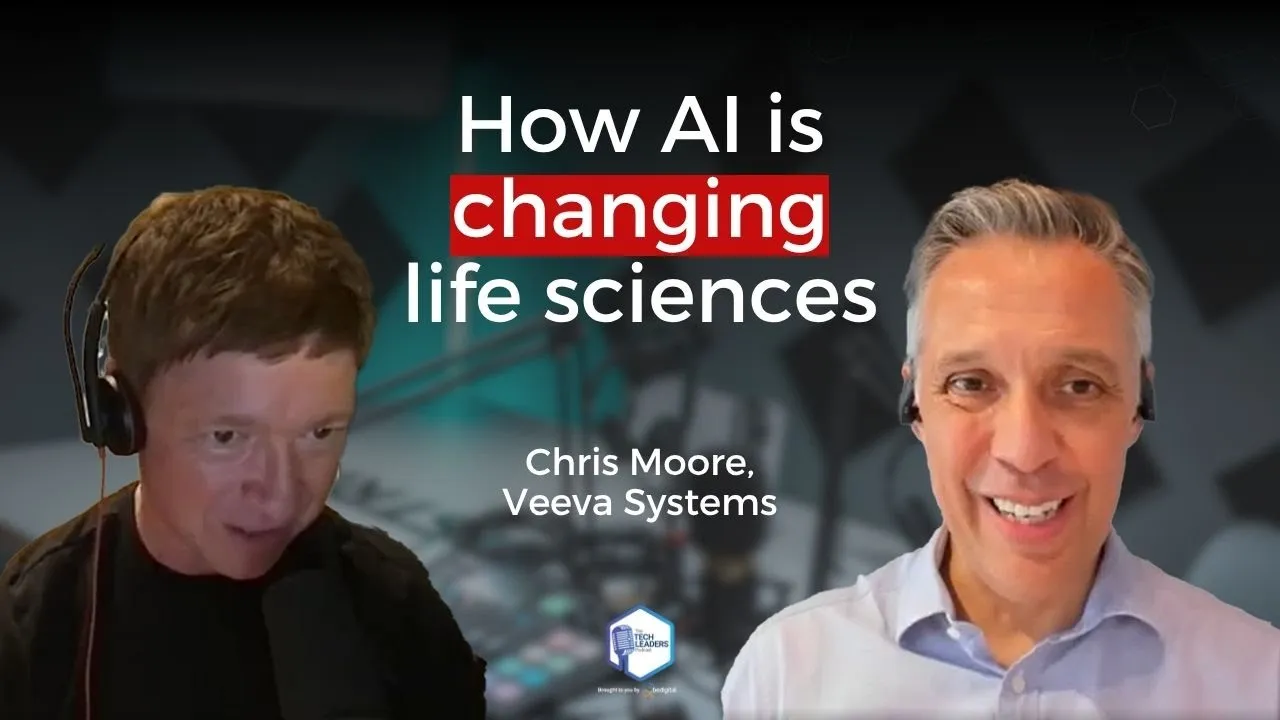
The Role of AI and Data in the Future of Life Sciences and Healthcare | Chris Moore, Veeva Systems
The Tech Leaders Podcast
/@thetechleaderspodcast9836
Oct 27, 2025
This video provides an in-depth exploration of the transformative role of AI and data in the future of life sciences and healthcare, featuring Chris Moore, European President at Veeva Systems. Moore discusses how AI and technology can enhance efficiency and effectiveness within the industry, ultimately leading to better healthcare outcomes and more fulfilling lives. The conversation also delves into the critical aspects of regulation, data security, and privacy, particularly within the inherently regulated life sciences sector. A significant portion of the discussion is dedicated to Veeva's strategic decision to conclude its decade-long partnership with Salesforce and the implications of this move for the company's future and its proprietary Vault platform. Moore elaborates on AI's primary function in life sciences as a supportive tool rather than a replacement for human oversight or established checks and balances. He highlights key areas where AI is making a substantial impact, such as accelerating drug discovery by identifying targets, enhancing drug safety monitoring by discerning meaningful adverse events, and bolstering compliance efforts. The speaker emphasizes that the life sciences industry, already heavily regulated, possesses a unique advantage in navigating AI integration, as the fundamental requirement to prove a drug's efficacy and safety provides a built-in framework for responsible AI deployment. This existing regulatory environment means AI applications must still adhere to rigorous validation and evidence-based standards. A core concern addressed is data security, which Moore identifies as paramount due to the highly personal and sensitive nature of health and drug development data. He stresses the importance of keeping such data secure throughout the drug development lifecycle while also ensuring its accessibility for early detection of issues. Furthermore, the discussion underscores the necessity of explicit consent and transparent communication regarding how contributed data will be used, where, and by whom, ensuring a mature dialogue if data usage parameters change. Veeva's approach to data management is presented as a collaborative model, securing client data in unique, safe environments and sharing anonymized industry data only with explicit consent for collective benefit. The video also sheds light on Veeva Systems' strategic evolution, particularly its decision to end its long-standing partnership with Salesforce. Moore explains this as a natural progression, stemming from the realization that the vast majority of Veeva's CRM offering had become proprietary Veeva product, with less reliance on the underlying Salesforce platform. The initial use of Salesforce for CRM was a foundational step, but as Veeva expanded into content management and other parts of the life sciences value chain, it developed its own Vault platform, purpose-built from day one to support data, process, and content in a harmonized environment specific to the industry's unique needs. This strategic shift aims to unify all 50 of Veeva's applications onto its proprietary Vault platform, providing a more integrated and innovative solution for its life sciences customers. Key Takeaways: * **AI as a Support Function:** In life sciences, AI's primary role is to support and enhance existing processes, such as drug discovery, safety monitoring, and compliance, rather than replacing human judgment or established regulatory checks. * **Inherent Regulatory Advantage:** The life sciences industry benefits from its already heavily regulated nature, which provides a foundational framework for the responsible integration and validation of AI technologies, requiring proof and evidence for all claims. * **Key AI Application Areas:** AI is poised to make significant impacts in identifying drug targets for new discoveries, analyzing drug safety cases to detect meaningful adverse events, and assisting companies in maintaining regulatory compliance in their day-to-day activities. * **Paramount Importance of Data Security:** Due to the highly personal and sensitive nature of health and drug development data, robust data security measures are critical throughout all stages of drug development to protect information and enable early issue detection. * **Explicit Consent for Data Usage:** Companies and individuals contributing data for AI innovation must have explicit consent regarding how their data will be used, where, and for what purpose, with transparent communication if these parameters change. * **Collaborative Data Innovation:** Veeva Systems exemplifies a collaborative approach to data management, securing client data in unique environments and facilitating the sharing of anonymized industry data only with consent, for the collective good of the industry. * **Veeva's Strategic Platform Shift:** Veeva's decision to end its 10-year partnership with Salesforce was a strategic move driven by the increasing dominance of Veeva's proprietary product within its CRM offerings and Salesforce's limitations in supporting content management. * **Unified Veeva Vault Platform:** The transition signifies Veeva's commitment to unifying all 50 of its applications onto its purpose-built Vault platform, designed specifically for life sciences to provide a harmonized solution for data, process, and content management. * **Industry-Specific Platform Needs:** The evolution from using a general-purpose CRM like Salesforce to a specialized platform like Veeva Vault highlights the unique and complex requirements of the life sciences industry that necessitate tailored software solutions. * **Efficiency as a Societal Imperative:** AI and technology are viewed as crucial tools to make the life sciences industry more efficient and effective, enabling it to address the limitless demand for better healthcare and drugs within societal economic constraints. * **Impact on Public Health:** By improving efficiency, AI empowers the industry to solve more healthcare issues, contributing to happier, more fulfilling, and productive lives for people globally. Tools/Resources Mentioned: * Veeva CRM * Salesforce * Veeva Vault platform Key Concepts: * **Generative AI:** AI systems capable of generating new content, such as text, images, or other media. * **Agentic AI:** AI systems designed to act autonomously or semi-autonomously to achieve specific goals. * **Data Security:** Measures taken to protect data from unauthorized access, corruption, or theft throughout its lifecycle. * **Regulatory Compliance:** Adherence to laws, regulations, guidelines, and specifications relevant to the life sciences industry (e.g., FDA, EMA, GxP, 21 CFR Part 11). * **Drug Discovery:** The process of identifying potential new medicines. * **Drug Safety (Pharmacovigilance):** The science and activities relating to the detection, assessment, understanding, and prevention of adverse effects or any other drug-related problem. * **Adverse Events:** Any untoward medical occurrence in a patient administered a pharmaceutical product. Examples/Case Studies: * **Veeva's Partnership with Salesforce:** The discussion details the history and eventual strategic termination of Veeva's 10-year partnership with Salesforce, explaining the rationale behind the move to Veeva's proprietary Vault platform.

Best practices for creating and maintaining a library of data collection standards
SCDM - Society for Clinical Data Management
/@SCDMchannel
Feb 24, 2022
This video provides an in-depth exploration of best practices for creating, implementing, and maintaining a library of data collection standards within clinical research, with a particular focus on leveraging Veeva Vault CDMS/EDC. Richard Young, VP Strategy at Veeva, sets the stage by outlining the critical benefits of data standards, such as reducing cycle times, improving data quality, enhancing compliance, and ensuring consistency across studies. He highlights common challenges in standardization, including difficulty getting started, lack of ownership, proliferation of standards, overstuffed standards, and outdated practices. The presentation emphasizes aligning with industry standards like CDISC (C-Dash) and SDTM, keeping the end in mind for downstream processes, and adopting a site and patient-centric approach. Jen Showalter, an industry expert in data standards, then presents a case study from Eli Lilly, detailing their journey in building and maintaining a library-driven approach for Veeva Vault CDMS. She describes Lilly's phased approach, starting with identifying frequently used forms, collaborating with end-to-end stakeholders (from sites to statisticians and medical teams), and establishing robust governance. A key recommendation is to build new forms from scratch within the library rather than copying old practices, leveraging new tool capabilities like progressive displays and form linking, and ensuring a unique "library key" is assigned to each object for effective tracking. The discussion delves into the specific components managed within their Veeva Vault CDMS library, including events, forms, item groups, items, code lists, and various user-defined rules (dynamic, data verification, set value, subject status, and email rules). Beyond the system, Lilly also manages external documentation like allowable changes, data check specifications, and completion guidelines, stressing the importance of aligning these with the library's version. The presentation further elaborates on the maintenance and governance of the library. Lilly employs a master-level management approach to minimize variations, using guidance to inform study designers on allowable changes. They set clear expectations for library usage, aiming for high adherence (e.g., 80% usage) while having a tiered governance process to review and approve necessary deviations quickly. A crucial tool for monitoring compliance and informing maintenance is the system-generated difference report from Veeva EDC, which tracks divergences between study objects and library objects. This report also enables a risk-based approach to testing, reducing rework. Changes to the library can originate from external sources (regulatory, industry standards like CDISC/SDTM, system enhancements from Veeva releases) or internal feedback from studies. All change requests are tracked in a centralized system, informing quarterly maintenance cycles and allowing for impact assessments. The presentation concludes by highlighting the realized benefits, including allowing study teams to focus on unique scientific aspects, improved site experience, downstream efficiencies for data management, medical review, and biostatistics, enhanced automation, reduced study build cycle times, minimized rework, and improved data quality. Key Takeaways: * **Strategic Importance of Data Standards:** Data collection standards are crucial for reducing clinical trial cycle times, improving data quality and consistency, enhancing regulatory compliance, and driving efficiencies across the entire data lifecycle, from design to reporting. * **End-to-End Stakeholder Collaboration:** Successful library implementation requires collaboration with all stakeholders, including sites (for user experience), medical affairs, statisticians, and data management, to ensure content meets diverse needs and facilitates adoption. * **Veeva Vault CDMS/EDC as a Foundation:** The Veeva Vault CDMS/EDC platform provides robust capabilities for building and managing a data standards library, including features for forms, items, code lists, user-defined rules, and form linking. * **Library-Driven Approach for Efficiency:** Starting with a well-defined library of standard templates (forms, events, rules) significantly reduces study build times and rework, allowing teams to focus on scientifically unique aspects of a study. * **"Library Key" for Tracking and Maintenance:** Each object in the library should have a unique identifier (library key) to track its lineage and usage across studies, enabling effective monitoring of adherence and informing future maintenance decisions. * **Build New, Don't Copy Old:** When establishing a library, it's more beneficial to build new forms and objects from scratch, leveraging modern tool capabilities, rather than replicating potentially inefficient legacy practices from existing studies. * **Comprehensive Governance Model:** A robust, tiered governance process is essential to manage change requests, ensure adherence to standards, and facilitate timely review of necessary deviations without slowing down study development. * **Minimize Variation, Maximize Guidance:** Instead of creating numerous variations of a standard within the library, manage core "master" standards and provide clear guidance (e.g., "allowable changes") to study designers on how to adapt them for specific study needs. * **Leverage System-Generated Reports:** Tools like Veeva's "difference report" and "library report" are invaluable for monitoring library usage, identifying divergences from standards, and informing a risk-based approach to testing, thereby reducing redundant testing efforts. * **Regular Maintenance Cycles:** Libraries are living entities and require regular maintenance cycles (e.g., quarterly) to incorporate new regulatory requirements, industry standards (CDISC, SDTM), system enhancements, and feedback from real-world study usage. * **Centralized Change Request System:** Implement a system to track all change requests, whether from internal feedback or external sources, to prioritize updates, document decisions (including reasons for not implementing a change), and inform maintenance cycles. * **Documentation Alignment and Accessibility:** All supporting documentation (completion guidelines, data check specifications, allowable changes) must be version-aligned with the library and easily accessible to all stakeholders to ensure consistent understanding and usage. * **Training and Communication are Key:** Continuous training and communication are vital to ensure all stakeholders, from new hires to experienced teams, understand the standards, their importance, and how to effectively use the library. * **Downstream Benefits Beyond Data Collection:** Standardization extends benefits to downstream processes, including improved data extraction for SDTM, streamlined statistical programming, enhanced medical review, and better integration with other clinical systems (e.g., CTMS). * **Resource Allocation for Library Support:** Dedicate a subset of study designers, including a "lead librarian," to support library maintenance, stakeholder discussions, change request management, and training, even if not fully dedicated to the library. Tools/Resources Mentioned: * Veeva Vault CDMS (Clinical Data Management Suite) * Veeva Vault EDC (Electronic Data Capture) * CDISC (Clinical Data Interchange Standards Consortium) / C-Dash (CDISC standards) * SDTM (Study Data Tabulation Model) * Veeva Studio (platform for library report) * System-generated difference report (from Vault EDC) * Library report (from Vault EDC Studio) * Lilly's internal request system/change log Examples/Case Studies: * **Eli Lilly's Implementation:** The entire presentation serves as a case study from Eli Lilly, detailing their multi-year effort to establish and mature their data collection standards library within Veeva Vault CDMS. * **Common Standard Forms:** Examples of forms prioritized for standardization include Demography, Inclusion/Exclusion, Informed Consent, Adverse Events, Medical History, Prior Therapies, and Exposure. * **Code List Variations:** Using distinct code lists for different therapeutic areas (TA1 vs. TA2) for a single disposition form allows for flexibility without creating multiple form variations in the library. * **Metadata for Downstream Transformations:** Using metadata like form name, release date, and version within the standard helps drive downstream transformations and identify differences across studies. * **FAQ Guidelines:** An example of an FAQ for units of measurement demonstrates how to provide instructions for geographically varied standards (e.g., US vs. global sites using Celsius vs. alternative units).

Veeva exec: hidden flaws in your projected data might be costing you
Fierce Life Sciences
/@Fierce_LS
Oct 24, 2025
This video provides an in-depth exploration of the critical role of data quality and strategy in optimizing commercial operations within the life sciences industry. Peter Stark, President of Compass and EVP of Data Cloud at Veeva, discusses how pharmaceutical commercial teams must adapt their go-to-market strategies to meet evolving stakeholder needs in an increasingly specialized and competitive market. He emphasizes that the industry's ultimate goal is to improve patient outcomes by ensuring accurate and early diagnosis, which necessitates a deep understanding of Healthcare Professionals (HCPs) and the changing landscape of medicine delivery, moving beyond traditional "white pill retail" to include procedure-based, in-office, injection, and infusion therapies. The core message revolves around the indispensable need for a robust data foundation to support effective analytics and AI initiatives, asserting that the output of these advanced tools is only as good as the underlying data. Stark outlines three key components for a forward-looking data strategy, particularly concerning "projected data." First, a "complete view" is essential, integrating both retail and non-retail data sources to reflect the current complexity of medicine distribution. Relying solely on historical retail data for modern challenges is insufficient. Second, "full visibility" requires the ability to tie all data together across different levels, from national to subnational (zip, HCO, HCP), ensuring a single source of truth and accuracy, especially when building projections from patient data. He highlights a common pitfall where data bundled at different levels doesn't reconcile, leading to inconsistencies. Third, "unlimited access" to a comprehensive data network is crucial, challenging the historical practice of artificially constraining customer access to data. This unconstrained access empowers deeper analytical exploration and fosters a more inquisitive approach to data utilization. The discussion then pivots to the significant risks associated with an inadequate projected data strategy. Stark warns that incorrect forecasting is the most immediate and impactful consequence, leading to a detrimental trickle-down effect on commercial operations. This includes misaligned promotional planning, such as incorrect allocation of field representatives, suboptimal digital media buying and placement, and inaccurate territory alignment. The analogy of an inaccurate snow forecast powerfully illustrates how being over- or under-prepared due to faulty projections can waste resources or leave critical needs unmet. Ultimately, these operational inefficiencies directly impede the industry's primary mission: getting patients on therapy as early as possible. Stark concludes by asserting that the single guiding principle for commercialization leaders should be data quality, urging a continuous evaluation of existing data strategies to ensure they are fit for purpose in today's and tomorrow's markets, rather than relying on past methods. Key Takeaways: * **Evolving Go-to-Market Strategies:** Commercial teams in life sciences must adapt to specialized and complex medicines by deeply understanding HCPs and the diverse channels of modern medicine delivery (e.g., procedure-based, injections, infusions) beyond traditional retail. * **Data as the Foundation for AI and Analytics:** The effectiveness of scaling analytics and AI solutions is directly dependent on the quality and completeness of the underlying data foundation. Without robust data, advanced tools will yield inaccurate or incomplete outputs. * **Three Pillars of a Forward-Looking Data Strategy:** A strong data strategy for projected data requires a "complete view" (integrating retail and non-retail data), "full visibility" (tying data across national and subnational levels for a single source of truth), and "unlimited access" to data to foster deeper inquiry and analysis. * **Pitfalls of Incomplete Data:** Relying on outdated or incomplete data, such as retail-only views for modern medicine, leads to significant gaps in understanding the market and stakeholder needs. * **Risks of Incorrect Forecasting:** A flawed data strategy results in incorrect forecasts, which have a severe trickle-down effect on commercial operations, including misallocation of field resources, inefficient promotional planning, and suboptimal digital media placement. * **Impact on Patient Outcomes:** Ultimately, an inaccurate data foundation and subsequent incorrect commercial strategies can delay patients getting on necessary therapies, compromising patient outcomes and the industry's core mission. * **Guiding Principle: Data Quality:** Commercialization leaders should prioritize data quality above all else, recognizing that a better understanding of the market, whether current or future, begins with superior data. * **Continuous Data Strategy Validation:** Organizations should not passively rely on past data foundations or strategies. It is crucial to continuously evaluate and validate whether existing data and methods are sufficient for current and future market needs, rather than assuming past success guarantees future relevance. * **Beyond Just "New Data":** Tackling new data streams isn't solely about acquiring novel datasets but also about ensuring existing data provides completeness and full visibility, and having the courage to re-evaluate how data is constructed and utilized. Tools/Resources Mentioned: * **Veeva Data Cloud:** Peter Stark is EVP of Data Cloud at Veeva, implying that Veeva offers solutions related to data management and analytics for the life sciences. * **Data Network:** The concept of an "unlimited access to a data network" is discussed as a crucial component of a modern data strategy. Key Concepts: * **Projected Data:** Refers to data used for forecasting and strategic planning, particularly in commercial operations. * **Go-to-Market Strategies:** The plans and approaches companies use to introduce products or services to new markets or customers. * **HCP (Healthcare Professional):** A key stakeholder in the pharmaceutical and life sciences industry, whose interactions and understanding are critical for commercial success and patient outcomes. * **Retail vs. Non-Retail Data:** Distinguishes between data from traditional pharmacy sales and data from other channels like procedure-based treatments, in-office administration, injections, and infusions. * **National vs. Subnational Data:** Refers to data aggregated at broad geographical levels (national, state) versus more granular levels (zip code, HCO - Healthcare Organization, HCP). * **Single Source of Truth:** The concept that all data points should originate from or reconcile to one authoritative source to ensure consistency and accuracy. * **Commercial Operations:** The activities related to selling and marketing products, including sales force management, promotional planning, and market forecasting.

The New Rules of HCP Engagement | ET Healthworld
ETHealthWorld
/@ETHealthWorldLive
Sep 16, 2022
This video provides an in-depth exploration of the evolving landscape of Healthcare Professional (HCP) engagement in the pharmaceutical industry, particularly in the post-COVID-19 era. The virtual roundtable, organized by ET Healthworld and Veeva Systems, features senior leaders from Mankind Pharma, Alembic Pharma, and Veeva Systems, who discuss how the pandemic accelerated digital adoption and necessitated a shift from traditional face-to-face interactions to hybrid and omni-channel models. The discussion highlights the challenges and opportunities for pharma companies in adapting their commercial operations, content strategies, and measurement approaches to effectively engage with HCPs in a digitally transformed environment. The panel begins by acknowledging the profound impact of the COVID-19 pandemic as a catalyst for digital transformation in pharma, an industry traditionally reliant on physical interactions. Speakers emphasize that while the benefits of digital (scale, cost-effectiveness, improved awareness) were always apparent, the pandemic compelled a rapid shift from "promise of going digital" to "went digital." A central theme is the transition from a multi-channel approach, where various digital and physical channels operate in isolation, to an omni-channel strategy. Omni-channel is defined as a seamless, integrated experience for the HCP, delivering a single, consistent message across all touchpoints, with the customer at the center. This shift requires a fundamental change in mindset, infrastructure, and capabilities within pharma organizations. Key challenges discussed include the "carpet bombardment" of uncoordinated digital messages leading to HCP fatigue, the need for a customer-centric rather than rep-centric approach, and the internal organizational structures that often hinder effective digital content creation and delivery. The speakers introduce a "four R's" concept (reluctance, relevance, resurgence) to understand HCP engagement with digital content. They stress the paramount importance of credible, reliable, simple, and relevant content, delivered in easily digestible "capsules" and designed for interactivity. The discussion also delves into the critical role of data and measurement, advocating for impact-based KPIs across all channels to assess campaign effectiveness and optimize strategies. Veeva Systems' representative highlights their role as a technology provider in enabling 360-degree customer engagement views and accelerating content approval processes, which are crucial for rapid content creation and deployment in a competitive market. Key Takeaways: * **Digital Transformation is Imperative:** The COVID-19 pandemic significantly accelerated the pharmaceutical industry's shift from traditional face-to-face HCP engagement to digital and hybrid models, making digital adoption a necessity rather than an option. * **Shift to Omni-channel Strategy:** Pharma companies must evolve from a multi-channel approach (isolated channels) to an omni-channel strategy, which provides a seamless, integrated, and customer-centric experience, delivering a consistent message across all physical and digital touchpoints. * **Customer-Centricity is Key:** The focus must shift from a "rep-centric" model to a "customer-centric" approach, where all engagement efforts are designed around the HCP's preferences and needs, ensuring relevance and value. * **Content is King, but with Nuances:** Content must be credible, reliable, simple, and highly relevant to the HCP. It should be delivered in digestible formats (e.g., 2-3 minute "capsules"), be interactive, and leverage storytelling rather than just factual data. * **Rapid Content Creation is Crucial:** The fast-paced digital environment demands rapid content creation and approval processes. Traditional marketing structures designed for long campaigns (3-4 months) are insufficient; companies need agile content creation teams that can quickly adapt and deploy messages. * **Address HCP Digital Fatigue:** Uncoordinated "carpet bombardment" of messages leads to HCP fatigue. Strategies must prioritize relevance and value addition to encourage engagement, as evidenced by higher open rates for credible, relevant communications. * **Formalized Digital Structure Needed:** To effectively implement digital engagement, pharma companies require a formalized internal structure including a project steward (senior leadership), digital strategists, communication planners, content strategists, media buying specialists, and campaign effectiveness/measurement teams. * **Measure Impact with Specific KPIs:** Beyond just measuring activity, companies must establish clear, quantifiable Key Performance Indicators (KPIs) for each digital channel (e.g., website traffic, email open/click-through rates, virtual meeting duration) to assess effectiveness and inform future strategies. * **Hybrid Engagement is the Future:** While 100% digital engagement is unlikely in India for the foreseeable future due to the value placed on personal relationships, a blended or hybrid approach combining face-to-face with orchestrated digital channels is the most effective way forward. * **Leverage Technology for 360-Degree View:** Technology providers like Veeva Systems offer solutions that enable a 360-degree view of customer engagement, integrating data from various channels to provide insights into HCP interactions and preferences. * **Digital as a Strategic Imperative:** Digital engagement should not be viewed as a tactical initiative but as a strategic imperative driven by senior leadership, requiring significant change management within organizations. * **Data-Driven and Evidence-Backed Communication:** Pharma's communication has always been data-driven. In the digital age, this means leveraging data science, social listening, and doctor profiling to customize content and ensure it is evidence-based and without bias. * **Increased Engagement Time in Digital:** Digital and virtual interactions can lead to significantly longer engagement times with HCPs (e.g., 10-11 minutes for virtual calls compared to 1-1.5 minutes for physical calls), offering a greater opportunity for in-depth communication. **Tools/Resources Mentioned:** * **Veeva Systems:** A leading platform in the pharmaceutical industry for CRM and engagement solutions, explicitly mentioned as a key enabler and sponsor. * **Journal of M health:** Referenced for statistics on HCP engagement. * **Social Media Platforms:** WhatsApp, Facebook, Instagram (for reels), Doctor Network Platforms. * **AI, IoT, Blockchain, Machine Learning:** Mentioned as emerging technologies that Pharma is increasingly embracing. **Key Concepts:** * **HCP Engagement:** The process by which pharmaceutical companies interact and communicate with healthcare professionals. * **Multi-channel Engagement:** Using various communication channels (e.g., reps, email, webinars) in isolation, often leading to fragmented messaging. * **Omni-channel Engagement:** An integrated, seamless approach where all communication channels work together to deliver a consistent, customer-centric message, providing a unified experience for the HCP. * **Digital Proliferation:** The rapid spread and adoption of digital technologies and platforms. * **Digital Fatigue:** The exhaustion or disinterest experienced by individuals due to an overwhelming amount of digital content and interactions. * **Rep-centric vs. Customer-centric:** A shift in focus from what the sales representative is doing to what the customer (HCP) needs and prefers. * **Beyond the Pill Value:** Providing information and services that extend beyond the product itself, addressing broader medical understanding and patient care. * **Content in Capsules:** Delivering information in short, digestible, and easily consumable formats (e.g., 2-3 minute videos or summaries). * **Four R's Concept:** A framework for understanding HCP engagement challenges: Reluctance (due to bombardment), Relevance (of content), Resurgence (of digital adoption). **Examples/Case Studies:** * **Alembic Pharma's "Real Updates" Email Strategy:** An example where a credible, trusted company (Alembic) sent simple, plain vanilla email updates for an old brand (Recofast), achieving an unusually high open rate of 18% (compared to an industry average of 3-5%), demonstrating the power of credibility and relevant content. * **Indian Pharma vs. US/Europe HCP Engagement:** Data cited from a Journal of M health survey indicating that 60% of HCP engagement in India still comes from field reps, significantly higher than 8% in the US and 6% in Europe, highlighting the unique market dynamics and scope for digital growth in India. * **Content Approval Speed:** A case study of a company using Veeva's solution to reduce content approval time from 8-10 weeks to 2-3 weeks, emphasizing the critical need for speed in digital content deployment.

What Doctors REALLY See vs What Pharma Wants You to Know
Drug Diaries
/@DrugDiaries
Jun 23, 2025
This video provides an in-depth exploration of the transformative role of technology in the pharmaceutical industry, as seen through the lens of Veeva Systems. Emma Hyland, VP of Strategy for Commercial Content at Veeva, discusses how the company is building the "industry cloud for life sciences," aiming to redefine content management and streamline operations within a highly regulated environment. The conversation highlights the significant challenge of underutilized medical content, with nearly 80% of created material rarely or never reaching its intended audience, and positions technology, particularly AI, as the key to overcoming this inefficiency. The core of the discussion revolves around Veeva's mission to create an "infrastructure of trust," connecting diverse teams, simplifying complex compliance processes, and ultimately ensuring that vital scientific information reaches healthcare professionals and patients more effectively. This involves not just creating content but orchestrating its flow, layering it with data, and automating interactions across the pharmaceutical ecosystem. Emma Hyland emphasizes her focus on commercial content, working with marketing and medical teams to optimize how they inform and educate customers about new medicines. A significant portion of the video is dedicated to the Medical, Legal, and Regulatory (MLR) review process, historically a slow, manual, and high-stakes bottleneck in pharmaceutical content dissemination. The introduction of AI-driven solutions, such as Veeva's "MLR bot," is presented as a revolutionary step. This innovation, part of the broader "Veeva AI" initiative, aims to automate and accelerate the MLR process, transforming it from a cumbersome necessity into an efficient, technology-enabled workflow. The discussion underscores that these advancements are driven by a combination of technological prowess, bold leadership, and continuous customer feedback, fostering a future where content is strategically managed and deployed. The video also touches upon the evolving landscape of roles within content creation and medical affairs, suggesting a need for new skill sets and a shift towards more strategic contributions. It emphasizes that driving meaningful change in traditional, highly regulated organizations requires not just technological innovation but also a commitment to "quiet reinvention" and collaborative efforts. The ultimate goal is to move beyond mere content creation to a state of sophisticated content orchestration, ensuring quality, compliance, and maximum impact in the life sciences sector. Key Takeaways: * **Pervasive Content Underutilization:** A striking statistic reveals that nearly 80% of content created for the pharmaceutical field is rarely or never used, highlighting a significant inefficiency in current content strategies and distribution. * **Veeva's "Industry Cloud" Vision:** Veeva Systems aims to build the foundational "industry cloud for life sciences," serving as the technological backbone that integrates data, automates processes, and connects stakeholders across the pharmaceutical value chain. * **Content Orchestration as a Strategic Imperative:** The discussion advocates for a shift from simple content creation to strategic content orchestration, emphasizing the need to manage, distribute, and optimize content flow to ensure it reaches the right audience at the right time. * **Revolutionizing the MLR Process with AI:** The Medical, Legal, and Regulatory (MLR) review process, traditionally slow, manual, and high-stakes, is being transformed by AI-driven solutions like Veeva's "MLR bot," promising to significantly enhance efficiency and compliance. * **Veeva AI as a Major Strategic Initiative:** The "MLR bot" is part of a broader "Veeva AI" initiative, indicating a strategic commitment from Veeva to leverage artificial intelligence to address critical challenges and drive innovation across the life sciences industry. * **Building an "Infrastructure of Trust":** Technology's role extends beyond efficiency to building an "infrastructure of trust," which connects teams, simplifies compliance, and ensures the reliable and compliant delivery of scientific information. * **Evolving Roles in Pharma Content and Medical Affairs:** The landscape for marketing and medical teams is changing, requiring new skill sets and a more strategic, technology-enabled approach to content creation, management, and dissemination. * **Importance of Customer Feedback in Innovation:** The development of new solutions, such as the MLR bot, is heavily influenced by customer feedback, underscoring the value of understanding user needs and pain points in driving product evolution. * **Driving Change in Traditional Organizations:** Implementing transformative technology in highly regulated and traditional industries like pharma requires "bold leadership" and "quiet reinvention," emphasizing the need for strategic vision and persistent effort to overcome inertia. * **Simplifying Compliance through Technology:** The video highlights how technology can simplify complex regulatory requirements, making compliance more efficient and less burdensome, particularly through automated processes and integrated systems. * **Data-Driven Content Strategy:** The concept of "layering content with data" is crucial for automation and gaining actionable insights, moving towards a more intelligent and responsive content ecosystem. Tools/Resources Mentioned: * **Veeva Promomats:** A specific Veeva innovation mentioned in the context of commercial content. * **MLR bot:** An AI-driven breakthrough solution designed to revolutionize the Medical, Legal, and Regulatory review process. * **Veeva AI:** A major strategic initiative by Veeva Systems focused on leveraging artificial intelligence across its offerings. Key Concepts: * **MLR (Medical, Legal, Regulatory) Process:** The critical review process that all pharmaceutical promotional and medical content must undergo to ensure compliance with industry regulations and legal standards. * **Content Orchestration:** A strategic approach to managing the entire lifecycle of content, from creation and review to distribution and measurement, ensuring efficiency, compliance, and maximum impact. * **Industry Cloud:** A specialized cloud computing platform tailored to the specific needs, regulations, and workflows of a particular industry, in this case, life sciences. * **Infrastructure of Trust:** A robust and reliable technological framework that facilitates secure, compliant, and efficient communication and content exchange within a highly regulated industry.

Veeva's Numbers: My Take on Growth & That Litigation Charge
Corporate Decoder
/@CorporateDecoder
Sep 3, 2025
This video provides an in-depth financial and operational analysis of Veeva Systems Inc., based on its 10-Q SEC filing for the three months ending July 31, 2025. The core purpose of the analysis is to peel back the layers of the corporate filing to assess Veeva's financial health, growth trajectory, and critical business risks. The speaker, an expert content analyst, adopts a data-driven approach, systematically reviewing the balance sheet, income statement, and risk factors to provide a comprehensive view of the company's standing within the life sciences technology sector. The analysis begins by establishing Veeva’s exceptional financial stability. As of the reporting date, Veeva was sitting on nearly $2 billion in cash and cash equivalents, coupled with over $4.4 billion in short-term investments, resulting in total current assets approaching $7 billion. This massive liquidity provides a significant buffer against economic volatility. Moving to the income statement, the company reported total revenues exceeding $789 million for the quarter, marking a strong 17% year-over-year growth. Crucially, the majority of this revenue—nearly $659 million—is derived from subscription services, underscoring the predictability and recurring nature of Veeva's income stream. The company maintains a highly profitable operational structure, boasting a total gross margin percentage of 75%. A key focus of the analysis is the impact of a significant, non-recurring expense. While Veeva demonstrated efficiency by slightly reducing R&D and Sales & Marketing expenses as a percentage of revenue, General and Administrative (G&A) expenses jumped from 9% to 12% of revenue. This increase was directly attributed to a substantial $30.6 million litigation settlement charge. The speaker characterizes this charge as a "hiccup" or a one-off event, noting that despite this impact, the net income still grew by $29 million year-over-year to a cool $200 million, confirming the underlying strength of the core business driven by both commercial and R&D solutions. The final segment of the analysis delves into the critical risks facing Veeva, which are highly relevant to the broader life sciences ecosystem. These risks include intense competition from major players like Salesforce and IQVIA, the ongoing challenge of migrating customers to new platforms such as Vault CRM (a process that carries the risk of customer disruption or loss), and the inherent vulnerability associated with handling sensitive customer data (security breaches). Most importantly for the life sciences industry, the analysis highlights Veeva's concentrated reliance on this single sector. This means that adverse regulatory changes (e.g., FDA/EMA), shifts in drug pricing, or government funding fluctuations can directly and severely impact Veeva's revenue and growth prospects. Key Takeaways: • Veeva Systems exhibits exceptional financial resilience, holding nearly $7 billion in liquid assets (cash and short-term investments), which provides a strong foundation for continued platform development and market dominance in the life sciences sector. • The company’s core business is robust, demonstrated by a 17% year-over-year revenue growth and a high 75% gross margin, confirming the sustained investment appetite within pharmaceutical commercial and R&D operations. • The $30.6 million litigation settlement charge is identified as a significant, yet likely non-recurring, expense that temporarily inflated G&A costs; this event should not be viewed as indicative of a long-term decline in operational profitability. • Growth in subscription services revenue is being driven by both Commercial and R&D solutions, signaling that IntuitionLabs should continue to focus equally on optimizing both sides of the pharmaceutical business (e.g., Medical Info Chatbots and clinical data management). • The acknowledged challenge of migrating customers to new platforms, specifically Vault CRM, presents a direct, high-value opportunity for specialized consulting firms to offer expertise in complex system integration, data migration, and change management to ensure seamless adoption. • Competition from tech giants like Salesforce and industry peers like IQVIA remains a constant threat; this necessitates that IntuitionLabs differentiate its Veeva consulting services by integrating advanced AI and LLM capabilities to provide unique value beyond standard implementation. • Veeva’s reliance on a few major customers underscores the high-stakes nature of enterprise engagements in the life sciences sector; successful, long-term partnerships with these key clients are crucial for the stability of the entire Veeva ecosystem. • The concentration of revenue within the life sciences industry means that regulatory and political risks (FDA compliance, drug pricing) are paramount; all custom AI and software solutions developed by IntuitionLabs must prioritize and seamlessly integrate regulatory compliance features. • Veeva’s continued heavy investment in R&D ($92 million in the quarter) confirms a commitment to innovation, requiring consulting partners to maintain deep expertise in emerging Veeva features and API integrations, particularly those related to AI enablement. • The risk of security breaches and unauthorized data access is a top concern for Veeva, reinforcing the need for IntuitionLabs to design all custom software and data engineering solutions with stringent security protocols compliant with GxP and 21 CFR Part 11 standards. Key Concepts: * **10-Q Filing:** A comprehensive quarterly report submitted by public companies to the SEC, providing detailed financial performance data. * **Subscription Services Revenue:** Recurring income derived from software licenses and support, which forms the backbone of Veeva's predictable revenue model. * **Gross Margin:** The percentage of revenue remaining after deducting the cost of revenues (75% for Veeva), indicating high efficiency in delivering core services. * **Vault CRM:** Veeva's next-generation CRM platform, the migration to which is cited as a significant operational challenge and risk factor. * **Litigation Settlement Charge:** A one-time expense ($30.6 million) related to resolving legal disputes, impacting the reported net income for the quarter.

KMK - Veeva CRM and Incentive Compensation
KMK Consulting Inc
/@KMKConsultingInc
Aug 14, 2025
This video, produced by KMK Consulting, provides an overview of how their proprietary I Suite integrates with Veeva CRM to enhance sales force effectiveness (SFE) and streamline commercial operations within the global life sciences sector. The core premise addresses the inefficiency inherent when pharmaceutical field teams are forced to juggle multiple, disparate tools, leading to wasted time and fragmented data. KMK positions its integrated solution as a necessary simplification, analogous to how smartphones unified various functions, aiming to maximize productivity and revenue for leading life science companies. The solution focuses on making actionable insights instantly available to the field force, moving beyond traditional static reporting. The integration of Veeva CRM with the KMK I Suite facilitates smarter workflows by delivering data either through dynamic dashboards or, more innovatively, via conversation with an AI agent. This approach eliminates the need for "app switching or data gaps," ensuring that representatives have immediate access to comprehensive information when and where they need it, particularly when preparing for or executing customer interactions. A specific scenario illustrates the power of this integration. A sales representative, en route to meet "Dr. Smith," queries the AI agent for a briefing. The agent instantly synthesizes historical context (last visit details, two weeks prior), behavioral insights (the physician's expressed interest in ongoing clinical trials and questions about the patient support program), and performance metrics (a 5% increase in prescribing over the last three months). Crucially, the AI agent provides strategic, actionable recommendations, advising the rep to follow up and coordinate with the medical team and the reimbursement team to comprehensively address the physician's needs. This demonstrates a shift toward intelligent automation that facilitates cross-functional collaboration and strategic decision-making. The overall methodology emphasizes that SFE is achieved not merely by providing tools, but by optimizing resources and focusing on real business challenges, enabling teams to operate strategically and efficiently. Key Takeaways: • The primary operational challenge for life sciences field teams is the inefficiency caused by tool fragmentation and data silos, which the KMK I Suite addresses by creating a seamless, integrated workflow within Veeva CRM. • The strategic value of the integrated solution lies in its ability to provide instant insights via conversational AI agents, moving beyond traditional dashboards and enabling real-time, data-driven decision-making during pre-call planning. • The AI agent functions as an intelligent Sales Ops Assistant, synthesizing diverse data points—including historical visit context, clinical interest, patient support inquiries, and recent prescribing trends—to deliver a holistic view of the customer relationship. • Effective sales force enablement requires cross-functional coordination; the AI agent explicitly recommends involving supporting teams (e.g., Medical Team and Reimbursement Team) to ensure all aspects of the physician’s needs are met. • Performance metrics are integrated directly into the workflow, allowing representatives to immediately access critical data, such as recent prescribing increases (e.g., 5% growth in the last three months), to validate the effectiveness of past efforts and tailor future strategies. • The focus of Sales Force Effectiveness (SFE) must be strategic optimization—maximizing productivity and revenue by improving decision-making and resource allocation—rather than simply extending working hours. • Successful implementation is a key differentiator; client testimonials highlight the smoothness of the Veeva integration and rollout process, suggesting that minimizing disruption during vendor transitions is crucial for adoption and success. • The solution supports global operations through seamless onshore and offshore collaboration, ensuring that the field teams, regardless of location, receive consistent, high-quality support and intelligence. • By streamlining workflows and providing smarter tools, the platform aims to elevate the sales team's performance, allowing them to shift their focus from administrative tasks to strategic customer engagement. Tools/Resources Mentioned: * Veeva CRM * KMK I Suite * AI Agent (for conversational insights) * Business Intelligence Dashboards Key Concepts: * **Veeva CRM Integration:** The process of embedding specialized analytical and operational tools directly into the Veeva platform to maximize its utility for field teams. * **Sales Force Effectiveness (SFE):** A strategic approach focused on optimizing resources, improving decision-making, and streamlining workflows to maximize the productivity and revenue generation of the commercial team. * **AI Agent for Commercial Operations:** A generative AI tool that provides conversational, context-aware insights and actionable recommendations to sales representatives in real time. Examples/Case Studies: * **Dr. Smith Interaction Scenario:** A detailed example demonstrating the AI agent's ability to instantly retrieve and synthesize complex data (clinical trial interest, patient support program questions, historical prescribing data, and cross-functional follow-up recommendations) for pre-call planning.
WICS: State of Tech Recruitment Panel with Intersystems & Veeva Recruiters
Tufts Career Center
/@TuftsCareerServices
Mar 7, 2024
This panel discussion, featuring recruiters and an engineer from Veeva Systems and Intersystems, provides an in-depth look at the state of tech recruitment, offering actionable advice for students seeking internships and full-time roles in the current competitive labor market. The conversation is structured around common student concerns, covering application strategies, essential skills, and preparation for both technical and behavioral interviews. The panelists emphasize that while the market is competitive, companies serving the life sciences and healthcare sectors, such as Veeva and Intersystems, maintain deliberate and stable hiring practices, contrasting with the volatility seen in larger "Fang" companies. A major theme explored is the balance between technical proficiency and soft skills (EQ). The Veeva recruiter stressed that while technical skills (programming languages, tools, frameworks) must be clearly outlined on a resume, communication, collaboration, and critical thinking are increasingly prioritized. They look for candidates who can articulate their experiences, problem-solve out loud during technical interviews, and demonstrate genuine passion for the field. The Intersystems engineer, who works in Quality Development (QD), added that leadership skills, even from non-CS extracurriculars, are highly valued, reflecting a holistic approach to candidate evaluation. The panelists detailed the recruitment process timelines and common pitfalls. They warned against "mass applying" and using generative AI (like ChatGPT) or manipulating transcripts, noting that recruiters can easily spot a lack of genuine effort or dishonesty. Instead, candidates are advised to research the company's mission and values, personalize their applications (e.g., filling out the optional "Why Veeva" section), and demonstrate enthusiasm. The Veeva process, for instance, involves an initial 30-minute recruiter screen, an online technical assessment (60-80 minutes, similar to LeetCode), and a 3.5-hour "Team Day" combining behavioral and technical rounds, typically concluding with an offer within three to four weeks from the initial interview. Finally, the discussion offered alternatives for students without internships, such as pursuing research assistantships (especially for sophomores), participating in hackathons, or developing personal projects. Both panelists agreed that demonstrating passion and initiative through self-directed work is highly valued. The importance of networking, attending career fairs, and sending thank-you notes was highlighted as small but crucial factors that differentiate candidates in a tight market. The Intersystems engineer also shared a personal reflection on the unexpected utility of specific college courses (like two weeks of SQL) versus the broader value of learning how to "think like a programmer." Key Takeaways: * **Stable Hiring in Life Sciences Tech:** Companies like Veeva and Intersystems, which are not beholden to the same stock market pressures as "Fang" companies, practice deliberate hiring and have avoided recent mass layoffs, offering a more stable career path in the tech sector serving regulated industries. * **Prioritize Soft Skills (EQ):** Beyond technical proficiency, both companies heavily value emotional intelligence, communication, and collaboration. Candidates must be able to articulate their experiences concisely and demonstrate how they function as a team member, not just an independent coder. * **Avoid Application Dishonesty:** Recruiters warned against using generative AI (like ChatGPT) for application content or manipulating transcripts, noting that such practices are easily detected and will result in immediate disqualification, emphasizing the need for truthful and genuine submissions. * **The "Why Us" Component is Critical:** Candidates should dedicate time to understanding the company's mission, values, and the specific role. The "Why Us" approach—explaining how the candidate's goals align with the company's work (e.g., connecting to life sciences, valuing the company culture)—significantly boosts progression past the initial screening. * **Resume Clarity for Technical Skills:** Technical skills (programming languages, tools, frameworks) should be clearly outlined in a dedicated section or bolded within experience descriptions to make them immediately visible to non-technical recruiters during the initial, short review process. * **Preparation for Behavioral Interviews:** Do not over-prepare by scripting every word; this makes the conversation unnatural. Instead, prepare key anecdotes (e.g., a group project, a struggle) that can be adapted to common behavioral questions, maintaining a natural dialogue. * **Technical Interview Strategy (Show Your Work):** For technical rounds, the focus is on critical thinking and problem-solving skills, not just knowing the perfect answer. Candidates must talk through their thought process, explain their chosen approach, and demonstrate collaboration. * **Veeva's Recruitment Timeline:** The typical duration from initial recruiter screen to a full offer averages three to four weeks, involving a 30-minute screen, a 60-80 minute online technical assessment (LeetCode style), and a 3.5-hour "Team Day" interview session. * **Alternatives to Internships:** Students lacking internships should pursue research assistantships (especially for sophomores), participate in hackathons, or develop personal projects, as these activities demonstrate passion, initiative, and the ability to learn new skills independently. * **Networking and Career Fairs:** Attending career fairs and info sessions is highly recommended as a low-stress way to understand company culture, ask specific questions about the tech stack, and make a positive impression, reducing the research burden later in the process. * **The Power of Thank You Notes:** A simple thank-you note (email or written) after an interview is a small effort that helps distinguish a candidate and demonstrates continued interest, often serving as an easy tie-breaker between otherwise comparable candidates. * **Broaden Role Expectations:** Candidates are encouraged to look beyond traditional "Software Development Engineer" roles and consider adjacent positions like Quality Development (QD), which may offer unexpected passion and career satisfaction. Tools/Resources Mentioned: * **Veeva CRM:** The platform Veeva Systems provides for the life sciences industry. * **LeetCode / HackerRank:** Recommended platforms for practicing for online and live technical coding assessments. * **Forage:** A virtual platform offering self-guided, company-sponsored projects for students to gain experience. Key Concepts: * **EQ (Emotional Quotient):** Refers to soft skills, including communication, collaboration, and interpersonal abilities, which are increasingly weighted in engineering recruitment processes. * **Team Day:** Veeva's final interview stage, a single-day, multi-hour virtual session where candidates meet multiple team members for a combination of behavioral and technical questioning. * **Quality Development (QD):** An engineering role focused on testing and ensuring the quality of code developed by other engineers.

HCLTech at the 2025 Veeva Commercial Summit
HCLTech
/@hcltechofficial
Apr 23, 2025
This video provides an in-depth look at the strategic priorities being discussed at the upcoming Veeva Commercial Summit 2025, focusing on how major industry partners are framing the future of life sciences commercial and medical operations. The announcement, featuring HCLTech as a trusted Veeva partner, centers on the critical role of artificial intelligence (AI) and data in accelerating digital transformation, with the ultimate goal of advancing patient-centric care. The core message positions technology not just as a tool for efficiency, but as the essential bridge between medical breakthroughs and real-world customer engagement. The primary themes explored revolve around unlocking potential across the entire commercial and medical value chain. HCLTech emphasizes that enhancing decision-making and transforming customer engagement relies heavily on two foundational technological pillars: seamless system integration and the deployment of AI-driven insights. This suggests that the market is moving past basic data collection and is now focused on operationalizing intelligence directly into workflows, particularly within the Veeva ecosystem. The video specifically targets the optimization of core commercial functions, including medical strategy, marketing, and sales, stressing the necessity of driving efficiencies across all communication channels. A significant portion of the strategic focus is dedicated to modernizing the underlying technological infrastructure supporting commercial teams. This includes accelerating the transformation of commercial and medical strategies, which necessitates modernizing the content life cycle—implying a need for automated, compliant content creation and distribution solutions. Furthermore, the video highlights the optimization of CRM strategies, confirming that maximizing the return on investment in platforms like Veeva CRM is a top priority for pharmaceutical organizations. The overall approach is one of practical application, seeking to bridge the gap between cutting-edge technology, such as LLMs and advanced AI, and the immediate, real-world business challenges faced by life sciences companies in a regulated environment. The video serves as a strong indicator of the current competitive landscape and the specific areas where large consulting firms are investing their resources. By focusing on the intersection of Veeva, AI, and commercial efficiency, HCLTech validates the market demand for specialized expertise that can handle complex system integration while delivering measurable business value through intelligent automation. The emphasis on collaboration and learning at the summit underscores the industry-wide recognition that these transformations require external partnership and specialized knowledge to successfully navigate the complexities of regulatory compliance and data governance inherent in the life sciences sector. Key Takeaways: • **Veeva Commercial Summit as a Strategic Barometer:** The Veeva Commercial Summit remains the central event for defining the strategic direction of pharmaceutical commercial and medical operations, confirming it as a crucial venue for competitive intelligence, partnership development, and understanding market demand for specialized services. • **AI and Data are Operational Imperatives:** The industry conversation has shifted from exploring AI potential to demanding AI-driven insights that are immediately actionable and integrated into daily decision-making processes for sales, marketing, and medical affairs teams. • **Patient Centricity Drives Commercial Strategy:** All technological and strategic initiatives must be framed around the concept of patient centricity; solutions that demonstrably improve patient engagement, access, or experience will receive priority investment. • **High Demand for CRM Optimization:** Optimizing existing CRM strategies (specifically Veeva CRM) is a major focus area, indicating a strong market need for specialized consulting services that can enhance system configuration, user adoption, and integration with new AI tools to maximize platform investment. • **Content Life Cycle Modernization is Critical:** There is a clear and immediate need for solutions that modernize the content life cycle, which includes leveraging AI for compliant content generation, automated approval workflows, and efficient distribution across multiple channels (omnichannel strategy). • **Seamless Integration is a Technical Bottleneck:** The emphasis on "seamless integration" highlights the ongoing challenge life sciences companies face in connecting disparate commercial, medical, and data systems, creating a significant opportunity for data engineering and integration specialists. • **Focus on Medical Strategy Efficiency:** Efficiency gains are being sought not only in sales and marketing but also explicitly in medical strategy, suggesting growing investment in tools that support medical affairs teams, such as medical information chatbots and knowledge management systems. • **Validating the AI/Veeva Value Proposition:** The competitive landscape, represented by HCLTech, is actively promoting the combination of deep Veeva partnership knowledge with advanced AI capabilities, directly validating IntuitionLabs.ai's core value proposition and market positioning. • **Bridging Technology and Real-World Challenges:** The market requires partners who can effectively bridge the gap between cutting-edge technology (like LLMs) and the practical, regulated challenges of the pharmaceutical industry, emphasizing the need for compliance expertise alongside technical skill. • **Accelerating Digital Transformation:** The primary business goal articulated is the acceleration of digital transformation, meaning clients are looking for partners who can deliver rapid, impactful results rather than lengthy, theoretical implementations. **Tools/Resources Mentioned:** * Veeva Commercial Summit 2025 * Veeva CRM (Implied through "optimizing CRM strategies" in the context of the Veeva Summit) **Key Concepts:** * **Patient Centricity:** The foundational principle guiding all medical and commercial breakthroughs, ensuring that strategies and technologies prioritize patient needs and outcomes. * **AI-Driven Insights:** The use of artificial intelligence and machine learning to analyze commercial and medical data, generating actionable intelligence that informs decision-making and enhances customer engagement. * **Seamless Integration:** The requirement for various enterprise systems (CRM, data platforms, medical info systems) to communicate and operate together without friction, enabling unified data flow and consistent customer experience. * **Content Life Cycle Modernization:** The process of updating and automating how commercial and medical content is created, reviewed (for compliance), approved, and distributed across all channels. * **Commercial and Medical Value Chains:** The interconnected processes and functions (including R&D, clinical trials, regulatory, medical affairs, sales, and marketing) that bring a pharmaceutical product to market and support its use.

Why Content Teams Need a New Mindset Now!
Drug Diaries
/@DrugDiaries
Jun 23, 2025
This discussion, led by a VP of Strategy for Commercial Content at Veeva Systems, details the fundamental transformation required within pharmaceutical content teams. The core message centers on the necessary evolution of these teams from being mere "executors" to becoming strategic "orchestrators" of information and experience. This shift demands a profound change in mindset, moving away from a focus on execution metrics—such as producing content faster, cheaper, or in greater volume—to concentrating on the strategic goals the content is designed to achieve. The orchestration model requires content teams to move their involvement significantly "upstream" in the pharmaceutical lifecycle. Instead of waiting for finalized assets or late-stage product information, content strategists must engage during the early development phases. This involves working closely with R&D, medical, and regulatory teams who are developing the early assets and preparing medicines for market. By integrating content strategy at this nascent stage, teams can proactively shape the information architecture, ensuring that the content is ready and compliant for delivery when commercialization begins. A critical point emphasized in the analysis is that this strategic evolution is not solely dependent on artificial intelligence, although technology and automation play a vital supporting role. While automation handles the technical aspects of production and distribution, the strategic challenge remains defining the purpose and impact of the content. The ultimate goal of this orchestration is to deliver high-quality information and experiences that Healthcare Professionals (HCPs) need and want from the pharmaceutical industry, thereby maximizing the impact of commercial operations while maintaining strict regulatory adherence. This strategic foresight ensures alignment across all outputs—commercial, medical, and regulatory—from the moment a product is ready for market. The transition to an orchestrator role signifies a move toward holistic content governance. Content teams are now responsible for ensuring consistency, accuracy, and compliance across all channels and stages of the product lifecycle. This requires a deeper understanding of regulatory constraints (like FDA and EMA requirements) and medical affairs objectives, integrating these requirements into the content creation process rather than treating them as post-production hurdles. By adopting this strategic, upstream approach, pharmaceutical companies can optimize their commercial investments and enhance the quality of engagement with their target audiences. ### Key Takeaways * **The Content Role Shift:** Pharmaceutical content teams must transition from being reactive "executors" (focused on speed, cost, and volume of production) to proactive "orchestrators" (focused on strategic outcomes and holistic information delivery). * **Prioritize Strategic Intent:** The primary focus must shift from "how can we produce more content?" to "what are we truly trying to achieve with this content?" This requires defining clear, measurable strategic objectives tied to commercial and medical goals. * **Move Content Strategy Upstream:** Content teams must integrate into the earliest phases of the product lifecycle, collaborating with R&D and clinical teams during the development of new assets and medicines coming to market. * **Mandatory Cross-Functional Alignment:** Early collaboration with Regulatory and Medical Affairs teams is essential. This ensures content is shaped from the outset to be compliant, medically accurate, and commercially ready, streamlining the MLR (Medical, Legal, Regulatory) review process later on. * **Focus on HCP Experience:** The goal of content delivery is evolving beyond simply pushing information; it is about crafting the necessary "experiences" that Healthcare Professionals (HCPs) require and expect from the industry. * **Technology is an Enabler, Not the Strategy:** While automation and emerging technologies like AI/LLMs are critical for efficiency (e.g., in content production and distribution), the fundamental challenge and required mindset shift are strategic, not purely technological. * **Readiness for Delivery:** By engaging upstream, content teams ensure that all necessary information assets are prepared and aligned, guaranteeing readiness to deliver high-quality content the moment a product enters the commercialization phase. * **Optimizing Commercial Investment:** Strategic orchestration helps maximize the return on content investment by ensuring that every piece of content is purposefully designed to meet defined commercial objectives and regulatory standards. * **Regulatory Integration:** The orchestrator role necessitates embedding regulatory and compliance considerations (such as those related to GxP and 21 CFR Part 11) directly into the content planning process, rather than treating compliance as a final checkpoint. ### Tools/Resources Mentioned * **Veeva Systems:** The speaker is a VP of Strategy for Commercial Content at Veeva Systems, implying that the strategic shift discussed is highly relevant to optimizing the use of the Veeva Commercial Cloud platform (e.g., Veeva CRM, Veeva Vault PromoMats). ### Key Concepts * **Executor to Orchestrator:** This framework describes the evolution of content teams. The Executor focuses on tactical production (output volume), while the Orchestrator focuses on strategic planning, cross-functional coordination, and ensuring content achieves specific business outcomes. * **Upstream Content Strategy:** The practice of integrating content planning and creation into the earliest stages of product development (R&D and clinical phases) rather than waiting until the product is ready for commercial launch. * **HCP Experience:** Moving beyond simple data dissemination to creating comprehensive, tailored, and valuable interactions and information flows that meet the specific professional needs and preferences of Healthcare Professionals.

How AI Is Making Work More Exciting!
Drug Diaries
/@DrugDiaries
Jun 23, 2025
This video captures the perspective of Emma Hyland, VP of Strategy for Commercial Content at Veeva Systems, regarding the current state and future trajectory of the pharmaceutical and life sciences industries. The central theme is the industry's dynamic environment, characterized by intense transformation, various external pressures, and significant macroeconomic shifts. The speaker emphasizes that this complexity is being met with exciting technological disruption, particularly through the application of artificial intelligence, which is injecting renewed enthusiasm and "wow moments" into daily operational tasks. The speaker highlights the unique opportunity afforded by her role to engage with and learn from a diverse range of customers across the entire industry ecosystem. This exposure provides a crucial vantage point for understanding the evolving needs and challenges faced by life sciences organizations. The progression of ideas contrasts the current AI-driven disruption with previous technological shifts. The speaker recalls her early career experience at Zinc Ahead, a well-known solution for copy approval and Medical/Legal/Regulatory (MLR) processes. At that time, the "wow moment" was the transition from manual, paper-based "dusty job bag" processes to a streamlined, cloud-based system—a foundational step in modernizing commercial content review. Today, the disruption caused by AI is presented as a new, even more profound source of transformation. This shift is not merely about digitizing existing processes but fundamentally redefining how work is done, particularly within commercial content creation and approval workflows. The speaker suggests that AI is bringing back a sense of excitement and possibility to tasks that may have become routine, echoing the transformative impact of early cloud adoption but on a much grander scale. This environment necessitates robust change management and a high degree of adaptability from companies aiming to leverage these new capabilities effectively. The underlying message is that while the industry faces increasing complexity and pressure, technological advancements, especially in AI, offer powerful tools to not only manage these challenges but also to create competitive advantages. For firms specializing in regulated enterprise software and AI solutions, this perspective from a key leader at Veeva underscores the immediate need for innovative solutions that can handle commercial content strategy, MLR compliance, and operational efficiency simultaneously. The industry is primed for solutions that can translate the theoretical potential of AI into practical, compliant, and transformative business outcomes. Key Takeaways: • **AI as a Source of Operational Excitement:** Artificial intelligence is highlighted as the primary technological disruptor currently injecting "real wow moments" back into the day-to-day operations of the pharmaceutical industry, moving beyond incremental improvements to fundamental transformation. • **High Industry Transformation Rate:** The life sciences sector is currently undergoing widespread transformation driven by a confluence of macroeconomic factors, diverse pressures, and increasing complexity, necessitating strategic technological investments. • **Veeva’s Strategic Perspective on Commercial Content:** The insights come directly from a VP of Strategy for Commercial Content at Veeva Systems, confirming that AI integration into commercial operations and content workflows is a top-tier strategic focus for the industry’s leading platform provider. • **Historical Context of MLR Modernization:** The speaker draws a parallel between the current AI revolution and the earlier shift to cloud-based MLR/copy approval systems (like Zinc Ahead), emphasizing that the industry has a history of embracing disruptive technology to eliminate manual, inefficient processes. • **The Shift from Digitization to Intelligence:** The initial "wow moment" involved moving manual "dusty job bag" processes to the cloud; the current AI "wow moment" implies the shift is now focused on intelligent automation, content generation, and predictive capabilities, moving beyond simple digitization. • **Demand for Change Management:** The dynamic and complex environment, coupled with rapid technological disruption, underscores the critical need for robust change management strategies within pharmaceutical companies to successfully adopt and integrate AI solutions. • **Learning from Diverse Customer Bases:** The speaker values the opportunity to work across numerous customers, suggesting that successful AI strategies must be adaptable and informed by a broad understanding of varied organizational structures and operational needs within the life sciences ecosystem. • **Strategic Focus on Commercial Operations:** The emphasis on commercial content strategy and MLR processes confirms that these areas remain critical pain points where AI solutions—such as generative AI for sales enablement or regulatory review assistance—will deliver the highest immediate value. Tools/Resources Mentioned: * **Veeva Systems:** The speaker’s current employer and a key platform provider for the pharmaceutical industry, particularly in CRM and commercial content management. * **Zinc Ahead:** Mentioned as a historical solution for copy approval and Medical/Legal/Regulatory (MLR) processes, illustrating the foundational shift from manual to cloud-based compliance workflows. Key Concepts: * **Commercial Content Strategy:** The planning, creation, distribution, and management of marketing and medical materials intended for healthcare professionals (HCPs) or patients, often requiring rigorous regulatory review. * **MLR (Medical/Legal/Regulatory) Process:** The mandatory review and approval workflow for all promotional and non-promotional content in the life sciences industry to ensure compliance with regulatory bodies like the FDA and EMA. * **AI Disruption:** The rapid and fundamental changes to business models and operational processes caused by the introduction and adoption of artificial intelligence technologies, particularly within regulated environments.

#VEEV #VeevaSystems #HealthcareAI #USstocks #GrowthStocks #TechnicalAnalysis #Rhythmix #SwingTrading
GeneLog
/@genelogtrader
May 29, 2025
This video provides a technical stock analysis of Veeva Systems (VEEV NYS), presented by "top trader Jinlog," focusing on identifying high-probability trading signals and determining the current trajectory of the stock following a recent pullback. The core purpose is to apply a proprietary methodology to pinpoint precise support and resistance zones, enabling traders to make evidence-based decisions regarding entry and exit points for swing trading or short-term positions. The analysis frames the question of whether the current price action is merely a temporary dip or the beginning of a significant new trend. The methodology employed is centered around RHYTHMIX, described as a rhythm-based analysis report that visualizes structural entry points. This framework identifies zones where "momentum chart structure and multiple signals converge," aiming to shift the odds and returns in the trader's favor. The speaker emphasizes that this approach is verified by "Big Data" and engineered using high-probability FineScript (a reference to proprietary or customized scripting, likely based on Pine Script used in charting platforms), reinforcing the philosophy of trading with concrete evidence rather than relying on intuition. In the specific analysis of Veeva Systems, the video identifies key areas of interest on the chart (referred to as "circled areas") that represent potential short-term trend points. These points are characterized by "yellow consolidation and upward trend points." A crucial element of the RHYTHMIX framework is the requirement that these high-probability points must be situated near key moving averages or trend lines, specifically the "swing line (white)" or the "medium-term line (orange)," which serve as critical structural supports or resistances. The current assessment of VEEV’s market structure suggests a positive outlook, indicating a "slight acceleration at the beginning of the medium-term trend," which is associated with the "monthly wave." The stock is currently observed trading within an "upward sloping box," characterized by relatively small fluctuations, suggesting controlled movement within a defined channel. Based on this structural analysis, the speaker offers actionable trading advice, recommending either trading based on the short-term line for immediate tactical moves or establishing a "buying on dips" position if the stock pulls back to the $240 to $250 price range after an initial upward move. Key Takeaways: • The video provides a technical stock analysis of Veeva Systems (VEEV NYS), focusing on identifying precise entry and exit points for swing trading based on proprietary charting methodologies. • The analysis utilizes RHYTHMIX, a proprietary "rhythm based analysis report," which visualizes structural entry points by identifying convergence zones of momentum, chart structure, and multiple trading signals. • The core trading philosophy advocated is to trade based on verifiable evidence derived from Big Data and FineScript-based analysis, explicitly warning against relying on intuition. • High-probability trading points are identified when "yellow consolidation and upward trend points" are observed in close proximity to key structural indicators, specifically the "swing line (white)" and the "medium-term line (orange)." • Veeva Systems is currently assessed as being in the early stages of a positive trajectory, showing "slight acceleration at the beginning of the medium-term trend," which corresponds to the monthly wave structure. • The stock's recent trading pattern is characterized by relatively small fluctuations, indicating controlled movement within an "upward sloping box," suggesting a stable, ascending channel. • For immediate trading, the recommendation is to base decisions on the short-term line, utilizing it as a tactical guide for entry and exit timing. • A specific buy-on-dips strategy is suggested for traders, recommending entry around the $240 to $250 price level if the stock experiences a pullback after an initial upward price movement. • The analysis emphasizes that recognizing precise points of support or resistance is the key factor that can significantly shift the odds and potential returns in the market. • The content is part of a broader subscription service that offers professional chart analysis, market commentary, and practical, trend-based strategies for identifying optimal entry and exit timing. Tools/Resources Mentioned: * **RHYTHMIX:** A proprietary "rhythm based analysis report" used for visualizing structural entry points. * **FineScript:** A scripting language (likely Pine Script) used to engineer high-probability trading signals verified by Big Data. * **Veeva Systems (VEEV NYS):** The specific stock subject to the technical analysis. Key Concepts: * **Swing Line (White) / Medium-Term Line (Orange):** Key structural lines or moving averages used within the RHYTHMIX framework to confirm the validity and probability of potential entry points. * **Upward Sloping Box:** A technical analysis term describing a channel where the stock price is moving upward, but within defined, relatively small fluctuations. * **Monthly Wave:** Refers to a medium-term trend structure, indicating the analysis is considering a time horizon longer than immediate day trading.

How AI Is Changing SaaS Right Now!
The Tech Leaders Podcast
/@thetechleaderspodcast9836
Nov 10, 2025
This video provides an expert analysis of how Artificial Intelligence, particularly Large Language Models (LLMs), is rapidly reshaping the competitive landscape of the Software-as-a-Service (SaaS) industry. Featuring an executive from Veeva Systems, the discussion frames AI integration not as an existential threat, but as a critical opportunity for established enterprise software providers to gain a significant competitive edge. The initial focus acknowledges the immediate and powerful utility of natural language models (NLMs) in accelerating software development and code generation, identifying this as one of the strongest current use cases for the technology within the tech sector. The central argument presented is that success in the AI era hinges on data quality and control. The speaker posits that "the best AI has the best data," meaning that generalized LLMs are only as effective as the specialized data they are applied to. Companies operating proprietary systems of record, such as Veeva, possess a unique advantage: they have curated, high-quality data systems and an intimate, proprietary understanding of that data, along with the necessary controls and governance mechanisms. This infrastructure allows them to strategically apply evolving external LLMs to their internal systems of record to generate superior insights and deeper understanding for their customers. This strategic application of AI is explicitly contextualized within the life sciences industry. The speaker emphasizes that deep understanding of proprietary data and specialized software enables companies serving this sector to move faster and achieve greater scale in AI adoption compared to generalist competitors. The ability to innovate quickly is directly linked to mastering the underlying data architecture. This principle is not unique to life sciences; the speaker draws parallels to other major enterprise software vendors, such as SAP in the ERP space and Microsoft with its Office products, noting that their success in AI integration will also depend on leveraging their specialized data knowledge. Ultimately, the discussion concludes that the winners in the evolving SaaS market will be those who successfully "thread the needle" between the opportunities and the threats presented by new AI technology. This involves strategically integrating powerful external AI tools while rigorously maintaining the integrity, control, and compliance standards associated with their established, curated systems of record, particularly critical for regulated industries like pharmaceuticals and biotech. Key Takeaways: • **Proprietary Data is the Core AI Advantage:** For established enterprise SaaS providers, particularly those serving regulated industries, the competitive edge in the AI era is rooted in possessing curated data systems of record and an intimate, proprietary understanding of that data, rather than simply adopting generalized LLM technology. • **AI Application Must Be Data-Centric:** The most effective strategy for SaaS companies is to integrate external, evolving natural language models (LLMs) with their internal, controlled systems of record to ensure that AI outputs are grounded in high-quality, industry-specific data, leading to better insights. • **Life Sciences Requires Data Mastery for Scale:** The ability to move quickly and achieve scale in implementing AI solutions within the life sciences sector is directly dependent on the vendor’s deep understanding of its specialized data and software architecture, which facilitates compliant and effective deployment. • **Strong Data Controls are Non-Negotiable:** Given the sensitivity and regulatory requirements of enterprise data (e.g., GxP, 21 CFR Part 11), maintaining strong controls and governance over the data within the system of record is paramount for successful and trustworthy AI implementation. • **Code Generation is a Primary LLM Use Case:** One of the most immediate and impactful applications of natural language processing (NLP) and LLMs in the software industry is the acceleration and improvement of code generation, enhancing developer productivity. • **AI Transformation is Universal in Enterprise SaaS:** The principle of leveraging proprietary, specialized data systems for AI advantage is a universal trend across enterprise software segments, including ERP and productivity tools, demonstrating that data ownership is key across the board. • **Strategic Balance of Opportunity and Threat:** SaaS leaders must adopt a balanced view of AI, recognizing both the immense opportunities for innovation and the potential threats related to data security, accuracy, and competitive disruption. • **Focus on Actionable Insight Generation:** The ultimate goal of applying AI/LLMs to enterprise data should be the creation of "better insights" and "better understanding" for the end-user, moving beyond simple automation to deliver strategic, decision-support value. Key Concepts: * **Systems of Record:** The authoritative data source for a given piece of information, characterized by high integrity, curation, and control, which is essential for regulated industries. * **Curated Data:** Data that has been carefully selected, organized, and maintained to ensure high quality, accuracy, and relevance for specific enterprise applications. * **Natural Language Models (NLMs)/LLMs:** Advanced AI models capable of processing and generating human language, used here for applications ranging from code generation to insight extraction from proprietary data.

#VEEV #비바시스템스 #AI헬스케어 #미국주식 #성장주 #기술적분석 #리듬분석 #스윙투자 #중기매매 #RHYTHMIX
GeneLog
/@genelogtrader
May 29, 2025
The video provides a technical analysis and trading report focused on Veeva Systems (VEEV), utilizing a proprietary methodology called Rhyth HMX (Rhythm Analysis). The primary goal of the report is to identify critical price points, support and resistance levels, and optimal entry/exit timings for swing and mid-term trading strategies based on technical indicators and market momentum. The analysis characterizes VEEV's current market position as being in a mid-term trend realignment phase, suggesting that the recent price consolidation or "dip" may not be the final low point before a sustained upward movement. The analysis employs a chart-based approach, emphasizing the identification of "core zones" where market attention converges and technical signals are strongest. The Rhyth HMX framework visually represents these zones, helping traders catch specific support and resistance targets. For Veeva Systems specifically, the report notes that the stock is currently exhibiting characteristics of a mid-term trend (represented by the monthly wave pattern) that is in the early stages of slight acceleration. This suggests a gradual, upward trajectory with limited volatility, making it suitable for specific types of swing or mid-term trades that require careful timing and evidence-based decision-making. The methodology relies heavily on identifying confluence points, such as where the short-term trend (represented by a yellow line) merges with the overall upward trend, particularly when these points align with specific proprietary indicators like the "Swing Line" (white) or the "Preparation Line" (orange). These alignments are considered high-probability, high-return entry points. The report provides specific actionable advice for traders, suggesting that if the short-term line is breached, traders should consider buying the dip in the range of $240 to $250. This technical perspective on VEEV’s valuation and market stability offers an indirect but valuable lens for IntuitionLabs.ai, as the financial health and perceived stability of their core platform provider (Veeva) impacts client confidence and long-term partnership strategies in the life sciences sector. Key Takeaways: * **Veeva Systems (VEEV) Mid-Term Trend Realignment:** The stock is currently undergoing a mid-term trend realignment, indicating that the recent price consolidation or "dip" (눌림) should be viewed cautiously, as the downward pressure may not be fully exhausted and the trend is still stabilizing. * **Rhyth HMX Methodology:** The analysis utilizes a proprietary "Rhythm Analysis" framework (Rhyth HMX) which visually maps technical signals, support/resistance zones, and market flow to identify high-probability trading opportunities and optimal entry/exit points (타점). * **Focus on Confluence Zones:** Profitable trading is tied to identifying "core zones" where multiple technical signals converge, specifically where the short-term trend (노란색 병합) aligns with the long-term trend, particularly near the proprietary Swing Line (흰색) or Preparation Line (주황색). * **Monthly Wave Pattern Analysis:** VEEV's mid-term trend, based on the monthly wave pattern (월파동), is characterized as being in the early phase of slight acceleration (약가속 초반). This suggests a gradual, low-volatility upward movement (무상향) suitable for mid-term holding strategies. * **Strategic Dip Buying Range:** For traders utilizing a swing or mid-term strategy, the report specifies a potential buying range of $240 to $250 if the short-term trend line is breached (단기선 2타시), indicating a high-probability "buy the dip" (눌림 매수) opportunity. * **Evidence-Based Trading Philosophy:** The underlying philosophy stresses the necessity of trading based on concrete evidence and technical signals rather than relying on intuition or "gut feelings," which is crucial for maximizing the probability and percentage of returns. * **Relevance to AI Healthcare:** The explicit inclusion of the hashtag #AI헬스케어 (AI Healthcare) confirms that the market views Veeva Systems as a key player in the intersection of AI and healthcare technology, reinforcing IntuitionLabs.ai's strategic alignment with the sector's technological future. * **Importance of Timing:** The analysis emphasizes that precise timing (타점 하나) is the critical factor that determines trading profit, regardless of whether the strategy is short-term (단타) or swing-based. * **Low Volatility Upward Trend:** The current market flow for VEEV is described as having limited volatility (등락이 크지 않은) while maintaining a gradual upward trajectory, suggesting a relatively stable environment for investment consideration. * **Technical Signal Interpretation:** The core skill highlighted is the ability to catch the flow and support/resistance points that are implicitly suggested by the convergence of numerous technical signals within the market's "core zones," which are visually represented by the Rhyth HMX chart. Tools/Resources Mentioned: * **Rhyth HMX (Rhythm Analysis):** A proprietary, chart-based analytical framework used to visually express market flow, technical signals, and optimal trading points. * **Pine Script:** Mentioned in the description as the basis for the professional chart analysis and trading signals provided by the channel. Key Concepts: * **Mid-Term Trend Realignment (중기 추세 재정렬):** A phase where a stock’s price movement is consolidating or correcting after a significant move, preparing for the next sustained directional trend. * **Buy on Dip (눌림 매수):** A trading strategy involving purchasing an asset after a temporary price decline, anticipating a quick rebound to higher levels. * **Confluence Points (핵심 구간/지지 저항 타점):** Specific price points on a chart where multiple technical indicators (such as trend lines, moving averages, and proprietary lines like the Swing Line) intersect, signaling high-probability support or resistance. * **Monthly Wave Pattern (월파동):** Analysis of the stock's price movement over a monthly time frame to determine the long-term or mid-term trend and its current acceleration or deceleration phase.