veeva
24 videos

Nasdaq Leads Mixed Session; Veeva, DoorDash, Urban Outfitters In Focus | Stock Market Today
Investor's Business Daily
/@investorsbusinessdaily
Jul 24, 2025
This video from Investor's Business Daily analyzes Thursday's stock market action, focusing on key movers and market trends. While primarily an investment-focused discussion, it highlights the performance and market attention on specific companies, including Veeva Systems, DoorDash, and Urban Outfitters, alongside broader market indices and the impact of major tech earnings. A significant theme is the continued and growing importance of AI in mega-cap tech companies and the chip sector. Key Takeaways: * **Veeva Systems' Market Prominence:** The video explicitly discusses Veeva Systems (referred to as "Viva Systems") as a stock "flirting with a breakout" and drawing significant attention from "growth investors" within the "software medical software group.". * **Sustained AI Investment Focus:** The hosts repeatedly emphasize that "AI an increasingly important part of a lot of the mega cap tech companies businesses" and that upcoming earnings will "still be all about AI, AI, AI.". * **Life Sciences Sector Activity:** The mention of "Edward Life Sciences, a medical products firms" gapping up after earnings indicates positive investor sentiment and activity within the broader medical and life sciences products sectorai that operate in niche, high-value sectors.

Veeva or Salesforce? We discuss Vendors Management, Digital transformation, MarTech & more!
Amplifiz - Pharma & MedTech Innovations Podcast
/@Amplifiz
Jun 1, 2025
This video directly addresses key areas such as Veeva CRM consulting, digital transformation in the pharmaceutical and life sciences industries, strategic vendor partnerships, data governance, regulatory compliance, and the effective adoption of technology solutions. The discussion around Veeva vs. This video features Danielle Bateman, a Digital Transformation Pharma Executive, discussing crucial aspects of vendor management and digital strategy within the pharmaceutical and MedTech sectors. The conversation explores how to cultivate strategic, win-win partnerships with vendors, navigate the complexities of global versus local governance for technology solutions, and address the significant decision pharma companies face regarding their CRM platforms, particularly the ongoing shift from Veeva to Salesforce. Bateman underscores the unique regulatory and compliance challenges inherent in the pharma industry, the necessity of cost-effective solutions for emerging markets, and the paramount importance of change management and user adoption for successful digital transformation initiatives. The discussion also touches upon innovative concepts like value-based contracting for vendor arrangements and leveraging early adopters to champion digital tool adoption. Key Takeaways: * **Strategic Vendor Partnerships & Trust:** Building win-win relationships with vendors in pharma requires moving beyond RFPs to preferred vendor status, fostering shared outcomes, and establishing trust, especially given stringent compliance and regulatory requirements. * **Veeva vs. Salesforce CRM Migration:** Pharma companies face a critical business decision regarding their CRM platform (Veeva or Salesforce) by 2030, with either path necessitating significant changes and impacting their technology ecosystems and partner networks. * **Global Governance vs. Local Empowerment in MarTech:** A key challenge is balancing a global tech strategy with local market relevance and cost-effectiveness, particularly in emerging markets, while ensuring global providers meet high standards for data privacy and regulatory compliance (e.g., GDPR). * **Digital Transformation & Change Management:** The biggest hurdles in digital transformation are change management and user adoption. Success hinges on identifying and empowering early adopters as internal champions to drive widespread acceptance of new solutions. * **Value-Based Contracting for Vendors:** An innovative approach involves extending value-based contracting (common for medicines) to vendor arrangements, tying incentives to measurable outcomes like increased share of voice or improved patient outcomes, with AI and tech enabling better measurement. * **Regulatory Compliance as a Core Vendor Requirement:** Any third-party vendor in the pharmaceutical sector must meet the most stringent compliance standards due to the high stakes of data breaches and the broad regulatory impact across global operations.

Veeva Systems (VEEV) TOO EXPENSIVE? Painless Stock Analysis - Investfluent
Investfluent
/@investfluent4143
Jul 13, 2020
This video, although framed as a stock analysis, provides a detailed overview of Veeva Systems' cloud-based solutions for the life sciences industry. It systematically breaks down Veeva's core offerings: the Commercial Cloud, Data Cloud, and Vault. The speaker explains how these platforms address critical industry needs, from enhancing commercial engagement with healthcare professionals and managing marketing campaigns to streamlining research and development processes, all while maintaining stringent regulatory compliance. The video emphasizes Veeva's role in modernizing the life sciences sector by creating a collaborative clinical ecosystem. Key Takeaways: * **Comprehensive Veeva Ecosystem:** Veeva Systems offers a holistic suite of cloud solutions—Commercial Cloud, Data Cloud, and Vault—designed to support various facets of the life sciences industry, from commercial operations to R&D and regulatory compliance. * **Veeva Commercial Cloud Capabilities:** This platform enables multichannel Customer Relationship Management (CRM), handling complex tasks such as prescription drug sample management, medical inquiries from physicians, and electronic signature capture across diverse platforms (e.g., iPads, Email, WhatsApp), with a strong emphasis on regulatory adherence. * **Veeva Data Cloud for Insights & Compliance:** The Data Cloud focuses on providing accurate customer reference data to enhance marketing efforts and ensures compliance with global privacy laws, acting as an extension of existing data solutions. * **Veeva Vault's End-to-End Management:** Veeva Vault is presented as a crucial, all-in-one cloud-based suite for managing the entire product lifecycle, encompassing clinical data, clinical operations (including Trial Master File), quality, safety, medical, and commercial aspects, ensuring continuous performance and regulatory compliance. * **Industry Adoption and Modernization:** Veeva CRM has a significant market presence, with 81% of new drugs approved having been launched using it, underscoring Veeva's role in bringing the life sciences industry into a future characterized by collaborative, cloud-based solutions.
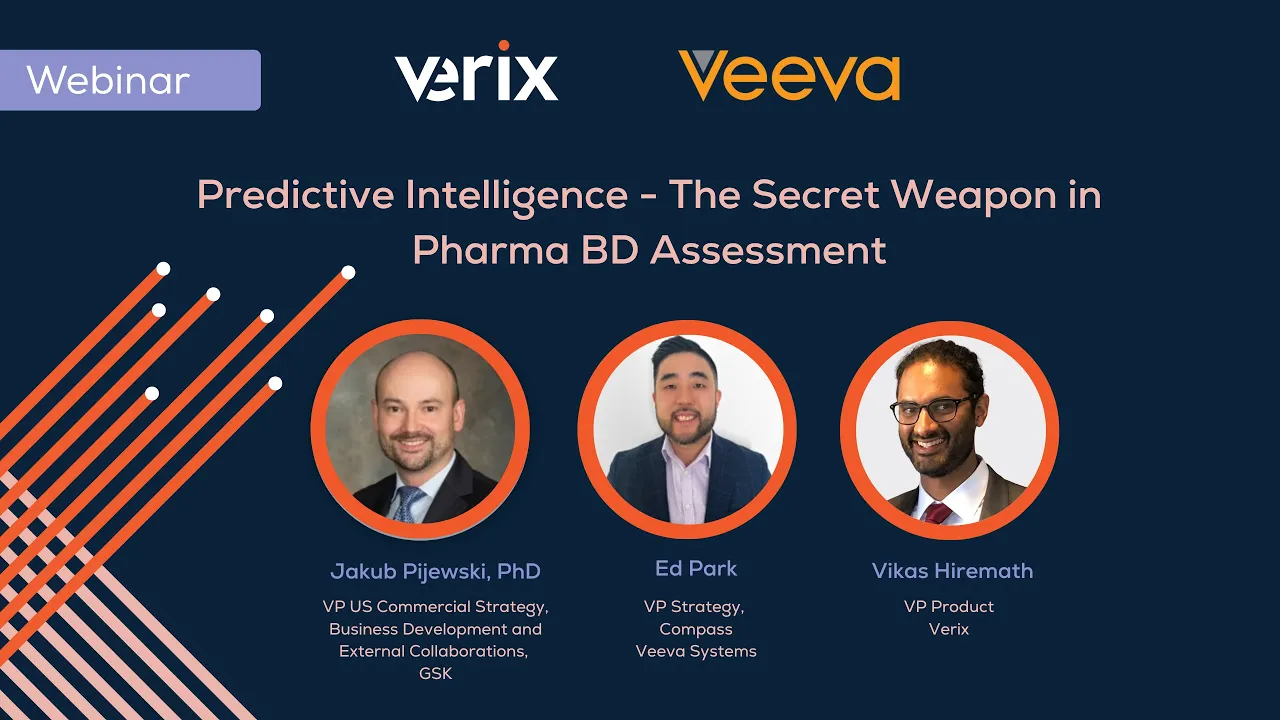
Webinar- Predictive Intelligence - The Secret Weapon in Pharma BD Assessment with GSK, Veeva, Verix
Verix
/@verixAI
Nov 24, 2025
This webinar provides an in-depth exploration of how predictive intelligence and intelligent automation serve as a "secret weapon" in pharmaceutical Business Development (BD) assessments. Featuring perspectives from a strategic investor (GSK), a data provider (Veeva), and an analytics platform vendor (Verix), the discussion centers on transforming the complex, high-stakes process of evaluating M&A and licensing opportunities. The core challenge identified by Jacob Pajooki (GSK) is the need to integrate vast, disparate data sets—scientific, commercial, and financial—under immense time pressure and often with incomplete information, making BD assessments a blend of "art and science." The speakers emphasize that while data is foundational, the true value is realized by efficiently converting that data into actionable insights. Traditional BD processes often get stuck due to data silos (clinical, market, epidemiology), lack of a systematic framework, and difficulties in achieving stakeholder alignment. The solution presented leverages best-in-class data assets, specifically Veeva Compass Patient data, combined with Verix’s automated analytics platform, Tavana. This integration aims to provide a more robust, real-world informed opinion of an asset's potential, moving beyond high-level epidemiology reports to quantify the truly eligible patient population and understand the commercial effort required for launch. The Verix Tavana platform is introduced as a modular, automated solution designed to streamline the forecasting process, which is traditionally manual and time-consuming. The platform incorporates building blocks for landscape assessment, patient prediction, patient-based forecasting, SGA estimation, and Monte Carlo simulation. By automating these analytical tasks, the platform frees up human expertise to focus on less structured problems and critical judgment calls, thereby accelerating the time to decision-grade insights. The quantitative benefits highlighted include a 50% reduction in cost and cutting the assessment timeline from approximately six weeks to under one week, enabling unlimited assessments at a fixed cost. This approach ensures consistency and a data-driven basis for comparing competing opportunities, which is crucial for achieving rapid alignment among the large stakeholder teams typical of strategic investors like GSK. The discussion also delves into the critical role of granular, real-world data (RWD) in refining valuations. Jacob from GSK provided examples where detailed longitudinal patient data reveals roadblocks, such as high market inertia or a widely distributed patient population, which can significantly shrink the realistic market potential compared to initial scientific belief. Veeva Compass Patient data, characterized by its completeness, unlimited access, and daily updates, addresses these data limitations by providing anonymous longitudinal data encompassing prescriptions, procedures, and diagnoses, including visibility into previously blocked segments like specialty pharmacy and hospital/HCO settings. This timeliness and depth are essential for understanding the current state of the market and ensuring the valuation reflects the true scope of commercial investment needed for a near-term launch. ### Detailed Key Takeaways * **BD Assessments are High-Stakes and Complex:** Pharmaceutical BD assessments are high-stakes exercises involving billions of dollars, requiring a difficult blend of scientific rationale, commercial strategy, and precise timing, often conducted under pressure with incomplete information. * **The Need for Data Integration and Structure:** A major pain point is breaking down data silos (clinical, market, competitive landscape, epidemiology) and integrating them quickly. Implementing a systematic framework and disciplined approach to data sources is essential for scaling BD evaluation efforts. * **Automation Accelerates Decision-Making:** Leveraging advanced analytics and automation (like the Verix Tavana platform) converts manual forecasting and data sifting into streamlined, consistent processes, freeing up human experts to focus their judgment on critical, less-structured issues (e.g., IP, manufacturing, instinct). * **RWD Refines Market Potential:** Relying solely on high-level epidemiology data can lead to inaccurate forecasts. Robust, deep, and broad real-world data (RWD) is necessary to quantify the truly eligible patient population, understand patient distribution, and assess the commercial effort (field force size, investment) required for market penetration. * **Longitudinal Patient Data is Critical for Commercialization:** Tracking patient history and treatment cycles reveals market inertia and patient flow roadblocks. For late-stage assets (launching in 2-3 years), understanding these dynamics is crucial for accurately scoping the required commercial investment and balancing the Net Present Value (NPV) equation. * **Platform-Based Approach Drives Efficiency:** Utilizing a modular, platform-based solution (like Tavana) allows companies to conduct rapid evaluations, reducing the time to decision-grade insights from six weeks to under one week, demonstrating a significant ROI (50% cost reduction) and enabling unlimited assessments at a fixed cost. * **Data Timeliness is Essential for Valuation:** Daily data updates (as provided by Veeva Compass Patient) are critical for BD efforts, providing the most timely view of the market, allowing teams to see how the market is reacting to recent clinical or competitor activities and ensuring the valuation reflects the current state. * **Addressing Data Blind Spots:** Comprehensive data networks must include visibility into previously blocked segments, such as specialty pharmacy and hospital/HCO settings, to provide a full 360-degree view of the market dynamics and competitive landscape. * **The Role of AI is Supportive, Not Autonomous:** The advanced analytics platform operates on a "human-in-the-loop" model, combining human intelligence with machine learning. The platform provides a comprehensive, robust view of the market faster, informing the "go/no-go" decision and confidence level, rather than making autonomous decisions. * **Data Granularity Impacts Investment Assumptions:** Detailed, data-driven assessments often lead to a more realistic view of investment costs. While traditional approaches might be overly ambitious on forecasts and overly conservative on costs, granular data can rationalize lower investment costs, helping maintain a strong NPV. * **Supporting the Full Commercial Cycle:** Beyond BD, foundational patient data (like Veeva Compass Patient) supports other commercial use cases, including building triggers and alerts based on daily activity, and improving segmentation and targeting accuracy by providing a complete view of HCP and patient interactions. ### Tools/Resources Mentioned * **Veeva Compass Patient:** Anonymous patient longitudinal data network that includes prescriptions, procedures, and diagnoses. Noted for completeness, unlimited access, and daily updates, providing visibility into specialty pharmacy and hospital settings. * **Verix Tavana Platform:** An automated, modular platform for advanced analytics and predictive intelligence. Used to build fit-for-purpose tools for BD assessment, forecasting, and commercial operations. * **Veeva CRM:** Mentioned in the context of integrating triggers and alerts built off Compass Patient data. ### Key Concepts * **Predictive Intelligence:** The use of advanced analytics, machine learning, and automation to forecast future market conditions, patient behavior, and commercial potential of an asset, particularly within the context of BD assessments. * **Business Development (BD) Assessment:** High-stakes evaluation process in life sciences (M&A, licensing) that integrates scientific, commercial, and financial data to determine the value and viability of an asset. * **Net Present Value (NPV):** A financial metric used in BD to evaluate the profitability of an investment opportunity, calculated by balancing the expected future revenue (forecast) against the required investment (commercialization costs). * **Human-in-the-Loop (HITL):** An AI/ML approach where human expertise and judgment are integrated into the automated process. The technology provides robust data and insights, but the final decision-making authority remains with the human experts.
Optimizing Spark Performance Through Intelligent Data Preprocessing | Gadi Goren , Veeva |
DataFlint
/@Dataflint
Nov 13, 2025
This video provides an in-depth exploration of optimizing Apache Spark performance through intelligent data preprocessing, presented by Gadi Goren from Veeva. The core purpose of the talk is to share practical solutions for common data engineering challenges encountered in production environments, specifically within the context of processing large volumes of commercial and health-related data for pharmaceutical clients. Goren begins by establishing the business context, explaining that their clients are pharmaceutical companies keen on understanding the effectiveness of their advertising campaigns by combining commercial ad impression data with anonymous health data. The presentation details how an external data preprocessing layer, dubbed "Pioneer," significantly enhances the efficiency and reliability of subsequent Spark-based data processing. The speaker delves into three primary problems that often plague Spark pipelines: the "small file problem" (many small input files), the "large file problem" (single or few very large input files), and the challenge of "schema evolution" (inconsistent schemas across input files). He explains how these issues lead to Spark driver overload, S3 slowdowns, inefficient task management, "struggler tasks" causing idle clusters, and job failures due to schema mismatches. The proposed solution involves introducing a dedicated preprocessing stage *before* data enters Spark, ensuring that Spark receives uniformly prepared, "Spark-ready" data. This stage handles tasks like splitting oversized files, consolidating numerous small files into optimally sized ones (e.g., 100MB), and converting data to efficient formats like Parquet, while also managing schema alignment. Goren elaborates on their implementation using AWS Step Functions with the Distributed Map feature, leveraging lightweight, I/O-bound containers to process data in parallel. This approach is highlighted as being fast, cost-effective, and highly scalable. The benefits demonstrated include significantly improved Spark efficiency and predictability, eliminating production slowdowns and crashes caused by unpredictable input data. Through a demo, the speaker illustrates the substantial speedup achieved by offloading these preprocessing tasks from Spark, allowing Spark to focus on its core strengths of data transformation and analysis rather than infrastructure management. The discussion also touches upon the evolution of their solution, moving from an all-Spark approach to this hybrid model after encountering severe performance and stability issues, particularly with schema merging. Key Takeaways: * **Business Context for Data Processing:** The speaker's company processes vast amounts of commercial advertising data combined with anonymous health data for pharmaceutical clients to assess campaign effectiveness, highlighting a critical use case for robust data pipelines in the life sciences sector. * **Challenges of Unpredictable Data Input:** Data arriving from external partners (DSPs, SSPs, publishers) is often inconsistent in terms of file size (many small files or very large files), format, and schema, leading to significant performance bottlenecks and failures in Spark. * **The "Small File Problem" in Spark:** Numerous small files cause Spark driver overload, excessive S3 API calls leading to slowdowns, and inefficient cluster utilization as Spark spends more time managing metadata and partitions than processing data. * **The "Large File Problem" in Spark:** Single, large, compressed files (e.g., GZIP) can lead to "struggler tasks" where one executor works intensely while others remain idle, causing severe slowdowns or out-of-memory errors and cluster crashes. * **Schema Evolution and Inconsistency:** Varying schemas across input files can cause Spark to infer incorrect schemas, leading to data corruption or job failures when encountering unexpected data types. Spark's internal schema merge process is often expensive and inefficient. * **Solution: External Data Preprocessing Layer:** Implement a dedicated preprocessing stage *before* data enters Spark. This stage prepares "Spark-ready data" by standardizing file sizes, formats, and schemas, allowing Spark to operate more efficiently and predictably. * **Preprocessing Operations:** Key preprocessing tasks include splitting large files into smaller, manageable chunks; consolidating many small files into optimally sized files (e.g., 100MB); converting data to efficient columnar formats like Parquet; and harmonizing schemas. * **AWS-Based Implementation:** The specific solution leverages AWS Step Functions with its Distributed Map feature, running parallel processes on lightweight, I/O-bound containers. This approach is described as fast, cost-effective, and scalable for handling massive data volumes. * **Significant Performance Gains:** Demonstrations show substantial speedups (e.g., 5x for small file problem, 3x for schema merge) when preprocessing is done externally, validating the investment in this additional stage. * **Predictable Spark Performance:** The preprocessing layer ensures consistent input for Spark, leading to predictable job runtimes and stability, regardless of whether processing daily incremental data or large historical backfills, thereby preventing unexpected production issues. * **Cost-Effectiveness of Preprocessing:** Despite being an additional step, the preprocessing stage is very low-cost and quick (minutes to tens of minutes for data volumes that would take hours in Spark), making it a worthwhile investment for overall pipeline efficiency. * **Handling S3 Limits:** The external preprocessing allows for controlled parallelism, preventing S3 slowdowns by staying within read limits (e.g., ~500 files/second), unlike dynamic Spark clusters that might exceed these limits. * **Evolutionary Solution Development:** The current preprocessing approach was developed iteratively after encountering severe limitations and failures when attempting to handle all data quality and formatting issues directly within Spark. * **Data Lake Technology:** The company utilizes Apache Hudi as its data lake format, indicating a focus on transactional data lakes and efficient data management. Tools/Resources Mentioned: * **Apache Spark:** The primary big data processing framework being optimized. * **AWS Step Functions:** An AWS service used to coordinate distributed applications and microservices, specifically for orchestrating the preprocessing workflow. * **AWS Step Functions Distributed Map:** A feature within Step Functions that allows for running many parallel iterations of a step, ideal for processing large datasets. * **AWS S3:** Amazon Simple Storage Service, used for storing raw input data from partners and processed data. * **Parquet:** A columnar storage file format optimized for analytics, used for storing "Spark-ready" data. * **Apache Hudi:** A data lake platform that enables transactional data lakes, mentioned as the format for their data lake. Key Concepts: * **Data Preprocessing:** The process of transforming raw data into a clean and organized format suitable for analysis or further processing. In this context, it specifically refers to preparing data for optimal ingestion by Apache Spark. * **Small File Problem:** A common issue in big data systems where processing many small files leads to high overhead for metadata management, inefficient resource utilization, and performance degradation. * **Large File Problem:** The challenge of processing extremely large files, especially compressed ones, which can lead to single-node bottlenecks ("struggler tasks") and resource contention in distributed systems. * **Schema Evolution:** The process of adapting to changes in the structure (schema) of data over time. Inconsistent schema evolution can break data pipelines if not handled gracefully. * **Spark Driver Overload:** A state where the Spark driver, responsible for coordinating tasks, becomes overwhelmed by the volume of metadata or tasks, leading to slowdowns or crashes. * **Struggler Tasks:** Tasks in a distributed computing environment that take significantly longer to complete than others, often due to data skew or resource contention, slowing down the entire job. * **I/O Bound:** A process or system whose performance is limited by the speed of input/output operations (e.g., reading from or writing to disk/network) rather than CPU processing. * **Spark-Ready Data:** Data that has been preprocessed and formatted in a way that is highly optimized for ingestion and processing by Apache Spark, ensuring efficiency and stability.

Deep Dive: Why Veeva Systems Dominates Life Sciences Software (VEEV)
Fundamental Deep Dive
/@fundamental_deep_dive
Jul 31, 2025
This video provides a comprehensive deep dive into Veeva Systems, a dominant cloud software and platform provider exclusively for the life sciences industry. It explores Veeva's specialized business model, which focuses on solving complex challenges in clinical trials, regulatory compliance, and tailored CRM/sales for big pharma, biotech, and medical device companies. The discussion covers Veeva's product ecosystem, built on its proprietary Vault platform, encompassing both Development Cloud (R&D, clinical trial management, regulatory submissions) and Commercial Cloud (sales, marketing automation, data products). A significant theme is Veeva's strategic migration of its CRM from Salesforce technology to its own Vault platform, aiming for increased margins and tighter integration. The video also highlights Veeva's major AI initiatives, embedding AI into its applications for automation and productivity, particularly in areas like Medical Legal Regulatory (MLR) review. Financial performance, competitive landscape, and Veeva's unique Public Benefit Corporation (PBC) status, which fosters deep customer trust, are also key topics, reinforcing the value of deep vertical specialization and long-term commitment in a highly regulated industry. Key Takeaways: * **Validation of Deep Vertical Specialization:** Veeva's unparalleled success underscores the immense value of a laser-like focus on a single, complex industry like life sciences. * **Strategic Importance of Veeva CRM & Platform Migration:** The ongoing, monumental migration of Veeva CRM to the Vault platform presents both challenges and opportunities.ai, this reinforces the critical need for expert Veeva CRM consulting services to help clients navigate these transitions, maximize their CRM investment, and leverage the integrated R&D and commercial capabilities. This highlights practical applications for intelligent automation in regulated environments, emphasizing productivity gains and compliance streamlining. * **Regulatory Compliance as a Foundational Competitive Advantage:** The video consistently emphasizes how Veeva bakes regulatory rules, data integrity, and compliance into its software, making it indispensable. This reinforces that deep regulatory knowledge and the ability to build compliant solutions are not just features but fundamental competitive differentiators in the pharmaceutical and life sciences sectors. * **Untapped Market Potential and Growth Opportunities:** Despite Veeva's dominance, its estimated market penetration is still relatively low within a $20 billion total addressable market in life sciences.ai to expand its client base. * **Trust as a Strategic Differentiator:** Veeva's commitment as a Public Benefit Corporation (PBC) and its emphasis on creating value for customers beyond short-term profit builds immense trust. This suggests that demonstrating long-term commitment, ethical practices, and a deep understanding of stakeholder needs can be a powerful, hard-to-copy competitive strategy in the sensitive life sciences industry.

Veeva Systems (VEEV) Q1 2023 Earnings Call Summary
SpeedyEarnings
/@SpeedyEarnings-le4ht
Jun 6, 2023
This video summarizes Veeva Systems' Q1 2023 earnings call, highlighting the company's strong financial performance and strategic advancements across its product portfolio. Key discussions revolved around the ongoing transition to Vault CRM, the integration of generative AI features like the CRM bot and Service Center, and the expansion of its data offerings with new Compass products and Link. The call also provided updates on Veeva's clinical data management solutions, quality management suite adoption, and insights into the stable yet cautious macroeconomic environment affecting project scrutiny in the life sciences sector. Key Takeaways: * **Veeva's Strategic Shift to Vault CRM with Integrated AI:** Veeva is actively transitioning customers from its legacy CRM to Vault CRM, a process anticipated to span from 2025 to 2029. A significant draw for this migration is the integration of new features like Service Center and a Generative AI-powered CRM bot, indicating a strong push towards AI-enhanced commercial operations. * **Deepening Investment in AI and LLM Solutions:** Veeva views AI as a critical component to enhance the value of its core systems of record. The development of proprietary data assets and applications, alongside an open ecosystem for customers to integrate their own AI, signals a future where AI and LLMs will play an increasingly central role in pharmaceutical commercial and clinical operations. * **Data as a Core Competitive Advantage:** Veeva is expanding its data product suite with Compass (prescriber and sales data) and Link (real-time customer intelligence), positioning them as modern, integrated alternatives to incumbents like IQVIA. This strategy emphasizes providing better, unified data for actionable insights. * **Modernization of Clinical Data Management:** The company is making significant strides in clinical data management with its EDC system, enabling faster study builds and seamless amendments. Plans for efficient, standardized integration with Drug Safety Systems aim to replace legacy providers and offer greater efficiency across the industry. * **Increased Scrutiny on Life Sciences Projects:** While the macro environment is stable, there's heightened caution from larger companies and tighter funding for emerging biotechs. This leads to increased scrutiny on project spending, favoring investments in core capabilities like CRM, safety, and regulatory compliance over discretionary or one-off projects. * **Growing Traction for Quality Management Solutions:** Sanofi's adoption of Veeva's unified Quality Management Suite underscores the market's demand for integrated solutions that streamline documentation, ensure higher quality standards, and modernize operations, aligning with regulatory compliance needs.ai to offer complementary solutions.

Interview With Andreas Gerloff, Daiichi Sankyo Europe - Veeva Commercial Summit
Moe Alsumidaie
/@Annexclinical
Dec 2, 2025
This video provides an in-depth exploration of the evolving strategic role of Medical Affairs (MA) within the pharmaceutical industry, featuring an interview with Andreas Gerloff, Director of Medical Excellence Operations at Daiichi Sankyo Europe, conducted at the Veeva Commercial Summit. The discussion centers on MA's shift from a support function to a strategic pillar alongside R&D and Commercial, the critical challenges in insight generation and impact measurement, and the disruptive potential of Artificial Intelligence (AI) and Generative AI (GenAI) in this domain. Gerloff emphasizes that while MA has achieved peer status in strategic planning across many organizations, a significant gap remains in aligning objectives and measuring success cross-functionally. The core challenge for MA is balancing the need for scientific depth with the pressure to deliver faster, actionable insights to R&D and Commercial teams. He notes that the MSL role has fundamentally changed from a data disseminator to a critical insight collector, focusing on understanding customer perception and alignment with company data. However, the industry struggles with a lack of robust processes and tools for internal processing, actioning insights, and effectively "closing the loop" back to the customer or strategy. This lack of agility makes it difficult to reshape strategy in real-time based on clinician feedback, particularly concerning evidence needs (80% of shared insights) and educational gaps (78% of shared insights). A major theme is the difficulty in measuring MA impact. Gerloff advocates for moving away from simple activity counting (e.g., number of ad boards or interactions) toward a comprehensive framework that tells a story. This framework should link objectives, activities, belief change, clinical behavior change, and ultimately, patient outcomes. The pressure to prove value and return on investment (ROI) for the significant investments made in MA over recent years necessitates this shift toward outcome-based metrics. Furthermore, the entire pharma operating model is being forced to reinvent itself due to more educated patients and changing HCP needs, particularly the preference for engaging with Medical Affairs over Commercial for scientific discussions, a trend accelerated by the COVID-19 pandemic. The interview concludes with a focused discussion on AI. Gerloff believes AI can impact nearly all process steps within MA, including insight collection, analysis, and personalization of communication. While pharma companies are currently in the early stages of internal experimentation and proof-of-concepts, a more profound concern is the external impact of GenAI on stakeholders. Citing an IQVIA report, he highlights that over 50% of HCPs (and 75% of those born after 1990) already use GenAI for scientific information and rank it closely in value to MSLs. This trend demands that pharma think critically about its role in medical education, ensuring accurate information is disseminated through these tools, especially since 14% of HCPs reportedly do not check GenAI sources before using the information for clinical decision-making. Gerloff suggests that the industry may need to overcome competitive barriers and collaborate to develop unified, authoritative GenAI solutions that serve as a single, trusted source of information for busy HCPs, preventing external sources from taking over the educational relationship. Key Takeaways: * **Strategic Alignment Gap:** While Medical Affairs (MA) has achieved strategic peer status with R&D and Commercial, a key challenge remains in achieving true alignment on shared objectives and developing unified metrics to measure joint success against overarching organizational goals. * **Insight Processing is the Bottleneck:** The primary struggle in leveraging insights (especially around evidence needs and educational gaps) is not collection, but the internal process—connecting data dots across channels (MSLs, advisory boards, medical info), translating data into action, and maintaining the agility to shape strategy in near real-time. * **Shift from Activity to Impact Measurement:** MA must transition from counting activities (e.g., number of interactions or ad boards) to using a range of metrics that demonstrate value along a chain of thought: objectives $\rightarrow$ activities $\rightarrow$ belief change $\rightarrow$ clinical behavior change $\rightarrow$ patient outcome. * **Proving ROI is Essential:** Significant recent investments in MA necessitate proving the return on investment (ROI) beyond simple sales numbers, requiring sophisticated measurement frameworks that capture the full scope of medical impact. * **Pharma Operating Model Reinvention:** The industry's operating model must reinvent itself due to evolving customer needs, including more educated patients and HCPs who increasingly prefer engaging with MA for scientific discussions, forcing MA to move beyond its traditional support role. * **AI's Internal and External Disruption:** AI is poised to impact all MA processes (KOL mapping, insight generation, personalization), but the greater concern is the external use of GenAI by HCPs (over 50% use it for scientific info), which threatens pharma's traditional role as the primary source of medical education. * **The Trust Deficit in GenAI:** A significant warning is that 14% of HCPs using GenAI for scientific information do not check the sources before using the information for clinical decision-making, highlighting a critical need for pharma to ensure the accuracy of information available via public tools. * **Need for Industry Collaboration on AI:** To maintain relevance and ensure accurate medical education, the industry should consider overcoming competitive barriers to collaborate on developing unified, authoritative GenAI solutions that serve as a single, trusted source for HCPs, rather than relying on individual company initiatives. * **MSL Role Transformation:** The MSL function has evolved from solely disseminating data to critically understanding customer perspectives and collecting high-value insights that inform cross-functional strategic planning. * **Cultural Shift for MA:** MA teams must continue to "step up," embrace difficult decision-making, and maintain a future-oriented perspective to ensure they remain strategic partners and do not miss mega-trends that could disrupt their relationship with customers. Tools/Resources Mentioned: * Veeva (Implied context of Veeva Commercial Summit and Veeva-developed frameworks/white papers) * IQVIA (Report cited regarding HCP use of GenAI) Key Concepts: * **Medical Excellence Operations:** The function responsible for optimizing the processes, tools, and strategic execution within a company’s Medical Affairs department. * **Insight Generation/Collection:** The process by which Medical Affairs gathers feedback from Key Opinion Leaders (KOLs) and clinicians regarding data gaps, evidence needs, and educational requirements related to a therapy or disease state. * **Medical Impact Measurement:** A framework designed to quantify the value and effectiveness of Medical Affairs activities, moving beyond simple metrics to show influence on clinical behavior and patient outcomes. * **GenAI in Medical Affairs:** The application of Generative AI and Large Language Models (LLMs) to automate tasks like KOL mapping, synthesize complex insights from disparate sources, and personalize scientific communication.

Copilot Agents Solutions Series – Connecting Veeva Vault PromoMats
Microsoft Healthcare and Life Blog Videos
/@microsofthealthcareandlife5580
Apr 16, 2025
This video, part of Microsoft's Copilot Agents Solutions Series, explores how organizations in the life sciences industry can extend the capabilities of Microsoft 365 Copilot by leveraging enterprise data from Veeva Vault PromoMats through AI agents and Microsoft 365 Graph Connectors. The discussion highlights the critical need for life sciences companies to accelerate content creation for marketing assets while ensuring strict regulatory compliance. It introduces the concept of custom AI agents that can be grounded on specific enterprise data sources, moving beyond generic web or M365 data. The speakers emphasize that these agents, particularly the newly available Veeva Vault PromoMats Graph Connector (now in public preview), enable a no-code approach to building powerful, industry-specific AI solutions, directly addressing pain points unique to the pharmaceutical and biotech sectors. Key Takeaways: * **Veeva Vault Integration with Microsoft Copilot:** Microsoft has partnered with Veeva to develop Graph Connectors for various Veeva modules, with the Veeva Vault PromoMats connector now in public preview, allowing life sciences companies to integrate their compliant content management system with Microsoft 365 Copilot. * **No-Code AI Agent Creation for Life Sciences:** The video demonstrates how M365 administrators can enable Graph Connectors, allowing end-users to build custom AI agents with minimal setup and no coding, specifically grounded on Veeva Vault PromoMats data, to address industry-specific use cases. * **Enhanced Commercial Operations and Compliance:** By connecting Copilot to Veeva Vault PromoMats, life sciences firms can leverage generative AI for faster creation of marketing assets and other content, while ensuring that the AI's responses and generated content are grounded in compliant, approved data, thus streamlining operations and maintaining regulatory adherence. * **Addressing Industry-Specific Pain Points:** The solution directly targets challenges in life sciences, such as the need for rapid, compliant content creation and access to specialized data (e.g., clinical trial information, regulatory documents) that is unique to the sector. * **Future Expansion of Industry-Specific AI:** This is the first in a six-part series focusing on healthcare and life sciences, indicating Microsoft's commitment to developing more industry-specific AI solutions and Graph Connectors for critical enterprise systems.

Digital transformation with Veeva Systems
The Innovation Coffee
/@theinnovationcoffee2510
Oct 27, 2020
This video explores the digital transformation within the life sciences industry, featuring David Logue, Senior Vice President of Veeva Commercial Strategy Europe. The discussion highlights Veeva Systems' pivotal role, its evolution from a software-centric company to one focused on software, data, and services, and the unique challenges and opportunities within the pharmaceutical sector. Logue emphasizes the importance of digital solutions in commercial, medical, and clinical operations, particularly in the context of accelerating change post-COVID-19, while also addressing key blockers to innovation such as change management and market timing. Key Takeaways: * **Veeva's Strategic Evolution:** Veeva has expanded its offering beyond pure software to a comprehensive "software, data, and services" model, reflecting the industry's need for integrated solutions that not only provide technology but also facilitate data interpretation and actionable insights. * **Pharma's Digital Maturity & Opportunities:** While the pharmaceutical industry excels in data utilization, it lags in customer experience compared to other sectors. This presents significant "runway" for digital innovation, especially in enhancing commercial and medical interactions, and developing patient-centric digital clinical trials. * **Underserved Medical Affairs:** Medical affairs is identified as a "massively underserved" area within the industry, with the pandemic underscoring the critical need for high-quality medical information and interactions. This points to a strong demand for AI and LLM solutions like medical info chatbots. * **Innovation Blockers: People and Timing:** The primary impediments to faster innovation are identified as "people change" (effective change management) and "timing." Innovations must be commercially viable and align with customer readiness, not just technological advancement, to succeed in the real world. * **COVID-19 as a Digital Catalyst:** The pandemic has significantly accelerated digital adoption and transformation within life sciences, forcing companies to pivot quickly and embrace new ways of engaging customers and patients, thereby creating a more receptive environment for innovative digital solutions. * **Data Value Through Services:** The mere existence of large data sets ("data lakes") is insufficient; true value is derived from the services that help analyze, interpret, and translate that data into meaningful business intelligence and actionable decisions. * **Deep Industry Specialization:** Veeva's success stems from its decision to "go deep" into the life sciences industry, recognizing its unique complexities and specific needs, which validates a specialized approach for technology and consulting firms in this sector.

Veeva Systems Q2: IQVIA, AI & CRM Wins vs. Market Expectations
TalkTickers: AI Podcast Discussing Earnings Calls
/@TalkTickersPodcast
Aug 29, 2025
This video provides an in-depth analysis of Veeva Systems' Fiscal Q2 2026 earnings call, dissecting the life sciences software giant's financial performance, strategic initiatives, and market reception. The discussion highlights Veeva's strong underlying revenue and non-GAAP EPS beats, which were paradoxically met with a stock dip due to a GAAP EPS miss, underscoring intense investor scrutiny and high expectations within the current market. The hosts meticulously break down the numbers, management's outlook, and the significant strategic developments that are shaping Veeva's future in the pharmaceutical and biotech sectors. A major focus of the earnings call, and subsequently the podcast, was the "transformative" IQVIA settlement. This resolution of a decade-long legal dispute eliminates critical data-use restrictions that had previously hampered Veeva's commercial and clinical offerings, particularly for products like Veeva Network, Nitro, and Veeva EDC. This strategic shift turns a former rival into a collaborator, allowing for seamless data integration and positioning IQVIA as a Contract Research Organization (CRO) partner for Veeva's clinical trial software. This foundational change is expected to significantly strengthen Veeva's long-term market position, making its ecosystem stickier and harder for competitors to penetrate. Furthermore, the video delves into Veeva's ambitious "agentic AI" strategy, which involves AIs designed to actively perform tasks, interact with systems, and make decisions. The debut of these AI agents is planned for December within Vault CRM and commercial content applications, with a phased rollout across clinical, regulatory, safety, quality, and clinical data agents through 2027. While no material revenue contribution is expected in the immediate fiscal years, Veeva aims to create billions in industry value through automated workflows and a fundamental shift in user interaction. The company believes its "structural advantage"—its deep industry footprint and existing 50+ specific applications as systems of record—gives it a unique right to win in life sciences AI. The podcast also examines the accelerating momentum of Vault CRM, which now boasts over 100 live customers and commitments from nine of the top 20 global biopharmas, rapidly gaining ground against Salesforce with faster implementation speeds. Key Takeaways: * **Veeva's Q2 Financials and Market Disconnect:** Despite reporting strong revenue ($789.1 million, up 17% YoY) and non-GAAP EPS ($1.99) beats, Veeva's stock dipped by 3.7% after hours due to a GAAP EPS miss of $1.11. This illustrates high investor expectations and sensitivity to earnings quality, even when underlying operational performance is robust and guidance is raised. * **Transformative IQVIA Settlement:** The resolution of a decade-long legal battle with IQVIA is a "hinge event," eliminating data-use restrictions that previously limited Veeva Network and Nitro. This allows for seamless data integration, enhances Veeva EDC by positioning IQVIA as a CRO partner, and significantly strengthens Veeva's commercial and clinical cloud offerings. * **Ambitious "Agentic AI" Rollout:** Veeva plans to launch its first "agentic AI" solutions in December, starting with Vault CRM and commercial content applications. This will be followed by a phased release of agents for clinical, regulatory, safety, quality (2026), and clinical data (2027), aiming for a fundamental shift in user interaction and workflow automation. * **Long-Term AI Value Creation, Not Immediate Revenue:** While Veeva anticipates its AI strategy to create billions of dollars in value for the industry by boosting efficiency, no material revenue contribution is expected in fiscal 2026 or 2027. The focus is on early adoption and proving value, indicating a long-term strategic play. * **Veeva's "Structural Advantage" in AI:** Veeva believes its deep industry footprint, with around 50 existing industry-specific applications serving as systems of record, provides a "structural advantage" for its AI strategy. This allows them to embed AI directly into existing workflows, offering integrated solutions rather than standalone tools. * **Vault CRM Gaining Significant Traction Against Salesforce:** Vault CRM now has over 100 live customers, including commitments from nine of the top 20 global biopharmas, with two already live in major markets. This is presented as a significant lead over Salesforce, which reportedly has only three top 20 verbal commitments. * **Faster Implementation as a Key Differentiator:** Veeva highlights its ability to bring top 20 pharma customers live in major markets in under two years for Vault CRM, contrasting with Salesforce's projected longer timelines (late 2026 for a single region, potentially 2029 for global implementation). * **Expanded Focus on Quality Cloud:** Veeva is elevating its internal focus on Quality Cloud, expanding its offerings to include Laboratory Information Management Systems (LIMS), batch release, and validation management, aiming to build a comprehensive quality suite. * **Supportive Macro Environment:** Veeva benefits from positive industry tailwinds, including rising large pharma R&D spending and accelerating global medicine spending. The potential for AI to shorten drug development cycles further supports a stable environment for Veeva's customers. * **Strategic Transformation to a Comprehensive Platform:** The Q2 results underscore Veeva's successful multi-year transformation from solely a CRM provider to a comprehensive platform, data, and services partner for the entire life sciences industry, with the IQVIA deal and AI strategy being central to this evolution. * **Execution Risk in Large Migrations:** While the long-term strategic narrative is compelling, investors will closely monitor Veeva's execution of large Vault CRM migrations over the next couple of years (fiscal 2026-2027) as a key execution risk. **Tools/Resources Mentioned:** * **Veeva Network:** A data solution for managing healthcare professional data. * **Veeva Nitro:** A commercial data warehouse solution. * **Veeva EDC:** Electronic Data Capture for clinical trials. * **Vault CRM:** Veeva's customer relationship management platform for life sciences. * **Quality Cloud:** Veeva's suite of quality management applications, expanding into LIMS, batch release, and validation management. * **Crossix Audiences:** Veeva's data analytics segment, particularly its usage-based component. * **Compass Prescribers:** A Crossix product for measuring marketing effectiveness for healthcare providers. * **SAP, Workday:** Mentioned as large enterprise systems with which Veeva's AI agents will interoperate. **Key Concepts:** * **Agentic AI:** Refers to AI systems designed to not just process information but to actively perform tasks, interact with other systems, and make decisions, thereby automating complex workflows. * **Structural Advantage:** Veeva's term for its competitive edge in AI, stemming from its existing deep integration within the life sciences industry through over 50 specialized applications that serve as systems of record, allowing AI to be embedded directly into established workflows. * **Horizontal Software:** Veeva's ambition to expand its software offerings beyond the life sciences industry, initially using its CRM platform as a base for broader market applications.

Future Of Veeva Vault Developer | Veeva Vault Developer Complete Guide | How to start learning Veeva
The Corporate Guys
/@TheCorporateGuys
Dec 17, 2024
This video provides an in-depth discussion on the future of Veeva Vault developers, detailing the platform's role as a specialized Enterprise Content Management (ECM) tool for the pharmaceutical industry. The speakers emphasize Veeva Vault's unique position due to its pharma-specific design, cloud-based accessibility, and comprehensive suites addressing critical areas like regulatory, clinical, and commercial operations. The conversation highlights the significant and sustained demand for Veeva Vault expertise, noting a current shortage of skilled professionals and projecting a bright future for those entering or advancing in this domain. Key insights include Veeva Vault's configuration-centric development approach, which allows individuals without extensive coding backgrounds to contribute, while also stressing the value of Java SDK, REST API, and VQL knowledge for advanced customization and integration. The discussion also touches upon the strategic importance of specific modules like Clinical Development Management System (CDMS), Electronic Trial Master File (eTMF), and Regulatory Submission, as well as the upcoming migration of Veeva CRM to Veeva Vault CRM, which is expected to create new opportunities for integrated solutions. Practical advice is offered on learning paths, emphasizing the need for hands-on experience within project environments due to the platform's non-open-source nature, and the importance of understanding core concepts like document versus object configuration. Key Takeaways: * **Veeva Vault's Pharma-Specific Dominance:** Veeva Vault is established as the premier cloud-based Enterprise Content Management (ECM) solution exclusively tailored for the pharmaceutical industry, facilitating migration from legacy systems and offering global accessibility. * **High Demand for Specialized Talent:** There is a robust and growing demand for Veeva Vault developers and configurators within the life sciences sector, significantly outpacing the current supply of skilled professionals, which translates into strong career prospects and financial growth. * **Configuration-Driven Development:** Veeva Vault development is largely configuration-based, making it accessible to individuals without deep coding expertise. However, proficiency in Java SDK, REST APIs, and VQL is highly advantageous for complex customizations, integrations, and automation. * **Comprehensive Industry Coverage:** The platform offers distinct product suites for critical pharmaceutical lifecycle domains, including Regulatory (e.g., Registration, Submission, Publish), Clinical (e.g., CDMS, eTMF), Commercial (e.g., PromoMats), and Quality Management Systems. * **Strategic Integration with Veeva CRM:** The planned migration of Veeva CRM to Veeva Vault CRM starting in 2025 represents a significant industry shift, promising enhanced integration capabilities and creating new opportunities for professionals skilled in both Veeva Vault and CRM. * **Learning and Skill Development:** Due to its proprietary nature, hands-on Veeva Vault experience is primarily gained through employer-provided access. Aspiring developers are advised to focus on understanding configuration differences (document vs. object), mastering Postman for API interactions, and leveraging official developer resources.

Medical Tech Giant - Veeva Systems (VEEV) - NYSE Growth Stocks
Aussie Investing Machine
/@aussieinvestingmachine9912
Feb 19, 2021
This video provides an in-depth analysis of Veeva Systems (VEEV), a prominent cloud computing company specializing in pharmaceutical and life sciences industry applications. The speaker details Veeva's strategic aim to digitalize the entire industry by connecting pharmaceutical companies to doctors and patients. Key areas of Veeva's innovation highlighted include their clinical vision, which focuses on streamlining historically paper-based clinical trials through their Vault platform for data management, operations, regulatory approvals, and drug safety. The video also discusses Veeva's "My Veeva" software for patient engagement (virtual consent, visits, adherence) and their solutions for healthcare professionals to manage complex interactions with multiple pharmaceutical companies, ensuring access to up-to-date product and safety information. The overall narrative emphasizes Veeva's market dominance, consistent financial growth, and ongoing expansion into a "white space market" within the life sciences sector. Key Takeaways: * **Centrality of Veeva in Life Sciences Digitalization:** The video reinforces Veeva Systems' critical role as a leading platform for digital transformation within the pharmaceutical and life sciences industries * **Opportunities in Clinical Trial Digitalization:** Veeva's significant investment in digitalizing clinical trials, from data capture and operations to regulatory submissions (e.g.ai to apply its AI, data engineering, and regulatory compliance expertise to further optimize these processes. * **Data Engineering as a Foundational Need:** The video consistently underscores the importance of data capture, verification, cleaning, and formatting across Veeva's platforms. * **Integrated Regulatory Compliance:** Veeva's built-in capabilities for regulatory processes (e.g.

Thinking High and Low: Veeva’s Secrets to Success
Emergence Playbook
/@emergenceplaybook9583
Sep 29, 2017
This video provides a deep dive into Veeva Systems' journey and strategic principles, as shared by its Founder & CEO, Peter Gassner. It covers Veeva's foundational philosophy, its evolution from a cloud solutions provider to building the "industry cloud for Life Sciences," and the practical approaches to leadership, product development, sales, and financial management that have driven its success. Gassner emphasizes the importance of a clear vision and values, customer-centricity, and a long-term perspective in building an industry-specific enterprise software company. The discussion also touches on the ever-changing technology landscape and the CEO's critical role in making informed platform decisions and fostering a culture of excellence and self-improvement. Key Takeaways: * **Vision-Driven Strategy:** Veeva operates on a clear vision and values (customer success, employee success, speed) that guide all major decisions. Their aspirational new vision to "build the industry cloud for Life Sciences" aims to make Veeva an essential and appreciated partner, improving how customers bring life-saving drugs to patients. * **CEO's Core Responsibilities:** A CEO's primary job involves picking clear and correct target markets, ensuring engaged teams work together (understanding the difference between the team you lead and the team you're on), and making quick, clear, and hopefully correct decisions. * **Industry Cloud Product Excellence:** For an industry cloud, product excellence means aiming for leadership from day one, assembling the best domain experts, and crucially, *running towards complexity* rather than away from it. This involves taking on the integration burden for customers by offering deeply integrated, industry-specific products. * **Long-Term Field Model:** Veeva's sales and service model is based on reference selling, focusing on getting early adopters live and happy. Sales takes a long-term view, prioritizing strategic partnership over quarterly quotas, and services are staffed by domain experts who act as "pollinators" of industry knowledge. * **Disciplined Financial Management:** The company maintains financial discipline with a "spend it like it's your own" rule, starting from the CEO. This includes disciplined product planning, a bias towards organic growth, and a focus on both top-line and bottom-line performance. * **Strategic Technology Platform Decisions:** CEOs must actively pay attention to the rapidly shifting technology landscape (infrastructure, system software, application platforms). It's critical to make conscious, economic decisions about leveraging external platforms versus building proprietary ones, rather than passively adopting technologies. * **Continuous Self-Improvement for Leaders:** Gassner stresses that a CEO's greatest contribution to the company is continuous self-improvement. Leaders must actively identify areas for growth and work to improve themselves, as they have the most control over their own development.

Argus vs LSMV vs Veeva The TOP 3 Interfaces for Pharmaceutical Professionals
The Drug Safety Coach
/@TheDrugSafetyCoach
Nov 16, 2025
This video provides an in-depth comparison of three prominent safety systems utilized in the pharmacovigilance domain: Oracle Argus Safety, Lives Medical Vigilance (LSMV), and Veeva Safety. The speaker, "The Drug Safety Coach," aims to elucidate the fundamental differences between these systems, explaining why organizations choose specific platforms and how they function in real-world pharmacovigilance activities, particularly focusing on their user interfaces for case processing. The discussion progresses from a high-level overview of each system's characteristics to a detailed visual walkthrough of their respective data entry tabs and workflows. The core of the comparison revolves around several key aspects: platform type, main modules, strengths, and weaknesses. Argus Safety is presented as a mature system available both on-premises and in the cloud, renowned for its regulatory compliance due to its long history, though it's noted for its complex setup. LSMV is highlighted as a cloud-native solution emphasizing automation and a user-friendly interface, albeit with a steeper learning curve. Veeva Safety, also cloud-native, is positioned for its strong integration capabilities with clinical and regulatory affairs, though it comes with a higher cost and a highly controlled setup. The video then visually demonstrates the user interfaces for case processing in each system, showcasing the various tabs for entering patient, product, event, and other case-related information, illustrating how the layout and flow differ while the underlying data entry functionality remains similar. The speaker delves into the specifics of each system's interface, starting with Argus Safety, detailing tabs like General, Patient, Product, Event, Analysis, Activities, Additional Information, and Regulatory Reports. Visual examples of the Argus Patient and Event tabs are provided. The comparison then moves to LSMV, showcasing its interface with tabs such as General Case Information, Source, Reporter, Study, Patient, Products, Event, Narrative, and Lab Data, emphasizing its open-source tab structure that enhances user-friendliness compared to Argus. Finally, Veeva Safety's interface is explored, highlighting its "vault" concept for secure information, its inbox for new cases, and customizable tabs like Details, Case, Contact, Patient, Product, Medical, Events, Documents, and Transmissions. The video concludes by reiterating that while the core functionality of data entry is similar across these systems, their interfaces, customization options, and specific strengths (e.g., Argus for regulatory compliance, LSMV for automation, Veeva for integration and control) are crucial differentiators for pharmaceutical organizations. Key Takeaways: * **Three Core Pharmacovigilance Systems:** The video provides a comparative analysis of Oracle Argus Safety, Lives Medical Vigilance (LSMV), and Veeva Safety, which are the leading safety databases used in the pharmaceutical industry for pharmacovigilance. * **Platform Deployment Models:** Argus Safety offers flexibility with both on-premises and cloud deployment options, while LSMV and Veeva Safety are exclusively cloud-native software solutions, reflecting a modern trend towards cloud infrastructure. * **Distinct Key Modules:** Each system has specialized modules: Argus focuses on case processing, reporting, and signal detection; LSMV on case intake, medical review, and reporting; and Veeva Safety (part of Veeva Vault Quality) also covers case processing, reporting, and integration. * **Strengths and Weaknesses Differentiate Choice:** Argus's strength lies in its historical regulatory compliance, making it a "gold standard." LSMV excels in automation and user interface design. Veeva Safety's strength is its robust integration with clinical and regulatory affairs, though it is noted for being expensive and having a highly controlled setup. * **User Interface and Workflow Variations:** Despite similar core functionalities for data entry, the user interfaces (UI) and workflow navigation differ significantly across the systems. Argus uses distinct tabs like Patient, Product, Event; LSMV offers a more open-source tab structure for ease of use; and Veeva Safety provides a highly customizable, vault-like environment. * **Automation and AI in Pharmacovigilance:** The video explicitly mentions that LSMV can be highly automated, bringing "automation and artificial intelligence" into case processing, which is a critical area for efficiency and accuracy in pharmacovigilance. * **Veeva's Integration and Customization:** Veeva Safety is highlighted for its ability to integrate with other Veeva products and its high degree of customization, allowing organizations to tailor workflows and data fields according to specific regulatory and operational needs. * **Regulatory Compliance as a Primary Driver:** The historical regulatory compliance of Argus is presented as a major reason for its continued dominance, especially among Contract Research Organizations (CROs), underscoring the paramount importance of compliance in pharmacovigilance. * **Learning Curve Considerations:** LSMV, despite its user-friendly interface, has a steeper learning curve, while Argus's setup is complex. These factors influence user adoption and training requirements for pharmaceutical professionals. * **Veeva as a Secure "Vault":** Veeva Safety is described as functioning like a "vault," implying a highly secure and controlled environment for managing sensitive pharmacovigilance data, which aligns with stringent industry regulations. * **Workflow Customization in Veeva:** Veeva Safety allows for extensive customization of workflows (e.g., Triage, Data Entry, Quality Review, Medical Review, Submission), enabling companies to align the system with their specific standard operating procedures. Tools/Resources Mentioned: * Oracle Argus Safety * Lives Medical Vigilance (LSMV) * Veeva Safety (part of the broader Veeva Vault ecosystem, specifically Vault Quality) Key Concepts: * **Pharmacovigilance (PV):** The science and activities relating to the detection, assessment, understanding and prevention of adverse effects or any other drug-related problem. * **Safety Systems/Databases:** Software platforms used to manage, process, and report adverse event data in pharmacovigilance. * **Case Processing:** The end-to-end process of handling an individual adverse event report, from intake to submission. * **Regulatory Compliance:** Adherence to laws, regulations, guidelines, and specifications relevant to the pharmaceutical industry (e.g., FDA, EMA, GxP, 21 CFR Part 11). * **Signal Detection:** The process of identifying new or changing safety issues related to medicinal products. * **Cloud-Native Software:** Applications designed to run in cloud environments, leveraging cloud services for scalability, resilience, and flexibility. * **On-Premises Software:** Software installed and run on computers located physically within a company's own facilities. * **User Interface (UI):** The visual elements and interactive properties of a software application that users interact with. * **Automation:** The use of technology to perform tasks with minimal human intervention, often aimed at increasing efficiency and reducing errors. * **Artificial Intelligence (AI):** The simulation of human intelligence processes by machines, especially computer systems, applied here to enhance pharmacovigilance activities like case processing.

Veeva CRM to Vault CRM || Uncover Some Incredible Insights Of Vault CRM
Anitech Talk
/@AnitechTalk
Jan 19, 2025
This video explores the significant strategic shift as Veeva CRM begins its migration to Vault CRM, breaking its long-standing tie-up with Salesforce by 2025-2030. The discussion highlights the technical differences between the Salesforce-based Veeva CRM and the native Veeva Vault-based CRM, emphasizing the advantages of a unified Vault ecosystem for pharmaceutical commercial operations. It delves into the impact on various commercial applications like PromoMats and MedComs, the simplification of integrations, and the current adoption rates among pharma companies. A key segment also focuses on the burgeoning role of AI within Veeva applications, showcasing specific use cases that enhance efficiency, compliance, and customer engagement in the life sciences industry. Key Takeaways: * **Strategic Platform Migration:** Veeva is undertaking a major architectural shift by migrating Veeva CRM from a Salesforce-dependent platform to its native Vault CRM, with a complete transition targeted by 2030. This move aims to consolidate Veeva's offerings within a unified Vault ecosystem. * **Enhanced Integration & Cost Efficiency:** The migration to Vault CRM simplifies integrations, particularly for other commercial Vault applications like PromoMats and MedComs, by enabling "Vault-to-Vault" connections. This unification can lead to significant cost savings through cross-training and optimized resource utilization. * **Impact on Commercial Operations & Skill Development:** The shift directly affects commercial applications, requiring professionals working with tools like Closed Loop Marketing (CLM) and Approved Emails to acquire new Vault knowledge. This creates a substantial opportunity for Veeva CRM resources to upskill in Vault applications. * **Accelerated Market Adoption:** Over 10 major pharmaceutical companies have already initiated their migration to Vault CRM, indicating a growing industry trend and a clear demand for expertise in the new platform. * **AI Integration for Life Sciences:** The video highlights concrete AI use cases within Veeva's ecosystem * **MedComs:** AI-powered chatbots to handle routine medical inquiries from Healthcare Professionals (HCPs), drafting responses and reducing turnaround times. * **Vault CRM:** AI-generated "next best action" suggestions for sales representatives, optimizing engagement with high-priority doctors. * **Unified User Experience:** Vault CRM will feature a consistent "Vault view," providing a familiar user interface for those already accustomed to other Veeva Vault applications, potentially improving user adoption and reducing training overhead.

Season 1 Episode 4: Building a Connected Safety Platform for the Future
Veeva Systems Inc
/@VeevaSystems
Dec 10, 2025
This podcast episode, featuring Veeva's David Kološić and Marius Mortensen, principal architect, explores the strategic evolution and future vision of Veeva Safety, focusing on the advantages of building a modern pharmacovigilance (PV) platform on a validated cloud foundation. The discussion traces the origins of Veeva Safety (starting development around 2018) and contrasts the traditional, siloed PV ecosystem—characterized by five-year upgrade cycles, numerous point solutions, and complex integrations—with Veeva’s platform approach. The core argument is that leveraging the established Veeva Vault platform allows developers to bypass foundational concerns (like workflows and basic configuration) and focus immediately on complex safety specifics, such as end-to-end case processing, configurable gateways, and regulatory submissions (E2BR3, VAERS). A major theme is the paradigm shift from infrequent, massive upgrade projects to continuous improvement via three validated releases per year. This continuous delivery model is essential for keeping pace with rapidly changing global regulations (like the transition to E2BR3 standards) and evolving technology. The speakers emphasize that the platform strategy aims to eliminate the "behemoth of applications" stitched together by IT, which often leads to data inconsistencies and validation headaches. Instead, the unified data model allows for a holistic, worldwide system where regional requirements (like those for Japan) are managed within a single instance, rather than requiring separate, potentially out-of-sync databases. The conversation heavily details the power of "Veeva Connections," which enable seamless, process-driven integration across different domains (Safety, RIM, Clinical, Medical Affairs). Unlike traditional, "lossy" third-party integrations (which often require manual data reconciliation after an E2B exchange), Veeva Connections focus on specific business use cases—such as literature case intake or updating product labels based on signal detection—by leveraging an "apples to apples" data mapping across the shared platform. This connectivity facilitates cross-domain workflows, allowing PV teams to shift their focus from administrative minutiae to the science of safety, ultimately moving toward predictive analysis of benefit-risk profiles. Finally, the experts address the role of automation and AI in handling the increasing volume and complexity of adverse event reporting. They advocate for a layered approach: first, ensuring a trusted, high-quality data foundation (the platform); second, automating structured processes (like data exchange and rules execution); and third, applying AI to specific use cases. Mortensen notes that early AI attempts often just shifted the burden to QC by providing non-contextualized data entry. The current focus is on building trust through targeted applications like MedDRA auto-coding and ensuring that AI knows when to "raise its hand" and ask for human intervention, preventing the system from generating untrustworthy or inconsistent outputs. The ultimate vision for 2030 is a "safety golden age" where fragmentation is gone, and PV teams focus on predictive science. Key Takeaways: • **Platform-First PV Strategy:** Building PV systems on a robust, validated cloud platform (like Veeva Vault) accelerates development by solving foundational IT challenges (workflows, security, validation) and allowing teams to focus immediately on complex safety-specific requirements. • **Continuous Regulatory Compliance:** The shift to frequent, validated releases (e.g., three times per year) is crucial for maintaining compliance with rapidly evolving global standards (ICH, E2BR3, FDA) without requiring disruptive, multi-year upgrade projects typical of legacy systems. • **Eliminating Data Silos:** Traditional PV ecosystems rely on multiple siloed point solutions, leading to complex integrations, data inconsistency, and high IT maintenance stress; a unified platform eliminates these handoffs and provides end-to-end process management. • **Veeva Connections for Process Efficiency:** Integrations within the Veeva ecosystem are not just technical data exchanges; they are designed around specific business processes (e.g., intake from Medical Affairs, label updates via Regulatory) to enable cross-domain workflows and operational efficiency. • **Global System, Single Instance:** A modern PV platform must support worldwide operations and regional requirements (like those for Japan) within a single system, preventing data synchronization issues that arise when running separate databases for different geographies. • **AI Adoption Requires Trust and Context:** Early AI applications often failed by merely shifting the burden of quality control (QC) to human reviewers; successful AI implementation in PV requires contextualized data processing, targeted use cases (like MedDRA auto-coding), and a framework that ensures consistency and reliability. • **Automation Precedes AI:** The strategy for efficiency involves first automating structured data exchange and rules execution (e.g., auto-filling, sending questionnaires) before layering on advanced AI solutions for complex tasks like narrative generation or complex case intake. • **Future Focus on Predictive Safety:** By 2030, the goal is for PV teams to move away from the "minutiae of efficiency" and administrative tasks, leveraging automation and high-quality data to focus on the science of safety, risk-benefit analysis, and predictive pharmacovigilance. Tools/Resources Mentioned: * Veeva Vault Platform (Foundation for Safety, RIM, Clinical, Quality) * Veeva Safety * Veeva SafetyDocs * Veeva SiteVault * MedDRA (Medical Dictionary for Regulatory Activities) * E2BR3/R2 Standards (ICH standards for data exchange) * FDA VAERS (Vaccine Adverse Event Reporting System) Key Concepts: * **Veeva Connections:** Process-focused integrations between different Veeva applications (e.g., Safety, RIM, Medical) that leverage a unified data model to streamline cross-domain workflows and eliminate manual handoffs. * **Validated Cloud Platform:** A system that provides continuous validation and compliance (e.g., GxP, 21 CFR Part 11) through regular, controlled releases, contrasting with the high-risk, infrequent upgrades of on-premise legacy systems. * **Digital Safety Golden Age:** The future state (projected by 2030) where PV systems have achieved high-quality, consistent data and seamless connectivity, allowing safety teams to prioritize scientific analysis and predictive risk management. * **Universal Receiver (O Positive):** An analogy used to describe the ideal safety system's ability to seamlessly integrate and receive data from diverse internal and external sources (CROs, affiliates, other systems).

A deep dive into Veeva AI for Life science - Interview with Josh Callan and Manuel Mitola
ctcHealth Consulting, Manuel Mitola, AI for Pharma
/@AIForPharma
Oct 15, 2025
This video directly discusses Veeva AI, its integration with Veeva applications (including CRM), and its application within the pharmaceutical and life sciences industries. This video explores Veeva's recent launch of Veeva AI, delving into its unique value proposition, technical architecture, and strategic implications for the life sciences industry. Josh Callan, Head of Strategy for Southern Europe at Veeva, explains how Veeva AI is built directly into the core of life science-specific Vault applications, enabling it to understand business rules, context, and access all Veeva data, documents, and workflows. The discussion highlights the transformative potential of generative AI for automating tasks, improving productivity, and enhancing content personalization for field teams like MSLs and sales reps. A significant portion addresses critical concerns around compliance, reliability, and data security, outlining Veeva's approach to preventing hallucinations, ensuring auditability, and maintaining data privacy through a "bring your own LLM" model. The interview also touches upon common challenges in AI adoption, such as the lack of strategic vision, poor data foundations, and the need for effective change management, concluding with an overview of Veeva's AI Partner Program designed to foster ecosystem integration. Key Takeaways: * **Integrated & Life Science-Specific AI:** Veeva AI is deeply embedded within Veeva's Vault platform, leveraging existing business rules, context, and data to provide life science-specific AI applications and use cases, differentiating it from generic AI solutions. * **Compliance, Reliability, and Auditability:** Veeva addresses concerns about AI hallucinations and black-box outcomes through strict data grounding, continuous quality and auditing processes, and built-in safety filters to ensure outputs are accurate, high-quality, and compliant with industry regulations. * **Customer-Controlled Data Security & Flexibility:** Veeva's "bring your own LLM" model allows customers to run their chosen LLM within their own secure cloud environment, retaining full control over data processing and security, while also offering flexibility in selecting the most suitable LLM based on performance, cost, or regional compliance needs. * **Actionable AI Agents for Commercial Operations:** Flagship AI agents like the CRM bot are designed to proactively assist field teams (e.g., MSLs, sales reps) by recommending content, suggesting actions, summarizing HCP preferences, and even enabling direct actions like scheduling calls, significantly boosting productivity and HCP engagement quality. * **Critical Challenges to AI Adoption:** Successful AI implementation in life sciences faces hurdles including a lack of strategic vision (tech-first mindset), the necessity of a robust data foundation ("garbage in, garbage out"), and effective change management to ensure end-user adoption. * **Ecosystem-Driven Partner Strategy:** The Veeva AI Partner Program provides technology, support, and training (including access to the Vault direct data API and sandboxes) to enable partners to seamlessly integrate their AI solutions with the Vault platform, fostering a broader ecosystem of innovation.

Bree Burks - Veeva
Note to File: A Clinical Research Podcast
/@notetofilepodcast
Apr 23, 2025
This video features Bree Burks from Veeva, discussing the company's significant advancements in clinical research technology. The conversation centers on Veeva's SiteVault, an e-regulatory system, and the highly anticipated launch of their new Clinical Trial Management System (CTMS) in August. A core theme is Veeva's strategy to bridge the gap between sponsors and research sites by fostering seamless, automated information exchange and creating a more unified, user-friendly technology experience for sites. The discussion highlights the industry's pervasive "information exchange problem" and the critical need for improved collaboration and consistent technological solutions to enhance clinical trial efficiency and patient focus, with a strong emphasis on the site's perspective and the challenges of change management. Key Takeaways: * **Veeva's Clinical Ecosystem Expansion:** Veeva is significantly expanding its clinical research offerings with a new CTMS, building upon its existing SiteVault e-regulatory system, aiming to create a more integrated platform for sites.ai specializes in Veeva CRM consulting and custom software development for the life sciences. * **Automated Data Exchange as a Game Changer:** Veeva's CTMS strategy focuses on automating data flow from sponsor/CRO systems (where Veeva has significant market saturation) directly into site systems, reducing manual re-entry and improving data consistency. * **Site Experience Drives Adoption:** The success of new clinical research technologies, including sponsor-site connections, is heavily dependent on a positive and consistent site user experience, which has historically been a barrier to adoption for previous initiatives like SIP. This highlights the importance of user-centric design in regulated environments. * **Change Management Overcomes Technology:** Implementing new technologies, especially those facilitating cross-organizational data exchange, faces significant hurdles in change management for both sponsors and sites, often more so than the technical development itself. This is a critical consideration for any firm offering AI and software solutions. * **Sites as a Shared Resource:** Sponsors are increasingly recognizing clinical research sites as a shared industry resource, necessitating collaborative efforts to provide consistent technology experiences across studies rather than disparate, sponsor-specific systems. * **Direct Communication is Key:** Initiatives like the Veeva Summit are crucial for fostering direct, transparent communication between sites and sponsors, enabling real-time feedback and collaborative problem-solving to drive industry-wide improvements. This emphasizes the value of community engagement in the life sciences tech space. * **Innovation Through Co-Development:** Veeva's approach to product development, particularly with the new CTMS, involves early release and co-development with customers to ensure the technology genuinely addresses site needs and scales effectively. This agile, customer-centric development model is a valuable insight for custom software development firms.

Veeva SiteVault eRegulatory Demo
Veeva SiteVault
/@VeevaSiteVault
Nov 8, 2023
This video provides a comprehensive demonstration of Veeva SiteVault, a free and compliant eRegulatory application designed to help clinical research sites manage their regulatory work across all studies, regardless of the sponsor. The core theme revolves around alleviating the overwhelming burden of paper-based processes, disparate sponsor applications, and staffing shortages that lead to burnout and increased costs in clinical research. The demo showcases how SiteVault streamlines critical operations through features like a centralized eBinder with standardized filing and automated naming, efficient electronic signature workflows for key personnel like Principal Investigators, and automated document training logs with auditable histories. It also highlights digital delegation of authority (DOA) logs, a structured monitoring queue for seamless sponsor reviews, and an intuitive eConsent module that enhances patient comprehension and participation. Furthermore, the video emphasizes improved collaboration and document exchange with sponsors via Study Connect, and the use of various dashboards (Regulatory Coordinator, eConsent, Site Management) to provide actionable insights into study progress, staff workloads, and monitoring activities, enabling data-driven decision-making for site directors. The overarching message is the transformation of inefficient, high-risk manual processes into a streamlined, compliant, and data-rich digital environment. Key Takeaways: * **Addressing Clinical Site Operational Inefficiencies:** Veeva SiteVault directly tackles the significant challenges faced by clinical research sites, including the complexity of regulatory work, reliance on paper, staff burnout, and high operational costs, by offering a unified and compliant eRegulatory platform. * **Automated Regulatory Compliance and Workflow Streamlining:** The platform automates critical regulatory tasks such as document filing, eSignatures, document training, and delegation of authority logs. This ensures compliance through auditable histories and version control, while drastically reducing manual effort and the risk of inaccuracies. * **Enhanced Collaboration within the Veeva Ecosystem:** Features like Study Connect facilitate seamless and controlled document exchange between sites and sponsors/CROs, promoting real-time collaboration and ensuring all parties operate with the most current information within the broader Veeva clinical applications ecosystem. * **Data-Driven Site Management and Resource Optimization:** SiteVault's various dashboards provide actionable insights into study status, staff workloads, training completion rates, consent volumes, and monitoring activity. This empowers site directors to make informed decisions regarding resource allocation, budget negotiation, and proactive issue resolution. * **Patient-Centric eConsent for Improved Participation:** The eConsent module simplifies the consent process for participants through an intuitive mobile/web application (MyVeeva for Patients), enhancing comprehension with multimedia content and tracking, ultimately improving patient engagement and ensuring proper documentation. * **Strategic Opportunity for AI Integration:** The challenges and solutions presented in SiteVault (e.g.ai to integrate its AI/LLM solutions for further optimization, predictive analytics, or intelligent automation within the clinical regulatory space.

Accenture Interview Experience | Veeva Vault Developer Accenture Interview Process | Interview
The Corporate Guys
/@TheCorporateGuys
Jan 5, 2025
This video provides a detailed account of an Accenture interview experience for a Veeva Vault Developer position, focusing on the technical and HR rounds. The candidate, with 3.5 years of experience, was interviewed for a role specifically involving Veeva Commercial Vault, including PromoMats and MedComms. The technical interview delved into practical experience with configuration (life cycles, document workflows, objects), security models, jobs, flash reports, deployment processes, and handling general requests and incidents. It also covered integration experience. The subsequent managerial/HR round focused on career motivations and job location preferences. Key Takeaways: * **High Demand for Veeva Vault Expertise:** The detailed interview process underscores the critical need for skilled Veeva Vault developers in the life sciences sector, particularly within large consulting firms like Accenture. * **Emphasis on Practical Application:** Interview questions heavily focused on real-world scenarios, problem-solving methodologies (e.g., resolving issues, reducing service requests), and understanding of deployment and configuration processes. * **Core Technical Competencies:** Key technical areas evaluated included Veeva Vault's security model, jobs, flash reports, life cycles, document workflows, object configuration, and various integration types. * **Industry-Specific Content Knowledge:** Experience with specific Vault applications like PromoMats and and MedComms highlights the importance of understanding how Veeva Vault supports commercial and medical affairs content management in pharmaceuticals. * **Value of Support and Configuration Experience:** The interview probed both configuration/development and support-related experiences, indicating that a holistic understanding of Veeva Vault's operational lifecycle is highly valued.

My Take on Veeva's Strong Q2 Financials
Corporate Decoder
/@CorporateDecoder
Aug 30, 2025
This video provides a financial analysis of Veeva Systems' second quarter fiscal 2026 results, highlighting strong performance across key metrics. The speaker details Veeva's revenue growth, profitability, and cash flow, positioning the company as a robust cloud-based software provider for the life sciences industry. The analysis delves into the breakdown of revenue streams, noting significant growth in customer services, and discusses the implications of these numbers for Veeva's market position and operational efficiency. Key Takeaways: * **Veeva's Strong Financial Health:** Veeva Systems reported impressive Q2 fiscal 2026 results, with total revenue increasing 15% year-over-year to $779 million, operating income up 20%, and net income surging 25%, demonstrating robust growth and profitability. * **Customer Services Driving Engagement:** Customer services revenue saw a substantial 21% year-over-year increase, outpacing the 12% growth in subscription revenue. This indicates a deepening relationship with existing clients, suggesting increased adoption of additional support, consulting, and expanded use of Veeva's platforms. * **Operational Efficiency and Leverage:** The faster growth in operating income (20%) and net income (25%) compared to total revenue (15%) signifies that Veeva is effectively managing its costs and achieving operational leverage, translating top-line growth into even stronger bottom-line results. * **Stable and Growing Ecosystem:** Veeva's consistent growth and specialization in the life sciences industry create a stable and expanding ecosystem. Its strong financial trajectory underscores the ongoing demand for specialized software and services within the pharmaceutical and biotech sectors.

Is Veeva Systems Stock the Next Big Thing in Cloud Computing?
The Motley Fool
/@MotleyFool
Jul 10, 2025
This video provides an investment analysis of Veeva Systems (VEEV), positioning it as a unique cloud computing player specifically tailored for the pharmaceutical and life sciences industries. The discussion covers Veeva's business model, which includes managing clinical trials, navigating regulatory complexities, and handling CRM, sales, and marketing functions for big pharma and biotech companies. The analysts praise Veeva's specialized, deep industry knowledge as a critical differentiator in a highly arcane and regulated sector. They also delve into the company's strong founder-led management, robust financial performance, and a high valuation that presents both opportunities and risks. A key point of contention and insight is the potential for larger cloud players and AI specialists to challenge Veeva, particularly as artificial intelligence becomes more integral to pharmaceutical development and operations. Key Takeaways: * **Veeva's Specialized Niche:** Veeva Systems is highlighted as a critical cloud-based platform for the life sciences, providing specialized solutions for clinical trials, regulatory compliance, and commercial operations (CRM, sales, marketing). Its deep industry-specific knowledge is a significant competitive advantage in a highly regulated environment. * **Founder-Led Expertise:** Veeva's success is attributed to its founder CEO, Peter Gassner, who leveraged his tech background (IBM, Salesforce) to identify and address the unique demands of the pharmaceutical industry with a tailored solution. * **Strong Financial Performance:** Veeva exhibits robust financial health, characterized by consistent double-digit revenue growth, strong operating cash flow, high profitability, and a pristine balance sheet with significant cash reserves and minimal debt. * **Valuation vs. Growth:** Despite strong fundamentals and a solid business model, analysts express caution regarding Veeva's high valuation (e.g., 14x sales, 60x earnings). The concern is whether the company's growth rate, while impressive, can fully justify its current market price, implying potential downside risk if growth expectations are not met.

Veeva, Disney, and Nvidia Earnings - Your Daily Stock Analysis
InvestTalk
/@InvestTalkPodcast
Sep 3, 2025
This video provides a detailed stock analysis of several companies, including a significant focus on Veeva Systems (VEEV) and Regeneron Pharmaceuticals (REGN), both operating within the life sciences sector. It also delves into Nvidia's earnings, discussing broader AI chip demand and market trends, alongside other companies like Universal Music Group, Disney, Tetra Tech, and Warby Parker. The analysis covers financial performance, growth projections, market valuations, and industry-specific challenges, concluding with a discussion on the increasing speculation in financial markets. Key Takeaways: * **Veeva Systems' Dominance in Life Sciences Cloud:** The video highlights Veeva Systems as a leading cloud solutions provider for the global life sciences industry, enabling pharmaceutical and other companies to adopt modern cloud-based architectures. Its phenomenal growth (20% average over 5 years) and strong net income projections underscore the robust demand for specialized cloud solutions in this regulated sector. * **Accelerated Technology Adoption in Life Sciences:** Veeva's impressive performance signifies a continued and expanding trend of life sciences companies investing in advanced cloud and digital technologies to enhance operations and maintain regulatory compliance * **Massive Projected AI Spending:** Nvidia's earnings report indicates a projected "three to four trillion in AI spending over 5 years," signaling a substantial and sustained investment in AI capabilities across various industries. * **Geopolitical Influences on Tech Supply Chains:** The impact on Nvidia's data center revenue due to restrictions on H20 chip sales to China illustrates how geopolitical factors can influence the availability and adoption of advanced technologies, a consideration for implementing complex AI solutions in regulated environments. * **Divergent Performance of Pharma vs. Pharma Tech:** The contrasting performance between Veeva Systems (strong growth in life sciences tech) and Regeneron Pharmaceuticals (slower growth, underperformance in traditional biotech) underscores the value proposition of technology solutions in helping pharmaceutical companies navigate market volatility and optimize their operations.