veeva qms
24 videos

ISO 9001 - 2015 | QMS | Quality Management System | Global QMS | Summarized Video | DNG Academy
DNG Academy
/@dng-academy
Apr 8, 2023
This video provides a comprehensive overview of ISO 9001:2015, the international standard for Quality Management Systems (QMS). It delves into the definition of quality and QMS, outlining the standard's history, key revisions, and its 10 core clauses. The speaker highlights the numerous advantages of implementing ISO 9001, such as improved customer satisfaction, enhanced process efficiency, better risk management, and increased stakeholder confidence. Furthermore, the video offers practical guidance through 10 smart techniques for successful ISO 9001 implementation, alongside a discussion of common challenges organizations face during this process. Key Takeaways: * **Foundational QMS Framework:** ISO 9001:2015 provides a globally recognized, systematic approach to quality management, emphasizing continuous improvement, customer satisfaction, and the effective management of processes, which is critical for regulated industries. * **Strategic Focus Areas:** The standard places a strong emphasis on risk-based thinking, leadership commitment from top management, and understanding the organizational context, all of which are vital for robust quality and compliance strategies. * **Tangible Business Benefits:** Implementing ISO 9001 can lead to significant operational and reputational advantages, including streamlined processes, reduced waste, improved decision-making, enhanced supplier relationships, and a stronger market reputation. * **Structured Implementation Approach:** Successful adoption requires a structured approach involving top management buy-in, detailed project planning, gap analysis, comprehensive employee training, robust document control, and regular internal audits. * **Anticipating and Mitigating Challenges:** Organizations should be prepared for common implementation hurdles such as resistance to change, resource limitations, the complexity of the standard, and the need for effective communication and employee involvement to ensure sustained compliance and improvement.

Mastering Deviations Handling in the Pharmaceutical Industry: A Step-by-Step Guide
Pharma Quality
/@PharmaQuality23
Mar 1, 2024
This video provides a comprehensive guide to handling deviations in the pharmaceutical industry, defining deviations as any unwanted event differing from approved processes or standards. It details critical regulatory guidelines from the FDA (21 CFR Part 211.16), European GMP, and ICH Q10, which mandate the recording, investigation, and justification of deviations. The content further distinguishes between planned and unplanned deviations and categorizes them by severity (critical, major, minor) based on their potential impact on product quality and patient safety. A step-by-step workflow is outlined, covering everything from deviation initiation, review, categorization, action plan development, quality risk management, detailed investigation, root cause identification, and the implementation and effectiveness monitoring of Corrective and Preventive Actions (CAPA), through to final closure. The video concludes with a practical approach to constructing a thorough investigation report, emphasizing event descriptions, immediate actions, impact assessment, and the use of various root cause analysis tools. Key Takeaways: * **Regulatory Mandate:** Deviation handling is a critical, highly regulated process in the pharmaceutical industry, governed by FDA 21 CFR Part 211.16, EU GMP Part 1, and ICH Q10, requiring meticulous documentation, investigation, and control to ensure product quality and patient safety. * **Systematic Workflow for Compliance:** An end-to-end workflow is essential for effective deviation management, encompassing initiation, categorization (critical, major, minor based on impact), quality risk management, detailed investigation, root cause identification, and the implementation of CAPA with subsequent effectiveness monitoring. * **Investigation as a Core Component:** Robust investigations are paramount, requiring detailed event descriptions, immediate actions, initial impact assessments, and the application of structured root cause analysis tools (e.g., 5Y, fishbone diagram, FMEA) to determine underlying causes. * **Proactive & Reactive Measures:** The process addresses both planned (pre-approved temporary changes) and unplanned (non-compliance, human error, equipment failure) deviations, highlighting the need for both proactive evaluation and reactive incident management to maintain a state of control.ai to deploy AI and data engineering solutions. This includes intelligent automation for documentation, AI agents for root cause analysis assistance, predictive analytics for deviation trends, and robust BI dashboards for real-time compliance monitoring and CAPA effectiveness tracking.

Introduction to Deviation Handling and Root Cause Analysis
Scilife
/@ScilifePlatform
Feb 24, 2023
This video provides a comprehensive introduction to deviation handling and root cause analysis within the context of manufacturing medicinal products and medical devices. It emphasizes the critical role of a robust Quality Management System (QMS) that incorporates GxP and quality risk management to ensure product quality, patient safety, and adherence to regulatory expectations, including references to 21 CFR. The speaker details the systematic process for managing non-conformities and deviations, from identification and reporting through investigation, risk assessment, corrective and preventive actions (CAPA), effectiveness checks, and periodic reviews. The discussion highlights the importance of thorough investigation to determine root causes, classifying deviations based on criticality using risk assessment tools like FMEA, and addressing various types of errors including human, documentation, equipment, and process-related issues. The video also touches upon the benefits of electronic quality management systems (eQMS) for streamlining these processes and maintaining an agile, compliant environment. Key Takeaways: * **Structured Deviation Management:** An effective QMS requires a clearly defined, multi-phase process for handling deviations and non-conformities, encompassing identification, investigation, risk assessment, CAPA implementation, effectiveness verification, and periodic review to ensure continuous quality and compliance in life sciences. * **Risk-Based Classification:** Deviations should be classified (critical, major, minor, incident) using quality risk management principles and tools like Failure Modes and Effects Analysis (FMEA), which considers severity, probability of occurrence, and detectability, to prioritize investigation efforts and resource allocation. * **Thorough Root Cause Analysis (RCA):** Investigations must employ systematic RCA methodologies (e.g., 5 Whys, Fishbone diagrams, FMEA) by cross-functional teams to identify the true underlying causes of non-conformities, rather than just superficial symptoms, to prevent reoccurrence. * **Comprehensive Error Categorization:** Root causes often stem from human errors (emission or commission, intentional or unintentional), documentation deficiencies (e.g., obsolete SOPs, lack of training), equipment malfunctions, or process deviations from established parameters, all of which require specific attention during investigation. * **Importance of CAPA Effectiveness:** Corrective and Preventive Actions (CAPAs) must be identified, implemented, and rigorously monitored for their effectiveness in line with quality risk management principles, demonstrating to auditors and inspectors that the quality system is actively preventing issues and maintaining a validated state. * **Leveraging Electronic Systems:** Electronic Quality Management Systems (eQMS) are crucial for streamlining the deviation management process, integrating event data with other quality processes like change controls and calibrations, and facilitating agile, documented, and compliant operations, which aligns with the need for regulated enterprise software.

Deviations in Pharmaceutical industry l Interview Questions
PharmGrow
/@PharmGrow
Nov 15, 2022
This video provides a comprehensive overview of deviations within the pharmaceutical industry, framed as a series of interview questions and answers. It covers the fundamental definition, classification, and regulatory importance of deviations, alongside detailed discussions on their investigation, impact assessment, and management within a Quality Management System (QMS). The speaker emphasizes the structured approach required for handling deviations, from initial identification and reporting to root cause analysis, corrective and preventive actions (CAPA), and closure, highlighting the critical role deviations play in ensuring product quality and regulatory compliance. Key Takeaways: * **Foundational Role in QMS & Compliance:** Deviations are defined as departures from established procedures and are a core component of pharmaceutical QMS, directly impacting regulatory compliance (e.g., ICH Q10, GxP). Proper handling is a regulatory expectation. * **Structured Investigation & Impact Assessment:** The process involves classifying deviations (minor, major, critical), forming cross-functional teams (CFTs) for investigation, utilizing various tools (e.g., 5 Why, Fishbone, FMEA), and performing comprehensive impact assessments on existing, previous, and future batches. * **Timeliness and Root Cause Focus:** Prompt reporting (within 24 hours) and adherence to defined closure timelines are crucial for effective deviation management. The primary goal is to identify the root cause (or most probable cause) to prevent recurrence, with human error being a frequently cited factor. * **QMS Software Integration:** The video explicitly mentions specialized software like TrackWise as commonly used for deviation handling, indicating the industry's reliance on dedicated systems for managing these critical processes. This highlights an opportunity for AI-powered enhancements or custom integrations. * **Procedural Rigor and Data Integrity:** The discussion underscores the need for clear procedures for various scenarios, such as distinguishing deviations from incidents, avoiding "planned deviations" in favor of change controls, and the importance of not covering multiple discrepancies in a single deviation. The deviation count serves as an indicator of the overall health and control of a facility's QMS.

Kenn Milton "Quality Management in Life Science Companies", Copenhagen University, SUND Hub
MyBlueLabel
/@mybluelabel2885
Apr 15, 2021
This video explores the critical role of Quality Management Systems (QMS) in life science companies, specifically focusing on medical devices. The speaker details the classification of medical devices by risk, outlining how these classifications dictate the necessary level of documentation and regulatory compliance. Throughout the video, the importance of a robust QMS for ensuring patient safety, achieving market access, and enhancing company valuation is emphasized, particularly highlighting the shift towards electronic QMS (eQMS) for improved efficiency and audit readiness. Key Takeaways: * **Risk-Based QMS Requirements:** Medical devices are categorized into different risk classes (Class I to III), which determine the extent of documentation and QMS implementation required for regulatory approval and market access. While not always mandated for Class I, a QMS is strongly recommended for all devices. * **Documentation and Qualification are Paramount:** The fundamental principles of QMS dictate that "if it's not documented, it hasn't happened; if it's not signed, it's not documented." Furthermore, all personnel involved must be adequately qualified through education, experience, and training, with documented evidence to support their competence. * **Current Regulatory Focus Areas:** Regulators are increasingly scrutinizing risk assessment and post-market surveillance (PMS). Companies must proactively identify, evaluate, control, and accept risks, while also implementing both proactive (e.g., control groups) and reactive (e.g., incident/complaint trending) PMS activities to continuously monitor product safety and performance. * **Benefits of Electronic QMS (eQMS):** Transitioning from paper-based systems to an eQMS offers significant advantages, including electronic signatures, streamlined documentation management, continuous improvement tracking, and simplified audit processes, transforming audits into collaborative conversations rather than stressful examinations. * **Early QMS Implementation is Crucial:** Introducing a QMS from the very beginning of product development, rather than as an afterthought, ensures "quality by design." This approach saves significant rework, provides a clear roadmap for compliance, and helps secure the necessary data stamps and sequence of events expected by auditors. * **Strategic Value of QMS:** Beyond compliance, a well-implemented QMS is a strategic asset. It is essential for market access (e.g., CE marking, FDA approval), significantly increases a company's valuation for potential acquisition, and provides individuals with valuable experience and qualifications that enhance career prospects in the life sciences industry.

The PranaTech Podcast: Episode 9
The PranaTech Podcast
/@ThePranaTechPodcast
Feb 7, 2025
This video explores the critical role of Quality Management Systems (QMS) and the transformative impact of automation and AI within the medical device industry, particularly for startups. Featuring Axel Strombergsson of Veeva Systems, the discussion highlights how early investment in robust, compliant systems is not merely a regulatory burden but a strategic imperative for efficiency, risk reduction, and long-term business success. The conversation delves into the practicalities of QMS implementation, the necessity of comprehensive customer discovery, and the exciting future of AI in predictive healthcare. Key Takeaways: * **QMS as a Strategic Investment:** A robust Quality Management System (QMS), particularly an Electronic QMS (EQMS) like Veeva's QuickVault, is presented as the backbone of any MedTech company. It's an essential investment from day one that protects patients, enhances company valuation, and ensures operational efficiency, rather than just a regulatory checklist. * **Automation for Efficiency and Compliance:** Modern software solutions and automation are game-changers for MedTech companies, significantly increasing efficiency, saving time, and reducing risks associated with documentation gaps. Automated regulatory processes can lower the knowledge barrier for compliance, enabling startups to move faster and more accurately. * **Regulatory Compliance Impacts M&A:** Beyond market entry, strong regulatory compliance and a well-documented QMS are crucial for future business success, especially during acquisition scenarios. Acquirers conduct thorough due diligence on QMS, and deficiencies can lead to reduced acquisition value or even deal termination. * **Comprehensive Customer Discovery is Paramount:** Startups often fail due to insufficient customer discovery. It's vital to engage not only end-users (e.g., surgeons) but also all key stakeholders, including payers, IT departments, and hospital value analysis committees, to understand the full economic and operational landscape of the device. The NIH i-Corps program's minimum of 100 stakeholder interviews is cited as a benchmark. * **AI's Predictive Power in Digital Health:** The fastest-growing area in medical devices is digital health, driven by AI and machine learning. The most significant disruption and growth are anticipated in technologies that can *predict* future disease states, shifting the focus from treating existing conditions to proactive prevention, as exemplified by AI in radiology for early disease detection. * **"Do It Right The First Time" Mentality:** For early-stage startups, adopting a proactive approach to quality and regulatory affairs from the outset is critical. This involves building proper infrastructure, seeking appropriate training and support, and leveraging external expertise to guide the team, ultimately leading to fewer re-dos and a smoother path to commercialization.

Forge Biologics Fireside Chat: Accelerating Quality Manufacturing
Veeva Systems Inc
/@VeevaSystems
May 13, 2022
This video features a fireside chat with Meghan Leonard, VP of Quality Management at Forge Biologics, an emerging CDMO specializing in gene therapy manufacturing. She discusses Forge's journey in implementing Veeva Vault Quality solutions (Quality Docs, Training, and QMS) to establish a robust and compliant quality management system from its inception in 2020. The conversation highlights the critical factors for selecting a modern cloud-based QMS, the benefits realized in terms of efficiency and compliance, and strategies for maintaining speed in a rapidly innovating field while upholding strict quality standards. Key Takeaways: * **Strategic QMS Implementation for CDMOs:** Forge Biologics prioritized implementing a robust, user-friendly electronic Quality Management System (eQMS) early on, recognizing the stringent regulatory and compliance requirements inherent to being a CDMO in the gene therapy space. * **Leadership Commitment to Quality:** A strong commitment from the leadership team to fostering a quality culture and making the necessary financial and operational investments in quality systems was crucial for successful adoption and perceived value, even in a startup environment. * **Key Evaluation Criteria for eQMS:** Critical factors for selecting a QMS included the vendor's industry experience and reputation, minimal initial configuration and validation effort, ease of ongoing system administration, rapid implementation timeline, and a positive end-user experience. * **Efficiency and Compliance Benefits:** Modern eQMS solutions like Veeva Vault enable significant improvements in staff efficiency through features like collaborative authoring and remote approvals, drastically reducing document review and issuance times compared to traditional paper-based systems. They also provide real-time data metrics and quality reporting for actionable insights and KPI tracking. * **Enhanced External Collaboration:** The ability to leverage external user licenses within the QMS facilitates robust supplier quality management programs and allows clients secure access for document control, change control, and issue escalation, streamlining collaboration across the supply chain. * **Agile Implementation with Out-of-the-Box Solutions:** For new or rapidly growing organizations, utilizing out-of-the-box configurations with minimal customization can accelerate QMS implementation and validation, enabling faster market access for therapies without compromising quality.

Continuous Improvement by Paul R Palmer Limited
Pharmaceutical consultant QP | Paul R Palmer
/@paulrpalmer
Aug 27, 2020
This video explores the critical concept of continuous improvement (CI) within the pharmaceutical industry, emphasizing its strategic value beyond daily operational tasks. The speaker, Paul Palmer, argues that focusing on CI—by making processes better, improving deliveries, and reducing complaints—can lead to significant benefits such as increased output and enhanced customer retention. He provides practical, pharmaceutical-specific examples, discussing challenges like balancing packaging regulations with patient needs (e.g., legible text for older patients) and improving product accessibility for specific patient populations (e.g., arthritis sufferers opening blister packs). The video also delves into optimizing customer service response times for treatment-critical issues and improving manufacturing efficiency by identifying bottlenecks and waste through methods like video analysis and downtime logging. Key Takeaways: * **Strategic Imperative of Continuous Improvement:** Continuous improvement is presented as a vital strategy for pharmaceutical companies to achieve substantial gains in output and customer loyalty, rather than just focusing on day-to-day product delivery. * **Pharma-Specific Operational Challenges & Solutions:** The video offers concrete examples of CI application in the pharmaceutical sector, addressing issues such as regulatory compliance conflicting with patient usability (e.g., small print on packaging) and product design for specific patient needs (e.g., ease of opening blister packs for arthritis patients). * **Optimizing Pharmaceutical Customer Service:** A strong emphasis is placed on the need for rapid and prioritized responses to customer inquiries, particularly when treatment is time-sensitive, suggesting solutions like standardized responses, frequently asked questions (FAQs), and leveraging patient information leaflets. * **Data-Driven Process Enhancement:** Practical methods for identifying areas for improvement are highlighted, including monitoring performance metrics (deviations, complaints), utilizing video analysis to pinpoint waste and stop points in manufacturing, and implementing simple log sheets for downtime. * **Balancing Compliance and Innovation:** The discussion implicitly touches on the delicate balance between adhering to strict pharmaceutical regulations (e.g., packaging size, product integrity) and innovating to improve patient experience and operational efficiency.

QMS in Pharmaceutical industry l Quality Management system in Pharma Industry l Question & answers
PharmGrow
/@PharmGrow
Dec 13, 2023
This video provides a comprehensive overview of Quality Management Systems (QMS) within the pharmaceutical industry, presented in a question-and-answer format. It covers the fundamental definition, key elements, and operational aspects of QMS, emphasizing its critical role in ensuring compliance with regulatory requirements such as Good Manufacturing Practices (GMP). The discussion delves into essential components like documentation control, change control, deviation management (CAPA), risk management, and various types of validation. A significant portion is dedicated to the importance of data integrity in electronic systems, Good Documentation Practices (GDP), and the use of investigation tools for quality issues. The video also highlights the roles of Master Validation Plans, SOPs, training, and Key Performance Indicators (KPIs) in maintaining an effective QMS.ai provides AI-powered solutions for compliance tracking and automated audit trails. * **Systematic Approach to Quality and Risk Management:** The video outlines a structured approach to managing quality through systematic processes for risk assessment, validation, change control, and deviation handling, presenting clear opportunities for AI and automation to enhance efficiency and accuracy in these complex workflows. * **Foundational Role of Documentation and Training:** Good Documentation Practices (GDP), Standard Operating Procedures (SOPs), and comprehensive employee training are identified as critical elements, reinforcing the need for well-managed information systems and knowledge transfer, areas where custom software and AI can play a supportive role.

Consulting: Electronic Quality Management System Implementation. Selection Process
Gary Ugarek (GeForce Quality Solutions)
/@garyugarek7489
Nov 15, 2017
This video directly addresses the selection and implementation of Electronic Quality Management Systems (eQMS) within FDA-regulated industries, specifically pharmaceuticals, biotech, and medical devices. Key Takeaways: * **Criticality of End-User Involvement in eQMS Selection:** The speaker strongly advocates for involving end-users in the eQMS selection process, emphasizing that their daily interaction with the system makes their input more valuable than C-suite preferences for successful adoption and usability. * **Veeva Vault's eQMS Capabilities and Limitations:** Veeva Vault's QMS module is described as "green" but strong in document management, often requiring integration with a separate Learning Management System (LMS) like ComplianceWire due to its weak native training capabilities. Its configurability is noted as a strength for those willing to learn the admin side. * **Regulatory Compliance and Data Integrity:** The video highlights the importance of robust audit trails and sufficient character limits in eQMS fields for detailed documentation, crucial for FDA audits, remediation projects, and avoiding issues like warning letters. Attaching external documents (e.g., Word files) for detailed descriptions can compromise audit trails. * **Defining eQMS Ownership and IT's Role:** For cloud-based eQMS, Quality Assurance, Regulatory, and Document Management departments should hold primary system ownership, not IT. IT's role should be limited to network uptime, single sign-on, and connector maintenance, not managing quality processes or system administration. * **Strategic Vendor Evaluation Beyond "Cadillac" Solutions:** Organizations should evaluate eQMS based on specific needs and organizational size, rather than defaulting to "Cadillac" systems like TrackWise or MasterControl. Thorough vetting of features, including character limitations, training modules, and out-of-the-box configurability, is essential. * **Navigating Implementation Challenges and Stakeholder Management:** Late-stage changes in eQMS selection, especially those overriding end-user decisions, can create a "semi-toxic environment" and project delays. Consultants must proactively manage internal politics, facilitate communication, and smooth over stakeholder friction to ensure project success.

Vertex Reduces EDC Study Build Times by 50%
Veeva Systems Inc
/@VeevaSystems
May 16, 2019
This video provides an in-depth exploration of how Vertex Pharmaceuticals significantly reduced its EDC (Electronic Data Capture) study build times and accelerated clinical data lock processes, achieving a 50% reduction in study build times. Featuring insights from Vertex's senior and associate directors of clinical data management and metrics, Vitas Galati and Michelle Garrison, alongside Richard Young from Veeva Systems, the discussion highlights Vertex's journey in optimizing clinical operations. The webinar contrasts Vertex's industry-leading performance against broader industry benchmarks, particularly referencing "Tufts data" on average timelines for data entry, query resolution, and database lock. The core of Vertex's success lies in a multi-faceted approach centered on a "sites first, patients first" philosophy. This ethos drives their operational strategies, emphasizing consistency in database creation, standardized query application, and continuous, open communication with clinical sites. Vertex actively engages sites through regular meetings, data management-specific tables at investigator meetings for live demos and feedback, and weekly newsletters for updates and training. This collaborative approach, coupled with a focus on understanding site motivations rather than imposing penalties, has led to exceptional site performance, with data entry often within 48 hours and query responses within 72 hours, significantly outperforming industry averages. A key conceptual shift discussed is the move from "database lock" to "data lock," recognizing that 70-80% of critical study data often originates from external sources outside the EDC system. Vertex prioritizes the reconciliation and locking of all relevant data, including external data, aiming for a complete, quality-assured data lock within 15 days from the last subject's last visit. This aggressive timeline is supported by proactive data review starting from the first patient screen, ensuring live data access for clinical and medical monitoring teams, and automating lab data downloads within 24 hours. The "onion slide" concept illustrates Vertex's layered, risk-based approach to data review, acknowledging that multiple checks occur at various stages, allowing for more focused attention on critical data points. The entire process requires strong organizational buy-in across clinical, medical, and vendor teams, with a culture of continuous innovation and improvement. Key Takeaways: * **Industry-Leading Performance:** Vertex achieved a 50% reduction in EDC study build times and consistently locks clinical data within 15 days, significantly faster than the industry average of 40 days. They also boast rapid data entry (within 48 hours) and query response (within 72 hours) from sites. * **Site-Centric Philosophy:** A "sites first, patients first" approach is paramount. Vertex fosters collaboration and understanding with sites, using a "carrot, not stick" method, avoiding penalty clauses, and focusing on consistent processes and clear communication to motivate high-quality data submission. * **Proactive Data Management:** Data review begins immediately from the first patient screen, not waiting for milestones. This ensures continuous monitoring and early identification of issues, allowing clinical and medical monitoring teams live access to data for real-time patient oversight. * **Emphasis on External Data:** Recognizing that 70-80% of primary and secondary endpoint data often comes from external sources (e.g., labs), Vertex redefines "database lock" to "data lock," focusing on comprehensive reconciliation and locking of all critical data, internal and external. * **Automated Data Acquisition:** Significant effort is invested in automating data downloads from primary labs, aiming to receive lab data within 24 hours of collection or report generation, drastically reducing data transfer times. * **Risk-Based Data Review:** The "onion slide" concept illustrates that data undergoes multiple layers of review (e.g., CCGs, error checks, CDM, cross-functional teams). This allows for a risk-based approach, dedicating more intensive review to critical data points while trusting the multi-layered system for general data quality. * **Organizational Buy-in is Crucial:** Achieving rapid data lock requires a coordinated effort and buy-in from the entire organization, including clinical, medical, and vendor teams, ensuring everyone is aligned with the quality and timeline goals. * **Strategic Vendor Management:** Vertex engages vendors early in the contracting process to establish expectations for timely and quality data transfers. They also explore consolidating vendors or routing specialty lab data through central labs to streamline data flow and reduce the number of interfaces. * **Continuous Improvement and Standardization:** Lessons learned from every study are applied to subsequent trials. Vertex emphasizes training, standardizing data transfer specifications, and reusing data collection standards to achieve greater efficiency and consistency. * **Innovation as a Cultural Imperative:** Vertex maintains a culture of innovation, constantly challenging internal processes and seeking better, faster ways to operate while maintaining quality, which was a key driver in their partnership with Veeva. **Tools/Resources Mentioned:** * **Veeva Systems:** The platform and software used by Vertex for their clinical data management, specifically EDC. * **Tufts Data:** Research on industry benchmarks for clinical trial timelines (data entry, query resolution, database lock). **Key Concepts:** * **EDC Study Build Times:** The time required to set up and configure an Electronic Data Capture system for a new clinical study. * **Data Lock / Database Lock:** The process of finalizing and freezing a clinical trial database or all relevant study data (including external sources) to prevent further changes before analysis and submission. Vertex advocates for "data lock" to encompass all critical data, not just what's in the EDC. * **Clinical Data Management (CDM):** The process of collecting, cleaning, and managing data from clinical trials to ensure its accuracy, completeness, and validity. * **Site-Centric Approach:** A philosophy in clinical trials that prioritizes the needs and experiences of the clinical research sites and their staff to foster better collaboration and data quality. * **Risk-Based Data Review:** A strategy for reviewing clinical trial data where resources and effort are concentrated on data points and processes deemed most critical to patient safety and study integrity, rather than uniformly reviewing all data. **Examples/Case Studies:** * **Vertex Pharmaceuticals:** The entire discussion serves as a case study of Vertex's successful implementation of advanced clinical data management strategies, showcasing their specific achievements in reducing study build times and accelerating data lock processes in their cystic fibrosis (CF) trials.

QuickTalk Ep1: Special Guest Carolyn Guthrie discusses the FDA QMSR Changes
QuickTalk by QuickVault
/@QuickTalkbyQuickVault
Apr 17, 2024
This video explores the significant changes to the FDA's medical device regulations, specifically the Quality Management System Regulation (QMSR), which is replacing 21 CFR 820 and aligning with the ISO 13485:2016 standard. Carolyn Guthrie, a quality and regulatory expert, details the historical context of these changes, the FDA's intent to harmonize and alleviate industry burden, and the specific additional requirements the FDA will retain beyond ISO 13485. The discussion covers who will be affected (primarily Class II, Class III, and some Class I medical device manufacturers), the two-year transition timeline (until February 2, 2026), and the ramifications of non-compliance. Practical advice is offered for companies, including planning a transition strategy, performing a gap analysis, and implementing changes incrementally. Key Takeaways: * **Major Regulatory Shift:** The FDA's Quality Management System Regulation (QMSR) is replacing 21 CFR 820, mandating alignment with ISO 13485:2016 for medical device manufacturers by February 2, 2026. * **FDA-Specific Requirements:** While harmonizing with ISO 13485, the FDA maintains additional requirements, notably regarding record control, packaging/labeling, and the removal of previous exceptions for FDA access to management review minutes and internal audit reports during inspections. * **Broad Impact & Timeline:** This change impacts all organizations currently subject to 21 CFR 820 (Class II, Class III, and some Class I devices), with a two-year transition period for QMS updates before enforcement begins. * **Proactive Compliance Strategy:** Companies should proactively plan their transition, conduct a thorough gap analysis against ISO 13485 and their existing procedures, and implement changes gradually to avoid last-minute burdens and potential enforcement actions during FDA inspections. * **Opportunity for AI/Data Solutions:** The mandatory QMS updates, increased scrutiny on documentation (e.g.ai to offer its data engineering, custom software, and AI solutions for compliance tracking, audit trail automation, and enhanced QMS management within the medical device sector.
How to Unite Quality and Manufacturing With Digitization
MasterControl
/@MasterControlVideo
May 6, 2021
This video explores the critical need for digitization in the life sciences industry, specifically focusing on uniting quality and manufacturing processes. The speakers, product managers from MasterControl, discuss how transitioning from paper-based and disconnected systems to integrated digital solutions can drive organizational success, improve regulatory compliance, and enhance operational efficiency. They highlight the challenges posed by traditional methods, such as costly errors, audit difficulties, and duplicated work, contrasting them with the benefits of a connected digital ecosystem. Key themes include achieving competitive advantage and resiliency through digitization, the synergistic benefits of integrating quality and production data, and how to quantify the return on investment (ROI) for such initiatives. The discussion also touches on overcoming common objections to digital transformation, leveraging key performance indicators (KPIs) to measure success, and the evolving regulatory landscape, particularly the FDA's move towards "continued software assurance." Real-world customer examples illustrate significant reductions in review times, data input errors, and deviations, alongside substantial time savings in areas like employee training. The video emphasizes that digitization not only streamlines processes but also fosters data trust, enables predictive analytics, and supports remote work capabilities, ultimately simplifying operations and empowering personnel. Key Takeaways: * **Digitization as a Competitive Imperative:** The pandemic underscored the necessity for life sciences companies to digitize quality and manufacturing processes to overcome the limitations of paper and siloed systems, thereby gaining competitive advantage and increasing organizational resiliency. * **Integrated Quality and Manufacturing Drive Efficiency:** Uniting quality and manufacturing data through digital systems significantly reduces post-production review times (e.g., 70-80% reduction), drastically decreases data input errors (e.g., 90% decrease), and proactively prevents deviations, leading to substantial operational and cost savings. * **Quantifiable ROI through KPI Focus:** Digitization efforts yield measurable returns by improving key performance indicators such as percent yield, throughput, cycle time, and training efficiency (e.g., 450 hours saved annually), allowing organizations to quantify benefits and build a strong business case. * **Enhanced Data Trust and Predictive Capabilities:** Digital systems improve data integrity by preventing human errors through automation, centralizing data from various enterprise systems (SCADA, MES, ERP), and enabling robust tracking, trending, and the potential for predictive analytics to anticipate and mitigate issues. * **Navigating Evolving Regulatory Landscape:** The FDA's shift towards "continued software assurance" indicates a more adaptable regulatory environment that supports digital transformation, emphasizing risk assessment and leveraging vendor testing to streamline validation efforts. * **Strategic Implementation for Organizational Buy-in:** Successful digitization requires upfront consensus, identifying company-specific KPIs, and securing buy-in from both users and executives by demonstrating increased transparency and clear benefits across the organization. * **Resilience and Remote Work Enablement:** Digital systems foster organizational resilience by optimizing resource utilization, improving employee morale through cross-training, and enabling effective remote collaboration on critical GxP documentation and operational reviews, regardless of physical location.

Veeva Vault online training learn and improve your skill and Knowledge With Experts trainer
Proexcellency Training
/@proexcellency_training
Aug 14, 2023
This video provides a comprehensive overview of Veeva Vault, positioning it as a critical cloud-based content and data management solution specifically designed for the life sciences industry. The training covers fundamental aspects such as understanding Veeva Vault's purpose in streamlining processes, enhancing collaboration, and maintaining compliance. It delves into practical skills like navigating the platform, setting up user profiles and permissions, and mastering document management fundamentals including uploading, version control, and organizing files. The course also explores advanced functionalities such as collaborative workflows, customizing metadata, implementing robust data security and access controls, and utilizing advanced search capabilities. A significant portion is dedicated to regulatory compliance, electronic signatures, audit trails, workflow automation, and integration with other enterprise systems. The video further highlights Veeva Vault's applications in quality management, clinical trials, and regulatory submissions, underscoring its role in ensuring data integrity and adherence to industry standards. Key Takeaways: * **Veeva Vault as a Core Life Sciences Platform:** The video reinforces Veeva Vault's essential role as a document and data management system specifically designed for the life sciences, critical for managing regulated content across clinical, regulatory, and quality operations. * **Comprehensive Compliance & Data Integrity Features:** It details Veeva Vault's built-in capabilities for regulatory adherence, including electronic signatures, audit trails, version control, and robust access controls. * **Workflow Automation & Collaboration:** The platform's emphasis on configurable workflows, task assignment, and notification systems highlights its ability to automate routine tasks, streamline document review and approval processes, and enhance cross-functional collaboration.ai to integrate AI and LLM solutions for intelligent automation within these workflows. * **Data Engineering & Integration Potential:** The discussion on customizing metadata, advanced search, reporting/analytics, and API integration points to Veeva Vault's potential as a central hub for data.ai targets, such as clinical operations, medical affairs, and regulatory compliance.ai aims to solve.
5 Minute QMS: Complaints Module
FreeQMS
/@freeqms
Apr 5, 2024
This video provides a concise, step-by-step tutorial on utilizing the Complaints Module within the FreeQMS platform, designed to train users in under five minutes. The primary objective is to equip businesses, particularly those in regulated industries, with the knowledge to efficiently create, manage, and process product or service complaints within a structured Quality Management System (QMS). The tutorial emphasizes ease of use and a streamlined workflow for handling critical quality events. The demonstration begins by guiding users through the initial access points of the FreeQMS system, detailing how to log in as an existing user or sign up for a new account. Upon successful login, users are directed to the FreeQMS homepage, which serves as a central hub displaying all available modules. The video then specifically instructs on navigating to the Complaints Module icon. A key initial step highlighted is the creation of a new complaint form, where users are prompted to fill in essential mandatory fields such as Title, Complaint Type, Coordinator (which auto-populates based on user information), and Complaint Status, ensuring a consistent starting point for all complaint records. Following the creation of a complaint, the video details the comprehensive management features available within the module. It showcases various tabs attached to each complaint form, designed to facilitate a complete complaint lifecycle. These tabs include "Complaint Activities," which outlines a structured process with options like investigation, root cause correction, corrective action, verification of effectiveness, notifying external parties, and reportability assessment. Other crucial tabs are "Files" for attaching relevant documentation, "Tasks" for assigning responsibilities to other users, and "Approvals" for managing and signing off on approval cycles with team members, thereby ensuring accountability and proper closure of complaints. The tutorial effectively demonstrates how an integrated QMS like FreeQMS can streamline critical regulatory compliance processes. By providing a clear, guided tour of the Complaints Module, the video underscores the importance of a systematic approach to quality event management, which is vital for maintaining regulatory adherence, improving product quality, and ensuring customer satisfaction in industries governed by stringent standards such as GxP and FDA regulations. Key Takeaways: * **Structured Complaint Management:** The FreeQMS Complaints Module provides a systematic framework for logging and managing complaints, ensuring consistency and adherence to quality processes. This structured approach is critical for regulatory compliance in life sciences. * **Mandatory Data Capture:** Key fields like Title, Complaint Type, Coordinator, and Complaint Status are mandatory, ensuring that essential information is captured upfront for every complaint, which is vital for comprehensive record-keeping and audit trails. * **Automated Coordinator Assignment:** The system automatically populates the 'Coordinator' field based on user information, simplifying the assignment process and ensuring accountability from the outset. * **Comprehensive Activity Tracking:** The "Complaint Activities" tab offers a predefined workflow for complaint resolution, including investigation, root cause correction, corrective action, verification of effectiveness, external party notification, and reportability assessment. This aligns with CAPA (Corrective and Preventive Actions) principles. * **Integrated Documentation:** The "Files" tab allows users to attach all relevant documentation directly to the complaint record, centralizing information and supporting robust audit trails, which is crucial for FDA and GxP compliance. * **Task Assignment and Collaboration:** The "Tasks" tab enables the assignment of specific actions related to a complaint to other users, fostering collaboration and ensuring that necessary steps are taken in a timely manner. * **Formal Approval Workflows:** The "Approvals" tab facilitates formal sign-offs and approval cycles by team members, ensuring that decisions and resolutions are properly reviewed and authorized, a key requirement for regulated environments. * **User-Friendly Interface:** The tutorial highlights the intuitive navigation and ease of use of the FreeQMS platform, suggesting that even complex quality processes can be managed efficiently with minimal training. * **Regulatory Alignment:** The module's features, particularly those related to investigations, corrective actions, and documentation, directly support compliance with regulatory requirements such as GxP, FDA regulations, and ISO standards (e.g., ISO 13485 for medical devices). * **Efficiency in Quality Operations:** By streamlining the complaint handling process, the module contributes to overall operational efficiency, allowing companies in life sciences to manage quality events more effectively and reduce potential risks. Tools/Resources Mentioned: * **FreeQMS:** A Quality Management System (QMS) platform. * **Complaints Module:** A specific feature within the FreeQMS platform for managing product or service complaints. Key Concepts: * **Quality Management System (QMS):** A formalized system that documents processes, procedures, and responsibilities for achieving quality policies and objectives. * **Complaints Module:** A component of a QMS specifically designed to record, track, investigate, and resolve customer or product complaints. * **Corrective Action (CA):** Actions taken to eliminate the cause of a detected nonconformity or other undesirable situation. * **Root Cause Analysis (RCA):** A systematic process for identifying the underlying causes of problems or incidents. * **Verification of Effectiveness:** The process of confirming that the implemented corrective actions have successfully resolved the complaint and prevented recurrence. * **Reportability Assessment:** The process of determining if a complaint needs to be reported to regulatory authorities (e.g., FDA, EMA) based on its nature and severity. * **Audit Trail:** A chronological record of system activities, crucial for demonstrating compliance and accountability in regulated industries.

Webinar | How a pharmaceutical company managed their content migration to Veeva Vault successfully
migration-center
/@migration-center
Jun 23, 2020
This video directly addresses content migration to Veeva Vault, a leading regulated enterprise content management (ECM) platform within the life sciences industry.ai specializes in the pharmaceutical and life sciences industries, offers Veeva CRM consulting (part of the broader Veeva ecosystem), and focuses on optimizing operations while maintaining regulatory compliance. This webinar details how Vertex Pharmaceuticals, a biopharmaceutical company, successfully managed a complex content migration project to Veeva Vault RIM. The discussion highlights the transition from traditional, isolated EDMS and registration systems to an integrated, end-to-end regulatory information management platform. Speakers from Veeva and FME (the migration partner) outline the project's approach, timeline, scope, and the significant challenges encountered, such as complicated data mapping, managing two distinct source systems, handling corrupted data, and ensuring rigorous validation in a highly regulated environment. The webinar concludes with practical solutions implemented and crucial lessons learned for future regulated content migration initiatives. Key Takeaways: * **Strategic Shift to Integrated RIM:** The project exemplifies a common industry trend where pharmaceutical companies move from disparate legacy systems to unified, cloud-based platforms like Veeva Vault for comprehensive Regulatory Information Management (RIM), integrating content and registration data for end-to-end visibility and compliance. * **Complexity of Regulated Content Migration:** Migrating content in the highly regulated life sciences sector is inherently complex, requiring specialized tools and expertise to address challenges such as intricate data mapping (often due to years of legacy system evolution), diverse source data types, and stringent validation requirements to ensure compliance. * **Importance of Specialized Migration Tools and Expertise:** The success of such projects relies heavily on purpose-built migration tools and experienced consultants capable of handling sophisticated data extraction, complex transformation rules (e.g., keyword-based reclassification), and robust validation reporting for regulated platforms. * **Phased Approach for Multi-Source Migrations:** A key strategy for integrating data from multiple source systems (e.g., EDMS and a separate registration system) is to load foundational objects (like registration data) first, establishing necessary metadata in the target system before migrating associated documents. * **Critical Project Management & Partnership:** Effective execution within tight timelines (e.g., 8 months for design, implementation, and migration) necessitates a strong collaborative partnership between the client, the platform vendor (Veeva), and the migration specialist, emphasizing clear communication and proactive issue resolution. * **Lessons Learned for Optimization:** Future migration projects can be optimized by ensuring configuration lock *before* mapping begins, performing document and object field mapping concurrently, planning thoroughly for renditions, deferring post-validation configuration changes, and allocating sufficient buffer time between production load and business go-live for comprehensive verification and unexpected issues. * **Data Transformation as an Opportunity:** Beyond simple migration, the project involved reclassifying content under a more granular and updated document model, demonstrating that migration can be an opportunity for business process improvement and data governance enhancement.

Episode 2: Elevate Your Quality Management System
MasterControl
/@MasterControlVideo
Jul 23, 2020
This video explores the critical importance and true cost-benefit of implementing and expanding a robust Quality Management System (QMS) throughout life sciences organizations, particularly into manufacturing. Speakers Brian Curran and Terrance Holbrook emphasize that a QMS is a strategic investment that yields significant returns by mitigating hidden costs associated with paper-based processes, such as human errors, expedited shipping, overtime, and recalls. They advocate for moving beyond traditional QA department-centric QMS to a holistic "culture of quality" that permeates the entire organization, driven by digitization and connected systems. The discussion highlights how digitizing work instructions, training, and data capture eliminates costly human errors, improves efficiency, and enables adaptability, aligning with Industry 4.0 principles. The speakers also touch upon the challenges of siloed information, the "us vs. them" dynamic between quality and manufacturing, and the need for integrated digital tools to streamline processes like CAPA management and ensure audit readiness. Ultimately, a digitized QMS is presented as essential for scalability, speed to market, increased revenue, and achieving a substantial ROI. Key Takeaways: * **QMS as a Strategic Investment:** A comprehensive QMS is not merely a compliance cost but a strategic investment that delivers substantial ROI (often 6-18 months) by reducing hidden costs, improving operational efficiency, and enhancing speed to market and revenue within life sciences. * **Enterprise-Wide Quality Culture:** Effective quality management extends beyond the QA department to encompass the entire organization, especially manufacturing. Digitizing processes across the shop floor is crucial to eliminate paper-based errors, foster a unified "culture of quality," and prevent "us vs. them" dynamics between departments. * **Digitization for Operational Excellence & Compliance:** Transitioning from paper-based systems to digital platforms for work instructions, training, data capture, and CAPA management is essential to reduce human errors, streamline compliance (e.g., GMP requirements), and enable real-time insights necessary for adaptability and Industry 4.0 initiatives. * **Connected Data for AI/ML Readiness:** The ability to leverage advanced technologies like machine learning and artificial intelligence for data mining and intelligent adaptation in manufacturing is contingent upon having connected, non-siloed digital data, which is a core benefit of a digitized QMS. * **Enhanced Scalability and Adaptability:** A digitized QMS is fundamental for organizational scalability and adaptability, allowing companies to respond effectively to market demands, supply chain disruptions, and regulatory changes, which is impossible with rigid, paper-based systems.

Important Veeva Interview Questions | Veeva Vault Interview Questions 2025 | The Corporate Guys
The Corporate Guys
/@TheCorporateGuys
Dec 20, 2024
This video, presented by Vaibhav Agrawal from The Corporate Guys, delves into 15 important and recently asked interview questions pertaining to Veeva Vault. The discussion covers a broad spectrum of Veeva Vault functionalities, including how new general releases (like 24R3) are tested and assessed, the mechanics of Crosslink, and the critical role of Dynamic Access Control (DAC). The speaker also explains practical aspects such as retrieving deleted documents, various methods for extracting document and object metadata, and the utility of Flash Reports. Furthermore, the video touches upon fundamental Veeva concepts like Entry Criteria, Entry Actions, User Actions, different ways to create documents, types of field dependencies, Application Roles, and the distinctions between Document and Object Life Cycles. The content is geared towards professionals seeking to deepen their understanding of Veeva Vault and prepare for interviews in the life sciences sector, providing insights into both technical configurations and operational best practices. Key Takeaways: * **Veeva Release Management:** Understanding the process of testing and assessing new Veeva general releases (e.g., 24R3 features, auto-on vs. configurable features) is crucial for maintaining system integrity and compliance in a regulated environment. * **Core Veeva Functionalities:** Key concepts like Crosslink (for document creation and field value copying), Dynamic Access Control (DAC) for granular permissions, and User Role Setup are fundamental to Veeva Vault administration and security. * **Data Management & Retrieval:** Practical knowledge of retrieving deleted documents (within 30 days via Veeva support and API) and various methods for extracting metadata (Loader, UI export, API) is essential for operational efficiency and audit readiness. * **Reporting & Automation:** Flash Reports (scheduled reports) and their evolving capabilities (e.g., custom text in 24R3) offer powerful tools for automated communication and business intelligence within Veeva. * **Workflow & Configuration Basics:** A solid grasp of Entry Criteria, Entry Actions, User Actions, different document creation methods, and the three types of Field Dependencies (Field-based, Document Type-based, Document Life Cycle-based) is vital for effective Veeva Vault configuration and workflow design. * **Life Cycle Management:** Differentiating between Document and Object Life Cycles is a core aspect of managing content and data within Veeva Vault, directly impacting workflows and regulatory compliance.

Veeva Vault QualityDocs
Veeva Systems Inc
/@VeevaSystems
Jul 13, 2017
This video explores Veeva Vault QualityDocs, a regulated content management application specifically designed for the life sciences industry. The speaker demonstrates how the platform manages the entire GxP document lifecycle, from initial drafting and multi-stage approvals (including QA sign-off) to training, periodic review, controlled copy distribution, and compliant change control. The presentation highlights the system's focus on regulatory compliance, ease of use, and operational efficiency for pharmaceutical and biotech companies. Key Takeaways: * **Comprehensive GxP Document Lifecycle Management:** Veeva Vault QualityDocs provides an end-to-end solution for GxP document control, encompassing creation, multi-stage review and approval, automated training assignments, periodic review workflows, and compliant change control processes, ensuring regulatory adherence throughout. * **Robust Regulatory Compliance Features:** The platform natively supports critical compliance requirements, including 21 CFR Part 11 compliant electronic signatures with detailed audit trails, controlled copy functionality for secure external distribution with unique tracking, and configurable document watermarks and headers/footers. * **Streamlined Workflows and Automation:** Vault QualityDocs leverages pre-designed configurations (document types, workflows, lifecycles) tailored for life sciences quality processes, enabling automated tasks such as training assignments, periodic review reminders, and gatekeeper-style change control initiation, reducing manual effort and ensuring process consistency. * **Enhanced Accessibility and User Experience:** Designed as a zero-footprint, browser-agnostic application with a consumer web-inspired interface, Vault QualityDocs prioritizes ease of use and accessibility from any device, facilitating user adoption and efficient process execution without extensive training. * **Integrated Reporting and Auditability:** The system offers built-in, point-and-click reporting capabilities for tracking compliance (e.g., training completion, controlled copy distribution) and maintains a comprehensive audit trail that records all document activities, property changes, and electronic signatures, which is crucial for regulatory inspections. * **Multi-Tenant Cloud for Operational Relief:** Delivered via a multi-tenant cloud, Veeva handles all infrastructure, upgrades, backups, and disaster recovery, relieving clients from operational IT concerns and ensuring that critical regulatory updates (e.g., to 21 CFR Part 11) are prioritized and integrated into the platform.

Veeva Vault Quality: The Complete Guide from experts with Proexcellency
Proexcellency Training
/@proexcellency_training
Aug 19, 2023
This video provides a comprehensive overview of Veeva Vault Quality, a cloud-based quality management system vital for highly regulated industries such as Pharmaceuticals and Life Sciences. It emphasizes how the platform streamlines quality processes, ensures regulatory compliance (including FDA, GxP, and ISO standards), and enhances operational efficiency. The content, framed as an online training course, delves into Veeva Vault Quality's architecture, core functionalities like document management, change control, risk management, and audit management, as well as its integration capabilities with other enterprise systems like ERPs. The discussion also highlights the benefits of flexible, tailored online training for professionals and briefly acknowledges the transformative role of technological innovations such as AI and IoT in modern quality management practices. Key Takeaways: * Veeva Vault Quality is presented as an essential, comprehensive cloud-based Quality Management System (QMS) specifically designed for the life sciences industry, addressing critical needs in pharmaceuticals, biotech, and medical devices. * The system offers robust functionalities for managing core quality processes, including document control, change control, risk assessment and mitigation, audit planning and tracking, and handling deviations and complaints. * Veeva Vault Quality supports integration with other enterprise systems, such as ERPs, to facilitate seamless data exchange and ensure data integrity across an organization's operational landscape. * The video briefly but significantly notes that technological innovations like Artificial Intelligence (AI) and the Internet of Things (IoT) are transforming quality management practices, indicating a future direction where AI solutions can augment platforms like Veeva Vault Quality. * The platform provides end-to-end visibility into quality processes, enabling data-driven decision-making, streamlining workflows, and fostering collaboration among cross-functional teams.

🎓 Veeva Vault Quality Online Training | Master Veeva QMS with Real-Time Projects | Vistasparks
Vistasparks Solutions
/@Vistasparks-Solutions
Jul 7, 2025
This video, presented by Vistasparks Solutions, provides an in-depth overview of their online training program for Veeva Vault Quality, a critical cloud-based Quality Management System (QMS) used extensively in the pharmaceutical and life sciences industries. The training aims to equip professionals with the skills to effectively manage GxP document workflows and ensure compliance with stringent regulatory requirements from the FDA, EMA, and 21 CFR Part 11. It details how Veeva Vault Quality eliminates silos between quality processes, documents, and training, fostering continuous inspection readiness through automated workflows, comprehensive audit trails, and electronic signatures. The curriculum covers core functionalities such as document control, audit readiness, training management, CAPA processes, deviation handling, change control, and supplier qualification. Designed for a diverse audience including QA/QC professionals, regulatory analysts, and IT specialists, the program emphasizes practical application, system administration, validation approaches, and configuration to optimize the software for compliance and operational excellence. Key Takeaways: * **Centrality of Veeva Vault Quality:** Veeva Vault Quality is positioned as an essential cloud-based QMS for life sciences, streamlining operations, ensuring regulatory compliance, and eliminating data silos across quality processes. * **Regulatory Compliance Focus:** The training heavily emphasizes adherence to critical regulations such as 21 CFR Part 11, GxP, FDA, and EMA, showcasing how Veeva Vault Quality supports audit readiness, automated audit trails, and electronic signatures. * **Comprehensive QMS Functionality:** The platform offers robust capabilities for document management (creation, revision, approval), quality record management (deviations, CAPA, change control), training management, and supplier qualification. * **Demand for Expertise:** There is a high demand for professionals skilled in Veeva Vault Quality, with certified individuals potentially commanding a salary premium due to their ability to implement and manage validated systems efficiently. * **Practical, Hands-on Learning:** The training methodology includes extensive hands-on practice in dedicated sandbox environments, guided exercises, and real-world use cases to build practical skills in system administration, configuration, and workflow design. * **Organizational Impact:** Implementing Veeva Vault Quality, especially with a properly trained team, leads to significant operational improvements, including increased SOP adherence, efficiency gains (e.g., 30% in pharmaceutical rate), and reduced cycle times (e.g., 50% in document processing).

Thoughts on being employed in the year 2025 in the Quality Management System Space
Michael A Delitala
/@MichaelADelitala
Dec 30, 2024
This video features Michael A. Delitala, an experienced Quality Management System (QMS) professional and author, discussing the challenges faced by seasoned experts in landing corporate roles, particularly within the pharmaceutical and life sciences sectors. He highlights his extensive experience as a project and business lead for implementing computerized QMS, specifically mentioning Veeva, Digital Trackwise, and SAP, as well as developing an "artificially intelligent natural language processing machine learning AI deviation trending tool." Delitala expresses frustration over immediate rejections despite being highly qualified for numerous open Veeva positions, attributing this to potential issues with AI resume screening bots, hiring managers' unclear requirements, or companies' reluctance to pay competitive salaries for experienced talent. He provocatively suggests that unless hired, he will publish a detailed guide revealing industry secrets for implementing Veeva and Digital Trackwise QMS. Key Takeaways: * **High Demand for Veeva & Trackwise Expertise:** The video underscores the significant presence and demand for expertise in Veeva and Digital Trackwise within the QMS space, critical platforms for pharmaceutical and life sciences companies. * **AI's Role in QMS and Hiring:** The speaker's personal experience with an "AI deviation trending tool" demonstrates practical AI applications in quality management. Concurrently, his hypothesis that AI resume screening bots are hindering experienced candidates points to both the potential and current limitations of AI in talent acquisition for specialized roles. * **Value of Deep Industry Knowledge:** The speaker's frustration highlights a potential disconnect between the need for deep, practical knowledge in regulated QMS implementations and the current hiring processes, which may undervalue extensive experience. * **Opportunity for Knowledge Transfer/Consulting:** The speaker's "threat" to publish detailed implementation guides for Veeva and Trackwise suggests a market need for accessible, practical guidance and consulting services for these complex systems. * **Market Dynamics for Specialized Talent:** The discussion on salary expectations and the perceived preference for younger, less expensive talent reveals a challenging market dynamic for highly experienced professionals in critical compliance and operations roles.

🎓 Veeva Vault Training | Master Veeva Vault QMS, RIM, PromoMats & More | Vistasparks Solutions
Vistasparks Solutions
/@Vistasparks-Solutions
Jul 6, 2025
This video provides an in-depth overview of Vistasparks Solutions' comprehensive Veeva Vault training program, designed to empower life sciences professionals in navigating the digital landscape. The presentation establishes Veeva Vault as an industry-leading, cloud-based content management and compliance platform widely adopted across regulated industries. It highlights the platform's ability to streamline document management, ensure rigorous quality control, facilitate GxP training compliance, and prepare for regulatory submissions, all while maintaining meticulous audit trails. The overarching goal of the training is to equip individuals and corporate teams with practical skills and ensure compliance excellence within the pharmaceutical and biotech sectors. The training program delves into the core functionalities of Veeva Vault, emphasizing its integrated approach to document management, system automation, and audit readiness. It details how the platform supports efficient regulatory and quality processes, including automatic retraining scheduling for SOP changes, centralized training tracking to eliminate data silos, and minimal manual intervention for compliance. Vistasparks Solutions positions itself as a reliable training provider with certified instructors experienced in implementing Veeva systems for various life sciences organizations. Their methodology includes role-specific exercises, real-world case studies, and hands-on practice in sandbox environments to ensure practical application of skills for quality assurance professionals, IT administrators, and business users. The video further elaborates on the diverse training delivery options, including online live sessions, self-paced e-learning, and on-site corporate training with customized curricula. It outlines individual training tracks, such as practical application and administrator certification pathways, and corporate solutions that involve needs assessments and interactive workshops. Key modules covered in the Veeva Vault course overview include system architecture, access management, object configuration, and the critical integration of QualityDocs with training modules for continuous compliance. The presentation also details Veeva Vault's robust security framework, comprehensive reporting and dashboard capabilities, and advanced topics like lifecycle management and API integration, culminating in a discussion of certification pathways and continuous learning support. Key Takeaways: * **Veeva Vault as a Centralized Compliance Platform:** Veeva Vault is presented as an industry-leading, cloud-based content management and compliance platform essential for life sciences and regulated industries, adopted by over 300 companies worldwide. It streamlines document management, organizes and stores documents centrally, and ensures quality control. * **Integrated System for Efficiency and Compliance:** The platform integrates document management, system automation, and audit readiness, leading to more efficient regulatory audit and quality processes. This unification simplifies compliance, reduces errors, and keeps teams updated. * **Automated GxP Training Management:** Veeva Vault's centralized Learning Management System (LMS) simplifies GxP training by assigning specific materials based on job roles, automatically scheduling retraining, and providing real-time dashboards for compliance status, qualification, and training metrics. * **QualityDocs and Training Integration:** The QualityDocs module facilitates the creation, approval, and version control of SOPs, work instructions, and protocols. Critically, it features automatic training triggers to ensure continuous compliance with current procedures, eliminating human error and simplifying audit preparation through unified reporting. * **Robust Security Framework:** Veeva Vault employs a comprehensive security framework including role-based security profiles, user groups, domain access restrictions, object-specific security, audit trails, two-factor authentication, single sign-on integration, IP-based access restrictions, and session timeout controls to protect sensitive information. * **Comprehensive Reporting and Dashboards:** The platform offers standard reports for common compliance tracking, custom reporting for unique organizational and regulatory demands, and visual analytics with interactive dashboards for dynamic data views, aiding executives, quality teams, and auditors in identifying compliance gaps. * **Advanced Configuration and Integration Capabilities:** Veeva Vault supports advanced topics such as dynamic state transitions in life cycle management, API integration with other enterprise systems, and custom configurations, allowing organizations to tailor the platform to their specific needs and improve overall efficiency. * **Structured Certification Pathways:** Veeva offers clear certification pathways, starting with foundation training, progressing to associate administrator specialization (configuration, user management, workflow design), and culminating in a certification exam with preparation materials and coaching. * **Flexible and Hands-On Training Approach:** Vistasparks Solutions emphasizes a hands-on approach with real-world challenges, sandbox environments, role-specific exercises, and case studies. Training is delivered through online live sessions, self-paced e-learning, and customized on-site corporate training, with flexible scheduling and progress tracking. * **Targeted Audience and Career Advancement:** The training is ideal for quality and regulatory teams, IT administrators, business users, and individuals seeking career advancement to Veeva administrator or associate positions in pharmaceutical and biotech companies, equipping them with necessary qualifications and skills. * **Continuous Learning and Support:** Beyond initial training, Vistasparks provides ongoing resources such as reference guides, video tutorials, Q&A sessions, and advanced topic webinars, along with a blended learning approach to continuously enhance proficiency and support long-term skill development. Tools/Resources Mentioned: * Veeva Vault (platform) * Veeva Vault QualityDocs (module) * Veeva Vault QMS (module) * Veeva Vault RIM (module) * Veeva Vault PromoMats (module) * Veeva Vault eTMF (module) * Centralized LMS (Learning Management System) Key Concepts: * **GxP Compliance:** Good Practices (e.g., Good Manufacturing Practice, Good Clinical Practice) are regulations and guidelines for the life sciences industry to ensure product quality and safety. * **Audit Trails:** A secure, computer-generated, time-stamped electronic record that allows for reconstruction of the course of events relating to the creation, modification, and deletion of an electronic record. * **Regulatory Submission Readiness:** The process of preparing and organizing documents and data to meet the requirements for submission to regulatory authorities (e.g., FDA, EMA). * **System Automation:** The use of technology to perform tasks automatically, reducing manual effort and potential for human error in processes like retraining scheduling or document workflows. * **Role-Based Security:** A security model where access permissions are assigned based on the user's role within an organization, ensuring that individuals only have access to the data and functionalities relevant to their job. * **Life Cycle Management:** The process of managing the various stages of a document or object from creation through approval, version control, and archival within a system like Veeva Vault. * **API Integration:** The process of connecting Veeva Vault with other enterprise systems (e.g., ERP, other CRM) using Application Programming Interfaces to enable data exchange and streamline workflows across different platforms. Examples/Case Studies: The video mentions real-world case studies demonstrating the success of their Veeva Vault training for pharmaceutical quality teams and corporate rollouts. Testimonials include Sarah Johnson, Quality Director of a biotech firm, who praised the training's effectiveness in transforming compliance processes and reducing audit risk, and Michael Chen, IT Manager of a pharmaceutical manufacturer, who found it a "game-changer" for previously fragmented processes. A 2024 post-training survey of over 500 participants showed a 97% satisfaction rate.
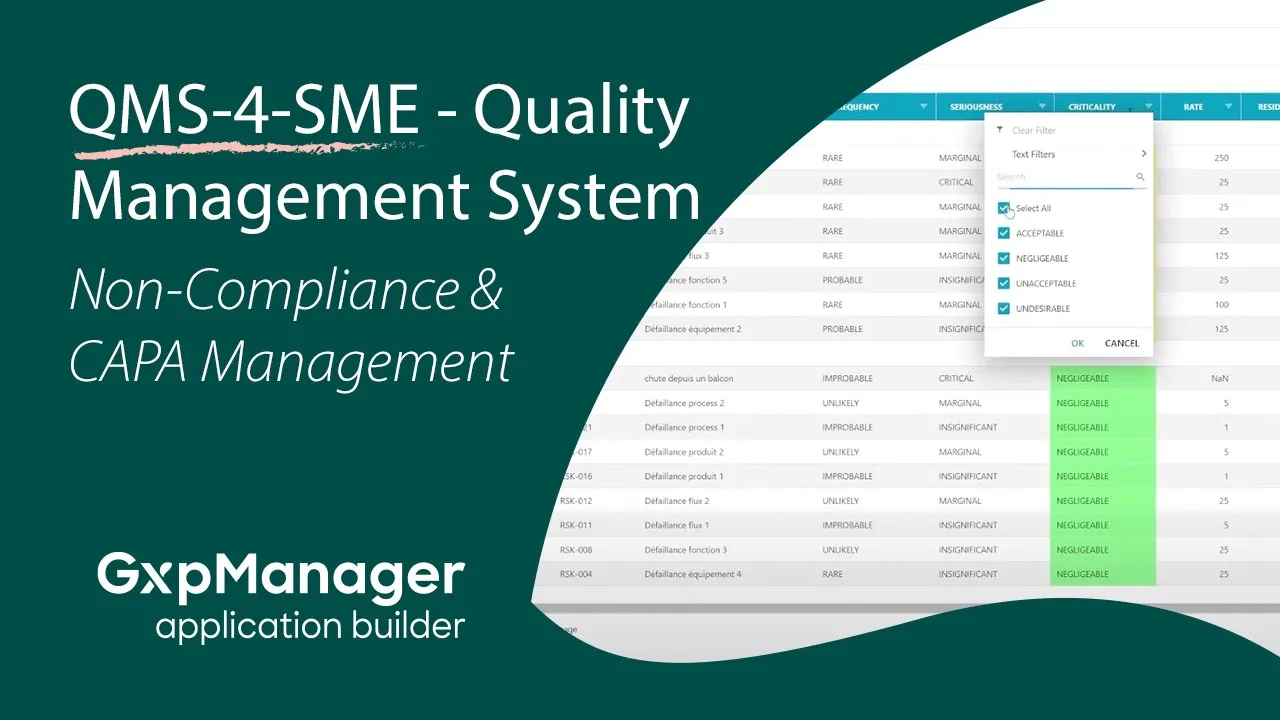
QMS-4-SME - Quality Management System / Non-Compliance & CAPA Management
GxpManager
/@gxpmanager_app
Mar 7, 2023
This video provides an in-depth exploration of GxpManager's QMS-4-SME application, a software-as-a-service (SaaS) low-code platform designed for quality management in regulated companies. The primary focus is on demonstrating the platform's capabilities for handling non-compliance (deviations) and corrective and preventive actions (CAPA) workflows. The presenter meticulously walks through the entire lifecycle of a non-compliance event, from its initial declaration and analysis to the implementation of immediate actions, the creation and approval of CAPA plans, their execution, and ultimate closure, emphasizing the system's auditability and customization features. The presentation highlights the GxpManager platform's user interface, which supports multi-factor authentication, single sign-on, and multiple languages, allowing users to select their environment and application. A key aspect is the customizable dashboard, featuring analytics and a pending list for assigned workflows and actions. The core of the demonstration revolves around the structured workflow for non-compliance, illustrating how different roles (initiator, Quality Assurance, action owner) interact with the system. This includes defining criticality, conducting root cause analysis using methods like 5M or QQOQCP (Who, What, Where, When, How, Why), and linking related actions. Throughout the video, the speaker emphasizes the system's adherence to regulatory requirements, such as the ability to generate auditable reports in PDF or Microsoft Word, export data to Excel, and maintain electronic signatures for all approvals. The platform's flexibility is repeatedly stressed, with features like customizable forms, workflows, mandatory fields, and data display options. The comprehensive demonstration of linking immediate actions and CAPAs directly to the non-compliance record showcases an integrated approach to quality event management, ensuring traceability and accountability from discovery to resolution. Key Takeaways: * **Integrated QMS Platform:** GxpManager's QMS-4-SME is presented as a comprehensive, auditable, and customizable SaaS low-code application platform for managing quality events in regulated environments, accessible via any modern browser. * **Non-Compliance and CAPA Management:** The core functionality demonstrated is the end-to-end management of non-compliance records and associated corrective and preventive actions (CAPA), crucial for maintaining quality and regulatory adherence. * **Customizable Workflows and Roles:** The system supports fully customizable workflows with defined steps and roles (e.g., initiator, Quality Assurance, action owner), ensuring that only authorized personnel can perform specific actions at each stage. * **Data Integrity and Auditability:** Features like mandatory fields, electronic signatures, version control, and the ability to publish records to PDF or Microsoft Word formats ensure data integrity and facilitate regulatory audits. * **Advanced Data Management:** Users can leverage advanced search, filtering, and column customization options to personalize their view of data sets, making it easier to navigate and analyze quality records. Data can also be exported to Excel for further analysis. * **Integrated Analytics:** The platform includes built-in analytics features, allowing users to create customizable graphs and dashboards from any data within the system, providing quick insights into quality trends and performance. * **Root Cause Analysis Tools:** The system integrates tools for conducting root cause analysis, offering methods such as the 5M (Man, Machine, Material, Method, Measurement, Environment) or QQOQCP (Quoi, Qui, Où, Quand, Comment, Pourquoi - What, Who, Where, When, How, Why) to identify underlying issues. * **Action Linking and Traceability:** Immediate actions and CAPA plans can be directly created and linked to specific non-compliance records, ensuring a clear audit trail and comprehensive management of all follow-up activities. * **Notification System:** Assigned persons receive email notifications to review and act on pending workflows or records, streamlining communication and ensuring timely action within the quality process. * **Regulatory Compliance Focus:** The platform is designed with regulated companies in mind, emphasizing features that support GxP requirements, audit trails, and the management of quality processes critical for industries like pharmaceutical and life sciences. * **Efficiency Monitoring:** The system allows for efficiency monitoring of CAPAs, enabling organizations to track the effectiveness of their corrective and preventive measures post-implementation. Tools/Resources Mentioned: * **GxpManager (QMS-4-SME application):** The primary software platform demonstrated. * **Microsoft Word:** For publishing records. * **Microsoft Excel:** For exporting data. * **PDF:** For publishing records. Key Concepts: * **Quality Management System (QMS):** A formalized system that documents processes, procedures, and responsibilities for achieving quality policies and objectives. * **Non-Compliance (NC) / Deviation:** A failure to meet a specified requirement, procedure, or standard, often an incident or deviation from an expected outcome. * **Corrective and Preventive Action (CAPA):** A system for investigating and correcting non-conformances (corrective actions) and preventing potential non-conformances (preventive actions). * **GxP:** A general term for "Good x Practice" quality guidelines and regulations (e.g., Good Manufacturing Practice, Good Clinical Practice) applicable to life sciences industries. * **5M Method:** A root cause analysis technique that categorizes potential causes into five main categories: Manpower, Methods, Machines, Materials, and Measurement (sometimes including Environment). * **QQOQCP (Quoi, Qui, Où, Quand, Comment, Pourquoi):** A French acronym for a systematic questioning method, equivalent to the 5W1H (What, Who, Where, When, How, Why) used for problem-solving and root cause analysis. * **Electronic Signature:** A method of signing a document or record digitally, often with cryptographic security, to ensure authenticity and integrity, particularly important in regulated industries (e.g., 21 CFR Part 11). Examples/Case Studies: * **Non-Compliance Scenario:** A "procedure not respected" is used as a specific example of a non-compliance event. * **Criticality Justification:** An example of justifying a "major criticality" due to an "ISO 27001 issue." * **Immediate Action:** "Best practices were reminded to the operator" is cited as an immediate action taken to address a non-compliance. * **Root Cause Specification:** A non-compliance stemming from a "method" root cause, specifically "non-respect of the procedure because it is too complex for the operations."