Videos
Browse videos by topic
All Videos
Showing 433-456 of 1435 videos

Payvider: Health Insurance Payer and Healthcare Provider Combination Explained
AHealthcareZ - Healthcare Finance Explained
@ahealthcarez
Apr 21, 2024
This video provides an in-depth explanation of the "Payvider" model, which describes organizations that combine the functions of a health insurance company (payer) and a healthcare service provider. Dr. Eric Bricker begins by defining a Payvider as an entity that collects premiums and assumes risk, while also directly owning and operating healthcare facilities such as hospitals, clinics, and employing medical staff. He establishes that this integrated model is not new, citing Kaiser Permanente, founded in 1945, as the oldest and largest example, boasting over 12 million members, 40 hospitals, and 618 clinics. The presentation then delves into the evolving landscape of healthcare, highlighting a growing trend where more entities are adopting the Payvider structure. While a limited number of hospital systems, such as the University of Pittsburgh Medical Center (UPMC) and Intermountain Health System (through its Select Health insurance company), have expanded into the payer role, the more significant and widespread movement involves major health insurance carriers becoming providers. Dr. Bricker provides concrete examples of this vertical integration: UnitedHealthcare's extensive provider arm, Optum, which saw substantial growth post-Affordable Care Act (ACA) in 2010; Aetna's acquisition of Oak Street Health; Cigna's $2.5 billion investment in VillageMD, operating under its Evernorth provider arm; and Elevance (Anthem)'s Carelon, which has recently expanded through acquisitions like Apri (a health navigation firm) and Millennium (a large Florida medical group with over 150 clinics). This demonstrates a clear strategic shift by major insurers to control both the financing and delivery of healthcare. A central focus of the video is to explain the primary motivation behind this Payvider trend, which is largely financial, driven by the ACA's 85% Medical Loss Ratio (MLR) rule. This rule mandates that health insurers spend at least 85% of premium revenue on healthcare services, limiting administrative costs and profits to 15%. Dr. Bricker elucidates how insurers circumvent this rule through "intercompany eliminations." By owning provider subsidiaries, they can pay these internal entities a substantial portion of the premium (e.g., $15,300 out of an $18,000 Medicare Advantage premium). These internal provider groups, particularly primary care, can then deliver care for less than the allocated amount (e.g., $9,180), retaining the difference ($6,120). This retained amount within the provider subsidiary is not subject to the MLR, allowing the parent insurance company to effectively keep a much larger portion of the total premium (e.g., $8,820, nearly half) than the 15% allowed by the MLR. This financial strategy has significant repercussions for traditional, independent hospital systems and, indirectly, for employers. Traditional providers, who previously received the 85% MLR allocation, now face a substantial reduction in payments from these integrated Payviders, experiencing up to a 40% decrease in revenue for services. Dr. Bricker characterizes this as insurance companies "eating the lunch" of traditional hospitals. In response, hospitals are increasingly demanding higher reimbursement rates from commercially insured plans, effectively shifting the financial burden onto employers. The video concludes by emphasizing that this trend is intensifying, with insurers adeptly navigating regulatory frameworks to maximize profitability, a dynamic that will continue to reshape the American healthcare system. **Detailed Key Takeaways:** * **Understanding the Payvider Model:** A Payvider is an organization that integrates both health insurance (payer) and direct healthcare service provision. This model allows for unified control over both the financing and delivery of care, aiming for greater efficiency and cost management. * **Historical Precedent and Modern Expansion:** The Payvider concept is not new, with Kaiser Permanente serving as a long-standing example since 1945. However, there's a significant modern trend of major health insurance carriers (e.g., UnitedHealthcare, Aetna, Cigna, Elevance) increasingly acquiring or developing extensive provider networks. * **Financial Motivation: The MLR Loophole:** The primary driver for insurers to become Payviders is to navigate the Affordable Care Act's 85% Medical Loss Ratio (MLR) rule. By owning provider entities, insurers can pay these internal providers, and the profits retained within the provider arm are not subject to the MLR calculation, allowing the parent company to retain a larger overall profit margin. * **Medicare Advantage as a Key Enabler:** The rapid growth of Medicare Advantage plans provides a substantial revenue stream for insurers. The per-beneficiary payments (e.g., $18,000 annually) offer a significant pool of funds that Payviders can leverage through internal payments to their provider arms, thereby maximizing retained profits beyond MLR constraints. * **Intercompany Eliminations as a Strategic Tool:** Insurers employ accounting practices like "intercompany eliminations" to transfer funds between their insurance and provider subsidiaries. This allows them to effectively "pay themselves" for healthcare services, optimizing financial outcomes and circumventing the traditional MLR limits on profit retention. * **Significant Revenue Shift from Traditional Providers:** The Payvider model diverts substantial healthcare spending away from traditional, independent hospital systems. Integrated Payviders direct a large portion of funds to their own provider networks, leading to a potential 40% decrease in payments to external hospitals and specialists for comparable services. * **Increased Burden on Employers:** As traditional hospitals experience reduced payments from Payviders, they often seek to compensate by demanding higher reimbursement rates from commercially insured plans. This financial pressure is ultimately passed on to employers, leading to increased healthcare costs for businesses and their employees. * **Strategic Vertical Integration for Control:** The Payvider model represents a powerful strategy of vertical integration, allowing organizations to control multiple stages of the healthcare value chain. This offers greater command over service delivery, patient pathways, quality metrics, and overall financial performance. * **Persistence of the Trend:** The video emphasizes that the Payvider trend is expected to continue and intensify. Despite potential future adjustments to government payments (e.g., for Medicare Advantage), insurers are well-positioned to maintain profitability through their integrated structures and robust lobbying efforts, making this a lasting transformation in healthcare. **Key Concepts:** * **Payvider:** An organization that integrates both the functions of a health insurance company (payer) and a healthcare service provider. * **Medical Loss Ratio (MLR):** A provision of the Affordable Care Act (ACA) requiring health insurance companies to spend a minimum percentage (typically 80% or 85%) of premium revenue on healthcare services and quality improvement. * **Medicare Advantage:** Private health plans approved by Medicare that provide Part A and Part B benefits, often including additional benefits, and are a significant source of revenue for insurers. * **Intercompany Eliminations:** An accounting method used in consolidated financial statements to remove transactions between a parent company and its subsidiaries, which Payviders leverage to manage internal financial flows and optimize profit retention. * **Vertical Integration:** A business strategy where a company gains control over multiple stages of its supply chain or value chain, in this case, encompassing both health insurance and healthcare delivery. **Examples/Case Studies:** * **Kaiser Permanente:** The pioneering and largest Payvider in the U.S., founded in 1945, demonstrating the long-term viability of the integrated model. * **UPMC (University of Pittsburgh Medical Center) & Intermountain Health System (Select Health):** Examples of hospital systems that have expanded into the payer role. * **UnitedHealth Group / Optum:** A prominent example of a major insurer developing a vast provider arm, significantly expanding after the ACA. * **Aetna / Oak Street Health:** Illustrates an insurer acquiring a primary care provider network. * **Cigna / VillageMD (under Evernorth):** Shows a significant investment by an insurer in a clinic network. * **Elevance (Anthem) / Carelon (Apri, Millennium):** Highlights an insurer's provider arm actively expanding through strategic acquisitions to increase its direct care footprint. * **Blue Cross Blue Shield of Kansas City / Spira Care:** An example of a smaller, regional insurer also adopting the Payvider model.

QuickTalk Ep1: Special Guest Carolyn Guthrie discusses the FDA QMSR Changes
QuickTalk by QuickVault
/@QuickTalkbyQuickVault
Apr 17, 2024
This video explores the significant changes to the FDA's medical device regulations, specifically the Quality Management System Regulation (QMSR), which is replacing 21 CFR 820 and aligning with the ISO 13485:2016 standard. Carolyn Guthrie, a quality and regulatory expert, details the historical context of these changes, the FDA's intent to harmonize and alleviate industry burden, and the specific additional requirements the FDA will retain beyond ISO 13485. The discussion covers who will be affected (primarily Class II, Class III, and some Class I medical device manufacturers), the two-year transition timeline (until February 2, 2026), and the ramifications of non-compliance. Practical advice is offered for companies, including planning a transition strategy, performing a gap analysis, and implementing changes incrementally. Key Takeaways: * **Major Regulatory Shift:** The FDA's Quality Management System Regulation (QMSR) is replacing 21 CFR 820, mandating alignment with ISO 13485:2016 for medical device manufacturers by February 2, 2026. * **FDA-Specific Requirements:** While harmonizing with ISO 13485, the FDA maintains additional requirements, notably regarding record control, packaging/labeling, and the removal of previous exceptions for FDA access to management review minutes and internal audit reports during inspections. * **Broad Impact & Timeline:** This change impacts all organizations currently subject to 21 CFR 820 (Class II, Class III, and some Class I devices), with a two-year transition period for QMS updates before enforcement begins. * **Proactive Compliance Strategy:** Companies should proactively plan their transition, conduct a thorough gap analysis against ISO 13485 and their existing procedures, and implement changes gradually to avoid last-minute burdens and potential enforcement actions during FDA inspections. * **Opportunity for AI/Data Solutions:** The mandatory QMS updates, increased scrutiny on documentation (e.g.ai to offer its data engineering, custom software, and AI solutions for compliance tracking, audit trail automation, and enhanced QMS management within the medical device sector.

AI for Better Medical Diagnosis (with Chris Mathew)
Self-Funded
@SelfFunded
Apr 16, 2024
This video features a discussion with Chris Mathew, Chief Growth Officer at Sniffle, an AI-driven virtual care platform. The conversation centers on leveraging advanced technology, specifically machine learning and AI, to improve the quality of care, reduce administrative friction for physicians, and reinforce the crucial continuity of care between patients and providers. Mathew emphasizes that Sniffle was built to counter "bad business models" in transactional telehealth by focusing on relationship-based medicine, ensuring physicians are compensated appropriately, and empowering patients with accurate, personalized health information. The core innovation discussed is Sniffle’s AI symptom assessment tool, termed "iagnosis." This tool is built upon a massive dataset of over 14 million patient encounters, which allows it to generate highly precise differential diagnoses. Unlike generic search tools like WebMD or open-source LLMs like ChatGPT, iagnosis uses branching logic and factors in the user's unique demographics, family medical history, and lifestyle before presenting a chief complaint. This personalized medical interview process leads to a 95% accuracy rate in identifying potential conditions. The goal is not to replace the licensed medical provider but to serve as a powerful augmentation tool, streamlining the intake process and providing the physician with a pre-assessed, data-rich patient profile before the virtual consultation begins. Sniffle’s platform digitizes the entire virtual consultation workflow to eliminate administrative burdens, a key frustration point for physicians. Before the doctor enters the virtual consult, the system automatically verifies insurance eligibility (integrated with over 800 payers, including Medicare and Medicaid), completes informed consent documents, and verifies payment methods. The physician receives the patient’s complete intake, including the iagnosis results and all answers to the medical interview questions, allowing them to start the conversation from an informed position. Furthermore, the platform integrates AI tools on the provider side for clinical support, such as suggesting treatment protocols for specific conditions (e.g., prescribing antibiotics for a pregnant patient with sinusitis) or generating personalized diet plans (e.g., a keto-friendly plan for a patient who dislikes fruit), which can then be integrated with services like Instacart to close the loop on adherence. Beyond the clinical AI, the platform addresses cost and access through its Sniffle Benefits package, offered to employers for $15 per month, covering the employee and all dependents. This package includes unlimited virtual care appointments, dental, vision, behavioral health, labs, and imaging discounts. A notable feature is Sniffle RX, a prescription savings tool claimed to be four times more powerful than GoodRx, pulling data from four PBMs and offering savings up to 85%. This focus on cost-effective, comprehensive care, coupled with the AI-driven clinical support, aims to foster proactive health advocacy among patients and restore the joy of practice for physicians by removing financial and administrative obstacles. ### Detailed Key Takeaways * **AI-Driven Personalized Intake:** Sniffle's "iagnosis" tool utilizes over 14 million patient encounters to provide personalized differential diagnoses with a 95% accuracy rate. It factors in demographics, family medical history, and lifestyle, ensuring the AI asks unique, branching-logic questions tailored to the individual, moving far beyond simple symptom matching. * **Eliminating Physician Administrative Burden:** The platform digitizes and automates critical pre-consultation tasks, including insurance eligibility verification (integrated with 800+ payers), informed consent, and payment verification. This allows physicians to enter virtual appointments with all necessary administrative and clinical data pre-processed. * **Augmentation, Not Replacement:** The AI is positioned as a support and augmentation tool for licensed medical providers, not a replacement. It delivers a pre-assessed patient profile, allowing the physician to start the consultation with a deeper understanding of the patient's current health journey and chief complaint. * **Clinical AI Support for Providers:** The platform offers AI-purposed tools within the clinical app to assist providers with treatment protocols (e.g., suggesting appropriate medication for a complex patient case like pregnancy) and generating personalized lifestyle plans (e.g., custom diet plans). * **Focus on Continuity of Care:** The platform is designed to reinforce the patient-physician relationship by encouraging patients to see their established doctor virtually. If the doctor is not on the platform, the system facilitates outreach to onboard the provider, emphasizing the value of longitudinal care. * **Rapid Physician Onboarding:** Providers can onboard themselves to the Sniffle platform in less than 15 minutes. They can be granted authority for e-prescribing (backed by Surescripts and the DEA) in less than 24 hours, significantly streamlining the typically painful credentialing process. * **Disruptive Prescription Savings:** Sniffle RX is highlighted as a powerful prescription savings tool, pulling data from four PBMs to offer up to 85% savings. The app allows patients to compare real-time drug prices at local pharmacies based on dosage and zip code, enabling them to choose the most cost-effective location. * **Comprehensive, Low-Cost Benefits Model:** The Sniffle Benefits package is offered at $15 per month per employee, covering the entire household (employee and all dependents). This package includes unlimited virtual care, dental, vision, behavioral health, labs, and imaging discounts, providing a robust, cost-effective alternative or supplement to traditional insurance. * **Addressing Health Advocacy and Equity:** The platform is fully bilingual in Spanish and aims to empower patients to be better advocates for their own health. The iagnosis tool helps reduce "cyberchondria" (overreaction) while also preventing the dismissal of serious symptoms by those who typically shrug off health concerns. * **Closing the Loop on Adherence:** The integration of personalized treatment plans (like diet recommendations) with external services (like Instacart) demonstrates a strategy to remove friction points in patient adherence, ensuring that prescribed health changes are easier to implement. ### Tools/Resources Mentioned * **Sniffle:** AI-driven virtual care platform. * *Sniffle for Patients:* Patient-facing mobile app. * *Sniffle for Providers:* Physician and clinical app. * **iagnosis:** Sniffle’s proprietary AI symptom assessment and differential diagnosis tool. * **Sniffle RX:** Prescription savings card/tool integrated within the app. * **Instacart:** Mentioned as a potential integration point for delivering prescribed diet plan ingredients. * **GoodRx:** Mentioned as a comparative benchmark for prescription savings. * **Etna:** Sniffle’s partner for the dental network component of the benefits package. ### Key Concepts * **Continuity of Care:** The principle that patients benefit from a long-standing, recurring relationship with a primary care physician who understands their baseline health history, allowing for better identification of atypical symptoms. * **iagnosis:** A term coined by Sniffle to describe an AI-derived diagnosis or differential assessment, emphasizing that the final, official diagnosis must come from a licensed medical provider. * **Cyberchondria:** Hypochondria resulting from excessive and often inaccurate online searching of symptoms (Dr. Google/WebMD scrolling). * **DMO (Discount Medical Product Offering):** The underlying business model for Sniffle Benefits, utilizing negotiated contracts with providers to offer significant discounts on services like dental and vision, operating outside of traditional insurance structures. * **Law of Large Numbers:** The statistical principle applied to the benefits model, where the large pool of users (high and low utilizers) allows the platform to offer comprehensive services at a low, fixed cost.

Revenue Cycle Management in Healthcare Explained
AHealthcareZ - Healthcare Finance Explained
@ahealthcarez
Apr 14, 2024
This video provides an in-depth explanation of Revenue Cycle Management (RCM) in healthcare, defining it as the intricate process of "getting the bills paid" for healthcare providers such as hospitals, doctors, physical therapists, and imaging centers. Dr. Eric Bricker emphasizes the immense complexity and difficulty of RCM, highlighting it as a $29 billion per year industry growing at over 13% annually, reflecting the broader $4.5 trillion healthcare economy it supports. The core of the video meticulously breaks down the nine distinct, sequential steps of the RCM process, clarifying that despite the term "cycle," it functions more like a linear progression for each service rendered. The progression of ideas in the video starts with the initial patient interaction and moves through the entire billing and collection lifecycle. It details the steps from pre-registration (initial appointment scheduling and basic info gathering) to actual registration (verifying insurance changes upon arrival), followed by charge capture (meticulously documenting all services and supplies used during treatment). A critical phase, utilization review, involves ongoing negotiation with insurance companies for multi-day hospital stays. The process then moves to coding, where medical records are translated into standardized ICD-10, CPT, and HCPCS codes, often influenced by Clinical Documentation Integrity (CDI) efforts to maximize reimbursement. This leads to claim submission, typically through clearinghouses like the recently hacked Change Healthcare, to a multitude of payers. Remittance processing involves the payer's explanation of benefits and initial payment, often leaving a balance for patient collection. A significant pain point highlighted is the labor-intensive "follow-up" stage, where providers chase delayed or denied claims from insurance carriers, a problem that has persisted for decades. The final step is patient collection for deductibles and co-pays. Dr. Bricker's perspective underscores the profound inefficiencies and fragmentation within the RCM industry. He notes that the RCM market is highly fragmented, with over 354 companies, implying low barriers to entry and highly variable service quality. A key metric for RCM effectiveness, Accounts Receivable (AR) Days, is discussed, ranging from 30 to 70 days. He illustrates the massive financial impact of this variation with an example of a $3 billion hospital system, where reducing AR Days from 70 to 30 can free up $328 million in cash flow. The video concludes by explaining how the overwhelming complexity of RCM is a driving factor behind many physician practices selling out to larger hospital systems, which possess the resources and scale to manage these intricate billing processes more effectively. Key Takeaways: * **Massive and Growing Industry:** Revenue Cycle Management is a $29 billion annual industry within healthcare, experiencing over 13% year-over-year growth, underscoring its critical and expanding role in the financial viability of healthcare providers. * **Nine-Step Linear Process:** RCM is not a true cycle but a linear sequence of nine steps: pre-registration, registration, charge capture, utilization review, coding, claim submission, remittance processing, follow-up, and patient collections, each presenting unique challenges. * **Dynamic Patient Information:** The distinction between pre-registration and registration is crucial due to frequent changes in patient insurance plans and deductibles, particularly at the start of a new year, impacting initial billing accuracy. * **Meticulous Charge Capture:** Accurately capturing all services, equipment, and medications used during patient care (charge capture) is a detailed process involving scanning and physician documentation, forming the basis for billing. * **Utilization Review as a Negotiation:** For inpatient stays, utilization review involves ongoing negotiation between providers and insurance companies to approve the length of stay, directly impacting reimbursement. * **Coding and Clinical Documentation Integrity (CDI):** Medical records are translated into standardized ICD-10, CPT, and HCPCS codes. CDI is a significant effort by hospitals to optimize documentation to maximize coding and reimbursement, walking a fine line to avoid "upcoding." * **Complex Claim Submission:** Claims are submitted through clearinghouses (e.g., Change Healthcare) to a vast array of payers (Medicare, Medicaid, commercial insurance), making the process fragmented and vulnerable to system-wide disruptions. * **Labor-Intensive Follow-Up:** The "follow-up" stage, where providers chase delayed or denied claims from insurance carriers, is described as the "most labor intensive ridiculous process humanly possible," often done manually via phone calls, and has remained inefficient for decades. * **Fragmented Industry with Variable Quality:** The RCM industry is highly fragmented with hundreds of companies, leading to low barriers to entry and a wide variability in the competence and performance of RCM firms. * **Accounts Receivable (AR) Days as Key Metric:** The effectiveness of RCM is measured by AR Days (the average number of days it takes to collect payments), with a range of 30 to 70 days, directly impacting a provider's cash flow. * **Significant Financial Impact:** For a medium-sized hospital system generating $3 billion annually, improving AR Days from 70 to 30 can result in a cash flow improvement of $328 million, highlighting the immense financial stakes involved. * **Driver for Provider Consolidation:** The overwhelming complexity and difficulty of managing RCM effectively is a primary reason why many physician practices are selling to larger hospital systems, which have the resources to handle these intricate processes. Key Concepts: * **Revenue Cycle Management (RCM):** The entire process of identifying, managing, and collecting patient service revenue. * **Accounts Receivable (AR) Days:** A key performance indicator in RCM, measuring the average number of days it takes for a healthcare provider to collect payments due after a service has been rendered. * **Clinical Documentation Integrity (CDI):** A program aimed at improving the quality and completeness of medical record documentation to accurately reflect the patient's severity of illness and optimize coding for appropriate reimbursement. * **Upcoding:** The practice of billing for a more expensive service or procedure than was actually provided or justified by the patient's condition, often considered fraudulent. * **Clearinghouse:** An intermediary that processes and transmits electronic health information, such as insurance claims, between healthcare providers and payers. * **Remittance Processing:** The process by which healthcare providers receive and reconcile payments from insurance companies, often accompanied by an Explanation of Benefits (EOB) that details the payment, adjustments, and patient responsibility. * **Explanation of Benefits (EOB):** A statement sent by an insurance company to a policyholder explaining what medical treatments and/or services were paid for on their behalf. Examples/Case Studies: * **Financial Impact Example:** A $3 billion per year hospital system, billing $8.2 million daily, can have $246 million in unpaid bills at 30 AR Days versus $574 million at 70 AR Days, representing a $328 million difference in cash flow. * **Change Healthcare Hack:** The recent cyberattack on Change Healthcare is cited as a real-world example of the vulnerabilities and critical role of clearinghouses in the claim submission process.
When to implement a QMS guidance for MedTech startups
InnovatorMD
/@InnovatorMD
Apr 12, 2024
This video provides an in-depth exploration of Quality Management System (QMS) implementation, specifically tailored for MedTech startups. Axel Strombergsson, Vice President at Veeva Systems for their QuickVault product, and a seasoned veteran with over two decades in MedTech R&D and startup mentorship, guides viewers through the essential 'why, what, when, and how' of establishing a QMS. The presentation underscores the critical role of a QMS in achieving and maintaining regulatory compliance, ensuring product quality, and safeguarding patient safety, all vital for successful commercialization in the highly regulated medical device industry. Strombergsson begins by establishing the fundamental 'why' behind a QMS, illustrating the stark difference in regulatory requirements between a consumer product and a medical device like a surgical scalpel. He highlights key regulations such as the FDA's 21 CFR Part 820 (Quality System Regulation) and the European Union Medical Device Regulation (EU MDR), explaining how these frameworks mandate a structured approach to business operations. The video then maps out the entire product journey from idea to commercialization, categorizing it into pre-commercial (design, development, testing, regulatory submission) and post-commercial (manufacturing, launch, post-market surveillance) stages, emphasizing that regulations apply comprehensively across all phases. The 'what' of a QMS is broken down into three core pillars: the QMS documentation itself (policies, SOPs, work instructions), Electronic Quality Management System (EQMS) software, and the crucial element of knowledge and training. He stresses that while templated QMS packages exist, they must be meticulously customized to align with a company's unique business processes and technology to ensure genuine compliance. The discussion transitions to the crucial 'when' to implement a QMS, pinpointing the "point of design selection" or "design freeze" as the critical juncture. This marks the formal shift from the research (R) phase to the development (D) phase of R&D, where design controls (FDA 21 CFR Part 820.30 and ISO 1345) become mandatory. Strombergsson advises MedTech startups to implement their QMS approximately 3 to 6 months *before* reaching this point, to ensure all subsequent data collection and development activities for regulatory submissions are conducted under proper control, thereby avoiding costly re-dos. For the 'how,' he proposes a pragmatic "two-stage rocket" approach: initially implementing only the pre-commercial QMS elements necessary for regulatory submission, and then building out the post-commercial elements (e.g., customer complaints, post-market surveillance) closer to market launch, ideally at least 6 months prior to expected regulatory clearance. The latter part of the presentation offers strategic guidance on EQMS selection, providing a unique perspective through the lens of potential acquisitions. Strombergsson cautions that a disorganized or non-compliant QMS can be a significant deterrent during acquisition due diligence, potentially derailing a deal. He encourages startups to choose a stable, reliable, and innovative EQMS provider that demonstrates a deep understanding of the evolving MedTech regulatory landscape. He then introduces Veeva Systems, a prominent player in life sciences, noting its extensive customer base including 19 out of the top 20 largest MedTech companies, and details the capabilities of their QuickVault EQMS product. The video concludes by highlighting the "QuickStart" package, a collaborative offering with Rook Quality Systems, designed to provide startups with essential QMS documentation, QuickVault access, and expert consulting support, addressing a comprehensive need for early-stage companies. Key Takeaways: * **QMS is Foundational for MedTech:** A robust Quality Management System is not optional but a mandatory framework for MedTech startups, driven by regulations like FDA 21 CFR Part 820 and EU MDR, to ensure medical devices are consistently safe and effective. * **Regulations Span the Entire Product Lifecycle:** From initial concept and R&D to manufacturing, commercial launch, and post-market surveillance, regulatory requirements apply at every stage, making a comprehensive QMS an ongoing necessity. * **Three Pillars of Compliance:** Effective compliance relies on well-defined QMS documentation (SOPs, policies), an efficient Electronic Quality Management System (EQMS) software, and continuous training and knowledge acquisition for the team. * **Customize QMS Documentation:** While pre-built QMS documentation packages offer a strong starting point (e.g., Veeva's 53 documents), it's crucial to tailor approximately 10-20% of these procedures to accurately reflect your company's specific operations and product technology, as generic procedures can lead to non-compliance. * **EQMS Software Streamlines Operations:** Modern cloud-based EQMS solutions automate critical regulatory processes (e.g., design controls, risk management), provide secure, auditable repositories for all product data, and facilitate FDA 21 CFR Part 11 compliant electronic signatures, significantly enhancing efficiency and security. * **Strategic Timing for QMS Implementation:** The QMS must be formally in place at or before the "point of design selection" or "design freeze," which signifies the transition from the research phase to formal device development, as this is when strict design controls become applicable. * **Implement QMS 3-6 Months Before Formal Development:** To avoid costly rework and ensure data integrity for regulatory submissions, it's recommended to establish the QMS 3-6 months prior to initiating formal device development and data gathering activities (e.g., animal studies, clinical trials). * **Phased QMS Implementation for Startups:** A "two-stage rocket" approach is beneficial for smaller teams: first, implement pre-commercial QMS elements for design and development leading to regulatory submission; second, build out post-commercial elements (e.g., customer complaints, post-market surveillance) at least 6 months before expected market clearance. * **EQMS Selection Impacts Future Acquisitions:** When choosing an EQMS, prioritize the provider's stability, reliability, and innovation, as a well-managed QMS is a critical asset during acquisition due diligence, while a poorly managed one can be a deal-breaker. * **Long-Term EQMS Strategy:** Consider how the EQMS will scale with your company's growth beyond initial regulatory clearance, supporting ongoing commercial operations, post-market responsibilities, and future product iterations. * **Invest in Expertise and Mentorship:** First-time founders should actively engage with accelerators, mentors, and industry communities to gain QMS knowledge. Hiring experienced personnel, even at a premium, can significantly elevate the entire team's understanding and execution of regulatory compliance. * **Budget for QMS Support:** Allocate specific funds in your fundraising proforma for EQMS subscriptions and ongoing part-time consulting support from quality assurance and regulatory affairs experts to ensure continuous compliance and effective QMS management. * **Veeva QuickVault for MedTech:** Veeva QuickVault is presented as a comprehensive EQMS solution offering document control, change management, quality events, training management, design controls, risk management, and supplier management, widely adopted by large MedTech companies. * **Veeva QuickStart Package:** This bundled offering, in partnership with Rook Quality Systems, provides MedTech startups with essential QMS documentation, access to QuickVault (for up to three users), and five hours of expert consulting support per month for regulatory strategy or submission assistance, priced at $1,250/month with a 12-month minimum commitment. **Tools/Resources Mentioned:** * **Veeva Systems:** A large, publicly traded company providing cloud-based software solutions for the life sciences industry. * **Veeva QuickVault:** An Electronic Quality Management System (EQMS) product by Veeva Systems, designed to manage quality processes for MedTech companies. * **Rook Quality Systems:** A company specializing in quality assurance and regulatory affairs services for the MedTech industry, partnering with Veeva for the QuickStart package. * **Veeva QuickStart Package:** A bundled offering for startups that includes QMS documentation, QuickVault access, and expert consulting support from Rook Quality Systems. * **InnovatorMD:** The channel hosting the masterclass, dedicated to showcasing physician innovators and fostering healthcare innovation. * **LinkedIn:** Recommended for networking and connecting with mentors. * **Veeva Website (Resources section):** Contains a blog post on strategic EQMS selection and a video podcast for the MedTech startup ecosystem. **Key Concepts:** * **Quality Management System (QMS):** A structured system of processes, procedures, and responsibilities to ensure product quality, safety, and regulatory compliance, particularly critical in the medical device industry. * **Electronic Quality Management System (EQMS):** Software that automates and manages QMS processes, offering features like document control, electronic signatures, and quality event management, crucial for efficiency and compliance. * **FDA 21 CFR Part 820 (Quality System Regulation):** U.S. Food and Drug Administration regulations outlining the requirements for quality systems for medical device manufacturers. * **EU Medical Device Regulation (EU MDR):** The European Union's regulatory framework for medical devices, ensuring their safety and performance. * **ISO 1345:** An international standard specifying requirements for a comprehensive quality management system for the design and manufacture of medical devices. * **Design Controls (21 CFR Part 820.30):** Specific FDA regulations governing the design and development process of medical devices to ensure they meet user needs and intended uses. * **21 CFR Part 11:** FDA regulations concerning electronic records and electronic signatures, ensuring their reliability, integrity, and equivalence to paper records. * **Design Selection / Design Freeze:** A critical milestone in product development where the device design is finalized, and formal development activities under regulatory control commence. * **Pre-commercial Stage:** The phase of a medical device's lifecycle encompassing research, design, development, testing, and preparation for regulatory submission. * **Post-commercial Stage:** The phase following regulatory approval, involving manufacturing, market launch, distribution, post-market surveillance, and managing customer feedback and complaints.

Veeva Careers: Will Pay $60-$75K/year + Perks to Train You
Nomad Careerist
/@NomadCareerist
Apr 12, 2024
This video provides an overview of the compensation and benefits package for an entry-level position at Veeva, a prominent technology provider in the pharmaceutical and life sciences industries. The speaker details the financial and non-financial incentives offered, positioning them as highly attractive for individuals beginning their careers. The primary focus is on the competitive base salary and the comprehensive suite of employee benefits, which collectively aim to attract and retain talent in a specialized and high-demand sector. The core of the discussion revolves around the financial remuneration, specifically a base pay range of $60,000 to $75,000 per year (USD). This figure is presented as a strong starting point for someone new to the professional workforce, especially considering the implied opportunity for training within the Veeva ecosystem, as suggested by the video's title. Beyond the salary, the video highlights a robust benefits package designed to support employees' well-being and long-term financial security. This includes essential health coverage such as medical, dental, and vision insurance, along with basic life insurance, ensuring fundamental protection for employees and their families. Further enhancing the appeal of these roles, the video mentions paid time off (PTO) and retirement programs, which are crucial for work-life balance and future financial planning. The inclusion of charitable giving programs also suggests a company culture that values social responsibility and employee engagement beyond day-to-day tasks. While the transcript is brief, the cumulative effect of these offerings—competitive pay, comprehensive health benefits, retirement planning, and a supportive work environment—paints a picture of Veeva as an employer that invests significantly in its workforce, even at the entry level. This approach is particularly relevant within the specialized pharmaceutical and life sciences tech sector, where attracting skilled talent is paramount. Key Takeaways: * **Competitive Entry-Level Compensation:** Veeva offers a base salary of $60,000 to $75,000 per year for entry-level positions, which is presented as a highly competitive and attractive starting wage for individuals new to the professional landscape, particularly within the specialized life sciences technology sector. * **Comprehensive Benefits Package:** Beyond salary, Veeva provides a robust suite of benefits, including medical, dental, and vision insurance, along with basic life insurance, ensuring comprehensive health and security coverage for its employees. * **Focus on Employee Well-being and Future:** The inclusion of paid time off (PTO) and retirement programs demonstrates Veeva's commitment to supporting employees' work-life balance and long-term financial planning, which are critical factors for talent attraction and retention. * **Cultivating Social Responsibility:** The mention of charitable giving programs suggests a corporate culture that encourages philanthropy and community involvement, potentially appealing to candidates seeking employers with strong ethical values. * **Market Intelligence for IntuitionLabs.ai:** This information provides valuable market intelligence for IntuitionLabs.ai, indicating the compensation benchmarks within the Veeva ecosystem for entry-level roles. This can inform IntuitionLabs.ai's own talent acquisition strategies and competitive positioning. * **Implications for Talent Acquisition:** Understanding Veeva's attractive compensation and benefits helps IntuitionLabs.ai gauge the competitive landscape for talent with Veeva-related skills. It highlights the need for competitive offerings to attract individuals interested in working with the Veeva platform. * **Value of Veeva-Related Skills:** The salary range suggests that even entry-level roles within the Veeva ecosystem are highly valued, underscoring the demand for professionals who can work with this critical pharmaceutical CRM platform. * **Investment in Training (Implied):** The video title's mention of Veeva paying to train individuals further emphasizes the company's investment in developing its workforce, which can be a significant draw for early-career professionals and a model for other firms in the ecosystem. * **Strategic Importance of Veeva:** The focus on careers at Veeva reinforces the platform's central role in the pharmaceutical and life sciences industries, validating IntuitionLabs.ai's specialization in Veeva CRM consulting. * **Holistic Employee Value Proposition:** The combination of strong financial compensation and extensive non-financial benefits creates a compelling employee value proposition, which is essential for attracting top talent in a specialized and competitive market like life sciences technology. Key Concepts: * **Veeva CRM:** A cloud-based customer relationship management (CRM) solution specifically designed for the pharmaceutical and life sciences industries. It helps companies manage sales, marketing, and medical affairs activities while ensuring regulatory compliance. IntuitionLabs.ai specializes in consulting services for Veeva CRM, including implementation, customization, and system integration. * **Entry-Level Compensation:** Refers to the starting salary and benefits offered to individuals who are new to a particular industry or role, often requiring minimal prior experience and potentially including training components.

The MSK Roundtable, with Chris Hamilton, Heidi Ojha, and Mark Testa
Self-Funded
@SelfFunded
Apr 12, 2024
This roundtable discussion provides an in-depth analysis of the Musculoskeletal (MSK) crisis in the U.S. healthcare system, focusing on its massive financial burden and the systemic failures that lead to unnecessary surgeries and poor patient outcomes. The panelists—a benefits consultant, an upstream orthopedic diagnosis expert, and a regenerative medicine specialist—collectively frame MSK as a "death by a thousand cuts" problem for employers, noting that it accounts for an estimated 27% of the $4.5 trillion U.S. healthcare spend, making it a trillion-dollar category. A key theme is the misaligned incentives within the traditional fee-for-service model, where surgeons are incentivized to "cut" and patients, desperate for immediate relief from severe pain (often rated 8 out of 10), are quick to accept surgery as the primary intervention, bypassing conservative care. The conversation centers on the critical need for a "stepped care approach" and the implementation of guardrails to prevent patients from skipping directly to expensive, often ineffective, surgical procedures. A major point of failure identified is the lack of standardized diagnosis, particularly the over-reliance on imaging (MRI, X-ray). Research suggests that only 5% of elective orthopedic cases require imaging, yet 60% to 80% currently receive it. This over-imaging leads to confirmation bias, where findings like "bone on bone" degeneration—which may be asymptomatic—triple the risk of a patient pursuing surgery for back pain. Furthermore, the discussion highlights the underappreciated role of biopsychosocial factors, noting that anxiety and depression are significant predictors of costly downstream orthopedic claims, suggesting that holistic treatment addressing both physical and mental health is crucial. The panelists advocate for self-funded employers to adopt integrated solutions that centralize care coordination and leverage alternative models like Direct Primary Care (DPC) and nurse navigation. DPC physicians, whose incentives are aligned with keeping people healthy, are seen as better gatekeepers than traditional fee-for-service providers owned by hospital networks. Solutions like Aware Health (upstream diagnosis/virtual care) and Regenexx (regenerative medicine, positioned as the "last stop before surgery") demonstrate significant success in surgery avoidance. One case study showed 95% of elective cases referred to a regenerative medicine provider avoided surgery, and another client saw a 3x ROI by implementing upstream MSK care, estimating a potential 10% reduction in overall healthcare spend in year one. The ultimate challenge remains operationalizing these solutions, making them simple for employees to access, and convincing benefits advisors to move beyond analysis and actively implement proven, high-value programs. Key Takeaways: * **MSK Cost Crisis:** Musculoskeletal issues account for approximately 27% of the $4.5 trillion U.S. healthcare spend, representing a massive, often overlooked, financial burden for employers, especially since these mid-range claims typically fall below specific stop-loss deductibles. * **Avoidance Opportunity:** Excluding traumatic injuries, experts believe 95%+ of elective MSK surgeries could be avoided through appropriate stepped care, skilled diagnosis, and conservative treatment, offering a huge opportunity for cost savings and improved outcomes. * **The Danger of Over-Imaging:** Only about 5% of elective orthopedic cases are clinically indicated for imaging, yet 60-80% receive it. Seeing degeneration on an MRI (e.g., "bone on bone") can triple a patient's likelihood of pursuing surgery, even if the degeneration is not the source of the pain. * **Biopsychosocial Factors are Key:** Anxiety and depression are significant comorbidities that predict the most costly downstream orthopedic claims. Effective MSK care requires an integrative approach that addresses the biological, psychological (thoughts, beliefs, anxiety), and social determinants of pain. * **Stepped Care Approach:** The optimal care path starts with prevention, moves to physical therapy (PT), then potentially regenerative medicine (platelets, bone marrow concentrate), and finally, surgery only when clearly indicated (e.g., complex tears, fractures). * **DPC as a Gatekeeper:** Direct Primary Care (DPC) doctors, who are not incentivized by hospital networks, are better positioned to provide unbiased diagnosis and guide patients toward conservative care, contrasting sharply with the inertia of the traditional fee-for-service system. * **The Value of Direct Access to PT:** Research indicates that allowing direct access to a physical therapist before seeing a physician can reduce the cost per claim by about $2,000, promoting earlier, less invasive intervention. * **Incentivization Structure:** Employers should use "carrots" (e.g., zero copay/deductible for upstream, high-value MSK solutions) rather than "sticks" (penalties) to drive members toward appropriate care pathways, while maintaining normal plan costs for less appropriate options. * **Adviser Fiduciary Responsibility:** Given the high rate of unnecessary surgery (up to 85% in some regions for back surgery) and the associated risks, employers have a fiduciary responsibility to investigate their MSK spend and implement proven solutions to protect both their budgets and their employees' health. * **Need for Centralized Coordination:** To overcome member confusion caused by unbundled point solutions, a central hub—such as a dedicated nurse navigation team or DPC provider—is essential to coordinate care, educate members, and ensure continuity across the care continuum. * **Performance Guarantees:** When vetting vendors, employers should prioritize solutions that offer strong performance guarantees, such as high ROI guarantees or, critically, the ability to terminate the contract quickly (e.g., 30 days notice) if the solution is not delivering expected results. Key Concepts: * **MSK (Musculoskeletal):** Refers to conditions affecting the muscles, bones, joints, ligaments, and tendons. * **Stepped Care Approach:** A standardized, sequential model of care that begins with the least intensive, most conservative treatments and progresses to more intensive interventions (like surgery) only if necessary. * **Biopsychosocial Model:** A holistic approach to health that recognizes the interconnected roles of biological factors (anatomy, physiology), psychological factors (thoughts, emotions, beliefs), and social factors (support, environment) in health and illness, particularly chronic pain. * **Regenerative Medicine:** Treatments (such as Platelet-Rich Plasma or Bone Marrow Concentrate) that use the body's own cells to heal injuries, often serving as a highly effective, conservative step before surgery. Examples/Case Studies: * **Lakeland Auto Mall:** A self-funded client that successfully implemented a DPC and nurse navigation model alongside upstream MSK solutions, seeing high engagement (14% of population in three months) and working to avoid surgery for 12 individuals in that period. * **Back Surgery Statistics:** Over half of back surgeries are considered unsuccessful, with patients still seeking treatment for pain within one to three years post-operation. In some areas, up to 85% of back surgeries are deemed unnecessary. * **Regenexx Data:** Data shows that 95% of elective cases coming into their program (as the "last stop before surgery") do not require subsequent surgery.

Veeva Must Know Interview Questions with Answers || Set - 1
Anitech Talk
/@AnitechTalk
Apr 8, 2024
This video provides an in-depth look into various technical and administrative aspects of Veeva Vault, framed as interview questions and answers. The discussion covers essential functionalities such as new release testing procedures, document management capabilities like cross-linking and metadata extraction, security features including Dynamic Access Control (DAC) and application roles, and workflow automation. It also touches on regulatory compliance considerations through topics like document retrieval policies and the frequency of Veeva's general releases, which include IQ and OQ validation. The content is highly relevant for professionals working with or implementing Veeva solutions in the life sciences sector. Key Takeaways: * **Veeva Release & Testing Protocol:** Veeva introduces new features three times a year, with a 4-week pre-release vault period for customer testing and validation, ensuring current configurations work in the new version and allowing for UAT/validation testing in pre-release sandboxes. * **Document Management & Integrity:** Veeva Vault supports cross-linking documents across vaults, allows for the restoration of deleted documents within 30 days (though not recommended for approved documents), and offers multiple methods for metadata extraction including Vault Loader, FTP, and API. * **Advanced Access Control & Security:** Dynamic Access Control (DAC) provides object record-level security through automatic assignment of user roles (viewer, editor, owner) via sharing rules, while Application Roles logically group Enterprise Roles to define specific permissions and privileges. * **Workflow Automation & Configuration:** The platform leverages entry criteria, entry actions, and user actions to automate document life cycle states and processes. Recent enhancements in 23R3 include automated collaborative authoring sessions integrated with life cycle and workflow actions. * **Business Intelligence & Reporting:** Veeva allows for the scheduling and distribution of "Flash Reports" daily, weekly, or monthly via email, providing instant access to cached results for users with appropriate permissions (object report edit access, dashboard, and report schedule report permission).
5 Minute QMS: Complaints Module
FreeQMS
/@freeqms
Apr 5, 2024
This video provides a concise, step-by-step tutorial on utilizing the Complaints Module within the FreeQMS platform, designed to train users in under five minutes. The primary objective is to equip businesses, particularly those in regulated industries, with the knowledge to efficiently create, manage, and process product or service complaints within a structured Quality Management System (QMS). The tutorial emphasizes ease of use and a streamlined workflow for handling critical quality events. The demonstration begins by guiding users through the initial access points of the FreeQMS system, detailing how to log in as an existing user or sign up for a new account. Upon successful login, users are directed to the FreeQMS homepage, which serves as a central hub displaying all available modules. The video then specifically instructs on navigating to the Complaints Module icon. A key initial step highlighted is the creation of a new complaint form, where users are prompted to fill in essential mandatory fields such as Title, Complaint Type, Coordinator (which auto-populates based on user information), and Complaint Status, ensuring a consistent starting point for all complaint records. Following the creation of a complaint, the video details the comprehensive management features available within the module. It showcases various tabs attached to each complaint form, designed to facilitate a complete complaint lifecycle. These tabs include "Complaint Activities," which outlines a structured process with options like investigation, root cause correction, corrective action, verification of effectiveness, notifying external parties, and reportability assessment. Other crucial tabs are "Files" for attaching relevant documentation, "Tasks" for assigning responsibilities to other users, and "Approvals" for managing and signing off on approval cycles with team members, thereby ensuring accountability and proper closure of complaints. The tutorial effectively demonstrates how an integrated QMS like FreeQMS can streamline critical regulatory compliance processes. By providing a clear, guided tour of the Complaints Module, the video underscores the importance of a systematic approach to quality event management, which is vital for maintaining regulatory adherence, improving product quality, and ensuring customer satisfaction in industries governed by stringent standards such as GxP and FDA regulations. Key Takeaways: * **Structured Complaint Management:** The FreeQMS Complaints Module provides a systematic framework for logging and managing complaints, ensuring consistency and adherence to quality processes. This structured approach is critical for regulatory compliance in life sciences. * **Mandatory Data Capture:** Key fields like Title, Complaint Type, Coordinator, and Complaint Status are mandatory, ensuring that essential information is captured upfront for every complaint, which is vital for comprehensive record-keeping and audit trails. * **Automated Coordinator Assignment:** The system automatically populates the 'Coordinator' field based on user information, simplifying the assignment process and ensuring accountability from the outset. * **Comprehensive Activity Tracking:** The "Complaint Activities" tab offers a predefined workflow for complaint resolution, including investigation, root cause correction, corrective action, verification of effectiveness, external party notification, and reportability assessment. This aligns with CAPA (Corrective and Preventive Actions) principles. * **Integrated Documentation:** The "Files" tab allows users to attach all relevant documentation directly to the complaint record, centralizing information and supporting robust audit trails, which is crucial for FDA and GxP compliance. * **Task Assignment and Collaboration:** The "Tasks" tab enables the assignment of specific actions related to a complaint to other users, fostering collaboration and ensuring that necessary steps are taken in a timely manner. * **Formal Approval Workflows:** The "Approvals" tab facilitates formal sign-offs and approval cycles by team members, ensuring that decisions and resolutions are properly reviewed and authorized, a key requirement for regulated environments. * **User-Friendly Interface:** The tutorial highlights the intuitive navigation and ease of use of the FreeQMS platform, suggesting that even complex quality processes can be managed efficiently with minimal training. * **Regulatory Alignment:** The module's features, particularly those related to investigations, corrective actions, and documentation, directly support compliance with regulatory requirements such as GxP, FDA regulations, and ISO standards (e.g., ISO 13485 for medical devices). * **Efficiency in Quality Operations:** By streamlining the complaint handling process, the module contributes to overall operational efficiency, allowing companies in life sciences to manage quality events more effectively and reduce potential risks. Tools/Resources Mentioned: * **FreeQMS:** A Quality Management System (QMS) platform. * **Complaints Module:** A specific feature within the FreeQMS platform for managing product or service complaints. Key Concepts: * **Quality Management System (QMS):** A formalized system that documents processes, procedures, and responsibilities for achieving quality policies and objectives. * **Complaints Module:** A component of a QMS specifically designed to record, track, investigate, and resolve customer or product complaints. * **Corrective Action (CA):** Actions taken to eliminate the cause of a detected nonconformity or other undesirable situation. * **Root Cause Analysis (RCA):** A systematic process for identifying the underlying causes of problems or incidents. * **Verification of Effectiveness:** The process of confirming that the implemented corrective actions have successfully resolved the complaint and prevented recurrence. * **Reportability Assessment:** The process of determining if a complaint needs to be reported to regulatory authorities (e.g., FDA, EMA) based on its nature and severity. * **Audit Trail:** A chronological record of system activities, crucial for demonstrating compliance and accountability in regulated industries.

Founding A Healthcare Startup (with Russell Pekala)
Self-Funded
@SelfFunded
Apr 2, 2024
This podcast features an in-depth conversation with Russell Pekala, co-founder of Yuzu Health, a Third-Party Administrator (TPA) focused on revolutionizing employer-sponsored health plan design through simplicity, transparency, and non-network models. The discussion outlines Yuzu Health's origin story, catalyzed by a personal experience with an exorbitant $180,000 medical bill for a minor burn, leading to the realization that the self-funded structure—where the employer is the insurer—was fundamentally broken due to complexity and lack of transparency. Pekala, who has a background in mathematics and computational complexity, views an insurance plan as an "algorithm for processing claims," arguing that simplicity and elegance in design are paramount for effective underwriting and member understanding. Yuzu Health's core value proposition revolves around implementing innovative plan designs that move away from traditional PPO networks. They primarily focus on two models: Direct Primary Care (DPC) focused plans and Reference-Based Pricing (RBP) plans, which they prefer to call "non-network" plans. In the DPC model, the primary care physician acts as the central care navigator and utilization management layer, driving referrals to cost-effective specialists. The RBP component is designed to pre-adjudicate claims, giving care navigators tools to understand what 150% of Medicare looks like in a given area and identify cash-pay providers. This allows Yuzu to issue a virtual or physical one-time-use credit card to members, authorized up to the allowed amount, ensuring the transaction is the claim and eliminating balance billing and post-service complexity. This framework is described as "Bottoms Up Value-Based Care," contrasting with the often bureaucratic, top-down approaches seen in Medicare Advantage or ACOs. The conversation also delves into the critical issue of pharmacy costs, which can account for 30-40% of plan spend. Yuzu addresses this by leveraging transparent Pharmacy Benefit Managers (PBMs), specifically SmithRX, to manage costs, including implementing specialty drug carve-outs above a certain dollar threshold. Pekala acknowledges the increasing difficulty of relying on patient assistance programs (PAPs) and stresses the need for honest industry dialogue about the risks associated with these carve-out strategies. Furthermore, the discussion touches on regulatory compliance, noting that the No Surprises Act provides a mechanism (the Qualifying Payment Amount or QPA process) for adjudicating emergency claims in non-network plans, offering protection similar to network plans. Pekala emphasizes that Yuzu seeks employers who are already highly educated and willing to challenge traditional network models, viewing the TPA role as a "glorified accounting firm" that provides the necessary technology and administrative layer for these customized, local-first plan designs. ### Detailed Key Takeaways * **Insurance Plan Design as an Algorithm:** Russell Pekala frames insurance plans as complex algorithms for processing claims and assigning rights. He argues that the current system's complexity is detrimental to consumers and that simplicity in plan design is crucial for effective underwriting, transparency, and member comprehension. * **The Erosion of Network Utility:** The utility of traditional PPO networks is questioned, as providers increasingly decline rental networks or bill out-of-network, destroying member trust and price predictability. The future of healthcare is predicted to move away from network competition toward competing on member engagement and effective outcomes. * **Bottoms-Up Value-Based Care:** Yuzu Health's DPC-focused model is characterized as a "Bottoms Up" approach to value-based care. By centering the DPC physician as the primary care navigator and referral system, the model minimizes bureaucracy, focuses on efficient care, and holds providers accountable at a local level. * **Pre-Adjudication for Non-Network Plans:** For specialty services, Yuzu utilizes RBP (Reference-Based Pricing) methodologies to pre-adjudicate claims. This involves providing care navigators with tools to determine fair pricing (e.g., 150% of Medicare) and identify local cash-pay providers, ensuring price certainty before the service is rendered. * **Eliminating Balance Billing via Payment Mechanism:** To bypass traditional claims processing and balance billing issues, Yuzu facilitates the use of a one-time-use virtual or physical credit card. The member uses this card to pay the cash price at the point of service, and the transaction itself serves as the claim, authorized up to the pre-adjudicated allowed amount. * **Regulatory Framework for Emergency Claims:** The No Surprises Act is essential for non-network plans, providing a legal framework (QPA process) to handle emergency claims. This allows TPAs like Yuzu to adjudicate emergency bills using qualifying databases to align payments with regional payer averages, protecting the member from unexpected costs. * **The TPA as a Technology and Accounting Layer:** Yuzu views its role as a lightweight, technology-enabled TPA, acting primarily as the source of truth for claims adjudication and financial management. They partner with strong local physician groups (DPC centers) who handle the prior authorization, utilization management, and referral layers. * **Targeting Educated Employers:** The ideal client for Yuzu is an employer who is already highly educated about healthcare costs, dissatisfied with traditional network plans, and willing to embrace innovative, transparent plan designs like DPC and cash-pay models. * **Pharmacy Cost Control Strategy:** Pharmacy management relies on partnering with transparent PBMs (like SmithRX) to implement specialty carve-outs above a defined dollar amount. However, the speaker warns that reliance on patient assistance programs (PAPs) is becoming increasingly risky and less of a "silver bullet." * **Future of Healthcare is Product-Oriented:** The speaker envisions a future where healthcare is more "product-oriented," with the delivery of a whole experience (like bundled surgery or digital health innovations) being regulated, transparently priced, and purchased by members based on brand and clear outcomes, rather than navigating complex service codes. ### Tools/Resources Mentioned * **SmithRX:** A transparent Pharmacy Benefit Manager (PBM) utilized by Yuzu Health to manage pharmacy costs and specialty drug carve-outs. * **Paro Health:** Mentioned as the manager of a large employee benefits group captive and a sponsor of the podcast. * **Claim.do:** Mentioned as a partner in the self-funded space. * **PlanSite:** Mentioned as a sponsor providing an end-to-end RFP solution for benefits agencies. * **DoNotPay:** A previous startup experience of Pekala, described as an AI robot lawyer that helps consumers understand legal rights, including those related to medical debt. ### Key Concepts * **Reference-Based Pricing (RBP):** A methodology where a health plan determines the maximum amount it will pay for a service based on a benchmark (often a multiple of Medicare rates), rather than relying on negotiated network rates. Yuzu uses this proactively for pre-adjudication. * **Direct Primary Care (DPC):** A model where patients pay a fixed monthly fee directly to their primary care physician for comprehensive primary care services, bypassing insurance claims for those services. Yuzu integrates DPC physicians as the central care navigators within their self-funded plans. * **Assignment of Benefits:** A provision in traditional insurance plans that allows providers to file claims directly with the insurer and receive payment on behalf of the member. Pekala argues this provision is detrimental to transparency and member engagement. * **No Surprises Act (NSA):** Federal legislation designed to protect patients from surprise medical bills, particularly those resulting from out-of-network emergency care. Yuzu relies on NSA provisions, specifically the Qualifying Payment Amount (QPA) process, for handling emergency claims in non-network plans. * **Computational Complexity:** A subfield of mathematics studied by Pekala, focusing on the efficiency of algorithms that answer questions. This mindset informs his approach to designing simple, elegant, and efficient insurance plan structures. ### Examples/Case Studies * **The Ramen Noodle Incident:** Russell Pekala's catalyst for founding Yuzu Health was his brother spilling ramen noodles, leading to a trip through the healthcare system that resulted in a $180,000 bill (later negotiated down to $44,000) for a non-severe burn requiring a skin graft. This experience highlighted the lack of transparency and the broken nature of the ASO/employer-sponsored insurance model. * **DataMatch Dating App:** Pekala's early startup experience involved running a successful, annual Valentine's Day-only matching app at Harvard, which taught him the value of "hack together" technology and the power of binding, limited options—a parallel he draws to simplifying insurance plan choices. * **DoNotPay:** Pekala worked as an early employee at DoNotPay, an AI robot lawyer platform that helps consumers navigate legal rights and settlements, including those related to medical debt and malpractice suits. This experience reinforced the potential of technology to empower consumers against complex systems.
AI in eTMF - Auto-Classification and Metadata: Efficiency and Compliance
Flex Databases
/@Flexdatabases
Mar 29, 2024
This webinar explores the application of Artificial Intelligence (AI) in electronic Trial Master Files (eTMF) for enhancing efficiency and ensuring GxP compliance in clinical research. Presented by Flex Databases, with contributions from Deloitte, the session demonstrates how AI can automate document filing and metadata assignment within an eTMF system, discusses the unique challenges of AI validation compared to traditional software, and provides a customer perspective on assuring GxP compliance for embedded AI applications. The core message revolves around leveraging AI as an "assistant" to improve both the speed and accuracy of TMF management, thereby reducing costs and freeing up clinical staff for more critical tasks, while meticulously addressing regulatory requirements. The presentation begins with an overview of Flex Databases' eClinical suite, highlighting their Trial Master File and document management system, which already boasts advanced features like TMF reference model support, audit trails, and quality review functions. The speakers then introduce the AI functionality, demonstrating how documents—whether emailed, dragged, or even photographed—can be automatically classified and assigned metadata with high confidence levels. A key feature, the "copilot," allows users to set confidence thresholds for AI classification, enabling manual review and confirmation for documents falling below a certain probability, thus ensuring human oversight and continuous learning for the AI model. The discussion also addresses critical concerns regarding data privacy and security, emphasizing that Flex Databases uses local, private servers and separate instances for each client, unlike public AI models. Following the practical demonstration, the webinar delves into the complexities of AI validation. Malik Bilgin from Flex Databases explains the fundamental difference between traditional, deterministic software validation and the probabilistic nature of AI, where outputs can vary due to factors like data quality and model training. He outlines a validation approach aligned with GAMP 5 life cycle phases, focusing on concept definition, risk assessment, and operational monitoring, with particular emphasis on data life cycle management and the capture of AI-specific details like algorithms and hyperparameters. Dr. Nico Erdmann from Deloitte then provides the customer's perspective, emphasizing the need for an integrated validation approach that considers both the vendor's pre-trained model and the customer's refined model. He highlights the importance of robust risk management, defining acceptable error rates, and establishing comprehensive governance for the operational phase, especially given the varying levels of AI autonomy. Key Takeaways: * **AI for eTMF Efficiency:** AI can significantly enhance the efficiency of eTMF management by automating document classification and metadata assignment, leading to faster processing, reduced manual effort, and cost savings, particularly for large-scale studies. * **Improved Compliance through Accuracy:** AI is trained to classify documents with high precision, reducing errors in filing and metadata application, which directly contributes to maintaining compliance with regulatory requirements like GxP. * **Real-time Processing and Scalability:** AI operates 24/7, enabling real-time document processing and metadata assignment. It can also scale efficiently to handle increased document volumes without requiring additional human staff, allowing clinical teams to focus on core activities. * **"Copilot" for Human Oversight:** The system incorporates a "copilot" feature that allows users to set confidence thresholds for AI classifications. Documents falling below this threshold require human confirmation or declination, ensuring that AI acts as an assistant rather than a fully autonomous system and continuously learns from user feedback. * **Data Security and Privacy:** Unlike public AI models, the eTMF AI solution uses local, private servers with protected API channels and encrypted connections. Each client has their own dedicated AI processing request to prevent data mixing and ensure compliance with data governance standards. * **AI Validation Challenges:** AI validation differs from traditional software validation due to its probabilistic nature. Key risk factors include data quality, the amount and relevance of training data, and the potential for emergent situations or bugs, necessitating a continuous validation approach. * **GAMP 5 Aligned Validation:** The validation process for AI in eTMF should follow GAMP 5 life cycle phases, including concept definition (what AI will do, expected results, error margin), specification (data usage, algorithms, architecture), risk assessment (identifying data-related and operational risks), and ongoing operational monitoring. * **Integrated Vendor-Customer Validation:** Customers must consider a split validation approach, qualifying the vendor's pre-trained AI model and then validating the refined model based on their specific data. This requires close collaboration and clear delineation of responsibilities between vendor and client. * **Importance of Data Quality and Training:** The accuracy and reliability of AI classification heavily depend on the quality, quantity, and diversity of the training data. The system learns from user confirmations and declines, continuously improving its recognition of specific study documents and non-standard files. * **Defining Risk Appetite and Review Processes:** Before implementation, organizations must define their risk appetite regarding AI accuracy (e.g., 95% vs. 99% confidence). This informs the need for subsequent human review processes or acceptance of residual risks, which should be integrated into existing quality management systems. * **Comprehensive Validation Documentation:** Tech providers should supply extensive validation support documents, including validation certification, User Requirement Specifications (URS), Installation Qualification (IQ), Traceability Matrix, Operational Qualification (OQ), maintenance plans, User Acceptance Testing (UAT) scenarios, training certificates, and 21 CFR Part 11 assessments. * **Handling Handwritten and Complex Data:** While the system uses OCR to recognize text in pictures, handwritten information remains a challenge for AI. For documents with multiple dates, the system can extract and add each date separately to metadata, but it does not compare or determine "final" dates based on complex contractual logic. **Tools/Resources Mentioned:** * **Flex Databases eTMF:** An electronic Trial Master File system with integrated AI capabilities. * **GAMP 5 Second Edition:** A guide for validating computerized systems in regulated environments, referenced for AI validation methodology. * **21 CFR Part 11:** FDA regulations concerning electronic records and electronic signatures, mentioned as a compliance requirement. **Key Concepts:** * **eTMF (Electronic Trial Master File):** A system for managing essential documents of a clinical trial in an electronic format, crucial for regulatory compliance. * **Auto-Classification:** The AI-driven process of automatically categorizing and filing documents into the correct folders within the eTMF. * **Metadata Assignment:** The automatic extraction and application of relevant descriptive data (e.g., document date, site, country) to documents. * **GxP Compliance:** A set of good practice guidelines (e.g., Good Clinical Practice, Good Manufacturing Practice) ensuring quality and integrity in life sciences. * **Computer System Validation (CSV):** The process of ensuring that a computerized system meets its intended use and regulatory requirements. * **Deterministic vs. Probabilistic Systems:** Traditional software is deterministic (same input, same output), while AI is probabilistic (outputs can vary due to learning and data factors). * **Confidence Level/Probability:** A measure of how sure the AI is about its classification or metadata extraction, used for human oversight. * **Hyperparameters:** Configuration variables used to control the learning process of an AI model. * **Audit Trail:** A chronological record of all actions taken within a system, essential for compliance. * **OCR (Optical Character Recognition):** Technology that enables the system to recognize text within images or scanned documents.

Veeva Lead Consultant
Payday Canary
/@paydaycanary
Mar 29, 2024
This video provides an in-depth overview of a remote "Veeva Lead Consultant" job opportunity, detailing its requirements, desired qualifications, and compensation package. The speaker, from Payday Canary, aims to encourage a broad range of applicants by interpreting common professional experiences as relevant "consulting" or "support" experience. The presentation outlines the core skills needed for the role, emphasizing project management, IT operations, and the ability to design creative solutions for business requirements. The discussion progresses from the attractive salary range ($90,000 to $180,000) to the essential qualifications, which include a minimum of five years in IT project management, support, consulting, or product management. The speaker particularly focuses on the "consulting" and "support" aspects, illustrating how experiences in banking, customer sales support, hospitality, or even general management can translate into the required consulting background. A significant portion of the video highlights the importance of a proven track record in leading implementations or IT operations, alongside strong communication skills and the ability to work both independently and collaboratively in a dynamic environment. Further into the video, the speaker delves into specific technical and industry knowledge that is beneficial, though not always strictly mandatory. A good understanding of SaaS (Software as a Service) and GxP (Good Practice) principles is explicitly mentioned as a requirement. The "nice to have" section strongly aligns with IntuitionLabs.ai's focus, listing experience in life sciences, quality, clinical, regulatory, or drug safety spaces, as well as familiarity with data or content management applications and specific systems like Veeva Vault, Documentum, and D2. The video concludes by detailing the comprehensive benefits package, including medical, dental, vision, flexible PTO, and retirement programs, reinforcing the attractiveness of the role. Key Takeaways: * **Veeva Lead Consultant Role:** The video details a high-paying, 100% remote position for a Veeva Lead Consultant, with a salary range of $90,000 to $180,000, indicating a significant demand for specialized expertise in this area. * **Broad Interpretation of Consulting Experience:** The speaker encourages applicants by defining "consulting" experience broadly, suggesting that roles in banking, customer sales support, general management, hospitality, or customer service can provide relevant experience in advising clients and solving problems. * **Core Experience Requirements:** Candidates should possess at least five years of experience in IT project management, support, consulting, or product management, with a proven track record in leading implementation and/or IT operations. * **Understanding of SaaS and GxP Principles:** A fundamental requirement for the role is a good understanding of SaaS models and GxP principles, which are critical for regulated industries like pharmaceuticals and life sciences. * **Life Sciences Industry Relevance (Nice-to-Have):** Experience in life sciences, quality, clinical, regulatory, or drug safety spaces is a significant advantage, aligning directly with IntuitionLabs.ai's target market and regulatory compliance focus. * **Technical System Familiarity (Nice-to-Have):** Direct experience with data or content management applications and specific systems such as Veeva Vault, Documentum, or D2 is highly desirable, indicating the technical environment of the role. * **Essential Soft Skills:** The role demands excellent verbal and written communication skills, the ability to work independently and in teams, and a quick understanding of business requirements to design creative solutions. * **Educational Background:** A bachelor's degree or equivalent relevant experience is required, suggesting that practical experience can sometimes substitute for formal education. * **Comprehensive Benefits Package:** The position offers attractive benefits including medical, dental, vision, basic life insurance, flexible PTO, company-paid holidays, and retirement programs, highlighting a competitive compensation structure beyond salary. * **Encouragement for Diverse Applicants:** The speaker actively encourages individuals who may not have direct "Veeva" experience but possess strong consulting or support backgrounds to apply, emphasizing that system-specific knowledge can be acquired. Tools/Resources Mentioned: * Veeva Vault * Documentum * D2 Key Concepts: * **SaaS (Software as a Service):** A software licensing and delivery model in which software is licensed on a subscription basis and is centrally hosted. * **GxP (Good Practice):** A collection of quality guidelines and regulations created to ensure that products are safe and meet their intended use. These include Good Manufacturing Practice (GMP), Good Clinical Practice (GCP), Good Laboratory Practice (GLP), etc., which are crucial in the pharmaceutical and life sciences industries.
Actually Making Healthcare Affordable (with Taylor Rogers)
Self-Funded
@SelfFunded
Mar 26, 2024
This podcast episode features Taylor Rogers, a partner at CCI and an insurance consultant, who discusses the strategic role of consultants in managing healthcare risk, driving cost containment, and navigating the complexities of the U.S. healthcare system. The central theme revolves around the incompatibility of profit exploitation (often driven by private equity) with the vision of affordable and accessible healthcare, positioning the consultant as a strategic partner focused on reducing claim costs and optimizing employee benefits. Rogers emphasizes that the conversation with clients must shift from pure insurance jargon (like "self-funding") to broader business strategy, focusing on KPIs, capital expectations, and long-term talent strategy. A significant portion of the discussion centers on the methodology for effective cost containment, particularly through the deployment of care navigation tools. Rogers advocates for positioning self-funding not as a scary insurance term but as a "corporate high deductible," making the concept more palatable to business owners. The core challenge in cost containment is utilization: having numerous point solutions is useless if employees don't use them. The solution is simplicity and incentive: waiving co-pays/co-insurance for using high-value programs and providing a single, easily accessible number on the ID card for members to call. This approach ensures employees are guided by a "wise person" (the care navigator) toward high-value options, defined as the intersection of cost and quality, ensuring appropriateness of care and avoiding unnecessary procedures. The conversation broadens to the future state of healthcare, highlighting the massive administrative bloat within the $4 trillion industry. Rogers notes that only about 27 cents of every dollar goes to the physician, indicating that the bulk of costs are absorbed by administrative overhead, a key area of opportunity for profit exploitation by private equity firms. He suggests that while technology (like AI) should theoretically lead to deflationary costs in healthcare delivery, the lack of competition and market consolidation allows existing players to capture the margin, keeping prices high. Rogers concludes with cautious optimism, believing that the new generation of consultants with strong business and finance backgrounds are better equipped to challenge the status quo and promote stewardship within the system, advocating for solutions like Direct Primary Care (DPC) to relocalize care and improve patient outcomes by focusing on preventative data and fixed-cost models. ### Key Takeaways * **Reframing Self-Funding:** Consultants should avoid using intimidating jargon like "self-funding" and instead position the concept as a "corporate high deductible." This leverages familiar business concepts, making the transition to risk-based funding less scary and more acceptable to clients. * **Consultants as Business Strategists:** The role of the insurance consultant must evolve beyond pure benefits advice to encompass business strategy. Conversations should focus on client KPIs, capital sponsors' expectations, P&L impact, and talent attraction/retention, integrating health insurance strategy into the overall corporate financial plan. * **The Utilization Challenge in Cost Containment:** Having numerous cost containment point solutions is ineffective if utilization is low. The primary focus must be on driving utilization, aiming for 80% adoption when appropriate, to realize actual savings. * **Incentivizing High-Value Care:** Utilization is driven by two factors: simplicity and incentives. Incentives (e.g., waiving co-pays/co-insurance) must be in place so that employees benefit directly from using the cost-saving programs. * **Simplifying Access via Care Navigation:** To ensure simplicity, place a single, dedicated care navigation number prominently on the ID card. This acts as a "gatekeeping simplicity," directing members to a "wise person" who can triage their needs and guide them to the highest-value care option. * **Defining High-Value Care:** High-value care is the intersection of cost and quality, not just the lowest price. Care navigation must prioritize quality outcomes (e.g., ensuring a surgeon performs a high volume of a specific procedure) to avoid expensive complications like repeat surgeries. * **Limitations of Care Navigation:** Care navigation services are typically designed for non-emergent, business-hours assistance (e.g., scheduling MRIs, finding specialists) and should not be confused with 24/7 nurse lines or emergency services. * **The Need for Objective Third-Party Navigation:** Care navigation should ideally be handled by a third-party, standalone entity, as TPAs often have inherent conflicts of interest due to covenants and steerage restrictions with their network contracts. * **Private Equity as a Problem Indicator:** The influx of private equity money into healthcare verticals indicates "profit exploitation" opportunities, which is fundamentally incompatible with the goal of affordable and accessible healthcare. * **Administrative Bloat and AI Opportunity:** Only about 27 cents of every healthcare dollar goes to the physician, highlighting massive administrative overhead. While AI could theoretically create deflationary pressure by automating this bloat, market consolidation currently allows organizations to capture the margin, keeping prices high. * **Strategic Use of Captives:** Captive insurance should be positioned as a stabilizing measure—a "policy rider" that protects the company long-term (5-10 years) from unknown catastrophic risks, making it a strategic financial decision rather than just an insurance product. * **Direct Primary Care (DPC) as a Solution:** DPC offers a fixed-cost model that removes administrative burden (no insurance claims) and allows physicians to perform at the "peak of their license," improving patient-doctor relationships and focusing on preventative data (e.g., A1C monitoring) to avoid chronic disease. ### Key Concepts * **Care Navigation:** A service that guides employees to the highest-value healthcare options (intersection of quality and cost) by providing objective, empathetic human support, driving utilization of existing cost containment point solutions. * **Corporate High Deductible:** A reframed term for self-funding, used to make the concept more accessible and less intimidating to business owners by aligning it with common financial concepts like deductibles. * **Profit Exploitation:** The practice of extracting excessive profit from healthcare services, often facilitated by market inefficiencies and consolidation, which Taylor Rogers argues is incompatible with affordable healthcare. * **Relocalization of Healthcare (Implicit):** The concept of returning healthcare delivery and decision-making to local communities and empowering independent providers (e.g., DPC) to increase competition and efficiency.

Remote Director – Test Automation job at Veeva Systems | Open to people anywhere in the world
Worldwide Jobs
/@worldwidejobs-r8i
Mar 19, 2024
This video provides an overview of Veeva Systems, positioning the company as an industry Cloud Pioneer instrumental in revolutionizing Life Sciences operations. The primary purpose of the content is to recruit a Director of Test Automation, but in doing so, it offers significant strategic context regarding Veeva’s market position, corporate structure, and technological focus areas. The presentation highlights Veeva’s impressive financial success, noting its status as one of the fastest-growing SaaS companies in history, having surpassed $2 billion in revenue in its last fiscal year, underscoring the massive scale and validation of the Veeva ecosystem within the pharmaceutical and biotech sectors. A key theme emphasized is Veeva’s corporate philosophy, which is built on core values: doing the right thing, ensuring customer success, prioritizing employee success, and maintaining speed. This commitment to ethical and customer-centric operations was formalized in 2021 when Veeva Systems transitioned into a Public Benefit Corporation (PBC). This legal structure mandates that the company balance the interests of customers, employees, society, and investors, signaling a deep commitment to responsible business practices—a crucial factor in the highly regulated life sciences industry. The video also stresses Veeva’s "work anywhere" policy, reflecting a modern, flexible approach to talent management. The core technological focus revealed by the recruitment pitch is the quality assurance and delivery of "mission critical Vault applications." The role of the Director of Test Automation is specifically defined as overseeing the delivery of these applications and managing remote teams of talented engineers. This indicates that reliability and rigorous testing are high-priority strategic investments for Veeva. The required candidate profile—a leader with at least 15 years of experience, including five years managing test automation projects, and a strong understanding of Agile and Scrum processes—underscores the technical complexity and strategic importance of maintaining high-quality, compliant software within the Vault platform ecosystem. The overall message frames the opportunity not merely as a job, but as a mission to transform an industry that impacts lives daily. Key Takeaways: • **Veeva’s Market Dominance and Validation:** Veeva Systems’ achievement of surpassing $2 billion in annual revenue confirms its entrenched, dominant position as the foundational cloud platform for commercial and clinical operations within the life sciences industry. This validates IntuitionLabs.ai’s core strategy of specializing in the Veeva ecosystem. • **Strategic Importance of Vault Quality:** The explicit focus on the Director of Test Automation overseeing "mission critical Vault applications" highlights that quality assurance and reliability are top-tier strategic investments for Veeva. This signals a potential need for complementary services, such as AI-driven validation and testing tools, which IntuitionLabs could develop for clients utilizing Veeva Vault. • **Regulatory and Ethical Alignment (PBC Status):** Veeva’s transition to a Public Benefit Corporation (PBC) legally binds them to balance stakeholder interests, reinforcing their commitment to responsible and ethical operations. This aligns with the stringent regulatory focus (FDA, EMA, GxP) required by IntuitionLabs’ clients and emphasizes the need for compliant, trustworthy AI solutions. • **High Bar for Technical Leadership:** The requirement for 15 years of experience, including 5 years managing test automation teams, demonstrates the complexity and maturity of the quality engineering required for Veeva's platform. This sets a high standard for the technical expertise expected when integrating AI or custom software with Veeva products. • **Operational Standards (Agile/Scrum):** The emphasis on a keen understanding of Agile and Scrum processes confirms that these methodologies are the standard operational frameworks for development and delivery within the Veeva ecosystem. IntuitionLabs must ensure its consulting and development teams are proficient in these practices for seamless integration. • **Focus on Customer Success:** Veeva’s stated core value of "customer success" reinforces the need for IntuitionLabs’ solutions (AI agents, custom software) to be directly focused on optimizing client outcomes and maximizing their investment in the Veeva platform. • **Remote Work Model:** Veeva’s "work anywhere" policy suggests a highly distributed and flexible operational environment. This indicates that IntuitionLabs must be prepared to integrate solutions and provide support across geographically dispersed client teams that rely on the Veeva platform. • **Investment in Speed and Delivery:** The inclusion of "speed" as a core value, alongside the focus on test automation, suggests that accelerating the delivery of compliant, high-quality applications is a major objective. AI-powered tools that expedite testing, validation, or deployment pipelines could be highly valuable offerings. Tools/Resources Mentioned: * Veeva Systems * Veeva Vault applications Key Concepts: * **Veeva Systems:** An industry Cloud Pioneer providing Software as a Service (SaaS) solutions tailored specifically for the life sciences sector, including CRM and content/data management (Vault). * **Vault Applications:** Mission-critical software applications developed by Veeva that manage various regulated processes in life sciences, such as clinical data, quality, regulatory submissions, and commercial content. * **Public Benefit Corporation (PBC):** A legal corporate structure that requires the company to balance the financial interests of shareholders with the best interests of specific public benefits, such as customers, employees, and society. * **Test Automation:** The use of specialized software tools to control the execution of tests and compare actual outcomes with predicted outcomes, essential for ensuring the reliable and compliant delivery of GxP-critical software like Veeva Vault. * **Agile and Scrum:** Project management methodologies emphasized for software development, focusing on iterative, incremental delivery and flexible response to change.
Is Ozempic A Sustainable Solution? (with Durrell Finch)
Self-Funded
@SelfFunded
Mar 12, 2024
This video provides an in-depth exploration of the challenges and opportunities presented by GLP-1 weight loss drugs (such as Ozempic and Mounjaro) within employer-sponsored health plans. The host, Spencer Smith, interviews Durrell Finch, VP of Business Development for BioCoach, a company focused on metabolic health and lifestyle modification. The central thesis is that while GLP-1 drugs are powerful "superchargers" for fat loss, they are financially wasteful and medically unsustainable if not integrated with a comprehensive, data-driven behavioral change program. The conversation is highly relevant to the pharmaceutical commercial sector, data engineering, and AI solutions, as it details a tech-first approach to managing high-cost drug utilization and improving patient outcomes. Finch details the mechanism of GLP-1s: they suppress hunger signals and slow digestion, leading to significant weight loss (10-20% of body mass). However, this rapid loss often includes crucial muscle mass. Since muscle is the primary metabolizer of sugar and fat, losing it blunts the patient's metabolism. If the drug is stopped—which Finch notes happens frequently after about three months in drug-only programs—the patient is left with a quieter metabolism and the return of strong hunger signals, leading to rapid weight recidivism. BioCoach’s solution is to use the drug as a catalyst for mandatory education, ensuring patients understand the importance of protein intake, strength training, and sustainable eating patterns while the drug provides a "quiet space" for learning. The BioCoach model is built on technology and accountability. They leverage AI to personalize coaching, create tailored meal plans, and answer specific nutritional questions in real-time. This approach is integrated directly into the Prior Authorization (PA) process for GLP-1 access, requiring active participation in the BioCoach platform to maintain drug eligibility. This structured step-therapy approach ensures that the expensive medication is reserved for those who meet strict criteria (e.g., BMI 30+ with comorbidities) and that the employer's investment yields long-term behavioral change, not just temporary weight loss. Finch stresses that the immediate ROI for employers is measured by reducing prescription waste (estimated at $49 PMPM in drug-only programs) and tracking improvements in biomarkers like A1C, where a one-point reduction correlates to approximately $700 in plan savings. The future involves integrating biowearables, such as Continuous Glucose Monitors (CGMs), to provide real-time data for even greater precision in coaching and outcome measurement. ## Detailed Key Takeaways * **GLP-1s Demand Lifestyle Intervention:** GLP-1 drugs are "superchargers" that must be coupled with rigorous education on nutrition and strength training. Without this intervention, patients risk losing muscle mass, blunting their metabolism, and experiencing rapid weight regain (recidivism) once the drug is discontinued. * **A1C Reduction Drives Immediate ROI:** For employers, the financial efficacy of metabolic health programs is immediately measurable through biomarker improvement. A one-point reduction in A1C is cited as correlating to approximately $700 in savings for the health plan, providing a clear metric beyond just weight loss. * **AI Personalizes Precision Care:** BioCoach utilizes AI to analyze individual data (biomarkers, intake forms) and deliver personalized recommendations, including specific meal plans and real-time guidance (e.g., what to order at a fast-food location to meet protein goals), making healthy choices convenient and targeted. * **Mandatory Program Participation for Drug Access:** To combat high prescription waste and ensure long-term efficacy, BioCoach integrates its platform into the Prior Authorization (PA) process. Continued access to expensive GLP-1 drugs is contingent upon the member's measurable, month-to-month participation in the educational modules. * **Focus on Muscle as the Metabolic Organ:** The video emphasizes that muscle is the primary metabolizer of sugar and fat. GLP-1 users must prioritize protein intake and strength training to preserve muscle mass, which is critical for maintaining a functional metabolism after drug cessation. * **Incentivization via BioBucks:** To drive high utilization rates, the program rewards members with "BioBucks" for completing learning modules. This currency can be redeemed in a curated marketplace for healthy, metabolism-friendly products, effectively subsidizing positive behaviors. * **Sedentary Classification is Activity-Agnostic:** Even individuals who work out for an hour four to six days a week are classified as sedentary if they do not achieve 6,000 to 8,000 steps daily, highlighting the importance of non-exercise activity thermogenesis (NEAT) for overall metabolic health. * **The Power of Biowearables:** Continuous Glucose Monitors (CGMs) and other biowearables are anticipated to become central to future wellness programs, providing real-time data on blood sugar response to food and activity, enabling highly targeted, data-driven coaching. * **The "Pay Now or Pay Later" Principle:** Employers must choose between proactively investing in a healthy culture and preventative interventions (which also aids in talent retention) or reactively absorbing the escalating costs of chronic diseases and high-cost medications in the future. * **Movement and Longevity:** Functional movement, such as the ability to get up and down from a crisscross applesauce position without assistance (the "sit test"), is highly correlated with longevity and is used as a benchmark for assessing hip mobility and leg strength. ## Tools/Resources Mentioned * **Ozempic (Semaglutide) & Mounjaro (Tirzepatide):** GLP-1 class drugs. * **BioCoach:** AI-driven metabolic health and wellness platform. * **Continuous Glucose Monitor (CGM):** Wearable device for real-time blood sugar tracking. * **Built to Move by Kelly Starrett:** Book detailing movement standards and practices for longevity (e.g., the sit test, couch stretch). ## Key Concepts * **A1C:** A blood test measuring the average blood sugar level over the previous three months, used as a key biomarker for diabetes and pre-diabetes management. * **Prescription Waste:** Financial loss incurred when expensive medications are prescribed but not used consistently or long-term, often due to lack of adherence or lifestyle support. * **Step Therapy:** A protocol requiring patients to try less expensive or less potent medications first before graduating to higher-cost drugs like GLP-1s, often coupled with program participation requirements. * **Metabolic Conditioning (MetCon):** High-intensity exercise designed to maximize the metabolic effect, often used in the workout routines discussed. * **Prior Authorization (PA):** A requirement from health plans or PBMs for medical necessity review before covering certain high-cost drugs.
WICS: State of Tech Recruitment Panel with Intersystems & Veeva Recruiters
Tufts Career Center
/@TuftsCareerServices
Mar 7, 2024
This panel discussion, featuring recruiters and an engineer from Veeva Systems and Intersystems, provides an in-depth look at the state of tech recruitment, offering actionable advice for students seeking internships and full-time roles in the current competitive labor market. The conversation is structured around common student concerns, covering application strategies, essential skills, and preparation for both technical and behavioral interviews. The panelists emphasize that while the market is competitive, companies serving the life sciences and healthcare sectors, such as Veeva and Intersystems, maintain deliberate and stable hiring practices, contrasting with the volatility seen in larger "Fang" companies. A major theme explored is the balance between technical proficiency and soft skills (EQ). The Veeva recruiter stressed that while technical skills (programming languages, tools, frameworks) must be clearly outlined on a resume, communication, collaboration, and critical thinking are increasingly prioritized. They look for candidates who can articulate their experiences, problem-solve out loud during technical interviews, and demonstrate genuine passion for the field. The Intersystems engineer, who works in Quality Development (QD), added that leadership skills, even from non-CS extracurriculars, are highly valued, reflecting a holistic approach to candidate evaluation. The panelists detailed the recruitment process timelines and common pitfalls. They warned against "mass applying" and using generative AI (like ChatGPT) or manipulating transcripts, noting that recruiters can easily spot a lack of genuine effort or dishonesty. Instead, candidates are advised to research the company's mission and values, personalize their applications (e.g., filling out the optional "Why Veeva" section), and demonstrate enthusiasm. The Veeva process, for instance, involves an initial 30-minute recruiter screen, an online technical assessment (60-80 minutes, similar to LeetCode), and a 3.5-hour "Team Day" combining behavioral and technical rounds, typically concluding with an offer within three to four weeks from the initial interview. Finally, the discussion offered alternatives for students without internships, such as pursuing research assistantships (especially for sophomores), participating in hackathons, or developing personal projects. Both panelists agreed that demonstrating passion and initiative through self-directed work is highly valued. The importance of networking, attending career fairs, and sending thank-you notes was highlighted as small but crucial factors that differentiate candidates in a tight market. The Intersystems engineer also shared a personal reflection on the unexpected utility of specific college courses (like two weeks of SQL) versus the broader value of learning how to "think like a programmer." Key Takeaways: * **Stable Hiring in Life Sciences Tech:** Companies like Veeva and Intersystems, which are not beholden to the same stock market pressures as "Fang" companies, practice deliberate hiring and have avoided recent mass layoffs, offering a more stable career path in the tech sector serving regulated industries. * **Prioritize Soft Skills (EQ):** Beyond technical proficiency, both companies heavily value emotional intelligence, communication, and collaboration. Candidates must be able to articulate their experiences concisely and demonstrate how they function as a team member, not just an independent coder. * **Avoid Application Dishonesty:** Recruiters warned against using generative AI (like ChatGPT) for application content or manipulating transcripts, noting that such practices are easily detected and will result in immediate disqualification, emphasizing the need for truthful and genuine submissions. * **The "Why Us" Component is Critical:** Candidates should dedicate time to understanding the company's mission, values, and the specific role. The "Why Us" approach—explaining how the candidate's goals align with the company's work (e.g., connecting to life sciences, valuing the company culture)—significantly boosts progression past the initial screening. * **Resume Clarity for Technical Skills:** Technical skills (programming languages, tools, frameworks) should be clearly outlined in a dedicated section or bolded within experience descriptions to make them immediately visible to non-technical recruiters during the initial, short review process. * **Preparation for Behavioral Interviews:** Do not over-prepare by scripting every word; this makes the conversation unnatural. Instead, prepare key anecdotes (e.g., a group project, a struggle) that can be adapted to common behavioral questions, maintaining a natural dialogue. * **Technical Interview Strategy (Show Your Work):** For technical rounds, the focus is on critical thinking and problem-solving skills, not just knowing the perfect answer. Candidates must talk through their thought process, explain their chosen approach, and demonstrate collaboration. * **Veeva's Recruitment Timeline:** The typical duration from initial recruiter screen to a full offer averages three to four weeks, involving a 30-minute screen, a 60-80 minute online technical assessment (LeetCode style), and a 3.5-hour "Team Day" interview session. * **Alternatives to Internships:** Students lacking internships should pursue research assistantships (especially for sophomores), participate in hackathons, or develop personal projects, as these activities demonstrate passion, initiative, and the ability to learn new skills independently. * **Networking and Career Fairs:** Attending career fairs and info sessions is highly recommended as a low-stress way to understand company culture, ask specific questions about the tech stack, and make a positive impression, reducing the research burden later in the process. * **The Power of Thank You Notes:** A simple thank-you note (email or written) after an interview is a small effort that helps distinguish a candidate and demonstrates continued interest, often serving as an easy tie-breaker between otherwise comparable candidates. * **Broaden Role Expectations:** Candidates are encouraged to look beyond traditional "Software Development Engineer" roles and consider adjacent positions like Quality Development (QD), which may offer unexpected passion and career satisfaction. Tools/Resources Mentioned: * **Veeva CRM:** The platform Veeva Systems provides for the life sciences industry. * **LeetCode / HackerRank:** Recommended platforms for practicing for online and live technical coding assessments. * **Forage:** A virtual platform offering self-guided, company-sponsored projects for students to gain experience. Key Concepts: * **EQ (Emotional Quotient):** Refers to soft skills, including communication, collaboration, and interpersonal abilities, which are increasingly weighted in engineering recruitment processes. * **Team Day:** Veeva's final interview stage, a single-day, multi-hour virtual session where candidates meet multiple team members for a combination of behavioral and technical questioning. * **Quality Development (QD):** An engineering role focused on testing and ensuring the quality of code developed by other engineers.

How Adapting to Regulations Can Benefit Your Practice (with Jen Berman)
Self-Funded
@SelfFunded
Mar 5, 2024
This video provides an in-depth exploration of the evolving landscape of regulatory compliance in employer-sponsored health plans, emphasizing that compliance, often viewed as a burden, can be a significant value differentiator and an opportunity to genuinely help people. Featuring Jen Berman, CEO of MZQ Consulting, the discussion traces her journey from an ERISA lawyer specializing in health benefits to founding a leading compliance solutions firm. The conversation begins with the transformative impact of the Affordable Care Act (ACA) in 2010, which created a new legal frontier and a demand for experts willing to navigate its complexities, such as preventive care rules and the elimination of pre-existing condition exclusions. Berman highlights how the initial industry reaction was one of panic, but she recognized it as a unique career opportunity due to the lack of existing expertise. The narrative then shifts to the accidental origins of MZQ Consulting, born from solving a specific, complex problem for school districts related to ACA's full-time employee definition, which traditional white-labeled solutions failed to address. Leveraging her legal understanding and her father's Excel expertise, Berman developed a robust, data-driven solution. This initial success, particularly in accurate ACA reporting that avoided billions in penalties (226j letters) that plagued other providers, underscored the critical need for solutions that deeply understood the underlying law, not just the technical reporting. The company's evolution saw it expand beyond ACA reporting to broader ERISA compliance (plan documents, 5500s) and, more recently, to the intricate requirements of the Consolidated Appropriations Act (CAA). A significant portion of the discussion is dedicated to the complexities introduced by the CAA, specifically focusing on mental health parity, prescription drug data collection (RxDC), and gag clause attestations. Berman meticulously breaks down mental health parity, explaining the distinction between quantitative and non-quantitative treatment limits across six benefit categories and the CAA's new requirement for comparative analysis, which demands operational data and annual review. She reveals a critical insight: many plans, even those believing they are compliant, often have hidden violations, which can be uncovered through rigorous analysis, leading to real benefit enhancements for employees. The RxDC requirement is explained as a CMS data collection effort to understand the flow of money in health plans, highlighting the often-overlooked employer responsibility for providing contribution data that carriers and TPAs typically lack. Finally, the contentious issue of gag clause attestations is explored, where employers are required to attest to the absence of contract provisions restricting access to price, quality, or de-identified health information, a task made challenging by indirect contracts and vendor sub-attestations that may not fully cover the plan sponsor's obligations. Berman emphasizes the ethical dilemma of attesting to something one cannot fully verify and advocates for good-faith efforts and continued dialogue with regulators for relief. Key Takeaways: * **Compliance as a Value Differentiator:** Regulatory compliance should not be viewed solely as a burden but as an opportunity for consultants and employers to differentiate their services and provide significant value, ultimately helping people access better benefits. * **Deep Legal Understanding is Crucial:** The success of compliance solutions, particularly in areas like ACA reporting, hinges on a profound understanding of the underlying law, not just technical execution. This prevents costly errors and penalties. * **ACA's Enduring Impact:** The Affordable Care Act fundamentally reshaped health plan administration, introducing rules around preventive care, emergency coverage, and eliminating pre-existing condition exclusions, which are now commonplace but were revolutionary at the time. * **Mental Health Parity Complexity:** Achieving mental health parity is an aspirational goal, requiring detailed analysis of both quantitative (e.g., deductibles, copays) and non-quantitative (e.g., prior authorization, medical necessity definitions) treatment limits across six distinct benefit categories. * **CAA's Comparative Analysis Requirement:** The CAA mandates that employers perform and document a comparative analysis of their mental health and substance use disorder benefits against medical/surgical benefits. This "show your work" requirement is a distinct legal obligation separate from actual parity. * **Annual Review for Parity:** Due to changing plan terms, claims data, and vendor relationships, mental health parity analysis should be an ongoing, likely annual, process to ensure continued compliance and accurate assessment. * **RxDC Employer Responsibility:** The Prescription Drug Data Collection (RxDC) requirement, part of the CAA, obligates plan sponsors to report not only claims data but also the breakdown of employer and employee contributions, a piece of data often not natively held by TPAs or carriers. * **Gag Clause Attestation Challenges:** Employers are required to attest to the absence of gag clauses in contracts that restrict access to price, quality, or de-identified health information. This is complicated by indirect contracts and the limitations of vendor sub-attestations, creating a difficult compliance scenario. * **Good Faith Effort is Key:** When faced with complex or unresolvable compliance issues like gag clause attestations, employers should document their good faith efforts, due diligence, and reasons for any inability to fully attest, rather than simply ignoring the requirement. * **Regulatory Intent vs. Execution:** While regulations can feel onerous, they often stem from good intentions, such as improving health benefits or preventing fraud (e.g., in the case of MEWAs/captives). The challenge lies in effective execution and clear guidance for compliance. * **Proactive Compliance Strategy:** Compliance should be an evergreen process, ideally initiated or reviewed immediately after plan renewal, especially when plan design or vendor relationships change. * **Role of Compliance Consultants:** Given the complexity and evolving nature of regulations, employers and advisors benefit significantly from partnering with specialized compliance consultants who act as "electricians" to the "general contractor" (advisor) or "architect" (captive), ensuring the intricate details are handled correctly. **Key Concepts:** * **Affordable Care Act (ACA):** Landmark U.S. healthcare law passed in 2010, introducing significant reforms to health insurance coverage and administration. * **ERISA (Employee Retirement Income Security Act):** Federal law that sets minimum standards for most voluntarily established retirement and health plans in private industry to provide protection for individuals in these plans. * **226j Letter:** An IRS penalty letter related to non-compliance with the ACA's employer mandate or incorrect ACA reporting. * **Consolidated Appropriations Act (CAA):** Comprehensive legislation that includes significant provisions impacting health plans, such as mental health parity, prescription drug data collection, and gag clause attestations. * **Mental Health Parity and Addiction Equity Act (MHPAEA):** Requires that financial requirements and treatment limitations for mental health and substance use disorder benefits are no more restrictive than those for medical and surgical benefits. * **Quantitative Treatment Limits (QTLs):** Numerical limits on benefits, such as deductibles, copays, coinsurance, and out-of-pocket maximums. * **Non-Quantitative Treatment Limits (NQTLs):** Non-numerical limits on benefits, such as prior authorization requirements, medical necessity criteria, formulary design, and network adequacy. * **Prescription Drug Data Collection (RxDC):** A CMS data collection initiative under the CAA requiring health plans to submit information on prescription drug and medical spending, including employer/employee contributions. * **Gag Clauses:** Contractual provisions between a health plan and a service provider (e.g., TPA, PBM) that restrict the plan's access to price, quality, or de-identified health information. * **Attestation:** A formal statement or declaration confirming that something is true or accurate, often made under penalty of perjury. * **MEWA (Multiple Employer Welfare Arrangement):** An employee welfare benefit plan or any other arrangement that provides benefits to the employees of two or more employers. Heavily regulated due to past fraud. **Examples/Case Studies:** * **ACA Implementation:** The speaker's personal experience becoming an expert in ACA as a new law, highlighting the industry's initial panic and the opportunity for specialization. * **MZQ Consulting's Origin:** Solving a specific, complex problem for school districts in New York to determine full-time employees under the ACA, which involved variable hour employees and coaches, leading to the development of a software solution. * **ACA Reporting Penalties:** The "billions of dollars in ACA penalties" assessed due to incorrect early ACA reporting (226j letters), which MZQ Consulting avoided for its clients by deeply understanding the law. * **Manual Recoding:** The speaker's personal account of manually recoding over 800 employers' 1094 forms and 700+ 1094 C's in the first year of ACA reporting when their software had a flaw, demonstrating a commitment to accuracy. * **Mental Health Parity Violations:** Instances where MZQ's comparative analysis uncovered hidden mental health parity violations in employer plans, leading to plan changes and real benefit enhancements for hundreds or thousands of people. * **RxDC Contribution Data:** The common scenario where TPAs and carriers lack the breakdown of employer and employee contribution data, making it the employer's direct responsibility to provide this for RxDC compliance. * **Gag Clause Attestation Dilemma:** The challenge for small employers relying on sub-attestations from large TPAs/PBMs, where the vendor's attestation of their own compliance does not necessarily cover the plan sponsor's distinct legal obligations.

Remote Product Manager job– Vault Platform at Veeva Systems | Open to people anywhere in the world
Worldwide Jobs
/@worldwidejobs-r8i
Mar 3, 2024
This video serves as a recruitment announcement for a Product Manager position focused specifically on the foundational Veeva Vault Platform, providing significant insight into Veeva Systems’ strategic direction and the technical requirements for developing solutions within the life sciences industry cloud. The presentation establishes Veeva as a mission-driven pioneer, highlighting its substantial scale—over $2 billion in annual revenue—and its unique corporate structure as a Public Benefit Corporation (PBC). This PBC status legally mandates that Veeva balance the interests of customers, employees, society, and investors, underscoring a commitment to ethical and impactful growth within the highly regulated pharmaceutical and biotech sectors. The central focus of the role is the **Veeva Vault**, which the video defines as the core application platform supporting more than a dozen fast-growing products essential to the life sciences industry. This platform acts as the backbone for critical functions, ranging from clinical and regulatory operations to quality management and commercial content. The Product Manager's responsibilities are highly strategic, involving driving the platform forward by managing features from initial concept (inception) through to final deployment (delivery). This requires intensive cross-functional collaboration, particularly with customers, services teams, and engineering groups, to deeply understand real-world use cases and translate them into platform enhancements. The role emphasizes the importance of user experience (UX) and analytical rigor in enterprise software development. The PM is expected to consult closely with UX designers to ensure the creation of intuitive interfaces, a crucial factor for user adoption and compliance adherence in complex, regulated environments. Furthermore, the required qualifications highlight a blend of business acumen and technical proficiency. While four years of relevant work experience and strong analytical skills are mandatory, preferred qualifications include direct experience in product management, familiarity with **APIs, SQL, and programming languages**, and expertise in configuring and utilizing **low-code platforms**. This technical emphasis confirms that the future of the Veeva Vault platform involves robust integration capabilities and accessible customization tools, which is highly relevant for consulting partners specializing in system integration and custom development. Key Takeaways: • **Veeva Vault as the Enterprise Standard:** The Veeva Vault is explicitly positioned as the foundational platform for over a dozen essential, fast-growing products, confirming its status as the central enterprise software standard across clinical, regulatory, and commercial operations within the life sciences sector. • **Strategic Importance of Low-Code Platforms:** Experience configuring and using low-code platforms is a key bonus qualification for the Vault Product Manager role, signaling Veeva’s commitment to enabling rapid application development and customization by customers and partners on top of the Vault foundation. • **Technical Integration Requirements:** The demand for experience with APIs, SQL, and programming languages indicates that the Vault platform’s roadmap includes significant focus on external integration, data accessibility, and complex customization, moving beyond simple configuration. • **Focus on Customer Use Cases and UX:** Product development within Veeva is driven by a deep understanding of customer use cases, requiring PMs to work closely with services teams. This confirms that successful implementation and integration require consultants to prioritize practical workflow optimization and intuitive user interfaces (UX) for regulated processes. • **Veeva’s Public Benefit Corporation (PBC) Status:** Veeva’s legal commitment as a PBC to balance the interests of customers, employees, society, and investors suggests a long-term, mission-driven approach to product development that prioritizes industry transformation over short-term financial gains, which can influence partnership stability and ethical considerations. • **High Value of Industry Expertise:** A strong interest in or direct experience within the life sciences industry is highly valued, reinforcing that technical solutions must be built with deep domain knowledge to navigate regulatory complexity and accelerate therapies to patients. • **Data Engineering and Analytics are Core:** The requirement for strong analytical skills and SQL experience confirms that data engineering, reporting, and business intelligence capabilities are critical components of the Vault platform's ongoing development and are essential for maximizing client investment. • **Cross-Functional Development Model:** The product development process is highly collaborative, involving customers, services, engineering, and UX designers. Consulting firms must align their project management and delivery methodologies to integrate seamlessly with this multi-stakeholder approach. Tools/Resources Mentioned: * Veeva Vault Platform * Veeva Systems (Industry Cloud) Key Concepts: * **Veeva Vault:** The foundational application platform used by Veeva Systems to build and deploy specialized software solutions across the life sciences industry (e.g., regulatory, clinical, quality, commercial content). * **Public Benefit Corporation (PBC):** A legal corporate structure that requires the company to operate in a manner that balances the financial interests of shareholders with the best interests of specific public benefits identified in its charter. * **Low-Code Platforms:** Software development environments that allow users to create applications through graphical user interfaces and configuration instead of traditional hand-coded programming, enabling faster deployment and customization. * **Industry Cloud:** A specialized cloud computing environment tailored to meet the unique regulatory, operational, and data needs of a specific industry, such as life sciences.

Mastering Deviations Handling in the Pharmaceutical Industry: A Step-by-Step Guide
Pharma Quality
/@PharmaQuality23
Mar 1, 2024
This video provides a comprehensive guide to handling deviations in the pharmaceutical industry, defining deviations as any unwanted event differing from approved processes or standards. It details critical regulatory guidelines from the FDA (21 CFR Part 211.16), European GMP, and ICH Q10, which mandate the recording, investigation, and justification of deviations. The content further distinguishes between planned and unplanned deviations and categorizes them by severity (critical, major, minor) based on their potential impact on product quality and patient safety. A step-by-step workflow is outlined, covering everything from deviation initiation, review, categorization, action plan development, quality risk management, detailed investigation, root cause identification, and the implementation and effectiveness monitoring of Corrective and Preventive Actions (CAPA), through to final closure. The video concludes with a practical approach to constructing a thorough investigation report, emphasizing event descriptions, immediate actions, impact assessment, and the use of various root cause analysis tools. Key Takeaways: * **Regulatory Mandate:** Deviation handling is a critical, highly regulated process in the pharmaceutical industry, governed by FDA 21 CFR Part 211.16, EU GMP Part 1, and ICH Q10, requiring meticulous documentation, investigation, and control to ensure product quality and patient safety. * **Systematic Workflow for Compliance:** An end-to-end workflow is essential for effective deviation management, encompassing initiation, categorization (critical, major, minor based on impact), quality risk management, detailed investigation, root cause identification, and the implementation of CAPA with subsequent effectiveness monitoring. * **Investigation as a Core Component:** Robust investigations are paramount, requiring detailed event descriptions, immediate actions, initial impact assessments, and the application of structured root cause analysis tools (e.g., 5Y, fishbone diagram, FMEA) to determine underlying causes. * **Proactive & Reactive Measures:** The process addresses both planned (pre-approved temporary changes) and unplanned (non-compliance, human error, equipment failure) deviations, highlighting the need for both proactive evaluation and reactive incident management to maintain a state of control.ai to deploy AI and data engineering solutions. This includes intelligent automation for documentation, AI agents for root cause analysis assistance, predictive analytics for deviation trends, and robust BI dashboards for real-time compliance monitoring and CAPA effectiveness tracking.
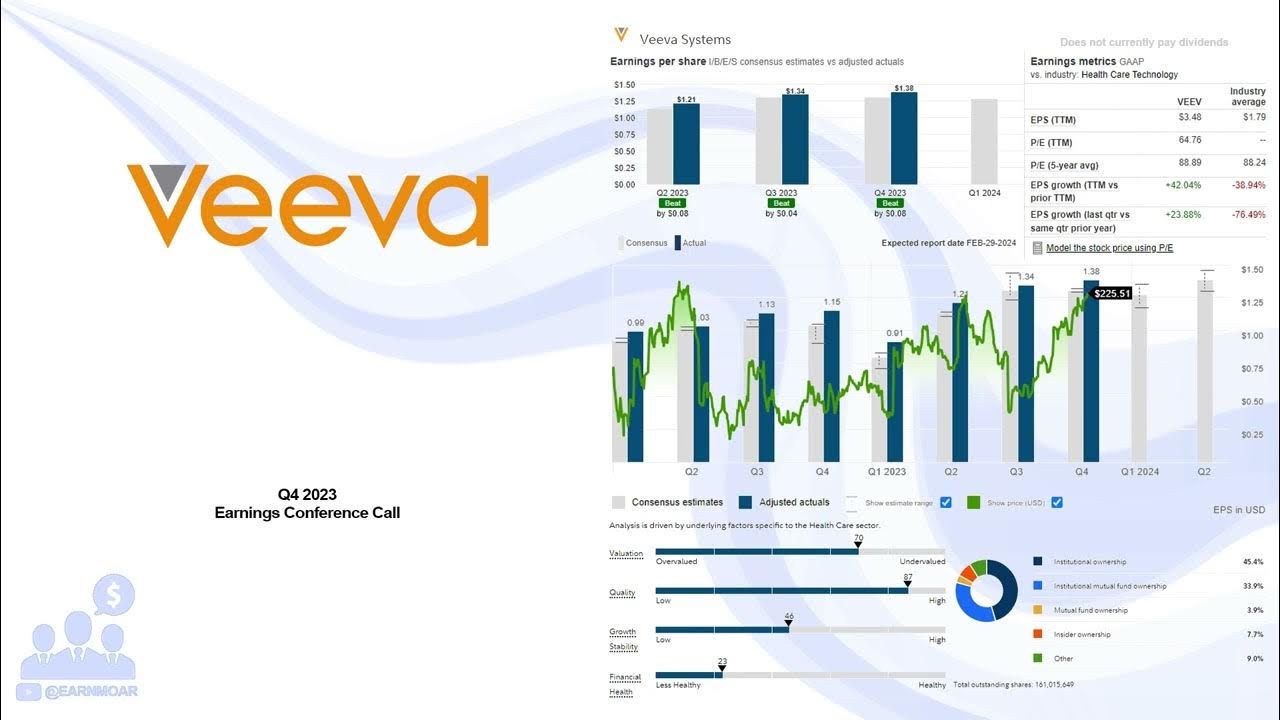
$VEEV Veeva Systems Q4 2023 Earnings Conference Call
EARNMOAR
/@EarnMoar
Feb 29, 2024
This video provides an in-depth exploration of Veeva Systems' fiscal 2024 fourth quarter and full-year earnings, offering significant insights into the company's performance, strategic initiatives, and outlook for the life sciences industry. The conference call features Peter Gassner (CEO), Paul Shawah (EVP Commercial Strategy), and Brent Bowman (CFO), who discuss financial results, product development, market trends, and Veeva's approach to key areas like AI and M&A. The discussion highlights Veeva's strong execution and its long-term vision for providing integrated, industry-specific cloud solutions to pharmaceutical and biotech companies. A central theme is the ongoing strategic transition from Veeva CRM to the new Vault CRM, which aims to provide a unified platform for sales, marketing, and medical operations. Veeva is making substantial investments in services to facilitate this migration for large customers, acknowledging that this move, while not initially requested by customers, will ultimately deliver a superior, integrated solution. The company has already secured commitments from three top 20 pharmaceutical companies for this migration, signaling strong early adoption and future growth potential for the new platform. The call also delves into the performance of Veeva's R&D-focused Development Cloud, which is a significant growth driver and represents the largest portion of Veeva's total addressable market. The discussion emphasizes the long-term nature of R&D projects, with new Enterprise EDC wins taking several years to fully ramp up in revenue. Additionally, the evolution of Veeva's commercial data offerings, including Crossix and the newly released Compass Prescriber and National data products, is highlighted as an area of high potential, offering innovative capabilities for targeting and market insights. Veeva's AI strategy is notably focused on foundational data infrastructure, such as the Direct Data API, rather than direct investment in large language models, positioning data access and quality as critical enablers for future AI applications within the regulated life sciences environment. Key Takeaways: * Veeva Systems reported strong financial results for Q4 2023 and the full fiscal year 2024, with total revenue reaching $631 million for the quarter and $2.4 billion for the year, exceeding guidance. This performance underscores the robust demand for its specialized cloud software and data solutions within the life sciences sector. * The strategic migration from Veeva CRM to Vault CRM is a key focus, with Veeva investing heavily in services to support large customer transitions. This initiative aims to deliver a more integrated solution for sales, marketing, and medical operations, consolidating them onto a single, industry-specific platform. * Veeva has successfully secured commitments from three top 20 pharmaceutical companies to transition their existing Veeva CRM footprint to Vault CRM, demonstrating significant progress and market validation for the new platform. This indicates a strong pipeline for future implementation and customization projects. * The Development Cloud, Veeva's R&D segment, is a major growth engine, accounting for approximately 50% of current revenue and 65% of the total addressable market. It is growing at roughly 20% and is expected to continue this trajectory, driven by new products and a competitive advantage in mission-critical systems like Electronic Data Capture (EDC). * New Enterprise EDC wins, particularly with top 20 pharmaceutical clients, represent long-term revenue opportunities. Due to the complex nature of these systems, full revenue realization from such agreements typically occurs 4-5 years after the initial commitment, highlighting the extended sales and implementation cycles in the R&D space. * Veeva's "Other Commercial" segment, encompassing products like Crossix, Link, and the new Compass data offerings (Patient, Prescriber, National), is experiencing rapid growth and holds significant future potential. Crossix, in particular, is gaining market share due to its proven track record of customer success and an extensive data network. * The newly launched Compass Prescriber and National data products are highly innovative, enabling capabilities such as targeting previously inaccessible physicians and providing granular data on competitor products, even for those administered in medical settings. This represents a significant advancement over traditional data solutions. * Veeva's AI strategy is centered on building robust data infrastructure, specifically through its Direct Data API within the Vault platform. This API enables significantly faster and transactionally consistent data extraction, serving as a critical foundation for various AI applications that Veeva or its customers may develop, emphasizing data control and access. * Adopting the full Vault Clinical Operations Suite, which includes components like CTMS, study training, payments processing, and site connect, can more than triple the value for customers compared to using only eTMF. This integrated approach streamlines clinical research and enhances compliance across global sites. * Market sentiment among top 50 pharmaceutical companies shows increased optimism, driven by scientific advancements (e.g., GLP-1 drugs) and a renewed focus on long-term execution. Conversely, the emerging biotech segment continues to face headwinds due to a challenging funding environment. * Veeva maintains a disciplined capital allocation strategy, prioritizing M&A opportunities that align with its market interests, demonstrate cultural fit, and have a clear product and organizational integration plan. The company emphasizes that size is not a limiting factor if these stringent criteria are met. * The company is achieving increasing operating margins through scaling efficiencies, process optimization, and a focus on "lean teams" with high-performance individuals. This disciplined approach to operational effectiveness supports profitable growth without compromising essential investments in customer success and R&D. * Regulatory changes, such as the Inflation Reduction Act (IRA), are primarily influencing R&D investment decisions in the short term, affecting choices around molecules and indications. While commercial impacts are anticipated later, the industry is adapting through innovation and increased digitization to meet new compliance requirements. * Veeva's multi-sourcing data strategy for Compass and Crossix aims to enhance data quality and provide a more holistic patient view, allowing for projections across a broader range of brands and therapy types. This approach is expected to result in lower overall data acquisition costs over time. Tools/Resources Mentioned: * Veeva CRM * Veeva Vault CRM * Veeva Vault PromoMats * Veeva Vault Medical * Veeva Crossix * Veeva OpenData * Veeva Link * Veeva Compass (Patient, Prescriber, National) * Veeva Development Cloud * Veeva Vault Clinical (including EDC, eTMF, CTMS, Study Training, Payments Processing, Site Connect) * Veeva Vault RIM (Regulatory Information Management) * Veeva Vault Safety * Veeva Vault Quality * Veeva QualityOne * Veeva RegulatoryOne * Veeva Claims * Direct Data API (within Vault platform) Key Concepts: * **Vault CRM:** Veeva's next-generation customer relationship management platform, designed to integrate sales, marketing, and medical operations on a single, industry-specific database for the life sciences. * **Development Cloud:** A comprehensive suite of applications offered by Veeva for managing clinical, regulatory, quality, and safety functions within the R&D lifecycle of pharmaceutical and biotech companies. * **EDC (Electronic Data Capture):** A software system used in clinical trials for the electronic collection and management of patient data, streamlining data capture and improving data quality. * **eTMF (electronic Trial Master File):** A system for electronically managing and archiving essential documents related to a clinical trial, ensuring compliance and easy access. * **CTMS (Clinical Trial Management System):** A software system used to manage and track the planning, execution, and reporting of clinical trials, including participant recruitment, site management, and financial tracking. * **Crossix:** Veeva's analytics platform that leverages a vast data network to provide pharmaceutical brands with insights into patient journeys and marketing effectiveness. * **Veeva Compass:** Veeva's data application providing de-identified and longitudinal patient data, now expanded with "Prescriber" and "National" data sets to offer more granular insights for commercial operations, including physician targeting and competitive analysis. * **Direct Data API:** A revolutionary application programming interface within Veeva's Vault platform that enables significantly faster and transactionally consistent extraction of data, serving as a critical enabler for advanced analytics and AI applications. * **Inflation Reduction Act (IRA):** U.S. federal legislation that includes provisions impacting drug pricing and reimbursement, influencing pharmaceutical companies' R&D investment decisions and commercial strategies. Examples/Case Studies: * Veeva announced commitments from three of the top 20 global pharmaceutical companies to migrate their existing Veeva CRM installations to the new Vault CRM platform. * The company secured two new Enterprise EDC (Electronic Data Capture) wins with top 20 pharmaceutical customers, indicating continued strong adoption of its clinical data management solutions. * A specific customer's adoption of the full Vault Clinical Operations Suite, beyond just the eTMF, was noted to more than triple the value derived from their clinical operations, showcasing the benefits of a holistic platform approach. * The discussion referenced the rise of GLP-1 drugs (e.g., for obesity and weight loss) as an example of scientific innovation driving optimism and significant R&D investment within the pharmaceutical industry.
The No Surprises Act and Consumer Protection In Healthcare (with Josh Schreiner & Michael Mather)
Self-Funded
@SelfFunded
Feb 27, 2024
This video provides an in-depth exploration of the No Surprises Act (NSA) and its profound impact on consumer protection, transparency, and compliance within the healthcare industry. Featuring Josh Schreiner, Chief Product Officer, and Michael Mather, General Counsel, of HealthEZ, the discussion highlights how recent regulations are reshaping the future of healthcare, particularly for self-funded employers and their consultants. The conversation delves into the complexities of navigating new mandates, the challenges of data utilization, and the evolving landscape of patient empowerment and cost containment. The speakers meticulously break down the various components of the No Surprises Act, emphasizing its dual goals: protecting consumers from unexpected out-of-network medical bills and enhancing transparency in healthcare pricing. They discuss the Independent Dispute Resolution (IDR) process designed to resolve payment disputes between plans and providers, noting the significant backlog and litigation challenges it currently faces. A unique aspect of the discussion is the concept of "care coordination" under the NSA, which grants patients continuity of in-network care for up to 90 days when a provider leaves a network during ongoing treatment, posing complex reimbursement challenges for administrators. A significant portion of the video is dedicated to the "machine-readable files" (MRFs) requirement, mandated by the NSA to disclose in-network, out-of-network, and pharmacy data. The speakers describe these files as "massive amounts of good data" that are practically unusable in their raw, "gibberish" format due to sheer volume and technical complexity. HealthEZ's approach to transforming this raw data into actionable insights through tools like "Easy Choice" for consumer shopping is presented as a crucial step towards true healthcare consumerism. The discussion also touches upon the "Gag Clause Attestation" requirement, which prohibits contractual clauses that restrict access to cost and quality data, further pushing the industry towards greater transparency and accountability. Key Takeaways: * **No Surprises Act (NSA) Scope:** The NSA encompasses patient protections against surprise medical bills (e.g., emergency services, ancillary out-of-network providers, air ambulance), transparency rules (cost comparison tools, provider directories), and reporting requirements (pharmacy drug spend, machine-readable files). Its core aim is to protect consumers from unexpected costs in situations where they cannot make informed choices. * **Patient Cost Protection:** In emergency or specific out-of-network scenarios covered by the NSA, patients are only responsible for their in-network cost-sharing, effectively collapsing the in-network/out-of-network distinction from the patient's perspective. The actual payment negotiation is shifted to plans and providers. * **Independent Dispute Resolution (IDR) Process:** The NSA established an IDR process for plans and providers to resolve payment disputes for out-of-network services covered by the act. This process mimics arbitration, with a neutral entity picking either the plan's or the provider's proposed payment amount, without compromise, after a 30-day good-faith negotiation period. * **IDR Backlog and Challenges:** The IDR process is severely backlogged, with hundreds of thousands of disputes submitted in its first year, but only a fraction resolved. This is attributed to a lack of certified entities, human resource constraints, and ongoing litigation challenging the rules for calculating the Qualified Payment Amount (QPA) and associated fees. * **Care Coordination Mandate:** The NSA includes a "care coordination" provision allowing patients receiving care for certain conditions to continue receiving in-network benefits for up to 90 days if their provider leaves the network. This creates challenges for TPAs in determining appropriate reimbursement rates when they lack access to the former contracted rates. * **Machine-Readable Files (MRFs) Complexity:** Plans are required to produce massive, monthly machine-readable files containing in-network, out-of-network, and pharmacy data. These files are often too large and technically complex for average users to access or interpret, making their practical utility limited without specialized processing. * **Transforming Raw Data into Actionable Tools:** Companies like HealthEZ are taking the raw MRF data and integrating it into consumer-facing tools (e.g., "Easy Choice") and internal advocacy platforms. This allows members and care navigation teams to shop for services, compare estimated prices, and make more informed decisions about care sites. * **Challenges to Healthcare Consumerism:** Despite efforts to increase transparency and provide shopping tools, consumer utilization remains low (e.g., 11% for shopping tools). Factors include the overwhelming complexity of CPT codes, the personal nature of healthcare decisions, and the tendency for consumers to choose higher-cost care once their out-of-pocket maximums are met. * **Incentivizing Informed Choices:** Plan design can be leveraged to incentivize cost-effective choices, such as offering zero co-insurance for Ambulatory Surgery Centers (ASCs) versus higher co-insurance for hospitals for certain outpatient procedures. Pre-notification and pre-certification processes also enable advocacy teams to guide members toward high-quality, lower-cost options. * **Gag Clause Attestation Requirement:** This new requirement mandates that health plans annually attest that their contracts do not contain "gag clauses" or confidentiality agreements prohibiting access to cost or quality of care data. This shifts compliance from passive enforcement to active attestation, posing significant challenges for plans and their service providers. * **Future of Healthcare: Transparency and Enforcement:** The industry is moving towards greater transparency across all service providers, aiming to empower individuals with information for better decision-making. Regulators are expected to transition from an initial phase of education and assistance to more active enforcement of these new compliance mandates. * **Impact of Gene Therapies:** The emergence of high-cost cell and gene therapies (e.g., $3-4 million per treatment) presents a significant future challenge for health plans, employers, and reinsurance partners, threatening to dramatically increase healthcare costs beyond historical inflation rates. * **Role of Wearables and Data:** Health risk assessments, combined with data from wearables and coaching, can empower individuals to make healthier lifestyle changes, leading to significant reductions in long-term medical costs, particularly for chronic conditions like diabetes. **Tools/Resources Mentioned:** * **HealthEZ Easy Choice:** A consumer-facing tool and internal advocacy platform that uses machine-readable file data to help members shop for in-network and out-of-network services and understand estimated costs. * **HealthEZ.com/NSA:** A landing page with information on HealthEZ's NSA transparency and compliance solutions. **Key Concepts:** * **No Surprises Act (NSA):** Federal legislation enacted to protect consumers from surprise medical bills and increase transparency in healthcare pricing. * **Independent Dispute Resolution (IDR):** A federal process established by the NSA for health plans and providers to resolve payment disputes for out-of-network services. * **Qualified Payment Amount (QPA):** A key metric used in the IDR process, representing the median contracted rate for a service, around which payment negotiations and IDR decisions are anchored. * **Care Coordination (NSA):** A provision allowing patients to continue receiving in-network benefits for up to 90 days if their provider leaves a network during ongoing treatment for specific conditions. * **Machine-Readable Files (MRFs):** Large, publicly posted data files required by the NSA, containing detailed pricing information for in-network, out-of-network, and pharmacy services. * **Gag Clause Attestation:** An annual requirement for health plans to certify that their contracts do not contain clauses prohibiting access to cost or quality of care information. * **Consumerism in Healthcare:** The concept of empowering patients to make informed decisions about their healthcare based on cost, quality, and personal preferences, often facilitated by transparency tools. **Examples/Case Studies:** * **Air Ambulance Bills:** Cited as a classic example of surprise billing that the NSA aims to prevent, where patients receive unexpected large bills for emergency out-of-network air transport. * **Phoenix Children's Hospital System:** An example of a large health system going out of network with a national PPO network, triggering care coordination challenges for patients. * **Outpatient Knee Surgery:** Used as an example where performing the procedure at an Ambulatory Surgery Center (ASC) can be twice as cost-effective as a hospital, highlighting the potential for plan design to incentivize lower-cost, high-quality care. * **Diabetes Management Program:** A 750-life employer group implemented diabetes coaching, free insulin, and free supplies, reducing annual medical costs per diabetic from nearly $20,000 to $11,000, demonstrating the impact of integrated, multi-faceted interventions.
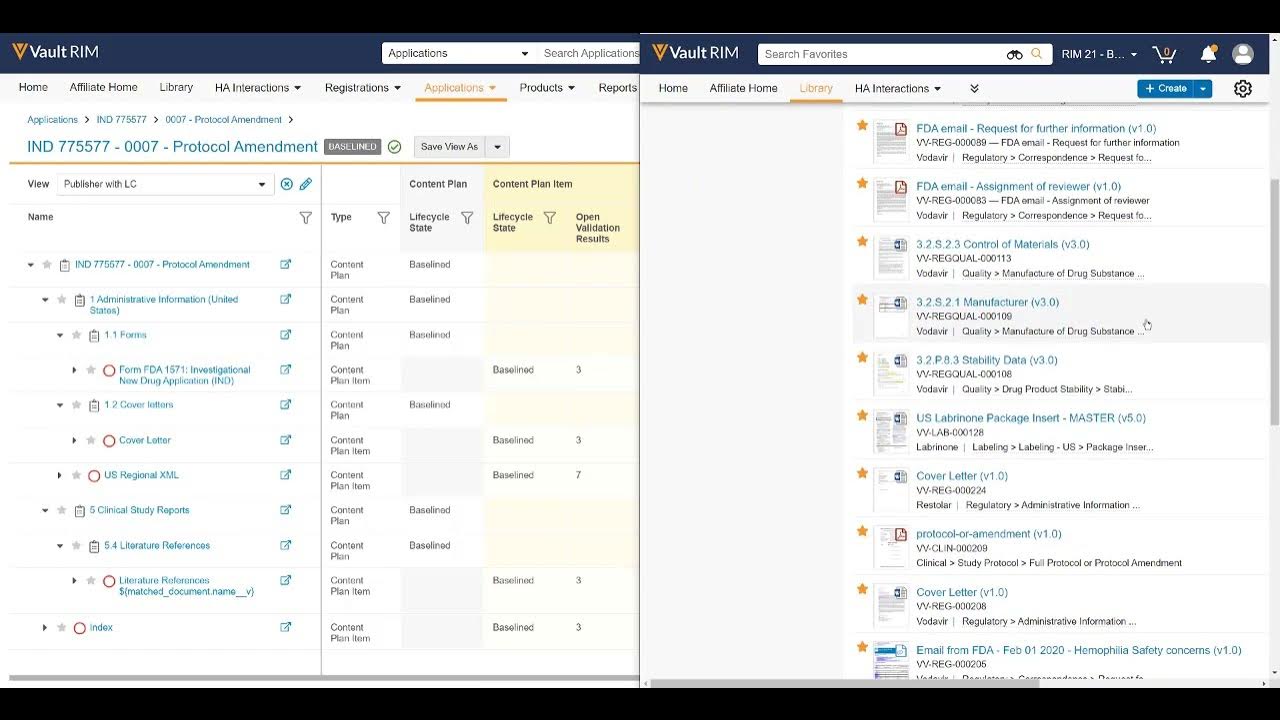
Vault Submissions Publishing Demo
Veeva Systems Inc
/@VeevaSystems
Feb 26, 2024
This video provides an in-depth demonstration of Veeva Vault Submissions Publishing, an end-to-end solution designed to manage the complex process of preparing, publishing, and submitting electronic regulatory content to global health authorities. The presentation highlights how the system streamlines content planning, publishing, and finalization, ensuring compliance with evolving regulations and optimizing the submission lifecycle for marketed products. It showcases preconfigured user and system actions that support a seamless workflow, from initial content planning to direct submission and acknowledgment tracking. The demonstration begins with the creation of an application and foundational submission records within Vault Submissions, allowing users to specify critical information such as product families, submission types, and planned submission dates. A key feature is the ability to track health authority questions, ensuring ongoing engagement and compliance. The system then guides users through generating a comprehensive content plan using pre-loaded templates, which dynamically populates the submission record with all necessary modules and sections. This content plan can be customized by activating or deactivating specific modules (e.g., Module 5) based on the unique requirements of each submission, providing flexibility and control over the submission outline. A core aspect of the system's efficiency is its "continuous publishing" and "continuous validation" capabilities. Continuous publishing automatically processes documents as they are associated with the content plan or updated, ensuring that the submission content is always current and ready. Furthermore, the system facilitates the creation of cross-document link annotations, converting internal hyperlinks into standard relative PDF links essential for regulatory submissions. Continuous validation is performed in real-time against health authority criteria (such as eCTD standards), immediately flagging errors or warnings (e.g., a missing submission contact) and allowing for their prompt resolution. The demo concludes by illustrating the final steps: locking documents, changing the content plan state to "complete," reviewing the assembled submission in the Submissions Archive Viewer, and finally, submitting directly to health authorities via a secure Gateway, with automatic tracking of acknowledgments. Key Takeaways: * Veeva Vault Submissions Publishing offers an end-to-end solution for managing the entire lifecycle of electronic regulatory submissions, from initial content planning and document assembly to final submission to health authorities. * The system facilitates the creation of detailed submission applications and records, enabling users to specify product families, submission types (based on region and application), and planned submission dates, which helps prioritize publishing jobs. * Content plans are dynamically generated using pre-configured templates and dossier formats, providing a comprehensive outline of the submission and allowing for the activation or deactivation of specific modules (e.g., Module 5) as needed. * "Continuous Publishing" is a critical feature that automates the publishing of documents as they are associated with the content plan or as related content/attributes are updated within the system, ensuring real-time readiness and efficiency. * The platform supports the creation of cross-document link annotations, converting internal hyperlinks within and between documents into standard relative PDF links, which is essential for maintaining navigability and integrity in regulatory submissions. * "Continuous Validation" provides real-time verification of eCTD submissions against health authority validation criteria, allowing users to review and resolve errors and warnings (e.g., missing submission contacts) concurrently with the submission process. * Users can manage the lifecycle state of both the overall content plan (e.g., Draft to Baseline to Complete) and individual documents, ensuring that the correct and approved versions are included in the final submission. * The system allows for direct submission to various global health authorities via a secure Gateway, with automatic tracking and attachment of acknowledgments received from the Gateway transmission to the submission record. * The Submissions Archive Viewer serves as a crucial review tool, enabling users to verify that all hyperlinks are functional and document lifecycle states are appropriate before sending the submission to the agency. * Flexibility is provided in naming conventions for submissions, adapting to diverse business processes, and the system allows for granular control over XML operations on individual "leaves" within the submission outline. * Documents can be associated with the content plan via simple drag-and-drop functionality, even if they are not yet in an "approved" state, offering flexibility in the authoring and assembly workflow. * The system streamlines the process of tracking health authority questions and managing changes to marketed product submissions, providing a centralized platform for regulatory interactions. Tools/Resources Mentioned: * Veeva Vault Submissions Publishing * Submissions Archive Viewer * Gateway (for direct submission to health authorities) Key Concepts: * **Submissions Publishing:** An end-to-end process within Veeva Vault that manages the content planning, publishing, and finalization of electronic submission content for health authorities. * **Content Plan:** A structured, template-driven outline that defines all the documents and modules required for a specific regulatory submission, dynamically populating from the submission record. * **Continuous Publishing:** An automated capability that continuously publishes documents as they are associated with the content plan or as their attributes are updated, ensuring the submission is always up-to-date. * **Continuous Validation:** A real-time feature that verifies eCTD submissions against health authority validation criteria, identifying and allowing for immediate resolution of errors and warnings. * **eCTD (Electronic Common Technical Document):** The standard format for submitting regulatory information to health authorities (implied by "health authority validation criteria" and "eCTD submissions"). * **Cross-document Link Annotations:** Hyperlinks created within and between documents that are automatically converted to standard relative PDF links for compliant regulatory submissions. * **Gateway:** The electronic portal or system used to transmit regulatory submissions directly to health authorities.
Vault Submissions Demo
Veeva Systems Inc
/@VeevaSystems
Feb 26, 2024
This video provides an in-depth demonstration of Veeva Vault Submissions, a component of the Vault RIM suite, designed to streamline and manage the complex process of regulatory submissions to health authorities. The presenter frames Vault RIM as a single source of truth for planning, executing, and tracking all upcoming submissions. The demonstration highlights how the platform offers real-time project management capabilities, allowing users to visualize submission timelines, product associations, and team capacity, thereby facilitating better resource allocation and deadline management within pharmaceutical and life sciences organizations. The core of the demonstration revolves around the submission content plan, which serves as a central hub for managing submission deliverables and document management tasks. A key feature discussed is the ability to leverage a global content plan or core dossier to efficiently reuse common documents across various markets. This approach significantly reduces duplication of effort when preparing local submissions, requiring only the addition and approval of market-specific documents. The content plan also functions as a project management tool, enabling filtering by deliverable owner and due dates, ensuring clear accountability and task management for individual team members. The video further illustrates the collaborative authoring capabilities within Vault Submissions, demonstrating how multiple team members can simultaneously work on a document, with real-time visibility into each other's edits, preventing content conflicts. Once authoring is complete, documents are saved back to the Office 365 cloud and then to Veeva Vault. The platform offers comprehensive dashboards to track the status of all documents within a submission, broken down by module, owner, and completeness, providing a "one-stop shop" for monitoring progress. To expedite the approval process, the system supports multi-document workflows, allowing users to send entire modules or specific documents for electronic signature and approval, with statuses immediately reflected in the dashboard once completed, signaling readiness for dispatch to health authorities. Key Takeaways: * **Centralized Submission Management:** Veeva Vault RIM acts as a single, authoritative source for all regulatory submission activities, from initial planning to final dispatch, ensuring consistency and control across the entire lifecycle. * **Real-time Project Visibility:** The platform offers dynamic dashboards that provide real-time data on upcoming submissions, including timelines, product associations, and team capacity, enabling proactive resource planning and deadline management. * **Global Content Reuse Strategy:** Utilizing a global content plan or core dossier allows for efficient reuse of common documents across multiple markets, significantly reducing the effort and time required to prepare localized submissions. * **Integrated Document Management:** The submission content plan not only defines the submission outline but also facilitates comprehensive document management, including authoring, review, and approval workflows within a secure cloud environment. * **Collaborative Authoring:** Vault Submissions supports simultaneous collaborative authoring of documents, allowing multiple team members to work on the same content concurrently with real-time visibility, enhancing efficiency and reducing version control issues. * **Streamlined Approval Workflows:** The system incorporates multi-document workflows, enabling the efficient routing of entire modules or individual documents for electronic signature and approval, accelerating the review process. * **Comprehensive Status Tracking:** Dashboards provide an immediate overview of the status of all documents within a submission, categorized by module, deliverable owner, and completeness, offering a transparent and efficient way to monitor progress. * **Regulatory Compliance Support:** The entire process, from document creation to electronic signatures and dispatch to health authorities, is designed to support regulatory compliance by providing a structured, auditable, and secure environment. * **Enhanced Team Efficiency:** By centralizing information, automating workflows, and enabling collaboration, the platform significantly improves the efficiency of teams responsible for regulatory submissions, helping them meet critical deadlines. * **Data-Driven Decision Making:** The availability of real-time data and comprehensive dashboards empowers project managers to make informed decisions regarding submission readiness and resource allocation. Tools/Resources Mentioned: * Veeva Vault RIM Suite (specifically Vault Submissions) * Office 365 Cloud (for collaborative authoring and saving documents) Key Concepts: * **Vault RIM:** A suite of applications by Veeva Systems designed to manage regulatory information, including submissions, registrations, and quality processes, within the life sciences industry. * **Submission Content Plan:** A structured outline within Vault Submissions that defines the required documents and their organization for a regulatory submission. * **Global Content Plan/Core Dossier:** A strategy within Vault Submissions to create and manage a set of core documents that can be reused across multiple regional submissions, promoting efficiency and consistency. * **Multi-document Workflow:** An automated process within Vault Submissions that allows for the simultaneous routing and approval of multiple documents, often requiring electronic signatures. * **Electronic Signature:** A method for signing documents digitally, often with user credentials and capacity, to provide a legally binding approval, compliant with regulations like 21 CFR Part 11.

Vault Submissions Archive Demo
Veeva Systems Inc
/@VeevaSystems
Feb 26, 2024
This video provides an in-depth demonstration of Veeva Vault Submissions Archive, a component of the Vault RIM (Regulatory Information Management) Suite, designed to serve as a validated, centralized, cloud-based repository for accessing the complete history of regulatory submissions and health authority interactions globally. The core purpose of the application is to enable faster, more accurate interactions with health authorities by providing a single source of truth for all published outputs, including eCTD and non-eCTD formats (such as NCE, eAEU, and paper submissions). The presenter, a solution consultant, emphasizes the application's global capabilities, requiring no local software installation, and its adherence to stringent regulatory standards, specifically 21 CFR Part 11 and EU GMP Annex 11 requirements. The demonstration focuses heavily on the user experience for navigating and retrieving specific regulatory content. The starting point is the Dossier Viewer, where users can select a specific application (e.g., an annual DCP application) and then refine the view using powerful filtering capabilities. Users can filter by sequence number, status, submission type, and actual submission date. A key feature highlighted is the advanced filtering, which allows users to search across metadata associated with the documents. For instance, the consultant demonstrates finding all sequences and associated documents where a specific manufacturer (Veeva from Brussels) has been published, quickly identifying the relevant sequences (5 and 6). Once a sequence is selected, users can visualize all associated documents, view lifecycle information, and open the actual document within the built-in viewer. The true value proposition of Vault Submissions Archive, as articulated in the demo, lies in the connection between documents and data on the same platform. The built-in viewer not only displays the document content but also provides the associated metadata on the right side and the table of contents on the left, allowing for seamless navigation without returning to the main navigator. Furthermore, users can directly open the application record from the document view to see detailed background information. This integrated approach allows the platform to be used not just for archiving, but also for the planning and tracking of regulatory objectives and submissions, enabling users to manage dates and statuses effectively. Finally, the demonstration concludes by showcasing the powerful reporting and dashboard capabilities inherent in the Vault platform. Vault Submissions Archive allows users to report on any data or documents stored within the system. A specific example, the "Application Chronology" dashboard, is presented as a valuable tool. This dashboard visually tracks the chronological progression of an application over time, including submitted and planned sequences, approved or pending regulatory objectives, and all health authority interactions, such as commitments and correspondence. This comprehensive view ensures that the archive functions as an authoritative source for submissions, correspondence, and regulatory planning. Key Takeaways: • **Centralized Global Repository:** Vault Submissions Archive provides a single, cloud-based repository for all regulatory filings and health authority interactions worldwide, eliminating the need for local software and facilitating global sharing of submission history across the organization. • **Comprehensive Format Support:** The platform supports both eCTD (electronic Common Technical Document) and various non-eCTD electronic formats (NCE, eAEU) and even paper submissions, ensuring a complete historical record regardless of the original submission type. • **Regulatory Compliance Assurance:** The application is built to comply strictly with critical regulatory requirements, specifically 21 CFR Part 11 (governing electronic records and signatures in the US) and EU GMP Annex 11, ensuring the validated environment necessary for life sciences operations. • **Advanced Search and Filtering:** Users can quickly locate specific content using powerful search capabilities combined with filters based on status, submission type, date, and sequence, including advanced filtering that queries document metadata (e.g., searching by manufacturer name). • **Integrated Dossier Viewer:** A built-in viewer allows users to navigate the dossier easily in current, sequential, or cumulative views, providing immediate access to the content, associated metadata, and the table of contents simultaneously. • **Connected Data Model:** The platform connects documents and underlying data (metadata) on the same platform, allowing users to seamlessly transition from viewing a document to accessing the detailed record of the associated application for context and planning. • **Regulatory Planning and Tracking:** Beyond archiving, the system serves as a tool for managing regulatory objectives, allowing teams to track submission dates, statuses, and commitments directly within the same environment where the submission history resides. • **Actionable Business Intelligence:** The platform includes robust reporting capabilities, exemplified by the "Application Chronology" dashboard, which provides a chronological, visual representation of application progress, submitted sequences, regulatory objective approvals, and health authority correspondence. • **Dynamic Access Control:** Published outputs are stored securely with dynamic access controls, ensuring that only personnel with the appropriate permissions can view specific content, maintaining data integrity and confidentiality. • **Streamlined Health Authority Interactions:** By providing an authoritative, easily searchable source for all submissions and correspondence, the archive enables faster and more accurate responses and interactions with regulatory bodies globally. Tools/Resources Mentioned: * Veeva Vault Submissions Archive * Veeva Vault RIM Suite * eCTD (electronic Common Technical Document) Key Concepts: * **21 CFR Part 11:** US FDA regulation governing electronic records and electronic signatures, ensuring their trustworthiness and reliability. Vault Submissions Archive is explicitly compliant with this standard. * **EU GMP Annex 11:** European Union guideline concerning computerized systems used in regulated GxP environments. The platform ensures compliance with this standard. * **Dossier Viewer:** The primary interface within the application used to view and navigate the complete set of published outputs (dossiers) for a specific application. * **Application Chronology:** A specific business intelligence dashboard that visually tracks the timeline of an application, including sequences submitted, regulatory objectives, and health authority interactions. * **Health Authority Interactions:** Refers to all formal communications, commitments, and correspondence exchanged between the pharmaceutical company and regulatory bodies like the FDA or EMA.