Videos
Browse videos by topic
All Videos
Showing 457-480 of 1435 videos

Vault Submissions Publishing eLearning Demo
Veeva Systems Inc
/@VeevaSystems
Feb 26, 2024
This video provides an in-depth demonstration of Veeva's "Vault Submissions Publishing e-learning" offering, a specialized training program designed to facilitate the transition of regulatory operations teams from legacy publishing systems to the integrated workflow of Veeva Vault Submissions Publishing. The core message is that Vault fundamentally changes the regulatory submission process by moving traditional publishing tasks earlier in the submission life cycle and eliminating others, thereby requiring a dedicated, structured training approach to onboard and educate users effectively. The training is self-paced, online, and continuously maintained by Veeva publishing experts to ensure alignment with the latest features and industry best practices. The e-learning curriculum is strategically divided into three key components. First, the Initial Onboarding provides foundational training covering the essential steps required to manage a regulatory application from its initiation through the final submission of published content directly to the health authority. Second, Differences Training is release-based, offering deep dives into new features and updates rolled out with each Veeva release, ensuring users stay current. Third, the Advanced Topics Library serves as a repository of micro-learnings focused on specific, complex use cases or regional regulatory considerations, such as non-USB submissions, which are slated for future development. The content delivery is flexible, accessible either via a dedicated Veeva-hosted training environment called "e-learning direct" or directly integrated into a client's existing Veeva Quality Vault. The course structure is designed to first bridge the knowledge gap for experienced publishers. It begins with a comprehensive Vault RIM overview section, which explicitly maps traditional publishing steps to the new Vault submissions publishing process, highlighting how key processes are changing. This foundational understanding is followed by detailed, smaller lessons focusing on specific process steps. The curriculum progresses logically, starting with the creation of applications—emphasizing how the initial details entered impact the entire downstream submission—and moving through submissions, content plan creation, and critical publishing activities such as validation, hyperlinking, finalizing content, and submitting to the health authority. To maximize user engagement and practical skill development, the training utilizes a variety of interactive modalities. These include text-based training supported by visual aids and screenshots, interactive graphics that require users to click and engage to reveal detailed information, and brief demos. Most critically, the program incorporates software simulations, which are hands-on exercises requiring users to complete the actual steps needed within a simulated Vault RIM environment. This simulation feature allows users to gain practical, muscle-memory experience. Learning is reinforced through knowledge checks, including quizzes at the end of each major process section and a final comprehensive knowledge check summarizing the key lessons presented throughout the entire course. Key Takeaways: * **Process Transformation Focus:** Veeva Vault Submissions Publishing fundamentally alters the regulatory submission workflow by shifting publishing tasks earlier in the lifecycle and eliminating traditional steps, necessitating specialized training for existing regulatory operations teams. * **Structured Training Components:** The e-learning program is segmented into Initial Onboarding (basics from application initiation to submission), Differences Training (release-based updates), and an Advanced Topics Library (micro-learnings for specific use cases and regional considerations). * **Bridging Legacy Knowledge:** The course begins with a crucial Vault RIM overview designed to map traditional publishing steps to the new Vault process, helping experienced publishers understand the specific operational differences they will encounter. * **Importance of Application Details:** The training emphasizes the critical nature of the initial application creation process, detailing how the information entered at this stage directly impacts the overall downstream submission activities and requirements. * **Hands-On Simulation:** A key feature is the inclusion of software simulations, which are interactive demos requiring users to perform the actual steps needed to complete processes within a simulated Vault RIM environment, providing essential hands-on experience. * **Continuous Content Maintenance:** The training content is actively maintained and regularly updated by Veeva publishing experts, ensuring that users are always trained on the latest features, regulatory best practices, and system changes. * **Modular Learning Design:** Lessons are broken down into smaller, manageable modules covering specific process steps (e.g., submissions, content plan, validation, hyperlinking, finalizing content), allowing users to track progress easily and focus on specific areas. * **Reinforcement through Knowledge Checks:** Learning retention is enforced through quizzes at the end of each major process section and a final comprehensive knowledge check at the conclusion of the course. * **Flexible Access Models:** Companies can access the training content either through the Veeva-hosted "e-learning direct" platform or by having the content delivered to their existing Veeva Quality Vault, offering deployment flexibility. * **Regulatory Scope:** The current course primarily focuses on the key processes of a USB (United States) submission, with plans to expand the advanced topics library to include other critical regional regulatory considerations in the future. Tools/Resources Mentioned: * Veeva Vault Submissions Publishing * Veeva Vault RIM (Regulatory Information Management) * Veeva Quality Vault * e-learning direct (Veeva-hosted training Vault) Key Concepts: * **Vault Submissions Publishing:** A modern system for managing the creation, validation, and submission of regulatory documents to health authorities, characterized by integrating publishing tasks earlier in the submission lifecycle. * **Differences Training:** Release-based training modules focused on educating users about new features and changes introduced in specific software updates, crucial for maintaining proficiency in evolving regulated software environments. * **Software Simulation:** An interactive training method that replicates the actual software environment, requiring the user to execute the necessary steps to complete a task, thereby providing practical, risk-free experience. * **Hyperlinking and Validation:** Core publishing activities covered in the training, ensuring that submission documents meet technical standards and link requirements before final submission to the health authority. * **Vault RIM Overview:** A foundational section of the training designed to provide context on where publishing sits within the broader Regulatory Information Management platform and how traditional workflows map to the new system.

Press Ganey Patient Satisfaction Scores Explained
AHealthcareZ - Healthcare Finance Explained
@ahealthcarez
Feb 25, 2024
This video provides an in-depth explanation of Press Ganey patient satisfaction scores, a critical metric within the U.S. healthcare system. Dr. Eric Bricker, the speaker, begins by establishing Press Ganey as a prominent American company that has been surveying patients about their healthcare experiences for 38 years. He emphasizes that understanding Press Ganey scores is essential for anyone working in healthcare, including those in the pharmaceutical industry, hospital administration, and employee benefits. Over 50% of U.S. hospital systems utilize Press Ganey to measure patient satisfaction with their physicians, and the company has relationships with over 41,000 healthcare facilities, making it the largest patient survey organization in the country. The video delves into the specific methodology of Press Ganey surveys, focusing on the 10 questions asked about individual physicians after a patient visit. These questions cover aspects such as friendliness, clarity of explanation, concern for the patient, inclusion in decision-making, medication information, follow-up plans, speech clarity, time spent, confidence in the doctor, and whether the patient would recommend the doctor. Crucially, Dr. Bricker highlights the unique scoring system: each question is rated on a one-to-five scale (very poor to very good), but only "very good" (a score of five) responses count towards the doctor's official Press Ganey score. The final score is presented as a percentage of "very good" responses out of the total. For a doctor to receive a score, a minimum of 30 patient surveys are required, meaning 300 individual responses across the 10 questions. Dr. Bricker presents compelling data illustrating that patient satisfaction with doctors is overwhelmingly high. Even physicians in the bottom 10th percentile of scores still receive a "very good" rating on 70% of responses, while top 10th percentile doctors score 91% "very good," and the median is 82%. This narrow range and consistently high scores across all specialties (e.g., dermatology, OBGYN, surgery, oncology) lead to three major implications. First, healthcare providers and hospitals cannot effectively compete on patient satisfaction because nearly all patients are highly satisfied with their doctors. Competition, therefore, must shift to factors like access to appointments or out-of-pocket costs. Second, it is futile to attempt to pit patients against their doctors, as patients overwhelmingly like and trust their physicians. Third, and most significantly, doctors serve as the most effective conduit for any healthcare initiative aimed at patients, given their strong bond and influence, surpassing that of insurance companies, employers, or the government. Key Takeaways: * **Press Ganey's Dominance in Patient Surveys:** Press Ganey is a leading American company, used by over 50% of U.S. hospital systems and connected to over 41,000 healthcare facilities, making its patient satisfaction scores a ubiquitous and essential metric in healthcare. * **Physician-Specific Survey Questions:** Press Ganey surveys include 10 specific questions about a doctor's performance, covering aspects like friendliness, clarity of explanation, empathy, patient involvement in decision-making, medication information, follow-up plans, communication clarity, time spent, patient confidence, and willingness to recommend. * **Unique "Top Box" Scoring Methodology:** The most critical aspect of Press Ganey scoring is that only the highest rating ("very good" or a 5 out of 5) counts towards a physician's score. Any rating from "very poor" to "good" (1-4) does not contribute positively to the final percentage. * **Universally High Patient Satisfaction:** Patient satisfaction with doctors is remarkably high across the board. Even physicians in the bottom 10th percentile of scores receive a "very good" rating on 70% of responses, while the median score is 82%, and top 10th percentile doctors achieve 91%. * **Inability to Compete on Satisfaction:** Given the uniformly high patient satisfaction scores across all physicians and specialties, hospitals and individual doctors cannot differentiate or compete effectively based on patient satisfaction alone. * **Alternative Competitive Differentiators:** Instead of satisfaction, healthcare providers should focus on competing in areas such as patient access (ease of getting appointments) and out-of-pocket costs, as these are factors where patients perceive significant differences and value. * **Strong Patient-Physician Bond:** Patients exhibit a strong, positive bond with their doctors, making it ineffective and counterproductive for other entities (like insurance companies or employers) to attempt to create friction or pit patients against their physicians. * **Physicians as the Primary Conduit:** Doctors are the most trusted and influential conduit for reaching and influencing patients. Any initiative or message intended for plan members or employees and their families should ideally be channeled through their physicians to maximize impact and acceptance. * **Consistency Across Specialties:** The high and narrow range of patient satisfaction scores holds true across all medical specialties, indicating a widespread positive perception of doctors regardless of their area of practice. * **Minimum Survey Threshold:** A physician requires a minimum of 30 patient surveys (totaling 300 individual responses across 10 questions) to generate an official Press Ganey score. * **Implications for Pharmaceutical and Life Sciences:** Understanding the physician's role as the primary conduit for patient influence is crucial for pharmaceutical and medical device companies in developing effective commercial operations, marketing strategies, and patient engagement programs. Solutions that empower or leverage the physician-patient relationship will likely be more impactful. **Tools/Resources Mentioned:** * **Press Ganey:** The company providing patient satisfaction surveys. * **AHealthcareZ.com:** The website for the channel, offering healthcare finance educational videos and a newsletter. * **"16 Lessons in the Business of Healing":** A book by Dr. Eric Bricker, the speaker. **Key Concepts:** * **Press Ganey Patient Satisfaction Scores:** A standardized metric used widely in U.S. healthcare to measure patient experiences and satisfaction with physicians and facilities. * **Top Box Scoring:** A specific scoring methodology where only the highest possible rating (e.g., "very good" or 5 out of 5) is counted towards a positive score, effectively setting a very high bar for satisfaction. * **Conduit:** In this context, referring to physicians as the primary and most trusted channel through which healthcare information, initiatives, and influence can effectively reach patients.

Veeva Vault RIM Submission Archiving Overview : How Vault Submission Archive Works
Anitech Talk
/@AnitechTalk
Feb 23, 2024
This video provides an in-depth exploration of Veeva Vault RIM's Submission Archiving features, detailing how regulatory professionals can effectively manage and access published regulatory submissions. The speaker, an expert in Veeva systems, outlines the core functionalities of the Submission Archive, emphasizing its role as a global repository for documents submitted to health authorities worldwide. The presentation begins by establishing the context of submission archiving within the broader Veeva RIM suite, building upon previous discussions of submission publishing and regulatory registrations. The core of the discussion revolves around the capabilities of Veeva Vault RIM Submission Archive, which is designed to import, archive, and facilitate the viewing of published submissions in a structured manner. This includes support for both eCTD (electronic Common Technical Document) and non-eCTD formats, ensuring comprehensive coverage for various regulatory requirements. The speaker highlights how the system provides a secure and globally accessible platform for regulatory users to review published outputs that were sent to health authorities, complete with dynamic access controls to ensure data security and compliance. An integrated eCTD viewer is presented as a key feature, allowing for quick review of content across applications and submissions, and providing contextual information on how content was reused across different regulatory filings. Further detailing the system's utility, the video delves into specific features such as purpose-built import and export functionalities, the integrated eCTD submission viewer, and PDF link navigation. The import function allows for the ingestion of dossier data in both eCTD and non-eCTD formats, while the export feature enables users to extract dossier data with the same structured folder hierarchy, facilitating reuse for other regions or purposes. The integrated viewer provides a structured display of published documents, often converted to PDF, with navigable links for seamless review of content, metadata, and historical changes. Additionally, the video introduces the built-in dashboard and reporting capabilities, specifically mentioning the "Application Chronology" report, which offers a consolidated view of submissions, regulatory objectives, commitments, and correspondence documents, enhancing oversight and strategic planning for regulatory teams. The session concludes by briefly touching upon the concept of "archive correspondence," which includes critical communication documents like approval letters and meeting minutes exchanged with health authorities. Key Takeaways: * **Centralized Regulatory Submission Repository:** Veeva Vault RIM Submission Archive serves as a global, secure hub for importing, archiving, and viewing all published regulatory submissions sent to health authorities, supporting both eCTD and non-eCTD formats. * **Structured Access to Published Outputs:** The system ensures that published outputs are viewable in a proper, structured way, allowing regulatory users to easily access and review documents that have already been submitted. * **Dynamic Access Control and Security:** Robust security features, including dynamic access control, are integrated to ensure that only authorized users can view specific published documents, maintaining data integrity and regulatory compliance. * **Integrated eCTD Viewer for Comprehensive Review:** An integrated eCTD viewer allows for quick and efficient review of content across various applications and submissions, providing insights into content reuse and submission context. * **Purpose-Built Import and Export Functionality:** The system offers dedicated features for importing dossier data (eCTD and non-eCTD) and exporting it while maintaining the original folder structure, which is crucial for leveraging submissions across different regions. * **PDF Link Navigation for Enhanced Usability:** Published documents are often converted to PDF format with generated links, enabling users to easily navigate between related documents, review metadata, and track content history. * **Built-in Reporting and Dashboards:** Veeva Vault RIM includes powerful reporting capabilities, such as the "Application Chronology" report, which provides a consolidated view of submissions, regulatory objectives, commitments, and correspondence for better oversight. * **Management of Archive Correspondence:** The system archives critical communication documents, referred to as "archive correspondence," which includes approval letters, meeting minutes, telephone contacts, and email acknowledgements from health authority interactions. * **Facilitates Global Accessibility:** Submissions and their published outputs are accessible by authorized users anywhere across the globe, streamlining international regulatory operations and collaboration. * **Supports Regulatory Compliance:** By providing a structured, secure, and auditable archive of regulatory submissions and communications, the system significantly aids in maintaining regulatory compliance with bodies like the FDA and EMA. Tools/Resources Mentioned: * Veeva Vault RIM (Regulatory Information Management) * Veeva Vault Submission Archive * eCTD Viewer Key Concepts: * **Submission Archiving:** The process of securely storing and managing published regulatory submissions and their associated documents after they have been sent to health authorities. * **eCTD (electronic Common Technical Document):** A standard format for electronically submitting applications, amendments, supplements, and reports to regulatory authorities, particularly in the pharmaceutical industry. * **Archive Correspondence:** Communication documents exchanged with health authorities during the submission process, such as approval letters, meeting minutes, telephone contacts, and acknowledgement emails, which are stored for historical record and compliance. * **Application Chronology Report:** A built-in report within Veeva Vault RIM that provides a chronological overview of an application's regulatory activities, including submissions, regulatory objectives, commitments, and correspondence.

Radical Transparency Ep 13 - Steps For Efficient Salesforce to Veeva Vault Migration
CapStorm
/@CapstormSoftware
Feb 22, 2024
This video provides an in-depth exploration of the technical challenges and recommended steps for efficiently migrating data from the Salesforce platform to Veeva Vault, a critical process spurred by Veeva’s separation from Salesforce. The speaker, Ted Papis, CEO of CapStorm, frames the discussion around the necessity of maintaining "radical transparency" and ensuring "equal education" within the Salesforce community regarding off-platform data management. The core controversy addressed is the public understanding that Veeva's native migration path may not guarantee 100% referential integrity when copying data from the Salesforce/Force.com platform, necessitating a robust, third-party methodology for high-stakes data migration in the Healthcare and Life Sciences (HCLS) sector. The proposed methodology centers on utilizing an intermediate, off-platform database layer to ensure data fidelity and facilitate necessary transformations. The first crucial step involves executing a complete backup of the Salesforce data, extracting it from the Force.com platform with full referential integrity. This process creates a 100% carbon copy of the data, metadata, and all inter-relationships, typically housed within a SQL Server database schema. This intermediate SQL layer is essential because it allows for complex data transformation and cleansing to occur outside of the proprietary Salesforce environment, providing flexibility and control over the migration process. Once the data model resides in the SQL Server database, the subsequent steps become significantly simplified. The data model is then exposed to the import tools or APIs of Veeva Vault. The speaker advocates for the use of specialized software, such as the CopyStorm application, to automate the movement of this transformed data from the SQL Server database into Veeva Vault. The emphasis on full automation is a key takeaway, as it eliminates human intervention, which the speaker directly correlates with errors. This fully robotic, four-step process—from Force.com to SQL Server, transformed at the SQL layer, and then imported to Veeva Vault—is presented as the most reliable path to achieving a complete and accurate migration. The overall approach is a technical blueprint designed to mitigate the risks associated with data loss or corruption during a major platform transition. For companies in the life sciences sector managing highly regulated data, ensuring 100% referential integrity is non-negotiable. The methodology provides a clear, structured framework for managing the complexities of differing data models between Salesforce and Veeva Vault, ensuring that all relationships between records remain intact, which is vital for compliance and operational continuity. Key Takeaways: • **Veeva Migration Integrity Warning:** The publicly available reference documentation suggests that Veeva’s native migration path may not copy data with 100% referential integrity from Salesforce, posing a significant risk for regulated industries like Life Sciences. • **Necessity of Off-Platform Backup:** The foundational step for any efficient migration is securing a complete, off-platform backup of all Salesforce data, including metadata and relationships, to ensure data safety and availability outside the source platform. • **SQL Server as the Transformation Hub:** Utilizing an intermediate SQL Server database is the recommended best practice for complex migrations, allowing the data model to be fully extracted and housed with 100% referential integrity before moving to the target system. • **Transformation at the SQL Layer:** All necessary data transformations, cleansing, and mapping required to align the Salesforce data model with the Veeva Vault data model should be executed within the controlled SQL Server environment, maximizing efficiency and minimizing errors. • **Automation is Critical for Accuracy:** The migration process from the SQL layer to Veeva Vault must be 100% automated (robot-driven) using APIs or import tools, as human intervention introduces the highest risk of errors and inconsistencies. • **Four-Step Migration Blueprint:** The recommended technical path involves (1) Data extraction from Force.com, (2) Storage in SQL Server with full integrity, (3) Transformation at the SQL layer, and (4) Automated import into Veeva Vault. • **Target Audience Focus:** The discussion is highly relevant to Healthcare and Life Sciences (HCLS) companies currently facing the operational challenge of migrating regulated data following the announced separation of Veeva from the Salesforce platform. • **Data Integrity Definition:** Achieving 100% referential integrity means ensuring that every relationship between data points (e.g., a contact linked to an account, linked to a clinical trial record) remains intact and accurate in the new Veeva Vault environment. • **Data Model Exposure:** Once transformations are complete in SQL, the data model must be structured and exposed in a format that is readily consumable by Veeva Vault’s native import tools or APIs for seamless ingestion. Tools/Resources Mentioned: * **Salesforce/Force.com Platform:** The source system for the data migration. * **Veeva Vault:** The target system for the migrated data. * **SQL Server Database:** The recommended intermediate platform for data staging and transformation. * **CopyStorm Application:** A specific software mentioned by the speaker's company (CapStorm) designed to automate the data movement from SQL Server into Vault. Key Concepts: * **Referential Integrity:** The property ensuring that all relationships between records are maintained and valid across the migration, crucial for regulated data where audit trails and linkages must be preserved. * **Off-Platform Backup:** The practice of extracting a complete copy of data, metadata, and relationships from the SaaS platform (Salesforce) and storing it in a separate, controlled environment (like SQL Server). * **Automated Migration:** Using software and APIs, rather than manual processes, to execute the data transfer, thereby eliminating human error and ensuring consistency across large datasets.
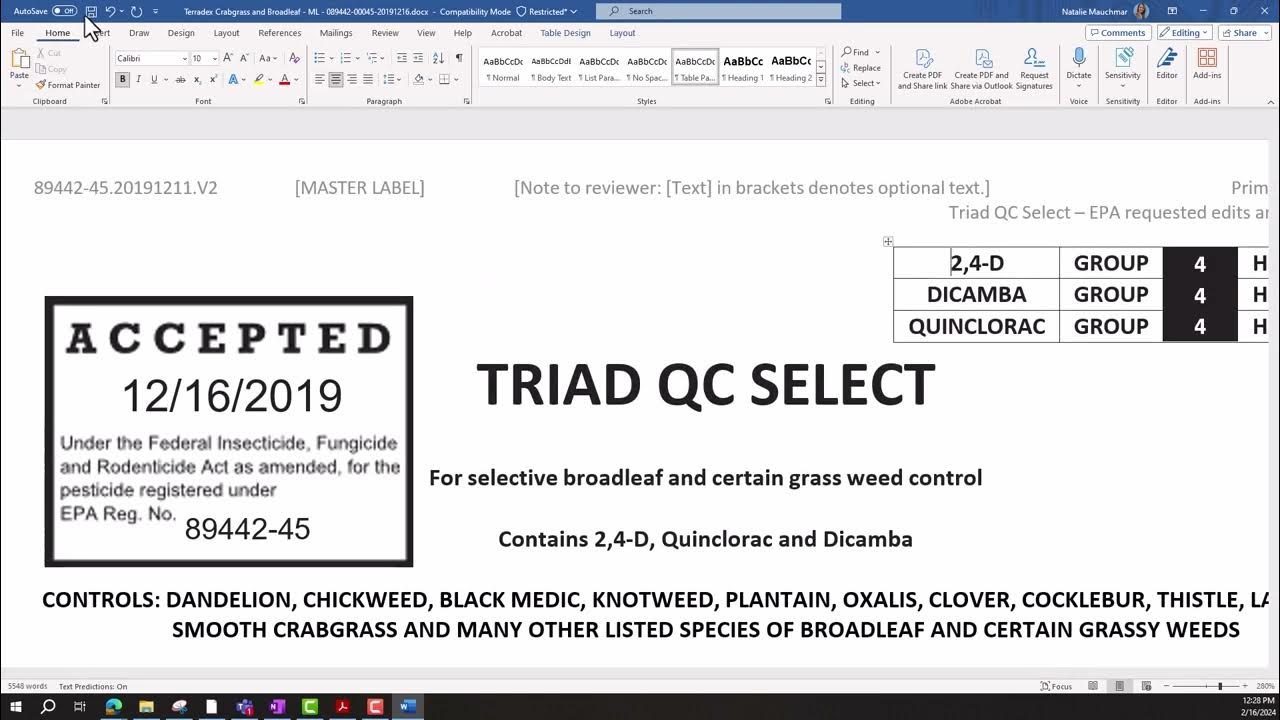
Registration: In-License Products in Veeva
Envu's Guide Through Veeva Vault
/@envusguidethroughveevavaul5558
Feb 20, 2024
This video provides a detailed, step-by-step training on how to manage the registration and regulatory actions for in-licensed products within Veeva Vault. The primary context revolves around a scenario where a company, Envu, has the right to register and sell a pesticide under its own brand, even though the core data and original registration are owned by a third party. The video aims to guide users through the specific workflows required to accurately reflect these complex arrangements in Veeva Vault, emphasizing regulatory compliance and internal process management. The training meticulously covers the creation of a new product registration, beginning with the input of essential metadata such as the registered trade name (as per the competent authority, e.g., EPA), the internal trade name Envu plans to use, product line details, and classifying the business decision as "active in-license." It then progresses to adding detailed registration information, including the official registration number, internal trade names, and defining product involvement roles for both the original registration holder (e.g., "allball") and the marketing distributor (Envu). A significant portion of the video addresses current system limitations, demonstrating workarounds like using mock submission dates to transition a registration to "approved" status, a step acknowledged as temporary until future system enhancements are implemented. Following the registration setup, the video moves into creating a regulatory action, which is crucial for managing subsequent changes or updates to the product. This involves specifying the action process (e.g., "Amendment" for changes in composition or label elements) and linking it to the relevant regulatory documentation. The speaker provides practical guidance on uploading and classifying various documents into Veeva, including the EPA PINPUNCH form, the stamped approved label (often a PDF requiring conversion to Word for the master label), and the master label itself. The process ensures these documents are correctly associated with the regulatory action, maintaining a comprehensive audit trail. Finally, the video details the creation of a Print Restricted Label (PRL), which serves as a placeholder for third-party registrations, ensuring that internal documentation accurately reflects the source of the label and facilitates communication with the supply chain for state-registered label creation. Key Takeaways: * **Veeva Vault as a Central Regulatory Hub:** The video underscores Veeva Vault's role as an indispensable platform for managing complex regulatory processes, specifically for product registrations and subsequent regulatory actions in the life sciences and agricultural chemical sectors. * **Precise Metadata Management for In-Licensed Products:** It is critical to differentiate and accurately record both the registered trade name (from the competent authority like EPA) and the internal trade name used by the licensee (e.g., Envu) within Veeva, along with specifying the "active in-license" business decision. * **Defining Product Involvement Roles:** The system requires clear identification of all parties involved, such as the "registration holder" (the original owner of the data/registration) and the "marketing distributor" (the company licensing and selling the product), including their respective contact information. * **Navigating Regulatory Action Types:** Users must correctly identify and select the appropriate regulatory action process, such as "Amendment" for changes in composition or label elements, to ensure accurate tracking and compliance. * **Comprehensive Document Management:** The process involves uploading and classifying several key documents, including the EPA PINPUNCH form (e.g., 85705), the stamped approved label, and a Word version of the master label, ensuring they are linked to the correct regulatory action. * **Workarounds for System Limitations:** The video highlights practical workarounds for current system limitations, such as using "mock submission dates" to push registrations and regulatory actions to "approved" status, acknowledging these are temporary until enhancements are made. * **Creation of Print Restricted Labels (PRL):** For in-licensed products, creating a PRL (often a copy of the master label with specific disclaimers) is essential. This serves as a placeholder to attach state-registered labels and clarifies that the licensee is not responsible for its creation. * **Interdepartmental Communication:** The process necessitates communication with other departments, such as emailing the "spec office" for product line numbers and sending notifications to "supply chain" when a PRL is ready for state-registered label creation. * **Ensuring Data Integrity and Traceability:** The emphasis on linking documents, adding relationships between master labels and PRLs, and accurately filling in dates (e.g., approval dates from EPA's website) ensures a robust audit trail and data integrity. * **Regulatory Compliance Focus:** The entire workflow is geared towards maintaining compliance with regulatory bodies like the EPA, ensuring that all product information and actions are accurately recorded and traceable within Veeva Vault. * **Anticipation of System Enhancements:** The speaker repeatedly mentions that certain steps and workarounds are temporary, indicating an ongoing process of system improvement and a future vision for a more streamlined user experience. * **Understanding In-Licensing Complexities:** The video implicitly demonstrates how enterprise software like Veeva Vault is configured to manage the specific legal and operational complexities associated with in-licensed products, where ownership and marketing rights are separated. Tools/Resources Mentioned: * **Veeva Vault:** The primary platform for managing registrations and regulatory actions. * **EPA's Website:** Used as a source for original submission dates, approval dates, and forms (e.g., PINPUNCH form). * **PDF to Word Converter:** Implied tool used to convert stamped PDF labels into editable Word documents for the master label upload. Key Concepts: * **In-Licensed Products:** Products where a company has the right to register and sell under its own name, but the underlying data and original registration are owned by a third party. * **Registration (Regulatory):** The formal process of recording a product with a competent authority (e.g., EPA) to permit its sale and distribution. * **Regulatory Action:** Any formal submission or update made to a competent authority regarding a registered product, such as amendments, changes in composition, or label updates. * **Competent Authority:** The government agency responsible for regulating specific products (e.g., EPA for pesticides in the US). * **Registered Trade Name:** The product name officially registered with the competent authority. * **Internal Trade Name:** The name a licensee company plans to use for marketing and selling an in-licensed product. * **Product Involvement:** Defining the roles of different companies associated with a product's registration (e.g., Registration Holder, Marketing Distributor). * **PINPUNCH Form (EPA 85705):** A specific form from the EPA, likely related to pesticide product registration or action. * **Stamped Label:** The official product label approved and stamped by the competent authority. * **Master Label:** The comprehensive, internal version of a product label, often in an editable format (e.g., Word document), used for internal management and as a basis for other label types. * **Print Restricted Label (PRL):** A specific type of label in Veeva Vault, often a placeholder for in-licensed products, indicating that the licensee is not responsible for its creation and is used to attach state-registered labels. * **Priia Label:** Refers to the Pesticide Registration Improvement Act, indicating a specific type of regulatory action or label under this act. * **CSF Amendment:** Refers to a Confidential Statement of Formula Amendment, indicating a change in the product's composition.

Achieve Greater Efficiencies with a Modern and Unified Safety Solution
Veeva Systems Inc
/@VeevaSystems
Feb 20, 2024
This video provides an in-depth exploration of streamlining pharmacovigilance (PV) operations through the use of the **Veeva Vault Safety Suite**, a unified safety solution designed to consolidate disparate safety activities into a single, compliant platform. The presentation emphasizes how integrating case processing, aggregate reporting, ad hoc reporting, signal management, and safety document management within one Vault environment eliminates the need for multiple third-party tools, reducing validation overhead and improving operational efficiency. The speaker demonstrates the system's core functionalities, starting with the user's home screen, which acts as a centralized task management hub for reviewing and approving cases, managing outbound submissions, updating safety documents (like PSMF and PVA agreements), and tracking aggregate report statuses. The progression of the demonstration follows the typical PV workflow, beginning with the **Inbox area**, where all inbound sources of information are accumulated for initial review and validation before being promoted to a formal case. Veeva Vault Safety supports native ingestion via a built-in Gateway for standard E2B R2, R3, and E2B+ formats, alongside automated extraction of document content. The core **Cases menu** is where triage, data entry, QC, medical review, and final approval activities occur. The system is highly configurable, offering customizable workflows and page layouts, and crucially supports localization for both intake and outbound reporting, enabling compliance with jurisdiction-specific requirements, such as preparing a case for local submission in Japanese to the PMDA. A significant portion of the video focuses on regulatory compliance and reporting efficiency. The **Transmissions area** manages the distribution of both business partner and health authority Individual Case Safety Reports (ICSRs). A key value proposition highlighted is the inclusion of a native outbound Gateway within the standard Vault Safety application, eliminating the need for separate, costly, and time-consuming validation of third-party transmission tools. This gateway supports various formats, including E2B R2/R3+, MedDRA, and CIMS outputs. Furthermore, the suite supports the generation of standard aggregate reports (DSUR, PBRER, PSUR, PADER), uniquely integrating the report generation process with the overall document management and collaboration workflow necessary for regulatory submission readiness. Finally, the presentation showcases the platform's analytical and document management capabilities. The system leverages the real-time, native Vault platform reporting engine to provide diverse visualizations of PV data, covering intake activity, transmission status, case workflow progress, and aggregate report status. These reports are highly configurable using point-and-click tools, allowing users to easily manipulate and export tabular outputs or line listings. The **Vault Safety Docs Library** is presented as a critical differentiator, bringing the entire document creation, review, and approval lifecycle for PV-related content (like PSMF, Signal Management documents, and PVA agreements) directly into the validated Vault environment, replacing the need for non-validated SharePoint sites or other third-party document management systems. Key Takeaways: • **Unified PV Operations:** Veeva Vault Safety consolidates all pharmacovigilance activities—case processing, aggregate reporting, signal management, and safety document management—into a single, unified Vault environment, significantly reducing system fragmentation and overhead. • **Native Regulatory Gateway:** The system includes a native inbound and outbound regulatory Gateway supporting E2B R2, R3, and E2B+ formats as standard, eliminating the need for pharmaceutical companies to purchase and validate separate, costly third-party transmission tools. • **Streamlined Case Triage and Processing:** The Inbox area centralizes all inbound safety data sources, facilitating preliminary review and validation before promotion to a formal case, while configurable workflows support efficient triage, data entry, QC, and medical review. • **Localization for Global Compliance:** Vault Safety supports local intake and outbound reporting, allowing users to handle cases and prepare submissions in localized formats (e.g., Japanese for PMDA), ensuring adherence to specific country-level regulatory requirements. • **Integrated Aggregate Reporting:** The platform supports the generation of standard aggregate reports (DSUR, PSUR, PBRER) and, critically, marries the report generation output with the document management and collaboration workflow required to finalize the report for regulatory submission. • **Real-Time Business Intelligence:** Utilizing the native Vault platform reporting capability, users gain real-time analytics and visualizations across all PV activities, including intake volume, transmission success rates, case workflow bottlenecks, and the status of in-flight aggregate reports. • **Consolidated Document Management (Vault Safety Docs):** The Docs Library replaces non-validated third-party systems (like SharePoint or Documentum) for PV document lifecycle management, bringing critical documents (PSMF, PVA agreements, Signal Management files) into the validated, compliant Vault ecosystem. • **Configurable User Experience:** The interface features configurable workflows and page layouts, making the system clean, easy for users to adapt to, and customizable to specific organizational processes within the regulated environment. • **Focus on Compliance and Validation:** By integrating core functions and providing a native gateway and document library, the solution minimizes the validation burden typically associated with integrating multiple systems in a GxP environment. Tools/Resources Mentioned: * Veeva Vault Safety Suite * Veeva Vault Safety Docs Library * Veeva Native Gateway (for E2B transmission) Key Concepts: * **Pharmacovigilance (PV):** The process of monitoring and assessing the safety of medicines. * **E2B R2/R3/E2B+:** International standards for the electronic transmission of Individual Case Safety Reports (ICSRs). * **ICSR:** Individual Case Safety Report, a report detailing a suspected adverse drug reaction. * **Aggregate Reporting:** Periodic safety reporting required by health authorities, including: * **DSUR:** Development Safety Update Report * **PBRER:** Periodic Benefit-Risk Evaluation Report * **PSUR:** Periodic Safety Update Report * **PADER:** Periodic Adverse Drug Experience Report * **PSMF (Pharmacovigilance System Master File):** A detailed description of the pharmacovigilance system used by the marketing authorization holder. * **PVA Agreement (Pharmacovigilance Agreement):** Contractual agreements defining PV responsibilities between partners. * **Signal Management:** The process of detecting, validating, assessing, and prioritizing signals from safety data.

Improve Oversight and Reduce Risk for Adverse Events
Veeva Systems Inc
/@VeevaSystems
Feb 20, 2024
This video provides an in-depth demonstration of the analytics and reporting capabilities within Veeva Vault Safety, illustrating how these features are leveraged to enhance oversight of Pharmacovigilance (PV) operations and significantly reduce associated risks. The presenter showcases a sample safety dashboard designed to retrieve and visualize real-time data, emphasizing that all critical PV information—including case intake, processing, ICSR (Individual Case Safety Report) outbound submission, and aggregate reporting—is self-contained within the single Vault Safety environment. This centralization ensures immediate access to operational status and safety trends across the organization. The dashboard visualization highlights the diversity of data formats available, incorporating intake counts, time-based trends, and detailed workflow status. A critical operational insight demonstrated is the ability to quickly identify bottlenecks, such as a significant bulge in items that have not yet been assigned or picked up for triage. This immediate visibility into workflow backlogs allows workflow managers to proactively ensure adequate resource allocation, preventing delays that could compromise regulatory submission timelines and overall compliance. Beyond operational metrics, the demonstration focuses heavily on the safety profile of products. The system visualizes data to identify common adverse event offenders, serious event terms, and demographic data, allowing users to determine if a safety risk is affecting the worldwide population or if a particular gender or age group is disproportionately afflicted by a product. Furthermore, the analytics track submission performance, providing insights into whether reports are being sent late to health authorities. This functionality helps diagnose underlying issues, whether they stem from internal process failures or technical connectivity problems with downstream regulatory agencies, ensuring comprehensive management of external regulatory obligations. The core utility of the system is rooted in its native reporting capability, which leverages the standard Veeva Vault platform reporting and analytics suite. This functionality allows users to refine data sets using intuitive, point-and-click configuration. For example, users can quickly filter data to isolate only fatal and life-threatening cases for a specific product. Reports can be customized by easily editing and maneuvering columns to focus on specific data points, such as a particular age group. These reports can be run on demand, scheduled for automated daily, weekly, or monthly distribution, and exported to standard formats like Excel or PDF for offline use and sharing with internal stakeholders or regulatory partners. Key Takeaways: * **Real-Time PV Data Consolidation:** Vault Safety provides immediate oversight of Pharmacovigilance operations by consolidating all critical data—intake, case processing, ICSR submission, and aggregate reporting—into a single, real-time dashboard view within the Vault. * **Operational Risk Mitigation:** Dashboards are essential tools for identifying operational bottlenecks, such as significant backlogs in unassigned cases or triage queues, enabling workflow managers to quickly deploy resources and prevent delays that could impact regulatory compliance. * **Proactive Safety Signal Detection:** The platform facilitates rapid identification of safety signals by visualizing common adverse event offenders and serious event terms, allowing companies to quickly assess if a safety risk is affecting their global patient population. * **Demographic Safety Analysis:** Users can leverage analytics to segment safety data by demographics (e.g., gender or age group), providing targeted insights into which populations may be most affected by a product, informing refined risk management plans. * **Regulatory Submission Compliance Tracking:** The system monitors submission timeliness to health authorities, providing crucial insights into potential process failures or connectivity issues that could result in late submissions and regulatory non-compliance. * **User-Friendly Reporting Configuration:** The native reporting capability within the Vault platform utilizes point-and-click configuration, allowing non-technical users to easily add filter criteria, refine data sets, and customize column outputs. * **Targeted Case Filtering:** Reports can be quickly refined to focus on high-priority data, such as isolating only fatal and life-threatening cases for a specific product, ensuring critical safety information is immediately accessible. * **Flexible Report Automation:** Reports can be scheduled to run automatically at required frequencies (daily, weekly, monthly) and delivered directly to stakeholders, ensuring consistent and timely distribution of safety intelligence. * **Offline Data Sharing:** The ability to export reports to Excel or PDF formats ensures that detailed safety and compliance data can be easily shared offline with internal teams, partners, or regulatory bodies for review and discussion. * **Comprehensive Process Oversight:** The dashboards offer a visualized view covering every part of the PV process, from initial case assignment to final submission, ensuring end-to-end visibility and control over the entire safety lifecycle. Tools/Resources Mentioned: * Veeva Vault Safety * Veeva Vault Platform Reporting and Analytics Suite * Excel (for report export) * PDF (for report export) Key Concepts: * **PV Operations (Pharmacovigilance):** The system is designed to manage and oversee the detection, assessment, understanding, and prevention of adverse effects related to pharmaceutical products. * **ICSR (Individual Case Safety Report):** A key component of the data managed, representing reports on single adverse event experiences. * **Aggregate Reporting:** The system supports the generation and oversight of periodic safety reports compiled from multiple cases over time. * **Triage Backlog:** A critical operational metric visualized by the dashboard, representing a queue of unassigned or unprocessed cases that pose a risk to timely case management and submission.

Centrally Manage Safety Content
Veeva Systems Inc
@VeevaSystems
Feb 20, 2024
This presentation offers a detailed walkthrough of Veeva Vault SafetyDocs, highlighting its role as a centralized content management system designed specifically for pharmacovigilance (PV) operations and regulatory compliance within the life sciences sector. The speaker systematically addresses six critical PV processes that the platform simplifies: PSMF management, PV agreement oversight, signal detection workups/risk management plans, aggregate report writing, literature management, and general safety content organization. The core value proposition of SafetyDocs is providing a structured, auditable, and automated environment for authoring, reviewing, approving, and maintaining essential safety documents, thereby ensuring adherence to global guidelines like GVP. The demonstration begins with the most mature use case: the Pharmacovigilance System Master File (PSMF) management. Vault SafetyDocs closely follows GVP Module 2 structure, organizing content into sections 1 through 7 and Annexes A through I. Crucially, the system automates the creation of a binder template, allowing users to quickly fill virtual folders and, most importantly, generate a single, overarching, auditable document—complete with an automated log book—ready for internal review or external presentation to an auditor. This focus on immediate audit readiness is a recurring theme. Following PSMF, the presentation pivots to managing Pharmacovigilance Agreements (PVAs) and Safety Data Exchange Agreements (SDEAs). Beyond merely housing the physical documents, SafetyDocs provides a structured record stipulating the nature of the agreement, duration, and, most importantly, the specific obligations and activities required, including who is responsible and when tasks are due, enabling robust oversight and tracking of deliverables from all involved parties. A significant portion of the presentation focuses on the synergy between SafetyDocs and other Veeva Vault products, particularly in the context of Aggregate and Periodic Report writing. While Vault Safety handles line lists and case data, SafetyDocs provides the end-to-end authoring environment. It leverages workflow capabilities to assign specific sections (e.g., Appendix 1) to different users, ensuring timely completion. Once authored, the system packages the final report and works harmoniously with a Regulatory RIM Vault to manage the submission process, including tracking the date of submission and receipt from the regulatory authority. Furthermore, the platform addresses the challenge of global literature review. It allows users to search and upload articles from various repositories (ProQuest, Embase, PubMed) in bulk (e.g., 983 articles from one RIS file upload). A defined workflow then assigns reviewers to analyze citations and abstracts, determine the outcome, confirm potential Individual Case Safety Reports (ICSRs), and create those cases directly within the Vault Safety system. A notable feature is the integrated translation capability, utilizing services like Amazon Translate to convert foreign language articles (e.g., Spanish) into English, significantly enhancing the efficiency of global literature surveillance. The presentation concludes by demonstrating the native dashboard and reporting capabilities, which provide point-and-click compliance oversight across all managed documents, from Aggregates and PSMFs to contractual obligations. Key Takeaways: • **Automated PSMF Compliance:** Vault SafetyDocs streamlines the creation and maintenance of the Pharmacovigilance System Master File (PSMF) by providing GVP Module 2 compliant binder templates (Sections 1-7, Annexes A-I) and an automated log book, ensuring immediate audit readiness. • **Obligation-Centric PVA/SDEA Management:** The system moves beyond simple document storage for PVAs and SDEAs, focusing on tracking specific contractual obligations, due dates, responsible parties, and deliverables, providing necessary oversight for complex inter-company safety agreements. • **End-to-End Aggregate Report Authoring:** SafetyDocs facilitates the complete lifecycle of periodic reports (e.g., PSURs, DSURs) by providing templatized sections, workflow management for multi-user authoring, and seamless integration with other Veeva Vaults (like Regulatory RIM) for submission packaging and tracking. • **Integrated Literature Review Workflow:** The platform supports bulk upload of literature articles from major repositories (e.g., PubMed, Embase) via RIS files, initiating a structured workflow for citation review, abstract analysis, outcome determination, and confirmation of potential ICSRs directly within the safety system. • **AI-Powered Translation for Global Surveillance:** A crucial feature is the integration with translation services (such as Amazon Translate) to automatically translate foreign language literature articles into English, significantly accelerating the review process for global safety teams. • **Signal and Risk Management Documentation:** SafetyDocs serves as the central repository for qualitative analysis documents related to signal detection (GVP Module 9), allowing users to summarize key data found in safety databases (e.g., EudraVigilance, FAERS) and create, review, and approve associated Risk Management Plans (RMPs). • **Harmonious Vault Ecosystem Integration:** The system is designed to work in conjunction with other Veeva Vaults (specifically Vault Safety and Regulatory RIM), ensuring data consistency and smooth transitions between case processing, document authoring, and regulatory submission. • **Robust Compliance Reporting:** Native dashboards and reporting tools offer point-and-click drill-down capabilities, providing comprehensive compliance and oversight across all safety-related content, including document status, contractual obligations, and submission timelines. Tools/Resources Mentioned: * Veeva Vault SafetyDocs (Core Platform) * Veeva Vault Safety * Veeva Vault Regulatory RIM * Amazon Translate (for literature translation) * External Literature Repositories (ProQuest, Embase, PubMed/Medline) * Safety Databases (EudraVigilance, FAERS, VigiBase) Key Concepts: * **PSMF (Pharmacovigilance System Master File):** A detailed description of the pharmacovigilance system used by the marketing authorization holder, required for regulatory compliance (adhering to GVP Module 2). * **PVA/SDEA (Pharmacovigilance Agreement / Safety Data Exchange Agreement):** Formal contracts outlining the responsibilities and procedures for exchanging safety data between parties (e.g., licensors and licensees). * **Aggregate/Periodic Reports:** Regulatory documents (e.g., PSURs, DSURs) summarizing the safety profile of a medicinal product over a defined period. * **ICSR (Individual Case Safety Report):** A report detailing a single suspected adverse reaction in a patient. * **GVP (Good Pharmacovigilance Practices):** Guidelines issued by the EMA to ensure the quality and integrity of pharmacovigilance activities. The video specifically references GVP Module 2 (PSMF) and GVP Module 9 (Signal Management).

Gain Control of Your Safety Documentation
Veeva Systems Inc
/@VeevaSystems
Feb 20, 2024
This video provides an in-depth exploration of Veeva Vault SafetyDocs, a web-based document management system purpose-built for pharmacovigilance (PV) content and global collaboration within the life sciences industry. The application is highlighted as being 21 CFR Part 11 and Annex 11 compliant, addressing a critical need for regulated document control. The presenter, Scott EML, demonstrates the core functionality, starting with the home area which uses color-coding (e.g., orange for documents nearing their due date) to provide immediate visibility into pending tasks. Notably, the system is designed to work harmoniously with, or standalone from, the core Vault Safety application, allowing users to see both documents and associated safety cases that require processing. The heart of the application is the Library, which manages documents based on user permissions and security roles, ensuring that users only see content relevant to their workflow stage (e.g., draft, review, effective). The system supports a wide array of document types, including Word files and others, and utilizes flexible filters to allow users to quickly slice, dice, and save views, facilitating easy retrieval of specific content like Pharmacovigilance System Master File (PSMF) documents. The presentation emphasizes that Vault SafetyDocs is intended to be an organically growing system that supports four major PV-related document use cases. The four primary use cases detailed include the management of the Pharmacovigilance System Master File (PSMF), which utilizes an out-of-the-box binder template structured with sections 1 through 7 and Annexes A through I, allowing for customization of the binder structure as needed. The second use case focuses on contractual PV-related documents, such as Safety Data Exchange Agreements (SDAs) and Pharmacovigilance Agreements (PVAs), which require specialized metadata like start and end dates. The third major area is the creation, editing, authoring, review, and approval of Aggregate Reporting documents, facilitating cross-collaboration by inviting regulatory teams and even sharing documents externally via CrossLinks with other Vaults for consumption in filings like INDs or NDAs. Finally, the fourth use case centers on Inspection Readiness, Risk Mitigation (Rams, RMPs), and signal monitoring documentation. The system’s architecture supports sophisticated document control through virtual collections called "binders." A single document can exist in multiple binders simultaneously. Both binders and individual documents can possess their own distinct workflows and life cycles, allowing for tailored processes (e.g., a contract document having a different workflow and metadata than a PSMF section). Critical features demonstrated include robust metadata association, version history, check-in/check-out functionality, and simultaneous collaboration, enabling multiple users or partners to work on the same document concurrently. All this structured metadata is leveraged to create native, actionable reports and dashboards, eliminating the need for third-party query tools. Users can point-and-click to create custom reports on aggregate statuses, document timelines, and ownership, which can then be converted into dashboards, drilled down for detail, and scheduled for automated delivery to stakeholders. Key Takeaways: • **Regulatory Compliance Foundation:** Vault SafetyDocs is explicitly designed to meet stringent regulatory requirements, being 21 CFR Part 11 and Annex 11 compliant, which is essential for managing audit trails and electronic signatures in pharmacovigilance documentation. • **Harmonious System Integration:** The application is built to work seamlessly with Veeva Vault Safety, allowing users to view both safety cases requiring processing and associated safety documents from a unified home area, streamlining PV operations. • **Structured PSMF Management:** The system provides a dedicated, structured approach for managing the Pharmacovigilance System Master File (PSMF), offering an out-of-the-box binder template that organizes the required sections and annexes while maintaining flexibility for customization. • **Four Core PV Use Cases:** The platform is optimized for four major document types: PSMF, PV-related contractual agreements (SDAs, PVAs), Aggregate Reporting documents, and Inspection Readiness/Risk Mitigation documentation (RMPs, signal monitoring). • **Metadata-Driven Workflow Customization:** Different document types (e.g., contracts vs. aggregate reports) can be assigned unique workflows, life cycles, and metadata fields (such as start/end dates for contracts), ensuring appropriate governance for varied content. • **Binder Flexibility and Coexistence:** The "binder" feature acts as a virtual collection, allowing a single document to be pointed to and co-exist in multiple binders simultaneously without duplication, simplifying organization across different regulatory requirements or projects. • **Simultaneous Collaboration:** The platform supports concurrent editing and collaboration, allowing multiple internal colleagues or external partners (e.g., sponsors and CROs) to work on the same document at the same time while maintaining version control and history. • **External Collaboration via CrossLinks:** Vault SafetyDocs facilitates external data sharing through "CrossLinks," enabling documents created within one Vault to be securely consumed by external partners or regulatory teams using another Vault for filings like INDs or NDAs. • **Native Business Intelligence and Reporting:** The system eliminates the need for third-party BI tools by offering native capabilities to create custom, point-and-click reports and dashboards based on all associated document metadata (e.g., status, timelines, ownership). • **Actionable Dashboards:** Reports can be converted into dashboards that provide a high-level view (30,000-foot view) of document statuses (e.g., aggregate report statuses), allowing users to drill down into specific document categories or timelines for actionable insights. • **Automated Report Scheduling:** Reports can be scheduled to run automatically and arrive at a specified destination (user group or email) on a defined schedule (e.g., every Friday at noon), ensuring timely dissemination of critical compliance and operational data. Tools/Resources Mentioned: * Veeva Vault SafetyDocs * Veeva Vault Safety * CrossLink (Veeva functionality for sharing documents between Vaults) Key Concepts: * **21 CFR Part 11/Annex 11 Compliance:** Regulatory standards governing electronic records and electronic signatures, critical for pharmaceutical systems. * **Pharmacovigilance System Master File (PSMF):** A detailed description of the pharmacovigilance system used by a marketing authorization holder, required for regulatory submission and inspection readiness. * **Aggregate Reporting:** The periodic compilation and analysis of safety data from clinical trials and post-marketing surveillance (e.g., PBRERs, DSURs). * **Binder:** A virtual collection of documents within the Veeva Vault platform, used to organize content for specific purposes (e.g., regulatory submissions, contractual agreements). * **Risk Management Plan (RMP):** A set of pharmacovigilance activities and interventions designed to identify, characterize, prevent, or minimize risks relating to a medicinal product.

Streamline PSMF Management and Gain Global Visibility
Veeva Systems Inc
@VeevaSystems
Feb 20, 2024
This video provides an in-depth demonstration of how Veeva Vault SafetyDocs streamlines the management of the Pharmacovigilance System Master File (PSMF) and enhances global visibility for Qualified Persons for Pharmacovigilance (QPPVs) and content owners. The presenter, Scott EML, positions Vault SafetyDocs as a centralized, web-based platform designed for comprehensive safety documentation management. While the system supports various use cases—including authoring aggregate reports, housing risk mitigation documents (RMPs, REMS), and managing contractual agreements (PVAs, SDAs)—the primary focus of the demonstration is optimizing the creation and maintenance of the PSMF to ensure inspection readiness. The core functionality revolves around the system's ability to impose structure and regulatory compliance. The platform utilizes "binders," which are collections of documents, as the organizational centerpiece. Crucially, when a new PSMF binder is initiated, the system automatically generates an out-of-the-box structure that strictly adheres to the requirements outlined in GVP Module 2, encompassing Sections 1 through 7 and Annexes A through I. This automated structure replaces previous manual methods, such as organizing documents in shared drives, and includes "placeholders" that signify required documents yet to be created, ensuring structural completeness from the start. A significant challenge addressed by Vault SafetyDocs is the complexity of managing a global pharmacovigilance system. The platform allows organizations to manage a core PSMF (e.g., for the EU) alongside numerous regional variations (e.g., UK, India, Serbia, Macedonia). The system facilitates efficiency by allowing core documents to be reused and housed across multiple regional PSMF binders. Simultaneously, it accommodates unique regional documents required for specific jurisdictions (like Serbia), ensuring that local regulatory requirements are met within the overarching global framework. The demonstration highlights two critical features essential for audit and inspection readiness. First, the platform can generate a "logbook" report, which, when configured, provides a high-level summary of all changes that have occurred across all documents within a specific PSMF binder. This report can be uploaded directly back into the PSMF structure, providing an accessible and comprehensive audit trail. Second, the system offers the ability to merge all documents within a binder—potentially dozens of separate files—into a single, concatenated PDF. This merged document is timestamped and serves as a ready-made, easily navigable deliverable for auditors, allowing them to review the entire PSMF structure efficiently. Key Takeaways: * Veeva Vault SafetyDocs functions as a comprehensive, centralized repository for pharmacovigilance documentation, managing not only the PSMF but also aggregate reports, RMPs/REMS, and essential contractual agreements like PVAs and SDAs. * The platform ensures regulatory compliance by providing an automated, out-of-the-box PSMF structure that strictly adheres to GVP Module 2 requirements, including the mandatory Sections 1-7 and Annexes A-I, eliminating the need for manual structure creation. * "Binders" are used to organize the PSMF, utilizing "placeholders" to hold the spot for required documents, thereby guiding content owners and QPPVs to ensure the PSMF is structurally complete and inspection-ready at all times. * Global PSMF management is streamlined by allowing core documents to be reused across multiple regional PSMF binders (e.g., EU, UK, India), ensuring consistency while simultaneously accommodating unique, region-specific documentation within the same structure. * For audit purposes, the system generates a detailed "logbook" report that summarizes all high-level changes made to documents within the PSMF binder, providing an essential, easily accessible audit trail for regulatory inspectors. * A critical feature for inspection readiness is the ability to merge all documents within a complex PSMF binder into a single, concatenated PDF, which is timestamped upon generation, simplifying the document delivery process to auditors. * The system supports the full document lifecycle, including the creation, editing, authoring, reviewing, and approval of various safety-related document types, integrating workflow management with the document repository. * The platform enables users to run various reports and dashboards, offering business intelligence and high-level visibility into the status, compliance, and content of the global pharmacovigilance system. * The ability to manage multiple regional PSMFs ensures that companies can meet specific local regulatory requirements (e.g., unique documents for Serbia) while maintaining a standardized global approach to pharmacovigilance documentation. Tools/Resources Mentioned: * Veeva Vault SafetyDocs * Veeva Vault Safety Key Concepts: * **Pharmacovigilance System Master File (PSMF):** The comprehensive and detailed description of the pharmacovigilance system used by a marketing authorization holder (MAH), required for regulatory compliance, particularly under EU GVP. * **GVP Module 2:** Good Pharmacovigilance Practices (GVP) Module II, which specifies the mandatory content and structural requirements for the PSMF (Sections 1-7 and Annexes A-I). * **Binder:** A logical collection of documents within Vault SafetyDocs used to organize the PSMF according to the required regulatory structure. * **Logbook:** A system-generated report providing a high-level summary of all changes made to documents within a PSMF binder, serving as a critical audit trail. * **Placeholders:** Markers within the binder structure that indicate required documents that must be created or uploaded to fulfill the complete PSMF structure.

Managing your PVAs, SDEAs, and Business Agreements
Veeva Systems Inc
/@VeevaSystems
Feb 20, 2024
This video provides an in-depth demonstration of Veeva Vault SafetyDocs, a specialized web-based system designed to manage all safety-related documentation within the life sciences sector. The speaker, Scott EML, a principal consultant at Veeva, focuses specifically on the management of critical contractual agreements, such as Pharmacovigilance Agreements (PVAs), Safety Data Exchange Agreements (SDEAs), and other related business agreements. The core value proposition of SafetyDocs is centralized control, streamlined collaboration, and automated compliance oversight for documents that are essential for regulatory adherence, including Aggregate Reports, Risk Mitigation Plans (RMPs), and the Pharmacovigilance System Master File (PSMF). The demonstration begins by showcasing the document library, emphasizing the system's ability to handle various file types and versions, and allowing users to sort and search based on security rights and configurable filters. A key organizational feature highlighted is the "binder," a virtual collection that groups related documents—such as multiple PVAs and SDEAs—associated with a specific business partner. This structure facilitates comprehensive oversight of all contractual obligations with a single entity. The system supports simultaneous, collaborative workflows, moving documents through defined stages like Draft, Review, and Approved, ensuring all stakeholders are involved and notified of changes. Collaboration is enhanced through features like "annotations," which are comments placed in the margin of a document that immediately alert relevant users to required attention or erroneous information. A significant portion of the presentation details the robust workflow and compliance features. Documents within SafetyDocs are assigned classifications (e.g., "PV Agreement") which dictate the specific workflow path they follow, including unique stages like "Maintain" and "Terminate." Crucially, the system captures essential configured metadata, such as the contract's start date, end date, and the associated partner. This metadata powers the automated contract lifecycle management, allowing the system to warn users 30 or 45 days in advance of an impending expiration. Users are then prompted to decide whether to "reup" the agreement for a new term or formally "terminate" it, ensuring proactive management of critical regulatory deadlines and preventing compliance gaps due to lapsed contracts. Finally, the video emphasizes the system's built-in business intelligence capabilities. All captured information—including workflow status, deadlines, agreement types, and product associations—is automatically rolled up into configurable dashboards and reports. These tools provide a high-level, "30,000-foot view" of the entire safety documentation landscape, allowing commercial operations and regulatory teams to track performance metrics (e.g., weekly, monthly, quarterly reports), assess the status of documents in the workflow (e.g., majority in draft vs. approved), and identify agreements nearing termination. This functionality is vital for maintaining continuous regulatory readiness and operational efficiency across the life sciences enterprise. Key Takeaways: * **Centralized Safety Document Management:** Veeva Vault SafetyDocs serves as a single source of truth for all safety-related documentation, moving beyond basic document storage to manage complex regulatory files like Aggregate Reports, Risk Mitigation Plans (RMPs), and the Pharmacovigilance System Master File (PSMF). * **Contract Lifecycle Automation for Compliance:** The system automates the management of critical regulatory contracts (PVAs, SDEAs) by capturing key metadata (start/end dates, partners) and utilizing "Maintain" and "Terminate" workflow stages to govern the contract lifecycle. * **Proactive Expiry Warnings:** SafetyDocs provides configurable advance warnings (e.g., 30 or 45 days) before an agreement's expiration date, allowing regulatory and legal teams sufficient time to decide whether to renew or formally terminate the contract, mitigating the risk of non-compliance due to lapsed agreements. * **Structured Collaboration and Audit Trails:** Documents follow defined workflows (Draft, Review, Approved) with simultaneous collaboration capabilities, including annotations (comments in the margin) that immediately notify relevant users, ensuring a clear, auditable trail of all changes and decisions. * **Virtual Document Grouping via Binders:** The "binder" feature allows users to create virtual collections of related documents—such as all PVAs, SDEAs, and business agreements associated with a single partner—simplifying oversight and retrieval for audits or partner reviews. * **Classification-Driven Workflow:** Document classification (e.g., "PV Agreement") dictates the specific, compliant workflow path the document must travel, ensuring adherence to internal SOPs and regulatory requirements based on the document type. * **Actionable Business Intelligence:** The system includes point-and-click configurable dashboards and reports that aggregate workflow data, providing insights into the status of agreements (e.g., which products are covered, agreement types, documents about to be terminated), enabling strategic decision-making and continuous monitoring. * **Metadata Drives Automation:** The collection of configured metadata (e.g., contract type, partner name, dates) is essential, as this information is used to drive automated processes like workflow routing, deadline warnings, and detailed reporting. * **Security and Access Control:** Access to documents and the ability to sort/search are governed by user security and rights within the system, ensuring that sensitive regulatory and contractual information is only accessible to authorized personnel. Tools/Resources Mentioned: * Veeva Vault SafetyDocs * Veeva.com/safety Key Concepts: * **PVA (Pharmacovigilance Agreement):** Contractual agreements between parties (e.g., sponsor and service provider) defining responsibilities for pharmacovigilance activities. * **SDEA (Safety Data Exchange Agreement):** Agreements outlining the processes and timelines for exchanging safety data (e.g., adverse event reports) between partners. * **Binder:** A virtual collection within Veeva Vault SafetyDocs used to group multiple related documents (e.g., all agreements with one business partner) for unified management. * **Annotations:** Collaboration tools allowing users to place comments or notes directly in the margin of a document during the review phase, triggering immediate notifications to other team members. * **Maintain/Terminate Workflow Stages:** Specific stages designed for contract lifecycle management, prompting users to proactively renew or formally end agreements as they approach their expiration date, ensuring regulatory continuity.
Gain Real-time Visibility of PSMF-related Documents
Veeva Systems Inc
/@VeevaSystems
Feb 20, 2024
This video provides an in-depth demonstration of leveraging dashboards and reporting capabilities within Veeva Vault SafetyDocs to achieve real-time visibility and control over Pharmacovigilance System Master File (PSMF)-related documentation. The presentation emphasizes the importance of robust metrics, Key Performance Indicators (KPIs), and oversight management, specifically addressing the requirements outlined in GVP Module 2. The core focus is on transforming static regulatory compliance requirements into dynamic, actionable operational insights, allowing Qualified Persons for Pharmacovigilance (QPPVs) and PSMF managers to proactively manage the health and status of their critical safety documentation. The demonstration highlights several key operational dashboards designed to monitor the compliance lifecycle of PSMF documents. A primary feature is the ability to track documents that are "at risk," "overdue," or "late," ensuring timely adherence to regulatory deadlines. The system manages documentation through "virtual binders," which are collections of documents organized by country, region, or core PSMF components. A crucial operational metric is the tracking of periodic reviews—a scheduled cadence (e.g., monthly) for reviewing these binders. The dashboards provide granular visibility into the workload of the user community, showing who is assigned specific review tasks and the completion status of their work. Furthermore, the system offers a high-level view of the overall "health" of each binder, categorizing documents by status (draft, in review, approved). A significant portion of the video is dedicated to the practical mechanics of generating and utilizing these reports. The presenter illustrates the system's native reporting capabilities, noting that some reports are available "out of the box," while others can be custom-created. The platform allows users to drill down into specific data points by clicking on dashboard widgets or blue hyperlinks, leading directly to the relevant binder or document. Beyond real-time viewing, the system supports scheduling reports (e.g., every Monday at noon) and distributing them via email, PDF, or Excel, facilitating communication with stakeholders outside the immediate system. The process for creating custom reports is straightforward, enabling users to define criteria using field attributes specific to PSMF, Boolean quantifiers, and lists of values, ensuring the output is tailored to specific oversight needs, including the addition of calculated fields and customized output columns. Key Takeaways: • **Proactive PSMF Oversight:** The primary value proposition demonstrated is shifting PSMF management from a reactive, audit-driven process to a proactive, real-time operational function, allowing managers to identify and mitigate risks associated with late or overdue regulatory documents immediately. • **GVP Module 2 Alignment:** The reporting structure is explicitly designed to support the requirements of GVP Module 2, focusing on the centralized management, control, and oversight of the Pharmacovigilance System Master File documentation. • **Virtual Binder Management:** The system utilizes "virtual binders" to organize PSMF-related documents by region, country, or core component, providing a flexible yet structured approach to managing the complex collection of required regulatory artifacts. • **Workload and Resource Management:** Dashboards offer critical insights into the user community's workload, detailing assigned, in-progress, and completed tasks, which is essential for resource allocation and ensuring timely completion of periodic reviews. • **Periodic Review Cadence:** The system supports the establishment and tracking of periodic review cadences (e.g., monthly reviews) for all PSMF binders, enforcing a consistent schedule for maintaining document currency and compliance. • **Document Health Status:** Managers gain immediate visibility into the overall health of each PSMF binder, categorized by document status (e.g., approved, in draft, in review), enabling rapid identification of bottlenecks in the review and approval workflow. • **Drill-Down Capabilities:** The interactive nature of the dashboards allows users to "drill down" from high-level metrics (widgets) directly to the underlying documents or binders, facilitating rapid investigation and resolution of compliance issues. • **Custom Report Generation:** The platform provides intuitive tools for creating bespoke reports by defining criteria using PSMF-specific field attributes, Boolean logic, and calculated fields, ensuring that reporting output meets unique organizational or regional compliance needs. • **Automated Distribution:** Reports can be scheduled for automated delivery (e.g., weekly emails) and exported in multiple formats (PDF, Excel), streamlining the process of disseminating compliance metrics to QPPVs, management, and other non-system users. • **KPI Focus:** Key performance indicators revolve around timeliness (overdue/late status), completeness (binder health), and efficiency (user workload), providing measurable data points for continuous process improvement in pharmacovigilance operations. Tools/Resources Mentioned: * Veeva Vault SafetyDocs (Implied platform) * Veeva Vault (General platform ecosystem) Key Concepts: * **PSMF (Pharmacovigilance System Master File):** A detailed description of the pharmacovigilance system used by the marketing authorization holder (MAH), required under EU legislation (GVP Module 2). * **GVP Module 2:** Good Pharmacovigilance Practices Module 2, which specifically governs the requirements for the PSMF. * **QPPV (Qualified Person for Pharmacovigilance):** The individual legally responsible for the establishment and maintenance of the company's pharmacovigilance system. * **Virtual Binders:** A system construct used to group and manage related regulatory documents (in this context, PSMF components) for easier review and oversight. * **Boolean Quantifiers:** Logical operators (AND, OR, NOT) used in custom report creation to precisely define the data criteria for inclusion in the report output.

SafetyDocs Demo Version Control
Veeva Systems Inc
/@VeevaSystems
Feb 19, 2024
This video provides an in-depth demonstration of the version control and comparison features within Veeva Vault SafetyDocs, specifically focusing on its application for managing the Pharmacovigilance System Master File (PSMF). The PSMF is a mandatory regulatory document for pharmaceutical companies operating in the EU, and the demonstration highlights how Vault facilitates audit readiness and compliance by meticulously tracking changes across document versions. The core context revolves around the "templated binder concept," where users utilize yellow virtual folders within the system to organize and house country-specific or core EU PSMF documents. As users check documents out, make revisions, and check them back in, Vault automatically manages the Version Control process, creating a robust audit trail. The presentation first details the native version comparison feature for individual documents within the PSMF binder. By navigating to the version history, users can select any two versions—for instance, version 4.0 compared to version 3.0—to instantly generate a side-by-side comparison report. This report visually highlights the differences: deleted information is marked in red, and newly added information is marked in blue. The speaker provides a concrete example showing how a change in a contact’s street address is clearly flagged, demonstrating the system’s utility in quickly identifying granular content changes without manually reviewing entire documents. This capability is foundational for ensuring that only approved and tracked changes are incorporated into regulated documentation. The most critical feature demonstrated is the ability to manage and compare versions of the overarching, merged PSMF document. A fundamental requirement of PSMF management is the ability to concatenate numerous "child" documents (potentially 50 or more) contained within the binder into a single, cohesive PDF file, ready for internal review or submission to an auditor. Vault SafetyDocs automates this merge process, creating a master document complete with a title page and a dynamic table of contents. Crucially, this merged document also maintains its own version history. The speaker illustrates how to compare two versions of this merged master file (e.g., version 5 vs. version 4). Because the merged document is a compilation of its children, changes in the underlying documents necessitate updates to the master file's table of contents and content sections. The comparison feature tracks these systemic changes, showing, for example, updates to the logbook section (page 153) where old entries are deleted (red) and new entries are added (blue), thereby proving the integrity and traceability of the entire regulatory file. Key Takeaways: • **Automated PSMF Binder Management:** Vault SafetyDocs utilizes a templated binder concept with virtual folders, streamlining the organization and assembly of the complex Pharmacovigilance System Master File (PSMF), which is essential for EU regulatory compliance. • **Native Document Version Comparison:** The system provides an immediate, visual comparison between any two versions of a document, highlighting deleted content in red and added content in blue, significantly reducing the manual effort required for change control review. • **Granular Change Tracking:** The version comparison feature is highly specific, capable of identifying subtle changes such as a single street address update within a contact record, ensuring that all revisions are transparent and traceable. • **Merged Master Document Creation:** Vault facilitates audit readiness by allowing users to merge dozens of individual documents within the PSMF binder into a single, concatenated PDF file, complete with a title page and table of contents, suitable for submission or internal review. • **Version Control for Merged Files:** Unlike simple PDF merging tools, Vault SafetyDocs maintains a version history for the master merged document itself, allowing regulatory teams to compare changes between different iterations of the complete PSMF submission package. • **Tracking Systemic Changes:** Comparing versions of the merged PSMF document reveals systemic changes, such as updates to the table of contents or the addition/deletion of entire sections, which are consequential changes driven by updates to the underlying child documents. • **Audit Trail Integrity:** The comprehensive version control and comparison features provide a robust, automated audit trail, which is critical for demonstrating compliance with GxP and other regulatory requirements during inspections. • **Efficiency in Regulatory Review:** The ability to quickly identify differences between versions eliminates the need for reviewers or auditors to read through entire documents, dramatically accelerating the internal review and quality assurance processes. • **Workflow Integration:** The PSMF binders themselves are integrated with workflows, suggesting that the system manages the entire lifecycle of these critical regulatory documents, from drafting and review to final approval and versioning. Tools/Resources Mentioned: * Veeva Vault SafetyDocs * Veeva Vault (General Platform) Key Concepts: * **Pharmacovigilance System Master File (PSMF):** A detailed description of the pharmacovigilance system used by a marketing authorization holder (MAH), required for regulatory compliance, particularly in the European Union. * **Templated Binder Concept:** A structured organizational framework within Veeva Vault that uses virtual folders to ensure all required documents for a specific regulatory file (like the PSMF) are collected and organized correctly. * **Version History Comparison:** The automated process of comparing two specific versions of a document or binder to visually identify and track all content changes. * **Merged PDF/Concatenated Document:** The feature allowing the system to combine all individual documents within a binder into a single, cohesive PDF file for ease of review and submission.

Free Course on eTMF Specialist|| Trial Master File|| electronic Trial Master File||Clinical Research
Vikas Singh
/@VikasSinghPharmalive
Feb 15, 2024
This video announces a free, comprehensive online course designed to educate individuals on the role of an eTMF (electronic Trial Master File) Specialist. The course aims to provide a complete understanding of TMF and eTMF, catering to those with limited prior knowledge or individuals considering a career in this specialized area within clinical research. The speaker emphasizes the practical utility of the course, promising to cover fundamental concepts, regulatory requirements, and practical demonstrations essential for managing trial master files effectively. The curriculum for this course is structured to cover a wide array of topics, beginning with the foundational distinction between a traditional TMF and an eTMF, and elucidating the reasons behind the transition to electronic systems. It delves into critical basic concepts such as Good Documentation Practice (ALCOA), the development of an eTMF Plan, understanding the TMF Index (Configuration Manual), and the widely recognized TMF Reference Model. The course will also address quality control mechanisms, the significance of events and milestones in TMF management, and how to assess "TMF Health" based on completeness, timeliness, and quality review criteria. Further, the course will explore a risk-based approach to TMF management, a crucial methodology for efficient and compliant clinical trials. It will detail the essential documents required in a clinical trial and provide an overview of current regulations governing TMFs, which is vital for maintaining compliance. A significant portion of the course will focus on the practical aspects of an eTMF specialist's job responsibilities and career scope, culminating in a practical demonstration of how an eTMF specialist reviews and finalizes documents. The series concludes with a Q&A session, ensuring a holistic learning experience for participants. Key Takeaways: * **Foundational Understanding of TMF and eTMF:** The course will thoroughly explain what a Trial Master File (TMF) is and the specific advantages and functionalities of an electronic Trial Master File (eTMF), highlighting the industry's shift towards digital documentation. * **Good Documentation Practice (ALCOA):** A core principle of the course is ALCOA (Attributable, Legible, Contemporaneous, Original, Accurate), which represents the fundamental standards for maintaining high-quality and compliant documentation in clinical research. * **Structured TMF Management Frameworks:** Participants will learn about establishing an eTMF Plan, utilizing a TMF Index (Configuration Manual) for organization, and adhering to the TMF Reference Model, a globally accepted standard for TMF structure and content. * **Assessing TMF Health:** The course outlines key criteria for evaluating the "health" of a TMF, focusing on its completeness (all required documents are present), timeliness (documents are filed promptly), and overall quality (accuracy and adherence to standards). * **Risk-Based Approach to TMF:** A critical methodology discussed is the application of a risk-based approach to TMF management, enabling professionals to prioritize efforts and resources on areas of higher risk to ensure compliance and data integrity. * **Essential Clinical Trial Documents:** The curriculum includes a detailed overview of the essential documents required throughout the lifecycle of a clinical trial, from study initiation to close-out, and their significance in regulatory submissions and audits. * **Current Regulatory Landscape:** The course will cover the prevailing regulations that govern TMFs, emphasizing the importance of compliance with national and international guidelines (e.g., FDA, EMA, ICH-GCP) to ensure the validity and integrity of clinical trial data. * **Practical Application and Job Responsibilities:** A significant component is the practical demonstration of an eTMF specialist's daily tasks, including document review and finalization processes, providing real-world insights into the role. * **Career Scope and Opportunities:** The course is explicitly designed for individuals considering a career as an eTMF specialist, offering insights into job responsibilities, career growth, and the overall scope within the clinical research industry. * **Comprehensive Learning Structure:** The course is organized into distinct modules (A-H), covering everything from basic definitions to practical skills and regulatory compliance, ensuring a structured and progressive learning path. **Key Concepts:** * **Trial Master File (TMF):** A collection of essential documents that individually and collectively permit the reconstruction of the conduct of a clinical trial and the evaluation of the quality of the data produced. * **Electronic Trial Master File (eTMF):** A digital system for managing and storing TMF documents, offering advantages in accessibility, searchability, security, and compliance over paper-based systems. * **ALCOA:** An acronym for Attributable, Legible, Contemporaneous, Original, Accurate – fundamental principles for good documentation practice in regulated environments. * **TMF Reference Model:** A standardized, hierarchical model for the content and structure of a TMF, developed by the Drug Information Association (DIA), to promote consistency and efficiency across clinical trials. * **TMF Health:** A concept referring to the overall quality, completeness, and timeliness of the TMF, crucial for audit readiness and regulatory compliance. * **Risk-Based Approach:** A strategy in TMF management where resources and efforts are allocated based on the potential risks associated with specific documents or processes, optimizing efficiency while maintaining compliance. * **Essential Documents:** Specific documents required by regulatory authorities and ICH-GCP guidelines to be maintained in the TMF, providing evidence of the trial's conduct and data integrity.

Omnichannel in Pharma. Veeva vs Salesforce
showerthinking
/@showerthinking
Feb 15, 2024
This video addresses the critical strategic decision currently facing pharmaceutical companies regarding their commercial technology infrastructure, specifically the ongoing platform divergence between Veeva Systems and Salesforce. The central discussion revolves around the future of Omnichannel engagement in the life sciences sector, following Veeva’s announcement a year prior that it would separate from the underlying Salesforce platform. This separation mandates that customers evaluate their long-term CRM and digital marketing strategy, particularly as major platform contract decisions are anticipated around 2025. The core tension highlighted is the competitive landscape for Omnichannel solutions. Salesforce is positioned as a recognized industry leader in this domain, leveraging its established Marketing Cloud platform, which is often considered a benchmark for digital engagement execution. In contrast, Veeva has committed to developing its own proprietary Omnichannel platform, with development slated for 2024. This timeline and approach are generating significant industry discussion because, for modern pharmaceutical commercial operations, the seamless, robust integration between the core CRM system and the digital Omnichannel platform is viewed as a non-negotiable requirement for effective customer engagement and compliance tracking. The speaker emphasizes the uncertainty created by this platform split. While Salesforce is aggressively promoting its specialized Life Sciences Cloud solution, Veeva has yet to fully clarify the specifics and maturity of its future Omnichannel offering. This lack of clarity forces clients to weigh the benefits of Veeva’s deep industry specialization against the proven, mature Omnichannel capabilities offered by Salesforce’s ecosystem. For firms specializing in system integration and AI solutions, like IntuitionLabs.ai, this platform divergence represents a major opportunity to advise clients on managing the complexity of multi-vendor environments, ensuring data integrity, and building compliant data pipelines regardless of the chosen core platform. The video serves as a prompt to the audience, soliciting opinions on how this platform divergence will impact future digital strategy and investment decisions in the regulated pharmaceutical sector. Key Takeaways: • **The 2025 Strategic Crossroads:** Pharmaceutical companies are approaching a critical technology decision point around 2025, driven by the contractual separation of Veeva from the Salesforce platform, necessitating a choice between two distinct commercial ecosystems. • **Mandatory CRM-Omnichannel Integration:** The industry considers tight, seamless integration between the foundational CRM system (Veeva or Salesforce Health Cloud) and the digital Omnichannel execution platform (e.g., Marketing Cloud) as essential for delivering personalized, compliant customer experiences. • **Salesforce’s Omnichannel Maturity Advantage:** Salesforce maintains a significant advantage in the Omnichannel space due to the maturity and widespread adoption of its Marketing Cloud, which offers established tools for campaign management, segmentation, and digital execution. • **Veeva’s Proprietary Platform Risk:** Veeva’s commitment to building its own Omnichannel platform introduces uncertainty regarding its time-to-market, feature set, and ability to achieve the same level of integration robustness as existing, mature solutions in the short term. • **Integration Complexity for Consultants:** The platform split guarantees increased complexity in data engineering and system integration, requiring specialized consulting expertise to ensure unified data flow, accurate reporting, and compliance across disparate systems. • **Impact on AI and LLM Solutions:** The choice of the core platform directly affects the deployment of advanced AI and LLM solutions (like Generative AI Sales Ops Assistants), which rely heavily on clean, unified customer interaction data sourced from both the CRM and the Omnichannel system. • **Evaluating Total Cost of Ownership (TCO):** Companies must analyze the TCO beyond licensing, factoring in the cost of integration development, maintenance of custom APIs, and the potential need for specialized data engineering services to bridge the gap between Veeva CRM and third-party marketing clouds. • **Salesforce’s Unified Pitch:** Salesforce is leveraging this separation by promoting its Life Sciences Cloud as a unified platform solution, appealing to companies that prefer a single-vendor approach for CRM, commercial operations, and digital marketing. • **The Compliance Challenge:** Any platform migration or integration project must prioritize regulatory compliance (FDA, GxP, 21 CFR Part 11), ensuring that all customer interactions and audit trails are accurately captured and managed, regardless of which vendor handles the digital execution. Tools/Resources Mentioned: * Veeva Systems * Salesforce * Salesforce Health Science Cloud * Salesforce Marketing Cloud Key Concepts: * **Omnichannel in Pharma:** The strategy of delivering consistent, personalized, and compliant customer experiences across all available channels (digital, field force, medical affairs) using integrated technology platforms. * **CRM-Digital Platform Integration:** The necessary technological link between the core Customer Relationship Management system (which stores customer master data and interaction history) and the digital marketing platform (which executes email, web, and other digital campaigns). This integration is crucial for closed-loop marketing and compliance in life sciences.
TrackWise Software in Pharma l TrackWise in Pharmaceutical industry Interview question and answers
PharmGrow
/@PharmGrow
Feb 13, 2024
This video provides an in-depth exploration of TrackWise software, a widely used Quality Management System (QMS) in the pharmaceutical industry. Presented in an interview question-and-answer format, the content systematically addresses the functionalities, advantages, regulatory implications, and integration capabilities of TrackWise. The primary purpose is to educate viewers on how TrackWise supports quality management and regulatory compliance within the highly regulated pharmaceutical sector, offering insights into its practical applications and benefits over traditional paper-based systems. The discussion begins by defining TrackWise as a critical software for managing various quality-related processes, including deviations, Corrective and Preventive Actions (CAPAs), change controls, market complaints, audits, and supplier quality management. It also highlights its utility in broader areas such as regulatory compliance, risk management, document management, and training management. A significant portion of the video is dedicated to outlining the ten key advantages of TrackWise, such as centralized data management, improved accessibility, real-time updates, enhanced security, efficient document retrieval, automated workflows, integration with other systems, comprehensive reporting, trending capabilities, and robust regulatory compliance support. The video further delves into how TrackWise specifically aids in regulatory adherence, emphasizing its role in facilitating documentation, reporting, and generating essential audit trails required by bodies like the FDA. It details how the software manages deviations in manufacturing through configurable workflows and automated notifications, ensuring prompt investigation and resolution. A crucial theme is data integrity and compliance with regulations like 21 CFR Part 11, which TrackWise addresses through features like electronic signatures, comprehensive audit trails, and stringent data security measures. The discussion concludes by covering practical aspects such as device accessibility, security protocols, the significance of electronic signatures, inter-departmental collaboration, workflow customization, common industry uses, and its ability to integrate with other enterprise systems like ERP, LIMS, and EDMS. Key Takeaways: * **Comprehensive Quality Management:** TrackWise serves as a centralized platform for managing a wide array of quality events and processes within the pharmaceutical industry, including deviations, CAPAs, change controls, market complaints, audits, and supplier quality management. * **Enhanced Regulatory Compliance:** The software is instrumental in helping pharmaceutical companies meet stringent regulatory requirements from bodies like the FDA by providing robust documentation, reporting, and audit trail capabilities. * **Superior to Paper-Based Systems:** TrackWise offers significant advantages over traditional paper-based QMS, including centralized data management, real-time updates, improved accessibility, enhanced security, and efficient document retrieval. * **Automated Workflows and Efficiency:** It streamlines quality processes through automated workflows, reducing manual effort, minimizing errors, and ensuring timely execution of quality-related tasks. * **Robust Data Integrity:** TrackWise ensures data integrity and compliance with regulations such as 21 CFR Part 11 through features like electronic signatures, comprehensive audit trails that track all data entries, and stringent security measures to prevent unauthorized changes. * **Increased Transparency and Accountability:** The system maintains detailed audit trails and documentation, providing transparency and traceability for all quality-related activities, findings, and actions, thereby enhancing accountability across the organization. * **Ubiquitous Accessibility:** As a web-based application, TrackWise can be accessed from any device with an internet connection and appropriate permissions, facilitating remote work and real-time collaboration. * **Advanced Security Measures:** The software incorporates robust security features, including role-based access control, encryption, and authentication mechanisms, to safeguard sensitive quality data and ensure compliance with data privacy regulations. * **Significance of Electronic Signatures:** Electronic signatures within TrackWise are crucial for securely authorizing and authenticating data entries, maintaining the integrity and authenticity of electronic records in a regulated environment. * **Facilitates Inter-Departmental Collaboration:** TrackWise enables real-time data sharing across different departments within a pharmaceutical company, fostering improved communication and collaboration through a centralized platform. * **Customizable Workflows:** The software offers highly customizable workflows, forms, and reports, allowing organizations to adapt the system to their specific operational needs and regulatory requirements. * **Integration Capabilities:** TrackWise supports seamless integration with other critical enterprise systems such as Enterprise Resource Planning (ERP) systems (e.g., SAP), Laboratory Information Management Systems (LIMS), and Electronic Document Management Systems (EDMS), enabling efficient data exchange and workflow integration. * **Current Versions and Evolution:** The software is continuously updated, with versions like TrackWise 8.x, 9.x, and the latest TrackWise 10.x (released October 2023) offering enhanced functionalities and user experiences, with selection depending on organizational needs and infrastructure. Tools/Resources Mentioned: * **TrackWise:** Quality Management System software (versions 8.x, 9.x, 10.x) * **ERP (Enterprise Resource Planning) systems:** General mention, with SAP given as an example. * **LIMS (Laboratory Information Management Systems)** * **EDMS (Electronic Document Management Systems)** Key Concepts: * **QMS (Quality Management System):** A formalized system that documents processes, procedures, and responsibilities for achieving quality policies and objectives. * **CAPA (Corrective and Preventive Actions):** Actions taken to eliminate the causes of existing nonconformities or other undesirable situations and to prevent their recurrence. * **Deviations:** Departures from approved instructions or established standards. * **Change Control:** A formal process used to ensure that changes to products, processes, or systems are introduced in a controlled and coordinated manner. * **Regulatory Compliance:** Adherence to laws, regulations, guidelines, and specifications relevant to the pharmaceutical industry (e.g., FDA, 21 CFR Part 11). * **FDA (Food and Drug Administration):** The U.S. federal agency responsible for protecting public health by ensuring the safety, efficacy, and security of human and veterinary drugs, biological products, and medical devices. * **21 CFR Part 11:** Regulations issued by the FDA that set forth the criteria under which electronic records and electronic signatures are considered trustworthy, reliable, and equivalent to paper records and handwritten signatures. * **Data Integrity:** The assurance that data is accurate, consistent, and complete throughout its lifecycle, crucial for regulatory compliance. * **Electronic Signatures:** A secure method for authorizing and authenticating data entries in electronic records, legally equivalent to handwritten signatures under 21 CFR Part 11. * **Audit Trails:** A chronological record of system activities, including who accessed what data, when, and what changes were made, essential for traceability and accountability. * **Role-Based Access Control (RBAC):** A security mechanism that restricts system access to authorized users based on their role within the organization. * **Encryption:** The process of converting information or data into a code to prevent unauthorized access. * **Authentication:** The process of verifying the identity of a user or system.

Disrupting The Health Insurance Industry (with Jack Crotty)
Self-Funded
@SelfFunded
Feb 13, 2024
This video provides an in-depth exploration of how Adyptation, led by Director of Business Development Jack Crotty, is disrupting the health insurance industry through innovative specialty disease management and pharmaceutical sourcing. Crotty, drawing from his decade of experience in the insurance sector, including time on the carrier and broker sides, shares his journey into the startup world, driven by a desire to bring impactful, disruptive solutions to a system he believes is "craving disruption." The discussion centers on Adyptation's unique three-pronged approach: cost-effective pharmaceutical sourcing, comprehensive clinical support, and data-driven patient engagement via wearable technology, all aimed at optimizing health outcomes and significantly reducing costs for self-funded employers. Adyptation's core offering begins with pharmaceutical sourcing, primarily for specialty drugs from Canada, which delivers immediate, day-one savings for employers. Crotty highlights instances where this sourcing can lead to as much as a 30% reduction in total pharmacy spend. This substantial saving then strategically subsidizes the second pillar: a robust clinical platform. This platform provides personalized coaching and counseling from clinical pharmacists (Farm Ds) to members dealing with specialty diseases like Rheumatoid Arthritis. These pharmacists guide patients through their journey towards remission, focusing on medication adherence, lifestyle adjustments (e.g., diet, movement, sleep), and breaking down overwhelming health goals into manageable "baby steps." The third crucial component is the integration of wearable technology, such as Fitbits and Oura Rings, which are provided to members at no cost. These devices track key health metrics like movement and sleep, serving as an accountability tool for both the patient and their clinical coach. The data collected allows pharmacists to have objective insights into a member's daily habits, facilitating more targeted coaching and ensuring adherence to personalized health plans. The overall model is designed to align incentives, offering zero co-pays for members on sourced drugs and free wearables, thereby encouraging engagement and fostering better health outcomes, particularly for self-funded employers with 500 or more employees. Adyptation also emphasizes strategic partnerships with pass-through PBMs to ensure seamless integration and data flow, reducing administrative burdens for brokers and employers. Key Takeaways: * **Disruptive Business Model:** Adyptation's approach to healthcare disruption combines pharmaceutical sourcing, clinical support, and data-driven engagement, challenging traditional health insurance models by reallocating value to patients and employers. * **Significant Pharmaceutical Savings:** Sourcing specialty drugs, primarily from Canada, can yield substantial day-one savings for employers, with some experiencing up to a 30% reduction in total pharmacy spend. * **Strategic Funding of Clinical Care:** The savings generated from pharmaceutical sourcing are strategically used to subsidize a comprehensive clinical platform, ensuring that cost reduction directly translates into enhanced patient support. * **Specialized Clinical Coaching:** Clinical pharmacists (Farm Ds) provide personalized coaching for specialty disease patients, focusing on medication adherence, managing side effects, and guiding lifestyle modifications (e.g., diet, movement, sleep) to achieve remission. * **Data-Driven Patient Accountability:** Wearable devices (Fitbit, Oura Ring) track objective health data (movement, sleep), which clinicians use to hold patients accountable for their health goals and provide more informed, personalized guidance. * **Incentivized Member Engagement:** Patients are motivated to participate through direct financial benefits, such as zero co-pays for sourced specialty drugs and free wearable devices, removing common barriers to adherence and engagement. * **Target Market for Impact:** The model is most impactful for self-funded employers with 500 or more employees, where the 1-2% of the population with specialty diseases generates enough volume for significant cost savings and clinical benefit. * **Importance of PBM Partnerships:** Collaborating with pass-through PBMs that offer no-spread pricing and align with a forward-thinking approach is crucial for seamless data integration, efficient claims processing, and overall program success. * **"Robin Hood Effect" Philosophy:** The company aims to shift power and financial benefits away from large corporations and back to the individuals and employers the healthcare system is meant to serve. * **Incremental Progress for Health Outcomes:** Patient coaching emphasizes taking small, manageable "baby steps" towards health goals, recognizing the challenges faced by individuals with chronic conditions and promoting sustainable behavioral change. * **Broker Education and Simplification:** Success in the broker channel requires clear education on the solution's value proposition and simplifying the integration process to overcome the "noise" of numerous point solutions. * **Favorable Market Timing:** Current industry trends, including increased focus on transparency (e.g., CAA), fiduciary obligations, and rising healthcare costs, create a receptive environment for disruptive and cost-saving solutions like Adyptation's. Tools/Resources Mentioned: * **Fitbit:** A wearable device used for tracking activity and sleep. * **Oura Ring:** A smart ring used for tracking activity and sleep. * **Apple Watch:** Mentioned as a wearable device they previously used but pivoted away from. Key Concepts: * **Specialty Disease Management:** A focused approach to care for complex, chronic, or rare conditions that often require high-cost, specialized medications and ongoing support. * **Pharmaceutical Sourcing:** The practice of obtaining medications from alternative, often international, suppliers to achieve cost savings, particularly for high-cost specialty drugs. * **Pass-Through PBMs:** Pharmacy Benefit Managers that operate with full transparency, passing all negotiated discounts, rebates, and administrative fees directly to the client rather than retaining a "spread" on drug costs. * **Self-Funded Employers:** Companies that assume the financial risk for providing healthcare benefits to their employees, paying claims directly rather than through an insurance carrier. This allows for greater flexibility in plan design and the implementation of innovative solutions. * **Clinical Pharmacists (Farm Ds):** Pharmacists with advanced clinical training who provide direct patient care, including medication management, disease state management, and patient counseling, often as part of a healthcare team. * **Wearable Technology in Healthcare:** The use of smart devices worn on the body to collect health-related data (e.g., activity levels, sleep patterns, heart rate) for monitoring, personalized feedback, and behavioral modification in health management.

How To Build Your Social Media Brand (with Jake Rushton)
Self-Funded
@SelfFunded
Feb 6, 2024
This video provides an in-depth exploration of how to build a social media brand and leverage content creation for business growth, trust, and lead generation. Host Spencer Smith, of the "Self-Funded" podcast, interviews Jake Rushton, a 401k and retirement planner who also runs Zeke Digital, a social media strategy consulting firm. The discussion centers on the transformative potential of content creation, emphasizing its long-term return on investment (ROI) and its ability to open unforeseen opportunities. Both speakers share personal anecdotes, highlighting how their careers have been significantly shaped by their commitment to consistently producing valuable content. The conversation delves into the common barriers to content creation, particularly fear and insecurity, and offers practical advice on overcoming them. Jake Rushton introduces his "PREP" method—Plan, Record, Edit, Post—as a structured approach to streamline the content creation process. He stresses the importance of authenticity over high-end production, advocating for the use of readily available tools like smartphones and free editing software. A significant portion of the discussion is dedicated to the strategic use of LinkedIn for B2B sales, positioning it as a crucial "personal website" for professionals and a powerful tool for search engine optimization (SEO). The video also explores the evolving landscape of social media algorithms, noting the shift from network-based to interest-based feeds, as exemplified by platforms like TikTok, Instagram Reels, and YouTube Shorts. This shift underscores the need for tailored content that resonates with specific audience interests. Ultimately, the speakers advocate for content creation as a "one-to-many" communication strategy that builds trust, establishes authority, and serves as a perpetual asset, continuously generating leads and opportunities for businesses and individuals alike, even while they are engaged in other activities. Key Takeaways: * **Content as a Perpetual Asset:** Video content, once created and published, acts as a living asset that continues to generate value, build trust, and open opportunities long after its initial release. It serves as an ongoing marketing and educational tool. * **Long-Term ROI, Not Immediate Sales:** Social media content creation is a marathon, not a sprint. The primary goal is not to make an immediate sale but to build relationships and establish authority over time, with ROI often manifesting years later. * **Overcoming Fear and Insecurity:** The biggest hurdle to content creation is often the fear of imperfection or judgment. The advice is to "just get started" and accept that early content will be imperfect, as consistency and authenticity outweigh polished production. * **Authenticity Trumps High Production Value:** Viewers prioritize genuine connection and valuable information over expensive, commercial-grade video production. Simple, authentic content created with a smartphone can be more effective than a costly, scripted commercial. * **The "One-to-Many" Communication Advantage:** Content creation allows professionals to scale their expertise and value beyond one-on-one interactions, reaching a broader audience more efficiently, similar to a webinar or public speaking engagement. * **LinkedIn as a Critical B2B Platform:** For B2B sales, LinkedIn functions as a personal website and a powerful SEO tool. Optimizing one's LinkedIn profile with a clear headline that communicates who you help and what problems you solve is essential for discoverability and engagement. * **The PREP Method for Content Creation:** Jake Rushton's framework includes: * **Plan:** Continuously capture content ideas from daily interactions, client meetings, and personal insights. * **Record:** Utilize simple equipment like a smartphone, a tripod, and good natural lighting. * **Edit:** Learn basic editing skills (e.g., using CapCut) to find your unique voice, improve storytelling, and become more efficient in recording. * **Post:** Consistently publish content, understanding the context of each platform and tailoring captions, but without overthinking or self-judging. * **Batch Content Creation for Consistency:** To maintain a consistent posting schedule without daily effort, record multiple pieces of content in one dedicated session (e.g., 3 hours of recording can yield a month's worth of content). * **Shift to Interest-Based Algorithms:** Social media platforms are increasingly prioritizing content based on user interests rather than just their network connections. Content creators should aim to produce material that aligns with specific audience interests to increase visibility. * **Building Trust and Authority Through Education:** Providing free, valuable content positions the creator as an expert and leader in their field, building trust that can lead to significant business opportunities, even if the content wasn't initially intended for that specific audience. * **Content Enhances Referrals:** Having readily available content allows referrals to easily find and consume information about a professional, validating their expertise and making the referral process more effective. * **Integrating Content into the Customer Journey:** Content should guide potential clients through a journey, from initial problem-solving clips to deeper educational resources, ultimately leading them to a clear call to action or engagement opportunity. * **Content for Business Efficiency and Pre-qualification:** Utilize content (e.g., a short video or PDF guide) to pre-qualify leads before meetings, ensuring that prospects are committed and informed, thereby making interactions more efficient. **Tools/Resources Mentioned:** * **CapCut:** A free mobile video editing application. * **iMovie:** A free video editing application for Apple devices. * **YouTube:** A video hosting and search engine platform. * **LinkedIn:** A professional networking platform, emphasized for B2B sales and personal branding. * **TikTok, Instagram Reels, YouTube Shorts:** Short-form video platforms driven by interest-based algorithms. * **Gary Vee, Alex Hormozi, Ryan Pineda, TK Kader:** Influential content creators and entrepreneurs cited as examples or inspirations. **Key Concepts:** * **Content as an Asset:** The idea that created content, particularly video, has enduring value and continues to work for you over time, generating leads and building your brand. * **Long-Term ROI:** The understanding that the benefits of content marketing are cumulative and may not be immediately apparent, requiring patience and consistent effort. * **One-to-Many Communication:** A strategy to leverage digital platforms to deliver a message or value proposition to a large audience simultaneously, scaling personal influence. * **Interest-Based Algorithms:** The evolution of social media algorithms to prioritize showing users content based on their demonstrated interests, rather than solely on their direct network connections. * **PREP Method:** A systematic approach to content creation (Plan, Record, Edit, Post) designed to make the process more manageable and effective. * **Batch Content Creation:** The practice of producing a large volume of content in a single, concentrated session to ensure a consistent publishing schedule over an extended period. **Examples/Case Studies:** * **Jake Rushton's 401k Journey:** Jake started with simple "Thursday Thoughts" videos on LinkedIn, which evolved into the "401 Jake" brand (including branded hats for marketing) and eventually led to Zeke Digital, his social media consulting firm. * **Winning a $20 Million 401k Plan:** Jake recounts how a group of doctors, who had Googled his name, found his YouTube videos (originally created to teach other advisors about 401ks and content creation). These videos built enough trust and authority for the doctors to hire him on the spot for their $20 million plan. * **Spencer Smith's Self-Funding Content:** Spencer began his content journey with basic videos like "Stop Loss 101" on YouTube, which helped him educate brokers on self-funding, ultimately growing his personal brand and business opportunities. * **Jake's Wife and TikTok:** Jake's wife, an elementary teacher, returned to TikTok solely to follow Taylor Swift's concert. The algorithm quickly adapted, showing her content related to Taylor Swift and teachers using her songs in their classrooms, illustrating the power of interest-based feeds. * **TK Kader's "Unstoppable" YouTube Channel:** Spencer mentions TK Kader, a serial entrepreneur, who generates all his leads for his SAS consulting business through his YouTube channel by consistently publishing deep-dive content.
Veeva Vault RIM Submission Publishing Overview : How Vault Submission Publishing Works
Anitech Talk
/@AnitechTalk
Feb 5, 2024
This video provides an in-depth overview of Veeva Vault RIM Submission Publishing, detailing its features and workflow for managing electronic submissions to health authorities. The speaker introduces the module as a comprehensive solution designed to streamline the content planning, publishing, and finalization processes required for regulatory submissions. The primary goal is to ensure compliance with evolving regulations by leveraging pre-configured actions and specialized capabilities within the Veeva Vault platform. The discussion emphasizes how the system handles content, which includes documents and required details, from preparation through to submission, enabling users to manage changes for both new and existing marketed products. The presentation then delves into specific features that enhance the efficiency and accuracy of the submission process. Key functionalities highlighted include "link publishing," which automatically converts internal document references into functional PDF links upon publication, and "continuous publishing," allowing documents to be published automatically as they become part of a content plan or as related content is updated. A crucial aspect is "continuous validation," where the system automatically checks if submissions meet health authority criteria (e.g., eCTD format), providing immediate feedback on errors or warnings. The video also covers "publishing status indicators," visual cues that inform users about the progress and state of their submissions, and "document and object lifecycle user actions," which enable users to manage the states of content plans and items from draft to final approval. Finally, the speaker outlines the step-by-step process for working with submission publishing. This typically involves preparing content, creating a submission record, developing a content plan (a collection of documents), initiating the publishing process, and then proceeding through document release, internal review, validation, and correction stages. This structured workflow is essential for situations like introducing new products or making significant changes to existing ones, where a collection of relevant documents needs to be submitted for approval. The video concludes by mentioning the "gateway feature" for direct submission to health authorities and the "submission archive viewer" for accessing published documents, underscoring the end-to-end capabilities of Veeva Vault RIM in regulatory affairs. Key Takeaways: * Veeva Vault RIM Submission Publishing offers a complete process for handling content planning, publishing, and finalization of electronic submissions to health authorities, ensuring regulatory compliance. * The system allows users to create "content plans," which are collections of documents and associated details necessary for submission, particularly for new product introductions or updates to existing products. * "Link publishing" is a key feature that automatically transforms internal references within Veeva Vault documents into functional PDF hyperlinks when content is published, enhancing navigability and accuracy. * "Continuous publishing" enables documents to be published automatically as they are added to a content plan or as related content undergoes changes, reducing manual effort and accelerating the submission timeline. * "Continuous validation" is crucial for compliance, as it automatically checks submissions against health authority validation criteria (e.g., eCTD format) and provides real-time feedback on errors or warnings. * "Publishing status indicators" (e.g., green, half-orange, orange circles) provide visual cues on the submission record, indicating whether content is published, in progress, or has pending validation or errors. * "Document and object lifecycle user actions" empower users to manage the states of content plans and content plan items, allowing transitions from draft to baseline, logged, or complete states, and enabling actions like inactivating items. * The overall workflow for submission publishing involves creating a submission record, preparing content, building a content plan, initiating publishing, and then proceeding through document release, internal review, validation, and correction before final submission. * The "gateway feature" facilitates direct submission of finalized content to health authorities, where permitted, and allows for the reception of acknowledgements and attachments, streamlining communication. * The "submission archive viewer" provides a centralized location for users to view and access published documents, ensuring transparency and easy retrieval of submitted materials. * The system is designed to reduce the need for manual checks by automating publishing and validation processes, thereby increasing efficiency and reducing the risk of human error in regulatory submissions. Tools/Resources Mentioned: * Veeva Vault RIM * Veeva Vault Submissions Publishing module * Submission Archive Viewer Key Concepts: * **Content Plan:** A collection of documents and associated details required for a regulatory submission. * **Link Publishing:** A feature that converts internal document references into functional PDF hyperlinks during the publishing process. * **Continuous Publishing:** Automated publishing of documents as they become part of a content plan or as related content is updated. * **Continuous Validation:** Automated checking of submission content against health authority validation criteria (e.g., eCTD) to ensure compliance. * **Publishing Status Indicator:** Visual cues (e.g., colored circles) that denote the current status of a submission's publishing and validation process. * **Document and Object Life Cycle User Action:** User-initiated actions to change the state of documents, content plans, and content plan items within Veeva Vault. * **eCTD (Electronic Common Technical Document):** A standard format for submitting applications, amendments, supplements, and reports to regulatory authorities. The video mentions checking against "dosier format" like eCTD. * **Health Authority:** Regulatory bodies (e.g., FDA, EMA) to whom pharmaceutical and life sciences companies submit regulatory documents. Examples/Case Studies: * Submitting documents for the introduction of a **new product**. * Submitting documents for **changes or updates to an existing marketed product**.

Tip of the Week #2 - Navigating the Veeva Split From Salesforce
CapStorm
/@CapstormSoftware
Feb 5, 2024
This video provides an urgent, strategic overview of the impending separation of Veeva Systems from the Salesforce platform, a major event scheduled to begin with the first customer onboarding to Veeva Vault in May 2024. The speaker, Michael Kramer from CapStorm, addresses this critical industry shift directly to healthcare and life sciences customers, emphasizing that this transition necessitates immediate and decisive action regarding their enterprise technology stack and data management strategy. The core message is a call for preparedness, urging organizations to start planning now for the inevitable changes this split will bring to their commercial and operational systems. The central theme revolves around the three strategic options facing regulated life sciences companies: a full migration to the proprietary Veeva Vault platform, a decision to remain fully on the existing Salesforce infrastructure, or the adoption of a hybrid model combining elements of both. The speaker stresses that regardless of the chosen path—whether transitioning, staying put, or integrating—the most critical component of the strategy must be centered on data. This is particularly salient because the data housed within these systems, especially in the pharmaceutical and biotech sectors, is overwhelmingly composed of highly sensitive and regulated information, specifically Protected Health Information (PHI) and Personally Identifiable Information (PII). The primary actionable advice presented is the necessity of securing autonomous control over all existing Salesforce data. This means establishing a plan to obtain and maintain a real-time, independent copy of all crucial PHI and PII data. This necessity stems from two major requirements. First, having an autonomous copy ensures data availability and integrity for regulatory compliance, audit trails, and GxP requirements, irrespective of the platform migration status. Second, it facilitates downstream data usage, allowing organizations to leverage their historical and operational data for business intelligence, analytics, and custom applications without being tethered solely to the operational CRM/Vault instance. In essence, the video serves as a warning and a practical guidepost for regulated industries navigating a significant vendor ecosystem change. It frames the Veeva/Salesforce split not merely as a technical migration challenge, but as a critical data governance and risk management exercise. The emphasis on securing real-time data copies underscores the importance of maintaining robust data pipelines and business continuity, ensuring that commercial operations and regulatory reporting remain uninterrupted during and after the transition period. Key Takeaways: * **Urgent Strategic Decision Point:** Life sciences and healthcare organizations must finalize their strategy regarding the Veeva split from Salesforce, with the initial customer onboarding to Veeva Vault commencing in May 2024, signaling immediate urgency for planning. * **Three Primary Paths:** Companies must choose between three distinct strategic approaches: a full migration to Veeva Vault, retaining the existing commercial operations on the Salesforce platform, or implementing a hybrid model utilizing both systems. * **Mandate for Immediate Planning:** The most crucial tip is to initiate comprehensive planning immediately, covering not only the platform decision but, more importantly, the associated data strategy for the transition. * **Focus on Highly Regulated Data:** The majority of data residing in these CRM instances is highly sensitive, including PHI (Protected Health Information) and PII (Personally Identifiable Information), demanding stringent data handling protocols during any system change. * **Requirement for Autonomous Data Control:** Organizations must establish a plan to gain and maintain autonomous control over their Salesforce data, ensuring that critical information is not solely dependent on the operational CRM environment. * **Real-Time Data Copy Necessity:** Securing a real-time copy of all crucial data is essential for business continuity, regulatory compliance, and mitigating risks associated with platform transitions or vendor lock-in. * **Data Usage Downstream:** Having an independent, real-time copy of the data facilitates its usage for downstream applications, such as advanced analytics, business intelligence dashboards, custom AI model training, and integration with other enterprise systems. * **Backup and Recovery Requirements:** The data strategy must explicitly address robust backup and recovery requirements, ensuring data integrity and availability for audit purposes and operational resilience, especially for GxP-relevant data. * **Risk Mitigation through Preparation:** Proactive data planning minimizes the risks associated with platform migration, data loss, and compliance breaches, which are particularly severe when dealing with PHI and PII. * **Data Engineering as a Foundational Step:** Regardless of the chosen platform (Vault, Salesforce, or hybrid), robust data engineering services are required to build and maintain the necessary data pipelines for real-time synchronization and autonomous data storage. Tools/Resources Mentioned: * Veeva Vault * Salesforce Key Concepts: * **Veeva Split from Salesforce:** The ongoing industry event where Veeva Systems is separating its core commercial operations and data management platforms from the underlying Salesforce technology stack, requiring customers to choose their future platform. * **PHI (Protected Health Information) & PII (Personally Identifiable Information):** Highly sensitive data types regulated by laws like HIPAA (in the US) and GDPR (in the EU), which constitute the majority of data held by life sciences companies in their CRM systems. * **Veeva Vault:** Veeva’s proprietary cloud platform designed specifically for the life sciences industry, offering solutions for clinical, regulatory, quality, and commercial content and data management. * **Autonomous Data Control:** The ability for a company to independently access, manage, and utilize its operational data without reliance on the primary SaaS vendor's platform, typically achieved through data replication or real-time backup solutions.

Health Insurance Company Buys Doctor Practice... A Fable
AHealthcareZ - Healthcare Finance Explained
@ahealthcarez
Feb 4, 2024
This video provides an insightful exploration into the financial intricacies and potential pitfalls of vertical integration within the healthcare industry, specifically focusing on health insurance carriers acquiring physician practices. Dr. Eric Bricker presents a "fable" about a large multi-specialty physician practice that sells to a vertically integrated insurance carrier. The narrative serves to illustrate how such acquisitions, while seemingly beneficial, can lead to increased healthcare costs and manipulative financial practices, particularly concerning earnout agreements. The fable begins with a successful multi-specialty practice utilizing an external vendor, "Vendor A," for a specific patient service, costing $300 per patient per day. This arrangement was mutually beneficial for the practice, the vendor, and the patients. However, upon acquisition by the insurance carrier, a significant change occurs: the carrier replaces Vendor A with its own subsidiary, "Vendor I," which performs the same service but charges $800 per patient per day. The speaker highlights the counterintuitive nature of replacing a cheaper vendor with a more expensive one, revealing the carrier's strategy to increase its overall revenue by inflating healthcare costs billed to other insurance carriers and employers. The narrative further complicates with the introduction of an "earnout" clause in the acquisition agreement. This clause stipulated that the physician practice would receive future payments from the insurance carrier based on its post-acquisition profitability. By replacing the $300 Vendor A with the $800 Vendor I, the insurance carrier intentionally diminished the acquired practice's profit margins. This strategic move directly reduced the future earnings of the physician practice, thereby decreasing the earnout payments the insurance carrier was obligated to make. The speaker concludes by emphasizing that the insurance company "won double" – increasing its revenue through higher service charges and simultaneously reducing its acquisition payout. Key Takeaways: * **Vertical Integration's Hidden Costs:** The video challenges the common perception that vertical integration in healthcare necessarily leads to cost reduction. Instead, it demonstrates how an insurance carrier owning both the payer and provider/vendor can strategically increase overall healthcare costs to boost its own revenue. * **Revenue Generation Through Cost Inflation:** Vertically integrated insurance carriers can profit by replacing cost-effective external vendors with their own, more expensive subsidiaries. This practice shifts costs to other payers (e.g., other insurance companies, employers), increasing the acquiring carrier's top-line revenue. * **Earnout Manipulation in M&A:** The "fable" serves as a stark warning about the potential for earnout clauses in mergers and acquisitions to be manipulated. Acquirers, especially those with vertically integrated models, can intentionally reduce the profitability of acquired entities to minimize future earnout payments. * **Importance of Due Diligence in Acquisitions:** For any entity considering selling to a larger, vertically integrated organization, thorough due diligence must extend beyond initial valuations to scrutinize potential conflicts of interest, vendor relationships, and the acquiring entity's incentives post-acquisition. * **Impact on Acquired Entities' Profitability:** The strategic replacement of vendors can significantly worsen the financial performance and profit margins of an acquired practice, directly impacting its ability to meet earnout targets and potentially undermining its long-term financial health. * **Beware of Financial Incentives:** Healthcare stakeholders, including physician practices, employers, and other payers, need to be acutely aware of the complex financial incentives at play in vertically integrated healthcare systems, as these can lead to outcomes that are not in the best interest of patients or overall cost efficiency. * **Strategic Cost-Cutting for Acquirers:** The example illustrates a "genius" (from the acquirer's perspective) method of reducing acquisition costs by diminishing the acquired entity's performance, thereby saving money on future earnout payments. * **Transparency in Vendor Selection:** The scenario underscores the lack of transparency in vendor selection and pricing within vertically integrated systems, where internal vendors may be prioritized for financial gain rather than cost-effectiveness or quality. * **Broader Implications for Healthcare Finance:** The video highlights a critical aspect of healthcare finance where market power and ownership structures can be leveraged to increase profits at the expense of higher overall healthcare spending. Key Concepts: * **Vertical Integration:** The ownership of multiple stages of a supply chain by a single company. In healthcare, this refers to an entity (like an insurance carrier) owning providers (like physician practices) or other service vendors. * **Earnout:** A contractual provision in an acquisition agreement where a portion of the purchase price is contingent on the acquired company achieving certain financial milestones or performance targets after the acquisition. * **Multi-specialty practice:** A medical practice that employs physicians from various medical specialties, often operating across multiple locations. * **Insurance Carrier:** An organization that provides health insurance coverage, typically by collecting premiums and paying for healthcare services.

Season 2 Episode 7: Sites Are Voicing Their Concerns, But Are We Listening?
Veeva Systems Inc
@VeevaSystems
Jan 31, 2024
This podcast episode, hosted by Veeva Systems Inc, provides a critical examination of the challenges faced by clinical trial sites, emphasizing the detrimental effects of inconsistent technology and poor industry communication on site operations and patient care. Featuring Vivienne van de Walle, a medical director and research site founder, and Bree Burks, Veeva's VP of Strategy for Site Solutions, the discussion centers on the urgent need for sponsors, CROs, and vendors to genuinely listen to sites, simplify processes, and integrate technology more effectively to support, rather than hinder, clinical research. The conversation is framed around the idea that research happens *at the site*, making site feedback paramount for industry improvement. A major theme explored is the overwhelming technological burden placed on sites, which Dr. van de Walle vividly describes as an "escape room" due to the multitude of vendors, codes, URLs, and activation processes required for a single trial. This complexity takes time away from patient care, which sites view as their primary pain point. Beyond technology, universal challenges include staffing shortages—often because young professionals are unaware of clinical research as a viable career path—and persistent issues with budgeting, finances, and timely payments. The speakers stress that technology should be a supportive tool, not the focus of the trial itself, and criticize the current practice of providing training without allowing sites hands-on experience until the first patient is present. The discussion pivots to the critical need for consistency and interoperability. Sites often deal with different activation methods (e.g., e-diaries, iPads, portals) even within trials run by the same service provider, highlighting a lack of internal coordination among project teams. A key procedural flaw identified is the lack of transparent issue tracking; site deviations are often logged for problems caused by vendors, couriers, or malfunctioning technology, leading to unfair negative evaluations of the site's performance. Dr. van de Walle shared a crucial insight: vendors often assume they are delivering good service if sites resolve issues internally without calling the help desk, reinforcing the need for a transparent, industry-wide issue log that tracks problems back to the responsible party (vendor, courier, or sponsor). Looking toward the future, the speakers advocate for significant procedural and technological shifts. Bree Burks emphasizes embedding clinical trials into routine healthcare to increase patient access and reduce the variation in how trials are conducted. Dr. van de Walle introduced a successful operational model at her site where staff are assigned specialized roles (e.g., e-diaries, data entry) based on their aptitude, rather than forcing one coordinator to handle all technologies from A to Z. The ultimate hope is to move away from a "tick box" compliance culture toward sensible, quality-focused evaluations and to achieve true system communication, allowing seamless data flow across different applications and stakeholders, similar to consumer technology standards. Key Takeaways: * **Technology Overload is a Major Pain Point:** Clinical trial sites face an overwhelming "escape room" scenario due to managing a multitude of disconnected vendor systems, requiring excessive time spent on logins, codes, and activations that detracts from patient care. * **Lack of Standardization and Consistency:** Even within the same vendor or sponsor, trials often use different methods for activating patient technology (e.g., e-diaries via iPad vs. portal), creating unnecessary complexity and friction for site staff. * **Need for System Interoperability:** The industry must move beyond siloed systems and enable technology platforms to communicate seamlessly, allowing for a "one entry, read many times" data flow, which is crucial for efficient data engineering and site operations. * **The Deviation Log Problem:** Current regulatory processes unfairly penalize sites by logging deviations for issues caused by external factors like vendor software bugs, late drug delivery, or courier errors, masking the true source of operational failures. * **Mandate Transparent Issue Tracking:** The industry needs a transparent, shared issue log (or deviation log) that tracks problems back to the responsible party (sponsor, CRO, vendor, or courier) to ensure accountability and drive necessary software or process improvements. * **Technology Training Must Be Hands-On:** Sites often receive training but lack practical, hands-on experience with new systems until the first patient visit, turning the initial patient into a "trial in the trial" and weakening the patient-caregiver relationship. * **Shift Staffing Models:** Sites can optimize efficiency and staff satisfaction by moving away from the traditional model of one coordinator handling all aspects (A-to-Z) of a trial, instead assigning specialized roles based on staff aptitude (e.g., one person excels at e-diaries, another at data entry). * **Address Patient Access and Centricity:** Current technology fails patients by making it nearly impossible to easily find and screen for clinical trials; true patient centricity requires designing technology that prioritizes simple access and communication. * **Avoid Assumptions about Technology Literacy:** Sponsors and vendors must avoid assuming technology access (e.g., internet, computers) or literacy based on patient demographics (e.g., age), as this creates diversity barriers and complicates trial participation. * **Eliminate the "Tick Box" Culture:** The industry must move away from simply ticking boxes for training completion and compliance, focusing instead on the quality and sensible application of training and procedures to ensure actual preparedness and quality outcomes. * **Clinical Trials Must Be Embedded in Routine Care:** To increase patient access and physician participation, clinical research needs to be simplified and integrated into the standard healthcare system, rather than remaining a specialized, separate activity. * **Acknowledge Site as the Hub:** Sponsors and CROs must recognize that the site is the central "Lynch pin" and the hub of all information exchange (sponsor to site, site to patient, data return), requiring robust support and communication infrastructure. Tools/Resources Mentioned: * **Veeva ID:** A Veeva product announced at the summit, designed to improve the site experience for logging into various systems. * **Veeva Study Portal:** A Veeva product announced at the summit, aimed at streamlining site operations. * **EDC (Electronic Data Capture):** Mentioned as a historical technological shift 20 years ago that failed to account for increased site workload. * **eDiaries:** Electronic patient diaries used in trials. * **IVRS (Interactive Voice Response System):** Mentioned as a historical technology used for randomization. Key Concepts: * **Patient Centricity:** The concept of designing trials and technology around the needs and experiences of the patient, which the speakers argue is currently lacking in technology implementation. * **Site Solutions:** A strategy area within Veeva focused on improving the tools and processes used by clinical trial sites. * **GxP / 21 CFR Part 11 (Implied):** The regulatory environment is referenced through the discussion of protocol rigidity, deviations, and the need for audit trails and transparency in issue logging.

Season 2 Episode 6: Transforming Clinical Operations: What Comes Next?
Veeva Systems Inc
@VeevaSystems
Jan 31, 2024
This podcast episode, hosted by Veeva Systems, features an in-depth conversation with Emma Earl, Bayer’s Head of Clinical Trial Management Services and Solutions, focusing on the dramatic transformation of clinical operations over the last two decades and the challenges and opportunities that lie ahead. The discussion centers on the shift from legacy paper-based systems to modern digital platforms, emphasizing the critical balance between people, process, and technology required to deliver efficient and patient-centric clinical trials. Emma Earl, drawing on over 20 years of industry experience, provides a perspective rooted in operational history, having transitioned from a Clinical Research Associate (CRA) role into defining and implementing clinical trial technologies, including a significant focus on Veeva Vault clinical implementations. A major theme explored is the industry's evolution from completely paper-based processes—including paper CRFs, manual data entry, and physical document handling—to the current digital landscape utilizing Electronic Data Capture (EDC) and modern Clinical Trial Management Systems (CTMS). This transition, while initially met with skepticism, has provided crucial visibility and transparency, enabling organizations like Bayer to look across studies, identify trends, and assess overall performance metrics. Earl highlights that the complexity of modern protocols, including those for advanced research like gene and cell therapies, necessitates flexible systems and processes that can accommodate "edge cases" without creating 25 different workflows, driving the need for a simplified, consolidated technology landscape. The speakers dedicate significant time to the perennial challenge of balancing people, process, and technology. While technology enables efficiency and reduces errors, the human element remains paramount, especially since clinical research fundamentally occurs when people (site staff, patients) interact. Earl argues that technology should serve to enable people, making processes better and easier. She stresses that the ultimate goal is not just adding new functionality but fixing existing problems, exemplified by the energy derived from successful process simplification, such as reducing the number of system roles. Furthermore, the conversation addresses the evolving definition of "monitoring," which has broadened beyond the traditional CRA role to include collaborative data review between clinical operations and data management, necessitating clear role definitions to avoid inefficiency and duplication of work. ### Detailed Key Takeaways * **Consolidating the System Landscape is a Key Priority:** Bayer's current focus is streamlining its technology environment by minimizing the need for complex integrations and leveraging platform features (like Veeva Vault) where possible. The goal is to achieve a simpler, more efficient landscape, with the ultimate win being the ability to retire legacy systems (e.g., a final Legacy CTMS). * **Process Re-evaluation Must Accompany Technology Implementation:** Implementation projects should be used as opportunities to critically revisit and question existing processes, rather than simply "lifting and shifting" old workflows onto new technology. This ensures that new systems are utilized to their full potential for optimization. * **Inefficiency is the Primary Target for Elimination:** The greatest wish for transformation is the elimination of inefficiency—getting rid of unnecessary steps and processes that exist only because of historical incidents or inertia. Organizations must be willing to stop and rethink whether long-standing processes are still required. * **Scientific Complexity Drives Operational Challenges:** The increasing complexity of clinical protocols, especially in advanced therapies, demands systems and processes that can accommodate numerous "edge cases" without sacrificing standardization or creating overly fragmented workflows. * **People are the Most Important Element in the Triad:** While technology and process are critical, clinical trials cannot function without people. Technology's role is to enable staff to perform better, recognizing that success hinges on people's willingness and mindset to leverage new processes and systems. * **Site Centricity is a Catalyst for Overall Success:** Solving the problem of making sites happy is identified as the single most impactful change an organization can make. Site satisfaction has a huge knock-on effect on patient experience and the sponsor's ability to run trials quickly. * **Avoid Disproportionate Prioritization of Users:** The industry often vacillates between focusing heavily on sites or heavily on patients. True success requires a balancing act—solving the "Rubik's Cube" by addressing the needs of all six sides (all stakeholders) simultaneously. * **The Definition of Monitoring Has Evolved:** The term "monitoring" is now much broader than traditional CRA site visits. Clarity is needed between clinical operations and data management regarding their respective roles in data review and oversight to ensure efficient collaboration and prevent duplication of effort. * **Early, Broad Exposure is Formative for Leaders:** Starting in a small biotech or CRO, where individuals are exposed to a wide range of tasks (e.g., data management, monitoring, closeout visits), provides a critical foundation and broad experience that shapes future technology and process definition roles. * **Learning Comes from Problem Solving:** As an industry lesson, it is crucial to remember that "you never learn anything from something that goes well." Troubleshooting and problem-solving exercises, often triggered by new scientific or operational scenarios, generate energy and lead to innovation. ### Key Concepts * **Veeva Vault Clinical Implementations:** The use of Veeva's suite of clinical applications (e.g., CTMS, eTMF) to manage and execute clinical trials, a core technology focus for Bayer's clinical operations team. * **Incompetence Intolerance:** A personality trait described as a strength, where individuals are driven by a desire to fix inefficient or poorly designed processes, often leading them toward technology and process optimization roles. * **Site Centricity:** The strategy of designing clinical trial processes and technology solutions with the needs and pain points of the investigative sites (hospitals, clinics) as a primary focus, recognizing their crucial role in patient interaction and data collection. * **Legacy CTMS:** Older, often fragmented or non-integrated Clinical Trial Management Systems that modern organizations are actively trying to replace or consolidate into unified platforms. ### Examples/Case Studies * **The Shift from Paper-Based Monitoring:** The speaker recalls the early days of monitoring, involving paper CRFs, DCFs, green pens, Post-it notes, and physically bundling documents in cars—a stark contrast to current digital access via websites and EDC systems. * **EDC Adoption Skepticism:** The initial rollout of laptops for Electronic Data Capture (EDC) was met with widespread industry skepticism that "this is never going to work," highlighting the initial resistance to digital transformation. * **Collaboration-Driven Process Change:** Bayer recently had to re-evaluate how they number their studies due to a new collaboration, demonstrating how external factors force internal process adjustments and problem-solving exercises within the team.
Feature Video | Handle picklists in Veeva Vault
dqMan
/@fme_dqMan
Jan 31, 2024
This video provides a focused product demonstration illustrating the efficient management of picklists within Veeva Vault using the dqMan Veeva Vault Edition 23.2 administration tool. The primary purpose of the demonstration is to show how this specialized tool can boost productivity for Veeva Vault experts by streamlining common configuration tasks that are typically required when initiating or customizing a new Vault instance. These tasks include defining types, fields, objects, and, specifically, picklists, which often need to be tailored to accommodate legacy data or specific organizational requirements. The demonstration highlights the comprehensive feature set of dqMan for handling picklists. Users gain the ability to view all existing picklists, clearly differentiating between standard and custom lists via distinct icons. By selecting an existing picklist, administrators can instantly view and edit associated values, change the display label, and navigate directly to the document types or subtypes where that picklist is currently in use. This centralized view and easy navigation are crucial for maintaining system integrity and understanding the impact of configuration changes across the regulated environment. A key focus of the video is the creation of a new custom picklist, exemplified by defining a list for "FME products." The tool automates several critical steps, ensuring compliance and speed. When defining the new picklist, the system automatically generates the technical name in accordance with strict Veeva naming conventions, a feature that minimizes administrative errors and ensures consistency. The video then showcases three methods for adding values to the newly created picklist: manual entry via the 'Add' button, importing from an external file, or the highly efficient method of pasting values directly from the clipboard (e.g., from a spreadsheet). When values are pasted, dqMan provides an immediate pop-up option to remove spaces and special characters, and automatically generates the internal name and status for each label provided. The entire process is concluded by a single click on the 'Save' button to publish the new picklist and its values to the live Veeva Vault environment. Key Takeaways: • **Streamlined Vault Configuration:** The use of specialized administration tools like dqMan significantly speeds up the initial configuration phase of a new Veeva Vault instance, particularly when customizing default settings for types, fields, objects, and picklists to align with client legacy data requirements. • **Centralized Picklist Management:** Administrators gain a dedicated section to view and manage all picklists, with clear visual indicators (icons) distinguishing between standard, system-defined picklists and custom lists created for specific client needs. • **Efficiency in Editing and Auditing:** The tool allows for quick viewing and editing of existing picklist values and labels, alongside the ability to immediately trace where a specific picklist is utilized (types or subtypes), which is essential for impact analysis before making changes in a regulated environment. • **Automated Naming Convention Compliance:** When creating new picklists, the administration tool automatically generates the required internal name based on the label provided, strictly adhering to Veeva naming conventions, thereby reducing manual effort and ensuring system consistency. • **Bulk Data Import Capability:** The most efficient method demonstrated for populating a new picklist is the copy-and-paste function from external sources like spreadsheets, allowing administrators to rapidly transfer large sets of values without manual entry. • **Data Cleansing on Import:** During the bulk import process (copy/paste), the tool offers an immediate option within the pop-up window to automatically remove unwanted spaces and special characters from the imported labels, ensuring clean data entry into the Vault system. • **Automated Value Generation:** When only the display label is provided during bulk import, the tool automatically generates the corresponding internal name and sets the default status for each picklist value, minimizing the required input fields for the administrator. • **Simplified Publishing Process:** After configuration and value import are complete, the changes are published to the Veeva Vault environment via a single "Save" button click, simplifying the deployment of configuration updates. • **Targeted Productivity Enhancement:** The tool is specifically designed to boost the productivity and efficiency of "Veeva Vault experts," addressing common pain points associated with high-volume, repetitive configuration tasks inherent in system administration. Tools/Resources Mentioned: * **Veeva Vault:** The core platform being administered, used widely in the life sciences industry for regulated content and data management. * **dqMan Veeva Vault Edition 23.2:** A professional, third-party administration tool developed by fme, designed to enhance productivity and efficiency for Veeva Vault experts. Key Concepts: * **Picklists:** Configurable lists of predefined values used across Veeva Vault objects and documents to ensure data consistency and standardization (e.g., status, product names, categories). * **Veeva Naming Conventions:** The strict technical rules governing the internal names of fields, objects, and picklists within the Veeva platform, which must be followed for proper system function and integration.