
Claude

IntuitionLabs is now a member of the Claude Partner Network – AI training and upskilling with Claude for pharma and biotech. Book a call.

IntuitionLabs
Veeva Vault Safety consulting, implementation, migration, and integration services for pharmacovigilance teams

Veeva Vault Safety Consulting & Integration

Implementation, Argus migration, integration, validation, and AI enablement for Veeva Vault Safety and the Veeva Safety Suite — ICSR intake, MedDRA coding, E2B(R3) gateways, aggregate reporting, and signal management — for pharmacovigilance teams.

How We Help Pharmacovigilance Teams Get More From Vault Safety

IntuitionLabs is an independent AI and pharma software firm that helps life sciences companies implement, migrate to, integrate, validate, and AI-enhance Veeva Vault Safety — positioned as complementary to Veeva so you extract maximum value from your drug-safety investment.

Implementation
Implementation & Configuration
We design the Vault Safety case object model, lifecycles, security, reportability rules, and MedDRA/WHODrug setup, then configure intake, assessment, and submission workflows to match your global PV operating model.
Plan your rollout
Data Engineering
Argus & Legacy Migration
We move legacy cases from Argus, ARISg, or in-house databases into Vault Safety with E2B-based or API extraction, field-level reconciliation, and AI-assisted anomaly detection — preserving a complete, auditable case history.
Scope a migration
Integration
Gateways & System Integration
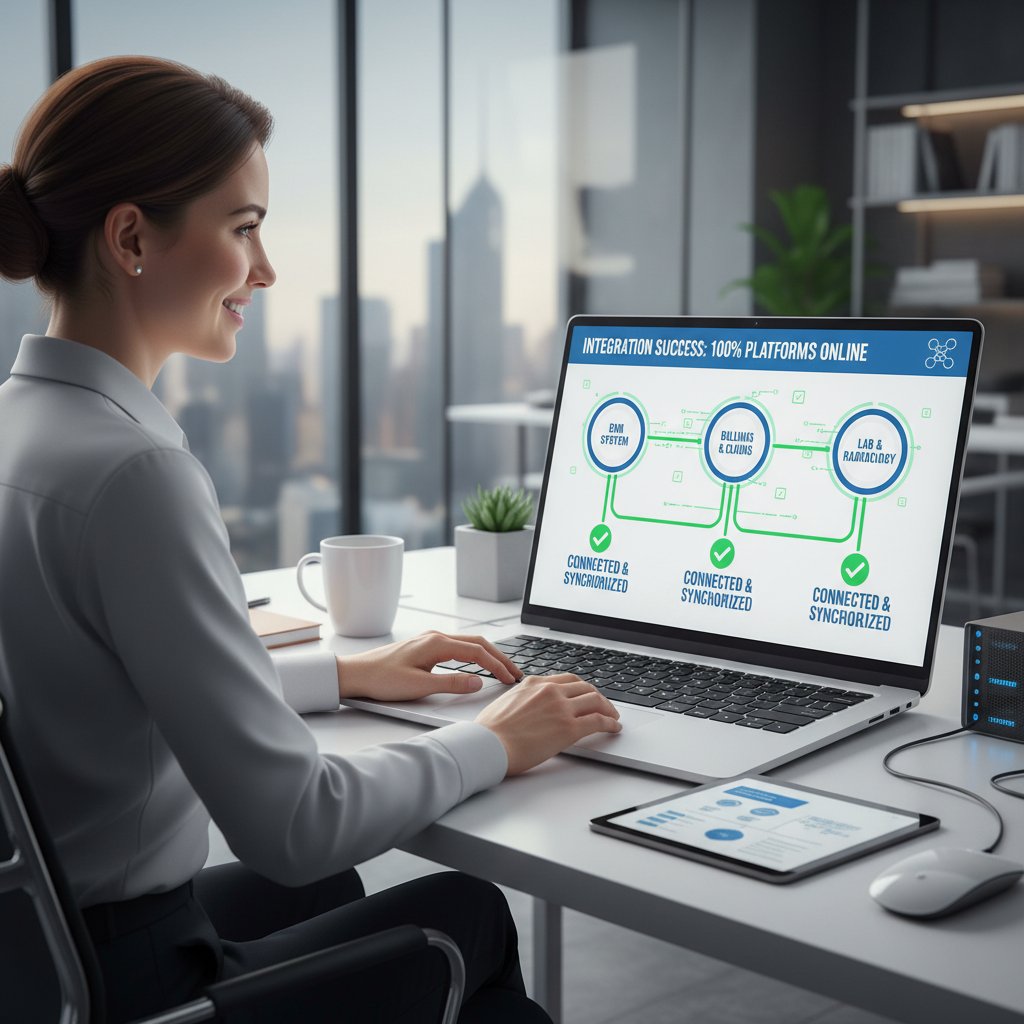
We connect Vault Safety to FDA, EMA, MHRA, and PMDA gateways, to RIM, Quality, and CTMS, and to partner companies under SDEAs using the Vault REST, Bulk, and Intake APIs.
Explore integration
AI Innovation
AI Enablement
We connect governed AI agents to Vault Safety to extract case data, draft narratives, suggest MedDRA codes, and screen literature — always with human-in-the-loop review and full audit logging.
Explore AI integration
Compliance
Validation & Compliance
We deliver risk-based GAMP 5 validation mapped to 21 CFR Part 11, EU Annex 11, and EU GVP, leveraging Veeva's release validation package to keep your footprint proportionate to risk.
View validation services
Operations
Managed Services & Optimization
Post go-live, we run release impact assessments, configuration optimization, gateway monitoring, and continuous improvement of your pharmacovigilance processes and metrics.
Learn more

Why Modern Pharmacovigilance Matters

Drug-safety obligations have never been more demanding: rising global case volumes, shorter reporting timelines, and intense regulatory scrutiny under regimes like 21 CFR 314.80 and EU GVP. Vault Safety unifies ICSR intake, assessment, coding, submission, and oversight on one cloud platform — replacing the disconnected databases, spreadsheets, and manual hand-offs that create compliance risk and slow regulatory reporting.
Pharmacovigilance team managing adverse event cases on a unified safety platform

One Platform, the Full Safety Lifecycle
Because Vault Safety is built on the same Vault platform as RIM, Quality, and Clinical, case data can be linked across domains without brittle point-to-point integration. A labeling change in RIM can inform reportability in Safety; a product complaint in Quality can flow into case intake. The Safety Suite spans intake to signal detection and risk management — a shared object model IntuitionLabs helps you design and exploit rather than rebuild in silos.
Diagram of Veeva Vault Safety Suite sharing a single platform and data model

Built for Global Health Authorities

Vault Safety supports electronic ICSR submission to the FDA, EMA, MHRA, PMDA, and other agencies through E2B(R2) and E2B(R3) gateways, with conformance checks before transmission. As authorities tighten expectations and adopt AI guidance, we help safety teams modernize their workflows, harden their gateways, and prepare their data and processes for what comes next.
Global electronic submission of adverse event reports across health authorities

The Veeva Safety Suite We Configure & Optimize

The Veeva Safety Suite spans the full drug-safety lifecycle on a single platform. We help you configure, integrate, and continuously improve each application — and the shared Vault platform underneath that makes automation and AI possible.

Vault Safety (ICSR)

The core individual case safety report system managing intake, processing, assessment, and submission of adverse events for clinical and post-marketed products, with real-time dashboards and oversight.

Vault Safety

Vault SafetyDocs

Aggregate reporting and safety document management for periodic reports such as PBRER/PSUR and DSUR, drawing directly on coded case data to eliminate manual data pulls.

Safety Suite

Vault Signal

Unifies signal management so PV teams gain visibility across the full signal workflow — detection, validation, assessment, and risk management — alongside case data.

Signal Overview

Intake & Case Processing

Configurable intake from gateways, the Vault API, and unstructured sources, with auto-creation of Inbox Items, conformance checks, and structured case workflows.

E2B Intake

MedDRA & WHODrug Coding

Built-in coding tools with centrally managed, auto-updated MedDRA and WHODrug dictionaries on a semi-annual cadence, removing dictionary upgrades as an IT project.

MedDRA

Vault Platform & API

The shared platform underneath — security, audit trail, lifecycles, and the REST, Bulk, and Intake APIs that make integration, migration, and AI automation possible across all Vault applications.

Vault API

Implementation & Configuration

We start with discovery — mapping your case workflows, reportability rules, organization and product data, and SDEA obligations — then configure the Vault Safety object model, lifecycles, security, MedDRA/WHODrug coding, and gateway connections to match your operating model. Whether you begin with a single post-market product or a full global rollout, we keep configuration aligned to Veeva platform best practices and your validation strategy.
IntuitionLabs consultants configuring Veeva Vault Safety case workflows and reportability rules

Argus Migration & Data Engineering

Legacy safety databases carry years of cases that must move with complete fidelity. We profile the source Argus or ARISg system, map the data model to Vault Safety objects, extract via E2B(R3) or the Vault API, then reconcile counts and field-level values with full audit trails. AI-assisted reconciliation flags anomalies and missing relationships across large historical stores, cutting manual verification while preserving regulatory reportability and case history.
Data engineering pipeline migrating legacy adverse event cases into Veeva Vault Safety

Validation & Inspection Readiness

We deliver risk-based validation aligned to GAMP 5, leveraging Veeva's per-release validation package to focus effort on your configuration, gateways, and intended use. The result is an inspection-ready pharmacovigilance system with a defensible traceability matrix mapping requirements to tests and to 21 CFR Part 11, EU Annex 11, and EU GVP controls.
Validation documentation and traceability matrix for a Veeva Vault Safety deployment

Where an AI + Pharma Firm Adds Unique Value

Big consultancies can staff a generic Vault rollout. We focus on the layers where specialized AI and data-engineering expertise compounds value: intelligent Argus migration, validated gateways and integrations, and governed AI workflows on top of your validated safety database.

AI-Assisted Migration

LLM-assisted reconciliation of legacy cases into Vault Safety objects, with anomaly flags and human review.

Governed AI Agents

Scoped, audited agents that extract case data, draft narratives, and suggest MedDRA codes with human sign-off.

Integration Engineering

Robust, validated gateways and connectors between Safety, RIM, Quality, CTMS, and partner companies under SDEAs.

Vault Safety Use Cases Across the Drug-Safety Lifecycle

Case Intake & Processing

Safety associates use Vault Safety to receive cases from gateways, the Intake Inbox Item API, and unstructured sources, then process them through structured assessment and coding workflows. The system runs E2B data conformance checks on inbound transmissions and auto-creates Inbox Items so nothing is lost. We help teams standardize intake channels, automate triage and duplicate detection, and shorten the cycle from receipt to a fully coded, submission-ready case.

Regulatory Submission

Vault Safety generates and transmits E2B(R2) and E2B(R3) ICSRs to authorities through configured gateways, including FDA, PMDA E2B(R3), and MHRA. We help configure each gateway, validate against authority-specific rules, and build monitoring and alerting so failed or late transmissions are caught before they become reportability breaches under 21 CFR 314.80.

Aggregate Reporting

Vault SafetyDocs supports periodic and ad-hoc aggregate reports — PBRER/PSUR, DSUR, and line listings — drawing directly on coded case data per ICH E2C(R2). We help teams configure report templates, automate line listings and summary tabulations, and use AI to draft narrative sections that medical writers review — producing faster, more consistent reports with a defensible link back to source cases.

Signal & Risk Management

Vault Signal unifies signal detection, validation, assessment, and risk management so PV teams have visibility across the full workflow. We help integrate statistical detection with case-narrative intelligence, connect external sources such as EudraVigilance and the FDA FAERS dashboard, and prioritize signals by clinical significance for medical review.

Standards & Regulations We Work To

📋

21 CFR Part 11

Electronic records and signatures controls mapped to your validated Vault Safety configuration. See the eCFR Part 11.

💊

21 CFR 314.80

Postmarketing reporting of adverse drug experiences per 21 CFR 314.80, the backbone of US expedited reporting.

🇪🇺

EU GVP

Good Pharmacovigilance Practices modules per the EMA GVP framework for EU operations.

📑

ICH E2B(R3)

Electronic ICSR transmission per the ICH E2B standard for FDA, EMA, and PMDA gateways.

✅

ISPE GAMP 5

Risk-based, Category 4 validation aligned to the GAMP 5 Second Edition guide.

🔒

ALCOA+ Data Integrity

Data integrity aligned to MHRA GxP data integrity guidance across migration and integration.

Veeva Vault Safety Frequently Asked Questions

Veeva Vault Safety is a modern, cloud-based individual case safety report (ICSR) management system that handles the intake, processing, assessment, and regulatory submission of adverse events for both clinical and post-marketed products. It is part of the broader Veeva Safety Suite, which also includes Vault SafetyDocs for aggregate reporting and Vault Signal for signal and risk management, all on a single platform. It is used by global pharmaceutical companies, emerging biotechs, generics manufacturers, medical device firms, and the CROs and BPOs that run pharmacovigilance operations on their behalf. IntuitionLabs helps life sciences organizations implement, migrate to, integrate, and AI-enhance Vault Safety so drug-safety teams spend less time on manual data entry and more on medical assessment.
Oracle Argus, ArisGlobal LifeSphere Safety, and Veeva Vault Safety are the three leading enterprise pharmacovigilance platforms, and all provide end-to-end case management, MedDRA and WHODrug coding, and automated E2B submissions. The key difference is philosophy: Argus offers very granular, highly customizable workflows suited to the largest, most complex affiliate networks, while Vault Safety takes a standardized, agile, multi-tenant cloud approach with automatic semi-annual upgrades and built-in dictionary version management. That standardization usually means faster time-to-value but can require process adjustment for teams accustomed to heavy tailoring. We cover the trade-offs in depth in our analysis of Argus vs. LifeSphere vs. Veeva, and we help teams choose and migrate based on their operating model rather than vendor marketing.
Yes — safety database migration is one of the highest-risk programs a pharmacovigilance organization can undertake, because every legacy case must be moved with complete fidelity to preserve regulatory reportability, audit history, and submission status. We run a structured migration: profiling the source Argus or legacy database, mapping the data model to Vault Safety objects, extracting cases as E2B(R3) or via the Vault API, reconciling counts and field-level values, and validating the load against MHRA GxP data integrity expectations. For large historical archives we use AI-assisted reconciliation to flag anomalies and missing relationships, dramatically reducing manual verification effort while keeping a full audit trail. The result is a migrated case database your QPPV can defend in an inspection.
IntuitionLabs is a Veeva X-Pages Partner in the Veeva Partner Program. We are an independent AI consulting and software development firm with deep expertise across the Veeva Vault platform, and we position our services as complementary to Veeva — helping customers get more value from their Vault Safety investment through integration, validation, migration, and AI enablement. We work alongside your internal pharmacovigilance and IT teams and any system integrator already engaged, focusing on the data engineering, API integration, and governed AI workflow layers where a specialized pharma-and-AI firm adds the most value. You can read more about the program structure on the official Veeva Partners page.
Vault Safety supports both receiving and transmitting E2B(R2) and E2B(R3) ICSRs through AS2 gateway trading partners or the Vault API. When an E2B transmission arrives, Vault imports the file, automatically creates an Inbox Item and Inbound Transmission for each case, and runs data conformance checks — as described in the Receive an E2B Transmission documentation. Outbound, teams configure the FDA Gateway, PMDA Gateway, and MHRA AS2 connection for regional submission. We help teams stand up these gateways, test conformance against each authority's validation rules, and build monitoring so a failed transmission never becomes a missed reporting deadline.
Veeva Vault is the underlying cloud content-and-data platform; Veeva Vault Safety is one of several application suites built on it (others include Vault RIM, Vault Quality, Vault Clinical, and the commercial PromoMats/MedComms applications). Because every Vault application shares the same platform, object model, security model, and REST API, a case in Safety can be linked to a labeling change in RIM or a complaint in Quality without brittle point-to-point integration. This shared-platform architecture is one of Vault's core advantages and is documented in Veeva's developer portal. IntuitionLabs helps customers exploit that architecture — designing cross-Vault data flows rather than treating Safety as a standalone silo.
Vault Safety includes built-in MedDRA and WHODrug coding tools and centrally manages dictionary versions, auto-populating up-to-date MedDRA and WHODrug dictionaries on a semi-annual basis so coders are never working from a stale version. This automated version management removes one of the most error-prone, labor-intensive parts of legacy PV systems, where dictionary upgrades were major IT projects. We help teams configure coding workflows, set up auto-coding and synonym lists, and — where appropriate — layer AI coding assistance that suggests Lowest Level Terms with confidence scores while keeping a qualified coder in control of the final selection.
Pharmacovigilance never operates in isolation: safety data flows to and from regulatory affairs, quality, clinical operations, call centers, literature vendors, and partner companies under safety data exchange agreements (SDEAs). The Vault REST API, Bulk APIs, and the Intake Inbox Item API support high-throughput case and document exchange. Common connections we deliver include Safety-to-RIM links so labeling and registration status inform reportability, Safety-to-Quality links so product complaints with adverse events flow into PV, and partner gateways that automate ICSR exchange with licensors and distributors. We design these as validated, monitored integrations — not fragile scripts — so your case data stays complete and traceable end to end.
A Vault Safety program usually runs in phases: discovery and process mapping (case workflows, reportability rules, organization and product data, and SDEA obligations), Vault configuration (lifecycles, security, the case object model, MedDRA/WHODrug setup, and gateway connections), legacy migration, validation aligned to ISPE GAMP 5, and role-based training plus hypercare. A focused single-product post-market deployment can go live in roughly 12-16 weeks, while a full global rollout with Argus migration, multiple gateways, and partner integrations typically runs 6-12 months. IntuitionLabs accelerates delivery using reusable configuration patterns, pre-built validation templates, and AI-assisted data mapping, while following Veeva's own platform best practices.
Aggregate safety reporting is handled by Vault SafetyDocs together with the structured case data in Vault Safety, supporting the authoring and assembly of periodic reports such as the PBRER/PSUR, DSUR, and ad-hoc line listings. These reports follow ICH standards including ICH E2C(R2) for periodic benefit-risk evaluation, and they draw directly on coded case data, eliminating the manual data pulls that plague legacy environments. We help teams configure report templates, automate the generation of line listings and summary tabulations, and — increasingly — use AI to draft narrative sections that medical writers then review and finalize. The goal is faster, more consistent aggregate reports with a defensible link back to source cases.
Veeva has introduced AI capabilities directly into the Safety Suite — including a Case Intake Agent and Case Narrative Agent — that automate data extraction from unstructured sources and assist with narrative drafting, grammar correction, and consolidation. These native agents reduce the most repetitive, error-prone parts of case processing. IntuitionLabs complements Veeva's native AI by building governed AI workflows around it: connecting external sources and call-center transcripts, adding compliance guardrails and audit logging, and integrating large language models through the IntuitionLabs AI proxy for tasks Veeva's agents do not cover. We explore the technology in detail in our briefing on Veeva AI agents for pharmacovigilance case processing.
Yes. Pharmacovigilance systems sit squarely in GxP scope, so we deliver risk-based computer system validation aligned to GAMP 5 Second Edition and mapped to 21 CFR Part 11 and EU Annex 11 controls. We leverage Veeva's per-release validation package so your effort focuses on configuration, integrations, and intended use rather than re-testing the platform. We also align to EU Good Pharmacovigilance Practices (GVP) module expectations. Our dedicated compliance and validation page details the full approach, artifacts, and traceability model.
A generic SI can staff a configuration project, but pharmacovigilance is an unforgiving domain where reportability errors and broken gateways have direct regulatory consequences. IntuitionLabs combines hands-on Vault platform expertise with genuine pharmacovigilance domain knowledge — MedDRA, E2B, GVP modules, SDEAs, and signal detection — and with production-grade AI and data engineering. That means we add the most value precisely where generalists struggle: intelligent Argus-to-Vault migration, validated middleware and partner gateways, and governed AI agents that automate case work without compromising 21 CFR Part 11 controls. We work as a focused complement to your team and any incumbent integrator, on the layers where deep AI-plus-pharma expertise compounds value.
Yes. Contract research and business process outsourcing organizations often operate pharmacovigilance for many sponsors at once, each with distinct reportability rules, SDEAs, and submission gateways. We help service providers design Vault Safety configurations and data-segregation models that keep each client's cases isolated while standardizing operational workflows, and we build operational dashboards that give delivery leaders cross-client visibility into cycle times, quality pass rates, and regulatory compliance. We can also layer AI-driven volume forecasting and bottleneck detection so resourcing keeps pace with case intake. All of this is delivered within validated, auditable boundaries consistent with each sponsor's quality agreement.
Most engagements begin with a short discovery workshop where we map your current pharmacovigilance landscape — your existing safety database, case volumes, reportability obligations, gateways, partner exchanges, and where manual effort and risk concentrate. From there we propose a phased roadmap covering implementation or migration, integration, validation, and AI enablement, with clear milestones and a validation strategy from day one. You can book a meeting to scope your program, and explore our companion pages on AI integration and compliance and validation for deeper detail on those workstreams.
Ready to Get More From Your Veeva Vault Safety Investment?
Ready to Get More From Your Veeva Vault Safety Investment? image

Ready to Get More From Your Veeva Vault Safety Investment?

Talk to IntuitionLabs about implementation, Argus migration, integration, validation, and AI enablement for Veeva Vault Safety and the Veeva Safety Suite.

Book a Meeting

© 2026 IntuitionLabs. All rights reserved.