
IntuitionLabs
AI agents and MCP adapters integrated with LabWare LIMS for pharmaceutical quality control

LabWare LIMS AI Integration for Pharma QC

Custom MCP adapters, LLM agents, and AI-powered QC workflows on top of validated LabWare deployments. OOS investigation assistance, natural language analytics, stability trend detection — with full GAMP 5 validation.

AI Workflows We Build on LabWare

We layer modern AI agents on top of validated LabWare LIMS deployments, unlocking productivity in QC operations while preserving every regulatory control your platform was validated to enforce.

Investigations
AI-Assisted OOS Triage
AI agents draft Phase 1 OOS investigation summaries with full source citations from LabWare, Empower, and QMS data — compressing investigation cycle time by 40 to 60 percent while preserving human accountability.
Book a demo
Analytics
Natural Language QC Analytics
Supervisors ask sample status, trend, and release questions in plain English and get SQL-backed answers in seconds. No dashboards to build, no reports to schedule — every answer cites its LabWare sources.
Book a demo
Compliance
Validated AI Under GAMP 5
Every AI workflow ships with a formal validation package covering intended use, AI-specific risk assessment, PQ with known-answer test sets, robustness testing, and an ongoing monitoring plan — fully audit-ready.
View validation services

A Custom MCP Adapter Built for LabWare

Because LabWare does not publish an official Model Context Protocol server, we build a custom adapter that wraps LabWare Web Services and exposes a curated, read-only tool catalog. AI agents like Claude and enterprise GPT-based applications connect over MCP, inherit the calling user’s LabWare role, and see only what that user is authorized to see — with every query logged for audit.

Custom Model Context Protocol adapter architecture connecting AI agents to LabWare LIMS

OOS Investigation Assistance That Saves Days

Out-of-specification investigations are the single largest time sink in pharmaceutical QC. Our AI agents pull context from LabWare, Empower, Chromeleon, and the QMS, then draft Phase 1 investigation summaries aligned with FDA OOS guidance. Every fact is cited. Every decision stays with the investigator.
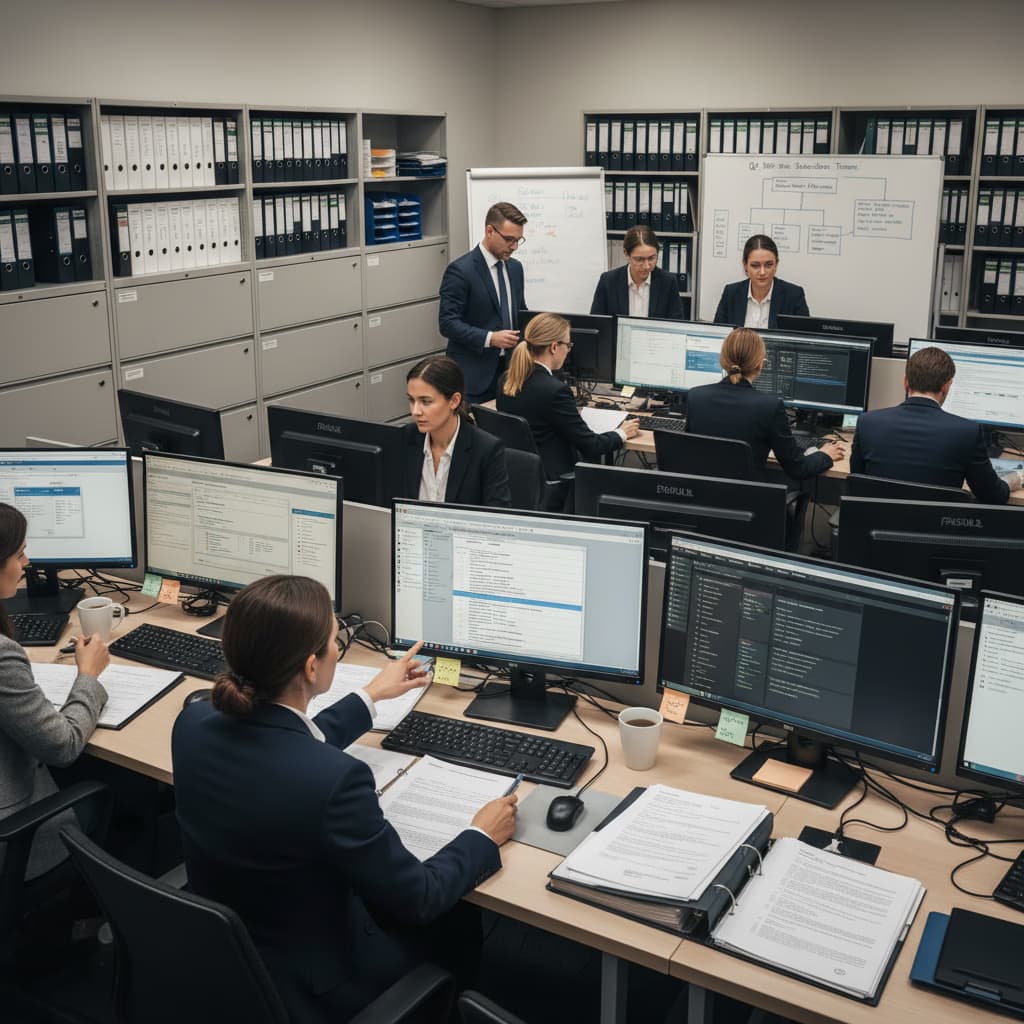
AI agent drafting an out-of-specification investigation summary with citations from LabWare and chromatography data

Validated Under GAMP 5 with AI-Specific Controls

Every AI workflow we deploy ships with a formal validation package built under GAMP 5 Second Edition and aligned with the FDA AI/ML framework. Intended use, AI-specific risk assessment, known-answer Performance Qualification, robustness testing, and ongoing monitoring — it’s a validation package auditors accept.

GAMP 5 validation documentation package for AI components integrated with LabWare LIMS

Our AI Integration Approach for LabWare

Read-Only by Default

AI agents can read, retrieve, and summarize LabWare data, but they cannot modify it. All writes still go through validated LabWare workflows with human review and electronic signature.

Discuss scope

Role Inheritance

AI agents inherit the calling user's LabWare role or run under a narrowly scoped service account. Access is enforced at the adapter layer, not just by convention.

View controls

Every Answer Cited

AI responses include citations to specific LabWare samples, results, batches, or specifications. Users can click through to verify — no unsourced assertions.

See a demo

Audit Trail at Two Layers

Every AI query is logged both in a dedicated AI audit store and in the underlying LabWare audit trail via the service account. Full inspectability for regulators.

View validation

Model-Neutral Architecture

Swap between Claude, GPT, Gemini, and regional sovereign models without rewriting workflows. The AI proxy and tool catalog are model-agnostic by design.

AI enablement

Data Residency Respected

LabWare data stays within your cloud or on-premise boundary. LLM calls go through regional enterprise endpoints with zero data retention.

Discuss deployment

Today's business insights

Profitable growth in the AI solutions industry

Our CEO discusses how AI is transforming the pharmaceutical industry and shares key strategies for leveraging AI in drug discovery and development.

More insights on unlock profitable growth in ai solutions

Profitable growth in the AI solutions industry

Cross-System Agents Spanning LabWare, Empower, SAP, and QMS

The most valuable AI workflows span multiple systems. An agent that can query LabWare, Empower, SAP, and the QMS together can answer “why is batch 12345 not yet released?” with a complete, cited picture that spans every system. We build this kind of cross-system agent as a careful composition of MCP tools, each with documented scope and validation.

Cross-system AI agent querying LabWare, Empower, SAP, and QMS for unified pharmaceutical batch release context

Snowflake as the Analytics Substrate

We often pair LabWare with Snowflake so AI agents can ask deep trend and performance questions without running heavy analytical queries against the transactional LabWare database. Incremental CDC pipelines keep Snowflake in sync with LabWare, dimensional models optimize analytical performance, and Cortex Analyst layers a natural-language SQL interface on top. The result is AI-ready QC analytics that scales.

Snowflake analytical data lake architecture fed by LabWare LIMS for AI-powered quality control analytics

Ongoing Monitoring for AI Performance

AI systems can drift. Our deployment pattern includes an Ongoing Monitoring Plan with defined accuracy metrics, drift detection, periodic revalidation, and alerting on anomalous response patterns. This aligns with the lifecycle expectations in the EMA reflection paper on AI in medicines and the continuous monitoring themes in the FDA AI/ML framework.

Continuous monitoring dashboard tracking accuracy and drift of AI agents integrated with LabWare LIMS

AI Guardrails We Implement for LabWare

🔒

Read-Only Tool Set

The MCP adapter exposes only read-only operations. No updates, deletes, or DDL. All transactional writes still go through validated LabWare workflows.

🛡️

Role Inheritance

AI agents act under the calling user's LabWare role or a narrowly scoped service account, enforced at the adapter layer, not relied on by convention.

🔗

Mandatory Citations

Every AI response includes citations to specific LabWare records. Unsupported assertions are filtered out before they reach the user.

📝

Dual Audit Trail

Every AI query is logged in both a dedicated AI audit store and LabWare's native audit trail. Full inspectability for regulators.

👁️

Hallucination Detection

Output validators verify numeric claims against source data and flag potential hallucinations for human review before display.

📊

Continuous Monitoring

Ongoing accuracy metrics, drift detection, and periodic revalidation aligned with FDA AI/ML and EMA AI lifecycle expectations.

Deployment Timeline for LabWare AI

Our staged deployment model proves value quickly while managing risk. The initial read-only integration validates the architecture, guardrails, and change management approach. Subsequent workflows reuse the MCP adapter and AI orchestration layer \u2014 each new use case is dramatically faster than the first.

Phase 1 — UAT Read-Only

Initial MCP adapter, sample status and results queries, UAT deployment. Typically 6 to 10 weeks.

Phase 2 — Validated Production

Formal GAMP 5 validation, production deployment, first live use case. Additional 4 to 8 weeks.

Phase 3 — Workflow Expansion

OOS triage, method transfer, cross-system agents across 2 to 4 additional use cases. 3 to 6 months.

Frequently Asked Questions

As of early 2026, LabWare does not publish an official Model Context Protocol server. However, LabWare exposes a rich integration surface — LabWare Web Services (REST and SOAP), the LabWare Integrator, the LabWare LIMS Basic scripting language, and controlled access to the underlying Oracle or SQL Server database — that lets IntuitionLabs build a custom MCP adapter in front of LabWare. The adapter exposes a curated set of read-only tools (e.g. look up sample status, retrieve analytical results, fetch specifications, list open OOS events) that AI agents like Claude or GPT-based applications can call over the MCP protocol, while inheriting the requesting user's LabWare role and authorization context. Because we built the adapter, we can also scope, audit, and validate it precisely — which is essential for GxP use.
We build several production-grade AI workflows that address concrete QC pain points. Natural-language sample status queries let supervisors ask "what samples are pending for batch 12345?" and get an answer instantly, pulled from LabWare in real time. Automated OOS triage lets a first-line analyst ask the AI to summarize the historical context around a new out-of-specification result — method trends, similar past OOS events, batch context, analyst and instrument history — and cites every source. Stability trend analysis surfaces early degradation signals across products with natural language input. Method performance monitoring tracks system suitability trends, analyst performance, and instrument drift. And intelligent QC dashboards assemble weekly release and deviation summaries from LabWare data. Each workflow is implemented with role-based access inheritance, read-only guardrails, full audit logging in LabWare itself, and GAMP 5 Second Edition validation documentation that addresses AI-specific failure modes.
Safe AI access to GxP data requires multiple layers of control. First, AI agents authenticate as a dedicated service account or inherit the requesting human user's LabWare role, so they cannot see anything the human user cannot see. Second, the MCP adapter we build exposes only read-only operations and a curated tool set — no updates, no deletes, no DDL. Third, row-level filtering in the adapter can mask sensitive fields (e.g. pre-release batch data during audit) based on context. Fourth, every AI query is logged in a dedicated audit trail that is inspectable alongside LabWare's native audit trail. Fifth, output validation checks verify AI responses are consistent with the underlying source data and flag potential hallucinations for human review. This approach aligns with both the FDA AI/ML guidance framework and the EMA reflection paper on AI in the lifecycle of medicines.
Yes, and this is one of the highest-value AI use cases in pharmaceutical QC. Out-of-specification investigations are time-consuming and typically require the analyst or investigator to pull context from LabWare, the chromatography data system, QMS records, historical stability data, and method transfer reports. An AI agent connected to LabWare, Empower or Chromeleon, and the QMS can pull all of that context in seconds and draft a Phase 1 investigation summary that identifies potential lab errors, reviews system suitability, and flags relevant historical events. The AI never closes an investigation or approves a result — it drafts and cites, and humans decide. This approach aligns with FDA OOS investigation guidance while dramatically compressing investigation cycle time.
We typically deploy a mix of frontier and specialized models depending on the task. For reasoning-heavy tasks like OOS investigation drafting, trend analysis, and method transfer assessment, we use frontier models such as Anthropic Claude or OpenAI GPT models accessed through enterprise endpoints with zero data retention. For high-throughput classification tasks (e.g. routing incoming samples, tagging deviations), we use smaller, faster models that run at lower cost. For pharma organizations with strict data residency requirements, we deploy models through AWS Bedrock, Azure OpenAI Service, or Google Vertex AI in the customer's own tenant. The AI proxy and orchestration layer is model-neutral so clients can swap models without rewriting workflows.
Traditional LabWare reporting relies on canned reports, ad-hoc SQL queries written by IT, and data exported to Excel for downstream analysis — a model that is slow, brittle, and often results in shadow data stores that undermine data integrity. AI-enhanced LabWare fundamentally changes this paradigm. Supervisors and QA reviewers ask questions in natural language and get SQL-backed answers in seconds; trend analyses that used to take a validation engineer half a day are generated on demand with proper references to the underlying LabWare records; OOS investigations compress from days to hours as AI drafts investigation summaries with full source citations. Importantly, the AI does not replace validated reports for regulatory submissions — those still go through the formal LabWare reporting engine — but it eliminates the 60 to 80 percent of daily analytical queries that currently soak up QC supervisor and IT time.
Yes. Analytical method transfer between labs — or between the originating lab and a contract testing organization — is a classic documentation-heavy process that AI can accelerate. An AI agent connected to LabWare and the chromatography data system can assemble the full method transfer package: method procedure, system suitability history, historical accuracy and precision data, specificity studies, and comparative results between sending and receiving labs. It can draft the method transfer protocol and final report per USP chapter <1224> expectations, with every data point cited and traceable. The AI does not execute statistical equivalency tests autonomously — those remain a deliberate analytical decision — but it compresses the drafting and reviewing cycle by 50 to 70 percent.
AI systems in regulated QC environments require specialized validation approaches that go beyond traditional software validation. Under GAMP 5 Second Edition, AI systems are typically classified as Category 5 (custom) due to adaptive behavior and output variability. Our validation approach includes: an Intended Use Specification documenting the specific AI use case and acceptable performance thresholds; an AI-specific Risk Assessment identifying failure modes like hallucination, bias, prompt injection, and model drift; Design Qualification verifying the AI architecture and integration; Performance Qualification using pre-defined test datasets with known expected outputs to verify accuracy, precision, recall, and consistency; Robustness Testing with adversarial and edge-case inputs; and an Ongoing Monitoring Plan with defined metrics and alert thresholds. This aligns with the FDA AI/ML framework and EMA's reflection paper on AI.
Yes, and there are two supported patterns. Pattern one is a dedicated AI service account in LabWare with narrowly scoped read-only permissions; every AI-initiated query is logged under that service account with full audit trail. Pattern two is delegated authentication where the AI agent acts on behalf of the human user via a token exchange — the AI sees only what that specific user is authorized to see, and every action is attributed to the human in the LabWare audit trail. IntuitionLabs typically implements both patterns depending on the use case. Pattern two is preferable for interactive user-facing agents because it preserves personal accountability; pattern one is useful for background jobs like scheduled trend analysis that run on a defined schedule regardless of user activity.
Pharmaceutical manufacturers have strict data residency requirements that we architect around. Our default deployment pattern keeps all LabWare data within the customer's existing infrastructure boundary — the MCP adapter runs in the customer's VPC, the LLM is hosted through a regional enterprise endpoint with zero data retention (AWS Bedrock, Azure OpenAI Service, or Google Vertex AI in the appropriate region), and no LabWare data transits to external consumer AI services. For organizations that want to use external frontier models through API, we use a controlled proxy layer that redacts PII and sensitive batch identifiers before forwarding prompts, and logs every external call for audit. This satisfies GDPR data transfer requirements and the data integrity expectations of MHRA, FDA, and WHO data integrity guidelines.
An initial read-only AI integration that exposes natural-language querying across sample status, results, specifications, and OOS events can typically be deployed to a UAT environment in 6 to 10 weeks, and validated for production use in an additional 4 to 8 weeks. More ambitious workflows — OOS investigation drafting, method transfer automation, cross-site trend analytics, or integrations with Empower and the QMS — extend the timeline to 4 to 6 months end-to-end. We use a staged rollout model: start with a single non-critical use case in a single lab, prove value and refine the guardrails, then expand to additional workflows and sites. Because the MCP adapter and AI orchestration layer are reusable, the second and third use cases are dramatically faster than the first.
AI enhancement of a validated LabWare LIMS typically delivers three categories of return. Operational efficiency: 60 to 80 percent reduction in time-to-insight for ad-hoc QC queries, 40 to 60 percent reduction in OOS investigation cycle time (a massive impact on batch release velocity), and 50 to 70 percent reduction in manual effort for method transfer and periodic review documentation. Quality impact: earlier detection of stability and method drift signals, more consistent OOS investigation quality through AI-assisted drafting, and reduced risk of unresolved quality events. Compliance impact: stronger audit trail through comprehensive AI query logging, more defensible data integrity posture through automated trending, and faster inspection response through natural-language QC data access. Based on our engagements, a mid-size pharma manufacturing site typically sees 3x to 5x return on AI enhancement investment in year one, with compound returns as more workflows adopt AI.
Ready to Bring AI to Your LabWare LIMS?
Ready to Bring AI to Your LabWare LIMS? image

Ready to Bring AI to Your LabWare LIMS?

Book a discovery session to explore how AI agents, custom MCP adapters, and natural-language QC analytics can compress OOS cycle time, surface stability trends earlier, and turn your validated LabWare deployment into an intelligent QC command center \u2014 with full GAMP 5 validation.

Book a Meeting

© 2026 IntuitionLabs. All rights reserved.