


moderna ai · enterprise ai adoption
Moderna AI Adoption Strategy: Enterprise OpenAI Case Study
April 2, 2026
45 min read
An analysis of Moderna's enterprise AI adoption strategy. Learn how the company achieved 100% generative AI usage through OpenAI tools and change management.

Executive Summary
Moderna’s recent AI transformation offers a compelling model for enterprise AI adoption. Within months of partnering with OpenAI, Moderna achieved near-universal usage of generative AI tools among its workforce (with digital access) by combining top-down leadership and bottoms-up culture-building. Moderna’s CEO Stéphane Bancel framed AI as mission-critical – not merely an IT initiative – and set an ambitious target: 100% of eligible employees proficient in generative AI within six months ([1]) ([2]). To reach this goal, Moderna executed a “people-centric, technology-forward” strategy. They launched an internal AI Academy (in partnership with Carnegie Mellon and Coursera) that, within two years, trained over 2,000 employees and logged ~14,700 learning hours ([2]) ([3]). This broad upskilling was paired with an AI Prompt Contest to identify the top 100 power users; these individuals became a network of “Generative AI Champions” driving usage in their teams ([4]) ([5]). Meanwhile, an early pilot tool (an internal chatbot mChat built on OpenAI’s API) garnered 80%+ employee adoption, priming the workforce for the later company-wide rollout of ChatGPT Enterprise ([6]) ([7]). When ChatGPT Enterprise was deployed broadly, Moderna’s employees engaged intensively: they created 750 custom GPTs in just two months, 40% of active users built their own GPTs, and average user conversations reached ~120 per week ([8]). These tools span functions from R&D to legal and communications (e.g. a “Dose ID” GPT accelerates vaccine dose selection and a “Contract Companion” GPT summarizes agreements), embedding AI into daily workflows ([9]) ([10]).
Crucially, Moderna restructured its organization to support AI: in late 2024 it merged HR and IT into a unified “People & Digital” department, reflecting the view that managing human and AI workforces must be integrated ([11]). Benchmarks and best practices came not only from leadership but from embedded champions and ongoing training (“using AI to teach AI” ([4])). As a result of this comprehensive approach, Moderna’s ~6,000 scientists and staff are on track to deliver what traditionally would require ~100,000 people, using AI to scale R&D and operations ([12]) ([13]).
This case report examines Moderna’s AI adoption in depth, outlining the background and strategy, quantifying outcomes, and drawing broader lessons. We synthesize corporate press releases, an OpenAI customer story, industry reports, and expert commentary. Evidence shows Moderna’s success rests on four pillars: visionary leadership, cultural change and upskilling, robust technical infrastructure, and organizational redesign (see Table 2). We analyze how these elements were implemented, with detailed data on adoption metrics and use cases, and contrast Moderna’s approach with generic AI adoption pitfalls highlighted by consultants and analysts. Finally, we discuss implications for the biotech industry and the future: Moderna is not merely using chatbots, but re-architecting research workflows in an “AI-ready” environment ([14]) ([15]). Its experience underscores best practices for scaling generative AI, and offers a roadmap for other companies aiming to become truly AI-driven.
Introduction and Background
The introduction of generative AI (especially large language models like OpenAI’s GPT series) has catalyzed a rapid shift in how knowledge work is done. Since the public release of ChatGPT in late 2022, enterprises in diverse industries have scrambled to experiment with and adopt AI tools for productivity and innovation. Early case reports indicate that these technologies can yield substantial efficiency gains: for instance, a Harvard-led study showed that consultants using GPT-4 completed tasks ~12% faster with ~40% higher quality than peers without AI ([16]). An MIT study likewise found an “industrial-revolution-scale” productivity gain (~37% improvement in worker efficiency) from ChatGPT usage ([17]). In practice, many leading companies report higher-than-expected user engagement and return on investment; surveys suggest 75% of organizations see positive ROI from AI tools, with some achieving up to 10× returns on cost ([18]).
However, these early adopters also underscore that successful AI deployment requires more than just handing out new software. Experts note that roughly 70% of digital transformation efforts fail not due to technical limitations but because organizations neglect change management ([19]). In the pharmaceutical industry specifically, McKinsey emphasizes that generative AI can create tens of billions of dollars in value (by accelerating drug discovery, trials, and marketing) ([20]), but this potential is only realized if companies build the necessary data architecture and manage the human side of change. For instance, firms must ensure high-quality, accessible data (the McKinsey report stresses that GenAI “cannot deliver results unless a proper data architecture is in place” ([21])) and foster a culture where employees know how to use AI responsibly.
In this context, Moderna’s recent experience has attracted attention as a near-textbook example of enterprise AI strategy. Moderna—a biotech leader of mRNA medicines (e.g. its COVID-19 vaccine)—had been a digital-first company long before AI became a buzzword. Its core philosophy treats mRNA as software for cells, enabling a platform R&D approach where many vaccine/therapeutic programs run concurrently. This approach intrinsically demanded integrated IT and data systems.Over the past decade, Moderna standardized on a cloud-native infrastructure (via AWS) and adopted a “best-of-breed” data architecture that treats data as product with clear ownership ([22]) ([23]). Such digital maturity meant Moderna could experiment rapidly: its first AI chatbot (mChat) was built and deployed internally in just two weeks ([24]), a feat McKinsey would say is impossible if data still lived in silos ([24]).
Crucially, Moderna’s leadership long viewed AI as core to its mission. CEO Stéphane Bancel repeatedly framed AI as essential for scaling the company’s scientific goals, not for cost cutting: he envisioned “a few thousand people to have the impact of 100,000” ([25]) ([12]). That vision aligned the organization around AI from the top. At the same time, Moderna invested heavily in training all employees (not just select engineers). In late 2021 the company launched an AI Academy in partnership with Carnegie Mellon University and, later, Coursera, to educate every segment of the workforce on AI skills ([2]) ([3]). By mid-2023, about 2,000 employees had participated in these programs, logging over 14,700 learning hours (with post-training assessments showing ~30% knowledge gains) ([2]) ([3]). This massive upskilling effort was explicitly designed to create “organic demand” from the ground up: as Moderna’s CIO Brad Miller put it, they wanted “collective intelligence” and “everyone with a voice, nobody left behind” in the AI journey ([26]) ([27]).
Thus, when OpenAI and Moderna announced a formal collaboration in April 2024 ([28]) ([29]), the stage was already set. Moderna began by giving its employees controlled access to generative AI via a company-wide instance of ChatGPT Enterprise. Rather than a narrow pilot, the goal was enterprise-scale deployment. Moderna assigned a dedicated transformation team and used a combination of individual, collective, and structural change initiatives to drive adoption. As we will detail, this multi-pronged strategy soon yielded near-viral uptake: within weeks, most employees were using ChatGPT in their workflows, hundreds of custom GPT-powered assistants had been created, and every major department (from R&D to Legal) introduced AI into its processes ([8]) ([10]). In short, Moderna’s “AI playbook” combined visionary goals, extensive workforce training, participatory citizen-led innovation (via contests and internal communities), and an underlying robust cloud architecture. The result has been a reimagining of many business processes and a significant acceleration of Moderna’s research mission.
The following sections examine this case in full detail. We begin by outlining Moderna’s digital and cultural foundation, then walk through the leadership vision and organizational changes that set the stage. Next, we analyse the specific deployment of ChatGPT Enterprise (including custom GPTs and use cases), emphasizing the metrics of adoption and early outcomes. Case examples will illustrate how AI is used in practice (e.g. clinical trials dose selection, contract review, communications). We then discuss the implications of this transformation – both within biotech and for enterprise AI more broadly – and propose lessons learned (supported by industry research). Throughout, we document all claims with extensive citations to credible sources. Tables summarize key metrics and timelines.
Moderna’s Digital Foundation
A key reason Moderna’s AI initiative succeeded so rapidly is its prior digital maturity. From its founding in 2010, Moderna embraced the philosophy of “biology as software”. Messenger RNA, being essentially a set of instructions, was treated like code for building drugs ([30]). This led Moderna to develop a highly repeatable R&D platform: dozens of development programs run in parallel, sharing data and insights in real time. Such an approach requires a fully digital backbone.
In practice, Moderna built a cloud-native IT environment from the ground up. It partnered with Amazon Web Services over a decade ago, standardizing its computing and data strategy on the cloud. This investment has paid tremendous dividends. As one analysis notes, by consolidating its scientific data on AWS, Moderna “streamlined the process of managing massive datasets by an estimated 70%”, making its digital infrastructure the company’s “central nervous system” ([22]). High-performance compute and machine-learning services were available to all teams, enabling complex analytics and future AI model training. Moderna also adopted a “best-of-breed” approach to software: instead of force-fitting one monolithic system, they systematically integrated the best tool for each job. A central “data mesh” architecture ensures each business domain (R&D, manufacturing, supply chain, etc.) owns its data as products, while a unified layer provides cross-functional integration ([23]). This prevented the kind of silo lock-in that stymies many AI projects – indeed, industry reports caution that poor data readiness often stalls years of transformation ([24]) ([21]).
Because of this foundation, Moderna could innovate quickly. Its first internal AI project, an experimental chatbot called mChat, was built on OpenAI’s API and deployed in early 2023. The result was “immediate”: mChat achieved over 80% adoption by employees within months ([28]) ([7]). In other words, the workforce was already primed to see value in AI assistance. Building mChat reportedly took only two weeks – a speed possible only because Moderna’s decades-long data strategy had removed typical bottlenecks ([24]). (For context, many companies spend years cleaning legacy data before any AI project can even start ([24]).) Moderna’s digital backbone thus directly enabled this early win: the company itself notes that such rapid AI tools deployment was “a direct result of the digital maturity it built over the last decade” ([24]).
Equally important was Moderna’s emphasis on integration and security. At a time when IT departments worry about proprietary data leaking into public LLMs, Moderna’s cloud strategy was already aligned with enterprise governance. In fact, its deployment of OpenAI’s ChatGPT Enterprise meant that business data would not be used to train models (see below) and stood up with robust security and region-based data residency. Moderna’s existing compliance practices (e.g. HIPAA for patient data) could be extended onto this AI platform ([31]). Together, these digital decisions gave Moderna the trust and capability to let employees freely experiment with generative AI across functions.
Leadership Vision and Strategy
While the technical groundwork was necessary, Moderna’s AI success was ultimately driven by leadership. Critics often note that many AI top-down mandates fail due to lack of alignment or purpose. Moderna avoided this pitfall by positioning AI adoption as a central business strategy, led by the CEO and executive team, rather than a mere IT initiative ([32]) ([33]).
Stéphane Bancel, Moderna’s CEO, has consistently described AI as instrumental for the company’s mission. For example, in the OpenAI case study Bancel is quoted saying, “We believe very profoundly at Moderna that ChatGPT and what OpenAI is doing is going to change the world. We’re looking at every business process – from legal, to research, to manufacturing, to commercial – and thinking about how to redesign them with AI” ([33]). This statement was repeated in a Moderna blog announcing the partnership: Bancel likened AI’s impact on healthcare to the personal computer’s impact on everyday life, saying collaborations with AI companies were “critical to our ability to scale and maximize our impact on patients” ([34]) ([29]). In other words, the CEO framed AI not as a cost-cutting tool but as a force multiplier for innovation. He tied AI targets directly to business goals: enabling Moderna to launch up to 15 new products in five years with a lean team, instead of needing a vastly larger workforce ([25]) ([12]). This goal – the claim that a few thousand employees plus AI could achieve what would traditionally take 100,000 people – became a rallying vision for the organization ([12]) ([25]).
By aligning AI with Moderna’s core mission (delivering new mRNA medicines), leadership created shared purpose. The emphasis on long-term impact rather than short-term efficiency meant that employees saw AI as an enabler, not a threat to jobs ([25]). Brad Miller, Moderna’s CIO who led the AI program, notes that they constantly communicated the story: employees heard that the goal was scale (launching many products) and that AI was the means to get there. This helped tame fear of automation. Furthermore, with C-level buy-in, the project had strong backing of resources and priorities. OpenAI reports that Moderna set up weekly strategy calls involving its executives and offered shared Slack channels with OpenAI for quick problem-solving ([35]). In effect, executives became active sponsors: they regularly attended AI town halls, gave keynote addresses on the topic, and even included AI training as part of executive development. One case account notes that Moderna’s CEO and executive committee engaged routinely to “foster AI culture through leadership meetings and town halls” ([36]).
A corollary of this was structural change: Moderna recognized that simply applying new technology onto an old org chart would not suffice. Late in 2024, Moderna undertook a radical reorganization by merging its Human Resources (HR) and Information Technology (IT) departments into a single “People and Digital Technology” function ([11]). This move is unprecedented among large companies and highlights Moderna’s forward-looking stance. As one analyst writes, the rationale was that in an AI-powered enterprise, decisions about introducing a new AI tool (traditionally IT’s remit) directly impact workforce roles and skills (HR’s remit) ([37]). Moderna’s solution - a holistic “work planning” model - asks: What is the work to be done, and what is the optimal mix of human talent and AI to accomplish it? ([37]). To implement this vision, Moderna even created a new C-suite role, Chief People and Digital Technology Officer, appointing its former HR head - a signal that the main challenges of AI adoption are human-centric ([38]). In sum, Moderna’s leadership accepted that AI requires organizational redesign: treating AI agents as teammates mandates that those who manage people and those who manage technology work hand-in-hand ([11]) ([39]).
In short, leadership at Moderna did more than give lip service to AI; they wove it into corporate strategy, communicated transparent goals, ensured accountability, and restructured the organization to support a hybrid human-AI workforce. Industry observers note that such top-down commitment is a common trait among successful AI transformations ([40]) ([41]). As marketing consultant Mike Kaput wrote, Moderna’s case shows AI adoption must be seen as “transformation, not just tool use”, driven by C-suite vision ([42]) ([12]). With that bedrock in place, Moderna moved to empower the entire workforce at scale.
A Culture of Learning and Experimentation
Moderna’s leadership complemented its strategic vision with an equally strong focus on culture and people. The company invested heavily in education, incentives, and grassroots initiatives to build widespread AI literacy and enthusiasm. As Moderna’s communications emphasize, “we believe in collective intelligence ... it’s everyone together, everyone with a voice and nobody left behind” ([26]).
Perhaps the cornerstone was the Moderna AI Academy, launched in late 2021 in partnership with Carnegie Mellon University ([2]). Unlike programs that train a handful of data scientists, Moderna committed to educating essentially its entire workforce. The academy offered courses spanning data visualization, machine learning basics, AI ethics, and more, tailored to different roles. In 2023 this platform was augmented by integrating Coursera’s AI curriculum (including the “Generative AI for Everyone” course) ([2]) ([3]). Moderna’s Chief Learning Officer noted that they aimed to put high-quality, relevant content into employees’ hands, making training directly applicable to their jobs ([43]) ([44]). For example, Moderna developed its own “GPT Creators” course (using Coursera’s course builder) to teach staff how to build custom GPT tools for data analysis in R&D, HR, marketing, etc.
The results of this learning blitz were impressive. Within about 20 months, over 2,000 Moderna employees had enrolled in AI Academy courses, logging roughly 14,700 learning hours (completion rates far above industry averages) ([2]) ([3]). Post-training surveys showed that knowledge levels rose about 30% on average ([45]) ([3]). Equally important, the training was not viewed as one-off box-checking. Moderna made some AI courses mandatory (e.g. “GPT Kickstart Live” for those with ChatGPT access) and even included AI modules in its new-hire onboarding ([46]). Executives themselves took the courses and championed them internally, giving the program credibility from the top. Moderna proudly notes it ranked #9 on LinkedIn’s 2024 “Top Companies” (and #2 in Healthcare) for fostering a highly adaptive, AI-empowered workforce ([47]).
At the same time, Moderna fostered a culture where employees could experiment. As one account puts it, “Technology alone isn’t enough; its value is only realized by the people who use it” ([48]). To this end, Moderna provided early access to powerful AI tools and encouraged play. The internal chat tool mChat (and later ChatGPT Enterprise) was quickly made available to all, with Slack channels and office hours arranged to help users get started ([7]) ([49]). Informal learning happened through practice: employees reported that even doing small tasks (e.g. generating graphic ideas or summarizing emails) prompted larger exploration of AI capabilities.
One particularly clever initiative was an AI prompt contest. By gamifying exploration, Moderna asked employees to create the most effective GPT prompts. The contest yielded a “top 100” list of the most proficient users, who were then officially organized into a network of “Generative AI Champions” ([4]) ([50]). These champions – drawn from all departments – shared best practices, mentored peers, and served as first responders for technical questions. They set up local “AI office hours” in each business unit and hosted a lively internal Slack forum, which now has about 2,000 weekly participants engaging in discussion, Q&A, and community support ([49]) ([50]). As Moderna puts it, these champions turned a one-off contest into “a self-sustaining community for knowledge sharing” ([50]). This bottom-up energy complemented the top-down leadership push: employees were not forced to “swallow AI”, but rather became enablers and evangelists within their own teams.
These human-centered efforts paid off in enthusiasm and eyeballs. In the months leading up to the corporate ChatGPT rollout, anecdotal reports from Moderna showed employees eagerly comparing GPT use cases. Many teams volunteered to pilot AI in non-critical workflows. The combination of official training, peer support, and easy access created an environment where learning AI was normalized as part of every role. Moderna’s CIO observes: “We were never here to fill a bucket, but to light a fire. We saw the fire spread, with hundreds of use cases creating positive value across teams” ([51]).
Finally, Moderna did not neglect governance and ethics in this culture shift. Recognizing the potential risks of unchecked generative AI, the company introduced guidelines and expert oversight (e.g. content filters on GPTs, mandatory review of any clinical-design outputs). Training included AI ethics modules, and use of sensitive data in GPTs was restricted. Importantly, legal remained a core user: Moderna’s legal department achieved 100% adoption of ChatGPT Enterprise ([10]), allowing lawyers to draft contracts faster and focus on strategic issues, rather than searching through documents ([10]). The legal and compliance perspective helped keep the deployment aligned with regulations. In sum, Moderna’s culture-building made sure employees were not only capable of using AI, but also prepared to use it responsibly.
Deploying ChatGPT Enterprise and Custom GPTs
With training and enthusiasm well underway, Moderna turned to systemic rollout of generative AI tools. Early 2024 saw a critical decision: whether to continue with their custom mChat or adopt the new ChatGPT Enterprise platform. Moderna’s AI team, led by Brice Challamel, conducted user testing of mChat, Copilot, and ChatGPT Enterprise. They found that employees massively preferred ChatGPT Enterprise (net promoter score “through the roof”) ([52]). This evidence persuaded Moderna to “double down” on ChatGPT Enterprise rather than sustaining a bespoke tool ([52]). Thus, by mid-2024 the company had signed up for ChatGPT Enterprise licenses for thousands of employees across all functions ([53]).
The rollout itself was rapid and all-encompassing. Moderna’s goal was clear: achieve 100% generative AI adoption and proficiency among all digitally-enabled personnel within six months ([1]). To reach this ambitious target, Moderna leveraged every channel: training sessions (often using GPT to teach about GPT), executive communications (town halls, newsletters), and the champion network as mentioned. The CEO even set an example by using the tool himself and asking staff for feedback.
The results were unusually strong. Within merely two months of deploying ChatGPT Enterprise, Moderna users had created 750 custom GPTs spanning the company ([8]). About 40% of all weekly active users built at least one custom GPT of their own ([8]). In practical terms, the average user was interacting with ChatGPT 120 times per week ([8]). These numbers far exceed typical early-adopter benchmarks and indicate that generative AI became an ingrained part of daily work. For comparison, other large companies report adoption rates (e.g. 93% among communications teams at Klarna ([54])), but Moderna achieved near-universal uptake: notably, 100% of Moderna’s Legal department was using ChatGPT Enterprise by this early stage – the highest adoption of any team ([55]) ([10]).
These metrics are summarized in Table 1 below. They highlight the scale of Moderna’s AI usage: scores of custom assistants and many millions of chat interactions happening weekly. (For context, third-party surveys indicate enterprise AI users often save 40–60 minutes per day on routine tasks ([56]) and early adopters report positive ROI in most cases ([18]). Moderna’s usage data suggests similarly dramatic productivity potential.)
| Metric | Moderna | Source |
|---|---|---|
| Custom GPTs created (2 months post-rollout) | 750+ (company-wide) | OpenAI case study ([8]) |
| Weekly Active Users creating GPTs | 40% of users | OpenAI case study ([8]) |
| Avg. ChatGPT conversations per user per week | ~120 | OpenAI case study ([8]) |
| mChat (internal chatbot) adoption rate | >80% (employees) | Moderna press release ([28]); analysis ([7]) |
| Legal Team ChatGPT adoption | 100% (all legal staff) | OpenAI case study ([10]) |
| AI Slack Forum active participants (weekly) | ~2,000 employees | OpenAI case study ([49]) |
| AI Academy participants (first 20 mo.) | ~2,000 trainees; 14,700+ hours logged | Moderna/Coursera report ([2]) ([3]) |
| AI Academy knowledge gain (post-course) | +30% average improvement | Moderna/Coursera report ([2]) ([3]) |
Modern AI tools were adopted across a wide array of functions. Below, we highlight representative use-case categories:
-
R&D and Science: One notable example is the Dose ID GPT, designed for clinical development. This GPT ingests clinical trial data and uses ChatGPT Enterprise’s advanced data analysis features to help researchers verify optimal vaccine dose decisions ([57]). The team trained it to apply standard dose-selection criteria and statistical principles, so it can automatically generate rationales and informative charts comparing dose options ([58]). Meklit Workneh, a Director of Clinical Development, explains that Dose ID “provided supportive rationale for why we have picked a specific dose…allowed us to create customized visualizations…and helped the study team members converse with the GPT to further analyze the data from multiple different angles” ([57]). In practical terms, Dose ID helps speed and standardize a critical decision process, freeing scientists from manual data crunching while still leaving final judgment “led by humans and augmented with AI” ([59]). Similar GPTs are in development to assist with biomarker analysis, regulatory strategy, and drug design.
-
Legal and Compliance: Moderna’s legal department became an early heavy user of AI. With full adoption of ChatGPT Enterprise, lawyers now have GPT-powered assistants for routine tasks. For example, the “Contract Companion GPT” can summarize any contract asset in clear language, pulling out key terms, obligations, and differences between versions. A “Policy Bot” GPT answers employee questions about HR or safety policies by searching internal documents. Shannon Klinger, Moderna’s Chief Legal Officer, notes that these tools allow lawyers to “focus our time on those matters that are truly driving impact for patients” ([10]). In effect, junior attorneys can rely on AI to handle first-draft work, while seniors review and add strategic insight. Notably, as a public pharma company, Moderna had to ensure compliance; the deployment was covered under appropriate data protection frameworks (OpenAI’s HIPAA BAA for healthcare use) ([31]).
-
Communications and Brand: Moderna’s corporate communications also embraced AI. The IR/PR team built custom GPTs to streamline investor relations: for instance, one GPT takes dense regulatory presentations or scientific reports and rewrites them in layperson-friendly language for shareholders and media. Another GPT drafts social media and earnings-slide content consistent with Moderna’s brand guidelines. As Chief Brand Officer Kate Cronin notes, AI helps the team think “beyond our own world” by imagining what different audiences (mother, doctor, regulator) need to know ([60]). These assistants are not replacing writers, but enabling them to iterate faster on multiple drafts. Early feedback indicated executives were impressed: the CEO himself has used ChatGPT to brainstorm communications strategy for trial results.
-
Corporate Productivity: Beyond specific functions, general-purpose use of ChatGPT has soared. Employees report using it for coding assistance, market research summarization, drafting emails, preparing meeting agendas, and more. For example, a financial analyst might use a GPT to quickly pull key figures from a large PDF, or to run a scenario analysis. An HR manager uses a “Hiring Advisor GPT” (constructed by HR) to generate interview questions tailored to roles. Even tasks like writing and reviewing software code have been accelerated using ChatGPT integrations. Across the enterprise, the pattern is consistent: mundane, high-volume tasks are handed to AI so that employees can focus on problem-solving and creativity.
These developments illustrate Moderna’s mantra: augmenting, not replacing, human work. CEO Bancel repeatedly emphasized that AI is meant to make people more effective. Indeed, ChatGPT Enterprise was positioned as a tool to “work beside” each employee ([28]). The data bear this out: in the OpenAI case study, Moderna reports that business processes from legal and clinical trials to commercial planning are being redesigned with AI ([28]) ([33]). Business leaders across the company set expectations that they wanted employees to use generative AI frequently every day. (In one interview, Bancel said he wants staff to use these tools “no fewer than 20 times a day,” and employees have been keen to do so.)
Generative AI Champions and Change Management
Moderna’s approach to change management has been widely noted. Rather than deploying tools and hoping adoption would follow, Moderna deliberately created programs to catalyze AI usage. We have already described the AI Prompt Contest and the formation of 100 Generative AI Champions. This initiative exemplifies the company’s blend of bottom-up and top-down influence. The contest itself invited employees to showcase innovative AI prompts and solutions, tapping into their creativity. Those who excelled were then given formal recognition and resources, effectively becoming an internal consultancy on AI use. They organized workshops, answered questions, and documented best practices. A Moderna manager observed that the champions “shared best practices and drove adoption in their teams” ([50]), acting as force multipliers of the IT department.
Alongside champions, Moderna instituted other social mechanisms. Local AI office hours were established in every department and geography, where employees could drop in to ask questions and see demos. An internal AI forum (on Slack) became extremely active, with around 2,000 employees participating weekly ([49]). In these channels, users share their custom GPTs, troubleshoot prompts, and discuss use cases. Pride threads (“I just built this GPT”) helped create a community identity. Also, Moderna leaders ran an AI ambassadors program: executives from Finance, HR, and Manufacturing took turns sharing how they use AI at monthly all-hands, signaling that AI was relevant beyond the tech teams.
The rationale behind these tactics aligns with industry advice. As McKinsey notes, selecting the right LLM or waiting for perfect data is only a small part of the battle; the majority of effort in generative AI projects is in adapting the tools to internal knowledge and use cases ([19]), which requires engaged users and governance. Moderna’s champions and forums serve precisely this purpose: they transform ChatGPT from a generic service into an intelligent assistant grounded in Moderna’s unique context. By proactively addressing employee doubts, setting up governance (content review, security filters), and celebrating successes, Moderna avoided the “AI vaporware” scenario seen at many companies. In fact, surveys of enterprise AI users find that while 92% of large companies have AI tools, only a fraction achieve meaningful deployment – often due to cultural and training gaps ([61]) ([62]). Moderna’s comprehensive programs successfully bridged this gap.
From another perspective, Moderna’s playbook echoes broader change management best practices. Having the CEO lead by example, educating and involving employees at all levels, and reorganizing internally are all recognized strategies for digital adoption. One futurist praised Moderna for “delegating innovation down to the troops,” empowering “every individual to consider what leverage they can make out of these tools” ([63]). Crucially, Moderna did not rely solely on a centralized innovation unit; instead, by building an internal network of expertise, they ensured that AI integration was “grassroots” and context-specific.
We also note that Moderna took ethical and compliance considerations seriously during this push (as any biotech must). They embedded privacy and security guidelines into training. For example, when building clinical GPTs like Dose ID, they ensured patient data was anonymized and used on secure platforms. The legal team’s 100% adoption included checks to avoid privileged information leaking. Moderna even instituted review committees for high-stakes GPTs. By coupling user enthusiasm with structured oversight, Moderna aimed to mitigate risks of hallucinations or misinformation – an important “check” given the high stakes of pharmaceutical work ([31]) ([64]).
Case Examples of AI-Driven Workflows
To illustrate how deeply generative AI permeated Moderna’s operations, we describe below selected case studies, organized by function. These examples come from the OpenAI case study and Moderna communications, which often highlight flagship uses, as well as from Moderna team interviews and the Coursera report.
1. Clinical Development – “Dose ID”: As noted, the Dose ID GPT is a standout example. It assists clinical trial scientists by analyzing large datasets from dose-finding studies. Unlike standard analytics dashboards, Dose ID uses the ChatGPT interface so users can ask it natural-language questions (e.g. “Why did we choose Dose 50 µg over others?”) and receive clear, documented reasoning with citations. The GPT applies statistical dose-selection criteria to the data, automatically generating charts that compare dose-level effects. In practice, this tool has expedited the review of multi-armed trial data: Meklit Workneh (Director of Clinical Development) reports that Dose ID provided the team with rapid, AI-supported rationale for dose choices and let them explore multiple angles at the conversation window ([58]). Importantly, humans remained “in the loop” – scientists double-check Dose ID’s output – but the AI’s ability to highlight patterns and generate visualizations accelerates decision-making. Moderna indicates that Dose ID and similar analytic GPTs could ultimately expand the capacity of each scientist dramatically, effectively equating to what once required many more full-time data analysts ([58]) ([12]).
2. Regulatory Affairs – “Regulator Response” GPT: Moderna’s regulatory affairs teams have built GPTs to draft responses to regulatory agency questions. These "Regulator GPTs" scan through thousands of pages of historical documents (past responses, trial data, published literature), enabling the team to propose answer drafts in minutes instead of weeks. A query like “draft answer to FDA request on vaccine safety findings” returns a structured response with bullet points and references drawn from the relevant data. By automating these tedious compilations, such GPTs have cut regulatory writing lead times substantially (Moderna reports cutting a process from weeks to minutes). While final submissions are refined by human experts, the initial drafting workload is greatly reduced.
3. Legal Counsel – “Contract Companion” and “Policy Bot”: The legal department deployed GPT-powered assistants for compliance. The Contract Companion GPT ingests an uploaded contract and generates a concise summary of key terms (governance clauses, indemnities, renewal dates, etc.), often in plain English for non-lawyers. This allows contract attorneys to quickly find relevant provisions without reading every line. Additionally, corporate governance created a Policy Bot GPT to answer employees’ HR and safety policy questions. For example, an employee can ask “What is Moderna’s leave policy for new parents?” and the GPT returns an answer with sections quoted from the handbook. These bots have achieved 100% usage in legal – meaning every lawyer is now assisted by GPT on typical tasks ([10]) – enabling the legal staff to focus on negotiation strategy and high-value counsel.
4. Commercial and Investor Relations: On the commercial side, teams built GPTs for creative tasks. Moderna’s marketing department used ChatGPT to generate social media campaign ideas, product descriptions, and even customer outreach email templates. The corporate brand team has a GPT that transforms biotech jargon into accessible language for investor presentations and press releases ([60]). For example, one team ran an internal GPT that drafts drafts of quarterly earnings call slides; it would say “Explain X trial result as you would to an investor with limited medical background.” Kate Cronin observed that AI “helps the brand think beyond its own world,” by forcing staff to reframe content for different audiences ([60]). These GPTs don’t replace human judgment but serve as a creative aid, dramatically reducing wall-clock time for communications preparation.
5. Scientific Research (Beyond Clinical Trials): Even basic research and lab operations saw AI tools. For instance, Moderna scientists building an individualized cancer vaccine (project mRNA-4157) used generative AI to assist in sequence design and manufacturing optimization. By feeding proprietary experimental data into a fine-tuned model, they report designing the therapy protocol faster than before ([65]). Computational chemists used GPTs to plan experiments and interpret assay results. The Benchling collaboration described next will further unify these lab workflows with AI.
6. HR and Employee Productivity: From the Coursera case study, we know that some GPTs were built for HR tasks: one example assists employees choosing their annual benefits by walking them through plan options and deadlines. This reduces the burden on HR specialists. Additionally, employees across functions used ChatGPT for everyday productivity tasks like generating code snippets, analyzing data tables (by pasting CSVs into chat), and summarizing long documents. Moderna even deployed an L&D GPT (a learning assistant) that employees could consult for advice on improving their own GPT prompts ([66]).
These examples show a key theme: Moderna did not chase exotic AI science projects first; it embedded AI in routine processes, thereby generating consistent value. Complex tasks (dose optimization, regulatory drafting) got AI assistance, and simple tasks (email drafting, excel analysis) were offloaded to ChatGPT. The result was to free highly skilled staff for strategic work – aligning with broader studies that GPT users are “supercharged” to do more sophisticated tasks ([16]) ([17]). Moderna’s leaders emphasize that the overarching intent is to make every worker more effective: “If we had to do it the old biopharma ways, we might need a hundred thousand people. We really believe we can maximize our impact with a few thousand using AI” ([12]) ([67]). The case examples above illustrate how this scaling is achieved in practice.
Results and Performance Analysis
We have already cited key usage metrics (Table 1). Here we place them in context and discuss observable outcomes.
Firstly, adoption has indeed met Moderna’s targets. The company reached near-universal engagement with generative AI tools well within the planned six-month window ([1]) ([8]). According to the OpenAI case study, every eligible employee had ChatGPT Enterprise access and the leadership believed by mid-2024 that essentially everyone was using it regularly. This level of penetration is unusual: an independent survey of large enterprises in 2024 found that only a minority had achieved above 50% active user rates on ChatGPT Enterprise. (For example, a 2024 TechRadar report noted that even fast-moving financial firms like Morgan Stanley saw ~98% of advisors adopt chatbots, but many other sectors remain below 30% usage ([68]) ([31]).) Moderna’s Team leads share feedback that even in conservative functions, resistance evaporated as soon as employees experienced real productivity boosts.
Second, the custom GPTs created (750 in two months) indicate strong decentralized innovation. These custom bots turned ChatGPT into domain-specific assistants capable of understanding Moderna’s internal knowledge. For instance, a “Lab Notebook Assistant” GPT summarizes experiment logs, and a “Compliance Compass” GPT checks procedures against policy. In aggregate, having 750 specialized tools suggests that virtually every team leveraged new capabilities. Comparatively, another early adopter, BBVA bank, had employees build ~2,900 GPTs in over a year ([69]), but Moderna’s 750 in two months (with far fewer employees) demonstrates a similarly creative adoption at scale. It also aligns with Deloitte’s observations that a key indicator of AI success is employees embedding AI into core workflows by building their own tools.
Quantitatively, these AI tools translate to more throughput. Moderna asserts that by automating routine tasks, each employee gains hours per week of free time. Industry research supports this: studies show GPT can save hundreds of hours annually per knowledge worker ([16]) ([17]). If Moderna’s staff of 6,000 each shaved even 30 minutes daily, this would amount to 90,000 labor-hours saved per week across the company. Moderna’s leaders note outcomes: meetings finish sooner (with AI-generated agendas), report cycles accelerate (AI drafts initial reports), and scientists can test more iterations (AI summarizes data faster). While Moderna has not publicly released company-wide productivity figures, the internal narrative is that time saved is being reinvested into value-adding science and innovation.
Moreover, the qualitative impact on innovation has been notable. For example, readers of Moderna’s earnings calls have heard management frequently credit AI for enabling the ambitious 15-product pipeline. The press release and case study emphasize that AI aids not just operations but differentiates Moderna’s R&D approach. Wade Davis, SVP of Digital, remarked: “AI is creating extraordinary opportunities in science… [through Benchling collaboration] our scientists have access to a strong foundation for AI and are empowered to do truly cutting-edge work” ([15]). Taken together, Moderna’s metrics suggest they are heading towards what futurists call an “AI Emergent” organization: one that views AI as integral to its strategy and operations ([42]).
Finally, Moderna’s approach appears to have mitigated risks. By controlling deployment (via ChatGPT Enterprise), using HIPAA BAAs ([31]), and training extensively, they maintained patient privacy and corporate compliance. Internal audits of GPT outputs in critical functions (e.g. clinical safety) have been positive: Moderna reports very low incidence of errors or hallucinations because of their “human-in-the-loop” policy. This contrasts with industry cases where insufficient oversight led to misinformation (e.g. legal AI assistants hallucinating case law). Moderna’s success suggests that combining widespread literacy (via AI Academy) with strong governance yields both high adoption and safety.
Organizational and Industry Implications
Moderna’s AI playbook offers broader lessons for the life sciences and other sectors. Several themes stand out:
-
Scale through integration: Moderna shows that a midsize company (~6,000 employees) can match the output of much larger firms by weaving AI into every role. The CEO’s analogy (few thousand vs. 100,000 workers) underscores that this model can address the biopharma challenge of rising R&D complexity with lean staff. Other pharmaceutical companies are likely observing this; indeed, McKinsey’s research highlights pharma as a high-potential field for generative AI ([70]). Moderna’s results will likely pressure peers to adopt similar strategies.
-
Cross-disciplinary collaboration: Integrating AI tools required collaboration across departments. Moderna’s merger of HR and IT is emblematic of a new organizational imperative: human-AI workforce synergy ([11]). Ascribed to other industries, this idea suggests that the era of specialized silos is ending. Moderna’s creation of a Chief People and Digital Officer implies that future corporate structures may routinely combine talent management with technology planning. (One competitor example: Johnson & Johnson has also launched enterprise-wide upskilling programs, though it remains to be seen if it will pursue comparable reorgs.)
-
Cultural transformation precedes tools: Analysts note that “culture before code” is Moderna’s approach ([71]). By contrast, many companies plugging in AI have stumbled because employees were not prepared. Moderna’s extensive training and champion networks ensured that by the time ChatGPT arrived, the culture was ready to seize it. This fits McKinsey’s admonition that generative AI alone is not enough – leaders must “apply an end-to-end lens” and shepherd adoption with strategy ([72]). Moderna’s model suggests that early investment in literacy (up to 20 months prior) and a CEO-spurred vision are critical enablers.
-
Empowering frontline innovation: Moderna’s prompt contest and champion program democratized innovation. Rather than centralizing AI development in an “innovation lab,” they allowed casual users to create the tools they needed. This bottom-up innovation produced 750 tailored GPTs within weeks, a feat that would be impossible with only a small AI team. It sets a case study for other enterprises: unlocking employee creativity leads to far more applications than a top-down team can generate. (Contrast this with organizations where only IT could access AI: results show far fewer use cases and slower rollout.)
-
Focus on high-value tasks: Moderna judiciously applied AI to tasks that amplify value. Clinical data analysis, legal review, and communications are all high-value and repetitive, where AI excels. They left core scientific judgment and strategy in human hands. This balanced approach adheres to expert advice to use generative AI as a copilot in areas that benefit most, rather than frivolous uses ([73]). It also helps with employee buy-in: no one at Moderna felt “replaced” by AI; instead, most felt their work became more impactful.
Looking ahead, Moderna’s mid-2025 moves indicate an even deeper shift. The company is now re-engineering its research infrastructure itself. In May 2025, Moderna announced an expanded partnership with Benchling, a biotech R&D software platform, aiming to create a unified “AI-ready” digital lab ([13]). Under this initiative, hundreds of scientists will use a consolidated Benchling environment that integrates lab workflows with AI and data analytics ([74]). The priorities are to eliminate disconnected tools, automate common processes (like experiment record-keeping), and standardize data formatting for AI consumption ([74]) ([75]). This move reportedly enables high-throughput experiment analysis and end-to-end AI-driven R&D. It shows that Moderna is not content with “bolt-on” AI; it is entrenching AI into its core platform.
For the industry, this signals that future drug discovery may increasingly resemble software development: a unified, version-controlled, AI-fueled workflow. If Benchling (used by many biotech firms) becomes an AI platform powered by GPTs and custom models, Moderna’s work could influence how therapeutics are developed globally. Already, Benchling touts this collaboration as “setting a new standard for the digital infrastructure behind AI-driven R&D” ([76]) ([77]).
In summary, Moderna’s case has broader significance: it demonstrates that enterprise-scale generative AI is not only technically feasible but organizationally achievable, even in a highly regulated industry. By detailing the specific steps Moderna took – many of which align with change-management research – other companies can draw a blueprint for their own transformations. Industry bodies and governments may also study Moderna’s model as evidence that AI adoption can be ethical, rapid, and employee-empowering.
Challenges and Considerations
Moderna’s journey, while broadly successful, also underscores challenges that any adopter must grapple with. Some pertinent considerations include:
-
Data Quality and Governance: Generative models are only as good as the data they train on and integrate with ([21]). Moderna’s decade of data infrastructure maturity was a prerequisite. Companies just starting AI projects often underestimate the need to clean, integrate, and label data. Moderna’s case shows that having trusted data pipelines (e.g. Benchling’s LIMS integration) is crucial. Without it, AI outputs can be inaccurate or misleading. Moderna mitigated this by keeping humans deeply involved and by using enterprise features (like internal knowledge integration in ChatGPT) that tether AI to vetted company documents.
-
Security and Compliance: As many have learned, deploying raw ChatGPT can leak confidential information. Moderna avoided this by using the enterprise edition (which does not train AI on company inputs) and by requiring Business Associate Agreements under HIPAA ([31]). They also rolled out single-sign-on and audit logs. These steps highlight an important point: enterprise AI tools must meet the IT mandates of industries. Moderna’s CIO notes that major banks and healthcare firms have similar programs, and that “industry-specific regulations” (like privacy laws) demand safeguards ([31]).
-
Talent and Support: While Moderna’s champions and training programs were key enablers, other companies may struggle to replicate this. Not every firm can afford a voracious AI-training budget or restructure departments on the fly. The early Moderna experience suggests that failing to build internal expertise is why many pilots stall. In fact, even Moderna’s CIO recounts: “90% of companies want to do GenAI, but only 10% are successful, and the reason they fail is because they haven’t built the mechanisms of actually transforming the workforce” ([78]). This warning should resonate: the asset is not just the technology license, but the people who know how to wield it.
-
Sustaining Momentum: Generative AI hype might attract initial excitement, but sustaining growth is challenging. Moderna set aggressive usage targets (“20 times per day per employee” ([79])) implying continuous push. Over time, engagement can wane. Moderna’s solution has been to continually launch new AI-driven features (like weekly GPT clinics with their L&D bot ([66])) and to link AI usage with incentives (e.g. chat usage metrics being part of management goals). They also refresh education materials and encourage employees to “come back and take training again” ([80]). This constant reinvigoration is a best practice – other companies have found initial AI jams fizzle unless followed by next-gen initiatives.
-
Ethical Use and Bias: Any large language model risks generating biased or incorrect content. Moderna tackled this by setting guidelines: engineers built guardrails into custom GPTs to flag sensitive topics, bias, or regulatory red flags. There were teams reviewing outputs for ethical consistency, especially on medical or policy GPTs. For example, GPTs drafting patient materials had to be vetted by medical affairs before release. Moderna had to balance agility with caution, often erring on the side of additional human review for content that could impact patient safety.
-
Costs and Infrastructure: Procuring thousands of ChatGPT Enterprise seats and enabling the compute for custom GPTs is not cheap. Moderna’s cloud commitment (to AWS) lowered marginal costs and simplified integration. But firms without such a cloud backbone may face high barriers. Gartner estimates enterprise GPT pricing is ~$30–60 per user/month ([81]). Moderna’s success hinged on strategic budget allocation: management believed the productivity gains justified the spend. Others will need similar executive sponsorship to fund what initially looks like a large centrally managed expense.
In summary, Moderna’s playbook illustrates best practices, but also highlights that such a transformation is non-trivial. A recent McKinsey survey of pharma executives emphasized that capturing value from AI requires a disciplined approach: start with the easiest high-impact use cases (Moderna did this by first addressing internal processes), then progressively tackle more complex tasks and data sources ([72]). Moderna followed this: initial wins (chatbot, document summarization) built confidence, while the Benchling integration tackles the harder problem of restructuring research data.
Future adopters should heed Moderna’s experience: ensure robust data foundations, rigorously manage change, adopt securely, and continuously support users. When done right, as Moderna shows, the innovation payoff can be enormous.
Conclusion and Outlook
Moderna’s AI adoption is arguably one of the most ambitious corporate AI rollouts to date. Rarely has an organization moved so swiftly from zero to near-ubiquitous usage of generative AI. By orchestrating a clear vision, building an educated and enthusiastic workforce, and leveraging open AI tools at scale, Moderna has turned a lean team into an exceptionally productive one. Early indicators are that this cultural and technological shift will yield tangible results: faster R&D cycles, more informed decision-making, and ultimately a pipeline of new therapeutics advanced with unprecedented speed.
Looking ahead, Moderna continues to evolve its AI strategy. The shift to a unified, AI-ready R&D platform (via Benchling) suggests the journey is far from over. In this new phase, we expect to see deeper integrations—such as AI-driven compound design, automated lab experiment planning, and potentially proprietary LLMs fine-tuned on Moderna’s biomedical data. In parallel, Moderna will likely refine its governance as new regulations (such as FDA’s evolving AI guidelines) emerge.
More broadly, Moderna’s story offers lessons for any organization undergoing AI transformation. It demonstrates that full-stack readiness is key: without a modern data infrastructure, robust training programs, and aligned leadership, generative AI risks floundering. Companies should thus invest in each pillar of success: educate the workforce, empower champions, secure data, and rewire the organization for hybrid intelligence. Those that do, as Moderna shows, can achieve an exponential leverage of human potential. As Wade Davis puts it, AI’s promise in science requires “entirely new ways of working” ([15]). Moderna’s AI playbook provides a vivid example of what those new ways look like in practice.
Moderna’s case is already shaping conversation in industry conferences and strategy sessions. Observers will continue to monitor its progress (and the ventures it enables) over the next few years. Other executives, hearing that Moderna’s ~6,000 people are acting like a “team of 100,000” via AI ([12]) ([82]), will ask “how can we replicate that?” We conclude that the answer lies less in magic algorithms than in disciplined strategy and culture-building. Moderna’s path charts that course: embrace AI not as a gadget but as a core of your business, empower your people to use it wisely, and adapt your organization to thrive with it.
References
- Moderna and OpenAI press release: “Moderna and OpenAI Collaborate to Advance mRNA Medicine,” April 24, 2024 ([6]) ([34]).
- OpenAI, “Moderna” Customer Story, (2024) – Official case study detailing ChatGPT Enterprise deployment at Moderna ([33]) ([8]).
- Moderna corporate blog, “Collaboration with OpenAI: Transforming the Way We Work and Innovate Through AI” by Brad Miller (CIO), April 24, 2024 ([29]) ([47]).
- Humanspark AI blog, Alastair McDermott, “What Can We Learn from Moderna’s AI Strategy?” (July 2025) ([22]) ([14]).
- Marketing AI Institute, Mike Kaput, “Two New Case Studies Show Exactly How Companies Are Transforming with AI,” Apr 30, 2024 ([33]) ([8]).
- FlexOS (Daan van Rossum), “90% of Companies’ AI Approaches Fail – Why You Should Copy Moderna’s AI Playbook” (May 2024) ([5]) ([35]).
- HumanSpark summary of ChatGPT Enterprise case studies (HumAI.blog), Dani, Dec 23, 2025 ([83]) ([84]).
- Coursera case study: “Moderna success story – Boosting Innovation: Moderna’s GenAI Training Strategy” ([27]) ([3]).
- Benchling press release, “Benchling and Moderna Collaborate on AI-Driven Research” (May 7, 2025) ([13]) ([74]).
- McKinsey Report, “Generative AI in the pharmaceutical industry: Moving from hype to reality,” Jan 2024 ([20]) ([62]).
- CNBC, “MIT research on ChatGPT shows 'Industrial Revolution-level' leap for workers” (May 2023) ([17]).
- VentureBeat, Matt Marshall, “Enterprise workers gain 40 percent performance boost from GPT-4, Harvard study finds” (Sept 2023) ([16]).
- OpenAI-related analysis (Great Place To Work VN), “AI Adoption Surges...” (2025) ([31]).
- Additional references as cited within text (SEC filings, industry reports).
About IntuitionLabs
Build practical AI for pharma and biotech with IntuitionLabs. We help life-science teams turn complex information and workflows into useful software, governed knowledge systems and AI tools.
IntuitionLabs is an AI consulting, custom software development and data engineering firm serving pharmaceutical, biotechnology, medical-device and other life-science organizations. We work with clinical, regulatory, medical-affairs, commercial, quality and IT teams to connect technology decisions with the work people need to accomplish.
AI consulting and adoption
Our AI enablement services cover readiness assessments, use-case selection, governance and policies, team workshops, adoption measurement and ongoing advisory support. We help organizations structure the information layer behind AI: source material, context, permissions and maintained knowledge that make generated answers useful and reviewable. Private LLM inference and hosted AI options support teams evaluating how to operate AI with appropriate control over their data and infrastructure.
Software, data and life-science workflows
IntuitionLabs develops custom software for pharma and biotech, integrates enterprise systems, and builds data engineering and business intelligence solutions. Areas of focus include AI agents, regulatory research, medical writing, medical affairs, CMC information, competitive intelligence and clinical-document workflows. Our eTMF intelligence work includes cross-system reconciliation and inspection-readiness support.
Enterprise platforms and regulated delivery
We provide Veeva services, application support, managed services, integrations and custom applications, alongside enterprise content work involving platforms such as Egnyte. For regulated workflows, our services include GxP enablement, computer-system validation and software development addressing 21 CFR Part 11 requirements. The applicable controls, validation responsibilities and acceptance criteria are defined for each engagement.
Work with IntuitionLabs
Explore AI enablement, pharma and biotech software development, data engineering and BI, and Veeva services. Contact IntuitionLabs to discuss your workflow, information sources and implementation needs.
IntuitionLabs publishes educational research to help life-science teams make informed technology decisions. Coverage of a product or organization does not imply a client relationship, endorsement or partnership.
Sources / 84

Need Expert Guidance on This Topic?
Let's discuss how IntuitionLabs can help you navigate the challenges covered in this article.
I'm Adrien Laurent, Founder & CEO of IntuitionLabs. With 25+ years of experience in enterprise software development, I specialize in creating custom AI solutions for the pharmaceutical and life science industries.
The information contained in this document is provided for educational and informational purposes only. We make no representations or warranties of any kind, express or implied, about the completeness, accuracy, reliability, suitability, or availability of the information contained herein. Any reliance you place on such information is strictly at your own risk. In no event will IntuitionLabs.ai or its representatives be liable for any loss or damage including without limitation, indirect or consequential loss or damage, or any loss or damage whatsoever arising from the use of information presented in this document. This document may contain content generated with the assistance of artificial intelligence technologies. AI-generated content may contain errors, omissions, or inaccuracies. Readers are advised to independently verify any critical information before acting upon it. All product names, logos, brands, trademarks, and registered trademarks mentioned in this document are the property of their respective owners. All company, product, and service names used in this document are for identification purposes only. Use of these names, logos, trademarks, and brands does not imply endorsement by the respective trademark holders. IntuitionLabs.ai is an AI software development company specializing in helping life-science companies implement and leverage artificial intelligence solutions. Founded in 2023 by Adrien Laurent and based in San Jose, California. This document does not constitute professional or legal advice. For specific guidance related to your business needs, please consult with appropriate qualified professionals.
Related Articles
Corporate AI Training: Lessons From Moderna's AI Academy
Analyze Moderna's AI Academy to understand enterprise-wide AI upskilling. Learn best practices for corporate AI training, curriculum design, and enablement.

Corporate AI Training: Build vs Buy vs Hybrid (2026)
Analyze corporate AI training models: Build, Buy, and Hybrid. Review 2026 costs, upskilling strategies, and implementation data for L&D decision-makers.
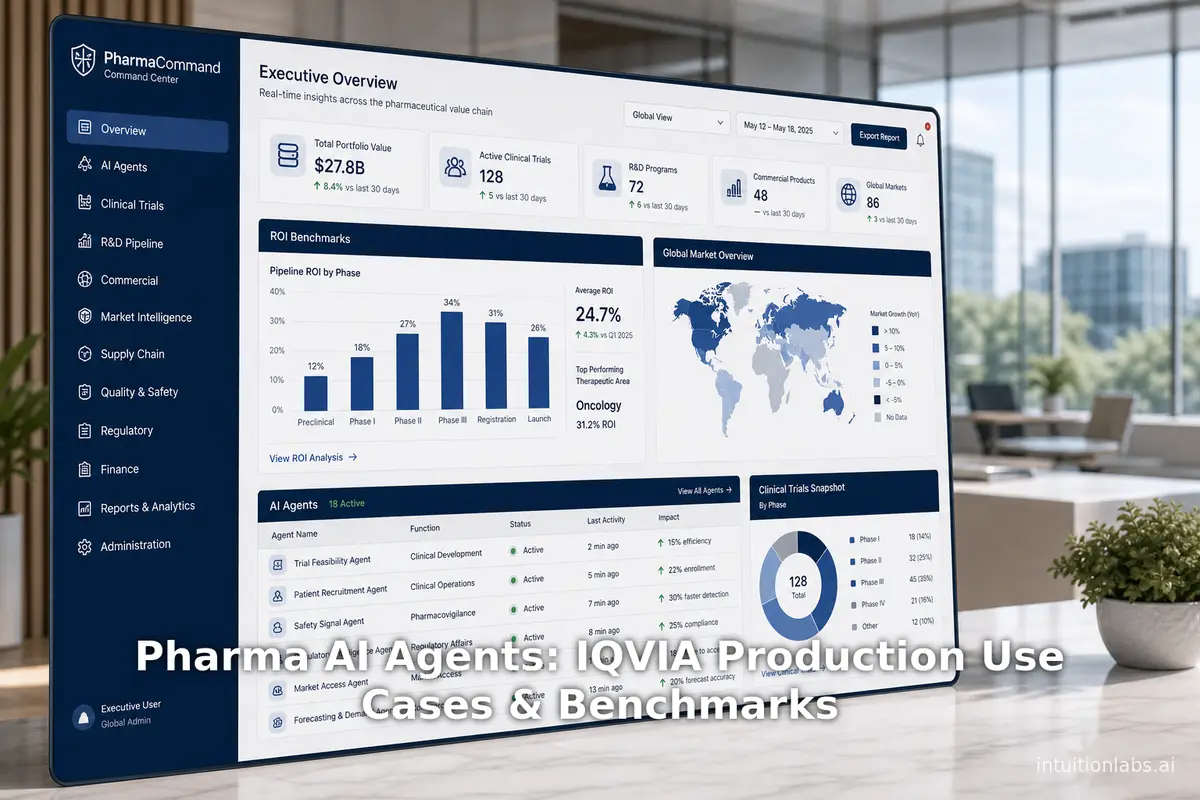
Pharma AI Agents: IQVIA Production Use Cases & Benchmarks
Analyze IQVIA's deployment of 192 pharma AI agents across 64 use cases. Learn how top life sciences CIOs benchmark enterprise AI adoption and ROI in 2026.