Videos
Browse videos by topic
All Videos
Showing 937-960 of 1435 videos

Bulk Upload of Regulatory Documents Using the Document Inbox
Veeva SiteVault
/@VeevaSiteVault
Nov 1, 2021
This instructional video details the process for clinical research sites to efficiently upload and classify regulatory documents in bulk using the Document Inbox feature within Veeva SiteVault Free. The primary goal of this functionality is to streamline preparation for critical milestones, such as Site Initiation Visits (SIVs) or upcoming remote monitoring visits, by allowing users to quickly ingest large volumes of required documentation into the electronic regulatory binder (e-binding) system. The process emphasizes efficiency through bulk actions, allowing users to drag and drop up to 250 regulatory documents simultaneously from their local file explorer into the SiteVault platform. The workflow is structured around two main phases: uploading and classification. After successfully uploading documents, which are initially placed in the user's Document Inbox view, users are guided on how to apply bulk metadata. This is particularly useful if a batch of documents shares common attributes, such as being associated with the same study, organization, or person. The video cautions that while bulk upload is efficient for regulatory files, it is generally not considered best practice for source documents. Once uploaded, if the files do not immediately appear, users are advised to refresh the view by navigating to another library view and returning to the inbox. The classification phase focuses on assigning the correct document type and completing required metadata fields. For documents of the same type, users can select the batch and use the "Complete" action to apply the document type simultaneously. If the documents require identical information (e.g., the same study ID or date), users can complete the fields once and use the "Apply" function to propagate that information across all selected documents. If documents within the batch require differing information, the user must process them individually, using an arrow function that automatically saves the current document and moves to the next one requiring completion. A green checkmark confirms that all required fields have been filled, and the final step is saving the changes. It is explicitly noted that all documents uploaded via the Document Inbox are initially saved in the "Draft State," even after classification, and require a subsequent approval step to be filed to the e-binding. Key Takeaways: • **Optimizing for Clinical Milestones:** The Document Inbox feature in Veeva SiteVault Free is designed to expedite the preparation of regulatory documentation required for critical clinical research events, such as Site Initiation Visits (SIVs) and remote monitoring visits, improving site efficiency. • **Bulk Upload Capacity and Caveats:** Users can upload up to 250 regulatory documents simultaneously using the drag-and-drop functionality; however, this method is explicitly discouraged for the ingestion of sensitive source documents, suggesting alternative, more controlled methods should be used for those files. • **Initial Document State:** All documents uploaded through the Document Inbox are placed in the "Draft State," regardless of whether they have been fully classified with metadata. They require a separate approval workflow to be officially filed to the e-binding and become active within the system. • **Leveraging Bulk Field Application:** To maximize efficiency, users should utilize the bulk field application feature when uploading documents that share common metadata, such as being associated with the same study, organization, or specific personnel. • **Classification Workflow:** The classification process involves selecting the document type and completing required fields. Green check marks serve as visual confirmation that all mandatory metadata fields have been addressed before saving. • **Handling Heterogeneous Batches:** If a bulk upload contains documents requiring different metadata inputs, the system allows for individual completion. Users can leverage the automated arrow function to save the current document's information and seamlessly advance to the next document in the queue. • **Accessing the Inbox Assistant:** The video mentions the "Inbox Assistant" and the inbox icon as the means to manage and work on any remaining documents that still require classification or completion within the user's inbox view. • **Refreshing the View:** If newly uploaded files do not immediately appear in the Document Inbox, the suggested troubleshooting step is to navigate to another library view and then click back into the inbox to force a refresh and display the documents. Tools/Resources Mentioned: * Veeva SiteVault Free * Document Inbox (Veeva SiteVault feature) * Inbox Assistant (Veeva SiteVault feature) * e-binding (Electronic Regulatory Binder) Key Concepts: * **Regulatory Documents:** Essential documentation required for clinical trials, subject to regulatory oversight (e.g., protocols, consent forms, delegation logs). * **eRegulatory / eISF:** Electronic systems used by clinical research sites to manage the Investigator Site File (ISF) and other regulatory documentation digitally, ensuring compliance and accessibility. * **SIV (Site Initiation Visit):** A critical meeting held before a clinical trial begins at a site, ensuring all documentation and procedures are in place. * **Remote Monitoring Visit:** Oversight activities conducted by sponsors or CROs to ensure trial integrity and compliance, often requiring access to site documentation. * **Draft State:** The initial status of a document in Veeva SiteVault, indicating it has been uploaded and potentially classified but has not yet undergone the final approval process required for official filing.

Electronic Medical Records Cost Employers $50 Per Employee Per Month
AHealthcareZ - Healthcare Finance Explained
@ahealthcarez
Oct 31, 2021
This video provides an in-depth exploration of the hidden financial burden imposed by Electronic Medical Records (EMRs) or Electronic Health Records (EHRs) on employers, estimating this cost at $50 Per Employee Per Month (PEPM). Dr. Eric Bricker, the speaker, explains that this significant expense is not transparently visible to employers but is instead deeply embedded within health insurance claims. A core issue highlighted is that many EMR companies charge a substantial percentage of physician practice revenue, with an example given of 7%. This business model inherently incentivizes EMR vendors to promote a fee-for-service approach, which maximizes billing and revenue, rather than encouraging value-based care or capitation models that focus on outcomes and cost efficiency. Dr. Bricker meticulously quantifies this administrative cost, demonstrating how a 7% EMR charge on the claims portion of an average employee's $10,000 annual health plan expense translates to approximately $595 per year per employee, or roughly $50 PEPM. Even after accounting for prescription drug spending, this cost remains around $40 PEPM. From a physician's perspective, the financial impact is equally stark: an EMR charging 7% of revenue means a primary care physician (averaging $1.4 million in annual revenue) or a specialist (averaging $1.6 million) could be paying an astounding $105,000 per year to their EMR vendor. This calculation suggests that a doctor might dedicate nearly one month of their annual work solely to cover EMR expenses, illustrating the profound administrative and financial exploitation within the existing healthcare system. The speaker then introduces an alternative model, Direct Primary Care (DPC), as a "better way" to mitigate these costs and inefficiencies. Using Atlas MD in Wichita, Kansas, as a prime example, Dr. Bricker explains how DPC practices operate by allowing physicians to opt out of traditional insurance billing. Instead, patients or their employers pay a direct, recurring subscription fee, typically $50 per month. This model significantly reduces administrative overhead, enabling DPC physicians to earn substantially more (e.g., 35% higher take-home pay, reaching $308,000 annually compared to $228,000 for fee-for-service doctors). Furthermore, DPC physicians can see fewer patients (e.g., 8 per day versus 25) and dedicate more time to each visit (e.g., an hour instead of seven minutes), leading to improved patient care and satisfaction. Dr. Bricker concludes by underscoring that administrative waste in healthcare is not merely a financial drain but also a detriment to patient access and quality of care. He posits that the substantial funds currently diverted to EMRs and other administrative processes could instead be utilized by physicians to provide free care to those in need, thereby fulfilling a crucial professional responsibility. The video serves as a compelling critique of the misaligned incentives and pervasive inefficiencies that characterize the current healthcare finance system, particularly those exacerbated by the revenue-sharing models of EMR vendors. Key Takeaways: * **Hidden EMR Costs for Employers:** Electronic Medical Records (EMRs) impose a substantial, often unrecognized, financial burden on employers, estimated at $40-50 Per Employee Per Month (PEPM). This cost is not a direct bill but is embedded within health insurance claims, making it largely invisible to employers. * **EMR Vendor Business Model:** Many EMR companies operate on a percentage-of-revenue model, charging physician practices a significant portion (e.g., 7%) of their collected revenue. This incentivizes EMR vendors to encourage maximum fee-for-service billing, thereby discouraging value-based care or capitation models. * **Staggering Physician Costs:** For individual physicians, EMR costs can be exorbitant, potentially reaching $105,000 per doctor per year based on average revenue figures. This implies that a physician might spend nearly one month of their annual work solely to cover their EMR expenses. * **Administrative Waste and Exploitation:** The current healthcare system is plagued by significant administrative waste, where a large portion of physician-generated revenue (e.g., $1.25 million out of $1.5 million) is siphoned off by various administrative layers, including EMR vendors and billing services, before reaching the physician. * **Impact on Physician Income:** While a primary care physician might generate $1.5 million in revenue, their take-home pay in a fee-for-service model could be as low as $228,000, illustrating the vast disparity caused by administrative overhead. * **Direct Primary Care (DPC) as an Alternative:** DPC offers a viable alternative by allowing physicians to opt out of insurance billing and directly charge patients or employers a subscription fee. This model significantly reduces administrative overhead and aligns incentives. * **Benefits of DPC for Physicians:** DPC physicians can achieve higher take-home pay (e.g., 35% more, reaching $308,000 annually) while seeing fewer patients (e.g., 8 per day vs. 25) and providing longer, more comprehensive visits (e.g., an hour vs. seven minutes). * **Reduced Overall Healthcare Costs in DPC:** The DPC model can drastically lower the overall cost to the healthcare system for patient care. A DPC practice might bill $480,000 for the same patient panel that would generate $1.5 million in a traditional fee-for-service setup. * **Patient Access and Professional Responsibility:** The pervasive administrative waste not only inflates costs but also negatively impacts patient access to care. Eliminating these inefficiencies could free up physician time and resources to provide pro bono care, addressing a historical professional responsibility. * **Misaligned Incentives:** The percentage-of-revenue model for EMRs exemplifies misaligned incentives in healthcare, where the financial success of administrative vendors is tied to maximizing billing rather than optimizing patient outcomes or cost efficiency. * **The "Creaming Off" Effect:** A substantial portion of the money spent by employers on healthcare claims is "creamed off" by various intermediaries and administrative services, including EMRs, before it directly benefits patient care or physician compensation. Key Concepts: * **EMR/EHR (Electronic Medical Record/Electronic Health Record):** Digital versions of a patient's paper chart, used by healthcare providers for clinical documentation, billing, and other administrative tasks. * **PEPM (Per Employee Per Month):** A common metric in employee benefits and healthcare finance to express costs on a monthly, per-employee basis. * **Fee-for-Service:** A payment model where services are unbundled and paid for separately. In healthcare, it gives an incentive for physicians to provide more services because payment is dependent on the quantity of care, not quality. * **Value-Based Care:** A healthcare delivery model where providers are paid based on patient health outcomes, rather than the volume of services provided. * **Capitation:** A payment arrangement where a healthcare provider is paid a fixed amount per patient per unit of time, regardless of how many services the patient uses. * **Direct Primary Care (DPC):** A healthcare model where patients pay a monthly or annual fee directly to their primary care provider for a defined set of services, bypassing insurance companies for routine care. * **MLR (Medical Loss Ratio):** The percentage of insurance premiums that an insurance company spends on claims and expenses that improve health care quality. The remaining percentage is for administrative costs, marketing, and profit. Examples/Case Studies: * **Atlas MD (Wichita, Kansas):** This practice is highlighted as an original Direct Primary Care model. It demonstrates how physicians can achieve 35% higher take-home pay ($308,000/year) compared to fee-for-service PCPs ($228,000/year) by charging patients a $50/month subscription fee and focusing on patient-centered care with fewer daily patient encounters.

Self-Funded w/ Spencer - Episode 24 - Matt Brost
Self-Funded
@SelfFunded
Oct 29, 2021
This video provides an in-depth exploration of strategic employee benefits consulting, focusing on the transition from traditional, transactional brokerage models to innovative, data-driven self-funding strategies. The speaker, Matt Brost, a practice leader at BSBD, details his framework for client engagement, which centers on three core pillars: Cost, Service, and People. He argues that in the complex world of group benefits, especially self-funding, consultants must provide a clear, compelling "why" that justifies a change in brokerage, moving beyond mere relationships to deliver measurable business value. This strategic approach is crucial for employers seeking independence and flexibility from the limitations imposed by fully insured plans dominated by the major national carriers (BuCAs). A central theme of the discussion is the integration of innovative health technology and data analytics to optimize healthcare spending. Brost highlights SimplePay, a plan design and billing model that leverages billions of data points to rate providers and facilities based on quality outcomes. This system actively steers employee behavior by adjusting copayments: employees receive a lower copay for choosing high-quality providers and a higher copay for lower-quality providers. This methodology aims to save employers substantial costs by reducing readmissions and poor outcomes, a strategy Brost notes is far more impactful than marginal savings achieved through network pricing negotiations. The model ensures consumer awareness by detailing the cost difference on the back-end bill, even if initial communication is missed. Addressing the "People" pillar, Brost passionately advocates for accessible mental health solutions, specifically highlighting the application Ginger. Driven by his own experience with personal loss and burnout, he explains that Ginger integrates into the group benefits chassis to provide employees with a dedicated mental health team (coaches and therapists) accessible via text with an average response time of 42 seconds. If clinical intervention is required, the app facilitates a virtual therapy session within 48 hours, with the session billed directly to the plan. This solution offers immediate, clinically supported care, addressing the growing need for mental health resources in the modern, often isolated, work environment. Looking forward, Brost predicts the continued growth of independent networks and reference-based pricing (RBP) as providers become more accustomed to non-traditional payment models, and he calls for greater innovation to bring strategic self-funding opportunities to the underserved small group market. ### Detailed Key Takeaways • **The Three Pillars of Benefits Strategy:** Effective benefits consulting must be grounded in a clear strategy focused on Cost stewardship, superior Service delivery, and positive impact on People (employee well-being). This framework helps simplify the complex self-funding narrative for C-suite decision-makers. • **Data-Driven Quality Steering:** Innovative solutions like SimplePay use massive datasets to rate providers and facilities based on clinical outcomes and quality. This allows employers to design plans that financially incentivize employees (via lower copays) to choose high-quality care, which ultimately reduces overall claims costs by minimizing readmissions and complications. • **Self-Funding Enables Strategic Flexibility:** Moving away from fully insured plans and adopting self-funding strategies is essential for achieving independence and flexibility in plan design. This allows employers to unbundle services and coordinate best-in-class vendors, which is impossible when restricted to the limited offerings of major carriers. • **Mental Health Accessibility is Critical:** Solutions like Ginger provide immediate, low-friction access to mental health support through text-based coaching and rapid access (48 hours) to virtual therapy. Integrating these services directly into the benefits plan ensures that employees have a clear, easy-to-use resource for addressing burnout and mental health challenges. • **The Importance of Simplicity in Communication:** Consultants must translate the technical complexity of unbundled self-funding, vendor coordination, and advanced plan design into a simple, compelling story for clients. Assuming prospects understand industry jargon (acronyms, technical details) is a common pitfall that undermines strategic adoption. • **Future of Independent Networks:** Brost predicts that independent networks and reference-based pricing (RBP) will continue to gain traction. As providers become more familiar with these non-traditional payment models, the necessity of relying solely on the major carrier networks for access will diminish, opening up more options for self-funded employers. • **The Small Group Innovation Gap:** The small group market (businesses that "run America") is currently underserved by innovative benefits solutions. There is a strong need for profitable, strategic self-funding opportunities that can be scaled down to benefit smaller employers who currently have limited options. • **Relationship Building in Group vs. Personal Lines:** While personal insurance is often transactional but relationship-driven, group benefits require a strong, data-backed business case ("the why") in addition to a solid relationship, as the decision to change brokers involves significant operational change for the HR department. • **Prioritizing Team Dynamics:** Brost emphasizes that the success and enjoyment of a career are defined by "who you’re doing it with," not just "what you’re doing." Strong partnerships and a positive team environment are crucial for navigating the demanding and complex benefits industry. ### Tools/Resources Mentioned * **SimplePay:** A plan design and billing model focused on quality-based provider incentives. * **Ginger:** A digital mental health platform offering coaching and virtual therapy. * **Meritain:** Mentioned as an integration partner for SimplePay. * **BSBD (Boyd Shackleford Barnett and Dixon):** The boutique insurance firm where the speaker is a practice leader. ### Key Concepts * **Reference-Based Pricing (RBP):** A reimbursement model where payment to providers is determined by a benchmark (e.g., Medicare rates) rather than negotiated rates, a strategy predicted to grow significantly. * **BuCAs:** An industry term referring to the largest national health insurance carriers, whose financial incentives are often misaligned with aggressive cost negotiation for employers. * **Captive Business:** A risk financing strategy, typically used in P&C insurance, where a company forms its own subsidiary insurance company to insure its risks. This concept served as Brost’s introduction to risk assumption strategies like self-funding.

Webinar: Webinars in Pharma. Are you ready to integrate Veeva and Salesforce Marketing journeys?
showerthinking
/@showerthinking
Oct 27, 2021
This video explores the strategic integration of webinar platforms with Veeva and Salesforce Marketing Cloud to create comprehensive, automated marketing journeys within the pharmaceutical and healthcare industries. The speakers advocate for a shift from viewing webinars as isolated tactics to leveraging them as integral touchpoints within a broader cross-channel customer experience, aimed at enriching HCP knowledge, generating leads, and optimizing digital marketing strategies. The discussion covers best practices for platform selection, data synchronization, consent management, HCP identification, and empowering sales representatives with real-time visibility and actionable insights. A detailed case study highlights a multinational pharma company's successful implementation, showcasing one-click registration, LinkedIn ad integration, and robust analytics using Google Tag Manager and DataRama to measure engagement via Key Educational Messages (KEMs). Key Takeaways: * **Strategic Shift for Webinars in Pharma:** Webinars should evolve from isolated events to integrated components of a larger, automated marketing journey, focusing on improving the HCP customer experience and enriching customer data. * **Seamless Cross-Channel Integration is Crucial:** Effective digital marketing in pharma requires a seamless integration between webinar platforms, Salesforce Marketing Cloud, and Veeva CRM, enabling journeys that can be triggered by reps (Veeva Approved Email) and digital channels (Marketing Cloud emails, social media, advertising). * **Data Synchronization and HCP Identification:** A core challenge and opportunity is to accurately identify HCPs across platforms, synchronize data (especially Veeva identifiers), and manage multi-channel consents within Veeva to personalize interactions and avoid redundant data requests (e.g., one-click registration). * **Empowering Sales Reps with Visibility and Actionable Insights:** Integrated solutions should provide reps with real-time visibility into HCP engagement on their Veeva timeline and suggest "next best actions" based on journey interactions, enhancing rep-HCP interactions. * **Comprehensive Analytics for Campaign Performance:** Beyond basic platform analytics, a robust solution integrates data from Veeva, Salesforce Marketing Cloud, webinar platforms, and advertising channels (like LinkedIn) into a business intelligence tool (e.g., DataRama) to measure campaign performance, track engagement (e.g., KEMs), and inform future strategies. * **Regulatory Compliance and Content Access:** Solutions must ensure that content access is restricted to verified HCPs, often through approval processes based on Veeva identifiers, and that all consent management adheres to industry regulations. * **Optimizing User Experience and Conversion:** Leveraging features like one-click registration, deep linking for content access, and native social media forms (e.g., LinkedIn forms) significantly improves the user experience and conversion rates for HCPs.

Virtual Primary Care Article by Dr. Marshall Chin in New England Journal of Medicine
AHealthcareZ - Healthcare Finance Explained
@ahealthcarez
Oct 24, 2021
This video provides an in-depth exploration of virtual primary care (VPC), drawing insights from a New England Journal of Medicine article by Dr. Marshall Chin, an expert in chronic care. Dr. Eric Bricker, the presenter, begins by establishing the critical context that the COVID-19 pandemic starkly exposed the profound inadequacies and exclusionary nature of traditional, in-person-only primary care, particularly for chronic disease management. He highlights how this model disproportionately disadvantages vulnerable populations, including low-income individuals, hourly wage earners without paid time off, and those residing in rural or underserved areas, due to significant barriers such as transportation costs, childcare needs, and the sheer time commitment required for appointments. The core argument, championed by Dr. Chin and echoed by Dr. Bricker, is that telemedicine, specifically in the form of virtual primary care, offers a vastly superior alternative when combined with a per-member-per-month (PMPM) reimbursement model, as opposed to the traditional fee-for-service approach. This hybrid model, incorporating both virtual and necessary in-person care, promises increased access to high-quality medical expertise, enhanced convenience for patients who can manage appointments without significant disruption to work or family life, faster and timelier care delivery, and substantial cost-effectiveness by reducing the need for extensive physical infrastructure associated with conventional clinics and hospitals. However, the video pivots to a critical analysis of the major insurance carriers' recent initiatives to launch their own virtual primary care offerings. Dr. Bricker contends that despite the inherent benefits of VPC, these insurance-led models are fundamentally flawed and destined to fail due to five significant conflicts of interest and systemic issues. These include a pervasive lack of trust in insurance companies among both patients and doctors, the inherent conflict arising from insurance carriers owning Pharmacy Benefit Managers (PBMs) whose growth is tied to "script count" (potentially incentivizing over-prescription), the ethical dilemma of a doctor employed by an insurer having to fight their employer for prior authorizations, contractual restrictions preventing insurance carriers from "steering" patients to the highest quality providers within their networks, and the negative impact on employer flexibility when employees' primary care physicians are directly tied to a specific insurance plan. Key Takeaways: * **Inadequacies of Traditional Chronic Care:** The COVID-19 pandemic illuminated how the historical model of in-person-only primary care for chronic conditions (e.g., diabetes, hypertension) is inherently exclusionary, creating significant barriers for low-income individuals, hourly workers, and those in rural areas due to transportation, time off, and location challenges. * **Benefits of Virtual Primary Care (VPC):** VPC, especially when coupled with a per-member-per-month (PMPM) payment structure, offers superior primary care by providing increased access to quality doctors, enhanced convenience for patients, faster appointment scheduling, and greater cost-effectiveness through reduced infrastructure needs. * **Critical Role of Payment Model:** The video emphasizes that combining virtual care with a PMPM reimbursement model (rather than fee-for-service) is crucial for its success, aligning incentives towards proactive, holistic patient management rather than volume of services. * **Low Trust in Insurance Carriers:** A significant impediment to the success of insurance-led VPC is the pervasive lack of trust: only 33% of patients and a mere 19% of doctors trust health insurance companies, which will severely limit patient engagement and adherence to medical advice. * **PBM Conflict of Interest:** Insurance carriers' ownership of Pharmacy Benefit Managers (PBMs) creates a direct conflict, as PBM growth is often tied to "script count." This incentivizes insurance-employed doctors to potentially over-prescribe medications to maximize PBM revenue, undermining patient best interests. * **Prior Authorization Dilemma:** The process of prior authorization presents an ethical and practical conflict for primary care physicians employed by insurance companies, as they would be forced to advocate for their patients' diagnostic tests (e.g., MRIs, CT scans) against the financial interests of their own employer. * **Network Steerage Restrictions:** Many PPO contracts between major hospital systems and insurance carriers contain clauses that prohibit the insurance carrier from "steering" patients to specific providers within their network. This prevents insurance-employed PCPs from referring patients to the highest quality specialists, compromising patient care. * **Impact on Employer Flexibility:** Tying primary care doctors directly to an insurance carrier reduces employer flexibility. If an employer wishes to change insurance providers, it would necessitate forcing all employees to switch their primary care doctors, creating significant disruption and resistance. * **Shift Towards Virtual Care:** The broader healthcare industry is undeniably moving towards virtual care models, but the success hinges on addressing systemic issues and conflicts of interest rather than simply adopting the technology. * **Understanding Financial Incentives:** The focus on "script count" in PBM earnings calls highlights a key financial incentive within the pharmaceutical supply chain that can influence prescribing patterns and patient care. * **Relevance of Corporate Practice of Medicine:** The conflicts discussed, particularly around prior authorization and PBM incentives, underscore the importance and relevance of corporate practice of medicine laws designed to prevent undue influence on medical decisions. Key Concepts: * **Virtual Primary Care (VPC):** A healthcare delivery model that leverages telemedicine to provide primary care services, often combining virtual consultations with necessary in-person visits. * **Per Member Per Month (PMPM) Payment:** A capitated payment model where healthcare providers receive a fixed amount per patient per month, regardless of how many services are utilized, incentivizing preventive care and cost efficiency. * **Fee-for-Service:** A traditional payment model where providers are paid for each service they provide, potentially incentivizing a higher volume of services. * **Pharmacy Benefit Manager (PBM):** A third-party administrator of prescription drug programs for health insurance companies, often responsible for negotiating drug prices, processing claims, and managing formularies. * **Prior Authorization:** A requirement from health insurance companies that a healthcare provider obtain approval before prescribing a specific medication, performing a procedure, or ordering certain tests. * **Network Steerage:** The practice of an insurance carrier directing patients to specific providers or facilities within their network, often based on cost or quality metrics. * **PPO Contract:** A contract between an insurance carrier and a Preferred Provider Organization (PPO) network, outlining terms for patient access to providers and reimbursement rates. * **Corporate Practice of Medicine:** Laws that prohibit corporations from practicing medicine or employing physicians, designed to prevent non-physician entities from interfering with medical judgment. Tools/Resources Mentioned: * **New England Journal of Medicine (NEJM):** A prestigious medical journal, where Dr. Marshall Chin's article on virtual primary care was published (October 23, 2021 issue). * **UnitedHealth Group, Aetna, Anthem:** Major health insurance carriers cited as examples of companies announcing virtual primary care offerings. * **Sutter Health:** Mentioned as an example of a hospital system that faced issues related to network steerage in California.

Self-Funded w/ Spencer - Episode 23 - Dwight Mankin
Self-Funded
@SelfFunded
Oct 22, 2021
This video provides an in-depth conversation with Dwight Mankin, President of WebTPA, a Third Party Administrator (TPA) specializing in large group self-funded health plans. The discussion centers on the unique challenges and operational complexities inherent in administering highly customized benefit plans, encapsulated by WebTPA’s tagline, "We Do Weird." The conversation explores Mankin’s extensive entrepreneurial background in clinical management and health tech, detailing his journey through companies like Intracore (clinical management), Value Check (focused on TPA stop-loss issues), and Trusseltree (early health coaching). This history establishes the context for WebTPA’s specialized approach to complex healthcare administration. The core theme revolves around the necessity of customization in the large group market (5,000+ employees). These large employers seek bespoke solutions—such as direct provider contracts, bundled arrangements, tiered networks, and integrating multiple specialized vendors—rather than standard, "cookie-cutter" network solutions. WebTPA positions itself as the administrative platform capable of wiring these disparate elements together seamlessly. Mankin emphasizes that success in this "weird" space requires meticulous definition of the client's end goal, stressing the importance of asking, "How would you know it was successful 12 months from now?" This focus on defining success metrics (savings, customer service, workload reduction) guides the complex implementation process, preventing assumptions and ensuring alignment with the employer’s fiduciary responsibilities. A significant portion of the analysis focuses on the challenges of data and analytics in the self-funded space. Mankin highlights the difficulty in determining ownership and accountability for data when multiple vendors (e.g., transparency tools, fraud detection, health coaching) are involved. The industry is currently strong on the "what" (historical data) and the "so what" (analysis), but the future lies in the "now what"—the predictive and actionable actuarial component that guides the employer’s next steps. WebTPA is actively building out capabilities to provide this prescriptive feedback, moving beyond traditional TPA roles to offer strategic insight based on their comprehensive data capture. Furthermore, Mankin addresses the critical need to improve patient engagement, noting that the burden of navigating complex benefits often falls on the individual at the moment of crisis. He stresses the need to focus administrative efforts on the high-cost 5% of the population that drives half of all claims, acknowledging the difficulty in predicting and managing these catastrophic, singular events. Key Takeaways: * **Customization is Key for Large Groups:** Large self-funded employers (5,000+ lives) demand highly customized benefit plans, requiring TPAs to integrate unique elements like direct provider contracts, bundled services, and tiered networks, moving away from standardized network-only solutions. * **Defining Success in Complex Administration:** Before implementing customized plans, TPAs and consultants must clearly define success markers (e.g., measurable savings, improved customer experience) with the client, using Stephen Covey's principle: "Begin with the end in mind." * **The Data Ownership Challenge:** In multi-vendor environments, determining who owns the data, who is responsible for reporting, and who is accountable for the "now what" (actionable insights) is a persistent challenge that requires clear upfront agreements. * **Moving to Predictive Analytics ("Now What"):** The future of TPA services lies in evolving from historical reporting ("what" and "so what") to providing prescriptive, actuarial-driven feedback that guides employers on the next strategic steps to manage costs and improve outcomes. * **The Importance of Human Intelligence (HI):** Technology (AI) can automate processes, but the inherent complexity of healthcare administration, especially during crisis events, necessitates strong human intelligence (HI) and a passionate, culturally rich team to solve complex issues and provide empathetic customer service. * **Focus on the High-Cost Population:** Effective cost control must target the 5% of the population that accounts for half of all claims, requiring sophisticated predictive modeling and engagement strategies to identify and manage these unpredictable, catastrophic events. * **Navigating Industry Consolidation:** Recent trends of hospital consolidation and venture capital buying up provider groups (dermatology, oncology, etc.) are driving up healthcare prices and complexity, making the TPA's role in cost control and customized administration more critical than ever. * **Addressing Patient Engagement Burden:** The industry must solve the problem of requiring individuals to be experts in their complex benefits at the "moment of truth" (when they access care), necessitating seamless, real-time integration of all benefit tools and information. * **WebTPA's Operational Segments:** WebTPA operates in three primary segments: outsourcing (back-room administration for companies like Hartford/Transamerica), health plan space (administering for 40+ hospitals focused on domestic steerage), and the large employer self-funded segment. * **Strategic Acquisition Rationale:** WebTPA's move to Guidewell (Florida Blue Cross's parent company) was driven by the need to maintain independence (non-publicly traded), secure additional investment for scaling technology, and gain a new sales channel while continuing to work with existing national networks (Cigna, Aetna). Key Concepts: * **TPA (Third Party Administrator):** An organization that processes claims and handles administrative tasks for companies with self-funded health insurance plans. * **Self-Funded Plan:** A health insurance plan where the employer assumes the financial risk for providing healthcare benefits to its employees. * **Stop-Loss Insurance:** Insurance purchased by self-funded employers to protect against catastrophic claims (specific stop-loss) or high total annual claims (aggregate stop-loss). * **ASO (Administrative Services Only):** A contract where an insurer or TPA provides administrative services (like claims processing) but the employer retains the financial risk. * **AI and HI:** The necessary combination of Artificial Intelligence (for automation and scale) and Human Intelligence (for complex problem-solving and customer service) in modern healthcare administration. Examples/Case Studies: * **WebTPA's Origin:** Started by consulting with East Texas hospitals (Sprinx) to help them create community-based insurance plans and solve internal employee benefit problems, leading to the creation of proprietary administrative software due to the lack of suitable third-party options. * **Value Check:** A clinical management company co-founded by Mankin focused specifically on TPAs to get in front of high-dollar claims and work closely with stop-loss carriers, using the tagline "No Surprises." * **Intracore (Cigna Division):** A large clinical management company where Mankin learned entrepreneurial scaling, managing 130 offices and 2,300 nurses, focusing on pre-certification and continuous day review services.

Quality and Quality Systems (QMS and TQM) | Operations Management | Quality Control
Data Driven Management
/@datadrivenmanagement6230
Oct 20, 2021
This video provides a foundational understanding of quality and quality management systems, specifically discussing Total Quality Management (TQM) and Quality Management Systems (QMS). It begins by defining quality through various perspectives, such as fitness for use, conformance to specifications, and customer satisfaction, and then elaborates on key dimensions of quality including performance, reliability, durability, and serviceability. The discussion further breaks down quality into three aspects: quality of design, quality of conformance (manufacturing), and quality of performance (in use), highlighting their interconnectedness. The video then differentiates and relates TQM and QMS, presenting TQM as a company-wide philosophy focused on continuous improvement and customer satisfaction, while QMS is described as a system of standards, like ISO 9000, designed to help organizations meet customer and regulatory requirements. It outlines the principles of QMS, such as customer focus, leadership, and a process approach, and details the elements and outcomes of TQM, including waste elimination, defect reduction, and innovation. Key Takeaways: * **Foundational Quality Definitions:** Quality is multifaceted, defined by fitness for use, conformance to specifications, and customer requirements, with dimensions spanning performance, reliability, and serviceability, which are critical considerations for any product or service in regulated industries. * **QMS for Regulatory Adherence:** Quality Management Systems (QMS), particularly those based on ISO standards (e.g., ISO 9000, ISO 15189), provide structured frameworks for organizations to consistently meet both customer expectations and stringent regulatory requirements, which is essential for compliance in pharmaceutical and life sciences. * **TQM for Continuous Operational Excellence:** Total Quality Management (TQM) promotes a holistic, company-wide commitment to continuous improvement, employee involvement, and customer focus, aligning with the goal of optimizing operations and fostering long-term efficiency within complex enterprise environments. * **Integrated Quality Lifecycle:** Quality encompasses the entire lifecycle from design (quality of design) through implementation and manufacturing (quality of conformance) to actual use (quality of performance), emphasizing the need for quality considerations at every stage of solution development and deployment. * **Tangible Benefits of Quality Systems:** Implementing effective QMS and TQM leads to significant outcomes such as waste elimination, reduction of defects and variations, and fostering innovation, all of which directly contribute to improved efficiency and compliance in highly regulated sectors.

Hiring, Fostering and Engaging Black Talent at Veeva
WayUp
/@WayUp
Oct 20, 2021
This video provides an in-depth exploration of Veeva's strategies for hiring, fostering, and engaging Black talent, framed within the context of its operations as a leading software provider for the life sciences industry. The webinar, hosted by WayUp, features a panel of Veeva employees: Eric Soriano (Chief Diversity Officer), Dana Felks (Practice Manager, MedTech Services), and Tyler Binion (Associate Consultant). The discussion begins with an overview of Veeva's business, vision, and values, before delving into the panelists' personal career journeys and experiences with diversity and inclusion at the company. The core of the discussion revolves around Veeva's commitment to creating an inclusive work environment, particularly for new graduates. The panelists share insights into the challenges faced by Black new graduates entering the workforce and how Veeva's culture and programs address these. Tyler Binion, a recent graduate, highlights the importance of development programs that don't require prior industry-specific knowledge, emphasizing Veeva's investment in employee growth. Dana Felks, a manager, underscores the value of diverse teams for comprehensive viewpoints in addressing complex customer needs within the life sciences sector. Eric Soriano details Veeva's formal and informal initiatives to promote diversity and inclusion, which gained significant momentum following the Black Lives Matter movement. These efforts include the establishment of employee-led diversity communities, a shift in talent attraction strategies to broaden the talent pool, and fostering open dialogues about race and gender in the workplace. The company's status as a Public Benefit Corporation is also highlighted, signifying a legal obligation to balance shareholder interests with those of customers, employees, and communities, including the creation of high-quality employment opportunities. The video concludes with practical advice for new graduates seeking to start and grow their careers, emphasizing the importance of company culture, continuous learning, and embracing challenges. Key Takeaways: * **Veeva's Industry Focus:** Veeva is a software company building innovative solutions for the life sciences industry, serving pharmaceutical companies, medical device manufacturers, and clinical trial organizations. This aligns directly with IntuitionLabs.ai's target market. * **Comprehensive Service Offering:** Veeva provides integrated software products, data insights, implementation services, and business consulting for commercial strategy and operations within life sciences, mirroring many of IntuitionLabs.ai's service areas. * **Commitment to Employee Development:** Veeva offers "Generation Veeva" programs for new graduates, including Engineering, Consultant, Business Consulting, and Analytics Development Programs, designed to integrate and develop talent from day one, often without requiring prior industry-specific experience. * **Inclusion as a Core Value:** Veeva actively fosters an inclusive culture, demonstrated by employee-led diversity communities, transparent conversations about race and gender, and a focus on amplifying diverse voices. * **Talent Attraction Strategy:** The company broadens its talent pool by looking beyond traditional recruitment areas and emphasizing development programs that value potential and willingness to learn over extensive prior experience or specific majors (e.g., CDP is open to all majors). * **Mentorship and Autonomy:** Veeva supports employee growth through mentorship, providing autonomy to take on new challenges, make decisions, and lead teams, even if it means "throwing them to the fire" with necessary support. * **Embracing Challenges for Growth:** Panelists consistently advise new graduates to seek out and embrace challenging opportunities, as these are crucial for personal and professional development, even if initially daunting. * **Importance of Company Culture:** Candidates are encouraged to research and understand a company's culture beyond buzzwords, seeking environments where they feel comfortable, supported, and can genuinely grow. * **Resilience and Learning from Failure:** The advice includes being resilient, understanding that failure is a learning opportunity, and not being afraid to try new things or apply for roles even if one feels underqualified. * **Employee Well-being Initiatives:** Veeva supports employee morale and well-being through social events (virtual and in-person), an annual "GV Connects" gathering for new grads, formal mental wellness programs, flexible PTO, and a fitness reimbursement program. * **Global D&I Expansion:** Veeva plans to expand its diversity and inclusion efforts globally, recognizing that D&I looks different in various regions and requires tailored approaches beyond a U.S.-centric lens. * **"Infinite Mindset" for D&I:** Diversity and inclusion are viewed as an ongoing journey without a finish line, requiring continuous iteration, listening, and adaptation rather than a one-time initiative. * **Impact of Employee-Driven Initiatives:** Veeva encourages employees to propose and lead new initiatives, such as the "Young Black Professional Series," demonstrating a culture where new ideas are valued and supported. **Key Concepts:** * **Public Benefit Corporation (PBC):** A legal designation for a for-profit corporation that is committed to operating in a responsible and sustainable manner, balancing the interests of shareholders with those of customers, employees, and communities. Veeva was the first public company to convert to a PBC. * **Generation Veeva:** Veeva's collective term for its new graduate development programs, including Engineering, Consultant, Business Consulting, and Analytics Development Programs. * **Diversity Communities:** Employee-led groups within Veeva that aim to grow a diverse workforce, raise awareness about social issues, and celebrate different cultures and backgrounds. * **Infinite Mindset:** A concept applied to diversity and inclusion efforts, suggesting that it's a continuous journey of growth and evolution rather than a finite project with a completion point.

View Breakthrough2021 On-Demand
ArisGlobal
/@Aris.Global
Oct 20, 2021
This video, presented during ArisGlobal’s Breakthrough 2021 virtual event, provides an executive-level overview of the state of digital transformation, AI adoption, and strategic priorities within the life sciences and digital health communities. Sankesh Abhijeet, President and CEO of ArisGlobal, frames the current landscape as a momentous time for innovation, despite the challenges posed by the global pandemic. The core message centers on the necessity of accelerating the drug creation lifecycle and leveraging advanced technology to improve patient outcomes and ensure robust safety protocols. A significant theme highlighted is the current digital maturity gap within the industry. The CEO cites survey data indicating that only five percent of companies are currently utilizing cognitive automation. This low adoption rate signifies that, broadly speaking, the life sciences sector is still in the very early stages of advanced digital transformation. This finding underscores a massive opportunity for specialized technology firms to introduce sophisticated AI and machine learning solutions to move organizations beyond basic automation and into true cognitive capabilities that drive complex decision-making and process optimization. To address this maturity gap and the inherent inefficiencies of traditional processes, the presentation introduces the concept of an "integrated drug creation platform." This framework is designed to collapse traditionally multi-year, multi-stage processes into a single, cohesive step. The goal of this integration is dramatic time reduction, shifting the timeline for drug creation from years down to weeks or months. This acceleration is critical for competitive advantage and for rapidly responding to public health needs, emphasizing the strategic value of unified data environments and intelligent automation across the R&D and regulatory spectrums. Finally, the discussion touches upon the broader strategic vision for the pharmaceutical sector, emphasizing that "treatment extends beyond the pill." This perspective signals a shift toward holistic patient care models that incorporate digital health solutions, real-world evidence, and comprehensive safety monitoring. The speaker specifically notes that it is a "momentous time for safety," highlighting the critical and evolving role of pharmacovigilance and regulatory compliance in the era of accelerated drug development and advanced digital tools. Key Takeaways: • **Low Cognitive Automation Adoption:** The life sciences industry exhibits a significant digital maturity gap, with only five percent of surveyed companies currently utilizing cognitive automation technologies. This indicates that the vast majority of organizations are still operating below the threshold of advanced AI integration, creating a substantial market opportunity for specialized consulting and software development focused on intelligent automation. • **The Need for Accelerated Drug Creation:** The industry mandate is to drastically reduce the time required to bring treatments to market. The integrated drug creation platform methodology aims to transform timelines from multi-year cycles into processes achievable within weeks or months by unifying disparate systems and automating complex workflows. • **Integrated Platform Strategy:** The concept of collapsing multiple steps into a "single step" via an integrated platform is the strategic path forward for efficiency. This requires robust data engineering and system integration services to ensure seamless data flow across R&D, clinical, commercial, and safety operations. • **Strategic Focus on Safety and Pharmacovigilance:** Despite the push for speed, regulatory safety remains a paramount concern. The emphasis on a "momentous time for safety" highlights the need for AI-powered solutions that can handle the increased volume and complexity of safety data generated by accelerated trials and post-market surveillance. • **Shifting Treatment Paradigm:** The industry is moving toward a model where "treatment extends beyond the pill," necessitating the integration of digital health, patient engagement tools, and real-world data collection into commercial and medical affairs strategies. This requires solutions like Medical Info Chatbots and Generative AI Sales Ops Assistants to support these holistic approaches. • **Digital Transformation is Nascent:** The low adoption rate of cognitive automation confirms that the industry is still in the "early stages" of true digital transformation, suggesting that foundational services like data pipeline construction, business intelligence, and basic system integration are still high-demand services. • **Opportunity for AI Consulting:** The gap between the current 5% adoption rate and the required speed of innovation necessitates external expertise in AI and LLMs to design and implement custom solutions that can handle complex regulatory and scientific data, moving organizations toward true cognitive capabilities. • **ArisGlobal’s Ecosystem Role:** As the host of the event and a provider of integrated platforms, ArisGlobal is positioning itself as a key partner in this transformation, signaling that partnerships and integrations with major enterprise software providers (like those specializing in Veeva CRM or specific regulatory domains) will be crucial for clients. Tools/Resources Mentioned: * Integrated Drug Creation Platform (Conceptual framework) * Cognitive Automation (Technology category) Key Concepts: * **Cognitive Automation:** Refers to advanced forms of automation that utilize AI, machine learning, and natural language processing (NLP) to perform tasks that typically require human judgment, such as interpreting unstructured data, making predictions, and optimizing complex processes. * **Integrated Drug Creation Platform:** A unified technological and process framework designed to streamline and accelerate the entire lifecycle of drug development, from discovery through regulatory submission and post-market safety monitoring, often achieved through centralized data and automated workflows. * **Treatment Beyond the Pill:** A strategic shift in the pharmaceutical industry focusing on providing holistic patient solutions that include digital therapeutics, support services, and personalized care, rather than solely relying on the pharmacological product itself.

Data Residency for Veeva Systems
InCountry
/@incountry3552
Oct 20, 2021
This video provides a focused analysis of the critical challenge of data residency for pharmaceutical and life sciences companies utilizing Veeva Systems, particularly as they pursue global expansion. The core context established is that the industry is at a "new frontier," driven by recent global events like the pandemic, which have necessitated platform modernization and a search for growth opportunities in previously untapped international regions. However, this expansion is frequently hindered by complex and "tight data regulatory environments" across different jurisdictions, making growth a difficult proposition. The progression of the video centers on presenting a solution that reconciles the need for global commercial growth with strict local data protection requirements. The solution involves a strategic collaboration between Veeva Systems, the leading regulated enterprise software platform for life sciences, and InCountry, a data residency platform. This partnership is positioned as the mechanism that enables life science companies to grow their business and expand into new markets without the constant worry of adhering to disparate local data protection mandates. Specifically, the video highlights InCountry's role in distributing and localizing Veeva Systems deployments across more than 90 countries. This capability ensures that data generated and processed within the Veeva environment—which often includes sensitive commercial, medical affairs, and clinical data—remains compliant with the specific data regulations of the country where the data originated or is being utilized. By ensuring data localization, the solution allows pharmaceutical and biotech firms to leverage the full benefits of their Veeva investment—such as optimizing commercial operations and managing clinical data—while simultaneously maintaining strict adherence to regulatory and internal policies worldwide. The overall message emphasizes that compliance should not be a barrier to global market entry and operational efficiency. Key Takeaways: * **Post-Pandemic Modernization Imperative:** The life science industry is undergoing a significant shift, with global events accelerating the need for platform modernization and aggressive pursuit of new international markets. * **Regulatory Roadblocks to Growth:** Global expansion is often stalled by the complexity of navigating diverse and stringent local data protection requirements, which can make market entry and sustained operation challenging. * **Veeva Ecosystem Compliance:** For companies heavily invested in Veeva Systems for commercial and clinical operations, ensuring data residency is paramount to maximizing the platform's utility during international scaling. * **Data Localization as an Enabler:** The core strategy for overcoming regulatory hurdles involves localizing Veeva Systems deployments, ensuring that data is stored and processed within the borders of the relevant country. * **Global Reach via Partnership:** The collaboration between Veeva Systems and InCountry provides a streamlined mechanism for achieving compliance, enabling distributed deployments across over 90 countries globally. * **Mitigating Data Protection Risk:** By localizing data, companies can confidently expand into new territories without risking non-compliance with local data protection laws, thereby safeguarding operations and avoiding potential regulatory fines. * **Sustaining Operational Benefits:** Ensuring data residency compliance allows life science companies to continue leveraging the full operational and commercial benefits of Veeva Systems, such as enhanced CRM capabilities and streamlined regulatory workflows. * **Focus on Commercial Expansion:** The solution directly addresses the needs of commercial operations teams seeking to enter new markets, providing the necessary infrastructure to manage customer data and sales processes compliantly. * **Streamlining Internal Policy Adherence:** Beyond external government regulations, data localization helps companies adhere to internal data governance policies that often mandate where specific types of sensitive data must reside. Tools/Resources Mentioned: * Veeva Systems * InCountry Key Concepts: * **Data Residency:** The requirement that specific types of data, often sensitive or regulated information, must be stored and processed within the geographical borders of a particular country or jurisdiction. * **Tight Data Regulatory Environments:** Refers to the complex and often restrictive legal frameworks (like GDPR, CCPA, and various country-specific laws) governing data protection, privacy, and cross-border data transfer, particularly challenging for the highly regulated life sciences sector. * **Distributed Veeva Deployments:** The concept of configuring and operating Veeva CRM or other Veeva modules across multiple localized instances globally, rather than relying on a centralized data storage model, specifically to meet data residency requirements.

70 Percent of Doctors are Employed by Hospitals, Private Equity Firms or Insurance Companies
AHealthcareZ - Healthcare Finance Explained
@ahealthcarez
Oct 17, 2021
This video provides an in-depth exploration of the significant shift in physician employment patterns within the United States healthcare system, highlighting that 70% of doctors are now employed by large organizations rather than operating independently. Dr. Eric Bricker, the speaker, frames this trend as "fee-for-service on steroids," emphasizing the financial incentives driving this consolidation and its profound impact on medical practice and patient care. The presentation begins by citing recent reports indicating that 50% of doctors are employed by hospital systems, and an additional 20% are employed by private equity firms or insurance companies. This leaves only 30% of physicians practicing independently, a stark contrast to 20 years ago (around the year 2000) when 57% of doctors were independent. Dr. Bricker then delves into the motivations behind this shift, explaining that hospitals primarily employ physicians, particularly primary care physicians (PCPs), to control patient referrals. By directing referrals to their own specialists and facilities, hospitals can maximize revenue from facility fees, tests, and procedures, which represent a much larger financial opportunity than professional fees alone. The analysis further examines the role of private equity firms, which are inherently for-profit organizations that often acquire physician practices using significant debt. Their priority is to generate billing revenue to service this debt and deliver profits to investors, frequently leading to strategies like taking physicians out of network to charge higher fees. While insurance companies (like Kaiser Permanente's Permanente physician group) also employ doctors, their motivations may differ, often focusing on cost control within their integrated systems. However, Bricker stresses that regardless of the employer, an external force is influencing physician decisions. A specific focus is placed on primary care, where 43% of internal medicine physicians and 57% of family practice physicians are employed. This is crucial because PCPs are the gatekeepers for specialist referrals, and the rate of these referrals has dramatically increased over time: from 4.8% of PCP visits resulting in a referral in 1999, to 9.3% in 2009, and a staggering 18% in 2018 – meaning almost one in five PCP visits now leads to a specialist referral. This trend, likely exacerbated by shorter patient visit times, perfectly aligns with the hospital systems' strategy to drive more services and facility fees. The video concludes by asserting that this consolidation is now the norm, fundamentally altering the independence of physician decision-making in patient care. Key Takeaways: * **Dominance of Employed Physicians:** A significant majority, 70%, of doctors are no longer independent practitioners. This includes 50% employed by hospital systems and 20% by private equity firms or insurance companies, marking a dramatic shift from 57% independence two decades ago to just 30% today. * **Hospital Motivation: Referral Control and Facility Fees:** Hospitals employ physicians primarily to control the referral pipeline to their own specialists, tests, and procedures. This strategy allows them to maximize "facility fees," which are a much larger revenue stream than the professional fees earned by doctors, effectively turning healthcare into "fee-for-service on steroids." * **Private Equity's Profit Imperative:** Private equity firms, as for-profit entities, acquire physician practices with the goal of maximizing billing revenue to cover debt and generate investor returns. This often leads to practices being taken out of network to charge higher fees, prioritizing financial gain over other considerations. * **Insurance Company Influence:** While insurance companies (e.g., Kaiser Permanente) may have different motivations, such as integrated care and cost control, their employment of physicians still represents an external influence on doctors' decisions, impacting their autonomy. * **High Employment in Primary Care:** Primary care physicians (PCPs) show particularly high rates of employment, with 43% of internal medicine and 57% of family practice doctors working for larger organizations. This is strategically important for employers due to PCPs' role as referral sources. * **Dramatic Increase in Specialist Referrals:** The rate of primary care visits resulting in a specialist referral has quadrupled in less than two decades, from 4.8% in 1999 to 18% in 2018. This means nearly one in five PCP visits now leads to a referral, providing a constant stream of patients to specialists within employed systems. * **Impact on Physician Independence:** The overarching implication is that physician decisions regarding patient care are increasingly influenced by their employers' financial incentives and organizational structures, rather than being solely independent. This consolidation fundamentally alters the landscape of medical practice. * **"Fee-for-Service on Steroids" Concept:** This term encapsulates how the employment of physicians by large systems amplifies the fee-for-service model, driving greater utilization of services, tests, and procedures to maximize revenue for the employing entity. * **Implications for Pharma and Life Sciences:** This consolidation means that pharmaceutical and life sciences companies must adapt their commercial and engagement strategies. Understanding the influence of hospital systems and private equity on prescribing patterns and referral networks is critical for market access, sales operations, and medical affairs. * **Data-Driven Insights for Strategic Planning:** The trends and statistics presented (e.g., physician employment percentages, referral rate increases) are vital data points for companies developing business intelligence dashboards and AI solutions to track market shifts and optimize their commercial strategies. Key Concepts: * **Fee-for-Service:** A payment model where services are unbundled and paid for separately. This video highlights how physician employment by large organizations amplifies this model, driving higher utilization of services. * **Facility Fees:** Charges billed by hospitals or outpatient facilities for the use of their space, equipment, and support staff, distinct from the professional fees charged by physicians. These are a major revenue driver for hospitals. * **Private Equity in Healthcare:** Investment firms that acquire healthcare practices or facilities, often with the goal of increasing profitability through operational efficiencies, expansion, or strategic billing practices. * **Physician Independence:** The ability of doctors to make clinical and business decisions free from external organizational or financial pressures. The video argues this is significantly eroding. * **Referral Patterns:** The routes patients take from primary care physicians to specialists or specific facilities. These patterns are increasingly controlled by employing organizations. Examples/Case Studies: * **Kaiser Permanente/Permanente Physician Group:** Mentioned as the largest physician group in America, owned by the Kaiser Permanente insurance company, illustrating how insurance companies also employ doctors, albeit with potentially different motivations than hospitals or private equity.
RegTalks about Regulatory Information Management Systems (RIMS)
Asphalion
/@Asphalion.
Oct 15, 2021
This video provides an in-depth exploration of Regulatory Information Management Systems (RIMS), their evolving definition, key drivers for implementation, and their strategic importance beyond mere compliance within the pharmaceutical and life sciences industries. Featuring insights from Lidia Canovas of Asphalion and Esteve Clark of Ennov, a RIMS vendor, the discussion highlights how RIMS are becoming increasingly critical due to the approaching implementation of ISO IDMP and other structured content submission initiatives. The conversation establishes RIMS as a foundational element for managing the complexities of global regulatory affairs, emphasizing their role in consolidating information, tracking registrations, and influencing business strategy. The discussion traces the evolution of RIMS from simple tools designed to replace spreadsheets and bespoke databases to sophisticated platforms that emulate the entire regulatory business process. It positions RIMS as the third pillar alongside document management and publishing tools, forming a cohesive regulatory ecosystem essential for handling the unified submission of structured data and documents to health authorities. A significant portion of the talk focuses on the primary motivators for companies to adopt or refresh RIMS, including the mandate for structured content submissions like IDMP and UPD, the need to modernize outdated regulatory infrastructures, and the growing recognition of RIMS as a valuable source of intellectual property and business intelligence. Furthermore, the video delves into the practical benefits of RIMS, particularly in improving impact assessment. It illustrates how RIMS can provide internal regulatory intelligence, aid in strategic decision-making regarding product portfolios, and, most notably, offer a comprehensive view of the end-to-end costs and timelines associated with organizational changes, such as manufacturing improvements. A compelling case study reveals how one company leveraged RIMS data to determine that nearly 60% of manufacturing changes had a negative financial impact after considering all factors, including regulatory timelines. The speakers also broaden the scope of RIMS applicability, asserting their utility across human medicine, veterinary products, medical devices, and API manufacturing, and stress the importance of seamless integration with other enterprise systems like Quality Management Systems (QMS) for optimal efficiency and data consistency. Key Takeaways: * **Core Function of RIMS:** Regulatory Information Management Systems are designed to consolidate all regulatory information into a single source, enabling comprehensive tracking and management of global product registrations. This replaces fragmented data stored in spreadsheets or bespoke departmental databases. * **IDMP and Structured Content as Key Drivers:** The impending implementation of ISO IDMP (Identification of Medicinal Products) and other structured content submission initiatives like UPD (Union Product Database) are the most significant catalysts for companies to adopt or upgrade their RIMS, necessitating a unified approach to data and document submission. * **RIMS as a Regulatory Ecosystem Component:** RIMS are intrinsically linked with document management and publishing tools, forming a unified "regulatory ecosystem" where structured data and documents are managed in unison to ensure consistency and compliance with evolving regulations. * **Strategic Value Beyond Compliance:** While RIMS serve as essential compliance tools, their value extends significantly to operational efficiency, strategic planning, and providing critical business intelligence. They help influence future business and regulatory strategies by offering insights into past precedents and current statuses. * **Enhanced Impact Assessment Capabilities:** RIMS significantly improve impact assessment by providing a clear view of regulatory process mechanics, allowing companies to assess internal regulatory intelligence, evaluate product performance (e.g., sunset clauses), and contribute to activities like product transfers or mergers and acquisitions. * **Data-Driven Decision Making:** A powerful application of RIMS is the ability to integrate its data with other organizational data sources (e.g., manufacturing, quality) to perform comprehensive cost and timeline analyses for changes. One example cited a company using RIMS data to discover that 60% of manufacturing improvements had a negative financial impact when all end-to-end costs and approval timelines were considered. * **Importance of System Integration:** Direct integration between RIMS and other enterprise systems, particularly Quality Management Systems (QMS), is highly advantageous. This seamless communication streamlines information flow, reduces manual effort, and ensures consistency across critical organizational functions. * **Broad Applicability Across Sectors:** RIMS are not exclusive to human medicines but are equally crucial for veterinary products, consumer health, medical devices, and even API manufacturers. The complexity of global registrations necessitates these tools regardless of the product type. * **Company Size is No Longer a Barrier:** The need for a RIMS is driven by the inherent complexity of global registrations, not company size or revenue. Small, innovative companies preparing for their first registration can benefit as much as large multinationals, and the competitive RIMS marketplace offers solutions for all scales. * **Diverse Stakeholders and Data Consumption:** While regulatory departments typically own RIMS, the data collected within them is valuable to a wide array of internal stakeholders, including clinical management, artwork and labeling, pharmacovigilance, quality management, portfolio management, intellectual property, sales, and marketing. * **Criticality of Data Exchange Capabilities:** Modern RIMS must offer robust capabilities for exposing and exchanging data with other systems, often through data marts. This ensures that valuable regulatory information is accessible and consumable by various groups across the organization, provided the context of the data is understood. * **Role of Implementation Partners:** Engaging world-class implementation partners is crucial for a successful RIMS deployment. These partners bring specialized expertise, save time and money, help navigate the RIMS landscape, and ensure the chosen solution aligns with specific company needs and integrates smoothly with existing systems. * **Proactive Adaptation to Evolving Regulations:** Adapting to new standards like ISO IDMP requires early involvement, a clear understanding of overall objectives, and proactive development. Strategic partnerships with software providers and implementation vendors are essential to ensure the RIMS continuously evolves with regulatory changes. **Examples/Case Studies:** * **Manufacturing Change Assessment:** A high-tech company utilized its existing RIMS data to analyze the economic and practical sense of manufacturing changes. This analysis revealed that almost 60% of manufacturing improvements, despite being beneficial to the manufacturing process, had a negative financial impact overall due to end-to-end costs (including regulatory affairs) and lengthy approval timelines. This led to a significant shift in how manufacturing changes were evaluated.

Self-Funded w/ Spencer - Episode 22 - Colin McNeese
Self-Funded
@SelfFunded
Oct 15, 2021
This video provides an in-depth exploration of the self-funded employee benefits space, focusing on strategies for mid-market employers to manage escalating healthcare costs, particularly pharmaceutical spend. Colin McNeese, a Senior Advisor of Employee Benefits, emphasizes a data-driven, analytical approach, rooted in his background in Management Information Systems (MIS) and actuarial analysis. The discussion centers on leveraging data to uncover cost drivers, implementing long-term (3-5 year) strategies, and evaluating the tangible ROI of innovative point solutions. A key theme is the shift toward transparency and employee advocacy, aiming to steer members toward cost-efficient, clinically effective care settings, rather than relying solely on punitive measures. The progression of ideas highlights the evolution of the benefits landscape, noting the significant disruption of 2020 and the resulting focus on hybrid workforces and regulatory concerns (like vaccine surcharges). McNeese details how self-funding, often starting with level-funded programs or group captives for smaller groups (70-150 lives), allows employers to gain crucial access to claims data—a capability previously reserved for large corporations. This data access is essential for applying the Pareto principle, where 5-6% of patients drive 60-65% of claims, allowing for targeted intervention. The conversation then pivots sharply to the crisis of pharmaceutical costs, which now account for 30-40% of total plan spend, up from 18% 25 years ago, and are the primary source of catastrophic, million-dollar claims. McNeese discusses the rising influence of technology and customized medicine as potential cost-curve benders. He champions solutions focused on transparency (identifying wide variations in cost for the same quality of care) and employee advocacy (using incentives, or "the carrot," over penalties, or "the stick"). Specific innovative examples include customized medicine based on gut biome analysis, which can tailor dietary recommendations to manage blood sugar and prevent pre-diabetics from progressing, thereby reducing future utilization of expensive diabetic medications and insulin. The ultimate goal is not just cost shifting, but a quantifiable reduction in overall utilization, such as fewer unnecessary emergency room visits and a decrease in prescription drug reliance due demonstrated health improvements. The future of the industry, according to McNeese, lies in big data leveraging historical settlement information to establish fair pricing for claims adjudication, moving away from opaque billing practices. ### Detailed Key Takeaways * **Data-Driven Underwriting is Essential:** Benefits advisors must move beyond general inflation figures and use data-driven underwriting and actuarial analysis to prove cost drivers and quantify results for clients. This requires access to granular claims data, which is a primary benefit of self-funding. * **Pharmaceutical Spend Dominates Catastrophic Risk:** Pharmacy costs now constitute 30-40% of total plan spend and are the source of most truly catastrophic claims (e.g., $900,000+ specialty drugs). Managing PBM contracts and utilization is the most critical lever for cost control in self-funded plans. * **Leveraging Economic Influence for PBM Savings:** Smaller self-funded groups (150+ lives) can now access discounting and rebate structures previously reserved for groups of 500 to 1,000 lives by leveraging the aggregated economic influence of their consulting partners. * **The Power of Transparency and Advocacy:** Innovation is focused on technology that provides transparency at the point of service and uses employee advocacy to steer members to the most cost-efficient, clinically effective care. This includes incentivizing members (e.g., deductible compensation) to choose lower-cost settings for discretionary procedures like musculoskeletal or sports medicine surgeries. * **Focus on Utilization Reduction, Not Just Cost Shifting:** The litmus test for new vendors and point solutions should be their ability to produce a tangible ROI through a reduction in utilization (e.g., fewer ER visits, reduced need for diabetic medications), not just shifting costs or providing feel-good benefits. * **Long-Term Strategy is Crucial:** Employers should commit to a 3- to 5-year strategy when adopting self-funding or new vendors, avoiding knee-jerk reactions to single bad renewals, which can undermine long-term cost-saving initiatives. * **Customized Medicine as a Cost-Bender:** New technologies, such as gut biome analysis to understand individual food metabolism, allow for customized health interventions. This proactive, tailored approach can help high-risk populations (like pre-diabetics) manage their health and potentially reduce the need for expensive chronic disease medications. * **Addressing Preventative Care Deficits:** Due to the pandemic, there was a reduction in primary care and preventive checks in 2020. Employers must re-educate and re-communicate the importance of preventive benefits to mitigate the risk of catching serious diseases (like cancer) at later, more expensive stages down the road. * **Direct Primary Care (DPC) Model:** The DPC model is highly valued for reintroducing compassion and a substantive, non-transactional relationship between the patient and the physician, acting as a "quarterback" to coordinate and steer care effectively. * **The Future of Claim Adjudication:** The industry is moving toward using big data and historical settlement information to establish a "fair price" for medical procedures, enabling faster and more equitable claims adjudication, though this faces significant friction from hospital systems. * **Setting Matters More Than the Doctor:** Significant cost savings can be achieved by asking patients to keep their doctor but change the setting of care (e.g., moving procedures from inpatient hospitals to physician-owned surgery centers), where quality is often higher and costs are lower. ### Key Concepts * **Self-Funding/Level-Funded Programs:** Health insurance models where the employer assumes the financial risk for employee claims, typically mitigated by stop-loss insurance. Level-funded programs offer a fixed monthly cost, blending the risk management of fully insured with the data access of self-funding, often suitable for groups of 70-150 lives. * **Pareto Principle in Claims:** The observation that a small percentage of plan participants (estimated at 5-6%) are responsible for the vast majority (60-65%) of the plan’s total claims cost. * **Transparency Legislation (No Surprises Act):** Governmental efforts aimed at requiring providers and carriers to disclose costs upfront and prevent surprise medical billing, though its implementation remains uncertain and subject to political delay. * **Employee Advocacy:** Technology and service models designed to actively guide employees to the highest quality, lowest cost providers and care settings, often using financial incentives to drive behavior change. * **Utilization Management:** Strategies focused on reducing the unnecessary or excessive use of healthcare services, such as diverting non-emergency cases away from the Emergency Room.

Veeva Summit Keynote: Veeva Development Cloud Vision
Veeva Systems Inc
/@VeevaSystems
Oct 14, 2021
This video keynote from Veeva Summit outlines Veeva's strategic vision for building an integrated "industry cloud" for life sciences, the Veeva Development Cloud, which spans the full product lifecycle from clinical to regulatory, quality, and safety on the Vault platform. The speaker details significant platform enhancements, updates across their application suites, and introduces the ambitious Digital Trials Platform. The discussion also touches on Veeva's recent conversion to a Public Benefit Corporation, emphasizing a long-term commitment to balancing stakeholder interests. A key segment features an interview with Jörg Möller of LEO Pharma, highlighting their partnership with Veeva on digital trials and the anticipated benefits of shortening development timelines and reducing costs. Key Takeaways: * Veeva's overarching strategy is to create a unified industry cloud for life sciences, integrating clinical, regulatory, quality, and safety operations on the Vault platform to enhance efficiency and effectiveness across the product lifecycle. * Recent Vault platform enhancements include Microsoft Office integration with collaborative authoring and Excel report templates, the upcoming Vault Mobile app for secure document access, and the new Action UI for a more productive and modern user experience. * The Vault Quality suite is expanding with new offerings like Vault Validation Management for digital validation processes, Vault LIMS for optimizing quality control, and Veeva Learn GxP, a content library of accredited e-learning courses for GxP training. * Veeva's Clinical (CTMS, EDC, CDB) and Safety solutions are maturing rapidly, demonstrating strong adoption and enterprise-wide implementation by major pharmaceutical companies, reflecting the industry's need for integrated solutions in these complex areas. * A major multi-year initiative is the Veeva Digital Trials Platform, designed to fundamentally improve clinical trial information flow by connecting sponsors, patients, and research sites through applications like Site Connect, e-Consent, e-PRO, virtual visits, e-Source, and sensor data, aiming to enhance patient experience and streamline operations. * Partnerships with early adopter customers, such as LEO Pharma's collaboration on the digital trials platform, are crucial for product development and validation, with LEO Pharma targeting a 25% reduction in clinical development timelines and costs. * Veeva's conversion to a Public Benefit Corporation reinforces its commitment to a balanced, long-term approach that prioritizes customer and employee success alongside shareholder value, particularly as technology becomes increasingly vital to life sciences.

LIVESTREAM INTRO - Full Veeva Summit Keynote Available here: https://bit.ly/summit-keynote2021
Veeva Systems Inc
/@VeevaSystems
Oct 14, 2021
This video segment, taken from the opening of a Veeva Summit Keynote, outlines the foundational corporate vision and guiding principles of Veeva Systems, a crucial technology partner for the pharmaceutical and life sciences industries. The central strategic goal articulated by Veeva’s leadership is to "build the industry cloud for life sciences," aiming to make the entire sector "more efficient and effective." This vision is not merely about providing software but establishing a unified, integrated ecosystem—a cloud environment specifically tailored to handle the complex, regulated workflows of R&D, clinical trials, quality management, and commercial operations within the life sciences sector. This strategic direction signals Veeva’s commitment to deep vertical integration, ensuring that their platform evolves beyond individual applications into a comprehensive, interconnected data and process layer for the industry. The company’s strategic decisions, including product roadmaps and operational choices, are explicitly guided by four core values, which serve as the philosophical framework for their operations within a highly regulated environment. The first value, "Do the right thing," emphasizes integrity and ethical decision-making, a paramount concern when dealing with patient data and regulatory compliance. "Customer success" mandates that Veeva’s products and personnel must deliver tangible value to their clients and the industry at large, directly linking their performance to the operational success of pharmaceutical companies. Furthermore, "Employee success" focuses on fostering a positive and productive work environment, ensuring the quality of the talent developing and supporting the platform. The final core value, "Speed," is highlighted as a critical operational mandate, reminding the organization to "move quickly and get things done right the first time," even as the company scales. This focus on efficiency and first-time quality is particularly relevant in the life sciences, where time-to-market for new therapies is crucial and regulatory mistakes are costly. By prioritizing speed alongside integrity, Veeva positions itself as an agile partner capable of supporting the rapid pace of innovation required in modern R&D and commercialization. The context of the keynote, which focuses on innovations in R&D and Quality, underscores Veeva’s expansion beyond its traditional strength in commercial CRM into the core operational areas of drug development, signaling where future technology investments and client needs will be concentrated. Key Takeaways: • **Strategic Focus on the Industry Cloud:** Veeva’s primary objective is to establish a singular, integrated "industry cloud" for life sciences. This means future solutions will emphasize seamless data flow and process standardization across R&D, Quality, and Commercial functions, creating opportunities for consulting firms to specialize in cross-platform integration and data harmonization. • **Prioritization of Integrity and Compliance:** The core value "Do the right thing" underscores the non-negotiable requirement for regulatory compliance and ethical conduct in all Veeva solutions. This reinforces the need for consulting partners, like IntuitionLabs, to embed regulatory expertise (FDA, GxP, 21 CFR Part 11) directly into custom AI and software implementations built on the Veeva platform. • **Expansion into R&D and Quality:** The keynote’s focus on R&D and Quality innovations signals Veeva’s deepening commitment to the upstream drug development lifecycle. This opens new consulting opportunities for implementing AI solutions in areas like clinical data management, regulatory document control, and quality assurance workflows, moving beyond traditional commercial operations support. • **Customer Success as a Performance Metric:** Veeva explicitly ties its success to the delivery of value for its customers. Consulting firms must adopt a similar outcome-oriented approach, focusing not just on implementation but on measurable business intelligence and operational improvements derived from the Veeva platform data. • **The Mandate for Speed and Efficiency:** The value of "Speed" emphasizes the industry's need for rapid deployment and efficient execution. This translates into a requirement for consulting services to utilize agile methodologies and automation tools—such as LLMs and AI agents—to accelerate implementation timelines and minimize time-to-value for clients. • **Unified Data Environment for AI:** The "Industry Cloud" vision facilitates the creation of a unified data environment, which is essential for training and deploying sophisticated AI and LLM solutions. IntuitionLabs should leverage this integrated structure to build more powerful Generative AI Sales Ops Assistants and Medical Info Chatbots that draw from a single source of truth across the enterprise. • **Implications for Partner Ecosystem:** Veeva’s clear articulation of its values and strategy provides a roadmap for its partner ecosystem. Partners who align their services with Veeva’s commitment to integrity, customer success, and speed will be best positioned to capitalize on the platform's growth in R&D and Quality sectors. • **Focus on Operational Effectiveness:** The ultimate goal is to make the entire industry "more efficient and effective." Consulting engagements must therefore focus on optimization projects, utilizing data engineering and business intelligence dashboards to provide actionable insights that directly improve operational metrics. *** ### Tools/Resources Mentioned: * **Veeva Platform:** The foundational set of cloud applications and data services supporting the life sciences industry, encompassing solutions for CRM, R&D, Quality, and Medical Affairs. * **Veeva Summit:** The annual conference where Veeva Systems announces its strategic vision, product innovations, and roadmap for the coming year. ### Key Concepts: * **Industry Cloud for Life Sciences:** A strategic concept where a single vendor (Veeva) provides a comprehensive, integrated suite of cloud applications and data services specifically designed to handle the unique regulatory, operational, and data requirements of the pharmaceutical and biotech sectors. This aims to replace fragmented, siloed systems with a unified ecosystem.

Document Versioning
Veeva SiteVault
/@VeevaSiteVault
Oct 13, 2021
This video provides an in-depth exploration of document versioning within Veeva SiteVault, Veeva's eRegulatory and eISF system designed for clinical research sites. The presenter outlines the critical need for robust document versioning in a regulated environment, explaining how the system manages updates to ensure clarity, maintain an audit trail, and prevent confusion regarding the most current version of a document. The tutorial systematically demonstrates the practical steps involved in updating documents, distinguishing between those in a draft state and those already in a steady (approved or final) state. The core mechanism discussed is the "stacking method," where all versions of a document are linked, clearly marking previous iterations as "superseded" while designating the latest approved version as "current approved" or "final." The video details the version numbering convention, where draft documents typically increment in 0.1 steps (e.g., 0.1, 0.2, 1.1, 1.2), and major approved versions are denoted by whole numbers (e.g., 1.0, 2.0). Specific scenarios necessitating versioning are highlighted, such as receiving updated ICF templates or protocols, making administrative changes like adding staff members, or updating monitor annotations that impact source or regulatory documents. The tutorial progresses through two main workflows for uploading new document versions. First, for documents in the draft state, users learn to "check out" the document, make necessary edits (either directly or externally), and then "check back in" or "upload new version" to increment the draft version. Second, for documents already in a steady state (e.g., 1.0), the process involves selecting "create draft" from the action menu. This can then lead to either copying the file from the current version for internal edits or uploading an entirely new file. The video emphasizes using the workflow and state change menu to formally approve documents, transitioning them from a draft version (e.g., 0.2) to a major approved version (e.g., 1.0 or 2.0). Finally, it showcases the "version history" section and the "compare versions" feature, allowing users to track changes and access previous iterations, even after they have been superseded. Key Takeaways: * **Purpose of Document Versioning:** Document versioning in Veeva SiteVault is crucial for maintaining a clear, auditable history of changes, preventing confusion about the most current document, and ensuring regulatory compliance in clinical research settings. * **Superseded vs. Current Versions:** The system automatically marks older versions as "superseded" when a new version is uploaded or approved, ensuring that only the "current approved" or "final" version is prominently displayed and used. * **Draft vs. Steady State Distinction:** Documents exist in two primary states: "draft" (not yet approved) and "steady state" (current, approved, or final). Workflows for updating documents differ based on their current state. * **Version Numbering Conventions:** Draft documents are typically noted by minor version increments (e.g., 0.1, 0.2, 1.1, 1.2), while approved documents receive major version numbers (e.g., 1.0, 2.0). * **Workflow for Draft Documents:** To update a document in a draft state, users can "check out" the document, make edits, and then "check back in" or "upload new version" to increment the draft number (e.g., from 0.1 to 0.2). * **Workflow for Steady State Documents:** For documents already approved, the process involves selecting "create draft" from the action menu. Users can then either "copy file from current version" for internal edits or "upload new file" if an entirely new document needs to replace the current one. * **Formal Approval Process:** Moving a document from a draft state (e.g., 0.2) to a major approved version (e.g., 1.0) requires utilizing the "workflow and state change menu" to select the appropriate approval method. * **Automated Version History:** Veeva SiteVault automatically populates a "version history" section under document information once a document has multiple versions, providing a comprehensive log of all changes. * **Compare Versions Feature:** The system offers a "compare versions" functionality via the action menu, allowing users to easily review the specific changes made between different iterations of a document. * **Access to Previous Versions:** Even after a document has been superseded, users can still access and view previous versions by clicking into them, though the system will clearly indicate that a newer steady-state version exists. * **Regulatory Compliance Support:** The robust versioning capabilities are essential for managing critical regulatory and clinical trial documents like Informed Consent Form (ICF) templates, study protocols, and FDA Form 1572s, ensuring auditability and adherence to GxP and 21 CFR Part 11 requirements. * **Operational Efficiency:** By standardizing document updates and providing clear version control, Veeva SiteVault helps clinical research sites streamline their eRegulatory and eISF processes, reducing manual errors and ensuring that all stakeholders are working with the most current information. Tools/Resources Mentioned: * Veeva SiteVault: An eRegulatory / eISF system specifically designed for clinical research sites. Key Concepts: * **Document Versioning:** The process of creating and managing multiple iterations of a document, tracking changes over time. * **Steady State:** Refers to documents that are current, approved, or final within the system. * **Draft State:** Refers to documents that are not yet approved and are still undergoing revisions. * **Superseded:** The status given to older versions of a document once a newer version has been approved or uploaded, indicating they are no longer the current active version. * **eRegulatory / eISF:** Electronic Regulatory / Electronic Investigator Site File systems, which manage essential documents for clinical trials digitally. * **Action Menu:** A context-sensitive menu within Veeva SiteVault providing options like "check out," "check in," "upload new version," "create draft," and "compare versions." * **Workflow and State Change Menu:** A system menu used to initiate and manage document approval processes, transitioning documents between different states (e.g., from draft to approved). Examples/Case Studies: * Updating ICF (Informed Consent Form) templates or study protocols. * Making changes due to staff member additions. * Updating monitor annotations that require a change to source or regulatory documents. * Revising FDA Form 1572 (Statement of Investigator) to add a new sub-investigator.

Healthcare Stocks and IPOs: Investing in Change??
AHealthcareZ - Healthcare Finance Explained
@ahealthcarez
Oct 9, 2021
This video provides an in-depth exploration of the complexities and often misleading narratives surrounding healthcare stock investments and IPOs, using Privia Health as a primary case study. Dr. Eric Bricker, leveraging his extensive background as a physician, hospital finance consultant, and healthcare entrepreneur, highlights the pervasive confusion in quarterly earnings calls across the healthcare industry. He argues that despite his deep industry knowledge, understanding the true underlying economics and strategic direction of many healthcare companies from their public statements is exceedingly difficult, often due to a disconnect between stated goals and actual business practices. The presentation delves into the operational model of Privia Health, initially described as a "practice enablement company," which Dr. Bricker clarifies as an Independent Practice Association (IPA). He explains that IPAs serve as a confederacy for physician practices, primarily for administrative and billing purposes. Their core functions include negotiating better fee-for-service reimbursement rates from insurance carriers, facilitating collective purchasing and integration of Electronic Medical Records (EMRs), and professionalizing revenue cycle management (billing and collections) – areas where individual physician practices often struggle. This aggregation of small practices under a common tax ID provides them with increased negotiating power and operational efficiencies. Initially, Privia Health positioned itself around the promise of value-based care (VBC), focusing on primary care physicians in the DC/Maryland/Virginia area. The VBC model, particularly capitation, aimed to incentivize physicians to manage patient populations more effectively, reducing overall healthcare costs by preventing hospitalizations and specialist visits, thereby allowing practices to keep the savings. However, as the anticipated widespread adoption of ACOs (Accountable Care Organizations) and alternative payment models by commercial insurers and Medicare (CMMI) did not fully materialize, Privia pivoted its strategy. They began acquiring specialist practices, such as dermatologists, OB/GYNs, and surgeons, who predominantly operate on a fee-for-service basis and have little to no involvement in value-based care models. This strategic shift created a fundamental misalignment: Privia's IPO narrative centered on value-based care and cost reduction, while its actual economic engine became the expansion of fee-for-service, which inherently drives higher healthcare utilization and costs. Dr. Bricker concludes by warning investors that this kind of strategic obfuscation is not unique to Privia but is a common theme among major insurance carriers and other large healthcare companies, urging caution when investing in companies touting "change" that may not reflect their true financial incentives. Key Takeaways: * **Complexity of Healthcare Finance:** The healthcare industry's financial reporting and corporate communications are often intentionally vague and confusing, making it difficult even for industry veterans to discern the true underlying business models and economic drivers. * **Role of Independent Practice Associations (IPAs):** IPAs like Privia Health aggregate physician practices to achieve economies of scale and increased negotiating power, primarily focusing on administrative functions, EMR integration, revenue cycle management, and fee-for-service contracting. * **Operational Challenges for Physician Practices:** Small physician practices frequently struggle with efficient EMR implementation, effective revenue cycle management (billing and collections), and negotiating favorable reimbursement rates with insurance carriers, making them targets for IPA roll-ups. * **Value-Based Care (VBC) Mechanics:** VBC, particularly capitation, aims to put physicians at financial risk for their patient population's total cost of care, incentivizing proactive health management to reduce hospitalizations and specialist visits. * **Strategic Shift from VBC to Fee-for-Service (FFS):** The anticipated widespread adoption of VBC models (e.g., ACOs, alternative payment models) did not fully materialize in the commercial insurance sector, and government initiatives like CMMI scaled back their aggressive push, leading companies like Privia to pivot towards FFS models. * **Misalignment of IPO Narratives and Business Realities:** Healthcare companies often present an IPO or earnings narrative focused on innovative, cost-saving value-based care, while their actual growth and profitability are increasingly driven by traditional fee-for-service models that can lead to higher healthcare costs. * **Fee-for-Service Drives Higher Costs:** The inherent incentive of fee-for-service models is to perform more services at higher reimbursement rates, which directly contributes to increased healthcare utilization and overall costs, contrary to the goals of value-based care. * **Private Equity Roll-up Strategy:** The aggregation of numerous small, often struggling, physician practices (a "roll-up") is a classic private equity strategy to create larger entities with greater market power and operational efficiencies before taking them public. * **Importance of Understanding Underlying Economics:** Investors and industry stakeholders must look beyond corporate rhetoric and deeply analyze the actual economic drivers and operational strategies of healthcare companies to understand their true impact on healthcare costs and quality. * **Caution for "Investing in Change":** The video serves as a warning that companies touting "new" and "innovative" initiatives to lower healthcare costs might, in practice, be perpetuating or even exacerbating the existing fee-for-service system that drives costs higher. Key Concepts: * **Practice Enablement Company:** A term used to describe organizations that provide administrative, IT, billing, and contracting support to physician practices, often to help them navigate complex healthcare landscapes. * **Independent Practice Association (IPA):** A group of independent physicians who band together for administrative and contracting purposes, allowing them to negotiate collectively with insurance carriers and manage shared services. * **Value-Based Care (VBC):** A healthcare delivery model where providers are paid based on patient health outcomes, quality of care, and efficiency, rather than the volume of services provided. * **Capitation:** A payment arrangement where healthcare providers receive a fixed amount of money per patient per unit of time, regardless of how many services the patient uses. * **Accountable Care Organizations (ACOs):** Groups of doctors, hospitals, and other healthcare providers who come together voluntarily to give coordinated high-quality care to their Medicare patients. * **Alternative Payment Models (APMs):** Payment approaches that give added incentives to provide high-quality and cost-efficient care, often linked to VBC initiatives. * **Fee-for-Service (FFS):** A traditional payment model where providers are paid for each service they perform, such as a doctor's visit, test, or procedure. * **Revenue Cycle:** The entire process of managing claims processing, payment, and revenue generation from patient services. Examples/Case Studies: * **Privia Health:** Used as the central case study, illustrating a company that started with a value-based care narrative but shifted its strategy to primarily acquire fee-for-service specialist practices due to market realities, creating a disconnect between its public story and its underlying economic drivers.
Managing Multiple Sites using the Vault Selector
Veeva SiteVault
/@VeevaSiteVault
Oct 6, 2021
This instructional video provides a detailed guide on utilizing the Vault Selector feature within Veeva SiteVault Free, an eRegulatory and eISF (electronic Investigator Site File) system designed specifically for clinical research sites. The primary purpose of the Vault Selector is to enable users, particularly those with administrative access across multiple locations, to seamlessly navigate and manage data across different research sites or at the overarching research organization level. This functionality is crucial for maintaining operational efficiency, data segregation, and compliance within multi-site clinical trials managed by Contract Research Organizations (CROs) or large academic institutions. The video clarifies that while the Vault Selector interface is visible to all users, only those granted access to multiple sites—such as Research Organization Administrators—can actually utilize it to switch contexts. The selector organizes the view hierarchically, listing individual sites beneath their corresponding research organization, which provides a clear structure for complex administrative oversight. The core function of the selector is to control the user's current working environment, determining which site's library, e-binder, and studies are visible and editable. This context switching is fundamental to the system's design, ensuring that all subsequent actions are correctly attributed to the intended location. A critical emphasis is placed on the necessity of ensuring the correct site is selected at all times. The presenter issues a strong warning that failure to confirm the active site context can lead to significant compliance errors, such as uploading documents intended for one site into the records of another, or making unauthorized changes to the wrong study protocol. This highlights the feature's role as a gatekeeper for data integrity in a regulated environment, aligning directly with GxP requirements for accurate record-keeping. Furthermore, the video explains navigation at the organizational level. By selecting the research organization rather than a specific site, administrators can access organization-wide profiles, such as partner organizations or products, providing a centralized view of shared resources. However, the presenter notes that certain site-specific operational actions, such as uploading new study documents or adding site-specific users, are intentionally restricted when viewing the organization level. To complete these tasks, the user must revert to selecting a specific site, reinforcing the system's design for granular control and adherence to documented site-level procedures. Key Takeaways: * **Vault Selector is Essential for Multi-Site Management:** The Vault Selector is the primary mechanism within Veeva SiteVault Free that allows Research Organization Administrators and other authorized users to efficiently manage and switch between the data environments of multiple clinical research sites. * **Regulatory Context Switching:** The tool dictates the active site context, controlling which specific site library, e-binder (eISF), and studies the user is currently viewing and working within, which is vital for maintaining proper regulatory documentation segregation. * **Compliance Warning on Context:** A critical operational best practice is to always verify the selected site in the Vault Selector before executing actions like document uploads or making changes, mitigating the risk of serious compliance violations such as cross-contaminating site documentation. * **Role-Based Access:** Although the selector is visible to all, its functional use is limited to users with multi-site access permissions, ensuring that only authorized personnel can navigate and manage data across different organizational units. * **Organizational View for Centralized Governance:** Selecting the research organization level provides administrators with a centralized view for managing shared resources, such as organization-wide partner organizations or products, streamlining governance across the entire research entity. * **Operational Restrictions at Organization Level:** Veeva SiteVault enforces data integrity by disabling site-specific operational tasks (e.g., uploading new documents, adding site users) when the user is viewing the organization level, requiring the user to drill down to the specific site for execution. * **Hierarchical Structure for Clarity:** The selector organizes sites logically beneath their parent research organization, which is beneficial for large CROs or sponsors managing complex portfolios of clinical trials and needing quick identification of the correct site context. * **User Profile Visibility:** All users within a specific site are granted visibility to user profiles across their entire research organization, facilitating internal communication and collaboration among personnel involved in the same clinical research entity. Tools/Resources Mentioned: * Veeva SiteVault Free * Vault Selector (Feature within SiteVault) * eRegulatory / eISF system Key Concepts: * **Veeva SiteVault:** A specialized electronic system offered by Veeva for managing regulatory documentation (eRegulatory) and the electronic Investigator Site File (eISF) at clinical research sites, crucial for maintaining compliance in clinical operations. * **Vault Selector:** A user interface element that controls the user's current working context within Veeva SiteVault, allowing navigation between individual research sites or the overarching research organization. * **Research Organization Administrator:** A privileged user role responsible for overseeing and managing data and operations across multiple affiliated research sites within the Veeva ecosystem. * **e-Binder/eISF:** The electronic binder containing all essential regulatory and study-specific documents for a clinical trial site; the Vault Selector ensures the user is interacting with the correct site’s eISF.
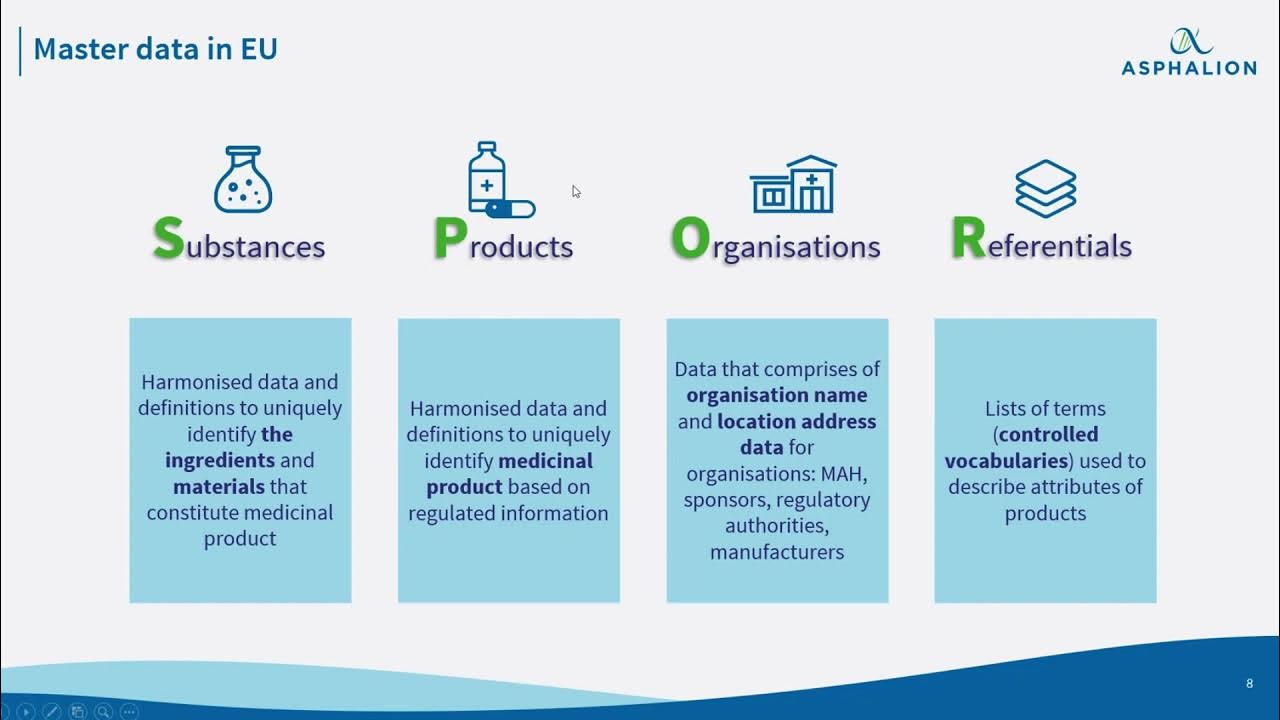
Webinar: “Towards a Smooth Transition to ISO IDMP”
Asphalion
/@Asphalion.
Oct 4, 2021
This webinar provides an in-depth exploration of the transition to ISO IDMP (Identification of Medicinal Products) within the pharmaceutical industry, specifically focusing on the European Medicines Agency's (EMA) implementation strategy. The speakers, Ramon Hernandez and Lidia Canovas from Asphalion, begin by establishing the critical need for global standardization in defining and identifying medicinal products, moving beyond the current xEVMPD (External Vigilance Medicinal Product Dictionary) system. They introduce ISO IDMP as a series of global ISO standards that define product identification at various levels, from substances to the final medicinal product and even batches. The presentation delves into the foundational components of EMA's IDMP approach, primarily the SPOR portal, which comprises four master data services: Substances (SMS), Organizations (OMS), Referentials (RMS), and the future Product Master Services (PMS). A significant portion of the discussion is dedicated to the historical timeline of xEVMPD, its mandatory implementation in 2012, and the subsequent delays in ISO IDMP's rollout, attributed to factors like standard finalization and Brexit. The speakers highlight the release of the European Implementation Guidance (EIG) version 2.0 in February of the current year as the critical trigger for actual implementation deadlines. They illustrate the dramatic increase in data granularity required by IDMP, using the example of packaging information, which transforms from a simple text field in xEVMPD to a complex, structured object with multiple defined attributes in PMS. The webinar outlines a four-step implementation strategy for Marketing Authorization Holders (MAHs): understanding EMA's data requirements, assessing internal data availability and quality, defining internal processes and updating SOPs, and finally, strategizing to go "beyond compliance." The speakers emphasize that IDMP is not solely a regulatory affairs concern but a company-wide data management project requiring significant IT involvement and cross-departmental collaboration. They discuss the EMA's phased implementation plan, including the "Go-Live" for optional PMS submissions, followed by mandatory reporting for centralized and then non-centralized products. The process of data migration from xEVMPD to PMS by EMA is explained, along with the concept of "delta import" and "feedback loop" to maintain data synchronization. Practical case studies for companies with varying portfolio sizes and existing RIM (Regulatory Information Management) systems are presented, underscoring the need for tailored strategies, data audits, and potential system upgrades or new implementations to handle the new "Fire message" (FHIR standard) submissions. Key Takeaways: * **ISO IDMP Standardization:** ISO IDMP is a global initiative to standardize the identification of medicinal products, driven by ISO standards, and implemented in Europe through the EMA's European Implementation Guidance (EIG). This aims to create a unified, machine-readable definition of products across global pharma. * **SPOR as the Foundation:** EMA's SPOR portal is central to IDMP, comprising four master data services: SMS (Substance Management Service), OMS (Organization Management Service), RMS (Referential Management Service), and PMS (Product Master Services), which will be the new IDMP-compliant product database. * **Increased Data Granularity:** The transition to IDMP necessitates a significantly higher level of data granularity compared to xEVMPD. A prime example is packaging information, which evolves from a single descriptive text field to multiple structured objects defining materials, pack sizes, and unique identifiers (PCID). * **Phased EMA Implementation:** EMA's IDMP rollout is phased, with a "Go-Live" for optional PMS submissions (not before Feb 2022, as per the webinar's timeline, implying later in real-time), followed by mandatory reporting for centralized products (not before Feb 2023, implying later), and eventually for non-centralized products. * **Comprehensive Implementation Steps:** Companies must follow a structured approach: 1) Thoroughly understand EMA's data requirements from the EIG v2.0, 2) Conduct a gap analysis and data audit of existing internal data, 3) Redefine and update internal processes, SOPs, and data ownership, and 4) Develop a strategic approach that goes beyond mere compliance. * **Addressing Data Silos:** A major challenge is overcoming internal data silos, where product information is scattered across various departments (e.g., regulatory, marketing, production) and disparate systems (e.g., common databases, individual Excel files), leading to inefficiencies and data quality issues. * **FHIR Message Submissions:** The new standard for communicating product information to EMA's PMS will be the "Fire message" (based on the FHIR standard), replacing the XML format used for xEVMPD submissions. * **EMA Data Migration & Enrichment:** EMA will migrate existing xEVMPD data to PMS, but MAHs will be responsible for significant "enrichment" by providing the extensive new data fields required by IDMP that were not part of xEVMPD. * **Impact of xEVMPD Data Discrepancies:** The current xEVMPD "acknowledgement" process, where EMA can unilaterally alter submitted data, highlights existing data misalignment between industry and agency. These discrepancies will carry over to PMS if not proactively addressed through data reconciliation. * **Strategic Opportunity for RIM Systems:** Implementing or upgrading a Regulatory Information Management (RIM) system is presented as a strategic opportunity to consolidate all regulatory data, streamline workflows, and ensure IDMP compliance, offering benefits beyond basic regulatory adherence. * **Company-Wide Project:** IDMP implementation is not confined to regulatory affairs; it's a significant, company-wide data management and IT project requiring substantial time, investment, and cross-functional collaboration. * **Tailored Implementation Strategies:** Companies, especially those with large portfolios or without existing RIM systems, need to define specific strategies, which may include phased implementation (e.g., focusing on centralized products first), data migration plans, and decisions on whether to acquire new systems or enhance existing ones. * **External Support Options:** For companies lacking internal resources or expertise, externalizing services for PMS submission file preparation and SPOR maintenance is a viable option to ensure compliance and smooth transition. * **Streamlined Administrative Changes:** In the future, certain administrative variations (e.g., changes in manufacturer name or QPPV location) might be directly reported to PMS without requiring a full regulatory assessment, potentially reducing the administrative burden. **Tools/Resources Mentioned:** * **ISO Standards:** The foundational international standards for IDMP. * **EMA's European Implementation Guidance (EIG):** Specifically versions 2.0 and the anticipated 3.0, which detail EMA's approach to IDMP in Europe. * **SPOR Portal:** EMA's master data management portal for IDMP, encompassing SMS, OMS, RMS, and PMS. * **PMS (Product Master Services):** The future IDMP-compliant database at EMA. * **xEVMPD (External Vigilance Medicinal Product Dictionary):** EMA's current database for Article 57 data. * **FHIR (Fast Healthcare Interoperability Resources):** The standard for the new "Fire messages" used for submissions to PMS. * **eCTD (Electronic Common Technical Document):** The format for regulatory submissions that will incorporate Fire messages. * **RIM System (Regulatory Information Management System):** A key software solution for managing regulatory data and processes. **Key Concepts:** * **ISO IDMP (Identification of Medicinal Products):** A set of five international ISO standards defining how medicinal products should be identified and described globally, covering substances, pharmaceutical products, medicinal products, units of measurement, and controlled vocabularies. * **xEVMPD (External Vigilance Medicinal Product Dictionary):** The current EMA database (also known as the Article 57 database) that stores structured data about authorized medicinal products for pharmacovigilance and other regulatory activities. * **SPOR (Substances, Products, Organizations, Referentials):** EMA's master data management system designed to support IDMP implementation, providing centralized, authoritative sources for key regulatory data. * **PMS (Product Master Services):** The future component of SPOR that will serve as EMA's central database for IDMP-compliant medicinal product data, replacing xEVMPD. * **Fire Message (FHIR):** A standard for exchanging healthcare information electronically, adopted by EMA for submitting IDMP-compliant product data to PMS. * **EIG (European Implementation Guidance):** A document published by EMA that translates the global ISO IDMP standards into specific requirements and processes for implementation within the European Union. * **Delta Import & Feedback Loop:** Mechanisms during the IDMP transition period to ensure data synchronization between the existing xEVMPD database and the new PMS, allowing updates in one system to be reflected in the other. * **Regulatory Information Management (RIM) System:** An integrated software solution used by pharmaceutical companies to manage all aspects of their regulatory information, including product registrations, submissions, compliance, and master data. **Examples/Case Studies:** * **Packaging Data Transformation:** The webinar provided a detailed illustration of how a single "package description" text field in xEVMPD, containing free-text information about pack sizes and materials, will be replaced by a highly structured, object-oriented data model in IDMP. This new model requires defining separate objects for the box, blister, and manufacturer item (e.g., tablet), specifying materials, quantities, and generating unique identifiers (PCID) for each pack size. * **Siloed Data Management:** The speakers highlighted a common industry challenge where different departments (e.g., regulatory, marketing, production) and even individuals within those departments maintain product data in disparate systems, such as shared databases, individual Excel files, or documents. This fragmentation leads to difficulties in data access, quality, and timely updates, making IDMP compliance more arduous. * **Streamlining Administrative Variations:** An example was given of how IDMP might streamline certain administrative changes, such as a change in the Qualified Person for Pharmacovigilance (QPPV) location or a manufacturer's name. In the future, these might be directly reported to PMS via a Fire message without requiring a full regulatory assessment and eCTD submission, reducing the procedural burden on MAHs.

Ruben Gottardi | Demo: Vault QualityDocs - Register for Veeva Summit on October 14
Veeva Systems Inc
/@VeevaSystems
Oct 4, 2021
This video serves as a promotional announcement for a session hosted by Ruben Gottardi, a Solutions Consultant at Veeva Systems, scheduled for the Veeva R&D and Quality Summit. The session focuses entirely on a practical demonstration of **Veeva Vault QualityDocs**, specifically addressing the critical industry requirement of **Standard Operating Procedure (SOP) management**. The speaker highlights that the demo will provide attendees with a foundational understanding of the platform's capabilities by illustrating a "basic day in the life" of a QualityDocs user. This focus is highly significant for life sciences firms, as efficient, compliant management of controlled documents like SOPs is foundational to GxP compliance, quality assurance, and operational integrity across R&D and manufacturing processes. A typical demonstration of Vault QualityDocs centered on SOP management would showcase the full document lifecycle, which is essential for regulated environments. This includes the initial authoring and collaboration phases, leveraging built-in templates and version control to ensure consistency and traceability. The core of the demo would likely cover the automated workflow capabilities, detailing how documents move seamlessly through review, approval, and training stages. For an expert audience, the demonstration would emphasize features that simplify compliance, such as electronic signatures (21 CFR Part 11 compliance), automated audit trails that capture every action and change, and the ability to manage complex distribution lists to ensure the right personnel have access to the current, approved version of an SOP. Furthermore, the "day in the life" perspective would illustrate how QualityDocs integrates with other Veeva Vault applications, creating a unified quality ecosystem. For instance, the demo would likely show how a change in an SOP (managed in QualityDocs) can automatically trigger related training requirements (managed in Vault Training) or link directly to associated deviations or CAPAs (managed in Vault Quality). This interconnectedness is key to reducing manual handoffs, minimizing compliance risk, and providing a single source of truth for quality documentation. The session aims to provide practical insights into how pharmaceutical and biotech companies can leverage this purpose-built solution to move beyond manual, paper-based, or generic systems for managing essential quality documentation, thereby optimizing operational efficiency while maintaining strict regulatory adherence. Key Takeaways: * **Focus on Regulated Document Lifecycle:** The core value proposition of Vault QualityDocs centers on managing the entire lifecycle of controlled documents, such as SOPs, ensuring they are authored, reviewed, approved, distributed, and retired in a compliant manner. * **Automated SOP Workflows:** The demo emphasizes automated workflow capabilities, which are crucial for accelerating document review and approval cycles while enforcing mandatory steps and preventing unauthorized changes, a key requirement for GxP environments. * **21 CFR Part 11 Compliance:** Veeva Vault inherently supports critical regulatory requirements, including robust electronic signature capabilities and comprehensive audit trails, ensuring that all document actions meet the stringent requirements of 21 CFR Part 11. * **User Experience and Adoption:** The "day in the life" scenario highlights the intuitive user interface designed specifically for quality professionals, which is vital for driving high user adoption rates and reducing errors associated with complex, non-specialized document management systems. * **Integration with Quality Ecosystem:** QualityDocs is designed to integrate seamlessly with other Veeva Vault applications (e.g., Vault Training, Vault QMS), enabling automated linkages between SOP changes and necessary personnel training or quality events (CAPAs/Deviations). * **Version and Access Control:** The platform provides granular version control, ensuring that only the current, approved version of an SOP is accessible to users, thereby eliminating the risk of personnel working from outdated or superseded documents. * **Training Management Linkage:** A critical feature for compliance is the ability to link SOP updates directly to required training curricula, automating the assignment of new training tasks when a key quality document is revised. * **Audit Readiness:** The integrated, immutable audit trail and centralized document repository significantly enhance audit readiness by allowing quality teams to instantly retrieve all relevant documentation, history, and approval records required by regulatory bodies like the FDA. * **Global Document Distribution:** For multinational life sciences companies, QualityDocs facilitates controlled global distribution, ensuring that regional variations and translations of SOPs are managed and deployed correctly while maintaining a single global source record. Tools/Resources Mentioned: * **Veeva Vault QualityDocs:** A specific application within the Veeva Vault platform designed for managing quality documents and content. * **Veeva R&D and Quality Summit:** The industry event where the demonstration is being presented. Key Concepts: * **SOP Management:** The process of creating, reviewing, approving, distributing, and archiving Standard Operating Procedures, which are mandatory documents detailing routine operational activities in regulated industries. * **GxP Compliance:** A general term for Good Practices (e.g., Good Manufacturing Practice, Good Clinical Practice) that define quality standards for pharmaceutical and life sciences organizations, heavily reliant on controlled documentation. * **21 CFR Part 11:** The FDA regulation governing electronic records and electronic signatures, which mandates specific controls for systems used to manage regulated data and documents.

Danielle Pund | Increasing Clinical Adoption of Vault QMS - Register for Veeva Summit on October 14
Veeva Systems Inc
/@VeevaSystems
Oct 4, 2021
This video provides an overview and invitation to a specialized roundtable session at the upcoming Veeva R&D and Quality Summit, focusing on the strategic expansion of Veeva Vault Quality Management System (QMS) adoption within clinical operations. The speaker, Danielle Pund, Director of Strategy for the Vault Quality Suite at Veeva, highlights the growing industry imperative to maximize QMS investment by successfully integrating clinical stakeholders and processes into the quality platform. The session is specifically designed to address the challenges and opportunities associated with extending the Quality Suite's functionality to cover Good Clinical Practice (GCP) requirements. The core objective of the roundtable, "Increasing Clinical Adoption of Vault QMS," is to facilitate knowledge sharing among industry leaders regarding the convergence of quality processes and clinical trials. As pharmaceutical and biotech companies increasingly seek unified platforms for GxP compliance, the traditional separation between manufacturing/lab quality and clinical quality events (such as deviations, CAPAs, and audits related to trials) is dissolving. The session aims to discuss practical use cases and established best practices for managing clinical quality events directly within Vault QMS, ensuring end-to-end quality oversight from product development through clinical testing. The format is intended to be highly interactive, bringing together customers who have already successfully implemented QMS for GCP compliance alongside those who are exploring this expansion. This peer-to-peer engagement is crucial for increasing the comfort level of clinical stakeholders—who may traditionally use separate systems—with adopting a centralized quality platform. By sharing successful methodologies, the session seeks to break down organizational silos between Quality Assurance and Clinical Operations departments, leading to more efficient processes, streamlined audit trails, and enhanced regulatory adherence across the entire product lifecycle. For specialized consulting firms focused on regulated enterprise software and AI integration, this topic signals a critical area of client need. The push toward unified QMS adoption in clinical settings creates demand for services that can manage complex system integrations (e.g., connecting QMS data with Clinical Trial Management Systems or eTMFs), develop custom workflows, and deploy AI solutions to automate compliance tracking and reporting for clinical quality events. The focus on maximizing investment underscores the need for strategic consulting to ensure technology adoption translates into tangible operational efficiencies and improved regulatory posture under GCP guidelines. Key Takeaways: • **GCP Integration is a Strategic Priority:** The industry is actively moving to expand the use of the Vault Quality Suite to cover Good Clinical Practice (GCP), indicating a strategic shift toward unifying quality management across R&D and clinical operations rather than limiting it to manufacturing quality (GMP). • **Maximizing QMS ROI Requires Clinical Buy-in:** To fully realize the return on investment for Vault QMS, organizations must successfully engage and integrate clinical stakeholders, necessitating tailored use cases and change management strategies specific to clinical trial processes. • **Focus on Clinical Quality Events:** The primary application of QMS expansion into the clinical domain involves managing quality events such as clinical deviations, CAPAs originating from clinical audits, and ensuring robust documentation compliant with GCP standards. • **Knowledge Sharing for Comfort Level:** The roundtable format emphasizes peer-to-peer knowledge exchange, which is vital for reducing resistance and increasing the comfort level among clinical staff regarding the adoption of a centralized QMS platform for their specific compliance needs. • **Addressing Organizational Silos:** Successful clinical adoption of QMS requires breaking down traditional functional silos between Quality Assurance (QA) and Clinical Operations, enabling a more cohesive and compliant approach to quality management across the enterprise. • **Demand for Integrated GxP Solutions:** The trend highlights the growing demand among life sciences companies for a single, validated system capable of handling multiple GxP requirements (GCP, GMP, GLP), simplifying audit readiness and regulatory reporting. • **Consulting Opportunity in Workflow Customization:** The need for "best practices" and "use cases" suggests that organizations require specialized consulting to customize Vault QMS workflows and configurations to accurately reflect complex clinical trial protocols and regulatory requirements. • **Need for Change Management:** Implementing QMS in clinical settings is not just a technology deployment; it requires significant organizational change management and training to ensure clinical teams understand how to use the system effectively for managing their specific quality processes. • **Veeva Summit as a Key Intelligence Source:** The Veeva R&D and Quality Summit is identified as a critical venue for gathering intelligence on platform roadmaps, industry adoption trends, and regulatory interpretations related to the Veeva Vault ecosystem. Tools/Resources Mentioned: * Veeva Vault QMS (Quality Management System) * Veeva R&D and Quality Summit * Veeva Vault Quality Suite Key Concepts: * **Vault QMS:** A cloud-based quality management system offered by Veeva Systems, used by life sciences companies to manage quality processes like deviations, CAPAs, change control, and audits. * **GCP (Good Clinical Practice):** International ethical and scientific quality standards for designing, conducting, recording, and reporting trials that involve the participation of human subjects. * **Clinical Adoption:** The process of successfully integrating and utilizing a software platform (like Vault QMS) within the Clinical Operations department, ensuring that clinical staff use the system for their daily quality and compliance tasks.

Vijay Reddi | Roche: Regulatory Transformation Fireside Chat - Register for Veeva Summit on Oct. 14
Veeva Systems Inc
/@VeevaSystems
Oct 4, 2021
This video provides an introductory overview of a critical presentation delivered by Vijay Reddi, who heads the regulatory transformational team at Roche, scheduled for the Veeva Summit Connect meeting. The central focus of Reddi’s discussion is Roche’s large-scale initiative to overhaul its regulatory operations globally, aiming to accelerate the delivery of life-saving treatments to patients. This transformation is rooted in the strategic goal of unifying traditionally disparate regulatory functions across the enterprise under a single, cohesive operational model. The core methodology driving this change is encapsulated in the concept of "one regulatory." This framework is designed to bring diverse global regulatory teams and processes under a common set of standardized business capabilities. This standardization is crucial for a multinational pharmaceutical company like Roche, ensuring consistency in regulatory submissions, data integrity, and compliance adherence across various jurisdictions, including those governed by the FDA and EMA. The implementation of "one regulatory" signifies a move away from regional silos toward an integrated, efficient global system. Reddi emphasizes that the presentation will serve as a practical guide, sharing the strategies and experiences accumulated during this complex organizational and technological integration. Attendees are invited to learn from Roche’s successes—what the team has accomplished in terms of harmonization and efficiency gains—as well as the challenges encountered and the areas identified for continuous improvement. The ultimate objective of this transformation is directly tied to patient outcomes, highlighting the strategic link between optimizing regulatory processes and enhancing the speed and efficacy of patient access to necessary therapies. The choice of the Veeva Summit as the platform underscores the critical role that enterprise software, particularly Veeva’s R&D and Quality suite, plays in enabling such large-scale regulatory modernization efforts. Key Takeaways: • **Strategic Imperative for Regulatory Transformation:** The primary driver for Roche’s initiative is the need to reach patients faster, demonstrating that regulatory efficiency is a strategic competitive advantage directly impacting commercial and medical affairs outcomes, rather than just a cost center. • **The "One Regulatory" Framework:** This concept represents a comprehensive strategy for global harmonization, requiring the standardization of business processes, data models, and technological capabilities across all regulatory functions worldwide to ensure consistent compliance and operational excellence. • **Veeva Ecosystem Integration:** The presentation’s setting at the Veeva Summit confirms that leading pharmaceutical companies rely heavily on platforms like Veeva R&D and Quality solutions to serve as the technological backbone for complex, global regulatory transformation projects. • **Focus on Business Capabilities over Technology:** The transformation is defined by unifying "different functions across the globe under a common set of business capabilities," indicating that organizational change management and process re-engineering are as critical as the underlying software implementation. • **Learning from Experience and Improvement:** The discussion promises a balanced view, covering not only successful strategies and accomplishments but also detailing areas where continuous improvement is necessary, offering valuable, practical lessons for firms undertaking similar large-scale projects. • **Addressing Global Complexity:** Implementing a "one regulatory" model within a global enterprise like Roche necessitates overcoming significant challenges related to regional regulatory variations, legacy system integration, and ensuring data quality across diverse geographical data pipelines. • **Actionable Governance Models:** The strategies shared likely include insights into the governance structures, change leadership, and cross-functional collaboration models required to successfully manage a multi-year, multi-departmental regulatory harmonization project. • **Linking Compliance to Patient Needs:** The transformation explicitly links improved regulatory processes to better meeting patient needs, reinforcing the idea that streamlined compliance tracking and faster submission cycles directly translate into improved public health outcomes. • **Data Engineering and Standardization Requirement:** Achieving "one regulatory" requires robust data engineering services to integrate data from disparate sources into a standardized, unified data model that supports global business intelligence and regulatory reporting. Key Concepts: * **Regulatory Transformation:** A comprehensive, strategic initiative within a life sciences organization to modernize and streamline all regulatory processes, systems, and data governance to improve efficiency, reduce risk, and accelerate product approval cycles. * **One Regulatory:** A specific organizational and operational framework aimed at unifying all global regulatory functions (e.g., submissions, labeling, intelligence) under a single, standardized set of business processes and shared technological capabilities. * **Veeva Summit:** A key industry conference hosted by Veeva Systems, focusing on advancements and best practices in CRM, R&D, Quality, and Medical Affairs software solutions within the pharmaceutical and life sciences sectors.

Anastasia Wengrowski | Improving External Collaboration w/ Vault QMS - Register for Summit on Oct 14
Veeva Systems Inc
/@VeevaSystems
Oct 4, 2021
This video announces an upcoming session at the Veeva R&D and Quality Summit, focusing on optimizing quality management processes through enhanced external collaboration using Veeva Vault QMS. The presentation, led by Anastasia Wengrowski, is designed as an interactive demo session centered on a specific, high-value feature: the "audit finding external response collaboration feature." The core purpose of the session is to demonstrate how organizations within the life sciences sector can leverage this functionality to achieve seamless cooperation between internal quality teams and external stakeholders when addressing critical audit findings. The central theme addresses a significant challenge in regulated industries: the need to securely and compliantly manage responses to regulatory or internal audit observations that require input from third parties, such as contract manufacturing organizations (CMOs), contract research organizations (CROs), or key suppliers. By focusing on the Vault QMS collaboration feature, the session implies a shift away from traditional, often fragmented methods (like email chains and uncontrolled document sharing) toward a standardized, auditable, and centralized system. This is crucial for maintaining GxP compliance, as every step in the corrective and preventive action (CAPA) process, including external input, must be fully documented and traceable. The session promises to show attendees how Vault QMS drives efficiency by integrating these external parties directly into the workflow for responding to audit findings. This direct integration ensures that external responses are captured within the validated system, accelerating the turnaround time for remediation and final submission to regulatory bodies. The emphasis on "seamless collaboration" suggests that the demo will highlight how the platform manages user permissions, document version control, and automated audit trails, ensuring data integrity and regulatory adherence while simplifying the complex process of cross-organizational quality resolution. For pharmaceutical and biotech companies, mastering this collaboration is essential for minimizing compliance risk and ensuring continuous operational readiness. Key Takeaways: • **Streamlining Audit Response Workflows:** The primary focus is on utilizing Vault QMS to standardize and accelerate the process of gathering, reviewing, and approving responses to audit findings, particularly when those responses require input from external partners or vendors. • **Centralized Compliance Management:** Vault QMS serves as the single source of truth for all quality documents and processes, ensuring that external contributions to audit remediation are captured within a 21 CFR Part 11 compliant environment, critical for maintaining regulatory integrity. • **Addressing External Stakeholder Pain Points:** The "audit finding external response collaboration feature" directly solves the common industry challenge of securely sharing sensitive quality data and receiving documented feedback from non-internal users without compromising data security or auditability. • **Accelerated CAPA Implementation:** By facilitating faster and more organized external input, the feature helps organizations expedite the initiation and closure of Corrective and Preventive Actions (CAPAs), thereby reducing the overall timeline for quality issue resolution and minimizing regulatory exposure. • **Interactive Demonstration Focus:** The session format suggests a practical, hands-on approach, likely detailing the specific user interface and workflow steps required for internal quality managers to initiate collaboration requests and for external parties to submit their responses within the Vault environment. • **Importance for GxP Environments:** Effective use of this collaboration tool is vital for organizations operating under GxP regulations, as it ensures that all external activities impacting product quality or clinical data integrity are properly controlled, documented, and traceable. • **Reducing Reliance on Uncontrolled Communication:** The system aims to eliminate the risks associated with using non-validated communication methods (like email or generic file-sharing services) for critical quality documentation, enhancing control over document versioning and approval processes. • **Strategic Value for Quality Operations:** Implementing robust external collaboration features within a QMS is a strategic move that improves the efficiency of commercial operations and clinical trials by ensuring that quality bottlenecks caused by partner communication delays are proactively managed. Tools/Resources Mentioned: * Veeva Vault QMS (Quality Management System) * Veeva R&D and Quality Summit (Event Context) Key Concepts: * **Vault QMS:** A cloud-based quality management application designed specifically for the life sciences industry, managing processes like deviations, CAPAs, change control, and audits in a compliant manner. * **Audit Finding External Response Collaboration Feature:** A specific functionality within Vault QMS that enables secure, controlled interaction and documentation exchange with third-party stakeholders regarding the remediation and response to quality audit observations. * **External Collaboration:** The process of efficiently and compliantly working with partners outside the immediate organization (e.g., suppliers, CROs, CDMOs) to resolve quality issues, ensuring all actions are documented according to regulatory standards (e.g., GxP).

Kyle Boelter | On-the-Job Training Effectiveness w/ Vault Training - Register for Summit on Oct. 14
Veeva Systems Inc
/@VeevaSystems
Oct 4, 2021
This video serves as a preview for a specialized session focusing on optimizing On-the-Job Training (OJT) effectiveness using the Veeva Vault Training application. Presented at the Veeva R&D and Quality Summit, the demonstration centers on how pharmaceutical and life sciences organizations can leverage this platform to manage, track, and verify the critical skills and qualifications required for personnel working in regulated environments. The core objective is to showcase the application’s ability to move beyond simple course completion tracking to robust, verifiable skill qualification, which is essential for maintaining GxP compliance and operational integrity. The session highlights specific functionalities within Vault Training designed to streamline the qualification process. A key focus is the ability for both training administrators and managers to meticulously track various forms of personnel readiness, including formal qualification status, professional certifications, and completion of specific skill or task-based assignments. This tracking capability is vital for ensuring that employees are not only trained but are demonstrably competent before engaging in critical, regulated activities. The system facilitates a structured approach to OJT by integrating the verification step directly into the workflow, moving away from manual sign-offs and disparate systems. Central to the demonstrated value is the role of the evaluator. The Vault Training application provides a mechanism where a designated evaluator—typically a subject matter expert or supervisor—can formally verify the learner's ability in a specific area of the business. This verification step transforms training completion into documented qualification, providing an auditable record that confirms the learner has successfully demonstrated the required skill or task proficiency. By centralizing this process, companies gain immediate visibility into workforce readiness, significantly improving audit preparedness and reducing the risk associated with unqualified personnel performing regulated tasks in R&D, manufacturing, or quality assurance environments. The session ultimately aims to illustrate how integrated digital tools can transform compliance training from a bureaucratic hurdle into a strategic asset for quality management. ### Key Takeaways: * **Centralized OJT Management:** The Veeva Vault Training application provides a unified platform for managing all aspects of On-the-Job Training (OJT), moving away from decentralized, paper-based, or spreadsheet-driven tracking methods common in regulated industries. * **Qualification vs. Completion:** The system emphasizes the distinction between simple training completion (attending a course) and verifiable qualification (demonstrating competence), which is crucial for meeting stringent GxP and regulatory requirements. * **Auditable Skill Verification:** A core function is the ability for a designated evaluator to formally verify a learner's ability in a specific skill or task, creating an immutable, auditable record required for regulatory inspections (e.g., FDA 21 CFR Part 11 compliance). * **Tracking Comprehensive Readiness:** Managers and administrators gain the capability to track multiple types of readiness metrics simultaneously, including formal qualifications, external certifications, and internal task-based assignments, providing a holistic view of workforce competency. * **Improved Compliance Posture:** By digitizing and standardizing the OJT qualification process, organizations can significantly enhance their audit readiness, ensuring that all personnel performing regulated activities have documented proof of current and verified training status. * **Integration Opportunity for AI/Data:** The structured data generated by Vault Training (qualification status, evaluator feedback, skill gaps) presents a prime opportunity for integration with Business Intelligence (BI) dashboards and AI solutions, allowing for predictive analysis of training needs and compliance risk. * **Enhanced Operational Efficiency:** Automating the tracking and notification processes for re-qualification and certification expiration reduces administrative overhead for training departments and ensures continuous compliance without manual intervention. * **Focus on Task-Based Assignments:** The platform supports the management of highly specific, task-based training assignments, allowing organizations to tailor OJT to precise operational roles within manufacturing, laboratory, or clinical settings. * **Strategic Value of Training Data:** Data collected on training effectiveness and qualification rates can be used strategically to identify systemic skill gaps across the organization, informing future curriculum development and resource allocation. * **Veeva Ecosystem Leverage:** Utilizing Vault Training ensures seamless integration with other Veeva Vault applications (e.g., QualityDocs, QMS), creating a connected digital quality and compliance infrastructure that IntuitionLabs.ai can further optimize with custom software and AI agents. ### Tools/Resources Mentioned: * **Veeva Vault Training:** The specific application within the Veeva Vault suite designed to manage and track training, qualification, and certification requirements, particularly for R&D and Quality functions. * **Veeva R&D and Quality Summit:** The industry event where this session was presented, highlighting the platform's focus on the regulated aspects of the life sciences pipeline. ### Key Concepts: * **On-the-Job Training (OJT):** Practical training received while performing job duties, often requiring formal verification of competence by a supervisor or expert. * **Qualification:** The formal process of verifying and documenting that an individual has the necessary skills, knowledge, and experience to perform a specific regulated task or role, often required under GxP regulations. * **Certification:** Formal recognition, often external or internal, that an individual has met predefined standards or passed specific examinations related to a skill or profession.