Videos
Browse videos by topic
All Videos
Showing 25-48 of 1435 videos
Interview with Veeva Manny Vazquez
Moe Alsumidaie
/@Annexclinical
Nov 20, 2025
This video provides an in-depth exploration of the evolving landscape of clinical data management, particularly in the context of emerging AI technologies and the declining centrality of traditional Electronic Data Capture (EDC) systems. Featuring Manny Vazquez, Senior Director of Clinical Data Strategy at Veeva, the discussion challenges the status quo of fragmented tech stacks in clinical trials, advocating for a platform-centric approach to achieve greater efficiency and scalability across the life sciences. The conversation underscores the urgent need for pharmaceutical companies to rethink their data infrastructure to become "AI-ready" rather than relying on outdated, inefficient workarounds. Vazquez highlights that many companies, led by long-tenured leadership, have accumulated a "cluster" of custom solutions layered on top of existing systems over decades. While these solutions were once considered "best-of-breed" at the time of their implementation, they have collectively resulted in wholly inefficient processes. He argues that the industry is at a critical turning point, driven primarily by the advent of AI, which is not merely an evolution but a "completely new computing paradigm." This shift necessitates a fundamental reset, forcing organizations to critically examine their processes and data foundations, as being "AI-ready" is paramount for future success and avoiding significant competitive catch-up. The discussion further clarifies that the push for simplicity in clinical data management does not imply reducing the volume or complexity of data collected. Instead, the focus is on simplifying the *processes* by which data is collected, processed, and moved through the pipeline. Vazquez emphasizes that stacking complexity on top of existing complexity is unsustainable, especially with the increasing volume of data from diverse sources. The goal is to enhance user experience, leverage better tools, and prioritize configuration over extensive customization, ensuring that the underlying content and data remain robust while interactions with them become more streamlined. A significant portion of the interview is dedicated to outlining the practical foundation required for AI implementation. Vazquez explains that for AI to function effectively, companies need all their data in one centralized repository, accessible at a steady, high frequency. He cites Veeva's own product, CDB (Clinical Data Backbone), and the Study File Format API as examples of solutions designed to meet these foundational needs. He argues that EDC is no longer the "center of the universe" but merely one of many data sources, with tools like CDB serving as the new "data workbench" hub. This shift is crucial for addressing the pervasive issue of data fragmentation, which currently leads to immense waste in manual data review and inefficient third-party data reconciliation, especially as clinical trials integrate data from wearables, real-world evidence, and genomics. Key Takeaways: * **Outdated Tech Stacks and Inefficiency:** Many pharmaceutical companies operate with inefficient tech stacks built over decades, characterized by layered custom solutions that create a "cluster" rather than a cohesive system. This leads to significant waste in manual data review and reconciliation. * **Platform Approach for Automation:** There's a critical need to transition from a "best-of-breed" tool mentality to a "platform approach" across life sciences to achieve end-to-end automation and scale, breaking the cycle of inefficiency. * **AI as a Paradigm Shift:** AI represents a "completely new computing paradigm," not just an evolution. It demands a fundamental re-evaluation of existing processes and data infrastructure, making "AI-readiness" an immediate imperative. * **Data as AI's Foundation:** Successful AI implementation hinges on having structured, organized data in a unified repository (or multiple accessible repositories). Without this foundational data layer, AI cannot be effectively deployed. * **Simplifying Processes, Not Data Volume:** The goal is to simplify the *processes* of data collection, processing, and movement, not to reduce the volume or underlying complexity of the data itself. This requires better tools, user experience, and configuration over customization. * **Practical AI Foundation:** Preparing for AI involves two key steps: consolidating all relevant data into a single, accessible location (e.g., a data workbench like Veeva's CDB) and ensuring high-frequency access to that data (e.g., via APIs like Veeva's Study File Format API). * **EDC's Diminished Role:** Traditional EDC systems are no longer the central hub of clinical data management. They are now just one of many data sources, alongside wearables, eCOAs, EMRs, and real-world evidence. * **Data Workbenches as the New Hub:** Tools like Veeva's CDB, functioning as a "data workbench," are emerging as the new central hub for ingesting, harmonizing, and managing diverse data sources in clinical trials. * **Combating Data Fragmentation:** Fragmentation remains a major risk, especially with the integration of new technologies like wearables and implantable devices. Automated ingestion and harmonization into a single database are crucial to overcome manual, inefficient reconciliation. * **Value of All Data:** While protocols may define specific data points for endpoints, all collected data, including massive volumes from wearables, will eventually be valuable for advanced analytics and AI-driven investigations. * **Avoid Complacency:** A significant mistake organizations make is not actively preparing for AI or assuming their current infrastructure is an adequate foundation for layering AI solutions. The "sprint has started," and immediate investment in foundational data strategies is necessary. Tools/Resources Mentioned: * **Veeva CDB (Clinical Data Backbone):** A product designed to consolidate all clinical trial data into one place. * **Veeva Study File Format API:** An API built to provide steady, high-frequency access to consolidated data for analytics and AI. * **EDC (Electronic Data Capture):** Traditional systems for capturing clinical trial data, now seen as one of many data sources. * **ChatGPT:** Mentioned as the catalyst that accelerated the AI hype cycle and highlighted its immediate arrival. Key Concepts: * **AI-Ready:** The state of an organization having the necessary data infrastructure, processes, and technological foundation to effectively implement and leverage Artificial Intelligence. * **Platform Approach:** A strategy where an integrated suite of tools and services (a platform) is used to manage end-to-end processes, rather than relying on disparate "best-of-breed" solutions that require extensive custom integrations. * **Data Fragmentation:** The issue of clinical trial data being scattered across multiple, disconnected systems and repositories, leading to inefficiencies in access, harmonization, and analysis. * **Data Harmonization:** The process of standardizing data from various sources into a consistent format and structure, making it compatible for analysis and integration. * **Data Workbench:** A centralized environment or tool (like Veeva CDB) that allows users to ingest, manage, process, and analyze diverse datasets from multiple sources. * **eCOA (electronic Clinical Outcome Assessment):** Electronic methods for patients to report outcomes. * **EMR (Electronic Medical Record):** Digital versions of patient charts from healthcare providers. * **Real-World Evidence (RWE):** Clinical evidence derived from sources outside of traditional randomized controlled trials, such as electronic health records, claims data, and patient registries. * **Genomics Data:** Information derived from the study of an organism's entire set of DNA.

Veeva (VEEV|$44.9B) - 2026 Q3 Earnings Analysis
SmartStockWatch
/@SmartStockWatch
Nov 20, 2025
This video provides an in-depth financial and strategic analysis of Veeva Systems' fiscal 2026 third-quarter earnings report. Presented by Smart Stockwatch, the analysis focuses on Veeva's market leadership in industry cloud solutions for the life sciences sector, detailing strong revenue growth, exceptional profitability, and key strategic initiatives, particularly in artificial intelligence and cloud adoption across commercial and R&D functions. The discussion establishes Veeva's sustained dominance, driven by robust subscription services and successful operational efficiency improvements. The financial overview highlights significant outperformance, with total revenues reaching $811.2 million, marking a 16% year-over-year increase. The primary engine of this growth was subscription revenue, which rose 17% to $682.5 million, confirming strong, sustained demand for Veeva's specialized cloud offerings within the pharmaceutical and biotech industries. Furthermore, Veeva demonstrated improved operational leverage, with operating income surging 33% to $240.9 million. This operational strength translated directly into profitability, as the company delivered an adjusted Earnings Per Share (EPS) of $2.04, significantly surpassing the analyst consensus forecast of $1.36. Strategically, the video emphasizes Veeva’s aggressive push into artificial intelligence through the "Veeva AI" initiative. A critical upcoming milestone mentioned is the planned release of the first AI agents specifically designed for Veeva CRM and commercial content in December. This move is positioned as central to Veeva's strategy to enhance productivity and execution across the life sciences commercial sector. The continued success of their core CRM platform was evidenced by the addition of 23 new customers during the quarter. Beyond commercial operations, Veeva’s Development Cloud is identified as a major growth vector, having secured three top 20 biopharma companies selecting its applications as enterprise standards, underscoring Veeva’s role in modernizing R&D processes, including clinical data management and regulatory documentation. The financial outlook remains optimistic, with Q4 revenue guidance set between $807 million and $810 million, reflecting management's confidence in sustained market demand and strategic execution. Key Takeaways: • **Veeva AI is Maturing and Commercializing:** The planned December release of AI agents for Veeva CRM and commercial content signals a major shift toward intelligent automation within the life sciences commercial ecosystem, directly impacting sales operations and content management workflows. • **Subscription Revenue Drives Stability:** The 17% year-over-year growth in subscription revenue ($682.5M) confirms the stickiness and essential nature of Veeva’s cloud solutions, providing a highly reliable foundation for future financial planning and investment. • **Strong Operational Leverage:** A 33% increase in operating income ($240.9M) suggests that Veeva is effectively scaling its operations, which is crucial for partners like IntuitionLabs to understand when forecasting the platform's long-term stability and investment potential. • **CRM Market Expansion Continues:** The addition of 23 new CRM customers in the quarter demonstrates that the core commercial platform remains the industry standard, validating the continued need for specialized Veeva CRM consulting and integration services. • **R&D Cloud Adoption by Top Tier Pharma:** The selection of Veeva’s Development Cloud applications as enterprise standards by three top 20 biopharma companies indicates significant momentum in modernizing clinical and regulatory processes, opening new opportunities for data engineering and GxP compliance consulting. • **Focus on Productivity and Execution:** Veeva's strategic messaging centers on using AI to enhance productivity and execution in life sciences, aligning perfectly with the value proposition of custom AI solutions designed to automate complex commercial tasks. • **Outperformance Signals Market Health:** Veeva’s significant beat on adjusted EPS ($2.04 vs. $1.36 forecast) is a strong indicator of the overall financial health and willingness of the life sciences sector to invest in specialized, compliant cloud technology. • **Guidance Reflects Sustained Confidence:** The full-year revenue guidance between $3.166 billion and $3.169 billion reflects management’s confidence in sustained growth, suggesting a stable and expanding market for specialized life sciences software and related consulting services. Tools/Resources Mentioned: * Veeva CRM * Veeva AI (AI Agents for CRM and Commercial Content) * Veeva Development Cloud Key Concepts: * **Subscription Revenue:** Recurring revenue generated from customers paying for continuous access to cloud software services, which is the primary financial driver for Veeva. * **Veeva AI Agents:** Specialized artificial intelligence applications designed to automate specific tasks within the Veeva ecosystem, particularly targeting commercial operations like sales execution and content lifecycle management. * **Development Cloud:** Veeva’s suite of applications designed to manage R&D processes, including clinical data, regulatory submissions, and quality management, aiming to modernize drug development workflows.

Veeva Commercial Summit: On AI, content, and MLR Review with Emma Hyland
pharmaphorum media limited
/@Pharmaphorum
Nov 19, 2025
This video provides an in-depth exploration of how Artificial Intelligence (AI) is transforming content strategy and the Medical, Legal, and Regulatory (MLR) review process within the life sciences industry, as discussed at the Veeva Commercial Summit 2025. Emma Hyland, Veeva's Vice President of Commercial Content Strategy for Europe, highlights the urgent need to revolutionize the MLR role due to accelerating product launches and evolving healthcare professional (HCP) content preferences. While AI promises to significantly accelerate content delivery, improve quality, and reduce MLR team workload, its true value is realized when integrated into a larger strategy to reimagine end-to-end content operations, allowing leading biopharma companies to deliver more tailored and customer-centric content while maintaining compliance. Hyland details the industry's current adaptation to AI, noting that approximately 80% of Veeva's customers have engaged in pilot experimentation over the past 12-18 months, often with mixed results. Common reasons for pilot failures include difficulties in scaling solutions across multiple markets or brands due to complexity and subjectivity, poor user experience leading to low adoption, and a misdirected focus on simply weaving AI into existing processes rather than fundamentally rethinking productivity. Many initial attempts generated "noise" and extra work, counteracting the goal of faster, better content. Veeva's strategy, in contrast, emphasizes embedding generative AI into its Vault platform to build specific, user-friendly agents that simplify complex tasks. The highest opportunity for AI in content, according to Hyland, lies within the MLR space, which she describes as "ripe for disruption" after years of minimal change. The shift is from viewing MLR as merely a "complaint avoidance tool" to a competitive differentiator that enables rapid delivery of accurate, scientifically correct, and patient-appropriate content. Veeva announced two MLR-focused agents for release in December 2025: a "quick check agent" to assess content quality before MLR submission, and a "promat assistant" offering a conversational interface for interrogation and questioning. Future innovations include a "claims agent" and persona-based agents tailored for medical, legal, and regulatory reviewers, providing specialized support for each role. Despite the technological advancements, insights from customer focus groups and the summit underscore that success hinges not just on technology, but critically on "people and process," as exemplified by Moderna, Veeva's first global AI customer. The long-term vision for MLR sees AI significantly increasing efficiency and managing rising content volumes driven by personalization, while human accountability for content sign-off remains paramount due to regulatory requirements and patient safety. Key Takeaways: * **MLR Process is Ripe for AI Disruption:** The Medical, Legal, and Regulatory (MLR) review process in life sciences is identified as the area with the highest opportunity for AI transformation, having seen little significant change in many years, making it ready for innovation. * **AI for Competitive Advantage in MLR:** The industry is shifting its perception of MLR from a compliance gatekeeper (complaint avoidance) to a strategic tool that provides a competitive edge by enabling faster delivery of high-quality, accurate, and scientifically correct content to market. * **Challenges in Early AI Pilots:** Many initial AI pilots in life sciences have failed due to difficulties in scaling solutions across enterprise organizations, high complexity and subjectivity, poor user experience leading to low adoption, and a misdirected focus on simply integrating AI into existing processes rather than reimagining productivity. * **Veeva's AI Strategy with Agents:** Veeva's approach involves embedding generative AI into its Vault platform to create specialized "agents" designed to perform specific tasks. This aims to simplify AI utilization and integrate it seamlessly into daily workflows. * **Specific AI Agents for MLR:** Veeva announced two key MLR-focused agents: a "quick check agent" for pre-submission content quality assessment and a "promat assistant" providing a conversational interface for content interrogation. These are designed to streamline and enhance the review process. * **Future AI Innovations:** Beyond initial MLR agents, Veeva plans to introduce a "claims agent" to manage the complex area of claims, followed by "persona-based agents" tailored for specific medical, legal, and regulatory reviewers, providing targeted support for individual roles. * **Beyond Technology: People and Process are Key:** While AI technology is exciting, the ultimate success of AI implementation in life sciences hinges on getting the "people and process" right. This foundational principle, often overlooked in the excitement of new tech, remains crucial for successful transformation. * **Human Accountability Remains Paramount:** Despite AI's capabilities, human accountability for signing off every piece of content before it reaches patients and HCPs will remain in the near to mid-term future due to regulatory requirements and the critical importance of patient safety. AI will augment, not replace, human reviewers. * **AI to Manage Content Volume and Personalization:** As content volumes continue to rise due to the demand for personalized content, AI will be essential for creating more efficient ways to manage this influx, enabling the industry to achieve its personalization goals without proportional increases in human resources. * **Partnership for Industry-Wide Solutions:** Customer focus groups indicate a strong desire to partner with solution providers like Veeva to build industry-wide solutions, suggesting a collaborative approach is valued for developing scalable and impactful AI tools. Tools/Resources Mentioned: * **Veeva CRM:** A leading platform in the pharmaceutical industry, central to the discussion of commercial operations. * **Veeva Vault Platform:** The foundational platform where Veeva is embedding generative AI to build specific agents. * **Quick Check Agent (Veeva AI):** An AI agent designed to check content quality before submission into the MLR process. * **Promat Assistant (Veeva AI):** A conversational AI interface for interrogating and asking questions about content. * **Claims Agent (Veeva AI):** A planned future AI agent focused on managing claims. * **Persona Based Agents (Veeva AI):** Planned future AI agents tailored for medical, legal, and regulatory reviewers. Examples/Case Studies: * **Moderna:** Cited as Veeva's first global AI customer, sharing their implementation experience and demonstrating the importance of integrating technology with people and process.
The Death Of The Broker, And The Rise of the Strategic Consultant
Self-Funded
@SelfFunded
Nov 18, 2025
This video provides an in-depth exploration of the evolving landscape of the employee benefits industry, moving from traditional transactional brokering to strategic consulting. Featuring Trey Halbert, CEO of ExperINS, an employee benefits agency, the discussion centers on the inherent "brokenness" of the healthcare system and how strategic consultants can make a profound impact by aligning health plans with a company's core business strategy and C-suite objectives, rather than merely focusing on HR-level administration. Halbert emphasizes a "strategy first benefits, people first service" approach, highlighting the importance of understanding a client's mission, vision, and values to craft a benefits program that supports their overall business goals. The conversation delves into the operational framework of ExperINS, detailing its founding principles, cultural values (such as "no a**holes," "elevate awesomeness," and "advocate relentlessly"), and the strategic decision to leverage peer networks like the True Network of Advisors. This network provides crucial resources, best practices, and collaborative opportunities that enable smaller firms to compete effectively and deliver innovative solutions at scale. A significant portion of the discussion is dedicated to the financial implications of benefits, illustrating how optimized health plans can directly enhance business valuation and reframing self-funding as a strategic financing decision rather than just a risk. Crucially, the video explores the role of innovation, particularly "Agentic AI," in transforming the consulting profession. Halbert envisions AI automating menial, data-intensive tasks like RFP processing, data extraction, and "quote-to-card" workflows. This automation, he argues, will free up human consultants to focus on high-level strategic thinking, complex problem-solving, and truly bending the cost curve of healthcare. The discussion also touches on various cost-saving and member-empowering solutions, including high-performance networks, reference-based pricing, virtual healthcare platforms for mental health, and international prescription drug sourcing, all aimed at improving access, affordability, and transparency in a complex system. Key Takeaways: * **Evolution to Strategic Consulting:** The employee benefits industry is shifting from transactional brokering to strategic consulting, where advisors align health plans with C-suite business objectives and overall company strategy, not just HR needs. This involves understanding an employer's mission, vision, and values. * **Consultants' Indispensable Value:** The inherent complexity, obfuscation, and proprietary nature of healthcare contracts make strategic consultants critical for employers to navigate the system, optimize health plan performance, and make informed decisions. * **Culture as a Differentiator:** Building a strong internal culture, defined by core values like "no a**holes," "get done and have fun," "elevate awesomeness," "leave a ladder," and "advocate relentlessly," fosters collaboration, drives employee engagement, and ultimately enhances client service and impact. * **Leveraging Peer Networks:** Joining collaborative networks like the True Network of Advisors provides access to shared resources, best practices, marketing support, learning & development, and real-time peer-to-peer problem-solving, enabling firms to deliver advanced solutions and compete effectively. * **AI for Consultant Augmentation:** Agentic AI is poised to automate time-consuming, menial tasks such as RFP data extraction, proposal comparison, and "quote-to-card" processes. This automation will free up human consultants to focus on high-value strategic thinking, complex problem-solving, and deep client engagement. * **Benefits Drive Business Valuation:** Optimizing employee benefits can directly impact a company's financial valuation. For example, a $1.5 million saving on a $10.5 million benefits program, at a 7x valuation, translates to $10.5 million in value creation for the business. * **Reframing Self-Funding:** Instead of presenting self-funding as a risky proposition, consultants should reframe it as a strategic financing decision for an expense a company is already committed to spending, highlighting the greater control and potential for cost savings. * **Data-Driven Plan Optimization:** Effective consulting requires leveraging historical plan performance data to identify inefficiencies, weak spots, and opportunities for improvement, aligning these insights with the client's business strategy for a multi-year approach. * **Effective Change Management:** Successful implementation of new benefits programs relies on a methodical change management strategy that identifies communication pathways, addresses both objective facts and subjective concerns (fears), and includes post-mortem feedback for continuous improvement. * **Addressing Pharmacy Spend:** Significant cost savings can be achieved by scrutinizing Pharmacy Benefit Manager (PBM) rebates, exploring cash-based pharmacy models, and utilizing international sourcing for prescription drugs, which can dramatically reduce out-of-pocket costs for members. * **Enhancing Member Experience:** Innovations like virtual mental health platforms (e.g., Headway) improve access to care, while cost transparency tools (e.g., Healthcare Bluebook) and "episode of care" pricing programs provide members with greater predictability and control over their healthcare expenses. * **Fiduciary Responsibility and Transparency:** Employers have a fiduciary obligation to ensure that their benefit plans are being charged on a fair and reasonable basis, necessitating a push for greater transparency and accountability from carriers and vendors. * **Future Focus on Cost & Quality:** The industry is moving towards a better integration of cost and quality data, aiming to reward high-performing providers and make quality information visible to consumers, ultimately leading to better healthcare outcomes. **Tools/Resources Mentioned:** * **True Network of Advisors:** A peer network for benefits consultants providing resources, collaboration, and support. * **Paro Health:** Mentioned as a large benefits captive making self-insurance more accessible for small to mid-size employers. * **Patient:** A program offering a virtual visa for out-of-pocket medical, dental, vision, and pet expenses, allowing 12-month, no-recourse payback. * **Headway:** A platform acting as a back office for individual psychologists and psychiatrists, improving access to mental health services. * **Healthcare Bluebook:** A tool for identifying better-priced or higher-quality healthcare. * **CRX:** A service for international drug sourcing, mentioned for significant prescription cost savings. * **Assurist / Careway:** Programs mentioned for providing total cost of care or episode of care costs. * **Plan Site:** (Mentioned by host) A previous company that utilized AI for RFP processing and benchmarking benefits. **Key Concepts:** * **Strategic Consultant:** An evolved role in the benefits industry that moves beyond transactional brokering to align employee benefits programs with a company's overarching business strategy and C-suite objectives, focusing on value creation and long-term impact. * **Self-Funding:** A healthcare financing model where an employer assumes the financial risk for providing healthcare benefits to its employees, rather than paying fixed premiums to an insurance carrier. This offers greater control over plan design and potential cost savings. * **Agentic AI:** The application of artificial intelligence where autonomous "agents" perform specific tasks, automate processes, and act as intelligent assistants, particularly in data-intensive or repetitive administrative functions within consulting. * **Reference-Based Pricing (RBP):** A healthcare payment model where providers are reimbursed based on a reference price (often a multiple of Medicare rates) rather than relying on negotiated network rates, aiming to introduce transparency and control costs. * **Leave a Ladder Philosophy:** A cultural value that encourages individuals, upon achieving success or carving out a new path, to make it easier for others to follow and benefit from their experience, fostering mentorship and collective growth. * **Total Cost of Care / Episode of Care:** Programs or approaches that aim to provide a comprehensive, upfront cost for a specific medical condition or treatment episode, offering greater cost certainty to members and employers.

The Future of Veeva Services: Strategic Transformation Insights from Our Experts
Everest Group
/@EverestGroup
Nov 17, 2025
This Q&A session, featuring experts from Everest Group, provides an in-depth analysis of the rapidly evolving Veeva services landscape and its role in strategic transformation within the life sciences industry. The discussion is framed by the context of a recent assessment of over 30 service providers in the Veeva ecosystem. The central theme is the shift in mindset among life sciences companies, moving away from siloed, one-off IT projects toward building comprehensive, platform-driven digital ecosystems—with Veeva, alongside platforms like Salesforce and IQ, forming the digital backbone necessary for scalability, data integrity, and regulatory compliance. The experts identify three critical differentiators separating top-performing service providers in the dynamic Veeva environment. First, successful providers are productizing their Intellectual Property (IP), moving beyond simple implementation to packaging migration toolkits and accelerators that can be reused across multiple clients. Second, they are embedding deep consulting and advisory capabilities, engaging with clients early to shape roadmaps well before an RFP is issued. Third, and most crucially, these leaders are embedding responsible Artificial Intelligence (AI) into their solutions. This integration is seen as non-negotiable for future success, driving efficiency and innovation across the value chain. The conversation addresses the "buzz vs. reality" of AI in the life sciences boardroom, confirming that tangible impact is already being delivered across both the development and commercial clouds. In the Development Cloud, AI is automating the generation of validation scripts and the creation of submission documents, streamlining crucial regulatory processes. On the commercial side, AI is summarizing Healthcare Professional (HCP) notes and recommending next best actions for sales teams. A major caveat highlighted is the necessity of "trust" in AI deployment, making Veeva’s certification on AI program increasingly vital. Life sciences enterprises demand that AI be deployed within a compliant environment, ensuring adherence to strict industry regulations. Looking ahead, the next phase of leadership in life sciences platform services will be defined by "orchestration"—the ability to seamlessly connect different value chain elements and various cloud platforms. The ultimate success factor for service providers will be their capacity to embed AI at every layer of the solution stack to influence business outcomes. Furthermore, the most successful clients view transformation as a partnership, co-investing in accelerators and continuous improvement rather than simply relying on the platform itself to deliver all necessary modernization. Clients who fail often make the mistake of expecting the platform alone to drive transformation, neglecting the need for co-creation with their service partners. ### Detailed Key Takeaways * **Platform Ecosystem Mindset is Mandatory:** Life sciences companies are abandoning one-off IT projects and are instead focusing on building integrated platform ecosystems (Veeva, Salesforce, IQ) that serve as the digital backbone for the organization, prioritizing scalability, data integrity, and compliance. * **Provider Differentiation through IP Productization:** Top service providers are moving beyond basic implementation services by productizing their IP, offering reusable assets like migration toolkits and accelerators to speed up deployment and deliver repeatable value to customers. * **Advisory Capabilities Precede RFPs:** Successful providers are embedding deep consulting and advisory expertise, allowing them to engage with clients early, shape strategic roadmaps, and influence transformation direction before formal Request for Proposals (RFPs) are even issued. * **Responsible AI is a Core Differentiator:** Embedding responsible AI is now a key factor separating leading Veeva service providers, requiring them to integrate AI solutions that are not only effective but also trustworthy and compliant with regulatory standards. * **AI Delivers Tangible Value in Development Cloud:** Specific AI applications are already automating critical regulatory and operational tasks, such as the automatic generation of validation scripts and the creation of submission documents within the Development Cloud. * **AI Optimizes Commercial Operations:** In the Commercial Cloud, AI is actively summarizing notes from Healthcare Professional (HCP) interactions and providing intelligent recommendations for "next best actions," significantly enhancing sales force effectiveness and commercial strategy. * **Compliance and Trust are Paramount for AI Adoption:** The widespread adoption of AI in life sciences hinges on trust and regulatory compliance; enterprises are prioritizing providers who can deploy AI solutions within a compliant environment, often referencing Veeva’s certification on AI program. * **Client Success Requires Co-Creation:** The most successful clients view transformation as a true partnership, actively co-investing in accelerators and continuous improvement initiatives rather than merely hiring a vendor and expecting the platform alone to deliver modernization. * **Avoid the Platform-Only Pitfall:** A common mistake made by clients is expecting the platform (Veeva) to automatically bring in all necessary modernization, neglecting the need for internal investment, process re-engineering, and collaborative development with service partners. * **Future Leadership Defined by Orchestration:** The next phase of leadership in platform services will be defined by the ability to "orchestrate"—connecting disparate value chain elements and integrating different cloud platforms (e.g., connecting Veeva CRM with other enterprise systems) for holistic business outcomes. * **AI Must Be Embedded at Every Layer:** Future leaders must demonstrate the capability to embed AI not just as a feature, but across every layer of the technology stack to maximize influence on core business outcomes and operational efficiency. ### Key Concepts * **Platform Ecosystems:** The strategic shift in life sciences from using individual software tools to building integrated digital backbones (like Veeva, Salesforce, IQ) that ensure enterprise-wide scalability, data integrity, and compliance. * **Productizing IP:** The practice of service providers packaging proprietary methodologies, tools, and accelerators (e.g., migration toolkits) into reusable products to increase efficiency and speed of delivery across multiple client engagements. * **Orchestration:** The future strategic imperative for service providers, focusing on connecting and coordinating different cloud platforms and value chain elements to achieve seamless, end-to-end business processes. * **Veeva's Certification on AI Program:** A regulatory-focused program that validates the compliance and trustworthiness of AI solutions deployed within the Veeva ecosystem, crucial for life sciences enterprises operating in regulated environments.

Argus vs LSMV vs Veeva The TOP 3 Interfaces for Pharmaceutical Professionals
The Drug Safety Coach
/@TheDrugSafetyCoach
Nov 16, 2025
This video provides an in-depth comparison of three prominent safety systems utilized in the pharmacovigilance domain: Oracle Argus Safety, Lives Medical Vigilance (LSMV), and Veeva Safety. The speaker, "The Drug Safety Coach," aims to elucidate the fundamental differences between these systems, explaining why organizations choose specific platforms and how they function in real-world pharmacovigilance activities, particularly focusing on their user interfaces for case processing. The discussion progresses from a high-level overview of each system's characteristics to a detailed visual walkthrough of their respective data entry tabs and workflows. The core of the comparison revolves around several key aspects: platform type, main modules, strengths, and weaknesses. Argus Safety is presented as a mature system available both on-premises and in the cloud, renowned for its regulatory compliance due to its long history, though it's noted for its complex setup. LSMV is highlighted as a cloud-native solution emphasizing automation and a user-friendly interface, albeit with a steeper learning curve. Veeva Safety, also cloud-native, is positioned for its strong integration capabilities with clinical and regulatory affairs, though it comes with a higher cost and a highly controlled setup. The video then visually demonstrates the user interfaces for case processing in each system, showcasing the various tabs for entering patient, product, event, and other case-related information, illustrating how the layout and flow differ while the underlying data entry functionality remains similar. The speaker delves into the specifics of each system's interface, starting with Argus Safety, detailing tabs like General, Patient, Product, Event, Analysis, Activities, Additional Information, and Regulatory Reports. Visual examples of the Argus Patient and Event tabs are provided. The comparison then moves to LSMV, showcasing its interface with tabs such as General Case Information, Source, Reporter, Study, Patient, Products, Event, Narrative, and Lab Data, emphasizing its open-source tab structure that enhances user-friendliness compared to Argus. Finally, Veeva Safety's interface is explored, highlighting its "vault" concept for secure information, its inbox for new cases, and customizable tabs like Details, Case, Contact, Patient, Product, Medical, Events, Documents, and Transmissions. The video concludes by reiterating that while the core functionality of data entry is similar across these systems, their interfaces, customization options, and specific strengths (e.g., Argus for regulatory compliance, LSMV for automation, Veeva for integration and control) are crucial differentiators for pharmaceutical organizations. Key Takeaways: * **Three Core Pharmacovigilance Systems:** The video provides a comparative analysis of Oracle Argus Safety, Lives Medical Vigilance (LSMV), and Veeva Safety, which are the leading safety databases used in the pharmaceutical industry for pharmacovigilance. * **Platform Deployment Models:** Argus Safety offers flexibility with both on-premises and cloud deployment options, while LSMV and Veeva Safety are exclusively cloud-native software solutions, reflecting a modern trend towards cloud infrastructure. * **Distinct Key Modules:** Each system has specialized modules: Argus focuses on case processing, reporting, and signal detection; LSMV on case intake, medical review, and reporting; and Veeva Safety (part of Veeva Vault Quality) also covers case processing, reporting, and integration. * **Strengths and Weaknesses Differentiate Choice:** Argus's strength lies in its historical regulatory compliance, making it a "gold standard." LSMV excels in automation and user interface design. Veeva Safety's strength is its robust integration with clinical and regulatory affairs, though it is noted for being expensive and having a highly controlled setup. * **User Interface and Workflow Variations:** Despite similar core functionalities for data entry, the user interfaces (UI) and workflow navigation differ significantly across the systems. Argus uses distinct tabs like Patient, Product, Event; LSMV offers a more open-source tab structure for ease of use; and Veeva Safety provides a highly customizable, vault-like environment. * **Automation and AI in Pharmacovigilance:** The video explicitly mentions that LSMV can be highly automated, bringing "automation and artificial intelligence" into case processing, which is a critical area for efficiency and accuracy in pharmacovigilance. * **Veeva's Integration and Customization:** Veeva Safety is highlighted for its ability to integrate with other Veeva products and its high degree of customization, allowing organizations to tailor workflows and data fields according to specific regulatory and operational needs. * **Regulatory Compliance as a Primary Driver:** The historical regulatory compliance of Argus is presented as a major reason for its continued dominance, especially among Contract Research Organizations (CROs), underscoring the paramount importance of compliance in pharmacovigilance. * **Learning Curve Considerations:** LSMV, despite its user-friendly interface, has a steeper learning curve, while Argus's setup is complex. These factors influence user adoption and training requirements for pharmaceutical professionals. * **Veeva as a Secure "Vault":** Veeva Safety is described as functioning like a "vault," implying a highly secure and controlled environment for managing sensitive pharmacovigilance data, which aligns with stringent industry regulations. * **Workflow Customization in Veeva:** Veeva Safety allows for extensive customization of workflows (e.g., Triage, Data Entry, Quality Review, Medical Review, Submission), enabling companies to align the system with their specific standard operating procedures. Tools/Resources Mentioned: * Oracle Argus Safety * Lives Medical Vigilance (LSMV) * Veeva Safety (part of the broader Veeva Vault ecosystem, specifically Vault Quality) Key Concepts: * **Pharmacovigilance (PV):** The science and activities relating to the detection, assessment, understanding and prevention of adverse effects or any other drug-related problem. * **Safety Systems/Databases:** Software platforms used to manage, process, and report adverse event data in pharmacovigilance. * **Case Processing:** The end-to-end process of handling an individual adverse event report, from intake to submission. * **Regulatory Compliance:** Adherence to laws, regulations, guidelines, and specifications relevant to the pharmaceutical industry (e.g., FDA, EMA, GxP, 21 CFR Part 11). * **Signal Detection:** The process of identifying new or changing safety issues related to medicinal products. * **Cloud-Native Software:** Applications designed to run in cloud environments, leveraging cloud services for scalability, resilience, and flexibility. * **On-Premises Software:** Software installed and run on computers located physically within a company's own facilities. * **User Interface (UI):** The visual elements and interactive properties of a software application that users interact with. * **Automation:** The use of technology to perform tasks with minimal human intervention, often aimed at increasing efficiency and reducing errors. * **Artificial Intelligence (AI):** The simulation of human intelligence processes by machines, especially computer systems, applied here to enhance pharmacovigilance activities like case processing.

Patients Refuse to Take Medication. Why? Approaches to Use.
AHealthcareZ - Healthcare Finance Explained
@ahealthcarez
Nov 16, 2025
This video provides an in-depth exploration of patient refusal to take medication, a critical aspect of broader medication non-adherence. Dr. Eric Bricker, from AHealthcareZ, begins by contextualizing patient refusal as a significant subcategory of non-adherence, noting that approximately 50% of patients are non-adherent to their prescribed medications. He highlights the substantial financial burden associated with non-adherence, citing a Medicare study where non-adherent patients incurred an average of $14,180 in annual medical costs, compared to $10,400 for adherent patients – a 27% increase. The core premise is that human behavior is complex and "messy," and third-party payers (employers, government) ultimately bear the financial responsibility for this variability in patient compliance. The presentation delves into the multifaceted reasons behind outright patient refusal. These include a desire for autonomy and independence from pills, deep-seated mistrust of medical institutions (exemplified by the historical Tuskegee Syphilis Study, where African-American men were intentionally left untreated for decades), pharmacophobia (fear of medications), adherence to specific cultural or spiritual beliefs favoring natural remedies, and underlying psychiatric diagnoses such as depression, bipolar disorder, or schizophrenia that can lead to loss of hope or poor insight. Additionally, past negative experiences with medication can contribute to refusal. The speaker emphasizes that clinicians must understand these diverse motivations to effectively address non-adherence, especially for life-threatening conditions like Type 1 diabetes. To counter patient refusal, Dr. Bricker introduces Motivational Interviewing, a well-studied and highly successful approach adopted by institutions like the British National Health Service. This method focuses on forming a relationship with the patient rather than employing an authoritarian or manipulative stance. Key techniques include initiating conversations by asking patients about their concerns and past experiences, actively listening without immediate persuasion, acknowledging and validating their feelings, avoiding a dictatorial tone, offering choices (e.g., starting with a lower dose or trying lifestyle changes first), normalizing their emotional responses, and facilitating peer-to-peer discussions with other patients who have successfully managed their conditions. For patients with psychiatric diagnoses, integrating counseling, such as Cognitive Behavioral Therapy (CBT), alongside medical therapy is also recommended. The video concludes by underscoring that these effective, patient-centered approaches require significant "time" – a resource often scarce in the prevalent fee-for-service primary care model. Dr. Bricker argues that an 8-15 minute visit is insufficient for motivational interviewing and advocates for alternative payment structures like subscription-based or capitated primary care, which allow for longer, more frequent patient interactions. He posits that investing in this "intervention" of time can lead to substantial healthcare cost reductions, framing it as a crucial consideration for those underwriting human behavior within the healthcare system. Key Takeaways: * **Prevalence and Cost of Non-Adherence:** Approximately 50% of patients are non-adherent to their medication, leading to significantly higher healthcare costs. Non-adherent patients in a Medicare study incurred $3,800 more annually (27% higher) in medical expenses compared to adherent patients. * **Diverse Reasons for Refusal:** Patient refusal is complex, stemming from a desire for autonomy, mistrust of medical institutions (e.g., the Tuskegee Syphilis Study), pharmacophobia, cultural/spiritual beliefs, psychiatric diagnoses (depression, schizophrenia), and prior negative medication experiences. * **Clinician's Responsibility:** Healthcare providers have a critical role in understanding and addressing patient refusal, particularly for conditions where non-adherence can lead to severe health consequences or death (e.g., Type 1 diabetes). * **Motivational Interviewing (MI) as a Solution:** MI is an evidence-based, patient-centered communication approach proven highly effective in addressing medication non-adherence and fostering behavior change, successfully adopted in various healthcare systems. * **Core Principles of MI:** Effective MI involves asking open-ended questions about patient concerns, active and non-judgmental listening, acknowledging and validating patient feelings, avoiding an authoritarian approach, and offering choices to empower the patient in their treatment plan. * **Empowering Choices:** Clinicians should offer patients choices, such as starting with a lower dose, taking fewer pills, or exploring lifestyle changes before medication, to increase their sense of control and adherence. * **Normalizing Emotional Responses:** It is crucial to normalize patients' emotional responses and feelings about medication, rather than dismissing them, to build trust and facilitate open communication. * **Leveraging Peer Support:** Encouraging patients to speak with peers who have successfully managed similar conditions can be a powerful tool for building confidence and trust, as information from a fellow patient can often be more impactful than from a clinician. * **Integrated Mental Health Support:** For patients with psychiatric diagnoses, combining medical therapy with counseling, such as Cognitive Behavioral Therapy (CBT), is essential for improving medication adherence and overall treatment outcomes. * **The "Time" Factor in Care:** Effective patient engagement strategies like Motivational Interviewing are time-intensive, requiring longer and more frequent patient visits than typically allowed in traditional fee-for-service primary care models. * **Systemic Barriers to Adherence:** The fee-for-service primary care model, with its short visit times, is identified as a significant barrier to implementing comprehensive adherence interventions, highlighting a need for systemic change. * **Investment in Time Yields Returns:** Investing in healthcare models that prioritize clinician-patient time (e.g., subscription-based or capitated primary care) can lead to substantial reductions in overall healthcare costs by improving patient adherence and health outcomes. Key Concepts: * **Non-adherence:** The failure of patients to take their medication as prescribed, including not filling prescriptions, forgetting doses, or discontinuing due to side effects. * **Patient Refusal:** A specific form of non-adherence where a patient explicitly declines to take prescribed medication. * **Pharmacophobia:** An irrational fear of taking medications. * **Motivational Interviewing (MI):** A collaborative, goal-oriented style of communication with particular attention to the language of change. It is designed to strengthen personal motivation for and commitment to a specific goal by eliciting and exploring the person's own reasons for change within an atmosphere of acceptance and compassion. * **Cognitive Behavioral Therapy (CBT):** A type of psychotherapy that helps patients identify and change destructive thought patterns and behaviors that have a negative influence on emotions and behaviors. * **Fee-for-service primary care:** A healthcare payment model where providers are reimbursed for each service they provide, often incentivizing volume over time spent with patients. * **Subscription-based/Capitation primary care:** Alternative payment models where providers receive a fixed payment per patient over a period, encouraging comprehensive care and longer patient interactions. Examples/Case Studies: * **Tuskegee Syphilis Study:** A historical example of medical institutional mistrust, where the U.S. Public Health Service withheld treatment from African-American men with syphilis from the 1930s to the 1970s to study the natural progression of the disease. * **Type 1 Diabetes:** Used as a critical example where insulin adherence is vital to prevent severe complications like diabetic ketoacidosis and death, underscoring the high stakes of patient refusal. * **Medicare Population Study:** Data cited indicating that non-adherent patients had average medical costs of $14,180 per year, while adherent patients had costs of $10,400 per year, demonstrating a 27% cost reduction with adherence.
Optimizing Spark Performance Through Intelligent Data Preprocessing | Gadi Goren , Veeva |
DataFlint
/@Dataflint
Nov 13, 2025
This video provides an in-depth exploration of optimizing Apache Spark performance through intelligent data preprocessing, presented by Gadi Goren from Veeva. The core purpose of the talk is to share practical solutions for common data engineering challenges encountered in production environments, specifically within the context of processing large volumes of commercial and health-related data for pharmaceutical clients. Goren begins by establishing the business context, explaining that their clients are pharmaceutical companies keen on understanding the effectiveness of their advertising campaigns by combining commercial ad impression data with anonymous health data. The presentation details how an external data preprocessing layer, dubbed "Pioneer," significantly enhances the efficiency and reliability of subsequent Spark-based data processing. The speaker delves into three primary problems that often plague Spark pipelines: the "small file problem" (many small input files), the "large file problem" (single or few very large input files), and the challenge of "schema evolution" (inconsistent schemas across input files). He explains how these issues lead to Spark driver overload, S3 slowdowns, inefficient task management, "struggler tasks" causing idle clusters, and job failures due to schema mismatches. The proposed solution involves introducing a dedicated preprocessing stage *before* data enters Spark, ensuring that Spark receives uniformly prepared, "Spark-ready" data. This stage handles tasks like splitting oversized files, consolidating numerous small files into optimally sized ones (e.g., 100MB), and converting data to efficient formats like Parquet, while also managing schema alignment. Goren elaborates on their implementation using AWS Step Functions with the Distributed Map feature, leveraging lightweight, I/O-bound containers to process data in parallel. This approach is highlighted as being fast, cost-effective, and highly scalable. The benefits demonstrated include significantly improved Spark efficiency and predictability, eliminating production slowdowns and crashes caused by unpredictable input data. Through a demo, the speaker illustrates the substantial speedup achieved by offloading these preprocessing tasks from Spark, allowing Spark to focus on its core strengths of data transformation and analysis rather than infrastructure management. The discussion also touches upon the evolution of their solution, moving from an all-Spark approach to this hybrid model after encountering severe performance and stability issues, particularly with schema merging. Key Takeaways: * **Business Context for Data Processing:** The speaker's company processes vast amounts of commercial advertising data combined with anonymous health data for pharmaceutical clients to assess campaign effectiveness, highlighting a critical use case for robust data pipelines in the life sciences sector. * **Challenges of Unpredictable Data Input:** Data arriving from external partners (DSPs, SSPs, publishers) is often inconsistent in terms of file size (many small files or very large files), format, and schema, leading to significant performance bottlenecks and failures in Spark. * **The "Small File Problem" in Spark:** Numerous small files cause Spark driver overload, excessive S3 API calls leading to slowdowns, and inefficient cluster utilization as Spark spends more time managing metadata and partitions than processing data. * **The "Large File Problem" in Spark:** Single, large, compressed files (e.g., GZIP) can lead to "struggler tasks" where one executor works intensely while others remain idle, causing severe slowdowns or out-of-memory errors and cluster crashes. * **Schema Evolution and Inconsistency:** Varying schemas across input files can cause Spark to infer incorrect schemas, leading to data corruption or job failures when encountering unexpected data types. Spark's internal schema merge process is often expensive and inefficient. * **Solution: External Data Preprocessing Layer:** Implement a dedicated preprocessing stage *before* data enters Spark. This stage prepares "Spark-ready data" by standardizing file sizes, formats, and schemas, allowing Spark to operate more efficiently and predictably. * **Preprocessing Operations:** Key preprocessing tasks include splitting large files into smaller, manageable chunks; consolidating many small files into optimally sized files (e.g., 100MB); converting data to efficient columnar formats like Parquet; and harmonizing schemas. * **AWS-Based Implementation:** The specific solution leverages AWS Step Functions with its Distributed Map feature, running parallel processes on lightweight, I/O-bound containers. This approach is described as fast, cost-effective, and scalable for handling massive data volumes. * **Significant Performance Gains:** Demonstrations show substantial speedups (e.g., 5x for small file problem, 3x for schema merge) when preprocessing is done externally, validating the investment in this additional stage. * **Predictable Spark Performance:** The preprocessing layer ensures consistent input for Spark, leading to predictable job runtimes and stability, regardless of whether processing daily incremental data or large historical backfills, thereby preventing unexpected production issues. * **Cost-Effectiveness of Preprocessing:** Despite being an additional step, the preprocessing stage is very low-cost and quick (minutes to tens of minutes for data volumes that would take hours in Spark), making it a worthwhile investment for overall pipeline efficiency. * **Handling S3 Limits:** The external preprocessing allows for controlled parallelism, preventing S3 slowdowns by staying within read limits (e.g., ~500 files/second), unlike dynamic Spark clusters that might exceed these limits. * **Evolutionary Solution Development:** The current preprocessing approach was developed iteratively after encountering severe limitations and failures when attempting to handle all data quality and formatting issues directly within Spark. * **Data Lake Technology:** The company utilizes Apache Hudi as its data lake format, indicating a focus on transactional data lakes and efficient data management. Tools/Resources Mentioned: * **Apache Spark:** The primary big data processing framework being optimized. * **AWS Step Functions:** An AWS service used to coordinate distributed applications and microservices, specifically for orchestrating the preprocessing workflow. * **AWS Step Functions Distributed Map:** A feature within Step Functions that allows for running many parallel iterations of a step, ideal for processing large datasets. * **AWS S3:** Amazon Simple Storage Service, used for storing raw input data from partners and processed data. * **Parquet:** A columnar storage file format optimized for analytics, used for storing "Spark-ready" data. * **Apache Hudi:** A data lake platform that enables transactional data lakes, mentioned as the format for their data lake. Key Concepts: * **Data Preprocessing:** The process of transforming raw data into a clean and organized format suitable for analysis or further processing. In this context, it specifically refers to preparing data for optimal ingestion by Apache Spark. * **Small File Problem:** A common issue in big data systems where processing many small files leads to high overhead for metadata management, inefficient resource utilization, and performance degradation. * **Large File Problem:** The challenge of processing extremely large files, especially compressed ones, which can lead to single-node bottlenecks ("struggler tasks") and resource contention in distributed systems. * **Schema Evolution:** The process of adapting to changes in the structure (schema) of data over time. Inconsistent schema evolution can break data pipelines if not handled gracefully. * **Spark Driver Overload:** A state where the Spark driver, responsible for coordinating tasks, becomes overwhelmed by the volume of metadata or tasks, leading to slowdowns or crashes. * **Struggler Tasks:** Tasks in a distributed computing environment that take significantly longer to complete than others, often due to data skew or resource contention, slowing down the entire job. * **I/O Bound:** A process or system whose performance is limited by the speed of input/output operations (e.g., reading from or writing to disk/network) rather than CPU processing. * **Spark-Ready Data:** Data that has been preprocessed and formatted in a way that is highly optimized for ingestion and processing by Apache Spark, ensuring efficiency and stability.
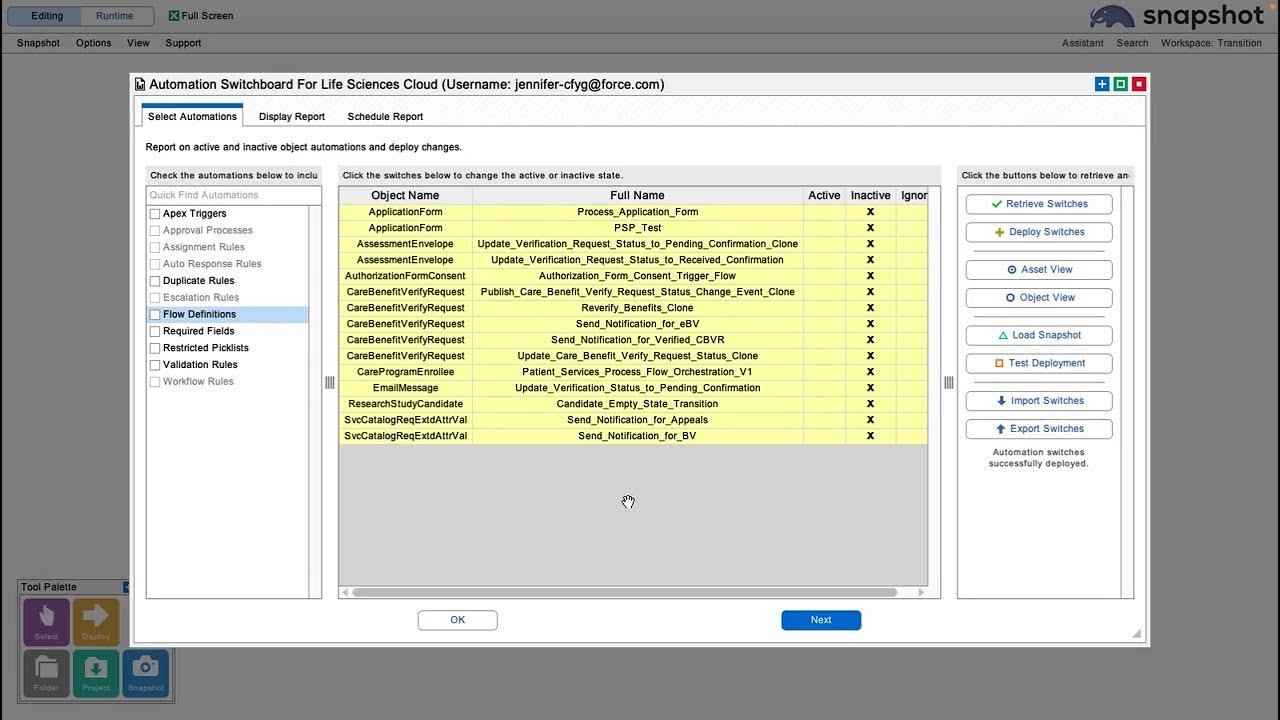
Metazoa Automates the Transition from Veeva CRM to Life Sciences Cloud
Metazoa
/@metazoa6598
Nov 13, 2025
This video provides an in-depth exploration of automating the complex transition from Veeva CRM to Salesforce Life Sciences Cloud (LSC) using Metazoa Snapshot. The presenter begins by highlighting the significant challenges inherent in such a migration, which involves thousands of metadata assets, deeply interconnected automations, managed package dependencies, and mission-critical datasets requiring precise mapping, movement, and validation. The core purpose of the video is to demonstrate how Metazoa Snapshot streamlines this intricate process, transforming what typically takes months into a fast, controlled, and repeatable operation. The methodology presented is a six-step workflow designed to ensure precision and efficiency. It starts with preparing both the existing Veeva CRM org (source) and a brand-new Life Sciences Cloud org (target) by connecting them to Snapshot. The tool then automatically analyzes the entire metadata landscape—including objects, fields, flows, validation rules, triggers, and layouts—to create a comprehensive inventory. A unique innovation, "Shell Assets," is then introduced, which generates a lightweight "skeleton" of every asset from the source environment. These shell assets, containing object definitions, field structures, automation placeholders, and page layout scaffolding, deploy extremely fast into the target LSC org, even across products with different feature sets, allowing the LSC org to mirror the original structure without being blocked by Veeva-specific dependencies. Following the rapid deployment of Shell Assets, which may involve safely removing 30-40 standard metadata conflicts due to differences between the orgs, the LSC environment becomes a clean, accurate, and high-performance clone. Before migrating actual data, the video emphasizes the critical step of disabling automations such as flows, validation rules, and Apex triggers using Snapshot's "Automation Switchboard." This bulk deactivation prevents accidental processing during the data import phase. Subsequently, Snapshot's robust Data Migration engine is employed to map Veeva's managed objects to Life Sciences Cloud standard objects and migrate multi-million-record datasets, including parent-child relationships, files, and attachments, with automatic reference resolution. The final step involves replacing the temporary Shell Assets with the full, real metadata implementation, which is expedited because the underlying structure is already in place. This comprehensive workflow underscores Metazoa Snapshot's utility as a leading platform for various Salesforce transformations. It's not just about cloud migrations but also addresses org transformations, technical debt elimination, schema modernization, and metadata intelligence. The video implicitly showcases a strategic approach to managing the evolution of Salesforce environments, particularly for regulated industries like life sciences, where precision, control, and compliance are paramount. The ability to track all changes using built-in Time Series tracking further enhances control and auditability throughout the migration process. Key Takeaways: * **Complexity of Veeva CRM to LSC Migration:** Migrating from Veeva CRM to Salesforce Life Sciences Cloud is identified as one of the most complicated transformations due to thousands of metadata assets, deeply interconnected automations, managed package dependencies, and mission-critical data. * **Metazoa Snapshot's Automation:** The Metazoa Snapshot tool automates the entire transition process, converting a months-long effort into a fast, controlled, and repeatable operation, thereby enhancing efficiency and reducing manual errors. * **Innovative Shell Assets:** Shell Assets are a key innovation, creating a lightweight "skeleton" of metadata assets (object definitions, field structures, automation placeholders) that deploy rapidly. This allows the target LSC org to mirror the source org's shape without being hindered by Veeva-specific dependencies. * **Phased Deployment Strategy:** The migration follows a strategic phased approach: first, deploy shell assets to establish structure; second, migrate data; and third, replace shell assets with full, real metadata. This ensures a clean, fast, and dependency-free final deployment. * **Comprehensive Metadata Analysis:** Snapshot automatically analyzes the entire metadata landscape of both source (Veeva CRM) and target (LSC) orgs, providing a deep inventory of all deployable assets, which is crucial for planning and executing the migration. * **Automation Switchboard for Data Integrity:** The "Automation Switchboard" is a critical feature that allows for bulk deactivation of automations (flows, validation rules, Apex triggers) before data migration. This prevents accidental processing and ensures data integrity during the import phase. * **Enterprise-Grade Data Migration:** Snapshot's data migration engine is built for complex enterprise datasets, capable of handling multi-million-record migrations, parent-child relationships, files, attachments, and automatically mapping Veeva's managed objects to LSC standard objects. * **Handling Metadata Conflicts:** The tool effectively flags and allows for the safe removal of metadata conflicts (e.g., standard objects not available in LSC), streamlining the deployment process and ensuring a clean target environment. * **Time Series Tracking:** Built-in Time Series tracking records all changes made during the migration, providing an audit trail and enhancing control over the transformation process, which is particularly valuable in regulated industries. * **Broader Applicability:** While demonstrated for Veeva to LSC migration, the workflow and Metazoa Snapshot's capabilities extend to other critical Salesforce initiatives such as general org transformations, cloud migrations, technical debt elimination, schema modernization, and AI-powered admin workflows. * **Precision and Control:** The entire process emphasizes unmatched precision and control, which is vital for mission-critical transitions and ensuring regulatory compliance in the pharmaceutical and life sciences sectors. Tools/Resources Mentioned: * **Metazoa Snapshot:** The primary platform demonstrated for automating Salesforce org transformations and cloud migrations. * **Automation Switchboard:** A feature within Snapshot for bulk deactivating automations (flows, validation rules, workflow rules, Apex triggers, duplicate rules, assignment/auto-response rules). * **Time Series Tracking:** A built-in feature for recording and monitoring all metadata changes within an org. Key Concepts: * **Veeva CRM:** A leading CRM platform specifically designed for the pharmaceutical and life sciences industries. * **Salesforce Life Sciences Cloud (LSC):** Salesforce's industry-specific cloud solution tailored for life sciences companies. * **Shell Assets:** A unique Metazoa innovation that creates a lightweight, deployable "skeleton" of metadata assets to quickly establish the structural shape of a target org. * **Metadata:** Data that describes other data; in Salesforce, this includes objects, fields, layouts, flows, validation rules, triggers, etc. * **Data Migration:** The process of transferring data from one system or format to another, often involving mapping and transformation. * **Org Transformation:** The process of significantly changing or modernizing a Salesforce organization, including migrations, consolidations, or schema updates. * **Cloud Migration:** The process of moving data, applications, or other business elements to a cloud computing environment, in this context, moving from one Salesforce-based cloud (Veeva CRM) to another (LSC).

Argus vs LSMV vs Veeva — What’s the Difference ”
The Drug Safety Coach
/@TheDrugSafetyCoach
Nov 13, 2025
This video provides a concise yet critical comparison of the three leading software platforms dominating the pharmaceutical pharmacovigilance (PV) landscape: Argus Safety, LifeSphere Medical Vigilance (LSMV), and Veeva Safety. The core purpose of the analysis is to delineate the fundamental differences in design philosophy among these systems, despite their shared ultimate goal of ensuring patient safety and regulatory compliance. The comparison serves as an essential overview for professionals involved in drug safety, regulatory affairs, clinical operations, and the technology infrastructure supporting these functions. The analysis structures the comparison around three distinct archetypes of PV systems. Argus Safety is positioned as the industry classic, characterized as a powerful, rule-driven system utilized by nearly every major pharmaceutical company. This description implies a robust, mature platform built on complex, established business logic, often associated with on-premise or highly customized deployments that require significant maintenance and specialized expertise. Conversely, LifeSphere Medical Vigilance (LSMV) is highlighted as the "automation king," emphasizing a modern approach with a faster user interface and, crucially, AI-assisted workflows. LSMV represents the shift toward leveraging advanced technology, such as machine learning and potentially Large Language Models (LLMs), to streamline case processing, signal detection, and data entry, making it ideal for organizations prioritizing efficiency and modern cross-functional operations. Finally, Veeva Safety is presented as the clean, cloud-native solution, distinguished by its full integration capabilities with other regulatory and clinical systems. This integration is a key differentiator, suggesting that Veeva aims to break down data silos between safety, clinical trials, and regulatory submission processes. Being cloud-native aligns with modern enterprise IT strategies, offering scalability, easier updates, and a potentially lower total cost of ownership compared to legacy systems. While all three platforms serve the same critical function—managing adverse event reporting and ensuring drug safety—their architectural and operational differences necessitate strategic consideration when pharmaceutical companies select or upgrade their PV technology stack. Key Takeaways: • **Strategic PV System Selection:** The choice among Argus, LSMV, and Veeva Safety is not merely functional but strategic, reflecting an organization’s priorities regarding legacy integration, automation appetite, and cloud adoption strategy. • **Argus Safety as the Legacy Standard:** Argus is defined by its rule-driven architecture and widespread adoption among large pharmaceutical firms, signifying its proven reliability and deep customization capabilities, often requiring specialized data engineering to interface with modern BI tools. • **LSMV’s Focus on AI-Driven Efficiency:** LifeSphere Medical Vigilance (LSMV) differentiates itself through automation and AI-assisted workflows, presenting a strong case for companies seeking to drastically reduce manual effort in case processing and leverage intelligent tools for faster, more accurate data handling. • **Veeva Safety’s Integration Advantage:** Veeva Safety’s primary value proposition is its cloud-native architecture and seamless integration with broader regulatory and clinical systems, facilitating a unified data environment essential for streamlined compliance and end-to-end data traceability. • **Implications for Data Engineering:** The differences in system architecture (rule-driven vs. cloud-native) directly impact data engineering requirements, necessitating varied approaches for building robust data pipelines, ensuring GxP compliance, and integrating safety data into enterprise business intelligence dashboards. • **Opportunity for AI Enhancement:** LSMV’s native AI capabilities set a benchmark, but there is a significant opportunity for AI consulting firms to develop custom LLM agents or automation layers to enhance case intake, medical coding, and regulatory reporting within Argus and Veeva environments. • **Cloud Migration and Scalability:** Veeva Safety’s cloud-native design appeals to companies undergoing digital transformation, offering superior scalability and reducing the operational burden associated with maintaining complex, on-premise PV infrastructure common with older Argus deployments. • **Regulatory Compliance and Audit Trails:** The design philosophy of each system impacts how audit trails are generated and maintained; rule-driven systems like Argus offer established compliance pathways, while cloud-native systems like Veeva must demonstrate robust 21 CFR Part 11 adherence in a modern, integrated environment. • **User Experience and Workflow Modernization:** LSMV’s emphasis on a faster UI and modern workflows addresses the need for improved productivity among drug safety specialists, a critical factor often overlooked in legacy PV systems. Tools/Resources Mentioned: * Argus Safety * LifeSphere Medical Vigilance (LSMV) * Veeva Safety Key Concepts: * **Pharmacovigilance (PV):** The process of monitoring and assessing the safety of medicines after they are licensed for use, including adverse event reporting. * **Rule-Driven Systems:** Software platforms where business logic and workflows are governed by predefined, often complex, regulatory and operational rules, typical of established enterprise software. * **AI-Assisted Workflows:** The integration of artificial intelligence and machine learning tools to automate or enhance specific steps within a business process, such as case triage or data extraction in PV. * **Cloud-Native:** Software designed specifically to run in a cloud environment, leveraging services like scalability, microservices, and continuous delivery, facilitating integration across the enterprise.

How to spot AI washing: Chris Moore, European President at Veeva Systems
The Tech Leaders Podcast
/@thetechleaderspodcast9836
Nov 12, 2025
This segment, featuring Chris Moore, European President at Veeva Systems, provides a critical framework for distinguishing genuine Artificial Intelligence (AI) from superficial marketing claims, often termed "AI washing," particularly within the Software as a Service (SaaS) and life sciences sectors. The primary objective is to define a practical test for evaluating whether a system employs true AI or merely repackaged basic analytics. Moore establishes that the key differentiator is the **level of autonomy or insight** the solution provides, arguing that simply performing basic calculations or data visualization does not qualify as AI. The analysis breaks down AI into two distinct, yet valuable, categories. The first bucket is **Machine Learning (ML)**, which involves taking a vast amount of information, codifying it, and using it to generate a better, evolving answer. This approach, exemplified historically by IBM's Watson, is characterized by its ability to improve over time as it processes more data. Moore highlights the transformative role of ML in complex, data-heavy environments, specifically citing the **EU Resist initiative**. This program uses ML to assist in the diagnosis and treatment of HIV patients by determining the optimal drug combination for an individual, demonstrating how machines excel at continuous updating and refinement necessary for personalized medicine. The second, and currently most rapidly evolving, bucket is **Large Language Models (LLMs)**. These models represent a fundamentally different way of thinking about AI application. Unlike traditional ML, which often requires specific training on a targeted dataset, LLMs have already processed a "whole bolus" or "universe of information." This foundational knowledge allows users to ask direct, complex questions without the need for extensive pre-training specific to that query. While acknowledging the necessary intermediate step of implementing controls and guardrails, Moore posits that both ML (focused on codified data transformation) and LLMs (focused on generalized knowledge and conversational insight) meet the criteria for true AI, moving beyond simple data crunching toward sophisticated, autonomous insight generation. Key Takeaways: • **The Litmus Test for Real AI:** The essential criterion for judging whether a technology is genuine AI is the level of autonomy or insight it provides, distinguishing it from standard computational analysis. • **Avoiding "AI Washing":** A common pitfall, particularly in the SaaS world, is marketing basic analytics—such as standard business intelligence or reporting—under the guise of AI, which the speaker identifies as a significant industry "bug bear." • **The Machine Learning (ML) Bucket:** ML represents the first major category of true AI, focusing on codifying vast amounts of information to generate continuously improving answers, often requiring specific training on the relevant data set. • **Transformational ML in Life Sciences:** The power of ML is demonstrated by initiatives like EU Resist, which aids in HIV patient care by optimizing drug combinations, illustrating how machines can manage and update complex medical data better than human systems. • **The Large Language Model (LLM) Bucket:** LLMs constitute the second, newer category of AI, characterized by their ability to leverage a pre-existing "universe of information," allowing them to answer questions directly without requiring specific, targeted pre-training. • **Differentiation from Basic Analytics:** If a system merely processes data and presents a static result based on pre-set rules, it is likely not true AI; genuine AI must demonstrate learning, adaptation, or autonomous insight generation. • **The Need for Control in LLMs:** While LLMs offer immense flexibility, an intermediate step involving the implementation of controls and constraints is necessary to ensure accuracy, safety, and regulatory compliance, particularly in regulated industries like life sciences. • **Evolution of AI Thinking:** The shift from ML (data codification) to LLMs (generalized knowledge) requires a completely different strategic approach to software development and deployment within technology leadership. Key Concepts: * **AI Washing:** The practice of mislabeling basic data analytics or simple computational features as Artificial Intelligence to capitalize on market hype and perceived technological sophistication. * **Level of Autonomy or Insight:** The defining metric for true AI; the system must be able to generate novel conclusions, adapt its behavior, or operate without constant human intervention beyond basic data processing. * **Machine Learning (ML):** A category of AI focused on training algorithms to learn patterns from data and make predictions or decisions without being explicitly programmed to perform the task. * **Large Language Models (LLMs):** A category of generative AI that has been trained on massive text datasets, allowing it to understand, summarize, generate, and answer complex questions conversationally based on its generalized knowledge base. Examples/Case Studies: * **IBM Watson:** Cited as a historical example of the ML approach, focusing on codifying vast amounts of information to provide enhanced answers. * **EU Resist Initiative:** A specific, transformative application of ML in the life sciences sector, helping diagnose and treat HIV patients by calculating the optimal drug combinations, demonstrating the machine’s superiority in continuously updating complex medical protocols.
The $450,000 "Silent Killer" Your Members Don't Know They Have
Self-Funded
@SelfFunded
Nov 11, 2025
This video provides an in-depth exploration of the hidden financial and clinical risks associated with Chronic Kidney Disease (CKD) and End-Stage Renal Disease (ESRD) within self-funded health plans. Mark Masson, President of Renalogic, details how CKD is a "silent killer," affecting one in seven Americans, with a staggering 90% remaining undiagnosed until the disease is far advanced. The primary purpose of the discussion is to expose the exorbitant costs of dialysis treatment—which often runs 700% to 900% of Medicare rates—and present a dual-pronged solution involving proactive clinical intervention to slow disease progression and a powerful cost-containment model for active dialysis claims. The discussion progresses by first defining the scope of the problem, noting that the lack of early symptoms and the limitations of standard lab reports (which often show GFR as "normal" until CKD stage 4) prevent timely diagnosis. Renalogic addresses this by using complex algorithms to mine eligibility and claims data, identifying members likely at CKD stage 2 or 3 based on co-morbidities (like uncontrolled diabetes or cardiovascular issues). Their clinical programs, such as "Impact Care," focus on "holding the line" by intervening with lifestyle changes, managing co-morbidities (e.g., sleep apnea treatment), and ensuring appropriate specialist utilization (nephrologists) to prevent progression to ESRD, thereby avoiding unnecessary ER visits and inpatient stays. A significant portion of the conversation focuses on the dysfunctional economics of dialysis once a patient reaches ESRD. Masson attributes the $350,000 to $450,000 annual cost per patient to a market duopoly, where two major companies control nearly 80% of the market, allowing them to act as price setters rather than price takers within commercial networks. Renalogic’s cost-containment solution involves amending plan documents to allow for a carve-out, repricing claims using a usual and reasonable methodology, bringing costs down to 120%–200% of Medicare. This results in substantial savings, estimated at $80,000 to $180,000 per member annually, while ensuring the member's care is not disrupted and promoting optimal outcomes, such as home dialysis and eventual transplant candidacy. The ultimate goal for ESRD patients is not just cost containment but maximizing health span to ensure they remain viable candidates for a kidney transplant, which significantly improves quality of life and ends the need for dialysis. Key Takeaways: • **The CKD Epidemic is Hidden:** One in seven Americans has some form of CKD, but 90% are undiagnosed. This is due to the disease's silent progression and standard lab reports often failing to flag GFR abnormalities until the disease is severely advanced (Stage 4 or higher). • **Dialysis Costs are Exorbitant:** Commercial health plans typically pay 700% to 900% of Medicare rates for outpatient dialysis, translating to an annual cost of $350,000 to $450,000 per member. This excessive cost is driven by a duopoly controlling 80% of the U.S. dialysis market. • **Medicare Rates are Profitable:** Despite the industry argument that Medicare reimbursement is too low, public financial disclosures suggest that dialysis providers operate profitably at or near Medicare rates, indicating that commercial overpayments are excessive profiteering. • **Data Mining for Early Intervention:** Effective CKD management requires sophisticated algorithms to mine claims data (diagnoses, treatments, co-morbidities) to proactively identify members at hidden or undiagnosed risk (CKD Stage 2 or 3) before they progress to catastrophic failure. • **Clinical Strategy: Hold the Line:** For early-stage CKD members, the clinical intervention strategy focuses on slowing or reversing progression by managing co-morbidities (like sleep apnea or uncontrolled diabetes) and ensuring utilization of specialists (nephrologists) rather than relying solely on primary care. • **Cost Containment Savings:** Implementing a dialysis cost-containment program can reduce reimbursement rates from 700%-900% down to 120%-200% of Medicare, yielding annual savings of $80,000 to $180,000 per patient for the self-funded plan. • **Fiduciary Responsibility and Carve-Outs:** Plan sponsors have an ERISA fiduciary responsibility to manage costs. If network agreements prevent the implementation of cost-saving carve-out programs like dialysis management, employers should consider changing TPAs or networks to fulfill their obligation. • **Dialysis Risk Frequency:** Statistically, a self-funded plan will have one dialysis patient for every 2,500 covered lives. Even small employers (500 lives) are likely to face a catastrophic dialysis claim every four years, necessitating a proactive strategy. • **Optimal ESRD Outcome is Transplant:** For members already on dialysis, the clinical goal is to maintain adherence and health to remain a viable candidate for a kidney transplant, which is the only way to end the need for dialysis and significantly improve quality of life. • **Home Dialysis Benefits:** Home dialysis is often a healthier, more efficient, and less expensive modality. Barriers include behavioral reluctance, lack of storage space for supplies, or low water pressure, but providers should be encouraged to promote this option. • **Regulatory Headwinds:** Network agreements are often informally or formally structured to prohibit dialysis carve-outs, protecting the high reimbursement rates of the duopoly. Increased transparency and political pressure are needed to mandate fair reimbursement schedules or infuse competition. • **Future Market Evolution:** The market needs more competition (more independent or regional providers) and a shift toward direct provider contracting by employers to bypass restrictive network agreements and establish transparent, fair, and forecastable reimbursement rates. Key Concepts: * **CKD (Chronic Kidney Disease):** A progressive condition where kidney function declines. Stages 1-5. * **ESRD (End-Stage Renal Disease):** Kidney failure requiring dialysis or transplant. * **GFR (Glomerular Filtration Rate):** A test used to measure kidney health; often appears "normal" on lab reports even when CKD is progressing. * **Medicare Secondary Payer Act (MSP):** Federal regulation mandating that commercial health plans pay primary for dialysis claims for 30 or 33 months after an ESRD diagnosis before Medicare takes over. * **Dialysis Duopoly:** The market dominance of two major dialysis providers, enabling them to dictate high commercial reimbursement rates.

How AI Is Changing SaaS Right Now!
The Tech Leaders Podcast
/@thetechleaderspodcast9836
Nov 10, 2025
This video provides an expert analysis of how Artificial Intelligence, particularly Large Language Models (LLMs), is rapidly reshaping the competitive landscape of the Software-as-a-Service (SaaS) industry. Featuring an executive from Veeva Systems, the discussion frames AI integration not as an existential threat, but as a critical opportunity for established enterprise software providers to gain a significant competitive edge. The initial focus acknowledges the immediate and powerful utility of natural language models (NLMs) in accelerating software development and code generation, identifying this as one of the strongest current use cases for the technology within the tech sector. The central argument presented is that success in the AI era hinges on data quality and control. The speaker posits that "the best AI has the best data," meaning that generalized LLMs are only as effective as the specialized data they are applied to. Companies operating proprietary systems of record, such as Veeva, possess a unique advantage: they have curated, high-quality data systems and an intimate, proprietary understanding of that data, along with the necessary controls and governance mechanisms. This infrastructure allows them to strategically apply evolving external LLMs to their internal systems of record to generate superior insights and deeper understanding for their customers. This strategic application of AI is explicitly contextualized within the life sciences industry. The speaker emphasizes that deep understanding of proprietary data and specialized software enables companies serving this sector to move faster and achieve greater scale in AI adoption compared to generalist competitors. The ability to innovate quickly is directly linked to mastering the underlying data architecture. This principle is not unique to life sciences; the speaker draws parallels to other major enterprise software vendors, such as SAP in the ERP space and Microsoft with its Office products, noting that their success in AI integration will also depend on leveraging their specialized data knowledge. Ultimately, the discussion concludes that the winners in the evolving SaaS market will be those who successfully "thread the needle" between the opportunities and the threats presented by new AI technology. This involves strategically integrating powerful external AI tools while rigorously maintaining the integrity, control, and compliance standards associated with their established, curated systems of record, particularly critical for regulated industries like pharmaceuticals and biotech. Key Takeaways: • **Proprietary Data is the Core AI Advantage:** For established enterprise SaaS providers, particularly those serving regulated industries, the competitive edge in the AI era is rooted in possessing curated data systems of record and an intimate, proprietary understanding of that data, rather than simply adopting generalized LLM technology. • **AI Application Must Be Data-Centric:** The most effective strategy for SaaS companies is to integrate external, evolving natural language models (LLMs) with their internal, controlled systems of record to ensure that AI outputs are grounded in high-quality, industry-specific data, leading to better insights. • **Life Sciences Requires Data Mastery for Scale:** The ability to move quickly and achieve scale in implementing AI solutions within the life sciences sector is directly dependent on the vendor’s deep understanding of its specialized data and software architecture, which facilitates compliant and effective deployment. • **Strong Data Controls are Non-Negotiable:** Given the sensitivity and regulatory requirements of enterprise data (e.g., GxP, 21 CFR Part 11), maintaining strong controls and governance over the data within the system of record is paramount for successful and trustworthy AI implementation. • **Code Generation is a Primary LLM Use Case:** One of the most immediate and impactful applications of natural language processing (NLP) and LLMs in the software industry is the acceleration and improvement of code generation, enhancing developer productivity. • **AI Transformation is Universal in Enterprise SaaS:** The principle of leveraging proprietary, specialized data systems for AI advantage is a universal trend across enterprise software segments, including ERP and productivity tools, demonstrating that data ownership is key across the board. • **Strategic Balance of Opportunity and Threat:** SaaS leaders must adopt a balanced view of AI, recognizing both the immense opportunities for innovation and the potential threats related to data security, accuracy, and competitive disruption. • **Focus on Actionable Insight Generation:** The ultimate goal of applying AI/LLMs to enterprise data should be the creation of "better insights" and "better understanding" for the end-user, moving beyond simple automation to deliver strategic, decision-support value. Key Concepts: * **Systems of Record:** The authoritative data source for a given piece of information, characterized by high integrity, curation, and control, which is essential for regulated industries. * **Curated Data:** Data that has been carefully selected, organized, and maintained to ensure high quality, accuracy, and relevance for specific enterprise applications. * **Natural Language Models (NLMs)/LLMs:** Advanced AI models capable of processing and generating human language, used here for applications ranging from code generation to insight extraction from proprietary data.

Drug Costs Hidden in Medical Claims
AHealthcareZ - Healthcare Finance Explained
@ahealthcarez
Nov 9, 2025
This video provides an in-depth exploration of how high-cost prescription drugs are billed within medical claims, revealing significant hidden costs for employer-sponsored health plans. Dr. Eric Bricker begins by introducing J-codes, a specific type of HCPCS (Healthcare Common Procedural Coding System) code used to designate medications, particularly high-cost infusions, on UB04 facility bills. He highlights that these codes allow for the identification and analysis of drug spend within overall medical claims, a crucial insight for self-funded employers. The presentation then delves into specific examples, such as Rituxan (rituximab) for leukemia and lymphoma, costing approximately $12,000 per cycle, with a typical patient requiring 20 cycles, totaling $240,000 for the drug alone. Dr. Bricker explains the complex financial mechanisms behind these high costs, starting with "carve-out" reimbursement methodologies. Hospitals negotiate special terms with insurance networks for these J-coded drugs, securing exceptionally high reimbursement rates from commercial employer plans, often offsetting lower rates from Medicare Advantage plans. A critical component of this financial dynamic is the 340B pharmacy program, a federal regulation that mandates pharmaceutical manufacturers to sell certain medications to eligible hospital systems at a significant discount (25-50%). Dr. Bricker illustrates how hospitals leverage this discount, combined with high commercial reimbursement rates, to achieve markups of 300-400% on these drugs. He addresses the hospitals' common justification—the need to subsidize care for uninsured, Medicaid, and under-reimbursed Medicare patients—but argues that this practice unfairly burdens employers and employees, leading to rising premiums and increased out-of-pocket costs, even contributing to personal bankruptcy for cancer patients. The video concludes with actionable advice for employers, emphasizing the importance of proactive patient steering to independent oncologists and infusion centers, which can offer the same quality of care at a substantially lower cost and potentially with zero out-of-pocket expenses for the patient. Key Takeaways: * **J-codes Reveal Hidden Drug Costs:** High-cost medications, especially infusions, are identified on medical claims using specific J-codes (part of HCPCS codes) found on UB04 facility bills. This coding system allows for detailed analysis of drug spend within an employer's overall medical claims. * **Significant Financial Burden on Employers:** Medications like Rituxan can cost employer-sponsored plans hundreds of thousands of dollars per patient (e.g., $240,000 for 20 cycles of Rituxan), representing a substantial portion of healthcare expenditures. * **Hospital "Carve-Out" Reimbursement:** Hospitals negotiate specialized "carve-out" contracts with insurance networks for J-coded drugs, securing very high reimbursement rates from commercial employer plans to compensate for perceived underpayments from government programs like Medicare. * **340B Program Drives Hospital Profitability:** The federal 340B pharmacy program mandates pharmaceutical manufacturers to sell certain drugs to eligible hospitals at a significant discount (25-50% off standard pricing). Hospitals then bill employer plans at marked-up rates, leading to substantial profit margins. * **Exorbitant Drug Markups:** Hospitals can mark up these discounted drugs by 300-400% (e.g., buying Rituxan for $4,000 and billing $12,000), contributing significantly to the high cost of care for commercially insured patients. * **Hospitals' "Cry Poor" Justification:** Hospitals often justify these high markups by claiming they need to offset losses from uninsured, Medicaid, and Medicare patients. However, this practice shifts the financial burden onto employers and their employees. * **Negative Impact on Employees:** The high cost of these drugs, especially for chronic conditions like cancer, can lead to employees hitting their out-of-pocket maximums ($24,000 annually in the example) and is a major contributor to personal bankruptcy among cancer patients. * **Employers as the "Social Safety Net":** The current system effectively positions employer-sponsored health plans as the primary funding source to cover shortfalls in other parts of the healthcare system, a role many employers do not feel is their responsibility. * **Actionable Strategy: Proactive Patient Steering:** Employers can mitigate these costs by establishing relationships with plan members and, in cases of diagnoses like cancer, steering them towards independent oncologists or infusion centers that offer lower-cost treatment options. * **Benefits of Independent Care:** Independent oncologists often have more flexibility in terms of site of service, allowing patients to receive infusions in physician offices or independent infusion centers, which are typically much less expensive than hospital outpatient departments. * **Zero Out-of-Pocket Options:** By proactively steering patients to lower-cost independent providers, employers can design plans that offer zero out-of-pocket costs for the employee, which is not only more financially viable for the plan but also protects employees from financial hardship and potential bankruptcy. * **Early Intervention is Key:** The ability to steer patients to alternative sites of care is most effective if done early, before a patient establishes care with an oncologist directly affiliated with a high-cost hospital system. Tools/Resources Mentioned: * **GAO Report:** https://www.gao.gov/products/gao-20-212 * **AHDBonline Article:** https://ahdbonline.com/issues/2014/february-2014-vol-7-no-1-special-issue-ash-2013-payers-perspectives-in-oncology/rituximab-infusions-costlier-when-given-in-the-hospital * **Academic Oncology Article (OUP):** https://academic.oup.com/oncolo/article/29/6/527/7629107 * **AHealthcareZ 340B Program Video:** https://youtu.be/0UPOC67WTds * **AHealthcareZ Why Hospitals Cry Poor Video:** https://youtu.be/eXnV1exjsxs * **Dr. Bricker’s Book:** "16 Lessons in the Business of Healing" / "Healthcare Money Campfire Stories" (https://www.ahealthcarez.com/healthcare-money-campfire-stories-book) Key Concepts: * **J-codes:** Specific codes within the Healthcare Common Procedural Coding System (HCPCS) used to identify and bill for injectable drugs, chemotherapy, and other non-orally administered medications. * **HCPCS (Healthcare Common Procedural Coding System):** A standardized coding system used to describe medical procedures, services, and supplies provided to patients, primarily for Medicare and Medicaid. * **UB04 Facility Bills:** A standard claim form used by institutional providers (like hospitals) to bill for services provided to patients. * **Carve-Out Reimbursement:** A contractual agreement between a healthcare provider (e.g., hospital) and an insurance payer where specific high-cost services or drugs are reimbursed under terms separate from the general contract. * **340B Pharmacy Program:** A federal program requiring drug manufacturers to provide outpatient drugs to eligible healthcare organizations and pharmacies at significantly reduced prices. * **Rituxan (Rituximab):** A monoclonal antibody medication used to treat certain autoimmune diseases and cancers, including lymphoma and leukemia. * **Keytruda (Pembrolizumab):** An immunotherapy drug used to treat various cancers, including multiple myeloma. Examples/Case Studies: * **Rituxan (Rituximab):** Used to treat lymphoma and leukemia. Costs $12,000 per cycle in a hospital outpatient department, with a typical treatment course of 20 cycles totaling $240,000 for the drug alone. * **Keytruda (Pembrolizumab):** Used to treat multiple myeloma (a blood cancer similar to lymphoma and leukemia). While specific cost examples were not detailed for Keytruda, it was presented as another example of a high-cost J-coded drug.

Season 4 Episode 3: Innovation from the Inside: How Sites Are Redefining Clinical Research
Veeva Systems Inc
@VeevaSystems
Nov 6, 2025
This video provides an in-depth exploration of innovation in clinical research, focusing on how research sites are redefining their operations through technology and collaboration. Hosted by Manny Vasquez from Veeva, the discussion features Denali Rose (Veeva, Site Solution Strategy) and Joe Lengfellner (Memorial Sloan Kettering Cancer Center - MSKCC, Clinical Research Informatics and Innovation Consortium Lead). The conversation delves into the daily challenges faced by clinical trial coordinators, the inefficiencies of current data management practices, and the transformative potential of advanced technologies like EHR-to-EDC integration and Large Language Models (LLMs) in areas such as patient recruitment and health equity. The discussion begins by highlighting the often-underappreciated and chaotic role of clinical research coordinators, who juggle patient management, data curation, regulatory tasks, and financial coordination. Joe Lengfellner from MSKCC describes how coordinators spend a significant portion of their time on data management, often manually transferring information from electronic health records (EHRs) to electronic data capture (EDC) systems. This manual process is identified as a major bottleneck, leading to inefficiencies, potential errors, and high turnover rates among coordinators. The speakers emphasize the need for technological solutions to alleviate this burden, particularly through direct data capture and integration. A significant portion of the conversation focuses on the shift towards sites taking ownership of their technological infrastructure. MSKCC's initiative to implement EHR-to-EDC integration using FHIR resources and APIs with a vendor like Ignite Data is presented as a prime example of a large academic center digitizing its workflows to improve scalability and data accuracy. For smaller sites, the focus shifts to eSource solutions and the challenge of duplicate data entry between eSource systems and sponsor-provided EDCs. The speakers advocate for a "Bring Your Own Technology" (BYOT) approach, where sponsors support sites in using their preferred and established tools, rather than imposing new, disruptive systems for each trial. The podcast also explores the evolving relationship between sites, sponsors, and CROs, noting a positive trend towards more open dialogue and genuine site-centricity, moving beyond mere buzzwords. Finally, the discussion ventures into cutting-edge innovations, particularly the application of LLMs and AI in clinical research. Joe Lengfellner introduces MSKCC's Clinical Research Innovation Consortium (CRIC), a collaborative initiative involving sites, sponsors, technology providers, and regulators to identify and test industry-wide solutions. A key project within CRIC involves evaluating LLMs for clinical trial matching and patient recruitment. An example is shared where an LLM successfully identified all patients manually matched by coordinators, plus additional eligible patients who were previously missed, demonstrating the technology's potential to enhance patient access, improve diversity in trials, and address health equity challenges. The speakers conclude with a call to action for the industry to embrace risk-taking in technology adoption and foster greater inter-stakeholder communication and collaboration. Key Takeaways: * **Undervalued Role of Clinical Trial Coordinators:** Clinical research coordinators perform a wide array of tasks, from patient recruitment and management to regulatory and financial duties, often in chaotic environments, making it one of the most challenging and underappreciated roles in the industry. * **Data Curation as a Major Bottleneck:** A significant portion of a coordinator's day, sometimes up to 100% for specialized roles, is spent on manual data curation, involving copying and pasting data from clinical records (EHRs) into EDC systems and responding to queries. * **Critical Need for EHR-to-EDC Integration:** Direct integration between EHRs and EDCs is essential for improving the efficiency, scalability, and data quality of clinical trials, reducing manual effort, and enabling more trials to be conducted. * **Challenges with Protocol Amendments:** Managing protocol amendments is highly complex and duplicative, requiring multiple teams to update different representations of the trial across various systems (EDC, CTMS, EHR treatment plans, eConsent), leading to delays and potential errors. * **Site-Driven Technology Adoption (Esource & BYOT):** Research sites are increasingly adopting their own electronic source (eSource) and eConsent tools, and there's a growing need for sponsors to support a "Bring Your Own Technology" (BYOT) approach to avoid disrupting established site workflows. * **Duplication in Digital Workflows:** Even with eSource, sites often face the challenge of entering the same data twice – once into their eSource system and again into the sponsor's EDC, highlighting the need for direct data capture or unified systems. * **Evolving Site-Sponsor Relationship:** There's a positive shift towards genuine site-centricity, with sponsors showing more willingness to listen to sites' challenges and collaborate on solutions, moving beyond superficial engagement. * **LLMs for Patient Recruitment and Health Equity:** Large Language Models (LLMs) and AI hold immense potential for revolutionizing clinical trial matching, patient identification, and recruitment, helping to find previously missed eligible patients and improve diversity and health equity in trials. * **Clinical Research Innovation Consortium (CRIC):** Collaborative initiatives like MSKCC's CRIC, which brings together sites, sponsors, tech providers, and regulators, are crucial for vetting and scaling innovative technologies in a metrics-driven manner. * **Data Access for AI Solutions:** A significant hurdle for effective AI-powered patient recruitment is gaining access to comprehensive patient data, especially for the large population of patients outside of major academic centers (e.g., 80% of oncology patients in the community). * **Risk Aversion Hinders Innovation:** The industry's risk-averse culture, particularly among sponsors, often leads to prolonged pilot programs for new technologies, causing promising solutions to "die on the vine" instead of being widely adopted. * **Standardization of Site Workflows:** Sites benefit greatly from standardizing their internal workflows and technology across their portfolio of studies; disparate sponsor-mandated systems (e.g., multiple e-consent platforms) can be highly disruptive and lead to a reversion to paper-based processes. * **Call for Inter-Stakeholder Communication:** There is a strong call for increased and more open dialogue between different stakeholders—sites, sponsors, and CROs—to understand each other's challenges and collaboratively drive industry improvement. Tools/Resources Mentioned: * Veeva (Clinical Data Strategy, Site Solution Strategy) * Ignite Data (Vendor for EHR-to-EDC integration) * FHIR resources/APIs (Technical standard for data exchange in EHRs) * Epic (EHR system mentioned for treatment plans) * EDC (Electronic Data Capture systems) * EHR (Electronic Health Records) * eSource (Electronic Source documentation systems) * CTMS (Clinical Trial Management Systems) * eConsent (Electronic Consent platforms) * Large Language Models (LLMs) * AI (Artificial Intelligence) Key Concepts: * **Site Centricity:** A philosophy and approach in clinical trials that prioritizes the needs and workflows of research sites, aiming to make their participation more efficient and less burdensome. * **EHR-to-EDC Integration:** The automated transfer of clinical data from a hospital's Electronic Health Record system directly into a sponsor's Electronic Data Capture system, reducing manual data entry. * **Esource:** Electronic capture of source data directly at the point of care or data generation, eliminating the need for paper source documents. * **Direct Data Capture:** A method of collecting clinical trial data directly into an electronic system, bypassing paper records and often integrating with other systems. * **Clinical Research Innovation Consortium (CRIC):** A collaborative group (started at MSKCC) focused on identifying, evaluating, and implementing innovative technologies to solve industry-wide problems in clinical research. * **Health Equity / Patient Diversity:** Efforts to ensure that clinical trials are accessible to and representative of diverse patient populations, addressing disparities in healthcare access and outcomes. * **BYOT (Bring Your Own Technology):** A concept where research sites are allowed or encouraged to use their existing, preferred, and integrated technologies for clinical trial activities, rather than being forced to adopt sponsor-specific tools. Examples/Case Studies: * **Memorial Sloan Kettering's EHR-to-EDC Initiative:** MSKCC is actively working with Ignite Data to leverage FHIR resources and APIs to pull clinical data directly from their EHR (Epic) into EDC systems, aiming to eliminate manual data entry for coordinators. * **CRIC's LLM-based Patient Recruitment Project:** The Clinical Research Innovation Consortium conducted a metrics-driven evaluation of LLMs for clinical trial matching. By providing a vendor with a month's worth of patient data and three trials, the LLM not only identified all patients manually matched by coordinators but also found additional eligible patients who had been previously missed, demonstrating its potential to expand patient access to trials.
Veeva AI 2025 in Action: Key Summit Demo & Insights (Part 2)
Anitech Talk
/@AnitechTalk
Nov 4, 2025
This video provides an in-depth exploration of Veeva's Agentic AI capabilities, showcasing how these intelligent agents are set to transform operations across the Veeva Vault platform and its various applications within the life sciences industry. The speaker, building on a previous discussion about Veeva Vault agents, focuses this session on practical demonstrations of how Veeva AI functions. The core message is that the Veeva Vault platform is evolving beyond mere data and content management to enable true intelligence through the integration of Agentic AI. The presentation highlights Veeva's two-pronged approach to Agentic AI: standard agents integrated directly into the Vault platform for broad capabilities, and application-level agents designed for specific business processes within individual Veeva applications, offering tailored automation. The video progresses by presenting concrete examples of Veeva AI in action, primarily through an interactive chat window interface, which the speaker likens to ChatGPT. These examples illustrate how users can seamlessly interact with the AI to query both structured objects and unstructured content, and even initiate actions directly through conversational prompts. Several compelling use cases are demonstrated. For object interaction, the AI chat window is shown integrated into a "classes object" within Veeva. Users can prompt questions such as "What is the current enrollment status?" or "Who is on the waiting list?" The AI efficiently analyzes the object's underlying data and provides immediate, accurate answers. A more advanced and impactful use case involves the AI performing actions: a user can simply type "enroll in the class," and the AI will process this command to create the necessary user record (e.g., enrolling "Bob Ng" into a biology course), significantly reducing manual effort and saving considerable time. Beyond structured object data, the video demonstrates Veeva AI's ability to analyze unstructured document content. An example shows a user asking "What is the grading scale for this class?" while viewing a document, and the AI promptly extracts and presents the relevant information from the document's text. The presentation also delves into the configuration of these agents within Veeva Vault, illustrating how agents (e.g., a "classroom agent") are set up, tagged to specific objects (e.g., a "class object"), and how their behavior, objectives, context, and actions are defined within the platform's metadata section. The speaker concludes by outlining Veeva's roadmap, indicating a planned launch of Agentic AI in its commercial Vault by 2025, with subsequent integration across all Veeva applications. Key Takeaways: * **Veeva's Strategic Shift to Agentic AI:** The Veeva Vault platform is undergoing a significant evolution, moving beyond traditional data and content management to incorporate Agentic AI, enabling true intelligence and automation across its ecosystem. This represents a major advancement in how life sciences companies will interact with their data and processes. * **Dual AI Architecture:** Veeva's Agentic AI strategy is built on two pillars: platform-level agents integrated into Veeva Vault for general intelligence, and application-specific agents tailored to optimize unique business processes within individual Veeva applications, ensuring both broad utility and specialized functionality. * **Intuitive Conversational Interface:** Veeva AI introduces an interactive chat window, similar to large language model interfaces like ChatGPT, allowing users to engage with the AI through natural language prompts directly within Veeva applications. This conversational approach simplifies complex data retrieval and task execution. * **Enhanced Object Interaction:** The AI can efficiently query and analyze data within specific Veeva objects. Users can ask questions about object attributes, such as enrollment statuses or waiting lists for a "classes object," and receive immediate, data-driven answers, improving data accessibility. * **AI-Driven Action Automation:** A powerful feature demonstrated is the AI's capability to execute actions based on user commands. For example, a simple prompt like "enroll in the class" can trigger the AI to create a new user record, thereby automating administrative tasks and significantly reducing manual data entry and processing time. * **Comprehensive Content Analysis:** Veeva AI is not limited to structured data; it can also analyze unstructured content within documents. Users can ask specific questions about a document's content, and the AI will extract and present the relevant information, such as a grading scale from a class document, enhancing information retrieval from diverse sources. * **Streamlined Record Management:** The ability of the AI to generate and update records directly from chat prompts highlights its potential to streamline workflows and minimize user effort in record creation and management, leading to greater operational efficiency and data accuracy. * **Configurable Agent Behavior:** Agents within Veeva Vault are highly configurable. The video illustrates how agents, such as a "classroom agent," are set up, tagged to specific objects (e.g., "class object"), and how their objectives, context, and actions are defined in the metadata, allowing for precise customization to meet specific business needs. * **Significant Time and Effort Reduction:** A core benefit emphasized throughout the demonstration is the substantial reduction in user effort and time through AI automation, from querying information and analyzing content to executing actions and creating records, ultimately boosting overall productivity. * **Future Impact on Commercial Operations:** Veeva's roadmap includes launching Agentic AI in its commercial Vault by 2025, with subsequent integration across all applications. This indicates a transformative impact on commercial operations, medical affairs, clinical processes, and regulatory compliance within the life sciences sector. * **Potential for Custom Agent Development:** The mention of "custom agent" in the configuration section suggests that organizations may have the flexibility to develop or tailor agents to address unique operational challenges and integrate specific business logic, further extending the platform's adaptability. * **Empowering Faster Decision-Making:** By providing quick access to accurate information and automating routine tasks, Agentic AI empowers users with smarter, faster insights, facilitating more informed and agile decision-making across various functions in the life sciences industry. **Key Concepts:** * **Agentic AI:** An advanced form of artificial intelligence where autonomous agents can understand context, make decisions, and perform actions to achieve specific goals, often interacting with users through natural language. * **Veeva Vault Platform:** A cloud-based content and data management platform widely used in the life sciences industry for managing regulated content and processes across R&D, clinical, quality, and commercial operations. * **Application-level Agents:** AI agents specifically designed and integrated into individual Veeva applications to automate tasks and processes unique to those applications. * **Object-level Interaction:** The ability of AI to interact with and extract information from structured data objects within a system, such as a "classes object" in Veeva. * **Content Analysis:** The capability of AI to process and understand unstructured data within documents and other content, extracting relevant information based on user queries. * **AI-driven Action Execution:** The ability of AI to perform specific tasks or create records within a system based on user commands or predefined rules, automating workflows. * **Agent Configuration:** The process of setting up, defining, and customizing the behavior, objectives, and actions of AI agents within a platform. **Examples/Case Studies:** * **Querying Object Data:** Demonstrating the Veeva AI chat window on a "classes object" to answer questions like "What is the current enrollment status?" or "Who is on the waiting list?" * **Automated Record Creation:** Using a chat prompt "enroll in the class" to automatically create a user record for "Bob Ng" in a specific course section. * **Document Information Extraction:** Analyzing a document to answer "What is the grading scale for this class?" and presenting the relevant grading criteria (e.g., A: 93-100%). * **Agent Setup:** Illustrating the configuration of a "classroom agent" within Veeva Vault, showing its linkage to the "class object" and the definition of its metadata, objectives, context, and actions.

How AI is Predicting Catastrophic Claims (Before They Happen) | with Sasha Gribov
Self-Funded
@SelfFunded
Nov 4, 2025
This video provides an in-depth exploration of how artificial intelligence and real-time data analysis are being leveraged by Milu Health to create a proactive "early warning system" within the employer-sponsored healthcare ecosystem. Sasha Gribov, the co-founder of Milu Health, discusses the necessity of shifting the healthcare model from reactive claim processing to proactive intervention. The core mission is to use technology layered on comprehensive data to save patient lives and dramatically reduce costs for self-insured employers by identifying potential catastrophic health events months before they materialize. The progression of the discussion emphasizes the overwhelming volume of data generated in healthcare—far exceeding terabytes—which is currently siloed across various systems (EHRs, claims, labs, genetic tests). Milu Health's unique value proposition lies in aggregating this disparate data, particularly real-time health records (doctor's notes, pathology, radiology reports), which they access as a provider organization (employing nurses and pharmacists for medication review and care gap analysis). This comprehensive data view, combined with AI algorithms, allows them to identify care gaps, potential medication conflicts, and the progression of chronic conditions that often lead to expensive surgeries or emergency visits. A key methodology highlighted is the use of AI to augment, not replace, human clinicians. Milu's system identifies potential issues, which are then reviewed by human nurses and pharmacists in a "human in the loop" system before any outreach occurs. Gribov shared a compelling case study showing that their system catches indications of future surgeries (like orthopedic procedures) an average of 90 days in advance, achieving an 80% catch rate—significantly higher than the 30% expectation set by industry partners. This early identification allows Milu's team to proactively reach out to members via simple text messages (avoiding app fatigue) to guide them toward high-value, often free, solutions already available in their health plan, or to schedule necessary appointments, thereby preventing costly escalation. The conversation also touches on the strategic application of this technology for various stakeholders. For Third-Party Administrators (TPAs) and stop-loss carriers, Milu offers a crucial differentiator: the ability to intervene nine months before an emergency room visit, optimizing existing case management efforts. For employers, the system maximizes the utilization of existing, often underutilized, point solutions (e.g., Centers of Excellence, specific disease management programs). Gribov asserts that while high savings (like 30%) require disruptive plan changes (e.g., RBP), Milu provides real, measurable savings in the single digits by optimizing the existing plan structure and ensuring members receive the right care at the right time. ### Detailed Key Takeaways * **Proactive Intervention is the Future of Cost Management:** The current reactive model, where intervention only occurs after a catastrophic claim is filed, is fundamentally broken. AI-driven systems like Milu Health enable a forward-looking approach by identifying worsening chronic conditions (e.g., escalating knee pain) months in advance, allowing for timely, less expensive interventions like physical therapy instead of emergency surgery. * **The Power of Integrated Health Data:** The true "magic" of AI in healthcare is unlocked when siloed data—including claims, lab results, genetic tests, and especially real-time Electronic Health Records (EHRs)—are aggregated. EHR data provides rich context (doctor's notes, pathology reports) that claims data alone cannot offer, leading to superior predictive accuracy. * **AI Augments, It Doesn't Replace, Clinicians:** Milu utilizes a "human in the loop" system where AI agents identify potential care gaps or risks, but licensed nurses and pharmacists review and validate every finding before communicating with the patient. This ensures safety, security, and trust, preventing the delivery of "asinine stuff" sometimes generated by raw LLMs. * **Significant Predictive Lead Time:** Milu's AI models demonstrated the ability to catch indications of future surgeries (e.g., orthopedic procedures) with an 80% success rate, providing an average lead time of 90 days. This lead time is critical for effective care coordination, specialist referrals, and cost-saving negotiations. * **Simplicity Drives Engagement:** Patient outreach is conducted primarily via simple text messages, avoiding the need for members to download new apps or navigate complex portals. This low-friction communication strategy is highly effective, leading to high engagement rates (90%+ consent rates when the value proposition is clearly explained). * **Provider Status is Key to Data Access:** Milu Health gains access to comprehensive, real-time health records by operating as a provider organization, employing pharmacists (for medication review/reconciliation) and nurses (for care gap review). This status allows them to access data that typical vendors or consultants cannot. * **Strategic Differentiation for TPAs and Stop-Loss:** For TPAs, Milu offers a way to differentiate by providing proactive identification services that augment their existing case management teams. For stop-loss carriers, the technology offers a real-time understanding of patient health status beyond outdated case notes, though it is currently used for optimization post-enrollment, not initial underwriting. * **Implementation is Low-Friction:** Implementation does not require ripping out existing systems, changing the plan design, or setting up complex claims feeds initially. Milu only requires an enrollment file to begin and can go live mid-year, often preferred by consultants to avoid the confusion of open enrollment. * **Focus on Optimization, Not Disruption:** Milu's expected ROI is typically 3x to 5x their cost, resulting in real, single-digit percentage savings achieved by optimizing the utilization of existing high-value plan benefits (e.g., directing members to contracted Centers of Excellence or high-quality doctors). ### Key Concepts * **Early Warning System:** A proactive technology platform that analyzes real-time health data to predict the escalation of chronic conditions or the need for high-cost procedures (like surgery or hospitalization) months in advance. * **Human in the Loop (HITL):** An AI system design where human experts (nurses, pharmacists) review, validate, and act upon the insights generated by the AI before they are deployed or communicated to the end-user (patient). * **Medication Review and Reconciliation:** A service performed by Milu's pharmacists to ensure prescribed medications do not conflict with existing prescriptions and that patients are adhering to necessary treatments. * **Care Gaps:** Identified instances where a patient has a documented need for follow-up care (e.g., an MRI ordered eight months ago, a specialist referral mentioned in notes) that has not yet been acted upon. ### Examples/Case Studies * **Predicting Surgeries:** Milu ran a study demonstrating that their AI could identify indications of future surgeries (e.g., orthopedic procedures stemming from chronic pain) an average of 90 days before the procedure, achieving an 80% catch rate. * **Effective Communication:** Early attempts at automated, branded outreach ("Milu alert with a cute emoji") failed. Success was achieved when nurses reached out simply as human beings ("Hi, I'm Brooke, I'm a registered nurse. I saw this thing. Let me know if you need some help."), leading to dramatically higher response rates. * **Optimizing Point Solution Adoption:** Milu is used by consultants to drive proactive adoption of other high-value, zero-cost solutions (e.g., specialized doctor networks) that are typically underutilized (sometimes only 2% utilization) because members are unaware of them or confused by the rollout.

Season 1, Episode 3: Strengthening Safety Oversight for CRO-Sponsor Partnerships
Veeva Systems Inc
@VeevaSystems
Nov 3, 2025
This video provides an in-depth exploration of strengthening safety oversight in CRO-Sponsor partnerships within pharmacovigilance (PV), hosted by David Kološić of Veeva Systems Inc. The discussion features Martijn van de Leur (Chief Commercial Officer) and Olga Asimaki (Head of International QPPV Office and Global Medical Information) from Biomapas, a Contract Research Organization (CRO). The conversation delves into the evolving landscape of PV outsourcing, the critical role of technology like Veeva Volt Safety, the challenges and opportunities presented by automation and Artificial Intelligence (AI), and how Qualified Persons for Pharmacovigilance (QPPVs) are adapting to these shifts while maintaining regulatory compliance. The discussion begins by establishing the importance of CROs in the pharmaceutical industry, particularly in PV, regulatory affairs, medical information, and clinical research. Martijn and Olga share their extensive backgrounds in PV, highlighting the historical context of outsourcing, from early "massive outsourcing projects" with control challenges to the current trend of increased trust and integrated partnerships. They identify key drivers for outsourcing, including cost efficiency, access to specialized expertise, talent attraction and retention, and the need for scalability to adapt to fluctuating resource demands. A significant shift is noted from purely transactional relationships to strategic partnerships where CROs act as an extension of the sponsor's team, offering advisory roles and sharing best practices gleaned from working with diverse clients. A central theme is the adoption of advanced technology to facilitate these partnerships and enhance PV operations. Biomapas's early adoption of Veeva Volt Safety is presented as a case study, driven by the need to replace outdated systems and provide greater transparency and control to sponsors. The speakers emphasize how cloud-based systems like Volt Safety enable real-time visibility, collaborative workflows (e.g., medical review, unblinding in clinical trials), and standardized processes, which are crucial for building trust and ensuring inspection readiness. The conversation then transitions to the QPPV perspective on technology, with Olga stressing that patient safety and regulatory compliance are paramount. She distinguishes between basic automation (like RPAs) and true AI, advocating for a strong foundation of trusted processes and clear oversight before embracing advanced digital transformation, ensuring compliance is not compromised. The latter part of the podcast critically examines the hype surrounding AI in PV. Martijn, with 20 years in the industry, reflects on the slow but significant evolution from paper-based systems to paperless, then to cloud technology, and now to automation. While automation is seen as a tangible "next stage of the revolution," he expresses skepticism about the current state of AI for end-to-end PV automation, citing challenges like data privacy (not being able to mix customer data for training) and the limited data available for smaller clients to train robust AI systems. Olga suggests that current practical AI applications are more likely to be supportive tools, such as in document authoring, content summarization, and generating text based on references, rather than fully autonomous decision-making. Both speakers envision a future (by 2030) where AI-driven signal detection and case processing are seamlessly integrated with real-time data sources, leading to predictive analytics, proactive compliance, and a sustainable, scalable PV system that can manage exponentially growing data volumes. Key Takeaways: * **Evolution of PV Outsourcing:** Outsourcing in pharmacovigilance has evolved from cost-driven, often challenging, large-scale projects to more integrated, trust-based partnerships. This shift is driven by the need for specialized expertise, talent management, and scalable solutions that CROs can provide. * **Strategic CRO-Sponsor Partnerships:** The relationship between CROs and sponsors is moving beyond transactional service provision to a collaborative partnership model. CROs are increasingly seen as an extension of the sponsor's team, offering advisory insights and implementing best practices across multiple clients. * **Transparency and Oversight through Technology:** Modern cloud-based PV systems, such as Veeva Volt Safety, are crucial for fostering trust and transparency in outsourced operations. They provide sponsors with real-time visibility into cases, data, and workflows, allowing for direct involvement in critical steps like medical review and unblinding. * **Standardization as a Key Driver:** The industry is increasingly moving towards standardization in PV processes and system configurations. Utilizing default configurations of validated systems like Veeva Volt Safety simplifies operations, reduces customization costs, and enhances inspection readiness by aligning with health authority expectations. * **QPPV Perspective on Technology Adoption:** For QPPVs, patient safety and regulatory compliance remain the highest priorities. Digital transformation, including automation and AI, must be built upon a strong foundation of trusted processes, data visibility, and clear oversight to ensure compliance is never compromised. * **Distinguishing Automation from AI:** It's important to differentiate between basic automation (e.g., RPAs) and advanced AI in PV. While automation is already delivering practical benefits, true AI for end-to-end PV processes is still in its early stages and requires careful validation and quality control. * **AI's Current Practical Applications:** Currently, AI is more realistically implemented as a supportive tool in PV, particularly for tasks like document authoring, generating content summaries from references, and assisting with text creation, rather than fully replacing human decision-making. Human review and approval remain essential. * **Challenges for AI in PV:** Significant hurdles for widespread AI adoption include data privacy concerns (inability to pool data from multiple clients for training) and the lack of sufficient, diverse data from individual small clients to effectively train robust AI models. * **Regulatory Lag and Uncertainty:** The pace of technological advancement often outstrips regulatory evolution, creating uncertainty for QPPVs. Clear, concrete guidance from regulatory authorities is needed to enable the industry to confidently lean into innovation without compromising compliance. * **Continuous Validation and Proactive Change Management:** Validation of PV systems and tools should not be a one-time event but a continuous process, adapting to evolving needs and configurations. Proactive change management is vital to ensure successful implementation and adoption of new technologies. * **Future Vision for PV (2030):** The future of PV is envisioned as a seamless integration of AI-driven signal detection and case processing with trusted, real-time data sources. This will lead to connected, intelligent safety systems capable of predictive analytics, anticipating compliance needs, and supporting data-driven decisions. * **Technology as a Necessity for Scalability:** With increasing case volumes and pressure to control costs, technology is no longer a "nice-to-have" but a "must" for PV departments. It is essential for achieving scalability, sustainability, and operational efficiency without exponential cost increases. Tools/Resources Mentioned: * **Veeva Volt Safety:** A cloud-based safety database system used by CROs and pharmaceutical companies for pharmacovigilance operations. Key Concepts: * **Pharmacovigilance (PV):** The science and activities relating to the detection, assessment, understanding and prevention of adverse effects or any other drug-related problem. * **CRO-Sponsor Partnerships:** Collaborative relationships between Contract Research Organizations (CROs) and pharmaceutical/biotech sponsors, particularly in outsourcing specialized services like pharmacovigilance. * **QPPV (Qualified Person for Pharmacovigilance):** A designated individual within a marketing authorization holder (or CRO acting on their behalf) responsible for the establishment and maintenance of the pharmacovigilance system. * **Automation (RPA):** The use of technology to perform tasks with minimal human intervention, often referring to Robotic Process Automation (RPA) for repetitive, rule-based tasks. * **Artificial Intelligence (AI) / Large Language Models (LLMs):** Advanced computational systems designed to simulate human intelligence, including learning, reasoning, and problem-solving. In PV, this includes potential applications for data analysis, signal detection, and document generation.

CEOs Control $1.3 Trillion in Healthcare Spending for 165 Million Americans
AHealthcareZ - Healthcare Finance Explained
@ahealthcarez
Nov 2, 2025
This video provides an in-depth exploration of the profile and psychology of CEOs who control a significant portion of America's healthcare spending, specifically for employer-sponsored health plans. Dr. Eric Bricker, the speaker, begins by establishing the immense financial responsibility these CEOs bear, overseeing $1.3 trillion in healthcare spending for 165 million Americans. He highlights that while this responsibility is often acknowledged, the specific characteristics and motivations of these decision-makers are frequently overlooked. The presentation aims to equip viewers with a practical understanding of how to effectively engage and persuade CEOs to improve healthcare outcomes, emphasizing that understanding "who these people are" is crucial for driving change. The video then delves into a detailed demographic and psychological profile of the typical American CEO. Demographically, CEOs are predominantly male (80%), white (90%), college graduates (98%), with an average age of 51-52, and a significant portion (57%) play golf. Politically, a majority (55%) lean Republican based on donation patterns. Psychologically, using the Five Factor Model of Personality, CEOs score high on Openness (indicating they are risk-takers and open to new ideas), high on Conscientiousness (action-oriented, organized, and focused on getting things done), and high on Extroversion (outgoing). Conversely, they score low on Agreeableness (tending to be self-centered and less empathetic to others' problems) and low on Neuroticism (meaning they are generally unemotional and stable). Building on this profile, Dr. Bricker outlines a strategic approach to persuasion using the ancient Greek framework of Ethos, Pathos, and Logos. For Ethos (credibility), he suggests understanding and engaging with their interests, such as golf, and maintaining high enthusiasm, as extroverts dislike low-energy interactions. For Pathos (empathy), the advice is to appeal directly to their financial self-interest, demonstrating how healthcare improvements will save their business money and increase its valuation (e.g., through EBITDA multiples), and to consider the impact on their immediate family. Crucially, he warns against broad appeals to "fixing healthcare in America" or emotional stories of employee suffering, as these do not resonate with the typical CEO's low agreeableness. Finally, for Logos (logic), the recommendation is to present rational arguments backed by hard numbers and to paint a clear, positive vision for their company's future, leveraging their openness to new ideas and risk-taking nature. Key Takeaways: * **CEOs as Key Decision-Makers:** CEOs are ultimately responsible for the budgetary and policy decisions regarding employer-sponsored health plans, controlling $1.3 trillion in spending for 165 million Americans. Understanding their profile is essential for anyone seeking to improve healthcare within this segment. * **Demographic Profile of CEOs:** The typical CEO is 80% male, 51-52 years old, 90% white, 98% college-educated, 88% married, and 57% play golf. Politically, 55% tend to support Republicans. * **Personality Traits (Big Five Model):** CEOs exhibit high Openness (risk-takers, open to new ideas), high Conscientiousness (action-oriented, organized), high Extroversion (outgoing), low Agreeableness (self-centered, less empathetic), and low Neuroticism (unemotional). * **Ethos (Credibility) Strategy:** To build credibility, understand and engage with their interests, such as golf culture (even if not playing, be present in the milieu). Additionally, always project enthusiasm and high energy, as extroverted CEOs tend to dislike low-energy interactions. * **Pathos (Empathy) Strategy:** Appeal to the CEO's direct financial self-interest by clearly demonstrating how proposed healthcare changes will save their business money, improve profitability, and increase business valuation (e.g., through higher EBITDA multiples). * **Focus on Immediate Family:** CEOs often make decisions based on how health plan changes will impact their immediate family (spouse and children), which can be a more effective emotional appeal than broader concerns for employees. * **Avoid Generic Appeals:** Do not attempt to persuade CEOs with broad, emotional appeals about "fixing healthcare in America" or stories of general employee suffering, as their low agreeableness means these messages are unlikely to resonate. * **Logos (Logic) Strategy:** Present arguments with strong, rational evidence backed by hard numbers and data. CEOs are analytical and require concrete proof for any proposed changes. * **Paint a Vision for the Future:** Leverage their high openness and risk-taking nature by presenting a clear, positive vision for their company's future with the proposed changes, rather than focusing solely on current problems. * **Quantify Financial Impact:** Translate healthcare cost savings into direct impacts on business valuation. For example, a $3 million reduction in healthcare costs could increase a company's sale value by $15 million (based on a 5x EBITDA multiple). * **"Business is Show Business":** Maintain a professional and enthusiastic demeanor, even on challenging days, as this aligns with the extroverted nature of many CEOs. * **Strategic Networking:** Being present in environments where CEOs congregate, such as golf courses or charity events, can be a highly effective strategy for building relationships and generating leads. Tools/Resources Mentioned: * **Zippia.com:** Cited as a source for CEO demographic data. * **Wiley Online Library, NBER, Benefitspro.com, GAO, AEAweb, Verywellmind.com:** Various research and professional publications referenced for CEO data and personality traits. * **The Big Five Factor Model of Personality:** A psychological framework used to describe CEO personality traits (Openness, Conscientiousness, Extroversion, Agreeableness, Neuroticism). * **Ethos, Pathos, Logos:** An ancient Greek rhetorical framework for persuasion, applied to interacting with CEOs. * **John Torres, CEO of Saragraph:** Mentioned as a successful example of a CEO who kept health plan costs flat for nine years. * **"The Companies That Solved Healthcare":** A book written by John Torres. * **"16 Lessons in the Business of Healing":** A book by Dr. Eric Bricker. Key Concepts: * **Employer-Sponsored Health Plans:** Healthcare coverage provided by employers to their employees and dependents. * **Big Five Factor Model of Personality:** A widely accepted model describing five broad dimensions of personality: Openness to Experience, Conscientiousness, Extraversion, Agreeableness, and Neuroticism. * **Ethos, Pathos, Logos:** Three modes of persuasion identified by Aristotle: Ethos (appeal to credibility), Pathos (appeal to emotion), and Logos (appeal to logic). * **EBITDA (Earnings Before Interest, Taxes, Depreciation, and Amortization):** A measure of a company's financial performance, often used in business valuation where a company's sale price is a multiple of its EBITDA. Examples/Case Studies: * **John Torres, CEO of Saragraph:** Successfully managed to keep his company's health plan costs flat for nine consecutive years, demonstrating effective leadership in healthcare cost management. * **Business Valuation Impact:** The video illustrates how a reduction in healthcare costs, such as $3 million, can significantly increase a company's overall valuation (e.g., by $15 million if the business is valued at a 5x EBITDA multiple), directly appealing to a CEO's financial self-interest.

Is Veeva Systems Inc VEEV Stock a Good Time to Buy Now?
Investing Talk Podcast
/@InvestingTalkPodcast
Nov 1, 2025
This video provides an in-depth analysis of Veeva Systems (VEEV) stock from an investment perspective, focusing on whether it represents a good buying opportunity given its recent performance. The discussion centers on Veeva's foundational investment thesis as a "compounder stock," characterized by its reliable market leadership, consistent earnings growth, and value multiplication over the long term. The core of this confidence is rooted in Veeva's exclusive vertical focus as a Software-as-a-Service (SaaS) provider dedicated to the life sciences sector. The analysis meticulously details how Veeva's specialized approach, embedding regulatory compliance and drug development workflows directly into its software, creates a significant competitive advantage in a highly regulated industry governed by bodies like the FDA and EMA. The speakers highlight the company's exceptional financial health, citing a near debt-free balance sheet, high liquidity, and best-in-class operating margins that far surpass those of generalist software companies. This financial strength not only reduces risk but also provides strategic optionality for internal growth, R&D, and potential acquisitions without relying on external financing. Furthermore, the video explores the sustainability of Veeva's high numbers by examining its competitive moat. It explains that Veeva's platforms—Vault for R&D, quality, and regulatory; Commercial Cloud for sales and marketing; and Crossix for data analytics—are deeply integrated into clients' core intellectual property generation and compliance workflows. The high switching costs associated with revalidating complex clinical and regulatory processes under a new system make it incredibly difficult and costly for pharmaceutical companies to move away from Veeva. This regulatory barrier effectively prevents even large generalist tech companies from truly competing in Veeva's niche, ensuring stable recurring revenues and significant cross-selling potential within its captive client base of major pharmaceutical companies. The discussion then shifts to the stock's valuation, acknowledging its premium price (36 times forward earnings) but arguing that this is justified by the predictability, quality, and defensibility of the business. Technical indicators, analyst sentiment, and institutional buying trends are presented as supporting a bullish outlook. Near-term catalysts, including upcoming earnings reports, strategic partnerships (like with Open Evidence for data analytics), and healthcare ETF rebalancing, are identified as potential drivers for stock movement. The ongoing CRM migration process within Veeva's client base is highlighted as a critical operational checkpoint, with successful adoption being key to maintaining investor confidence and revenue growth expectations. Finally, potential risks such as customer concentration, execution challenges, and broader market corrections are weighed against speculative rumors of acquisitions, geographic expansion into APAC, and share buyback programs, culminating in an overall bullish consensus for Veeva's long-term prospects. Key Takeaways: * **Veeva as a "Compounder Stock":** Veeva Systems is presented as a textbook example of a compounder stock, characterized by its consistent earnings growth, reinvestment, and long-term value multiplication, primarily driven by its exclusive focus on the life sciences sector. * **Exceptional Financial Health:** The company boasts a near debt-free status (total debt to equity ratio of 0.001) and phenomenal liquidity (current ratio of 5.6), providing maximum insulation against economic shocks and significant strategic optionality for growth initiatives. * **Best-in-Class Profitability:** Veeva maintains impressive operating metrics, with an EBIT margin of 35.4% and a net profit margin of 27.3%, significantly outperforming many horizontal software companies due to its high client stickiness and pricing power. * **Strong Competitive Moat:** Veeva's business model is highly defensible due to its deep integration into clients' core IP generation and compliance workflows, particularly through platforms like Vault for R&D and regulatory submissions. * **High Switching Costs:** The regulatory burden of revalidating clinical trial data and regulatory processes when switching providers creates enormous multi-year, multi-million dollar headaches, making it extremely difficult and costly for pharmaceutical companies to leave Veeva's ecosystem. * **Regulatory Expertise as a Barrier:** The high compliance barrier (FDA, EMA validation) prevents generalist tech companies, even large ones, from effectively competing in Veeva's specialized niche, ensuring stable recurring revenues from its global pharmaceutical client base. * **Sustained Growth:** Despite stellar profitability, Veeva maintains a robust 5-year revenue compound annual growth rate (CAGR) of 18.26%, outpacing most software peers while sustaining high margins. * **Premium Valuation Justified by Quality:** While trading at a high 36 times forward earnings, the valuation is argued to be justified by the predictability, quality, and defensibility of its earnings, though it demands near-perfect execution and sustained growth. * **Bullish Technicals and Analyst Sentiment:** The stock exhibits a confirmed upward bias, trading comfortably above key moving averages, with intact momentum indicators (RSI, MACD), and a robust analyst sentiment with a consensus "buy" rating. * **Institutional Confidence:** Recent months have shown a clear trend of large institutional portfolios adding or increasing positions in VEV, indicating strong conviction and anticipation of continued momentum. * **Key Near-Term Catalysts:** Upcoming fiscal Q3 2026 earnings release (Nov 20, 2025), a new partnership with Open Evidence to expand the Open Vista platform (data analytics focus), and a major healthcare ETF rebalancing (Dec 6, 2025) are expected to drive stock activity. * **Critical Operational Checkpoint: CRM Migration:** The ongoing CRM migration process is a massive undertaking, and updates on customer adoption and success rates are crucial for investor confidence, as any delays could immediately impact revenue growth expectations. * **Primary Risks:** Key risks include customer concentration (reliance on major pharma clients), execution risk related to integrating new technologies and the CRM migration, and vulnerability to broader market corrections due to its high-multiple valuation. * **Speculative Growth Drivers:** Market chatter includes rumors of potential strategic acquisitions (digital health startups), expansion into new geographies (particularly the Asia-Pacific region), and the possibility of a share buyback program to enhance shareholder returns. Tools/Resources Mentioned: * Veeva Vault (for R&D, quality, regulatory) * Veeva Commercial Cloud (for sales and marketing) * Veeva Crossix (for data analytics) * Open Vista platform (new partnership with Open Evidence) Key Concepts: * **Compounder Stock:** A company that consistently grows earnings and reinvests them effectively, leading to compounding value over the long term. * **Vertical SaaS:** Software-as-a-Service specifically tailored for a particular industry, offering specialized functionalities and compliance. * **Competitive Moat:** Sustainable competitive advantages that protect a company's long-term profits and market share from rival firms. * **Regulatory Compliance:** Adherence to industry-specific regulations, particularly from bodies like the FDA and EMA, which is critical in the life sciences sector. * **Switching Costs:** The costs (financial, operational, regulatory) incurred by a customer when changing from one vendor's product or service to another's. * **EBIT Margin (Earnings Before Interest and Taxes):** A profitability ratio that indicates how much profit a company makes from its operations before accounting for interest and taxes. * **Net Profit Margin:** The percentage of revenue left after all expenses, including taxes and interest, have been deducted. * **Forward P/E (Price-to-Earnings Ratio):** A valuation metric that uses estimated future earnings to gauge a company's current stock price. * **Price to Sales (P/S) Ratio:** A valuation metric that compares a company's stock price to its revenue. * **CAGR (Compound Annual Growth Rate):** The mean annual growth rate of an investment over a specified period longer than one year. * **RSI (Relative Strength Index) & MACD (Moving Average Convergence Divergence):** Momentum indicators used in technical analysis to identify overbought or oversold conditions and potential trend changes. * **Institutional Buying:** The purchase of a company's stock by large organizations like mutual funds, pension funds, and hedge funds. * **ETF Rebalancing:** The process by which an Exchange Traded Fund adjusts its portfolio holdings to maintain its target asset allocation or track its underlying index. * **Customer Concentration:** A risk where a significant portion of a company's revenue comes from a small number of large customers. * **Execution Risk:** The risk that a company may not be able to successfully implement its strategies or complete its operational initiatives. Examples/Case Studies: * **Drug Development Process:** The video uses the example of drug development, clinical trials, and regulatory filings (to FDA/EMA) to illustrate how Veeva Vault is deeply embedded in mission-critical processes. * **Revalidation Costs:** The process of revalidating every past and present clinical process under a new system if a pharmaceutical company were to switch from Veeva, highlighting the enormous multi-year, multi-million dollar regulatory headache involved.

We Played "Guess the Pharma Ad" and Failed Miserably
Self-Funded
@SelfFunded
Oct 31, 2025
This video features a game titled "Guess the Pharma Ad," where hosts attempt to identify direct-to-consumer (DTC) pharmaceutical drugs based solely on their visual commercials, with all drug information obscured. The primary purpose of the segment is to highlight the often-confusing, abstract, and seemingly disconnected nature of pharmaceutical advertising, particularly the reliance on generic "B-roll" footage rather than direct depictions of conditions or drug effects. The hosts, Nathaniel Smith and Kyle Minick, react with amusement and frustration as they try to match vague visuals to specific medications, ultimately demonstrating how difficult it is for even informed viewers to discern the purpose of these high-budget advertisements. Throughout the game, the discussion naturally pivots to the staggering costs associated with these advertised drugs. As each commercial's true identity is revealed, the annual out-of-pocket costs for medications like Eylea, Ponvori, Nerdt ODT, Renvoke, and Skyrizi are disclosed, ranging from tens of thousands to over a hundred thousand dollars annually. This financial revelation underscores the significant economic implications of these drugs for patients and healthcare systems. The hosts also touch upon the specific indications for each drug, noting how broad some of them are (e.g., Skyrizi for multiple inflammatory conditions) and the often tenuous link between the ad's narrative and the drug's therapeutic target. The video progresses through five distinct commercials, each prompting guesses and commentary on the ad's production value, narrative, and perceived target demographic. From a ballet performance to anime sequences and celebrity endorsements, the diverse advertising styles are critiqued for their lack of clarity and direct relevance to the conditions they treat. The segment concludes with a reveal of how poorly the participants performed in the guessing game, reinforcing the central thesis that DTC pharma ads are inherently confusing and often fail to clearly communicate their message, despite their high production costs and the critical nature of the products they promote. Key Takeaways: * **Prevalence of DTC Pharma Advertising:** Direct-to-consumer pharmaceutical commercials are ubiquitous, particularly in media targeting older demographics (e.g., NASCAR broadcasts), indicating a significant investment by pharmaceutical companies in this marketing channel. * **Abstract and Confusing Ad Content:** Many DTC pharma ads rely heavily on generic "B-roll" footage (e.g., happy families, nature scenes) that bears little to no direct relation to the drug's indication or mechanism of action, making it difficult for viewers to understand what the product is for. * **High Production Values:** Despite their often vague messaging, these commercials frequently boast high production values, including elaborate animation (e.g., a French anime commercial for Ponvori) and celebrity endorsements (e.g., Lady Gaga for Nerdt ODT), suggesting substantial marketing budgets. * **Staggering Drug Costs:** The annual out-of-pocket costs for many specialty drugs advertised are exceptionally high, with examples including Eylea ($10,000), Nerdt ODT ($13,000-$20,000), Renvoke ($17,000-$30,000), Ponvori ($84,000-$100,000), and Skyrizi ($120,000-$240,000). * **Broad Indications for Specialty Drugs:** Several high-cost drugs, such as Renvoke and Skyrizi, are approved to treat multiple conditions (e.g., rheumatoid arthritis, Crohn's disease, ulcerative colitis, psoriasis), positioning them as multi-purpose solutions for inflammatory and autoimmune disorders. * **Challenges in Patient Education:** The abstract nature of these commercials presents a significant challenge for patient education, as the ads often fail to clearly communicate the drug's purpose, benefits, or the specific condition it treats, potentially leading to confusion or misinformed inquiries. * **Impact of Rebates on Drug Pricing:** The discussion briefly highlights how rebates, often negotiated through Pharmacy Benefit Managers (PBMs), can significantly reduce the net cost of a drug, impacting the actual out-of-pocket expense for patients versus the list price. * **Demographic Targeting:** Ads are often tailored to perceived demographic interests, such as basketball for an arthritis medication, although the connection to the actual drug's benefit can still be tenuous. * **Regulatory Compliance Implications (Implicit):** While not explicitly discussed, the confusing nature of these ads implicitly raises questions about how pharmaceutical companies balance creative marketing with regulatory requirements for clear and non-misleading communication about drug efficacy and safety. * **Opportunity for AI in Marketing Analysis:** The observed disconnect between ad content and drug purpose suggests an opportunity for AI and LLM solutions to analyze the effectiveness of pharmaceutical commercial operations, potentially identifying patterns in successful patient engagement or optimizing content for clarity and compliance. Key Concepts: * **Direct-to-Consumer (DTC) Pharma Advertising:** Pharmaceutical companies marketing prescription drugs directly to the public through mass media. * **B-roll:** Supplemental or alternate footage intercut with the main shot, often generic or illustrative, used to establish a mood or provide visual context without direct narrative. * **Specialty Drugs:** High-cost, high-complexity medications often used to treat chronic, rare, or complex conditions, typically requiring special handling, administration, or monitoring. * **Indications:** The specific conditions or diseases for which a drug is approved and prescribed. * **Annual Cost (Out-of-Pocket):** The estimated yearly expense a patient might incur for a medication, often before insurance or rebates. Examples/Case Studies: * **Eylea:** An eye disease medication (e.g., age-related macular degeneration) with an annual cost of approximately $10,000. Its commercial featured a grandmother watching ballet. * **Ponvori:** A multiple sclerosis (MS) treatment, costing $84,000-$100,000 annually. Its ad was a high-production-value French anime sequence. * **Nerdt ODT:** A drug for treating and preventing migraines, with an annual cost of $13,000-$20,000. Featured Lady Gaga in its commercial. * **Renvoke:** Treats rheumatoid arthritis, Crohn's disease, and ulcerative colitis, costing $17,000-$30,000 annually. Its commercial showed men playing basketball. * **Skyrizi:** Treats rheumatoid arthritis, psoriasis, Crohn's disease, and ulcerative colitis, with an annual cost of $120,000-$240,000 (before rebates). Its ad featured a music teacher.
What's Going On With Our Doctors? | with Kyle Minick
Self-Funded
@SelfFunded
Oct 31, 2025
This video provides an in-depth exploration of the mounting pressures and systemic issues facing US physicians and healthcare workers, framed as a special episode titled "What's Going On With Our Doctors?". The discussion establishes that physician stress has returned to peak pandemic levels, driven by evolving reimbursement models, healthcare consolidation, and administrative burdens. The hosts and guest analyze several articles highlighting workforce discontent, financial strain on practitioners, and the potential for technological intervention, particularly AI, to alleviate burnout. A central theme is the financial and operational strain on physicians. Data indicates that physicians are 11% more productive over the last two years but are compensated 2% less, with Medicare reimbursement for physician services having fallen 29% since 2001 when adjusted for inflation. This financial pressure, coupled with increasing patient loads resulting from the consolidation of independent practices into larger hospital systems, is cited as the primary cause of burnout. The speakers discuss the proliferation of Direct Primary Care (DPC) models as a market response to this strain, aiming for lower patient counts and more stable income metrics, and suggest that AI could significantly enhance DPC efficiency by helping physicians navigate complex health plan designs and coordinate specialty care. The conversation pivots to the role of technology in mitigating burnout, specifically focusing on AI scribes. Citing a Yale School of Medicine study of 263 physicians, the speakers note that doctors previously spent half their workday documenting appointments on computers. The introduction of AI scribes, which automate data recording, resulted in a 74% reduction in physician burnout. This highlights AI as a powerful tool to eliminate administrative bloat—which one speaker noted accounts for roughly 25% of costs in some hospital systems—allowing practitioners to focus on patient care. The episode also includes a segment analyzing high-cost pharmaceutical commercials (e.g., Skyrizi, Ponvory, Renvoke, Eylea), discussing their indications (MS, arthritis, migraines, eye disease) and substantial annual costs (ranging from $10,000 to over $100,000), underscoring the financial landscape of specialized medicine. Finally, the hosts address issues of healthcare access and the future of emerging therapies. They highlight that nearly 3 million people in 200 US counties lack access to high-speed internet, primary care, and behavioral health specialists, creating "deserts of care" where telehealth is impossible. The Q&A segment tackles the regulatory and reimbursement hurdles for drugs like ketamine, psilocybin, and MDMA. The consensus is that full reimbursement requires time, longitudinal testing to prove safety and efficacy over alternatives, and a strong financial rationale presented to reinsurance carriers, demonstrating that covering these therapies will ultimately save money by preventing more expensive claims down the line. Key Takeaways: • **Administrative Burden and AI Scribes:** Physicians spend a significant portion of their workday (up to 50%) on computer documentation. The use of AI scribes has been shown to reduce physician burnout by 74%, demonstrating a clear, immediate application for AI in improving clinical efficiency and quality of life for providers. • **Healthcare Administrative Bloat:** Administrative costs can account for as much as 25% of total costs in large hospital systems, driven by complex reimbursement and collection processes. AI and intelligent automation are positioned as critical solutions to reduce this bloat and optimize revenue cycle management. • **Declining Physician Compensation:** Despite an 11% increase in productivity over two years, physicians are seeing a 2% decrease in compensation, exacerbated by a 29% real-dollar decline in Medicare reimbursement since 2001, fueling widespread professional discontent. • **Workforce Instability:** Over half (55%) of US healthcare workers intend to search for or switch jobs in the coming year, with 84% reporting feeling underappreciated, signaling a systemic failure in organizational management and recognition within consolidated healthcare systems. • **Market Response to Burnout (DPC):** The rise of Direct Primary Care (DPC) models is a direct market response to volume-based practice pressures, seeking to stabilize physician income and reduce patient load. • **AI for Care Coordination:** AI tools could be leveraged by DPC physicians to efficiently read and integrate complex health plan designs, enabling better care coordination outside their walls and directing patients to the most cost-effective specialty care options. • **High-Cost Pharmaceutical Landscape:** The analysis of commercial drugs highlights the extreme costs associated with specialized treatments (e.g., Ponvory for MS at $84k-$100k annually, Skyrizi for autoimmune conditions often exceeding $120k annually), emphasizing the need for robust claims management and PBM strategies. • **Rebate vs. Net Cost Strategy:** Consultants must prioritize achieving the lowest net cost for high-cost specialty drugs rather than relying solely on rebates, as lower net costs directly reduce the threshold for stop-loss claims, benefiting both the employer and the carrier. • **Access and Telehealth Gaps:** Nearly 3 million people in the US lack access to reliable high-speed internet, creating significant barriers to telehealth adoption and exacerbating health disparities in "deserts of care." • **Regulatory Hurdles for Emerging Therapies:** Achieving full reimbursement for emerging therapies like ketamine-assisted therapy and psychedelics (psilocybin, MDMA) requires overcoming DEA scheduling issues, completing rigorous FDA processes, and establishing a clear financial rationale to demonstrate long-term cost savings to reinsurance carriers. Tools/Resources Mentioned: * **AI Scribes:** Mentioned as a technology reducing physician burnout. * **Starlink:** Suggested as a potential solution for providing internet access in remote areas lacking broadband infrastructure. * **Healthy:** Mentioned as a hypothetical AI-driven tool that could read health plans to assist physicians in directing care. Key Concepts: * **Revenue Cycle Management (RCM):** The process of tracking patient care episodes from registration and appointment scheduling to the final payment of a balance. The video suggests RCM rigidity drives providers away from patient-centric care models. * **Relative Value Units (RVUs):** The payment system acronym (corrected from RDU) discussed in the context of physician compensation and incentives for internal referrals within hospital networks. * **Direct Primary Care (DPC):** A healthcare model where patients pay a monthly fee directly to their primary care physician for comprehensive services, bypassing insurance billing for routine care. * **Orphan Drugs:** Referenced as a category of drugs with no alternative treatments, often associated with high costs and limited market competition.

Question from q&a group i manage…Regarding State configuration for Objects
Learn more about Veeva
/@amirthadeepann9598
Oct 31, 2025
This video provides a focused, technical explanation addressing a common configuration query within the Veeva ecosystem regarding object state management. The core issue discussed is why the 'Active' and 'Inactive' states appear for an object even when that object has not been explicitly linked to a defined object lifecycle. The speaker clarifies that this behavior is by design, classifying 'Active' and 'Inactive' as standard, out-of-box configurations inherent to every object within the system. This foundational availability ensures that basic status tracking is possible for all data entities, regardless of whether complex workflow automation (managed by a lifecycle) has been implemented. The explanation progresses by detailing the relationship between these default states and custom lifecycles. The speaker confirms that even when an object *is* linked to a specific lifecycle, the standard 'Active' and 'Inactive' options remain available alongside any custom states defined within that lifecycle. This redundancy ensures continuity and provides a baseline status mechanism. The primary focus then shifts to the customization capabilities available to administrators and consultants. While the standard fields governing the Active/Inactive status cannot be directly edited or modified—a typical constraint in regulated enterprise software like Veeva—the system allows for extensive customization to meet specific business process requirements. The customization methodology outlined involves creating multiple custom states to reflect nuanced business processes, such as 'In Progress,' 'Approved,' or 'In Approval.' Crucially, the speaker advises that instead of attempting to alter the standard, uneditable fields, the correct approach is to inactivate the default 'Active' and 'Inactive' states if they do not align with the desired workflow, and then implement the new, customized states for the object's intended purpose. This approach adheres to best practices for configuring regulated platforms, ensuring that core system integrity is maintained while allowing for the necessary flexibility required in pharmaceutical commercial operations and compliance tracking. For firms like IntuitionLabs.ai, understanding these specific configuration nuances is vital for delivering effective Veeva CRM consulting and optimization services to life sciences clients. Key Takeaways: • **Out-of-Box State Availability:** The 'Active' and 'Inactive' states are standard, out-of-box configurations provided for every object in the Veeva platform, irrespective of whether the object has been linked to a specific object lifecycle. This ensures baseline status tracking for all data entities. • **Lifecycle Independence:** The presence of Active/Inactive states does not necessitate a linked lifecycle; they are foundational properties of the object structure itself, designed to be available even for simple data management scenarios. • **Coexistence with Custom Lifecycles:** When an object is linked to a custom lifecycle, the standard 'Active' and 'Inactive' options will still be available alongside any user-defined states (e.g., Draft, Pending Review, Approved), providing configuration flexibility. • **Standard Field Immutability:** Standard fields and out-of-box configurations, such as the default Active/Inactive mechanism, cannot be directly edited or changed by administrators or consultants due to system integrity and regulatory requirements. • **Customization Strategy (Inactivation):** To implement a fully customized state model, the recommended best practice is to inactivate the standard 'Active' and 'Inactive' states rather than attempting to modify them, thereby preserving system defaults while controlling the user experience. • **Defining Granular States:** Administrators can define and utilize multiple custom states—such as 'In Progress,' 'Approved,' 'In Approval,' or 'Rejected'—to accurately reflect complex, multi-step business processes common in pharmaceutical commercial and medical affairs operations. • **Consulting Implication for Veeva Implementation:** Consultants must be aware of the distinction between standard, uneditable object properties and customizable lifecycle states to correctly scope and implement client requirements within Veeva CRM or Vault environments. • **Configuration for Compliance:** Proper configuration of object states is critical for compliance tracking, ensuring that records transition through defined, auditable stages (e.g., from Draft to Approved) before being used in regulated processes. • **Addressing Common Admin Queries:** The video addresses a frequent point of confusion among new Veeva administrators, highlighting the need for clear documentation and training on the platform's object model and state management hierarchy. Key Concepts: * **Object State:** Refers to the current status of a record within a Veeva object (e.g., Active, Inactive, Approved). State configuration dictates what actions can be performed on the record. * **Object Lifecycle:** A defined sequence of states and transitions that a record must follow, often used to automate workflows, manage approvals, and ensure compliance (e.g., document review and approval processes). * **Out-of-Box Configuration:** Standard features, fields, or settings that are automatically available upon system deployment and are typically managed directly by the platform vendor (Veeva) rather than being user-configurable. * **Standard Fields:** System-defined data fields that cannot be modified or deleted by users, ensuring core functionality and data integrity across the platform.

Manages Multiple Research Sites With Ease On Veeva eISF
Veeva SiteVault
/@VeevaSiteVault
Oct 30, 2025
This video provides an in-depth testimonial regarding the transformative impact of adopting an electronic Investigator Site File (eISF), specifically Veeva SiteVault, for managing multi-site clinical research operations. Alisha Garibaldi of Skylight Health Research, Inc., details her experience overseeing three distinct research locations in the US, highlighting the critical role the eISF played in maintaining operational continuity and efficiency, particularly through a challenging year (2023). The core message emphasizes that the implementation of the eISF was not merely an upgrade but a fundamental change that simplified complex, multi-location research management, moving documentation and monitoring processes into a centralized digital environment. The speaker manages a diverse set of research sites, including two standalone facilities (Burlington and Colorado Springs) and one site integrated with a primary and urgent care clinic (Harrisburg, PA). This heterogeneity underscores the challenge of standardizing processes across different operational models. The adoption of the eISF centralized all documentation, ensuring that "everything now automatically goes on to Veeva." This centralization is crucial for maintaining consistency and control across geographically dispersed and structurally different research environments, a common pain point for growing Contract Research Organizations (CROs) and site networks. A significant benefit highlighted is the improvement in regulatory compliance and monitoring efficiency. By granting monitors access to the eISF remotely, the system effectively keeps them "out of my clinics," which streamlines site operations and reduces disruption to patient care and staff workflow. This capability proved invaluable during a recent site audit. The speaker noted that the auditor explicitly mentioned that having all documentation readily available on Veeva made her life "so much easier." This anecdote confirms the system's utility in simplifying audit readiness and execution, a key metric for regulatory success in clinical trials. Furthermore, the ability to upload paper source documents as certified copies to Veeva allows for quick corrections and maintenance of the official trial record. Operationally, the eISF enables sophisticated resource management, particularly concerning remote staffing. The speaker leverages the digital platform to onboard and utilize remote staff from various locations for a single trial. This flexibility allows the organization to allocate resources where they are most needed—for instance, having remote staff assist a busy site with uploading source documents, data entry, and resolving queries. This strategic use of remote support ensures that on-site staff can focus exclusively on patient care and core research activities, maximizing efficiency and minimizing bottlenecks caused by administrative tasks. The overall implementation fundamentally changed how the organization approaches documentation, monitoring, and staff deployment across its multi-site network. Key Takeaways: • **eISF is Essential for Multi-Site Management:** The speaker asserts that managing three geographically disparate research sites would have been nearly impossible without the implementation of an eISF, underscoring its role as foundational technology for scaling clinical research operations. • **Centralization Drives Consistency:** Moving all documentation to a centralized eISF ensures process standardization across sites with varied operational structures (standalone research vs. integrated clinic models), which is critical for maintaining data integrity and regulatory adherence. • **Remote Monitoring Reduces Site Burden:** Utilizing the eISF for remote monitor access significantly reduces the physical presence of monitors in clinics, minimizing operational disruption and allowing site staff to focus on patient-facing and core research activities. • **Audit Readiness is Enhanced:** The platform dramatically simplifies the audit process; the auditor’s positive feedback confirms that centralized, easily accessible digital documentation accelerates review times and improves the overall audit experience. • **Leveraging Certified Copies:** The workflow involves uploading Paper Source documents as certified copies directly into the Veeva system, which is a compliant method for digitizing essential trial records and facilitating immediate access for review and correction. • **Enabling Remote Staffing Flexibility:** The eISF facilitates a flexible staffing model, allowing organizations to onboard and utilize remote staff across multiple locations to assist with administrative tasks like source document uploading, data entry, and query resolution. • **Focusing On-Site Staff on Core Tasks:** By offloading administrative duties to remote staff via the eISF, the technology ensures that on-the-ground personnel can dedicate their time and attention to patient recruitment, care, and complex clinical procedures. • **Operational Transformation:** The implementation of the eISF resulted in a complete change in operational procedures across all three sites, moving beyond simple digitization to a fully integrated digital workflow for clinical trial management. • **Value of Integrated Regulatory Technology:** The experience highlights the direct correlation between adopting regulated enterprise software (like Veeva SiteVault) and achieving demonstrable improvements in compliance, efficiency, and audit performance. • **Need for Digital Correction Capabilities:** The ability to make "quick corrections when we need to" is a vital feature of the digital system, ensuring that documentation remains accurate and up-to-date in real-time, which is challenging to achieve with purely paper-based systems. Tools/Resources Mentioned: * Veeva eISF (Electronic Investigator Site File) * Veeva SiteVault (The platform hosting the eISF) Key Concepts: * **eISF (Electronic Investigator Site File):** A digital system used to manage and store all essential regulatory and operational documents required for a clinical trial site, replacing traditional paper binders. * **Certified Copy:** A process where a digital copy of a paper source document is verified and authenticated to serve as the official, regulatory-compliant record within the electronic system. * **Remote Monitoring:** The practice of clinical research associates (CRAs) reviewing trial documentation and data remotely via a digital platform, rather than conducting all monitoring visits physically at the research site. * **Multi-Site Management:** The operational challenge of overseeing and standardizing processes, documentation, and compliance across multiple physically separate clinical research locations. Examples/Case Studies: * **Skylight Health Research, Inc. Multi-Site Network:** The speaker manages three distinct US locations (Burlington, CO Springs, Harrisburg, PA), demonstrating the system's utility in managing both standalone research sites and sites integrated within existing primary/urgent care clinics. * **Successful Audit Experience:** The site underwent an audit where the auditor specifically noted that the centralized documentation within Veeva significantly eased and accelerated the review process, validating the system's regulatory benefits.