Videos
Browse videos by topic
All Videos
Showing 169-192 of 1435 videos

🎓 Veeva Vault RIM Training | Regulatory Information Management Made Easy | Vistasparks Solutions
Vistasparks Solutions
/@Vistasparks-Solutions
Jul 6, 2025
This video from Vistasparks Solutions provides an in-depth overview of their training program for Veeva Vault RIM (Regulatory Information Management), a critical cloud-based platform for the life sciences industry. The training aims to equip professionals with the knowledge and tools to optimize regulatory operations by managing global submissions, registrations, correspondence, and commitments within a unified system. It covers both functional and technical aspects of Veeva Vault RIM, from foundational concepts like document management and interface navigation to advanced topics such as system administration, lifecycle configuration, dynamic access control, and system integration. The program emphasizes real-world application through case studies, hands-on practice in sandbox environments, and preparation for industry-recognized Veeva Vault RIM certification, ultimately preparing individuals for roles in regulatory affairs, IT consulting, and compliance within the pharmaceutical and biotech sectors. Key Takeaways: * **Unified Regulatory Information Management:** Veeva Vault RIM centralizes and streamlines the management of all regulatory assets, including global submissions, registrations, health authority interactions, and commitments, providing a single source of truth throughout the entire product lifecycle. * **Enhanced Compliance and Efficiency:** The platform significantly reduces manual effort (up to 30%) by automating key processes like commitment and submission management, ensuring adherence to regional regulatory standards, and providing robust compliance reporting and audit trails. * **Comprehensive Skill Development:** The training caters to a wide audience, from regulatory affairs professionals to IT consultants and compliance teams, offering a structured learning path that covers Veeva Vault fundamentals, advanced system administration, configuration, and integration skills. * **Practical Application and Certification:** A strong emphasis is placed on practical application through real-world use cases, hands-on exercises in simulated environments, and dedicated preparation for the Veeva Vault RIM certification exam, which is highly valued in the life sciences industry. * **Global Regulatory Focus:** The curriculum directly addresses the complexities of global regulatory operations, including health authority response management, planning and executing submissions across US, European, and Asia-Pacific markets, and managing post-approval commitments. * **Integration with Enterprise Ecosystems:** The training highlights Veeva Vault RIM's integration capabilities with other Veeva Vault modules (e.g., Quality and Clinical) and other systems, underscoring its role within a broader regulated enterprise software landscape.

🎓 Veeva Vault PromoMats Training | Learn MLR Review & Digital Asset Management | Vistasparks
Vistasparks Solutions
/@Vistasparks-Solutions
Jul 6, 2025
This video provides a detailed overview of Vistasparks Solutions' training program for Veeva Vault PromoMats, a critical digital asset management and compliance platform for the life sciences industry. The training covers various aspects of the platform, from foundational concepts and end-user operations to advanced system administration, workflow design, dynamic access control, reporting, and data management using Vault Loader. A strong emphasis is placed on regulatory compliance, including MLR (Medical, Legal, Regulatory) review processes, audit readiness, and adherence to standards like 21 CFR Part 11, highlighting PromoMats' role in streamlining content lifecycle for pharmaceutical and biotech companies. The program aims to empower professionals across marketing, medical, regulatory affairs, and IT to optimize operations, ensure compliance, and accelerate time to market for promotional materials. Key Takeaways: * **Centrality of Veeva Vault PromoMats:** The video underscores PromoMats as an indispensable platform adopted by a significant portion of global pharmaceutical companies for managing promotional materials, directly impacting commercial operations and regulatory adherence.ai offers specialized services. * **Foundation for AI/LLM Integration:** A comprehensive understanding of PromoMats' workflows, document lifecycle, and compliance requirements, as taught in this training, isai to effectively design and integrate custom AI/LLM solutions (e.g., AI Sales Ops Assistants or Medical Info Chatbots) that interact with or enhance the platform's functionalities. * **Comprehensive Role-Based Training:** The program's design caters to diverse roles from end-users (marketing, medical, regulatory) to administrators and IT professionals, indicating the broad organizational impact and the multi-faceted expertise required to maximize the platform's potential.

🎯 Veeva CRM Online Training | Master Cloud CRM for Life Sciences | Vistasparks Solutions
Vistasparks Solutions
/@Vistasparks-Solutions
Jul 6, 2025
This video provides a comprehensive overview of Veeva CRM online training, specifically tailored for professionals in the life sciences industry. It highlights Veeva CRM as a cloud-based customer relationship management system designed to meet the unique compliance requirements and sales processes of pharmaceutical and biotech companies. The training covers foundational aspects like navigation and data management, alongside advanced configurations such as system customization, workflow automation, and robust data management (including transfer, integration, quality, security, and compliance measures). Key features discussed include multichannel engagement with healthcare professionals (HCPs), sample management, territory planning, mobile CRM with offline access, and powerful reporting and analytics for performance tracking and strategic decision-making. The video emphasizes practical application through real-world case studies, preparation for Veeva CRM certification, and the significant benefits for both individuals seeking career advancement and corporations aiming for faster onboarding, improved sales performance, increased scalability, and enhanced compliance documentation. Key Takeaways: * **Veeva CRM's Life Sciences Specialization:** The platform is purpose-built for the pharmaceutical and biotech sectors, addressing specific compliance needs, sales processes, and strategies for engaging healthcare professionals. * **Comprehensive Feature Set for Commercial Operations:** Veeva CRM offers extensive functionalities, including multichannel HCP engagement, sample management, territory planning, advanced analytics, mobile access with offline capabilities, and structured workflows for lead and account management. * **Critical Focus on Data Management and Compliance:** The training underscores the importance of data transfer, integration, quality management (deduplication, validation, cleansing), and robust security/compliance features (access controls, audit trails, data privacy) within Veeva CRM, crucial for regulated industries. * **Strategic Business Impact:** Beyond operational efficiency, Veeva CRM centralizes information, automates processes, enables personalized customer experiences, and provides actionable insights for strategic decision-making, driving business growth and customer satisfaction. * **Value of Training and Certification:** Structured training, from foundational concepts to advanced configuration, coupled with certification preparation, is presented as essential for individuals to master Veeva CRM and for organizations to maximize their CRM investment, leading to improved performance and compliance.

🎓 Veeva Vault Training | Master Veeva Vault QMS, RIM, PromoMats & More | Vistasparks Solutions
Vistasparks Solutions
/@Vistasparks-Solutions
Jul 6, 2025
This video provides an in-depth overview of Vistasparks Solutions' comprehensive Veeva Vault training program, designed to empower life sciences professionals in navigating the digital landscape. The presentation establishes Veeva Vault as an industry-leading, cloud-based content management and compliance platform widely adopted across regulated industries. It highlights the platform's ability to streamline document management, ensure rigorous quality control, facilitate GxP training compliance, and prepare for regulatory submissions, all while maintaining meticulous audit trails. The overarching goal of the training is to equip individuals and corporate teams with practical skills and ensure compliance excellence within the pharmaceutical and biotech sectors. The training program delves into the core functionalities of Veeva Vault, emphasizing its integrated approach to document management, system automation, and audit readiness. It details how the platform supports efficient regulatory and quality processes, including automatic retraining scheduling for SOP changes, centralized training tracking to eliminate data silos, and minimal manual intervention for compliance. Vistasparks Solutions positions itself as a reliable training provider with certified instructors experienced in implementing Veeva systems for various life sciences organizations. Their methodology includes role-specific exercises, real-world case studies, and hands-on practice in sandbox environments to ensure practical application of skills for quality assurance professionals, IT administrators, and business users. The video further elaborates on the diverse training delivery options, including online live sessions, self-paced e-learning, and on-site corporate training with customized curricula. It outlines individual training tracks, such as practical application and administrator certification pathways, and corporate solutions that involve needs assessments and interactive workshops. Key modules covered in the Veeva Vault course overview include system architecture, access management, object configuration, and the critical integration of QualityDocs with training modules for continuous compliance. The presentation also details Veeva Vault's robust security framework, comprehensive reporting and dashboard capabilities, and advanced topics like lifecycle management and API integration, culminating in a discussion of certification pathways and continuous learning support. Key Takeaways: * **Veeva Vault as a Centralized Compliance Platform:** Veeva Vault is presented as an industry-leading, cloud-based content management and compliance platform essential for life sciences and regulated industries, adopted by over 300 companies worldwide. It streamlines document management, organizes and stores documents centrally, and ensures quality control. * **Integrated System for Efficiency and Compliance:** The platform integrates document management, system automation, and audit readiness, leading to more efficient regulatory audit and quality processes. This unification simplifies compliance, reduces errors, and keeps teams updated. * **Automated GxP Training Management:** Veeva Vault's centralized Learning Management System (LMS) simplifies GxP training by assigning specific materials based on job roles, automatically scheduling retraining, and providing real-time dashboards for compliance status, qualification, and training metrics. * **QualityDocs and Training Integration:** The QualityDocs module facilitates the creation, approval, and version control of SOPs, work instructions, and protocols. Critically, it features automatic training triggers to ensure continuous compliance with current procedures, eliminating human error and simplifying audit preparation through unified reporting. * **Robust Security Framework:** Veeva Vault employs a comprehensive security framework including role-based security profiles, user groups, domain access restrictions, object-specific security, audit trails, two-factor authentication, single sign-on integration, IP-based access restrictions, and session timeout controls to protect sensitive information. * **Comprehensive Reporting and Dashboards:** The platform offers standard reports for common compliance tracking, custom reporting for unique organizational and regulatory demands, and visual analytics with interactive dashboards for dynamic data views, aiding executives, quality teams, and auditors in identifying compliance gaps. * **Advanced Configuration and Integration Capabilities:** Veeva Vault supports advanced topics such as dynamic state transitions in life cycle management, API integration with other enterprise systems, and custom configurations, allowing organizations to tailor the platform to their specific needs and improve overall efficiency. * **Structured Certification Pathways:** Veeva offers clear certification pathways, starting with foundation training, progressing to associate administrator specialization (configuration, user management, workflow design), and culminating in a certification exam with preparation materials and coaching. * **Flexible and Hands-On Training Approach:** Vistasparks Solutions emphasizes a hands-on approach with real-world challenges, sandbox environments, role-specific exercises, and case studies. Training is delivered through online live sessions, self-paced e-learning, and customized on-site corporate training, with flexible scheduling and progress tracking. * **Targeted Audience and Career Advancement:** The training is ideal for quality and regulatory teams, IT administrators, business users, and individuals seeking career advancement to Veeva administrator or associate positions in pharmaceutical and biotech companies, equipping them with necessary qualifications and skills. * **Continuous Learning and Support:** Beyond initial training, Vistasparks provides ongoing resources such as reference guides, video tutorials, Q&A sessions, and advanced topic webinars, along with a blended learning approach to continuously enhance proficiency and support long-term skill development. Tools/Resources Mentioned: * Veeva Vault (platform) * Veeva Vault QualityDocs (module) * Veeva Vault QMS (module) * Veeva Vault RIM (module) * Veeva Vault PromoMats (module) * Veeva Vault eTMF (module) * Centralized LMS (Learning Management System) Key Concepts: * **GxP Compliance:** Good Practices (e.g., Good Manufacturing Practice, Good Clinical Practice) are regulations and guidelines for the life sciences industry to ensure product quality and safety. * **Audit Trails:** A secure, computer-generated, time-stamped electronic record that allows for reconstruction of the course of events relating to the creation, modification, and deletion of an electronic record. * **Regulatory Submission Readiness:** The process of preparing and organizing documents and data to meet the requirements for submission to regulatory authorities (e.g., FDA, EMA). * **System Automation:** The use of technology to perform tasks automatically, reducing manual effort and potential for human error in processes like retraining scheduling or document workflows. * **Role-Based Security:** A security model where access permissions are assigned based on the user's role within an organization, ensuring that individuals only have access to the data and functionalities relevant to their job. * **Life Cycle Management:** The process of managing the various stages of a document or object from creation through approval, version control, and archival within a system like Veeva Vault. * **API Integration:** The process of connecting Veeva Vault with other enterprise systems (e.g., ERP, other CRM) using Application Programming Interfaces to enable data exchange and streamline workflows across different platforms. Examples/Case Studies: The video mentions real-world case studies demonstrating the success of their Veeva Vault training for pharmaceutical quality teams and corporate rollouts. Testimonials include Sarah Johnson, Quality Director of a biotech firm, who praised the training's effectiveness in transforming compliance processes and reducing audit risk, and Michael Chen, IT Manager of a pharmaceutical manufacturer, who found it a "game-changer" for previously fragmented processes. A 2024 post-training survey of over 500 participants showed a 97% satisfaction rate.
![Veeva Vault Tutorial for Beginners | Master Cloud-Based Content & Data Management [2025 Edition]](https://i.ytimg.com/vi/A1LKJ4BmnOI/maxresdefault.jpg)
Veeva Vault Tutorial for Beginners | Master Cloud-Based Content & Data Management [2025 Edition]
Tutorials By David
/@tbd-11p
Jul 3, 2025
This video provides a beginner's tutorial on Veeva Vault, a prominent cloud-based content and data management platform specifically designed for regulated industries such as pharmaceuticals and life sciences. The presenter, David, outlines the essential functionalities of Veeva Vault, guiding new users through its interface and core features for secure and efficient data handling. The tutorial emphasizes how the platform assists teams in managing critical documents and data while adhering to stringent compliance requirements, highlighting its relevance for operations in 2025 and beyond. The tutorial begins by orienting users to the Veeva Vault dashboard, which offers an immediate overview of active projects, documents, and tasks. A central theme is the platform's robust document management capabilities, including the ability to upload, review, and approve profiles. Crucially, it details how Veeva Vault maintains strict version control and comprehensive audit trails, features indispensable for regulatory compliance. The video also explains the importance of granular permission settings, ensuring that only authorized users can access sensitive data, thereby enhancing data security and integrity within regulated environments. Further expanding on its collaborative and operational strengths, the video describes how Veeva Vault facilitates seamless team collaboration through direct annotations and comments on documents, minimizing the need for extensive email exchanges and keeping teams aligned. A significant aspect covered is the platform's automated workflow functionality, which allows for the creation and management of review and approval processes. These workflows are vital for keeping projects on schedule while consistently meeting regulatory mandates. The tutorial concludes by touching upon Veeva Vault's reporting and analytics features, which provide valuable insights into document status, user activity, and project progress, enabling teams to identify and address bottlenecks proactively. The video positions Veeva Vault as a secure, streamlined solution for complex content and data management needs, particularly for clinical trials, regulatory submissions, and quality documentation, incorporating anticipated 2025 updates like enhanced dashboards, AI tagging, and automation tools. Key Takeaways: * **Specialized for Regulated Industries:** Veeva Vault is a cloud-based content and data management platform specifically tailored for highly regulated sectors like pharmaceuticals and life sciences, addressing their unique compliance and security needs. * **Comprehensive Document Management:** The platform offers robust features for uploading, reviewing, and approving documents, ensuring a structured approach to content handling from creation to archival. * **Critical Compliance Features:** Essential for regulated environments, Veeva Vault incorporates stringent version control and detailed audit trails, providing an immutable record of all document changes and access, which is vital for regulatory scrutiny. * **Granular Access Control:** The system allows for precise permission settings, ensuring that sensitive data and documents are only accessible to authorized users, thereby enhancing data security and preventing unauthorized access. * **Streamlined Team Collaboration:** Veeva Vault facilitates efficient team interaction through direct annotations and comments on documents, promoting real-time feedback and reducing communication overhead, such as lengthy email chains. * **Automated Workflows for Compliance:** Users can create and manage automated review and approval processes, which are critical for maintaining project schedules and consistently meeting complex regulatory requirements without manual oversight. * **Actionable Reporting and Analytics:** The platform provides comprehensive reporting and analytics capabilities that offer insights into document status, user activity, and overall project progress, enabling proactive identification and resolution of potential bottlenecks. * **Versatile Application:** Veeva Vault is presented as a versatile tool capable of managing diverse content and data needs across various critical areas, including clinical trials, regulatory submissions, and quality documentation. * **Focus on Security and Efficiency:** The core value proposition of Veeva Vault is to provide a secure, scalable, and streamlined method for handling complex content and data management, ensuring both operational efficiency and regulatory adherence. * **Future-Ready Capabilities (2025 Updates):** The tutorial highlights upcoming enhancements for 2025, including improved dashboards, AI tagging, and automation tools, indicating the platform's continuous evolution to leverage advanced technologies for better content management. Tools/Resources Mentioned: * Veeva Vault Key Concepts: * **Cloud-Based Content and Data Management:** Refers to storing and managing digital content and data on a network of remote servers hosted on the internet, rather than locally, offering scalability, accessibility, and security. * **Regulatory Compliance:** Adherence to laws, regulations, guidelines, and specifications relevant to a particular industry, such as FDA and EMA regulations in pharmaceuticals and life sciences. * **Version Control:** A system that records changes to a file or set of files over time so that you can recall specific versions later, crucial for auditability and compliance. * **Audit Trails:** A security-relevant chronological record, set of records, and/or destination and source of records that provide documentary evidence of the sequence of activities that have affected at any time a specific operation, procedure, or event. * **Automated Workflows:** A sequence of tasks that are automatically executed based on predefined rules, streamlining processes like document review and approval. * **AI Tagging:** The use of artificial intelligence to automatically categorize and label content with relevant tags, enhancing searchability and organization.

Maximising value by uniting the digital backbone: On a new Novo Nordisk and Veeva partnership
pharmaphorum media limited
/@Pharmaphorum
Jul 1, 2025
This podcast episode details a new strategic partnership between Novo Nordisk and Veeva, focusing on clinical development and broader R&D and quality operations. The discussion, featuring Stephanie Bova, Chief Digital Officer at Novo Nordisk, and Rik van Mol, SVP R&D and Quality at Veeva, explores how this collaboration aims to maximize value by uniting Novo Nordisk's digital backbone on the Veeva Development Cloud. The primary goal is to accelerate clinical trials and drug launches through enhanced collaboration, automation, and data consistency, ultimately benefiting patients by bringing safe and effective treatments to market faster. The conversation highlights Novo Nordisk's journey towards becoming a "Veeva first company" in clinical development, driven by a need to maximize value from its existing multiple Veeva Vault investments. This led to a shift from a traditional vendor-buyer relationship to a more collaborative, strategic partnership where Novo Nordisk acts as an early adopter, helping to shape Veeva's product roadmaps and providing crucial industry feedback. Veeva, in turn, aims to build the "industry cloud for life sciences," simplifying technology and standardizing processes across the pharmaceutical sector. The partnership specifically addresses challenges in clinical, regulatory, and safety operations, aiming to overcome issues like fragmented systems, manual handoffs, inconsistent data standards, and compliance risks. A key initiative mentioned is "Project Vibe," a 12-week effort undertaken by Novo Nordisk to identify opportunities across the clinical, regulatory, and safety value chain to better leverage their Veeva investments. This project underscores a foundational shift in operational strategy, moving beyond mere system upgrades to a fundamental re-evaluation of how the company operates and collaborates. The speakers also touch upon the broader industry challenge of "spaghetti diagrams" – overcomplicated processes and a lack of standardization due to disparate point solutions. Veeva's role is to provide a common platform, standard applications, and best practices to alleviate these burdens, enabling greater efficiency not just for individual companies but for the entire life sciences ecosystem, including CROs and other partners. The integration of AI and Generative AI into Veeva's platform is also discussed as a critical component for further enhancing efficiency and automation, with Novo Nordisk collaborating on identifying high-impact use cases. Key Takeaways: * **Strategic Partnerships Overcome Traditional Vendor-Buyer Dynamics:** The collaboration between Novo Nordisk and Veeva exemplifies a shift from transactional vendor-buyer relationships to strategic partnerships, where clients like Novo Nordisk become early adopters and co-creators, influencing product roadmaps and providing feedback for industry-wide improvements. * **Unifying the Digital Backbone for Efficiency:** Novo Nordisk's strategy involves "uniting the digital backbone" across clinical, regulatory, and safety operations using the Veeva Development Cloud. This aims to standardize processes, improve data consistency, and enhance collaboration, moving away from fragmented systems and manual handoffs. * **Addressing Industry Fragmentation and Complexity:** The pharmaceutical industry often suffers from "spaghetti diagrams" of point solutions, leading to overcomplicated processes and a lack of standardization. Veeva's "industry cloud" approach seeks to simplify this by providing a common platform, standard applications, and best practices. * **AI and Generative AI as Enablers of Automation:** Veeva is actively integrating AI and Generative AI (including Large Language Models) into its platform and applications to drive greater efficiency and automation. Collaborations with partners like Novo Nordisk are crucial for identifying the most impactful use cases for these advanced technologies. * **"Project Vibe" as a Model for Value Identification:** Novo Nordisk's "Project Vibe" was a focused 12-week effort to identify opportunities across the clinical, regulatory, and safety value chain to maximize value from Veeva investments. This structured approach can serve as a model for other companies seeking to optimize their platform utilization. * **Standardization is Key for Compliance and Operational Excellence:** Standardizing regulatory information management taxonomy and other data standards is critical for improving document handling, reducing compliance risks, and streamlining day-to-day operations, moving beyond mere system upgrades to foundational operational shifts. * **Patient-Centric Outcomes Drive Digital Transformation:** The ultimate goal of these operational efficiencies and digital transformations is to accelerate access to safe and effective treatments for patients. By making processes "better, faster, and cheaper," more resources can be allocated to R&D, and therapies can reach patients more quickly. * **Broader Industry Impact of Learnings:** The insights and best practices gained from the Novo Nordisk-Veeva partnership are intended to feed back into Veeva's offerings for the broader life sciences industry, creating a ripple effect of improved efficiency and effectiveness across the ecosystem. Tools/Resources Mentioned: * Veeva Development Cloud * Veeva Vault Promomats * Veeva Safety * AI / Generative AI (Large Language Models) Key Concepts: * **Digital Backbone:** Refers to the integrated and standardized technological infrastructure that supports an organization's core operations, enabling seamless data flow and collaboration. * **Simplification and Standardization:** Core principles of the partnership, aiming to reduce complexity in processes and data formats across regulated operations to improve efficiency and compliance. * **Co-creation / Strategic Partnership:** A collaborative model where a client (Novo Nordisk) works closely with a vendor (Veeva) to develop and refine solutions, influencing product roadmaps and sharing learnings. * **Industry Cloud:** A specialized cloud platform tailored to the specific needs and regulatory requirements of a particular industry, such as life sciences, offering common applications and standards. * **Project Vibe:** A specific initiative by Novo Nordisk to identify and capitalize on opportunities to enhance value from their Veeva investments across various operational areas. Examples/Case Studies: * **Novo Nordisk's "Veeva First" Strategy:** Novo Nordisk's decision to prioritize Veeva as its primary platform in clinical development, leading to a strategic partnership to maximize value from existing and future Veeva investments. * **Veeva Vault Promomats Adoption (2018):** Novo Nordisk's earlier adoption of Veeva Vault Promomats to manage expanding content demands for commercialization, demonstrating a long-standing relationship with Veeva. * **Standardizing Regulatory Information Management Taxonomy:** A concrete example of the partnership's efforts to improve document handling and data consistency across functions by standardizing how regulatory information is classified and managed.

Healthcare Needs To Be Simpler | with David Silverstein
Self-Funded
@SelfFunded
Jul 1, 2025
This video provides an in-depth exploration of the complexities and inefficiencies plaguing the U.S. healthcare system, framed through the lens of simplifying care delivery and restoring economic fundamentals. David Silverstein, the founder of Amaze Health, details his journey from management consulting and legislative advocacy to building a "zero friction" virtual medical partner. He establishes that the U.S. healthcare system, ranking as the third largest global economy, is too complex for the average patient to navigate, leading to poor outcomes and excessive costs. Silverstein emphasizes the need for a single, trusted, independent medical partner available 24/7 for everything from preventative care to crisis management. A significant portion of the discussion focuses on legislative efforts to mandate price transparency. Silverstein recounts his personal experience fighting for legislation that required insurance companies to publish negotiated prices, which eventually led to the federal Transparency in Coverage rules (the "machine-readable files"). He highlights the immense lobbying pushback from organizations like Pharma and the American Hospital Association, who successfully killed state-level bills using emotionally charged, non-economic arguments (e.g., privacy concerns related to itemized bills). He notes that while the federal rules now exist, the resulting data is so massive (e.g., 120 GB files) that it was never truly intended for consumer use but rather for businesses seeking to restore economic fundamentals to the market. The Amaze model is presented as a solution to the "broken" primary care system. Silverstein argues that the Affordable Care Act (ACA) and the acquisition of primary care practices by hospital systems (seeking specialist referrals) have severely weakened preventative care. Amaze offers an all-virtual, unified platform that replaces multiple point solutions (urgent care, primary care, mental health, navigation). The core principles are "zero friction" (15-second connection to a medical provider without triage) and "direct, don't redirect." By being the first point of contact, Amaze can proactively order necessary diagnostics (like MRIs or heart monitors) and direct patients to high-quality, fair-priced services, cutting out unnecessary specialist visits and reducing costs for self-insured employers. A powerful case study is shared about an employee who was planning suicide but was saved because the easy, zero-friction platform allowed him to connect with a therapist instantly, revealing he had stopped taking his anti-depressants due to the $240 quarterly cost under a high-deductible plan. **Detailed Key Takeaways** * **The Scale of Healthcare Complexity:** The U.S. healthcare system is now the third largest economy on the planet, making it unrealistic to expect patients to navigate its complexities effectively. This complexity is often intentionally designed to create friction, leading to unnecessary tests and inflated costs. * **The Transparency Data Challenge:** The federal Transparency in Coverage rules mandate the publication of negotiated prices (machine-readable files). This data is extremely large and complex (e.g., 120 GB files requiring 48-core computing power), indicating it was designed for market analysis and business use, not direct consumer shopping. * **Primary Care is Broken:** The primary care system has been weakened by policy changes (like the ACA, which watered down preventative care) and the acquisition of practices by hospital systems, which primarily use them as referral engines for high-cost specialists and procedures. * **The Need for Independent Navigation:** The self-referring model (where hospitals own primary care and specialists) is economically distorting. Solutions must offer total independence and fierce defense of that independence to ensure referrals are based on quality and fair pricing, not internal financial incentives. * **Zero-Friction Virtual Care Model:** Amaze's model emphasizes "zero friction" access—connecting users to a medical provider in 15 seconds via a single tap, eliminating virtual waiting rooms, triage processes, and unnecessary intake forms. This immediacy is crucial, especially in mental health crises. * **Direct, Don't Redirect:** By serving as the first point of contact, a virtual partner can "direct" patients to the appropriate, cost-effective care (e.g., ordering an MRI before the first specialist visit), avoiding the low-success rate (15-20%) associated with "redirecting" patients after they have already received a referral or bill. * **Reducing Specialist Overutilization:** Amaze reduces specialist visits by approximately one-third by proactively ordering diagnostics and managing routine follow-up care (e.g., blood pressure checks) that specialists typically mandate, thereby eliminating unnecessary appointments and associated costs. * **Mental Health Access and Cost Barriers:** Mental health care often operates on a recurring revenue model. The high cost and friction (scheduling, travel) can cause patients to abandon necessary long-term care, as illustrated by the case study of a patient who stopped taking anti-depressants due to a $240 quarterly copay. * **Technology Convergence in Diagnostics:** Rapid advancements in technology are enabling high-quality virtual diagnostics, including mobile X-rays (usable by EMS), digital stethoscopes that live-stream, and at-home DNA testing/biopsies for dermatology, fundamentally changing the scope of virtual primary care. * **Consolidating Point Solutions:** Employers suffer from "point solution fatigue." Amaze argues for replacing multiple narrow solutions (second opinions, urgent care, navigation) with a single, unified platform—one partner, one platform, one name to trust—to maximize employee engagement and simplify HR management. * **Portability for Lifetime Relationships:** To ensure continuity of care, especially for chronic conditions and mental health, the solution must be portable and affordable, allowing individuals to maintain their relationship with the medical partner even if they change employers or lose their job. * **Antibiotic Resistance Management:** Follow-up communication is essential for ensuring patients complete their full course of antibiotics, even if symptoms subside, as prematurely stopping medication allows the strongest bacteria to survive and escape, contributing to resistance. **Tools/Resources Mentioned** * **Gas Buddy app:** Used as an analogy for price shopping. * **TEDOC / MD Live:** Mentioned as examples of existing telemedicine firms with high-friction intake processes. * **Halter Monitor:** A device for 24/7 heart rate monitoring, often ordered by cardiologists. * **Cardio Mobile:** A device capable of performing a six-lead EKG virtually. **Key Concepts** * **Zero Friction:** A core principle of the Amaze model, referring to the elimination of all unnecessary barriers (triage, waiting rooms, forms) to connect a patient immediately with a medical provider. * **Transparency in Coverage Rules (Machine-Readable Files):** Federal legislation requiring insurance companies to publish their negotiated prices for medical procedures, intended to restore economic fundamentals to healthcare pricing. * **Point Solution Fatigue:** The overwhelming challenge faced by employers and employees who are offered numerous narrow, specialized healthcare vendor solutions that compete for attention and fail to achieve high utilization rates. * **Direct vs. Redirect:** The distinction between being the initial point of contact (Directing care) versus trying to change a patient's course of action after they have already received a referral or bill (Redirecting care), with the latter being significantly less effective. **Examples/Case Studies** * **Brain Hemorrhage Intervention:** An employee's wife, suffering what she thought was a severe migraine, was convinced to use the zero-friction Amaze app. Within 10 seconds, a nurse practitioner recognized the symptoms were not a migraine, leading to emergency surgery for a brain hemorrhage within an hour, highlighting the life-saving potential of immediate access. * **Suicide Prevention via Cost Barrier Removal:** A man messaged the app planning to kill himself. The team intervened, finding he had stopped taking his anti-depressants two years prior because the $240 quarterly psychiatrist visit for refills was too expensive under his high-deductible plan. Amaze restored his medication and provided continuous support at zero cost to him, demonstrating how financial friction breaks the mental health system. * **Legislative Lobbying Tactics:** The successful effort by lobbying groups (Pharma, AHA) to kill price transparency legislation in Colorado by targeting Democrats with non-economic arguments, claiming itemized bills would "out" minors seeking sensitive care (e.g., HIV testing or abortion).

Insurance Float Explained: What is it? Impact on Health Insurance?
AHealthcareZ - Healthcare Finance Explained
@ahealthcarez
Jun 29, 2025
This video provides an in-depth exploration of "insurance float" and its specific implications for the health insurance sector. Dr. Eric Bricker, the speaker, begins by defining insurance float as the money an insurance company holds between receiving premium payments and paying out claims, which they then strategically invest to generate additional income. He establishes that this investment income, alongside underwriting profit (premiums minus claims and operational expenses), constitutes the two primary sources of an insurer's profitability, citing Warren Buffett's Berkshire Hathaway as a prime example of leveraging float for substantial returns. The presentation meticulously details how the volume of float and its contribution to overall profit vary significantly across different insurance types. For Property and Casualty (P&C) insurance, float can be 1 to 2.5 times total premiums, accounting for approximately 70% of total profit. Life insurance exhibits even higher float, ranging from 4 to 10 times premiums, contributing a remarkable 90% to its profit. In stark contrast, health insurance maintains a much smaller float, typically only 0.1 to 0.3 times its premiums, primarily due to faster claim payouts. Consequently, only about 20% of health insurance companies' profit stems from investment income generated by float, with the overwhelming majority (80%) derived from underwriting profit, heavily influenced by factors such as the medical loss ratio. Dr. Bricker then draws a crucial connection between insurance float and healthcare providers' accounts receivable (AR). He clarifies that the float held by health insurance carriers directly corresponds to the unpaid accounts receivable of doctors and hospitals. To maximize their float and the resulting investment income, health insurance companies intentionally delay reimbursement to healthcare providers. He quantifies this impact, illustrating that a typical 250-bed hospital can have approximately $113 million in AR tied up in insurance float, translating into millions of dollars in annual investment income for insurers. Through examples of major hospital systems like HCA, Common Spirit, and Mass General Brigham, he demonstrates that billions of dollars in provider AR are held as float, yielding hundreds of millions in annual investment revenue for the insurance industry. The speaker concludes with a critical insight: the persistent average of 47 AR days for hospitals, unchanged for decades, is not a technological problem solvable by AI, but rather a deliberate and entrenched business strategy by health insurance companies to maximize profit, viewing float as an intentional "feature" rather than an operational "bug." Key Takeaways: * **Understanding Insurance Float:** Insurance float is the capital an insurance company holds between receiving premiums and paying claims, which is then invested to generate additional income, forming a significant component of an insurer's overall profitability. * **Dual Profit Sources:** Insurance companies derive profit from two main avenues: investment income generated from their float and underwriting profit, which is the surplus remaining after paying claims and operational expenses from collected premiums. * **Varying Float Impact by Insurance Type:** The magnitude of float and its contribution to profit differ substantially. Property & Casualty (P&C) insurance has float 1-2.5x premiums (70% of profit from float), Life insurance has 4-10x premiums (90% of profit from float), while Health insurance has a much smaller float of 0.1-0.3x premiums, contributing only about 20% to its total profit. * **Health Insurance Profit Drivers:** For health insurance companies, the majority of their profit (approximately 80%) comes from underwriting, making factors like the medical loss ratio and claims management critically important to their financial performance. * **Float as Provider Accounts Receivable:** From the perspective of healthcare providers (doctors, hospitals), the insurance float held by carriers represents their accounts receivable (AR). This means that money owed to providers is actively being used by insurers for investment. * **Intentional Delay of Reimbursement:** Health insurance companies strategically delay reimbursement to healthcare providers to maximize their float. This is not an operational inefficiency but a deliberate business strategy to increase investment income. * **Significant Financial Impact on Providers:** The amount of money tied up in insurance float (provider AR) is substantial. A typical 250-bed hospital can have over $100 million in AR, generating millions in annual investment revenue for insurers from that single entity's unpaid claims. * **Large Scale Financial Implications:** Major hospital systems like HCA, Common Spirit, and Mass General Brigham have billions of dollars in accounts receivable, which translates into hundreds of millions of dollars in annual investment income for the insurance industry from their float alone. * **AI's Limited Role in AR Reduction:** The speaker argues that new technologies, including AI, are unlikely to significantly reduce healthcare provider accounts receivable days. This is because delayed payment is not a technological problem but an intentional, profit-maximizing strategy by health insurance companies. * **Persistent AR Days:** The average accounts receivable days for hospitals has remained consistently around 47 days for decades (since 1998), indicating the entrenched nature of this financial dynamic and the unlikelihood of it changing without fundamental shifts in incentives. * **Float as a "Feature," Not a "Bug":** The video emphasizes that high accounts receivable and insurance float are considered a "feature" by health insurance companies, serving as a reliable and significant source of investment income, rather than an operational "bug" to be fixed. Key Concepts: * **Insurance Float:** The amount of money an insurance company holds between receiving premium payments and paying out claims, which it invests to earn a return. * **Underwriting Profit:** The profit an insurance company makes from its core business of selling insurance policies, calculated as premiums collected minus claims paid out and operational expenses (e.g., commissions, payroll). * **Medical Loss Ratio (MLR):** A regulatory requirement (especially in the U.S.) that mandates health insurance companies spend a certain percentage (e.g., 85%) of their premium revenue on medical care and quality improvement, rather than administrative costs or profits. * **Accounts Receivable (AR):** Money owed to a business (in this context, healthcare providers) for goods or services delivered but not yet paid for. For providers, this is the money tied up in insurance float. * **AR Days:** A metric measuring the average number of days it takes for a business to collect payment after a sale or service. In healthcare, it indicates how long it takes for insurers to reimburse providers. Examples/Case Studies: * **Berkshire Hathaway/Warren Buffett:** Cited as the "poster child for float," demonstrating how significant investment income can be generated from holding large amounts of float. * **Typical 250-Bed Hospital:** Generates about $2.4 million in bills daily and has approximately $113 million in accounts receivable (at 47 AR days), which translates to $4.5 million in annual investment revenue for insurers. * **Hospital Corporation of America (HCA):** Estimated to have about $8.4 billion in accounts receivable, generating roughly $336 million annually in investment revenue for the insurance industry. * **Common Spirit:** Estimated to have about $4.4 billion in accounts receivable, generating approximately $177 million annually in investment revenue for the insurance industry. * **Mass General Brigham (MGB):** Estimated to have about $2.7 billion in accounts receivable, generating around $106 million annually in investment revenue for the insurance industry.

What Doctors REALLY See vs What Pharma Wants You to Know
Drug Diaries
/@DrugDiaries
Jun 23, 2025
This video provides an in-depth exploration of the transformative role of technology in the pharmaceutical industry, as seen through the lens of Veeva Systems. Emma Hyland, VP of Strategy for Commercial Content at Veeva, discusses how the company is building the "industry cloud for life sciences," aiming to redefine content management and streamline operations within a highly regulated environment. The conversation highlights the significant challenge of underutilized medical content, with nearly 80% of created material rarely or never reaching its intended audience, and positions technology, particularly AI, as the key to overcoming this inefficiency. The core of the discussion revolves around Veeva's mission to create an "infrastructure of trust," connecting diverse teams, simplifying complex compliance processes, and ultimately ensuring that vital scientific information reaches healthcare professionals and patients more effectively. This involves not just creating content but orchestrating its flow, layering it with data, and automating interactions across the pharmaceutical ecosystem. Emma Hyland emphasizes her focus on commercial content, working with marketing and medical teams to optimize how they inform and educate customers about new medicines. A significant portion of the video is dedicated to the Medical, Legal, and Regulatory (MLR) review process, historically a slow, manual, and high-stakes bottleneck in pharmaceutical content dissemination. The introduction of AI-driven solutions, such as Veeva's "MLR bot," is presented as a revolutionary step. This innovation, part of the broader "Veeva AI" initiative, aims to automate and accelerate the MLR process, transforming it from a cumbersome necessity into an efficient, technology-enabled workflow. The discussion underscores that these advancements are driven by a combination of technological prowess, bold leadership, and continuous customer feedback, fostering a future where content is strategically managed and deployed. The video also touches upon the evolving landscape of roles within content creation and medical affairs, suggesting a need for new skill sets and a shift towards more strategic contributions. It emphasizes that driving meaningful change in traditional, highly regulated organizations requires not just technological innovation but also a commitment to "quiet reinvention" and collaborative efforts. The ultimate goal is to move beyond mere content creation to a state of sophisticated content orchestration, ensuring quality, compliance, and maximum impact in the life sciences sector. Key Takeaways: * **Pervasive Content Underutilization:** A striking statistic reveals that nearly 80% of content created for the pharmaceutical field is rarely or never used, highlighting a significant inefficiency in current content strategies and distribution. * **Veeva's "Industry Cloud" Vision:** Veeva Systems aims to build the foundational "industry cloud for life sciences," serving as the technological backbone that integrates data, automates processes, and connects stakeholders across the pharmaceutical value chain. * **Content Orchestration as a Strategic Imperative:** The discussion advocates for a shift from simple content creation to strategic content orchestration, emphasizing the need to manage, distribute, and optimize content flow to ensure it reaches the right audience at the right time. * **Revolutionizing the MLR Process with AI:** The Medical, Legal, and Regulatory (MLR) review process, traditionally slow, manual, and high-stakes, is being transformed by AI-driven solutions like Veeva's "MLR bot," promising to significantly enhance efficiency and compliance. * **Veeva AI as a Major Strategic Initiative:** The "MLR bot" is part of a broader "Veeva AI" initiative, indicating a strategic commitment from Veeva to leverage artificial intelligence to address critical challenges and drive innovation across the life sciences industry. * **Building an "Infrastructure of Trust":** Technology's role extends beyond efficiency to building an "infrastructure of trust," which connects teams, simplifies compliance, and ensures the reliable and compliant delivery of scientific information. * **Evolving Roles in Pharma Content and Medical Affairs:** The landscape for marketing and medical teams is changing, requiring new skill sets and a more strategic, technology-enabled approach to content creation, management, and dissemination. * **Importance of Customer Feedback in Innovation:** The development of new solutions, such as the MLR bot, is heavily influenced by customer feedback, underscoring the value of understanding user needs and pain points in driving product evolution. * **Driving Change in Traditional Organizations:** Implementing transformative technology in highly regulated and traditional industries like pharma requires "bold leadership" and "quiet reinvention," emphasizing the need for strategic vision and persistent effort to overcome inertia. * **Simplifying Compliance through Technology:** The video highlights how technology can simplify complex regulatory requirements, making compliance more efficient and less burdensome, particularly through automated processes and integrated systems. * **Data-Driven Content Strategy:** The concept of "layering content with data" is crucial for automation and gaining actionable insights, moving towards a more intelligent and responsive content ecosystem. Tools/Resources Mentioned: * **Veeva Promomats:** A specific Veeva innovation mentioned in the context of commercial content. * **MLR bot:** An AI-driven breakthrough solution designed to revolutionize the Medical, Legal, and Regulatory review process. * **Veeva AI:** A major strategic initiative by Veeva Systems focused on leveraging artificial intelligence across its offerings. Key Concepts: * **MLR (Medical, Legal, Regulatory) Process:** The critical review process that all pharmaceutical promotional and medical content must undergo to ensure compliance with industry regulations and legal standards. * **Content Orchestration:** A strategic approach to managing the entire lifecycle of content, from creation and review to distribution and measurement, ensuring efficiency, compliance, and maximum impact. * **Industry Cloud:** A specialized cloud computing platform tailored to the specific needs, regulations, and workflows of a particular industry, in this case, life sciences. * **Infrastructure of Trust:** A robust and reliable technological framework that facilitates secure, compliant, and efficient communication and content exchange within a highly regulated industry.

Why Content Teams Need a New Mindset Now!
Drug Diaries
/@DrugDiaries
Jun 23, 2025
This discussion, led by a VP of Strategy for Commercial Content at Veeva Systems, details the fundamental transformation required within pharmaceutical content teams. The core message centers on the necessary evolution of these teams from being mere "executors" to becoming strategic "orchestrators" of information and experience. This shift demands a profound change in mindset, moving away from a focus on execution metrics—such as producing content faster, cheaper, or in greater volume—to concentrating on the strategic goals the content is designed to achieve. The orchestration model requires content teams to move their involvement significantly "upstream" in the pharmaceutical lifecycle. Instead of waiting for finalized assets or late-stage product information, content strategists must engage during the early development phases. This involves working closely with R&D, medical, and regulatory teams who are developing the early assets and preparing medicines for market. By integrating content strategy at this nascent stage, teams can proactively shape the information architecture, ensuring that the content is ready and compliant for delivery when commercialization begins. A critical point emphasized in the analysis is that this strategic evolution is not solely dependent on artificial intelligence, although technology and automation play a vital supporting role. While automation handles the technical aspects of production and distribution, the strategic challenge remains defining the purpose and impact of the content. The ultimate goal of this orchestration is to deliver high-quality information and experiences that Healthcare Professionals (HCPs) need and want from the pharmaceutical industry, thereby maximizing the impact of commercial operations while maintaining strict regulatory adherence. This strategic foresight ensures alignment across all outputs—commercial, medical, and regulatory—from the moment a product is ready for market. The transition to an orchestrator role signifies a move toward holistic content governance. Content teams are now responsible for ensuring consistency, accuracy, and compliance across all channels and stages of the product lifecycle. This requires a deeper understanding of regulatory constraints (like FDA and EMA requirements) and medical affairs objectives, integrating these requirements into the content creation process rather than treating them as post-production hurdles. By adopting this strategic, upstream approach, pharmaceutical companies can optimize their commercial investments and enhance the quality of engagement with their target audiences. ### Key Takeaways * **The Content Role Shift:** Pharmaceutical content teams must transition from being reactive "executors" (focused on speed, cost, and volume of production) to proactive "orchestrators" (focused on strategic outcomes and holistic information delivery). * **Prioritize Strategic Intent:** The primary focus must shift from "how can we produce more content?" to "what are we truly trying to achieve with this content?" This requires defining clear, measurable strategic objectives tied to commercial and medical goals. * **Move Content Strategy Upstream:** Content teams must integrate into the earliest phases of the product lifecycle, collaborating with R&D and clinical teams during the development of new assets and medicines coming to market. * **Mandatory Cross-Functional Alignment:** Early collaboration with Regulatory and Medical Affairs teams is essential. This ensures content is shaped from the outset to be compliant, medically accurate, and commercially ready, streamlining the MLR (Medical, Legal, Regulatory) review process later on. * **Focus on HCP Experience:** The goal of content delivery is evolving beyond simply pushing information; it is about crafting the necessary "experiences" that Healthcare Professionals (HCPs) require and expect from the industry. * **Technology is an Enabler, Not the Strategy:** While automation and emerging technologies like AI/LLMs are critical for efficiency (e.g., in content production and distribution), the fundamental challenge and required mindset shift are strategic, not purely technological. * **Readiness for Delivery:** By engaging upstream, content teams ensure that all necessary information assets are prepared and aligned, guaranteeing readiness to deliver high-quality content the moment a product enters the commercialization phase. * **Optimizing Commercial Investment:** Strategic orchestration helps maximize the return on content investment by ensuring that every piece of content is purposefully designed to meet defined commercial objectives and regulatory standards. * **Regulatory Integration:** The orchestrator role necessitates embedding regulatory and compliance considerations (such as those related to GxP and 21 CFR Part 11) directly into the content planning process, rather than treating compliance as a final checkpoint. ### Tools/Resources Mentioned * **Veeva Systems:** The speaker is a VP of Strategy for Commercial Content at Veeva Systems, implying that the strategic shift discussed is highly relevant to optimizing the use of the Veeva Commercial Cloud platform (e.g., Veeva CRM, Veeva Vault PromoMats). ### Key Concepts * **Executor to Orchestrator:** This framework describes the evolution of content teams. The Executor focuses on tactical production (output volume), while the Orchestrator focuses on strategic planning, cross-functional coordination, and ensuring content achieves specific business outcomes. * **Upstream Content Strategy:** The practice of integrating content planning and creation into the earliest stages of product development (R&D and clinical phases) rather than waiting until the product is ready for commercial launch. * **HCP Experience:** Moving beyond simple data dissemination to creating comprehensive, tailored, and valuable interactions and information flows that meet the specific professional needs and preferences of Healthcare Professionals.

How AI Is Making Work More Exciting!
Drug Diaries
/@DrugDiaries
Jun 23, 2025
This video captures the perspective of Emma Hyland, VP of Strategy for Commercial Content at Veeva Systems, regarding the current state and future trajectory of the pharmaceutical and life sciences industries. The central theme is the industry's dynamic environment, characterized by intense transformation, various external pressures, and significant macroeconomic shifts. The speaker emphasizes that this complexity is being met with exciting technological disruption, particularly through the application of artificial intelligence, which is injecting renewed enthusiasm and "wow moments" into daily operational tasks. The speaker highlights the unique opportunity afforded by her role to engage with and learn from a diverse range of customers across the entire industry ecosystem. This exposure provides a crucial vantage point for understanding the evolving needs and challenges faced by life sciences organizations. The progression of ideas contrasts the current AI-driven disruption with previous technological shifts. The speaker recalls her early career experience at Zinc Ahead, a well-known solution for copy approval and Medical/Legal/Regulatory (MLR) processes. At that time, the "wow moment" was the transition from manual, paper-based "dusty job bag" processes to a streamlined, cloud-based system—a foundational step in modernizing commercial content review. Today, the disruption caused by AI is presented as a new, even more profound source of transformation. This shift is not merely about digitizing existing processes but fundamentally redefining how work is done, particularly within commercial content creation and approval workflows. The speaker suggests that AI is bringing back a sense of excitement and possibility to tasks that may have become routine, echoing the transformative impact of early cloud adoption but on a much grander scale. This environment necessitates robust change management and a high degree of adaptability from companies aiming to leverage these new capabilities effectively. The underlying message is that while the industry faces increasing complexity and pressure, technological advancements, especially in AI, offer powerful tools to not only manage these challenges but also to create competitive advantages. For firms specializing in regulated enterprise software and AI solutions, this perspective from a key leader at Veeva underscores the immediate need for innovative solutions that can handle commercial content strategy, MLR compliance, and operational efficiency simultaneously. The industry is primed for solutions that can translate the theoretical potential of AI into practical, compliant, and transformative business outcomes. Key Takeaways: • **AI as a Source of Operational Excitement:** Artificial intelligence is highlighted as the primary technological disruptor currently injecting "real wow moments" back into the day-to-day operations of the pharmaceutical industry, moving beyond incremental improvements to fundamental transformation. • **High Industry Transformation Rate:** The life sciences sector is currently undergoing widespread transformation driven by a confluence of macroeconomic factors, diverse pressures, and increasing complexity, necessitating strategic technological investments. • **Veeva’s Strategic Perspective on Commercial Content:** The insights come directly from a VP of Strategy for Commercial Content at Veeva Systems, confirming that AI integration into commercial operations and content workflows is a top-tier strategic focus for the industry’s leading platform provider. • **Historical Context of MLR Modernization:** The speaker draws a parallel between the current AI revolution and the earlier shift to cloud-based MLR/copy approval systems (like Zinc Ahead), emphasizing that the industry has a history of embracing disruptive technology to eliminate manual, inefficient processes. • **The Shift from Digitization to Intelligence:** The initial "wow moment" involved moving manual "dusty job bag" processes to the cloud; the current AI "wow moment" implies the shift is now focused on intelligent automation, content generation, and predictive capabilities, moving beyond simple digitization. • **Demand for Change Management:** The dynamic and complex environment, coupled with rapid technological disruption, underscores the critical need for robust change management strategies within pharmaceutical companies to successfully adopt and integrate AI solutions. • **Learning from Diverse Customer Bases:** The speaker values the opportunity to work across numerous customers, suggesting that successful AI strategies must be adaptable and informed by a broad understanding of varied organizational structures and operational needs within the life sciences ecosystem. • **Strategic Focus on Commercial Operations:** The emphasis on commercial content strategy and MLR processes confirms that these areas remain critical pain points where AI solutions—such as generative AI for sales enablement or regulatory review assistance—will deliver the highest immediate value. Tools/Resources Mentioned: * **Veeva Systems:** The speaker’s current employer and a key platform provider for the pharmaceutical industry, particularly in CRM and commercial content management. * **Zinc Ahead:** Mentioned as a historical solution for copy approval and Medical/Legal/Regulatory (MLR) processes, illustrating the foundational shift from manual to cloud-based compliance workflows. Key Concepts: * **Commercial Content Strategy:** The planning, creation, distribution, and management of marketing and medical materials intended for healthcare professionals (HCPs) or patients, often requiring rigorous regulatory review. * **MLR (Medical/Legal/Regulatory) Process:** The mandatory review and approval workflow for all promotional and non-promotional content in the life sciences industry to ensure compliance with regulatory bodies like the FDA and EMA. * **AI Disruption:** The rapid and fundamental changes to business models and operational processes caused by the introduction and adoption of artificial intelligence technologies, particularly within regulated environments.

See How Veeva's AI Strategy Changes Everything!
Drug Diaries
/@DrugDiaries
Jun 23, 2025
This video provides an in-depth look at the strategic direction of Veeva’s artificial intelligence initiatives, specifically focusing on how AI agents are being deployed to automate and optimize critical workflows within the life sciences industry. The speaker outlines Veeva’s comprehensive three-part AI strategy, emphasizing that the goal is not just technological advancement but solving "real problems" that create significant friction in pharmaceutical operations. A central example of this strategy is the introduction of the MLRBot, an AI agent designed to streamline the Medical, Legal, and Regulatory (MLR) review process, a notorious bottleneck for commercial content deployment. The core of Veeva’s AI strategy involves three key pillars. First, the development and integration of specialized AI agents and shortcuts directly within their existing application suite, exemplified by the MLRBot. Second, a commitment to maintaining an open and flexible platform, ensuring that clients retain customer choice when adopting enterprise AI solutions. This flexibility acknowledges that the pharmaceutical ecosystem requires tailored solutions and integration with various existing systems. Third, the strategy emphasizes clarity of objectives, advising clients to be precise about what they are trying to achieve before deploying AI tools, ensuring maximum utilization and impact. A significant focus of the discussion is the strategic approach to improving the MLR process. The speaker highlights that true impact comes from narrowing in on specific, high-value problems. They posit that the most critical issue is the quality of the content *before* it even enters the MLR review cycle. By addressing and fixing content quality upstream, companies can create a fundamentally better, more efficient review process from the start. This proactive approach minimizes rework and accelerates time-to-market for critical commercial and medical materials. Furthermore, the MLRBot is designed to assist the reviewers themselves—the medical, legal, and regulatory teams—who are responsible for crucial, time-intensive decisions. The AI agent’s function is to surface necessary information rapidly, helping reviewers access context and supporting data they need to make informed decisions quicker. This support is vital because these decisions often require deep thinking and significant time investment. By automating the information retrieval and contextualization, the MLRBot allows human experts to focus their cognitive energy on the complex regulatory and medical judgments, thereby accelerating the overall compliance workflow. ### Key Takeaways: * **Veeva’s AI Strategy is Three-Part:** The company is focusing on (1) building AI agents and shortcuts directly into applications (e.g., MLRBot), (2) maintaining platform openness and flexibility to ensure customer choice, and (3) guiding customers to clarify their objectives for AI implementation. * **Prioritize Problem Definition:** Companies should focus on identifying and narrowing in on "real problems" within the industry where AI can make a substantial impact, rather than deploying AI for its own sake. * **MLR Process Optimization Starts Upstream:** The most effective way to improve the efficiency of the Medical, Legal, and Regulatory (MLR) review process is by first enhancing the quality of the content *before* it is submitted for review. * **AI Agents for Workflow Automation:** Veeva is strategically building specialized AI agents, such as the MLRBot, to automate specific, high-friction workflows within pharmaceutical commercial and medical operations. * **AI Supports Human Decision-Making:** The MLRBot is designed to assist expert reviewers (medical, legal, regulatory teams) by rapidly surfacing the information they need to make crucial decisions, thereby reducing the time spent on data retrieval and context gathering. * **Accelerating Critical Decisions:** By providing necessary information quickly, the AI agent helps reviewers accelerate decisions that are often critical, complex, and require significant deep thinking and time investment. * **Flexibility is Key in Enterprise AI:** Enterprise solutions, particularly in regulated environments, must be open and flexible, allowing customers the choice to integrate and customize solutions to fit their specific operational and regulatory needs. * **Clarity of Objectives is Essential:** Before utilizing available AI tools, organizations must be absolutely clear on what specific business or compliance outcomes they are trying to achieve to ensure the technology is deployed effectively and provides measurable value. * **Focus on Compliance Workflows:** The emphasis on the MLR process highlights the strategic importance of using AI to streamline regulatory compliance workflows, which are often the slowest points in the drug commercialization lifecycle. ### Tools/Resources Mentioned: * **MLRBot:** A specific AI agent developed by Veeva designed to assist with the Medical, Legal, and Regulatory review process by automating information surfacing and enhancing content quality. ### Key Concepts: * **AI Agents:** Specialized, autonomous or semi-autonomous software programs designed to perform specific tasks or workflows, often utilizing machine learning or LLMs, within an application environment (e.g., automating parts of the MLR review). * **MLR Process (Medical, Legal, Regulatory Review):** The mandatory compliance workflow in the pharmaceutical industry where all commercial, promotional, and medical content must be reviewed and approved by medical, legal, and regulatory teams before public dissemination. * **Veeva AI Strategy:** A three-pronged approach to AI deployment focusing on embedded agents, platform flexibility, and customer-driven objective clarity.
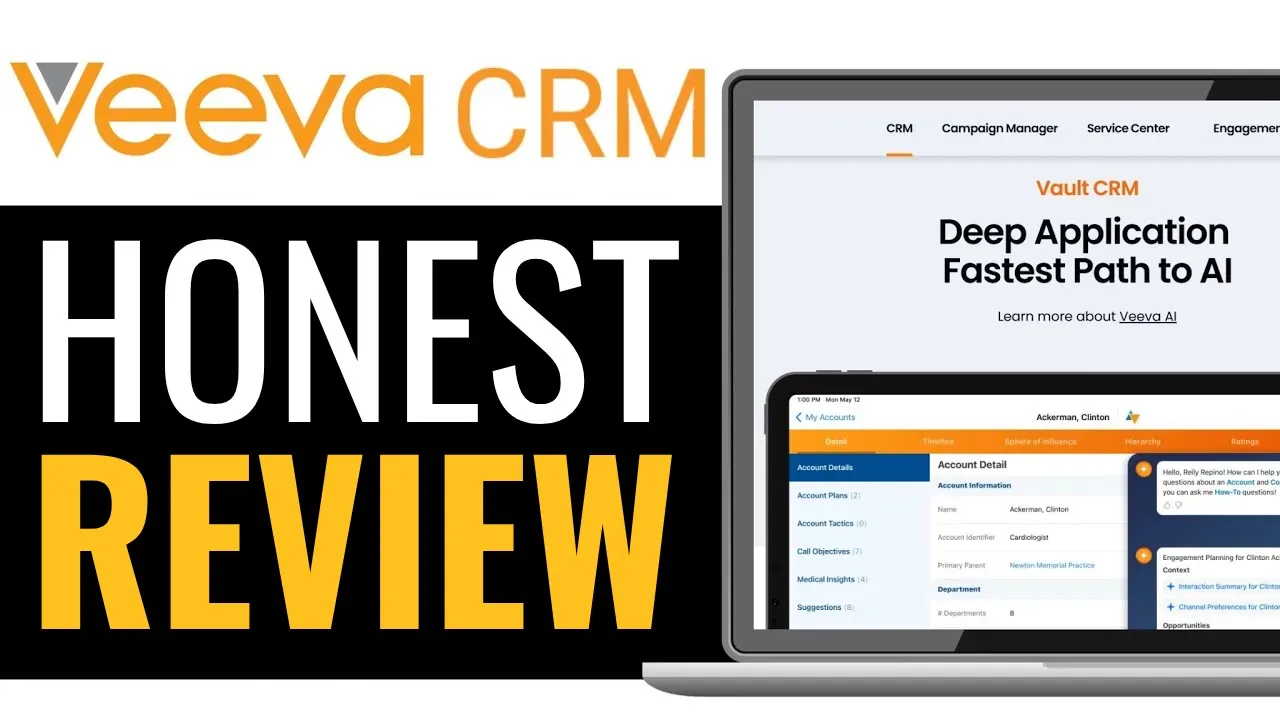
Veeva CRM Review - Watch Before Using 2025 (HONEST REVIEW)
How To Tutor
/@Howtotutoryt
Jun 19, 2025
This video provides an in-depth, honest review of Veeva CRM, positioning it as a highly specialized, cloud-based solution tailored exclusively for the life sciences industry. The review establishes that Veeva CRM is fundamentally different from general-purpose Customer Relationship Management systems, focusing instead on the unique demands of pharmaceutical sales representatives, biotech field teams, and medical device companies. The core value proposition emphasized throughout the review is the platform’s ability to handle regulatory compliance, facilitate effective Healthcare Provider (HCP) engagement, and manage complex field coordination—all critical requirements within a regulated environment. The analysis details the platform's significant advantages, starting with its tailored workflows. Veeva CRM offers pre-built modules specifically designed for field medical teams and HCP interactions, which significantly speeds up user onboarding. A key feature for the target audience is its mobile-first design, particularly its optimization for the iPad, ensuring field representatives have a seamless experience. Crucially for remote work, the platform provides robust offline access. Furthermore, the review notes the strength of Veeva’s integration capabilities, highlighting its seamless ties into the broader enterprise ecosystem, including Veeva Vault, Salesforce, and CLM (Closed Loop Marketing) content. However, the review balances these benefits with substantial drawbacks that potential users must consider. The primary challenge identified is the complexity associated with customization. The speaker warns that effective administration requires an individual proficient in a "Fluent Veeva Salesforce hybrid," indicating a steep and specialized learning curve. Furthermore, the platform is explicitly labeled as "enterprise grade," meaning it comes with enterprise pricing and is unsuitable for small budgets. The final limitation noted is its lack of utility outside of the pharma and life sciences sector. The concluding verdict firmly positions Veeva CRM as the optimal choice for organizations in pharma, medtech, or biotech requiring high compliance standards, while advising general sales teams to opt for simpler alternatives like HubSpot or vanilla Salesforce. Key Takeaways: • Veeva CRM’s core differentiation lies in its explicit focus on regulatory compliance, HCP engagement, and specialized field coordination, validating the necessity of deep industry knowledge when implementing or customizing the platform. • The requirement for an administrator skilled in the "Fluent Veeva Salesforce hybrid" highlights a critical pain point for clients—the complexity of customization—which directly confirms the high demand for specialized Veeva CRM consulting and integration expertise. • The platform's mobile-first design and essential offline access capabilities dictate that any custom AI solutions or software integrations developed by IntuitionLabs must prioritize mobile compatibility and robust functionality in disconnected environments. • Strong integration with the Veeva ecosystem (Veeva Vault, CLM) and Salesforce confirms that clients operate within a complex data landscape, requiring sophisticated data engineering services to ensure pipeline robustness and accurate business intelligence reporting. • The "enterprise grade" cost structure confirms that the platform is primarily adopted by large pharmaceutical, biotech, and medical device organizations, aligning perfectly with IntuitionLabs.ai’s target market for high-value AI and consulting services. • Pre-built modules for HCPs and field medical teams suggest clear entry points for deploying intelligent automation, such as Generative AI Sales Ops Assistants, which can enhance existing, specialized workflows without requiring fundamental platform restructuring. • The steep learning curve and complexity of customization present a significant opportunity for IntuitionLabs to offer managed services, specialized training, and expert system administration support to maximize client ROI on their Veeva investment. • The video explicitly warns against using Veeva CRM for general sales needs, reinforcing the platform's niche status and the necessity for solutions providers to maintain strict adherence to life sciences regulatory and commercial requirements. • The emphasis on tailored workflows and fast onboarding through specialized modules indicates that clients are seeking solutions that fit their regulated processes immediately, favoring targeted, industry-specific AI agents over generalized automation tools. Tools/Resources Mentioned: * Veeva CRM * Veeva Vault * Salesforce * CLM (Closed Loop Marketing) * HubSpot * Zoho Key Concepts: * **HCP Engagement:** Interactions and relationship management with Healthcare Providers, a critical and regulated activity in the life sciences sector. * **Field Coordination:** Managing the activities, schedules, and resources of field-based teams (sales reps, medical science liaisons). * **Regulatory Compliance:** The necessity for the CRM system to adhere to strict industry regulations (e.g., FDA, GxP, 21 CFR Part 11) regarding data handling, audit trails, and reporting. * **Mobile First/Offline Access:** Essential requirements for pharmaceutical field teams who often work remotely or in locations with unreliable connectivity.
Executing Fast, Thinking Slow: How Matt Wallach Scaled Veeva into a $2.75B Powerhouse
Outthinker Network
/@OutthinkerNetwork
Jun 18, 2025
This video features Matt Wallach, co-founder of Veeva Systems, detailing the company's journey to becoming a leading enterprise software provider in the life sciences industry. Wallach emphasizes that focused execution, rather than just strategy, was the primary driver of Veeva's success. He discusses how Veeva pioneered cloud-based solutions for pharmaceutical companies, strategically chose initial customers, and maintained product discipline by often saying "no" to feature requests to ensure a streamlined, user-friendly CRM. A pivotal decision was to go deep into the life sciences sector, building an integrated suite of "best-of-breed" applications on their proprietary Vault platform, which allowed clients to consolidate numerous vendors and reduce integration costs. Wallach also highlights the strategic and ethical advantages of becoming a Public Benefit Corporation, fostering long-term trust with customers and enhancing industry collaboration. Key Takeaways: * **Execution Over Strategy:** While good strategies are important, disciplined and focused execution is what truly differentiates and drives high-growth companies, particularly in complex, regulated environments. * **Strategic Customer Selection & Product Focus:** Early customer selection should prioritize innovative or "desperate" partners willing to take a risk, rather than the largest clients. Maintaining product integrity by saying "no" to non-essential feature requests is crucial for building a simple, effective, and widely adopted solution. * **Deep Niche Specialization:** Veeva's decision to go "deep" into life sciences, rather than expanding its CRM to other industries, created decades of growth opportunities by addressing a wide range of specific industry needs (commercial, clinical, R&D, quality, regulatory) with tailored products. * **Integrated Suite of Best-of-Breed Applications:** Developing a platform that offers multiple best-in-class applications allows companies to replace numerous disparate vendors, significantly reducing client costs related to vendor management, data integration, and system maintenance. * **Public Benefit Corporation as a Strategic Advantage:** Adopting a PBC structure can codify a company's long-term commitment to stakeholders beyond shareholders (e.g., customers, employees, industry), building trust and enhancing credibility in regulatory and industry-wide discussions. * **Culture of Values and Efficiency:** Clear core values (e.g., do the right thing, customer success, speed) guide daily decision-making and foster a culture of productivity. Additionally, prioritizing "doers" over "managers" in early stages helps maintain lean operations and focus on core product development.

Veeva Systems (VEEV) and Pultegroup (PHM): 6/17/25 Bull & Bear
Zacks Investment Research
/@ZacksInvestmentNews
Jun 17, 2025
This video segment, produced by Zacks Investment Research, functions as a daily financial market analysis feature designed to identify high-potential investment opportunities and significant risks. The segment is structured around the proprietary Zacks Ranking system, highlighting a "Bull of the Day" (a Zacks Rank #1, Strong Buy) and a "Bear of the Day" (a Zacks Rank #5, Strong Sell). The specific companies under review in this broadcast are Veeva Systems (VEEV) and Pultegroup (PHM). The primary purpose is to deliver concise, actionable stock recommendations based on quantitative analysis of earnings estimate revisions, which Zacks considers the most reliable predictor of short-term stock performance. The core methodology driving the segment is the Zacks Rank, a highly structured system that evaluates changes in analyst consensus regarding a company's future earnings. This framework provides a critical snapshot of market sentiment toward key industry players. For IntuitionLabs.ai, a firm specializing in Veeva CRM consulting and AI solutions for the life sciences sector, the financial health and market perception of Veeva Systems are strategically vital. The segment implicitly addresses the market’s current valuation of Veeva, a dominant provider of regulated cloud software for the pharmaceutical industry, offering insight into the stability and growth trajectory of the core platform that IntuitionLabs.ai supports. While the provided transcript only captures the introductory announcement and the promotion of Zacks’ services, the segment’s structure implies a detailed discussion of the factors influencing Veeva’s assigned rank. This analysis would typically cover recent quarterly performance, competitive landscape shifts, and the impact of new product lines (such as Veeva’s expansion into clinical data management or quality management). Understanding whether Veeva is currently categorized as a "Bull" or a "Bear" provides essential strategic context regarding potential platform investment, the stability of the regulated enterprise software market, and the confidence level of the financial community in the long-term viability of the life sciences technology ecosystem. Key Takeaways: * **Strategic Monitoring of Veeva’s Financial Health:** The inclusion of Veeva Systems (VEEV) in a high-profile financial analysis segment confirms its status as a critical bellwether for the life sciences technology sector, making its market performance a mandatory tracking point for IntuitionLabs.ai. * **Platform Stability Indicator:** Tracking Veeva’s Zacks Rank (Strong Buy or Strong Sell) provides an early, data-driven indicator of the platform’s perceived market stability and growth potential, directly influencing client confidence and investment in Veeva-centric consulting projects. * **Understanding Zacks Ranking:** The analysis is based on the Zacks Rank system, which heavily weights changes in earnings estimate revisions. This signals that Veeva’s short-term stock performance is primarily driven by analyst expectations regarding its future profitability and growth momentum. * **Implications of a "Strong Buy" Designation:** If Veeva is designated the "Bull," it suggests strong financial community confidence, potentially leading to accelerated platform adoption, increased Veeva R&D spending, and a more favorable environment for IntuitionLabs.ai’s specialized consulting services. * **Implications of a "Strong Sell" Designation:** If Veeva is designated the "Bear," it indicates significant negative pressure on earnings estimates. This requires IntuitionLabs.ai to proactively assess potential risks, such as increased competition or slowing sales cycles, and reinforce the value proposition of their custom AI solutions independent of platform volatility. * **Competitive Intelligence Gathering:** The full analysis (implied by the segment format) offers valuable competitive intelligence regarding Veeva’s market challenges, strategic focus areas, and potential product weaknesses, which can inform IntuitionLabs.ai’s own product development roadmap for AI and LLM solutions. * **Market Sentiment on Regulated Software:** The segment provides insight into the broader investor sentiment toward specialized, regulated enterprise software providers, offering a macro view that is crucial for IntuitionLabs.ai as a bespoke software developer operating within the same highly regulated environment. * **Data-Driven Decision Making:** The segment emphasizes the use of quantitative financial metrics (earnings estimates) for investment prediction, aligning with IntuitionLabs.ai’s core service offering of data engineering and business intelligence aimed at delivering actionable, data-driven insights to pharmaceutical clients. Tools/Resources Mentioned: * Zacks Rank System (Proprietary stock ranking methodology) * Zacks.com/bull (Resource for handpicked stock recommendations) Key Concepts: * **Zacks Rank #1 (Strong Buy):** The highest ranking, indicating a stock is expected to significantly outperform the market over the next one to three months, primarily due to recent positive revisions in earnings estimates. * **Zacks Rank #5 (Strong Sell):** The lowest ranking, indicating a stock is expected to underperform the market, typically due to negative revisions in earnings estimates and poor short-term financial outlook. * **Bull of the Day:** The stock selected by Zacks as the highest conviction "Strong Buy" recommendation for the day. * **Bear of the Day:** The stock selected by Zacks as the highest conviction "Strong Sell" recommendation for the day.

Veeva Vault + MarketBeam: Seamless Social Media Compliance for Pharma Brands
MarketBeam
/@marketbeam9638
Jun 16, 2025
This video introduces MarketBeam as the definitive social media publishing platform for the pharmaceutical and medtech industries, emphasizing its unique compliance capabilities achieved through deep integration with Veeva Vault PromoMats. The core thesis is that general-purpose social media management tools, such as Sprinkler and Sprout Social, are fundamentally inadequate for regulated environments because they lack the necessary compliance infrastructure and understanding of pharmaceutical workflows. MarketBeam positions itself as a purpose-built solution that eliminates the need for retrofitting generic tools, offering a unified, audit-ready platform from content creation through publication. The presentation focuses heavily on streamlining the Medical/Legal/Regulatory (MLR) review process, which is a critical bottleneck for pharma marketing teams. By integrating directly with Veeva PromoMats—the industry standard for content management and approval—MarketBeam ensures that all social content adheres to approved materials and undergoes the necessary internal reviews before going live. Crucially, the platform extends its compliance features beyond pre-publication review to real-time post-publication monitoring. It is designed to instantly detect adverse events (AEs) mentioned in comments or replies, immediately notifying the Pharmacovigilance (PV) team. This capability ensures that pharmaceutical companies meet their stringent reporting obligations promptly and compliantly, mitigating significant regulatory risk. Furthermore, the solution addresses operational inefficiencies common when using disconnected systems. The video highlights the consolidation of analytics within the MarketBeam platform, eliminating the need for users to switch between multiple tabs or tools to track performance and compliance data. This unified workflow not only enhances efficiency but also ensures that all data related to social media activity—from initial MLR submission status to real-time AE detection reports—is centralized and audit-ready. The platform’s value proposition is centered on providing a scalable, compliant, and efficient solution that allows pharma brands to engage on social media without compromising their regulatory standing, positioning itself as the only viable option built specifically for the demands of regulated industries. Key Takeaways: • **Generic Tools are Insufficient for Pharma:** The video explicitly names generic social media management platforms (Sprinkler, Sprout Social) as unsuitable for pharmaceutical companies because they inherently lack the necessary compliance infrastructure required for regulated content approval and monitoring. • **Veeva Vault PromoMats Integration is Essential:** MarketBeam’s primary value proposition is its seamless, direct integration with Veeva Vault PromoMats, which allows the MLR review process to be fully integrated into the social media workflow, ensuring every post is approved against official, compliant assets. • **Automated MLR Workflow Streamlining:** The integration eliminates manual processes and disconnected tools, providing a unified workflow that speeds up the critical Medical/Legal/Regulatory review cycle, thereby accelerating time-to-market for compliant social content. • **Real-Time Adverse Event (AE) Detection:** A core compliance feature is the platform's ability to detect adverse events mentioned on social media in real time, a mandatory requirement for pharmaceutical companies operating under FDA and EMA regulations. • **Instant PV Team Notification:** Upon detection of an adverse event, the system instantly notifies the Pharmacovigilance (PV) team, ensuring immediate action can be taken to fulfill reporting obligations and respond compliantly to the user. • **Audit-Ready Compliance Trails:** The platform ensures that every social media post, along with its approval history, compliance checks, and AE monitoring records, is automatically tracked and centralized, making the entire process fully auditable. • **Unified Analytics and Operational Efficiency:** MarketBeam consolidates social media analytics within one platform, preventing the need for users to switch between multiple tabs or systems, which significantly improves operational efficiency for sales and marketing teams. • **Purpose-Built for Regulated Industries:** The solution is marketed as "built for regulated industries, not retrofitted," highlighting that its architecture and features are fundamentally designed around GxP and compliance requirements, offering greater stability and reliability than customized generic solutions. • **Focus on Medtech and Pharma:** The platform targets both pharmaceutical companies and medical device manufacturers (medtech), indicating its applicability across the broader life sciences sector where strict compliance standards are mandatory. • **Scalability and Excellence:** The system is designed to enable "pharma marketing excellence" by providing a scalable solution that maintains compliance regardless of the volume of content or the size of the organization's social media presence. Tools/Resources Mentioned: * MarketBeam (Social Media Compliance Platform) * Veeva Vault PromoMats (Pharmaceutical Content Management System) * Sprinkler (Generic Social Media Management Tool, cited as inadequate) * Sprout Social (Generic Social Media Management Tool, cited as inadequate) Key Concepts: * **MLR Review (Medical/Legal/Regulatory Review):** The mandatory internal process in pharmaceutical companies where marketing and promotional materials must be reviewed and approved by medical, legal, and regulatory teams before public dissemination. * **Adverse Events (AEs):** Any unwanted or harmful event experienced by a patient while receiving a medical product; mandatory reporting of AEs mentioned on public platforms is a critical regulatory requirement for pharma companies. * **PV Team (Pharmacovigilance Team):** The department responsible for the collection, detection, assessment, monitoring, and prevention of adverse effects from pharmaceutical products. * **Regulated Industries:** Sectors, such as pharmaceuticals and medtech, that are subject to strict governmental oversight (e.g., FDA, EMA) regarding product promotion, safety, and data handling.

Veeva Vault Tutorial (2025) | Cloud-Based Content, Data Management, Life Science Demo
Digibase Media
/@Digibase-Media
Jun 13, 2025
This video provides a beginner-friendly tutorial on Veeva Vault, a cloud-based content and data management platform specifically designed for highly regulated industries such as life sciences, pharmaceuticals, and biotech. The speaker walks viewers through the core functionalities and benefits of Veeva Vault, emphasizing its role in streamlining workflows and ensuring compliance across various operational areas. The tutorial highlights how the platform helps teams manage documents, processes, and data in a single, secure environment, eliminating the need for disparate systems and manual tracking. It covers the breadth of Veeva's offerings, from R&D and quality control to commercial operations and regulatory submissions, positioning Veeva Vault as a comprehensive solution for complex industry challenges. The tutorial progresses by exploring the Veeva website, showcasing the main business categories served by Veeva, including Clinical, Regulatory, Quality, Safety, Medical, and Commercial. It then delves into the specific products offered within these categories, such as Veeva eTMF and CTMS for clinical operations, Veeva RIM for regulatory affairs, and specialized solutions for safety, quality, and medical affairs. A significant portion of the video is dedicated to the core features of the Veeva Vault platform itself, detailing its capabilities in content and data management, its proven integration with over 50 applications, and its open API for seamless integration with other systems. The speaker also touches upon the upcoming integration of Veeva AI into the Vault platform, promising enhanced data control and intelligent automation. Further insights are provided into Veeva Vault's technical underpinnings, including the Vault Object Framework (VOF) for creating custom objects to manage business processes, and its robust compliance and validation features designed to meet stringent industry standards. The video also explains how Veeva Vault improves business processes through lifecycle and workflow management, process reporting, and Vault Connection for automating cross-functional workflows. The user interface is described as intuitive and role-task-based, simplifying user experience, while flexible reporting capabilities offer advanced data insights. The tutorial concludes by highlighting Veeva's comprehensive services, including business consulting and educational support, and specifically showcases Veeva Vault CRM for medical teams, underscoring its specialized features for scientific exchange, stakeholder profiling, and offline data access, making it an invaluable tool for medical and data science professionals in the life sciences sector. Key Takeaways: * **Veeva Vault's Core Purpose:** Veeva Vault is a cloud-based content and data management platform tailored for highly regulated industries like pharmaceuticals, biotech, and life sciences, designed to centralize document, process, and data management for enhanced efficiency and compliance. * **Comprehensive Industry Coverage:** The platform addresses critical needs across R&D, Quality, and Commercial operations, encompassing areas such as clinical trials, regulatory submissions, quality control, promotional materials, and medical affairs. * **Modular Product Ecosystem:** Veeva offers specialized Vault applications for various functions, including Veeva eTMF and CTMS for Clinical, Veeva RIM for Regulatory, and dedicated Vaults for Safety, Quality, Medical, and Commercial operations. * **Integrated Content and Data Management:** Veeva Vault serves as a single source of truth for managing both content and data, ensuring consistency and security across over 50 applications within a validated environment. * **Extensible Data Model (VOF):** The Vault Object Framework (VOF) allows organizations to create custom objects, enabling the management of unique business processes and adapting the platform to specific operational requirements. * **Robust Compliance and Validation:** Veeva Vault provides comprehensive validation packages and features designed to help companies meet stringent regulatory standards, including GxP and 21 CFR Part 11 requirements, by streamlining compliance tracking and audit trails. * **Advanced Integration Capabilities:** The platform supports integration with other systems through open APIs and a Java SDK, allowing for seamless data exchange, extended application functionality, and the fueling of advanced analytics. * **Process Automation and Workflow Management:** Veeva Vault enhances business processes through configurable lifecycle and workflow management, process reporting, and Vault Connection, which automates cross-functional workflows and data synchronization. * **Intuitive User Experience:** The platform features an intuitive, role- and task-based user interface that simplifies navigation and interaction, making it easier for users to manage data and utilize tools effectively. * **Flexible Reporting and Analytics:** Users can generate advanced reports on their data, with easy configuration and management options within Vault, providing actionable insights for decision-making. * **Upcoming AI Integration:** Veeva is integrating AI into its Vault platform and applications, promising to give users even greater control over their data and introduce intelligent automation capabilities. * **Veeva CRM for Medical Specialization:** Veeva Vault CRM for Medical is specifically designed for scientific exchange, offering key capabilities for medical field teams such as stakeholder profiling, planning, content sharing, and capturing medical insights. * **Offline Access for Field Teams:** Veeva CRM for Medical provides offline access to data on mobile devices (iPad, iPhone, Android), ensuring that field teams can maintain productivity and access critical information even without an internet connection. * **Comprehensive Support and Consulting:** Veeva offers extensive services, including business consulting, educational services, and community support, to ensure customer success across the entire event lifecycle and platform utilization. Tools/Resources Mentioned: * Veeva Vault * Veeva CRM * Veeva eTMF (electronic Trial Master File) * Veeva CTMS (Clinical Trial Management System) * Veeva RIM (Regulatory Information Management) * Veeva Safety * Veeva Quality * Veeva MedComms * Veeva Med Inquiry * Veeva Station Manager * Veeva AI * Open API * Java SDK Key Concepts: * **Cloud-Based Content and Data Management:** A system that stores and manages digital content and data on remote servers accessible via the internet, offering scalability, security, and accessibility. * **Vault Object Framework (VOF):** Veeva's proprietary data model that allows users to create custom objects to manage specific business processes and data types within the Veeva Vault platform, enabling high configurability. * **Scientific Exchange:** The process of sharing scientific and medical information between pharmaceutical companies and healthcare professionals, often facilitated by medical affairs teams. * **GxP (Good x Practice):** A collection of quality guidelines and regulations for various aspects of regulated industries, including Good Manufacturing Practice (GMP), Good Clinical Practice (GCP), and Good Laboratory Practice (GLP), ensuring product quality and safety. * **21 CFR Part 11:** Regulations issued by the FDA that set forth the criteria under which electronic records and electronic signatures are considered trustworthy, reliable, and equivalent to paper records and handwritten signatures.

Trump's "Most Favored Nation" Executive Order, with Shawn Ferguson | Last Month In Healthcare
Self-Funded
@SelfFunded
Jun 13, 2025
This video provides an in-depth exploration of recent headlines and trends in the healthcare industry, with a particular focus on pharmaceutical pricing, regulatory oversight, and the burgeoning role of artificial intelligence. The hosts, Spencer and Nathaniel, along with guest Shawn Ferguson, review key news from May 2025, discussing the implications of policy changes, technological advancements, and market dynamics. The conversation delves into the controversial "Most Favored Nation" executive order concerning drug pricing, the FDA's internal adoption of AI for drug approval processes, and the alarming increase in new drug costs, especially for rare diseases. A significant portion of the discussion centers on the pharmaceutical sector's challenges and opportunities. The "Most Favored Nation" order, aimed at aligning U.S. drug prices with lower international rates, sparks debate about its potential impact on pharmaceutical R&D and the broader market. The speakers critically examine the industry's arguments against such policies, highlighting the existing imbalances in global drug pricing. Furthermore, the FDA's strategic move to deploy generative AI, in collaboration with OpenAI, for streamlining drug approval tasks is presented as a potentially transformative step, promising greater efficiency and precision in regulatory reviews, which could ultimately influence R&D costs. Beyond policy and regulation, the video also reviews several past podcast episodes, with one particularly relevant segment discussing Signos, an AI-powered solution utilizing Continuous Glucose Monitors (CGMs). This segment highlights the application of AI in personalized health management, behavior change, and the collection of longitudinal data. The Signos app, which integrates wearable data and provides actionable prompts for diet and exercise, is positioned as an effective, sustainable alternative or complement to GLP1 medications for weight management, emphasizing the power of AI in driving positive health outcomes and addressing chronic conditions through behavioral modification. The discussion also touches upon broader healthcare issues like food additives, the rise of ambulatory surgery centers, and alleged kickback schemes in Medicare, providing a comprehensive, albeit varied, look at the current healthcare landscape. Key Takeaways: * **Most Favored Nation (MFN) Drug Pricing Policy:** Trump's executive order aims to reduce U.S. drug prices by linking them to the lowest prices paid in other developed nations. While the intent is to address price disparities, concerns exist regarding potential unintended consequences, lobbying efforts, and the pharmaceutical industry's claims of hampered R&D. * **AI Integration in FDA Processes:** The U.S. FDA is deploying generative AI internally, in partnership with OpenAI, to enhance the drug approval process. This initiative is intended to reduce time spent on repetitive administrative and research tasks, aiming for increased efficiency and precision in regulatory reviews. * **Escalating Drug Costs:** The median annual list price for new U.S. drugs has doubled in four years, reaching over $370,000 in 2025, with a growing focus on rare diseases. This trend underscores the financial burden on healthcare systems and patients, prompting discussions on R&D costs and the role of middlemen in pricing structures. * **Impact of R&D Costs on Drug Pricing:** The pharmaceutical industry frequently cites high R&D costs as a justification for high drug prices. The adoption of AI by the FDA and other entities could potentially decrease these R&D expenses, theoretically leading to lower drug costs, though whether this translates to consumer savings remains a point of contention. * **Transparency in Drug Pricing and Rebates:** The discussion highlights the complexity and lack of transparency in drug pricing, particularly concerning the rebate structure where Pharmacy Benefit Managers (PBMs) often collect significant portions of rebates, raising questions about the true cost and value for employers and patients. * **AI for Personalized Health and Behavior Change (Signos):** The Signos platform, utilizing CGMs and AI, offers a personalized approach to diet and exercise by monitoring blood sugar responses and integrating wearable data. It provides actionable prompts to foster sustainable behavior change, presenting a data-driven alternative or complement to pharmacological interventions like GLP1s. * **Longitudinal Data for Health Outcomes:** The Signos model emphasizes the importance of collecting longitudinal data over extended periods to understand individual physiological responses and drive effective, lasting behavioral modifications, moving beyond short-term interventions. * **Food System Scrutiny:** The FDA's plan to review chemicals in the U.S. food supply, such as BHT, points to a growing awareness and concern about additives that are often restricted or illegal in other developed countries, highlighting a broader regulatory push for public health. * **Healthcare Delivery Models:** The trend of hospitals outsourcing minor surgeries to ambulatory surgery centers (ASCs), as exemplified by Cleveland Clinic and Regent Surgical, aims to reduce costs and improve patient experience by separating routine procedures from acute care settings, potentially mitigating risks like hospital-acquired infections. * **Ethical Concerns in Healthcare Incentives:** The DOJ lawsuit against major health insurers for alleged kickback schemes with brokers underscores the pervasive issue of perverse financial incentives in the healthcare industry, particularly in Medicare, where profit motives may compromise patient interests, especially for vulnerable populations like those with disabilities. Tools/Resources Mentioned: * **OpenAI:** Collaborating with the FDA for generative AI deployment in drug approval processes. * **Continuous Glucose Monitors (CGMs):** Utilized by platforms like Signos for real-time blood sugar monitoring and personalized health insights. * **Wearable Data:** Integrated by AI health apps (e.g., Signos) to provide comprehensive health monitoring and behavioral prompts. * **LinkedIn:** Mentioned as a platform for professional networking and marketing, with Sims Tillerson cited as an expert. * **Giftology (Book):** Authored by John Rulan, mentioned in the context of authentic relationship building. Key Concepts: * **Most Favored Nation (MFN) Executive Order:** A policy aimed at ensuring a country pays no more for goods (in this case, medications) than the lowest price offered in other developed nations. * **Generative AI:** Artificial intelligence capable of generating new content, such as text, images, or other media, used by the FDA to automate and streamline tasks. * **Longitudinal Data:** Data collected from the same subjects over an extended period, crucial for understanding long-term trends, behavioral changes, and the efficacy of interventions. * **Ambulatory Surgery Centers (ASCs):** Outpatient facilities where surgical procedures that do not require an overnight hospital stay are performed, typically at a lower cost than hospitals. * **Pharmacy Benefit Managers (PBMs):** Third-party administrators of prescription drug programs for commercial health plans, self-insured employer plans, Medicare Part D plans, and other government programs, often involved in rebate negotiations. Examples/Case Studies: * **Signos:** An AI-powered app that uses CGMs and other wearable data to provide personalized diet and exercise recommendations, aiming for sustainable weight loss and behavior change, positioned as an alternative or complement to GLP1s. * **Chick-fil-A Sandwich Ingredients:** Cited as an example of common fast food items containing a surprisingly large number of ingredients (55 mentioned), many of which are unpronounceable chemicals, raising questions about food additives and processing. * **John Rulan's AI Chatbot Clone:** An example of leveraging AI to preserve and continue the legacy and work of an individual after their passing, by uploading their body of work and voice into an AI chatbot.

The Truth About Pharma AI: Capabilities & Limitations in Salesforce and Veeva
Ciberspring
/@Cibersping
Jun 10, 2025
This video provides an in-depth exploration of the practical realities, capabilities, and limitations of Artificial Intelligence within pharmaceutical CRM systems, specifically focusing on Salesforce and Veeva platforms. The discussion aims to cut through marketing hype, offering a shortcut to understanding what AI can genuinely achieve today in a highly regulated industry like pharma. It delves into concrete use cases across commercial operations and medical affairs, highlighting architectural differences between the two dominant CRM providers and outlining significant hurdles to AI adoption. The presentation details several high-impact AI applications currently in use. On the commercial side, AI assists with pre-call planning and rep guidance, optimizing crucial HCP interactions by generating instant summaries of past engagements, pulling relevant content, and suggesting next best actions. Salesforce's Einstein GPT and Agent Force are noted for their native capabilities in this area, while Veeva achieves similar outcomes often through custom configuration or external analytical layers. The video also contrasts Salesforce Data Cloud's strength in unifying disparate internal and external data for comprehensive 360-degree stakeholder views and campaign optimization with Veeva Link's focus on providing pre-curated external data on Key Opinion Leaders (KOLs) and HCPs. For medical affairs, AI is shown to be impactful in medical inquiry triage, where Salesforce AI agents can automatically route inquiries, draft initial responses from approved documents, and flag potential adverse events. Furthermore, AI aids in literature monitoring and content personalization by scanning scientific publications, alerting Medical Science Liaisons (MSLs) to relevant findings, and suggesting tailored content based on HCP interaction history. Enhancing KOL engagement through AI-driven assessment of influence and personalized plans is also discussed. A critical distinction is drawn between Salesforce's "built-in AI" architecture, which natively integrates AI engines like Einstein and Agent Force with its data cloud, and Veeva's "add-on AI" approach, which typically requires layering external analytics platforms or custom development for advanced AI functionalities. Despite the promising capabilities, the video emphasizes significant limitations to AI adoption in pharma CRM. These include persistent data fragmentation, the non-negotiable regulatory barrier of Medical, Legal, and Regulatory (MLR) review for all external communications, the critical need for AI explainability and user trust, and the overarching challenge of organizational readiness. The discussion concludes with practical advice for companies, suggesting a focus on identifying high-friction areas, assessing data and regulatory landscapes, and considering platform-specific strategies—leveraging native tools for Salesforce users or exploring a hybrid approach for Veeva customers by integrating Salesforce Data Cloud for data unification and advanced AI pilots. Key Takeaways: * **AI in Pharma CRM is Real, but Nuanced:** While AI buzz is pervasive, its practical application in regulated pharma CRM involves a significant gap between theoretical possibilities and implemented, usable solutions today. * **Commercial AI Use Cases:** AI is actively enhancing commercial operations by optimizing pre-call planning and rep guidance (e.g., instant HCP summaries, next best actions), improving segmentation and targeting, and refining omni-channel campaign strategies. * **Medical Affairs AI Applications:** AI provides tangible benefits for medical affairs, including automated medical inquiry triage, intelligent literature monitoring, personalized content recommendations for MSLs, and enhanced KOL engagement planning. * **Salesforce's "Built-in AI" Advantage:** Salesforce's architecture, featuring native AI engines (Einstein, Agent Force) deeply integrated with its Data Cloud, offers real-time data unification (zero-copy architecture), low-code customization, and inherent compliance inheritance from the broader Salesforce ecosystem, reducing integration friction for new AI use cases. * **Veeva's "Add-on AI" Approach:** Veeva CRM, while strong in core CRM functionality, typically achieves advanced AI capabilities by layering external analytics platforms, data vendors (like Veeva Link), or custom development, which can lead to more complex, costly, and less seamless integration. * **Data Unification is Foundational:** AI models are only as effective as the data they access. Salesforce Data Cloud's ability to ingest and unify disparate internal and external data sets (CRM, payer, patient, digital engagement) is crucial for building comprehensive stakeholder views and enabling robust AI insights. * **Regulatory Hurdles (MLR) are Paramount:** The mandatory Medical, Legal, and Regulatory (MLR) review process for all AI-generated external content or guidance creates an inherent speed limit, preventing immediate deployment of AI outputs and emphasizing human oversight. * **Explainability and Trust Drive Adoption:** For field reps and MSLs to adopt AI tools, they must understand *why* an AI recommendation is made. Opaque "black box" suggestions lead to distrust and non-usage, highlighting the importance of platform design that provides reasoning chains or prompt transparency. * **Organizational Readiness is Key:** Successful AI implementation requires more than just technology; it demands internal AI literacy, clear governance structures for AI usage and data, and robust change management plans to ensure teams effectively adopt new AI-powered workflows. * **Strategic Recommendations for Salesforce Users:** Companies heavily invested in Salesforce should leverage its native AI tools (Einstein, GPT, Agent Force, Data Cloud) by starting with targeted pilots in high-friction areas to demonstrate concrete value on a small scale. * **Hybrid Approach for Veeva Customers:** Organizations primarily using Veeva CRM may benefit from a hybrid strategy, integrating Salesforce Data Cloud and its native AI capabilities alongside their existing Veeva ecosystem to achieve enterprise-wide data unification and enable advanced AI pilots with less friction. * **Focus on Measurable Outcomes:** The true value of AI in CRM is not just having smart technology, but in delivering tangible business results such as reduced admin time for reps, faster medical response times, and improved relevance of HCP engagements. * **AI Augments, Not Replaces, Human Expertise:** AI in pharma is a tool to make highly skilled teams more efficient and effective by automating repetitive tasks, providing intelligent guidance, and scaling strategies, thereby freeing human experts to focus on high-value interactions and critical decision-making where human judgment is indispensable. Tools/Resources Mentioned: * Salesforce * Veeva CRM * Salesforce Einstein GPT * Salesforce Agent Force * Salesforce Data Cloud * Veeva Link * Veeva My Insights dashboards * Slack (for notifications with Salesforce) * Tableau (for visualizations with Salesforce) Key Concepts: * **Built-in AI:** AI functionality natively integrated into the core platform architecture, designed to work seamlessly within existing data and workflow layers, often inheriting security and compliance frameworks. * **Add-on AI:** AI functionality achieved by layering external analytics platforms, data vendors, or custom development on top of a core platform, typically requiring more integration effort. * **Zero-copy architecture:** A data management approach that connects to data where it lives without needing to make endless copies, crucial for data governance and security, especially in regulated industries. * **MLR (Medical, Legal, and Regulatory) Review:** The mandatory process in the pharmaceutical industry for reviewing and approving all external communications and content to ensure compliance with regulations and accuracy of medical information. * **Explainability (of AI):** The ability to understand and interpret how an AI model arrived at a particular decision or recommendation, crucial for building user trust and ensuring compliance in regulated environments. * **HCP (Healthcare Professional):** A general term for individuals in the healthcare field, such as doctors, nurses, and pharmacists. * **KOL (Key Opinion Leader):** Influential individuals in a specific medical field whose opinions are highly respected and can influence the practices of other healthcare professionals. * **MSL (Medical Science Liaison):** Scientific experts employed by pharmaceutical companies to engage with healthcare professionals and researchers, providing scientific and medical information. Examples/Case Studies: * **Pre-call planning and rep guidance:** AI generating instant summaries of an HCP's past interactions, pulling recent scientific content, and suggesting next best actions for a sales rep. * **HCP prioritization:** AI identifying which HCPs a rep should call based on formulary changes, prescription trends, or new data releases. * **Medical inquiry triage:** Salesforce AI agents automatically routing inquiries, drafting initial response suggestions from approved documents, and flagging potential adverse events. * **Literature monitoring and content personalization:** Salesforce Einstein scanning scientific publications to identify relevant research for MSLs and suggesting personalized scientific content to HCPs based on interaction history. * **KOL engagement enhancement:** AI assessing a KOL's influence by combining scientific contributions with digital activity to suggest customized engagement plans.
VālenzONE: A Deep Dive Into Optimized Healthcare | with Rob Gelb
Self-Funded
@SelfFunded
Jun 10, 2025
This video provides an in-depth exploration of VālenzONE, a "health plan optimizer" designed to address the complexities and rising costs within the self-funded employer healthcare market. Rob Gelb, CEO of Vālenz, discusses the company's evolution from a collection of acquired point solutions to a fully integrated platform, emphasizing a proactive, data-driven approach to healthcare management. The conversation highlights the critical need for innovation in a system often perceived as broken, advocating for a shift from reactive "sick care" to early engagement and comprehensive risk management. Gelb details Vālenz's journey, starting with its foundation as loosely affiliated acquisitions in out-of-network negotiation, care management, and a unique payer/provider technology business (Zebu Compliance Solutions). The company recognized "point solution fatigue" among its customers, who were struggling with integrating multiple vendors. This led to a strategic pivot to become a unified "platform and chassis," integrating diverse solutions to offer a single, cohesive ecosystem for employers, TPAs, and carriers. The core vision, "simplify healthcare," aims to make the system easier for all stakeholders by improving data sharing, integration, and member experience, ultimately driving down costs. A significant portion of the discussion focuses on the philosophical underpinnings of VālenzONE, particularly the concept of "engaging early and often." Gelb argues that traditional healthcare is largely "sick care," reacting to acute situations rather than preventing them. VālenzONE seeks to reverse this by proactively educating members about their healthcare options, benefits, and cost-quality equations, even during open enrollment. The company leverages tools like the acquired Healthcare Blue Book (now Vālenz Blue Book) and outbound member engagement teams to guide individuals toward smarter healthcare choices, including surgical bundles and Centers of Excellence. The conversation also touches upon the broader societal issue of public health, linking obesity to chronic diseases and advocating for a focus on creating healthier human beings to reduce overall healthcare system interaction. The video also delves into the critical role of stop-loss insurance, reframing it as a financing option that should be integrated with plan design and risk management. Gelb criticizes the current approach where stop-loss is often considered after plan design, arguing that understanding claims data and proactively managing risk should inform stop-loss decisions. He introduces the "four Ps" framework—Payer, Provider, Patient, and Plan (Employer)—emphasizing the need for balance and alignment in cost, quality, and utilization across these stakeholders. Looking to the future, VālenzONE is presented as an alternative that could eventually lead to the "dissolution of a network" model, leveraging publicly available data and AI to direct care to cost-effective, quality providers, and advocating for collaboration with large carriers to modernize the system rather than fighting it. Key Takeaways: * **Addressing Point Solution Fatigue:** The healthcare market suffers from a proliferation of disconnected point solutions, leading to integration challenges and administrative burden for payers and employers. A unified platform approach, like VālenzONE, consolidates services to offer a more cohesive and efficient solution. * **Proactive vs. Reactive Healthcare:** The current system is largely "sick care," reacting to health issues after they arise. Innovation is needed to shift towards proactive engagement, preventing catastrophic situations through early intervention and member education. * **Data-Driven Cost Containment:** Leveraging millions of data points is crucial for identifying cost drivers and implementing effective cost-saving solutions. Analyzing claim data allows for targeted interventions that significantly reduce health plan spend for self-insured employers. * **The "Claim Cost Arc":** Effective healthcare management requires engaging members prospectively, at the front end of their healthcare journey. Failing to do so leads to increased retrospective spend, pushing costs "up and to the right." * **Early Member Engagement is Key:** Tools like engagement apps and outbound member engagement teams are vital for educating members during open enrollment and guiding them to understand their benefits, cost-quality equations, and available care options (e.g., surgical bundles, COEs) *before* they make healthcare choices. * **Redefining Stop-Loss:** Stop-loss insurance should be viewed as a financing option integrated with plan design and risk management, not an afterthought. Understanding claims data and actively managing risk should precede stop-loss decisions to optimize financing. * **The Four Ps Framework:** Balancing and aligning the interests of the Payer, Provider, Patient, and Plan (Employer) is essential for creating a functional and equitable healthcare system. Discontent arises from disconnect and misalignment of incentives among these stakeholders. * **Evolution of Network Models:** The traditional contracted network model may be reaching its utility limit. Future healthcare could involve the "dissolution of a network," with care directed based on publicly available cost and quality data, potentially parsed by AI, allowing members to access any provider. * **Pharmacy Benefit Management (PBM) Challenges:** Pharmacy costs, driven by high-cost drugs like cell and gene therapies and GLP1s, are a major concern. Solutions like 340B programs and greater transparency/integration of data with PBM partners are critical for cost reduction. * **Risk Management in Healthcare:** Commercial group health often overlooks proactive risk management. Employers and consultants should prioritize strategies to drive down the group's health risk profile, as this directly impacts stop-loss pricing and overall plan costs. * **Innovation through Collaboration:** Rather than viewing large carriers (BUAs) as adversaries, the industry should seek partnerships to modernize existing models. Collaboration can help integrate innovative solutions into broader healthcare offerings. * **Culture and Talent Attraction:** A strong company culture built on purpose, pride, transparency, and psychological safety is crucial for attracting and retaining top talent. Empowering employees with "room to roam" fosters innovation and commitment. * **Embracing Discomfort and "Spilling Milk":** Innovation is an iterative process that involves making mistakes and learning from them. Partners willing to "get comfortable being uncomfortable" and collaborate through trial and error are essential for driving progress. **Tools/Resources Mentioned:** * **Zebu Compliance Solutions:** A technology business acquired by Vālenz, focused on payer and provider side billing, licensing, and credentialing. * **Healthcare Blue Book (now Vālenz Blue Book):** An acquired company providing real-time member engagement to help understand cost-quality equations and care options. * **Engagement App:** A proprietary application used by Vālenz to touch members sooner and provide healthcare information. * **340B Option/Solution:** A program offered by Vālenz to help drive reduced pharmacy expense. * **Saiia (Self-Insured Institute of America):** A conference mentioned where Rob Gelb engages with customers and scans the market. **Key Concepts:** * **Point Solution Fatigue:** The overwhelming challenge faced by employers and payers in managing, integrating, and maintaining multiple single-purpose healthcare vendors. * **Platform and Chassis:** Vālenz's strategy to integrate various point solutions into a unified system (platform) that can also layer on new capabilities or partner solutions (chassis). * **Aspirational vs. Perspirational:** A Vālenz internal vocabulary distinction, referring to what the company *wants to be* (aspirational) versus what it *does today* (perspirational). The goal is to talk about the future to inspire innovation. * **Wayne Gretzky's Dad Analogy:** "Go to where the puck's going to be," meaning anticipating future needs and positioning the company to solve them. * **Simplify Healthcare:** Vālenz's vision to make the complex, messy, and convoluted healthcare system easier for everyone through better integration and data sharing. * **Claim Cost Arc:** A conceptual model illustrating that if healthcare costs are not managed proactively at the front end, they will inevitably rise retrospectively. * **Cardio-diabetes and Cardio-obesity:** Terms used to highlight the interconnectedness of obesity, diabetes, and cardiac issues, emphasizing the need for holistic health interventions. * **The Four Ps:** A framework (Payer, Provider, Patient, Plan/Employer) used by Vālenz to ensure balance and alignment in the cost, quality, and utilization equation of healthcare. * **Frenemies:** The concept of collaborating with competitors in certain areas where there is mutual benefit, even while competing in others. * **Room to Roam:** A Vālenz internal philosophy encouraging employees to have the freedom and time to explore ideas, connect, and contribute beyond their immediate tasks. **Examples/Case Studies:** * **Vālenz's Acquisition Strategy:** The company's initial foundation was built on acquiring businesses like United Claim Solutions (out-of-network negotiation), Inetico (care management), Zebu Compliance Solutions (payer/provider tech), and NX Health Networks (high-performance network contracting). * **RBP (Reference Based Pricing):** Discussed as an example of an idea that moved from curiosity to adoption to widespread acceptance, but then revealed "spilled milk" (problems) that now require further innovation. * **Homeowners Insurance Analogy:** Used to illustrate the over-insurance of routine healthcare costs, comparing it to using homeowners insurance to pay for utility bills or lawn care, which drives up premiums unnecessarily. * **Coca-Cola Analogy:** Used to explain transparency and competition, stating that while all ingredients are listed on a Coke can, no one else can replicate it exactly. The differentiator is "how you do it," not just "what you do."

Do Insurance Carriers Want Healthcare Costs Up or Down? It Depends.
AHealthcareZ - Healthcare Finance Explained
@ahealthcarez
Jun 8, 2025
This video provides an in-depth exploration of how health insurance carriers' financial incentives regarding healthcare costs vary significantly based on their specific lines of business. Dr. Eric Bricker, the speaker, systematically breaks down six distinct types of health plans, illustrating that there isn't a single answer to whether an insurer wants costs to go up or down; rather, "it depends" on the particular line of business a member is enrolled in. This nuanced perspective is crucial for understanding the complex financial motivations driving decisions within the healthcare ecosystem. The core of Dr. Bricker's analysis categorizes the lines of business into two main groups: employer-sponsored plans and government-sponsored plans, each with fundamentally different financial structures. For self-funded and fully-insured employer plans, the video argues that health insurance companies are incentivized to see healthcare costs rise. In self-funded arrangements, the carrier charges an Administrative Services Only (ASO) fee, while the employer directly pays the claims. Here, the carrier profits through its Pharmacy Benefit Manager (PBM) arm, which benefits from a higher volume and cost of prescriptions, and by taking a percentage of "savings" from negotiating large out-of-network claims. For fully-insured plans, carriers aim to maintain a Medical Loss Ratio (MLR) slightly above the mandated 85% (or 80% for ACA plans) to justify annual premium increases, thereby growing their fixed 15% administrative margin on a larger revenue base. Conversely, for government-sponsored plans—including Medicare Advantage, Medicaid Managed Care, Affordable Care Act (ACA) plans, and Medicare Part D Prescription Plans—the incentive shifts dramatically towards wanting healthcare costs to go down. These plans operate under a risk adjustment model, where the government pays a premium to the carrier based on the member's diagnoses and their severity. Carriers are still subject to an MLR, meaning they must pay out a certain percentage of premiums in claims. To maximize profit, they strategically enroll sicker individuals (who bring higher government-paid premiums) and then rigorously control costs through stringent prior authorization to keep claims just below the MLR threshold. Dr. Bricker emphasizes that reimbursement rates for these government plans are often significantly lower than for employer-sponsored plans, with Medicaid rates sometimes falling below even Medicare rates, impacting provider participation. Key Takeaways: * **Divergent Payer Incentives:** Health insurance carriers possess conflicting financial incentives regarding healthcare costs, which are entirely dependent on their specific line of business. This foundational understanding is critical for pharmaceutical and life sciences companies in navigating market access and commercial strategies. * **Employer-Sponsored Plans Drive Cost Escalation:** For both self-funded and fully-insured employer health plans, carriers are financially motivated for healthcare costs to increase. This seemingly counter-intuitive dynamic is fueled by administrative fees, PBM profits, and the strategic justification for annual premium hikes. * **PBMs as Primary Profit Centers:** Pharmacy Benefit Managers (PBMs), frequently owned by major health insurance carriers (e.g., CVS/Aetna, Cigna), generate substantial profits from higher prescription volumes and more expensive medications. This creates a direct incentive for carriers to see pharmacy costs rise within employer-sponsored plan segments. * **Profit from Out-of-Network "Savings":** In self-funded plans, carriers can profit by negotiating down large out-of-network claims (e.g., an ICU stay) and subsequently charging the employer a percentage of the "savings." This mechanism can inadvertently incentivize the occurrence of such claims. * **MLR Strategy for Premium Growth:** For fully-insured plans, carriers strategically aim for a Medical Loss Ratio (MLR) slightly above the mandated 85% (or 80% for ACA plans). This allows them to consistently justify annual premium increases, thereby expanding their fixed 15% administrative margin on an ever-growing total premium. * **Government Plans Mandate Cost Reduction:** For Medicare Advantage, Medicaid Managed Care, ACA plans, and Medicare Part D, carriers are incentivized to actively drive healthcare costs down. This is due to government premiums being risk-adjusted based on patient sickness, requiring carriers to manage claims tightly to stay just below the MLR threshold. * **Risk Adjustment Attracts Sicker Patients:** The risk adjustment mechanism in government-sponsored plans provides higher premiums from the government for sicker patients with more diagnoses. This incentivizes carriers to attract and enroll individuals with greater healthcare needs. * **Prior Authorization as a Cost-Control Lever:** Stringent prior authorization is a primary strategy employed by carriers in government-sponsored plans (Medicare Advantage, Medicaid, ACA, Medicare Part D) to control healthcare costs and ensure their claims payouts remain close to, but not exceeding, the MLR. * **Significant Reimbursement Rate Discrepancies:** Reimbursement rates to healthcare providers vary drastically across different lines of business. Employer-sponsored plans often pay 250-400% of Medicare rates, while Medicare Advantage typically pays around Medicare rates, and Medicaid Managed Care can pay even less (e.g., 85% of Medicare), influencing provider network participation. * **Direct Impact on Pharmaceutical Access:** The incentives for Medicare Part D plans to reduce prescription costs through strict prior authorization directly affect patient access to pharmaceutical products and necessitate sophisticated market access strategies from pharma companies. * **Strategic Implications for Pharmaceutical Companies:** Pharmaceutical and life sciences companies must deeply understand these varied payer incentives to develop effective market access strategies, optimize pricing models, and structure commercial operations that account for differing reimbursement landscapes and prior authorization hurdles. * **Leveraging Data for Market Insights:** Insights derived from MLR data, risk adjustment models, and claims analysis are crucial for pharma companies to analyze market dynamics, accurately forecast demand, and tailor their product offerings and support services to specific payer segments. Key Concepts: * **Lines of Business:** Refers to the different types of health insurance products offered by carriers, such as self-funded, fully-insured, Medicare Advantage, Medicaid Managed Care, ACA, and Medicare Part D. * **Administrative Services Only (ASO) Fee:** A fee charged by health insurance carriers to self-funded employers for the administrative tasks of processing claims, without the carrier assuming the financial risk of paying the claims themselves. * **Stop-Loss Insurance:** Insurance purchased by self-funded employers to protect against catastrophic individual or aggregate claims that exceed a predetermined financial threshold. * **Medical Loss Ratio (MLR):** The percentage of premium revenue that health insurance companies spend on medical care and quality improvement activities, as mandated by regulations (e.g., 85% for large groups). * **Risk Adjustment:** A methodology used in government-sponsored health plans where the premium paid to the health plan by the government is adjusted based on the health status and diagnoses of its enrolled members, with sicker members generating higher premiums. * **Prior Authorization:** A process requiring healthcare providers to obtain approval from a health insurance plan before a prescribed medication, treatment, or service is covered, often used as a cost-control mechanism. * **Pharmacy Benefit Manager (PBM):** A third-party administrator of prescription drug programs that negotiates drug prices, creates formularies, and processes claims for various health plans. Examples/Case Studies: * **CVS/Aetna and Cigna:** These major health insurance carriers are cited as examples of companies that generate more profit from their PBM arms than from their traditional health insurance operations, underscoring the significant role of PBMs in the pharmaceutical cost landscape. * **Out-of-Network ICU Stay:** An illustrative example where a carrier in a self-funded plan negotiates a $500,000 out-of-network ICU claim down to $300,000, then charges the employer a percentage of the $200,000 "savings," demonstrating a profit mechanism for carriers. * **Provider Reimbursement Rates:** Dr. Bricker highlights the stark contrast in reimbursement rates, noting that employer-sponsored plans often pay 250-400% of Medicare rates, while Medicare Advantage pays around Medicare rates, and Medicaid Managed Care can pay even less (e.g., 85% of Medicare), explaining why many providers limit their acceptance of Medicaid. * **Oscar:** Mentioned as a prominent ACA carrier that exemplifies the strategies of focusing on risk-adjusted plans and employing strict prior authorization to manage costs within the ACA market.
Should You Buy Veeva Stock at $285??: Intrinsic valuation and financial breakdown
Byte The Coin
/@ByteTheCoin
Jun 8, 2025
This video provides a financial breakdown and intrinsic valuation of Veeva Systems, a prominent cloud software provider for the life sciences industry. The analysis aims to determine whether Veeva stock, which recently reached new 52-week highs and reported strong Q1 FY2026 earnings, represents a good investment opportunity. The presenter delves into Veeva's core offerings, recent financial performance, analyst sentiment, and their own valuation model, concluding with a cautious outlook on the stock's future despite the company's robust operational performance. The analysis begins by introducing Veeva Systems, highlighting its founding in 2007 and its specialization in cloud-based software tailored for pharmaceutical and biotech companies. Key products like Veeva Vault for content management and Veeva CRM for customer relationship management are identified as integral to streamlining operations in the life sciences sector. The video then transitions into a detailed review of Veeva's fiscal 2026 first-quarter results, showcasing impressive financial growth. Total revenue reached $759 million, marking a 17% year-over-year increase from $650 million, while net income surged by 41% year-over-year to $228 million, up from $161 million in the prior year. Despite these strong financial indicators, the presenter proceeds with an intrinsic valuation using a Discounted Cash Flow (DCF) model. This valuation suggests a current worth of $285 per share, but predicts a potential decrease to $215, representing a 24% drop, when excluding free cash flow. When free cash flow is factored in, the valuation plummets to $14, indicating a drastic 95% decrease. This stark contrast between reported earnings and intrinsic valuation forms the core of the presenter's bearish sentiment. Analyst predictions are also considered, with targets ranging from $260 to $290, and a mean prediction suggesting a neutral to slightly positive outlook. However, the presenter maintains a personal prediction of a potential dip for Veeva stock. The video concludes by touching upon recent strategic developments that reinforce Veeva's market leadership. Notably, Veeva has secured a global agreement to implement Veeva Vault CRM across an unnamed client's operations, further solidifying its position as a leading CRM provider in life sciences. Additionally, Veeva is collaborating with Accumulus to enhance regulatory data exchange between biopharma companies and global health authorities, with the explicit goal of streamlining compliance and accelerating approvals. These operational advancements underscore Veeva's continued innovation and strategic focus within its specialized market, even as its stock valuation faces scrutiny. Key Takeaways: * **Veeva's Dominant Market Position:** Veeva Systems remains a leading cloud software provider for the life sciences industry, with flagship products like Veeva Vault and Veeva CRM being critical for streamlining operations in pharmaceutical and biotech companies. * **Strong Financial Performance (Q1 FY2026):** The company reported robust Q1 FY2026 results, with total revenue increasing 17% year-over-year to $759 million and net income soaring 41% year-over-year to $228 million, indicating strong operational growth. * **Intrinsic Valuation Discrepancy:** Despite strong earnings, the intrinsic valuation using DCF modeling suggests a potential overvaluation. The presenter's model indicates a significant predicted decrease in stock value, especially when free cash flow is included in the calculation. * **Cautious Stock Outlook:** The video's presenter expresses a bearish outlook on Veeva's stock, predicting a potential dip, which contrasts with some analyst predictions that are slightly in the green or suggest higher price targets. This highlights the divergence between operational success and investment potential. * **Veeva CRM as an Industry Standard:** A global agreement to implement Veeva Vault CRM across a client's operations reinforces Veeva's status as the leading CRM provider in the life sciences sector, underscoring its essential role for commercial operations. * **Strategic Focus on Regulatory Compliance:** Veeva's partnership with Accumulus to improve regulatory data exchange between biopharma companies and global health authorities demonstrates a strategic commitment to enhancing compliance and accelerating drug approvals. This aligns with IntuitionLabs.ai's focus on regulatory adherence. * **Importance of Data Exchange in Life Sciences:** The collaboration with Accumulus highlights the critical need for streamlined regulatory data exchange to improve efficiency in the highly regulated pharmaceutical and biotech industries. * **Veeva's Role in Accelerating Approvals:** The stated goal of the Accumulus partnership to "streamline compliance and accelerate approvals" signifies Veeva's direct contribution to expediting market access for life sciences products. * **Understanding Veeva's Ecosystem is Key:** For firms like IntuitionLabs.ai, understanding Veeva's financial health, strategic partnerships, and product evolution (e.g., Veeva Vault CRM) is crucial for providing effective consulting and custom software solutions to their life sciences clients. * **DCF Modeling for Valuation:** The video utilizes Discounted Cash Flow (DCF) modeling as a methodology for intrinsic valuation, a common financial analysis tool for assessing a company's true worth. Tools/Resources Mentioned: * **DCF Modeling:** Discounted Cash Flow modeling, a valuation method used to estimate the value of an investment based on its expected future cash flows. Key Concepts: * **Intrinsic Valuation:** The actual or true value of an asset, as opposed to its market price. * **Free Cash Flow (FCF):** The cash a company generates after accounting for cash outflows to support operations and maintain its capital assets. * **Net Income:** A company's total earnings, also known as the bottom line, calculated by subtracting all expenses from revenue. * **Revenue:** The total amount of income generated by the sale of goods or services related to the company's primary operations. * **Year-over-Year (YoY) Increase:** A comparison of a statistic for one period with the same statistic from the corresponding period of the previous year. Examples/Case Studies: * **Global Veeva Vault CRM Implementation:** A recent development where Veeva signed a global agreement to implement Veeva Vault CRM across an organization's operations, strengthening its market leadership. * **Veeva-Accumulus Partnership:** Collaboration between Veeva and Accumulus aimed at improving regulatory data exchange between biopharma companies and global health authorities to streamline compliance and accelerate approvals.
Veeva Vault Admin Certification 2025 – Must-Know Tips Before You Register!
Anitech Talk
/@AnitechTalk
Jun 7, 2025
This video serves as a comprehensive preparation guide for individuals planning to pursue the Veeva Vault Admin Certification in 2025. The presentation is structured to provide prospective candidates with a clear roadmap, covering the expected curriculum, target audience, course format, and essential tips for success, specifically tailored for professionals operating within regulated environments like pharmaceuticals and life sciences. The core objective is to move beyond theoretical knowledge, ensuring candidates can apply complex configurations to meet real-world business requirements. The training is designed to impart a solid understanding of the Vault platform architecture, focusing heavily on fundamental administrative tasks. Key technical areas covered include configuring object and document life cycles, managing workflows, and establishing robust security settings, such as defining user roles and access controls. The speaker emphasizes that the training is instructor-led, typically spanning five days with sessions lasting three to four hours daily, requiring participants to have basic knowledge of software systems and prior experience with general administrative tasks. This structure ensures a deep dive into practical application rather than just conceptual learning. A detailed breakdown of the key modules highlights the critical areas of focus for the certification exam. These include Vault navigation and core components, comprehensive object and document management, security configuration, and mastering workflow and life cycle management. Crucially, the training includes practical instruction on troubleshooting access and performance issues, as well as utilizing essential data management tools like Vault Loader and other data import utilities. The culmination of the training is the Capstone Project, described as the "best part," where candidates solve a real-world case study by configuring life cycles, workflows, and user roles based on specific business requirements, effectively serving as a practical demonstration of applied knowledge. To maximize the chances of success, the video provides several actionable tips. Candidates are strongly advised to practice extensively using the Vault sandbox environment provided during the course. Preparation should focus heavily on reviewing mock test questions and, most importantly, achieving a deep conceptual understanding of life cycles, workflows, and object security—the foundational pillars of Vault administration. The speaker also recommends bookmarking and consistently reviewing the official certification guidelines provided by Veeva, ensuring alignment with the latest standards and expectations for certified administrators. Key Takeaways: • The Veeva Vault Admin Certification is targeted at system administrators, IT consultants, configuration specialists, and solution architects who support Vault applications within regulated environments (e.g., pharma, biotech). • The training provides a solid foundation in Vault platform architecture, moving beyond basic theory to include real-life configuration examples and practical application necessary for regulated industries. • Core administrative competencies covered include configuring object and document life cycles, setting up workflows, and managing granular security settings involving user roles and access control lists. • The course format is an intensive, instructor-led program typically conducted over five days, with daily sessions lasting between three and four hours, demanding prior basic software administration experience. • Key modules emphasize practical skills such as Vault navigation, core component management, security configuration, troubleshooting access/performance issues, and utilizing data import tools like Vault Loader. • The Capstone Project is a mandatory, high-value component where candidates must apply their learned skills to solve a real-world business case by configuring complex life cycles, workflows, and user roles. • Success hinges on extensive hands-on practice within the provided Vault sandbox environment, which allows candidates to simulate and solve configuration challenges. • Candidates must prioritize a deep understanding of the three critical conceptual areas: life cycles, workflows, and object security, as these form the basis of effective Vault administration. • Utilizing and reviewing mock test questions is recommended as a preparation strategy to familiarize oneself with the exam format and the types of scenarios tested by Veeva. • Professionals are advised to bookmark and consistently refer to the official certification guidelines provided by Veeva Education to ensure their preparation aligns with the most current exam requirements and expectations for certified administrators. Tools/Resources Mentioned: * Veeva Vault Sandbox (provided for practice during the course) * Vault Loader (data import tool) * Official Veeva Certification Guidelines (link shared in the video description) Key Concepts: * **Vault Platform Architecture:** The underlying structure and components of the Veeva Vault system, which dictates how data, documents, and processes are managed. * **Object and Document Life Cycle:** The defined stages a document or object (e.g., a clinical study, a quality event) moves through from creation to archival, including necessary approvals and state changes. * **Workflow:** Automated processes within Vault that route tasks, documents, or objects to specific users or groups for review, approval, or action, ensuring compliance and operational efficiency. * **Security Configuration:** Setting up user roles, permissions, and access controls to ensure that only authorized personnel can view, edit, or manage specific documents and data within the regulated environment. * **Capstone Project:** A practical, comprehensive exercise designed to test a candidate's ability to integrate and apply multiple configuration skills (life cycles, workflows, security) to solve a complex, real-world business requirement.

Season 1 Episode 5: Turning Content into Memorable Customer Experiences
Veeva Systems Inc
@VeevaSystems
Jun 6, 2025
This video, featuring marketing leaders from Genentech and hosted by Veeva, explores the critical transformation from content creation to delivering memorable customer experiences within the life sciences industry. The discussion highlights the strategic shift required for pharmaceutical companies to move beyond product-centric marketing to a more holistic, personalized, and data-driven approach. Key themes include the necessity of organizational change, the pivotal role of real-time data in shaping and optimizing customer interactions, and the imperative to foster a culture of continuous experimentation and rapid content iteration to meet evolving customer demands and competitive pressures. Key Takeaways: * **Evolution of Pharma Marketing:** The industry is moving from a product-first, brand-oriented approach to a holistic, experience-driven marketing discipline that unifies content and customer experience, driven by increasing competition and customer demands for better healthcare experiences. * **Content vs. Experience:** Content is necessary but not sufficient; true customer experience is built on deep customer understanding and personalization, akin to transforming a "house" (content) into a "home" (experience). This requires breaking down silos between content creation, experience delivery, and measurement. * **Organizational Transformation Drivers:** Successful change requires full senior leadership commitment, a clear vision, addressing discomfort with the status quo, and crucially, aligning incentive structures to support new ways of working and moving away from outdated processes. Leaders must be prepared to "blow up the old bridge" to fully embrace new methodologies. * **Data as the Core Enabler:** Real-time data from every customer engagement (or lack thereof) is fundamental for crafting effective messages, optimizing content, and informing strategic adjustments. This necessitates integrated MarTech platforms and a robust content supply chain to provide a holistic view of performance. * **Embrace Experimentation and Speed:** The industry must stop "planning to perfection" and instead embrace continuous experimentation, rapid iteration, and a willingness to put out "90% right" content, measuring and optimizing constantly to adapt to fast-changing technology and consumer behavior. * **Redefining Customer Engagement:** The traditional view of the sales representative as the sole "quarterback" of the customer relationship is evolving. A multi-channel approach is needed, recognizing a diverse web of decision-makers (including patients and caregivers) beyond just the prescriber. * **Future of Content:** The goal is to create significantly more engaging, personalized content (e.g., "20x the content") at scale, faster, and more affordably, with integrated, real-time measurement feeding back into content generation.