Videos
Browse videos by topic
All Videos
Showing 529-552 of 1435 videos

Does Money Impact Cancer Doctors??
AHealthcareZ - Healthcare Finance Explained
@ahealthcarez
Oct 1, 2023
This video provides an in-depth exploration of how financial incentives, specifically the fee-for-service (FFS) payment model, influence the decision-making of cancer doctors. Dr. Eric Bricker, referencing a meta-analysis led by Dr. Aaron Mitchell from the renowned Memorial Sloan-Kettering Cancer Center and published in JAMA Oncology in 2019, highlights a critical disconnect between physician self-perception and observed behavior regarding financial motivations. The core premise is that FFS inherently incentivizes doctors to perform more frequent and more expensive tests, procedures, and treatments. The discussion begins by establishing the prevailing preference among physicians for the FFS model, with 73% favoring it, while a significant majority (69%) oppose alternative payment structures like bundled payments. Paradoxically, only a mere 3% of doctors surveyed believe that money impacts their clinical decision-making. To investigate this discrepancy, Dr. Mitchell's team conducted a meta-analysis, synthesizing findings from 18 specific studies focused on oncology across various cancer types, including prostate, breast, lung, bladder, and colon cancers. This rigorous methodology aimed to provide a comprehensive view of the financial impact on treatment choices in a highly specialized and critical medical field. The meta-analysis yielded two significant findings that underscore the influence of financial incentives. Firstly, it revealed an increased ordering of radiation therapy when oncologists' practices owned the radiation facility. This is attributed to doctors receiving not only the professional fee for their services but also the facility fee, thereby increasing their overall remuneration. Secondly, the study found that oncologists tended to prescribe more expensive chemotherapy drugs. A compelling example cited was the chemotherapy drug irinotecan, used for colorectal cancer. Its usage was high until it became generic, at which point its prescription rates significantly decreased, suggesting a preference for higher-priced, non-generic alternatives that typically offer greater financial returns to the prescribing physician. Importantly, the study clarified that financial incentives did not appear to influence the fundamental decision of whether to administer chemotherapy at all, but rather *which* type of chemotherapy or *how much* radiation was prescribed. The video concludes by emphasizing the American Medical Association's ethical stance against ordering unnecessary procedures for financial gain, yet ultimately acknowledges the "unrealistic" expectation for physicians to practice "blind to incentives," asserting that doctors, as humans, inevitably respond to financial drivers. Key Takeaways: * **Fee-for-Service (FFS) Incentives:** The FFS payment model inherently incentivizes healthcare providers, including oncologists, to perform a higher volume of treatments, tests, and procedures, and to opt for more expensive options, due to direct financial remuneration tied to each service. * **Physician Perception vs. Reality:** While a vast majority (73%) of doctors prefer FFS and only 3% believe money impacts their decisions, a meta-analysis of oncology studies demonstrates a clear influence of financial incentives on treatment choices. * **Impact of Facility Ownership:** Oncologists whose practices owned radiation therapy facilities were found to order more radiation therapy, indicating that the ability to collect both professional and facility fees directly influenced the frequency and extent of treatment recommendations. * **Preference for Expensive Chemotherapy:** The study highlighted that oncologists tended to prescribe more expensive chemotherapy drugs. This practice is linked to payment structures where physicians may receive higher remuneration for administering higher-cost medications. * **Generic Drug Impact:** A specific example with irinotecan for colorectal cancer showed that its prescription rates decreased significantly once it became generic and less expensive, further illustrating the financial preference for higher-cost, non-generic options. * **Decision to Treat vs. Treatment Type:** Financial incentives did not appear to influence the fundamental decision of whether to administer chemotherapy, but rather the *type* of chemotherapy prescribed and the *extent* of radiation therapy utilized. * **Ethical Considerations:** The American Medical Association's ethical guidelines state that physicians should never order unnecessary tests or procedures for their own financial gain or that of an associated facility, underscoring the tension between financial incentives and patient welfare. * **Human Response to Incentives:** The study concludes that "expecting physicians to practice blind to incentives is unrealistic," emphasizing that doctors, like all humans, respond to financial drivers, which is a crucial factor for understanding healthcare economics. * **Challenges in Payment Reform:** The widespread preference for FFS among doctors and opposition to alternative models like bundled payments highlight the significant challenges in reforming healthcare payment systems to align incentives more closely with value-based care. * **Market Dynamics for Pharma:** For pharmaceutical and life sciences companies, understanding these financial incentives is critical for commercial operations, market access strategies, and the development of AI solutions that predict prescribing patterns or support sales, as physician behavior is not solely driven by clinical efficacy. Tools/Resources Mentioned: * **JAMA Oncology:** The medical journal where Dr. Aaron Mitchell's meta-analysis was published. * **NCBI (National Center for Biotechnology Information):** Referenced as a source for the study (specific link provided in video description). Key Concepts: * **Fee-for-Service (FFS):** A payment model where services are unbundled and paid for separately. In medicine, it gives an incentive for physicians to provide more treatments because payment is dependent on the quantity of care, not the outcome. * **Meta-analysis:** A statistical analysis that combines the results of multiple scientific studies. It aims to identify patterns, disagreements, or other relationships among studies. * **Bundled Payments (or Episode-Based Payments):** A single payment for all services performed to treat a given condition or to provide a given procedure, often over a specific period. It is designed to incentivize coordination and efficiency. * **Capitation:** A payment arrangement for healthcare service providers where a fixed amount is paid per patient per unit of time, regardless of the number or type of services provided. * **Professional Fee:** The payment received by a physician for their direct medical services. * **Facility Fee:** The charge by a hospital or clinic for the use of its facilities, equipment, and staff, separate from the physician's professional fee. * **Generic Chemotherapy:** A chemotherapy drug that is no longer protected by patent and can be manufactured and sold by multiple companies, typically at a significantly lower cost than the brand-name version. * **Remuneration:** Payment for services rendered or work done. Examples/Case Studies: * **Radiation Therapy Facility Ownership:** The direct correlation between oncologists owning radiation therapy facilities and an increased tendency to order radiation therapy, driven by the ability to collect both professional and facility fees. * **Irinotecan for Colorectal Cancer:** The specific example of this chemotherapy drug, which saw a decrease in prescription rates once it became generic and less expensive, illustrating the financial preference for higher-cost medications.

Age Drives Healthcare Costs... Learn Industries with Old Employees, Age-Specific Benefits Strategies
AHealthcareZ - Healthcare Finance Explained
@ahealthcarez
Sep 24, 2023
This video, presented by Dr. Eric Brooker of AHealthcareZ, delves into the primary driver of employee healthcare costs: age. It argues that age is the single most significant predictor of healthcare expenses for both individuals and organizations, often overshadowing other factors like social determinants of health or specific disease states. Dr. Brooker presents compelling data illustrating how average annual healthcare costs dramatically increase with age, nearly doubling between the 19-44 and 45-64 age brackets, and more than doubling again for those over 65. He emphasizes that despite the complexity often associated with healthcare finance, the simplest explanation, as per Occam's Razor, is usually the correct one: older employees incur higher costs. The presentation then explores the implications of this age-cost correlation across various industries. Dr. Brooker highlights that industries with older workforces, such as government/municipalities, manufacturing, education, and transportation, inherently face higher employee healthcare costs. Conversely, tech companies like Meta and Microsoft, with significantly younger average employee ages (28 and 33 respectively), experience fewer healthcare cost problems. He cites examples of innovative health plans originating from states or manufacturing companies with older workforces, underscoring their acute awareness and proactive approach to managing these costs. The speaker challenges the common practice of over-analyzing complex claims data, suggesting that a simple understanding of employee age can be a powerful proxy for healthcare utilization and a guide for strategic benefits decisions. Dr. Brooker further elaborates on how organizations can leverage this understanding of age, even without discriminating, to tailor their employee benefits strategies. He provides actionable advice for benefits professionals, HR, and leadership on optimizing open enrollment education, refining vendor utilization metrics, and selecting appropriate vendor types based on the age demographic of their workforce. For instance, companies with older employees should focus on educating spouses and measuring vendor program effectiveness against an older demographic, while companies with younger employees might prioritize healthy mom/baby programs and mental health support. The video concludes by attributing the age-cost relationship to fundamental human biology, specifically the diminishing capacity for cellular repair and the eventual depletion of the body's natural redundancies in organs over time, making older individuals more susceptible to health issues and higher healthcare needs. He advocates for "management by walking around" (MBWA) as a simple yet effective way for leaders to observe their workforce's general health and age profile, thereby informing benefits strategies more effectively than relying solely on complex reports. Key Takeaways: * **Age as the Primary Cost Driver:** Employee age is the number one predictor of healthcare costs for both individuals and organizations, with costs significantly increasing as employees age, particularly after 45 and dramatically after 65. * **Data-Driven Simplification (Occam's Razor):** Instead of over-complicating benefits analysis with extensive claims data reports, Dr. Brooker suggests using employee age as a simple, effective proxy for healthcare utilization, aligning with Occam's Razor principle. * **Industry-Specific Cost Profiles:** Industries with older average employee ages (e.g., government, manufacturing, education, transportation) naturally face higher healthcare costs, while those with younger workforces (e.g., many tech companies) tend to have lower costs. * **Tailored Open Enrollment Education:** Education efforts during open enrollment should be strategically focused on older employees (45+) and their spouses, as they are the primary users of healthcare services and benefits. * **Refined Vendor Utilization Metrics:** When measuring the effectiveness of benefits vendors (e.g., diabetes or musculoskeletal programs), the denominator should be employees over 45, as younger employees are less likely to need or utilize such services. * **Age-Appropriate Vendor Selection:** The types of benefits vendors a company engages should align with its employee age demographic; young workforces benefit more from healthy mom/baby and mental health programs, while older workforces require solutions addressing chronic conditions. * **Biological Basis of Costs:** The increase in healthcare costs with age is rooted in human biology, specifically the natural decline in the body's cellular repair mechanisms (e.g., DNA repair, apoptosis) and the eventual reduction of organ redundancy over time. * **"Management by Walking Around" (MBWA):** Leaders, HR, and benefits professionals are encouraged to practice MBWA—observing employees directly—to gain insights into their workforce's age and general health, which can be more informative than solely relying on complex data reports. * **Virtual MBWA:** In a remote work environment, MBWA can be adapted by encouraging or requiring cameras to be on during virtual meetings, allowing leaders to observe the age profile of their teams and adjust strategies accordingly. * **Legal Compliance:** While age is a key cost driver, employers must always adhere to the Age Discrimination in Employment Act (ADEA) of 1967, ensuring that benefits strategies are tailored based on age-related needs without engaging in discriminatory hiring, firing, or treatment. Key Concepts: * **Occam's Razor:** The principle that among competing hypotheses, the one with the fewest assumptions should be selected. In this context, the simplest explanation for high healthcare costs is employee age. * **Age Discrimination in Employment Act (ADEA) of 1967:** A U.S. labor law that forbids employment discrimination against anyone at least 40 years of age. * **Management by Walking Around (MBWA):** A management style popularized by Hewlett-Packard's David Packard and Tom Peters, where managers spend time out of their offices, walking around the workplace, talking to employees, and observing operations firsthand. * **Apoptosis:** The process of programmed cell death, a fundamental biological process that plays a crucial role in development and maintaining tissue homeostasis. The body's ability to trigger apoptosis in damaged cells diminishes with age. * **Biological Redundancy:** The concept that many biological systems and organs (e.g., kidneys, liver) are built with excess capacity, allowing them to function even if a significant portion is damaged. This redundancy diminishes over time, making older individuals more vulnerable to health issues. Examples/Case Studies: * **Tech Companies vs. Traditional Industries:** Contrasts the low healthcare costs of companies like Meta (average employee age 28) and Microsoft (average employee age 33) with the higher costs in industries like government, manufacturing, education, and transportation, which have older workforces. * **Innovative Health Plans:** Cites the State of Indiana, the State of New Jersey, John Tornes (a manufacturing company), and Purdue University as examples of organizations with older workforces that implemented progressive employee health plans due to their significant healthcare cost challenges. * **Transportation CEOs:** Highlights transportation CEOs, particularly in places like Arkansas, as being exceptionally astute and innovative in managing employee health and healthcare costs due to their older workforces. * **Restaurant Chain Benefits Head:** Describes a benefits head for a national restaurant chain who traveled to service centers and restaurants to observe managers (who were typically in their 40s and 50s) and understand their benefits needs firsthand, rather than relying solely on reports. * **Trucking Company CEO:** Mentions a trucking company CEO who, despite receiving statistics from HR, simply observed her employees' unhealthy appearance to confirm the significant health problems within her older, obese workforce, illustrating the power of direct observation.

How to Choose a Doctor...Excerpt from Choosing a Doctor Webinar
AHealthcareZ - Healthcare Finance Explained
@ahealthcarez
Sep 21, 2023
This video provides an in-depth exploration of how patients should choose a doctor, emphasizing that this choice is the most powerful tool a patient possesses in navigating the healthcare system. The speaker, Dr. Bricker, begins by highlighting the fundamental issue of non-standardized medical practice, illustrating this with striking examples of varying treatment approaches across different geographic regions and medical institutions. He argues that because doctors practice medicine differently, the patient's choice of provider significantly impacts their care trajectory and outcomes. The core of the presentation revolves around a practical framework for selecting a doctor in non-emergency situations, which constitute the vast majority of healthcare encounters. This framework is built upon four logistical criteria: the severity and complexity of the patient's condition, geographic constraints, appointment availability, and affordability/in-network status. Dr. Bricker meticulously explains how these criteria must be applied differently depending on whether the medical situation is of low or high severity, underscoring that a one-size-fits-all approach to doctor selection is ineffective and potentially detrimental. He provides specific clinical examples for both low and high severity scenarios. For low-severity conditions, the emphasis is on convenience and accessibility, suggesting options like telemedicine, urgent care, or simply getting an appointment with an available primary care physician. Conversely, high-severity conditions demand a more rigorous and time-intensive selection process, prioritizing quality and expertise over convenience. The video concludes by summarizing the four basic needs of patients with employer-sponsored health insurance: understanding their benefits, finding a doctor, navigating the complex healthcare system, and ultimately, getting better. Key Takeaways: * **Non-Standardized Medical Practice:** The practice of medicine is not standardized, leading to significant variations in treatment approaches and outcomes. For instance, spine surgery rates can vary by 300% between different cities, and 55% of cancer treatment plans may be changed upon seeking a second opinion at a Center of Excellence like the Mayo Clinic. * **Patient Choice as a Powerful Tool:** For non-emergency situations, choosing the right doctor is the most impactful decision a patient can make, directly influencing the quality and efficacy of their care. * **Four Core Criteria for Doctor Selection:** Patients should evaluate doctors based on the severity/complexity of their condition, geographic convenience, appointment availability, and affordability/in-network status. * **Severity Dictates Selection Strategy:** The approach to choosing a doctor must fundamentally change based on the severity of the medical condition; a strategy suitable for a minor ailment is inappropriate for a serious illness. * **Low Severity Prioritizes Convenience:** For low-severity conditions (e.g., URTI, UTI, minor sprains, hypertension, high cholesterol), the priority is often simply getting in the door quickly and conveniently, utilizing options like telemedicine, urgent care, or readily available primary care physicians. * **High Severity Demands Rigorous Selection:** Serious medical situations (e.g., cancer, joint/spine surgery, diabetes, autoimmune diseases) require a significant investment of time and effort, potentially involving travel and less convenient options, to find the highest quality care. * **Academic Medical Centers for Complex Cases:** For high-severity conditions, physicians at academic medical centers (university hospitals) are often preferred. They are typically salaried (reducing financial influence on clinical judgment), have dedicated time to stay current, and manage a higher volume of complex patients, leading to greater expertise. * **Utilize Outcomes Data When Available:** For certain diseases and conditions, data on doctor and facility outcomes exists and should be leveraged to inform selection, though such data is not universally available. * **Chronic Conditions Can Be High Severity:** Conditions like diabetes and autoimmune diseases (e.g., Crohn's, rheumatoid arthritis), while chronic, are categorized as high severity due to their long-term dire consequences, complex management, and reliance on expensive specialty medications. * **The "Center of Excellence" Model:** Programs like Walmart's Center of Excellence, which direct patients to top-tier institutions like the Mayo Clinic for complex conditions, highlight the value of specialized care and demonstrate the prevalence of treatment plan variations. * **Fundamental Patient Needs:** Patients primarily seek assistance with understanding their benefits, finding a suitable doctor, navigating the often-complicated healthcare system, and ultimately, achieving better health outcomes. Examples/Case Studies: * **Spine Surgery Variation:** In New York City, there are 2.5 spine surgeries per 1,000 Medicare patients, compared to 9 per 1,000 Medicare patients in the suburbs of Dallas, illustrating a 300% difference in treatment rates for similar pathologies. * **Walmart's Cancer Center of Excellence:** Walmart's program sends plan members to the Mayo Clinic for second opinions on cancer. A striking 55% of these patients have their original treatment plan changed, demonstrating the significant lack of standardization in cancer treatment. * **Low Severity Clinical Examples:** Upper respiratory tract infections, urinary tract infections, minor muscular sprains (ankle, shoulder, knee), hypertension, and high cholesterol are cited as conditions where convenience and timely access are paramount. * **High Severity Clinical Examples:** Cancer, joint or spine surgery, diabetes (due to potential long-term blindness, dialysis, amputations), and autoimmune diseases (e.g., Crohn's disease, rheumatoid arthritis) requiring expensive specialty medications are presented as conditions demanding a highly selective approach to doctor choice.

Technology Trends and Veeva's AI Approach
Veeva Systems Inc
/@VeevaSystems
Sep 21, 2023
This video provides an in-depth exploration of technology trends, with a specific focus on Artificial Intelligence (AI) and its practical application within Veeva's platforms for the life sciences industry. Peter Gassner, CEO of Veeva Systems, begins by reflecting on his 30+ years in software engineering, drawing a clear distinction between fleeting technology trends and enduring business capabilities. He sets the stage by acknowledging the current excitement and hype around AI, particularly Large Language Models (LLMs), while outlining Veeva's pragmatic and focused strategy for integrating AI into its core offerings. Gassner emphasizes that while trends like mobile phones, the internet, and cloud computing eventually become mainstream commodities, they do not, by themselves, create lasting competitive advantage. Instead, true advantage stems from "capabilities"—core business processes enabled by technology and, crucially, by cohesive teams working towards common goals. He positions AI as the biggest trend in many years, but cautions against the hype, predicting that AI applications will become highly useful tools good at specific tasks, but will not replace humans or inherently create long-term competitive advantage for life sciences companies. He specifically highlights LLMs' potential to revolutionize language-related tasks, personal digital assistants, and information retrieval, suggesting their impact is often underestimated. Veeva's approach to AI is centered on delivering industry-specific technology platforms with core processes built-in, while allowing for configurability and modular innovation. Their strategy for AI integration is two-fold: first, through "Application Bots," which are AI-powered agents designed to perform repetitive, high-volume, application-specific functions. Examples include the TMF bot for document classification and the upcoming Rim bot. The second, and arguably more groundbreaking, aspect is the "Direct Data API." This new, extremely fast API (approximately 100 times faster than existing industry APIs) allows for full and incremental data extraction from Veeva Vault applications. This foundational development is intended to empower Veeva's customers and partners to more easily build sophisticated AI applications that require a complete and current view of data residing within Veeva's ecosystem. Key Takeaways: * **Trends vs. Capabilities for Competitive Advantage:** Technology trends, no matter how hot (e.g., AI, blockchain), eventually become commoditized or fade. Lasting competitive advantage is built through "capabilities"—core business processes enabled by technology and, most importantly, by integrated teams working collaboratively towards common goals. * **AI as a Powerful Tool, Not a Replacement:** AI applications will become increasingly useful and good at specific tasks, serving as powerful tools. However, they are not expected to replace humans entirely or inherently create long-term competitive advantage for life sciences companies on their own. * **Underestimated Impact of Large Language Models (LLMs):** While LLMs like ChatGPT are currently hyped, their fundamental impact on language-related tasks (translation, speech recognition, text-to-voice, removing language barriers) is often underestimated. They are poised to revolutionize personal digital assistants and information retrieval, potentially transforming smartphones over the next 5-10 years. * **Veeva's Focused and Practical AI Approach:** Veeva's strategy for AI integration is not general-purpose but highly focused and practical, aiming to enhance its industry-specific platforms. This involves leveraging AI where it makes sense to solve specific, high-value problems within their applications. * **Application Bots for Repetitive Tasks:** A key pillar of Veeva's AI strategy is the development of "Application Bots." These are AI-driven agents designed to automate repetitive, high-volume functions within specific Veeva applications, freeing up human resources for more complex tasks. The TMF bot (for document classification) and the upcoming Rim bot are prime examples. * **Groundbreaking Direct Data API:** Veeva has developed a new "Direct Data API" that offers significantly faster (roughly 100 times faster) access to full and incremental data from Veeva Vault applications. This API has been in development for two years and is considered a foundational element for Veeva's future. * **Empowering External AI Development:** The Direct Data API is designed to enable Veeva's customers and partners to more easily build their own AI applications. By providing rapid access to complete and current Veeva data, it facilitates the creation of sophisticated AI solutions that require deep data integration. * **Product Excellence and Continuous Improvement:** Veeva is committed to product excellence, which involves continuous improvement of each application for as long as it takes, and leveraging the right underlying technologies, including AI, where appropriate to enhance their platforms. * **Modular and Configurable Platforms:** Veeva's software applications are built with core processes embedded but are also configurable and modular. This allows companies to innovate around the edges, start in any area, and integrate well with existing applications, providing flexibility for diverse operational needs. Tools/Resources Mentioned: * **Veeva Vault applications:** Core platform for data and content management in life sciences. * **TMF bot:** Veeva's first application bot, designed to classify documents within the Trial Master File (TMF). * **Rim bot:** An upcoming application bot from Veeva, likely for Regulatory Information Management. * **Direct Data API:** A new, high-speed API for extracting data from Veeva Vault applications. * **ChatGPT:** Mentioned as an example of a Large Language Model (LLM). * **Siri:** Mentioned as a current personal digital assistant, contrasted with future LLM-powered assistants. Key Concepts: * **Technology Trends:** Broad shifts in technology that may or may not create lasting business value. * **Capabilities:** Core business processes, enabled by technology and teams, that create long-term competitive advantage. * **Artificial Intelligence (AI):** A broad field of computer science focused on creating intelligent machines. * **Large Language Models (LLMs):** A specific type of AI trained on vast amounts of text data to understand, generate, and process human language. * **Application Bots:** AI-powered agents designed to automate specific, repetitive, high-volume functions within a particular software application. * **Direct Data API:** An application programming interface designed for extremely fast and efficient extraction of data from a specific platform, enabling external applications to leverage that data.

Regulatory Information Management System (RIMS) Services
Red Nucleus
/@RedNucleusHQ
Sep 21, 2023
This video provides an in-depth exploration of the critical role of Regulatory Information Management Systems (RIM systems) in the modern life sciences industry. The core context established is the pervasive challenge faced by pharmaceutical and biotech companies: managing dynamic and evolving regulatory landscapes using siloed, disconnected systems. This fragmentation, the speaker asserts, inevitably leads to escalating compliance risks and increased operational costs. The video positions an efficient and capable RIM system as the essential solution, offering powerful capabilities designed to mitigate these risks and streamline complex global operations. The primary value proposition of a robust RIM system, as detailed in the presentation, centers on its ability to centralize and optimize core regulatory functions. These functions include streamlining global submission management, providing a unified center for information sharing and collaboration across different departments and geographies, and ensuring comprehensive data management. The video emphasizes that the system itself is only one component of success; for a RIM system to truly enable a company's business processes and drive regulatory requirements, it must be meticulously configured, properly implemented, and consistently maintained. A significant portion of the analysis focuses on the distinction between system failure and implementation failure. The speaker cautions that when a RIM solution falls short of expectations, the fault is not always with the software itself. Success or failure hinges heavily on four critical pillars: the clarity and precision of the initial requirements that drive the configuration; the quality of the implementation process; the strength and effectiveness of the training program provided to end-users; and, ultimately, how well the system is received and adopted across the organization. The final goal articulated is achieving company-wide acceptance and utilization of the new or optimized RIM system by every end-user involved in the regulatory process, ensuring maximum return on investment and sustained compliance. Key Takeaways: • **Siloed Systems Drive Risk and Cost:** The primary challenge for life science companies is the use of siloed systems within a dynamic regulatory environment, which directly results in increased compliance risk and higher operational expenditures. • **RIM Systems Centralize Regulatory Management:** An efficient Regulatory Information Management System (RIM system) offers powerful capabilities for streamlining global submission processes, acting as a central hub for information sharing, cross-functional collaboration, and robust data management. • **Implementation is More Critical Than the Tool:** The success of a RIM solution is not solely dependent on the software chosen, but rather on the strategic execution of its deployment, including how it is configured and implemented to align with specific business processes. • **Requirements Define Success:** The initial requirements gathering phase is paramount; these requirements must be precise as they dictate how the RIM system is configured, directly influencing the solution's eventual efficacy and user acceptance. • **Training Programs are Essential for Adoption:** A strong, comprehensive training program is a non-negotiable component of a successful RIM deployment, ensuring that end-users are proficient and comfortable utilizing the new system. • **Company-Wide Acceptance is the Ultimate Metric:** The final measure of success is achieving company-wide acceptance and utilization of the optimized RIM system by all end-users involved in the regulatory process, moving beyond simple installation to full operational integration. • **Configuration Must Enable Business Processes:** The RIM system must be specifically configured and maintained to directly support and enable the company’s existing business processes while simultaneously driving adherence to regulatory requirements. • **Assessment is Key to Implementation:** Given the variety of RIM systems available on the market, careful assessment and strategic implementation planning are necessary to avoid failure, as poor execution can negate the benefits of even the best software. Key Concepts: * **Regulatory Information Management System (RIM System):** An integrated platform designed to manage, track, and store all regulatory information and activities throughout a product's lifecycle, including submissions, registrations, and compliance data. * **Global Submission Management:** The process of preparing, tracking, and submitting regulatory documents to health authorities worldwide (e.g., FDA, EMA). * **Siloed Systems:** Disconnected or isolated data systems within an organization that prevent seamless information flow and collaboration, often leading to data redundancy and compliance gaps.

Veeva Systems, new cataloniabio & healthtech member!
CATALONIA.HEALTH
/@CataloniaHealth
Sep 21, 2023
This video provides an introduction to Veeva Systems following its acceptance as a new member of the Catalonia Bio & Health Tech cluster. The presentation, delivered by Anna Karasek, Director of Commercial Solution Consulting, and Josh Callan, Head of Strategy for Spain, establishes Veeva's identity, strategic goals, and commitment to the life sciences ecosystem. Veeva is positioned as the global Cloud software provider dedicated exclusively to the life sciences industry, emphasizing product excellence, continuous innovation, and customer success. The company serves a vast customer base, exceeding one thousand organizations, which includes the largest global pharmaceutical companies alongside emerging biotech firms. A key distinction highlighted is Veeva’s status as a Public Benefit Corporation (PBC), signaling a commitment to balancing the interests of all stakeholders—customers, employees, shareholders, and the broader industry—a critical factor in the highly regulated pharmaceutical sector. The core mission articulated by Veeva is to assist biopharma and med tech organizations in accelerating and simplifying the process of bringing medicines and products to market. This efficiency is achieved through the provision of integrated software, data, and services designed to facilitate the seamless generation and exchange of information. Crucially, Veeva’s scope spans the entire organizational lifecycle, explicitly covering operations "all the way from R&D to commercial." This holistic approach underscores the platform’s role as the central, compliant data and workflow infrastructure for modern life sciences enterprises. The speakers conclude by expressing enthusiasm for their integration into the Catalonian ecosystem. Their goal is active collaboration with other cluster members to openly discuss shared industry challenges, exchange diverse perspectives, and, most importantly, co-develop solutions aimed at improving patient outcomes. This commitment to local partnership and solution building signals a proactive strategy for regional engagement and innovation within key European health tech hubs. Key Takeaways: * **Veeva as the End-to-End Life Sciences Backbone:** Veeva explicitly defines its scope as providing software, data, and services that manage information exchange from R&D through to commercial operations, confirming its position as the foundational enterprise platform for life sciences data and workflows. * **Strategic Importance of Commercial Solutions:** The involvement of the Director of Commercial Solution Consulting and the Head of Strategy for Spain highlights Veeva’s continued strategic focus on optimizing commercial operations, including sales, marketing, and medical affairs, which are primary areas for AI and CRM investment. * **Public Benefit Corporation (PBC) Status:** Veeva’s identity as a PBC reinforces its commitment to balancing stakeholder interests and ethical industry service, which is a strong selling point for regulated solutions requiring high trust and compliance standards (e.g., GxP, 21 CFR Part 11). * **Market Efficiency Focus:** Veeva’s stated goal is to help biopharma and med tech companies bring products to market "easier, faster, and more efficient," providing clear, quantifiable metrics that consulting firms can leverage when designing and pitching optimization services, such as Generative AI Sales Ops Assistants. * **Target Market Alignment:** The video confirms that Veeva serves the entire spectrum of the life sciences industry, from the largest pharmaceutical companies to emerging biotech firms and med tech manufacturers, perfectly matching the target market of specialized AI consulting firms. * **Data Integration Opportunities:** The emphasis on enabling the generation and exchange of information across functions (R&D to Commercial) confirms the ongoing need for robust data engineering services, including building compliant data pipelines and business intelligence dashboards that sit atop the Veeva ecosystem. * **Regional Collaboration and Innovation:** Veeva’s active participation in regional clusters like Catalonia Bio & Health Tech indicates a strategy of seeking localized partnerships and co-development opportunities, suggesting an openness to integrating innovative third-party solutions, including specialized LLMs and AI agents. * **Need for Specialized Consulting:** As Veeva expands its platform and regional presence, the demand for specialized Veeva CRM consulting—focused on implementation, customization, and maximizing investment—will remain high, particularly for firms that can integrate advanced technologies like AI into the core Veeva workflow. Tools/Resources Mentioned: * Veeva Systems (Global Cloud software provider) * Catalonia Bio & Health Tech (Industry cluster/ecosystem) Key Concepts: * **Public Benefit Corporation (PBC):** A type of corporation committed to operating in a responsible and sustainable manner, balancing the financial interests of shareholders with the best interests of those materially affected by the corporation’s conduct, and a specific public benefit. This concept is crucial in the highly scrutinized life sciences sector. * **R&D to Commercial Lifecycle:** Refers to the complete operational span of a life sciences company, encompassing research and development (drug discovery, clinical trials) through to commercialization (sales, marketing, distribution). Veeva aims to provide integrated software solutions across this entire continuum.
Generic Drugs at Cost with ZERO Markup - ScriptCo
Self-Funded
@SelfFunded
Sep 19, 2023
This video features an interview with Zach Zeller, President of ScriptCo, detailing their mission to disrupt the traditional healthcare system by offering transparent, cost-plus medication pricing, primarily focusing on generic drugs. Zeller explains that ScriptCo was founded after he and his co-founder, Mark Cormier, discovered the opaque and high-margin practices of Pharmacy Benefit Managers (PBMs) while operating traditional retail pharmacies. They realized that consumer copays were often significantly higher than the actual acquisition cost of the drugs, leading them to spin off their retail operations and launch ScriptCo in 2019 with a focus on transparency and service. ScriptCo operates on a unique business model where they monetize the service, not the medication. Consumers pay an annual membership fee ($140 for an individual) to access drugs at the exact cost ScriptCo paid for them (zero markup). For the business-to-business (B2B) market, they charge employers $3 per member per month (PMPM) or $10 per utilizing member PMPM. A core component of their value proposition is real-time pricing transparency. They work with one manufacturer and 30 wholesalers, and their custom-built technology immediately updates their quote tool and partner platforms (like EMRs) whenever inventory is received, ensuring accurate, real-time cost reflection. This level of transparency is positioned as a direct counter to the "golden handcuffs" of traditional PBM contracts that obscure true drug costs. The company emphasizes the massive potential for savings in the generic drug space, which accounts for 92% of the market. Zeller highlights that even low-cost generics, like Lisinopril (which costs pennies per pill), can have retail prices around $15 for a 30-day supply due to PBM contracts, copay requirements, and retail pharmacy margins. By removing this "fat," ScriptCo achieves significant savings, reporting an average reduction of 25% to 30% in total generic spend for self-funded employers. They operate a highly efficient mail-order fulfillment center utilizing Prada Max 2 robotic systems for their top 120 high-volume drugs, which allows them to maintain a national average delivery time of three days and an average 90-day supply cost of $8.70. ScriptCo positions itself as an "adjunct benefit" or "belt and suspenders" approach that can be layered onto existing PBM arrangements, allowing employers to carve out generic maintenance medications. This strategy pulls claims out of the traditional insurance ecosystem, avoiding PBM adjudication fees (which can be as high as $7.50 per claim) and high copays, thus delivering net savings—an average of $250 per employee per year after all expenses (membership and drug costs) are accounted for. The primary hurdles for scaling include overcoming PBM resistance to releasing claims data and driving high employee utilization, though Zeller believes the ethical obligation to provide affordable access and the significant financial benefits will ultimately drive widespread adoption. Key Takeaways: * **PBM Contract Opacity in Generics:** The majority of hidden margin ("pork") in the pharmacy supply chain exists within the generic drug market, which comprises 92% of prescriptions. This is driven by PBM contracts dictating high copays and retail pharmacy margins, even on drugs that cost pennies to acquire. * **Significant Employer Savings Potential:** Self-funded employers utilizing a cost-plus model like ScriptCo can expect to reduce their total generic medication spend by 25% to 30%. One case study cited a net savings of $417 per life per year after all expenses were paid. * **Cost-Plus Model Mechanics:** ScriptCo's model is based on monetizing service, not medication. They sell drugs at their exact acquisition cost (zero markup) and charge a predictable service fee ($140/year for consumers; $3-$10 PMPM for B2B), providing clear financial predictability. * **Real-Time Pricing Technology:** ScriptCo maintains real-time transparency by linking inventory updates directly to their quote tool and partner platforms. This custom software development is crucial for accurately reflecting the true cost of drugs immediately upon inventorying. * **Addressing High-Frequency, Low-Severity Claims:** The cost-plus model effectively pulls high-frequency, low-severity maintenance drug claims out of the insurance system, similar to Direct Primary Care (DPC). This avoids PBM adjudication fees and high copays, reducing overall plan costs and improving patient access. * **Operational Efficiency via Robotics:** To maintain low costs and a positive user experience, ScriptCo utilizes Prada Max 2 robotic fulfillment systems for their top 120 highest-volume drugs, allowing for rapid and efficient processing (one fill every 30-45 seconds). * **User Experience is Paramount:** Since ScriptCo only makes money on the service fee, a seamless user experience is critical for retention. They aim for a three-day average turnaround time nationwide from payment to doorstep delivery, supported by immediate tracking number generation upon scanning the pick sheet. * **Implementation Strategy (Belt and Suspenders):** Employers can implement ScriptCo mid-year without changing their existing PBM contract by positioning it as an adjunct or voluntary benefit. This allows employees to opt-in and carve out their generic maintenance meds from the traditional insurance plan. * **Data Access Hurdles:** A major challenge in scaling is obtaining claims data from TPAs or PBMs to perform repricing analyses. Employers often face resistance in accessing their own data, requiring executive intervention to compel release. * **Focus on Maintenance Generics:** ScriptCo focuses on maintenance medications and explicitly excludes Controlled Substances due to the high regulatory risk and compliance burden, directing those prescriptions back to traditional pharmacies. * **Streamlined Onboarding:** Employer onboarding is designed to be frictionless, accepting 834 EDI or CSV files for eligibility and allowing contract signing and onboarding to occur on the same day. Tools/Resources Mentioned: * **Prada Max 2 Systems:** Robotic fulfillment systems used for high-volume drug dispensing. * **834 EDI File / CSV File:** Standard formats accepted for eligibility data transfer from employers. Key Concepts: * **Cost-Plus Pricing:** A business model where the price charged to the consumer is the exact cost of the product (acquisition cost) plus a fixed service fee or membership charge, ensuring total transparency. * **Adjudication Fee:** A fee charged by PBMs for processing a prescription claim, regardless of the drug's cost. This fee contributes significantly to the hidden costs of generic medications. * **Belt and Suspenders Approach:** Implementing a new benefit (like ScriptCo) alongside existing benefits (like a traditional PBM) without requiring immediate contract changes, often functioning as a voluntary or supplemental option.

2023 Veeva R&D and Quality Summit Opening Keynote Ft. Replimune and Gilead
Veeva Systems Inc
/@VeevaSystems
Sep 18, 2023
This video provides an in-depth exploration of Veeva's vision, technological innovations, and product roadmap for its R&D and Quality Summit in 2023. Peter Gassner, Veeva CEO, sets the stage by outlining Veeva's commitment to building the "industry Cloud for Life Sciences," encompassing software, data, and services designed to enhance efficiency and effectiveness across the sector. He emphasizes Veeva's unique status as a Public Benefit Corporation (PBC), prioritizing the balanced interests of customers, employees, shareholders, and the industry over mere shareholder value, positioning Veeva as a durable, long-term partner. A significant portion of the keynote addresses technology trends, particularly the rise of Artificial Intelligence (AI) and Large Language Models (LLMs). Gassner offers a pragmatic view, asserting that while AI applications will become powerful tools, they will not replace humans or create lasting competitive advantage on their own. Instead, Veeva's approach to AI is focused and practical, centered on two key areas: "application Bots" designed to automate repetitive, high-volume functions within specific applications (e.g., TMF bot for document classification, RIMbot) and a "Direct Data API." This groundbreaking API, developed over two years, promises to extract full and incremental data from Veeva Vault applications up to 100 times faster than existing methods, enabling customers and partners to more easily build their own AI applications requiring complete and current data views. The presentation then delves into the Veeva Development Cloud, which serves as the technological foundation for drug development across clinical, regulatory, safety, and quality domains. Gassner highlights the comprehensive nature of Veeva's Clinical Platform, aiming to be the most complete and highest quality solution for patients, sites, and sponsors, with over 30 applications including seven new ones announced. Key innovations include SiteVault for site collaboration, Study Training, randomization and trial supply management (RTSM), e-PRO for patient-reported outcomes, and new industry data areas like SiteBase and Open Data Clinical. A major focus is on improving the site experience through free software like SiteVault, and the introduction of Veeva ID and Study Portal to simplify login and system access for clinical research coordinators who often manage dozens of different credentials. The Regulatory, Safety, and Quality platforms are also detailed, with emphasis on continuous improvement, increased automation, and the development of unified systems like the Quality Platform for manufacturing and R&D, including new applications such as e-forms and Batch Release. The keynote concludes with insights into Vault Platform innovations, such as "action layouts" for streamlined user interfaces and a significant reduction in upgrade downtime (aiming for 10 minutes or less). Customer interviews with Replimune (an emerging biotech) and Gilead (an enterprise pharma) illustrate how companies are leveraging Veeva's platform approach to unify processes, reduce manual work, and drive efficiency, with Replimune citing a 30% reduction in site data entry burden and significant cost savings. Finally, Veeva introduces "Veeva Business Consulting," a new service offering deep industry expertise to help clients align software investments with strategic business objectives, focusing on process optimization, change management, and value realization. Key Takeaways: * Veeva's foundational vision centers on building an "industry Cloud for Life Sciences" that integrates software, data, and services, aiming to be essential and appreciated by every company in the sector. Their Public Benefit Corporation (PBC) status underscores a commitment to balancing the interests of all stakeholders for long-term industry benefit. * Veeva adopts a "focused and practical approach" to AI, viewing it as a powerful tool rather than a human replacement or a standalone competitive advantage. Their strategy involves embedding AI into specific applications to automate repetitive tasks. * "Application Bots" are a core component of Veeva's AI strategy, designed to perform specific, high-volume functions within applications, such as the TMF bot for document classification and the new RIMbot, freeing human users for more complex work. * The "Direct Data API" is a groundbreaking innovation, enabling extremely fast extraction of full and incremental data from Veeva Vault applications (up to 100 times faster). This is crucial for customers and partners to build their own AI applications and robust data pipelines that require complete and current data. * Veeva's Clinical Platform is designed to be comprehensive and high-quality, serving the entire clinical ecosystem by being patient-centric, site-centric, and sponsor-centric. It includes a wide array of applications from eTMF and CTMS to RTSM, ePRO, and new industry data solutions. * Improving the site experience is a key focus, with initiatives like free SiteVault software, Veeva ID (a single login for all Veeva systems across sponsors), and the Study Portal, which collectively aim to alleviate the burden of managing multiple logins and systems for clinical research sites. * Veeva's Regulatory and Quality platforms are mature and continuously evolving, with features like collaborative authoring in Microsoft Word, continuous publishing, and unified quality systems across QA, QC, and training, demonstrating ongoing innovation even in established areas. * The Safety and Quality areas are seeing significant investment, with new applications like Safety Workbench, Signal (for analytics), e-forms (to replace paper-based processes), and Batch Release (for faster product release decisions), all aimed at increasing automation, efficiency, and data-driven insights. * Vault Platform innovations include "action layouts," which provide highly optimized, role-specific views to streamline user workflows and training, and a commitment to "10-minute upgrades" to minimize downtime and ensure world-class availability for critical operations. * Customer case studies highlight the tangible benefits of Veeva's platform approach: Replimune, an emerging biotech, achieved a 30% reduction in site data entry burden and nearly $1 million in monitoring cost savings per trial by pooling vendor and EDC data in Vault CDB. * Gilead, an enterprise pharma, demonstrated an evolutionary approach, leveraging Veeva QualityDocs and QMS to unify processes, reduce risk, improve visibility, and align business processes globally, emphasizing the value of coupling technology modernization with process improvements. * Veeva Business Consulting is a new strategic service offering, providing deep industry expertise to help clients optimize business processes, navigate change journeys, and ensure value realization from their software investments, bridging the gap between technology and strategic objectives. * Veeva positions itself as a conduit for industry collaboration, fostering a community where companies can share ideas and collectively drive positive change in life sciences through better ways of working. Tools/Resources Mentioned: * Veeva Vault (overall platform) * Veeva Development Cloud (suite for R&D and Quality) * Veeva Commercial Cloud (mentioned as a separate offering) * Application Bots (TMF bot, RIMbot) * Direct Data API * Veeva Clinical Platform (eTMF, CTMS, SiteVault, Study Training, RTSM, ePRO, SiteBase, TrialBase, Open Data Clinical) * Veeva ID * Study Portal * Veeva Regulatory Platform (publishing, archive viewer) * Veeva Safety Platform (Safety, SafetyDocs, Safety Workbench, Signal) * Veeva Quality Platform (QualityDocs, QMS, Training, Validation Management, LIMS, e-forms, Batch Release) * Vault CDB (Clinical Data Management) * Microsoft Word (for collaborative authoring) * SAP (for integration with Batch Release) Key Concepts: * **Industry Cloud for Life Sciences:** Veeva's vision of providing comprehensive software, data, and services tailored specifically for the life sciences sector. * **Public Benefit Corporation (PBC):** A legal status indicating a company's commitment to balancing stakeholder interests (customers, employees, shareholders, industry) beyond just maximizing shareholder value. * **Application Bots:** AI-powered tools embedded within specific software applications to automate repetitive, high-volume tasks. * **Direct Data API:** A high-speed, foundational API designed to extract complete and incremental data from Veeva Vault applications, enabling external AI development and data integration. * **Clinical Ecosystem:** The interconnected network of patients, research sites, and sponsors involved in clinical trials, emphasizing the need for platforms that serve all three. * **Site-centricity:** A focus on designing solutions that cater to the needs and challenges of clinical research sites, improving their experience and efficiency. * **Unified Quality System:** An integrated approach to managing quality across quality assurance, quality control, and training within manufacturing and R&D. * **Action Layouts:** Specialized, optimized user interface views within Veeva Vault applications, tailored to specific activities and user roles to streamline workflows. Examples/Case Studies: * **Replimune:** An emerging biotech that utilized Vault CDB to pool vendor and EDC data, resulting in a 30% reduction in site data entry burden and an estimated savings of almost $1 million per trial across three phase two oncology trials. * **Gilead:** An enterprise pharmaceutical company that implemented Veeva QualityDocs and QMS in an evolutionary manner, starting with external partner collaboration and expanding to internal document management. They focused on aligning business processes globally, leveraging Veeva's industry best practices to achieve risk reduction and improved visibility.

Veeva: A Public Benefit Corporation
Veeva Systems Inc
/@VeevaSystems
Sep 18, 2023
This video provides a foundational explanation of Veeva Systems’ corporate structure as a Public Benefit Corporation (PBC). The speaker begins by establishing a clear contrast between a normal public company and a PBC, noting that the traditional duty of a public company's board is strictly to maximize shareholder value. This legal obligation dictates the company's purpose and strategic direction. However, as a Delaware PBC, Veeva has fundamentally altered its Articles of Incorporation to operate under a different legal mandate, signaling a shift in its core purpose and long-term commitment to the life sciences industry. The core of the discussion centers on the redefined fiduciary duty of the Veeva board. Unlike traditional corporate governance, the board's legal responsibility is to balance the interests of all concerned stakeholders. These groups are explicitly defined as customers, employees, shareholders, and the overall industry. The speaker emphasizes that this is not a marketing strategy but a legal and structural bedrock of the company, ensuring that strategic decisions are not solely driven by financial returns or the immediate demands of shareholders. This structure is intended to foster a more stable and ethically grounded approach to business operations within the highly regulated pharmaceutical and biotech sectors. The PBC status is positioned as a guarantee of durability and long-term partnership for the life sciences ecosystem. The speaker asserts that customers can count on Veeva to be a reliable partner for the long term, noting the company’s 16-year history and its new goal of being set up to serve the industry for "generations." This commitment is crucial for pharmaceutical companies making significant, long-term investments in enterprise software like Veeva CRM. By legally enshrining a commitment beyond pure profit maximization, Veeva aims to assure its client base—which relies heavily on regulatory compliance and system stability—that its platform will remain supported and aligned with industry needs over decades. Key Takeaways: * **Legal Mandate for Stakeholder Balance:** Veeva's status as a Delaware Public Benefit Corporation is a legally binding structure, not a voluntary initiative, requiring the board to balance the interests of customers, employees, shareholders, and the industry, overriding the traditional sole focus on maximizing shareholder value. * **Reduced Risk of Short-Termism:** The PBC structure mitigates the risk of Veeva making disruptive or short-sighted strategic decisions (e.g., sudden price hikes, reduced support, or product sunsetting) driven solely by pressure to meet quarterly financial expectations from investors. * **Enhanced Partner Durability:** The speaker explicitly states that the PBC status makes Veeva a "more durable partner," assuring clients and consulting partners like IntuitionLabs.ai that their long-term investment in Veeva platforms (such as Veeva CRM) is secure and built for generational longevity. * **Alignment with Industry Cycles:** This long-term commitment is highly valuable in the life sciences sector, where R&D cycles, regulatory approval processes, and commercial operations planning often span many years, requiring stable technology partners. * **Strategic Advantage for Consulting:** IntuitionLabs.ai can leverage the PBC narrative when advising clients, framing Veeva as a mission-driven, stable platform provider committed to the specific ethical and operational needs of the pharmaceutical ecosystem, differentiating it from purely profit-driven enterprise software vendors. * **Prioritization of Industry Needs:** The legal requirement to consider the "industry overall" suggests that Veeva may prioritize investments in platform features related to regulatory compliance, data standards, and interoperability that benefit the entire sector, even if the immediate financial return is indirect. * **Focus Beyond Financial Metrics:** The speaker clarifies that the company is "not all about the money" or solely focused on shareholders, indicating that decisions regarding product development, pricing, and support will be weighed against the benefit to the customer base and the broader industry mission. * **Foundation for Trust:** The PBC status serves as a mechanism to build deeper trust with highly regulated customers, demonstrating a corporate structure that is legally aligned with the long-term, compliance-heavy needs of the pharmaceutical and biotech sectors. * **Historical Context:** The speaker reflects on Veeva's 16-year history, noting that the PBC structure is the culmination of a journey that began with simply aiming for happy customers and survival, evolving into a commitment to serving the industry for generations. Key Concepts: * **Public Benefit Corporation (PBC):** A type of for-profit corporate entity recognized in many U.S. states (Veeva is a Delaware PBC) that is legally required to pursue a general public benefit in addition to maximizing shareholder value. The board must consider the interests of all stakeholders, including employees, customers, the community, and the environment.
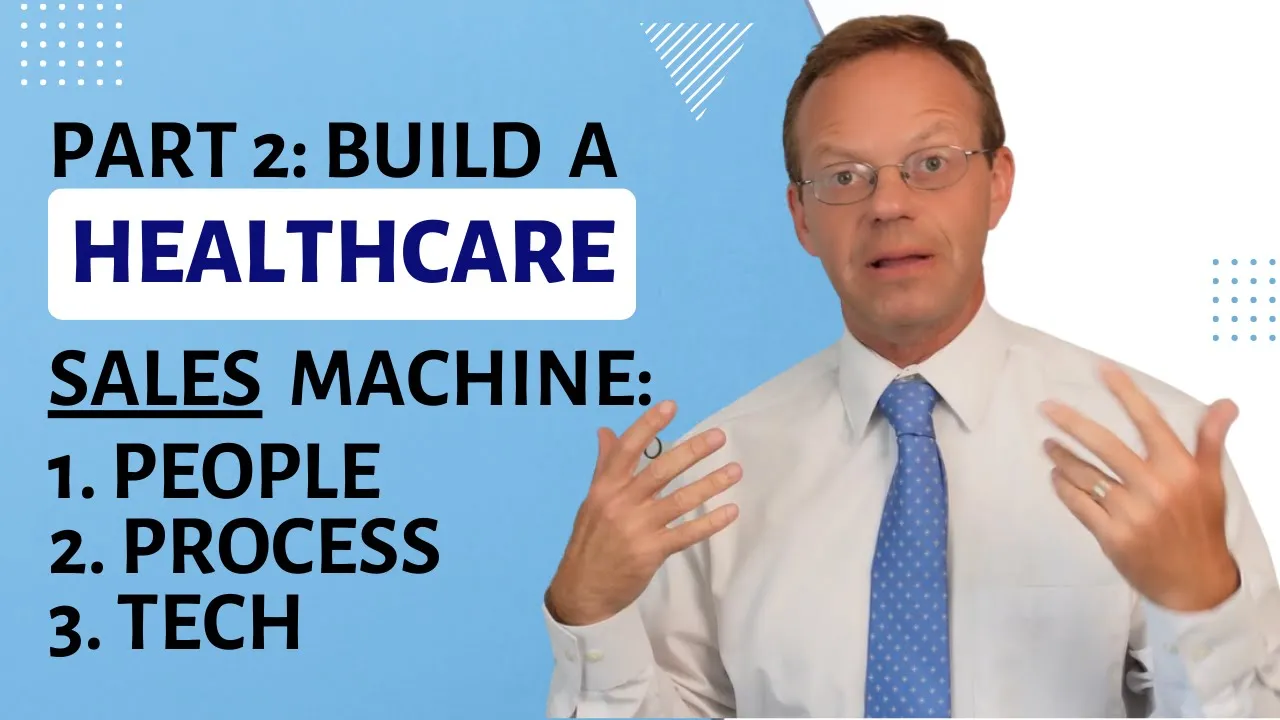
Part 2: How to Build a Healthcare Sales Machine
AHealthcareZ - Healthcare Finance Explained
@ahealthcarez
Sep 17, 2023
This video provides an in-depth exploration of how to build a successful healthcare sales machine, focusing on the critical elements of people, process, and technology. Dr. Eric Bricker emphasizes that, similar to insurance, "healthcare innovation is never bought; it's sold," underscoring the necessity of proactive and tactical sales efforts. The presentation serves as a continuation of a previous discussion on organizational structure, delving into the specific, actionable tactics required for effective sales execution within the healthcare sector. The core of the discussion is structured around three pillars. First, the "People" aspect highlights the essential qualities of successful healthcare sales representatives, stressing that a prior healthcare background is not a prerequisite. Instead, attributes like being a good conversationalist, enthusiastic, a quick learner, and possessing significant "hustle" are paramount. The speaker shares a pragmatic view on sales hiring, suggesting that approximately half of new sales hires may not be a good fit and will likely leave within six months, necessitating a strategy of hiring twice the number of desired sales reps. Second, the "Process" component details the operational necessities for a high-performing sales team. This includes comprehensive and continuous training—both industry-specific and product-specific—which should be integrated into weekly meetings and seasonal training blocks. Crucially, the process mandates rigorous measurement and tracking of sales activities, such as daily phone calls, emails, LinkedIn messages, and weekly presentations, to ensure accountability and identify effort levels. A fundamental aspect of this process is a well-defined compensation structure that includes a quota and On-Target Earnings (OTE). Finally, the "Technology" section underscores the indispensable role of a robust CRM software system. Dr. Bricker strongly advises against using simple spreadsheets, advocating for CRMs like Salesforce.com or Hubspot to meticulously track all sales activities, leads (including broker/consultant and customer leads), proposals, and the sales pipeline. The CRM facilitates performance management by providing objective data on activity levels, enabling managers to identify underperforming reps and implement performance improvement plans. The video concludes by stressing the importance of weekly pipeline reviews, stratified by the largest anticipated Annual Recurring Revenue (ARR), to proactively address roadblocks and drive sales forward. Key Takeaways: * **Healthcare Innovation Requires Active Selling:** Unlike some products, healthcare innovation is typically "sold," not "bought." Companies must adopt proactive and strategic sales tactics to introduce and gain adoption for their solutions. * **Essential Sales Rep Qualities:** Successful healthcare salespeople are excellent conversationalists and storytellers, enthusiastic, quick learners, and possess significant "hustle." A background in healthcare sales is not necessary; these skills can be developed through training. * **Strategic Sales Hiring:** Expect a high attrition rate among new sales hires, with about half potentially leaving within six months. To build a team of five, plan to hire ten individuals to account for this reality. * **Mandatory and Continuous Training:** Comprehensive training is non-negotiable. It must include both general industry knowledge and specific product training, delivered consistently through weekly meetings and dedicated seasonal sessions (e.g., November/December). * **Rigorous Activity Tracking:** Sales success is directly linked to activity. Implement systems to measure daily phone calls, emails, LinkedIn messages, and weekly presentations per sales rep. This data provides objective insights into effort and performance. * **Structured Compensation is Key:** A clear compensation structure with a defined sales quota and On-Target Earnings (OTE) is fundamental for motivating sales teams and aligning their efforts with company goals. * **CRM is Essential, Not Optional:** Abandon spreadsheets for managing sales. A robust CRM system (e.g., Salesforce.com, Hubspot) is critical for tracking all sales activities, leads, proposals, and the entire sales pipeline effectively. * **CRM for Performance Management:** Leverage CRM data to monitor sales rep activity levels. Low activity is a clear indicator of potential underperformance and should trigger performance improvement plans, helping to identify and address issues early. * **Comprehensive Lead Management:** Utilize the CRM to track all types of leads, including those from brokers, consultants, and direct customers. This prevents leads from "falling through the cracks" and ensures consistent follow-up. * **Proactive Pipeline Management:** Sales teams must track anticipated start dates and estimated Annual Recurring Revenue (ARR) within the CRM. This data is crucial for forecasting and strategic planning. * **Weekly Pipeline Review by ARR:** Executive teams (VP of Sales, CEO, CRO) should conduct weekly pipeline reviews, prioritizing opportunities by the largest ARR amounts. This focused approach helps identify and resolve roadblocks in high-value deals. * **Audit CRM Data for Accuracy:** While CRMs are powerful, it's important to audit inputs to ensure data accuracy and prevent fictitious entries. Managers should actively participate in calls and presentations to verify activities. **Tools/Resources Mentioned:** * **CRM Software:** Salesforce.com, Hubspot (mentioned as examples of effective CRM systems). * **Excel Spreadsheet:** Explicitly mentioned as an ineffective tool for sales management and tracking. **Key Concepts:** * **Healthcare Sales Machine:** A systematic and optimized approach to driving sales within the healthcare industry, encompassing people, process, and technology. * **OTE (On-Target Earnings):** The total expected compensation for a salesperson if they meet their sales quota. * **ARR (Annual Recurring Revenue):** The predictable revenue that a company can expect to receive from its customers on an annual basis, particularly relevant for subscription-based sales models. * **Sales Pipeline:** A visual representation of where a salesperson or sales team is in the sales process with all their prospects. * **At-bats:** A metaphor for sales activities or attempts (e.g., phone calls, emails, presentations) that contribute to potential sales.

Investigator Site File (ISF) Part 2 I Trial Master File (TMF) I Clinical Research #clinical #file
Clinical Research x360
/@clinicalresearchx360
Sep 15, 2023
This video provides a highly detailed walkthrough of the Investigator Site File (ISF), specifically focusing on sections 4 through 15, outlining the essential documents required for each in a clinical trial setting. The speaker systematically explains the contents, ranging from investigator brochures, regulatory authority correspondence, IRB/IEC documents, informed consent forms, subject diaries, safety information, monitoring records, laboratory documents, and case report forms (eCRFs), to various agreements and investigational product management. The video concludes by emphasizing the ISF's critical significance in satisfying regulatory, sponsor, and ICH-GCP requirements, demonstrating trial conduct integrity, enabling data recreation for audits and inspections, and ultimately determining the completeness and outcome of the clinical trial. Key Takeaways: * The Investigator Site File (ISF) serves as a comprehensive, mandatory repository for all essential documents in a clinical trial, crucial for demonstrating adherence to regulatory bodies (e.g., FDA, DCGI), sponsor requirements, and ICH-GCP guidelines. * The ISF encompasses a vast array of documentation across clinical operations, including ethics committee approvals, informed consent processes, subject-reported data, detailed safety event reporting, monitoring activities, laboratory accreditations, and investigational product handling. * Meticulous and complete documentation within the ISF is paramount for ensuring data integrity, enabling the recreation of trial data, and successfully navigating audits and inspections, directly impacting the validity and outcome of the trial. * The video highlights the significant burden of manual documentation and compliance tracking at the site level, particularly with documents like eCRFs, safety logs, and various agreements, underscoring opportunities for AI-powered solutions to streamline these processes. * Specific regulatory forms (e.g., FDA 1572) and contractual agreements (e.g., Clinical Trial Agreement) are identified as critical components, emphasizing the complex legal and financial frameworks governing clinical research.

Conexus Solutions Inc - Learning Cloud Introduction
Conexus Solutions, Inc.
/@ConexusSolutionsInc
Sep 13, 2023
This video introduces Learning Cloud, an interactive, subscription-based video training service developed by Conexus Solutions specifically for the Life Sciences industry. The platform is designed to resolve common productivity challenges faced by pharmaceutical sales and marketing teams, primarily focusing on navigating complex enterprise software and maintaining adherence to critical regulatory standards. By offering on-demand access to a comprehensive library of instructional videos, the service aims to keep the workforce effective and focused on core business objectives, such as improving patient outcomes, rather than struggling with system usage or compliance issues. The curriculum provides a crucial dual focus on both technological proficiency and regulatory adherence, covering core industry platforms and mandates. Key technology training includes detailed modules on Veeva CRM and Veeva Vault, which are essential for commercial operations and content management within the pharmaceutical sector. Simultaneously, the platform addresses vital regulatory topics, including the Prescription Drug Marketing Act (PDMA), the Health Insurance Portability and Accountability Act (HIPAA), the Sunshine Act, and CAN-SPAM. This integrated approach ensures professionals are not only skilled in using their tools but are also operating within necessary legal and ethical boundaries. A detailed segment of the presentation focuses on the practical application of Veeva Vault's document management capabilities, specifically highlighting its powerful annotation tools designed to streamline collaboration and accelerate the document development and approval process. The platform teaches users how to utilize various annotation types, including text annotations for highlighting, rejecting, or altering content; area selections to draw attention to specific document sections; sticky comments for detailed, localized feedback; and visual lines for cues. This functionality is critical for accelerating regulated content review cycles while maintaining a clear audit trail. To ensure the training remains current and valuable, the Learning Cloud platform features automatic content updates whenever significant changes occur in the covered topics. This includes updates necessitated by software enhancements to platforms like Veeva, as well as changes in regulatory requirements. The training modules are designed for maximum engagement, incorporating built-in knowledge checks and interactive elements. Furthermore, the service provides robust administrative capabilities, enabling sales operations teams and administrators to easily track user progress, measure training effectiveness, and utilize audit trails to ensure compliance, ultimately promising substantial cost savings by reducing reliance on internal help desk support. Key Takeaways: * **Targeted Industry Training:** The Learning Cloud platform is exclusively tailored for the Life Sciences sector, addressing the unique intersection of commercial operations, complex software systems (Veeva), and stringent regulatory requirements. * **Comprehensive Compliance Coverage:** The service provides essential training on critical regulatory mandates, including PDMA, HIPAA, the Sunshine Act, and CAN-SPAM, ensuring sales and marketing teams maintain compliance in their daily activities. * **Veeva Proficiency Enhancement:** Core training modules focus on maximizing the effectiveness of key industry platforms, specifically Veeva CRM (for sales and marketing navigation) and Veeva Vault (for content and document management). * **Streamlined Document Collaboration:** The training emphasizes the use of Veeva Vault’s advanced annotation tools—such as text annotations (highlighting/rejecting), area selections, and sticky comments—to create a streamlined, collaborative process for document development and regulatory approval. * **Automated Content Currency:** The platform automatically updates its video library when there are significant changes to covered topics, ensuring that users are always trained on the latest software enhancements or regulatory shifts. * **On-Demand, Interactive Learning:** Training modules are available on demand, allowing users to complete required training on their own schedule, including "quick watch" options for refreshing knowledge on uncommon topics. * **Engagement Through Interactivity:** Videos are designed to keep viewers engaged through the integration of knowledge checks and interactive elements built directly into the learning modules. * **Administrative Oversight and Measurement:** Sales operations teams and administrators gain access to robust reporting tools and audit trails, enabling them to easily track team progress, evaluate training efficacy, and measure compliance adherence. * **Operational Cost Reduction:** A key value proposition is the reduction of operational costs, specifically by minimizing the volume of phone calls and inquiries directed to internal help desks regarding system navigation or basic compliance questions. * **Focus on Patient Outcomes:** By removing barriers related to system navigation and compliance confusion, the training aims to keep pharmaceutical teams effective and focused on their primary goal of improving patient outcomes. Tools/Resources Mentioned: * Veeva CRM * Veeva Vault * Conexus Solutions' Learning Cloud (Interactive Video Training Service) Key Concepts: * **PDMA (Prescription Drug Marketing Act):** Federal regulation governing the distribution of drug samples and preventing drug diversion, crucial for pharmaceutical sales compliance. * **HIPAA (Health Insurance Portability and Accountability Act):** U.S. law providing data privacy and security provisions for safeguarding medical information, essential for handling healthcare professional data. * **Sunshine Act:** Part of the Affordable Care Act requiring drug and medical device manufacturers to report payments and transfers of value made to physicians and teaching hospitals. * **CAN-SPAM:** Law establishing requirements for commercial messages, particularly relevant for digital marketing and email communications in pharma. * **Veeva Vault Annotation Tools:** Specific features within the Veeva content management system used for collaborative document review, including text annotations (highlight/reject), area selections, sticky comments, and visual lines.

Webinar: eTMF – automated oversight and quality review
Flex Databases
/@Flexdatabases
Sep 12, 2023
This webinar provides an in-depth exploration of the electronic Trial Master File (eTMF) with a specific focus on automated oversight and quality review processes offered by Flex Databases. The presenters, Montasar (Project Manager) and Marietta (Sales and Product Marketing Team Lead), guide the audience through the evolution of TMF management towards a risk-based approach, emphasizing how automation can enhance efficiency, ensure regulatory compliance, and improve overall trial quality in clinical projects. The session highlights the practical application of their eTMF system through live demonstrations, showcasing features designed to streamline documentation, collaboration, and reporting within the pharmaceutical and life sciences sectors. The presentation begins by establishing the foundational concept of a risk-based Trial Master File, defining it as a methodology for organizing and maintaining clinical trial documents with a focus on identifying and mitigating associated risks. It underscores the critical importance of ensuring trial quality, data integrity, patient well-being, and adherence to strict regulatory standards set by agencies like the FDA and EMA. The discussion then transitions to the tangible benefits of implementing such an approach, including enhanced efficiency through optimized resource allocation, improved risk management, and superior data quality. A significant portion of the webinar is dedicated to detailing the automated quality review process, which allows for advanced planning, systematic execution, and comprehensive reporting, thereby transforming TMF oversight from a burden into a collaborative and streamlined activity. Through interactive polls and system demonstrations, the presenters illustrate how Flex Databases' eTMF solution facilitates the planning and execution of quality reviews. Users can pre-plan reviews, set due dates, assign responsibilities based on expertise (e.g., PMs for trial management folders, pharmacovigilance managers for safety reporting), and even specify the percentage of documents to be checked from selected folders, excluding previously reviewed items. The system enables reviewers to check document content and metadata, raise queries directly from the document card, and track query resolution. Furthermore, the webinar showcases integrated communication tools like chats and a dedicated query section, which foster real-time interaction and issue resolution. The session concludes with a demonstration of dynamic dashboards and visualizations that provide a holistic overview of TMF completeness, quality check results, and project status, offering actionable insights for stakeholders. Key Takeaways: * **Risk-Based TMF Approach:** A risk-based Trial Master File methodology is crucial for organizing and maintaining clinical trial documents by proactively identifying and mitigating risks, ensuring quality, integrity, and patient well-being. * **Regulatory Compliance:** Adherence to strict quality standards mandated by regulatory agencies like the FDA and EMA is paramount to avoid delays, fines, or trial rejections, with the eTMF system designed to support these requirements. * **Enhanced Efficiency:** Implementing a risk-based TMF approach allows for more focused and efficient allocation of resources, structured TMF management, and streamlined processes, preventing unnecessary resource expenditure on low-risk activities. * **Automated Quality Review Planning:** The Flex Databases eTMF system enables users to plan quality reviews in advance, including setting start/due dates, assigning specific team members, and defining the percentage of documents to be checked from selected folders. * **Intelligent Document Selection:** The system intelligently excludes documents that have been previously reviewed from new quality review batches, ensuring that efforts are focused on new or updated content and increasing the overall coverage of checked documents. * **In-System Document Interaction:** Reviewers can perform all necessary checks directly within the system, including viewing document content, verifying metadata (e.g., due date, expiration, country allocation), and raising queries for clarification or correction. * **Integrated Query Management:** Queries can be raised directly from the document card, assigned to responsible team members with due dates, and tracked for resolution, facilitating timely issue identification and closure. * **Automated Reporting for Audits:** The system automatically generates comprehensive quality review reports, detailing all checked folders and documents, and indicating the status of any queries (resolved/unresolved), providing documented evidence for audits and inspections. * **Real-time Collaboration Tools:** Integrated chat and query functionalities within the TMF module facilitate real-time interactions, data clarification, and issue resolution, enhancing communication and overall trial efficiency. * **Comprehensive Dashboards and Visualizations:** The eTMF module offers dynamic dashboards and graphs that provide a complete overview of study progress, TMF completeness by folders and totals, and quality check results, aiding in strategic decision-making. * **Configurable System Flexibility:** The Flex Databases eTMF is highly configurable, allowing companies to apply their own templates, create custom workflows, and define specific metadata sets to meet unique organizational needs. * **Roadmap Driven by Client Feedback:** The development roadmap for Flex Databases' solutions is directly influenced by client requests and feedback, ensuring that new features address real-world needs and challenges. * **Handling of Locked Documents and Placeholders:** The system allows queries to be raised for locked documents (with a process for unlocking via help desk) and includes empty placeholders in reviews to ensure all required documentation is addressed. Tools/Resources Mentioned: * Flex Databases eTMF * Flex Databases CTMS (Clinical Trial Management System) * Flex Databases Pharmacovigilance * Flex Databases QMS (Quality Management System) Key Concepts: * **eTMF (electronic Trial Master File):** A digital repository for essential documents of a clinical trial, ensuring compliance and data integrity. * **Risk-based TMF:** A methodology for managing TMF documents that prioritizes identifying and mitigating risks associated with the clinical trial process. * **Quality Review:** A systematic process of evaluating various aspects of a clinical trial, including documentation, to ensure adherence to predefined quality standards, regulatory requirements, and best practices. * **Placeholders:** Designated slots within the TMF structure for documents that are expected to be uploaded. * **Metadata:** Data that provides information about other data, such as document type, author, creation date, and associated milestones.
Want Your Agile Transformation to Stick? Try this. #agiletransformation #agile #changemanagement
Mountain Goat Software
/@MountainGoatSoftware
Sep 11, 2023
This video addresses the common challenge of ensuring agile transformations are sustainable and truly embed within an organization, rather than fading away like New Year's resolutions. The speaker, Mike, highlights a prevalent pitfall where companies attempt to transition numerous teams simultaneously, aiming for incremental improvement across the board. He argues that this broad, diluted approach often results in superficial changes that do not "stick," leading to a lack of lasting impact and a potential disillusionment with agile methodologies. The core message advocates for a strategic shift from widespread, shallow adoption to a concentrated effort on achieving profound success with a single team. Instead of striving for marginal gains across many teams (e.g., 20 teams each becoming 5% better), the video proposes focusing resources and attention on making one team exceptionally proficient and successful in its agile practices. This "one team kicking butt" philosophy is presented as a more effective pathway to a lasting agile transformation. The rationale behind this focused approach is multifaceted. By demonstrating what truly successful agile looks like in practice, this high-performing team serves as a powerful internal case study and a source of inspiration. Its achievements become tangible proof of agile's potential, motivating other teams to emulate their success. This organic motivation and peer-to-peer learning are posited as more effective drivers of widespread adoption than top-down mandates or incremental, uninspiring improvements across a large number of teams. The video implicitly suggests that deep, visible success in one area can catalyze a more robust and self-sustaining transformation throughout the organization. Key Takeaways: * **Avoid Diluted Agile Adoption:** A common mistake in agile transformations is attempting to improve many teams slightly, which often leads to superficial changes that lack permanence. Spreading resources too thinly across numerous teams can prevent any single team from achieving true mastery and demonstrating the full benefits of agile. * **Prioritize Deep Success Over Broad Increments:** Instead of aiming for marginal improvements across a large number of teams, organizations should strategically focus on making one team exceptionally successful with agile. This deep, concentrated success provides a more impactful foundation for transformation. * **Create a "Lighthouse" Team:** By achieving outstanding results with a single team, organizations can establish a visible "lighthouse" or model of agile excellence. This team's success serves as a tangible example of what is possible, inspiring confidence and motivation within the wider organization. * **Leverage Internal Motivation:** A highly successful agile team can organically motivate other teams to adopt similar practices. Witnessing concrete achievements and improved workflows from peers is often more compelling than abstract directives or small, unnoticeable gains. * **Focus Resources for Maximum Impact:** Directing coaching, support, and attention to one team allows for a deeper implementation of agile principles, thorough impediment resolution, and the cultivation of a truly high-performing unit. This focused resource allocation maximizes the chances of profound success. * **Tangible Results Drive Buy-in:** When one team consistently "kicks butt" and demonstrates superior outcomes through agile, it builds credibility for the methodology. These tangible results help overcome skepticism and resistance, fostering greater organizational buy-in for the transformation. * **Success Breeds Success:** The momentum generated by one highly successful agile team can create a ripple effect, encouraging other teams to pursue similar results. This natural progression is more likely to lead to a sustainable and widespread agile culture. * **Long-Term Stickiness through Demonstration:** The video implies that transformations "stick" not through mandates, but through demonstrated value and success. A single, shining example of agile efficacy is more potent for long-term adoption than many mediocre attempts.

Season 2 Episode 2: Title Debunking the Myths of AI
Veeva Systems Inc
/@VeevaSystems
Sep 8, 2023
This video provides an in-depth exploration of applying Artificial Intelligence (AI) and Machine Learning (ML) to enhance efficiency and quality in clinical data management. Hosted by Veeva Systems, the discussion features Andy Cooper, CEO of CluePoints, an expert in risk-based quality management systems. The primary goal is to move beyond the AI "buzzword" and identify concrete, high-value applications within the clinical trial lifecycle, emphasizing the necessity of combining deep industry context with advanced algorithmic techniques. The conversation begins by defining AI as a broad, often overused term, contrasting it with Machine Learning (ML), which involves applying algorithms to programmatically understand data, find patterns, and inform decisions. A critical distinction is made between supervised learning, which requires data labeling (e.g., classifying film reviews as positive or negative) and achieves high accuracy quickly, and unsupervised learning, where the algorithm finds patterns in unlabeled data. Unsupervised learning is highlighted as particularly powerful for data anomaly detection in clinical trials, helping to reduce the "noise" generated by unnecessary or erroneous edit checks and focusing resources on critical data issues. The speakers stress that generic AI tools like ChatGPT are ineffective with clinical data because they lack the necessary clinical context, necessitating customized, self-supervised ML approaches that learn the nuances of the pharmaceutical world. A major theme is the industry's shift toward risk-based monitoring (RBM) and away from the outdated paradigm of 100% Source Data Verification (SDV). The guest notes that while reducing SDV saves significant time and money, the core objective must be increasing data quality. CluePoints' work focuses on using statistical methodologies and ML to eliminate manual review processes, enabling predictive capabilities that flag potential site issues early in a trial. This predictive approach is vital because mistakes made early in a study often perpetuate, making late correction impossible. The ultimate ambition discussed is achieving "submission ready" status in hours or days, rather than weeks or months, a goal that requires fundamental change management and process centralization, not just minor technological tweaks. The discussion concludes by addressing the challenge of regulatory trust in the "black box" nature of ML, asserting that trust must be built over time by consistently demonstrating accurate and reliable results, such as the FDA's adoption of CluePoints’ engine for data detection work. Key Takeaways: * **AI vs. ML Definition:** AI is a broad, often overused term; Machine Learning (ML) is the practical application of algorithms to find patterns in data. If a solution is written on a PowerPoint, it's often called AI; if it's written in Python, it's likely ML. * **Clinical Context is Essential:** Standard, off-the-shelf AI models (like general LLMs) are ineffective for clinical data because they do not understand the specific context, requiring customized, clinically-trained ML approaches. * **Unsupervised Learning for Anomaly Detection:** Unsupervised ML is highly effective for data anomaly detection in clinical trials, allowing algorithms to find patterns and flag potential issues that traditional, rule-based edit checks might miss, thereby reducing noise and focusing data management efforts. * **Reducing SDV and Manual Effort:** The industry must continue shifting away from 100% Source Data Verification (SDV) toward risk-based approaches (RBM). Eliminating manual processes like excessive edit checks frees up resources and improves data quality simultaneously. * **Predictive Analytics for Early Intervention:** ML enables predictive capabilities that identify emerging patterns of oversight or potential data fraud early in a trial, allowing sponsors and CROs to intervene and course-correct before errors become systemic. * **Accelerating Submission Timelines:** The goal should be moving from last patient last visit to submission readiness in hours or days, not weeks. Achieving this requires a massive shift in working processes, prioritizing constant data review and centralization of oversight. * **Successful Technology Partnerships:** Effective technology partnerships require alignment on core values and a shared vision, often involving customer input, to ensure that the combined solutions address genuine industry pain points. * **Case Study: Automated Medical Coding:** A successful partnership between Veeva and CluePoints demonstrated the power of ML by achieving over 99% accuracy in MedDRA and WHO Drug coding, significantly surpassing the 65-70% accuracy rate of traditional synonym-list-based coding. * **The "Black Box" Challenge:** The inherent lack of transparency in ML algorithms (the "black box") is a major concern for a technical and regulated industry. Trust must be built by consistently demonstrating the accuracy and reliability of the results, as seen with regulatory bodies like the FDA adopting ML engines for data review. * **Need for Data Consolidation:** A major inhibitor to agility is distributed data across multiple systems. The industry needs a common environment or ecosystem where all information flows into one place, improving data currency and simplifying data movement for all stakeholders. * **Eliminating Redundant Assessments:** A major efficiency drain is the constant redoing of the same patient assessments, instruments, and translations across different studies, a human-controlled requirement that, if eliminated, would save substantial time and cost. **Tools/Resources Mentioned:** * Veeva Vault CDMS * CluePoints * ChatGPT (used as a comparison for general AI) * Python (mentioned as the language often used for ML) **Key Concepts:** * **Supervised Learning:** Machine learning approach where the input data is labeled, allowing the algorithm to learn quickly from examples. * **Unsupervised Learning:** Machine learning approach where the input data is unlabeled, requiring the algorithm to find hidden patterns and structure on its own, ideal for anomaly detection. * **Self-Supervised Learning:** A form of ML where the algorithm teaches itself by generating labels from the input data (e.g., predictive text). * **Risk-Based Monitoring (RBM):** A quality management approach emphasizing the identification and mitigation of risks to critical data and processes, guided by ICH E6 R3. * **Source Data Verification (SDV):** The traditional, resource-intensive process of checking every data point against the source records. * **Data Anomaly Detection:** Using ML to identify unusual or potentially fraudulent data patterns that deviate from expected norms. **Examples/Case Studies:** * **Veeva/CluePoints Coding Partnership:** Achieved over 99% accuracy in medical coding (MedDRA/WHO Drug) using machine learning, replacing inefficient synonym lists that typically yield only 65-70% accuracy. * **Regulatory Adoption:** The FDA has adopted CluePoints' engine to perform detection work on submitted clinical trial data, validating the use of advanced statistical and ML methodologies for ensuring data integrity.
How to Build a Healthcare Sales Machine
AHealthcareZ - Healthcare Finance Explained
@ahealthcarez
Sep 4, 2023
This video provides an in-depth exploration of how to build a highly effective sales machine for healthcare startups, focusing on organizational structure and accountability to drive revenue growth from inception to significant scale. Dr. Eric Bricker, drawing from his personal experience with multiple successful healthcare startups, outlines a specific executive team structure designed to optimize new business acquisition, customer retention, and strategic partnerships. The core premise is that the traditional single Chief Revenue Officer (CRO) model is insufficient and risky for healthcare startups, advocating instead for a diversified approach to revenue responsibility across multiple executive roles. The presentation details three distinct executive roles crucial for revenue generation: a Chief Revenue Officer specifically for New Business, a Chief Operating Officer accountable for Account Management, and a VP of Business Development focused on strategic partnerships. The CRO for New Business oversees Marketing (inbound, events, content, collateral), Lead Generation (nurturing inbound, outbound prospecting, cold outreach, initial qualification), and Sales (quota-carrying representatives managing the sales cycle and contracting). This structure for new business is explicitly based on the Aaron Ross "Predictable Revenue" model, which proved highly successful at Salesforce.com and other companies. The video emphasizes that lead generation should be a separate department, distinct from both marketing and sales, acting as an intermediary to qualify prospects before handing them off to sales representatives. A unique and critical aspect of the proposed structure is placing Account Management under the Chief Operating Officer (COO). The rationale is that account management's primary goals—decreasing customer churn and driving upsells—are achieved through "customer delight," which often necessitates product and operational improvements. By making the COO responsible for account management, a direct feedback loop is established between customer needs and operational changes, ensuring the product or service evolves in response to actual customer demands rather than internal agendas. Finally, the VP of Business Development is responsible for securing partnerships where the company's solution is "baked into" another distribution channel, such as insurance carriers, TPAs, PBMs, or Medicare Advantage plans. This role also requires significant operational and technological customization, linking it closely with the COO and CTO. The overall strategy advocates for distributing revenue accountability among these three executives to mitigate risk and maintain revenue as a central priority for the CEO and the entire executive team. Key Takeaways: * **Diversify Revenue Responsibility:** Instead of relying on a single Chief Revenue Officer, healthcare startups should distribute revenue accountability across multiple executive roles (e.g., CRO for New Business, COO for Account Management, VP of Business Development) to mitigate risk and ensure revenue remains a top priority for the entire executive team. * **Specialized CRO for New Business:** Establish a Chief Revenue Officer solely focused on new business acquisition, overseeing distinct departments for Marketing, Lead Generation (Prospecting), and Sales. This prevents the CRO from being overwhelmed by existing customer management. * **Implement the Aaron Ross "Predictable Revenue" Model:** For new business, adopt a structured approach where Marketing generates inbound interest, a dedicated Lead Generation team qualifies prospects (both inbound and outbound), and Sales Representatives close deals. This model, proven at Salesforce.com, separates prospecting from closing. * **Lead Generation as a Distinct Function:** Lead generation (or prospecting) should be a separate department, bridging marketing and sales. It's responsible for nurturing inbound leads, conducting outbound cold calling/emailing/LinkedIn messaging, and performing initial qualification before passing warm leads to quota-carrying sales reps. * **COO Owns Account Management for Customer Delight:** Place account management under the Chief Operating Officer (COO) to directly link customer satisfaction, churn reduction, and upsells to operational improvements. This creates a vital feedback loop where customer needs drive product and service iteration. * **Accountability Drives Product Improvement:** By making the COO responsible for account management, operations becomes accountable for customer delight, incentivizing them to respond positively to requests for customizations and changes, thereby continuously improving the product or service based on direct customer feedback. * **Strategic Business Development for Partnerships:** Create a VP of Business Development role dedicated to forging partnerships where the company's solution is integrated ("baked in") with larger distribution channels like insurance carriers, TPAs, PBMs, or Medicare Advantage plans. This often involves significant customization and white-labeling. * **Early Stage Adaptability:** While the full executive structure may not be feasible for very small startups, the "hats" or responsibilities must still be worn. Founders may initially combine roles, but it's crucial to understand these distinct functions and separate them as the company grows, particularly account management from new business. * **Avoid Single Point of Failure:** Concentrating all revenue responsibility with one CRO makes them vulnerable to being outnumbered by other executives with different priorities, potentially hindering revenue generation. Distributing this responsibility ensures a collective focus on growth. * **Technology and Process are Key, but Accountability is Paramount:** While having the right people, processes, and technology is essential, their effectiveness hinges on the correct accountability structure and relationships within the organization. Misaligned accountability can lead to failure despite strong individual components. **Tools/Resources Mentioned:** * **Predictable Revenue:** A book by Aaron Ross, outlining the sales model used at Salesforce.com for building a high-growth sales machine. **Key Concepts:** * **Chief Revenue Officer (CRO) for New Business:** An executive role specifically tasked with driving new sales and customer acquisition, distinct from managing existing accounts. * **Customer Delight:** The concept of exceeding customer expectations to foster loyalty, reduce churn, and encourage upsells, often requiring continuous product and service improvement. * **Distributed Revenue Responsibility:** A strategic approach to organizational design where accountability for revenue generation is spread across multiple executive team members, rather than consolidated under a single CRO. * **"Baked In" Partnerships:** A business development strategy where a company's product or service is integrated into another company's offering (e.g., an insurance plan or a PBM's services) rather than being sold directly to end-users. **Examples/Case Studies:** * **Salesforce.com:** Mentioned as a company where the Aaron Ross "Predictable Revenue" model for sales was successfully implemented. * **Compass:** A healthcare startup where the speaker applied this organizational structure with significant success, growing revenue from zero to tens of millions. * **Other Healthcare Startups:** The speaker references experience with multiple healthcare startups where these principles were applied effectively.

Verify x Veeva Integration to Simplify and Secure Inspections
GlobalVision
/@Globalvisioninc
Aug 29, 2023
This video demonstrates the seamless integration of GlobalVision's Verify cloud-based proofreading software with Veeva Vault PromoMats, showcasing how this synergy simplifies and secures the inspection process for artwork and promotional materials. The presentation walks through a practical use case where a user verifies changes between two versions of an artwork file (version 1 and 2), ensuring that all intended modifications have been implemented and no unintended changes have been introduced. The core functionality highlighted is the ability to launch Verify directly from within PromoMats, automatically loading both source and revision files, along with any existing annotations or change instructions previously made in Veeva Vault. The demonstration details the preparation and execution of an inspection within Verify. This includes the ability to customize the inspection by excluding irrelevant sections (e.g., "master" and "sample" labels), initiating graphic comparisons by drawing specific zones, and optionally performing spell checks or barcode inspections. The software intelligently locates images even if they have been moved, shifted, or scaled between versions. Upon completion, Verify generates a comprehensive list of identified differences, categorized for easy review. The user can filter these differences, zoom into specific areas to compare master and new artwork files, and add comments to any discrepancies found, including character-for-character comparisons for text changes. A significant aspect of the integration is the handling of inspection results. Verify provides detailed barcode information, including decoded value, type, and grade. Crucially, it allows for the creation of an inspection report, which can be downloaded as a PDF or, more importantly, uploaded directly back into Veeva Vault. Once uploaded, all annotations and comments made within Verify become accessible and interactive within Veeva, just like any other native Veeva annotation. This closed-loop process ensures that the entire proofreading and inspection workflow is streamlined, auditable, and fully integrated within the pharmaceutical industry's leading content management platform, enhancing efficiency and maintaining regulatory integrity for materials like PromoMats. Key Takeaways: * **Seamless Veeva Vault PromoMats Integration:** The Verify software integrates directly with Veeva Vault PromoMats, allowing users to launch proofreading inspections from within the Veeva interface. This eliminates the need to export and re-import files, streamlining the workflow for pharmaceutical content review and approval. * **Automated File Loading and Annotation Transfer:** When launched from PromoMats, Verify automatically loads both the source and revision files, along with any existing annotations or change instructions from Veeva Vault. This ensures continuity and saves significant time in setting up inspections, maintaining context from the Veeva environment. * **Comprehensive Artwork Inspection Capabilities:** Verify supports detailed comparisons between different versions of artwork files, specifically designed to identify both intended changes (ensuring they are completed) and unintended changes (ensuring none were introduced). This is critical for maintaining content accuracy and regulatory compliance in the life sciences. * **Customizable Inspection Parameters:** Users can tailor inspections by excluding irrelevant content (e.g., "master" or "sample" labels), initiating specific graphic comparisons by defining zones, and opting for additional checks like spell check and barcode inspection. This flexibility allows for focused and efficient reviews based on specific requirements. * **Advanced Graphic Comparison Tools:** The software offers intelligent tools for graphic comparisons, capable of locating images even if they have been moved, shifted, or scaled between versions. This ensures accurate visual verification despite potential layout adjustments, which is common in design iterations. * **Detailed Difference Identification and Categorization:** Upon inspection completion, Verify lists all identified differences in a categorized format, allowing users to filter by type and quantity. This structured overview facilitates efficient review and decision-making, enabling reviewers to prioritize critical changes. * **Interactive Difference Review:** Users can zoom into specific differences, flash between master and new artwork files for visual comparison, and perform character-for-character comparisons for text changes, with discrepancies highlighted in red. This granular level of detail ensures thoroughness and precision in identifying even minor textual alterations. * **Integrated Commenting and Annotation:** The ability to add comments directly within Verify for any identified difference, which are then saved and outputted on the inspection report or uploaded back into Veeva Vault, ensures a clear audit trail and collaborative review process within a regulated environment. * **Barcode Verification and Metadata Capture:** Verify provides detailed information for barcodes, including the decoded value, barcode type, grade, and other relevant metadata. This is crucial for packaging and labeling compliance in the pharmaceutical industry, where barcode accuracy is paramount. * **Automated Inspection Report Generation:** The software generates a comprehensive inspection report, which can be downloaded as a PDF or, critically, uploaded directly back into Veeva Vault. This ensures that all inspection findings are formally documented and stored within the regulated content management system, supporting GxP requirements. * **Veeva-Native Annotation Interaction:** Once inspection annotations and comments are uploaded back into Veeva Vault, they become fully interactive within Veeva, behaving like any other native Veeva annotation. This maintains a unified user experience and leverages Veeva's existing review and approval workflows, avoiding fragmented processes. * **Enhanced Efficiency and Compliance:** By automating and integrating the proofreading process with Veeva Vault PromoMats, the solution significantly enhances efficiency, reduces manual errors, and strengthens the overall compliance posture for pharmaceutical companies managing promotional materials, contributing to faster time-to-market and reduced risk. **Tools/Resources Mentioned:** * **Verify:** Cloud-based proofreading software by GlobalVision. * **Veeva Vault PromoMats:** A leading content management platform in the pharmaceutical industry, specifically designed for managing promotional materials. **Key Concepts:** * **Artwork File Inspection:** The systematic review of visual and textual content in marketing, packaging, or labeling materials to ensure accuracy, consistency, and compliance with internal specifications and external regulatory standards. * **Version Control:** The process of managing changes to documents or files, ensuring that all modifications are tracked, and that specific versions can be retrieved, compared, or reverted to. * **Graphics Compare:** An automated feature within proofreading software that compares visual elements (images, layouts, colors) between two versions of a document to detect differences. * **Barcode Inspection:** Automated verification of barcodes to ensure they are readable, correctly encoded, and meet industry standards for quality, type, and decoded value. * **Annotations:** Digital notes, comments, or markups added to a document or file, commonly used in collaborative review processes to highlight changes, ask questions, or provide feedback. * **Veeva Ecosystem Integration:** The capability of third-party software to connect with and exchange data with Veeva products (like Veeva Vault PromoMats), leveraging Veeva's established workflows and data structures for a unified experience. * **Regulatory Compliance:** Adherence to laws, regulations, guidelines, and specifications relevant to the pharmaceutical industry, such as those from the FDA and EMA, particularly concerning the accuracy and approval of promotional materials and labeling. **Examples/Case Studies:** * The video presents a single, detailed example of verifying changes between "version 1" and "version 2" of an artwork file within Veeva Vault PromoMats. This demonstration illustrates the entire workflow from launching Verify, performing various inspection types (graphics, text, barcode), adding comments, generating an inspection report, and finally uploading the report and annotations back into Veeva.

Impact of Out-of-Pocket Costs on Patients
AHealthcareZ - Healthcare Finance Explained
@ahealthcarez
Aug 27, 2023
This video provides an in-depth exploration of the profound impact of rising out-of-pocket healthcare costs on patient health outcomes and utilization. Dr. Bricker, Medical Director for SimplePay Health, begins by establishing the current state of these costs, highlighting the dramatic increase in individual deductibles for employer-sponsored commercial insurance over the past decade. He emphasizes that these escalating costs are a critical barrier to necessary care, leading to significant delays or complete avoidance of medical attention for a substantial portion of the adult population. The presentation then delves into the specific and devastating consequences of financial toxicity, particularly for cancer patients. Dr. Bricker presents alarming statistics indicating that a significant percentage of insured cancer patients either delay, forgo, or alter their treatment plans due to out-of-pocket expenses. Furthermore, a substantial number of these patients exhaust their entire life savings within two years of diagnosis, underscoring the failure of current health insurance designs to provide adequate financial protection and effectively transfer risk. The discussion extends beyond plan design to address systemic complexities in healthcare, such as prior authorizations, claims denials, and adjudication errors, which can lead to unexpected and substantial bills for patients, even those with seemingly good insurance. To contextualize the broader financial vulnerability, the video cites a Federal Reserve survey revealing that a significant portion of American households cannot cover a $500 unexpected expense. This financial fragility exacerbates the impact of high healthcare costs. Dr. Bricker argues that addressing out-of-pocket costs requires a dual approach: innovative plan design and robust healthcare navigation. He introduces SimplePay Health's model as a solution, which features a zero-dollar deductible, affordable copays spread over 12-month interest-free payment periods, and embedded navigation services. This model also incorporates stratified copays to financially incentivize patients to choose higher-quality, lower-cost providers within their network, thereby promoting value-based care and improving access to essential preventative and diagnostic services. Key Takeaways: * **Escalating Out-of-Pocket Costs:** The average individual deductible for employer-sponsored health insurance has risen to $1,763, marking a 61% increase over the last decade, with one-third of workers facing deductibles over $2,000. This rapid growth significantly burdens individuals and families. * **Direct Impact on Access to Care:** High out-of-pocket costs directly restrict access to necessary medical care, with 40% of adults reporting they delayed or went without care in the previous year due to financial concerns. This leads to poorer health outcomes and reduced utilization of vital services. * **Severe Financial Toxicity for Cancer Patients:** Even with insurance, cancer patients face extreme financial hardship. One-quarter of cancer patients delay care, go without treatment, or change their treatment plans due to out-of-pocket costs, and 40% spend their entire life savings within two years of diagnosis. * **Inadequacy of Current Insurance Models:** Existing health insurance plan designs often fail to adequately cover treatment or provide true financial security, not effectively transferring risk away from patients as intended. This highlights a fundamental flaw in how health insurance is currently structured and communicated. * **Complexity Beyond Plan Design:** Even with low deductibles and copays, patients can face substantial unexpected bills due to issues like prior authorization denials, claims processing errors, and complex adjudication processes. A case study illustrated a breast cancer patient receiving a $7,900 bill for a medically necessary chemo treatment due to a claims error. * **Widespread Financial Vulnerability:** A Federal Reserve survey indicates that 32% of American households are unable to pay for a $500 unexpected expense from their savings, making them highly susceptible to medical debt and financial distress from even moderate out-of-pocket costs. * **Dual Solution: Plan Design and Healthcare Navigation:** Effectively controlling the impact of out-of-pocket costs requires both innovative plan design and robust healthcare navigation services. Navigation helps patients manage complex processes like prior authorizations and claims, independent of the plan's cost-sharing structure. * **SimplePay Health's Innovative Model:** SimplePay Health offers a zero-dollar deductible plan with affordable copays that are not paid upfront at the doctor's office but rather spread out over 12-month interest-free payment periods. This significantly reduces the immediate financial burden on patients. * **Value-Based Provider Steering:** The SimplePay model uses stratified copays (e.g., "green best," "yellow better," "red just okay") to financially incentivize members to choose higher-quality, lower-priced doctors and hospitals within their network. This promotes efficient resource utilization and better care outcomes. * **Embedded Navigation for Seamless Support:** SimplePay Health integrates healthcare navigation directly into the health plan, ensuring members receive assistance with complex administrative tasks, such as resolving claims issues, without needing to seek external services. * **Facilitating Timely and Preventative Care:** By dramatically decreasing the financial burden, this plan design encourages patients to seek preventative care and address health issues like diabetes, hypertension, or abnormal screening results early, preventing conditions from escalating and requiring more expensive interventions. * **Call for Consumer Protection:** Dr. Bricker suggests that health insurance plans should carry "warning labels" to upfront inform consumers about their potential financial vulnerability, especially for serious conditions like cancer, given the current system's shortcomings. **Tools/Resources Mentioned:** * Kaiser Family Foundation (KFF) Employee Benefits Survey * Federal Reserve Survey * Aetna Meritain (as the network and TPA for SimplePay Health) * Compass (a healthcare navigation service mentioned in a case study) **Key Concepts:** * **Out-of-Pocket Costs:** Expenses for medical care that are not reimbursed by insurance. * **Deductible:** The amount of money an individual must pay for healthcare services before their insurance plan starts to pay. * **Copay:** A fixed amount paid for a covered healthcare service, usually at the time of service. * **Financial Toxicity:** The adverse financial consequences that patients and their families experience as a result of medical treatment, often leading to debt, bankruptcy, and reduced quality of life. * **Healthcare Navigation:** Services designed to help patients understand and manage their healthcare benefits, appointments, bills, and complex administrative processes like prior authorizations. * **Prior Authorization:** A requirement from an insurance company that a healthcare provider obtain approval before providing a service or prescribing a medication to be covered. * **Claims Adjudication:** The process by which an insurance company reviews a claim and decides whether to pay it, and how much to pay. **Examples/Case Studies:** * A 54-year-old woman with breast cancer, insured by a major carrier, received a $7,900 bill for her second chemotherapy treatment after her insurance denied payment due to a claims processing error, despite a prior authorization being in place. Her case was resolved through the intervention of Compass Health Pros, who ensured the prior authorization was correctly attached to the claim.

Veeva Vault Clinical eTMF Online Training: Comprehensive Guidelines | Proexcellency
Proexcellency Training
/@proexcellency_training
Aug 24, 2023
This video provides a comprehensive overview of Veeva Vault Clinical eTMF, a modern solution for managing electronic Trial Master Files in clinical research. It delves into the crucial role of eTMF in maintaining compliance, ensuring data integrity, and streamlining trial processes. The discussion covers the benefits of digital TMFs, such as enhanced accessibility, reduced risk of document loss, and improved regulatory compliance, while also addressing associated challenges like data security, system integration, and user adoption. The video highlights Veeva Vault Clinical eTMF's features, including document management, workflow automation, electronic signatures, and audit trails, emphasizing its industry-specific expertise and configurability for efficient clinical trial management. Key Takeaways: * Veeva Vault Clinical eTMF serves as a cornerstone for modern clinical trial management, centralizing essential documents and significantly enhancing regulatory compliance and operational efficiency within the life sciences industry. * The transition to electronic TMFs offers critical advantages in accessibility, data integrity, and auditability, but necessitates robust strategies for data security, seamless system integration, and comprehensive user adoption to overcome inherent challenges. * Regulatory adherence, including GxP and audit trail requirements, is a primary driver for eTMF adoption, with Veeva Vault designed to meet these stringent industry standards crucial for pharmaceutical and biotech companies. * Successful implementation and ongoing management of eTMF platforms require comprehensive user training, strategic integration with other clinical trial systems, and collaboration with experienced vendors who understand regulatory requirements. * Veeva's deep industry knowledge and the configurability of its Vault platform are key differentiators, allowing organizations to tailor the solution to their specific workflows and processes within clinical operations and regulatory affairs. * The video implicitly underscores the broader need for sophisticated data engineering and integration solutions within the Veeva ecosystem, especially as Veeva transitions from its Salesforce foundation, presenting opportunities for specialized consulting.

Veeva Vault PromoMats Online Training: The Comprehensive Guideline | Proexcellency
Proexcellency Training
/@proexcellency_training
Aug 24, 2023
This video provides a comprehensive overview of Veeva Vault PromoMats, positioning it as an indispensable, cloud-based content management solution tailored for the life sciences industry. It details how the platform streamlines the entire lifecycle of promotional materials, from collaborative creation and Medical, Legal, and Regulatory (MLR) review to multichannel distribution and electronic withdrawal of outdated content. A central theme is the platform's role in ensuring strict regulatory compliance, enhancing workflow efficiency, and fostering seamless collaboration among cross-functional teams in pharmaceutical, biotech, and medical device companies. The training outline covers core functionalities such as document creation, workflow automation, version control, digital asset management, and integration with other systems like CRM, all designed to reduce risks and accelerate time-to-market for compliant promotional content. Key Takeaways: * **Industry-Specific Content Management:** Veeva Vault PromoMats is a specialized, cutting-edge platform for managing promotional materials in the highly regulated pharmaceutical and life sciences sectors. * **Comprehensive Lifecycle Support:** It covers the full content lifecycle, including creation, MLR review, approval, distribution, tracking, and secure archiving, ensuring consistent messaging and compliance. * **Regulatory Compliance Focus:** The platform is built with compliance in mind, offering features like robust documentation, version control, audit trails, and controlled access to meet stringent regulatory requirements (e.g., FDA, EMA). * **Enhanced Efficiency and Collaboration:** PromoMats streamlines review and approval processes through automated workflows, significantly reducing manual errors, accelerating time-to-market, and improving collaboration across departments. * **Integration with Enterprise Systems:** It integrates seamlessly with other Veeva solutions and third-party systems, including CRM platforms, to ensure approved content accessibility for sales teams and efficient data exchange. * **Customization for Organizational Needs:** The platform allows for extensive customization of workspaces, templates, metadata, and review workflows to align with an organization's unique processes and branding. * **Strategic Importance and Career Opportunities:** The detailed training and discussion of career paths underscore the platform's critical role and widespread adoption within the life sciences industry, highlighting a demand for skilled professionals.
Episode 10: Why We Need to Expand Patient Choice in Clinical Trials
Veeva Systems Inc
@VeevaSystems
Aug 23, 2023
This video provides an in-depth exploration of the evolution of clinical trials, focusing on data management, patient and site centricity, and the future of digital solutions. Richard Young interviews Tim Davis, Vice President of Strategy for MyVeeva for Patients, who offers a historical perspective on clinical data management, from the early days of paper Case Report Forms (CRFs) to the advent of electronic data capture (EDC) and electronic patient-reported outcomes (e-PRO). Davis highlights the initial challenges of integrating e-PRO data, which was often treated as an afterthought or "another source of pain" by data managers, primarily due to its non-traditional nature compared to typical EDC source data. The discussion underscores the significant lag (often 8-14 weeks) between data collection and its visualization or integration in paper-based systems, contrasting it with the real-time insights offered by electronic methods. The conversation delves into the role of regulators, with Davis asserting that regulatory bodies have been largely supportive of technological advancements, particularly regarding the use of patients' own devices, provided fundamental requirements like audit trails and data security are met. He notes that the industry's hesitancy, rather than regulatory barriers, often impedes innovation. A significant portion of the discussion critiques buzzwords like "patient centricity," "site centricity," and "decentralized clinical trials" (DCTs). Davis redefines "patient centricity" as offering "choice" and convenience, rather than aiming to "delight" patients who are often struggling with illness. For sites, centricity means providing convenience through integrated, intuitive solutions under a single login. He expresses a strong dislike for the term "decentralized clinical trials," arguing that many of its components have existed for decades and that the term itself has become a barrier to a clear path forward. The speakers reflect on the impact of the COVID-19 pandemic, which forced a rapid adoption of digital tools but often resulted in a fragmented "layered tech" approach, overwhelming sites and patients with disparate systems. This experience, while challenging, underscored the need for scalable, repeatable models for digital trials. Davis envisions the future of digital trials as being driven by flexible, consistent underlying platforms that can adapt to various operating models—whether remote, in-person, or a hybrid—to truly offer patient choice. He emphasizes focusing on "how" patients participate rather than "where." The interview concludes with practical advice for data managers, urging them to "think about the end at the beginning" by involving themselves in the design phase of e-PRO solutions and ensuring consistent patient identifiers across all systems to avoid downstream issues. Davis also shares his "magic wand" wishes: to shed the historical baggage of e-PRO/eCOA development, enhance patient recognition and transparency by sharing study outcomes, and eliminate the costly and often unnecessary practice of provisioning devices to every patient. Key Takeaways: * **Evolution of Data Management:** Clinical data management has progressed from manual, paper-based systems (CRFs, validated rulers for pain scales) with significant data lag (8-14 weeks) to electronic data capture (EDC) and e-PRO, offering real-time insights. * **e-PRO Integration Challenges:** Historically, e-PRO data was often an afterthought, not fully integrated into clinical data management processes, and seen as a separate "source of pain" due to its non-traditional, non-queryable nature compared to typical EDC data. * **Regulator Support vs. Industry Hesitancy:** Regulators (e.g., FDA) are generally supportive of new technologies like patient-owned devices for data collection, provided core requirements like audit trails and data security are met. The primary barrier to innovation is often internal industry hesitancy and a reluctance to be "first." * **Redefining Patient Centricity:** True patient centricity is about offering "choice" and convenience, not "delight." This includes providing flexible participation options (remote, in-person, hybrid), accessible educational information, and timely support tailored to a patient's journey. * **Site Centricity for Efficiency:** Site centricity involves providing convenience through integrated technology solutions (e.g., single username/password, intuitive apps) that reduce burden and offer tangible benefits back to the sites, acknowledging their critical role as the "window to patients." * **Critique of "Decentralized Clinical Trials" (DCT):** The term "decentralized clinical trials" is often overused and can hinder progress. Many elements of DCTs, such as patient diaries on devices, have existed for decades. The focus should be on enabling flexible participation models rather than adhering to a rigid definition of "decentralized." * **COVID-19's Impact on Tech Adoption:** The pandemic accelerated the adoption of digital tools in clinical trials, but often led to a fragmented approach with "layered tech" and disparate vendor systems, creating stress for sites and patients. This highlighted the need for scalable and repeatable digital trial models. * **Future of Digital Trials:** Digital trials require flexible, consistent, underlying platforms that can support a mix of remote and in-person activities, adapting to patient needs and locations. The emphasis should be on "how" patients wish to participate (e.g., day-by-day choice) rather than prescriptive "where" decisions. * **Proactive Data Management:** Data managers should be involved from the very beginning of e-PRO design, considering the end-state data tables and how e-PRO data will fit into the overall data asset. This includes planning for data frequency and integration. * **Importance of Consistent Identifiers:** Ensuring consistent patient identifiers (screening ID, randomized ID) across all clinical trial systems (RTSM, EDC, e-PRO) is crucial to avoid significant data management headaches and improve data integrity. * **Overcoming Historical Baggage:** The industry needs to move past historical limitations and assumptions in e-PRO/eCOA (e.g., the necessity of providing specific, validated devices to all patients) to foster true innovation. * **Enhancing Patient Recognition and Transparency:** Improve patient engagement and participation rates by being more transparent: sharing study outcomes, providing high-level summaries of results, and informing patients if a drug they participated in gets approved. * **Eliminating Universal Device Provisioning:** The practice of provisioning a device to every patient, regardless of need, is expensive, disliked by sites, and often unnecessary, as many patients already possess better personal devices. This practice should be largely phased out in favor of patient choice. Key Concepts: * **e-PRO (Electronic Patient-Reported Outcomes):** Data reported directly by patients about their health status, symptoms, or treatment effects, collected electronically. * **eCOA (Electronic Clinical Outcome Assessment):** A broader term encompassing e-PRO, e-ClinRO (clinician-reported outcomes), e-ObsRO (observer-reported outcomes), and e-PerfO (performance outcomes), all collected electronically. * **EDC (Electronic Data Capture):** Software systems used to collect clinical trial data in electronic format, replacing paper CRFs. * **Patient Centricity:** An approach to clinical trial design and execution that prioritizes the needs, preferences, and experiences of patients, often by offering choice and convenience. * **Site Centricity:** An approach that focuses on making clinical trials easier and more efficient for investigative sites, recognizing their vital role in patient recruitment and data collection. * **Decentralized Clinical Trials (DCTs) / Digital Trials:** Clinical trials that incorporate digital technologies and remote methodologies to reduce the need for in-person site visits, offering flexibility in how and where patients participate. The video advocates for "digital trials" or "distributed" over "decentralized." * **Veeva CRM:** A leading cloud-based customer relationship management platform specifically designed for the pharmaceutical and life sciences industries, used for commercial operations and engagement. The speaker's role at MyVeeva for Patients indicates a focus on patient-facing technologies within the Veeva ecosystem.

Season 2 Episode 1: Does Patient Choice Equal Site Headaches?
Veeva Systems Inc
@VeevaSystems
Aug 23, 2023
This podcast episode, featuring Helen Shaw, Co-founder of VCTC (a virtual clinical trial site), and Marie-Claire Flavin, Director of Site Success for Veeva Site Solution, provides an in-depth discussion on optimizing clinical trial operations to enhance patient choice without sacrificing site efficiency. The central theme revolves around moving beyond traditional trial models to embrace patient-centricity and digital solutions, particularly focusing on the administrative and regulatory burdens faced by research sites. The speakers share their experiences from the operational front lines, advocating for smarter, quicker, and more inclusive trial execution. Helen Shaw, whose background includes global trial management and a PhD in clinical trial methodology, established VCTC with the motivation to improve the historically slow pace of trial setup and recruitment, and to reduce the burden placed on patients. VCTC specializes in running patient-centric trials, ranging from traditional on-site studies to fully virtual models. Their approach is not to force a protocol into one mold, but to analyze what is required and determine the best operational path—whether that involves home visits, pop-up clinics, or traditional site visits—always prioritizing patient needs. This patient-first philosophy extends to their methodology, where VCTC actively incorporates the patient voice, including conducting User Acceptance Testing (UAT) on study apps with patients to ensure usability and confidence before rollout. Marie-Claire Flavin, drawing on her experience as a clinical trial radiographer in the NHS, highlights how technology, specifically Veeva SiteVault, can transform site operations. She shares a compelling example of how digitizing the setup and approval process—which traditionally involves physically visiting every hospital department for signatures—reduced the setup time by four weeks. This acceleration is critical, as four weeks can mean the difference between a patient receiving a potentially life-saving treatment or progressing too far in their disease. Flavin emphasizes that technology should simplify, not complicate, the site's workflow, noting the common pitfall of sponsors providing numerous, disparate devices (e.g., 15 different tablets) that create administrative and security headaches for site staff. The conversation culminates in a shared critique of the industry’s current terminology and documentation practices. Both speakers express a strong aversion to the phrase "decentralized clinical trials" (DCT), arguing that it implies a black-and-white approach. Helen Shaw prefers the term "centralized research," where VCTC acts as a central hub, managing processes like data entry, patient outreach, and technology training, while the physical patient visits are distributed (a hub-and-spoke model). This model, which VCTC has received approval to implement as the UK’s first Central PI model using commercial hubs and NHS clinics, allows sites to focus on the complex studies that require traditional settings. Finally, the speakers use a "magic wand" thought experiment to identify two major industry pain points: the need to eliminate the wasteful duplication of effort involved in **Source Documentation** (writing data down, then transcribing it to the EDC, then having a monitor check both) and the necessity of gaining electronic access to patient GP notes in the UK for research purposes, which is currently restricted and significantly lengthens recruitment time. ### Detailed Key Takeaways * **Patient-Centricity Requires Operational Flexibility:** Clinical trials should not be forced into a single model (traditional or virtual). Sites must assess each protocol to determine the optimal operational path, which may include hybrid models, home visits, or specialized on-site care, ensuring the delivery method meets the patient's needs and the drug's safety requirements. * **The Patient Voice is Non-Negotiable:** Incorporating patient feedback, even in non-paid capacities, is vital for successful trial design and technology implementation. VCTC uses patients for User Acceptance Testing (UAT) on study apps to confirm usability and prevent technology from becoming a barrier, especially for older or less dexterous patients. * **Technology Must Reduce Administrative Burden:** Digital solutions should integrate seamlessly into existing site workflows without requiring massive infrastructure changes (e.g., new computers, multiple devices). The goal is to allow staff to work "smarter and quicker," freeing up time for patient care rather than administrative tasks. * **Veeva SiteVault Streamlines Site Setup:** A specific case study demonstrated that using Veeva SiteVault to digitize the internal approval process for protocols and clinical pathways within a hospital setting reduced the overall setup time by four weeks, significantly accelerating the time to first patient recruitment. * **The "Trial is Just a Trial" Philosophy:** The industry should abandon the restrictive terminology of "decentralized clinical trials" (DCT) and focus on designing the most efficient and inclusive operational strategy for each unique protocol. The operational design should be driven by the protocol, not by buzzwords. * **Centralized Research as an Alternative Model:** VCTC promotes "centralizing research" by using a central hub to manage administrative processes (data entry, training, outreach, IP dispensing via courier/nurse), while distributing patient visits to locations that best suit them (home, local clinic, etc.). * **Eliminate Source Documentation Duplication (Major Pain Point):** The requirement to write data down (on paper or electronically) and then transcribe it field-for-field into the EDC, followed by monitoring checks, is viewed as a massive waste of time and a primary target for operational removal or automation. * **Need for Electronic Health Record (EHR) Access for Research:** A critical regulatory hurdle in the UK is the inability for research teams to electronically access GP notes for patient screening and eligibility, forcing sites to rely on time-consuming manual requests that delay recruitment and burden primary care physicians. * **Patient Motivation is Access and Care:** While altruism exists, patients primarily participate in trials for access to novel treatments, better care, and additional support (e.g., more frequent calls, dedicated teams, extra scans/tests) that they would not receive in standard care. * **Technology Can Hinder Relationships:** If technology is poorly implemented (e.g., complex, non-intuitive devices, or systems that require excessive training), it can become a barrier, alienating patients and negatively impacting the caregiver relationship. ### Tools/Resources Mentioned * **Veeva SiteVault:** Used for site success, managing administrative tasks, and streamlining site setup approvals. * **EDC (Electronic Data Capture):** Mentioned as the system where transcribed data is entered. * **ePRO (Electronic Patient-Reported Outcomes):** Implied in the discussion of patient questionnaires and study apps. * **Telemedicine/Phone Calls:** Used for remote informed consent and follow-up visits. ### Key Concepts * **Patient-Centric Trials:** Designing and executing clinical trials with the patient experience and needs as the primary consideration, often leading to hybrid or virtual components. * **Central PI Model (Hub-and-Spoke):** A novel regulatory approach in the UK where a commercial site (VCTC) acts as the central Principal Investigator (PI) hub, coordinating research activities across multiple affiliated NHS clinics (spokes) to expand reach while maintaining centralized oversight. * **Source Documentation:** The original record of clinical findings, observations, or activities related to a trial. The current requirement for sites to duplicate this information into the EDC is highlighted as a major inefficiency. ### Examples/Case Studies * **COVID-Era Decentralized Trial:** VCTC’s founding was based on a proof-of-concept decentralized trial run during the pandemic when hospital access was restricted, demonstrating that rapid recruitment and patient retention were possible through alternative operational models. * **Parkinson’s Disease Study Design:** VCTC designed an on-site Parkinson’s trial (chosen due to complexity) to be a positive "day out" experience for patients, focusing on a nice location and social interaction (tea and biscuits) to enhance the patient experience and motivation.

How Veeva Drives a Culture of Speed on its Growth Path to 10k Employees
LEADx
/@LEADxLife
Aug 22, 2023
This video features an interview with Vivian Welsh, Chief People Officer of Veeva Systems, exploring how the company cultivates a culture of speed and employee success amidst rapid growth within the life sciences industry. The discussion centers on Veeva's unique approach to organizational values, leadership development, and performance management, all aimed at supporting its mission to enhance health and extend human life by accelerating medicine delivery to patients. As a high-growth software company serving primarily biopharma clients, Veeva has expanded to 7,000 employees across 40 countries, with ambitious plans to reach 10,000 by 2025. Vivian Welsh elaborates on Veeva's foundational culture, which is shaped by its diverse workforce united by a clear vision: "building the industry Cloud for Life Sciences." This vision is underpinned by four core values: "do the right thing, customer success, employee success, and speed." The value of "speed" is particularly highlighted as a distinctive and deliberate choice, balanced with the operating principle to "keep it simple." This ensures that while innovation and market delivery are swift, they are never at the expense of quality. The conversation also delves into how Veeva supports its frontline leaders, acknowledging their critical role in employee engagement, and outlines specific programs designed to foster effective management. The interview further explores Veeva's innovative approach to employee engagement and feedback, moving away from traditional annual performance reviews. Instead, they employ a "check-in process," a twice-yearly (or more frequent) open and authentic dialogue between employees and managers. This process separates compensation discussions from performance feedback, encouraging honest conversations about engagement, strengths, and growth areas. The goal is to foster mutual accountability and prevent surprises, ensuring continuous development and clear communication. Ultimately, Welsh expresses pride in Veeva's track record of customer success, viewing the company as a strategic partner to the industry rather than just a vendor, a sentiment that resonates deeply throughout the organization. Key Takeaways: * **Veeva's Core Mission and Growth:** Veeva Systems is a high-growth software company dedicated to supporting biopharma companies in their mission to improve health and extend human life by accelerating medicine to patients. The company, currently with 7,000 employees across 40+ countries, aims to reach 10,000 employees by 2025, underscoring its significant impact and expansion in the life sciences sector. * **Vision for Life Sciences:** Veeva's overarching vision is to build "the industry Cloud for Life Sciences," positioning itself as a comprehensive technological backbone for the pharmaceutical and biotech ecosystem. This strategic focus drives its software, data, and services offerings. * **Distinctive Core Values:** Veeva operates on four core values: "do the right thing, customer success, employee success, and speed." These values guide daily operations and strategic decisions, fostering a cohesive organizational culture. * **"Speed" as a Strategic Value:** The inclusion of "speed" as a core value is unique and deliberate, emphasizing rapid innovation and execution. This value is balanced with an operating principle to "keep it simple," ensuring that pace does not compromise quality, especially in delivering critical software and services to the biopharma industry. * **Empowering Frontline Leaders:** Recognizing that managers account for 70% of the variance in employee engagement (as per Gallup research cited by the host), Veeva heavily invests in developing its frontline leaders. This highlights the critical role of direct management in shaping employee experience and organizational success. * **Comprehensive Manager Development:** Veeva supports its managers through several initiatives, including a "Veeva Manager Bootcamp" for new or promoted managers, "Manager Communities of Practice" for peer learning and support, and quarterly "all-manager webinars" with the CEO for direct engagement and Q&A. * **Internal Mobility for Leadership:** Veeva strongly believes in internal mobility, providing opportunities for employees to take on new roles, including management positions, even if they lack prior experience. This fosters growth from within and leverages deep institutional knowledge. * **Innovative "Check-in Process":** Veeva has replaced traditional annual performance reviews with a more frequent, open, and authentic "check-in process" conducted twice a year or more. This two-way conversation allows employees to discuss their engagement and managers to provide performance feedback, focusing on strengths and growth areas. * **Separation of Compensation and Feedback:** A key aspect of the "check-in process" is the separation of compensation discussions from performance feedback. This encourages more honest dialogue and focuses the conversation on development rather than financial outcomes, akin to "stay interviews" that prioritize continuous employee growth. * **Mutual Accountability and Transparency:** The check-in process promotes mutual accountability, ensuring that neither employees nor managers are surprised by performance issues or career decisions. This fosters trust and open communication, aligning with Veeva's value of respecting the individual. * **Customer Success as a Core Pride Point:** Vivian Welsh identifies customer success as the primary source of pride for most Veeva employees. The company strives to be a strategic partner to its clients, ensuring they are not just "live" but "live and happy" with Veeva's products, reinforcing its role beyond a mere vendor. * **Hiring for "Ideal Team Players":** Veeva's hiring philosophy aligns with the principles of Patrick Lencioni's "The Ideal Team Player," seeking individuals who are "humble, nice, work hard, and quick learners." This emphasis on character and work ethic contributes to a collaborative and high-performing culture. * **Encouraging "Slow Thinking":** Despite the core value of "speed," Veeva encourages its employees, particularly leadership, to practice "slow thinking" (system two thinking). This involves intentionally creating space for deeper reflection and different perspectives, balancing rapid execution with thoughtful decision-making. * **Future Growth and Innovation:** The company remains excited about its continued growth potential, planning to introduce more applications and innovations to the market. This forward-looking perspective ensures Veeva remains at the forefront of technological advancement in the life sciences industry. Key Concepts: * **Industry Cloud for Life Sciences:** Veeva's strategic vision to build a comprehensive, specialized cloud platform tailored specifically for the pharmaceutical, biotech, and life sciences sectors, integrating various software, data, and services. * **Culture of Speed:** A deliberate organizational value and operating principle at Veeva, emphasizing rapid innovation, quick decision-making, and efficient execution while maintaining high quality standards. * **Veeva Manager Bootcamp:** A structured training program for new or internally promoted managers at Veeva, designed to educate them on the company's management philosophies, practices, and expectations for engaging with employees. * **Manager Communities of Practice:** Informal or semi-formal groups where Veeva managers can connect, share experiences, learn from peers, and seek guidance on management challenges, fostering a collaborative learning environment. * **Check-in Process:** Veeva's unique, twice-yearly (or more frequent) performance management system that replaces traditional annual reviews. It involves an open, authentic, two-way conversation between employees and managers, focusing on engagement, strengths, and growth areas, with compensation discussions separated. * **Stay Interviews:** A concept similar to Veeva's check-in process, where managers regularly engage in proactive, developmental conversations with employees about their current role, future aspirations, and what the company can do to support their continued success and retention. * **System Two Thinking / Slow Thinking:** A cognitive process, popularized by Daniel Kahneman, that involves deliberate, effortful, and analytical thought. Veeva encourages this to complement its "speed" value, allowing for deeper reflection and more nuanced decision-making. * **Ideal Team Player:** A concept from Patrick Lencioni's book, referring to individuals who possess three key virtues: humble, hungry (hard-working), and smart (interpersonally adept). Veeva looks for these qualities in its hires, particularly emphasizing humility, hard work, and quick learning.

The History of Self-Funding - Larry Turell
Self-Funded
@SelfFunded
Aug 22, 2023
This video provides an in-depth exploration of the history, evolution, and strategic implementation of self-funded employee health insurance plans, featuring industry veteran Larry Turell. Turell, drawing on three decades of experience and the pioneering work of his father, Robert Turell, details how self-funding transitioned from a concept for large corporations to a viable, sophisticated strategy for small to medium-sized businesses (SMBs). The discussion establishes the need for specialized expertise—a "broker's broker"—who can navigate the complexities of underwriting, regulatory changes (like ERISA in 1976), and the design of comprehensive benefit packages that extend beyond medical coverage to include ancillary benefits like dental, vision, life, and disability insurance. A core theme is the necessity of adaptation and continuous education in the rapidly changing health insurance landscape, emphasizing that success relies on deep knowledge and creative problem-solving rather than simply shopping rates. Turell outlines the mechanical evolution of self-funding, noting the critical introduction of aggregate stop-loss insurance, which was absent in the early days, leading to catastrophic financial failures for some early self-insured associations. He explains that early contracts were pure reimbursement models, lacking modern features like Advanced Specific coverage. The speaker stresses the importance of meticulous field underwriting, a skill taught by his father, which involves analyzing age/sex demographics, location, and regional medical costs to accurately predict risk. This rigorous pre-screening process results in exceptionally high placement ratios (Turell claims 90% closing rate with some carriers) and low loss ratios, earning trust from stop-loss carriers and maximizing client savings. The low loss ratio achieved by Turell’s groups (resulting in a loss ratio modifier bonus from HCC for two years running) serves as a powerful case study for effective risk management in self-funding. A significant portion of the conversation focuses on overcoming common misconceptions about self-insurance, often stemming from historical failures or lack of transparency. Turell advocates for simplifying the self-funding concept for clients who are not industry experts, using "non-traditional health care" terminology to ease them into the idea. He highlights the power of creativity in plan design, citing an example of successfully underwriting a 150-person group with only 30% participation, which most carriers would reject. Furthermore, Turell discusses the future of healthcare, predicting the decline of traditional large networks in favor of more analytical, cost-saving solutions (like auditing and reference-based pricing models mentioned via a reference to Slingshot) and the potential for a shift in the employer’s onus for healthcare provision. He asserts that a well-structured self-funded plan typically rolls back costs to a three-year baseline and provides long-term stability, with average increases under 10%, significantly lower than fully insured trends. Key Takeaways: • **Deep Underwriting Expertise is Crucial:** Successful self-funding requires meticulous field underwriting, analyzing demographics and regional costs to accurately predict risk and ensure high placement rates with stop-loss carriers. This pre-screening minimizes adverse selection and leads to low loss ratios. • **Historical Evolution of Self-Funding:** The transition from early, risky self-funded plans (lacking aggregate stop-loss) to today’s sophisticated models was driven by the introduction of aggregate and advanced specific coverage, providing necessary safety nets against catastrophic claims. • **Overcoming Misconceptions:** Brokers must simplify the complex concept of self-funding for employers, often using alternative language (e.g., "non-traditional health care") to counter negative preconceived notions rooted in past failures or lack of understanding. • **The Value of the Broker's Broker Model:** Specialized consultants (broker's brokers) provide essential expertise in self-funding, allowing retail brokers (who may focus on life insurance or investments) to solidify client relationships and offer comprehensive benefits without needing deep self-funding acumen. • **Comprehensive Benefits Strategy:** Employee benefits must be viewed holistically, including medical, dental, vision, life, and disability insurance (ancillary benefits). Integrating these components acts as a powerful recruitment and retention tool for employees. • **Creativity in Plan Design:** Solutions must be tailored; Turell emphasizes that "there's no such word as can't," highlighting the ability to find solutions for complex groups, such as those with low participation rates, that traditional carriers would immediately decline. • **Transparency and Education Drive Trust:** Clients must be educated on the mechanics of self-funding, including the expectation of higher specific claims in the renewal year following a large claim event (due to paid vs. incurred contracts), to maintain trust and manage expectations. • **Future Trend: Network Disruption:** The speaker predicts that traditional large PPO networks will diminish in importance as the industry shifts toward data-driven cost control, auditing, and alternative pricing mechanisms to address the broken healthcare system. • **Self-Funding Financial Efficacy:** A properly designed self-funded plan can provide long-term cost control, often resulting in a "three-year cost rollback" to previous baseline levels and maintaining average annual increases below 10%, significantly beating fully insured market trends. • **Data and Claims Processing Evolution:** Healthcare processing has moved from manual, paper-based systems (taking 90 days to process claims in the 1980s) to electronic, rapid processing, underscoring the increasing reliance on data analytics in modern benefits management. • **Captives Offer Tax Advantages:** For clients in captives, the tax savings alone can be a "huge" benefit, adding another layer of financial optimization beyond standard self-funding savings. Tools/Resources Mentioned: * **Slingshot (Zoe):** Referenced as a company providing auditing and cost-saving solutions, indicating a shift toward advanced analytics in benefits management. * **Pareto Health:** Mentioned as a manager of a large employee benefits group captive. Key Concepts: * **Self-Funding/Self-Insurance:** An employer assumes the financial risk for providing healthcare benefits to its employees, rather than paying a fixed premium to an insurance carrier (fully insured). * **ERISA (Employee Retirement Income Security Act of 1974):** Federal law that governs most private employee benefit plans, including self-funded health plans, often preempting state insurance laws. * **Aggregate Stop-Loss:** Insurance that protects the employer from catastrophic losses if the total amount of claims for the entire group exceeds a predetermined level. * **Advanced Specific:** Insurance that protects the employer against catastrophic claims from any single individual employee, with the carrier paying large claims immediately. * **Loss Ratio Modifier:** A bonus or penalty applied by stop-loss carriers based on the broker's book of business loss ratio; a low loss ratio indicates effective underwriting and risk management. Examples/Case Studies: * **Robert Turell's Innovation:** Larry Turell’s father pioneered one of the first self-funded plans for small to medium-sized businesses (10-25 employees) by designing a model for Chubb Life America. * **HCC Bonus:** Turell received the highest bonus from HCC for two years running due to having the lowest loss ratio among their brokers, validating his rigorous underwriting process. * **Cost Rollback:** Turell advises clients that moving to self-funding typically results in a "three-year rollback" in total costs, bringing expenses back to where they were several years prior to the transition.