Videos
Browse videos by topic
All Videos
Showing 841-864 of 1435 videos

Veeva Systems (VEEV) Stock Analysis and Intrinsic Value | Buy Now or Wait?
Andrew Finance
/@andrewfinance5351
Mar 11, 2022
This video provides a detailed financial and technical analysis of Veeva Systems (VEEV) stock, assessing its intrinsic value using Discounted Cash Flow (DCF) and Earnings Per Share (EPS) models under various performance scenarios. It delves into Veeva's business strengths, risks, and future growth prospects, ultimately providing an investment recommendation. The analysis highlights Veeva's strong market position as a cloud-computing leader in the pharmaceutical and life sciences industries, its robust financial health, and its strategic expansion into other regulated sectors. Key Takeaways: * **Veeva's Dominance in Life Sciences:** Veeva Systems is firmly established as a leading cloud-computing provider for the pharmaceutical and life sciences industries, characterized by strong subscription revenue, high switching costs, and a strategic relationship with Salesforce, which limits competition in its core niche. * **Robust Financial Health and Growth Outlook:** The company demonstrates excellent profitability with a 23% profit margin, 11% return on assets, and 15% return on equity, coupled with a strong balance sheet. It is projected to achieve significant revenue growth (14% yearly) and EPS growth (10% yearly) over the next five years, indicating a healthy and expanding ecosystem for Veeva-centric solutions. * **Strategic Market Expansion:** Veeva has begun extending its content and data management solutions beyond life sciences into other regulated sectors such as consumer goods, chemicals, and cosmetics, signaling potential future growth avenues and broader applicability of its platform. * **Competitive Landscape and Operational Risks:** Despite its specialized market, Veeva faces competition from major enterprise software vendors like Oracle and Microsoft. Key risks include potential slowdowns in near-term growth due to labor pressures or challenges in closing large deals, customer churn, commercial execution issues, and litigation. * **Market Valuation Perspective:** The analysis concludes that Veeva stock is currently overvalued, recommending investors wait for signs of reversal or a price drop below $130 before considering an investment.

Case Study 2: Environment for Regulatory Submission
TransCelerate BioPharma
/@TransCelerateBioPharma
Mar 11, 2022
This video provides an in-depth exploration of how biopharmaceutical companies and Contract Research Organizations (CROs) can modernize their statistical computing environments, particularly for regulatory submissions. Presented by TransCelerate BioPharma, a non-profit organization focused on accelerating and simplifying R&D, the discussion highlights the urgent need for cutting-edge technologies like machine learning, artificial intelligence, and natural language processing in regulated R&D. The core challenge addressed is the current limitation imposed by traditional software and narrow regulatory guidance, which struggles to accommodate the emergence of electronic and digital data sources and the advanced analytical capabilities required to process them. The presentation introduces TransCelerate's "Framework for Modernization of Statistical Environment" (MSA environment). This framework outlines a set of principles designed to help organizations build and maintain a computing environment that health authorities will find reliable, ensuring that analytical outputs can be used with confidence to support regulatory filings. The foundational principles of this framework are Accuracy, Reproducibility, and Traceability (ART), which are emphasized as core tenets that must be cohesively integrated. The framework demonstrates that an MSA environment, whether utilizing traditional or non-traditional software, can produce accurate and reproducible results, supported by comprehensive documentation that traces the lineage of dependencies for each output. This end-to-end control, based on ART, is crucial for building health authority confidence in the efficacy and safety results of new drug candidates. The video details the practical implementation of the MSA framework, outlining phases such as pre-planning, design, implementation, and production. It identifies key stakeholders essential for success, including statisticians, programmers, clinical quality teams, IT professionals, and engineers. A critical success factor highlighted is the early engagement and cohesive collaboration among these multi-functional teams (clinical, pharma, and IT) to co-design a feasible and aligned plan. A specific case study is presented, currently in the production phase, where a multi-server computational environment was built. This environment features two types of open-source installations: one for exploratory and general work, and a "frozen" installation specifically for submission-related work, with all packages verified and tested against the MSA framework's guidance. The case study revealed significant benefits, such as demonstrating the validity of non-traditional tools through the framework's comprehensive guidance on testing and assessing accuracy, thereby mitigating risks related to trustworthiness. Challenges encountered included a lack of familiarity with the new environment among some stakeholders, necessitating clear communication between business and IT, and the substantial effort, time, and resources required for frequent updates before reaching equilibrium. To address these, dedicated data science teams were assigned, automated testing was maximized, and package validation was prioritized based on upcoming submission needs. The video concludes by emphasizing that the MSA framework is timely, enabling companies to proactively prepare for future health authority submissions and fostering a necessary cultural shift towards more malleable operations and modern computing solutions across the biopharmaceutical industry. This collective effort to build health authority confidence in advanced analytical software is seen as vital for accelerating drug development and bringing innovative therapies to market faster. Key Takeaways: * **Urgent Need for Modernization:** The biopharmaceutical industry faces an undeniable need for cutting-edge technologies to transform the analytical life cycle due to the rapid growth of electronic and digital data (e.g., wearables, EHR) and the limitations of traditional software. * **Regulatory Challenges with New Technologies:** Current regulatory guidance narrowly defines reliable software, pushing companies to use older technologies and creating challenges for adopting advanced tools like machine learning, AI, and natural language processing in regulated R&D environments. * **TransCelerate's MSA Framework:** The "Framework for Modernization of Statistical Environment" (MSA environment) provides a structured approach for building and maintaining a modern computing environment that health authorities will find reliable for regulatory filings. * **Core Principles: Accuracy, Reproducibility, Traceability (ART):** The MSA framework is founded on the principles of Accuracy, Reproducibility, and Traceability, which must be cohesively integrated to ensure confidence in the reliability of efficacy and safety results for new drug candidates. * **Applicability to All Software:** The MSA environment framework applies to both traditional and non-traditional software, demonstrating how to produce accurate and reproducible results with comprehensive documentation tracing the lineage of dependencies for each output. * **Phased Implementation Approach:** Implementing the MSA framework involves distinct phases: pre-planning, design, implementation, and production, each with specific considerations, stakeholders, and potential challenges. * **Critical Stakeholder Collaboration:** Effective collaboration among diverse roles—statisticians, programmers, clinical quality, IT, and engineering—is paramount for successfully advancing statistical computing environments and co-designing feasible plans. * **Case Study: Frozen Environments for Submission:** A practical case study involved building a multi-server computational environment with separate installations for exploratory work and "frozen" installations for submission-related work, with packages verified using the MSA framework. * **Benefits of the Framework:** The framework offers excellent guidance for testing and assessing accuracy, demonstrating the validity of non-traditional tools and mitigating potential risks around their trustworthiness for regulatory use. * **Communication is Key for Stakeholder Alignment:** A significant challenge is ensuring all stakeholders, particularly business and IT, are familiar with new environments and work closely together to bridge communication gaps. * **Resource Allocation for Updates:** Organizations must plan for substantial effort, time, and resources for frequent updates and adjustments to the environment to meet evolving demands and company focus. * **Strategies for Addressing Challenges:** Solutions include assigning dedicated data science teams, leveraging automated testing as much as possible, and prioritizing package validation based on upcoming submission requirements. * **Cultural Shift Towards Malleability:** A broader cultural shift is needed within organizations to adopt more malleable approaches to operations, embracing modern computing solutions and frameworks to accelerate industry transformation. * **Opportunity Cost of Delay:** Delaying the adoption of innovative software capabilities carries an opportunity cost, ultimately impacting the industry's ability to bring drugs to market faster. * **Building Health Authority Confidence:** The framework provides an industry-wide approach for demonstrating the reliability of analytical software, including emerging tools, thereby building health authority confidence and facilitating the modernization of statistical tools. Key Concepts: * **Modernized Statistical Analytical (MSA) Environment:** A computing environment designed and maintained according to specific principles (ART) to ensure its reliability and trustworthiness for supporting regulatory filings with health authorities. * **Accuracy, Reproducibility, Traceability (ART):** The three core tenets of the MSA framework. Accuracy refers to the correctness of results, Reproducibility ensures that the same results can be obtained under the same conditions, and Traceability means that results can be linked back to their original data, code, and processes. * **Non-traditional Analytical Tools:** Advanced computational methods and software beyond conventional statistical packages, including Machine Learning (ML), Artificial Intelligence (AI), and Natural Language Processing (NLP). * **Frozen Installations:** A specific, controlled version of a software environment (including libraries and dependencies) that is kept static and unchanged for submission-related work to guarantee consistency, reproducibility, and compliance. Examples/Case Studies: * **Case Study 2: Environment for Regulatory Submission:** This case study details the implementation of a multi-server computational environment. It features two distinct types of open-source installations: one for general exploratory work and another, "frozen" installation specifically designed for submission-related work, with its packages verified and tested according to the MSA framework's guidance.

Right treatment. Right patient. Right time. Calyx IRT
CALYX ai
/@calyxai
Mar 11, 2022
This video provides an in-depth overview of Calyx IRT, a specialized Randomization and Trial Supply Management (RTSM) solution designed to instill confidence in the complex logistics of clinical trials. The core purpose of the system is to ensure "clinical grade accuracy," guaranteeing that every patient receives the right medication, at the correct dose, and at the precise time, while simultaneously optimizing the supply chain. The system is marketed as a proven "machine," having been successfully deployed across more than 4,000 clinical trials, highlighting its reliability and maturity in the pharmaceutical industry. The Calyx IRT system functions as an accurate, real-time, and intelligent inventory management engine. Its intelligence is derived from its ability to dynamically adapt to various factors within a trial, including the current protocol phase, the specific needs of an individual site, and the unique treatment requirements of each patient. This adaptive capability is crucial for maintaining reliable stock management and ensuring end-to-end traceability, specifically down to the individual kit level. Furthermore, the solution incorporates self-service tools, empowering trial staff to react swiftly and effectively to unexpected logistical situations or changes in trial dynamics. A foundational component of the Calyx IRT offering is its robust yet flexible supply needs simulation engine. This engine moves the focus of trial management from reactive "firefighting" to proactive, advanced planning. The video emphasizes the tangible benefits derived from this simulation capability, including a proven track record of reducing drug waste across hundreds of complex trials. Beyond waste reduction, the system is designed to significantly reduce overall trial risks, provide accurate forecasts for manufacturing needs, and optimize supply levels at the individual site level. The solution is positioned as a trusted partner in clinical operations, having managed the supply of important medication to over 2.4 million patients. By automating and optimizing critical supply chain functions—such as making adaptations at any time, managing returns efficiently, and improving overall traceability—Calyx IRT allows sponsors and Contract Research Organizations (CROs) to focus on meeting key milestones rather than being preoccupied with medication dispensing concerns. The video concludes with a call to action, encouraging potential clients to meet with their supply chain optimization experts to leverage the system’s capabilities. Key Takeaways: • **Clinical Grade Accuracy and Confidence:** The primary value proposition of Calyx IRT is providing confidence in medication delivery by ensuring clinical-grade accuracy, guaranteeing the right treatment, dose, and timing for every patient in a trial. • **Proven Reliability:** The system boasts extensive real-world validation, having been proven across over 4,000 clinical trials and trusted to supply medication to more than 2.4 million patients, establishing it as a mature and reliable RTSM solution. • **Intelligent and Adaptive Inventory Management:** Calyx IRT operates as an intelligent engine that adapts supply logistics in real-time based on three critical variables: the current phase of the trial protocol, the specific inventory needs of the clinical site, and the individual treatment plan of the patient. • **Waste and Risk Reduction:** A core benefit highlighted is the system's proven ability to reduce drug waste across complex trials, simultaneously lowering overall trial risks associated with supply shortages or overstocking. • **Advanced Supply Needs Simulation:** The system features a robust, flexible supply needs simulation engine that shifts operational focus from reactive problem-solving (firefighting) to proactive, advanced planning for the entire trial duration. • **Comprehensive Traceability:** The solution offers granular traceability, allowing tracking of medication down to the individual kit level, which is essential for regulatory compliance, audit trails, and efficient inventory reconciliation. • **Optimization of Site-Level Supplies:** The system actively optimizes supplies at the site level, ensuring sites have the necessary stock without excessive inventory, thereby improving efficiency and reducing logistics costs. • **Manufacturing Forecasting:** By analyzing trial progress and supply needs, the RTSM solution aids in forecasting future manufacturing requirements, allowing sponsors to plan production schedules more effectively. • **Self-Service Tools for Swift Reaction:** The inclusion of self-service tools empowers site staff and trial managers to react swiftly to unexpected situations, minimizing delays and maintaining trial momentum. • **Efficient Returns Management:** The system facilitates the efficient management of medication returns, which is a critical, often complex, component of clinical trial logistics and regulatory adherence. Tools/Resources Mentioned: * Calyx IRT (Interactive Response Technology) * RTSM (Randomization and Trial Supply Management) Key Concepts: * **Interactive Response Technology (IRT):** A technology platform used in clinical trials to manage patient randomization and drug supply logistics, often via phone or web interface. * **Randomization and Trial Supply Management (RTSM):** The comprehensive process and system used to manage the assignment of subjects to treatment groups (randomization) and the distribution, tracking, and reconciliation of investigational products (trial supply). * **Clinical Grade Accuracy:** A standard of precision and reliability necessary for systems operating within regulated clinical environments, ensuring patient safety and data integrity. * **Kit-Level Traceability:** The ability to track the location, status, and usage history of every individual package or kit of medication used in a clinical trial.

All the Places You’ll Grow with this Revolutionary Software Company
WayUp
/@WayUp
Mar 7, 2022
This video provides an in-depth exploration of Veeva Systems, a cloud-based software company specializing in the life sciences industry, focusing specifically on its "Generation Veeva" new graduate development programs and the career progression opportunities they offer. The event, hosted by WayUp, features Sarah Young, who oversees Veeva's new grad programs, and a panel of three alumni from the Consultant Development Program (CDP): Kyle Stevenson (Director of Product Management), Mary Molnar (Account Executive), and Rebecca Wright (Practice Manager). The primary purpose is to inform prospective new graduates about Veeva's culture, values, business model, and the various entry points available for starting a career in a rapidly growing, impactful sector. The discussion begins with an overview of Veeva's core identity as a software company that builds innovative solutions for the life sciences industry, serving end-users in pharma, med device, and clinical trial organizations. Veeva's comprehensive offering extends beyond just software to include integrated data solutions for customer insights, an in-house services team for product implementation, and a business consulting organization focused on commercial strategy and operations. With over 1100 global customers, including top pharma companies, and a workforce of over 5000 employees aiming for 10,000 by 2025, Veeva positions itself as the "industry cloud for life sciences." The company's values—do the right thing, customer success, employee success, and speed—are highlighted as foundational to its decision-making, underscored by its recent conversion to a public benefit corporation with a legal obligation to balance shareholder interests with those of customers, employees, and communities. A significant portion of the video is dedicated to detailing Veeva's five "Generation Veeva" development programs in the US: the Engineering Development Program (EDP), Consultant Development Program (CDP), Business Consultant Development Program (BCDP), Analytics Development Program (ADP), and Sales Development Program (SDP). Each program is designed to recruit top university talent and develop their careers in a supportive environment, adhering to values of "learn by doing," "developing the person," and "having fun." The panelists, all CDP alumni, then share their personal journeys, illustrating how the foundational skills gained in the CDP—covering consulting basics, software implementation, project management, and industry knowledge—prepared them for diverse roles within Veeva, from product development and sales to people management within services. They emphasize the dynamic nature of careers at Veeva, driven by continuous growth and innovation, and offer advice to new graduates on navigating their early career choices. Key Takeaways: * **Veeva's Industry Focus and Growth:** Veeva is a leading cloud-based software company dedicated to the life sciences industry, including pharmaceutical, biotech, and medical device sectors. It boasts over 1100 global customers and is rapidly expanding, aiming to double its 5000+ employee base to 10,000 by 2025, indicating significant career opportunities. * **Comprehensive Service Offering:** Beyond software, Veeva provides integrated data solutions for customer insights, in-house services for product implementation, and business consulting for commercial strategy and operations, aiming to build the "industry cloud for life sciences." * **Values-Driven Culture:** Veeva operates with core values of "do the right thing," "customer success," "employee success," and "speed." Its conversion to a public benefit corporation legally formalizes its commitment to balancing shareholder interests with those of customers, employees, and communities. * **"Generation Veeva" Development Programs:** Veeva offers five distinct new grad programs: Engineering (EDP), Consultant (CDP), Business Consultant (BCDP), Analytics (ADP), and Sales (SDP). These programs are designed to provide a strong foundation and accelerate career growth within the company. * **Consultant Development Program (CDP) Versatility:** The CDP is highlighted as a foundational program open to all majors (not just STEM), not requiring coding. It teaches consulting 101, software implementation, project management, and industry knowledge, serving as a springboard for various career paths including consulting, sales, and product management. * **Diverse Career Progression Paths:** Panelists exemplify varied career trajectories from the CDP: Kyle moved into Product Management (Director of Product Management for ePRO), Mary transitioned to an Account Executive role, and Rebecca advanced to a Practice Manager position within technical consulting, demonstrating internal mobility and growth. * **Hands-on Learning and Professional Development:** Veeva emphasizes a "learn by doing" approach within its development programs. The company also supports professional development through funding for further education, as demonstrated by Mary pursuing a Master of IT Project Management. * **Impactful Work:** Employees at Veeva contribute to building solutions that help the life sciences industry develop and commercialize new medicines more efficiently, ultimately impacting clinical research sites, patients, and doctors. * **Embrace Open-Mindedness and Challenge:** New graduates are advised to be open-minded about career options, pursue roles that energize them, and be willing to step out of their comfort zones, as this often leads to significant personal and professional growth. * **Work Hard and Smart:** A key piece of advice is to strive to work hard and be productive, combining both "smart" and "hard" work to achieve significant career advancement. * **Become a "Guru":** Aspiring professionals should aim to become an expert or "guru" in a specific product, application, functionality, or topic. This makes them a go-to resource and helps them get noticed and engaged in their work. * **Trust the Process and Seek Guidance:** It's normal not to have a perfectly defined career path. Trusting that doing good work in an enjoyable, challenging environment will lead to new opportunities, coupled with seeking guidance from experienced colleagues, is a valuable approach. * **Value of Candid Feedback:** Veeva's culture promotes candid feedback, which helps employees understand their performance, identify areas for growth, and feel recognized for their achievements. Tools/Resources Mentioned: * **Veeva Vault eTMF:** An electronic trial master file application, mentioned by Kyle as his entry point to Veeva's products. * **Veeva ePRO (Electronic Patient Reported Outcomes):** A new application being built by Kyle's team to gather patient information in clinical trials. * **WayUp:** The job platform hosting the virtual event. * **LinkedIn:** Mentioned as a platform for professional networking and connecting with Veeva employees. Key Concepts: * **Industry Cloud for Life Sciences:** Veeva's vision to provide a comprehensive, integrated suite of software, data, and services tailored specifically for the pharmaceutical, biotech, and life sciences sectors. * **Public Benefit Corporation (PBC):** A legal designation adopted by Veeva, signifying a commitment to balance the interests of shareholders with those of customers, employees, and the communities it serves. * **Generation Veeva:** The collective name for Veeva's new graduate development programs, designed to recruit and develop university talent. * **Consultant Development Program (CDP):** A flagship new grad program at Veeva focused on training individuals in consulting, software implementation, project management, and industry knowledge for life sciences. Examples/Case Studies: * **Kyle Stevenson's Journey:** Started as a clinical study administrator, manually filing paper documents. He discovered Veeva Vault eTMF when his company implemented it, became an internal expert, and then joined Veeva's CDP. He progressed to Director of Product Management, leading the development of the new ePRO application, which spans clinical operations, site engagement, and patient-facing web/mobile applications. * **Rebecca Wright's Progression:** Joined Veeva's CDP after realizing a lab career wasn't for her. She became an expert in implementing clinical applications for smaller customers. Her passion and performance led to her being selected to lead a team, eventually becoming a Practice Manager overseeing a team of consultants and designing product implementation strategies. * **Mary Molnar's Path:** With a background in psychology and clinical research, Mary joined the CDP, gaining hands-on experience in configuring systems, solution design, and project management for clinical applications. Leveraging professional development funding for a Master of IT Project Management, she transitioned through the Sales Development Program to become an Account Executive, acting as a strategic advisor to pharmaceutical and biotech customers.

Almost HALF of Cardiovascular Disease in Diabetes NOT TREATED!!
AHealthcareZ - Healthcare Finance Explained
@ahealthcarez
Mar 5, 2022
This video provides an in-depth exploration of the alarming under-treatment of cardiovascular disease (CVD) in patients with diabetes, despite the availability of highly effective and affordable medications. Dr. Eric Bricker begins by outlining the pathophysiology of atherosclerosis, explaining how diabetes exacerbates the hardening and narrowing of arteries, leading to critical conditions such as heart attacks, strokes, and peripheral vascular disease (PVD). He emphasizes that PVD, often affecting the feet, can result in non-healing ulcers, gangrene, and amputations, while strokes are essentially "heart attacks of the brain" caused by similar atherosclerotic processes. The speaker highlights that this disease is "silent," meaning patients often feel fine until a catastrophic event occurs, making proactive treatment crucial. The presentation then details three categories of evidence-based treatments for diabetic patients with atherosclerosis: statin medications (e.g., Lipitor, Crestor) for cholesterol lowering, ACE inhibitors or Angiotensin Receptor Blockers (ARBs) for blood pressure control and organ protection (heart, blood vessels, kidneys), and newer medications like SGLT2 inhibitors and GLP-1 receptor antagonists that improve outcomes. The core issue is revealed through a study published in the Journal of the American Medical Association (JAMA) in February 2022. This study, encompassing hundreds of thousands of patients across 12 hospital systems, found that a staggering 43% of individuals with diabetes and cardiovascular disease received *zero* evidence-based treatments. Furthermore, only 20% received both statins and ACE inhibitors/ARBs, despite these being generic, "dirt cheap," and available for decades. Dr. Bricker critically examines the reasons behind this significant "gap in evidence-based care." He argues that the problem is not a lack of medical discovery but a profound failure in implementation within the American healthcare system. He points out that the fee-for-service payment model offers no accountability for doctors to follow evidence-based guidelines. Even existing value-based payment programs, including commercial and Medicare initiatives, are failing to move the needle on these statistics. Given that diabetes prevalence is growing (from 8% to 13% of adults in America over 20 years), this under-treatment represents a massive and escalating problem. The speaker concludes by asserting that employers, who bear the financial risk for their employees' health plans, must "own this problem" of implementation, as it is solvable and directly impacts their financial burden and employee well-being. Key Takeaways: * **Widespread Under-treatment:** A JAMA study revealed that 43% of patients with diabetes and cardiovascular disease receive no evidence-based treatments, and only 20% receive the two well-established, affordable treatments (statins and ACE inhibitors/ARBs). * **Pathophysiology of Atherosclerosis:** Diabetes significantly worsens atherosclerosis (hardening and narrowing of arteries) by making cholesterol plaques "extra sticky," while hypertension increases the likelihood of these plaques rupturing, leading to severe blockages. * **Consequences of Untreated Atherosclerosis:** This silent disease can lead to heart attacks, strokes, peripheral vascular disease (causing non-healing foot wounds, gangrene, and amputations), and kidney failure requiring dialysis. * **Effective and Affordable Treatments Exist:** Established treatments like statins (cholesterol-lowering) and ACE inhibitors/ARBs (blood pressure and organ protection) have been available for over two decades, are generic, and are "dirt cheap," often costing just a few dollars a month. Newer medications like SGLT2 inhibitors and GLP-1 receptor antagonists also improve outcomes. * **"Gaps in Evidence-Based Care":** This medical jargon refers to the failure to implement known, effective treatments that prevent severe cardiovascular events and complications in diabetic patients. * **Implementation Problem, Not Discovery Problem:** The core issue is not a lack of scientific discovery or effective medications, but rather a systemic failure in the healthcare infrastructure to ensure these proven treatments are consistently applied to patients who need them. * **Failure of Current Payment Systems:** The fee-for-service model provides no accountability for physicians to adhere to evidence-based guidelines. Critically, even existing value-based payment programs in commercial insurance and Medicare are not effectively addressing these treatment gaps. * **Growing Public Health Crisis:** The prevalence of diabetes in American adults has increased significantly (from 8% to 13% in 20 years), exacerbating the impact of this under-treatment problem on individuals and the healthcare system. * **Employers Bear Financial Risk:** Employers sponsoring health plans are ultimately responsible for the financial burden of poor patient care and preventable complications arising from untreated cardiovascular disease in their diabetic employees. * **Call to Action for Employers:** Employers are urged to "own this problem" of implementation, as it is solvable and crucial for reducing their financial risk and improving the health of their plan members. * **Physician Engagement is Key:** The study found that 75% of these under-treated patients had been seen by a primary care physician or cardiologist, indicating that the issue often lies with physician adherence to guidelines or patient engagement strategies. Tools/Resources Mentioned: * Journal of the American Medical Association (JAMA) - cited study from February 17, 2022. * CDC National Diabetes Statistics Report - referenced for diabetes prevalence data. Key Concepts: * **Atherosclerosis:** A disease in which plaque builds up inside your arteries, causing them to harden and narrow, restricting blood flow. * **Peripheral Vascular Disease (PVD):** A circulatory condition in which narrowed blood vessels reduce blood flow to the limbs, often leading to non-healing wounds, ulcers, and potential amputation. * **Statins:** A class of drugs used to lower cholesterol levels in the blood. * **ACE Inhibitors (Angiotensin-Converting Enzyme Inhibitors) / ARBs (Angiotensin Receptor Blockers):** Medications primarily used to treat high blood pressure and heart failure, also protective for the heart, blood vessels, and kidneys. * **SGLT2 Inhibitors / GLP-1 Receptor Antagonists:** Newer classes of medications for diabetes that have also shown significant cardiovascular and renal benefits. * **Evidence-Based Care:** Medical care that is supported by clinical research and scientific evidence. * **Fee-for-Service:** A payment model where healthcare providers are paid for each service they provide. * **Value-Based Payment:** A payment model that rewards healthcare providers for quality of care and patient outcomes, rather than quantity of services.
TMF & Quality Control
Power of Work
/@powerofwork6914
Mar 4, 2022
This video provides a comprehensive overview of Trial Master File (TMF) quality control (QC) within clinical trials, emphasizing its critical role in regulatory compliance and drug approval. The speaker details how TMF documentation serves as proof of a drug's safety and efficacy, ensuring adherence to Good Clinical Practices (GCP) and ICH guidelines. The discussion covers the practical aspects of TMF management, including the use of electronic TMF (eTMF) systems like Veeva, the importance of TMF maps and plans for document organization, and the meticulous process of performing QC checks. These checks involve verifying document completeness, correct filing, metadata accuracy, and the presence of required signatures, all while safeguarding patient privacy. The video highlights the challenges of managing vast amounts of documentation and the necessity for rapid document retrieval during audits and inspections. Key Takeaways: * **TMF as a Regulatory Cornerstone:** The TMF is indispensable for demonstrating regulatory compliance (FDA, ICH, GCP) in clinical trials, serving as the primary evidence for drug safety, efficacy, and patient protection. * **Operational Efficiency through Organization:** Effective TMF management, utilizing tools like the TMF Reference Model and company-specific TMF plans, is crucial for maintaining organized documentation and enabling rapid retrieval, which is vital during audits and inspections. * **Meticulous Quality Control is Paramount:** A rigorous QC process for TMF documents is essential, focusing on completeness, accurate metadata, correct filing, signature verification, and the absence of Protected Health Information (PHI) to ensure audit-readiness. * **Veeva's Role in eTMF Management:** The video explicitly mentions Veeva as a common system for managing eTMFs, underscoring the prevalence of specialized software in handling the complexities of clinical trial documentation. * **Challenges and Opportunities for Automation:** The manual and time-intensive nature of TMF QC, coupled with the high volume and complexity of documents, presents significant challenges that could be addressed through advanced automation and AI solutions for classification, metadata extraction, and compliance checks. * **The "Gatekeeper" Role of TMF Processors:** Document specialists act as critical "gatekeepers," ensuring the integrity and accuracy of the TMF, identifying discrepancies, and clearly documenting findings for resolution by document owners, thereby upholding the overall quality of clinical trial records.

Veeva eConsent: Improved Patient Experience with End-to-End Informed Consent
Veeva Systems Inc
/@VeevaSystems
Feb 28, 2022
The video details the functionality and workflow of Veeva eConsent, a solution designed to streamline the informed consent process in clinical trials, thereby improving the patient experience and reducing administrative burden and trial execution time. The system establishes an end-to-end digital process that connects the sponsor, the clinical site, and the patient through the integrated Veeva Vault Clinical and Site Vault platforms. This integration ensures a single source of truth for all informed consent form (ICF) versions, mitigating the risk of sites using outdated documentation and enhancing regulatory traceability. The process begins at the sponsor level within Vault Clinical, where the eConsent editor allows for dynamic and rich content creation. Sponsors can easily update ICF templates by adding sections of text, utilizing rich text formatting, and incorporating multimedia content such as pictures, videos, or interactive questions (e.g., to gauge future research interest). Crucially, the system supports dynamic signature blocks that adjust based on specific requirements, such as guardian or witness needs per patient. Once edits are finalized, the new ICF version is automatically distributed directly through the system to all connected sites utilizing Veeva Site Vault, ensuring immediate and centralized version control across the trial network. From the site's perspective, the system provides immediate alerts regarding new ICF versions, allowing site staff to quickly compare changes before seeking Institutional Review Board (IRB) approval. When consenting a new patient, the site user is confident in using the correct, IRB-approved version due to the centralized filtering provided by Site Vault. The site initiates the consent process by sending a link to the patient's email. The patient then accesses the electronic ICF via the MyVeeva app, available on mobile or desktop browsers. The MyVeeva app is designed for easy navigation, capturing the patient's progress and ensuring all required sections are reviewed before the patient provides their signature. The system provides immediate feedback and tracking across all parties. Once the patient signs off, the document is instantly available in their personal library within the MyVeeva app, consolidating documents across multiple trials if they participate in others. Simultaneously, the site receives an immediate update and notification of the patient’s signature, triggering a subsequent task for the site user to provide their final sign-off, completing the ICF process. All steps, signatures, and completion data are stored as structured data points within Site Vault, which sites can leverage for filtering patient databases or which external monitors can use for efficient remote or on-site monitoring. This integrated approach significantly reduces manual paperwork, accelerates the critical step of informed consent, and provides robust audit trails necessary for regulatory compliance. Key Takeaways: * **Single Source of Truth for ICFs:** Veeva eConsent ensures that the sponsor's Vault Clinical system acts as the centralized source for all ICF templates, automatically pushing new, approved versions to connected Site Vaults, eliminating version control errors at the site level. * **Enhanced Patient Experience via Multimedia:** The e-consent editor allows sponsors to move beyond static text by incorporating rich media content (pictures, videos) and interactive question sections, which can improve patient comprehension and engagement with the complex consent process. * **Dynamic Regulatory Compliance:** Signature blocks are dynamically generated based on patient-specific or protocol-specific requirements (e.g., guardian or witness signatures), ensuring that the final document adheres to necessary regulatory standards without manual intervention. * **Accelerated Site Workflow:** Site users are alerted immediately to new ICF versions and can quickly compare changes, streamlining the process of seeking updated IRB approval and accelerating the time-to-patient enrollment. * **Mobile Accessibility via MyVeeva App:** Patients receive eConsent tasks directly via email and can complete the process on the go using the MyVeeva mobile application or a desktop browser, improving convenience and reducing delays associated with scheduling in-person consent meetings. * **Automated Progress Tracking:** The MyVeeva app captures the patient's review progress, ensuring they have navigated and reviewed all required sections of the electronic ICF before they are permitted to provide their signature, providing a documented audit trail of review completion. * **Immediate Data Availability for Sites:** Upon patient signature, the completion status is immediately updated in Site Vault, triggering the next required task (site user sign-off) and drastically reducing the lag time between patient consent and site confirmation. * **Centralized Patient Document Library:** The MyVeeva app serves as a consolidated document library for patients, allowing them to reference their signed ICFs and other trial documents across multiple studies without needing to manage various applications or paper copies. * **Structured Data for Monitoring and BI:** All completion steps, signatures, and progress indicators are stored as structured data points within Site Vault, enabling sites to filter their patient database efficiently and providing external monitors with immediate, actionable data for both remote and on-site oversight. * **Reduction of Administrative Burden:** By digitizing the entire consent workflow, the system significantly reduces the administrative burden associated with printing, tracking, filing, and verifying paper-based informed consent forms, leading to faster trial execution times. Tools/Resources Mentioned: * Veeva eConsent * Vault Clinical * Site Vault * MyVeeva App (mobile and desktop browser access) * e-Consent Editor Key Concepts: * **Informed Consent Form (ICF):** The critical regulatory document used in clinical trials; the system manages the electronic version (eICF). * **IRB (Institutional Review Board):** The committee responsible for reviewing and approving clinical trial protocols and ICFs before they can be used at a site. * **Single Source of Truth:** The principle that all data and documentation (in this case, ICF versions) originate from and are synchronized with one central system (Vault Clinical), ensuring consistency and compliance across all connected sites. * **Remote Monitoring:** The ability for sponsors or CROs to review essential trial documentation, such as signed ICFs and completion data, without needing to physically visit the clinical site, facilitated by the structured data in Site Vault.

Investing in Companies that Earn Profits #veeva #iqvia #nvidia #thermofisher #adobe
Animal Donut
/@animaldonut
Feb 24, 2022
This video provides an in-depth exploration of how to identify profitable companies for long-term investment, moving beyond mere stock price fluctuations to focus on underlying business fundamentals. The speaker, Jeff Luke, a professional photographer and author of "Stock Market Intelligence," aims to equip investors with tools to analyze a company's financial health. He emphasizes the importance of understanding revenues, operating expenses, and net income to determine true profitability, contrasting this approach with speculative investing in companies that may not yet be generating profits. The core message is that long-term investment success is rooted in becoming a part-owner of a fundamentally sound, profitable business. The presentation progresses by first setting the stage for a more informed investment strategy, highlighting the distinction between short-term market "voting" (price movements) and long-term "weighing" (business fundamentals). Luke then illustrates his methodology by examining five specific companies, all of which he personally holds stock in, providing their trailing 12-month (TTM) revenues, operating income, and net income. He explicitly mentions his preference for investing in industries he understands well, particularly the life sciences, which informs his selection of companies like Veeva Systems, Iqvia, and Thermo Fisher Scientific. This approach underscores the value of industry knowledge in making confident, long-term investment decisions. The video details the financial performance and market positioning of each selected company. Veeva Systems is highlighted as a leading provider of cloud-based software for the life sciences industry, known for its profitability. Iqvia is presented as a dominant contract research organization (CRO) and a key player in life sciences data and analytics. Nvidia's role as a top designer of GPUs, crucial for enhancing visual computing and powering technologies like autonomous vehicles, is discussed. Thermo Fisher Scientific is identified as the premier life sciences supplier, offering a vast portfolio of devices and machinery for scientific analysis. Finally, Adobe Systems is recognized for its dominance in content creation software through its Creative Cloud subscription model. For each, specific financial figures are provided, reinforcing the video's focus on tangible profitability metrics. Ultimately, the video advocates for a disciplined, fundamental-driven investment strategy. Luke encourages viewers to always ascertain a company's profitability before investing, fostering a category of investor who makes decisions based on clear financial understanding rather than chasing "hot stocks." He stresses that investing in well-run, profitable businesses provides confidence, reduces the need for constant market monitoring, and aligns with a long-term holding strategy, allowing investors to "buy it and then just put it away." Key Takeaways: * **Prioritize Profitability in Investing:** Investors should always determine if a company is earning profits or suffering losses before making an investment, moving beyond mere stock price movements to understand the underlying business health. * **Understand Core Financial Metrics:** Key indicators of a company's financial health include revenues (money taken in), operating income (money left after operating expenses), and net income (final profit after all costs). These are crucial for assessing true profitability. * **Access Financial Data:** Basic financial statement information, including income statements, can be found on a company's website (annual/quarterly reports) or through financial services like Value Line and Morningstar. * **Veeva Systems' Market Position:** Veeva is a profitable, leading provider of cloud-based software solutions specifically for the life sciences industry, making it a significant player in a specialized and regulated sector. * **Iqvia's Dominance in Life Sciences:** Iqvia is a profitable and dominant contract research organization (CRO) and a key player in life sciences data and analytics, serving a critical role in drug development and healthcare insights. * **Nvidia's GPU Leadership:** Nvidia is the top designer of Graphics Processing Units (GPUs), which are essential for enhancing visual computing platforms and are increasingly vital for AI applications, including autonomous vehicles. * **Thermo Fisher Scientific as a Life Sciences Giant:** Thermo Fisher Scientific is described as the premier life sciences supplier, providing a wide array of devices, machinery, and services used for analysis and research within the life sciences industry. * **Adobe's Content Creation Monopoly:** Adobe Systems dominates the content creation software market with iconic products like Photoshop and Illustrator, operating on a successful subscription model (Creative Cloud). * **Speaker's Investment Philosophy:** The speaker, Jeff Luke, emphasizes investing in industries one understands well (e.g., life sciences) to better grasp a company's relative strength and dominance, leading to more confident, long-term investment decisions. * **Long-Term vs. Short-Term Investing:** The video distinguishes between short-term market "voting" (speculation based on price) and long-term "weighing" (investment based on business fundamentals and profitability), advocating for the latter. * **Confidence in Well-Run Companies:** Investing in consistently profitable and well-run companies provides confidence, reducing the need for frequent trading decisions and allowing for a "buy it and put it away" long-term strategy. * **Avoid Speculation Without Awareness:** While speculating on unprofitable companies is an option, investors should be fully aware of the inherent risks and understand that such ventures are not based on current profitability. Tools/Resources Mentioned: * Company annual reports * Company quarterly reports * Value Line (financial research service) * Morningstar (financial research service) * "Stock Market Intelligence" (book by Jeff Luke) * "Crush It With ETFs" (book by Jeff Luke) * "The ETF Investor" (book by Jeff Luke) * Sony ZV-1 (camera used for filming) * Joby TelePod Mobile Tripod (tripod used for filming) Key Concepts: * **Revenues:** The total amount of money a company generates from its sales of goods or services before any expenses are deducted. * **Operating Income:** A company's profit after subtracting operating expenses (such as wages, depreciation, and cost of goods sold) from revenues, but before deducting interest and taxes. * **Net Income:** The total profit of a company after all expenses, including operating costs, interest, and taxes, have been deducted from revenues. Often referred to as "the bottom line." * **Trailing 12 Months (TTM):** A financial metric that represents the sum of a company's financial performance over the past 12 consecutive months, providing a more current view than annual reports. * **Contract Research Organization (CRO):** An organization that provides support to the pharmaceutical, biotechnology, and medical device industries in the form of research services outsourced on a contract basis. * **Graphics Processing Unit (GPU):** A specialized electronic circuit designed to rapidly manipulate and alter memory to accelerate the creation of images in a frame buffer intended for output to a display device. GPUs are crucial for AI and machine learning. * **Creative Cloud:** Adobe's subscription service that provides users with access to a collection of software developed by Adobe for graphic design, video editing, web development, photography, and more. * **"Voting" vs. "Weighing":** An investment analogy where "voting" refers to the short-term market sentiment and price fluctuations (how the market "votes" on a stock), while "weighing" refers to the long-term assessment of a company's intrinsic value based on its fundamentals (how the market "weighs" the business over time).

Best practices for creating and maintaining a library of data collection standards
SCDM - Society for Clinical Data Management
/@SCDMchannel
Feb 24, 2022
This video provides an in-depth exploration of best practices for creating, implementing, and maintaining a library of data collection standards within clinical research, with a particular focus on leveraging Veeva Vault CDMS/EDC. Richard Young, VP Strategy at Veeva, sets the stage by outlining the critical benefits of data standards, such as reducing cycle times, improving data quality, enhancing compliance, and ensuring consistency across studies. He highlights common challenges in standardization, including difficulty getting started, lack of ownership, proliferation of standards, overstuffed standards, and outdated practices. The presentation emphasizes aligning with industry standards like CDISC (C-Dash) and SDTM, keeping the end in mind for downstream processes, and adopting a site and patient-centric approach. Jen Showalter, an industry expert in data standards, then presents a case study from Eli Lilly, detailing their journey in building and maintaining a library-driven approach for Veeva Vault CDMS. She describes Lilly's phased approach, starting with identifying frequently used forms, collaborating with end-to-end stakeholders (from sites to statisticians and medical teams), and establishing robust governance. A key recommendation is to build new forms from scratch within the library rather than copying old practices, leveraging new tool capabilities like progressive displays and form linking, and ensuring a unique "library key" is assigned to each object for effective tracking. The discussion delves into the specific components managed within their Veeva Vault CDMS library, including events, forms, item groups, items, code lists, and various user-defined rules (dynamic, data verification, set value, subject status, and email rules). Beyond the system, Lilly also manages external documentation like allowable changes, data check specifications, and completion guidelines, stressing the importance of aligning these with the library's version. The presentation further elaborates on the maintenance and governance of the library. Lilly employs a master-level management approach to minimize variations, using guidance to inform study designers on allowable changes. They set clear expectations for library usage, aiming for high adherence (e.g., 80% usage) while having a tiered governance process to review and approve necessary deviations quickly. A crucial tool for monitoring compliance and informing maintenance is the system-generated difference report from Veeva EDC, which tracks divergences between study objects and library objects. This report also enables a risk-based approach to testing, reducing rework. Changes to the library can originate from external sources (regulatory, industry standards like CDISC/SDTM, system enhancements from Veeva releases) or internal feedback from studies. All change requests are tracked in a centralized system, informing quarterly maintenance cycles and allowing for impact assessments. The presentation concludes by highlighting the realized benefits, including allowing study teams to focus on unique scientific aspects, improved site experience, downstream efficiencies for data management, medical review, and biostatistics, enhanced automation, reduced study build cycle times, minimized rework, and improved data quality. Key Takeaways: * **Strategic Importance of Data Standards:** Data collection standards are crucial for reducing clinical trial cycle times, improving data quality and consistency, enhancing regulatory compliance, and driving efficiencies across the entire data lifecycle, from design to reporting. * **End-to-End Stakeholder Collaboration:** Successful library implementation requires collaboration with all stakeholders, including sites (for user experience), medical affairs, statisticians, and data management, to ensure content meets diverse needs and facilitates adoption. * **Veeva Vault CDMS/EDC as a Foundation:** The Veeva Vault CDMS/EDC platform provides robust capabilities for building and managing a data standards library, including features for forms, items, code lists, user-defined rules, and form linking. * **Library-Driven Approach for Efficiency:** Starting with a well-defined library of standard templates (forms, events, rules) significantly reduces study build times and rework, allowing teams to focus on scientifically unique aspects of a study. * **"Library Key" for Tracking and Maintenance:** Each object in the library should have a unique identifier (library key) to track its lineage and usage across studies, enabling effective monitoring of adherence and informing future maintenance decisions. * **Build New, Don't Copy Old:** When establishing a library, it's more beneficial to build new forms and objects from scratch, leveraging modern tool capabilities, rather than replicating potentially inefficient legacy practices from existing studies. * **Comprehensive Governance Model:** A robust, tiered governance process is essential to manage change requests, ensure adherence to standards, and facilitate timely review of necessary deviations without slowing down study development. * **Minimize Variation, Maximize Guidance:** Instead of creating numerous variations of a standard within the library, manage core "master" standards and provide clear guidance (e.g., "allowable changes") to study designers on how to adapt them for specific study needs. * **Leverage System-Generated Reports:** Tools like Veeva's "difference report" and "library report" are invaluable for monitoring library usage, identifying divergences from standards, and informing a risk-based approach to testing, thereby reducing redundant testing efforts. * **Regular Maintenance Cycles:** Libraries are living entities and require regular maintenance cycles (e.g., quarterly) to incorporate new regulatory requirements, industry standards (CDISC, SDTM), system enhancements, and feedback from real-world study usage. * **Centralized Change Request System:** Implement a system to track all change requests, whether from internal feedback or external sources, to prioritize updates, document decisions (including reasons for not implementing a change), and inform maintenance cycles. * **Documentation Alignment and Accessibility:** All supporting documentation (completion guidelines, data check specifications, allowable changes) must be version-aligned with the library and easily accessible to all stakeholders to ensure consistent understanding and usage. * **Training and Communication are Key:** Continuous training and communication are vital to ensure all stakeholders, from new hires to experienced teams, understand the standards, their importance, and how to effectively use the library. * **Downstream Benefits Beyond Data Collection:** Standardization extends benefits to downstream processes, including improved data extraction for SDTM, streamlined statistical programming, enhanced medical review, and better integration with other clinical systems (e.g., CTMS). * **Resource Allocation for Library Support:** Dedicate a subset of study designers, including a "lead librarian," to support library maintenance, stakeholder discussions, change request management, and training, even if not fully dedicated to the library. Tools/Resources Mentioned: * Veeva Vault CDMS (Clinical Data Management Suite) * Veeva Vault EDC (Electronic Data Capture) * CDISC (Clinical Data Interchange Standards Consortium) / C-Dash (CDISC standards) * SDTM (Study Data Tabulation Model) * Veeva Studio (platform for library report) * System-generated difference report (from Vault EDC) * Library report (from Vault EDC Studio) * Lilly's internal request system/change log Examples/Case Studies: * **Eli Lilly's Implementation:** The entire presentation serves as a case study from Eli Lilly, detailing their multi-year effort to establish and mature their data collection standards library within Veeva Vault CDMS. * **Common Standard Forms:** Examples of forms prioritized for standardization include Demography, Inclusion/Exclusion, Informed Consent, Adverse Events, Medical History, Prior Therapies, and Exposure. * **Code List Variations:** Using distinct code lists for different therapeutic areas (TA1 vs. TA2) for a single disposition form allows for flexibility without creating multiple form variations in the library. * **Metadata for Downstream Transformations:** Using metadata like form name, release date, and version within the standard helps drive downstream transformations and identify differences across studies. * **FAQ Guidelines:** An example of an FAQ for units of measurement demonstrates how to provide instructions for geographically varied standards (e.g., US vs. global sites using Celsius vs. alternative units).
Toward Global Identification of Medicinal Products (IDMP) Implementation: A Focus on Biologics
U.S. Food and Drug Administration
/@US_FDA
Feb 24, 2022
This webinar, presented by FDA subject matter experts and an industry leader from Bayer, provides a detailed overview of the ongoing global efforts toward implementing the ISO Identification of Medicinal Products (IDMP) standards, with a particular focus on the complexities introduced by biologics. The core purpose of IDMP, a collection of five ISO standards (11615, 11616, 11238, 11239, 11240), is to define the data elements and structure necessary to uniquely and unambiguously identify medicinal products, substances, and packaging globally. Key benefits include improved data quality, enhanced interoperability for cross-jurisdictional information sharing, faster pharmacovigilance response times, and easier identification of alternative products during shortages. The presentation highlights significant challenges hindering global IDMP implementation, primarily the lack of cross-region agreement on common substance identifiers and standardized dose forms. The speakers detailed how different regional granularities in dose form terminology (e.g., "capsule" vs. "soft capsule") prevent the generation of identical Level 4 Pharmaceutical Product IDs (PhPIDs) for the same product across regions. To address this, the Global IDMP Working Group (GITWIG), chartered by EMA, FDA, and WHO Uppsala Monitoring Centre (UMC), has been established. This group is focused on five key pilot projects for 2022-2023, including mapping regional substance IDs to a proposed global identifier, investigating the use of EDQM dose form characteristics as an alternative to generate global PhPIDs, and developing an operating model for WHO UMC to serve as the International Maintenance Organization (IMO) for global substance and PhPIDs. A significant portion of the discussion is dedicated to the unique complexities of identifying biologics versus small molecules. The industry speaker emphasized that unlike small molecules, which are defined by a predictable molecular structure, biologics are large, complex, heterogeneous, and critically defined by their manufacturing process. Changes in manufacturing equipment or facilities can alter the biological product, requiring comparability protocols and potentially new clinical studies. The ISO 11238 standard groups substances into five categories (chemicals, proteins, nucleic acids, polymers, and structurally diverse substances like vaccines), each requiring different defining elements. Examples using COVID-19 mRNA vaccines illustrated that even within the same technology, different manufacturing processes (e.g., Moderna vs. Pfizer) result in distinct active substances with different Unique Ingredient Identifiers (UNIs), underscoring the need for scientific identification beyond traditional nomenclature like INN (International Nonproprietary Name), which often lacks the necessary granularity for IDMP. The speakers concluded by stressing that global PhPID generation is impossible without first achieving unique identification of substances on an international scale, maintained by a recognized IMO. The collaboration framework between FDA and EMA, and the formation of GITWIG, represent a concerted effort to resolve these foundational data challenges through structured pilot projects and international consensus building, paving the way for eventual global use of IDMP standards in regulatory, clinical, and healthcare domains. ### Detailed Key Takeaways * **IDMP is Foundational for Global Public Health:** The ISO IDMP standards are critical for improving data quality, enhancing interoperability, speeding up global pharmacovigilance (identifying adverse events across regions), and efficiently managing product shortages by enabling easy comparison and identification of alternative products globally. * **Substance Identification is the Primary Roadblock:** The core challenge to generating a global Pharmaceutical Product ID (PhPID) is the lack of a globally agreed-upon common substance identifier and a global consensus on dose form terminology. Without these, PhPIDs cannot be generated consistently across jurisdictions. * **WHO UMC Proposed as IDMP Maintenance Organization:** The Global IDMP Working Group (GITWIG) has recommended that the WHO Uppsala Monitoring Centre (UMC) be established and recognized as the International Maintenance Organization (IMO) responsible for generating and maintaining both global substance IDs and global PhPIDs. This requires defining a sustainable process and conducting pilots to validate the operational model. * **Biologics Require Process-Based Identification:** Biologics are fundamentally defined by their manufacturing process, unlike small molecules defined by molecular structure. Unique identification of biologics must account for factors like expression systems, cell banks, purification methods, and stability, which are critical defining elements under ISO 11238. * **Dose Form Characteristics as a Solution:** To overcome regional differences in dose form granularity (e.g., US "capsule" vs. EU "soft capsule"), the GITWIG is piloting the use of EDQM dose form characteristics as an alternative method to generate global PhPIDs, aiming for a consistent mapping approach across regions. * **Five Critical Pilot Projects Underway:** The GITWIG has chartered five key pilots for 2022-2023: 1) Mapping regional substance IDs (UNI, EU TCT) to a global identifier, 2) Investigating dose form characteristics mapping, 3) Clarifying strength presentation and concentration rules, 4) Developing HL7 FHIR messages for IDMP data exchange, and 5) Designing the operational model for WHO UMC as the PhPID IMO. * **Nomenclature (INN/USAN) is Insufficient for IDMP:** Traditional naming conventions like INN and USAN often lack the necessary granularity (e.g., failing to distinguish between trihydrate and anhydrous forms, or different manufacturing processes for biologics) required for the scientific, unique identification mandated by IDMP standards. * **HL7 FHIR is the Future Exchange Standard:** Collaboration is underway to develop, verify, and ballot HL7 FHIR resources related to IDMP, which will be the mechanism for successfully exchanging medicinal product and substance information between systems like EU SRS, FDA GSRS, and WHO UMC SRS. * **IDMP Implementation is Not Immediate Regulatory Change:** IDMP implementation is not intended to impose new Module 3 regulatory requirements but rather to standardize how existing required information is represented to support unique global identification. Companies must focus on structuring and managing substance data internally according to ISO standards (like 11238). * **Agile Approach to Pilot Projects:** The GITWIG is utilizing an agile approach for its pilot projects, setting three, six, and nine-month milestones to ensure continuous progress and reporting, with results planned to be posted publicly on a WHO-hosted webpage. * **Strength Expression Harmonization is Needed:** Regional differences in expressing strength (e.g., percentage, International Units, milligram per milliliter) and the associated units require harmonization and documented business rules, including conversion factors, to ensure accurate PhPID generation. ### Key Concepts * **IDMP (Identification of Medicinal Products):** A collection of five ISO standards (11615, 11616, 11238, 11239, 11240) defining the data elements and structure for the unique and unambiguous identification of medicinal products globally. * **PhPID (Pharmaceutical Product Identification):** An identifier generated based on the combination of substance, strength, and dose form (ISO 11616). Level 4 PhPID is the most precise level. * **GSRS (Global Substance Registration System):** The system used by the FDA and being leveraged globally to capture and manage substance data in compliance with ISO 11238, including defining elements for complex substances like biologics. * **IMO (International Maintenance Organization):** The proposed organization (WHO UMC) responsible for the ongoing generation and maintenance of global substance IDs and PhPIDs to ensure consistency and sustainability. ### Tools/Resources Mentioned * **ISO IDMP Standards (specifically 11238, 11615, 11616):** The foundational regulatory data standards. * **FDA's Substance Registration System (SRS) / Global Substance Registration System (GSRS):** Open-source resource for tracking and managing substance identification criteria, particularly for complex biologics. * **HL7 FHIR (Fast Healthcare Interoperability Resources):** The messaging standard being developed for the exchange of IDMP information between regulatory authorities. * **EDQM (European Directorate for the Quality of Medicines & HealthCare):** Their dose form characteristics are being piloted as an alternative solution for global PhPID generation. * **UNICOM:** An EU-commissioned initiative focused on IDMP implementation beyond the regulatory domain into clinical and healthcare domains. ### Examples/Case Studies * **Ibuprofen Example:** Used to illustrate how different regional dose form expressions ("capsule" vs. "soft capsule") prevent the generation of identical Level 4 PhPIDs, hindering global pharmacovigilance and product comparison. * **COVID-19 mRNA Vaccines:** Used to demonstrate that even within the same technology (mRNA), the Moderna and Pfizer vaccines are identified as having different active substances (different UNIs) due to differences in their manufacturing and formulation processes, highlighting the complexity of biologics identification. * **AstraZeneca Vaccine Strength:** Used to highlight regional differences in strength expression (e.g., infectious unit vs. viral particle) and unit of measure, which complicates global PhPID generation.
Demo: MasterControl Validation Excellence Tool
MasterControl
/@MasterControlVideo
Feb 24, 2022
This video introduces the MasterControl Validation Excellence Tool (VxT), a patented methodology designed to transform the traditionally burdensome process of software validation within life sciences companies. The core objective of VxT is to shift validation from a time-consuming "necessary evil" into a strategic competitive advantage by drastically reducing the time required—moving the process from a "marathon" to a "sprint." Developed with the oversight of former FDA officials, VxT focuses on creating a reliable, risk-based assessment that is tailored to the specific configuration and intended use of the MasterControl software by the client organization. The VxT methodology centers on a guided wizard approach to create a customized validation plan. This process begins with a thorough review of business risks, leading to the development of a project-level risk mitigation plan based on the client's unique system configuration and operational intent. For the initial validation of the MasterControl platform, VxT helps determine and document high-risk items. These documented risks are then used to write and execute custom usage testing protocols that align precisely with the company's specific business practices and intended system use, ensuring that the validation is meaningful and robust enough to repeatedly pass regulatory inspections without incident. The most significant advantage of VxT is realized during the software upgrade process. Traditional validation often requires re-validating the entire system after an upgrade, consuming weeks or months of effort. VxT employs a sophisticated change control mechanism that only assesses features that have actually changed and only on the specific modules the client is actively using. This targeted approach dramatically cuts the validation timeline, potentially reducing a multi-week process down to a few days, hours, or even minutes. By accelerating validation, VxT enables companies to quickly adopt the latest MasterControl features, ensuring continuous quality assurance throughout the product lifecycle, from concept through commercialization, thereby speeding up time-to-market for life-changing products. Key Takeaways: * **Risk-Based Validation Methodology:** VxT utilizes a patented, risk-based approach to software validation, moving away from comprehensive, time-intensive testing of all features toward focusing resources on high-risk areas specific to the user's configuration and business processes. * **Regulatory Assurance:** The tool was developed with the oversight of former FDA officials, providing confidence that the methodology meets or exceeds regulatory expectations and has a proven track record of passing regulatory inspections without compliance incidents. * **Customized Validation Planning:** The system uses a guided wizard to help users create a validation plan that is entirely customized. This plan is derived from a review of specific business risks and the intended use of the configured MasterControl system. * **Efficiency in Initial Deployment:** During the first validation, VxT identifies and documents high-risk items, which are then used to generate and execute custom usage testing protocols that reflect the company's unique operational environment, ensuring focused and effective testing. * **Dramatic Reduction in Upgrade Validation Time:** The primary value proposition lies in the change control process for software upgrades. By only assessing features that have changed and limiting the scope to active modules, VxT reduces re-validation time from weeks or months to potentially minutes. * **Strategic Competitive Advantage:** Accelerated validation allows life science companies to adopt new features and technologies faster, ensuring they maintain the latest operational efficiencies and quality controls, which translates directly into getting products to market sooner. * **Focus on Intended Use:** The methodology emphasizes validating the software based on the company's *intended use* and custom configuration, ensuring that testing is relevant to real-world business practices rather than generic system functionality. * **Digital Transformation of Compliance:** VxT helps digitize and automate the compliance process, transforming validation from a manual, paper-heavy burden into an integrated, streamlined, and repeatable digital process. Tools/Resources Mentioned: * MasterControl Validation Excellence Tool (VxT) * MasterControl Change Control (used within VxT for upgrades) Key Concepts: * **Validation Excellence Tool (VxT):** A patented methodology and software tool designed to streamline and accelerate the software validation process in regulated life science environments by implementing a risk-based, configuration-specific approach. * **Project-Level Risk Mitigation Plan:** A strategy developed using the VxT wizard that identifies and plans for mitigating risks specific to a company's configuration and intended use of the MasterControl software, ensuring compliance and operational integrity. * **Custom Usage Testing:** Testing protocols generated based on the documented high-risk items and the specific business practices of the client, ensuring that validation efforts are highly targeted and relevant to the company's actual operations.
Managing Quality by Automating Corrective and Preventive Actions (CAPA)
ComplianceQuest
/@ComplianceQuest
Feb 22, 2022
This video provides an in-depth exploration of managing quality by automating Corrective and Preventive Actions (CAPA) using the ComplianceQuest CAPA Management solution. The presentation focuses on how this enterprise-grade system enables organizations, particularly within regulated industries, to detect and systematically address issues, mitigate risks, and drive continuous improvement. It outlines a comprehensive CAPA process from initial issue identification and risk assessment through investigation, containment, action planning, and effectiveness verification, emphasizing ease of use and robust functionality. The core of the solution lies in its structured approach to CAPA, beginning with detailed issue entry and priority identification, allowing for the connection of associated events across multiple sites or from the supply chain. A critical aspect highlighted is the integrated risk assessment capability, which helps organizations establish risk scores and prioritize CAPAs, ensuring that critical issues receive immediate attention. The system supports immediate containment actions, offering flexibility for multiple containment strategies, and facilitates thorough investigations using methodologies like the 5W2H problem-solving process and the graphical 5-Why root cause analysis tool. The video further elaborates on the distinction and application of corrective actions (to prevent recurrence) and preventive actions (to prevent occurrence), stressing the flexibility to implement either or both as appropriate for a given issue. A key feature is the automated effectiveness check, which schedules future reviews to confirm if implemented actions have resolved the issue and prevented recurrence. For complex scenarios, the system supports escalating CAPAs, relating them to original issues, and managing global CAPAs that trigger site-specific actions. It also integrates approval workflows at various stages to ensure consensus and compliance. Significantly, the solution leverages artificial intelligence to guide users through the CAPA lifecycle by suggesting next best steps, enhancing efficiency and user adoption. Beyond the core CAPA workflow, the ComplianceQuest solution demonstrates its interconnectedness with other quality management processes. It allows CAPAs to be initiated directly from audit findings, complaints, or non-conformances, and can drive changes throughout the organization via its change control solution. This includes updating documents, modifying processes, or implementing structural changes. The system also provides intuitive navigation, dashboards with key metrics and KPIs, and ad hoc reporting capabilities, empowering management teams with actionable insights and detailed analysis without the burden of data retrieval. Key Takeaways: * **Systemic Issue Detection and Risk Mitigation:** The ComplianceQuest CAPA solution empowers organizations to proactively identify and address systemic issues, thereby effectively mitigating risks across operations. This is crucial for maintaining quality and compliance in regulated environments. * **Comprehensive CAPA Lifecycle Management:** The solution covers the entire CAPA process, from initial issue identification and detailed entry, through investigation and root cause analysis, to the implementation of corrective/preventive actions and subsequent effectiveness checks. * **Integrated Risk Assessment and Prioritization:** Users can perform risk assessments to determine the impact and priority of each CAPA, enabling focused allocation of resources and efforts on the most critical issues first. This ensures efficient management of quality concerns. * **Advanced Investigation Tools:** The system incorporates industry-standard investigation methodologies such as the 5W2H problem-solving process and a built-in graphical 5-Why root cause analysis tool, facilitating thorough and structured investigations to uncover underlying causes. * **Flexible Corrective and Preventive Actions:** The solution differentiates between corrective actions (preventing recurrence) and preventive actions (preventing occurrence), offering the flexibility to implement either or both based on the specific nature of the issue. * **Automated Effectiveness Checks:** An automated effectiveness check feature schedules future reviews to verify if the implemented CAPA actions have successfully resolved the issue and prevented further events, driving continuous improvement. * **Scalable CAPA Management:** The system supports complex scenarios, including the escalation of CAPAs, linking them to original issues for historical context, and managing global CAPAs that can trigger and connect to site-specific CAPAs. * **Workflow-Driven Approvals:** Built-in approval workflows ensure that all activities throughout the CAPA lifecycle are reviewed and agreed upon by relevant stakeholders, enhancing accountability and compliance. * **Interconnected Quality Management:** The CAPA solution is seamlessly integrated with other quality management processes, allowing CAPAs to be generated from audit findings, complaints, or non-conformances, and driving changes through a dedicated change control solution. * **AI-Powered Guidance:** Artificial intelligence is leveraged to provide users with "next best steps" suggestions throughout the CAPA lifecycle, streamlining workflows, improving efficiency, and aiding user adoption. * **Actionable Business Intelligence:** Dashboards provide critical metrics and KPIs, while ad hoc reporting capabilities offer easy access to underlying data for detailed analysis, empowering management to make informed decisions and focus on continuous improvement. * **Focus on Continuous Improvement:** By systematically addressing issues, verifying effectiveness, and integrating with change control, the solution fosters a culture of continuous improvement in quality and operational excellence. Tools/Resources Mentioned: * ComplianceQuest CAPA Management solution * Salesforce (platform on which ComplianceQuest is built) * 5W2H problem-solving process * 5-Why root cause analysis tool (graphical) * ComplianceQuest Change Control solution Key Concepts: * **CAPA (Corrective and Preventive Actions):** A systematic process for identifying, documenting, investigating, and eliminating causes of nonconformities or other undesirable situations. Corrective actions address existing problems, while preventive actions prevent potential problems. * **Root Cause Analysis:** A method used to identify the underlying causes of a problem or event, rather than just addressing the symptoms. Tools like 5-Why and 5W2H are used for this. * **Effectiveness Check:** A follow-up verification process to ensure that the implemented corrective and preventive actions have successfully resolved the issue and prevented its recurrence. * **Containment Actions:** Immediate actions taken to prevent further damage or spread of an issue while a full investigation and CAPA process is underway. * **Risk Assessment:** The process of identifying potential risks, analyzing their likelihood and impact, and prioritizing them to determine which issues require immediate attention. * **Change Control:** A formal process used to ensure that changes to products, processes, or systems are introduced in a controlled and coordinated manner, often triggered by CAPAs. * **QMS (Quality Management System):** A formalized system that documents processes, procedures, and responsibilities for achieving quality policies and objectives. CAPA is a critical component of a QMS.

RIM 101 Part 1 - What is a RIM system?
Rimsys Inc.
/@rimsysinc.4269
Feb 21, 2022
This video provides an in-depth exploration of Regulatory Information Management (RIM) systems, specifically within the context of the medical technology (MedTech) industry. The presenter begins by establishing the critical role of regulatory affairs in ensuring that medical devices, in vitro diagnostics, and medical software can be legally marketed and maintained throughout their entire lifecycle. The core problem highlighted is the widespread scattering of essential regulatory information across various documents, software systems, and even individual employees' knowledge, leading to significant inefficiencies where regulatory professionals spend a substantial portion of their time simply searching for data. The presentation details the extensive responsibilities of regulatory affairs teams, which span from pre-market activities like assembling submissions for market clearance to on-market tasks such as tracking registration expirations, government regulations, and international standards. Furthermore, regulatory affairs takes the lead on post-market surveillance, including tracking adverse events and complaints, and ensuring appropriate reporting to health authorities. These activities are multiplied for every product sold in every regulated country or region, all heavily dependent on precise information like global regulations, product specifications, testing data, and a complete record of registrations and processes. RIM systems are introduced as the solution to these challenges, serving as a "single source of truth" for regulatory affairs teams. They centralize and manage all pertinent information by storing documents, integrating data from other software systems, and creating a traceable record of regulatory activities. This collected information is intuitively linked to individual products and market regions, significantly improving searchability and accessibility. The systems are designed to automate and streamline regulatory activities across the product lifecycle, acting as a collaborative digital hub for researching, authoring, and assembling documentation for new submissions, tracking changes in relevant standards and regulations, and facilitating the collection and analysis of post-market data for internal and health authority reporting. Underpinning these capabilities, RIM systems incorporate a full suite of compliant project planning, workflow management, approval, and reporting features. By implementing such systems, MedTech companies can drastically improve the efficiency and accuracy of their regulatory affairs operations. This, in turn, translates into tangible business benefits, including reduced revenue risk, strengthened global compliance, and a faster time to market for their products, ultimately enhancing their competitive position and operational integrity. Key Takeaways: * **Critical Role of Regulatory Affairs:** Regulatory affairs is indispensable throughout the entire product lifecycle in the MedTech industry, encompassing medical devices, in vitro diagnostics, and medical software, ensuring legal marketability and ongoing compliance. * **Comprehensive Regulatory Responsibilities:** Regulatory teams are responsible for pre-market activities (market clearance, submissions), on-market maintenance (tracking registrations, regulations, standards), and post-market surveillance (adverse events, complaints, health authority reporting). * **Information Management Challenge:** A significant hurdle for regulatory professionals is the fragmented nature of critical information, which is often scattered across various systems and documents, leading to up to half their time being spent on information retrieval. * **RIM Systems as a Single Source of Truth:** Regulatory Information Management (RIM) systems address this by providing a centralized, digitized repository that acts as a single source of truth for all regulatory information and content. * **Core RIM System Functionalities:** RIM systems store documents, integrate information from other software systems, create traceable records of regulatory activities, and intuitively link data to specific products and market regions for easy access. * **Automation and Streamlining of Activities:** These systems automate and streamline diverse regulatory activities across the product lifecycle, from initial submissions to ongoing compliance and post-market reporting. * **Collaborative Digital Hub:** RIM systems serve as a collaborative digital hub where teams can efficiently research, author, and assemble supporting documentation required for new regulatory submissions. * **Proactive Compliance Monitoring:** They track changes in relevant standards and regulations, helping companies identify potential impacts on their products and maintain proactive compliance. * **Enhanced Post-Market Surveillance:** RIM systems aid in collecting and analyzing post-market data, which is crucial for internal reporting and submissions to health authorities. * **Integrated Compliance Features:** Underlying the core capabilities are robust features for compliant project planning, workflow management, approval processes, and comprehensive reporting, ensuring adherence to regulatory requirements. * **Significant Business Benefits:** Implementing RIM systems leads to improved efficiency and accuracy in regulatory affairs, resulting in reduced revenue risk, strengthened global compliance, and a faster time to market for MedTech products. * **Target Industry Focus:** The discussion specifically targets the MedTech sector, highlighting the unique regulatory complexities faced by companies dealing with medical devices, IVDs, and medical software. Key Concepts: * **Regulatory Information Management (RIM) System:** A software solution designed to centralize, manage, and streamline all regulatory documentation, submissions, and maintenance processes for products in regulated industries. * **Regulatory Affairs:** The department or function within a company responsible for ensuring that products comply with relevant regulations and laws in the regions where they are marketed. * **MedTech (Medical Technology):** An industry sector encompassing medical devices, in vitro diagnostics (IVD), and medical software, all of which are subject to stringent regulatory oversight. * **Post-Market Surveillance:** The practice of monitoring the safety and performance of a medical product after it has been released for sale, including tracking adverse events, complaints, and reporting to health authorities. Tools/Resources Mentioned: * **Rimsys.io:** The website mentioned at the end of the transcript (www.rimsys.io/rim101) as a resource for learning more about RIM systems for MedTech regulatory affairs.
RIM 101 Part 2 - How does RIM help with product registrations?
Rimsys Inc.
/@rimsysinc.4269
Feb 21, 2022
This video provides an in-depth exploration of Regulatory Information Management (RIM) systems, specifically focusing on their critical role in managing product registrations and ensuring market clearance within the MedTech regulatory affairs environment. The presentation establishes that as global regulations increase in complexity, manual tracking methods—such as complex, color-coded spreadsheets—are no longer adequate for managing the hundreds or thousands of individual products sold across multiple countries and regions. This manual approach frequently leads to outdated records, resulting in a significant risk: the video cites that two-thirds of regulatory affairs professionals lack clear knowledge regarding where their products are currently being sold and whether they possess the necessary market clearance. The core argument of the presentation is that dedicated RIM systems offer a significantly superior method for managing registration data. These systems intuitively link key regulatory elements, including individual products, target countries, specific registrations, and associated certificates. This integrated structure ensures that information is easily searchable, updateable, and, crucially, kept current through automated tracking. A primary function of RIM systems is the automatic monitoring of registration expirations, ensuring that regulatory affairs teams are alerted proactively when renewals are necessary, thereby preventing costly lapses in market clearance. Furthermore, RIM systems are essential for managing the selling status of each product by directly linking to enterprise resource planning (ERP) or customer relationship management (CRM) systems. This integration allows for the automatic enabling or disabling of product shipments and marketing activities based on real-time market clearance status, eliminating manual communication errors and reducing the risk of unauthorized sales. Beyond market clearance tracking, the video details how RIM systems streamline the challenging process of assembling regulatory submissions for new product registrations. Regulatory affairs teams traditionally struggle to understand market entrance requirements and coordinate across multiple departments to collect necessary product details, performance testing data, and required annotations. RIM systems mitigate this complexity by organizing and managing all submission information in a centralized environment. They offer the capability to pull relevant data directly from Product Lifecycle Management (PLM) and Enterprise Quality Management Systems (EQMS). The systems provide a collaborative authoring environment structured around government templates, incorporating task management workflows and approval tools to ensure that regulatory dossiers are assembled correctly and compliantly. When the submission is ready, RIM systems can automatically package the information to meet specific electronic or document submission requirements, ultimately leading to faster time-to-market, reduced risk of non-compliance, and increased efficiency for regulatory affairs teams. Key Takeaways: • **High Risk of Manual Tracking:** Relying on complex, color-coded spreadsheets for managing product registrations is highly inefficient and risky, with data quickly becoming outdated, leading to a lack of clarity on market clearance status for a majority of regulatory professionals. • **Automated Expiration Management:** RIM systems automatically track registration and certificate expirations, providing timely alerts to regulatory affairs teams to initiate renewal processes and prevent costly lapses in market clearance. • **Integrated Selling Status Control:** RIM systems manage the selling status of products by directly integrating with ERP and CRM platforms, allowing for the automated enabling or disabling of shipments and marketing activities based on current market clearance. • **Elimination of Communication Errors:** The direct integration between RIM and commercial systems (CRM/ERP) eliminates the need for manual communication between regulatory, sales, and marketing teams, significantly reducing the potential for unauthorized sales or costly compliance errors. • **Streamlined Submission Assembly:** RIM systems organize and manage all necessary submission data, offering a collaborative authoring environment structured around regulatory authority guidelines and templates. • **Data Integration for Dossiers:** Effective RIM systems pull essential product details and performance testing information directly from source systems like PLM (Product Lifecycle Management) and EQMS (Enterprise Quality Management Systems). • **Workflow and Approval Tools:** The systems incorporate structured task management workflows and approval tools, ensuring that regulatory dossiers are assembled correctly and meet all internal and external compliance requirements before submission. • **Automated Packaging for Compliance:** RIM systems are capable of automatically packaging submission information to comply with specific electronic or document submission requirements, accelerating the final stages of the registration process. • **Faster Time-to-Market:** By automating tracking, streamlining dossier assembly, and ensuring data accuracy, RIM systems enable companies to get new products to market more quickly and efficiently. • **Focus on MedTech Regulatory Affairs:** The content specifically addresses the challenges and solutions for regulatory affairs teams within the medical device and technology sectors, a key segment of the broader life sciences industry. Tools/Resources Mentioned: * **RIM Systems (Regulatory Information Management Systems):** The core technology solution discussed for managing product registrations, market clearance, and regulatory submissions. * **ERP Systems (Enterprise Resource Planning):** Used for integration with RIM systems to control product shipment status based on market clearance. * **CRM Systems (Customer Relationship Management):** Used for integration with RIM systems to control marketing activities based on market clearance. * **PLM Systems (Product Lifecycle Management):** Source systems from which RIM pulls product details for submission assembly. * **EQMS Systems (Enterprise Quality Management Systems):** Source systems from which RIM pulls performance testing and quality data for submission assembly. Key Concepts: * **Product Registration:** The process of obtaining regulatory approval to sell a product in a specific country or region. * **Market Clearance:** The official authorization granted by a regulatory body (like the FDA or EMA) allowing a product to be legally sold or marketed in a jurisdiction. * **Regulatory Submissions/Dossiers:** The comprehensive package of documents, data, and testing results submitted to regulatory authorities to gain market clearance for a new product.

How CROs and Sponsors Improve TMF Management with a Shared eTMF - Agatha eTMF software
Agathalife EN
/@Agathalife_EN
Feb 18, 2022
This video provides an in-depth exploration of how Contract Research Organizations (CROs) and Sponsors can significantly improve Trial Master File (TMF) management through the adoption and collaborative use of a shared Electronic Trial Master File (eTMF) system. Presented by Ken Lownie, Head of North American Operations at Agatha, and Kari Brown, Director of Clinical Operations at DZS Clinical Services (a mid-sized CRO), the discussion moves beyond viewing the TMF as a mere document repository. It emphasizes its evolving role as a central engine for collaboration, process management, and ensuring regulatory compliance throughout the clinical trial lifecycle. The speakers highlight the critical relationships between stakeholders—Sponsors, CROs, Sites, and even Regulators—and how technology can foster trust, streamline operations, and enhance overall trial quality. The discussion begins by setting the stage on the importance of strong CRO-Sponsor relationships, contrasting "love fest" projects built on mutual trust and respect with "horror show" scenarios characterized by adversarial dynamics and excessive scrutiny. This foundation underscores the need for clear expectations, open communication, and a shared purpose. The conversation then transitions into the practicalities and challenges of TMF ownership and management, acknowledging the sponsor's ultimate legal responsibility while recognizing the common delegation of TMF duties to CROs. This leads to the core argument for a collaborative eTMF system that supports not just document storage but also active processes like remote monitoring, collaborative authoring, and robust workflow management. A significant portion of the webinar is dedicated to defining the characteristics of a "fourth-generation eTMF" and its role in advancing clinical operations along a "clinops technology adoption curve." This framework illustrates a progression from basic tools (spreadsheets, shared folders) to core systems (eTMF, CTMS, EDC), and ultimately to fully digitized, connected, and automated processes. The speakers detail how a modern eTMF facilitates seamless interaction between sites (via electronic Investigator Site Files or eISF), CROs, and sponsors, ensuring that all essential documents collectively "tell the story" of the clinical trial in a compliant and auditable manner. Kari Brown shares a compelling example of a fully virtual trial managed by DZS, demonstrating how advanced eTMF and eISF integration enables remote e-consenting, virtual visits, automated data capture, and comprehensive oversight, pushing towards a "nirvana stage" of digital clinical trials. Key Takeaways: * **Evolving Role of the TMF:** The Trial Master File is no longer just a static repository for documents but has evolved into a dynamic engine for collaboration, process management, and communication across all clinical trial stakeholders. Regulators, like the FDA, increasingly expect the TMF to comprehensively "tell the story" of the clinical trial. * **Shared Responsibility and Collaboration:** While the sponsor holds ultimate legal and regulatory responsibility for the TMF, its effective management often requires delegation to CROs. A shared eTMF system is crucial for fostering collaboration, ensuring transparency, and maintaining a unified, compliant record. * **Foundations of Strong Relationships:** Successful CRO-Sponsor partnerships are built on five key pillars: clear expectations (defined early through roles, responsibilities, and study plans), mutual respect for expertise, honest and open communication (especially regarding challenges and solutions), active collaboration, and a shared purpose towards the trial's goals. * **Beyond Basic eTMF Compliance:** A "fourth-generation eTMF" goes beyond fundamental capabilities like 21 CFR Part 11 compliance, missing document tracking, version control, access management, and e-signatures. It must support advanced features for true collaboration. * **Features of a Modern eTMF:** Essential features for effective collaboration include connecting investigator sites with their own eISF workspaces, enabling remote monitoring capabilities, facilitating collaborative authoring of documents, supporting robust review and approval workflows, allowing for task assignments (e.g., from monitor to site), and providing comprehensive dashboards for real-time tracking and metrics. * **Integration of eISF:** The electronic Investigator Site File (eISF) is critical for empowering sites to manage their essential documents while providing CROs and sponsors with secure, controlled access for remote monitoring, review, and seamless transfer of approved documents into the central eTMF. * **ClinOps Technology Adoption Curve:** Organizations can assess their technology maturity in clinical operations using a five-stage curve: 1) Basic Tools (spreadsheets, shared folders), 2) Core Systems (eTMF, CTMS, EDC), 3) Automated/Interactive Processes, 4) Connected Systems, and 5) Fully Digitized Nirvana. Strategic technology investments should aim to move companies up this curve. * **Impact on Quality and Efficiency:** Implementing an advanced eTMF system significantly contributes to improved trial quality by capturing all interactions, reducing human errors, streamlining processes, and enhancing visibility and accountability across the trial. * **Regulatory Scrutiny and Access:** The FDA is increasingly asking for direct access to eTMFs for audits, emphasizing the need for systems that are not only compliant but also intuitive and comprehensive enough to stand alone in telling the trial's story without extensive verbal explanation. * **Post-Study TMF Archiving:** Modern eTMF systems allow for easy export of the entire TMF (e.g., as a structured zip file with PDFs) for long-term archiving or transfer to a sponsor's document management system. Incremental transfers are possible, though full real-time synchronization between disparate systems is often complex and costly. * **Importance of Early Rapport:** Investing time in building rapport and trust during initial interactions, such as kickoff meetings, is crucial. This foundational trust makes it significantly easier to navigate inevitable challenges and difficult conversations later in the trial. * **CRO as a Technology Partner:** Mid-sized CROs like DZS Clinical Services often act as technology advisors for smaller sponsors, recommending robust, intuitive, dynamic, and cost-effective eTMF solutions that align with the client's needs and budget. **Tools/Resources Mentioned:** * **Agatha eTMF:** The featured electronic Trial Master File software. * **Inbox/Dropbox:** Mentioned as less ideal, uncontrolled alternatives for document management. * **Documentum, OpenText, Filenet:** Examples of traditional document management systems (DMS) that might receive exported TMFs. * **White Paper/E-book:** "How CROs and Sponsors can leverage an eTMF for Collaboration" (co-authored by the speakers and others). * **ClinOps Technology Adoption Curve Audit:** An offer for a free audit and report by Ken Lownie to assess a company's technology maturity and recommend investments. **Key Concepts:** * **Trial Master File (TMF):** The collection of essential documents that individually and collectively permit the evaluation of the conduct of a clinical trial and the quality of the data produced. * **Electronic Trial Master File (eTMF):** A TMF maintained in electronic format, typically within a specialized software application designed to ensure compliance with regulatory requirements (e.g., 21 CFR Part 11). * **Investigator Site File (ISF):** The collection of essential documents maintained at the clinical trial site by the investigator. * **Electronic Investigator Site File (eISF):** An ISF maintained in electronic format, often integrated or connected with the eTMF for remote monitoring and oversight. * **21 CFR Part 11:** Regulations issued by the FDA that set forth the criteria under which electronic records and electronic signatures are considered trustworthy, reliable, and equivalent to paper records and handwritten signatures. * **GxP:** A collection of quality guidelines and regulations for good practices in various regulated fields, including Good Clinical Practice (GCP), Good Manufacturing Practice (GMP), and Good Laboratory Practice (GLP). * **ClinOps Technology Adoption Curve:** A conceptual framework illustrating the stages of technology integration and maturity within clinical operations, from basic tools to fully digitized and automated processes.

Self-Funded w/ Spencer - Mike Kohl - Episode 36
Self-Funded
@SelfFunded
Feb 15, 2022
This video provides an in-depth exploration of "next generation wellness" and "whole person healthcare" within the context of employer-sponsored health plans. Featuring Mike Kohl, VP of Sales for Vida Health, the discussion, hosted by Spencer, delves into the evolution of wellness programs and the critical need for integrated mental and physical health support to address chronic conditions and rising healthcare costs. Kohl, drawing from his 30 years of experience in the insurance industry, offers a seasoned perspective on the complexities of self-funding and the strategic shift towards more effective member engagement strategies. A central theme of the conversation is Vida Health's "whole health perspective," which posits that physical chronic conditions, such as diabetes, are frequently intertwined with mental health issues like stress, anxiety, and depression in approximately 70% of cases. Kohl emphasizes that merely treating the physical aspect provides only "half a solution," as true and sustainable health improvement necessitates addressing the underlying behavioral and emotional drivers. This integrated approach aims to guide individuals from an unhealthy to a healthy lifestyle by tackling the root causes of their health challenges, rather than just managing symptoms. Vida Health's methodology involves an app-based enrollment process where members undergo initial assessments using PHQ and GAD scores to establish a baseline for stress and depression levels. Following this, members are empowered to choose a personalized coach from a diverse pool, including health coaches, psychologists, pharmacists, or licensed clinical managers, and then engage in a structured cognitive behavioral therapy pathway. A crucial aspect of their strategy is "meeting the member where they are," offering flexible communication channels such as text and asynchronous discussions to overcome initial resistance and cater to individual preferences and schedules. The company also strategically leverages claims data and advanced analytics to proactively identify and outreach to high-priority members, ensuring timely and targeted interventions. The discussion highlights the significant impact of this integrated approach, with Vida Health reporting substantial "15 or 16 claim savings" for employers by effectively managing both mental and physical health. A critical societal problem addressed is the severe shortage of mental health providers in the United States, with only about 27% capacity available, leading to lengthy wait times for care. Vida Health aims to bridge this accessibility gap by providing immediate access to support, often within 24 hours, thereby diminishing the timeframe for individuals to receive necessary care and achieve a better overall health state. Key Takeaways: * **Evolution of Wellness Programs:** Traditional wellness initiatives, such as providing pedometers or promoting healthy eating with superficial incentives, often lacked the deep member engagement required for long-term effectiveness, necessitating a shift towards more integrated and data-driven approaches. * **Interconnectedness of Health:** Effective health management must recognize and treat the profound interconnectedness of physical and mental well-being; chronic physical conditions are frequently co-morbid with mental health issues, with approximately 70% of individuals with diabetes also experiencing related mental health challenges. * **Addressing Underlying Behavioral Drivers:** Sustainable health improvement goes beyond symptom management, requiring a deeper understanding and intervention into the behavioral, emotional, and psychological factors that drive unhealthy choices and contribute to chronic conditions. * **Personalized Coaching and CBT:** Tailoring support through member-chosen coaches (e.g., health coaches, psychologists) and structured cognitive behavioral therapy (CBT) pathways significantly enhances member engagement, adherence to treatment plans, and overall health outcomes. * **Flexible Engagement Models for Participation:** Overcoming member resistance and increasing participation rates in wellness programs demands meeting individuals "where they are" through flexible communication channels like text and app-based interactions, allowing for asynchronous discussions and engagement at their own pace. * **Data-Driven Member Identification:** Utilizing claims data and advanced analytics is crucial for proactively identifying high-priority members who would benefit most from early intervention, enabling targeted marketing and engagement strategies to optimize resource allocation. * **Immediacy of Mental Health Care:** The severe shortage of mental health providers in the US (only 27% capacity) underscores the critical need for virtual solutions that offer immediate access to care, reducing prohibitive wait times and providing support during crucial emotional moments. * **Significant Financial Impact:** An integrated approach to mental and physical health can lead to substantial cost savings for employer-sponsored health plans, with reported figures indicating "15 or 16 claim savings" by improving overall member health and reducing high-cost claims. * **Complexity of Self-Funded Plans:** Self-funded health plans, while offering significant control and flexibility to employers, are inherently complex and require deep expertise from consultants and brokers to navigate effectively and maximize their financial and operational benefits. * **Importance of Continuous Professional Education:** The dynamic healthcare and insurance industries necessitate continuous education and professional designations (like CEBS or CSFS) to maintain credibility, expand specialized knowledge, and differentiate expertise in a rapidly evolving landscape. * **Lifestyle as a Foundation for Health:** Personal choices regarding exercise, diet, and stress management form the foundational elements of physical and emotional well-being, highlighting the importance of fostering healthier lifestyles to prevent the onset and progression of chronic diseases. * **Technology as a Healthcare Enabler:** Technology, through app-based platforms and specialized "point solutions," is revolutionizing healthcare delivery by enabling personalized, accessible, and data-driven approaches to wellness and chronic disease management. **Key Concepts:** * **Whole Person Healthcare:** An integrated approach to health that recognizes and treats the interconnectedness of an individual's physical and mental well-being, addressing both simultaneously for comprehensive improvement. * **Cognitive Behavioral Therapy (CBT):** A common type of talk therapy that helps people identify and change destructive or disturbing thought patterns that have a negative influence on behavior and emotions. * **PHQ (Patient Health Questionnaire) & GAD (Generalized Anxiety Disorder) Scores:** Standardized screening tools used to assess the severity of depression (PHQ) and anxiety (GAD) symptoms, providing a baseline for mental health status. * **Self-Funded Health Plan:** An employer-sponsored health plan where the employer directly pays for employees' medical claims rather than paying a fixed premium to an insurance carrier. This offers greater control and potential cost savings but also higher risk. * **Point Solutions:** Specialized, often technology-driven, healthcare services or products designed to address a specific health condition or need (e.g., a diabetes management app, a mental health coaching platform). **Examples/Case Studies:** * **Vida Health's Origin Story:** The company was founded by Stephanie Telenius, whose personal struggle navigating the complex healthcare system for her father's chronic physical and mental conditions highlighted the critical need for a more integrated and user-friendly approach to care. * **Diabetes and Mental Health Co-morbidity:** The statistic that approximately 70% of individuals with diabetes also experience co-occurring mental health issues (stress, anxiety, depression) serves as a compelling example of why a whole-person approach is essential for effective chronic disease management. * **Mental Health Provider Accessibility Crisis:** The alarming statistic that only about 27% of the US population can access reasonable care from a psychologist, leading to significant wait times (e.g., 30 days), illustrates the critical accessibility challenge that virtual health solutions like Vida Health aim to solve by providing immediate support.

Doctor Pay: RVUs Determine Income
AHealthcareZ - Healthcare Finance Explained
@ahealthcarez
Feb 13, 2022
This video, presented by Dr. Eric Bricker of AHealthcareZ, provides an in-depth explanation of how physician compensation in the United States is largely determined by Work Relative Value Units (wRVUs). Building on a previous discussion about physician payment, Dr. Bricker clarifies that wRVUs are standardized units tied to specific Current Procedural Terminology (CPT) codes, which doctors use to bill for their services. These codes cover a range of activities from evaluation and management (E&M) office visits to complex surgical procedures, with the wRVU value reflecting the relative time, effort, and skill required for each service. Dr. Bricker illustrates this system with concrete examples, noting that a 20-minute new patient office visit (CPT 99202) typically yields 0.93 wRVUs, while a colonoscopy with biopsy (CPT 45380) generates a significantly higher 3.56 wRVUs. He then translates these units into annual income, demonstrating that a gastroenterologist billing 10,500 wRVUs per year (placing them in the 75th percentile) could earn approximately $712,000, based on an average reimbursement of $68 per wRVU. This direct correlation between wRVU volume and income forms the bedrock of physician payment in a fee-for-service environment. A central theme of the video is the stark disparity in wRVU generation across medical specialties. Dr. Bricker presents median annual wRVU data, showing that high-procedure specialties like cardiothoracic surgery (9,822 wRVUs), neurosurgery (9,333 wRVUs), and radiology (8,862 wRVUs) far outpace primary care physicians (PCPs) in internal medicine and family practice, who average only 4,900 wRVUs per year. This significant difference exists despite specialists and PCPs working nearly the same number of hours per week (52 vs. 51 hours, respectively). The speaker argues that this discrepancy stems from the fact that much of the essential care coordination work performed by PCPs—such as phone calls, emails, medical record management, and family conversations—is not reimbursable through existing CPT codes, and thus does not generate wRVUs. The video critically examines the benefits and pitfalls of the wRVU system. For employers (hospital systems, private equity firms), the system is advantageous as it incentivizes doctors to see more patients and perform more procedures, keeping facilities busy and driving volume. However, for physicians, particularly PCPs, a major drawback is that they are not compensated for all the work they do, leading to a system that prioritizes volume over quality. Dr. Bricker highlights that while Medicare introduced CPT code 99490 in 2015 for chronic care management and coordination, commercial insurance companies largely do not reimburse for it. This lack of reimbursement for crucial care coordination activities, he concludes, is a fundamental flaw that inherently hampers adequate and effective primary care, suggesting that meaningful primary care reform will remain elusive until this payment structure is addressed. Key Takeaways: * **Work Relative Value Units (wRVUs) are the primary determinant of physician income in the fee-for-service model.** These units are assigned to specific Current Procedural Terminology (CPT) codes, reflecting the relative time, effort, and skill involved in a medical service. * **CPT codes translate directly into wRVUs, which then translate into physician compensation.** For example, a 20-minute new patient office visit (CPT 99202) yields 0.93 wRVUs, while a colonoscopy with biopsy (CPT 45380) yields 3.56 wRVUs, demonstrating how procedural work often generates higher units. * **Physician income is directly proportional to the volume of wRVUs billed.** A gastroenterologist in the 75th percentile, billing 10,500 wRVUs annually, is estimated to earn approximately $712,000, based on an average rate of $68 per wRVU. * **There is a significant disparity in wRVU generation between specialists and primary care physicians (PCPs).** High-procedure specialties like cardiothoracic surgery and neurosurgery generate nearly double the wRVUs (e.g., 9,822 and 9,333 respectively) compared to PCPs (e.g., 4,900). * **This wRVU disparity exists despite specialists and PCPs working comparable hours per week.** Surveys indicate specialists work an average of 52 hours per week, while PCPs work 51 hours, highlighting that the issue is not workload but rather billable work. * **The primary reason for lower PCP wRVUs is the lack of reimbursement for extensive care coordination activities.** PCPs spend significant time on phone calls, emails, medical record management, and family conversations that are not tied to specific, reimbursable CPT codes. * **Medicare introduced CPT code 99490 in 2015 to compensate for chronic care management and coordination, but commercial insurance largely does not reimburse for it.** This creates a critical gap where essential primary care services go unpaid, impacting the quality and availability of coordinated care. * **The wRVU-based system primarily benefits employers (hospital systems, private equity firms) by incentivizing volume.** Doctors compete for patients and procedures to maximize wRVUs, keeping facilities busy, but this can lead to over-utilization of services. * **A major pitfall for physicians under the wRVU system is that they are not paid for all the work they do.** This is particularly acute for PCPs, where a substantial portion of their effort in care coordination remains uncompensated. * **The current payment model incentivizes volume over quality.** Physicians are paid based on the number of services rendered (wRVUs), not on patient outcomes or the quality of care provided, which can misalign incentives with patient well-being. * **The "what you pay for gets done" principle is a critical factor in healthcare delivery.** When care coordination is not reimbursed by commercial insurers, it often means that the necessary level of coordination for patients is not provided, leading to fragmented care. * **The existing wRVU-based fee-for-service system inherently hampers adequate and effective primary care.** Until this payment structure is reformed to properly compensate for comprehensive primary care activities, achieving robust primary care will remain a significant challenge. Key Concepts: * **Work Relative Value Units (wRVUs):** A standardized measure of the physician's work (time, effort, skill, and intensity) associated with providing a service. They are a key component in determining physician compensation, particularly in fee-for-service models. * **Current Procedural Terminology (CPT) Codes:** A set of medical codes used by physicians, hospitals, and other healthcare providers to describe the services they provide to patients. These codes are used for billing and reimbursement purposes. * **RUC (Relative Value Scale Update Committee):** A committee of the American Medical Association that makes recommendations to Medicare on the relative values (including wRVUs) assigned to CPT codes. * **Evaluation and Management (E&M) Codes:** A subset of CPT codes used to bill for physician services related to patient evaluation and management, such as office visits, hospital visits, and consultations. * **Care Coordination (CPT 99490):** A specific CPT code introduced by Medicare in 2015 for chronic care management services, allowing primary care physicians to bill for at least 20 minutes of non-face-to-face care coordination activities per month for patients with multiple chronic conditions. Examples/Case Studies: * **CPT Code 99202 (New Patient Office Visit):** Described as a medium-to-lower complexity visit, typically involving 20 minutes of face-to-face time, assigned 0.93 wRVUs. * **CPT Code 45380 (Colonoscopy with Biopsy):** A procedural code typically performed by a gastroenterologist, taking 30-60 minutes, assigned 3.56 wRVUs. This illustrates how procedural codes generally carry higher wRVU values than E&M codes. * **Gastroenterologist Compensation Example:** A gastroenterologist billing 10,500 wRVUs annually (75th percentile) is estimated to earn approximately $712,000, based on an average rate of $68 per wRVU. * **Specialty wRVU Disparity:** * Cardiothoracic Surgeons: 9,822 wRVUs/year * Neurosurgeons: 9,333 wRVUs/year * Radiologists: 8,862 wRVUs/year * Ophthalmologists: 8,438 wRVUs/year * Orthopedic Surgeons: 8,009 wRVUs/year * Primary Care Physicians (Internal Medicine/Family Practice): 4,900 wRVUs/year This stark contrast highlights the systemic undervaluation of primary care within the wRVU framework, despite similar work hours compared to specialists.

How quality managers use Qualio to bring their life-saving products to market
Qualio
/@QualioHQ
Feb 11, 2022
This video serves as a narrative case study illustrating the challenges faced by quality managers in emerging life sciences companies and how a specialized Electronic Quality Management System (eQMS) addresses these pain points. The context is set around "Cindy," a quality manager at a budding life sciences startup preparing to launch its very first product. The video highlights the critical, yet often cumbersome, administrative burden associated with bringing life-saving products to market, emphasizing the transition from manual, disjointed processes to an integrated, cloud-based solution. The core theme revolves around the inefficiency and risk inherent in traditional quality management practices. Before adopting a modern system, Cindy's experience was characterized by being "buried under a mound of administrative paperwork," constantly managing complex spreadsheets, and attempting to review and reconcile critical data scattered across "multiple systems." This fragmented approach created significant friction, making the documentation and tracking of numerous moving parts—essential for regulatory adherence and product safety—an overwhelming task that slowed down the path to market. The narrative establishes that this administrative overhead is a major obstacle preventing life sciences companies from realizing the payoff of years of hard work. The solution presented is Qualio, positioned as the first cloud eQMS designed specifically for the entire life sciences ecosystem, encompassing pharmaceutical, biotech, medical device, and contract organizations. Qualio's value proposition is centered on unification: helping quality managers like Cindy "unite her team, processes, and data" into a single platform. This integration is crucial for achieving two primary goals: getting the product to market "faster and more efficiently," and enabling the company to "scale successfully." The video concludes by framing the adoption of this purpose-built eQMS as creating a "new reality" where quality management transitions from being a "source of endless headache" to a streamlined, strategic function, asserting that Qualio aims to be *the* definitive quality management system for the industry. Key Takeaways: • **Administrative Burden is the Primary Bottleneck:** Quality managers in life sciences startups frequently spend excessive time on non-value-added tasks, such as managing complex spreadsheets, reviewing disparate data, and handling extensive administrative paperwork, which significantly delays the critical path to product commercialization. • **The Need for Integrated Data and Processes:** Successful scaling and rapid market entry require eliminating siloed data. The video emphasizes that uniting teams, processes, and quality data into a single, cohesive platform is essential for efficiency and maintaining compliance integrity. • **Cloud-Based eQMS is the Industry Standard:** The shift from legacy, paper-based, or fragmented QMS solutions to a purpose-built, cloud-based eQMS (Electronic Quality Management System) is necessary for modern life sciences companies to manage regulatory complexity and scale operations effectively. • **QMS Impacts Time-to-Market:** Inefficient quality management processes directly impede the speed at which life-saving products can reach consumers. Optimizing the QMS through automation and centralization is a direct lever for accelerating commercialization timelines. • **Focus on Regulatory Ecosystem:** The solution is tailored for the "entire life sciences ecosystem," indicating that compliance and quality requirements—such as GxP, FDA, and EMA standards—are foundational to the platform's design, ensuring documentation and audit trails are robust. • **Quality Management as a Strategic Enabler:** The adoption of an advanced eQMS transforms quality management from a reactive, compliance-driven cost center into a proactive, strategic function that supports rapid growth and successful scaling post-launch. • **Importance of Customer Support in Implementation:** Beyond the software itself, the video highlights that dedicated customer support teams are crucial for helping life sciences companies successfully implement the QMS and navigate the complexities of getting their initial products to market quickly. • **Addressing Documentation and Tracking Challenges:** A key pain point solved by the eQMS is the difficulty in documenting and tracking the numerous moving parts involved in product development and manufacturing, ensuring all necessary steps are recorded and auditable for regulatory scrutiny. Tools/Resources Mentioned: * Qualio (Cloud eQMS) Key Concepts: * **eQMS (Electronic Quality Management System):** A specialized software platform designed to manage and automate quality processes, documentation, training, deviations, and audit trails within regulated industries like life sciences, replacing manual, paper-based, or spreadsheet-driven systems. * **Life Sciences Ecosystem:** The broad network of organizations involved in developing, manufacturing, and distributing healthcare products, including pharmaceutical, biotech, medical device, and contract research organizations (CROs). * **Quality Management (QM):** The formal system and set of processes used to ensure that products and services meet specified quality standards and regulatory requirements, particularly critical in GxP environments.

Trial Master File Career Growth: What are my options?
Nicole Palmer
/@granularlevel
Feb 10, 2022
This video provides an in-depth exploration of career growth opportunities within the Trial Master File (TMF) industry, guiding individuals on potential paths after gaining experience in TMF-related roles. The speaker, Nicole Palmer, frames the discussion around a fundamental question: whether an individual prefers managing "people" or "processes," asserting that this preference is a key determinant for career direction. This framework helps segment various roles within clinical operations and related fields, illustrating how different inclinations can lead to distinct specializations and upward mobility. The discussion begins by positioning the Clinical Trial Assistant (CTA) role as an excellent starting point for those who enjoy the TMF aspect of clinical trials. The CTA is described as a central liaison, facilitating communication among various study stakeholders including the study coordinator, project manager, CRA (Clinical Research Associate), and sponsor. This initial role offers broad exposure to the entire study lifecycle, providing a foundational understanding of clinical trial dynamics. From this base, the video outlines several progression paths, such as advancing to a Senior CTA and potentially managing CTA departments for those inclined towards people management. For individuals who gravitate towards specific processes, the video highlights roles like a Study Startup Specialist, focusing on the intricate process of getting clinical sites operational, involving close collaboration with contracts and budgets personnel, sites, and project managers. Another process-oriented path from a CTA background is moving into a Junior CRA or In-house CRA role, with the option to become a Traveling CRA for those who enjoy travel. The speaker also suggests that a preference for processes could lead to a career in Quality Assurance (QA), involving the writing of Standard Operating Procedures (SOPs) and conducting or responding to audits. Alternatively, a completely different, data-focused route is presented through becoming a Clinical Data Liaison (CDL), with potential advancement to Senior CDL and managing data departments. The overarching message is that the industry offers diverse and extensive opportunities, contingent on one's core interest in managing either people or processes. Key Takeaways: * **Fundamental Career Differentiator:** The primary determinant for career progression in the TMF and clinical trial industry is an individual's preference for managing "people" versus "processes." This distinction helps align personal strengths and interests with suitable professional roles. * **Clinical Trial Assistant (CTA) as a Foundational Role:** Starting as a CTA provides comprehensive exposure to clinical study operations, acting as a crucial communication liaison between various stakeholders such as study coordinators, project managers, CRAs, and sponsors. This role offers a holistic view of the study lifecycle. * **Progression within People Management:** For those who enjoy managing people, a CTA can advance to a Senior CTA and eventually manage CTA departments, overseeing teams and coordinating efforts within clinical operations. * **Study Startup Specialization:** Individuals passionate about the initial phases of clinical trials can pursue a career as a Study Startup Specialist, focusing on activating sites, managing contracts and budgets, and collaborating closely with project managers to ensure efficient study initiation. This role demands excellent customer service skills. * **Clinical Research Associate (CRA) Paths:** A CTA with a year of experience can transition into a Junior CRA or In-house CRA role. For those willing to travel extensively, becoming a Traveling CRA offers a dynamic career path focused on monitoring clinical sites. * **Project Management for People-Oriented Individuals:** Aspiring project managers can leverage their experience in clinical operations and a preference for managing people to move into Project Manager roles, overseeing entire clinical trials and coordinating diverse teams. * **Quality Assurance (QA) for Process Enthusiasts:** Individuals who enjoy meticulous processes, writing documentation, and ensuring compliance can pursue a career in Quality Assurance, focusing on developing SOPs, conducting audits, and managing audit responses. This area is critical for regulatory adherence. * **Clinical Data Liaison (CDL) for Data-Focused Careers:** A distinct path is available in data management, starting as a Clinical Data Liaison. This role focuses on managing clinical data, with opportunities to advance to Senior CDL and ultimately manage entire data departments. * **Interconnectedness of Roles:** The video implicitly highlights the collaborative nature of clinical trials, where roles like CTA, CRA, Project Manager, and Study Startup Specialist work in concert, emphasizing the importance of understanding various functions within the ecosystem. * **Endless Options Based on Preference:** The speaker concludes that once an individual identifies their core preference (people vs. processes), the career options within the clinical trial and TMF industry are "endless," indicating a broad spectrum of specialization and growth opportunities. Key Concepts: * **Trial Master File (TMF):** A collection of essential documents for a clinical trial that individually and collectively permit evaluation of the conduct of a trial and the quality of the data produced. These documents serve to demonstrate compliance with Good Clinical Practice (GCP) and regulatory requirements. * **Clinical Trial Assistant (CTA):** An entry-level role in clinical research, often responsible for administrative support, document management (including TMF), and communication coordination within a clinical study. * **Clinical Research Associate (CRA):** A professional who monitors clinical trials, ensuring compliance with the study protocol, GCP, and regulatory requirements. CRAs can be in-house or travel to investigator sites. * **Study Startup Specialist:** A role focused on the initial phase of a clinical trial, responsible for activities like site selection, contract negotiation, budget finalization, and regulatory document collection to activate study sites. * **Quality Assurance (QA):** A department or function responsible for ensuring that all aspects of a clinical trial comply with regulatory requirements, internal policies, and quality standards, often involving SOP development and audits. * **Standard Operating Procedures (SOPs):** Detailed, written instructions to achieve uniformity of the performance of a specific function. They are critical for maintaining quality and regulatory compliance in clinical research. * **Clinical Data Liaison (CDL):** A role focused on the management, collection, and quality control of clinical trial data, often serving as a bridge between clinical operations and data management teams.

Future of eTMF Document Reviewer Career
Nicole Palmer
/@granularlevel
Feb 8, 2022
This video provides a concise yet impactful perspective on the career trajectory and significance of an eTMF (electronic Trial Master File) document reviewer within the pharmaceutical and life sciences industries. The speaker, Nicole Palmer, addresses a direct question from a current eTMF document reviewer, offering strong encouragement and strategic advice regarding the future of this specialized role. The core message revolves around the immense value and foundational nature of eTMF experience in today's clinical research landscape. Palmer emphasizes that experience in eTMF is "gold," positioning it as a highly sought-after skill in an industry rapidly moving away from traditional paper-based processes. She explicitly states that "paper TMFs are a thing of the past," underscoring the irreversible shift towards digital solutions for managing clinical trial documentation. This transition makes professionals proficient in eTMF systems indispensable, as they are at the forefront of ensuring data integrity, regulatory compliance, and operational efficiency in clinical trials. The video further highlights that working in eTMF provides a robust foundation for a diverse range of career advancements. Whether an individual wishes to specialize further within eTMF or transition into broader roles such as project management, Clinical Research Associate (CRA), or Quality Assurance (QA), the foundational knowledge gained from eTMF document review is presented as a critical stepping stone. The speaker's advice is clear: stay committed to the eTMF domain, continuously learn, and leverage this expertise as a springboard for future professional growth, whether within the eTMF specialization or in related clinical operations roles. Key Takeaways: * **eTMF Experience is Highly Valued:** The video unequivocally states that experience in electronic Trial Master File (eTMF) is "gold," signifying its critical importance and high demand within the pharmaceutical and life sciences sectors. This is due to the regulatory necessity of maintaining accurate and complete clinical trial documentation. * **Shift from Paper to Digital is Permanent:** The era of paper-based Trial Master Files is over. The industry has fully transitioned to eTMFs, making expertise in these digital systems essential for any organization involved in clinical research. Companies must embrace digital solutions for efficiency and compliance. * **Foundational Career Path:** Working as an eTMF document reviewer provides a strong foundational understanding of clinical trial processes, regulatory requirements, and document management. This knowledge serves as an excellent base for various career advancements within clinical operations. * **Versatile Career Progression:** Professionals with eTMF experience are well-positioned for upward mobility. This includes specializing further within eTMF management or transitioning into roles like Clinical Project Manager, Clinical Research Associate (CRA), or Quality Assurance (QA) specialist, leveraging their deep understanding of trial documentation. * **Continuous Learning is Crucial:** The speaker advises individuals to "learn as much as you possibly can" while in an eTMF role. Given the evolving nature of technology and regulations, continuous professional development in eTMF systems, best practices, and compliance standards is vital for long-term success. * **Strategic Career Decision:** Individuals passionate about eTMF should consider specializing and growing within this domain. For those seeking broader roles, eTMF experience acts as a strategic launchpad, providing credibility and a comprehensive understanding of clinical trial data flow. * **Regulatory Compliance Expertise:** eTMF document reviewers inherently develop expertise in regulatory compliance (e.g., FDA, EMA, GxP, 21 CFR Part 11) as they ensure all trial documents meet stringent standards. This makes them invaluable assets in maintaining audit readiness and data integrity. * **Data Integrity and Quality Assurance:** The role of an eTMF document reviewer is central to ensuring the quality, accuracy, and completeness of clinical trial data. Their work directly contributes to the reliability of trial results and the overall integrity of the clinical development process. Key Concepts: * **eTMF (electronic Trial Master File):** The eTMF is a comprehensive collection of essential documents for a clinical trial, maintained in an electronic format. These documents collectively demonstrate the conduct of a trial, the integrity of the data, and the compliance of the trial with Good Clinical Practice (GCP) and applicable regulatory requirements. It is a critical component for regulatory inspections and audits. * **GxP (Good Practice):** A set of guidelines and regulations that ensure the quality, safety, and efficacy of products in the life sciences industry. This includes Good Clinical Practice (GCP) for clinical trials, Good Manufacturing Practice (GMP) for manufacturing, and Good Laboratory Practice (GLP) for laboratory studies. * **21 CFR Part 11:** A regulation issued by the U.S. Food and Drug Administration (FDA) that sets forth criteria under which electronic records and electronic signatures are considered trustworthy, reliable, and equivalent to paper records and handwritten signatures. This is crucial for the validity of eTMF systems. Examples/Case Studies: While the video does not provide specific examples or case studies, the implications of its message are clear for companies like IntuitionLabs.ai. The emphasis on eTMF's "gold" status and the shift from paper highlights the ongoing need for: * **Advanced eTMF System Integration:** Companies require robust solutions to integrate eTMF systems with other clinical trial management systems (CTMS), regulatory information management systems (RIMS), and quality management systems (QMS). * **AI-Powered Document Review and Compliance:** The labor-intensive nature of eTMF document review presents a prime opportunity for AI and LLM solutions. AI can automate initial document classification, metadata extraction, compliance checks against regulatory guidelines, and identification of missing or inconsistent documents, significantly enhancing efficiency and accuracy. * **Data Engineering for eTMF Analytics:** Building data pipelines and business intelligence dashboards around eTMF data can provide actionable insights into trial progress, document completeness, and potential compliance risks, allowing for proactive management. * **Veeva CRM and Vault Integration:** For companies utilizing Veeva Vault eTMF, specialized consulting services are essential for optimal implementation, customization, and integration, ensuring that the system meets specific operational and regulatory needs.
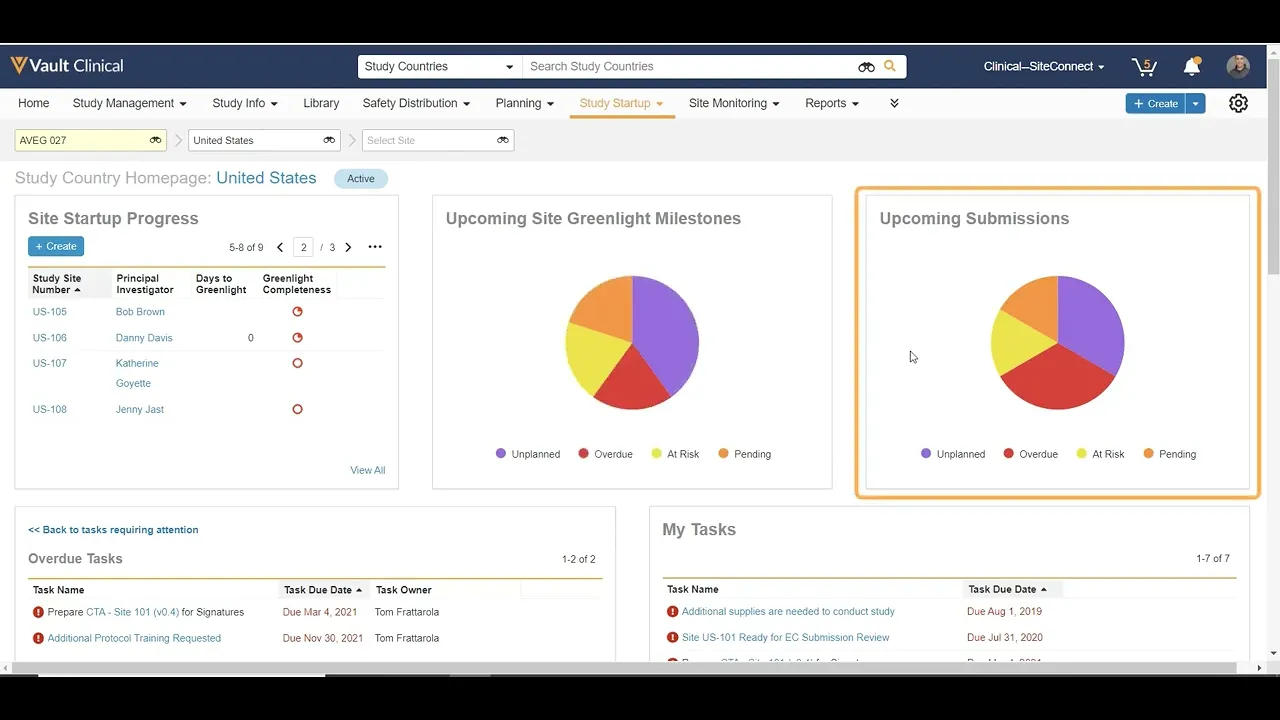
Veeva Vault Study Startup Demo: Study Startup Homepage
Veeva Systems Inc
/@VeevaSystems
Feb 8, 2022
The video provides an in-depth demonstration of the Veeva Vault Study Startup homepage, a centralized dashboard designed to enhance visibility and efficiency for clinical study startup specialists and managers. The primary objective of this interface is to provide a clear and complete snapshot of startup progress across multiple studies, allowing users to quickly identify and prioritize critical tasks and milestones. The presenter establishes the need for this tool by highlighting the challenge specialists face in managing tasks across various studies and processes, often requiring better visibility to determine daily focus areas. The homepage is structured to facilitate granular control and focused action. Users can first filter the view based on a specific study, narrowing the scope down to a particular country or even an individual site level. This filtering capability is crucial for managing complex, multi-site global trials. The dashboard then presents several key operational views, starting with "Site Startup Progress," which focuses attention on sites nearing the critical "greenlight" status. For newly selected sites, the system allows specialists to initiate the process immediately, such as sending the initial document package to the site. A core feature of the dashboard is its proactive risk management capability, highlighted in the "Upcoming Site Green Lights" section. This area is designed to focus attention on any at-risk or overdue milestones that could impede site activation. Specialists can drill into any specific greenlight milestone to take immediate corrective action or toggle various risk categories on or off to refine their prioritization. Furthermore, the dashboard integrates regulatory oversight through the "Upcoming Submissions" area, which tracks the status of milestones related to Ethics Committee (EC) submissions at both the country and site levels, ensuring regulatory compliance steps are monitored. All tasks assigned to the user are consolidated directly on the home page, offering immediate actionability. The demonstration showcases the ability to review documents, such as site contracts, in-line within Vault. This feature allows the specialist to identify issues, note them, and complete the task by sending the document back to the site for necessary revisions, streamlining the contract negotiation and review process. Finally, the "Green Light Planning and Progress" area provides a visual comparison of actual site greenlight completion against the original plan, offering interactive tools—such as click-and-drag functionality—to analyze performance within specific date ranges, thereby providing managers with critical business intelligence. The overall design eliminates the reliance on multiple systems or external trackers, consolidating all necessary information for efficient clinical trial initiation. Key Takeaways: * **Centralized Operational Visibility:** The Vault Study Startup homepage acts as a single source of truth, consolidating all critical milestones, tasks, and activities across multiple studies, countries, and sites, eliminating the need for disparate trackers or systems. * **Prioritized Task Management:** The system allows users to filter views by study, country, or site, enabling specialists to focus their attention precisely on the most critical or geographically relevant tasks requiring immediate action. * **Proactive Risk Identification:** Dedicated sections highlight "at-risk" or "overdue" milestones related to site greenlight activities, allowing managers to intervene early and mitigate potential delays in the clinical trial initiation timeline. * **Streamlined Site Initiation:** The dashboard facilitates immediate operational steps, such as sending initial document packages to newly selected sites directly from the "Site Startup Progress" area, accelerating the onboarding process. * **Integrated Regulatory Tracking:** The platform provides visibility into the status of Ethics Committee (EC) submissions at both the country and site levels, ensuring that critical regulatory milestones are monitored for compliance assurance. * **In-Line Document Review Efficiency:** Users can review and annotate documents, such as site contracts, directly within the Vault environment. This feature streamlines the review workflow, allowing specialists to note issues and send documents back for revision without system switching. * **Actionable Task Consolidation:** All assigned tasks are aggregated on the home page, providing immediate options to complete, reassign, or drill into detailed information about the task or associated document. * **Milestone Dependency Insight:** The "Upcoming Milestones" area utilizes a hover card feature that provides critical context, detailing any dependent milestones and listing the exact documents required to complete a specific activity, aiding in accurate sequencing and planning. * **Performance Analysis Capabilities:** The "Green Light Planning and Progress" section offers a visual comparison tool, allowing users to analyze actual site greenlight progress against the planned schedule and interactively review performance over specific date ranges. * **Optimized Workflow for Specialists:** The entire interface is designed to optimize the daily workflow of study startup specialists, ensuring they can efficiently manage complex administrative and regulatory tasks and focus on activities that drive site activation. Tools/Resources Mentioned: * Veeva Vault Study Startup * Veeva Vault (Platform) Key Concepts: * **Study Startup:** The initial phase of a clinical trial focused on activating sites, obtaining regulatory approvals (like Ethics Committee submissions), and preparing all necessary documentation before patient enrollment can begin. * **Site Greenlight:** A critical milestone in clinical trial initiation, signifying that a specific site has met all regulatory, contractual, and operational requirements and is authorized to begin patient screening and enrollment. * **Ethics Committee (EC) Submissions:** The process of submitting trial protocols, informed consent forms, and other documents to an independent ethics committee or institutional review board for review and approval before the trial can commence at a site.

How Are Doctors Paid? Learn the Incentives in Physician Compensation
AHealthcareZ - Healthcare Finance Explained
@ahealthcarez
Feb 5, 2022
This video provides an in-depth exploration of physician compensation models, specifically highlighting the pervasive dominance of volume-based incentives over value-based care within hospital-owned physician practices in the United States. Dr. Eric Bricker, of AHealthcareZ, presents findings from a recent RAND and Harvard University study published in the Journal of the American Medical Association (JAMA), which critically examines how doctors are paid and the implications for healthcare innovation and patient care. The core argument is that despite widespread rhetoric and efforts by government and insurance payers to implement value-based reimbursement models for hospitals, these incentives often fail to trickle down to the individual physician level, creating a significant disconnect. The presentation details the study's findings, which analyzed 31 physician practices owned by 22 different hospital systems. The research revealed that a vast majority of primary care physicians (84%) and specialists (93%) were compensated primarily based on the volume of patients seen and services rendered, measured by Relative Value Units (RVUs). In stark contrast, only a meager 9% of primary care physician compensation and 5.3% of specialist compensation was tied to quality and cost-effectiveness metrics. This demonstrates that while hospitals may receive value-based payments from external payers, their internal compensation structures for employed physicians remain heavily skewed towards maximizing volume and, consequently, health system revenue, rather than promoting patient outcomes or cost efficiency. Dr. Bricker emphasizes that this "window dressing" approach to value-based care at the payer-hospital level has profound implications for the doctor-patient relationship. He argues that as long as physicians are incentivized for "doing stuff" (fee-for-service) rather than for achieving positive outcomes or being cost-effective, their clinical decisions will inherently be influenced by volume targets. This systemic issue, as articulated by an anonymous leader from a hospital-owned physician practice quoted in "The Gist" newsletter, actively limits the ability to innovate and consistently pressures practices to maximize specialist referrals, often at the expense of other patient-centric goals. The video concludes by advocating for the importance of independent physician practices as a potential counter-model, suggesting that independence might foster environments more conducive to value-based care, though not guaranteeing it. Key Takeaways: * **Dominance of Volume-Based Pay:** A recent RAND and Harvard study found that 84% of primary care physicians and 93% of specialists in hospital-owned practices are paid based on patient volume and services (fee-for-service), not on quality or cost-effectiveness. This means doctors are incentivized for "doing stuff" rather than achieving specific patient outcomes. * **Minimal Value-Based Compensation:** Only 9% of primary care physician compensation and a mere 5.3% of specialist compensation was linked to value-based metrics (quality and cost-effectiveness), indicating a significant gap between stated goals and actual physician incentives. * **"Window Dressing" of Value-Based Care:** Despite federal government and insurance carriers pushing "payment innovation" and value-based reimbursement models to hospitals, these incentives often do not translate to how hospitals compensate their employed physicians. The internal compensation structure remains volume-based, effectively blocking the intended shift towards value at the point of care. * **Maximizing Health System Revenue:** Physician compensation within hospital systems is largely dominated by volume-based incentives explicitly designed to maximize health system revenue, as concluded by the JAMA study. This financial imperative often overrides broader goals of quality and cost-effectiveness. * **Disconnect in Incentives:** There is a critical disconnect between how payers reimburse hospitals (increasingly value-based) and how hospitals, in turn, pay their doctors (still predominantly volume-based). This creates a system where the doctor-patient relationship remains largely within a fee-for-service environment, despite external pressures for change. * **Impact on Innovation and Referrals:** The volume-based incentive structure limits innovation within physician practices and creates pressure to maximize specialist referrals over other goals, potentially impacting patient care pathways and overall healthcare costs. * **Importance of Observing Actions, Not Just Words:** The video emphasizes Andrew Carnegie's quote: "Don't listen to what people say, but watch what they do." In healthcare, this means observing how physicians are actually paid, not just listening to rhetoric about value-based care initiatives. * **Role of Independent Practices:** Approximately 50% of doctors in America still work in independent physician practices. The speaker suggests that independent practices, by not being tied to hospital systems' revenue maximization goals, may offer a more conducive environment for implementing true value-based care, though this is not a guarantee. * **RVUs as a Key Metric:** Relative Value Units (RVUs) are the primary metric used within hospital systems to measure the volume of services provided by physicians, directly linking compensation to the quantity of work performed. * **Implications for Patient Care Decisions:** The prevailing fee-for-service model means that doctors are incentivized to perform more services, which can influence diagnostic and treatment decisions, potentially leading to over-utilization rather than focusing on the most cost-effective or highest-quality care. Tools/Resources Mentioned: * **Journal of the American Medical Association (JAMA):** A preeminent medical journal that published the RAND/Harvard study discussed in the video. * **RAND Corporation:** A very famous research and development think tank that co-authored the study. * **Harvard University:** Co-authored the study on physician compensation. * **The Gist Newsletter:** A fantastic newsletter mentioned by Dr. Bricker, which provided an anonymous quote from a physician practice leader. Key Concepts: * **Value-Based Care/Reimbursement:** A healthcare payment model that rewards providers for the quality of care they deliver, rather than the quantity of services. It aims to improve patient outcomes and reduce costs. * **Fee-for-Service (FFS):** A traditional payment model where healthcare providers are paid for each service they perform (e.g., office visit, test, procedure). This model incentivizes volume. * **Relative Value Units (RVUs):** A measure of the value of a physician's work, used in the fee-for-service system. RVUs consider the physician's work, practice expense, and malpractice expense, and are used to determine physician compensation. * **Payment Innovation/Alternative Payment Models (APMs):** Initiatives by government and insurance carriers to move away from traditional fee-for-service models towards value-based care. * **Hospital System-Owned Practices:** Physician practices that are directly employed by or affiliated with hospital systems, representing about 50% of doctors in the U.S. Examples/Case Studies: * **RAND and Harvard University Study (Published in JAMA, January 28, 2022):** The central example, this cross-sectional study examined 31 physician practices owned by 22 different hospital systems to analyze physician compensation structures. Its key finding was the overwhelming dominance of volume-based incentives for both primary care physicians and specialists. * **Anonymous Quote from a Physician Practice Leader (from The Gist newsletter):** A real-world perspective from a leader within a hospital-owned physician group, acknowledging that the pressure to maximize specialist referrals is always present and "undoubtedly limits our ability to innovate." This quote corroborates the study's findings about the internal focus on revenue maximization.

Navigating eQMS Today with Enzyme
Cannon Quality Group, LLC
/@cannonqualitygroup
Feb 4, 2022
This video provides an in-depth exploration of electronic Quality Management Systems (eQMS), focusing on the Enzyme platform, presented by Nicolle Cannon, CEO of Cannon Quality Group, and Jared Seehafer, CEO and co-founder of Enzyme. The webinar kicks off a series aimed at creating a safe learning environment for understanding eQMS, rather than a direct sales pitch. The discussion centers on when and why companies, particularly Medtech startups, should consider implementing an eQMS, highlighting the benefits of automation, improved compliance, cost reduction, increased productivity, enhanced traceability, and reduced documentation burden. Jared Seehafer details Enzyme's design philosophy, which stems from a frustration with fragmented and difficult-to-use systems prevalent in both large enterprises and startups. Enzyme aims to be an all-in-one solution that integrates seamlessly with other business tools, designed for the "non-expert" user to prevent quality teams from becoming bottlenecks, and built to be lean yet scalable with intelligent, customizable defaults. The platform's core modules cover product (design control, risk management), process (document control, training, suppliers), and improvement (audits, complaints, non-conformances, CAPA), all interconnected with common platform capabilities like permissions, e-signatures, and data import/export. A significant portion of the presentation focuses on Enzyme's recent major release, which introduces enhanced customizability, allowing clients to tailor record and form structures to their specific needs without requiring extensive technical expertise. The speakers also delve into critical considerations for eQMS implementation, such as the optimal timing for adoption (document control and training from day one), evaluating different platform trade-offs (ease of use vs. customizability, integration needs vs. all-in-one solutions), and essential ingredients for successful implementation, including executive buy-in and data readiness. The discussion concludes with a look at Enzyme's 2022 roadmap, outlining new modules, API enhancements, a dedicated mobile app, Zapier integration, and improvements to notifications and metrics. Key Takeaways: * **Strategic eQMS Implementation Timing:** While eQMS offers significant benefits, the speakers advise a phased approach. Electronic document control and training are recommended from day one for good organizational hygiene, saving time and money in the long run, while other modules like design control, complaints, or CAPA can be implemented incrementally as the company's needs and complexity evolve. * **Addressing System Fragmentation:** A common problem in quality management is the use of disparate systems (e.g., Google Drive for documents, Docusign for signatures, Google Sheets for training) that don't communicate, leading to inefficiencies and compliance risks. Integrated eQMS solutions like Enzyme aim to consolidate these processes or connect them through robust integrations. * **eQMS Design Philosophy:** Enzyme's core design principles include being an all-in-one system that connects to other tools, being user-friendly for non-experts across all company functions (not just quality teams), and offering scalability from lean startups to large enterprises with intelligent, customizable defaults. * **Importance of Integration:** Enzyme distinguishes itself through deep integrations with common business tools such as Salesforce, Zendesk, Slack, G Suite, GitHub, and Jira. This allows companies to leverage existing tech stacks without manual data entry or syncing issues, ensuring the eQMS reflects real-time operational data. * **Customization without Complexity:** Enzyme's latest release offers significant customization of record and form structures, allowing clients to adapt the system to their specific quality processes. This balances the need for tailored solutions with ease of use, avoiding the requirement for "PhDs in the system" often associated with highly configurable platforms. * **Robust Compliance and Security:** Enzyme is 21 CFR Part 11 compliant, SOC 2 Type 2 certified, and operates under an ISO 9001 quality system. Its architecture on Amazon Web Services (AWS) ensures data integrity, security (encryption in rest and transit), and isolation of customer data (single-tenant architecture), which is a critical evaluation point for regulated industries. * **Streamlined Onboarding and Support:** Enzyme emphasizes a rapid and thorough onboarding process, aiming for full system adoption and data migration within 30 days. They offer multiple levels of training (admin, power user, general user) and continuous support via in-app chat and email, with options for dedicated support for larger organizations. * **Comprehensive Module Coverage:** The platform covers essential quality processes including Design Control (with granular traceability), Risk Management (14971 compliant hazard analysis), Document Control (automatic numbering, PDF generation, redlines), Training Management (curricula, quizzes), Supplier Management, Audits, Complaints, Non-Conformances, and CAPA. * **Validation Approach for Software Releases:** Enzyme manages its own product validation, providing extensive reports for customers to review and approve, which is typically sufficient for most companies. For custom code integrations, a collaborative validation process is undertaken with the client. Major releases require significant revalidation, while minor releases and patches (e.g., security fixes) are handled with less client intervention, though options for controlling deployment timing exist for critical clients. * **Key Trade-offs in Platform Evaluation:** When selecting an eQMS, companies should consider trade-offs between ease of use and customizability, the need for integration versus an all-in-one solution, and whether a purpose-built QMS or a more generic tool (like a PLM system with QMS functionality) is appropriate for their specific needs. * **Critical Success Factors for Implementation:** Successful eQMS rollout hinges on executive and cross-functional buy-in to prevent the system from becoming an isolated quality silo, having data ready for migration, understanding necessary procedural changes, and ensuring a dedicated team is available for training. * **Future Roadmap:** Enzyme's 2022 roadmap includes new modules (eTMF, BOM, Test Case Management), platform enhancements (more robust API, dedicated mobile app, Zapier integration), and improvements to notifications and metrics. **Tools/Resources Mentioned:** * **eQMS Platform:** Enzyme * **Consulting Firm:** Cannon Quality Group, LLC * **File Storage:** Google Drive, Dropbox, Box, OneDrive * **E-signatures:** Docusign * **Spreadsheets:** Google Sheets * **CRM:** Salesforce, Veeva CRM (mentioned in company context) * **Customer Service:** Zendesk * **Communication:** Slack * **Productivity Suite:** G Suite * **Code Storage:** GitHub * **Project Management:** Jira * **Middleware/Integration Platform:** Zapier * **Cloud Infrastructure:** Amazon Web Services (AWS) * **Certification Body:** Dekra (for ISO 9001) * **Competitor eQMS Platforms:** Greenlight Guru, MasterControl, Qualio * **Medical Device Companies:** Medtronic, Stryker, Abbott **Key Concepts:** * **eQMS (Electronic Quality Management System):** A software system designed to manage and automate quality processes and documentation in regulated industries. * **Design Control:** A systematic process that ensures a medical device or product meets user needs and intended uses, from conception to production. * **Risk Management:** The systematic application of management policies, procedures, and practices to the tasks of analyzing, evaluating, controlling, and monitoring risk. * **Document Control:** The management of documents throughout their lifecycle, including creation, review, approval, distribution, and archiving, ensuring compliance and traceability. * **Training Management:** System for planning, delivering, tracking, and documenting employee training to ensure competency and compliance. * **Supplier Management:** Processes for selecting, evaluating, monitoring, and managing suppliers to ensure the quality of purchased goods and services. * **Audits:** Systematic, independent, and documented processes for obtaining evidence and evaluating it objectively to determine the extent to which audit criteria are fulfilled. * **Complaints:** Records and processes for managing customer feedback, issues, or concerns related to a product or service. * **Non-Conformances:** Records and processes for managing deviations from specified requirements or procedures during product or process execution. * **CAPA (Corrective and Preventive Action):** A system for investigating and addressing the root causes of non-conformances and other quality problems to prevent recurrence or occurrence. * **Traceability:** The ability to track the history, application, or location of an item or activity by means of recorded identification. * **21 CFR Part 11:** Regulations from the FDA that set forth the criteria under which electronic records and electronic signatures are considered trustworthy, reliable, and equivalent to paper records and handwritten signatures. * **ISO 9001:** An international standard for quality management systems (QMS). * **SOC 2 Type 2:** A report on the controls at a service organization relevant to security, availability, processing integrity, confidentiality, or privacy. * **MD SAP (Medical Device Single Audit Program):** A program allowing a single audit to satisfy the requirements of multiple regulatory jurisdictions. * **Single-Tenant Architecture:** A software architecture where each customer has their own independent instance of the software and supporting infrastructure. * **Validation:** The process of establishing documented evidence that provides a high degree of assurance that a specific process, system, or activity will consistently produce a result meeting its predetermined specifications and quality attributes. * **Configuration vs. Customization:** Configuration refers to setting up existing features within a system, while customization involves modifying the underlying code or structure to create new features or behaviors. **Examples/Case Studies:** * **Enzyme Dogfooding:** Enzyme uses its own eQMS platform to manage its internal design history file (DHF), user needs, requirements, and verification/validation processes, demonstrating the product's applicability. * **Manual Systems:** Examples of common manual quality systems include storing documentation in Google Drive/Dropbox, using Docusign for e-signatures, and managing training matrices in Google Sheets, which often lead to outdated records and audit concerns. * **Legacy System Integration:** A specific client case involved integrating Enzyme with a legacy system that didn't use standard APIs, requiring custom development and a collaborative validation effort with the client's team. * **Digital Migration:** The speaker mentioned clients, particularly during COVID-19, who had relied on physical file cabinets for 40 years and needed to transition to digital document control and training, sometimes opting for only these basic eQMS functionalities.
Veeva Professional Services | Quality Team
Veeva Systems Inc
/@VeevaSystems
Jan 31, 2022
This video provides a high-level overview of the cultural and professional philosophy driving Veeva Systems' Quality Professional Services team. While brief, the content emphasizes the core values that Veeva instills in its employees—referred to as "Veevans"—focusing heavily on psychological safety, authenticity, and the direct link between internal culture and external customer success within the highly regulated life sciences industry. The primary purpose of the video is recruitment and brand building, showcasing Veeva as an employer that prioritizes individual contribution, creativity, and ethical leadership ("doing the right thing"). The key themes articulated by the team members center on fostering an environment where employees can "bring your whole self to work" and be authentic, which is positioned as a catalyst for professional excellence. This authenticity is directly tied to "releasing previous stressors or expectations," suggesting a corporate culture designed to maximize employee well-being and focus. Furthermore, the speakers highlight the importance of creativity, connections, and performance, framing these elements not as separate goals but as interconnected drivers of productivity. For a professional services team operating in the quality and compliance space—where rigor and adherence are paramount—the emphasis on unlocking creativity suggests that Veeva values innovative problem-solving within regulatory boundaries. A crucial element discussed is the foundation of trust, both internally among team members and externally with customers. The speakers assert that leadership is built on honesty and a commitment to ethical behavior. This focus on integrity is particularly significant for a Quality team, as their work directly impacts regulatory compliance (e.g., GxP, 21 CFR Part 11) and patient safety within the pharmaceutical sector. By appreciating one another, the team believes they unlock "hidden potential" that maximizes contributions toward industry success. The video concludes by stressing the power of collaboration, noting that working together fosters new ideas and enables execution with speed, reinforcing the idea that diverse backgrounds and choices are essential ingredients for achieving shared, industry-driving goals. Key Takeaways: * **Cultural Alignment with Compliance:** Veeva explicitly links a culture of authenticity and psychological safety to professional performance, suggesting that high-trust environments are essential for effective Quality Professional Services delivery in regulated industries. * **Creativity in Quality Management:** The emphasis on "bringing your own brand of creativity" into the position signals that Veeva views quality and compliance not just as rigid adherence, but as areas requiring innovative solutions and creative problem-solving to optimize processes. * **Ethical Leadership as a Core Value:** The stated focus on "honesty and doing the right thing" is paramount for partners serving the pharmaceutical industry, where ethical conduct and regulatory integrity are non-negotiable foundations for all software and consulting engagements. * **Trust as a Service Delivery Mechanism:** Building trust internally and externally is identified as a critical factor for success, implying that Veeva's professional services model relies heavily on transparent communication and reliable execution to maintain client confidence in compliance-critical systems. * **Maximizing Hidden Potential:** The belief that mutual appreciation unlocks "hidden potential" suggests a management philosophy focused on empowering individual contributors to maximize their impact on customer and industry outcomes, moving beyond standard task execution. * **Speed and Collaboration in Execution:** The video highlights that achieving shared goals through teamwork allows the organization to "execute with speed," which is a key competitive advantage in the fast-paced life sciences sector, especially during system implementations and upgrades. * **Strategic Importance of Professional Services:** By featuring the Quality team specifically, Veeva underscores the strategic importance of its Professional Services division in ensuring that its software platforms (like Veeva Vault QualityDocs or QualityOne) are implemented correctly and compliantly. * **Authenticity Drives Productivity:** The concept of "bringing your whole self to work" is presented as a direct driver of productivity, performance, and unlocking connections, suggesting that cultural fit is a primary criterion for success within Veeva's consulting ecosystem. * **Operational Philosophy for Partners:** For consulting firms like IntuitionLabs.ai, understanding this cultural emphasis on integrity, speed, and creative problem-solving provides valuable insight into the operational philosophy of their key platform partner, enabling better alignment and collaboration on joint projects. Key Concepts: * **Veeva Professional Services:** The consulting arm of Veeva Systems responsible for implementing, configuring, and optimizing Veeva software solutions (e.g., Veeva CRM, Veeva Vault) for life sciences clients. * **Quality Team Focus:** Within Veeva, this team specializes in solutions related to quality management, documentation, training, and ensuring regulatory adherence (including GxP and 21 CFR Part 11 compliance) across the pharmaceutical value chain. * **Authenticity and Trust:** Core cultural values promoted by Veeva, viewed as essential ingredients for high-performing teams operating in high-stakes, regulated environments.