Videos
Browse videos by topic
All Videos
Showing 769-792 of 1435 videos

Digital Health Sales and Marketing... Stop Wasting Money
AHealthcareZ - Healthcare Finance Explained
@ahealthcarez
Jul 2, 2022
This video provides an in-depth exploration of the critical challenges and effective strategies for sales and marketing within the digital health sector. Dr. Eric Bricker, the speaker, begins by highlighting a significant paradox: despite an astronomical surge in investment in digital health companies—totaling $85.6 billion between 2011 and 2021, with $29 billion in 2021 alone—the commensurate improvement in patient health and healthcare outcomes has not been realized. He attributes this disconnect largely to an inadequate understanding and execution of sales and marketing strategies, emphasizing that without getting these right, the substantial investments risk being entirely wasted. The core of his argument is that digital health sales and marketing is not a monolithic process but rather requires mastering three distinct and interconnected funnels. The presentation meticulously breaks down these three essential sales and marketing funnels: the Employer Funnel, the Broker/Consultant/Carrier Funnel (representing the broader ecosystem), and the Plan Member Funnel (the end-user). For each funnel, Dr. Bricker outlines both the marketing and sales components. Marketing, he explains, is about gaining attention through both inbound (content-driven, educational) and outbound (interruption-based, advertising, cold calling) approaches. The sales process, particularly for the B2B funnels, is framed using the Miller Heiman methodology, which identifies three crucial buyers: the technical buyer (who uses the solution daily), the outcome buyer (who seeks strategic results like employee attraction/retention), and the financial buyer (concerned with costs and ROI). This structured approach underscores the complexity of selling digital health solutions, which often requires navigating multiple stakeholders with diverse motivations. Dr. Bricker further elaborates on the unique dynamics of each funnel. The Employer Funnel targets benefits managers, HR VPs, and C-suite executives, each requiring a tailored value proposition. The Ecosystem Funnel emphasizes the necessity of winning over brokers, consultants, and insurance carriers, not just the employer directly. Here, the financial buyer within the ecosystem is paramount, as these entities need to see how promoting a digital health solution will increase their own income or market share. Finally, the Plan Member Funnel addresses the B2B2C nature of digital health, where even after a solution is implemented, adoption and utilization by the end-user remain a significant hurdle. This requires a dedicated marketing and sales effort to a heterogeneous population, leveraging early adopters and management endorsement to drive engagement and ensure the investment translates into actual patient benefit. Key Takeaways: * **Digital Health Investment vs. Impact Discrepancy:** A staggering $85.6 billion was invested in digital health companies between 2011 and 2021, with $29 billion in 2021 alone. However, this massive investment has not yet translated into a proportional improvement in patient health outcomes, suggesting a significant inefficiency in how these solutions are brought to market. * **Sales and Marketing as a Critical Success Factor:** The primary reason for the underperformance of digital health investments is often attributed to inadequate understanding and execution of effective sales and marketing strategies. Getting this right is paramount to prevent wasted time and money. * **Three Distinct Sales and Marketing Funnels:** Digital health sales are not a single process but require mastering three separate funnels: the Employer Funnel, the Broker/Consultant/Carrier Funnel (the ecosystem), and the Plan Member Funnel (the end-user). All three must be successfully addressed for a solution to gain traction and achieve impact. * **Dual Marketing Approaches:** Effective marketing involves both inbound strategies (creating educational or entertaining content that attracts attention) and outbound strategies (interruption-based methods like advertising, emails, cold calling, or conference booths). Both are complementary and essential. * **Miller Heiman Sales Methodology for B2B:** When selling to employers or the ecosystem, it's crucial to identify and sell to three distinct buyer types: the Technical Buyer (e.g., benefits manager, account manager) who uses the solution daily, the Outcome Buyer (e.g., VP of HR, subject matter expert) who seeks strategic results, and the Financial Buyer (e.g., CEO, CFO, producer) who controls the budget and seeks financial returns. * **Winning Over the Ecosystem is Essential:** Digital health companies cannot succeed by only selling to employers; they must also win over the ecosystem of brokers, consultants, and insurance carriers. These entities need to understand the financial incentive for them to promote the digital health solution, such as increased sales or added value for their clients. * **B2B2C Nature of Digital Health:** Digital health solutions operate on a business-to-business-to-consumer (B2B2C) model. Even after an employer or carrier adopts a solution, a dedicated sales and marketing effort is required to engage the end-users (plan members) to ensure high utilization and adoption. * **Tailored Member Engagement Strategies:** Engaging plan members requires diverse inbound and outbound marketing tactics (e.g., customer service integration, targeted emails, texts, calls, apps, social media, open enrollment campaigns) that are tailored to the heterogeneous nature of employee populations (e.g., millennials, Gen Xers, baby boomers, different genders). * **Leveraging Internal Champions for Member Adoption:** To drive member adoption, it's critical to identify and sell to early adopters within the employee population. These early adopters can then become advocates, convincing more conservative employees to use the service. Additionally, engaging and securing endorsement from management (from direct supervisors to the CEO) significantly boosts trust and encourages utilization. * **Focus on Time and Attention for Member Sales:** While members often face no direct out-of-pocket cost for digital health solutions, they must still invest their time and attention. The "sale" to the member involves convincing them that this investment is worthwhile and will simplify or improve their lives. Tools/Resources Mentioned: * **Rock Health:** A venture fund that provides insights and data on digital health funding, cited as the source for investment statistics. Key Concepts: * **Digital Health:** A broad term encompassing technologies that connect and empower consumers, patients, and caregivers to manage their health and wellness. * **Sales and Marketing Funnels:** A multi-stage process that guides potential customers from initial awareness of a product or service through to conversion and adoption. * **Inbound Marketing:** A strategy focused on attracting customers by creating valuable content and experiences tailored to them (e.g., educational articles, videos). * **Outbound Marketing:** A traditional marketing strategy where a company initiates the conversation and pushes its message out to an audience (e.g., advertising, cold calls, emails). * **Miller Heiman Methodology:** A sales framework that emphasizes understanding the different roles and motivations of buyers (technical, outcome, financial) within a complex B2B sales process. * **B2B2C (Business-to-Business-to-Consumer):** A business model where a company sells its product or service to another business, which then provides it to individual consumers. In digital health, this often means selling to an employer or insurer, who then offers the solution to their employees or members.

Veeva Vault Implementation Webinar Overview
Prana Life Sciences
/@pranalifesciences1
Jun 30, 2022
This webinar overview provides critical insights into the preparation and execution phases of a Veeva Vault implementation project, specifically targeting life sciences organizations. The presentation, delivered by Prana Life Sciences, a technology firm specializing in Veeva solutions, focuses on practical strategies for minimizing costs, avoiding common pitfalls, and establishing effective groundwork before engaging the primary vendor. The core objective is to ensure a smooth transition from legacy systems to the new Veeva platform, a process complicated by technical and operational challenges inherent in highly regulated environments. The discussion establishes a clear framework for the implementation process by identifying the three primary actors involved: the Veeva Systems vendor, the Veeva customer (the life sciences organization), and external consultants or subject matter experts. A significant portion of the webinar addresses the financial and operational burden of managing legacy systems. A key challenge highlighted is the necessity of timely retirement of these older systems to prevent unnecessary expenditure and effort required to keep them operational concurrently with the new Vault environment. This proactive management of legacy infrastructure is presented as a crucial cost-saving measure and a prerequisite for a successful transition. A central technical challenge emphasized in the presentation is data and document migration. The speakers note that migrating critical data and regulated documents from previous systems into Veeva Vault is one of the most substantial hurdles encountered in implementation projects. Crucially, the analysis suggests that a 100% success rate in data migration is rarely achieved, necessitating robust preparation to mitigate inevitable issues and pitfalls. The focus shifts to how organizations can prepare themselves to anticipate, manage, and mitigate these migration failures, ensuring that regulatory integrity and business continuity are maintained despite technical complexities. To ground the advice in real-world scenarios, the presentation incorporates specific case studies. The examples are strategically chosen to illustrate preparation strategies across different organizational scales, including one case study from a large enterprise and another from a smaller buyer. These examples serve to demonstrate that while the core challenges (stakeholder management, legacy retirement, data migration) remain consistent, the approach and scale of preparation must be tailored to the size and complexity of the implementing organization. The overall approach stresses proactive planning, expert engagement, and realistic expectations regarding the complexity of large-scale enterprise software deployment in the regulated life sciences industry. Key Takeaways: • **Three Key Implementation Actors:** Successful Veeva Vault deployment requires effective coordination between three distinct parties: the Veeva Systems vendor, the customer organization, and specialized consultants or experts engaged by the customer to guide the assignment. • **Proactive Legacy System Retirement:** A critical element of cost control and project efficiency is the timely retirement of legacy systems. Organizations must plan meticulously to ensure these older platforms are decommissioned promptly to avoid the extra cost and effort of maintaining them alongside the new Veeva Vault environment. • **Data Migration as the Primary Pitfall:** The migration of historical data and regulated documents from previous systems is consistently identified as the single biggest challenge in Veeva Vault implementations, often leading to project delays and complications. • **Acknowledge Imperfect Migration Success:** Organizations must operate with the realistic expectation that data migration is rarely 100% successful. Preparation should focus heavily on developing robust mitigation strategies and contingency plans to address inevitable data integrity issues or document transfer failures. • **Implementation Groundwork Best Practices:** The webinar stresses the importance of establishing comprehensive groundwork *before* engaging the vendor, including internal readiness assessments, data cleansing efforts, and defining clear migration scope to streamline the vendor engagement phase. • **Consultant Engagement Strategy:** Engaging external consultants or experts is necessary to navigate the complexities of Veeva implementation, particularly in areas like regulatory compliance, data mapping, and managing the technical interface between legacy systems and the new Vault platform. • **Cost Minimization Through Preparation:** Minimizing overall implementation cost is achieved not by cutting corners during execution, but by thorough preparation, which reduces unexpected scope changes, minimizes rework, and ensures efficient resource allocation. • **Case Study Diversity:** Practical learning is enhanced by reviewing case studies from organizations of varying sizes (large enterprises versus smaller buyers), demonstrating that implementation challenges and successful preparation strategies must be scaled appropriately to the organization's resources and complexity. • **Mitigating Regulatory Risk:** Given the life sciences context, preparation must heavily focus on ensuring that data migration and system retirement processes adhere strictly to regulatory standards (e.g., GxP, 21 CFR Part 11) to maintain audit readiness and compliance throughout the transition.

Bringing Digital Therapeutics to Patients with Data and Analytics
Veeva Systems Inc
@VeevaSystems
Jun 29, 2022
This video provides an in-depth case study on how Mika, a digital therapeutics (DTx) platform focused on oncology, successfully utilized data and analytics to achieve commercial success in the highly regulated German market. Mika is noted as the first reimbursed and generally approved digital therapeutic in oncology in Germany, developed specifically to address the profound psychological and daily care needs of cancer patients, guiding them through the entire process from diagnosis to various treatment phases. The core challenge addressed in the video is the strategic approach required to effectively engage Healthcare Professionals (HCPs) and drive adoption of this novel therapeutic solution. To navigate the complex commercial landscape, Mika established a strong partnership with Veeva, leveraging their comprehensive suite of tools for both engagement tracking and market intelligence. The strategy centered on using Veeva CRM to meticulously track all HCP engagements, providing the foundational data necessary for commercial operations analysis. Crucially, Mika integrated Veeva OpenData and Veeva Link to gain deep market insight. These platforms provided a rich dataset that allowed the DTx company to move beyond simple identification, enabling them to pinpoint the most influential physicians in specific regions and understand the broader ecosystem in which they operate. This intelligence included details on professional connections, speaking engagements, and areas of research focus, which are essential for tailoring effective outreach. The application of data analytics was paramount to optimizing Mika's sales investment. By analyzing the conversion function—the process by which an engaged HCP becomes a prescriber—Mika gained critical insights into the necessary intensity of their commercial efforts. The analysis, specifically utilizing data from Veeva Link, revealed a significant finding: the conversion process for a novel DTx requires more touchpoints than initially assumed. This data-driven understanding allowed Mika to refine its sales strategy and resource allocation, ensuring that marketing and sales investments were precisely targeted and effective. The most actionable insight derived from this analytical approach was the quantification of the necessary engagement level. Mika determined that between three and four distinct touchpoints per HCP are required for a physician to convert into a real prescriber of the digital therapeutic. This deep, evidence-based understanding of the market dynamics not only guided their sales strategy but also resulted in substantial cost savings. By understanding faster and better how to tackle the market, who to approach, and with what specific message, Mika avoided inefficient investment and accelerated patient access to their therapeutic platform. Key Takeaways: * **Digital Therapeutics Commercialization:** The successful market entry of novel solutions like Digital Therapeutics (DTx) in regulated environments (e.g., Germany's reimbursed oncology DTx) necessitates a robust, data-driven strategy for HCP engagement. * **Addressing Patient Needs:** DTx development must be rooted in addressing specific, high-impact patient needs, such as providing psychological support and everyday care guidance for patients dealing with cancer diagnoses and treatment phases. * **Veeva Ecosystem Integration:** Leveraging established platforms like Veeva CRM is essential for tracking all commercial engagements, providing the necessary data foundation for subsequent analysis and optimization of sales and marketing efforts. * **Ecosystem Mapping for Targeting:** Effective HCP targeting requires specialized data sources like Veeva OpenData and Veeva Link to identify not only the individual physician but also their professional ecosystem, including affiliations, conference participation, and connections. * **Quantifying Conversion Requirements:** Companies must apply an analytic perspective to their sales conversion funnel to understand the precise investment required. This involves learning where to allocate resources to automate adoption by patients. * **Touchpoint Threshold for DTx Adoption:** Mika's analysis revealed a critical finding: converting an HCP into a prescriber for a novel digital therapeutic requires a minimum of three to four distinct touchpoints, indicating the need for sustained, multi-channel engagement. * **Optimizing Sales Investment:** Deep market insight derived from data analytics directly translates into significant cost savings by allowing the commercial team to approach the market more efficiently and with better-tailored messaging, avoiding wasteful upfront investment. * **Strategic Partnering:** Partnering with established healthcare technology and data providers (like Veeva) provides the necessary infrastructure, data richness, and industry track record to accelerate market penetration for innovative life sciences companies. * **Data-Informed Messaging:** Understanding the HCP's background, research interests, and professional connections allows commercial teams to tailor the message about the DTx, increasing the likelihood of conversion and adoption. Tools/Resources Mentioned: * **Veeva CRM:** Used for tracking all HCP engagements and commercial activities. * **Veeva OpenData:** Utilized as a rich data set for identifying and addressing the right HCPs. * **Veeva Link:** Employed to gain deep background information on HCPs (e.g., conferences, connections) and to analyze market conversion functions. Key Concepts: * **Digital Therapeutics (DTx):** Software-based interventions that deliver therapeutic outcomes, often requiring regulatory approval and prescription. * **HCP Engagement Analytics:** The process of analyzing data related to interactions with Healthcare Professionals to optimize sales strategy and improve conversion rates. * **Conversion Touchpoints:** The number of interactions or engagements required with an HCP before they adopt or prescribe a new product or therapeutic.

Electronic Quality Management Software | QMS System | AmpleLogic
AmpleLogic
/@amplelogic6129
Jun 24, 2022
The video presents a targeted solution for the life sciences industry, specifically addressing the challenges associated with maintaining quality management systems (QMS) using outdated, paper-based methods. The core message positions AmpleLogic's Electronic Quality Management Software (eQMS) as a comprehensive solution for digitalizing critical GxP-related workflows, ensuring compliance with stringent regulatory requirements. The presentation highlights the necessary transition from manual, error-prone processes to a fully integrated, digital system that enhances data accessibility and integrity across the organization. The solution is framed around solving immediate operational pain points, such as the difficulty in accessing quality data, ensuring regulatory adherence, and integrating disparate legacy systems. AmpleLogic’s eQMS automates essential non-process workflows that are foundational to pharmaceutical quality assurance and regulatory reporting. The system is designed to provide users with access to critical quality data from anywhere, anytime, and on any device, optimizing workflow management for modern, distributed life sciences operations. The eQMS offers specific, automated modules covering the most critical aspects of quality control and compliance. These include Corrective and Preventive Actions (CAPA), Change Control, Market Complaints, Audit Management, Deviation Management, Vendor Qualification, Out of Specification (OOS), Out of Trend (OOT), and Lab Incident Reporting. By digitalizing these complex, interconnected processes, the system aims to shift organizations toward proactive quality management, leveraging features like auto-alerts and advanced analytics to identify potential issues before they escalate. A key technological differentiator emphasized in the pitch is that the QMS solution is built upon a next-generation low-code platform. This architectural choice is presented as a major competitive advantage, enabling organizations to develop and customize applications significantly faster—claimed to be 10 times quicker—using intuitive drag-and-drop features. This rapid development capability is linked directly to a quick return on investment (ROI), estimated to be achievable within three months, making the implementation process agile and cost-effective compared to traditional enterprise software deployments. Ultimately, the eQMS promises improved quality, increased efficiency through automation, and guaranteed compliance by maintaining robust data integrity and aligning processes with regulatory standards. Key Takeaways: * **Digitalization of GxP Workflows is a Primary Pain Point:** The core market challenge addressed is the struggle with paper-based quality management, which leads to compliance risks, inefficiency, and poor data accessibility. This confirms that digitalization of GxP processes remains a high-priority investment area for pharmaceutical companies. * **Comprehensive QMS Module Coverage:** The solution specifically targets the full spectrum of critical quality processes required for regulatory compliance, including CAPA, Change Control, Audit Management, Deviation Management, Vendor Qualification, and handling of Out of Specification (OOS) and Out of Trend (OOT) results. Any AI or custom software solution must be designed to integrate seamlessly with or enhance these specific modules. * **Low-Code Platform Strategy for Rapid Deployment:** The eQMS is built on a low-code platform, promising 10x faster application development and a three-month ROI. This indicates that pharmaceutical clients are prioritizing speed of deployment and flexibility, suggesting that IntuitionLabs.ai should consider low-code or no-code platforms for rapid prototyping and deployment of its own AI agents and custom solutions. * **Focus on Proactive Quality Management:** The system moves beyond reactive reporting by incorporating auto-alerts and advanced analytics. This aligns with the industry trend toward predictive quality assurance, a prime area for leveraging AI and machine learning to anticipate deviations or compliance failures. * **Regulatory Compliance and Data Integrity are Non-Negotiable:** The solution explicitly promises processes compliant with regulatory standards and emphasizes maintaining data integrity. This reinforces the need for all custom software and AI solutions developed for this sector to be validated and adhere strictly to regulations like 21 CFR Part 11 concerning electronic records and signatures. * **Integration Capability is Essential:** The pitch highlights the ability to integrate the eQMS with current systems, acknowledging that life sciences companies operate complex, heterogeneous IT environments. Any new AI solution must demonstrate robust API capabilities for integration with existing QMS, ERP, and LIMS platforms. * **Mobility and Accessibility are Key Requirements:** The ability to access quality data "from anywhere anytime on any device" is a crucial feature. This confirms that mobile and cloud-accessible solutions are expected standards for modern enterprise software in the life sciences sector. * **Competitive Landscape Insight:** AmpleLogic positions itself as a "market leader in pharma focused electronic quality management solutions." This identifies a significant competitor and highlights the need for IntuitionLabs.ai to differentiate its offerings, perhaps by focusing on AI-driven automation *within* these QMS workflows (e.g., automating CAPA root cause analysis or predicting audit findings). Tools/Resources Mentioned: * Electronic Quality Management Software (eQMS) * Next Generation Low-Code Platform Key Concepts: * **CAPA (Corrective and Preventive Actions):** A systematic process for identifying and resolving causes of non-conformance or other undesirable situations. * **Change Control:** A formal process used to manage and document changes to validated systems, processes, or products to ensure quality and compliance. * **Out of Specification (OOS) / Out of Trend (OOT):** Results from laboratory testing that fall outside established limits (OOS) or show an unusual pattern over time (OOT), requiring investigation under GxP regulations. * **Vendor Qualification:** The process of evaluating and approving suppliers of materials or services to ensure they meet required quality standards. * **Data Integrity:** The assurance that data is accurate, complete, consistent, and trustworthy throughout its lifecycle, a critical requirement under regulations like 21 CFR Part 11.

Data Migration Webinar Overview
Prana Life Sciences
/@pranalifesciences1
Jun 22, 2022
This webinar provides an in-depth exploration of data migration strategies specifically tailored for GxP (Good Practices) applications during transitions to modern cloud platforms, with a significant focus on the Veeva ecosystem. The speaker establishes the context by emphasizing that data migration is one of the most challenging undertakings in the GxP world, particularly when involving enterprise-wide solutions such as document management, clinical systems, regulatory affairs, and safety platforms. The session aims to distill decades of experience into actionable best practices for navigating the complexities of moving data from legacy systems onto new, validated cloud environments. The presentation structures its analysis around three distinct use cases, offering concrete examples of migration challenges and solutions across critical functional areas in life sciences. The first use case addresses clinical data migration, focusing on systems like Clinical Trial Management Systems (CTMS) and electronic Trial Master Files (eTMF). This area requires specialized attention to ensure the integrity of trial data, maintenance of audit trails, and adherence to regulatory requirements throughout the transfer process. The second and third use cases delve into the quality domain, which often involves highly regulated documentation. The second use case examines Quality Management System (QMS) migrations, detailing successful transitions from various legacy platforms—including structured systems like TrackWise and IQVIA QMS—to Veeva QMS. Critically, the session also addresses the complex scenario of migrating paper-based QMS systems, where source documents exist in unstructured formats like Word files and scanned PDFs, necessitating robust processes for extraction, standardization, and ingestion into the structured Veeva environment. The third use case focuses on the migration of quality documents from established enterprise content management systems, such as Documentum and SharePoint, into Veeva QualityDocs. The overall approach to developing these migration strategies is informed by established quality standards and methodologies to ensure robust, compliant outcomes. The framework leverages quality standards such as ISO 9001 for quality management and ISO 27001 for information security management, ensuring data integrity and security are maintained throughout the transfer process. Furthermore, the application of Lean Six Sigma methodology is utilized to streamline migration protocols, minimize errors, and optimize the efficiency of data transfer, validation, and system implementation phases, thereby reducing the overall risk and duration of the project. Key Takeaways: • Data migration is identified as the single most challenging initiative during GxP system implementations, requiring specialized expertise due to the regulatory and validation requirements associated with clinical, quality, and regulatory data. • The webinar focuses heavily on migration *to* the Veeva platform, detailing transitions to Veeva QMS and Veeva QualityDocs, highlighting the necessity of platform-specific knowledge to properly structure and map migrated data fields and metadata. • Clinical data migrations require distinct strategies, exemplified by the use case involving CTMS and eTMF systems, where maintaining complete audit trails and ensuring data integrity for ongoing clinical trials is paramount for regulatory compliance. • QMS migration complexity varies significantly based on the source system; the presentation contrasts migrations from structured legacy QMS platforms (like TrackWise or IQVIA QMS) with those originating from unstructured, paper-based systems. • Migrating paper-based quality documents (Word files, scanned PDFs) into Veeva QMS necessitates robust data extraction, cleansing, and standardization processes before ingestion to ensure the documents meet the structured metadata and version control requirements of the new cloud platform. • Quality document migrations from enterprise content management systems like Documentum or SharePoint into Veeva QualityDocs require careful planning regarding metadata mapping, preservation of version control history, and ensuring 21 CFR Part 11 compliance is maintained post-migration. • Successful GxP data migration must adhere to recognized quality standards, utilizing ISO 9001 principles to manage the quality of the migration process itself and ISO 27001 to guarantee the security and confidentiality of sensitive life sciences data throughout the transfer. • Employing Lean Six Sigma methodology in the migration process helps optimize efficiency by identifying and eliminating waste (e.g., unnecessary manual steps, redundant validation checks) and reducing variability in data transfer protocols, leading to faster and more predictable outcomes. • Comprehensive migration strategies must account for all GxP applications, including content management, clinical trials (CTMS/eTMF), regulatory affairs (RIM), safety, and training systems, as each domain presents unique data structure and compliance hurdles that must be addressed individually. • The selection of use cases (clinical data, QMS, quality documents) demonstrates a strategic focus on the most common and high-risk data types encountered during enterprise-wide digital transformation in the life sciences sector. • Future migration planning should anticipate specific challenges for other GxP areas, such as Regulatory Information Management (RIM) and safety systems, which will be covered in subsequent deep-dive webinars. Tools/Resources Mentioned: * **Veeva Products:** Veeva QMS, Veeva QualityDocs. * **Legacy Systems:** TrackWise, IQVIA QMS, Documentum, SharePoint. * **GxP Systems:** CTMS (Clinical Trial Management System), eTMF (electronic Trial Master File), RIM (Regulatory Information Management), Safety systems. Key Concepts: * **GxP World:** Refers to Good Practices (e.g., GMP, GCP, GLP) that govern regulated industries like pharmaceuticals, emphasizing quality and compliance. * **Data Migration Strategies:** Methodologies and plans for moving data from legacy systems to new enterprise platforms while ensuring data integrity and regulatory compliance. * **Validation Services:** The formal process of establishing documented evidence that a system performs its intended function accurately and consistently, critical for GxP environments. * **ISO 9001:** International standard specifying requirements for a quality management system (QMS). * **ISO 27001:** International standard specifying requirements for establishing, implementing, maintaining, and continually improving an information security management system (ISMS). * **Lean Six Sigma:** A methodology combining Lean principles (waste reduction) and Six Sigma principles (variation reduction) to improve process performance and quality.

IQVIA Complete Consent
IQVIA
/@IQVIA
Jun 21, 2022
The video introduces IQVIA Complete Consent, an electronic informed consent (e-consent) solution designed to optimize the patient experience, improve retention rates, and ensure regulatory compliance across global clinical trials. The core purpose of the platform is to transform the traditionally outdated paper-based consent process into an engaging, secure, and scalable digital experience. IQVIA emphasizes its extensive experience in e-consent, citing over 15 years in the field and a proven track record of ensuring process integrity, privacy, and security in more than 60 countries, positioning the company as a reliable partner in regulated environments. The platform achieves its goals by integrating user-friendly multimedia features with a highly scalable e-consent architecture. This design is specifically intended to support study teams managing complex protocols at a global level. A significant focus is placed on the regulatory challenges inherent in global trials; IQVIA positions its experts as partners who help sponsors navigate diverse and complex regulatory environments to deploy e-consent efficiently and compliantly across various sites, thereby driving both compliance and operational efficiency. A key benefit highlighted is the solution's ability to cater to diverse patient populations and learning styles. By utilizing multimedia, Complete Consent ensures that patients—ranging from pediatric and elderly participants to individuals with physical impairments or those requiring a legal representative—can fully comprehend the details of their participation. This enhanced comprehension is directly linked to higher retention rates, as patients who better understand the commitment are more likely to stay engaged. Furthermore, the digital consent process offers flexibility, allowing patients to complete the informed consent remotely or while on-site, ensuring accessibility regardless of location. Finally, the video addresses the deployment flexibility of the solution. IQVIA Complete Consent can be implemented as a standalone, self-managed solution, or sponsors can utilize IQVIA’s comprehensive expert implementation support. This partnership approach ensures that sponsors and sites can confidently deliver compliant e-consent globally, maximizing enrollment and engagement while maintaining strict adherence to regulatory standards required in the life sciences sector. Key Takeaways: * **e-Consent for Operational Optimization:** Electronic informed consent is positioned not just as a regulatory necessity but as a strategic tool to optimize the patient experience in clinical trials, directly leading to improved patient retention rates. * **Global Regulatory Expertise:** The solution is built upon over 15 years of e-consent experience, ensuring process integrity, privacy, and security across deployments in more than 60 countries, addressing the complex regulatory requirements of global clinical research. * **Multimedia for Enhanced Comprehension:** The platform integrates user-friendly multimedia features to transform the consent process, appealing to diverse learning styles and ensuring patients fully comprehend their participation, which is a key driver for higher retention. * **Support for Diverse Patient Populations:** The e-consent system is specifically designed to accommodate a wide range of participants, including pediatric patients, the elderly, individuals with physical impairments, and those requiring a legal representative to provide consent. * **Scalability for Complex Protocols:** The scalable e-consent platform is engineered to support study teams delivering complex protocols across multiple sites and diverse regulatory jurisdictions worldwide. * **Flexibility in Access:** Patients are offered the flexibility to complete the digital informed consent process either remotely from home or physically at the trial site, increasing convenience and removing geographical barriers to participation. * **Expert Regulatory Navigation:** IQVIA provides expert support to help sponsors navigate complex regulatory environments, ensuring compliant and efficient deployment of e-consent across various sites globally. * **Deployment Options:** Sponsors have flexibility in adopting the technology, choosing between implementing the solution as a self-managed, standalone product or utilizing comprehensive expert implementation and partnership support. * **Compliance and Efficiency Driver:** The solution transforms an outdated, manual process into an engaging digital experience that simultaneously drives regulatory compliance and operational efficiency for sponsors and clinical sites. Tools/Resources Mentioned: * IQVIA Complete Consent (e-consent platform) Key Concepts: * **Electronic Informed Consent (e-consent):** The digital process of obtaining patient consent for clinical trial participation, replacing traditional paper forms with interactive, multimedia-rich digital documents. * **Patient Retention:** The ability to keep enrolled patients engaged and participating throughout the entire duration of a clinical trial, which is significantly improved when patients fully understand the commitment. * **Global Regulatory Compliance:** Adherence to the diverse and complex regulatory standards (e.g., FDA, EMA, country-specific requirements) governing clinical trials and data integrity across international borders.

Human Capital Management (HCM) Explained - Chas Fields - UKG (Ultimate Kronos Group) - Episode 50
Self-Funded
@SelfFunded
Jun 21, 2022
The video provides an in-depth exploration of Human Capital Management (HCM), featuring Chas Fields, Senior Partner at UKG (Ultimate Kronos Group). Fields defines the modern view of HCM as extending beyond the traditional employee life cycle (recruiting, payroll, HR functions) to focus on building employee autonomy, flexibility, and a personalized experience through technology. The core thesis is that investing in people and providing them with modern, efficient tools directly impacts the business bottom line by improving productivity, efficiency, and retention. The conversation emphasizes that the goal of HCM technology is to eliminate "time suckers" and meet the modern workforce's expectation of consumer-grade technology in the workplace. A critical theme discussed is the transformative role of AI and automation in streamlining enterprise operations. Fields shares concrete examples from UKG’s platform, noting that AI is used to approve over 25 million paid time off (PTO) requests without human intervention. Furthermore, AI facilitates automated shift swaps in operational environments (like manufacturing or distribution), where an employee can drop a shift via an app, and the system automatically notifies qualified colleagues seeking extra hours. This level of automation is crucial for maintaining efficiency and catering to the employee's desire for flexibility, which is a key driver of engagement and retention. The speakers delve into the necessity of strong company culture and effective change management. Fields, a change management practitioner, asserts that when implementing major technological shifts, organizations must "sell" the vision of the improved future to employees. This involves transparent communication about how the change will personally benefit the individual—by freeing them from manual processes and providing opportunities to learn new skills—rather than just focusing on corporate gains. The discussion also highlights the evolution of employee benefits toward holistic well-being, including financial wellness coaching and robust mental health resources, recognizing that employees bring their entire personal existence, including financial and mental stress, to the workplace. Fields stresses that companies must proactively ask for feedback (using anonymous tools) and act on it to foster a culture of trust, warning that ignoring known problems is a common pitfall leading to valuable employee turnover. Key Takeaways: * **AI-Driven Operational Efficiency is Essential:** HCM technology must leverage AI to automate high-volume administrative tasks, such as PTO approvals and scheduling, to free up managers and employees from "time suckers" and increase overall organizational efficiency. * **High Turnover Justifies HCM Investment:** The cost of replacing an employee (3 to 6 months of salary plus lost productivity) significantly outweighs the investment in HCM solutions that improve engagement, retention, and efficiency. * **Change Management Must Be People-Centric:** Successful technology adoption requires organizations to lead with the individual benefit, demonstrating how new processes will improve the employee's job quality and provide opportunities for skill development, rather than simply imposing change. * **Transparency and Trust are Non-Negotiable:** Leadership must maintain high transparency, especially during organizational changes (like mergers), through consistent, personal communication (e.g., CEO videos) to build trust and reinforce the company’s commitment to its people. * **Holistic Benefits Include Financial Wellness:** Modern benefits must address the full spectrum of employee well-being, including offering financial wellness coaching and education (e.g., budgeting, understanding paychecks) to mitigate the high stress associated with financial insecurity. * **Mental Health is a Core Workplace Concern:** Companies should provide dedicated, accessible mental health resources and community support (like UKG's "Brain Matters" campaign) to acknowledge and address the reality that employees' personal struggles impact their professional performance. * **Use AI-Powered Feedback Tools:** To address blind spots, companies should utilize anonymous feedback mechanisms, such as "Employee Voice" surveys, where AI analyzes sentiment to identify recurring issues and provide actionable data to managers. * **Career Pathing is a Retention Strategy:** A powerful benefit is providing a personalized career path, showing employees opportunities for growth and skill acquisition within the company to ensure top talent sees a long-term future with the organization. * **Hybrid Work is Likely Permanent:** Companies must adapt to hybrid and remote work models, recognizing that forcing employees back to the office after years of remote work can be detrimental to retention and runs counter to a culture of meeting employees "where they are." * **Don't Ignore Employee Feedback:** A major pitfall is ignoring or dismissing employee concerns, which often leads to the departure of knowledgeable individuals. Companies must commit to acting on feedback to maintain trust and prevent operational knowledge loss. **Tools/Resources Mentioned:** * **UKG (Ultimate Kronos Group):** Major provider of HCM and Workforce Management software. * **Employee Voice (UKG Solution):** An anonymous survey tool that uses AI to analyze employee responses for sentiment, helping managers create action plans. * **Brain Matters Campaign (UKG Internal):** An internal initiative providing employees with access to mental health advocacy, research, and community resources. **Key Concepts:** * **Human Capital Management (HCM):** The strategic approach to managing and optimizing the workforce, focusing on employee autonomy, flexibility, and using technology (like AI) to enhance the entire employee life cycle. * **Change Management:** The structured approach to transitioning individuals, teams, and organizations from a current state to a desired future state, emphasizing communication and demonstrating individual benefit. * **Holistic Well-being:** A comprehensive benefits philosophy that addresses physical, mental, emotional, and financial health, recognizing the interconnectedness of personal life and workplace performance.

TMF Reference Model Training Part 2
TMF Reference Model
/@TMFReferenceModel
Jun 20, 2022
This video provides a comprehensive training on the Trial Master File (TMF) Reference Model, defining its purpose, structure, and application in clinical trials. Speakers Chole Xi Van and Donna Dorzinski, both members of the TMF Reference Model Steering Committee, explain how the model standardizes TMF content, naming, structure, and metadata, expanding upon ICH GCP Chapter 8 and EU Regulation 536/2014. The discussion covers the model's 11 functional zones, the classification of artifacts and sub-artifacts, and how the model facilitates consistent filing, rapid retrieval, and regulatory compliance. It also highlights the benefits of implementing the model, such as reduced customization, simplified CRO engagement, and improved integration of TMFs. Key Takeaways: * **Standardized Regulatory Compliance:** The TMF Reference Model provides a critical framework for clinical trial documentation, ensuring compliance with regulations like EU Regulation 536/2014 and ICH GCP. Its four-fold purpose (standard content, naming, structure, and metadata) is essential for demonstrating the conduct and data quality of a trial during audits and inspections. * **Structured for Efficiency and Retrieval:** The model's detailed organization into 11 functional zones, sections, artifacts, and sub-artifacts, complete with definitions and ICH codes, enables consistent filing and rapid retrieval of documents. This structured approach is vital for operational efficiency and audit readiness in clinical operations. * **Industry Consensus and Reduced Customization:** As an industry-driven initiative, the TMF Reference Model offers a consistent interpretation of TMF requirements, reducing ambiguity and avoiding scope creep. Its adoption helps limit company-specific customizations, aligning organizations with broader industry standards and simplifying collaboration with CROs. * **Foundation for Data Management and Integration:** By standardizing content and metadata, the model facilitates the exchange of information across the industry and simplifies the integration of multiple TMFs into a single, unified structure. This structured approach is foundational for robust data engineering and business intelligence initiatives within clinical data management. * **Enabling Digital Transformation:** While not explicitly mentioning AI, the emphasis on standardized structure, naming, and metadata within the TMF Reference Model creates an ideal environment for the implementation of electronic TMF (eTMF) systems and future AI/LLM solutions.

IQVIA RIM Smart Labeling Teaser
IQVIA
/@IQVIA
Jun 20, 2022
This video provides an overview of the IQVIA RIM Smart Labeling solution, positioning it as a transformative tool designed to mitigate significant risks associated with pharmaceutical product labeling and packaging artwork errors. The core premise is established immediately with a striking statistic: research indicates that 50% of pharmaceutical recalls are attributable to mistakes in product labeling or packaging artwork. This high rate of error underscores the critical need for a robust, centralized system to manage the complex and highly regulated labeling lifecycle within the life sciences industry. The IQVIA solution, RIM Smart Labeling, is presented as a single, unified platform that seamlessly integrates with existing systems to connect strategic planning with real-time market insights. The system's design emphasizes user control and operational efficiency through an easy-to-use dashboard and interface. This centralized control allows users to manage all incoming requests, track impacted label content, and oversee the associated artwork. By unifying these disparate elements, the solution aims to eliminate the fragmentation and manual handoffs that often lead to the high error rates cited in the research. Functionally, the system is designed to streamline global labeling strategy. Key benefits highlighted include supporting stringent regulatory compliance requirements, driving operational efficiency, and enabling the critical reuse of approved content across various work streams, countries, and regions. This capability for content reuse is essential for maintaining consistency and accelerating time-to-market while reducing the risk of regional deviations. Ultimately, the system’s goal is to create a "single source of truth" for all labeling data, empowering users to effectively plan, track, and execute their labeling activities from initial strategy through final market deployment, thereby enhancing patient safety and increasing return on investment (ROI). ### Key Takeaways * **Mitigation of Regulatory Risk:** A staggering 50% of pharmaceutical recalls are linked to product labeling or packaging artwork errors, highlighting labeling management as a critical regulatory and quality control vulnerability that requires immediate technological intervention. * **Necessity of a Unified Solution:** The complexity of global labeling necessitates moving away from fragmented processes toward a single, unified solution that integrates content management, artwork control, and regulatory tracking to minimize human error. * **Centralized Control and Visibility:** The system’s easy-to-use dashboard and interface are crucial for putting users in control of the entire labeling lifecycle, from managing initial requests to overseeing the final artwork, ensuring transparency and accountability. * **Regulatory Compliance as a Core Feature:** The primary function of RIM Smart Labeling is to actively support regulatory compliance by standardizing processes and ensuring that all content changes are tracked and approved within a controlled environment. * **Driving Operational Efficiency through Reuse:** A major efficiency gain comes from the system’s ability to enable the reuse of approved label content across different work streams, countries, and regions, significantly reducing redundant work and accelerating global submissions. * **Connecting Strategy to Execution:** The platform is designed to connect high-level labeling strategy with real-time market insights, allowing organizations to plan and track their labeling activities comprehensively from the initial strategic phase to final market release. * **Establishing a Single Source of Truth:** Creating a "single source of truth" for all labeling data is vital for data integrity, auditability, and ensuring that all stakeholders (commercial, medical, regulatory) are working from the most current, approved information. * **Enhancing Patient Safety:** By drastically reducing the likelihood of errors in critical information like dosage, warnings, and instructions, effective labeling management directly contributes to enhanced patient safety outcomes. * **Integration is Key:** The solution is designed to be seamlessly integrated with current systems, suggesting that successful implementation relies on robust data engineering and integration services to ensure data flow and system interoperability. * **ROI from Error Reduction:** The investment in advanced labeling technology yields a measurable ROI by reducing the costly financial and reputational damage associated with product recalls, supply chain disruptions, and potential regulatory fines. ### Tools/Resources Mentioned * **IQVIA RIM Smart Labeling:** A specialized software solution designed for managing the end-to-end pharmaceutical product labeling process. ### Key Concepts * **Regulatory Information Management (RIM):** A category of enterprise software focused on managing the vast amount of data, documentation, and processes required to ensure pharmaceutical products comply with global health authority regulations (e.g., FDA, EMA). * **Product Labeling and Packaging Artwork:** Highly regulated materials that communicate essential information about a drug (dosage, indications, warnings) to healthcare professionals and patients. Errors in this area are a leading cause of product recalls. * **Single Source of Truth (SSOT):** A concept in data management where all organizational data related to a specific domain (in this case, labeling content) resides in one centralized location, ensuring consistency, accuracy, and ease of audit.

How Jumbo Employers are Solving Healthcare - Lee Lewis - Health Transformation Alliance - Episode 49
Self-Funded
@SelfFunded
Jun 14, 2022
This video features an in-depth conversation with Lee Lewis, Chief Strategy Officer of the Health Transformation Alliance (HTA), a co-op owned by approximately 65 jumbo employers (5,000+ lives on their health plan) dedicated to achieving superior health outcomes and compelling savings. The discussion centers on the unique challenges and opportunities faced by these massive organizations in optimizing their self-funded health plans, emphasizing the power of aggregated scale and advanced data utilization. Lewis, drawing on his extensive background in the self-funded space, including his role in the origins of Health Rosetta and the innovations lab at Gallagher, outlines the "self-insured science" necessary to drive meaningful change in healthcare costs. A core theme explored is the dichotomy between power and agility in benefits innovation. Jumbo employers possess immense purchasing power but often lack the agility of smaller, mid-market companies, making certain innovations (like widespread Direct Primary Care or Reference-Based Pricing) difficult to deploy across hundreds of locations and thousands of employees. Conversely, the HTA leverages its aggregated strength to tackle systemic issues, particularly around data access and standardization. Lewis details the HTA’s pioneering efforts to move beyond standard medical claims data to secure richer datasets, including eligibility status and prior authorization workflows from carriers. This granular data allows employers to potentially predict high-cost events, such as oncology visits, six months before a claim is filed, offering opportunities for proactive intervention. The conversation also delves into specific, high-ROI strategies for managing the five major cost categories that account for nearly half of all healthcare spend: orthopedic, cardiometabolic, maternity/fertility, cancer, and behavioral health. Lewis highlights a particularly impactful, yet underutilized, strategy concerning cardiometabolic disease. He notes research indicating that 92% of heart attack and stroke survivors are not on the correct, inexpensive generic medication cocktail to prevent recurrence, which dramatically increases their risk (one in five chance annually). By using data analytics to identify these individuals and facilitate outreach, employers can achieve significant savings and superior outcomes. Furthermore, the video discusses the historical difficulty of implementing cutting-edge strategies, citing the exhaustion and resistance encountered even after successfully executing the first specialty drug carve-out in the U.S. in 2017, underscoring the high effort required for true innovation. Finally, Lewis shares a vision for the future of healthcare, contrasting a "Hotel California" dystopian scenario—where vertically integrated corporations control all access and drive costs higher—with a hopeful future. The positive vision is one where every person has a relationship of trust with a physician who practices at the top of their license, making judicious, data-driven referrals to high-quality, fairly priced providers. This conversion of "dumb money" (money lacking accountability and transparency) into "smart money" (value-driven spending) is posited as the critical mechanism for incentivizing systemic change and improving overall healthcare value. Key Takeaways: * **Jumbo Employer Data Strategy:** The HTA is pioneering the acquisition of non-claims data from carriers, including eligibility checks and prior authorization workflows. This allows employers to predict high-cost events (e.g., oncology visits) months in advance, enabling proactive intervention and care navigation. * **Data Security and Utility:** To manage the "radioactive" nature of granular health data, the HTA advocates for storing data in highly secure, cloud-based servers (NSA/NASA level security) with strict walls and permissions. Data should be permanently encrypted (at rest and in motion) and only the minimum necessary information should be shared with vendors. * **Standardizing Data Truth:** A major challenge is the lack of comparability across carrier data due to differing coding and interpretation methods. The HTA focuses on creating standardized algorithms that work across various data types to produce reliable, source-truth metrics, essential for accurate business intelligence. * **High-Impact Cost Categories:** Approximately 46% to 51% of all healthcare spend falls into five major categories: orthopedic, cardiometabolic (heart attacks/strokes), maternity/fertility, cancer, and behavioral health. Strategies must be developed specifically for each of these areas to control costs. * **Cardiometabolic Intervention ROI:** A significant opportunity exists in managing heart attack and stroke survivors, 92% of whom are not on the correct, inexpensive generic drug cocktail to prevent recurrence. Identifying and intervening with these individuals can dramatically reduce the risk of subsequent, high-cost acute events. * **Innovation vs. Agility:** Large employers struggle with high-agility innovations (like widespread DPC or Reference-Based Pricing) due to communication challenges across massive, dispersed employee populations, whereas small employers can deploy these more easily. * **Leveraging Scale for Systemic Change:** The HTA uses its aggregated buying power to negotiate favored nations pricing and secure better contracts, often saving members 2-5% or more on healthcare spend just by adopting one or two major solutions. * **Specialty Drug Management:** Early innovation included pioneering specialty drug carve-outs and managing orphan drugs on an exception basis, strategies that, while highly effective, require significant effort and negotiation with PBMs and carriers. * **The Power of Trust in Healing:** The speaker emphasizes that trust and belief (analogous to the placebo effect) account for about one-third of all healing. Building a relationship of trust between the patient and a primary care physician is critical for better outcomes. * **Converting to Smart Money:** The ideal future involves converting healthcare spending from "dumb money" (no accountability, no transparency) to "smart money" (value-driven, quality-focused decisions). This shift will incentivize the entire healthcare system to improve quality and reduce unnecessary costs. Tools/Resources Mentioned: * Health Transformation Alliance (HTA) * Health Rosetta * Validation Institute * Substack of Dr. Bill Besterman (for cardiometabolic research) Key Concepts: * **Self-Funded Science:** The systematic, data-driven approach to managing a self-funded health plan, focusing on deep analysis and innovative benefit design. * **Jumbo Employer:** An employer group typically defined by the HTA as having over 5,000 total lives on their health plan. * **Co-op (C Corp with No Profit Intent):** The HTA's organizational structure, where member employers own equal equity stakes and the mission is focused purely on member outcomes and savings. * **Specialty Drug Carve-Out:** A strategy where the management and procurement of high-cost specialty pharmaceuticals are separated from the primary Pharmacy Benefit Manager (PBM) contract, often leading to significant savings. * **Reference-Based Pricing (RBP):** A strategy where payment for certain medical services is set based on a benchmark (often a multiple of Medicare rates), rather than relying on negotiated network rates. The video notes this is easier for smaller, more agile employers. Examples/Case Studies: * **Specialty Drug Carve-Out Success:** Lewis recounts being part of the first consulting team in the U.S. to execute a specialty drug carve-out in 2017 for a client, resulting in $2.2 million in annual savings (nearly 10% of their total annual spend). * **Cardiometabolic Strategy:** Research by Dr. Bill Besterman suggests that 92% of heart attack and stroke survivors are not on the optimal five-drug generic regimen (e.g., aspirin, metformin, ACE inhibitor) to prevent recurrence, a clear opportunity for data-driven intervention. * **The Biggest Loser Experiment:** Used as an analogy for the difficulty of sustaining behavioral change, the show demonstrated that despite extreme intervention, most participants regained weight, and their metabolisms were permanently damaged, highlighting the limitations of acute wellness programs.

Vault Clinical Operations Suite for CROs
Veeva Systems Inc
/@VeevaSystems
Jun 9, 2022
This video provides an in-depth exploration of Veeva's Vault Clinical Operations Suite, specifically highlighting its utility and benefits for Contract Research Organizations (CROs). The main purpose is to demonstrate how this unified cloud platform enhances efficiency, accelerates clinical trials, and positions CROs as strategic partners capable of delivering high-quality services to sponsors. The presenter, logged in as a study manager, walks through various functionalities, emphasizing how a single, integrated system can reduce complexity, ensure regulatory compliance, and provide comprehensive oversight across all stages of a clinical study. The presentation begins by showcasing the unified nature of the platform, where studies, countries, and sites are set up once and then leveraged across different applications within the suite. This single-source approach streamlines operations, increases compliance, and ensures inspection readiness by integrating milestones and expected documents with built-in global intelligence and country-specific templates. The demonstration covers key operational aspects such as viewing enrollment metrics, visit definitions, and payment information, including how payable items can be automatically triggered by subject data. It also details the management of study personnel through a global directory, allowing for efficient reuse of personnel and organizations across multiple studies. Further into the demonstration, the focus shifts to study startup and conduct. The presenter illustrates how the study startup homepage provides a consolidated view of site progress, greenlight approvals, submission milestones, and overall tasks. A critical feature highlighted is the ability to select quality sites based on historical performance data within Vault, including the review of surveys completed by non-Vault users and their scores for trending analysis. The video then transitions to the monitor's perspective, showing the lifecycle of a completed pre-study visit (PSV), the information gathered during monitoring events, and the automatic filing of confirmation letters, trip reports, and follow-up letters within the eTMF. Finally, the video touches upon study conduct, demonstrating how study managers can stay on top of tasks, monitor high-level metrics for sites and enrollment, and utilize centralized reports and dashboards that combine document and data metrics to provide sponsors with transparency and a full view of study performance, with the option to grant them direct access to these metrics within Vault. Key Takeaways: * **Unified Cloud Platform for CROs:** The Veeva Vault Clinical Operations Suite serves as a single, unified cloud platform designed to help CROs increase operational efficiency, speed up clinical trials, and become more strategic partners to sponsors by delivering high-quality services. * **Streamlined Setup and Reuse:** Studies, countries, and sites only need to be set up once within the clinical operations vault, allowing for their utilization across various applications and reducing redundant data entry and complexity. * **Enhanced Compliance and Inspection Readiness:** The system increases compliance by integrating milestones and expected documents, ensuring CROs are inspection-ready and compliant with evolving regulations through built-in global intelligence and country-specific templates. * **Automated Payment Triggers:** Payable items at the site level can be automatically triggered based on incoming subject data, streamlining financial processes and ensuring timely payments. * **Centralized Personnel Management:** Study personnel and organizations can be set up once in a global directory at the Vault level and then associated with specific studies, countries, or sites, allowing for efficient reuse across multiple studies. * **Comprehensive Study Startup Oversight:** The study startup homepage provides a consolidated view of site startup progress, greenlight and submission milestones, and overall tasks, including a chart comparing actual versus planned site greenlight approvals. * **Data-Driven Site Selection:** CROs can select quality sites based on historical performance data within Vault reports, and review surveys completed by non-Vault users and their scores for trending analysis, enabling informed decision-making. * **Integrated Monitoring Workflow:** The platform supports the entire monitoring process, from scheduling pre-study visits (PSVs) to tracking their lifecycle states, capturing monitoring event information, and automatically filing confirmation letters, trip reports, and follow-up letters within the eTMF. * **Real-time Study Conduct Monitoring:** Study managers can effectively manage tasks, view high-level metrics on sites and enrollment, and track outstanding tasks and milestones, with the ability to zoom in on specific time periods for detailed insights into completeness, timeliness, and quality. * **Transparent Performance Reporting for Sponsors:** Centralized reports and dashboards provide a full view of study metrics, combining document and data metrics side-by-side, enabling CROs to better manage study performance and offer transparency to sponsors, including the option to grant sponsors direct access to these metrics within Vault. Tools/Resources Mentioned: * **Veeva Vault Clinical Operations Suite:** The core platform demonstrated, encompassing various applications for clinical trial management. * **Veeva eTMF:** Mentioned as the repository for automatically filed monitoring documents like confirmation letters, trip reports, and follow-up letters. * **CTMS (Clinical Trial Management System):** Implied as a component or integrated function within the suite, handling enrollment metrics and visit definitions. Key Concepts: * **Unified Cloud Platform:** A single, integrated system hosted in the cloud that consolidates various clinical operations functions, eliminating data silos and improving efficiency. * **Inspection Readiness:** The state of being prepared to demonstrate compliance with regulatory requirements during an audit or inspection, facilitated by organized documentation and transparent processes. * **Global Intelligence:** Built-in features, such as country-specific templates, that provide regulatory and operational guidance tailored to different regions, aiding compliance and standardization. * **Site Greenlight Approvals:** Milestones indicating that a clinical trial site has met all necessary criteria and received approval to begin patient enrollment and study activities. * **Pre-Study Visit (PSV):** An initial visit conducted by a monitor to a potential clinical trial site to assess its suitability and capabilities before study initiation. * **eTMF (Electronic Trial Master File):** A digital repository for all essential documents related to a clinical trial, ensuring regulatory compliance and easy access to information.

🔴 Veeva Systems Inc VEEV Stock Trading Facts 🔴
Stuff About Stocks
/@stuffaboutstocks
Jun 6, 2022
This video provides a concise, fact-based overview of Veeva Systems Inc. (VEEV), presenting essential corporate and trading information typically sought by stock market analysts and investors. The presentation is purely descriptive, focusing on establishing the identity and current financial snapshot of the company, which is the dominant cloud software provider for the pharmaceutical and life sciences industries. The speaker immediately identifies the subject as Veeva Systems Inc., noting its ticker symbol, VEEV. The presentation then moves swiftly into foundational corporate details, establishing the company’s history and leadership structure. Key facts shared include the founding year of 2007, the location of its headquarters in Pleasanton, California, and the name of its Chief Executive Officer, Peter Gassner. These details are crucial for understanding the stability and origins of the enterprise whose software forms the backbone of commercial and clinical operations for many of IntuitionLabs.ai’s potential clients. The core of the video focuses on current financial metrics relevant to the stock market. Specific data points provided include the share price at the time of recording, listed at $170.79 per share, and the overall market capitalization, which stands at a substantial $26.44 billion. The presentation includes a visual display of the historical trading chart, although no technical analysis or commentary on market trends is offered. The video’s primary purpose is to quickly disseminate these basic, verifiable facts to a trading audience, serving as a quick reference point for the company’s market valuation and scale. For a specialized consulting firm like IntuitionLabs.ai, this information, though basic, confirms the robust market standing of their primary platform partner. The significant market capitalization of Veeva Systems underscores its entrenched position within the regulated life sciences sector, validating the strategic decision to specialize in Veeva CRM consulting and integration. The stability and scale reflected in VEEV’s valuation suggest a long-term, reliable ecosystem for developing and deploying AI and LLM solutions that integrate with Veeva’s suite of products, ensuring that investments in custom software development are built upon a durable and widely adopted enterprise foundation. Key Takeaways: * **Confirmation of Market Dominance:** The substantial market capitalization of $26.44 billion confirms Veeva Systems’ position as the dominant, well-capitalized software provider in the life sciences sector, validating IntuitionLabs.ai’s strategic focus on the Veeva ecosystem. * **Strategic Platform Stability:** The high valuation and established corporate history (founded in 2007) indicate long-term stability for the Veeva platform, assuring clients that investments in Veeva CRM consulting and custom AI integrations are built on a reliable, enduring enterprise foundation. * **Leadership Identification:** The video identifies Peter Gassner as the CEO, providing a key reference point for tracking corporate strategy, product roadmaps, and potential shifts in the Veeva ecosystem that could impact IntuitionLabs.ai’s service offerings. * **Geographic Context:** Veeva’s headquarters in Pleasanton, California, reinforces its identity as a Silicon Valley-based technology leader, suggesting a continued focus on innovation and cloud-based solutions relevant to AI integration. * **Financial Health Indicator:** The stock price ($170.79 per share) and market cap provide a current snapshot of investor confidence, which is an indirect measure of the perceived health and growth trajectory of the regulated pharmaceutical software market. * **Targeting and Positioning:** Understanding VEEV’s market standing allows IntuitionLabs.ai to better position its Veeva CRM Consulting services, emphasizing that their expertise is focused on the industry standard platform backed by significant financial resources and widespread adoption. * **Ecosystem Investment Justification:** The strong financial metrics of Veeva justify continued internal investment by IntuitionLabs.ai in developing specialized AI agents and LLM solutions (like the Generative AI Sales Ops Assistant) that specifically leverage Veeva data and workflows. * **Competitive Landscape Context:** While the video is not competitive analysis, VEEV’s scale serves as a benchmark for the enterprise software market, helping IntuitionLabs.ai understand the scale and quality required for solutions that operate within this regulated environment. Tools/Resources Mentioned: * Veeva Systems Inc. (VEEV) Stock Ticker * Historical Trading Chart (Visual reference) Key Concepts: * **Market Capitalization:** The total dollar market value of a company's outstanding shares of stock, used here ($26.44 billion) as a measure of Veeva’s size and market influence. * **Ticker Symbol (VEEV):** The abbreviation used to uniquely identify Veeva Systems Inc. on stock exchanges.

Unifying Quality Manufacturing to Drive Speed, Collaboration, and Compliance
Veeva Systems Inc
/@VeevaSystems
Jun 1, 2022
This video, presented by Veeva Systems, provides an in-depth exploration of unifying quality manufacturing processes within the life sciences industry. It begins by establishing the current landscape, where increasing regulations, globalization, externalization of operations, growing product complexity (e.g., biologics, combination products), and frequent mergers and acquisitions create significant challenges. These industry shifts, coupled with the prevalence of paper-based or fragmented legacy quality systems, have created a "perfect storm" that necessitates a move towards agile, digital, and unified quality management solutions. The core message emphasizes how a unified cloud solution, specifically Veeva's Vault Quality Suite, can drive speed, collaboration, and GxP compliance by connecting end-to-end quality management. The speakers, Ashley Wentworth and Glenda Guzman, delve into key opportunities for unification, focusing on two main areas: connecting quality processes within an organization and improving collaboration with third parties. Internally, this involves consolidating multiple disparate applications for document management, Quality Management Systems (QMS), and compliance-related training onto a single platform. The discussion highlights the benefits of unifying QMS processes and data, moving away from fragmented applications to an intelligent, consolidated approach. A significant focus is placed on streamlining complex processes like change control, which traditionally involves numerous siloed systems and manual handoffs. A unified system can seamlessly link quality events, CAPA processes, document updates, automated retraining, and control the release of changes, collapsing cycle times and increasing accuracy. The presentation further elaborates on the critical need for improving collaboration with third parties, such as suppliers, partners, and customers. It addresses the historical failures of attempting to connect external users to legacy on-premise systems, which were plagued by complex integrations, security issues, and training burdens. Modern unified cloud applications, however, offer a simple and secure way to extend granular access to specific parts of the quality system, enabling real-time collaboration. Glenda's demonstration of the Veeva Vault Quality Suite (comprising Vault QMS, Vault Quality Docs, and Vault Training) visually reinforces these concepts, showcasing a unified user interface where a deviation can trigger a CAPA, lead to direct training assignments, and initiate a change control, with all related activities and documents seamlessly linked. The demo also illustrates dynamic access security for external users, ensuring they only see relevant information, and highlights integrated reporting capabilities across all quality modules. The session concludes with best practices for transitioning to a unified system, emphasizing process harmonization, IT-business alignment, and a long-term strategic vision. Key Takeaways: * **Industry Drivers for Quality Transformation:** The life sciences industry is undergoing significant transformation driven by increasing regulatory complexity, global supply chains, externalization of manufacturing, rising product complexity (e.g., biologics, combination products), and frequent M&A activities, all of which necessitate more agile and unified quality systems. * **Challenges of Fragmented Systems:** Many organizations still rely on outdated paper-based processes or multiple disconnected legacy QMS, document management, and training systems, leading to inefficiencies, data silos, inconsistent processes, and difficulties in maintaining compliance and agility. * **Benefits of Unified Cloud Solutions:** Adopting a modern, true cloud-based quality system enables connected end-to-end processes, facilitates direct and secure third-party collaboration, and shifts the focus from reactive problem-solving to proactive quality management, ultimately driving speed, efficiency, and compliance. * **Internal Process Consolidation:** A key opportunity lies in unifying disparate quality applications (e.g., document management, QMS, training) onto a single platform, allowing for intelligent data management and consolidation of fragmented QMS processes. * **Streamlining Change Control:** Change control is a prime example of a complex process that greatly benefits from unification. A single platform can link quality events, CAPA, document updates, automated retraining, and control the release of changes, significantly reducing manual overhead and cycle times. * **Automated Quality Risk Management:** Unified QMS enables automated and connected quality risk management, allowing for the logging and management of both proactive risks (from audits) and reactive risks (related to quality events) in a global register, facilitating actionable insights. * **QMS-ERP Integration:** Integrating QMS with ERP systems provides a single source of truth for master data and automates critical processes like batch hold and release based on quality events, eliminating error-prone manual data interchange. * **Enhanced Third-Party Collaboration:** Cloud technology simplifies secure, real-time collaboration with external stakeholders (suppliers, partners, customers) by extending granular access to specific parts of the quality system, overcoming the limitations and complexities of legacy on-premise integrations. * **Bi-directional Workflows and Audit Efficiency:** External parties can participate directly in bi-directional workflows (e.g., reviewing batch documentation, collaborating on quality events) and auditors can be granted controlled, read-only access to specific documents or data, streamlining audit processes, especially for remote audits. * **Veeva Vault Quality Suite:** This comprehensive suite unifies quality management through Vault QMS (for structured data, quality events, and workflows), Vault Quality Docs (for GxP document management), and Vault Training (for training matrices, curricula, and assignments), all operating on a single, consistent Vault platform. * **Dynamic Access Security:** Granular control over information access for external users is achieved through dynamic access security, where permissions are based on metadata (e.g., product, facility, country) and can be automatically provisioned and deactivated for suppliers. * **Unified Reporting and Dashboards:** The platform's robust reporting and dashboard capabilities allow for comprehensive insights by combining data from QMS, documents, and training, enabling users to drill down from high-level overviews to specific records and identify trends. * **Simplified Cloud Validation:** For cloud systems like Veeva Vault, the vendor provides IQ/OQ (Installation Qualification/Operational Qualification) documentation, significantly reducing the customer's validation burden to primarily incremental PQ (Performance Qualification) testing or user acceptance testing with each release. * **Strategic Transition Approach:** Companies embarking on a transition to a unified system should prioritize simplifying and harmonizing their business processes, foster a close working partnership between IT and business stakeholders, and select a vendor that aligns with their long-term vision for transformative quality management. Tools/Resources Mentioned: * Veeva Vault Quality Suite * Veeva Vault QMS * Veeva Vault Quality Docs * Veeva Vault Training * ERPs (Enterprise Resource Planning systems) * ContractPharma.com (webcast archive) Key Concepts: * **Unified Quality Management:** The integration of all quality-related processes, data, and applications onto a single, cohesive platform to enhance efficiency, visibility, and regulatory compliance across an organization and its external partners. * **GxP Compliance:** A set of "good practice" regulations (e.g., Good Manufacturing Practice, Good Clinical Practice) that ensure products are consistently produced and controlled according to quality standards appropriate for their intended use and as required by regulatory authorities. * **Change Control:** A formal, documented process used to manage and track all proposed changes to validated systems, processes, or documents within a regulated environment to ensure product quality and patient safety are maintained. * **CAPA (Corrective and Preventive Actions):** A system for identifying, investigating, and eliminating the causes of nonconformities or other undesirable situations, including both actions to correct existing problems and actions to prevent their recurrence. * **Dynamic Access Security:** A security model that provides granular control over user access to data and documents by evaluating user attributes and data metadata in real-time, ensuring that individuals (especially external collaborators) only see information relevant and permissible to their role. * **Transversal Navigation:** The ability within a unified system to seamlessly navigate and link between related records or applications, such as moving directly from a CAPA record to an associated change control, or from a change control to its impacted documents. Examples/Case Studies: * **Change Control Process Unification:** The video detailed how a quality event could trigger a CAPA, which in turn initiates a change control. This change control then seamlessly links to document updates (in Quality Docs) and automated retraining assignments (in Vault Training), with the release of updated documents and training completion coordinated by the change control process. * **QMS-ERP Integration for Batch Management:** An example was provided where a quality event (e.g., deviation) in QMS could automatically pull impacted batch information from an ERP system, place those batches on hold in the ERP, and subsequently update their disposition based on the QMS workflow. * **External Collaboration for Batch Record Review:** A scenario demonstrated how an external "sponsor" (customer) could be granted secure, granular access to a batch record in Vault Quality Docs to review and add annotations, with notifications sent to internal users. * **External Collaboration for Audit Finding Response:** The demonstration illustrated how an external "supplier" could receive a task to respond to an audit finding directly within Vault QMS. The system automatically provisioned and subsequently deactivated their access, ensuring they only interacted with the specific finding assigned to them.

Health Insurance Carrier Stock Performance
AHealthcareZ - Healthcare Finance Explained
@ahealthcarez
May 30, 2022
This video provides an in-depth exploration of the remarkable stock performance of major health insurance carriers in the United States since the passage of the Affordable Care Act (ACA) in 2010. Dr. Eric Bricker, the speaker, begins by highlighting the exceptional compounded annual growth rates (CAGR) of companies like UnitedHealth Group (26%), Anthem (21%), and Cigna (20%), significantly outperforming the S&P 500 (11.7%) and even matching Apple's growth during the same period. He emphasizes that for publicly traded companies, stock price performance is their "raison d'être" or reason for existing, making this financial success a critical indicator of their market power and strategic effectiveness. The core of the video's analysis centers on the concept of "network effects" as the primary driver behind the health insurance carriers' financial success. Dr. Bricker explains that these carriers function as crucial financial intermediaries, much like Visa or Mastercard, facilitating transactions between healthcare providers (doctors, hospitals, pharmacies, pharmaceutical companies, medical device companies) and the ultimate payers (federal and state governments, and employers). This intermediary role, by connecting a vast network of participants, allows them to extract significant value and maintain escalating stock prices due to the inherent power of their established networks. UnitedHealth even refers to itself as a "healthcare services company," underscoring this broader role beyond traditional insurance. However, the video then pivots to discuss the inherent weakness or "Achilles' heel" of all network effects: the ability for participants to bypass the network. Dr. Bricker posits that if a network is disliked or perceived as inefficient, human ingenuity will find ways to go around it. He provides examples of emerging direct care models, such as on-site clinics, near-site clinics, direct primary care, and virtual primary care, which enable providers to receive payment directly from employers or governments without the traditional health insurance intermediary. He draws parallels to historical network effect industries like railways and cable TV, which were largely marginalized by alternative systems (interstate highways/air travel and the internet, respectively). The implication is that a shift from variable, claims-based costs mediated by insurance carriers to fixed-cost direct care models can ultimately shrink the overall healthcare spending pie for payers, as demonstrated by early adopters like municipalities and school systems in high-cost states like Indiana and Wisconsin. Key Takeaways: * **Exceptional Financial Performance of Health Insurance Carriers:** Major health insurance companies like UnitedHealth Group, Anthem, and Cigna have demonstrated extraordinary stock growth since 2010, with CAGRs ranging from 20% to 26%, significantly outpacing the S&P 500 and even matching tech giants like Apple. This highlights their immense financial power and market dominance within the healthcare sector. * **Network Effects as the Core Value Driver:** The success of health insurance carriers is largely attributed to their powerful network effects. They act as essential financial intermediaries, connecting a vast ecosystem of healthcare providers (including pharmaceutical and medical device companies) with payers (governments and employers), thereby facilitating transactions and extracting value. * **Health Insurance as a "Healthcare Services" Business:** Companies like UnitedHealth Group position themselves as "healthcare services companies," indicating their broader role beyond just risk management. This emphasizes their function in managing and orchestrating the flow of funds and services across the healthcare system. * **Inherent Vulnerability of Network Effects:** Despite their power, all network effects possess a fundamental weakness: the ability for participants to bypass the network. If the intermediary is perceived as inefficient or undesirable, alternative pathways will emerge to circumvent it. * **Emergence of Direct Care Models:** A growing trend involves the adoption of direct care models such as on-site clinics, near-site clinics, direct primary care, and virtual primary care. These models allow employers and governments to contract directly with providers, bypassing traditional health insurance carriers and their claims-based systems. * **Shift from Variable to Fixed Costs:** Moving healthcare spending from variable, claims-driven costs (mediated by insurance carriers) to fixed-cost direct care arrangements can lead to overall cost reductions for payers. This represents a fundamental shift in healthcare financing and delivery. * **Historical Precedent for Network Disruption:** The video draws parallels to industries like railways and cable TV, which were once dominant network effect businesses but were eventually marginalized by alternative systems (e.g., interstate highways, air travel, the internet). This suggests a potential future for the health insurance industry if direct care models gain widespread adoption. * **Payers Seeking Alternatives:** Employers and government entities, facing escalating healthcare costs and often fixed revenue streams (like tax revenue for municipalities), are actively seeking and implementing solutions that bypass traditional insurance networks to achieve cost savings. * **Relevance for Pharmaceutical and Medical Device Companies:** As key providers within the healthcare ecosystem, pharmaceutical and medical device companies must understand these evolving financial dynamics. Shifts towards direct care and changes in intermediary roles can significantly impact market access strategies, commercial operations, and patient engagement models. * **Stock Price as a Public Company's "Raison d'être":** For publicly traded companies, their stock price performance is the ultimate measure of success and their reason for existence. This perspective underscores the intense focus on financial outcomes within the healthcare industry and the drivers behind them. * **Early Adopters and Regional Trends:** Municipalities and school systems in states with high healthcare costs, such as Indiana and Wisconsin, are noted as early adopters of on-site clinics. These localized trends can serve as indicators of broader shifts in healthcare delivery and financing. * **Implications for Future Healthcare Finance:** The ongoing success of health insurance carriers, coupled with the emerging trend of network circumvention through direct care, points to a dynamic and potentially disruptive future for healthcare finance, where traditional intermediary roles may be challenged. Tools/Resources Mentioned: * MarketSmith.Investors.com * Netcials.com * Yahoo Finance * Fidelity Contra Fund (as a benchmark for successful mutual funds) Key Concepts: * **Network Effects:** The phenomenon where the value of a product or service increases with the number of users or participants. In healthcare, it refers to the value created by health insurance carriers connecting providers and payers. * **Financial Intermediary:** An entity that acts as a go-between for two parties involved in a financial transaction. Health insurance carriers serve this role between healthcare providers and payers. * **Compounded Annual Growth Rate (CAGR):** The mean annual growth rate of an investment over a specified period longer than one year, assuming the profits are reinvested. * **Raison d'être:** A French phrase meaning "reason for existing," used to describe the primary purpose of a public company (i.e., maximizing shareholder value through stock performance). * **Variable Costs:** Costs that change in proportion to the activity of a business, such as claims paid by an insurance company, which vary with the utilization of healthcare services. * **Fixed Costs:** Costs that do not change regardless of the level of activity, such as the administrative fee (PEPM - Per Employee Per Month) for an on-site clinic. * **On-site Clinics/Near-site Clinics:** Healthcare clinics located at or very close to an employer's premises, offering direct primary care services to employees. * **Direct Primary Care (DPC):** A healthcare model where patients pay a monthly or annual fee directly to their primary care provider for a defined set of services, bypassing insurance. * **Virtual Primary Care:** Primary care services delivered remotely via telecommunication technologies. Examples/Case Studies: * **Health Insurance Carriers:** UnitedHealth Group, Anthem, Cigna, CVS Aetna (including Aetna) are highlighted for their exceptional stock performance post-ACA. * **Comparative Stock Performance:** Apple (matching UnitedHealth's CAGR), S&P 500 (significantly lower CAGR), and Fidelity Contra Fund (successful mutual fund with lower CAGR but including UnitedHealth in its holdings) are used for comparison. * **Historical Network Disruption:** The railway system (marginalized by interstate highways and air travel) and cable TV (marginalized by the internet and streaming services) are presented as historical examples of network effects being circumvented. * **Direct Care Adoption:** Municipalities and school systems in Indiana and Wisconsin are cited as real-world examples of payers adopting on-site clinics to reduce healthcare costs due to high costs and fixed tax revenues.
Fasting Explained - Everything You Need to Know About Fasting
Self-Funded
@SelfFunded
May 24, 2022
This video provides an in-depth exploration of fasting, its scientific underpinnings, and its profound health benefits. Hosted by Spencer Smith of the "Self-Funded" podcast, the episode features Mark Testa, a chiropractor, acupuncturist, and expert in fasting and stem cells. The discussion builds upon a previous conversation about bone marrow concentrate and stem cells, extending into how fasting can be a powerful tool for metabolic health, disease prevention, and even reversal. The overarching theme is a proactive approach to healthcare, emphasizing lifestyle and dietary interventions to address the root causes of chronic conditions rather than solely focusing on "back-end" treatments. Mark Testa shares his personal journey with fasting, including a transformative 5-day water fast that led to significant weight loss and a renewed sense of energy. He explains the science behind fasting, detailing how the body undergoes a metabolic switch from burning glucose to burning fat, leading to a state of ketosis. The conversation delves into critical cellular processes like autophagy and mitophagy, where the body cleans out old, weak cells and mitochondria, respectively, paving the way for cellular renewal. This cellular "house cleaning" is highlighted as a key benefit, with implications for reducing inflammation, preventing disease, and even mobilizing stem cells for repair. The speakers also address the broader implications of fasting for public health, particularly in the context of the "healthcare crisis." They discuss the rampant issue of insulin resistance and pre-diabetes in America, linking high glucose levels to inflammation, microvascular damage (kidney disease, eye damage), and the upregulation of growth signals that can contribute to cancer. Dr. Jason Fung's work on reversing diabetes through fasting and low-carb diets is cited, along with Verta Health's success in this area within the self-funded healthcare space. The video concludes with practical advice for beginners, emphasizing a gradual approach to fasting, aligning with circadian rhythms, and the importance of nutrient-dense refeeding, while also cautioning against fasting for certain individuals. Key Takeaways: * **Fasting Definition and Types:** Fasting is defined as an unfed state, not starvation. It encompasses various durations, from intermittent fasting (e.g., 16-18 hours daily) to extended fasts (24-hour, 3-day, 5-day water fasts) and Fasting Mimicking Diets (FMDs). * **Metabolic Switch and Ketosis:** Fasting triggers a metabolic switch, causing the body to transition from burning glucose (stored as glycogen) to burning fat for fuel. This process leads to the production of ketone bodies (e.g., beta-hydroxybutyrate) and a state of ketosis, which can enhance brain function and reduce inflammation. * **Autophagy and Mitophagy:** After 24-36 hours of fasting, the body initiates autophagy, a process where it consumes and recycles weak, dying, or damaged cells, including those that could potentially turn into cancer. Mitophagy is a similar process specifically targeting old, dysfunctional mitochondria, leading to the regeneration of new, stronger mitochondria. * **Inflammation Reduction:** Fasting significantly reduces inflammatory markers and insulin levels. Rampant glucose and insulin resistance contribute to systemic inflammation, which is a driver for chronic diseases such as diabetes, dementia, cardiovascular disease, and arthritis. * **Diabetes Reversal Potential:** The video highlights the work of nephrologist Dr. Jason Fung, who has successfully helped patients reverse type 2 diabetes through therapeutic fasting, by reducing insulin production and mobilizing fat stores. Verta Health is also mentioned as a company achieving diabetes reversal through diet in the self-funded healthcare space. * **Impact on Abdominal Fat:** Fasting is particularly effective at targeting abdominal fat, which is pro-inflammatory and, in men, can convert testosterone into estrogen via aromatase, impacting hormonal balance. * **Mtor and Amp Kinase Regulation:** Fasting helps regulate key cellular signaling pathways. It periodically calms down mtor (mammalian Target of Rapamycin), a growth signaler activated by protein and glucose, which is crucial for growth but can contribute to cancer when constantly active. It also triggers AMP kinase, a nutrient sensor activated by a lack of calories, promoting energy balance. * **Stem Cell Mobilization:** Studies from USC (Valter Longo's team) suggest that extended fasting (e.g., 4-5 days) can lead to the body releasing and mobilizing stem cells from the bone marrow to rebuild itself, offering a "boost" of natural repair mechanisms. * **Practical Fasting Progression:** For beginners, a gradual approach is recommended, starting with a 12-hour fast (e.g., 7 PM to 7 AM), then incrementally extending the fasting window by an hour each week until reaching 16-18 hours. This helps the body become "fat adapted." * **Extended Fasting and Fasting Mimicking Diets (FMDs):** Once comfortable with intermittent fasting, individuals can progress to 24-hour fasts (dinner to dinner) and then 3-day or 5-day fasts to achieve deeper ketosis and autophagy. FMDs, like ProLon developed by Valter Longo, offer a plant-based, low-carb, high-fat dietary protocol that mimics the effects of fasting while allowing some food intake, making it psychologically easier for some. * **Importance of Refeeding:** Breaking a fast requires careful reintroduction of food. It's crucial to eat nutrient-dense, unprocessed foods (e.g., salads with healthy fats) and avoid large, heavy meals, as the digestive system needs to be gently reactivated. * **Who Should Avoid Fasting:** Fasting is not recommended for individuals with a BMI below 18 (underweight), those with eating disorders, or anyone on insulin or Metformin without strict medical supervision due to the risk of hypoglycemia. * **Hunger Management Hacks:** Strategies to manage hunger during fasting include drinking water, consuming a pinch of high-quality salt (Himalayan or Celtic sea salt), going for walks, or meditating. * **Circadian Rhythm Alignment:** Aligning fasting windows with the body's natural circadian rhythm is beneficial, recommending stopping eating by 7 PM at the latest and generally 3 hours before bed, as digestion slows significantly after 6 PM. * **Challenging Food Propaganda:** The speakers question long-held beliefs like "breakfast is the most important meal of the day" and the traditional food pyramid, suggesting that societal dietary advice has sometimes been contrary to optimal health. **Tools/Resources Mentioned:** * **Documentary:** "Fasting" by Doug Orchard (features Valter Longo and Jason Fung). * **Books:** "The Diabetes Code" and "The Obesity Code" by Dr. Jason Fung. * **Health Program:** Verta Health (uses low-carb diets for diabetes reversal in the self-funded space). * **Fasting Mimicking Diet:** ProLon (developed by Valter Longo's team at USC). **Key Concepts:** * **Fasted State:** A period when the body is not consuming food. * **Intermittent Fasting (IF):** Cycling between periods of eating and voluntary fasting on a regular schedule. * **Autophagy:** A cellular process where the body cleans out and recycles damaged cells and cellular components. * **Mitophagy:** A specific type of autophagy that targets and removes damaged mitochondria. * **Ketosis:** A metabolic state where the body primarily burns fat for energy, producing ketone bodies. * **Metabolic Switch:** The body's shift from using glucose as its primary fuel source to using fat. * **Insulin Resistance:** A condition where the body's cells don't respond well to insulin, leading to higher blood sugar and insulin levels. * **Mtor (Mechanistic Target of Rapamycin):** A protein kinase that regulates cell growth, proliferation, and survival; often activated by protein and glucose. * **Amp Kinase (AMPK):** An enzyme that plays a key role in cellular energy homeostasis, activated by low energy states (e.g., during fasting). * **Gluconeogenesis:** The metabolic pathway that results in the generation of glucose from non-carbohydrate carbon substrates. * **Circadian Rhythm:** The natural, internal process that regulates the sleep-wake cycle and repeats roughly every 24 hours. * **Fat Adaptation:** The process by which the body becomes more efficient at burning fat for fuel. **Examples/Case Studies:** * **Dr. Jason Fung's Clinical Work:** A nephrologist who successfully helped patients with end-stage kidney disease (often due to diabetes) reverse their diabetes by implementing fasting protocols. * **Verta Health:** An organization in the self-funded healthcare space that utilizes low-carb diets to achieve diabetes reversal for its members. * **Mark Testa's Personal Experience:** His first 5-day water fast resulted in a 12-pound weight loss, primarily from abdominal fat, and a significant boost in energy. * **Spencer Smith's Personal Experience:** Intermittent fasting helped stabilize energy, improve mental clarity, manage weight, simplify dieting, and reduce inflammation (e.g., from consuming bread).
Healthcare is Slow to Change... Why??
AHealthcareZ - Healthcare Finance Explained
@ahealthcarez
May 22, 2022
This video provides an in-depth exploration of why the healthcare industry is notoriously slow to change, attributing this inertia to the inherent resistance within healthcare organizations and the individuals in positions of power. Dr. Eric Bricker, the speaker, begins by establishing that the problem isn't new, referencing organizational research from as far back as 1969 which identifies social dynamics and established relationships as the primary barriers to change. He emphasizes that the challenge lies with people and their reluctance to alter existing social structures. The presentation then delves into contemporary behavioral economics to explain the underlying psychological reasons for this resistance. Dr. Bricker highlights several key phenomena: "loss avoidance," where the fear of failure or loss outweighs the potential thrill of success, leading to a preference for the status quo; "hyperbolic discounting," which causes individuals to heavily devalue long-term benefits in favor of immediate results, hindering the adoption of strategic changes with delayed payoffs; and the observation that many leaders reach the top by *avoiding* failure, fostering a conservative "if it ain't broke, don't fix it" mentality that stifles innovation and risk-taking. Shifting from diagnosis to prescription, the video draws upon insights from McKinsey & Company to outline five actionable solutions for accelerating organizational speed. These include decentralizing authority by distributing decision-making power and financial control, fostering an entrepreneurial mindset that actively encourages and learns from failure, and requiring leaders to visibly lead by example through taking risks and openly experiencing setbacks. Effective persuasion through compelling stories, rather than dry statistics or generic mission statements, is also presented as a crucial communication strategy. Finally, the video advocates for optimizing operational efficiency by conducting small, short, and virtual meetings to minimize time waste. Dr. Bricker illustrates these principles with the compelling case study of Nomi Health, a digital health startup founded in 2019. Nomi Health rapidly scaled to manage significant COVID-19 testing and treatment programs for multiple state governments, airports, schools, and cruise ships, performing 4% of all COVID tests in America within three years. Its success is attributed to its inherent agility, decentralized authority, embrace of failure, and efficient communication, demonstrating that speed is achievable even in healthcare. The video concludes with a biblical analogy of "new wine into old wineskins," suggesting that while established organizations can carve out "bubbles of newness," true transformative speed often comes from new entities or significant internal restructuring to overcome rigid, established relationships, emphasizing that speed is a powerful competitive advantage, often more valuable than vast capital. Key Takeaways: * **Healthcare's Resistance to Change is Human-Centric:** The core reason healthcare is slow to change lies in the people and established social relationships within organizations, not just the complexity of the industry itself. * **Behavioral Economics Drives Inertia:** Key psychological factors like "loss avoidance" (fear of failure outweighs desire for success) and "hyperbolic discounting" (devaluing long-term gains for immediate results) significantly contribute to resistance to change. * **Leadership's Role in Stagnation:** Many leaders achieve their positions by avoiding failure, which can inadvertently create a culture that discourages risk-taking and innovation, perpetuating the status quo. * **Decentralize Authority for Agility:** To accelerate change, organizations must move away from centralized command-and-control structures, empowering more individuals with decision-making authority and financial control. * **Embrace an Entrepreneurial Mindset:** Cultivate a culture where failure is not just tolerated but actively encouraged as a vital learning opportunity, mirroring the approaches of successful innovators like Elon Musk and Jeff Bezos. * **Leaders Must Lead by Example:** For change to permeate an organization, leaders must visibly take risks, experience setbacks, and learn from them, demonstrating that failure is a part of the growth process. * **Persuade Through Stories, Not Statistics:** Effective communication for change relies on compelling narratives that resonate emotionally and persuade individuals, rather than relying solely on data or generic mission statements. * **Optimize Meetings for Efficiency:** To enhance organizational speed, adopt a strategy of holding small, short, and virtual meetings, minimizing time waste associated with large, long, or travel-dependent gatherings. * **New Entities Possess a Speed Advantage:** Startups and new organizations, unburdened by established relationships and rigid structures, can achieve remarkable speed and growth, as exemplified by Nomi Health. * **Carve Out "Bubbles of Newness" in Large Organizations:** For established entities, fostering change may involve creating autonomous, entrepreneurial units or "new wine skins" within the larger organization to circumvent existing rigidities. * **Speed is a Competitive Differentiator:** The ability to move quickly and adapt is a profound competitive advantage, often more impactful than sheer financial resources, enabling rapid market penetration and innovation. Tools/Resources Mentioned: * Harvard Business Review (1969 article on resistance to change) * Health Affairs (article on behavioral economics in healthcare change) * McKinsey & Company (article on solutions for organizational speed) * Nomi Health (digital health startup as a case study) Key Concepts: * **Loss Avoidance:** A behavioral economics principle where individuals are more motivated to avoid a loss than to acquire an equivalent gain. * **Hyperbolic Discounting:** A cognitive bias where the subjective value of a future reward decreases more rapidly as the delay in receiving it increases, leading to a preference for immediate gratification over long-term benefits. * **Entrepreneurial Mindset:** A way of thinking and acting characterized by innovation, risk-taking, and the ability to turn challenges into opportunities, often involving learning from failure. * **Decentralized Authority:** A management approach where decision-making power is distributed throughout a hierarchy rather than being concentrated at the top. Examples/Case Studies: * **Nomi Health:** A digital health startup founded in 2019 that rapidly scaled to become a major provider of COVID-19 testing and treatment programs for state governments, airports, schools, and cruise ships, demonstrating the power of organizational speed and agility. * **Elon Musk & Jeff Bezos:** Cited as examples of leaders who embrace failure as a critical part of their entrepreneurial journey and learning process, encouraging risk-taking and innovation.

Veeva Quality Suite
Veeva Systems Inc
/@VeevaSystems
May 20, 2022
This video provides an in-depth demonstration of the Veeva Vault Quality Suite, showcasing its capabilities in unifying quality, document, and training management applications to automate and harmonize quality processes globally. The presentation walks through an end-to-end scenario, illustrating how the suite manages a critical quality event from its initial detection to the final retraining of personnel on updated procedures, all within a single, integrated platform. The speaker emphasizes the seamless flow of information and tasks across different modules, highlighting the system's ability to streamline complex regulatory and operational workflows. The demonstration begins by illustrating the user experience within Vault, starting with a personalized home tab that consolidates all assigned tasks from various quality applications, such as quality events, QMS training, and document tasks. For managers, a unified dashboard provides a broader view of the "Vault universe," presenting key performance indicators and progress across quality events, CAPAs, investigations, training assignments, and document lifecycles. This initial overview establishes the platform's commitment to centralized access and comprehensive oversight, crucial for efficient quality management in regulated industries. The core of the demonstration unfolds through a detailed case study of an Out-of-Specification (OOS) quality event involving a product named "Votavir." A lab investigation detected trace elements of lithium, and after determining no lab-assignable cause, the event escalated to a deviation. This deviation prompted a precautionary hold on the affected batch and subsequent batches, along with a thorough impact and risk assessment. The root cause analysis revealed an operator error: the use of an incorrect lubricant during equipment maintenance. This discovery triggered a Corrective and Preventive Action (CAPA) to relabel lubricant applicators for better discernment. The CAPA, in turn, necessitated a change control process to implement new labels and update relevant work instructions and Standard Operating Procedures (SOPs). The video meticulously shows how document change control is linked with QMS change control, ensuring that content updates are processed in lockstep with process changes. Finally, the updated documents automatically triggered retraining assignments in Vault Training, ensuring that all affected personnel were re-certified on the revised procedures, thus closing the loop on the quality event. Key Takeaways: * **Unified Quality Management Platform:** Veeva Vault Quality Suite consolidates all quality-related tasks, including quality events, QMS training, and document management, into a single, integrated platform, eliminating the need for users to navigate multiple systems. * **Centralized Task and Dashboard Management:** The home tab provides a personalized view of all assigned tasks, while unified dashboards offer managers a comprehensive overview of quality metrics, CAPA status, training progress, and document lifecycles across the entire organization. * **End-to-End Quality Event Lifecycle:** The system supports the complete management of quality events, from initial detection (e.g., Out-of-Specification lab investigation) through deviation handling, root cause analysis, CAPA implementation, and subsequent process and document changes. * **Integrated Document Control:** Quality Docs serves as a central repository for specifications and other critical documents, allowing for easy linking to quality events and ensuring that relevant information is readily accessible and version-controlled throughout investigations. * **Structured Deviation and CAPA Management:** The platform facilitates detailed impact and risk assessments during deviations, enables batch holds, and provides robust tools for conducting root cause analysis and implementing effective Corrective and Preventive Actions (CAPAs). * **Controlled Change Management Integration:** Veeva Vault tightly integrates QMS change control with document change control, ensuring that any process changes (e.g., new labels, updated maintenance procedures) automatically trigger the necessary updates to associated documentation in a compliant and synchronized manner. * **Streamlined Multi-Document Updates:** The document change control process can manage updates for multiple documents simultaneously, with a single approval applying to all documents within that change control, significantly streamlining the review and approval workflow. * **Automated and Compliant Training Management:** Vault Training ensures that personnel are automatically assigned and complete retraining on updated documents (e.g., revised SOPs or work instructions), which is critical for maintaining regulatory compliance and operational proficiency. * **Electronic Signature for Compliance:** The system supports electronic signatures for training completion and other approvals, enhancing auditability and adhering to regulatory requirements such as 21 CFR Part 11. * **Comprehensive Traceability and Audit Trails:** The demonstration implicitly highlights the system's capability to maintain a full audit trail, linking every action and decision from the initial quality event through to document changes and training completion, which is vital for regulatory inspections and continuous improvement. * **Harmonization of Global Processes:** The suite is designed to automate and harmonize quality processes globally, ensuring consistency and standardization across different sites and regions within an organization. **Tools/Resources Mentioned:** * Veeva Vault Quality Suite * Vault Quality * Vault Training * Quality Docs * QMS (Quality Management System) **Key Concepts:** * **Quality Event:** Any event that deviates from established procedures or specifications and requires investigation and resolution. * **OOS (Out-of-Specification):** A result from a quality control test that falls outside the established acceptance criteria for a product or process. * **Deviation:** A departure from an approved instruction or established standard. * **CAPA (Corrective and Preventive Action):** Actions taken to eliminate the causes of nonconformities or other undesirable situations to prevent recurrence (corrective) or occurrence (preventive). * **Change Control:** A formal process used to ensure that changes to a product, process, or system are introduced in a controlled and coordinated manner. * **QMS (Quality Management System):** A formalized system that documents processes, procedures, and responsibilities for achieving quality policies and objectives. * **Work Instruction:** A detailed step-by-step guide for performing a specific task. * **SOP (Standard Operating Procedure):** A set of step-by-step instructions compiled by an organization to help workers carry out routine operations. * **Electronic Signature:** A digital method of signing documents that carries the same legal weight as a handwritten signature, often used for compliance with regulations like 21 CFR Part 11. **Examples/Case Studies:** * **Product Quality Event:** A lab investigation for the product "Votavir" where trace elements of lithium were detected, leading to an Out-of-Specification (OOS) result. * **Root Cause Analysis:** The determination that an operator used the wrong lubricant (white lithium liquid vs. dry powdered Teflon) during equipment maintenance, leading to the OOS event. * **CAPA Implementation:** The corrective action involved relabeling lithium grease and dry Teflon lubricant applicators to make them more discernible during preventive maintenance. * **Document Updates:** Updating the work instruction for the bulk mixer and the SOP for preventive maintenance to reflect changes in lubrication procedures.

3 Case Studies on Digital Quality Transformation
Veeva Systems Inc
/@VeevaSystems
May 20, 2022
This video provides an in-depth exploration of digital quality transformation within the pharmaceutical and biopharma industries, presented by Michael Jovanis, Vice President of Vault Quality at Veeva Systems Inc. The presentation leverages three distinct case studies to illustrate how companies, ranging from top-tier global pharmaceutical giants to emerging biotech firms, are modernizing their Quality Management Systems (QMS) and the significant business impacts they are achieving. The overarching theme emphasizes the strategic importance of integrating quality processes, consolidating legacy systems, and embracing cloud-based solutions to enhance efficiency, ensure compliance, and drive continuous innovation. The discussion begins by outlining the common drivers for digital quality transformation, such as the need to integrate disparate quality systems across GxP domains, manage complexities arising from growth by acquisition, and maintain high performance standards while minimizing operational costs and achieving patient-centric outcomes. The speaker highlights a phased, multi-wave approach to QMS implementation, designed to prevent organizational saturation with change and allow for gradual adoption. A critical aspect of these transformations involves the consolidation of numerous legacy QMS applications into unified, cloud-based platforms, which are presented as "appreciating assets" due to their continuous evolution through regular releases and ongoing solution build-out. The case studies progressively demonstrate different facets of this transformation journey. The first case, a top 10 Pharma company, focused on harmonizing GxP processes, eliminating over a hundred procedures, and achieving a 50% reduction in workflow roles. The second, a leading biopharma company, tackled the complexities of extensive manufacturing externalization, emphasizing the integration of over 140 contract manufacturers and test labs into a standardized quality system, fostering mutual efficiency gains. Finally, an emerging company, Dierna, showcased the benefits of adopting digital QMS from the outset, bypassing legacy system debt to achieve a 50% improvement in quality management efficiency and a 90% reduction in paperwork through automation and centralized data accessibility. Across all examples, the speaker underscores the tangible outcomes of digital transformation, including enhanced visibility, streamlined processes, and a foundation for future advanced capabilities like content management rationalization. Key Takeaways: * **Phased Implementation for Change Management:** Large-scale QMS transformations should be implemented in incremental waves to prevent organizational saturation and allow for smoother adoption, especially in environments where daily operations are critical and ongoing. * **Consolidation of Legacy Systems is Crucial:** Streamlining and consolidating multiple legacy QMS applications is a foundational step for minimizing total cost footprint, improving efficiency, and harmonizing processes across an organization. * **Cloud Applications as Appreciating Assets:** Modern cloud-based QMS platforms offer continuous value through regular updates (e.g., three releases per year) and ongoing solution build-out, enabling organizations to continuously innovate and gain efficiencies without major re-implementations. * **Tangible Business Impacts of Digital QMS:** Digital quality transformation can lead to significant measurable outcomes, such as the elimination of numerous procedures, substantial reductions in workflow roles (e.g., 50%), and improved cycle times across various quality processes. * **Strategic Engagement of External Partners:** For companies with extensive external manufacturing or testing, integrating contract manufacturers (CMOs) and contract test labs into the digital QMS is vital for achieving efficiency, control, and standardization across the entire supply chain. * **Mutual Benefits in Partner Collaboration:** Successful external partner integration involves soliciting input and feedback, ensuring that the new digital processes also benefit the partners by eliminating manual work and improving their own efficiencies, fostering greater collaboration. * **Advantage of Starting Digital for Emerging Companies:** Emerging organizations can bypass the challenges of legacy on-premise systems by implementing digital QMS solutions from the start, enabling them to achieve high efficiency, reduce paperwork (e.g., 90% reduction), and simplify processes early in their growth journey. * **Automation Drives Efficiency and Simplification:** Leveraging automation within quality processes is paramount for improving quality management efficiency, reducing manual tasks, and simplifying complex workflows that are not feasible in paper-based systems. * **Centralized Data for Enhanced Visibility:** Digital QMS platforms provide centralized accessibility to quality data, offering better visibility into ongoing activities and enabling more informed decision-making within the quality domain. * **QMS as a Foundational Element:** Modernizing QMS serves as a critical foundational step that enables organizations to graduate to more advanced capabilities, such as rationalizing content management systems and integrating broader enterprise platforms. * **GxP Integration and Harmonization:** A key driver for digital quality transformation is the need to integrate quality systems and processes across diverse GxP domains, ensuring consistent standards and compliance across different operational areas. * **Focus on Patient-Centric Outcomes:** Ultimately, the goal of digital quality transformation is to maintain robust quality performance while optimizing costs and achieving patient-centric outcomes, aligning quality efforts with the core mission of life sciences companies. **Tools/Resources Mentioned:** * Veeva Vault Quality **Key Concepts:** * **Digital Quality Transformation:** The strategic adoption of digital technologies to modernize and improve quality management systems and processes. * **QMS (Quality Management System):** A formalized system that documents processes, procedures, and responsibilities for achieving quality policies and objectives. * **GxP:** A collection of quality guidelines and regulations (e.g., Good Manufacturing Practice, Good Clinical Practice) that ensure products are safe, efficacious, and of high quality. * **Legacy Systems:** Older, often on-premise, software systems that may be disconnected, inefficient, and costly to maintain. * **Cloud Applications:** Software applications hosted on remote servers and accessed over the internet, offering scalability, flexibility, and continuous updates. * **Externalization of Manufacturing:** The practice of outsourcing manufacturing operations to third-party contract manufacturers (CMOs). * **Contract Manufacturers (CMOs):** Third-party companies that manufacture products or components for other companies. * **Tech Transfer:** The process of transferring knowledge, technology, and manufacturing processes from one entity to another. **Examples/Case Studies:** * **Top 10 Pharma Company:** * **Business Drivers:** Integrate Quality Systems across GxP domains, manage growth by acquisition, maintain high quality while minimizing cost, achieve patient-centric outcomes. * **Journey:** Three-wave QMS implementation, consolidated seven legacy QMS applications, continuous innovation with cloud releases. * **Outcomes:** Eliminated over 100 procedures, 50% reduction in workflow roles, significant reduction in cycle time, embarking on content management rationalization. * **Leading BioPharma Company (Top 20 Pharma):** * **Business Drivers:** Extensive externalization of manufacturing, need to connect with contract manufacturers and test labs for efficiency and control. * **Journey:** Broad contract partner engagement, replacement/modernization of internal document management systems, multi-wave QMS modernization. * **Outcomes:** Standardization and streamlining of quality processes internally and externally with over 140 partners, driving innovation, partners gaining efficiency by eliminating manual processes. * **Dierna (Emerging Company):** * **Business Drivers:** Paper-based Quality Systems slowing growth, need for automation. * **Journey:** Implemented digital systems from the start, skipping legacy on-premise systems. * **Outcomes:** 50% improvement in quality management efficiency, 90% reduction in paperwork, simplified quality processes via automation, centralized data accessibility for better visibility.

The 4 Steps to a Successful Quality Transformation
Veeva Systems Inc
/@VeevaSystems
May 20, 2022
This video provides an in-depth exploration of the four critical steps required for a successful quality transformation within organizations, particularly those in regulated industries. Michael Jovanis, Vice President of Vault Quality at Veeva Systems, guides viewers through the historical evolution of quality systems, from manual paper-based processes to the current imperative for integrated, cloud-based operations. He establishes the context by tracing the journey from the fragmented, non-strategic adoption of early electronic tools, often driven by remediation efforts and mergers and acquisitions, to the modern need for a holistic approach to quality management. The presentation details a structured, four-step framework for organizations embarking on their quality transformation journeys. The initial phase emphasizes the simplification, harmonization, and streamlining of business processes, aligning them with established industry best practices. This involves moving away from site-by-site or function-by-function implementations and leveraging the inherent best practices delivered with modern cloud systems, thereby minimizing the need for extensive, costly customization. The second step focuses on consolidating disparate, siloed quality applications—such as Quality Management Systems (QMS), quality document management, and training systems—onto a single, unified platform to overcome historical disconnects and foster greater efficiency. Building upon the internal consolidation, the third step extends real-time data access and business process collaboration beyond an organization's internal walls to engage critical external partners, including contract manufacturers, contract test labs, suppliers, and Contract Research Organizations (CROs). This acknowledges the interconnected nature of modern supply chains and clinical operations, where maintaining high quality necessitates seamless interaction across a network of relationships. The final, advanced step involves leveraging automation and advanced technologies to drive proactive quality management. Jovanis stresses that this stage, while appealing, is contingent upon successfully establishing the foundational work laid out in the first three steps, cautioning against prematurely pursuing advanced capabilities without the necessary process harmonization, platform integration, and external connectivity. Key Takeaways: * **Historical Context of Quality Systems:** Quality management has evolved from purely manual, paper-based processes (30+ years ago) to primitive electronic tools like Access databases and Excel, driven by the emergence of 21 CFR Part 11 in the late 1990s, which provided guidance for electronic record usage. * **Fragmented System Landscape:** Early adoption of electronic quality systems was often non-strategic, plant-by-plant, or driven by specific compliance remediation, leading to a fragmented, siloed, and disconnected landscape exacerbated by mergers and acquisitions over the past two decades. * **Step 1: Harmonize and Streamline Processes:** The initial and crucial step in quality transformation is to simplify, harmonize, and streamline business processes across the entire organization, moving away from site-specific implementations to a common set of processes aligned with industry best practices. * **Leverage Vendor Best Practices:** When implementing new cloud systems, organizations should prioritize leveraging the best practices delivered by vendors, rather than undertaking extensive, heavy configuration and customization work, which is often unnecessary given the maturity of industry best practices today. * **Step 2: Consolidate onto a Single Platform:** The second step involves bringing together individual, siloed quality applications—such as QMS, quality document management, and training systems—onto a single, unified platform to eliminate disconnects and improve data flow and process integration. * **Step 3: Extend Collaboration Externally:** Modern quality management requires extending real-time data access and business process collaboration beyond internal operations to engage critical external partners like contract manufacturers, test labs, suppliers, and CROs, which is enabled by modern cloud transformation. * **Step 4: Proactive Quality with Advanced Tech:** The ultimate goal is to drive proactive quality management through advanced technologies, automation, and intelligent capabilities, but this step is only achievable after the foundational work of harmonization, platform consolidation, and external connectivity is firmly in place. * **Foundational Work is Paramount:** A critical warning is issued against being "lured" by advanced capabilities and automation without first completing the foundational steps of harmonizing processes, integrating systems onto a common platform, and connecting with external parties. These foundational elements enable the success of advanced initiatives. * **Industry Best Practices Evolved:** The speaker highlights that unlike 20 years ago when systems were often client-specific, today's industry has matured, and robust best practices have emerged, making it unnecessary to reinvent processes from scratch when adopting new cloud solutions. Tools/Resources Mentioned: * Veeva Vault Quality (implied by the speaker's role and video description) * Access databases (historical context) * Excel (historical context) Key Concepts: * **Quality Transformation:** A strategic journey to modernize and integrate an organization's quality management systems and processes, moving from reactive, fragmented approaches to proactive, unified, and technologically advanced ones. * **21 CFR Part 11:** Regulations issued by the FDA that set forth requirements for electronic records and electronic signatures, providing guidance on how electronic tools can be used to manage quality and ensuring data integrity and authenticity. * **Proactive Quality Management:** An approach to quality that anticipates and prevents issues before they occur, often leveraging data, analytics, and automation, rather than merely reacting to problems after they arise. * **Harmonization:** The process of standardizing and aligning disparate business processes and systems across different sites, functions, or acquired entities within an organization to create a common, unified approach. * **Single Platform:** The strategy of consolidating multiple, historically separate applications or systems onto a unified technological infrastructure to improve integration, data flow, and operational efficiency. * **External Collaboration:** The practice of extending internal business processes and data access to third-party partners (e.g., contract manufacturers, CROs) to ensure consistent quality and compliance across the entire supply chain or operational network.

Automating Change Control: Connecting Quality and Regulatory
Veeva Systems Inc
/@VeevaSystems
May 20, 2022
This video provides an in-depth exploration of automating change control by unifying quality and regulatory processes within a single, connected ecosystem, specifically leveraging Veeva Vault applications. Michael Jovanis, Vice President of Vault Quality at Veeva Systems, details how traditionally disconnected systems and manual communication methods have created inefficiencies and risks in pharmaceutical change management. The core premise is that by integrating Quality Management System (QMS) functionalities with Regulatory Information Management (RIM) and content management, organizations can achieve proactive quality management, streamline operations, and enhance compliance. Jovanis elaborates on the total chain of events in change management, starting from a quality event, its investigation, root cause analysis, and the assembly of a CAPA (Corrective and Preventive Action) program. These CAPA programs frequently trigger change control, which historically involved numerous disparate systems. He highlights how Veeva Vault's unified environment eliminates these disconnections, allowing for seamless integration. Specifically, during the impact assessment phase of a change control, direct connections can be made with regulatory stakeholders through the Vault Registrations application, enabling automated lookups and reports to determine regulatory impact. This intelligence is then returned to the change control process, informing decision-makers immediately. Beyond the quality-regulatory connection, the presentation also emphasizes the unification of document change control and training. When QMS and content management reside in the same environment, impacted documents can be identified, grouped, and directly linked to a change, providing transparent status visibility and rationalizing review and approval processes to reduce cycle times. Similarly, the impact on user training, often required due to CAPA programs or new changes, can be seamlessly connected and managed within the unified platform. Jovanis concludes by stressing that while technology provides the necessary connection points and standardized processes, successful implementation requires significant attention to organizational change management and business consulting to break down traditional silos between quality and regulatory departments. Key Takeaways: * **Unified Change Management Ecosystem:** Veeva Vault provides a single, connected platform that integrates QMS, regulatory information management (RIM), content management, and training, eliminating the inefficiencies of previously disconnected applications. * **Streamlined Quality Event to Change Control:** The process from a quality event through investigation, root cause analysis, CAPA program, and subsequent change control is unified, ensuring direct triggers and comprehensive management within one system. * **Direct Regulatory Impact Assessment:** Change controls with potential regulatory impact can directly message regulatory stakeholders via the Vault Registrations application, facilitating automated lookups and reports to determine the necessary regulatory actions. * **Enhanced Visibility of Regulatory Approvals:** Once regulatory activities are complete, the status of country-by-country approvals can be surfaced directly within the quality domain, providing immediate intelligence for product shipment decisions. * **Integrated Document Change Control:** By co-locating QMS and content management, impacted documents can be identified, packaged, and linked directly to a change, offering transparent status updates and rationalizing review/approval cycles to reduce overall cycle time. * **Seamless Training Management:** The impact of CAPA programs or new changes on user training requirements can be seamlessly linked and managed within the unified system, ensuring that necessary training adjustments are identified and implemented. * **Addressing the Quality-Regulatory Disconnect:** The platform directly tackles the "age-old disconnect" between quality and regulatory departments, moving away from manual communication methods like emails and phone calls to a structured, automated business process. * **Technology as an Enabler, Not a Sole Solution:** While technology provides the crucial connection points and standardized processes, the success of unifying quality and regulatory processes heavily relies on organizational change management. * **Importance of Business Consulting:** Implementing such integrated systems requires a consultative approach to manage the organizational change, tear down departmental barriers, and ensure that teams adapt to new, unified business processes effectively. * **Proactive Quality Management:** By connecting these critical functions, organizations can move towards a more proactive quality management approach, making informed decisions with real-time data and intelligence. * **Reduced Duplication and Cycle Times:** Unifying processes for document review and approval across quality and content management domains helps eliminate redundant efforts and significantly reduces the overall cycle time for changes. Tools/Resources Mentioned: * Veeva Vault QMS * Veeva Vault Registrations (part of Veeva's RIM suite) Key Concepts: * **Change Management:** The systematic approach to dealing with the transition or transformation of an organization's goals, processes, or technologies. In this context, specifically managing changes to products, processes, or systems in a regulated environment. * **CAPA (Corrective and Preventive Action):** A process for investigating and correcting identified nonconformities (corrective action) and preventing their recurrence (preventive action). * **QMS (Quality Management System):** A formalized system that documents processes, procedures, and responsibilities for achieving quality policies and objectives. * **RIM (Regulatory Information Management):** Systems and processes used to manage all regulatory information and activities throughout a product's lifecycle, from submission planning to approval and post-market changes. * **Regulatory Impact Assessment:** The process of evaluating how a proposed change will affect a product's regulatory status, submissions, or compliance requirements in various markets. * **Business Process Unification:** The integration and streamlining of previously separate or disconnected business processes into a single, cohesive workflow.
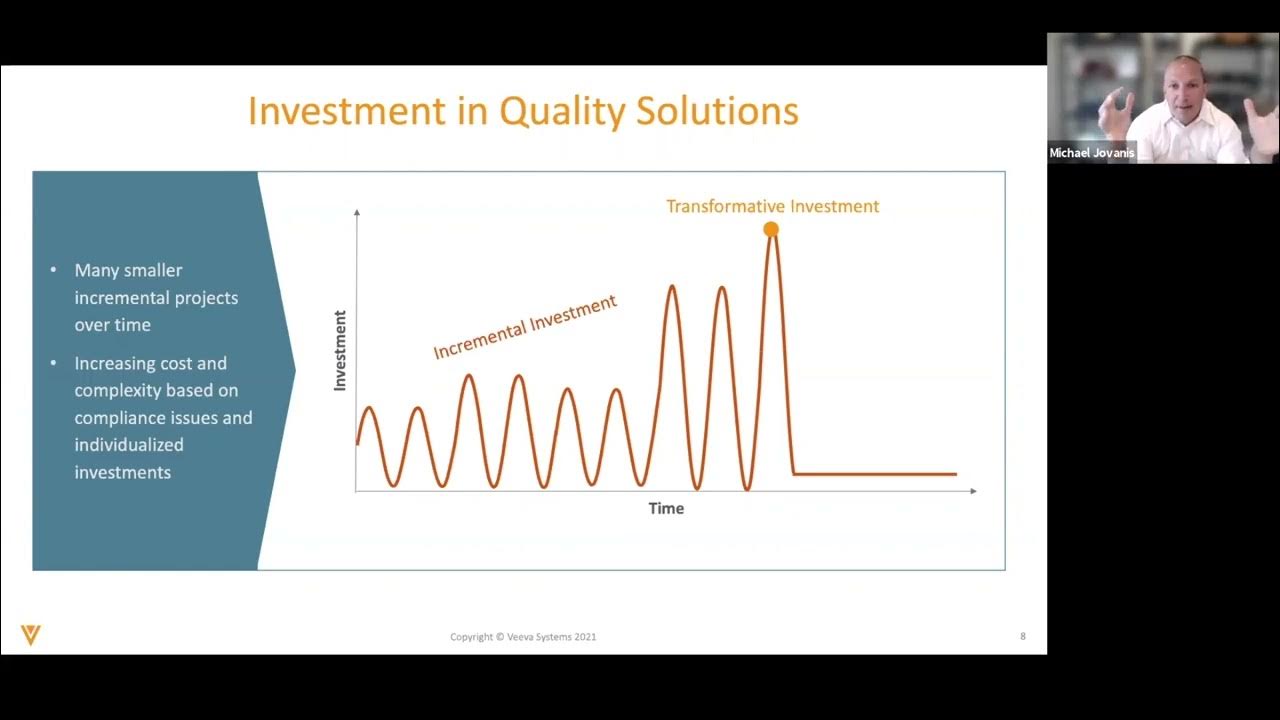
Driving Continuous Quality Improvements
Veeva Systems Inc
/@VeevaSystems
May 20, 2022
This video, presented by Mike Jovanus, VP of Quality at Veeva, offers a comprehensive exploration of driving continuous quality improvements within the life sciences industry. It highlights the critical need for modernizing quality systems by connecting people, processes, and technology on an intelligent, data-driven, end-to-end digital platform. The presentation delves into the industry trends acting as catalysts for this transformation, the drivers for adopting modern quality systems, and specific opportunities for modernization, including the strategic application of advanced technologies like AI. Jovanus begins by outlining significant industry shifts, such as increasing regulations and complex enforcement, globalization and externalization of operations, growing complexity due to virtual work environments, and the emergence of personalized medicine and gene therapies. These factors, combined with the prevalence of legacy quality solutions often 20+ years old, create a "perfect storm" for modernization. He emphasizes the shift from fragmented, incremental investments in quality systems to a more singular, transformative project approach, stressing the importance of evaluating the total cost of ownership (TCO) to demonstrate value generation. The core of the discussion revolves around four key modernization opportunities. First, the digitization of quality content moves beyond traditional document management to content-centric approaches, leveraging collaborative authoring, mobile access on the shop floor, process-centric navigation, and video-based content delivery. Second, unifying and connecting quality processes involves streamlining end-to-end product technical complaints, integrating change control with regulatory approvals, and automating training. Third, improving third-party collaboration focuses on seamlessly integrating suppliers and contract partners into quality systems, particularly for audits and deviations, by overcoming the limitations of legacy on-premise systems. Finally, the video addresses enabling proactive quality management with advanced technologies and AI, navigating the hype to focus on practical, value-adding applications that assist, rather than replace, human efforts. Key Takeaways: * **Industry Catalysts for Modernization:** The life sciences industry is being driven to modernize quality systems by increasing regulatory complexity, globalized and externalized operations, the demands of virtual work, and the unique requirements of personalized medicine and gene therapies. Many legacy systems are 20+ years old, creating a "perfect storm" for change. * **Shift to Transformative Programs:** Companies should move away from small, incremental quality system projects towards singular, transformative programs that modernize business processes, unify disparate systems, and leverage cloud-based solutions for long-term value. * **Total Cost of Ownership (TCO) Analysis:** When evaluating modernization, it's crucial to conduct a thorough TCO comparison between legacy on-premise systems and new cloud solutions, as cloud models consolidate many hidden costs into a single footprint, often revealing significant value generation opportunities. * **Digitization of Quality Content:** Modernization extends beyond basic document management to content-centric approaches, including collaborative authoring (e.g., Google Doc-like experience for SOPs), mobile access on the shop floor (e.g., Veeva's Station Manager with tablets), process-centric content navigation, and video-based content delivery for work instructions and training. * **Unified Quality Processes:** Significant efficiencies can be gained by connecting end-to-end processes, such as linking inbound product complaints from medical inquiry or drug safety systems to the complaint handling process, and unifying change control with regulatory approvals and automated retraining. * **Seamless Third-Party Collaboration:** Cloud-based systems like Veeva Vault enable secure, out-of-the-box collaboration with contract manufacturers, test labs, and thousands of suppliers, streamlining processes like external audits and deviation management by allowing self-provisioning and electronic responses. * **AI Continuum in Quality:** AI capabilities range from basic automated intelligence (triaging, routing, duplicate identification) to advanced machine learning/NLP (identifying patterns) and, eventually, autonomous intelligence (system making decisions independently), though the latter is still emerging for highly regulated quality environments. * **AI Myths vs. Reality:** AI will not magically deliver intelligence on day one, fix broken data or processes, or replace humans. Instead, AI requires a long-term strategy, best-in-class processes, high-quality contextual data, and serves to assist humans in performing tasks more efficiently and effectively. * **Foundational Requirements for AI:** Before layering AI, organizations must simplify and harmonize their processes, align on future-state operations, and ensure a robust, high-quality foundational data model to maximize the value from AI investments. * **Veeva's Practical AI Use Cases:** Veeva is implementing AI to identify potentially matching quality events (deviations, complaints) using semantic NLP, presenting similarity scores to users for validation and learning. They are also using Robotic Process Automation (RPA) to automate the processing of inbound cases in complaint handling, categorizing and routing based on predefined criteria. * **Organizational Change Management:** Implementing new, connected systems, especially for processes like quality and regulatory integration, requires significant organizational change management to ensure adoption and overcome historical silos (e.g., reliance on emails, phone calls, faxes). * **Implementation Scalability:** Veeva's solutions cater to a wide range of company sizes, from emerging biotechs (implementations in weeks by adopting best practices) to top-tier pharma companies (multi-year transformative journeys due to the scale of organizational change). * **Data-Driven AI Validation:** Veeva emphasizes a high bar for releasing AI capabilities, ensuring they are tested and verified with real customer data to prove product relevance and quantifiable value before being put into production. * **21 CFR Part 11 Impact:** The emergence of 21 CFR Part 11 in the late 1990s was a key driver for the initial adoption of legacy electronic quality solutions, replacing manual and homegrown processes. Tools/Resources Mentioned: * **Veeva Vault Quality:** An end-to-end digital platform for quality management. * **Veeva Vault QMS:** Quality Management System within Veeva Vault. * **Veeva RIM (Regulatory Information Management):** Veeva's application for regulatory tracking and approvals. * **Microsoft Office:** Mentioned in the context of collaborative authoring for documents like Word and Excel. * **Amazon:** Used as an example of autonomous intelligence in customer service. * **Samsung Biologics:** Mentioned as a collaborator in pioneering the "Station Manager" capability. Key Concepts: * **21 CFR Part 11:** Regulations concerning electronic records and electronic signatures, which historically drove the adoption of electronic quality systems. * **Collaborative Authoring:** The ability for multiple users to simultaneously edit and update documents (e.g., SOPs, work instructions) within a controlled system, akin to Google Docs. * **Station Manager:** A mobile capability (e.g., on a tablet) that displays only relevant content for a specific job function at a manufacturing station, promoting paperless environments. * **Process-Centric Content Navigation:** A user interface paradigm where content is organized and accessed based on steps within a business process, rather than traditional free-text searches or filters. * **Robotic Process Automation (RPA):** Technology used to automate repetitive tasks, such as triaging and routing inbound cases in complaint handling. * **Natural Language Processing (NLP) / Semantic NLP:** AI techniques used to understand and process human language, applied here to identify similarities in unstructured data from quality events. * **Autonomous Intelligence:** The most advanced form of AI where a system makes decisions and operates independently of human intervention. * **Total Cost of Ownership (TCO):** A comprehensive assessment of all direct and indirect costs associated with a system or asset over its entire lifecycle. * **Change Saturation:** The point at which an organization's capacity to absorb and adapt to new changes is overwhelmed, leading to potential breakdowns in adoption and operations. Examples/Case Studies: * **Veeva's Internal RFP Response:** Collaborative authoring was a "killer application" for Veeva's own team when responding to RFPs, allowing multiple contributors to work concurrently on Word documents or Excel spreadsheets. * **Samsung Biologics & New Pharma Plant:** Collaborated with Veeva on the initial design and adoption of the "Station Manager" capability, aiming for paperless manufacturing environments. * **Amazon Customer Service Bot:** An example of autonomous intelligence where a bot fully resolved a damaged item issue (refund, reorder) without human intervention. * **Customer with Broken Process:** A real-world example of a customer with a fundamentally broken process and poor data attempting to layer "a ton of AI" on top, which proved ineffective until foundational process and data issues were addressed.

Unifying Quality Processes in a Single System to Improve User Experience
Veeva Systems Inc
/@VeevaSystems
May 20, 2022
This video provides an in-depth case study on how the pharmaceutical company UCB successfully implemented Veeva Vault QualityDocs to consolidate disparate quality management systems, significantly improving user experience and operational efficiency. The primary motivation for UCB was the difficulty in keeping critical processes up-to-date across multiple platforms. Recognizing that their challenges spanned not only quality documentation but also regulatory submissions and Electronic Trial Master File (eTMF) management, UCB sought a single vendor capable of connecting all three domains, ultimately leading them to choose Veeva Systems. The transition represented a significant shift for UCB, moving from traditional on-premise solutions to a cloud-based environment. The core benefit derived from this migration was the unification of systems; UCB successfully reduced four separate quality documentation systems down to a single instance of Veeva QualityDocs. This consolidation allowed the organization to pivot its focus entirely. Instead of dedicating resources to continuous bug fixing and maintenance of legacy systems, teams could now concentrate on strategic improvements, enhancements, and optimizing the overall user experience within the new platform. A critical enhancement highlighted by the speaker is the platform’s ability to facilitate seamless collaboration with external partners and vendors. Utilizing the cloud solution, UCB was able to grant specific access to external entities for two key tasks: securely sharing documents and allowing them to review and approve documents directly within the system. This integration drastically streamlined the document lifecycle, replacing the cumbersome, months-long process of sending documents via email for sign-off with an instant, efficient, and auditable digital workflow. The speaker strongly advocates for the cloud-based approach, emphasizing that the ease of system validation and the quick learning curve for end-users contribute directly to tangible efficiencies and faster job completion. Key Takeaways: * **System Consolidation as a Strategic Priority:** UCB's initial challenge was managing outdated processes across multiple systems (four separate quality documentation platforms), leading to inefficiencies. The strategic decision to unify these into a single system (Veeva QualityDocs) was crucial for operational improvement. * **Shifting Focus from Maintenance to Enhancement:** By adopting a modern cloud solution, UCB was able to redirect internal resources away from reactive "bug fixing" of legacy systems toward proactive efforts focused on improving user experience, enhancing workflows, and tackling complex networking topics. * **Integrated Platform Value Proposition:** The decision to choose Veeva was driven by its ability to connect critical regulated functions—Quality, Submissions, and eTMF—within a unified ecosystem, demonstrating the value of integrated enterprise solutions in life sciences. * **Streamlining External Partner Collaboration:** Veeva QualityDocs enabled UCB to securely integrate external vendors and partners into their quality processes. This included allowing external parties to share, review, and approve documents directly in the cloud environment. * **Accelerated Compliance Workflows:** The implementation drastically reduced the time required for document review and approval cycles. The transition from lengthy, four-month email-based sign-off processes to instant, digital approvals represents a major gain in efficiency and compliance speed. * **Benefits of Cloud Adoption in Regulated Environments:** The speaker specifically recommends cloud-based solutions, citing two major advantages: the simplified validation process inherent to modern cloud platforms and the inherent ease of use, which accelerates user adoption and overall efficiency. * **Focus on User Experience (UX):** The project’s success was measured not just by consolidation but by the ability to "improve and enhance the user experience," suggesting that modern regulated software must prioritize intuitive design to maximize adoption and compliance adherence. * **Leveraging Networking Capabilities:** UCB utilized the new system to improve internal and external networking, allowing them to develop new functionalities and easily integrate partners and vendors into controlled document workflows. Tools/Resources Mentioned: * **Veeva Systems:** The primary vendor and platform provider. * **Veeva Vault QualityDocs:** The specific product implemented for unifying quality documentation processes. * **Veeva Vault eTMF (Electronic Trial Master File):** Mentioned as one of the three critical areas (alongside Quality and Submissions) that UCB sought to unify under the Veeva platform. Key Concepts: * **System Unification:** The strategic process of consolidating multiple, disparate software systems (in this case, four quality systems) into a single, integrated platform to reduce complexity, improve data integrity, and lower maintenance costs. * **Cloud Solution Validation:** Refers to the process of ensuring that a cloud-based software system meets regulatory requirements (like GxP and 21 CFR Part 11). The speaker notes that cloud solutions offer advantages in simplifying this often complex and resource-intensive process compared to on-premise systems. * **External Partner Collaboration:** The ability to securely and compliantly extend document control and approval workflows to third-party vendors, CROs, or contract manufacturers, eliminating manual, non-compliant communication methods like email. Examples/Case Studies: * **UCB Implementation:** A case study detailing how the pharmaceutical company UCB moved from four separate quality systems to a single instance of Veeva QualityDocs to address issues with process currency and system maintenance. * **Document Approval Efficiency:** A concrete example of efficiency gain where document sign-offs, which previously took up to four months via email, became instant and automated within the new cloud platform.

Capital-Efficient Growth (with Zoom CEO Eric Yuan & Veeva CEO Peter Gassner)
Acquired
/@AcquiredFM
May 19, 2022
This video provides an in-depth exploration of capital-efficient growth strategies, featuring a rare joint interview with Eric Yuan, CEO of Zoom, and Peter Gassner, CEO of Veeva Systems. Hosted by Acquired at Emergence Capital's CEO Summit, the discussion centers on how these two leaders built multi-billion dollar revenue businesses with remarkably little external capital, offering invaluable lessons for founders, operators, and investors, especially in a changing fundraising environment. The conversation delves into their unique journeys, contrasting Zoom's horizontal, self-serve model with Veeva's vertical, enterprise-focused approach, yet finding common ground in their core principles of product excellence, disciplined spending, and customer obsession. The interview progresses through several key areas, starting with their fundraising histories. Peter Gassner recounts Veeva's initial angel round of $3 million and a Series A of $4 million from Emergence, of which they barely touched the latter, building a $2 billion revenue business with 30% profit margins. Eric Yuan shares Zoom's struggle to raise capital initially, securing $3 million from friends and another $6 million before eventually raising $30 million from Emergence and $100 million from Sequoia, none of which was consumed. This sets the stage for a deeper dive into the mindset and operational tactics that enabled such efficiency, emphasizing that capital efficiency is more a cultural and philosophical approach than a mere business model advantage. Key themes explored include product excellence as the foundation for efficiency, the importance of a clear and correct target market, and the strategic approach to hiring and marketing. Gassner highlights the necessity of listening to customers' feelings rather than just their words, identifying unmet needs even when customers claim satisfaction. Yuan elaborates on his motivation to fix the shortcomings of Webex, leading to Zoom's superior product. Both leaders stress the importance of hiring "non-wasted people" in the early days, focusing on engineers and product-centric roles, and maintaining a lean, disciplined approach to spending. The discussion also touches upon the nuances of sales and customer acquisition, from Veeva's relationship-based enterprise sales to Zoom's viral, product-led growth, and their differing, yet effective, approaches to pricing and contract structures. The conversation concludes by addressing long-term defensibility and future growth. Both CEOs emphasize continuous innovation and avoiding complacency. Gassner introduces the concept of being "the leader in liked" and strategically expanding into new, distinct product areas to provide creative outlets and avoid over-investing in established areas. Yuan reflects on the mistake of not planning for new services earlier in Zoom's journey, highlighting the importance of foresight in diversifying product offerings. The interview underscores a shared philosophy of relentless focus, hard work, and an unwavering commitment to customer happiness and product quality as the ultimate drivers of sustainable, capital-efficient growth. Key Takeaways: * **Capital Efficiency as a Mindset:** Both Zoom and Veeva demonstrate that capital efficiency is primarily a cultural and mindset-driven approach, not solely dependent on the business model. It starts with a "profitable lemonade stand" mentality and a focus on cash generation. * **Product Excellence is Paramount:** A superior product is the most effective way to lower customer acquisition costs and drive efficiency. Eric Yuan's focus on building a product "ten times better" than competitors like Webex and Peter Gassner's emphasis on "making something great" highlight this core principle. * **Customer-Centricity Beyond Surveys:** In the early stages, direct engagement with customers to understand their "feelings" rather than just their survey responses is crucial. This allows founders to identify true pain points and build solutions that genuinely resonate, even if initial feedback is negative. * **Disciplined Hiring and Lean Operations:** Avoid "wasted people" or "optional people" in the early days. Focus on hiring core engineers and product builders. Zoom operated for four years with virtually no marketing or sales team, relying on product virality and word-of-mouth. * **Strategic Market Selection:** Peter Gassner advises picking something "non-obvious" that most people think will fail to be an outlier, but ensuring you are "correct" in your assessment of market need. Veeva's success in vertical-specific software for life sciences exemplifies this. * **Long-Term Value over Short-Term Lock-in:** Veeva's strategy of not pursuing multi-year, locked-in contracts, instead earning business annually, optimizes for long-term customer value and prevents complacency. This also allows for more flexible pricing adjustments. * **Measured Marketing Investment:** While product excellence can drive initial growth, strategic marketing becomes important for scaling. Eric Yuan emphasizes rigorous measurement of every marketing program, aiming for high ROI (e.g., $3-4 back for every $1 spent) and knowing when to "double down" or "step back." * **Mixed Leadership Team for Scale:** Eric Yuan reflects on the "flaw" of relying solely on internal promotions and self-learning executives during hyper-growth. A healthy mix of internal talent with potential and seasoned leaders who have experienced larger scale is crucial for navigating rapid expansion. * **Proactive Product Diversification:** Plan for future product lines and services years in advance. Peter Gassner intentionally chose a second product for Veeva that was "way out here" and not just an add-on, to ensure it had the potential to be a significant, independent growth driver, despite the inherent risks. * **Defensibility Through Innovation and Culture:** Defending the "castle" involves continuous innovation, expanding into new areas, and maintaining a culture of humility. Peter Gassner's goal to be "the leader in liked" and auditing for integrity and energy in the leadership team are examples of proactive defense against arrogance and complacency. * **Optimism and Perseverance:** Both founders emphasize the importance of optimism and not dwelling on failure scenarios. The journey of building a company is hard work, and a positive, forward-looking mindset is essential for perseverance. Key Concepts: * **Capital-Efficient Growth:** Building a high-revenue, high-market-cap company with minimal external investment, prioritizing profitability and sustainable cash flow. * **Product Excellence:** The foundational belief that a superior product is the primary driver of customer acquisition, retention, and overall business efficiency. * **Vertical-Specific Software:** Developing solutions tailored to the unique needs of a particular industry (e.g., Veeva in life sciences), which can lead to deeper market penetration and higher value. * **"Leader in Liked":** A cultural and strategic goal to not only be a market leader but also to be genuinely appreciated and trusted by customers, fostering long-term loyalty and reducing churn. * **Layering the Cake:** Veeva's strategy of expanding its product footprint within existing customer accounts by offering multiple, distinct solutions that address different departmental needs. Examples/Case Studies: * **Veeva Systems' Founding and Growth:** Raised only $7 million in total private funding (barely touching the $4M Series A) to build a $2 billion revenue business with 30% profit margins, focused on vertical software for the life sciences industry. * **Zoom's Early Days:** Eric Yuan struggled to raise capital, initially funding the company with $3 million from friends. The company operated for its first four years with 39 engineers and no marketing or sales team, relying on product quality and virality. * **Pfizer Deal (Veeva):** Peter Gassner recounts winning Pfizer as an early multi-million dollar customer through "hand-to-hand combat," emphasizing superior people and commitment, despite having fewer resources than competitors. This deal was crucial for funding further product development. * **Walter Mossberg's Review (Zoom):** A positive review from the famous tech reporter Walter Mossberg in the Wall Street Journal led to 50,000 initial users for Zoom, providing the "kernel of virality" that kickstarted their product-led growth.

How Does a PBM Get Paid - Rachel Strauss - True Captive St. Louis Summit
Self-Funded
@SelfFunded
May 19, 2022
This video provides an in-depth exploration of the complex and often opaque world of Pharmacy Benefit Managers (PBMs) and the prescription drug supply chain. Featuring Rachel Strauss, dubbed the "PBM Princess," the discussion, recorded at the True Captive Summit, delves into how PBMs are compensated and why prescription drug costs continue to escalate rapidly. The primary purpose of the conversation is to shed light on the intricate web of entities involved in drug distribution and pricing, advocating for greater transparency and alignment of incentives within the system. The discussion begins by highlighting the evolving landscape of self-funded health plans, noting a significant increase in HR professionals seriously considering self-funding strategies. Strauss emphasizes that modern self-funding differs greatly from past iterations, offering new strategies for employers. A central theme is the "convoluted supply chain" of prescription drugs, which involves numerous stakeholders including payers, wholesalers, PBMs, marketing firms, and insurance companies, all taking a "piece of the pie." This complexity, she argues, makes it incredibly difficult to ascertain the true reasons behind rising drug costs and has led to intense scrutiny of PBMs, particularly regarding their payment structures. The speaker draws a stark contrast between the simple supply chain of a consumer good, like a can of paint, and the labyrinthine nature of the PBM industry. She points out that consumers rarely question the profit margins of everyday purchases, yet PBMs are increasingly under fire due to "incredible exposure" revealing how consumers and plan sponsors have been exploited. A pivotal historical example cited is Walmart's introduction of the $4 generic drug program, which inadvertently exposed the practice of "spread pricing." This practice involved PBMs acquiring drugs for a low cost (e.g., $4) but then charging self-funded plans significantly higher amounts (e.g., $300-$400 per script), pocketing the substantial difference. The core message revolves around the critical need for properly aligned incentives, asserting that while PBMs deserve compensation for their services, their payment should not be tied to the expense of the drug or create perverse incentives that push members towards higher-cost medications. The conversation also touches on the lack of formulary standardization, often influenced by external entities rather than purely efficacy or cost-effectiveness. Key Takeaways: * **Evolving Self-Funding Landscape:** Self-funded health plans are gaining renewed interest from employers and HR professionals, with modern strategies offering more flexibility and options compared to past models. This shift indicates a growing demand for innovative solutions in benefits management. * **Convoluted PBM Supply Chain:** The prescription drug supply chain is exceptionally complex, involving multiple intermediaries (payers, wholesalers, PBMs, marketing firms, insurers) that each extract value, making it challenging to identify the root causes of escalating drug costs. * **Scrutiny on PBM Payment Models:** PBMs are facing increasing public and industry scrutiny regarding their compensation methods, particularly the question of "How does my PBM get paid?" This transparency issue is a major driver of reform efforts. * **Historical "Spread Pricing" Abuse:** The practice of "spread pricing," where PBMs profit significantly by charging plan sponsors much more than they pay for medications, was historically widespread and exposed by initiatives like Walmart's $4 generic program. This highlights a fundamental flaw in traditional PBM models. * **Importance of Aligned Incentives:** PBM compensation should be structured to align incentives with plan sponsors and patients, focusing on cost savings and value rather than profiting from expensive drugs or high utilization. Payment models should ideally be based on service fees or demonstrated savings. * **External Influence on Formularies:** Drug formularies, which determine covered medications, are not always based purely on a drug's efficacy versus cost. External entities and financial arrangements can influence product placement, potentially leading to less optimal choices for patients and higher costs for plans. * **Power of Exposure and Awareness:** Consistently exposing problems within the healthcare system, particularly regarding PBM practices, is crucial for motivating behavioral change among employers, plan sponsors, and consumers. Increased awareness can drive demand for more ethical and transparent solutions. * **Employer Open-Mindedness to Innovation:** Employers are increasingly open-minded to new concepts in cost containment and value-based care, recognizing that innovative programs can lead to better value for patients (e.g., zero-cost medications, free direct primary care, no deductibles). * **Individual Responsibility in Healthcare:** Patients and plan members are encouraged to understand their health plans and the value propositions of various programs to make informed decisions and identify opportunities for personal cost savings. Key Concepts: * **PBM (Pharmacy Benefit Manager):** A third-party administrator of prescription drug programs for commercial health plans, self-insured employer plans, Medicare Part D plans, the Federal Employees Health Benefits Program, and state government employee plans. They negotiate drug prices with manufacturers and pharmacies. * **Self-Funding:** An arrangement where an employer directly assumes the financial risk for providing healthcare benefits to its employees, rather than purchasing a fully insured plan from an insurance company. * **Spread Pricing:** A practice where a PBM charges a health plan or employer a higher price for a prescription drug than it reimburses the pharmacy for that drug, keeping the "spread" as profit. * **Formulary:** A list of prescription drugs covered by a health plan, often categorized into tiers with different co-payment levels. Examples/Case Studies: * **Walmart's $4 Generic Program:** This initiative, while a marketing success for Walmart, inadvertently served as a significant case study exposing the widespread practice of "spread pricing" by PBMs, demonstrating that many generic drugs could be offered at a much lower price point than what PBMs were charging plan sponsors.