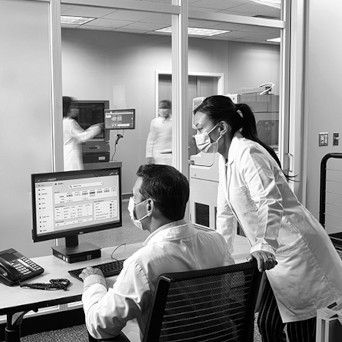
Roche Cobas is a comprehensive suite of in-vitro diagnostic systems and reagents, with the core software component being cobas® infinity IT solutions and the newer cobas® infinity edge platform. These solutions are designed to integrate and manage complex laboratory processes, providing a single point of control for pre-analytics, analytics, and post-analytics across a wide range of Roche and non-Roche instruments.
Key Benefits & Capabilities
- Workflow Automation: The software features a dynamic Sample Workflow Engine that uses a decision-based tree to visualize and control sample workflows, dynamically adjusting to changing lab scenarios and enabling paperless efficiency. It automates technical validation and supports clinical validation with auto-verification and eSignature capabilities.
- Data Integration & Connectivity: It ensures open connectivity and is highly compatible with existing IT infrastructure, supporting industry standard protocols like HL7 v2.x & v3.x, Native XML, SOAP Web Services, and IHE standards for seamless integration with Laboratory Information Systems (LIS), Hospital Information Systems (HIS), and Electronic Medical Records (EMRs).
- Real-time Monitoring & Control: The system offers real-time Production Monitoring to track workload, monitor potentially late samples, and provide notifications for instrument connections or order interruptions. Users benefit from customizable, browser-based work area screens that consolidate information and focus attention on critical data.
- Compliance & Security: The platform is built with robust security features, including secured data transfer using 256-bit AES SSL and support for LDAP and Role-Based Access Control (RBAC). The cloud-based
cobas® infinity edgesolution is compliant with ISO 27001, GDPR, and HIPAA.
Target Users and Use Cases
The software is scalable and customizable for low-, mid-, and high-volume laboratories, including Core Labs, Molecular Labs, Pathology Labs, and Point of Care settings. Primary use cases include centralizing lab operations, reducing turnaround time (TAT) for results, enhancing quality control management, and providing full traceability of samples from input to final result.